Tag Archives: Monday Musical Appreciation

Quincy Jones; A National Treasure ► Monday Musical Appreciation

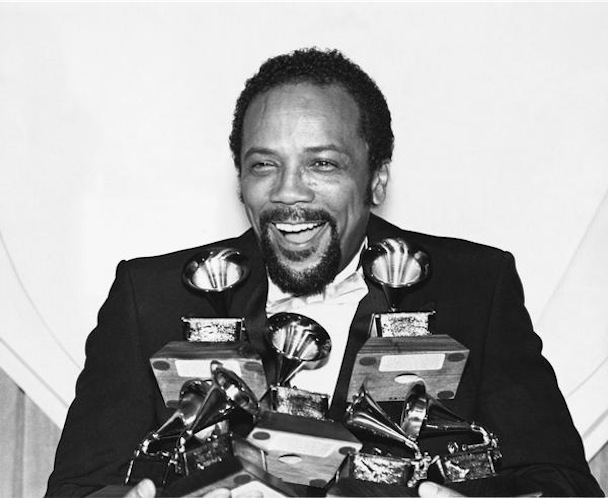
On this day in 1980, which just so happened to be his 47th birthday, Quincy Delight Jones is honoured with a star on the Hollywood Walk of Fame.

Quincy Jones has been making music for more than 60 years. From hanging out with Ray Charles in Seattle before either of them were stars; to conducting and arranging for Frank Sinatra and the Count Basie Orchestra in the ’60s; to discovering and producing Lesley Gore; to his work with Michael Jackson, which broke all sales records; to We Are The World. There’s nothing Quincy Jones has not done.
According to the WikiWackyWoo:

In 1968, Jones and his songwriting partner Bob Russell became the first African Americans to be nominated for an Academy Award for Best Original Song, their “The Eyes of Love” for the Universal Pictures film Banning. That same year, Jones was the first African American to be nominated twice within the same year for an Academy Award for Best Original Score, as he was also nominated for his work on the film In Cold Blood
(1967). In 1971, Jones was the first African American to be named as
the musical director and conductor of the Academy Awards ceremony. In
1995 he was the first African American to receive the Academy’s Jean Hersholt Humanitarian Award. He is tied with sound designer Willie D. Burton as the African American who has been nominated for the most Oscars; each has received seven nominations.

So far Jones has scored 33 movies, starting with The Pawnbroker in 1964:

Following the success of The Pawnbroker, Jones left Mercury Records and moved to Los Angeles. After composing the film scores for Mirage and The Slender Thread in 1965, he was in constant demand as a composer. His film credits over the next seven years included Walk, Don’t Run, The Deadly Affair (both 1966), Banning, In Cold Blood, In the Heat of the Night (all 1967), A Dandy in Aspic, For Love of Ivy, The Hell with Heroes, (all 1968), Mackenna’s Gold, The Italian Job, Bob & Carol & Ted & Alice, The Lost Man, Cactus Flower, John and Mary (all 1969), The Out-of-Towners, They Call Me Mister Tibbs! (both 1970), The Anderson Tapes, $ (both 1971), and The Hot Rock, The New Centurions and The Getaway (all 1972). In addition, he composed “The Streetbeater,” which became familiar as the theme music for the television sitcom Sanford and Son, starring close friend Redd Foxx; he also composed the themes for other TV shows, including Ironside, Banacek, The Bill Cosby Show, the opening episode of Roots, and the Goodson & Todman game show Now You See It.

See? There’s nothing in the field of the music he has not done.

However, to my mind, the greatest album Jones ever released was his Back On The Block CD.

While the whole album is a MUST LISTEN, I’d like to single out two linked tracks. “Jazz Corner Of The World” starts with archival audio of famous Jazz greats talking about the importance of Charlie Parker, Bebop music, and the New York club Birdland. That’s followed by an intense Rap that introduces us — one by one — to all the famous musicians we will be hearing on the next tune. [NO SPOILERS.] We are taken inside the club Birdland just as Quincy Jones segues into a blazing cover of the song Birdland, first recorded by Weather Report and written by Joe Zawinul.

I consider this to be the definitive version of Birdland, with apologies to Joe Zawinul. It never fails to give me goosebumps. All those people on the same track in furtherance of an amazing arrangement. Just listen and marvel:

Jones’ career is far too long and varied to sum up in this little blog post. However, as always, the proof is in the music. Here are just some of the tunes you should know:






The Very First Jazz Record ► Monday Musical Appreciation

On this date 99 years ago the first Jass [sic] tune was made commercially available to the general public on Victor Records, 18255-A. 

While bands had been playing the new Jass music for several years, the “Dixie Jass Band One Step” ushered in a new era in syncopated music by being an audio artifact that could be bought and traded. The instrumental was recorded by the Original Dixieland Jass Band, a 5-piece, integrated group out of New Orleans, the cradle of Jazz music. 

There is no agreed upon entomology of the word Jazz. According to the Wiki:

As with many words that began in slang, there is no definitive etymology for jazz. However, the similarity in meaning of the earliest jazz citations to jasm, a now-obsolete slang term meaning spirit, energy, vigor and dated to 1860 in the Historical Dictionary of American Slang, suggests that jasm should be considered the leading candidate for the source of jazz. A link between the two words is particularly supported by the Daily Californian‘s February 18, 1916, article, which used the spelling jaz-m, although the context and other articles in the same newspaper from this period show that jazz was intended.

Scholars think Jasm derives from or is a variant of slang jism or gism, which the Historical Dictionary of American Slang dates to 1842 and defines as “spirit; energy; spunk.” Jism also means semen or sperm, the meaning that predominates today, making jism a taboo word.
Deepening the nexus among these words is the fact that “spunk” is also a
slang term for semen, and that “spunk”—like jism/jasm—also means
spirit, energy, or courage (for example: “She showed a lot of spunk.”)
In the 19th and early 20th centuries, however, jism was still used in polite contexts. Jism, or its variant jizz (which, however, is not attested in the Historical Dictionary of American Slang until 1941), has also been suggested as a direct source for jazz. A direct derivation from jism is phonologically unlikely. Jasm itself would be, according to this assumption, the intermediary form.

That’s one story. Another comes from Greg’s Musings at Swing Review:

The word Jazz has a veil of mystery around it. Ask anyone what Jazz is and they can tell you about the music and describe how it’s played or some of their favorite musicians but the actual origin of the word itself is a bit of a mystery. Some research has suggested that it traces to African roots in some native language of former slaves or even more evidence says it possibly is related to the French word jaser which means “to chatter.” Some historical evidence suggests that it could trace to slang terms for sexual functions (I’ll let you use your imagination as to what.) It is a fact that the term “Jazzing” was used in the past as a term to describe having sex but no one is sure if the term was used before the music came along or vice versa.

The saxophone player Garvin Bushell gives his opinion on the mystery by describing his early life in Louisiana:

    “They said that the French had brought the perfume industry with them to New Orleans and the oil of jasmine was a popular ingredient locally. To add it to a perfume was called “jassing it up.” The strong scent was popular in the red light district, where a working girl might approach a prospective customer and say “Is jass on your mind tonight young fellow?” The term had become synonymous with erotic activity and came to be applied to the music as well.”

It is safe to say that no one will ever know who first used the term as most every early jazz musician has a story about how they were the ones that created it. Jelly Roll Morton even claims he was the one who invented the music itself and everyone else stole it from him! The spelling is another mystery but there is historical evidence that in the early days it was “Jass” not Jazz which would lead one to believe the perfume theory. The fact that the first Jazz record ever recored was by a group that called themselves “The Original Dixieland Jass Band” is proof of that. The trumpeter for the Original Dixieland Jass band, Nick LaRocca talks about how the term was changed from Jass to Jazz saying:

    “…the term was changed because children and some adults could not resist the temptation to scratch the letter “J” from the posters.”

However the name derived, or how it was originally spelled, Jazz caught the world’s attention. Starting in the early 1900s right up to today, Jazz is a force of nature. Here is the first Jazz record:

Was Elvis’ Manager A Murderer? ► Monday Musical Appreciation

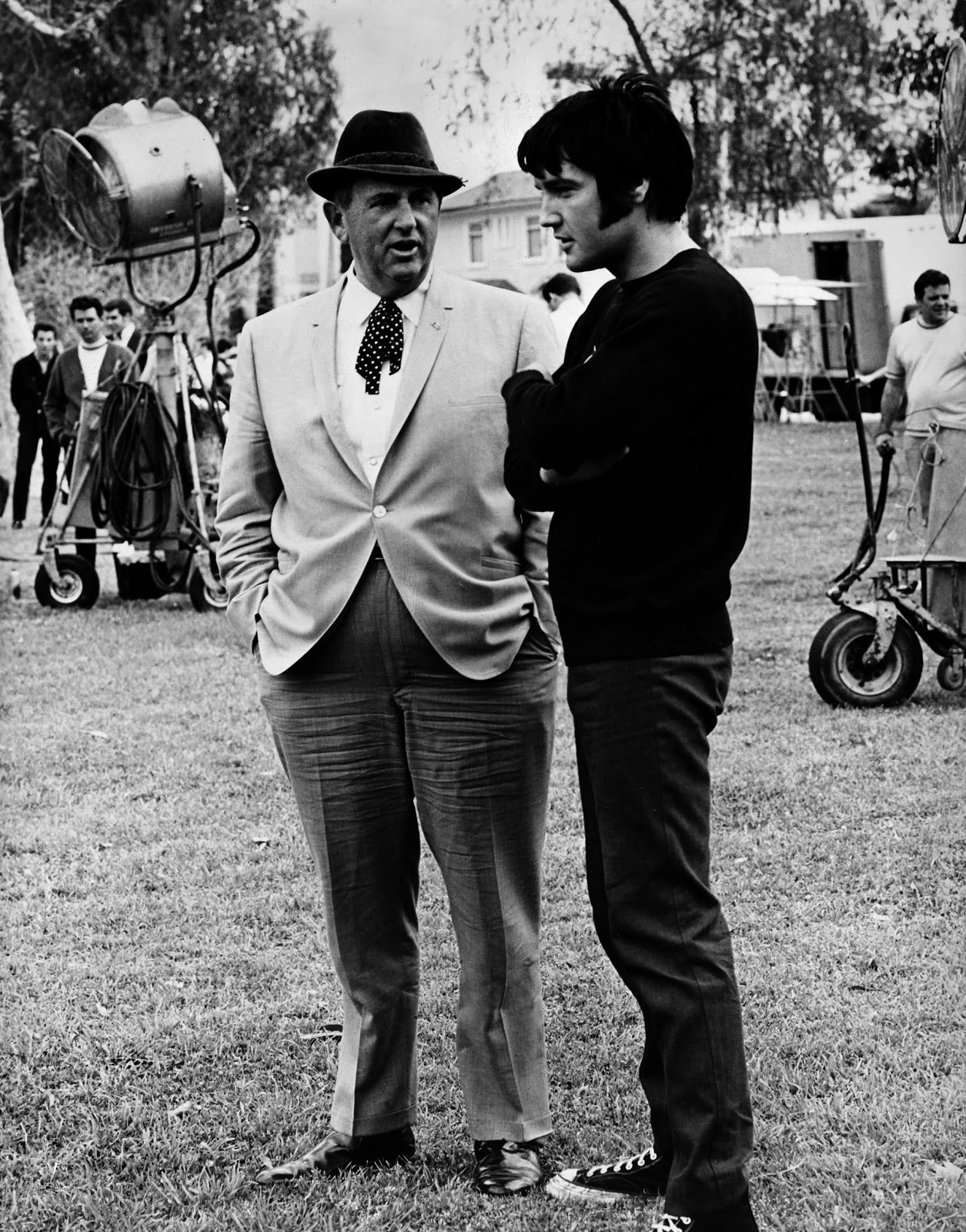
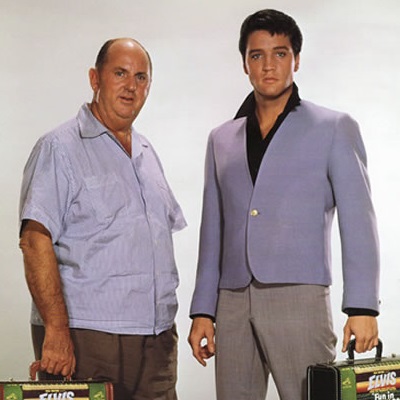
It’s always been a curious thing. During the entirety of Elvis’ career, he only played overseas once and only performed in Canada only 3 times. Despite the proximity Colonel Tom Parker, his manager, didn’t accompany his star client.

I’ve long heard rumblings that The Colonel was a wanted man, which is why he never traveled outside the country, but had never bothered to research the back story. A random Facebook post this morning took me to a page about The Colonel at the Smithsonian Institute published 4 years ago. What I learned was stunning. Colonel Tom Parker may have been a murderer hiding in plain sight. This article gets right down to the Colonel’s skulduggery:

So far as the wider world knew, the
Colonel was Thomas Andrew Parker, born in Huntingdon, West Virginia,
some time shortly after 1900. He had toured with carnivals, worked with
elephants and managed a palm-reading booth before finding his feet in
the early 1950s as a music promoter. Had anyone taken the trouble to
inquire, however, they would have discovered that there was no record of
the birth of any Thomas Parker in Huntingdon. They might also have
discovered that Tom Parker had never held a U.S. passport—and that while
he had served in the U.S. Army, he had done so as a private. Indeed,
Parker’s brief military career had ended in ignominy. In 1932, he had
gone absent without leave and served several months in military prison
for desertion. He was released only after he had suffered what his
biographer Alanna Nash terms a “psychotic breakdown.” Diagnosed as a
psychopath, he was discharged from the Army. A few years later, when the
draft was introduced during the World War II, Parker ate until he
weighed more than 300 pounds in a successful bid to have himself
declared unfit for further service.

WHOA! But it doesn’t stop there. I continued my research, jumping onto the WikiWackyWoo:

Presley fans have speculated that the reason Presley only once
performed abroad, which would probably have been a highly lucrative
proposition, may have been that Parker was worried that he would not
have been able to acquire a U.S. passport and might even have been
deported upon filing his application. In addition, applying for the
citizenship required for a US passport would probably have exposed his
carefully concealed foreign birth. Although Parker was a US Army veteran
and spouse of an American citizen, one of the basic tenets of U.S.
immigration law is that absent some sort of amnesty program, there is no
path to citizenship or even legal residency for those who entered the
country illegally.[50]
As Parker had not availed himself of the 1940 Alien Registration Act,
and there was no amnesty program available to him afterwards, he was not
eligible for US citizenship through any means.

Foreign birth? Undocumented immigrant? What else was The Colonel hiding? According to The Inside Story of Elvis and the Colonel, a chapter from the (self-serving) book Leaves of Elvis’ Garden:

Colonel Tom Parker was a master deal-maker who made
Elvis the highest-paid actor in Hollywood.   While other actors may
have commanded per-picture fees in excess of the $1 million Elvis got,
he often made double that again because he received an unprecedented 50
percent of all profits. It didn’t matter to the Colonel that the films
were, for the most part, artistically vapid. Colonel Parker proved his
worth, moneywise.
The Colonel, as he liked people to refer to him,
displayed a ruthless devotion to Elvis’ interests, and he took far more
than the traditional 10 percent of his earnings (reaching up to 50
percent by the end of Presley’s life).  Under his brilliant, skillful
and cunning guidance his one and only client, Elvis, reached
unimaginable heights.  Elvis considered him a genius.
But Elvis grew restless, feeling the Colonel had
limited his Hollywood career, even while acknowledging they had been
successful financially.  He felt trapped. 

John Lennon, famously, had several things to say about Elvis. Here are two:
“Before Elvis there was nothing.”

“Up until Elvis joined the army, I thought it was beautiful music and Elvis was for me and my generation what the Beatles were to the ’60s. But after he went into the army, I think they cut “les bollocks” off. They not only shaved his hair off but I think they shaved between his legs, too. He played some good stuff after the army, but it was never quite the same, It was like something happened to him psychologically. Elvis really died the day he joined the army. That’s when they killed him, and the rest was a living death.”

But I digress.
As Smithsonian Magazine continues the story: Back in 1960, soon after Elvis was discharged from the army, Parker’s family back in the Netherlands recognized him in a photo as Andreas van Kuijk, a long-lost brother who had disappeared into thin air. Sure he was older, and fatter, but there was no mistaking it. A brother was sent to the States. He met with Dries — as the family called him — who revealed very little about his personal life.
Even stranger is when he went back to Breda, the brother kept Parker’s secret which didn’t leak for another few years, but only in a small Dutch fan magazine called It’s Elvis Time. Then it was picked up in the ’70s by Albert Goldman in his Elvis biography. However, there were deeper secrets to unveil.
Journalist Dirk Vellenga, who also lived in Breda, got a tip that the Colonel was originally from there, which led to a 30-year investigation:
Vellenga had been filing occasional
updates on the Parker story—the Colonel was by far the most famous son
of Breda—and found that he was building a detailed picture of what was
by any standard a hasty departure. Parker, he learned, had vanished in
May 1929 without telling any of his family or friends where he was
heading, without taking his identity papers, and without money or even
the expensive clothing he had spent most of his wages on. “This means,” notes Nash,
that “he set out in a foreign country literally penniless.” In the
late 1970s, Vellenga ended one of his newspaper features by posing what
seemed to him a reasonable question: “Did something serious happen
before Parker left that summer in 1929, or maybe in the 1930s when he
broke all contact with his family?”

At least one of his readers thought
that question deserved an answer, and a short while later an anonymous
letter was delivered to Vellenga’s paper. “Gentlemen,” it began.

At last, I want to say what was told to me 19
years ago about this Colonel Parker. My mother-in-law said to me, if
anything comes to light about this Parker, tell them that his name is
Van Kuijk and that he murdered the wife of a greengrocer on the
Bochstraat….

This murder has never been solved. But look it up and you will
discover that he, on that very night, left for America and adopted a
different name. And that is why it is so mysterious. That’s why he does
not want to be known.

Turning hastily to his newspaper’s files, Vellenga found to his
amazement that there had indeed been an unsolved killing in Breda in May
1929. Anna van den Enden, a 23-year-old newlywed, had been battered to
death in the living quarters behind her store—a greengrocer’s on the
Bochstraat. The premises had then been ransacked, apparently
fruitlessly, in a search for money. After that, the killer had scattered
a thin layer of pepper around the body before fleeing, apparently in
the hope of preventing police dogs from picking up his scent.

The discovery left Vellenga perplexed. The 19 years of silence
that his mysterious correspondent mentioned took the story as far back
as 1961—exactly the year that the Van Kuijk family had made contract
with Parker, and Ad van Kuijk had returned from his visit to the Colonel
so remarkably tight-lipped. And the spot where the murder had occurred
was only a few yards away from what had been, in 1929, Parker’s family
home. Members of the Colonel’s family even recalled that he had been
paid to make deliveries for a greengrocer in the area, though they could
no longer remember which one.

Of course, all the evidence is circumstantial. There is no proof, even in the original police files, that Parker, or van Kuijk, was ever a suspect in the murder. This will always remain an unsolved mystery, but several of Elvis’ biographers truly believe that the biggest secret the Colonel was hiding was the fact that he was a murderer who had fled to ‘Merka to avoid suspicion.

It’s Only A Northern Song ► Monday Musical Appreciation

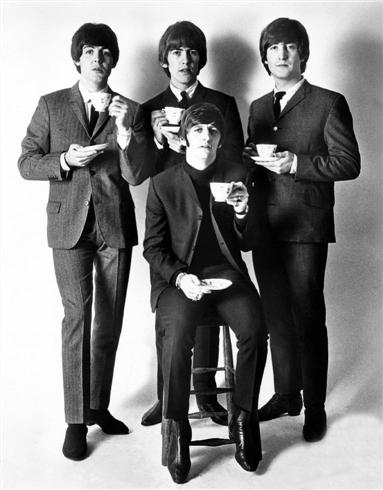
On this day in 1963 The Beatles formed the music publishing company Northern Songs —  with Dick James owning 51% — which is how Michael Jackson eventually came to own their back catalog of songs. Follow the bouncing ball:

Brian Epstein made a number of bad deals for The Beatles. For example, there’s Seltaeb — “Beatles” spelled backwards — a company created to merchandise Beatles’ products. Epstein didn’t have the time, or inclination, to decide on all the merchandise requests that were rolling in, from Beatles wigs to drum sticks to plastic guitars. He decided to outsource this job and signed a contract which gave The Beatles a mere 10% of the royalties. Normally up to 75% would go to the artists on such a deal. It’s estimated that The Beatles lost at least $100,000,000 on that deal, which could have been more lucrative than the worldwide royalties on their music.

However, of all the deals that Brian Epstein got the Beatles involved in, Northern Songs is the one that had the most-lasting effect, biting them in the ass to this very day.

George Harrison was so irritated, he wrote a song about it:

Dick James had been kicking around the music industry since his teens in the ’40s, as a musician and singer. In fact, it’s James’ voice heard on the theme song to the tee vee show The Adventures of Robin Hood. As the WikiWackyWoo explains:

James entered the music publishing
business as his singing career tapered off. In 1958 he joined Sidney
Bron Music as a song-plugger but decided to leave and open Dick James
Music in 1961. In early 1963, he was contacted by Brian Epstein who was looking for a publisher for the second Beatles single, “Please Please Me“. James called Philip Jones, producer of the TV show Thank Your Lucky Stars, played the record down the phone to him and secured the band’s first nationwide television appearance.[3] The pair subsequently established Northern Songs Ltd., with Beatles John Lennon and Paul McCartney, to publish Lennon and McCartney’s original songs.[4] (Fellow Beatles George Harrison and Ringo Starr were also signed to Northern Songs as songwriters, but did not renew their contracts in 1968). James’s company, Dick James Music, administered Northern Songs.[5]

What initially began as an amicable working relationship between the
Beatles and James disintegrated by the late 1960s: the Beatles
considered that James had betrayed and taken advantage of them when he
sold Northern Songs in 1969 without offering the band an opportunity to
buy control of the publishing company. James profited handsomely from
the sale of Northern Songs, but the Beatles never again had the rights
to their own songs.[6]

In later years, The Beatles groused about this deal, but was it really that bad? According to Did the Beatles Get Screwed, at Slate:

Decades later, McCartney would refer to the agreement that created their publishing company, Northern Songs, as a “slave contract.” Harrison would mock its terms in an outtake from Sgt. Pepper’s,
singing “it doesn’t really matter what chords I play… as it’s only a
Northern Song.” Lennon would say with some bitterness that the bald and
bespectacled man who proposed the deal, Dick James, had “carved Brian [Epstein] up.”

In fact, by the standards of the day, Dick James made the Beatles—a
band with one hit record and zero leverage in the industry—a pretty good
deal.

Keep in mind that when Chuck Berry recorded his first 45 for Chess Records
in the mid-’50s, the Chess brothers made him share songwriting
credit—right on the label—with a prominent disk jockey, as well as with
the company’s landlord. The publishing rights to Little Richard’s “Tutti Frutti
were purchased by his label bosses for all of 50 dollars. This kind of
wholesale theft was commonplace; in the early rock era, the ethics of
the average music publisher could make a mob capo blanch.

After Epstein died The Beatles unsuccessfully tried to renegotiate the deal with Dick James, but in 1969 he sold the publishing catalog (which by then included many other songwriters) to Lew Grade‘s ATV without even telling The Beatles. Then they tried to buy back Northern Songs. Unfortunately, it came as The Beatles were in the process of (secretly) breaking up and John Lennon and Paul McCartney couldn’t come to terms. Each had their own advisers by then — Allan Klein for Lennon and Lee Epstein (no relation) for McCartney — and no one could agree on terms. Eventually, the negotiations fell apart and the songs stayed with ATV, with Lennon and McCartney receiving a healthy buy-out for their shares in the company.

After Lennon’s death McCartney again tried to buy the tunes back. According to the Wiki:

In 1981, with Yoko Ono, McCartney attempted to make a joint purchase of the ATV music catalogue.[33] At a 1990 press conference, McCartney stated, “I was offered the songs to buy for 20 million pounds”,[34] but did not want to be perceived as being “grabby” for “owning John Lennon’s bit of the songs”.[35][36] So he asked Ono if she would make a joint purchase with him, sharing the cost equally.[35][36]
According to McCartney, Ono thought they could buy it for half the
price being offered and he agreed to see what could be done about that.[35] McCartney then let the deal fall through when they were not able to make a joint acquisition.[33][35][36]

A few years later, McCartney recorded with Michael Jackson. As always, the Wiki knows all:

During their collaboration on the song, “Say, Say, Say“, McCartney informed Jackson about the financial value of music publishing.[37] According to McCartney, this was his response to Jackson asking him for business advice.[1] McCartney showed Jackson a thick booklet displaying all the song and publishing rights he owned,[37] from which he was then reportedly earning £24.4 million from songs by other artists.[36] Jackson became quite interested and enquired about the process of acquiring songs and how the songs were used.[37]
According to McCartney, Jackson said, “I’m going to get yours [Beatles’
songs]”, which McCartney thought was a joke, replying, “Ho ho, you,
you’re good”.[1]

And, that’s how the songs ended up at Sony Music.

McCartney and Yoko Ono were given first right of refusal, but both passed when they couldn’t strike a deal. Michael Jackson stepped in and bought the catalog, including Northern Songs. Once he owned the songs, he started licensing them out for
tee vee commercials, something The Beatles had always resisted. This outraged
Beatles’ fans around the world.

When Jackson started to experience some cash flow problems, he eventually sold the rights to half of his publishing company to Sony, where they have stayed ever since.

Take the “A” Train ► Monday Musical Appreciation

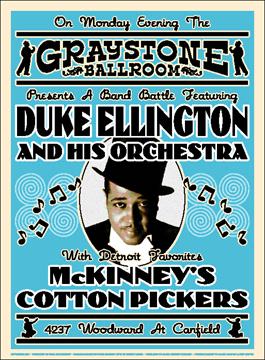
On this day in 1941 the Duke Ellington Orchestra recorded the classic Billy Strayhorn tune “Take The ‘A’ Train.” It made the charts in July, and stayed there for 7 weeks, where it eventually rose to #11. “Take the ‘A’ Train” became Ellington’s signature tune, which he also recorded many times over his career.

At the time there was a music strike after ASCAP (American Society of Composers, Authors and Publishers) raised its broadcast licensing fees. Many bandleaders like Ellington could no longer afford to play their own songs live on radio. To get around this change in the regulations, Ellington (who was in ASCAP) turned to his son Mercer Ellington and composer Billy Strayhorn, who were both signed to BMI (Broadcast Music,Inc.), and tasked them to come up with a new band book of songs and arrangements that wouldn’t be as expensive to play.

The song was almost lost to history. According to the website Jazz Standards:

“Take the ‘A’ Train,” however, was almost relegated to the wastebasket. In Stuart Nicholson’s Reminiscing in Tempo-A Portrait of Duke Ellington, Mercer Ellington
describes how he retrieved “Take the ‘A’ Train” from the garbage.
Strayhorn had thrown it there claiming it was an old thing and too much
like Fletcher Henderson.

In The World of Duke Ellington
by Stanley Dance, Strayhorn claims the title is about choosing the ‘A’
train over the ‘D’ train. He said he kept hearing about Harlem bound
housewives who took the ‘D’ train and ended up in the Bronx, as it only
went as far as 145th Street before turning off. If you want
to go to Sugar Hill, you need to take the ‘A’ train! Another account has
the title “Take the ‘A’ Train” evolving out of directions Ellington
gave Strayhorn on how to get to Ellington’s Harlem apartment by subway.

However the song came to be, it was a certified hit and re-entered the charts in 1943, 2 years after its first appearance, this time hitting #19 for another week.

Further Reading:

It’s Duke Ellington
Day in NYC!!!

Thelonious Monk;
A Jazz Great

Song Facts tells us:

Fans of the song are undoubtedly familiar with the trumpet solo
performed by Ray Nance. It is frowned upon in jazz, which prides itself
as an improvisational style of music, to repeat an ad-libbed solo.
However, Nance’s solo is the definitive one and Ellington said that no
trumpet player can play the song without borrowing from what Nance
offered. Nance was also an accomplished violinist. He invented a new way
to play “Take the A Train,” using the violin and accompanied on piano
by Dr. Billy Taylor in 1967. The two men performed the normally uptempo
song as a slow funeral march. The occasion was the memorial service for
Strayhorn and so much was the song intertwined with both Strayhorn and
Ellington, it was performed at Ellington’s memorial, too, seven years
later.  

The song was featured in the 1943 movie Reveille with Beverly. As was the case with many of the musicals of the era, the Ellington segments stood alone in case the movie had to be cut to accommodate the south, where people would boycott movies that featured Black performers. Watch:

My favourite version of “Take the ‘A’ Train” pairs Ellington & Orchestra with Ella Fitzgerald. It’s sublime. Just take a listen.

A good song can take anything thrown at it. “Take the ‘A’ Train” has been covered by numerous artists over the years. Here are just a few examples of the dozens out there, finishing up with one of the Duke Ellington Orchestra’s greatest performances of the tune.


Del Shannon & Me ► Monday Musical Appreciation

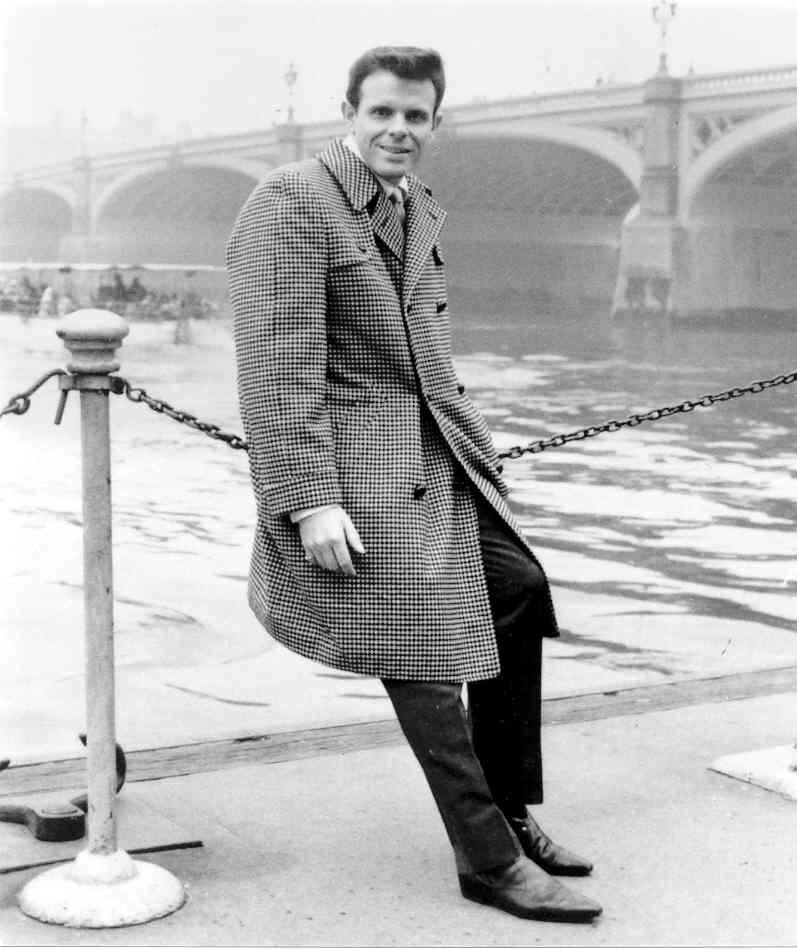
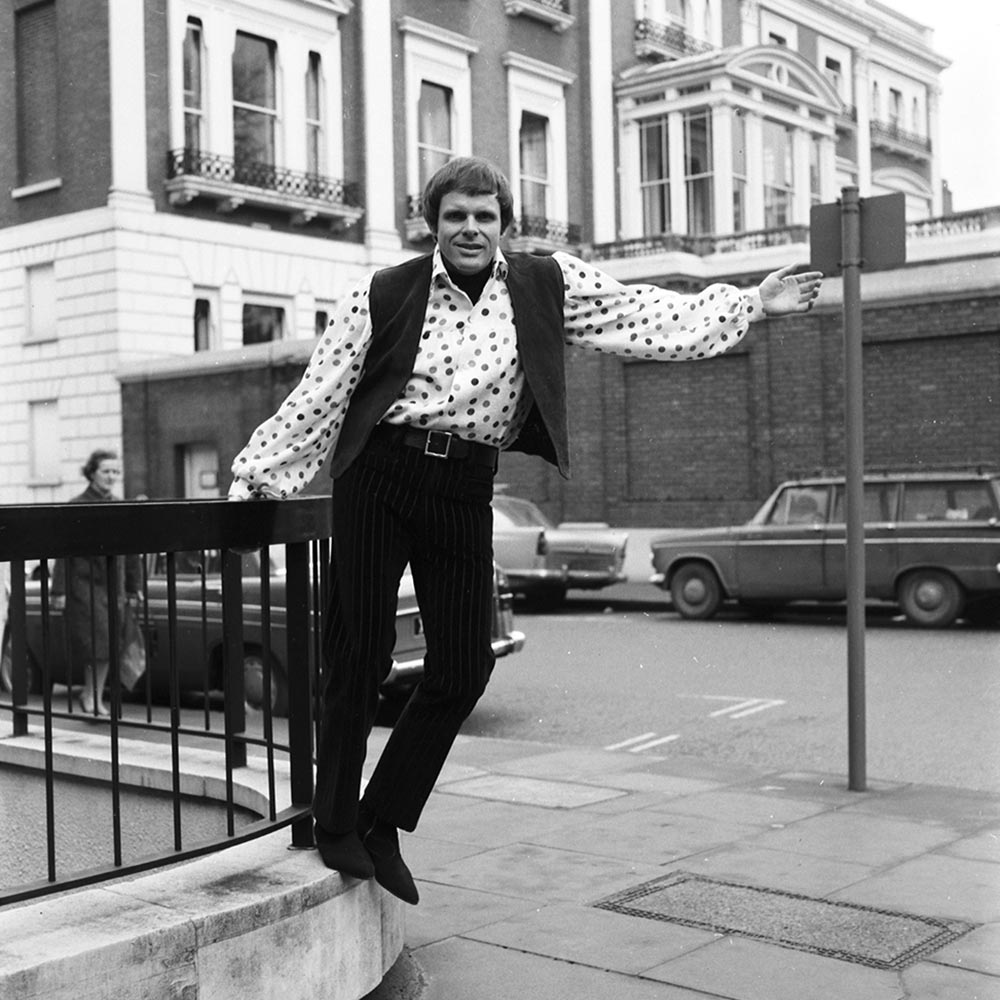
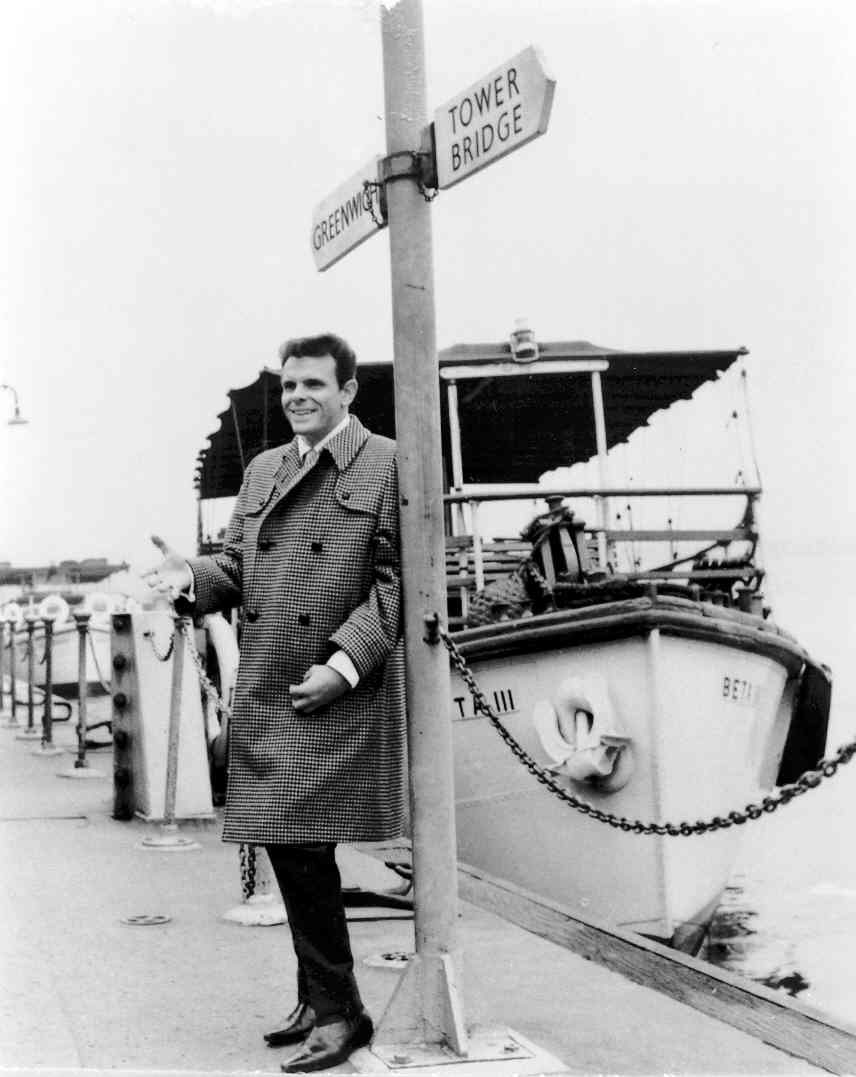
Del Shannon in Swinging London, 1963

While, I don’t usually commemorate the death of celebrities, I will make an exception for Del Shannon, the first superstar that I ever met. He died on this day in 1990 of a self-inflicted gunshot wound.

Del Shannon was born Charles Weedon Westover on the 2nd to last day of 1934 in Grand Rapids, less than 30 miles from where he grew up in Coopersville, Michigan. According to the WikiWackyWoo:

He learned ukulele and guitar and listened to country and western music, including Hank Williams, Hank Snow, and Lefty Frizzell.
He was drafted into the Army in 1954, and while in Germany played
guitar in a band called “The Cool Flames”. When his service ended, he
returned to Battle Creek, Michigan,
and worked as a carpet salesman and as a truck driver in a furniture
factory. He found part-time work as a rhythm guitarist in singer Doug
DeMott’s group called “The Moonlight Ramblers”, working at the Hi-Lo
Club.[1] 

When DeMott was fired in 1958, Westover took over as leader and singer, giving himself the name Charlie Johnson and renaming the band into The Big Little Show Band.[2] In early 1959 he added keyboardist Max Crook, who played the Musitron (his own invention of an early synthesizer). Crook had made recordings, and he persuaded Ann Arbor disc jockey Ollie McLaughlin to hear the band. McLaughlin took the group’s demos to Harry Balk and Irving Micahnik of Talent Artists in Detroit. In July 1960, Westover and Crook signed to become recording artists and composers on the Bigtop
label. Balk suggested Westover use a new name, and they came up with
“Del Shannon”, combining Mark Shannon—a wrestling pseudonym used by a
regular at the Hi-Lo Club—with Del, derived from the Cadillac Coupe de Ville, his favorite car.[2]

Shannon’s first sessions didn’t go well until he was convinced to rewrite an earlier tune, “Little Runaway.” Recorded in January of 1961, and now featuring the Musitron along with Shannon’s trademark falsetto, “Runaway” was released less than a month later. By April it hit #1 on the Billboard chart. A follow-up second single, “Hats Off To Larry,” was also a hit, climbing to the #5 position.

From there, sadly, it was a long, slow, tapering off. Shannon recorded for several labels, but never quite reached the heights of his early career. He became an alcoholic. By the time I met him his career was on the big slide to oblivion, although he was still considered a big star in England.

It was during the summer of 1966 (or was it ’65?) that my mother had a booth at the Michigan State Fair selling everything from Greasy Kids Stuff (the real name of this joke product), to giant sunglasses, to cheap jewellery, which could be professionally engraved on the spot. Think mid-’60s Kitch & Krap™.

Because we had free passes, I went to the fairgrounds with my mother every day. Maybe she thought I was going to help out in the booth, but as soon as the State Fair opened every morning, I was gone, exploring every nook and cranny of the annual event over the next month.

Just catercorner to my mother’s booth was a minuscule amphitheater, sponsored by hometown company Chevrolet. [Anything that seems minuscule to a child, must be very small indeed.] During the first 2 weeks of the State Fair was (almost) hometown boy Del Shannon was booked on that stage, while the next 2 weeks another hometown hero performed, the up-and-comer Little Stevie Wonder.

I was too young to understand the vagaries of show biz and didn’t realize that this little gig meant Del Shannon was already on the way to obscurity, while Stevie Wonders’ was still climbing the ladder to greatness. The trajectories of their respective careers were crossing at this moment in time across this little stage. All I knew at the time was these were 2 guys whose songs I knew by heart because they came out of the radio right in my own house.

I was already a fan of Del Shannon’s so I was excited to see that he was playing several free shows a day right next door. I tried to be in the audience for almost every show, sitting at a table right up front, and cheering and clapping louder than anybody. I even took delight in something I would gag at today. During the fade-out to “Runaway” Shannon slipped in a not-so-subtle product placement:

♫ ♪ ♫ My little runaway, a run, run, run, run, runaway. See the
Yew Ess Eh in your Chevrolet. My little runaway . . . ♪ ♫ ♪

It didn’t strike me as crass at the time. I thought it was so cool that he could slip in the name of his sponsor without, literally, missing a beat. Clearly, he was a genius. I was a star struck 14-year old. 
It didn’t take Shannon long to notice me and then realize I was almost a permanent fixture at his shows. After the 2nd or 3rd day Shannon approached me after one of his shows to offer me an autograph, which I foolishly declined. That’s not why I was there. He wondered why I was there and I pointed to my mother’s booth across the aisle and told him I was a big fan.

From that day on we were great pals. He would play right at me in the audience while on that little stage and often spent time talking to me after some of his shows. We never talked about Show Biz and I wish I could tell you what we talked about, but it’s long been forgotten. It was just general chit chat that’s meaningless even as it’s being spoken. 

Looking back on it now, I get the sense that he was lonely. He had once been one of the biggest stars in Rock and Roll and now was reduced to playing on a stage smaller than most bedrooms. There were times that I was the only one who stayed through his entire 20 minute show, as people wandered in and out of the performance space looking at all the Chevrolet advertisements and full-scale models. I was just a kid, yet Del Shannon needed to bask in the warmth of my adulation. During those conversations, I cannot tell you whether he was had been drinking, but he certainly didn’t come off as drunk, something I would have recognized.

When I learned of his suicide from depression in 1990, it was like a light going out on one of the lamps lit during my youth.

►►► R.I.P. ◄◄◄


[Apologies for the quality of these 2 clips. I couldn’t find better.]

The 45 Is Introduced ► Monday Musical Appreciation

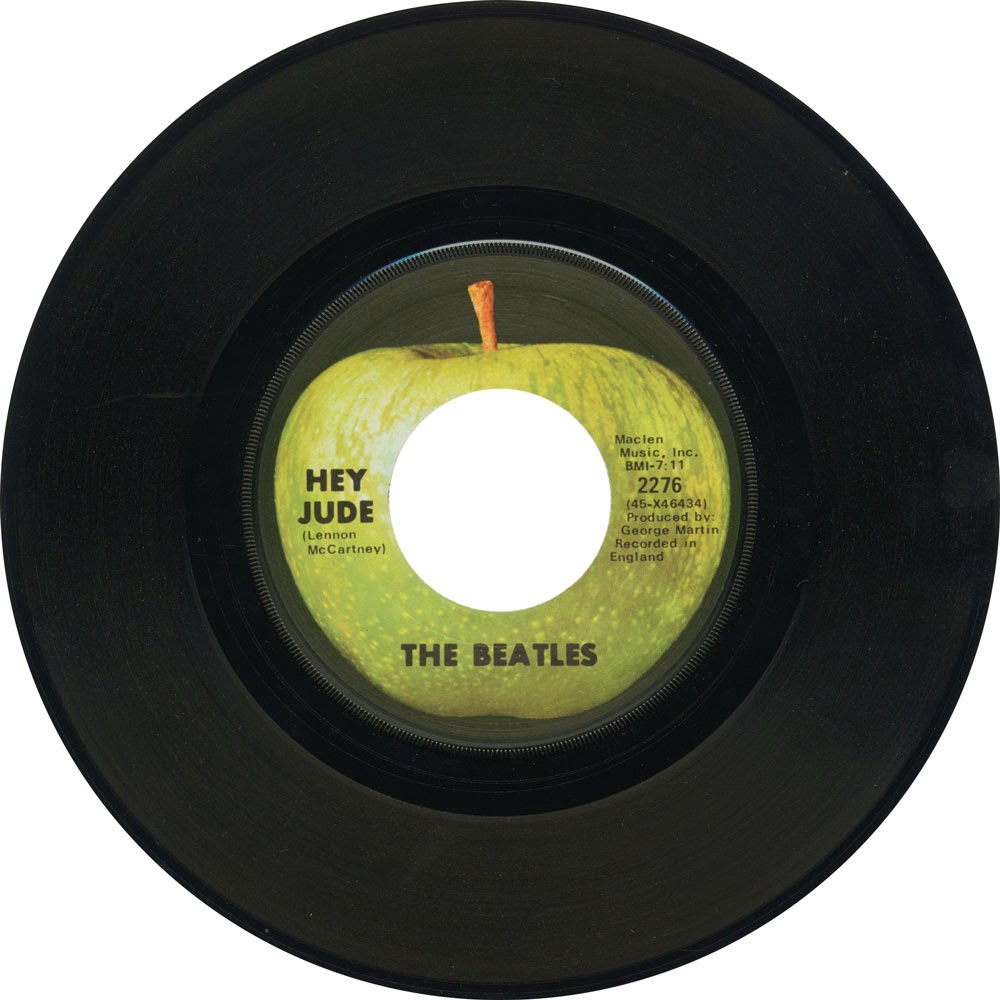
Hey Jude clocked in at 7:11, one of the longest singles to reach #1

It was 67 years ago today — in 1949 — that RCA Records introduced the 45, also known as The Single.  It was designed to replace the 78, which was made of shellac, as opposed to vinyl, and far less durable.

The 45 measured 7 inches and revolved at 45 Revolutions Per Minute (RPM), hence the name. The 45 also improved upon the sound quality of the 78. It became important to the spread of Rock and Roll, mostly because it was within the budget of most teenagers during the ’50 and ’60s. Adults tended to buy albums instead.

According to History’s Dumpster, the first 45 introduced to the public for sale was Eddy Arnold’s “Texarcana Baby.”

The History of The 45 RPM Record goes on to say:

The RCA 7″ inch 45 RPM record was cute, VERY small, and RCA’s very
colourful vinyl (each genre of music had it’s own colour of vinyl!) made
it an instant hit with younger people. Popular releases were on
standard black vinyl. Country releases were on green vinyl, Children’s
records were on yellow vinyl, Classical releases were on red vinyl,
“Race” (or R&B and Gospel) records were on orange vinyl, Blue
vinyl/blue label was used for semi-classical instrumental music and blue
vinyl/black label for international recordings 

In the beginning the 45 could only hold just over 3 minutes of music. As the WikiWackyWoo tells us:

The 3-minute single remained the standard into the 1960s, when the
availability of microgroove recording and improved mastering techniques
enabled recording artists to increase the duration of their recorded
songs. The breakthrough came with Bob Dylan‘s “Like a Rolling Stone“. Although CBS
tried to make the record more “radio friendly” by cutting the
performance in half and spreading it over both sides of the vinyl, both
Dylan and his fans demanded that the full six-minute take be placed on
one side and that radio stations play the song in its entirety.[2]
The subsequent success of “Like a Rolling Stone” played a big part in
changing the music business convention that single-song recordings had
to be under three minutes in length.

While we called the 45 a single, it would be a misnomer to believe that they were the only singles. Again, the Wiki knows all:

Singles have been issued in various formats, including 7-inch (18 cm), 10-inch (25 cm), and 12-inch (30 cm) vinyl discs (usually playing at 45 rpm); 10-inch (25-cm) shellac discs (playing at 78 rpm); cassette, 8 and 12 cm (3- and 5-inch) CD singles and 7-inch (18 cm) plastic flexi discs. Other, less common, formats include singles on digital compact cassette, DVD, and LD, as well as many non-standard sizes of vinyl disc (5-inch/12 cm, 8-inch/20 cm, etc.).

The first single I ever bought with my own money was The Beach Boys’ “I Get Around.” It cost 49 cents at Kresge’s, which was all the money I had left over after buying The Lovin’ Spoonful’s Greatest Hits.

The domination of the 45 continued until the album started to take over:

Perhaps the golden age of the single was on 45s in the 1950s to early 1960s in the early years of rock music.[3]
Starting in the mid-sixties, albums became a greater focus and more
important as artists created albums of uniformly high quality and
coherent themes, a trend which reached its apex in the development of
the concept album.
Over the 1990s and early 2000s, the single generally received less and
less attention in the United States as albums, which on compact disc
had virtually identical production and distribution costs but could be
sold at a higher price, became most retailers’ primary method of selling
music. Singles continued to be produced in the UK and Australia,
surviving the transition from compact disc to digital download.

Now that vinyl is making a comeback, so are 45s. All hail the single!!!

Paul McCartney Deported From Japan ► Monday Musical Appreciation

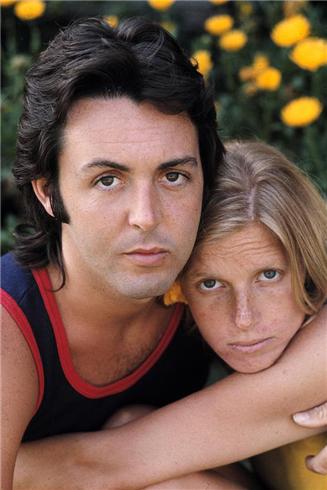
It was 36 years ago today, Sgt. Pepper taught the band to — OOPS! On this day in 1980, Paul McCartney was kicked out of Japan for trying to smuggle almost half a pound of marijuana into the country.

Sir Paul, his wife Linda, and his band Wings were about to embark on what would have been a lucrative tour of Japan. McCartney had not been to Japan since The Beatles tour of 1966, where they were greeted by enthusiastic audiences.

However, this Wings tour would end before it began when Japanese customs officials at Narita airport discovered close to eight ounces of marijuana right on the very top of his suitcase. The cute Beatle was promptly marched off to jail, where he spent the next 9 days behind bars.

This was not McCartney’s first bust for dope. In fact, he had been nabbed more than once, receiving little more than a slap on the wrist. According to the Performing Songwriter web site:

Prior to his arrest in Tokyo, Macca had been busted three times. In 1972, he paid a $2,000 fine for smuggling hashish into Sweden. The same year, he was fined for pot possession in Scotland, and in 1973, he was fined again for growing cannabis on his Scottish highlands farm. The story goes that before the Japanese tour, Paul was made to sign an affidavit stating that he no longer smoked dope, as a condition for receiving his visa. When the pot was found, Japanese authorities felt that they’d “lost face” and had no choice but to arrest him.

While 8 ounces of pot is not an extreme amount, it would have been enough to garner a smuggling charge, which could have kept McCartney locked up for the next 7 years.

As McCartney explained in the Wingspan documentary:

According to the History web site:

The question that troubled the minds of observers at the time was, “What was Paul thinking?” Half a pound of marijuana was a prodigious amount for one man to carry around for personal use—particularly a man who had had reason to expect especially close examination of his person and his baggage by Japanese customs officials. After all, Paul had been denied a Japanese entry visa just five years earlier due to his numerous earlier drug arrests in Europe.

Twenty years after his 1980 arrest, Paul would opine that his psychological motivation may have been to find an excuse to disband Wings, which he in fact did immediately following his return to England. In another interview, however, Sir Paul offered an explanation that may be the more compelling for its simplicity: “We were about to fly to Japan and I knew I wouldn’t be able to get anything to smoke over there,” McCartney said in 2004. “This stuff was too good to flush down the toilet, so I thought I’d take it with me.”

His former writing partner, John Lennon, is said to have opined:

“If he really needs weed, surely there’s enough people who can carry it
for him. You’re a Beatle, boy, a Beatle. Your face is in every damn
corner of the planet. How could you have been so stupid?”

Smartening up, McCartney decided to toe the line while in jail. Ultimate Classic Rock picks up the story:

As Inmate No. 22, he decided to become a model prisoner. As he said
in the ‘Wingspan’ documentary, “I started to realize, “Right, I’m going
to get up when the light goes on, I’m going to be the first up, I’m
going to be the first with his room cleaned, I’m going to roll up my
bed, I’m going to do this, I’m going to do that.’”

After nine days in the pokey, Japan kicked McCartney out of the country.
He returned to Japan in 1990 and subsequently toured there several
times.

Also on this day in McCartney history: In 1991 Paul appeared on MTV’s Unplugged, a performance and CD which revitalized his career.

The Danger of Speaking Truth to Power ► Monday Musical Appreciation

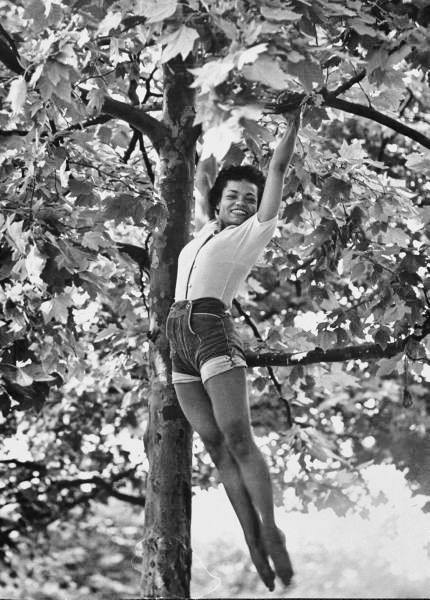
Forty-eight years ago today the blacklist of Eartha Kitt began.

It was the day after her birthday in 1968 when Kitt was invited to a luncheon at the White House. While there she was asked by the First Lady, Lady Bird Johnson, about the ongoing war in Vietnam. According to The Music History Calendar:

At a White House luncheon to discuss the rise in urban crime, Eartha Kitt gets into a notorious spat with First Lady Claudia Taylor “Lady Bird” Johnson, declaring, “Vietnam is the main reason we are having trouble with the youth of America. It is a war without explanation or reason.” Although accounts of the entire argument differ, Kitt is subsequently blackballed in America.

Blackballed? The government did everything in its power to destroy her professionally and personally. As the WikiWackyWoo tells us:

Her remarks reportedly caused Mrs. Johnson to burst into tears and led to a derailment in Kitt’s career.[15]
The public reaction to Kitt’s statements was extreme, both pro and con.
Publicly ostracized in the US, she devoted her energies to performances
in Europe and Asia. It is said that Kitt’s career in the US was ended
following her comments about the Vietnam War, after which she was
branded “a sadistic nymphomaniac” by the CIA.[8]

Kitt had been riding high as Batman’s Catwoman, but disappeared from all ‘Merkin media after the cat fight with Lady Bird. She didn’t emerge for a decade, until she appeared on Broadway in the musical Timbuktu! in 1978.

While Catwoman was my introduction to Kitt, she had a long and vital career up to that point. As a singer she had a number of hits, such as “C’est Si Bon” and the very sexy seasonal song “Santa Baby.”

Kitt was not just a celebrity guest at that White House luncheon. She had been invited because of her decade-long activism. As we learn from the WikiWackyWoo:

Kitt was active in numerous social causes in the 1950s and 1960s. In
1966, she established the Kittsville Youth Foundation, a chartered and
non-profit organization for underprivileged youth in the Watts area of Los Angeles.[22] She was also involved with a group of youth in the area of Anacostia
in Washington, D.C., who called themselves, “Rebels with a Cause.” Kitt
supported the group’s efforts to clean up streets and establish
recreation areas in an effort to keep them out of trouble by testifying
with them before the House General Subcommittee on Education of the Committee on Education and Labor.
In her testimony, in May 1967, Kitt stated that the Rebels’
“achievements and accomplishments should certainly make the adult
‘do-gooders’ realize that these young men and women have performed in 1
short year – with limited finances – that which was not achieved by the
same people who might object to turning over some of the duties of
planning, rehabilitation, and prevention of juvenile delinquents and
juvenile delinquency to those who understand it and are living it”. She
added that “the Rebels could act as a model for all urban areas
throughout the United States with similar problems”.[23] “Rebels with a Cause” subsequently received the needed funding.[24]

I fell in love with Eartha Kitt as Catwoman. As a teenager with raging hormones, I thought she was one of the sexiest women on tee vee. I didn’t learn about her singing and acting career until later and it was years after that when I learned of her activism and subsequent blacklisting. For all these reasons, Eartha Kitt is one of my personal heroes. However, as I always say, It’s all about the music:


David Bowie Dead at 69 ► Monday Musical Appreciation

Woke up this morning to the news that David Bowie has died at the age of 69. This coming just days after his birthday, the same day he released his latest album, Blackstar.

Bowie was a singer, musician, and actor, appearing in films and on Broadway.

The family released a statement:

“David Bowie died peacefully today surrounded by his family after a courageous 18-month battle with cancer. While many of you will share in this loss, we ask that you respect the family’s privacy during their time of grief.”

Something happened on the day he died,
Spirit rose a metre and stepped aside,
Somebody else took his place, and bravely cried,
(I’m a blackstar, I’m a blackstar)
~~~~~David Bowie, Blackstar, 2016

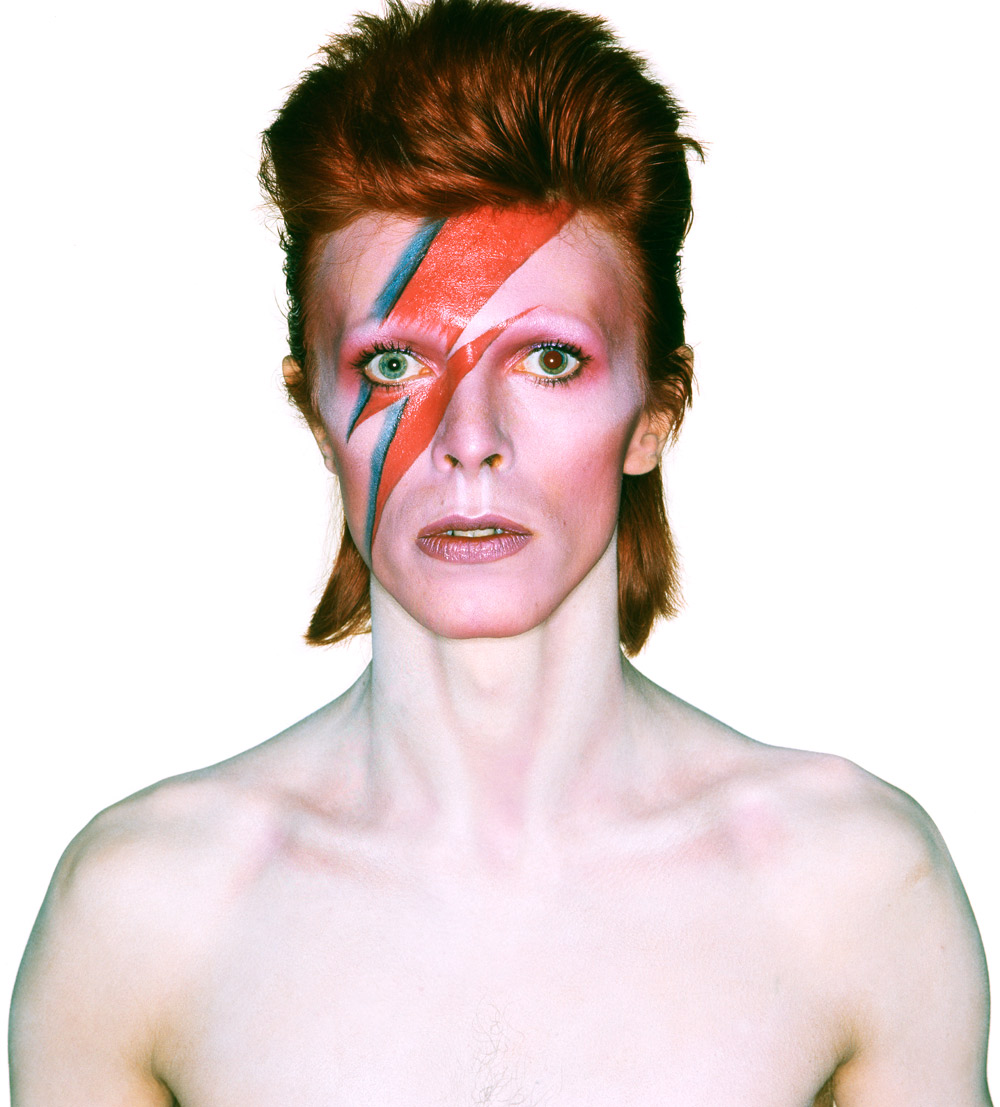
Bowie went through several ch-ch-changes during his 4 decade-plus career — from Ziggy Stardust to the Thin White Duke; from Glam to Disco to Electronica.

As Not Now Silly always says, It’s all about the music.