Tag Archives: Throwback Thursday

The Klu Klux Klan Act of 1871 ► Throwback Thursday

It was supposed to be a normal meeting of the Miami Planning and Zoning Board last night. The first 2 items were deferred from last month and there were a number of citizens who wanted to speak to it. 

Normally when I attend a meeting at Miami City Hall, I know all about the issues that will be discussed. I knew nothing about this issue. All I knew is that one of my sources, who has yet to be wrong, strongly suggested I make time for the 6PM meeting without telling me why. That was the first time they were ever wrong. It turned out to be a 6:30 meeting.

And, the meeting didn’t even start at 6:30. It took a few extra minutes to get a quorum. However, once the meeting was gavelled to order, it moved pretty quickly to the first 2 agenda items, which had been deferred from last month in the hope that the residents and developer could work out an amicable deal. That didn’t appear to have happened.
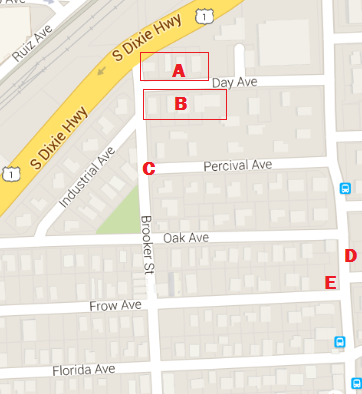
MAP LEGEND:

A: The 4 parcels on the north side of Day Avenue; B: The 4
parcels on the south side of Day Avenue; C: Brooker St. is
where Coconut Grove ends and Coral Gables begins; D: Douglas
Avenue; E: The Trolly Garage, which was the last time the city
tried to run roughshod over the neighbourhood and won a Pyrrhic
victor that cost the city a lot of money, all because of
[allegedly] corrupt Miami Commissioner Marc Sarnoff’s meddling.

In a nutshell, and not to get too deeply in the weeds: A developer wanted to “upzone” 8 parcels of land along Day Avenue to commercial from residential. Upzoning is the new word for variances, which appear to be routinely approved despite what the neighbours may want.

First to speak was the City of Miami’s lawyer, who seemed to have been asked by the board previously, to give the city’s recommendation on the upzoning request. After a whole lot of yadda, yadda, yadda the city decided to take a Solomonic approach. It recommended approval of upzoning the 4 parcels on the north side of Day Avenue (labeled A on the map to the right) and recommended denying the upzoning on the 4 parcels labeled B on the south side of Day.

Next it was the lawyer’s turn to speak on behalf of the developer. It was a whole lot more yadda, yadda, yadda, but this time couched in lawyer talk. However, as he spoke you could hear the citizens, the stakeholders, the taxpayers grumbling over the wording and assumptions being made.

Then the meeting was opened to public comments. People were asked to line up at the podiums on either side of the dais and given 2 minutes to explain their support or opposition to the application for upzoning. No one spoke on behalf of the upzoning. All were opposed.

First up was J.S. Rashid, CEO of the Coconut Grove Collaborative Development Office, who spoke about how his organization is trying to maintain the fabric of the historic West Grove neighbourhood for decades, which continues to be whittled away by decisions made in Miami. He talked about the neighbourhood development zone which had been created previously and how this was more about equity than it is about the zoning of a few parcels. He brought up how there may be 8 parcels of land, but that represents 14 residential units of affordable housing for disenfranchise people. While he was hoping for a compromise, he said if there’s not a net benefit to the community in affordable housing, he was prepared to oppose the project in toto.

Then the various shareholders, citizens, and taxpayers turn. It was, in essence, the same arguments heard every time the people of West Grove come out to protect their neighbourhood. Paraphrasing many of the comments: 

“You can’t do this.”

“Once again the historic fabric of the originally Bahamian neighbourhood is being destroyed for the sake of commerce.”

“Currently, this is affordable housing. If these are lost, what will replenish the supply of affordable housing in this impoverished neighbourhood?”

“We are 3 generations of Grovites who have lived on this block for over 30 years.” 

It look as if the board was about to recommend they defer the issue all over again, because it truly seemed as if there might still be room for compromise. However, the lawyer for the developer didn’t think more negotiations would have been productive and asked for a decision.

Then it was time for more comments from the public. Step up Professor Anthony Alfieri. You may remember reading about Professor Alfieri in the Not Now Silly Newsroom’s An Introduction to Trolleygate and Trolleygate Violates 1964 Civil Rights Act ► Not Now Silly Vindicated. Alfieri was also instrumental in unearthing Soilgate (pun intended), when his team researching Trolleygate found a memo alluding to contaminated soil in several parks in Miami. Alfieri is from the University of Miami’s School of Law and the Center
for Ethics and Public Service; not to mention Founder of the Historic
Black Church Program.

Professor Alfieri made the comparison to Trollygate, that I had been waiting for, and how an approval of this upzoning would trigger Title VIII of the Civil Rights Act of 1964 and 1968. As part of his presentation Alfieri remarked that they have been receiving anecdotal information — which was still being compiled — that developers across the city have been using coercion, intimidation and interference to deal with those opposed to upzoning plans. If that can be proven it could trigger the Klu Klux Klan act of 1871:

The Enforcement Act of 1871 (17 Stat. 13), also known as the Civil Rights Act of 1871, Force Act of 1871, Ku Klux Klan Act, Third Enforcement Act, or Third Ku Klux Klan Act, is an Act of the United States Congress which empowered the President to suspend the writ of habeas corpus to combat the Ku Klux Klan (KKK) and other white supremacy organizations. The act was passed by the 42nd United States Congress and signed into law by President Ulysses S. Grant on April 20, 1871. The act was the last of three Enforcement Acts passed by the United States Congress from 1870 to 1871 during the Reconstruction Era to combat attacks upon the suffrage rights of African Americans.
The statute has been subject to only minor changes since then, but has
been the subject of voluminous interpretation by courts.

This legislation was asked for by President Grant and passed within
one month of the president’s request for it to Congress. Grant’s request
was a result of the reports he was receiving of widespread racial
threats in the Deep South, particularly in South Carolina.
He felt that he needed to have his authority broadened before he could
effectively intervene. After the act’s passage, the president had the
power for the first time to both suppress state disorders on his own
initiative and to suspend the right of habeas corpus. Grant did not
hesitate to use this authority on numerous occasions during his
presidency, and as a result the first era KKK was completely dismantled
and did not resurface in any meaningful way until the first part of the
20th century.[1] Several of its provisions still exist today as codified statutes, but the most important still-existing provision is 42 U.S.C. § 1983: Civil action for deprivation of rights.

The city’s lawyer couldn’t answer whether approval of upzoning would trigger the Civil Rights lawsuits, but stressed as strenuously that the Planning and Zoning Board is a single issue board. Civil Rights lawsuits was not within its purview to adjudicate.

Whether it had anything to do with the Klu Klux Klan Act of 1871, or whether common sense prevailed, the developers request was DENIED.

Which is it’s this week’s Throwback Thursday.

I Love Lucy Premiers ► Throwback Thursday

On this date in 1951 “I Love Lucy” premiered on the CBS network. Although it went off the air in 1957, it has run virtually non-stop in syndication ever since.

One of the reasons we have all those episodes of “I Love Lucy” is because, unlike other sitcoms of the era, it was shot on 35mm film in front of a live studio audience, and edited into a half hour show for airing. It’s ground-breaking technique was eventually copied by all sitcoms, right down to having a live studio audience, as opposed to a canned laugh track. 

According to the WikiWackyWoo

Another component to filming the show came when it was decided to use
three 35 mm film cameras to simultaneously film the show. The idea had
been pioneered by Ralph Edwards on the game show Truth or Consequences, and had subsequently been used on Amos ‘n’ Andy as a way to save money, though Amos n’ Andy
did not use an audience. Edwards’s assistant Al Simon was hired by
Desilu to help perfect the new technique for the series. The process
lent itself to the Lucy production as it eliminated the problem
of requiring an audience to view and react to a scene three or four
times in order for all necessary shots to be filmed. Multiple cameras
would also allow scenes to be performed in sequence, as a play would be,
which was unusual at the time for filmed series. Retakes were rare and
dialogue mistakes were often played off for the sake of continuity.

However, if I Love Lucy didn’t feature the incomparable slapstick comedy of Lucille Ball, no amount of film would have saved it.

The Internet Movie Data Base tells us:

She entered a dramatic school in New York City, but while her classmate Bette Davis received all the raves, she was sent home; “too shy”. She found some work modeling for Hattie Carnegie‘s and, in 1933, she was chosen to be a “Goldwyn Girl” and appear in the film Roman Scandals (1933).

She was put under contract to RKO Radio Pictures and several small roles, including one in Top Hat
(1935), followed. Eventually, she received starring roles in B-pictures
and, occasionally, a good role in an A-picture, like in Stage Door (1937) or The Big Street (1942). While filming Too Many Girls (1940), she met and fell madly in love with a young Cuban actor-musician named Desi Arnaz.
Despite different personalities, lifestyles, religions and ages (he was
six years younger), he fell hard, too, and after a passionate romance,
they eloped and were married in November 1940. Lucy soon switched to
Metro-Goldwyn-Mayer, where she got better roles in films such as Du Barry Was a Lady (1943); Best Foot Forward (1943) and the Katharine HepburnSpencer Tracy vehicle Without Love
(1945). In 1948, she took a starring role in the radio comedy “My
Favorite Husband”, in which she played the scatterbrained wife of a
Midwestern banker. In 1950, CBS came knocking with the offer of turning
it into a television series. After convincing the network brass to let
Desi play her husband and to sign over the rights to and creative
control over the series to them, work began on the most popular and
universally beloved sitcom of all time.

Laugh all over again at these famous clips, all involving food:


Join the I Love Lucy facebookery HERE.

I’m the Barber of Oakville ► Throwback Thursday

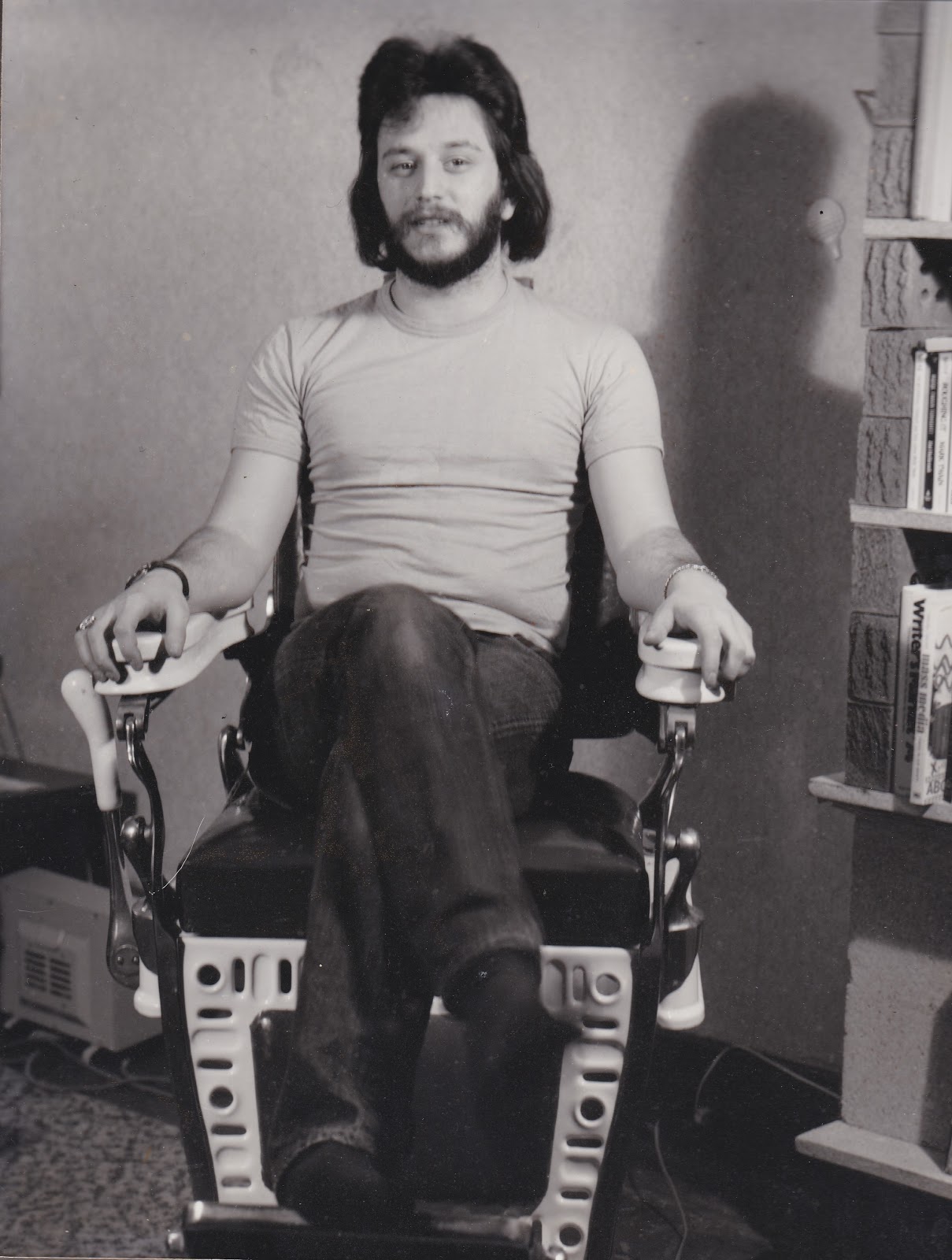
When I was about 20 years old I bought a barber’s chair, something I treasured for many years.

I found it in an antique store on Lakeshore Road in downtown Oakville, Ontario. It was one of the first big purchases of my life. It was easily the heaviest purchase of my life, until I bought my first car, a Volkswagen Beetle, a few years later. The Volkswagen was infinitely easier to move.

It was a wonderful, comfortable chair, which was fully functional. The handle (on the left) had several actions. Pushing it out would allow the chair to tip all the way back to recline, which is what barbers would do when they needed shave you. Your head would sit on the adjustable, padded headrest.

Pumping the handle forward would adjust the height of the chair, using an oil-filled hydraulic mechanism. From its lowest position to the highest was about a foot-and-a-half. It was a whole lot of fun to raise the chair up to its highest position and then release it.

The chair would also rotate 360 degrees. It was far more fun to put someone in the chair and spin them around, making them dizzier than a GOP candidate trying to explain their policies.

When I bought it it was delivered to my house on Brant Street. I never really considered what it would be like to move it from one residence to another … and boy, did I move a lot over the years.

This thing was easily 500 pounds. The metal parts were made from
chromed, cast steel. The white parts were made out of the same material
as old ceramic bathtubs. The padding on the seat (as well as the back)
had horsehair above a set of metal springs. Everything about it was
solid and heavy.

It took a minimum of 4 people to move it anywhere. Even when using a 2-wheel hand truck, it required a small cadre of folks to get it from one place to another. Stairs were its worst enemy. Yet, it made it up several sets of stairs to several apartments over the years.

The last place I had my barber’s chair was my 2nd floor apartment on Roncesvalles Avenue. When I moved from there to a 4-storey walk up on Lauder Avenue, at St. Clair, I couldn’t find anyone who would help me with the chair. It went into storage in a friend’s garage, but I lost it when he moved without telling me, abandoning the thing to a new owner.

I still miss that chair. It was a beaut.

All Hail the King of Late Night Talk Shows ► Throwback Thursday

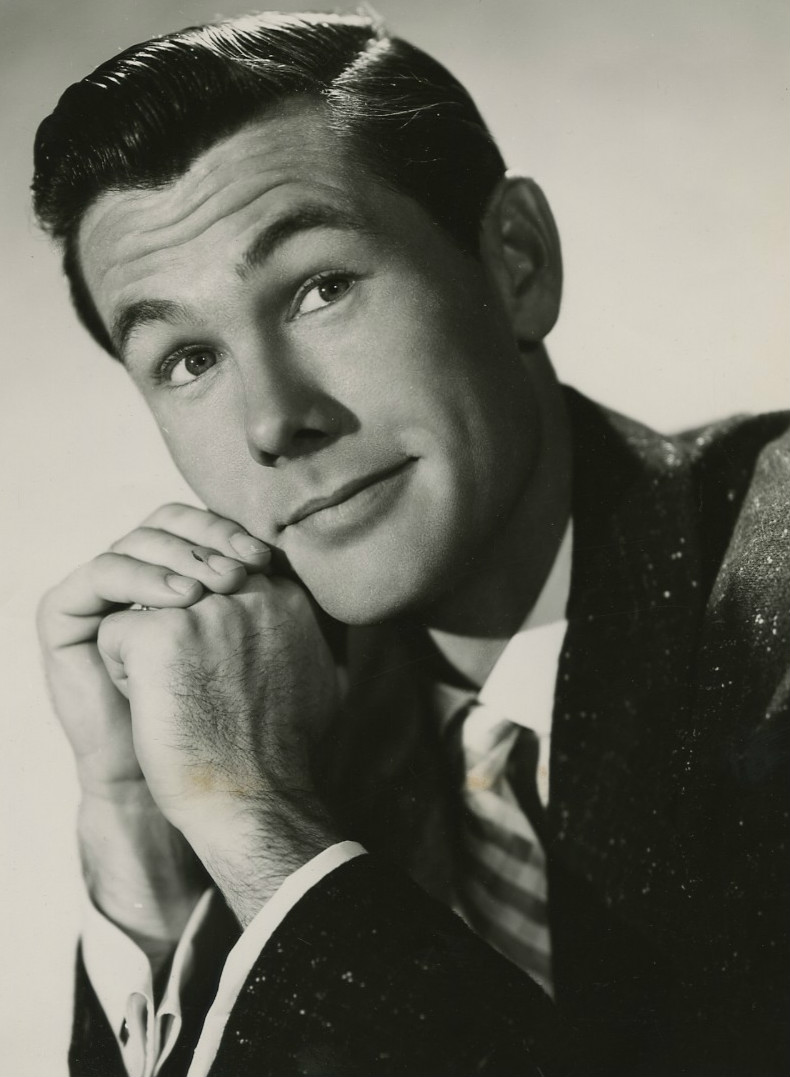
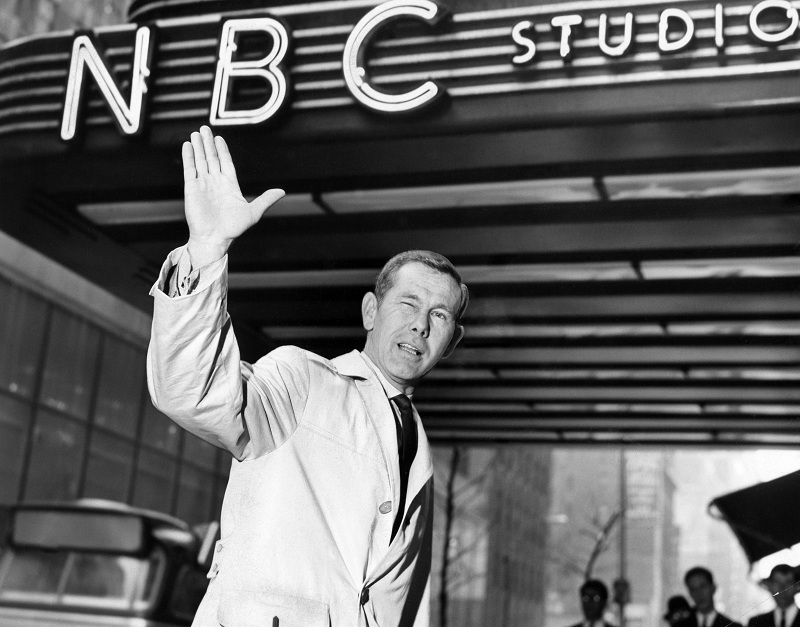
The undisputed King of Late Night is — and forever will be — Johnny Carson. On this day in 1962, Carson took the helm of The Tonight Show, and nothing was ever the same again.

Carson didn’t invent the modern talk show. That honour goes to Steve Allen. However, Carson reinvented the talk show and kept reinventing it night after night for 30 years, racking up nearly 5,000 shows. But it wasn’t his endurance that made Johnny Carson a star. According to Biography:

Audiences found comfort in Carson’s calm and steady presence in their living rooms each evening. Revered for his affable personality, quick wit and crisp interviews, he guided viewers into the late night hours with a familiarity they grew to rely on year after year. Featuring interviews with the stars of the latest Hollywood movies or the hottest bands, Carson kept Americans up-to-date on popular culture, and reflected some of the most distinct personalities of his era through impersonations, including his classic take on President Ronald Reagan. Carson created several recurring comedic characters that popped up regularly on his show, including Carnac the Magnificent, an Eastern psychic who was said to know the answers to all kinds of baffling questions. In these skits, Carson would wear a colorful cape and featured turban and attempt to answer questions on cards before even opening their sealed envelopes. Carson, as Carmac, would demand silence before answering questions such as “Answer: Flypaper.” “Question: What do you use to gift wrap a zipper?”

In August I was thrilled when Variety announced Johnny Carson Returns: Antenna TV to Air Full ‘Tonight Show’ Episodes starting January 1st:

Antenna TV has struck a multi-year deal with Carson Entertainment Group to license hundreds of hours of the NBC late-night institution. Antenna will run episodes that aired from 1972 through the end of Carson’s 30-year reign in in 1992. Because NBC owns the rights to “The Tonight Show” moniker, Antenna TV’s episodes will be billed simply as “Johnny Carson.”

“This is not a clip show. This is full episodes of Johnny Carson, the man that everyone in late-night agrees was the greatest host of all time, airing in real time as he did back in the day,” Sean Compton, Tribune’s president of strategic programming and acquisitions, told Variety. “Tuning in to ‘The Tonight Show’ is like taking a walk down Main Street in Disneyland. The minute you step in there, you feel good and you know it’s a place you want to stay. We cannot wait to bring this show to fans who remember Carson and to a new generation of viewers who have never had the chance to see Johnny in his prime.”

Starting January 1st we’ll see more comedy brilliance like this:


The Nuptial Nostalgia Tour ► Throwback Thursday

In August I announced my Road Trip to Canada, which took me to Hamilton and Toronto, cities I’ve written about previously. It was transformed into a magical road trip, filled with Deja Vu and synchronicity; a trip when finished felt preordained. It was truly throwback in ways I could have never imagined and I’m still trying to process it all.

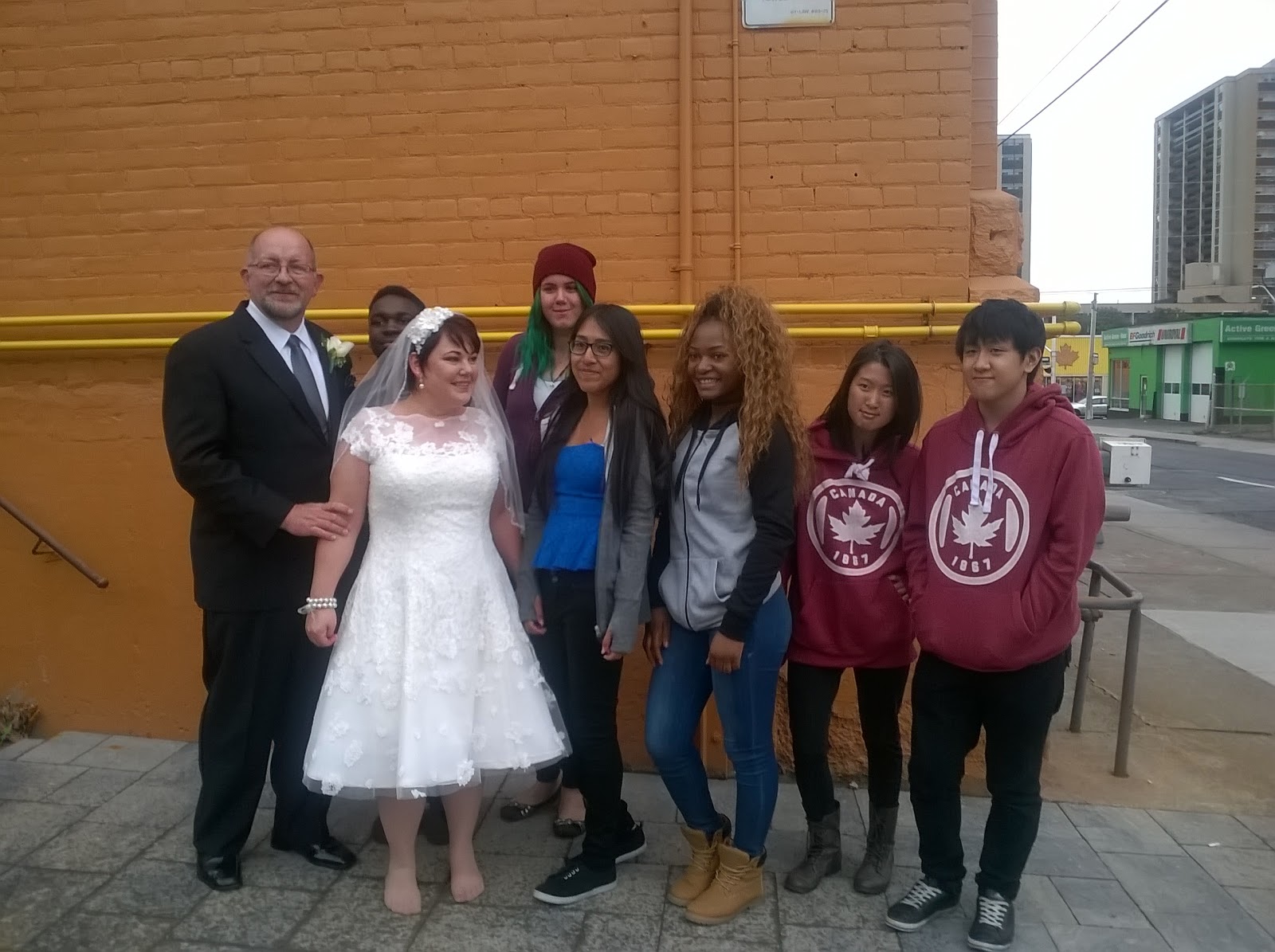
Wedding photography outside The Werx The Spice Factory

The first strong echo of the past was the wedding venue. The Spice Factory is in a building that was once called The Werx, but that was several owners ago. After the building sat idle for a while, the new owner renovated it to be a bar/special event venue. However, The Werx was the place in Hamilton where we all used to hang and put on our own events more than a decade ago. Now we were back in the building experiencing extreme Deja Vu.

In fact, The Werx was the location of the ghost hunt I conducted with the Girly Ghostbusters, first described in Hamilton Magazine.

It was great being in that building again. It was also pretty special being back with that group of people again. These are people I dearly love, but only get to have computer contact with. At one point we were all standing out in front of the building — in our tuxedos and fancy dresses — and realized, “How many times have we done this?” We laughed and laughed and laughed, just like we used to.

And yet, as comfortable as this all was, there was also a sense of dislocation. While some things were the same, other things were very different. And, the same is also true for all the other experiences I will relate below.

That’s my old apartment on the top floor, left

After the Hamilton wedding I went to Toronto, the city I truly consider home.

One of the best apartments I ever had in Toronto (and I’ve had several great ones) is in a building I never thought I’d be in again after moving out some 17 years ago and leaving behind a pull-out couch that was too heavy to carry.

Yet, recently my daughter was looking for a new apartment and found one in the very same building. I spent 2 nights with her and it was so weird and wonderful being in the same building again.

While in the old neighbourhood I spent a couple of days looking for my old supers, who had moved to an apartment above a store on Queen Street West, above one of the antique stores. I had absolutely no luck. If anyone knows where to find Shane and Margaret, I’d be most interested in hearing all about it. They were two people I had really hoped to find while in Toronto.

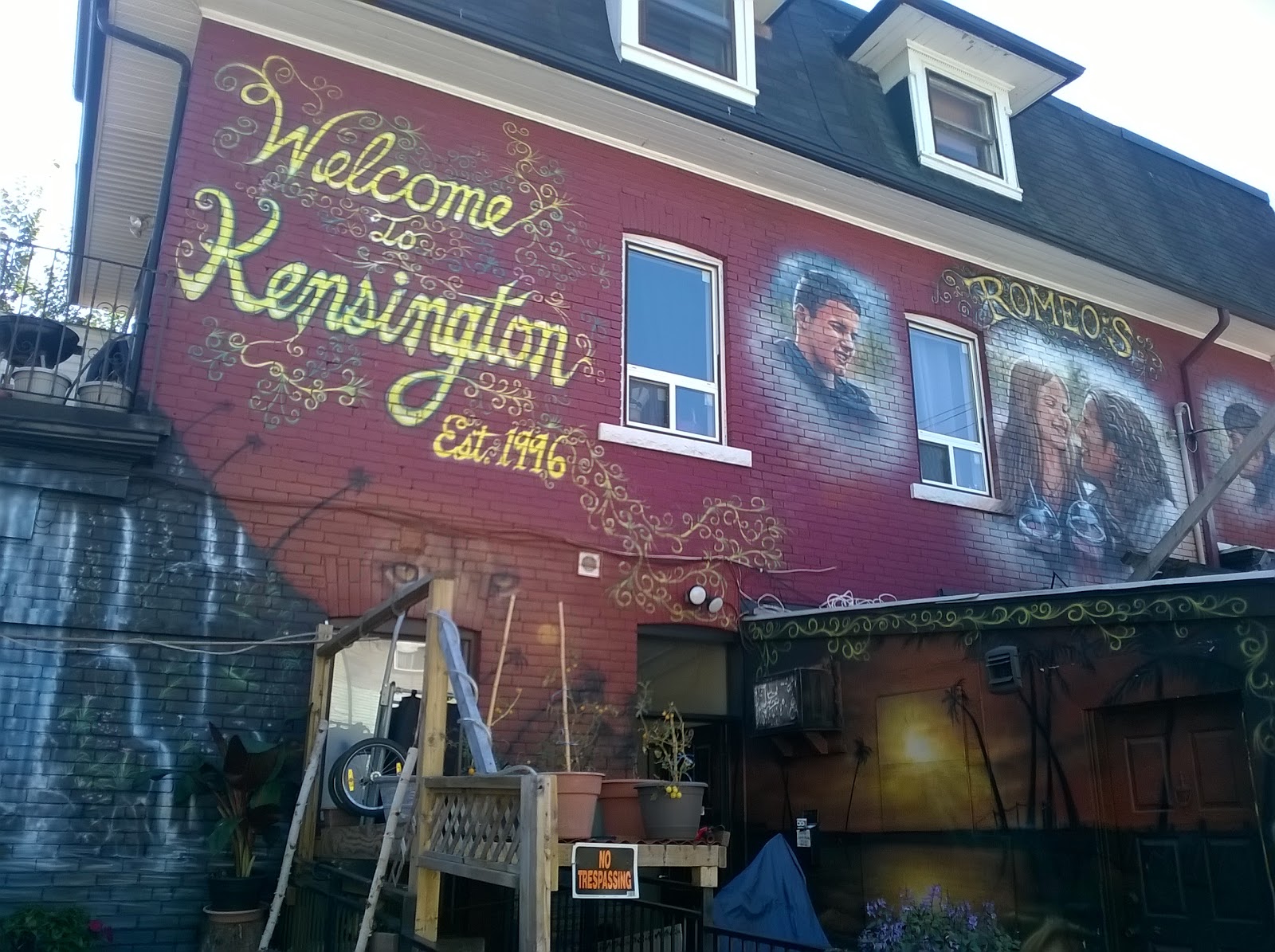
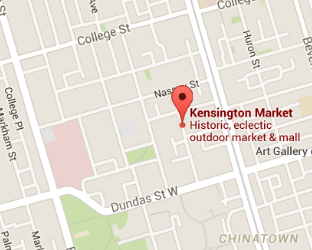
While in Toronto I used Kensington Market as my home base because it was convenient to everything and everybody.

It was wonderful being in Kensington Market again. I lived in the Market 40 years ago, when the Island Records Canada offices were on the ground floor of a house on Nassau, at Augusta. That’s why I’m considered a Marketeer and why this was a long-delayed homecoming.

There are few places on earth quite like Kensington Market. The WikiWackyWoo says:

Kensington Market is a distinctive multicultural neighbourhood in Downtown Toronto, Ontario, Canada. The Market is an older neighbourhood and one of the city’s most well-known. In November 2006, it was designated a National Historic Site of Canada.[1][2] Robert Fulford
wrote in 1999 that “Kensington today is as much a legend as a district.
The (partly) outdoor market has probably been photographed more often
than any other site in Toronto.”[3] 

Kensington Market: A small
place with a very big heart.

However, there’s no way the Googlizer can convey the sense of family one finds in The Market. It only runs a few blocks in any direction and feels like a small village. Everyone looks out for everyone. While I was there I saw store owners bring out food to give to the Punks that congregate near the alley. There’s an amazing energy in The Market, with the sidewalks crowded from early morning to late at night.

I could easily see myself living in The Market because it felt like home. Everyone welcomed me with open arms and seemed truly sorry that I had to leave.

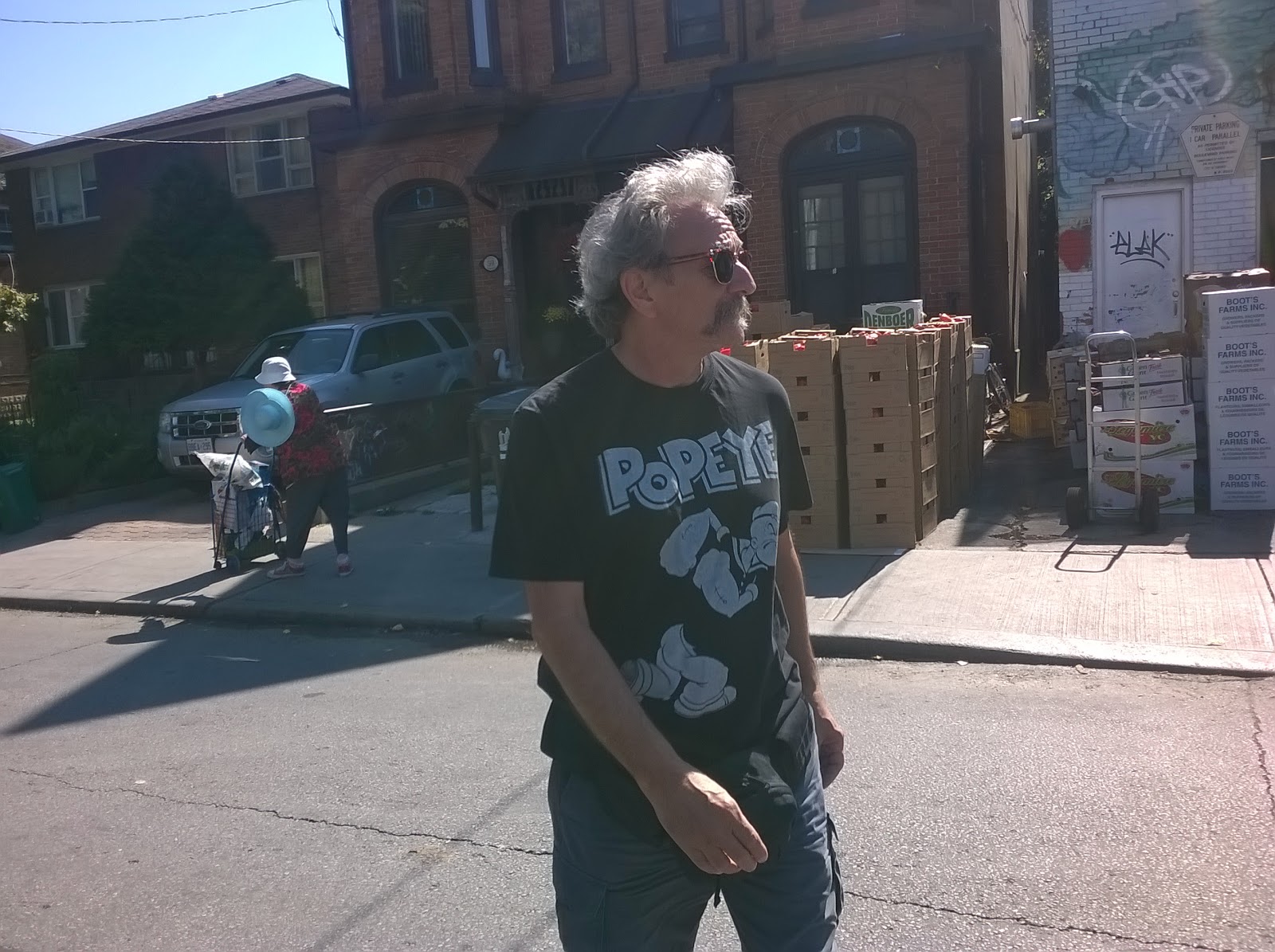
For the most part The Market is The Market. On the surface it appears to have not changed at all. The cheese shop is still there. The fishmonger has the same smells. The green grocer next to my old house is as busy as it ever was. Yet on closer examination one notices new businesses tucked between the same stores as before: New Age stores, fancy coffee shops and restaurants, and funky vintage clothing stores.

You can take the boy out of the Market, but you can’t take the Market out of the boy. That’s my
old house behind me. Island Records was on the ground floor and I lived above on the third floor.
When I  walked into Lola, I ran into Brad, who I worked with at
Citytv for over decade. Now that he’s retired, this is his hangout.

It was terrific being in the Market again!

And, I want to extend a special THANK YOU to Gwen and Huong Bang, the two sisters who own Lola in Kensington Market.

I had this crazy idea to throw myself a party while in Toronto. It was borne out of practicality. I couldn’t possibly visit everybody I wanted to see and who wanted to see me in the 4 days I was there. But, what if they all came to me?

I approached a woman I knew slightly 40 years ago, when she became friends with my first wife after we had split. They went to George Brown college together. Barbette Kensington and I reconnected a few years back on the facebookery. I knew she was an event organizer so I asked her where she would hold a party for me. She found Lola (because it’s one of her hangouts) and, somehow, ‘convinced’ Gwen and Haung to allow all of my crazy friends to descend on their place. [I’m told they were happy to do so.]

Barbette Kensington making sure all goes well at my party.
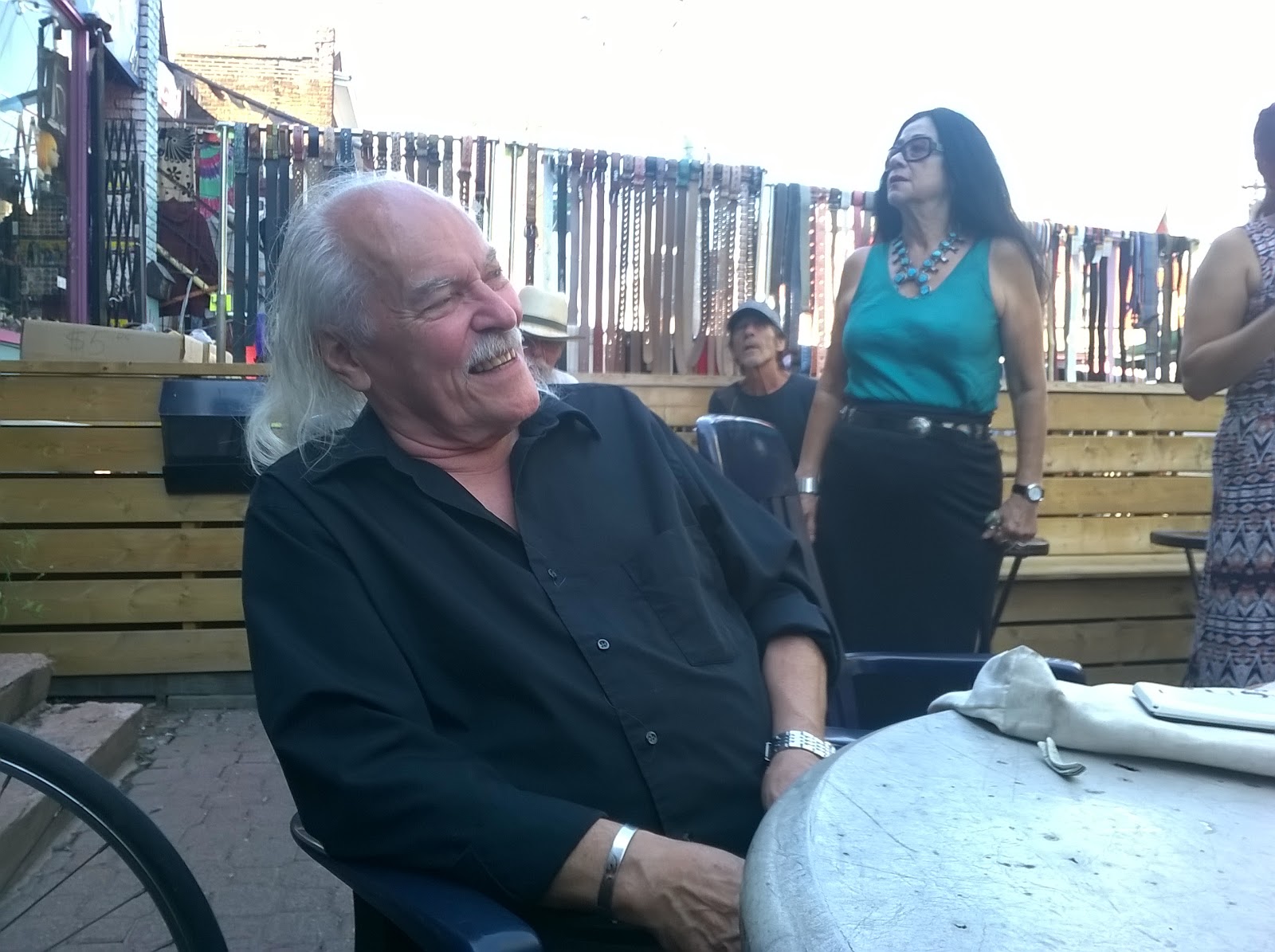
That’s the infamous Richard Flohill in the foreground.

In fact, Barbette took that ball and ran with it. My party went off flawlessly and I had such a wonderful time that I wished it would have never ended.

In some respects it hasn’t.

I’ve had a smile on my face since my trip to Toronto and my spirit has been changed in ways I can barely describe, despite my facility with words.

All I can say for now is that my life has been transformed and there are new roads and adventures in my future.