Category Archives: Musical Appreciation

The Rolling Stones ► Monday Musical Appreciation

This is an important week in The Rolling Stones‘ history, with 4 separate events to write about — 3 of them from today alone.

The year 2016 brings them full-circle.

Formed in 1962, The Rolling Stones started as a Blues band, imitating the music they heard on “race records” coming out of the United States, before they started writing their own Rock and Roll tunes in imitation of their friends and rivals The Beatles. In December the Stones will return to their roots with “Blue and Lonesome” — their first studio CD in over a decade — a brand new album of old Blues. Here’s a 60 second sample:

So, why is this day so special for The Rolling Stones?

It was on this day in 1936 that future (and former) Rolling Stones bassist Bill Wyman was born as William George Perks in South London, England. That makes him 80 years old today. Wyman stepped off The Rolling Stones’ train in 1993 and has been touring as Bill Wyman’s Rhythm Kings since 1997.

However, on Wyman’s 23rd birthday in 1959 — before he had even bought his first bass guitar — he married his first wife, 18-year-old Diane Corey. She stepped off the Wyman train in 1967, the divorce becoming final in 1969.

Today also represents the denouement of an event that could have spelled the end of The Rolling Stones. More than a year earlier, on February 27, 1977, Keith Richards was busted for possession of heroin in Toronto, Ontario, Canada.

The Stones had been in Toronto to play a surprise show — at the famed El Mocambo on Spadina Avenue — that later became the 2-LP release Love You Live. This was also the show that saw them partying with Margaret Trudeau, the wife of Canadian Prime Minister Pierre Trudeau.


• The full El Mocambo release, one tune at a time •

According to KSHE-95:

[Richards] was awakened by the Royal Canadian Mounted Police who found five grams of cocaine and 22 grams of heroin in his room, among other substances. Richards was charged with “possession of cocaine and heroin with intent to traffic.”

Richards recalled being awoken by the officers smacking him conscious so that they could formally arrest him: “That took them about two hours to drag me out — pow, pow. I woke up with, like, rosy cheeks. ‘Oh, he’s awake: You are under arrest!’ (Laughs) ‘Oh, great!’ I looked at the old lady and I said, ‘I’ll see you in about seven years, babe.'”

Although Richards was eventually released on $25,000 bail, due to the trafficking charge, he faced a minimum seven-year prison term if found guilty. Richards, who due to his growing and public drug use had been on the wrong side of the law since 1967, was now facing the most serious criminal charge of his life.

A 7 year prison term — any prison term — could have spelled the end of the Stones. However, on this date in 1978, in a plea deal that gave him a Suspended Sentence, Richards pleaded guilty to heroin possession. He was also ordered to play a charity concert for the Canadian Institute for the Blind.

Later this week we also remember event number 4, which was recorded and released as a movie.

From the WikiWackyWoo:

T.A.M.I. Show is a 1964 concert film released by American International Pictures. It includes performances by numerous popular rock and roll and R&B musicians from the United States and England. The concert was held at the Santa Monica Civic Auditorium on October 28 and 29, 1964. Free tickets were distributed to local high school students. The acronym “T.A.M.I.” was used inconsistently in the show’s publicity to mean both “Teenage Awards Music International” and “Teen Age Music International”.

The best footage from the two concert dates was combined into the film, which was released on December 29, 1964. Jan and Dean emceed the event and performed its theme song, “Here They Come (From All Over the World)”, written by Los Angeles composers P.F. Sloan and Steve Barri. Jack Nitzsche was the show’s music director.

The film was shot by director Steve Binder and his crew from The Steve Allen Show, using a precursor to high-definition television, called “Electronovision“, invented by the self-taught “electronics whiz,” Bill Sargent (H.W. Sargent, Jr). The film was the second of a small number of productions that used the system.[1] By capturing more than 800 lines of resolution at 25 frame/s, the video could be converted to film via kinescope recording with sufficiently enhanced resolution to allow big-screen enlargement. It is considered one of the seminal events in the pioneering of music films, and more importantly, the later concept of music videos.

Among the other performers at The T.A.M.I. Show were: The Beach Boys, Chuck Berry, James Brown, Marvin Gaye, Gerry & the Pacemakers, Lesley Gore, Jan and Dean, Billy J. Kramer and The Dakotas, Smokey Robinson and The Miracles, and The Supremes. The house band were those musicians known to us as The Wrecking Crew, and included such veteran studio musicians as Hal Blaine (drums), Jimmy Bond (electric bass), Lyle Ritz (upright bass), Plas Johnson (sax), and Leon Russell (piano). Handling guitars was the triple threat of Tommy Tedesco, Bill Aken, and Glen Campbell.

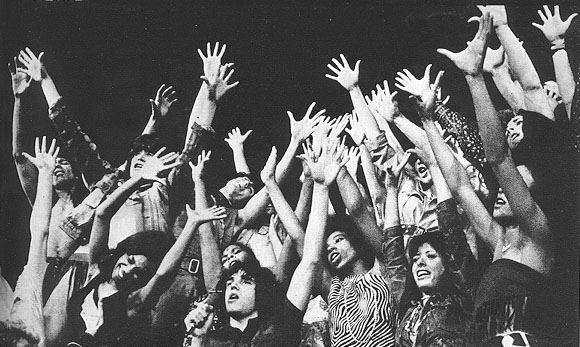
The songs The Rolling Stones played at The T.A.M.I Show were “Around and Around”, “Off the Hook”, “Time Is on My Side”, “It’s All Over Now”, “I’m Alright”, and “Let’s Get Together”. The Stones closed the movie in dramatic fashion. Check out the smoking ending where The Wrecking Crew begins to play, the Stones drop out, and the entire stage is filled with performers and dancers:

Still going strong, The Rolling Stones played “Oldchella” just last week, covering The Beatles’s “Come Together,” which was available on the innertubes briefly.

Hair ► Monday Musical Appreciation

Forty-nine years ago today Hair; The American Tribal Love Rock Musical debuted at the Shakespearean Festival in New York City and nothing was ever the same again.

Hair was the first Rock musical. I’ll let the Official Hair website pick up the story:

HAIR’s world debut was in New York City in October 1967, off-Broadway, on the heels of the Summer of Love. Jerry and I had written HAIR for the uptown big theatre audiences. It was designed to invade Broadway territory, but we couldn’t get a tumble from any of the Broadway producers. “Not our cup of tea,” they would say. We retreated from our firm intention, in response to an offer of a 6-week run for HAIR as the opening attraction at a new theater. The old Astor Library, gutted and under fresh construction, became The New York Shakespeare Festival Public Theater, and the producer Joseph Papp chose HAIR to be the premiere presentation in his experimental space, the Anspacher Theater. (Papp had produced free Shakespeare in Central Park for years, but was now branching out, to embrace the excitement of the avant garde theater movement.) Quite a wonderful opportunity, we thought; if we couldn’t get HAIR on-Broadway, at least we could jump-start it downtown in the Joseph Papp spotlight of a new New York theater, in the East Village at that, where the play itself was set. As directed by Gerald Freedman, with choreography by Anna Sokolow, the “Public” proved to be a perfect “out-of-town tryout.”

Hair eventually moved to Broadway where it ran for over 1700 performances.

Many of the men of my generation were fighting the Hair Wars with our parents. Those who were just a few years older than me were already fighting in Vietnam, the draft being a subtext of the musical.

I didn’t get to see the play until it opened as a quintessential ‘Merkin movie musical directed by Czechoslovakia immigrant Miloš Forman a decade later. However, the soundtrack was everywhere by 1968 and I could sing this song by heart.

Several of the tunes in Hair later became hits for others, most notably the 5th Dimension:

Crank it up and LET THE SUNSHINE IN!!!

https://www.gofundme.com/NotNowSilly

If you’ve liked anything you’ve read at the Not Now Silly Newsroom,  please consider donating to my Go Fund Me campaign to Support Investigative Journalism. My Freedom of Information requests from the City of Miami are beginning to add up, not to mention all the other costs of researching systemic racism and corruption in Coconut Grove.

Ennio Morricone ► Monday Musical Appreciation

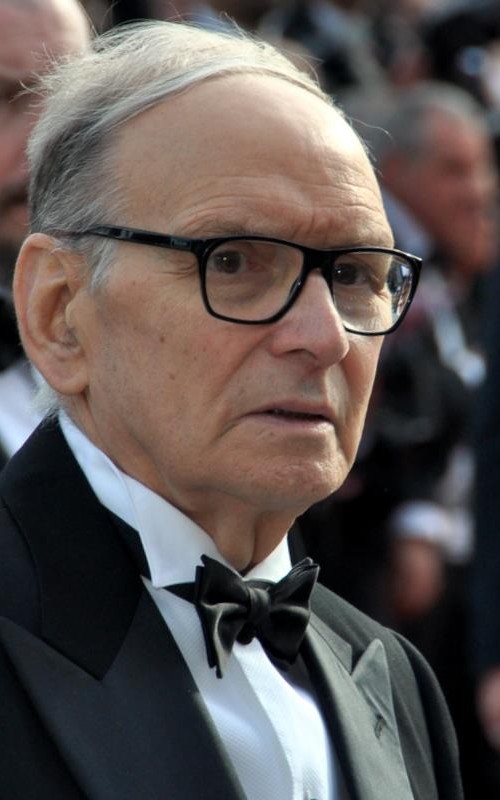
Blowing out 88 candles on his birthday cake today is composer Ennio Morricone, who has written the soundtracks to more than 500 movies and tee vee shows. 

Born in Rome, Morricone played trumpet and, apparently, composed his first piece at the age of 6. In 1953 he was asked to arrange for Italian radio shows. A few years later he started playing trumpet in a Jazz band, which may be why some of his soundtracks are so trumpet-laden.

Morricone became known for his soundtracks to several of Sergio Leone’s so-called Spaghetti Westerns, including my favourite western of all time, “Once Upon A Time in the West.”

Once Upon a Time in the West” is the only Western anyone ever needs to see. It contains all the Western tropes we’ve come to expect and weaves several story lines together into a broad canvas about the civilizing the west. And, for Bonus Points: Henry Fonda plays against type as the meanest sumnabitch on the planet.

Almost everyone recognizes this movie theme, reinterpreted by Apollo Four Forty:

I’ll let The WikiWackyWoo pick up the slack:

After having played trumpet in jazz bands in the 1940s, he became a studio arranger for RCA and started in 1955 ghost writing for film and theatre. Throughout his career, he composed music for artists such as Paul Anka, Mina, Milva, Zucchero and Andrea Bocelli. From 1960 to 1975, Morricone gained international fame by composing the music to westerns. His score to 1966’s The Good, the Bad and the Ugly is considered one of the most influential soundtracks in history[3] and was inducted into the Grammy Hall of Fame.[4] With an estimated 10 million copies sold, Once Upon a Time in the West is one of the best-selling scores worldwide.[5] He also scored seven westerns for Sergio Corbucci, Duccio Tessari‘s Ringo duology and Sergio Sollima‘s The Big Gundown and Face to Face. Morricone worked extensively for other film genres with directors such as Mauro Bolognini, Giuliano Montaldo, Roland Joffé, Roman Polanski and Henri Verneuil. His acclaimed soundtrack for The Mission (1986)[6] was certified gold in the United States. The album Yo-Yo Ma Plays Ennio Morricone stayed 105 weeks on the Billboard Top Classical Albums.[7]

Morricone’s best-known compositions include “The Ecstasy of Gold“, “Se Telefonando“, “Man with a Harmonica“, “Here’s to You“, the UK No. 2 single “Chi Mai“, “Gabriel’s Oboe” and “E Più Ti Penso“. He functioned during the period 1966–1980 as a main member of Il Gruppo, one of the first experimental composers collectives. In 1969, he co-founded Forum Music Village, a prestigious recording studio. From the 1970s, Morricone excelled in Hollywood, composing for prolific American directors such as Don Siegel, Mike Nichols, Brian De Palma, Barry Levinson, Oliver Stone, Warren Beatty and Quentin Tarantino. In 1977, he composed the official theme for the 1978 FIFA World Cup. He continued to compose music for European productions, such as Marco Polo, La Piovra, Nostromo, Fateless, Karol and En mai, fais ce qu’il te plait. Morricone’s music has been reused in television series, including The Simpsons and The Sopranos, and in many films, including Inglourious Basterds and Django Unchained.

As always, the proof is in the grooves:

The Victor Talking Machine Company ► Monday Musical Appreciation

His Master’s Voice” is the name of the 1898 painting by
Francis Barraud, who discovered that Nipper would run to the
horn of the cylinder player whenever he played a recording of
his deceased brother, who had owned Nipper before he died.

On this day in 1901 former rivals Eldridge R. Johnson and Emile Berliner launched the Victor Talking Machine Company after some earlier legal wrestling over patents.

Berliner had invented the phonograph record and Johnson had been making Gramophones to play these discs. First they combined their patents to form the Consolidated Talking Machine Company before changing its name.

According to the WikiWackyWoo:

There are different accounts as to how the name came about. RCA historian Fred Barnum[3] gives various possible origins of the “Victor” name: in “His Master’s Voice” In America, he writes, “One story claims that Johnson considered his first improved Gramophone to be both a scientific and business ‘victory.’ A second account is that Johnson emerged as the ‘Victor’ from the lengthy and costly patent litigations involving Berliner and Frank Seaman’s Zonophone. A third story is that Johnson’s partner, Leon Douglass, derived the word from his wife’s name ‘Victoria.’ Finally, a fourth story is that Johnson took the name from the popular ‘Victor’ bicycle, which he had admired for its superior engineering. Of these four accounts the first two are the most generally accepted.”[4] Perhaps coincidentally, the first use of the Victor title on a letterhead, on March 28, 1901,[5] was only nine weeks after the death of British Queen Victoria.

Harry Nilsson, one of my favourite artists, signed with RCA in 1966.

In 1926 Johnson sold his shares to a bank, which flipped the stock 3 years later to the Radio Corporation of America, which is how the company became known as RCA Victor.

The Wiki also details how many companies we know of today were spun out of the original 1901 Victor founding:

Victor and its executives became extremely wealthy by the 1920s and in doing so were able to establish markets outside of the original Camden, NJ base of operations. Having established a hand-shake agreement with Emile Berliner in forming Victor Talking Machine Co, Berliner was sent from the U.S to manage the remaining holdings of the Gramophone Co. (a company in which Victor owned a significant portion in part due to patent pooling agreements, and Victor’s success in its first two decades). Eventually, this meant that Victor (in addition to owning studios, offices, and plants in Camden, New York City, California, South America) also owned controlling interests in the Gramophone Company of Canada and England, as well as the Deutsche Gramophone Co. in Europe. Soon, Victor formed the Victor Company of Japan (JVC), founded in 1927. As Radio Corporation of America acquired Victor, the Gramophone Co. in England became EMI giving RCA a controlling interest in Victor, JVC, Columbia (UK), and EMI. During World War II, JVC severed its ties to RCA and today remains one of the oldest and most successful Japanese record labels as well as an electronics giant. Meanwhile, RCA sold its remaining shares in EMI during this time. Today the “His Master’s Voice” trademark in music is split amongst several companies including JVC (in Japan), HMV (in the UK), and RCA (in the US).

Any excuse to play Harry Nilsson:

George Gershwin ► Monday Musical Appreciation

Born on this date in 1898, by the time George Gershwin died at the all-too-early age of 38, he was known across the globe as one of the greatest composers who ever lived.

Born in Brooklyn to Russian-Jewish immigrant parents, originally the family name was Gershowitz, which George’s father Americanized to Gershwine. George was actually born Jacob Gershwine, but was called George. He later dropped the “e” from the end of his name, and eventually so did the rest of the family.

Born 2 years earlier, brother Ira (born Israel Gershwine) was George’s lifelong lyricist. Together they wrote songs now considered the foundation of the American Songbook. Songs like (edited list from Ira’s WikiWackyWoo):

As well, George Gershwin wrote many songs without lyrics. F’rinstance, most everyone recognizes passages from Rhapsody In Blue, whether they know the composer or not. The score was commissioned by The King of Jazz, Paul Whiteman, to debut at what he was billing as An Experiment In Modern Music on February 12, 1924. It was an instant classic when it was first performed.

We are used to hearing Rhapsody In Blue with a big orchestration. A revelation of the digital age is this recording of a piano roll that George Gershwin cut during his piano playing prime. Not only do we get to listen to the Master at work, but after he ‘cut’ the piano roll they rolled it right back to the beginning and Gershwin ‘cut’ a second piano part; in effect making this one of the earliest candidates for overdubbing. Close your eyes and listen to Gershwin’s 4 hands.

George Gershwin wrote standards, Broadway shows, classical pieces, and commercial fluff.

Of course one could go on endlessly about George Gershwin — as dozens of books and documentaries have — but as I always say: It’s what’s in the music that counts:


Crank it up and D A N C E ! ! !

George Gershwin ► Monday Musical Appreciation

Born on this date in 1898, by the time George Gershwin died at the all-too-early age of 38, he was known across the globe as one of the greatest composers who ever lived.

Born in Brooklyn to Russian-Jewish immigrant parents, originally the family name was Gershowitz, which George’s father Americanized to Gershwine. George was actually born Jacob Gershwine, but was called George. He later dropped the “e” from the end of his name, and eventually so did the rest of the family.

Born 2 years earlier, brother Ira (born Israel Gershwine) was George’s lifelong lyricist. Together they wrote songs now considered the foundation of the American Songbook. Songs like (edited list from Ira’s WikiWackyWoo):

As well, George Gershwin wrote many songs without lyrics. F’rinstance, most everyone recognizes passages from Rhapsody In Blue, whether they know the composer or not. The score was commissioned by The King of Jazz, Paul Whiteman, to debut at what he was billing as An Experiment In Modern Music on February 12, 1924. It was an instant classic when it was first performed.

We are used to hearing Rhapsody In Blue with a big orchestration. A revelation of the digital age is this recording of a piano roll that George Gershwin cut during his piano playing prime. Not only do we get to listen to the Master at work, but after he ‘cut’ the piano roll they rolled it right back to the beginning and Gershwin ‘cut’ a second piano part; in effect making this one of the earliest candidates for overdubbing. Close your eyes and listen to Gershwin’s 4 hands.

George Gershwin wrote standards, Broadway shows, classical pieces, and commercial fluff.

Of course one could go on endlessly about George Gershwin — as dozens of books and documentaries have — but as I always say: It’s what’s in the music that counts:


Crank it up and D A N C E ! ! !

Frank Zappa Graduates ► Monday Musical Appreciation

On this day in 1958 — 58 years ago — Frank Zappa graduated from Antelope Valley High School in Lancaster, California. That was also the alma mater of Don Vliet, aka Captain Beefheart.

Zappa would go on to release more than 100 albums under his own name or that of The Mothers of Invention.

I have been a fan of Frank Zappa since his first record Freak Out! As I have written elsewhere, I saw the LP at my local Kresge’s. On the cover was the ugliest band I had ever seen in my life. I just had to have the record. I bought it, took it home, and listened to it over and over again until every note was imprinted on my brain.

This little ditty about losing status at a high school was on his 2nd LP, Absolutely Free.

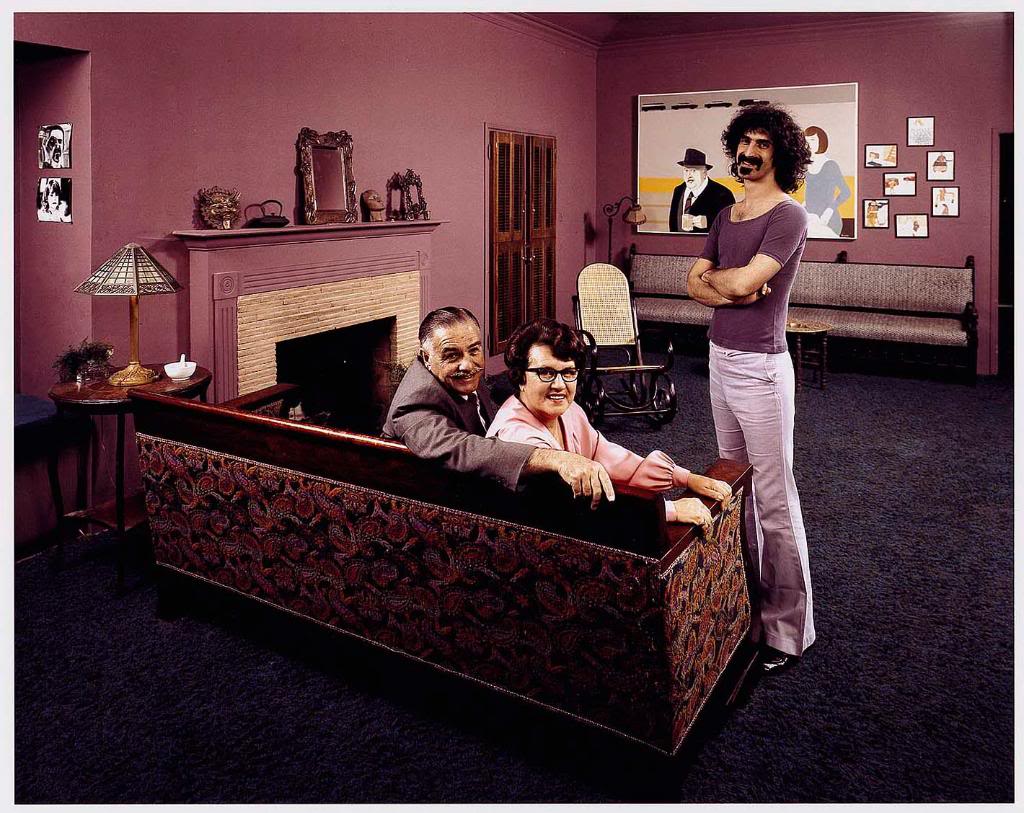
Frank Zappa and his parents

Frank Zappa Graduates ► Monday Musical Appreciation

On this day in 1958 — 58 years ago — Frank Zappa graduated from Antelope Valley High School in Lancaster, California. That was also the alma mater of Don Vliet, aka Captain Beefheart.

Zappa would go on to release more than 100 albums under his own name or that of The Mothers of Invention.

I have been a fan of Frank Zappa since his first record Freak Out! As I have written elsewhere, I saw the LP at my local Kresge’s. On the cover was the ugliest band I had ever seen in my life. I just had to have the record. I bought it, took it home, and listened to it over and over again until every note was imprinted on my brain.

This little ditty about losing status at a high school was on his 2nd LP, Absolutely Free.

Frank Zappa and his parents