Debbie Reynolds
Category Archives: Media
Putting His Money Where His Mouth Is ► Monday Musical Appreciation
![]() |
Let me be the last to wish you a Happy Holiday this year.
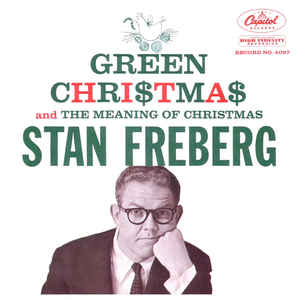
It’s only appropriate that on St. Stephen’s Day, honouring The First Martyr™, the Not Now Silly Newsoom finds a new way to commemorate Stan Freberg, this time for a selfless act of philanthropy performed on this day in musical history.
Funded by the royalties on his recording of “Green Chri$tma$”, a thumb-in-the-eye at the over-commercialization of Christmas, Freberg gave $1,000 to the Hemophilia Foundation on this day. However, there’s more to the story, of course.
More proof that the more things change, the more they stay the same: Christmas is still over-commercialized and saying anything negative against the holiday brings about a Phony War on Christmas.
According to Top 5 Christmas Novelty Recordings:
“Green Christmas” is a brilliant satire of the advertising profession and the commercialization of Christmas by the same. Borrowing from Dickens, Scooge is the COB of a large advertising firm, who is confronted by Bob Cratchit, the owner of a small spice company who is resisting the push to use Christmas as an advertising bonanza. Many of the most prominent products being hawked in a Holiday vein at that time (Coca-Cola, Chesterfield cigarettes, etc…) were slyly parodied, and subsequently many advertisers of the day refused to have their commercials air anytime the record was played and as a result the record received no commercial airplay. Nevertheless, the record sold, and there was a newspaper report on December 27, 1958, that the day after Christmas of 1958, Stan Freberg presented a check for $1,000 to the Hemophilia Foundation of Southern California as his royalties from the first year’s release of “Green Chri$tma$.” He gave all royalties from the song to charities to quell any criticism that he was profiting hypocritically from the subject of his satire.
Listen to this way-ahead-of-its-time tune:
In an unofficial vote of NNS staffers, Freberg wins as the greatest song parodist hands down. Not to take anything away from Weird Al, but Freberg took his droll humour from records to entire advertising campaigns. However, the negative publicity in the wake of “Green Chri$tma$“ almost sunk him. Here’s what the WikiWackyWoo has to say about that:
Release
At first, Capitol Records refused to release the record. Lloyd Dunn, the president of Capitol, told Freberg the record was offensive to everybody in advertising, and predicted that Freberg would never work in advertising again. Freberg responded with his intent to end his entire recording contract with Capitol. He spoke to a contact at Verve Records, and the company offered to release the record without even hearing it. Faced with this, Capitol finally decided to release it but provided no publicity at all.
Initial reception
The record was attacked in advertising trade magazines. It was played only twice in New York by one disc jockey, and the station’s sales department threatened to have him fired if he played it again. KMPC in Los Angeles played the record, but some advertisers required that their ads be scheduled more than fifteen minutes away from it. An editorial in the Los Angeles Times condemned it, but the author later admitted he had not listened to it. Similarly, Robert Wood, the station manager of KCBS-TV in Los Angeles (later president of CBS), cancelled a TV interview with Freberg because the record was “sacrilegious” and he did not need to hear it because he had read about it.[2] KRLA, Pasadena (Freberg’s hometown) showed it as reaching #3 in popularity in their printed survey. It is unclear whether this was based on sales or airplay.
Station KFWB, then known as “Color Radio Channel 98” also kept on playing the record. KFI, then the Earl C. Anthony station, played it a few times and then discontinued as did many other stations because of reaction from the advertising community.
However, the mail Freberg received from the public, including Christian clergy and rabbis, was overwhelmingly positive.
Aftermath
Within six months, Coca-Cola and Marlboro, both recognizably satirized in the record without being named, asked Freberg for advertising campaigns. He turned down Marlboro, but he created a campaign for Coca-Cola that was very effective. And contrary to the predictions of Lloyd Dunn (see above) and others, Freberg’s advertising campaigns continued to be in demand and successful for decades.
Some years later, Time magazine was going to publish an essay in their Christmas issue about the overcommercialization of Christmas, including considerable attention to Green Chri$tma$. The essay was killed at the last minute due to pressure from their sales department.
That wasn’t the only time Freberg took a crack at Christmas, nor at Jack Webb for that matter, who he also parodied in St. George and the Dragonet, and Little Blue Riding Hood, and Christmas Dragnet, all from 1953:
Sadly Stan Freberg died almost 3 years ago, in April of 2015. Read his NYT obit, Stan Freberg, Madcap Adman and Satirist, Dies at 88, for a deeper dive into this hilarious satirist’s life.
FURTHER READING at Not Now Silly:
Stan Freberg ► Nostalgia Ain’t What It Used To Be
Day In History ► Manhattan Island Sold
Subversive Cartoons ► Saturday Morning Cartoons
Not every cartoon is safe for Saturday morning kiddie shows. Here’s a terrific documentary called Cartoons Kick Ass; A History of Subversive Animation. Ironically this doc is NSFW.
It’s followed by one of my favourite subversive cartoons.
but you can WATCH IT HERE.
Frank Sinatra ► Monday Musical Appreciation
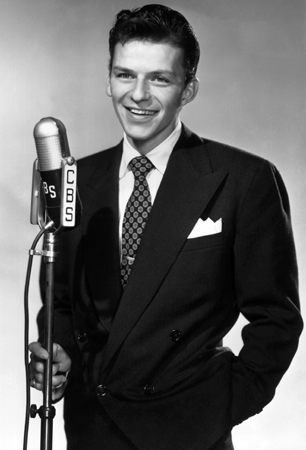
Had Frank Sinatra not died in 1998, he’d be celebrating his 101st birthday today.
When I was growing up in Detroit there weren’t a lot of LPs in the house. However, Pops had a friend who worked for Capitol Records, who gave him promo copies stamped with small holes that spelled out FREE in the upper left-hand corner. These included several classic Sinatra albums from what most people agree was his best period. The fact that he was also on The Beatles’ label didn’t hurt, either.
[By this point Sinatra was already on Reprise Records, a company he formed. This is when he got the nickname Chairman of the Board. But, I didn’t know any of that at the time. Nor would I have cared.]
I started listening to these records when I was about 11 or 12 and they spoke to me immediately. I didn’t have the contextual language to know why, but I was a fan at the first needle drop. I would listen to these albums for hours on end, marveling at every nuance. I didn’t know that in some places he was rushing the lyric and in others he allowed himself to fall behind. However, what I recognized — even at that young age — is that Sinatra had a way of imbuing a lyric with feeling in such a way that made it seem he was talking to me alone.
![]() |
| You may be cool but you will never be as cool as Sinatra leaving a helicopter with a drink in his hand |
I remember how, during the psychedelic era, I’d play some Sinatra to my band mates in Cobwebs and Strange, hoping to get them to agree to cover a Sinatra tune, or three. They couldn’t contain their laughter. It was an idea before its time. Soon it would become kitschy to break out a Sinatra tune in your set.
Of course over the years I learned more about Sinatra’s career and how he was the first teen idol. Girls — called bobbysoxers in the day — would scream and swoon over Frankie. That’s what eventually led Sinatra to go solo.
There’s some great family lore that Pops used to tell about when Sinatra broke away from the Tommy Dorsey band:
A distant cousin was part of Dorsey’s band and played with Sinatra when he was coming up.Then Sinatra went solo and was doing BOFFO business at the Paramount in NYC. The boys decided to head over from Jersey to see Frank. They showed up at the stage door and asked to see their old pal and were told that Mr. Sinatra couldn’t see him. From that day to the day he died my relative would spit when he heard Sinatra’s name or music.
Sinatra went on to win Oscars and take over Humphrey Bogart’s Rat Pack. However, it was the music that made Frank Sinatra special. That’s why some people called him simply, “The Voice.”
The Fox “News” Phony War on Christmas
Every year at this time Fox “News” ramps up one of its perpetual outrage machines.
Yes, folks, it’s that most wonderful time of the year when God’s Chosen Network launches the Phony War on Christmas because chastising heathens who prefer HAPPY HOLIDAYS is the reason for the season.
On a related note — because Fox related them this morning — there is also its Phony War on Political Correctness, which has only gotten worse since Mr. Politically Incorrect was elected to the Orange Office.
There’s a meme going around the internet this week that the call and response, male and female, song “Baby, It’s Cold Outside” is a little rape-y, with a far-too-close examination of the lyrics making it sound like it was sung by Bill Cosby.
Never letting a crisis go to waste — and never too ashamed to lie to its viewers to make them angry — Fox “News” linked that meme with its Phony War on Christmas to send out this bullshit on the facebookery:
Of course I quickly pointed out how Fox “News” was lying to its viewers. Hilarity ensues.
Meanwhile, here’s all the proof you need that Fox “News” knows what will stir up hate in its Christian audience:
Some viewers seemed happy to add Race to the mix:
While others just attacked:
And, on and on ad nauseam.
It’s true that in this age of Date Rape Drugs the song comes off as promoting roofies. However, it had a much different context when it was written. While Wikipedia can be wrong at times, it’s not wrong about this song:
“Baby, It’s Cold Outside” is a song written by Frank Loesser in 1944.[1] It is a call and response duet in which one of the singers (usually performed by a male voice) attempts to convince a guest (usually performed by a female voice) that they should stay together for a romantic evening because the weather is cold and the trip home would be difficult. Originally recorded for the film Neptune’s Daughter, it has been recorded by many artists since its original release. Although some critical analyses of the song have highlighted parts of the lyrics such as “What’s in this drink?” and his unrelenting pressure to stay despite her repeated suggestions that she should to go home,[2] more in depth analysis has noted that cultural expectations of the time period were such that women were not socially permitted to spend the night with a boyfriend or fiance, and that the female speaker states that she wants to stay, while “what’s in this drink” was a common idiom of the period used to rebuke social expectations by blaming one’s actions on the influence of alcohol;[3] the song is therefore a collusion by two willing lovers to engage in a romantic liaison, using the pretext “it’s cold outside” as a shield against the social stigma of the time period against women making their own decisions about their sexuality.
SHORTER ANALYSIS: It’s just a cute song. The outrage on both sides is totally overblown.
Now, let’s hear the tune by the guy what wrote it and his wife Lynn Loesser:
Every week Headly Westerfield publishes a Monday Musical Appreciation at the Not Now Silly Newsroom.
Richard Wayne Penniman ► Monday Musical Appreciation
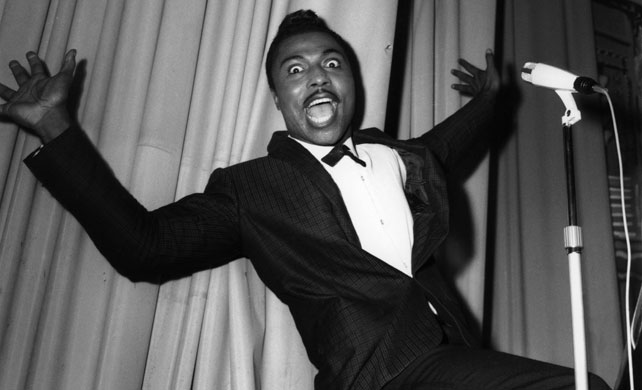
On this day in 1932, Richard Wayne Penniman was born, 2 years before Pat Boone.We know Penniman by his stage name, Little Richard.
John Lennon’s Last Concert Appearance
![]() |
| Read the official report at Elton John’s official website: 40 Years Ago Today…Elton |
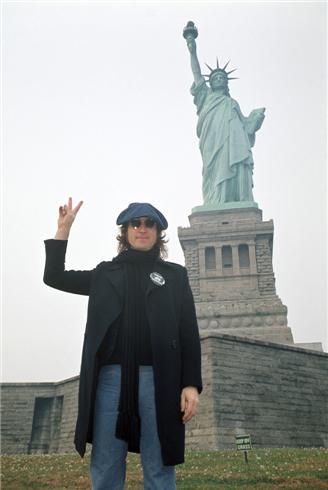
On this day in 1974 John Ono Lennon made his very last concert appearance, on stage at Madison Square Garden.
This was not a Lennon concert. It was an Elton John show and Lennon was a surprise guest. He was there to fulfill a bet he and Elton made after recording “Whatever Gets You Through the Night.” According to Ultimate Classic Rock:
It began with the bet. Elton John sang and played piano on both “Surprise Surprise (Sweet Bird of Paradox)” and “Whatever Gets You Thru the Night” for Lennon’s 1974 album Walls and Bridges. To that point, Lennon had been the only former Beatle who’d never achieved a solo No. 1 single — a streak Elton suggested would be snapped by “Whatever.” So confident was Elton, in fact, that he suggested a little wager.
“He sang harmony on it and he really did a damn good job,” Lennon told David Sheff in 1980. “So, I sort of halfheartedly promised that if ‘Whatever Gets You Thru the Night’ became No. 1, which I had no reason to expect, I’d do Madison Square Garden with him. So one day Elton called and said, ‘Remember when you promised…’”
Despite Lennon’s pessimism, “Whatever Gets You Through the Night” blew past Bachman-Turner Overdrive’s “You Ain’t Seen Nothing Yet” to reach the toppermost of the poppermost, to steal a phrase. Lennon had little choice in the matter. unless he wanted to be known as a welsher
There is almost no footage of the event:
Lennon would subsequently reconcile with Yoko Ono, following what’s been termed his Lost Weekend, although it lasted far longer than a weekend: 18 months, in fact. After he and Yoko reunited is when he began his househusband phase, a 5-year period in which he stayed away from the recording studio. Then he and Yoko recorded and released “Double Fantasy.” Just as it was rising in the charts — as no one needs reminding — he was murdered returning home from the studio on the evening of December 8, 1980.
This date is also known for several other Beatles-related stories. According to The Music History Calendar on this date in:
1966: The Beatles [recorded] Strawberry Fields Forever
1967: The Beatles [recorded] The Beatles’ Fifth Christmas Record
1968: John Lennon and Yoko Ono appear at the Marylebone Magistrates’ Court, London, to answer charges of cannabis resin posession. Lennon pleads guilty and is fined 150 pounds and 20 guineas.
1970: George Harrison [releases], My Sweet Lord1979: Ringo Starr‘s home in Los Angeles burns down, destroyed by fire.
Incidentally, earlier in the year John Lennon and former-band mate Paul McCartney reunited after the Beatles breakup to record together for the very last time. Bootleggers have long shared this mess and named it “A Toot and a Snore in ’74” for obvious reasons.
The First Televised Murder ► Throwback Thursday
![]() |
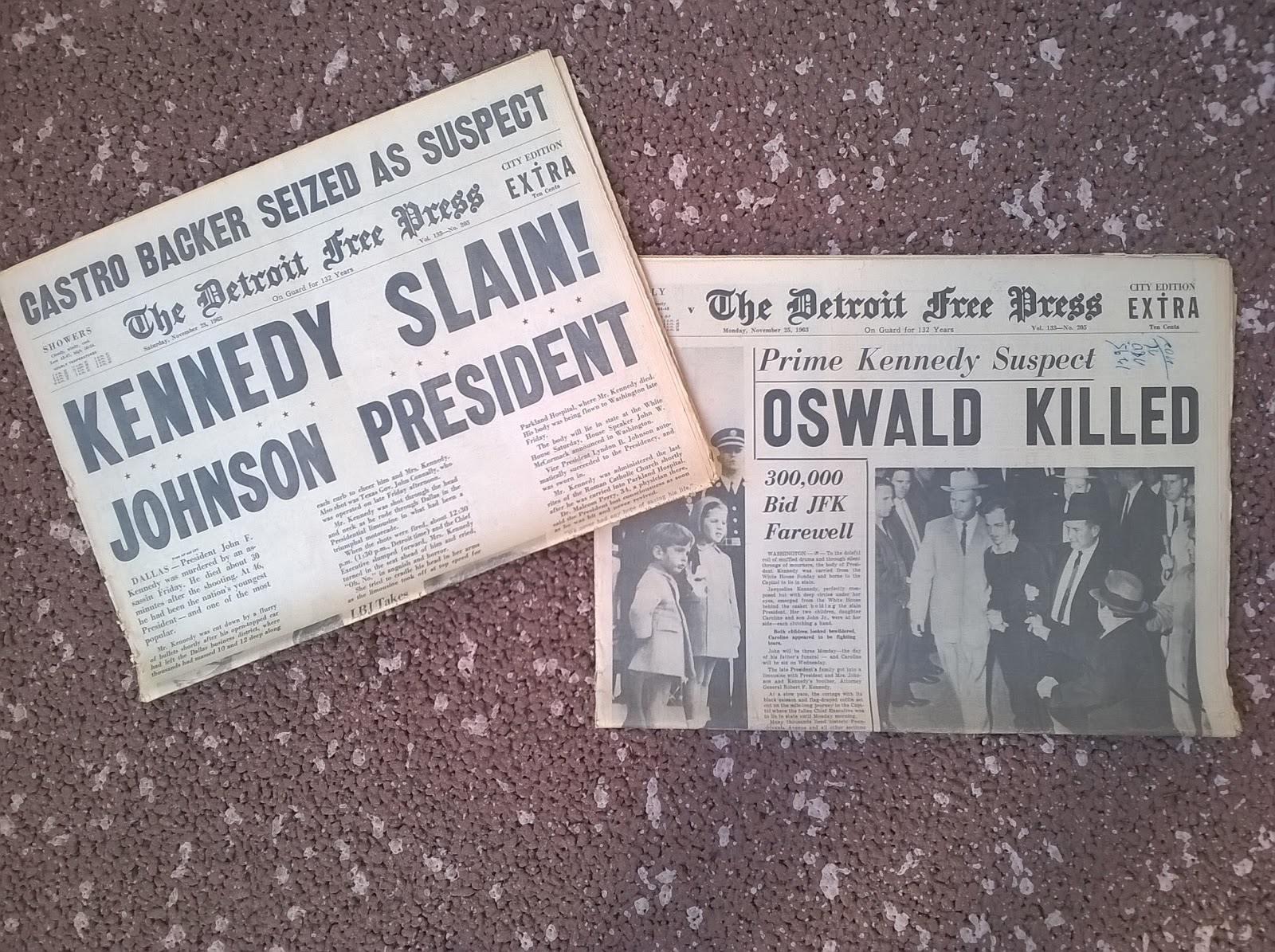
| I found this newspaper in Pops’ stuff when I was sorting |
I was just 11 years old in 1963 and already numb from the assassination of President John F. Kennedy.
It was the time in my life I was just becoming politically aware. Kennedy was a young, vibrant president who replaced Ike Eisenhower, who seemed like an old fuddy duddy in comparison.
I still didn’t know the difference between Democrat or Republican, or what political platforms were. However, there was one thing I knew: President Kennedy was revered by the Black community for having championed the Civil Rights Act in his speech from the Oval Office on June 11, 1963. This followed his sending out the National Guard to protect 2 Black students who had enrolled at the University of Alabama, but had been prevented from attending.
It was also during this period I started going out with the moving crews for my father’s store on 12th Street. [See: The Detroit Riots] This involved delivering furniture to the Black folk living in the 4-story walk-ups and duplexes in the area. One thing that always struck me was how many of these homes had small altars on mantles and tables. In these displays a combination of 3 people were represented: Jesus Christ, President Abraham Lincoln, and J.F.K.
This president seemed golden and his administration was later called Camelot by hagiographers, long before we learned of his personal peccadilloes and that he started the march into Vietnam that LBJ put on steroids.
The entire country seemed to be on hold. There was nothing else to do that Sunday morning, but sit in front of the television watching the wall-to-wall coverage of the Kennedy assassination.
I can remember it like it was yesterday. I was alone. I don’t know where my parents or sisters were, but I was glued to the tee vee. Every channel was showing the same thing. We were shown the commotion at the Dallas police HQ as they were about to transfer assassin Lee Harvey Oswald to a safer, more secure jail.
Just as Oswald was coming into camera view, Jack Ruby lunged forward and fired one shot into his stomach. Ironically, Oswald was rushed to the same hospital where President Kennedy was pronounced dead.
It was the first live televised murder and it shocked me to my core. I have now seen the same footage thousands of time in the 53 years since. We all have. But not everyone was a witness to the event as it happened.
Dr. John ► Monday Musical Appreciation
![]() |
| Please read the story My Days With John Sinclair, in which Dr. John makes a surprise guest appearance |
Blowing out 76 candles on his cake today is Malcolm John “Mac” Rebennack, better know to the world as Dr. John.
Dr. John became known to music lovers with the release of his first LP Gris-Gris in the late 60s. However, he had already paid his musical dues by then. He quit high school to play professionally in clubs in New Orleans. He also produced mono singles for a few local artists. His guitar-playing career was almost over before it started when his left ring finger was shot off after he came to the defense of a band mate. He switched to bass guitar for a while, but finally settled on piano.
After a run in with the law, and a 2-year stretch in a federal prison on drug charges, headed to Los Angeles. There “he became a “first call” session musician in the booming Los Angeles studio scene in the 1960s and 1970s and was part of the so-called “Wrecking Crew” stable of studio musicians. He provided backing for Sonny & Cher (and some of the incidental music for Cher‘s first film, Chastity), for Canned Heat on their albums Living the Blues (1968) and Future Blues (1970), and for Frank Zappa and the Mothers of Invention on Freak Out! (1966), as well as for many other acts”, according to the know-it-all Wiki.
He recalls reading about the original Doctor John in his youth, a purported Senegalese prince who came to New Orleans from Haiti, a medicinal and spiritual healer. The Doctor was a free man of color who lived on Bayou Road and claimed to have 15 wives and over 50 children. He maintained a fascination with reptiles and kept an assortment of snakes and lizards, along with embalmed scorpions and animal and human skulls. His specialization was healing, and as such, in selling gris-gris, voodoo amulets that protected the wearer from harm. Gris-Gris became the name of Dr. John the musician’s famed debut album, his own form of “voodoo medicine”.[8]
Rebennack was not supposed to be the Dr. John fronting this gumbo stew of a band. That was should have been Ronnie Barron, a singer friend from New Orleans. However, Barron’s manager talked him out of it and he went to work for Sonny and Cher instead. So Rebennack took the role of Dr. John and, ironically, the studio time for Sonny and Cher, when they were unable to make their sessions.
Gris-Gris was not a big hit, but has grown in popularity in retrospect. However, it wasn’t until his sixth LP, In the Right Place, that Dr. John was in the right place. The tune Right Place, Wrong Time was a Top 20 hit. And Dr. John has gone from strength to strength ever since.
Just this year, Dr. John also got the tribute treatment. The Musical Mojo of Dr. John: A Celebration of Mac & His Music is a CD and DVD concert, featuring Bruce Sprongsteen, Anders Osborne, Dirty Dozen Brass Band, Allen Toussaint, Chuck Leavell, Mavis Staples, John Fogerty, and, as they say, many more. The concert was produced and arranged by Don Was.
Watch the official trailer followed by some righteous Dr. John music.
The Hollywood Blacklist ► Throwback Thursday
According to the Wiki: On this day in 1947 The Screen Actors Guild implements an anti-Communist loyalty oath.
With the election of racist, xenophobic, and mysoginyst Donald J. Trump, it’s more important than ever to use this as a learning experience, unless we want to repeat it.
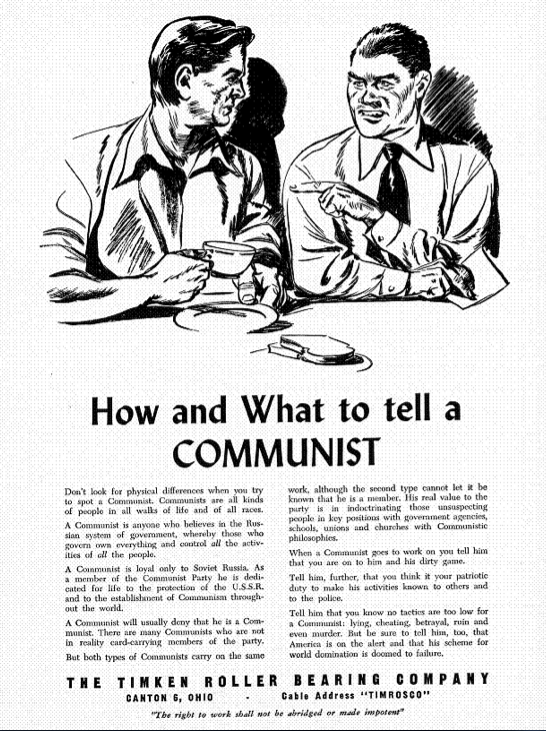
The Loyalty Oath came during the Communist Witch Hunts of the ’40s and ’50s, in which both Richard Nixon and Ronald Reagan made their bones. It was the era of Joseph McCarthy. ‘Merkins were being warned that there were Communists under every bed, or inside every pumpkin in the case of Nixon.
The House Un-American Activities Committee ramped up in 1938 to find subversives and Communists in ‘Merka, not that it was illegal to be a Commie. By the next year HUAC issued its “Yellow Report,” which called for the internment of Japanese Americans during World War II.
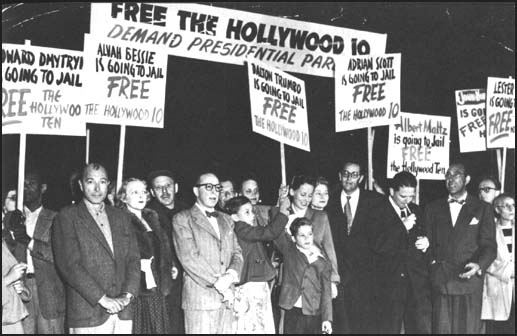
When the war ended HUAC considered briefly investigating the KKK, but decided against it to go after Commies some more. That led to 9 days of hearings in 1947 on Communist influence in the entertainment industry, most notably Hollywood. Ronald Reagan, who was President of the Screen Actors’ Guild, went before HUAC and, famously, named names.
The Wiki has more:
Many of the film industry professionals in whom HUAC had expressed interest—primarily screenwriters, but also actors, directors, producers, and others—were either known or alleged to have been members of the American Communist Party. Of the 43 people put on the witness list, 19 declared that they would not give evidence. Eleven of these nineteen were called before the committee. Members of the Committee for the First Amendment flew to Washington ahead of this climactic phase of the hearing, which commenced on Monday, October 27.[22] Of the eleven “unfriendly witnesses”, one, émigré playwright Bertolt Brecht, ultimately chose to answer the committee’s questions.[23][24]
The other ten refused, citing their First Amendment rights to freedom of speech and assembly. The crucial question they refused to answer is now generally rendered as “Are you now or have you ever been a member of the Communist Party?” Each had at one time or another been a member, as many intellectuals during the Great Depression felt that the Party offered an alternative to capitalism. Some still were members, others had been active in the past and only briefly. The Committee formally accused these ten of contempt of Congress and began criminal proceedings against them in the full House of Representatives.
In light of the “Hollywood Ten”‘s defiance of HUAC—in addition to refusing to testify, many had tried to read statements decrying the committee’s investigation as unconstitutional—political pressure mounted on the film industry to demonstrate its “anti-subversive” bona fides. Late in the hearings, Eric Johnston, president of the Motion Picture Association of America (MPAA), declared to the committee that he would never “employ any proven or admitted Communist because they are just a disruptive force and I don’t want them around.”[23] On November 17, the Screen Actors Guild voted to make its officers swear a pledge asserting each was not a Communist.
The Screen Actors Guild Loyalty Oath implemented on this date in 1947 continued for decades. Actor and former-SAG President Richard Masur is quoted in 50 YEARS: SAG REMEMBERS THE BLACKLIST as saying:
“When I joined the Screen Actors Guild in 1973, I signed the loyalty oath that, 20 years earlier, the SAG Board of Directors had made a requirement for membership. I never stopped to consider what it was I was signing. It was one in a series of papers I needed to fill out, and I was so eager to join the Guild, I probably would have signed anything they put in front of me. And I did. That’s one of the most frightening legacies of the Blacklist Era: the institutionalization of fear and prejudice.
You see, the Guild Board had not yet removed the loyalty oath from our bylaws. In fact, no action was taken until some new members refused to sign it. Those new members were the rock group The Grateful Dead, and the year was 1967.
Only after The Grateful Dead refused to sign did the Board of Directors reconsider the necessity of a loyalty oath as a precondition for joining a union of artists. Even so, the oath had become so ingrained and institutionalized by that time that initially it could not be entirely eliminated. It was simply made optional. Another seven years would pass before, in July of 1974, a year after I joined, the loyalty oath was finally removed from the Screen Actors Guild bylaws.
That’s right. It was the Grateful Dead that finally broke the back of the Loyalty Oath. Masur continues, as he make amends on the 50th Anniversary of the Oath:
Tonight, the Screen Actors Guild would like to express how deeply we regret that when courage and conviction were needed to oppose the Blacklist, the poison of fear so paralyzed our organization.
Only our sister union, Actors Equity Association, had the courage to stand behind its members and help them continue their creative live [sic] in the theater. For that, we honor Actors Equity tonight.
Unfortunately, there are no credits to restore, nor any other belated recognition that we can offer our members who were blacklisted. They could not work under assumed names or employ surrogates to front for them. An actor’s work and his or her identity are inseparable.
Screen Actors Guild’s participation in tonight’s event must stand as our testament to all those who suffered that, in the future, we will strongly support our members and work with them to assure their rights as defined and guaranteed by the Bill of Rights.
With the ugly hate rhetoric that came out of the Trump campaign, we could do worse than remembering how the Grateful Dead stood up for the First Amendment. And, with Donald Trump about to take the oath of office for POTUS, it’s incumbent on all of us to stand up for Muslims, Immigrants, Mexicans, LGBT communities, and Black folk and not allow the hate to define us.
The same goes for Trump supporters.
they refused to sign the Screen Actors Guild Loyalty Oath.