Category Archives: Media

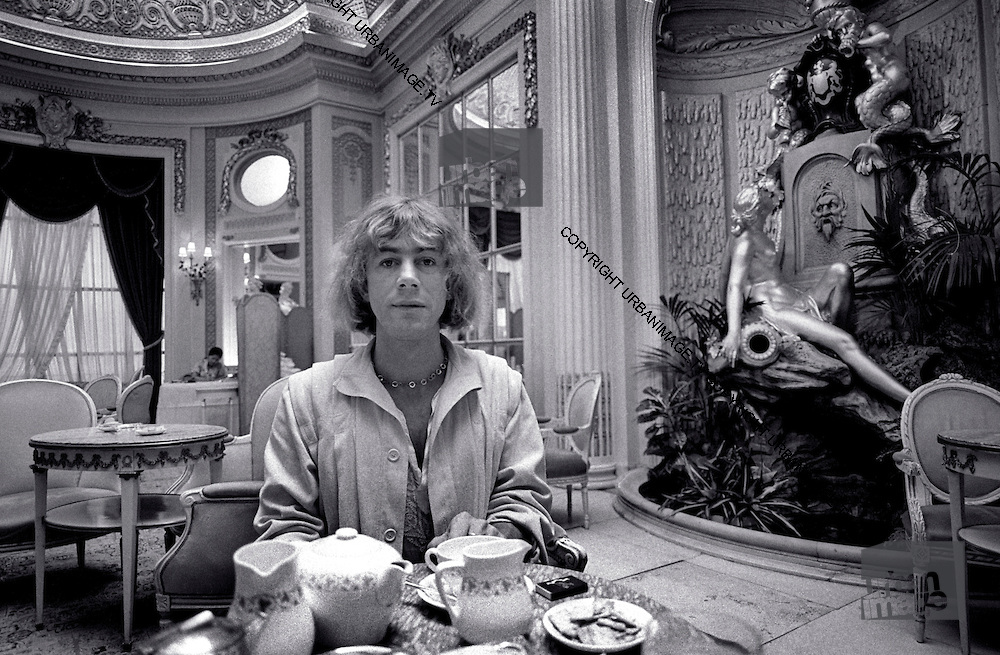
Kevin Ayers ► Monday Musical Appreciation

I’m going to use today’s Super Moon to introduce you to one of my favourite artists: Kevin Ayers.

Ayers got his start at fame with Psychedelic Jazz Rock outfit Soft Machine, which also produced Robert Wyatt (another fave) Daevid Allen, and Mike Ratledge, among others. However, Ayers was the first one out of this band with the troubled history.

I played the grooves off that record when it was new.
I’ll let the WikiWackyWoo give you an overview:

Kevin Ayers (16 August 1944 – 18 February 2013) was an English singer-songwriter and a major influential force in the English psychedelic movement. Ayers was a founding member of the pioneering psychedelic band Soft Machine in the mid-1960s, and was closely associated with the Canterbury scene.[2] He recorded a series of albums as a solo artist and over the years worked with Brian Eno, Syd Barrett, Bridget St John, John Cale, Elton John, Robert Wyatt, Andy Summers, Mike Oldfield, Nico and Ollie Halsall, among others. After living for many years in Deià, Majorca, he returned to the United Kingdom in the mid-1990s before moving to the south of France. His last album was The Unfairground, recorded in New York City, Tucson, and London in 2006.[3] The British rock journalist Nick Kent wrote: “Kevin Ayers and Syd Barrett were the two most important people in British pop music. Everything that came after came from them.”[4]

Kevin Ayers was also part of one of the greatest Super Groups ever assembled:

But, what does have to do with the Super Moon? One of my favourite Ayers tunes and fave LP have the word “moon” in the title. Enjoy and, hopefully, this is enough to make you seek out some more Kevin Ayers music.

FULL DISCLOSURE: At one time I worked for Island Records Canada and promoted the music of Kevin Ayers, but I already arrived as a fan, having bought the Soft Machine’s LPs when they were newly released.

The Flintstones ► Saturday Morning Cartoons

Strictly speaking the modern stone-age family was not a Saturday morning cartoon.

The Flintstones has the distiction of being the very first cartoon to run in prime time. It last 6 years. It moved to Saturday mornings thereafter in constant syndication and reruns. Yet, The Flintstones was never intended for children, as the WikiWackyWoo reveals:  

Despite the animation and fantasy setting, the series was initially aimed at adult audiences, which was reflected in the comedy writing, which, as noted, resembled the average primetime sitcoms of the era, with the usual family issues resolved with a laugh at the end of each episode, as well as the inclusion of a laugh track. Hanna and Barbera hired many writers from the world of live action, including two of Jackie Gleason’s writers, Herbert Finn and Sydney Zelinka, as well as relative newcomer Joanna Lee while still using traditional animation story men such as Warren Foster and Michael Maltese.

Here’s a Theme Song Sing-A-Long:

It’s interesting the show used some of Jackie Gleason’s writers. Again, I’m going to let the Wiki tell you all about it:

The show imitated and spoofed The Honeymooners, although the early voice characterization for Barney was that of Lou Costello.[22] William Hanna admitted that “At that time, The Honeymooners was the most popular show on the air, and for my bill, it was the funniest show on the air. The characters, I thought, were terrific. Now, that influenced greatly what we did with The FlintstonesThe Honeymooners was there, and we used that as a kind of basis for the concept.”[citation needed] However, Joseph Barbera disavowed these claims in a separate interview, stating that, “I don’t remember mentioning The Honeymooners when I sold the show. But if people want to compare The Flintstones to The Honeymooners, then great. It’s a total compliment. The Honeymooners was one of the greatest shows ever written.”[23] Jackie Gleason, creator of The Honeymooners, considered suing Hanna-Barbera Productions, but decided that he did not want to be known as “the guy who yanked Fred Flintstone off the air”.[24][25]

However, at 8 years old, none of that mattered to me. I just loved all the rock jokes and anachronisms, even if I didn’t know what that word meant back then.

Here’s another Sing-A-Long:

One surprise I had in adulthood was the cigarette commercials embedded in the shows. I hadn’t noticed them when I was a kid. It would be another 10 years (the beginning of 1971) before cigarette commercials were banned on television altogether.

The following edit includes the original theme song (which I also don’t remember) used for the first 2 seasons but changed to the familiar one above because it was the same tune as the Bugs Bunny “Overture, hit the lights” theme song.

Something else I didn’t learn until I was old enough for it to matter: The famed Mel Blanc voiced Barney Rubble. He also voiced (according to the Wiki): Bugs Bunny, Daffy Duck, Porky Pig, Tweety Bird, Sylvester the Cat, Yosemite Sam, Foghorn Leghorn, Marvin the Martian, Pepé Le Pew, Speedy Gonzales, Wile E. Coyote, Road Runner, the Tasmanian Devil, and many of the other characters from the Looney Tunes and Merrie Melodies theatrical cartoons during the golden age of American animation. He was, in fact, the voice for all of the major male Warner Bros. cartoon characters except for Elmer Fudd, whose voice was provided by radio actor Arthur Q. Bryan (although Blanc later voiced Fudd, as well, after Bryan’s death).[1]

Playing Trixie to his Norton was Bea Benadaret, as his wife Betty. These days you can see Bea Benaderet early Saturday (and Sunday) mornings on Antenna TV on the George Burns and Gracie Allen Show. However, I first became aware of her, and fell in love with her, as Kate Bradley, the owner of the Shady Rest Hotel in both Petticoat Junction and Green Acres. She also played Cousin Pearl Bodine on The Beverly Hillbillies, giving her the Corn Pone Hat Trick.

Enough analysis. Let’s just go to the game films:

10 Movies You Should Have Seen ► Throwback Thursday

The innertubes are full of movie lists. Here’s another one.

What makes this list different is that no understanding of the Not Now Silly Newsroom is complete without studying the following flicks.

The idea of this column came to me on Halloween when I was dial-flipping. On one channel was The Big Valley, a Western series that went on 4 seasons too long past the pilot episode. This wooden pot-boiler starred Barbara Stanwyk, trying to prove she was no longer past her prime after a very successful movie career; Lee Majors, years before he was worth 6 million dollars; Linda Evans before she became a 10 to John Dereck, who dumped her for Bo Derick; Peter Breck, an actor as boring as his name; and Richard Long, who would never, ever, ever bill himself as Dick Long.

Then I flipped to another channel. I went from watching Richard Long in a Western to watching him in a Horror flick and my love of that flick came rushing back to me:

10. House on Haunted Hill (1959)

This is the first Horror flick I can remember. I was 7 years old and, for the life of me, can’t remember who thought it was a good idea to take me to see this one. However, it scared the crap out of me and turned me into a Horror fan. Horror is a separate genre from Monster movies. But a subset of Horror might be Suspense, which naturally led to a love of Alfred Hitchcock.

NB: Stay away from the  1999 remake.

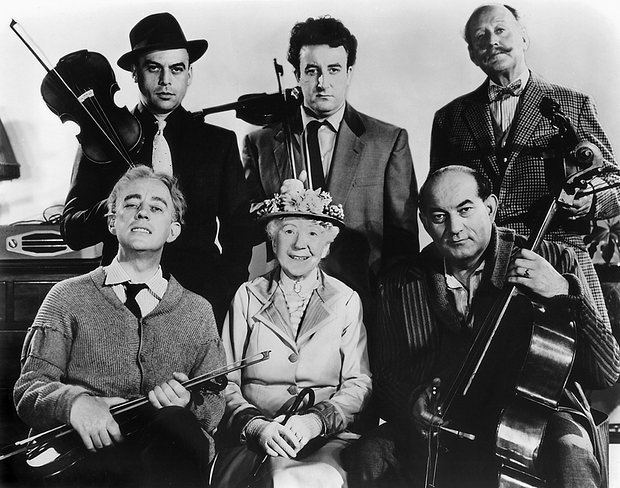
9. The Ladykillers (1955)

Likewise this classic was remade, but the 2004 flick directed by the Coen brothers starring Tom Hanks, is awful, a misfire for all involved. Ignore it, but seek out the original Ealing Studios version. It starred a pre-Obi-Wan Kenobi Alec Guiness; a pre-Inspecter Clousseau Peter Sellers; and a pre-Inspecter Clousseau nemesis Herbert Lom, among others.

It’s a dark comedy that must be enjoyed.

8. The President’s Analyst (1967)

This is a movie that should be watched not as a a satire on the Cold War, but as a realistic Documentary that predicted the Putin hacking scandal.

7. The 7 Face of Dr. Lao (1964)

Another Documentary — err — Fantasy along the lines of Willy Wonka & the Chocolate Factory, but much better. Tony Randall, long before The Odd Couple, stars as the titular Dr. Lao, but also the other 6 faces referenced in the title: The Abominable Snowman, Merlin the Magician, Appollonius of Tyana, Pan, The Giant Serpent, and Medusa.

It sounds complicated but it’s as simple as this: A traveling circus, run by the mysterious Dr. Lao, arrives in a small western town in the late 1800s, and nothing was ever the same again.

These days the movie is criticized for its cultural appropriation and the fact that Randall plays an Asian character with a sing-song accent. However, if you can get past that, a delight is waiting for you.

[It’s a sheer coincidence this ended up as #7 on this list.]

6.  Vinyl (2000)

This is the only actual Documentary on this list.It’s not on the list because I know the filmmaker and went to the movie’s premier. It’s on the list because the movie spoke to me deeply. I saw it very soon after I had liquidated my entire collection of vinyl.

I had a eclectic collections of rare, out of print, and/or highly collectible LPs and singles. Selling them one by one on eBay turned out to be: 1). A monumental task; 2). Highly lucrative.

One record, that I bought for 25 cents Canadian at a lawn sale, went for $585 US. What was it? It was Tennessee Williams reading Tennessee Williams, with a cover by illustrator Andy Warhol before he became the famous Pop Artist Andy Warhol.

At any rate I was still mourning the loss of my record collection when I saw Alan Zwieg‘s terrific doc. I identified with the obsessive record collectors Zweig interviewed, while he also dug deep within himself to understand why he is just like them.

I have since seen several of his other documentaries and each one explores a dimension of my personality I never realized was there before. You’ll have to see them to understand.

[This is not to be confused with the terrible tee vee series which debuted and was cancelled earlier this year.]

5. The Bed Sitting Room (1969)

This is another dark British comedy, which was directed by Richard Lester, who also directed The Running Jumping & Standing Still Film, a favourite of The Beatles, which is why they approved his hiring to direct their first feature film A Hard Day’s Night.

As we learn from the WikiWackyWoo:

The Bed-Sitting Room is a 1969 British comedy film directed by Richard Lester, starring an ensemble cast of British comic actors, and based on the play of the same name. It was entered into the 19th Berlin International Film Festival.[1] The film is an absurdist, post-apocalyptic, satirical black comedy.

It also starred a Who’s Who of British comedy. How can you possible go wrong?

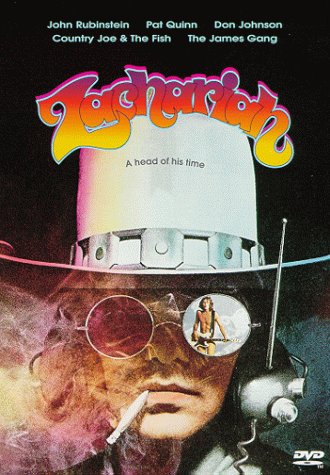
4. Zachariah (1971)

Here’s all you need to know: A Rock and Roll Western, written by The Firesign Theatre, based on Siddhartha by Herman Hesse, with Country Joe and the Fish, Elvin Bishop, The James Gang, The New York Rock Ensemble, and Don Johnson before he moved to Miami and became Vice.

3. Elvis Meets Nixon (1997)

This movie is a fictional look at a real event. Elvis Presley really did show up at the White House without an appointment demanding to see President Nixon so that the POTUS could give the drug-addled King of Rock and Roll a law enforecement badge so he could help fight drugs.

No. That really happened. But, this movie plays it up for comedy and invents some things, like this piece of dialogue, flagged by the IMDB:

Richard M. Nixon: By the way, Elvis, did you ever, ah, mess around with Marilyn Monroe?
Elvis Presley: No, sir.
Richard M. Nixon: Well, the Kennedys did, you know. Hoover played me the tape.
Elvis Presley: Well, gee, Mr. President, I kinda wish I had a tape of this meetin’, so I could play it for muh wife and muh little daughter.
Richard M. Nixon: Tape-record meetings.
[suddenly intrigued]
Richard M. Nixon: Hmm… 

Making Elvis responsible for Watergate.

For bonus points this movie has among its cast Curtis Armstrong, the world’s foremost authority on Harry Nilsson.

2. The Boy Friend (1971)

The Boy Friend started as a 1954 musical written by Sandy Wilson. It ran in London for over 2,000 performances and became Julie Andrew’s debut on Broadway, or any ‘Merkin stage for that matter. When it was finally made into a movie it was directed by the King of Excess, Ken Russell (not to be confused with the current Miami District 2 Commissioner).

Russell re-imagined the story as a play within a play. The movie follows the backstage shenanigans and love affairs of the cast of a down and out theatrical troupe about to mount that old chestnut The Boy Friend in a seedy theater somewhere in the south of England. Into the mix comes A Big Deal Hollywood director, scouting the production for his next cinematic extravaganza.

As backstage assistant manager Polly, played by Twiggy in one of her few movie roles, falls in love with the male lead Tommy, played by Tommy Tune, she suddenly has to step into the lead role when Rita falls down and breaks her leg.

What makes this such a spectacular movie is that members of that ragtag cast imagine themselves in a all singing, all dancing, all talking extravaganza. It’s during these reveries is where Russell shines. The dream sequences are directed in his patented excess, capturing perfectly the musicals of the ’30s and ’40s by directors like Busby Berkely.

Russell went on to direct Tommy and Listomania.

1. Can Heironymus Merkin Ever Forget Mercy Humppe and Find True Happiness? (1969)

Another musical, which someone on the IMDB can tell you about:

Hieronymus Merkin has recently turned 40, and is in the midst of preparing a film that details his life’s history and development. Portraying himself as a marionette being controlled by an unseen puppet master, young Merkin is led away from the innocence of youth and into the waiting arms of one woman after another by Goodtime Eddie Filth. With Filth’s guidance, Merkin steadily transforms into a self-centered womanizer, save only for the longing he feels for his one lost love, Mercy Humppe. As the producers of his life story scream for him to come up with an ending, Merkin must look back and decide what, if anything, he’s learned from his experiences. Written by Jean-Marc Rocher <rocher@fiberbit.net>


This was one of the first movies I ever saw that made me think about the process of making movies, something I eventually went to college to do. And, in a great wallop of synchronicity, Alan Zweig also went to Sheridan College a few years after me, to learn his craft.

While it’s easy to find some of the songs from the soundtrack LP, I’ve been unable to find my favourite tune “On The Boards,” sung by Bruce Forsyth as Uncle Limelight. Here it is recreated by singer Anthony Newley, who not only wrote all the songs in the movie, but directed it as well.

Take it from me. You’ll be a better person once you’ve watched all of these movies.

The Monster Mash ► Monday Musical Appreciation

On this day in 1962, Monster Mash was #1 on the Hit Parade, the first and last time a Halloween tune made the top of the charts.

The song was written by Lenny Capizzi and Robert George Pickett, who was known as Bobby “Boris” Pickett ever after. They were members of a Doo Wop band called the Cordials. One night lead singer, and aspiring actor, Bobby performed the tune “Little Darlin'” in the voice of Boris Karloff and the audience went wild.

Lightening struck, animating the song like Dr. Frankenstein’s laboratory animated the Monster. The Monster Mash was written in May and shopped around to, and rejected by, several record companies until Gary S. Paxton agreed to produce and release the single on his GarPax label. GarPax had success with the previous novelty tune “Alley Oop,” by the Hollywood Argyles, of which Paxton was a member.

The tune was credited to Bobby “Boris” Pickett & the Crypt-Kickers who get name-checked in the tune as the Crypt-Kickers Five. One of those 5 Crypt-Kickers was a young, 20-year old Leon Russell, already considered one of the hottest studio session piano players in L.A.

Over the years Pickett mined the Spooky theme for song after song, but none ever achieved the status of The Monster Mash, although when I had the LP in the ’60s I much preferred The Blood Bank Blues.

Elmer, Bugs, Daffy, & Friends ► Saturday Morning Cartoons

Let’s turn our attention to the various antagonists in the Looney Tunes/Merrie Melody cartoons from by Warner Bros.

The Warner brothers were Harry, Albert, Sam and Jack, whose parents left a repressive regime in Poland before the turn of the last century.

First locating in Baltimore, then London, Ontario, Canada, before settling back in Baltimore. Then, a few years later, the family moved to Youngstown, Ohio. That’s where the brothers Warner first entered Show Business near the bottom rung of the ladder in the early 1900s.

Sam and Albert got their hands on a movie projector, paid $150 for prints of Life of an American Fireman and The Great Train Robbery, and took their show on the road. They started in the small towns of western Pennsylvania and eastern Ohio. These were mining towns starved for entertainment. As it turned out showing movies to rapt audiences was like printing cash. As the other brothers joined, it wasn’t long before they bought their first movie theater, and then another. Then they moved into film distribution, until they eventually branched out into producing movies at their own studio in Hollywood before the first World War.

By 1930 Warner Bros. was a powerhouse in the movie biz and decided to branch out into cartoons, by buying them from Leon Schlesinger, who got them from Harman and Ising Studios. The Looney Toons and Merrie Melodies cartoons became shorts for movie theaters playing between Warner Bros. movie double bills.

These cartoons eventually made it to Saturday morning tee vee, which was starved for content in the late ’50s and ’60s. That where those of my generation watched them endlessly.

Enough history. Here are some cartoons to Make ‘Merka Laugh Again, especially the last one with a wascally wabbit teaching a Donald Trump wannabe what’s what:

The Rolling Stones ► Monday Musical Appreciation

This is an important week in The Rolling Stones‘ history, with 4 separate events to write about — 3 of them from today alone.

The year 2016 brings them full-circle.

Formed in 1962, The Rolling Stones started as a Blues band, imitating the music they heard on “race records” coming out of the United States, before they started writing their own Rock and Roll tunes in imitation of their friends and rivals The Beatles. In December the Stones will return to their roots with “Blue and Lonesome” — their first studio CD in over a decade — a brand new album of old Blues. Here’s a 60 second sample:

So, why is this day so special for The Rolling Stones?

It was on this day in 1936 that future (and former) Rolling Stones bassist Bill Wyman was born as William George Perks in South London, England. That makes him 80 years old today. Wyman stepped off The Rolling Stones’ train in 1993 and has been touring as Bill Wyman’s Rhythm Kings since 1997.

However, on Wyman’s 23rd birthday in 1959 — before he had even bought his first bass guitar — he married his first wife, 18-year-old Diane Corey. She stepped off the Wyman train in 1967, the divorce becoming final in 1969.

Today also represents the denouement of an event that could have spelled the end of The Rolling Stones. More than a year earlier, on February 27, 1977, Keith Richards was busted for possession of heroin in Toronto, Ontario, Canada.

The Stones had been in Toronto to play a surprise show — at the famed El Mocambo on Spadina Avenue — that later became the 2-LP release Love You Live. This was also the show that saw them partying with Margaret Trudeau, the wife of Canadian Prime Minister Pierre Trudeau.


• The full El Mocambo release, one tune at a time •

According to KSHE-95:

[Richards] was awakened by the Royal Canadian Mounted Police who found five grams of cocaine and 22 grams of heroin in his room, among other substances. Richards was charged with “possession of cocaine and heroin with intent to traffic.”

Richards recalled being awoken by the officers smacking him conscious so that they could formally arrest him: “That took them about two hours to drag me out — pow, pow. I woke up with, like, rosy cheeks. ‘Oh, he’s awake: You are under arrest!’ (Laughs) ‘Oh, great!’ I looked at the old lady and I said, ‘I’ll see you in about seven years, babe.'”

Although Richards was eventually released on $25,000 bail, due to the trafficking charge, he faced a minimum seven-year prison term if found guilty. Richards, who due to his growing and public drug use had been on the wrong side of the law since 1967, was now facing the most serious criminal charge of his life.

A 7 year prison term — any prison term — could have spelled the end of the Stones. However, on this date in 1978, in a plea deal that gave him a Suspended Sentence, Richards pleaded guilty to heroin possession. He was also ordered to play a charity concert for the Canadian Institute for the Blind.

Later this week we also remember event number 4, which was recorded and released as a movie.

From the WikiWackyWoo:

T.A.M.I. Show is a 1964 concert film released by American International Pictures. It includes performances by numerous popular rock and roll and R&B musicians from the United States and England. The concert was held at the Santa Monica Civic Auditorium on October 28 and 29, 1964. Free tickets were distributed to local high school students. The acronym “T.A.M.I.” was used inconsistently in the show’s publicity to mean both “Teenage Awards Music International” and “Teen Age Music International”.

The best footage from the two concert dates was combined into the film, which was released on December 29, 1964. Jan and Dean emceed the event and performed its theme song, “Here They Come (From All Over the World)”, written by Los Angeles composers P.F. Sloan and Steve Barri. Jack Nitzsche was the show’s music director.

The film was shot by director Steve Binder and his crew from The Steve Allen Show, using a precursor to high-definition television, called “Electronovision“, invented by the self-taught “electronics whiz,” Bill Sargent (H.W. Sargent, Jr). The film was the second of a small number of productions that used the system.[1] By capturing more than 800 lines of resolution at 25 frame/s, the video could be converted to film via kinescope recording with sufficiently enhanced resolution to allow big-screen enlargement. It is considered one of the seminal events in the pioneering of music films, and more importantly, the later concept of music videos.

Among the other performers at The T.A.M.I. Show were: The Beach Boys, Chuck Berry, James Brown, Marvin Gaye, Gerry & the Pacemakers, Lesley Gore, Jan and Dean, Billy J. Kramer and The Dakotas, Smokey Robinson and The Miracles, and The Supremes. The house band were those musicians known to us as The Wrecking Crew, and included such veteran studio musicians as Hal Blaine (drums), Jimmy Bond (electric bass), Lyle Ritz (upright bass), Plas Johnson (sax), and Leon Russell (piano). Handling guitars was the triple threat of Tommy Tedesco, Bill Aken, and Glen Campbell.

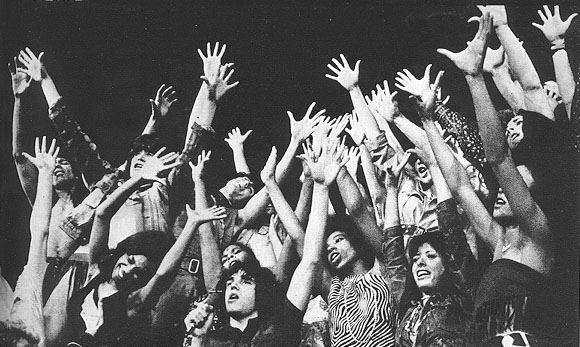
The songs The Rolling Stones played at The T.A.M.I Show were “Around and Around”, “Off the Hook”, “Time Is on My Side”, “It’s All Over Now”, “I’m Alright”, and “Let’s Get Together”. The Stones closed the movie in dramatic fashion. Check out the smoking ending where The Wrecking Crew begins to play, the Stones drop out, and the entire stage is filled with performers and dancers:

Still going strong, The Rolling Stones played “Oldchella” just last week, covering The Beatles’s “Come Together,” which was available on the innertubes briefly.

Popeye The Sailor ► Saturday Morning Cartoons

An early Thimble Theatre starring an early Popeye

Popeye the Sailor Man is, according to the Wiki, a “cartoon fictional character,” in case any of you were confused.

He began his fictional life in the comic strips, which were a very big thing in the early years of the last century. Elzie Crisler Segar was the cartoonist who midwifed Popeye, adding him to his Thimble Theatre strip in 1929, 10 years after he began drawing it for King Features Syndicate.

Right from the start the strip featured the adventures of Olive Oyl, her older and shorter brother Castor Oyl, and her fiancé Harold Hamgravy. Ten years into the strip Ham Gravy (his name got shortened) hired a new character named Popeye to captain his treasure hunting ship. Little did he know that Popeye would become so popular that he’d become a regular and would eventually push him aside in Olive’s heart.

However, it was not love at first sight.

Olive and Popeye actually hated each other when they first met (her first words to him were “Take your hooks offa me or I’ll lay ya in a scupper”); they fought bitterly—and hilariously—for weeks until finally realizing that they had feelings for each other.

Popeye didn’t become animated until 1933, when Max Fleischer obtained the rights to make the original cartoons for Paramount Pictures. In his cinematic debut (above), Popeye appeared under the rubric of a Betty Boop cartoon, which the Fleischers were already producing, the only time that would happen.
The WikiWackyWoo picks up the story:

In every Popeye cartoon, the sailor is invariably put into what seems like a hopeless situation, upon which (usually after a beating), a can of spinach which he apparently regularly carries with him falls out from inside his shirt. Popeye immediately pops the can open and gulps the entire contents of it into his mouth, or sometimes sucks in the spinach through his corncob pipe. Upon swallowing the spinach, Popeye’s physical strength immediately becomes superhuman, and he is easily able to save the day (and very often rescue Olive Oyl from a dire situation). It did not stop there, as spinach could also give Popeye the skills and powers he needed, as in The Man on the Flying Trapeze, where it gave him acrobatic skills. (When the antagonist is the Sea Hag, it is Olive who eats the spinach; Popeye can’t hit a lady.)

In 1941 Paramount took over control of Fleischer Studios and they fired Dave and Max Fleischer, renaming the company Famous Studios. The quality of the Popeye cartoons began going downhill until the ’60s, when 220 cartoons were produced exclusively for television. These are the worst of the lot.

In 1980 Robert Altman directed a Popeye live-action musical comedy starring Robin Williams as Popeye and Shelly Duvall as Olive Oyl, with songs written by Harry Nilsson, except this one, of course:

The movie bombed at the box office, but has become a cult classic. Robin Williams was not a fan. He said that if you play it backwards, there’s a plot.

“Some people say” Nilsson’s songs were the best part of the movie. In fact, Harry recorded each of the songs as demos to be given to the actors, so they could earn the tunes. Luckily for Nilsson fans, some of these demos have escaped from the recording studio. What’s impressive about these songs is how they do not need the actor’s voice to stand up on their own. Each tune embodies the character within the music and lyrics. Listen:

However, the classic Popeyes are the original Fleischer cartoons. There are 109 of them. Here are just 10 for your viewing pleasure.

Hair ► Monday Musical Appreciation

Forty-nine years ago today Hair; The American Tribal Love Rock Musical debuted at the Shakespearean Festival in New York City and nothing was ever the same again.

Hair was the first Rock musical. I’ll let the Official Hair website pick up the story:

HAIR’s world debut was in New York City in October 1967, off-Broadway, on the heels of the Summer of Love. Jerry and I had written HAIR for the uptown big theatre audiences. It was designed to invade Broadway territory, but we couldn’t get a tumble from any of the Broadway producers. “Not our cup of tea,” they would say. We retreated from our firm intention, in response to an offer of a 6-week run for HAIR as the opening attraction at a new theater. The old Astor Library, gutted and under fresh construction, became The New York Shakespeare Festival Public Theater, and the producer Joseph Papp chose HAIR to be the premiere presentation in his experimental space, the Anspacher Theater. (Papp had produced free Shakespeare in Central Park for years, but was now branching out, to embrace the excitement of the avant garde theater movement.) Quite a wonderful opportunity, we thought; if we couldn’t get HAIR on-Broadway, at least we could jump-start it downtown in the Joseph Papp spotlight of a new New York theater, in the East Village at that, where the play itself was set. As directed by Gerald Freedman, with choreography by Anna Sokolow, the “Public” proved to be a perfect “out-of-town tryout.”

Hair eventually moved to Broadway where it ran for over 1700 performances.

Many of the men of my generation were fighting the Hair Wars with our parents. Those who were just a few years older than me were already fighting in Vietnam, the draft being a subtext of the musical.

I didn’t get to see the play until it opened as a quintessential ‘Merkin movie musical directed by Czechoslovakia immigrant Miloš Forman a decade later. However, the soundtrack was everywhere by 1968 and I could sing this song by heart.

Several of the tunes in Hair later became hits for others, most notably the 5th Dimension:

Crank it up and LET THE SUNSHINE IN!!!

https://www.gofundme.com/NotNowSilly

If you’ve liked anything you’ve read at the Not Now Silly Newsroom,  please consider donating to my Go Fund Me campaign to Support Investigative Journalism. My Freedom of Information requests from the City of Miami are beginning to add up, not to mention all the other costs of researching systemic racism and corruption in Coconut Grove.

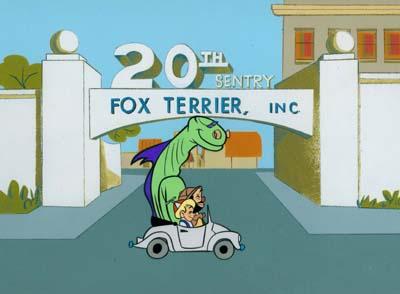
Beany and Cecil ► Saturday Morning Cartoons

When I was growing up in the ’50s and ’60s every tee vee station — all 3 of ’em — played cartoons on Saturday mornings. The Not Now Silly Newsroom launches a new regular feature: Saturday Morning Cartoons.


True story: I got my love of punning from Beany and Cecil. I can remember the exact moment that switch was turned on: When they traveled to the No Bikini Atoll. Prior to that revelation, I missed many puns on the show. But, from that moment on I watched for them. Whenever I saw one, I’d think I was especially clever because I was probably the only one who got it.

Beany and Cecil was the first cartoon I can remember — other than Disney — where you knew the name of the cartoonist. It was in the opening theme, fer crise sake, and every kid at home sang along. You can, too:

Who was Bob Clampett? Born in 1913 near Hollywood, he demonstrated an early talent for entertaining. As the story goes on the official website:

At aged 12 years Bob Clampett saw the 1925 silent film “The Lost World.” As a boy full of imagination, sitting in the audience for that film was a life altering experience for Clampett.. Special effects supervisor Willis O’Brien brought alive the creatures with his stop motion wizardry. Wallace Beery cut a larger than life figure as Professor Challenger.

Puns like these were hidden all over Beany and Cecil

At the end of the film a brontosaurus jumps off of the London Bridge into the Thames River and as he swims away only his neck is visible from out of the water. Clampett immediately saw an interesting character in the action from that final scene.

Clampett came home and set about with his mother’s help to sew a sock puppet of this character. He then performed puppet shows in front of the neighborhood kids delighting them with the antics of his sea serpent character who bested the professor in the pith helmet.

For years after that Clampett frequently entertained with this sock puppet serpent character and in fact kept it nearby in a handy place. 

Eventually, in an early example of merchandising and marketing, toy departments all across the country were selling green Cecil the Sea serpent hand puppets.But I’m getting ahead of myself.

However, speaking of merchandising: While still a teenager he came close to being sued by the Disney company when he tried to mass produce a Mickey Mouse doll. Luckily he got to show it to Walt himself, who not only liked it, but helped Bob and his father set up on the studio lot to mass produce the doll.

Having always demonstrated a facility for drawing, Clampett dropped out of high school to go to work as an “inbetweener” for Harmon-Ising, which eventually became Warner Bros. Cartoons. However, he never lost his interest in puppetry. As his website tells it:

In 1935 Clampett attended the California Pacific International Exposition in San Diego.
 

At this show he saw a demonstration of television for the very first time. He ran to his car and pulled his sea serpent hand puppet out of the glove compartment. Clampett was able to test for the first time what a puppet might look like on live television and recognized the power of this brand new medium.

In 1937 while at Warner cartoon studio, Clampett built a puppet studio directly across the street. He worked there primarily on nights and weekends with his friend Al Kendig to develop 3D stop motion puppetry.

[…]

In the early 1940’s Clampett pitched his idea for filmed puppet shorts about a sea serpent and sea captain to Warner Cartoon studio head Leon Schlesinger. However, Schlesinger turned the project down by saying, “A shoemaker sticks to his last.” This was what Clampett later referred to as a critical moment in his career because Clampett was then able to retain the rights to his most important original 3D creation.

You can read more about how Bob Clampett continued to develop his television puppet show and how that eventually led him back to his original vocation of animation HERE. However, I’m as bored as a 5-year old waiting for the cartoons to start. Pass the popcorn.

https://www.gofundme.com/NotNowSilly

If you’ve liked anything you’ve read at the Not Now Silly Newsroom,  please consider donating to my Go Fund Me campaign to Support Investigative Journalism. My Freedom of Information requests from the City of Miami are beginning to add up, not to mention all the other costs of researching systemic racism and corruption in Coconut Grove.