
Category Archives: Media

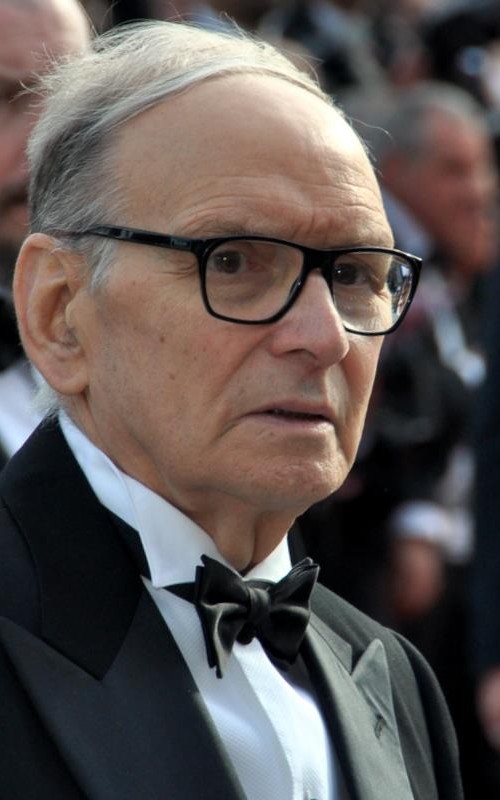
Ennio Morricone ► Monday Musical Appreciation

Blowing out 88 candles on his birthday cake today is composer Ennio Morricone, who has written the soundtracks to more than 500 movies and tee vee shows. 

Born in Rome, Morricone played trumpet and, apparently, composed his first piece at the age of 6. In 1953 he was asked to arrange for Italian radio shows. A few years later he started playing trumpet in a Jazz band, which may be why some of his soundtracks are so trumpet-laden.

Morricone became known for his soundtracks to several of Sergio Leone’s so-called Spaghetti Westerns, including my favourite western of all time, “Once Upon A Time in the West.”

Once Upon a Time in the West” is the only Western anyone ever needs to see. It contains all the Western tropes we’ve come to expect and weaves several story lines together into a broad canvas about the civilizing the west. And, for Bonus Points: Henry Fonda plays against type as the meanest sumnabitch on the planet.

Almost everyone recognizes this movie theme, reinterpreted by Apollo Four Forty:

I’ll let The WikiWackyWoo pick up the slack:

After having played trumpet in jazz bands in the 1940s, he became a studio arranger for RCA and started in 1955 ghost writing for film and theatre. Throughout his career, he composed music for artists such as Paul Anka, Mina, Milva, Zucchero and Andrea Bocelli. From 1960 to 1975, Morricone gained international fame by composing the music to westerns. His score to 1966’s The Good, the Bad and the Ugly is considered one of the most influential soundtracks in history[3] and was inducted into the Grammy Hall of Fame.[4] With an estimated 10 million copies sold, Once Upon a Time in the West is one of the best-selling scores worldwide.[5] He also scored seven westerns for Sergio Corbucci, Duccio Tessari‘s Ringo duology and Sergio Sollima‘s The Big Gundown and Face to Face. Morricone worked extensively for other film genres with directors such as Mauro Bolognini, Giuliano Montaldo, Roland Joffé, Roman Polanski and Henri Verneuil. His acclaimed soundtrack for The Mission (1986)[6] was certified gold in the United States. The album Yo-Yo Ma Plays Ennio Morricone stayed 105 weeks on the Billboard Top Classical Albums.[7]

Morricone’s best-known compositions include “The Ecstasy of Gold“, “Se Telefonando“, “Man with a Harmonica“, “Here’s to You“, the UK No. 2 single “Chi Mai“, “Gabriel’s Oboe” and “E Più Ti Penso“. He functioned during the period 1966–1980 as a main member of Il Gruppo, one of the first experimental composers collectives. In 1969, he co-founded Forum Music Village, a prestigious recording studio. From the 1970s, Morricone excelled in Hollywood, composing for prolific American directors such as Don Siegel, Mike Nichols, Brian De Palma, Barry Levinson, Oliver Stone, Warren Beatty and Quentin Tarantino. In 1977, he composed the official theme for the 1978 FIFA World Cup. He continued to compose music for European productions, such as Marco Polo, La Piovra, Nostromo, Fateless, Karol and En mai, fais ce qu’il te plait. Morricone’s music has been reused in television series, including The Simpsons and The Sopranos, and in many films, including Inglourious Basterds and Django Unchained.

As always, the proof is in the grooves:

The Victor Talking Machine Company ► Monday Musical Appreciation

His Master’s Voice” is the name of the 1898 painting by
Francis Barraud, who discovered that Nipper would run to the
horn of the cylinder player whenever he played a recording of
his deceased brother, who had owned Nipper before he died.

On this day in 1901 former rivals Eldridge R. Johnson and Emile Berliner launched the Victor Talking Machine Company after some earlier legal wrestling over patents.

Berliner had invented the phonograph record and Johnson had been making Gramophones to play these discs. First they combined their patents to form the Consolidated Talking Machine Company before changing its name.

According to the WikiWackyWoo:

There are different accounts as to how the name came about. RCA historian Fred Barnum[3] gives various possible origins of the “Victor” name: in “His Master’s Voice” In America, he writes, “One story claims that Johnson considered his first improved Gramophone to be both a scientific and business ‘victory.’ A second account is that Johnson emerged as the ‘Victor’ from the lengthy and costly patent litigations involving Berliner and Frank Seaman’s Zonophone. A third story is that Johnson’s partner, Leon Douglass, derived the word from his wife’s name ‘Victoria.’ Finally, a fourth story is that Johnson took the name from the popular ‘Victor’ bicycle, which he had admired for its superior engineering. Of these four accounts the first two are the most generally accepted.”[4] Perhaps coincidentally, the first use of the Victor title on a letterhead, on March 28, 1901,[5] was only nine weeks after the death of British Queen Victoria.

Harry Nilsson, one of my favourite artists, signed with RCA in 1966.

In 1926 Johnson sold his shares to a bank, which flipped the stock 3 years later to the Radio Corporation of America, which is how the company became known as RCA Victor.

The Wiki also details how many companies we know of today were spun out of the original 1901 Victor founding:

Victor and its executives became extremely wealthy by the 1920s and in doing so were able to establish markets outside of the original Camden, NJ base of operations. Having established a hand-shake agreement with Emile Berliner in forming Victor Talking Machine Co, Berliner was sent from the U.S to manage the remaining holdings of the Gramophone Co. (a company in which Victor owned a significant portion in part due to patent pooling agreements, and Victor’s success in its first two decades). Eventually, this meant that Victor (in addition to owning studios, offices, and plants in Camden, New York City, California, South America) also owned controlling interests in the Gramophone Company of Canada and England, as well as the Deutsche Gramophone Co. in Europe. Soon, Victor formed the Victor Company of Japan (JVC), founded in 1927. As Radio Corporation of America acquired Victor, the Gramophone Co. in England became EMI giving RCA a controlling interest in Victor, JVC, Columbia (UK), and EMI. During World War II, JVC severed its ties to RCA and today remains one of the oldest and most successful Japanese record labels as well as an electronics giant. Meanwhile, RCA sold its remaining shares in EMI during this time. Today the “His Master’s Voice” trademark in music is split amongst several companies including JVC (in Japan), HMV (in the UK), and RCA (in the US).

Any excuse to play Harry Nilsson:

Fact Checking The Presidential Debate ► Another Aunty Em Editorial

I’ve been reading a lot lately about the combined topics of Donald Trump’s lies and whether the debate moderators will fact check this crazy MoFo.

It might surprise people to learn that I am totally against a Debate Moderator holding a candidate to the facts. That’s the job of the other candidate.

The moderator’s job is to introduce the candidates, spell out the agreed upon debate rules, see to it that the participants keep to the those rules, and then get the fuck out of the way. [Although, just to be evil, I’d give the moderator a microphone kill switch if anyone goes over their allotted time.]

There will be plenty of time to fact check both of these candidates.

Of course, knowing the media like I do, Hillary Clinton will probaly be fact checked harder than Donald Trump, even though an article published yesterday claimed Donald Trump Lied 87 Times Last Week — Or Once Every 3 Minutes, 15 Seconds.

As we have seen during this election cycle, it doesn’t really matter how many lies Donald Trump tells. He is running neck and neck in the polls with Hillary Clinton despite being a bigger liar than Richard Nixon and Roger Ailes put together.

Which is why Donald Trump has to be crushed. Not just beaten, but beaten badly. Beaten so badly that this kind of racist, xenophobic, misogynistic psychopath with a total lack of empathy and compassion for any basic, human emotions will never get this close to the White House ever again.

And then Trump must be ridiculed as a loser and hounded to the ends of the earth, as his business empire inevitably falls apart under the weight of lawsuits, terrible business decisions, and the total collapse of the Trump brand. Here are my early contributions:


George Gershwin ► Monday Musical Appreciation

Born on this date in 1898, by the time George Gershwin died at the all-too-early age of 38, he was known across the globe as one of the greatest composers who ever lived.

Born in Brooklyn to Russian-Jewish immigrant parents, originally the family name was Gershowitz, which George’s father Americanized to Gershwine. George was actually born Jacob Gershwine, but was called George. He later dropped the “e” from the end of his name, and eventually so did the rest of the family.

Born 2 years earlier, brother Ira (born Israel Gershwine) was George’s lifelong lyricist. Together they wrote songs now considered the foundation of the American Songbook. Songs like (edited list from Ira’s WikiWackyWoo):

As well, George Gershwin wrote many songs without lyrics. F’rinstance, most everyone recognizes passages from Rhapsody In Blue, whether they know the composer or not. The score was commissioned by The King of Jazz, Paul Whiteman, to debut at what he was billing as An Experiment In Modern Music on February 12, 1924. It was an instant classic when it was first performed.

We are used to hearing Rhapsody In Blue with a big orchestration. A revelation of the digital age is this recording of a piano roll that George Gershwin cut during his piano playing prime. Not only do we get to listen to the Master at work, but after he ‘cut’ the piano roll they rolled it right back to the beginning and Gershwin ‘cut’ a second piano part; in effect making this one of the earliest candidates for overdubbing. Close your eyes and listen to Gershwin’s 4 hands.

George Gershwin wrote standards, Broadway shows, classical pieces, and commercial fluff.

Of course one could go on endlessly about George Gershwin — as dozens of books and documentaries have — but as I always say: It’s what’s in the music that counts:


Crank it up and D A N C E ! ! !

George Gershwin ► Monday Musical Appreciation

Born on this date in 1898, by the time George Gershwin died at the all-too-early age of 38, he was known across the globe as one of the greatest composers who ever lived.

Born in Brooklyn to Russian-Jewish immigrant parents, originally the family name was Gershowitz, which George’s father Americanized to Gershwine. George was actually born Jacob Gershwine, but was called George. He later dropped the “e” from the end of his name, and eventually so did the rest of the family.

Born 2 years earlier, brother Ira (born Israel Gershwine) was George’s lifelong lyricist. Together they wrote songs now considered the foundation of the American Songbook. Songs like (edited list from Ira’s WikiWackyWoo):

As well, George Gershwin wrote many songs without lyrics. F’rinstance, most everyone recognizes passages from Rhapsody In Blue, whether they know the composer or not. The score was commissioned by The King of Jazz, Paul Whiteman, to debut at what he was billing as An Experiment In Modern Music on February 12, 1924. It was an instant classic when it was first performed.

We are used to hearing Rhapsody In Blue with a big orchestration. A revelation of the digital age is this recording of a piano roll that George Gershwin cut during his piano playing prime. Not only do we get to listen to the Master at work, but after he ‘cut’ the piano roll they rolled it right back to the beginning and Gershwin ‘cut’ a second piano part; in effect making this one of the earliest candidates for overdubbing. Close your eyes and listen to Gershwin’s 4 hands.

George Gershwin wrote standards, Broadway shows, classical pieces, and commercial fluff.

Of course one could go on endlessly about George Gershwin — as dozens of books and documentaries have — but as I always say: It’s what’s in the music that counts:


Crank it up and D A N C E ! ! !