Category Archives: Unpacking

The Music of Detroit ► Unpacking My Detroit ► Part Four

The BBC produced a nice little documentary on the music of Detroit, Michigan. Includes contributions from Iggy Pop, Alice Cooper, George Clinton, Martha Reeves, John Sinclair and the MC5, among others. This is the music of my youth.


Sadly Part Four of this documentary cannot be embedded. However, it wraps up here.

Previous Entries:

Unpacking My Detroit ► Part One
Unpacking My Detroit ► Part Two
Unpacking My Detroit ► Part Three

Related:

Nostalgia Ain’t What It Used To Be ► My Days With John Sinclair

Henry Ford’s First Ford ► Unpacking My Detroit ► Part Three

Henry Ford driving his Quadricycle in 1896
Dateline June 4, 1896 – Henry takes his 1st Ford through
streets of Detroit.
From that moment forward ‘Merkins have adapted to the automobile, as opposed to
the other way around. Had the automobile been adapted to ‘Merkins instead:
  • Today we’d have fuel efficient cars that do not pollute the
    environment. However, the Big Three fought that at every turn. Throughout the ‘60s,
    ‘70s, ’80, ‘90s, & ‘00s, had the car companies spent that lobbying money on
    R&D instead, we might have Jetsons cars by now. Yet, they still haven’t
    perfected the electric car, which have been around for 100 years.
  • Had Detroit
    not ignored innovation that came from overseas, until it had almost devoured
    them. In Detroit,
    innovation meant cool cup holders and automatic windows. The game was to make
    cosmetic changes from model year to the next, but add features no one asked for
    to jack up the price.
  • The automobile also mean that our cities and towns no longer
    had to grow up, they could grow out. That we built our suburbs as wide-open
    expanses easily reached by car means we do not now have the population densities
    needed to make rapid transit a viable option.
In just about every way we can name the car has changed ‘Merkin
life, and not always for the better. We pay a big price for cars, beyond the
sticker price. Yet, ‘Merkins seem to ignore all those other costs because their
cars can now talk to them.
These thoughts are a wild summation of two books I highly
recommend:
  • The Reckoning, by David Halberstam tells the story of how Detroit didn’t see Japan coming. It takes a deep look
    into both the ‘Merkin and Japanese auto industries and their parallel development.

Other Entries:

Unpacking My Detroit ► Part One
Unpacking My Detroit ► Part Two

Unpacking My Detroit ► Part Four

My Days With John Sinclair ► Nostalgia Ain’t What It Used To Be

John Lennon wrote very few songs about REAL people, and when he did he disguised the name of the subject, like “Sexie Sadie,” who was “Maharishi” in the original version.

However, Lennon wrote and recorded a song called “John Sinclair,” about one of Detroit’s a cultural icons. Lennon’s “John Sinclair” was just one protest song on “Some Time in New York City.” a double-record set (filled with political polemic as 3 minute tunes on one LP, and live concert with Frank Zappa and the Mothers of Invention on the other). Lennon was protesting the sentencing of John Sinclair to 10 years of hard time for GIVING an undercover agent two joints. This made the already infamous Sinclair, who only had a regional reputation until then, an international cause célèbre, which is what prompted Lennon to write the song and later appear at a Free John Sinclair concert. However, I knew John Sinclair before he ever became a jailbird.

I first encountered John Sinclair way back in the ’60s. I grew up in Detroit on Gilchrist Street (we called it Gilchrist Avenue because that was classier), one block and three houses south of the infamous 8 Mile (aka M-102) and five houses south of David Palmer, the original drummer for the Amboy Dukes. We were all in our middle teens then, but Dave was a year or two older which made all the difference back then. He wasn’t part of our clique, just a few doors down. His clique was far more exciting to us. We thought he was really cool because he was in a real rock and roll band who played real concerts and made real records. However, for some of us there was a more important reason for admiring David Palmer: When the administration threw him out of Coffey Junior High School because his hair was well-below his collar, he responded with a lawyer who argued that this was how Palmer made his living and he would be affected adversely if he had to cut his hair. Those of us who were still fighting the Hair Wars — and still being kicked out for having long hair — knew that it was only a matter of time before the rule fell, because David Palmer had already blown right through it.  The school was forced to make an accommodation with Dave: He had to wear his hair tucked in his shirt collar the entire day so that it was no longer than his shirt collar.
From then on Dave wore wild paisley shirts, with even wilder ties to hold all the hair in. It was always a bit of a thrill to follow Dave out the door at the end of the school day, see him scoop his hair out of his collar, and watch it cascade down his back. When the Amboy Dukes rehearsed in Dave’s garage, all us neighbourhood kids would hang out at the end of the driveway to listen. They were my first garage band.
I was only 15 and most weekends  and would head to Plum Street—Detroit’s Haight-Ashbury—on weekends, where I’d occasionally get a glimpse of John Sinclair holding forth. He was Detroit’s Top Hippie and I was a weekend wannabe.  On more than one occasion I’d work up the nerve to talk to him. Despite the age difference, and his massive height, he never talked down to me and all these years later I never forgot that kindness. Sinclair seemed to be everywhere: He helped launch the The Fifth Estate (one of ‘Merka’s oldest alternative/underground newspapers) manager of the MC5, and head of the White Panther Party.
Skip ahead many years—through many twists and turns that no one could have predicted at the time. In the new century my nephew became John Sinclair’s merchandising manager. What a thrill it was to learn that.
That’s merely all background to the real story.

It’s Labor Day weekend, 2006 and I’m excited. I am going to the Detroit International Jazz Fest where I am going to see John Sinclair for the first time in about 40 years. More importantly, my nephew is going to officially introduce us, even though we met way back when. John is at the Jazz Fest performing with his band The Blues Messengers.
We get there early because my nephew has lots to do before the show and I’m directed to a little table in the VIP area to wait. I need to describe this VIP section so the story makes more sense. There are 8 stages around the downtown area and each has a VIP section. It’s not backstage; it’s off to one side or another in front of the stages. It’s for audience, but special audience. Like me. The regular audience sits on fold-up chairs or the ground. We get real chairs and small cabaret tables to sit at. How civilized.
I’m killing time and I see John Sinclair arrive and sit at a table a few away from me. When my nephew comes back he says, “So, didja say ‘Hi!’ yet?” I reply, ” No, he’s going to do a show soon and I don’t want to bother him now.” I said that because I saw someone approach him only to be told, “I’m going to do a show soon. Don’t bother me now. I need to concentrate. I’ll gladly talk to you after.”
My nephew doesn’t care about such niceties and drags me over and makes introductions.
John Sinclair says to me, “I’ve heard so much about you I feel like I know you. Your nephew talks about you all the time.”
After I come back to earth I say, “John, I just want to thank you for treating me with respect way back when, instead of the snot-nosed Hippie weekend-wannabe that I was.”
With that my nephew starts cackling, “I hear people come up to you all the time and say pretty much the same thing, John. But this time it’s my uncle.”
It turns out that for all our own reasons, the three of us are all thrilled at the meeting.
Introductions over, I go back to my table. Eventually Sinclair performs. We talk a bit after the set and then head off in separate directions, John to meet up with some musician friends and me to go see a 24-piece Big Band playing all Zappa music with Big Band arrangements. (!)
A few hours later I find myself at the same VIP table alone, rocking out to the Regal Brass Band of New Orleans, which I had seen earlier in the year during Mardi Gras, the first one after Katrina.  I didn’t see anyone sit down next to me, but suddenly I was nudged from someone on the left. It was John Sinclair passing me a joint. I have to say that again: JOHN SINCLAIR PASSING ME A JOINT!!!
And, I do inhale.
As I begin to pas sit back he nods, as if to say, “Now pass it to the guy on the other side of you,” so I nudge that guy and he turns towards me. That’s when Dr. John says to me, in his gravely voice, “No man, I gotta do a show soon,” so I pass it back to John Sinclair.
So now me, John Sinclair and Dr. John are all dancing in our seats to a New Orleans Jazz band. Amazingly, as we talk and smoke, I learn that Sinclair was also at that very same Mardi Gras I attended—on the other side of the street from where I was watching the parade. Exactly on the other side of the street. I’m amazed I didn’t see him.
Eventually Dr. John gets up and leaves because his set’s on soon and the joint goes out. Sinclair rips it open and puts the shreds on the table. Then he starts fishing in his pockets. He pulls out several roaches and starts ripping them apart. He’s determined to get one more joint out of this mess on the table and, believe me, I’m rooting for him.
While I’m watching John do his thing I vaguely become aware that the guy on stage has been talking longer than usual. I focus on what he’s saying:
“…a really dear friend of ours. We’d like to have him stand up and say “Hello.” He’s a Detroit native, but now he’s a citizen of the world, living part time in New Orleans and part time in Amsterdam. Please, a warm hand for Detroit’s own, John Sinclair!”
John is in his own world. He’s on a mission. He doesn’t realize the applause is for him.
I nudge him.
“What?”
“Stand up, John.”
He looks around a minute, sees that everyone is looking at him (at us!!!) and clapping, so he stands up and takes a small bow and then sits back down laughing. “Why did he have to introduce me then? Look at this table.”
“John, there was no other time to introduce you. What are you known for?”

<breathing air> And that, ladies and gentlemen, is my
John Sinclair Story. However, I invite you to tune in to listen to
John Sinclair
at Radio Free
Amsterdam
, one of the oldest regular online podcasts going and just another
one of the cultural touchstones John Sinclair helped create in his long and creative
career. And, if you are in Ireland
later this month, check out the BREATHIN’ AIR
– Irish Tour 2012
With Howard Marks.

National Velvet ► Nostalgia Ain’t What It Used To Be

During my long career as a professional writer, there have been times that I was on staff and on a publication’s masthead and other times that I freelanced. As a freelancer, I would take just about any job that involved jamming words together. Once I wrote an entire work of fiction for a corporate brochure that made Scarborough, Ontario, Canada sound like a great place to live and work. It was fiction because I didn’t really feel that Scarborough was a great place to live and work. Despite my dislike for Scarberia, as it is derisively called, the brochure won an award by the City of Scarborough, which couldn’t read through to the sarcasm.  Another of my freelance jobs was writing for record companies. Occasionally these were the dry sales sheets, 200 words tops, which the salesmen would use to get the rack-jobbers to stock the LP. These were boring and tedious to write, but I could bang off up to 10 a day. However, my favourite writing for record companies was when I was hired to write artist biographies. These always involved meeting and interviewing the artists and I liked to spend as much time as possible with the artist/band before I ever sat down to write. And that’s how I came to meet National Velvet, when I was hired to write their biography.

 
Aside from the actual music, artist bios are one of the most important calling cards a band and/or record company has.
Before the first note of music is even heard, the artist biography is
often fully digested. Artist bios are a tricky business. Every word must
be right. The bio needs to capture the essence of the band or artists. It needs to make the reader WANT to play the record. It needs to tell you everything you need to know about the band, yet retain some mystery that can only be solved by listening to the music. There is no formula for writing an artists’ bio. Every one is different because every artist is different.

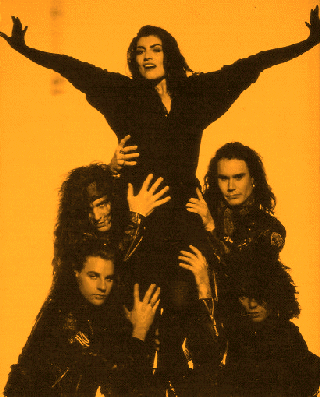
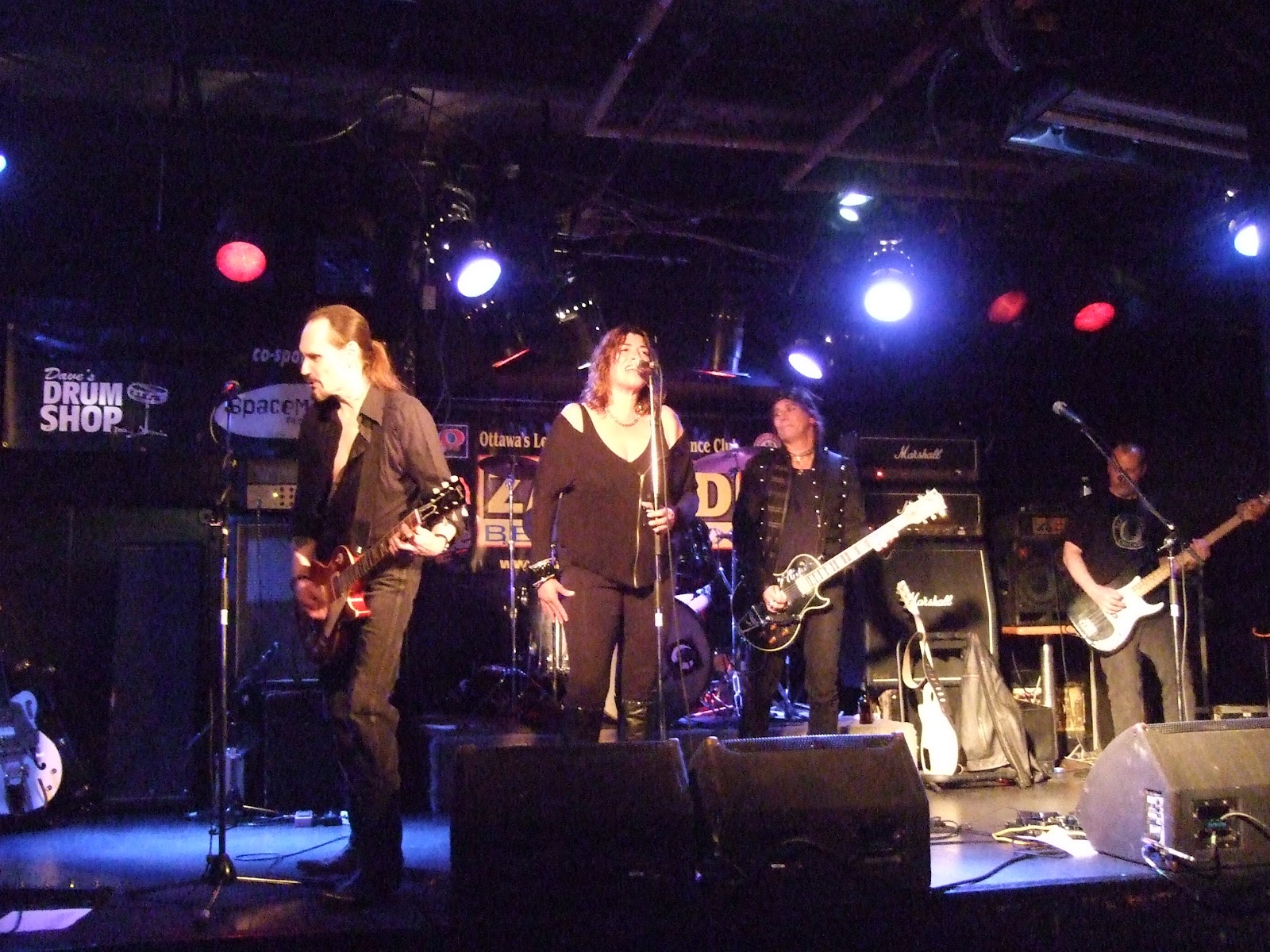
National Velvet were more different than most. NV was a Canadian Goth band before Goth was named Goth. Intrepid Records, distributed by Capital Records Canada, was preparing the release of their first National Velvet LP and hired me to write the bio. I spent about a week with the band, on and off. I went to a few rehearsals, met them in a coffee shop or two, and then someone’s living room. I took notes on how they interacted while recording all their words for posterity. When I felt I had enough, I went back to my belfry to write. One of the things I was struck with after re-reading all the notes I had taken (and which I still have and just used to refreshed my memory) is how thoughtful the band was about their place in the city, the music industry, the record business. I decided that the band’s thoughtful considerations deserved a thoughtful consideration in the biography, which I would blend with the dark, back alleys of the city. Sort of The Dark Knight meets The Hudsucker Proxy.

When I finally had a 1st draft I was happy with I showed it to the record company, the client.  That’s how it worked. Once I had something I liked, I would show it to the client who would tell me whether they liked the path I was on. If so, we’d kick the first draft around 5 or 10 or 15 times, until everyone was happy with the final product. If, in the alternative, the client hated it I would be back at square one, using their ideas to form an entirely new first draft.

In this case Intrepid Records didn’t much like the bio. While it managed to capture the band and the dark underbelly of the city, it came across as far too portentous, far too weighty.  They said, “We like everything about it, except it’s far too serious. What if we made it a cartoon instead?”

It must be noted that the band was not my client. I only had to make the
record company happy. If the band liked the biography the record company
chose to represent them with, that it was a happy bonus.

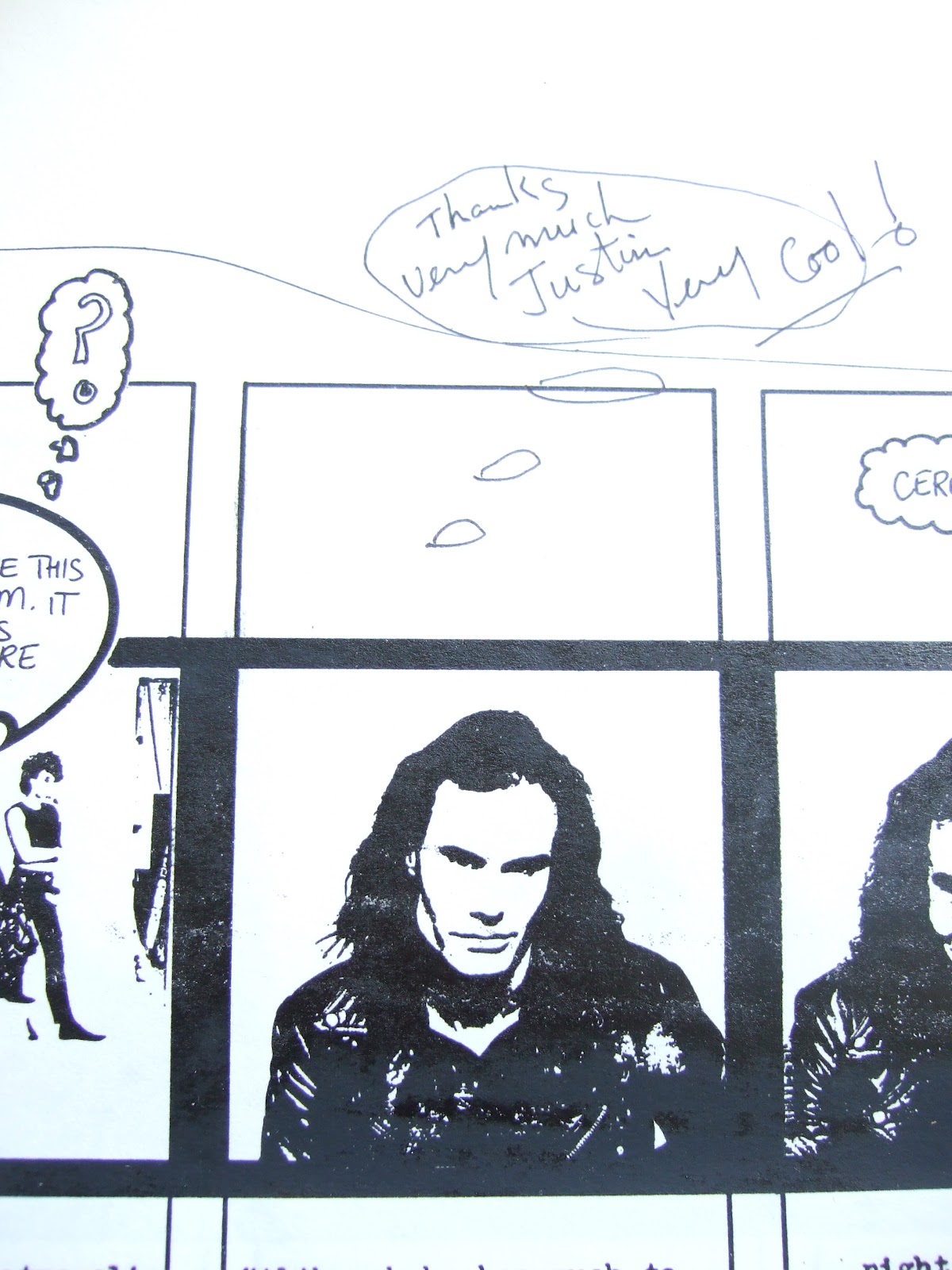
I wasn’t sure how this raw-edged Goth band would like being turned into a cartoon, but that was hardly my problem. The record company was paying the shots and I won’t get paid until they approve a final draft. So I go back to my belfry with a new task: Create a band biography that is dark without being serious because it needs to come off as a cartoon while, at the same time, capture the essence of these individuals.  Amazingly, that’s just what I did. I used contact sheets of the band’s photo session to create a comic book featuring the band collectively and individually. The words inside the word balloons were their own words. The words of the comic book narrator (me) conveyed the dark throb of the city surrounding the band, while the off-camera record company exec kept putting his 2 cents in for the commercial considerations. Yeah, I know; it was weird as hell. When I went back with that new 1st draft I was fully prepared for them to reject it and throw me out of the office forever.

However, that’s not what happened. It was one of the few times in my career that a first draft of something was also the last draft. Everyone loved it except me. It’s not that I didn’t like the words I wrote, or the concept. It had always been the execution that bothered me. It was supposed to mimic a comic book, but I felt there was only a passing resemblance to a comic book. A typed narration at the bottom, with intentional strike-outs over intentional typos was not part of my concept.

No matter. I got paid.

Skip ahead some 25 years. . . .

Skip ahead some 25 years and my son, who was so much of a National Velvet fan when he was a teen that he bought the LP, tells me he’s going to be seeing National Velvet in Ottawa and will be taking one of the biographies I gave him a million years ago with him.

He returned with a happy surprise: The band not only autographed the bio, but part of the inscription was praise for the concept that I felt never worked properly.

THANKS MARIA!!!

Click to enlarge.

Click to enlarge.

Click to enlarge.

And thanks, Justin!!!

Here’s National Velvet’s big hit!!! Flesh Under Skin!!!

Unpacking My Detroit – Part Two

Detroit, once the fifth largest city in ‘Merka, is home to some of the greatest architecture among ‘Merkin cities.

It’s sad to see it today. The decline of Detroit began as innocent urban sprawl in the mid-to-late ’50s, when I was just a kid. This was followed by early White Flight acerbated by the 1967 riot, followed by a total collapse of the tax base, leading to the elections of some very dubious mayors with dubious ideas. Today Detroit is an urban wasteland and, while that sounds like a cliche, it is not an exaggeration. Whole blocks—whole neighbourhoods—are falling apart. The city is considering turning land over to farming, just like in the good ol’ days when Detroit was a little settlement along the river. Oh! Wait!

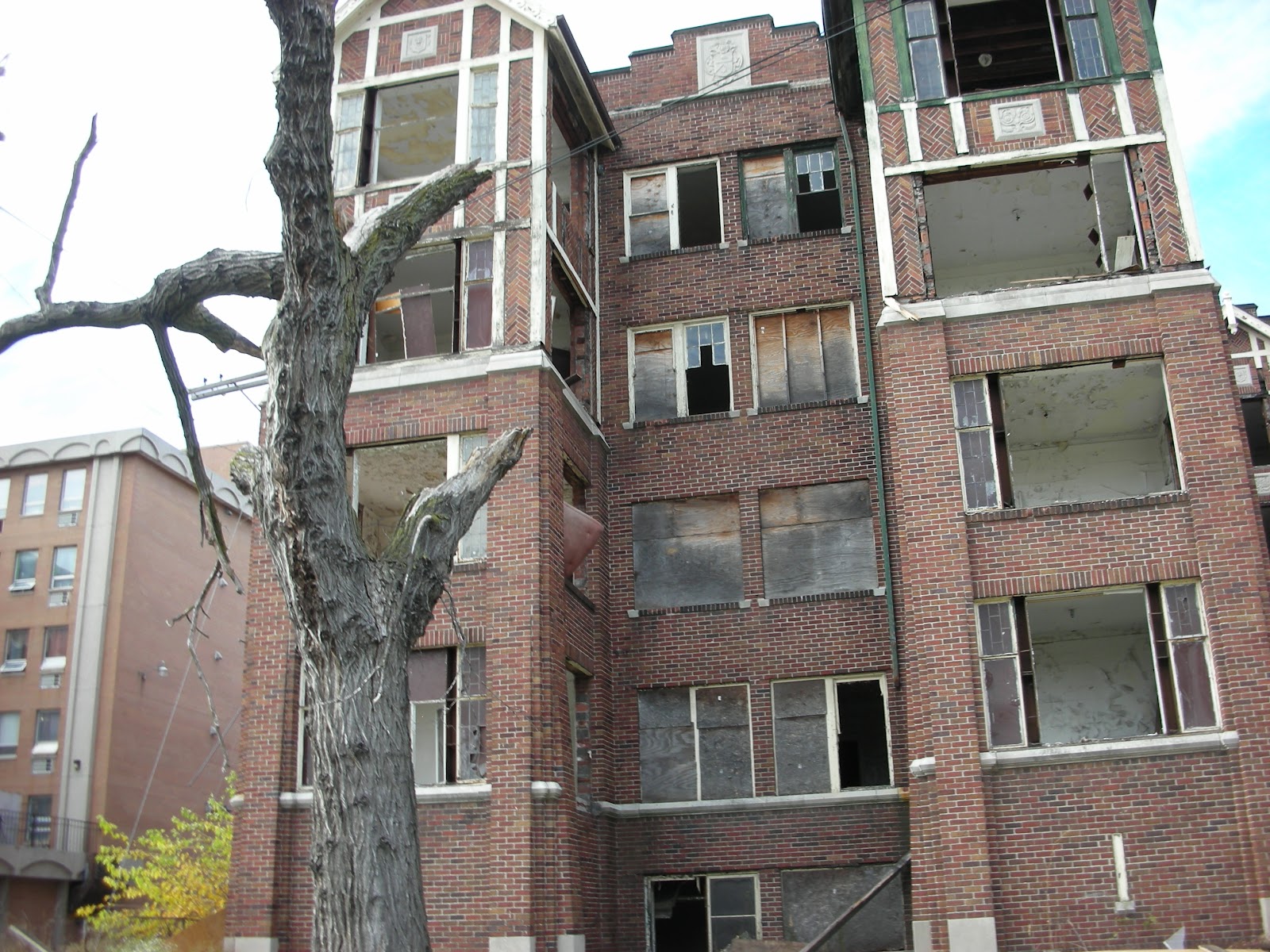
On my last trip to Detroit I took dozens of pictures like the following:

© Headly Westerfield, 2012
Drive along any street in Detroit.  Eventually you will see houses like the above. You might see blocks like the above and below.
© Headly Westerfield, 2012
The housing stock that has gone to waste, and is now rotting before our eyes, is a national disgrace. It was within ‘Merka’s power to see that Detroit didn’t fall into the shithole. Now it’s too late.
© Headly Westerfield, 2012

Yet the same city produced Motown before it went into the crapper.

© Headly Westerfield, 2012

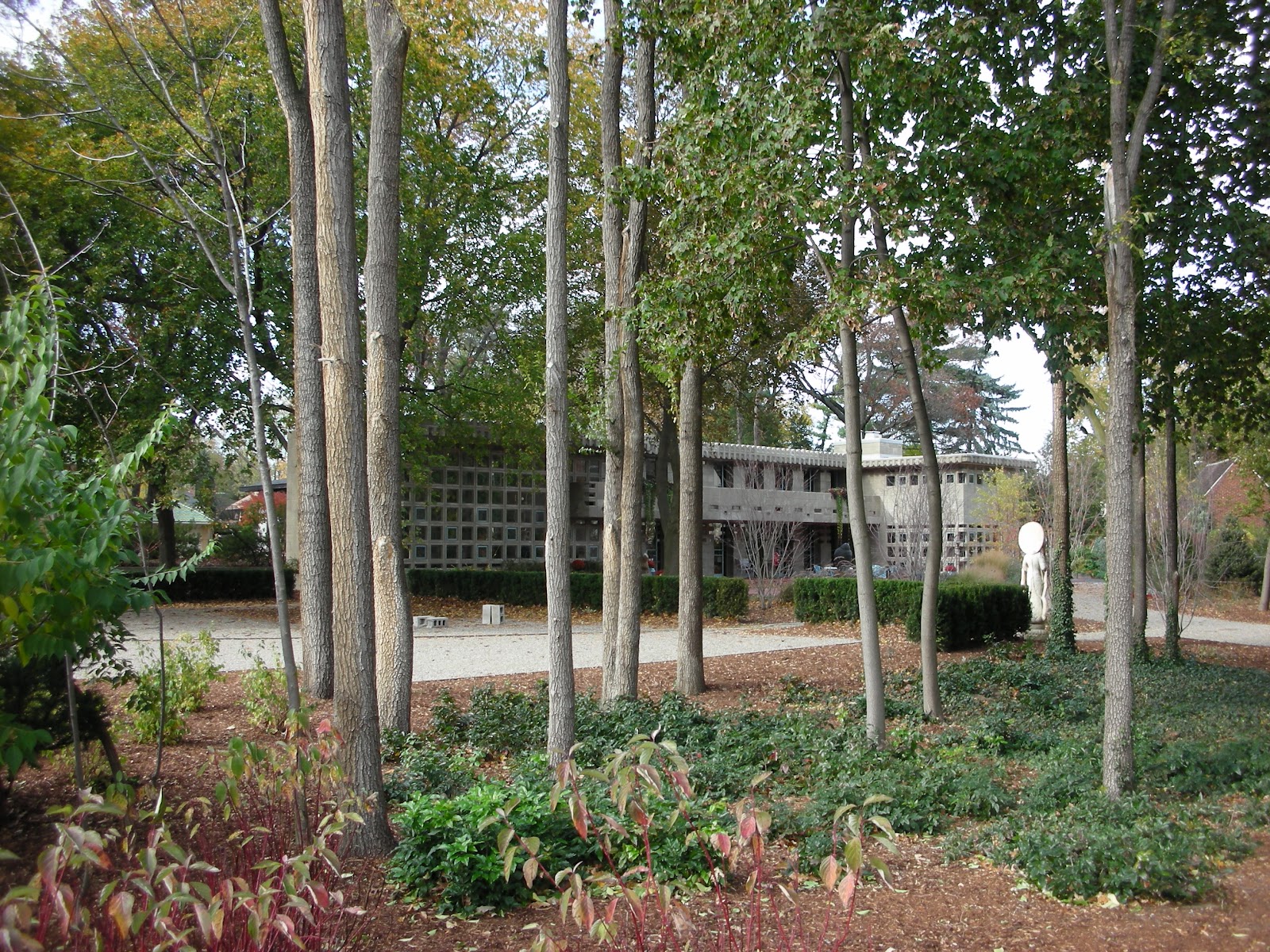
Not many cities can boast a Frank Lloyd Wright house. Detroit can:

© Headly Westerfield, 2012

© Headly Westerfield, 2012

Detroit is a city of extreme contrasts, which become more contrasting each day.

Other entries:

Unpacking My Detroit ► Part One

Unpacking My Detroit ► Part Three

Unpacking My Detroit ► Part Four

Unpacking My Detroit – Part One

This is the first in a continuing series about Detroit, Michigan, my home town. I believe Detroit is emblematic of everything wrong with ‘Merka. At one time Detroit was the 5th largest city in these here United States. Overnight in the ’40s, Motown became the Arsenal of Democracy, building the machines that saved Truth, Justice, and the ‘Merkin way for trash such as Rush, Fox “News” and Johnny Dollar.

Click to enlarge

Yesterday, while doing some research, I came across the following map of when the various parts of Detroit were annexed.  The diagonal line starting at the upper left (and which is really on a due east-west orientation) is the infamous 8 Mile, which was the dividing line between Detroit and the suburbs in 1926…and still is. [Coincidentally, 1926 is the year of Pops’ birth, elsewhere.] The oldest parts of Detroit, are at the bottom of the map, on the river where settlement naturally started. Look further down to Canada, my adopted country. Windsor, Ontario [not labeled], Canada is the only Canadian city where one drives due north to get to ‘Merka. As a teen I often took the shuttle bus to Windsor to be able to say I spent the day in another country.

I grew up in the orange shape in the upper-left hand corner, which was annexed in 1926. The line that extends south from the eastern edge of that block is Greenfield Road. My house was 0.5 miles from that intersection, which is right where Hard Core Pawn takes place. That building used to be the bowling alley where my mother played in her Wednesday afternoon league. I spent so many hours there as a kid.

The Little House I Used To Live In

The area where I grew up was developed after the war and it had the designation “Madison Park” although that was apparently something only on a map because no one ever referred to it as such. Apparently the entire neighbourhood went up virtually overnight to help serve all those GIs coming back from the war.  This area, and many other parts of Detroit, were redlined, a practice begun by the Feds in the ’30s that continues in various forms today. Redlining, in one of its forms, restricted Blacks and Jews from purchasing in certain neighbourhoods. This was just one factor that led to Detroit’s eventually decline. This series will explore all the various ways in which Detroiters, Michiganders, and ‘Merkins systematically destroyed the city that helped save ‘Merka.

If you would like to share your stories or impressions of Detroit, please do.

Other entries in this series: