Category Archives: Unpacking

Unpacking Coconut Grove ► Part 2.2 ► The Neighbourhood Around The E.W.F. Stirrup House

The open gate with the condo complex in the distance.

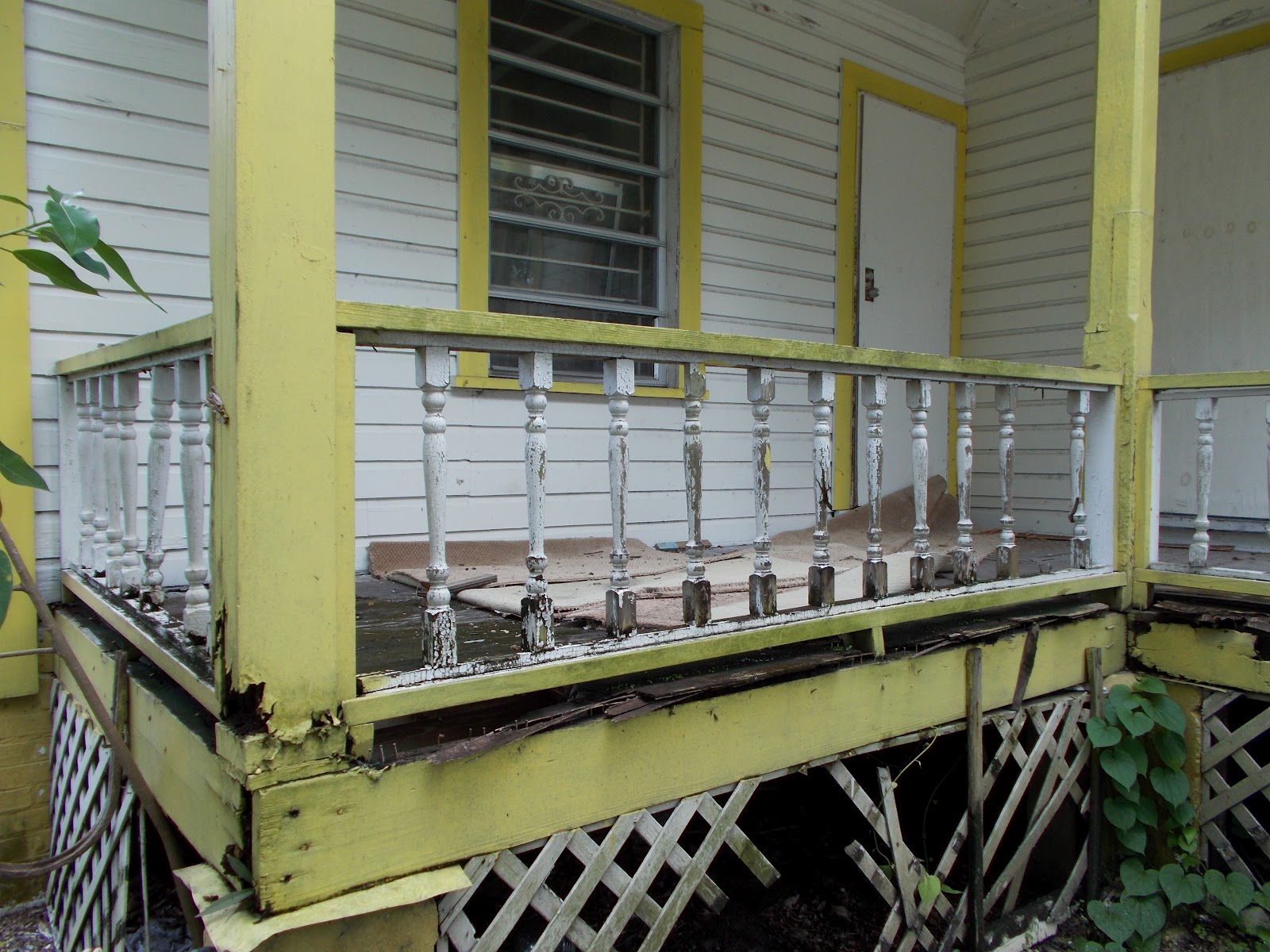
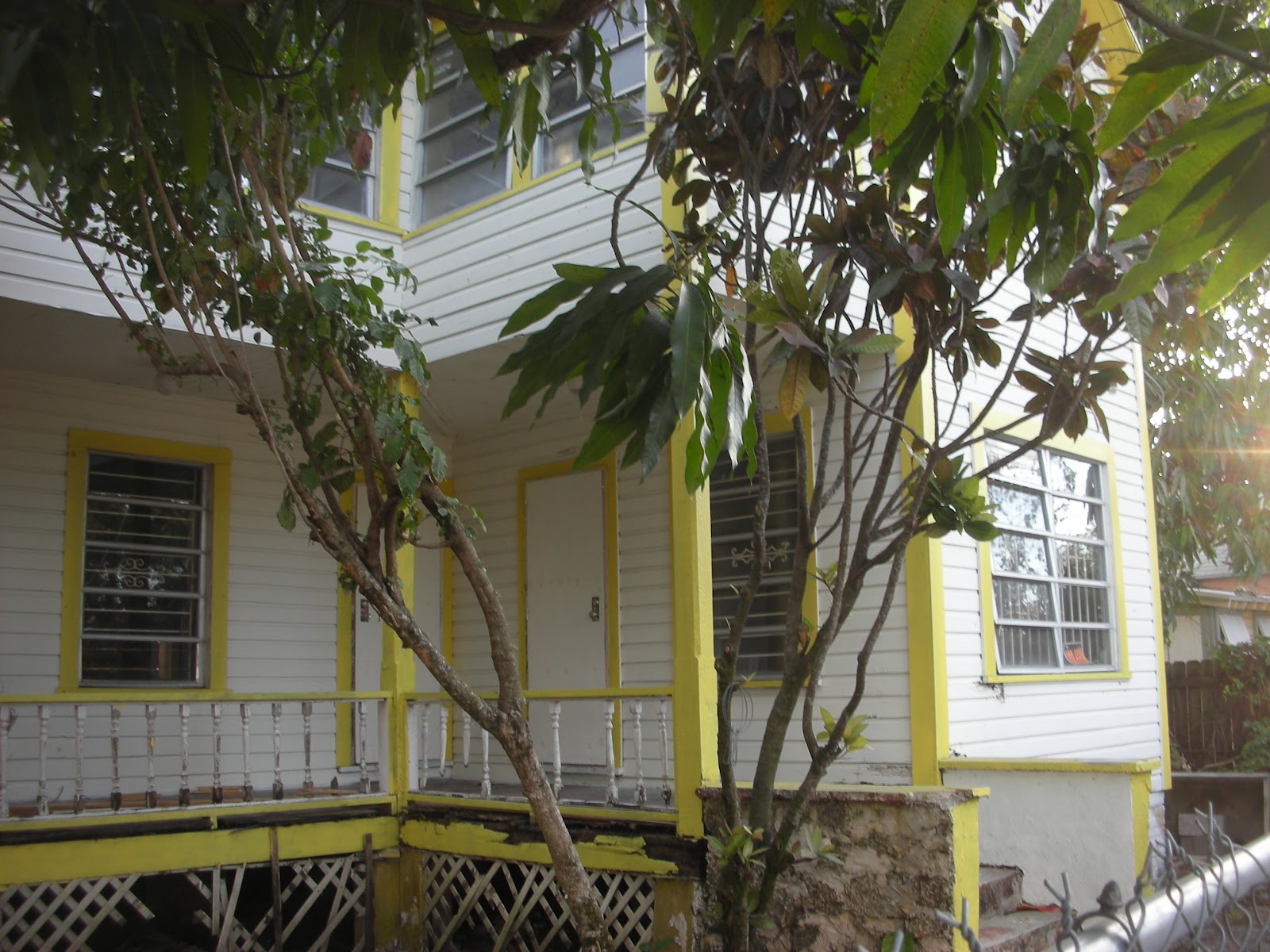
On a visit to Charles Avenue yesterday the gate was open on the E.W.F. Stirrup property, so I walked right in. I was able to take some interesting close up pictures of wood rot and other damage that normally can’t be seen from the sidewalk or the bank parking lot. It revealed how much damage has been caused by simple neglect of this house that stands as a testament to one of Florida’s first Black millionaires, a man who once owned most of Coconut Grove and helped build the early Bahamian community of The Grove, literally with his own hands.

The last time I found the gate left open it was because the landscaping crew had unlocked it, but were working on the empty lot across the street. So I wandered onto the property and started taking pictures. The landscaping crew noticed and started yelling at me, waving frantically. I waved back as if to say, “Hello!” One of the guys got on his cell phone and within minutes a Security Guard from the condo complex behind the Stirrup House (see below) showed up to shoo me off the property. I was able to engage him in conversation for a while and he revealed a few clues about what may have happened to stall all work on the Stirrup House, which had apparently been promised as a gift of sorts to the neighbourhood as a historical community center of some sort. Unfortunately, it’s not something I have been able to confirm as of yet, so I dare not repeat it.

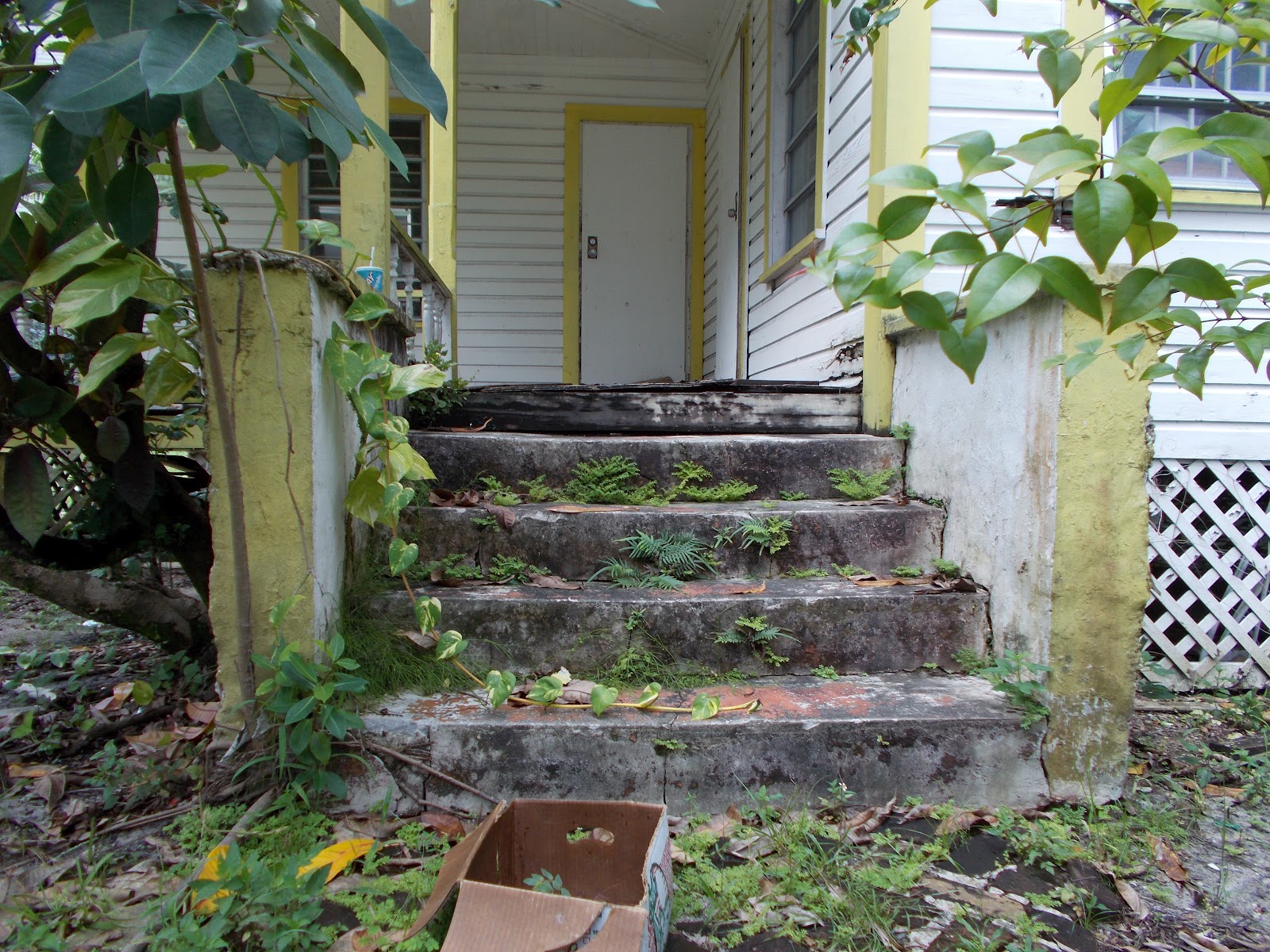
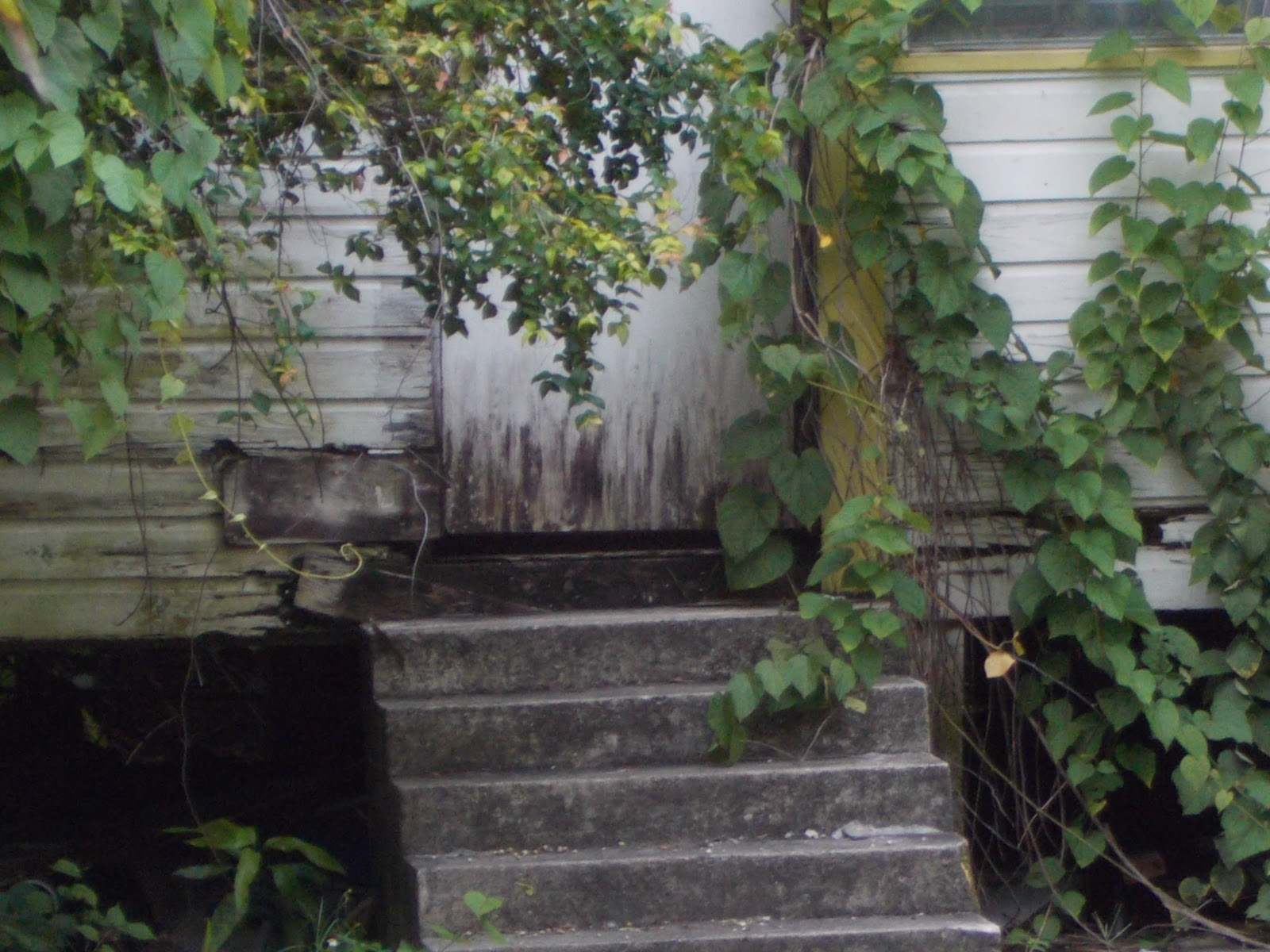
The front door of the E.W.F. Stirrup House taken from
outside the fence. Ferns now grow on the concrete.

Synchronicity may have been at work again yesterday when I spoke to another gentleman who just happened to be riding past on a bicycle. He’s lived in the Grove 50 years and seems to know where all the bodies are buried. We had a good conversation and would be talking still, I imagine, if not for the lightening and thunder of an approaching storm. He wanted to pedal home before he got soaked. Unless he lived a block away, he got drenched. The sky opened up in a deluge, with barely a drop or two to give final warning.

When I told him I was a journalist investigating the E.W.F. Stirrup House, he told me some wonderful stories concerning ‘interesting’ real estate deals in The Grove, including some about the 3 lots that were assembled to build the condo complex behind the Stirrup House. During this conversation he dropped one important name — one I had not heard before — and a cursory investigation of that name reveals that he is actually the guy that might have piled up all the bodies needing burying.

All of this — what the security guard told me, what this bicyclist told me, the gentleman who appears to have assembled the 3 lots — are just more unconfirmed threads for me to pull to see how this story unravels. However, now I have the name of someone who knows all the players and may no longer have an axe to grind. Or, in the alternative, may have a very large axe to grind. Either way, if I can connect with this gentleman I might be able to solve the riddle of the E.W.F. Stirrup House.

Meanwhile, nothing really changes on Charles Avenue as long as you don’t consider continued deterioration as no change. This is why I am calling this DEMOLITION BY NEGLECT, because nothing else makes any sense. Why would such a beautiful example of a 19th Century house, a house that has survived on that spot for more than 100 years be allowed to rot? Nothing in Florida, it seems, is allowed to get much older than 20 years. In the many decades I’ve been visiting (and 7 years living here) I have seen buildings go up and down and up and down and up and down on the same piece of land. Who cares? They’re usually gas stations or banks or were gas stations and became banks, or vice-versa. There’s no sense of age — of history — in Southern Florida, except for a few small pockets. Most of those have been preserved, restored with love, and maintained as historical sites or museums.

The clock is ticking as the E.W.F. Stirrup House rots.

Take a look at the rest of my photo essay below and please read the previous chapters of Unpacking Coconut Grove, Florida, 33133 ► Part OnePart 1.1Part Two: E.W.F Stirrup, His House and All His Other HousesPart 2.1

Wood rot under the window frame on the side of the E.W.F. Stirrup House.

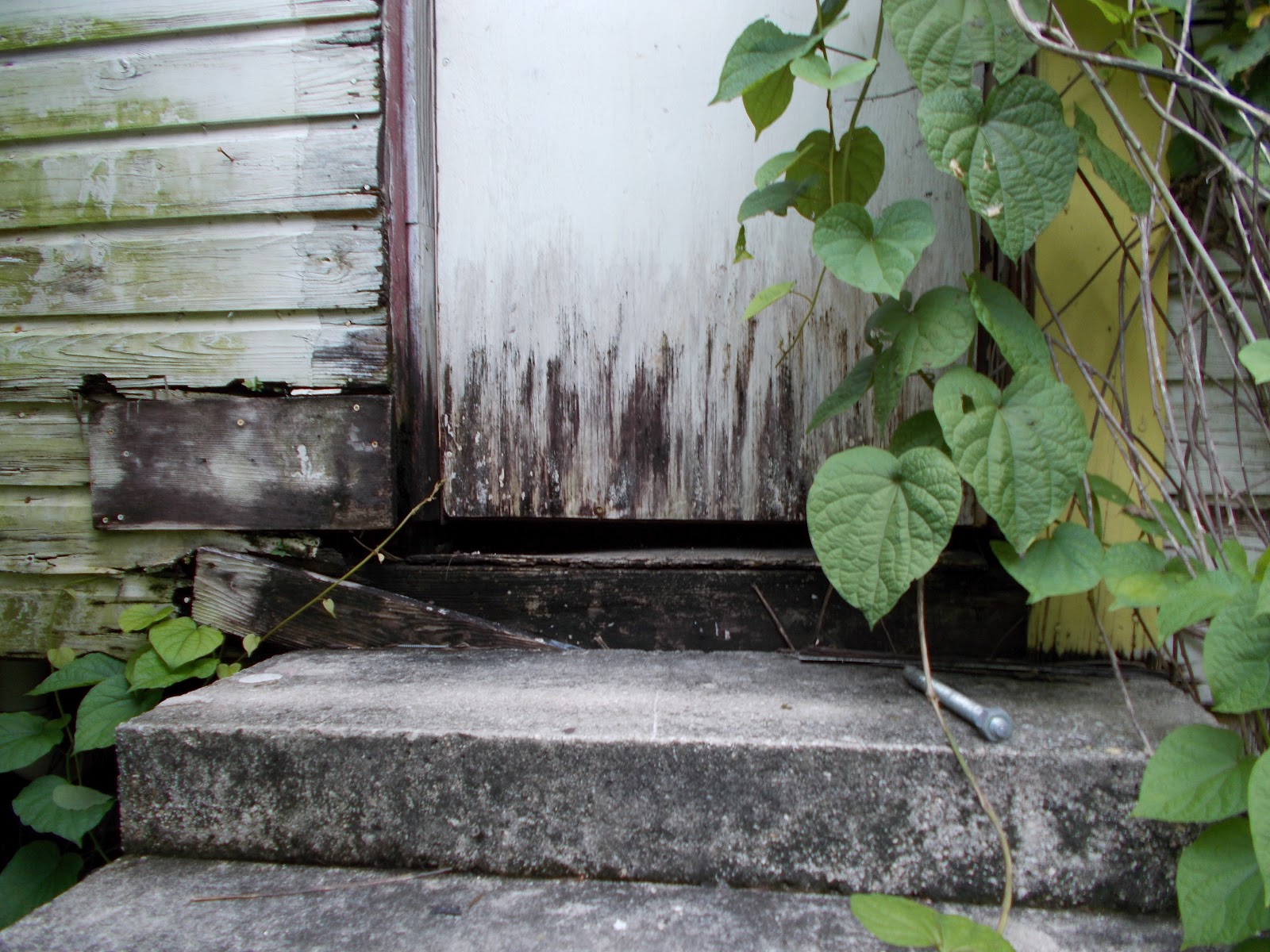
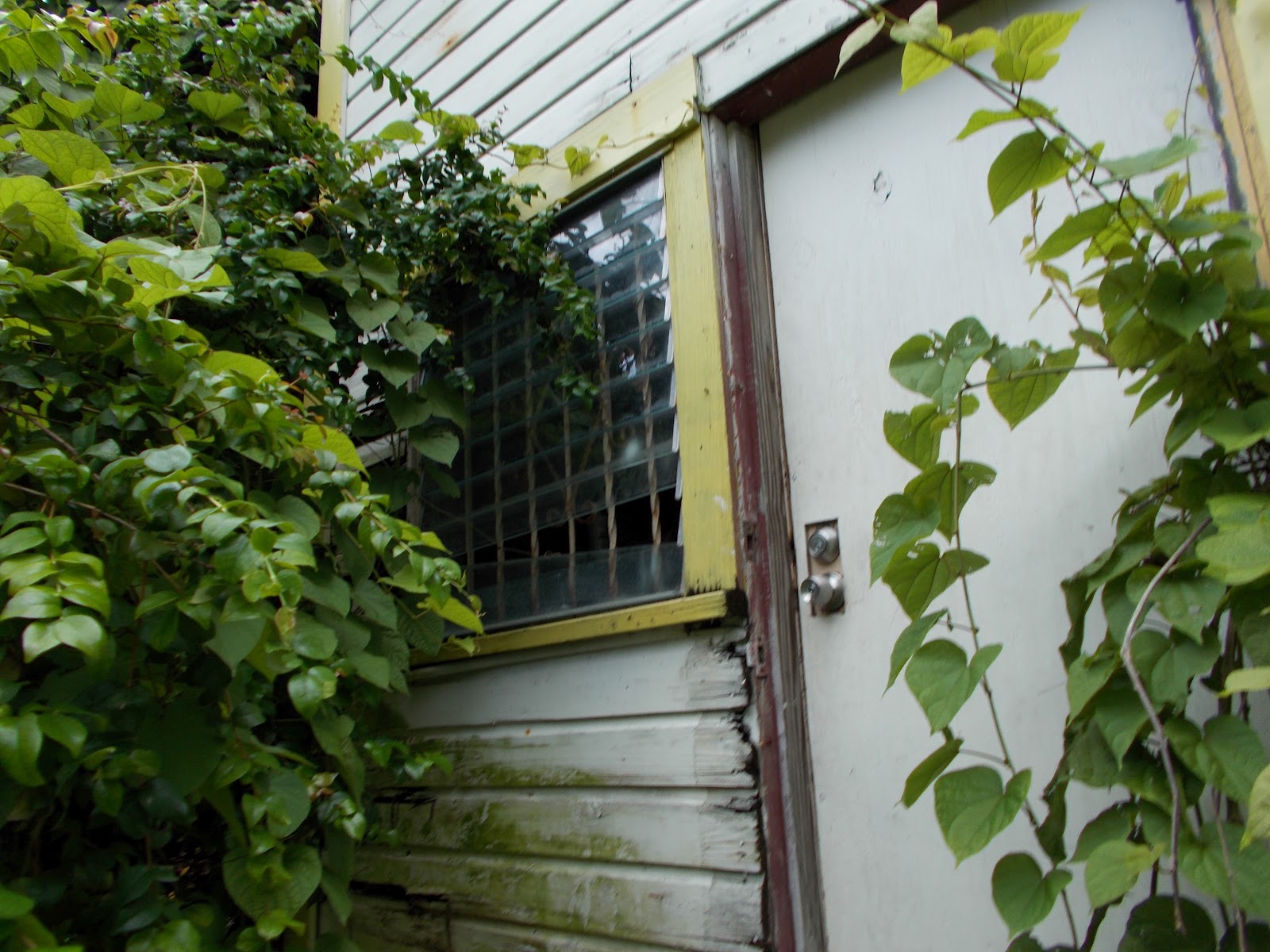
Wood rot at the side door, which is now being invaded by vines.

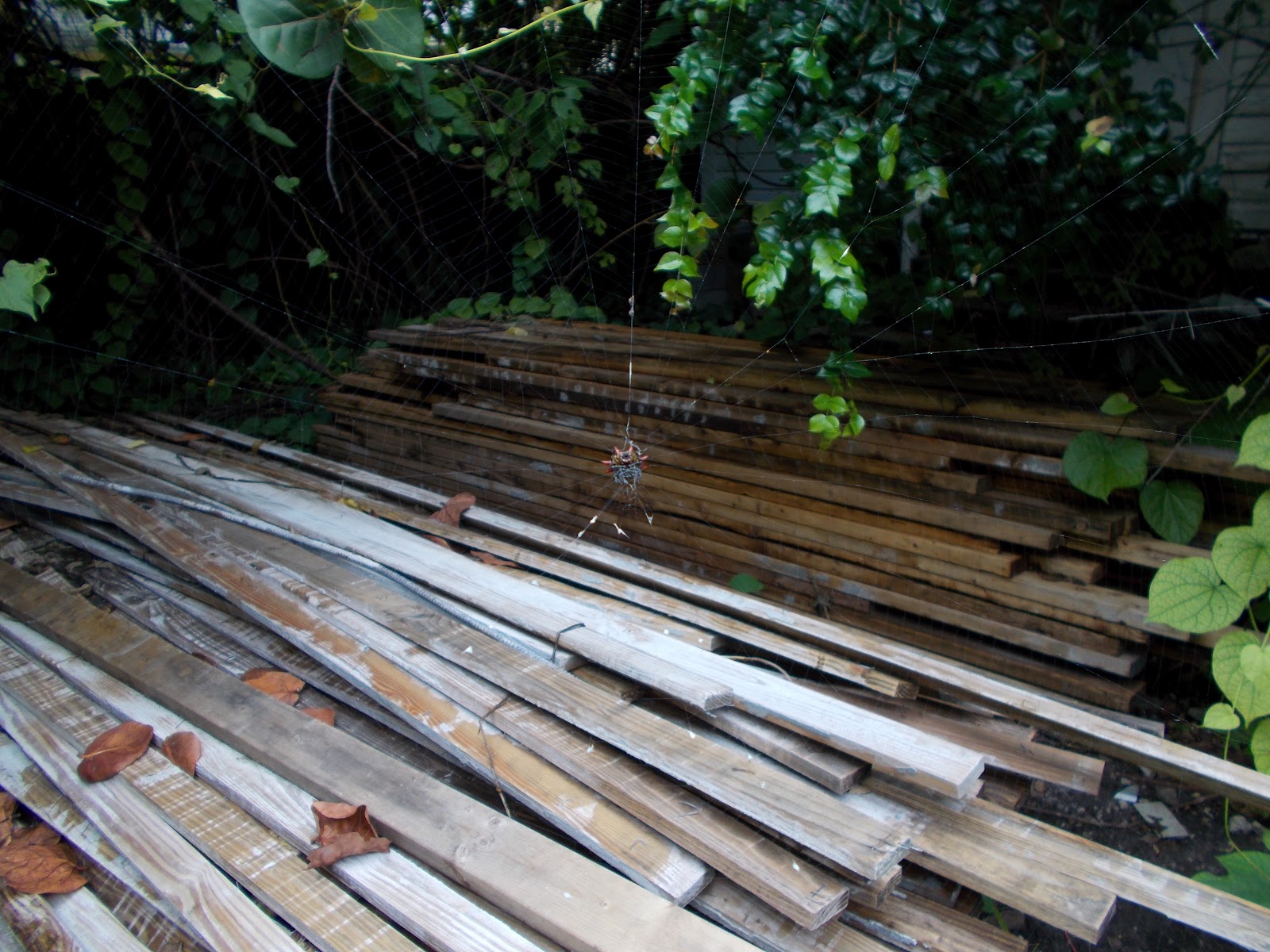
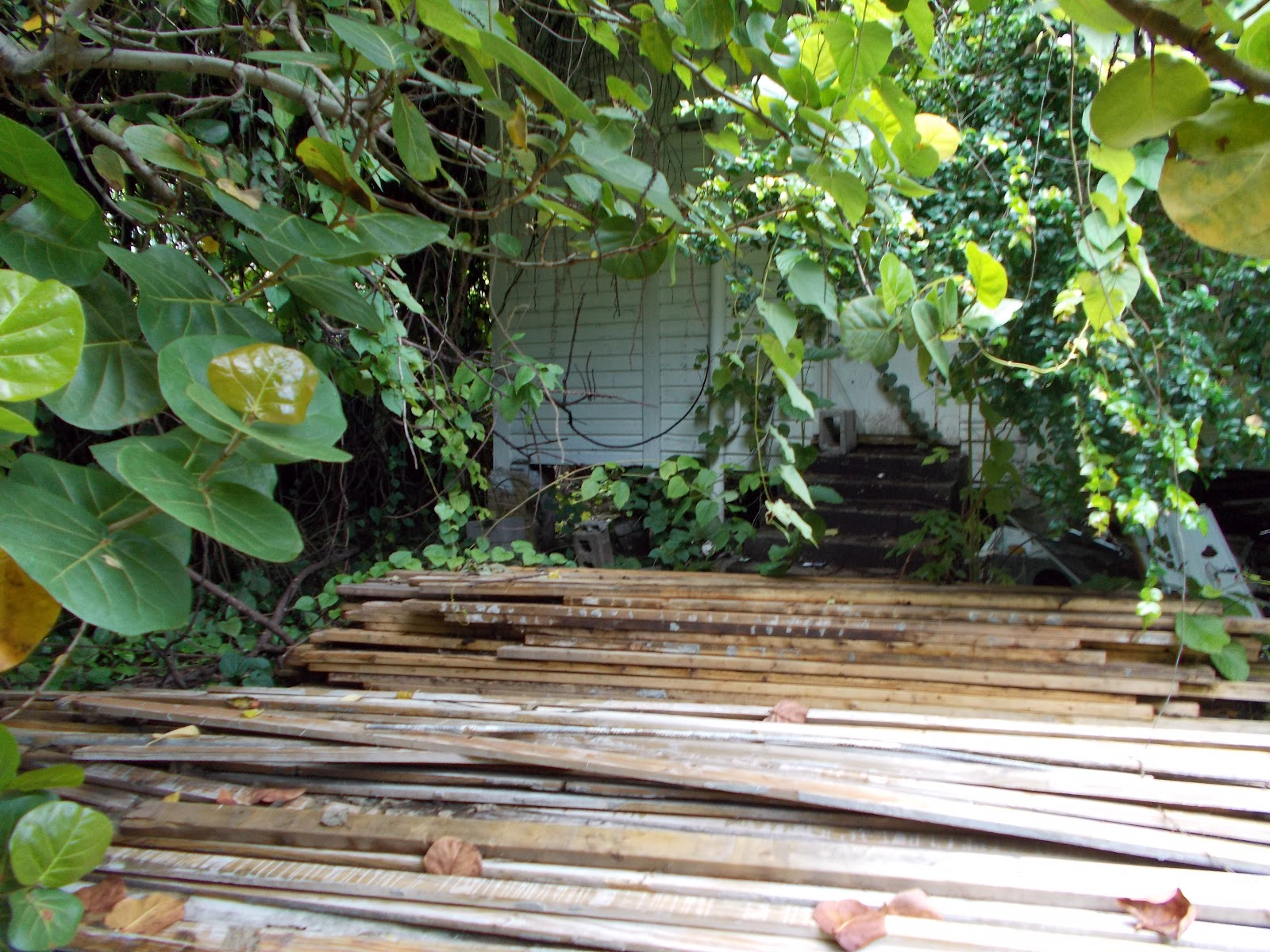
A pile of wood behind the house, under a huge bower that developed from all the vegetation. It’s where trash is
hidden from the prying eyes of Miami by-law inspectors because it’s against the law to pile up trash on your property.

This pile of landscaping clippings is also under the bower. It also (allegedly) breaks the law.
It doesn’t look like much in this pic, but it’s about 3 feet tall. That’s a nine foot palm frond on top.
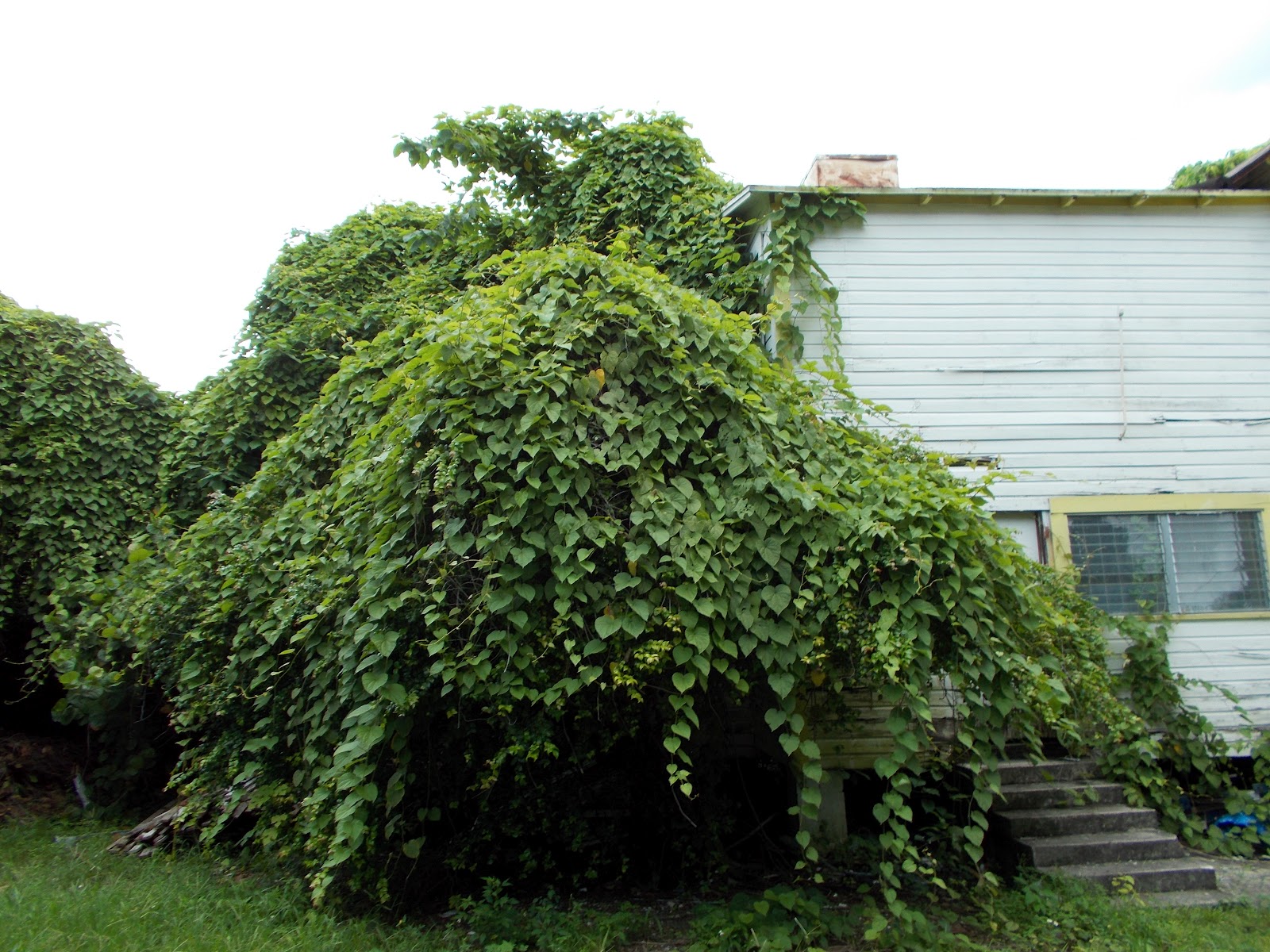
The extent of the wood pile under the bower. It’s several feet high. This is the opening of the bower.

What kid wouldn’t want to play in a bower this size?
While it was impossible to tell from any vantage point, these plants must be invading the E.W.F. Stirrup House.

The plants are clearly invading the house through a side window.

The side door with the other window, open to the elements. The bower is on the left.

The condition at the bottom of the side door.

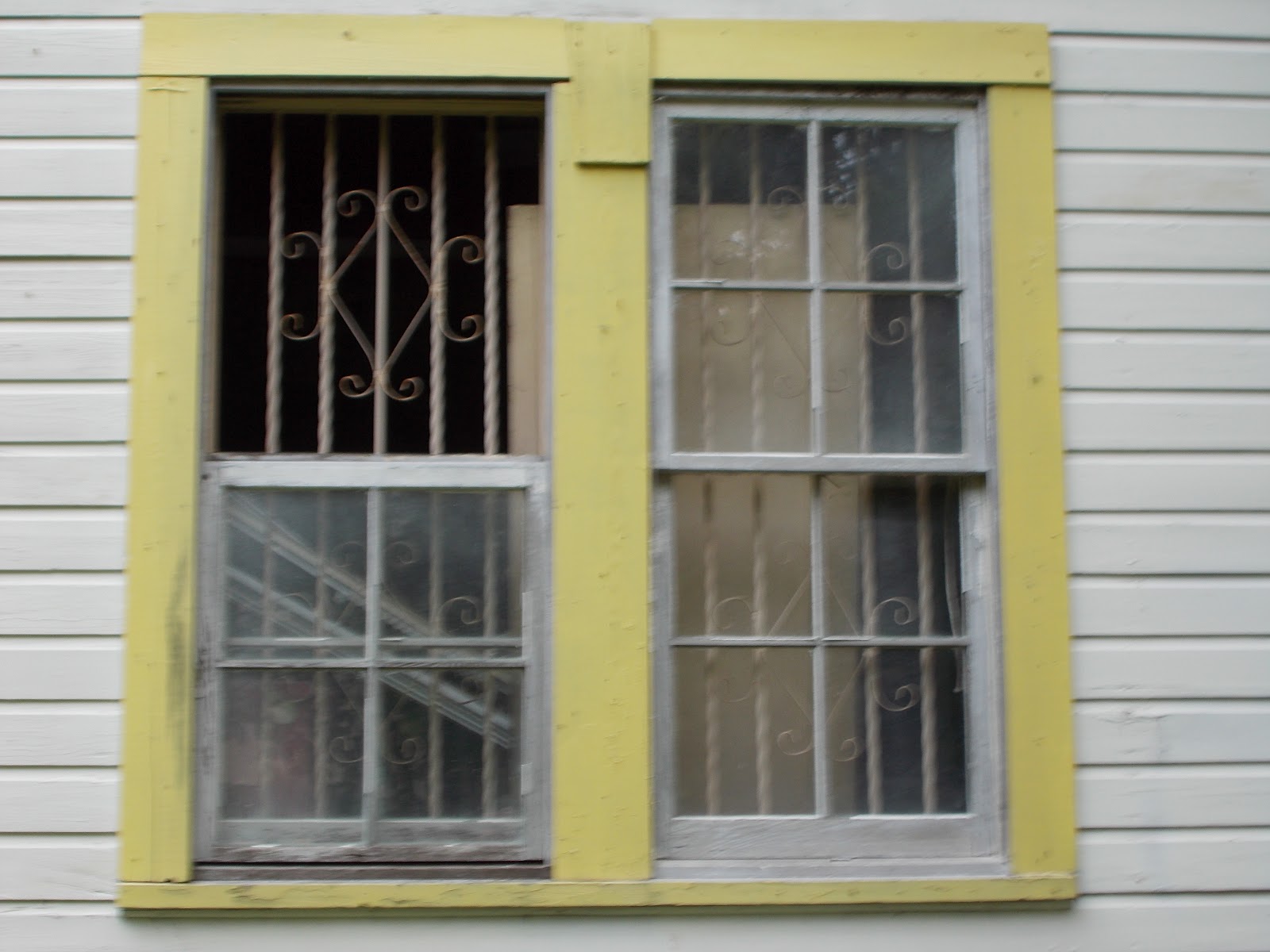
A window on the east side of the house open to the elements. The house appears to store construction debris.
Any thunderstorm coming in from the ocean will blow water right into this window.
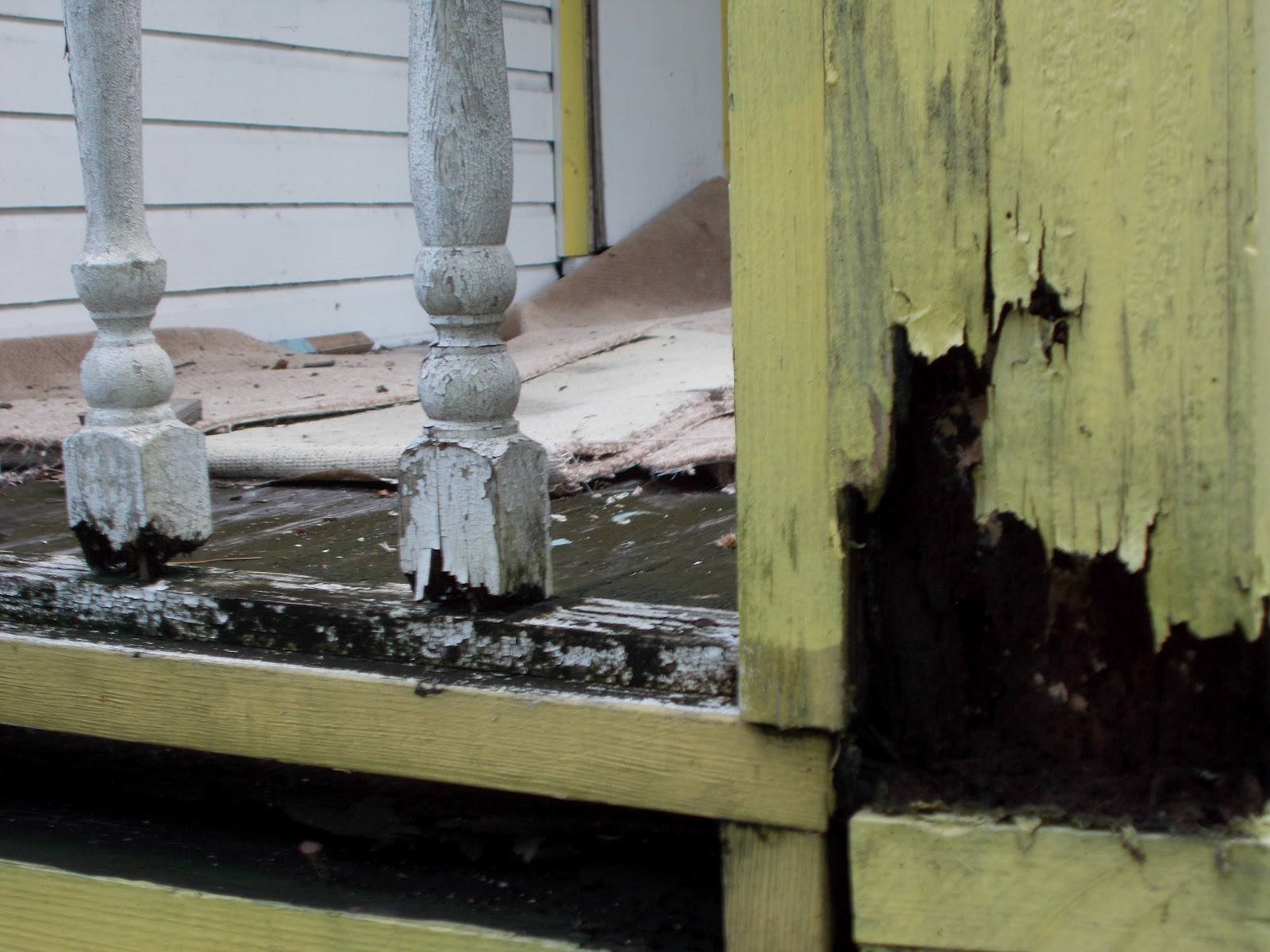
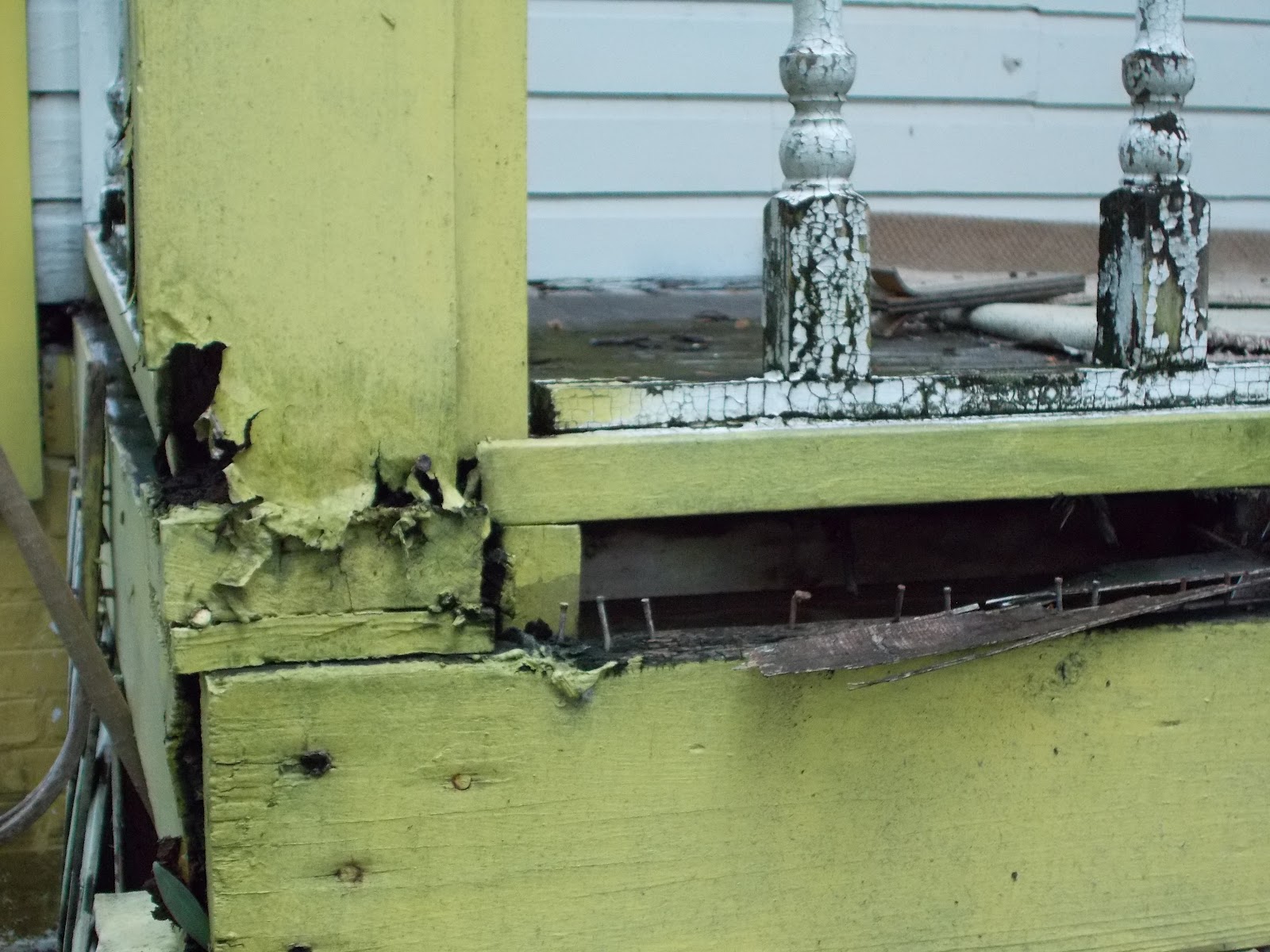
Close up of the porch of the E.W.F. Stirrup House.

Other side of same post.

She’s a beauty, ain’t she?
Just a reminder of what this is all about.

The condo complex behind the Stirrup House sits on the corner of Franklin and Main Highway. It includes unobstructed views of Biscayne Bay from the upper floors, 2 high-end restaurants, a recreation of a former venerated neighbourhood bar called The Taurus, and valet parking. I have been told there was a “Save the Taurus” campaign when the possibility of its demise was announced years ago. I’ll be writing more about this complex in Part Three of Unpacking Coconut Grove, Florida.

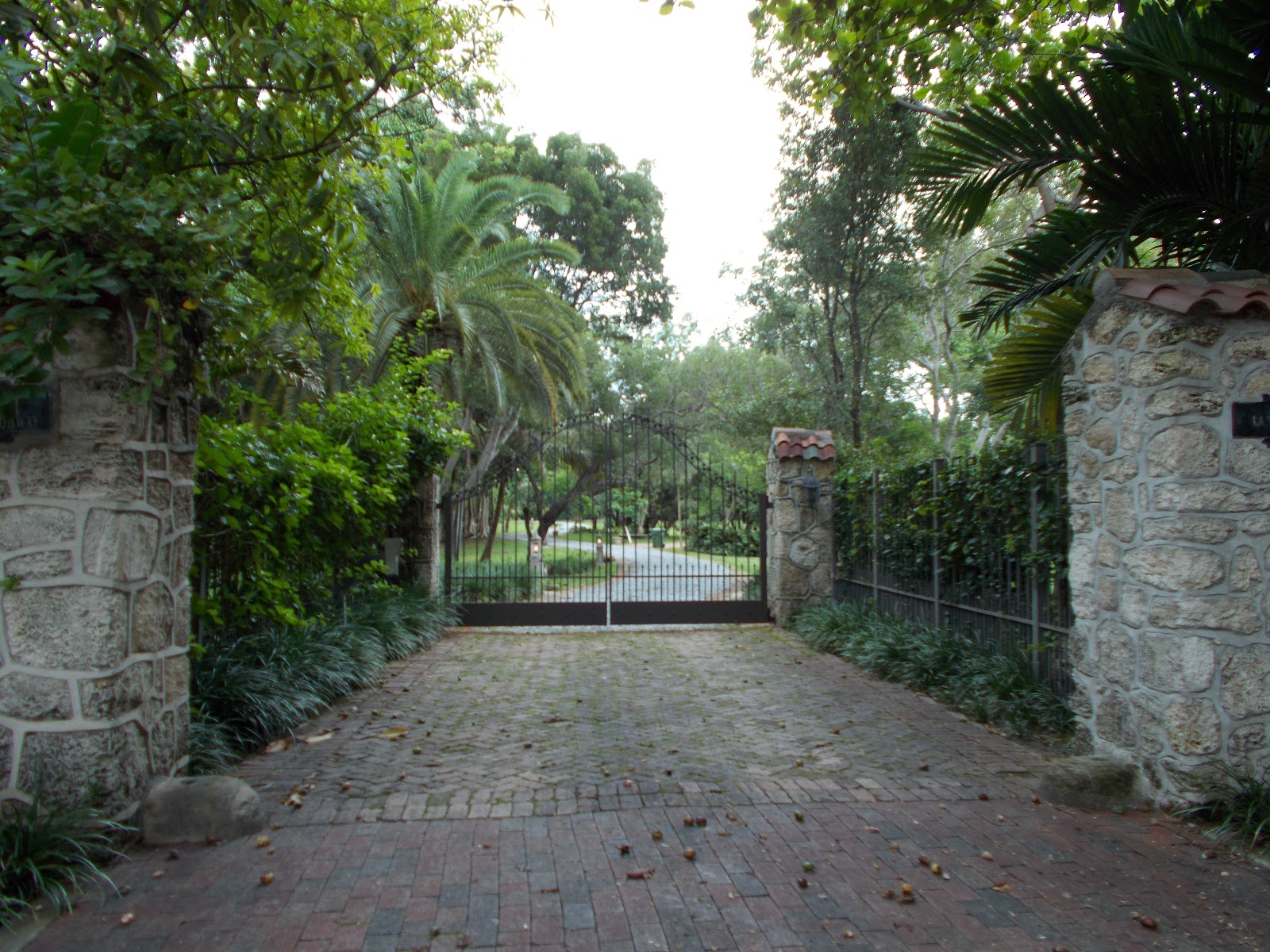
This is one of the gated communities on the opposite side of Main Highway. At one time it was the extension of Franklin Avenue to Biscayne Bay. Now it’s gated and inaccessible, even to the Google Street View Car.

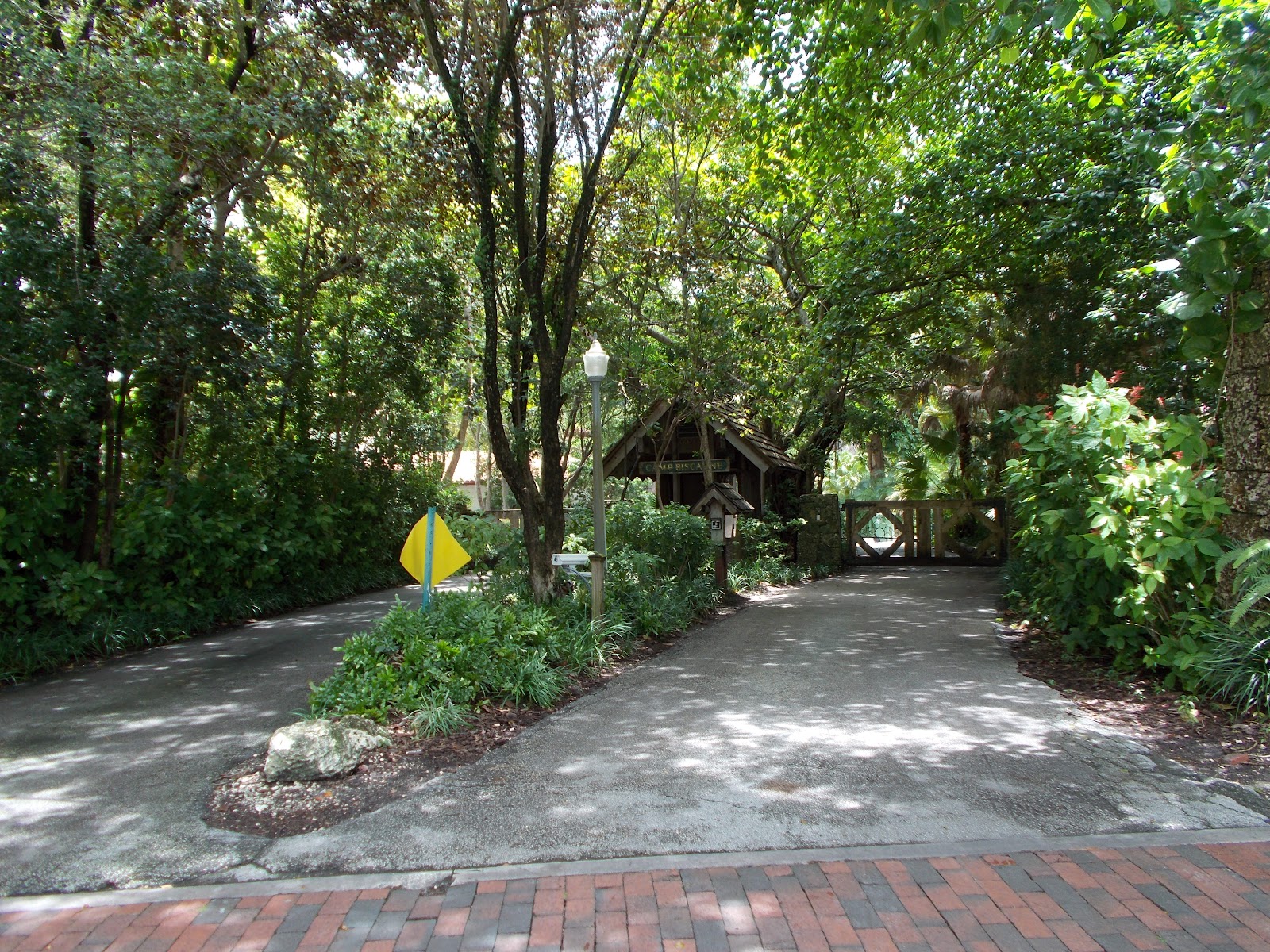
This is another of the gated communities on the other side of Main Highway. Camp Biscayne, which is also closed to Google Street View, has a long and rich history going back 109 years. Camp Biscayne is so exclusive that even though it’s only a short block away from gated Franklin, there is no access from Franklin, or vice-versa.

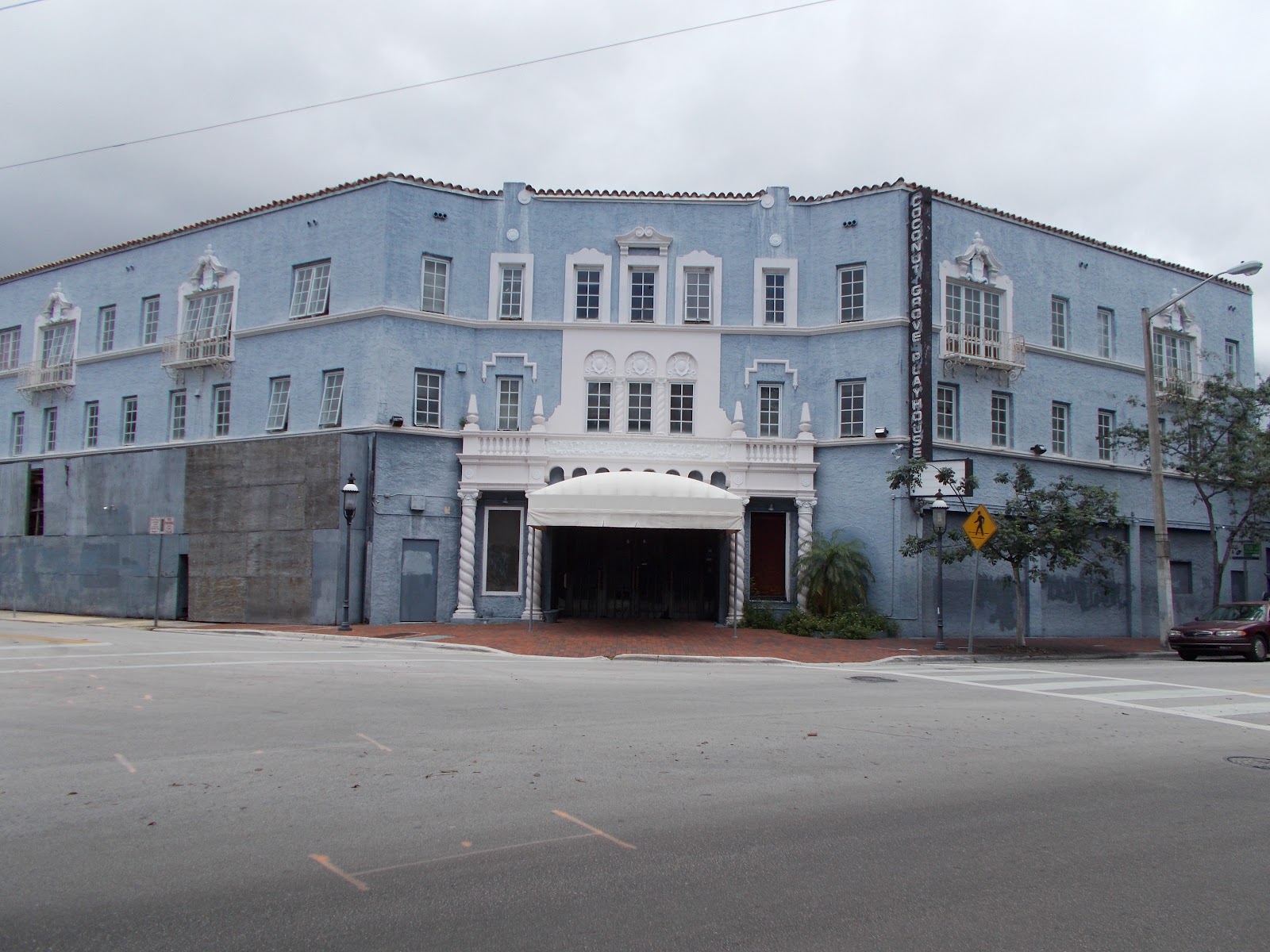
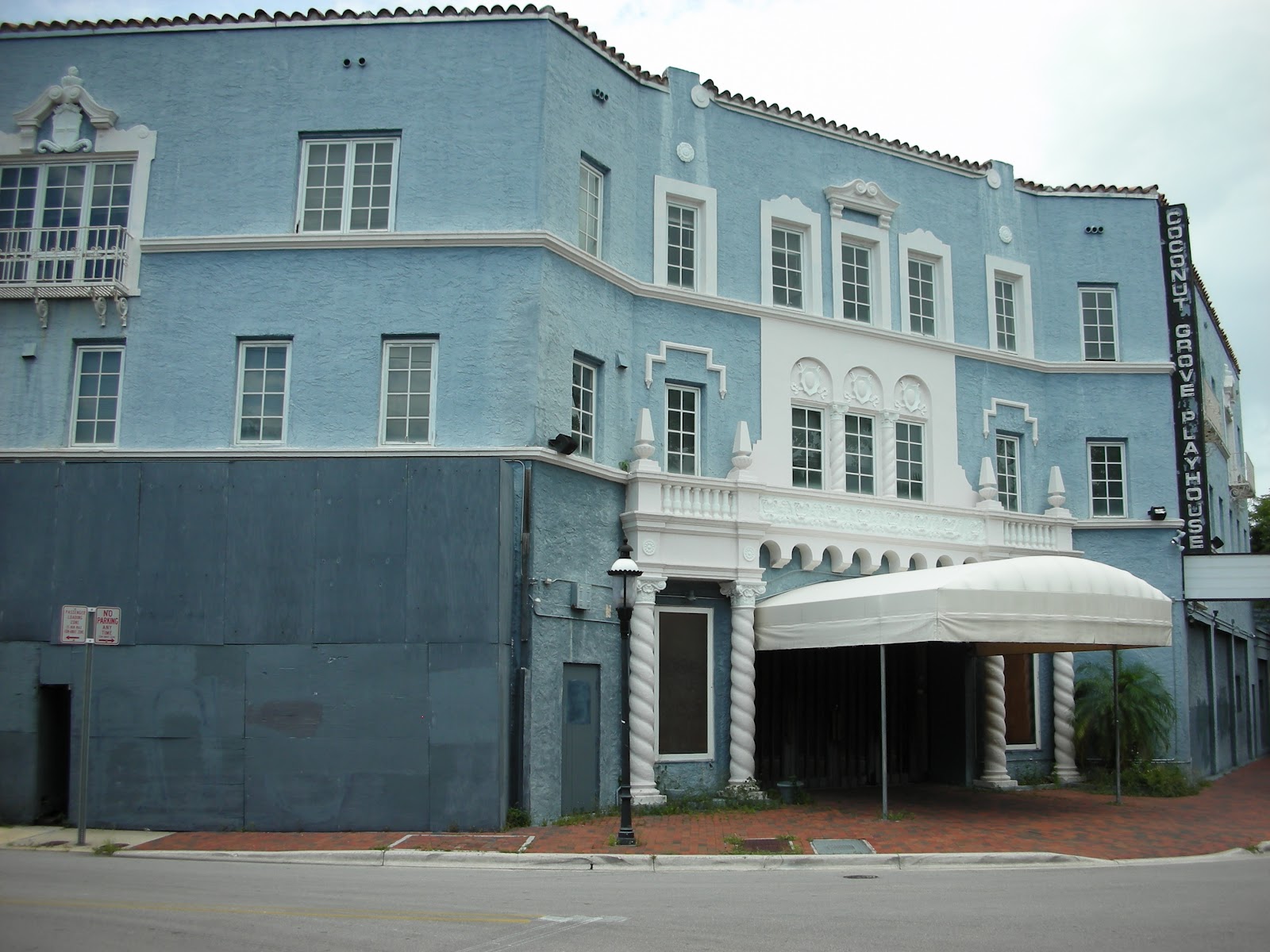
Picture of the abandoned Coconut Grove Playhouse, taken from Camp Biscayne entrance where the gentleman and I spoke.

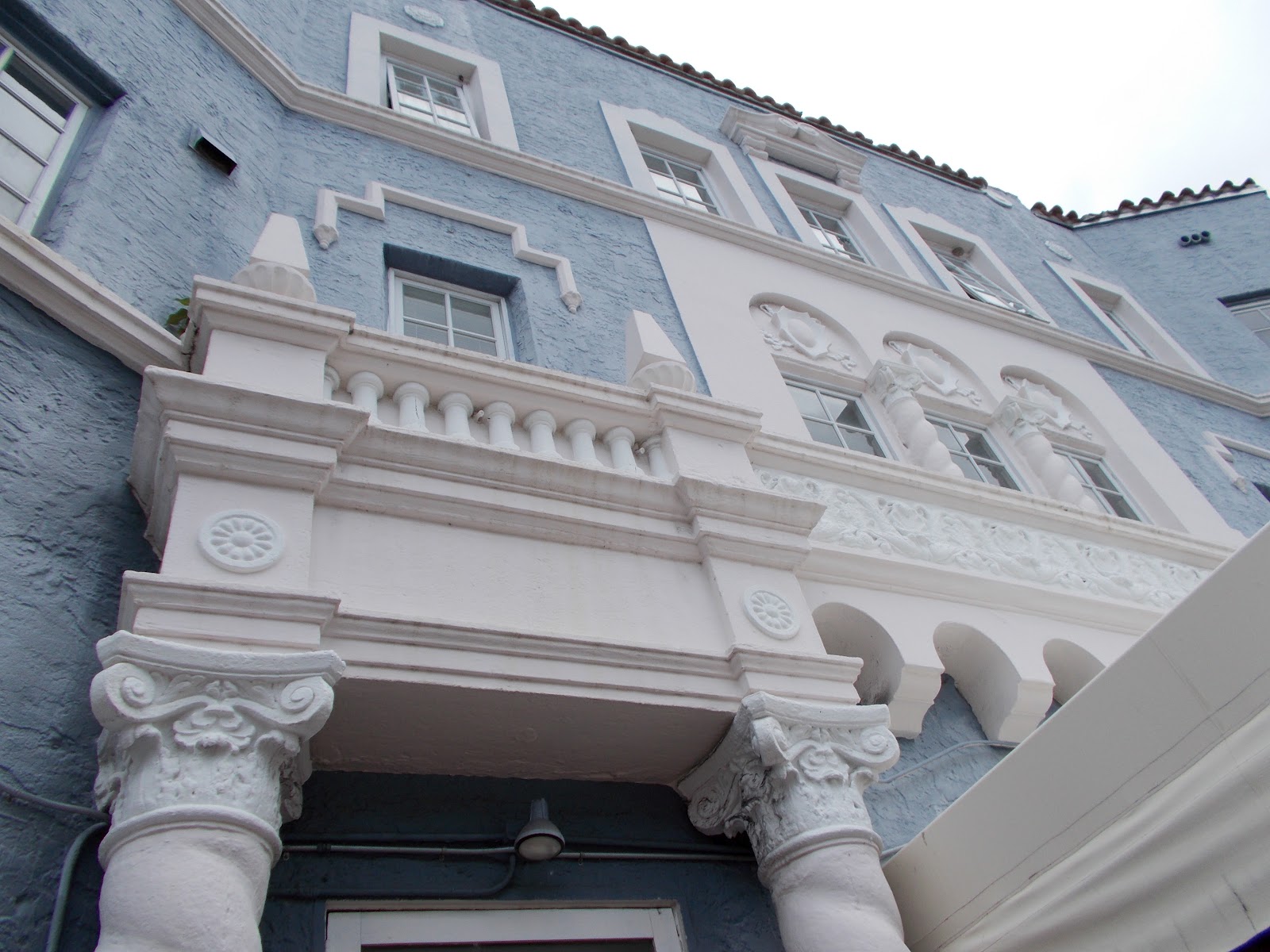
Detail of the Coconut Grove Playhouse.

Detail of the Coconut Grove Playhouse.

Picture of the Coconut Grove Playhouse sign taken from inside the car after the skies opened up.

If you want to help me save the E.W.F. Stirrup House you could provide no greater service than sharing this with people you think may care.

How Jamaica Conquered The World ► The Day I Met Bob Marley

The latest episode of the excellent podcast-documentary How Jamaica Conquered The World is now online. Episode Eleven is the second part of the story of Bob Marley: Recollections and Legacy. It includes an edited version of my “Meeting Bob Marley” story. The story takes place backstage at Convocation Hall, Toronto.

Here’s the first part of the Bob Marley story:

Some of my recollections are also featured in Episode 3: The Story of Dub Music:

I highly recommend How Jamaica Conquered The World, and not just because I’m in it. It is a high quality documentary on Jamaica’s influence around the world in the past 50 years.

Unpacking Coconut Grove ► Part 2.1 ► Today in The Grove

I love Google alerts. While not everything below belongs to Miami’s Coconut Grove, most of it does. And, what’s there has all the appearance of bling in the Florida sun: ritzy hotels, bed races, show biz, outdoor cafes, wine tasting, high fashion, and high end real estate. Imagine how much money is exchanging hands today in The Grove, just in food and drink service.

To hell with Coconut Grove’s history when there’s money to be made.

News 8 new results for Coconut Grove
Newton assault victim on suicide watch
Herald Sun
Miami
trial lawyer Michael Seth Cohen has filed a complaint on behalf of
Ariel Vargas, 42, who was working the graveyard shift in the Coconut Grove Courtyard Marriott on April 17 when Newton launched an attack that was captured on CCTV. Mr Cohen said
See all stories on this topic »
Magic and more: Singers, comedians, performers to showcase talent in variety
Cherokee Tribune

and more: Singers comedians performers to showcase talent in variety
show – CANTON — The Canton Theatre hopes to bring some laughs to
downtown Canton with two nights of a variety show. The Coconut Grove Players which consists of six perform…
See all stories on this topic »
Man ordered to stand trial for murder of parents
ABC Online
Thomas Bradley, 40, is charged murdering his parents, Bill and Hilary Bradley, in their Coconut Grove
townhouse in March. An autopsy showed both were killed by stabbing.
Bradley was today committed to stand trial in the Northern Territory
Supreme Court.
See all stories on this topic »
Matthew Newton ‘sued over hotel assault’
Yahoo!7 News
Ariel Vargas was doing the graveyard shift just before 5am on April 17 at the Courtyard Marriott Hotel in Miami’s Coconut Grove. Video surveillance at the hotel appears to show Newton punch the 42-year-old in the face. The 35-year-old Underbelly star
See all stories on this topic »

Yahoo!7 News
New Providence Police investigate alleged drowning – Mobile division make
thebahamasweekly.com
A 17 year old male of 2nd Street, Coconut Grove
is in police custody after being found in possession of a handgun and
ammunition. According to police reports around 11:23 pm on Monday 9th
July, 2012 police received information of gunshots being heard
See all stories on this topic »

thebahamasweekly.com
On the Road Again
New York Times
One long-haired owner hops on his ride, fires her up and smoothly navigates her into a well-to-do avenue of Coconut Grove.
The loud, wet growl of her pipes instantly stops all talk in the
open-air cafes and along the crowded sidewalks down which women
See all stories on this topic »
Filming in Miami
Miami Today
Newspaper;
Filming; Fashion Photography; Photography; Commercials; Videos; Miami,
Florida; Miami Today; MiamiTodayNews; Miami-Today; South Florida; Coral
Gables; Coconut Grove; Aventura; Miami Beach; Ocean Drive; Lincoln Road; South Beach;
See all stories on this topic »
Miami-Dade way ahead of state in spending rebound
MiamiHerald.com
“On
average, we’re still about 10 or 15 percent behind that pace” hit in
2007 and 2008, said Robert Finvarb, owner of several Marriott hotels in
Miami-Dade, including a 196-room Courtyard by Marriott along the Coconut Grove waterfront. “We’re getting
See all stories on this topic »

Blogs 3 new results for Coconut Grove
Coconut Grove Grapevine: Great Grove Bed Race registration is
By Grapevine
Good, cause the sign-up form is now open for the 2012 Great Grove Bed Race, which will take over the streets of Coconut Grove on Sunday, September 2. This is one of the Grove’s big signature event, thousands of people crowd the village to
Coconut Grove Grapevine
New Wine tasting series at the Ritz Carlton 7/12/12 « Soul Of Miami
By soulofmiami
Guests’
palates will be greeted with complimentary hors d’oeuvres, while
sipping on carefully selected winesthemed by varietal type, region or
country of origin, for an educational wine tasting at The Ritz-Carlton-Coconut Grove in Miami’s
Soul Of Miami
Destination Miami | Fashion News, The latest trends, Catwalk – Motilo
By CressidaMeale
Districts such as Coral Gables, Little Havana and Coconut Grove
offer the kind of sultry indulgences their names suggest, but it is
South Beach (SoBe) that’s the heart of the party scene in a city that
takes its hedonism, ostentation and
Fashion News, The latest trends,…

Web 6 new results for Coconut Grove
3400 27 Avenue UNIT 401, Coconut Grove, FL 33133. MLS
3400 27 Avenue UNIT 401, Coconut Grove, FL 33133. RITZ CARLTON. MLS# A1663109.
www.yellowkeyrealty.com/…/3400-27-avenue-unit-401-coco…
Sonesta New Orleans, Boston, Miami, St. Maarten, Brazil, Peru, Egypt
Cruises and Beach Resorts. Discover the distinctive Sonesta resorts and hotels in New Orleans, Maho Beach, Boston / Cambridge, Coconut Grove, and more.
www.sonesta.com/Orlando/index.cfm?fa=c.HPRedirect…
Miami planning board to consider proposed school on July 18
IF YOU GO What: Miami Planning, Zoning and Appeals Board Where: Miami City Hall, 3500 Pan American Drive, Coconut Grove When: 6:30 p.m. on July 18
www.miamiherald.com/…/miami-planning-board-to-consider….
Coconut Grove-$900 Mostly Furnished with Parking & Utilities
This is a great housing opportunity for a responsible male or female in the center of Coconut Grove! $900 per month includes room (180 sq ft), garage parking,
miami.craigslist.org/mdc/roo/3129302623.html
ESL Jobs in Coconut Grove Florida | ESLemployment
Job search for ESL jobs in Coconut Grove Florida at ESLemployment.com.
www.eslemployment.com/…/esl-jobs-Coconut-Grove-Florida….
Buyer Representation For Coconut Grove Commercial Retail
3340 GRAND AV – Coconut Grove, FL 33133. Beds: 0 Baths: 0; Type: Commercial/Industrial; MLS ID: D1369668; Sq Ft: 4500. on grand ave one block from the
www.agreservices.com/…/coconut-grove-retail-properties-for-…

Unpacking Coconut Grove ► Part Two ► E.W.F. Stirrup House

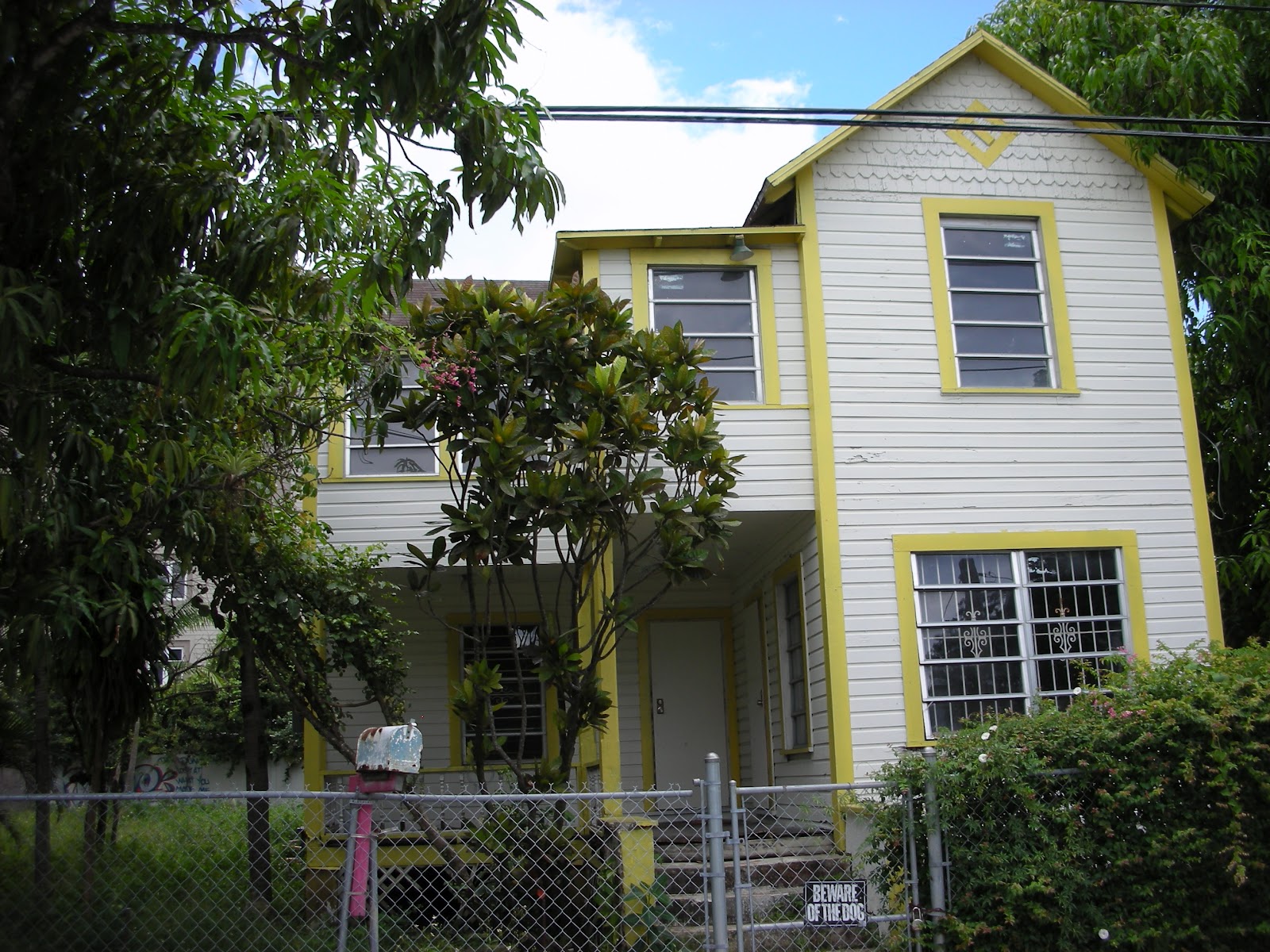
Standing proud. The beautiful E.W.F. Stirrup House.

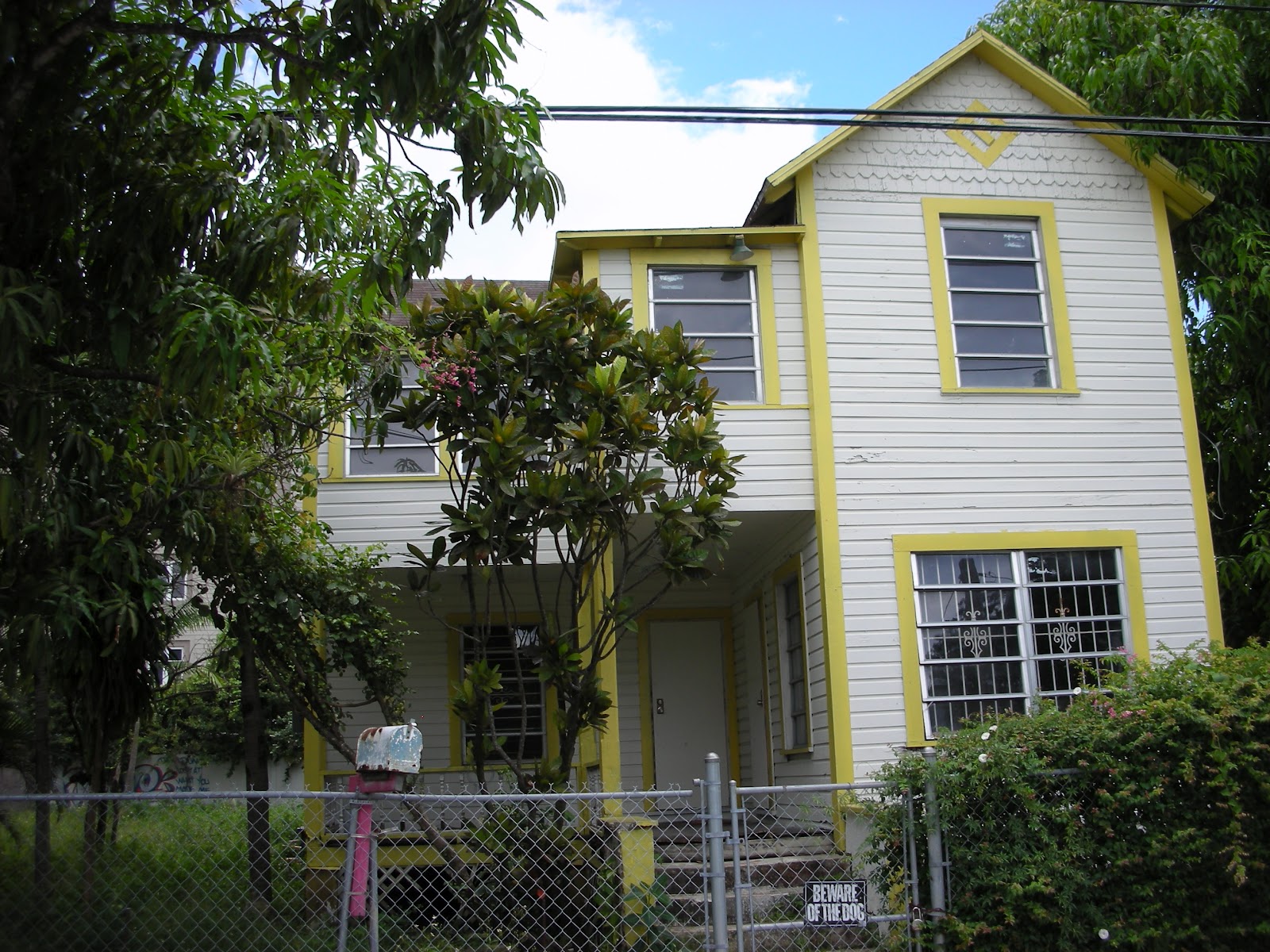
The E.W.F. Stirrup House (left) at 3242 Charles Avenue, Miami, FL, 33133, is reportedly one of the last wood frame homes in Miami-Dade County. It is almost certainly one of the oldest houses, built in the late 19th century, as Caribbean Blacks started arriving in lower Florida to work at the Peacock Inn. The house sticks out on Charles Avenue, but also in Florida. Homes don’t look like this anywhere else. According to a report looking in to designating the E.W.F. Stirrup House a Miami historical site:

The key elements that reflect its nineteenth century origins are its extremely narrow proportions, the size and shape of the fenestration, and its L-shaped plan. This design is based on a builder’s tradition, and was especially popular throughout America in the last half of the nineteenth century.
There is more than one way to describe this property type. In their book A Field Guide to American Houses, Virginia and Lee McAlester describe it as a “front gable folk house.” In a more detailed article, Barbara Wyatt of the State Historical Society of Wisconsin described it as a “Gabled Ell.” Wyatt explains that this type was especially common in late–nineteenth century America, and was almost exclusively a residential type. The Gabled Ell takes the form of two gabled wings that are perpendicular to one another, and that are frequently of different heights.

The longitudinal face parallel to the street almost always had the lower height. The result was typically an L-shaped plan. Ms. Wyatt explains that the form allowed for outdoor living space (the porch) and a sheltered entrance. Entry is always via the porch at the “ell,” or junction of the two wings.

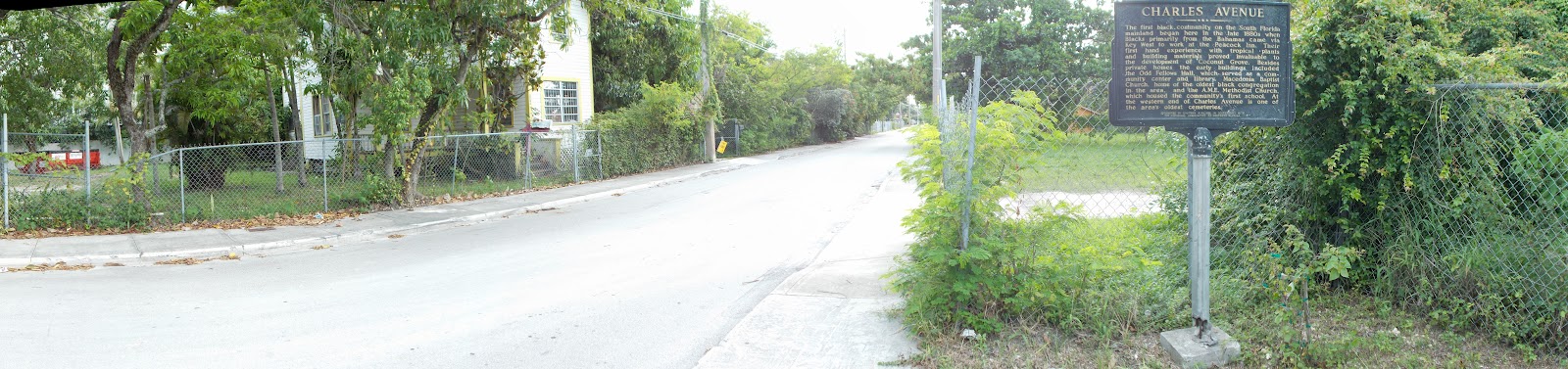
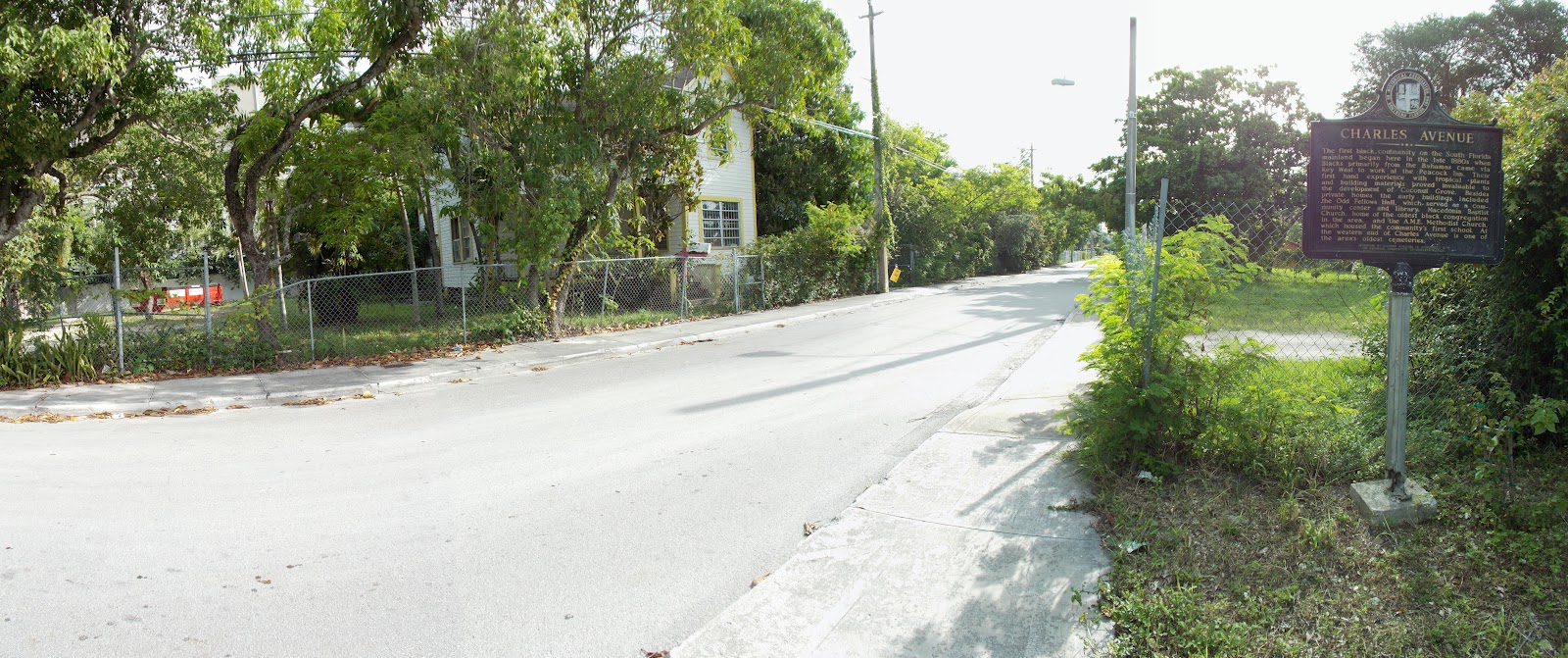
My latest panorama of the E.W.F. Stirrup House and the historical marker that started my journey.

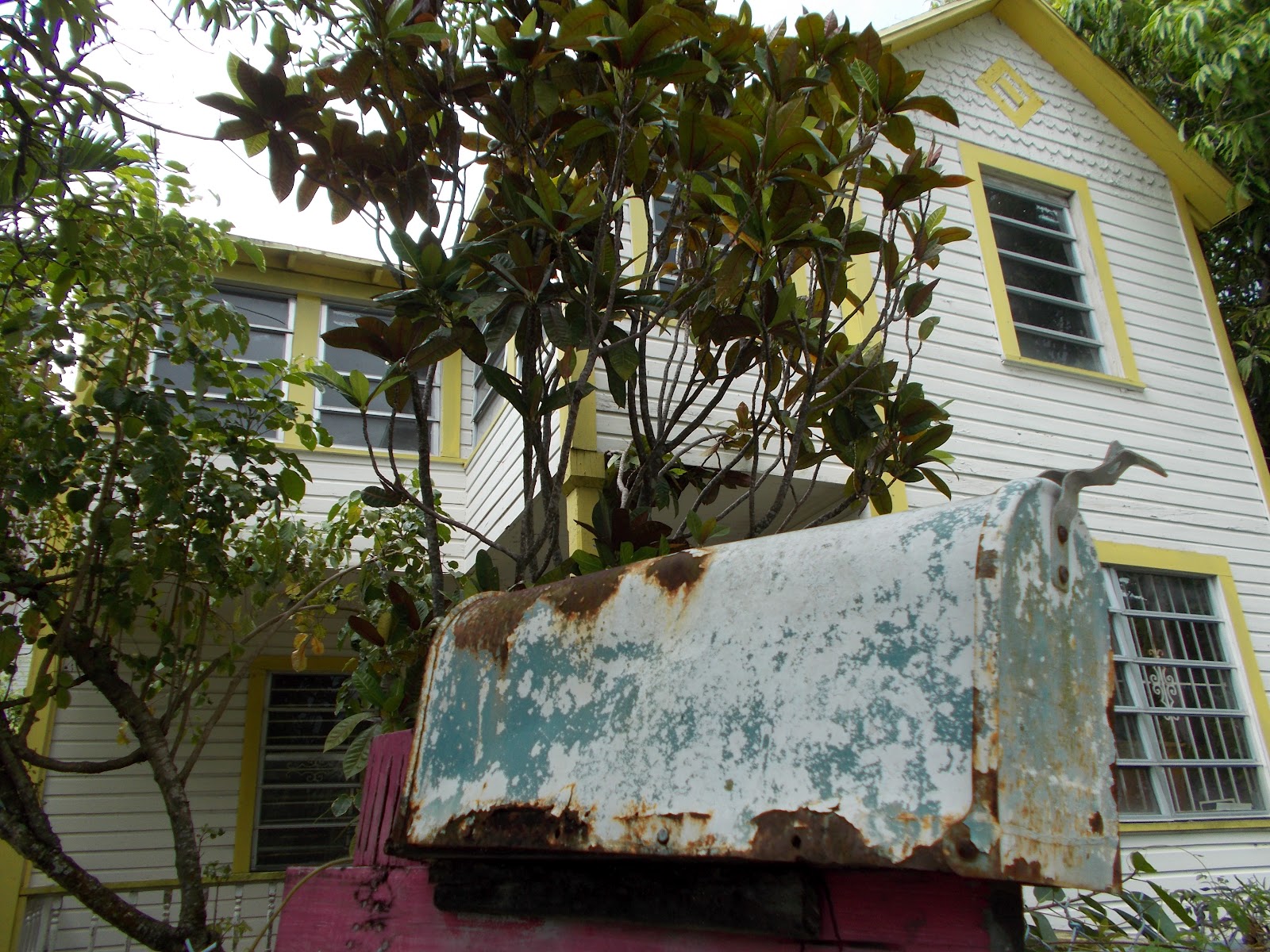
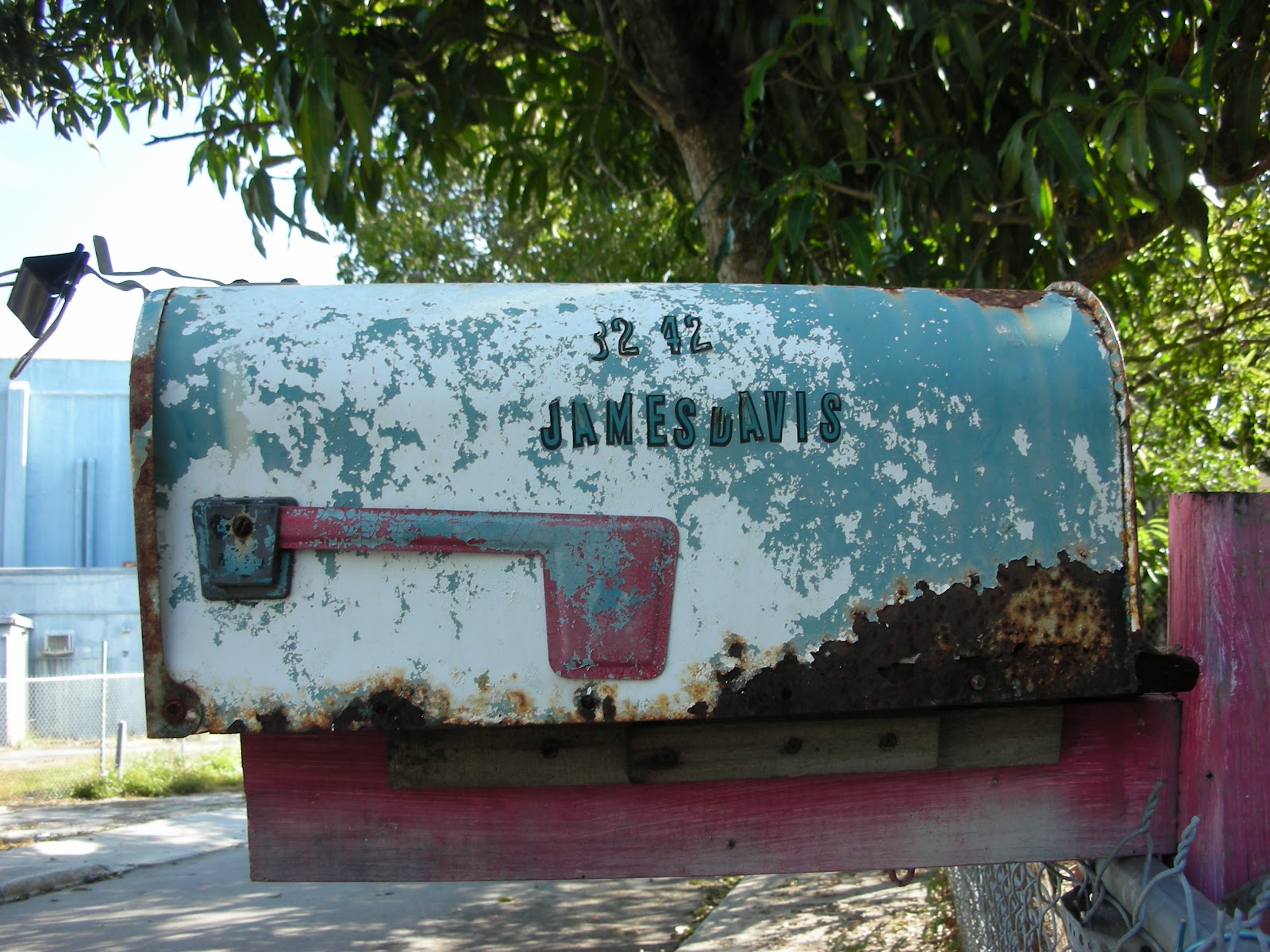
The Stirrup House mailbox in 2010

While the E.W.F. Stirrup House certainly deserves to be preserved for its age and architecture, it also needs to be preserved as a standing monument to Ebenezer Woodbury Franklin Stirrup, one of the people who built Coconut Grove with his bare hands.

E.W.F. Stirrup arrived in Coconut Grove in 1899 at the age of 25. Like a lot of Bahamians, he first migrated to Key West. There he apprenticed with an uncle as a carpenter, a trade he would utilize later. After 10 years, and unhappy with the financial arrangement with his uncle, Stirrup first moved to Cutler, Florida, working in pineapple fields and clearing lots for houses. Occasionally, instead of cash, Stirrup was paid in land, which began his real estate holdings that at one time included most of downtown Coconut Grove. That’s what made him one of Florida’s first Black millionaires. However, that’s not what made him extraordinary, especially for his times.

As his landholdings increased Stirrup began building houses which he rented and sold to other Bahamians who had emigrated up through Key West to take the jobs offered by Coconut Grove’s growing tourist industry. According to Kate Stirrup Dean, Stirrup’s oldest daughter:

Father believed in every family having a house, a yard and a garden, so you would feel like you had a home. He felt that people became better citizens when they owned their own homes.

The Mariah Brown House with its marker and No Trespassing sign.

Stirrup apparently built more than 100 houses, often at night after a full day’s work. Because of this Coconut Grove had a greater percent of Black home
ownership than any other ‘Merkin city I have studied. Most other cities
had a higher percentage of rental properties and absentee landlords as a result
of the neighbourhoods once belonging to other ethnic types who moved up
and out, a natural progression. Coconut Grove was an area settled almost entirely by Blacks when there was nothing but swamp and wilderness surrounding it. They didn’t inherit the neighbourhood, they built it and owned it themselves.

Stirrup was obviously a proud man because his house, which once dominated a large lot at the east end of Charles Avenue overlooking his estate, is a showpiece. It looks nothing like the simple Bahamian style homes he built for his neighbours. One of the last surviving examples of the Bahamian style is The Mariah Brown House, which pre-dates Stirrup’s arrival by nine years. It is thought to be the first house owned by a Black person in the area. A report was also prepared to designate the Brown House a Miami historical property. The report declares the Brown House:

[O]ne of the most important remaining sites from this early black Bahamian settlement in Coconut Grove. The house is also a good example of the type of architecture of the nineteenth century frame vernacular architecture that was inspired by the houses of the Bahamas and Key West.
The importance of the contributions made by African Bahamians to the develoment [sic] of Coconut Grove and the City of Miami has long been overlooked. Although recent studies show that by 1920 West Indian blacks made up over 16 percent of Miami’s population, information about their community and lifestyle has been basically undocumented.

Undocumented? Overlooked? Yes!!! Researching the Bahamian phase of Coconut Grove has been a monumental task. I have it through 2nd and 3rd hand information that in the ’20s, or ’30s, or ’40s, and well into the ’60s according to some, Coconut Grove was an artists’ community. It attracted a certain type of Bohemian Beatnik hipster, the archetype of which had little problem mixing with Blacks, listening to Jazz, and smoking reefer. That’s where my novel is going.

However that’s not where my research keeps taking me. My research keeps taking me to the E.W.F. Stirrup House, the Mariah Brown House, and the Coconut Grove Playhouse [another boondoggle I have yet to write about, but which I believe is just one more piece in the giant corruption jigsaw puzzle I find myself investigating] . Yet, the more I find out, the less I know. A little over a year ago the local NBC affiliate and CBS affiliate both filed reports which filled in some more of the blanks of the Stirrup House:


What has happened since then? Aside from someone straightening the historical marker? Nothing. I have now been documenting Charles Avenue in photos and essays for three years. In that time there has been no change to the Mariah Brown House or the E.W.F Stirrup House. Aside from more weather damage they stand in the EXACT same state of disrepair as they were the day I discovered them. My research confirms that each of them were vacant for years before I stumbled across them.

The Coconut Grove Playhouse in 2009.

In April of this year a “Give It Back!!! Give It Back!!!” campaign fired up to save the Coconut Grove Playhouse. However, it appears to have sputtered out almost as quickly as it flared up. More importantly, it was only concentrated on the Playhouse. What’s clearly needed is a comprehensive plan for a specially designated historical district from the Charlotte Jane Memorial Cemetery (named after Stirrup’s wife and childhood sweetheart and once the only place Blacks could be buried in the area because it was owned by Mr. Stirrup) to the Coconut Grove Playhouse, which could be the jewel in the rich tapestry of historical preservation of a Black neighbourhood unique in this country.

If such a designation can be done for a DAMNED DESIGN DISTRICT, then Miami can certainly see to it that this stretch of Charles Avenue be saved, and preserved. What physically remains of Coconut Grove’s rich history has been neglected and allowed to rot. I believe this has always been the original intent, ever since these three properties went vacant. Ask yourselves this question? In the middle of one of the most exclusive Zip Codes in the country, why has Miami allowed this to happen? Have you ever heard of Demolition by Neglect?

I believe the fix was in a long time ago. Therefore the question has always been, in my mind, who would benefit from from these properties being razed to the ground?

Coming soon: Unpacking Coconut Grove ► Part Three ► Who has a financial stake in the east end of Charles Avenue?

Previous entries:
Unpacking Coconut Grove ► Part One
Unpacking Coconut Grove ► Part 1.1

Colour Me Shocked!!! A Revolution In Condo World

In my world this is earthshaking news. It’s hard to describe in mere words just how shocking this is (which is why I also have pictures), but I’ll try because I’m a writer, dammit!!! This is the equivalent of discovering, late in life, that not only were you adopted, but so were both of your parents, and your parents’ parents. Nothing you ever believed makes any sense any more. It’s that shocking. Really. Trust me.

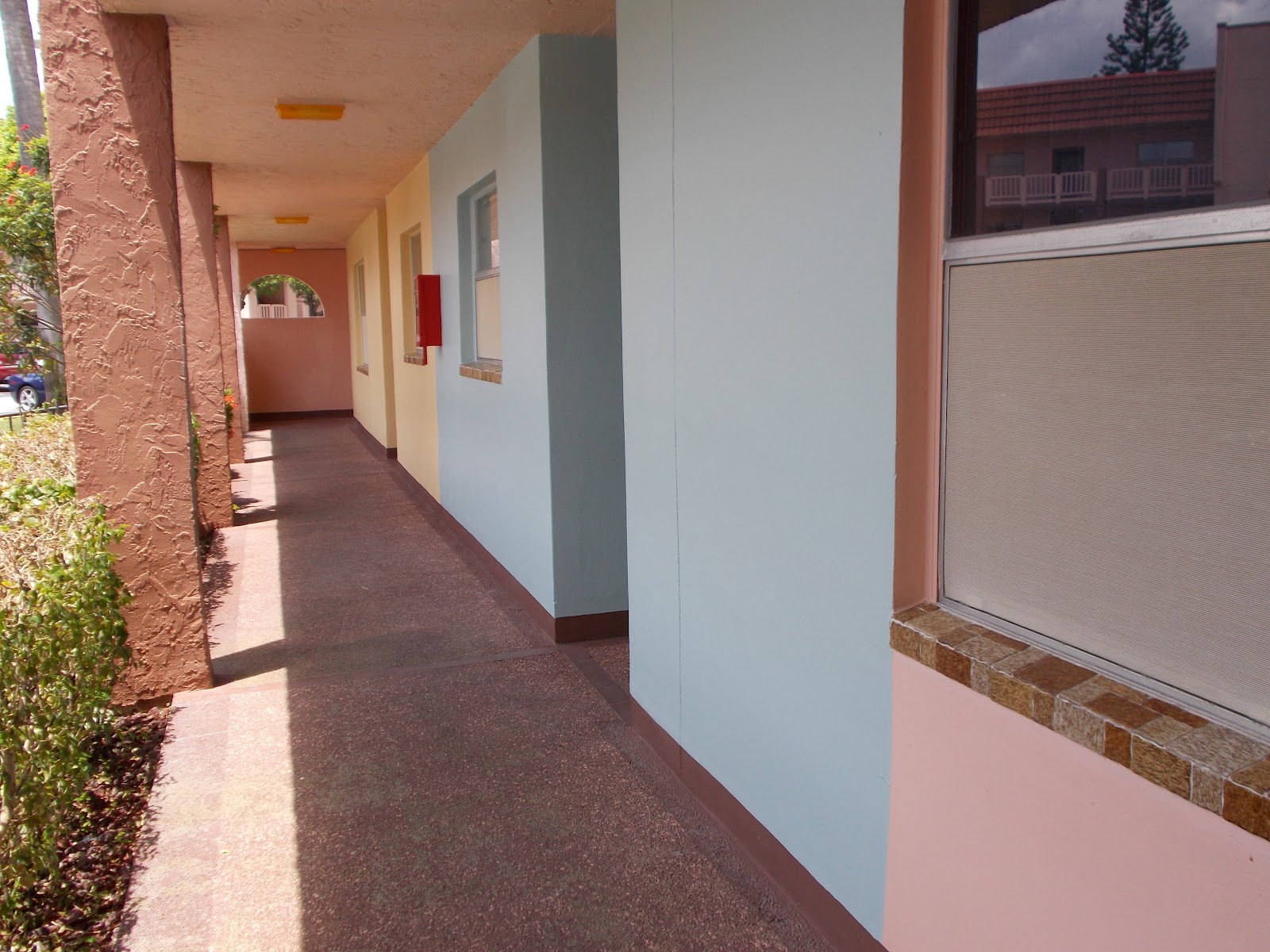
My parents’ condo complex was built 35-40 years ago; some 240 buildings of 30 units each, with almost no variation from building to building. Del Boca Vista, the Florida condo complex where Jerry Seinfeld’s tee vee parents retired, had to have been based on this community. However, the writers toned down the craziness because they knew how unbelievable it would be, even in a show about nothing. I moved in here after my Mom died to take care of Pops. Within weeks I had run afoul of the Condo Board President. At the next board meeting the bitch moved a motion to have me ejected from the complex. It was seconded and passed with nary a discussion, in contravention of condo by-laws, and I was ordered to leave within 10 days. That was 7 years ago and is a long, involved, Kafkaesque story I don’t care to get into here. However, it is indicative of how conformity is a way of life in this condo complex.

And, that includes the colours. Especially the colours. Oh, those colours!!!

Panorama showing 4 buildings in my complex. There are 236 other buildings just like them. Click to enlarge.

The pink wasn’t quite flamingo pink, nor was it Milk of Magnesia pink. It was a tedious and uninteresting pink. The brown accent was also dull and joyless, not quite chocolate or tan, but somewhere uncomfortably in the middle without having to make a declaration. And this is how it’s been for the past 4 decades. The incorporating documents of the complex stipulate that all the buildings will be the exact same colour. Every so many years the complex gets painted top to bottom, one end to the other. Whenever they’ve painted they have tried to match the colours as close as possible. However, there have always been slight variations from one painting to the next, or from one end of the complex to the other. It must be hard matching that much paint. It still amuses me to hear people complain about a paint job a few occasions back that came out far too pink and not quite brown enough. People were forced to live with it until the next painting. Let’s face it: The people here don’t like change, unless it’s to make a new condo by-law.

And then…suddenly…without warning…without any changes to the condo by-laws…without seemingly a whole lot of discussion…without our previous knowledge…a number of new colours have appeared on my building, and my building alone. And, just on my floor. And, just on my wing. Get a load of this:

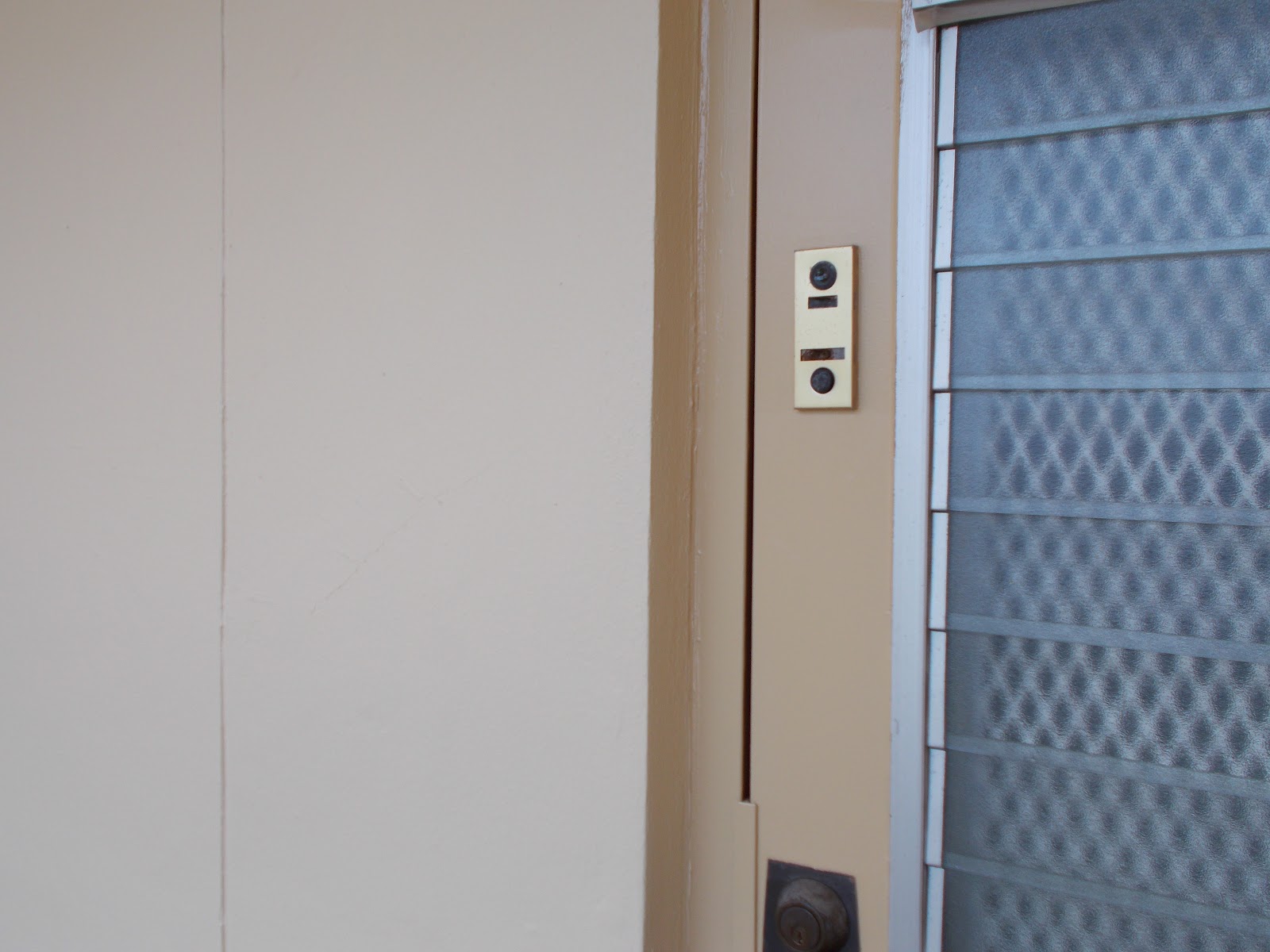
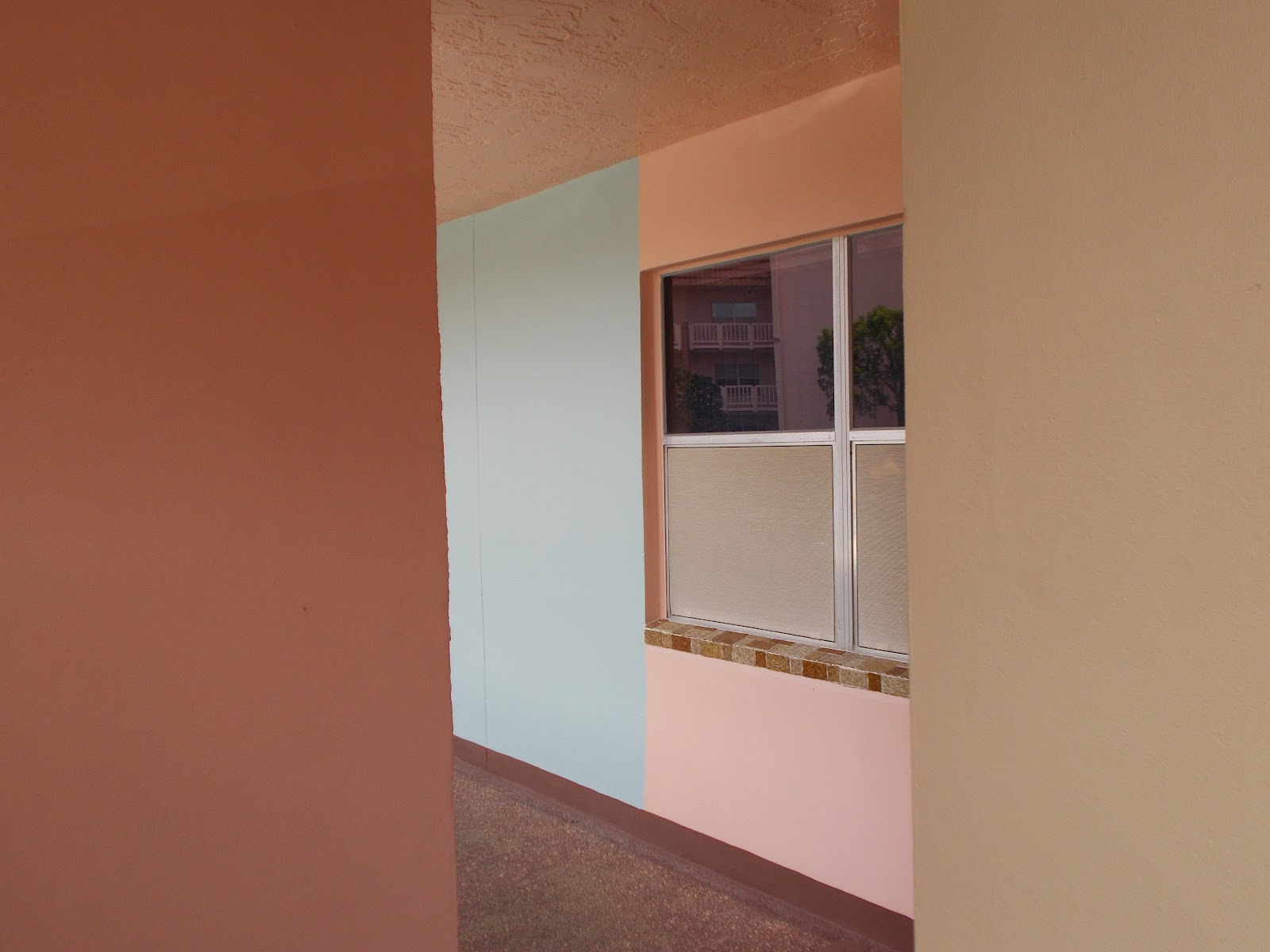
No longer in the pink. My front door showing the bilious almost-yellow wall and not-quite-tan door.

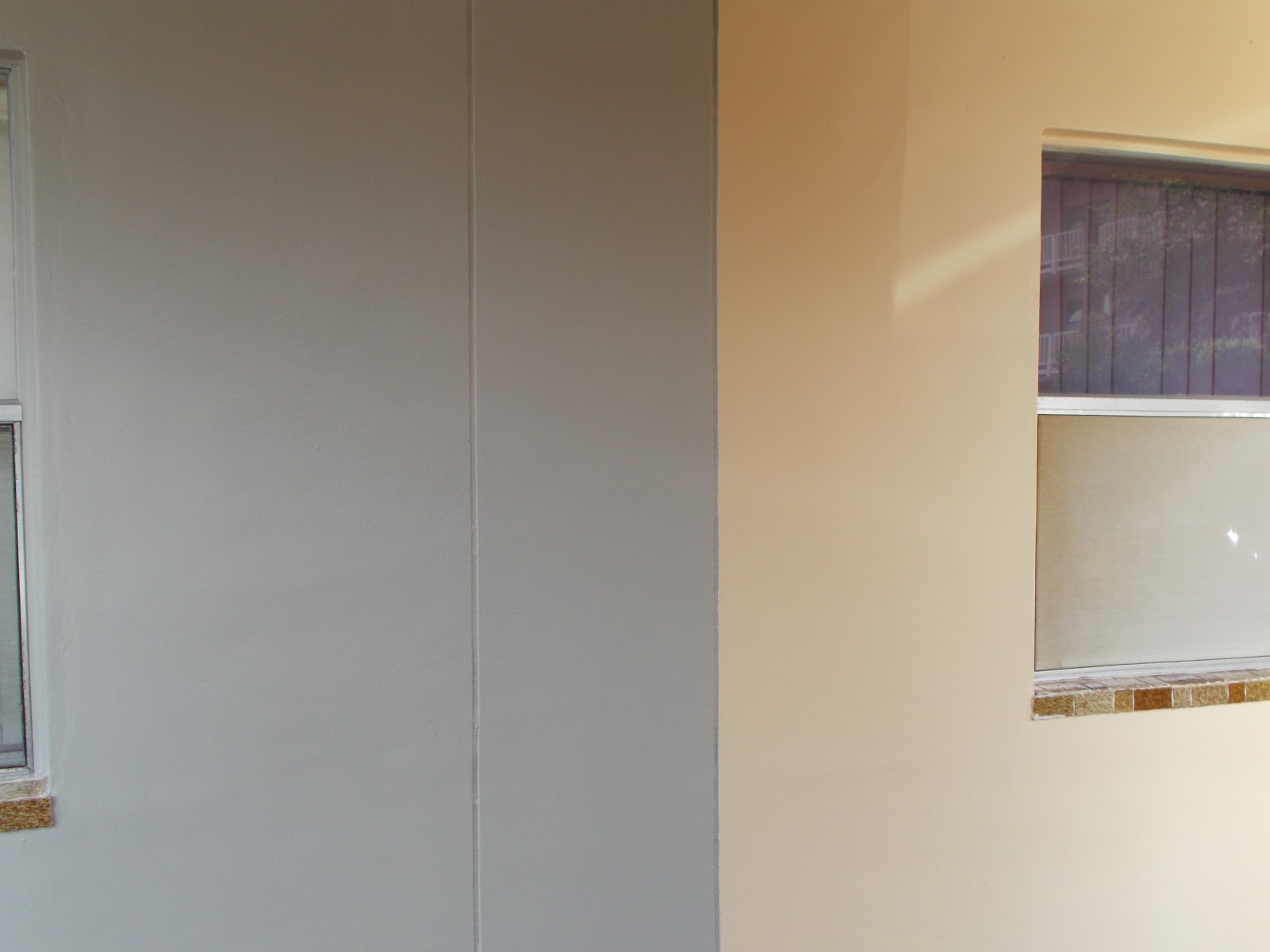
My almost-yellow wall against my neighbour’s somewhat greenish-blueish wall.
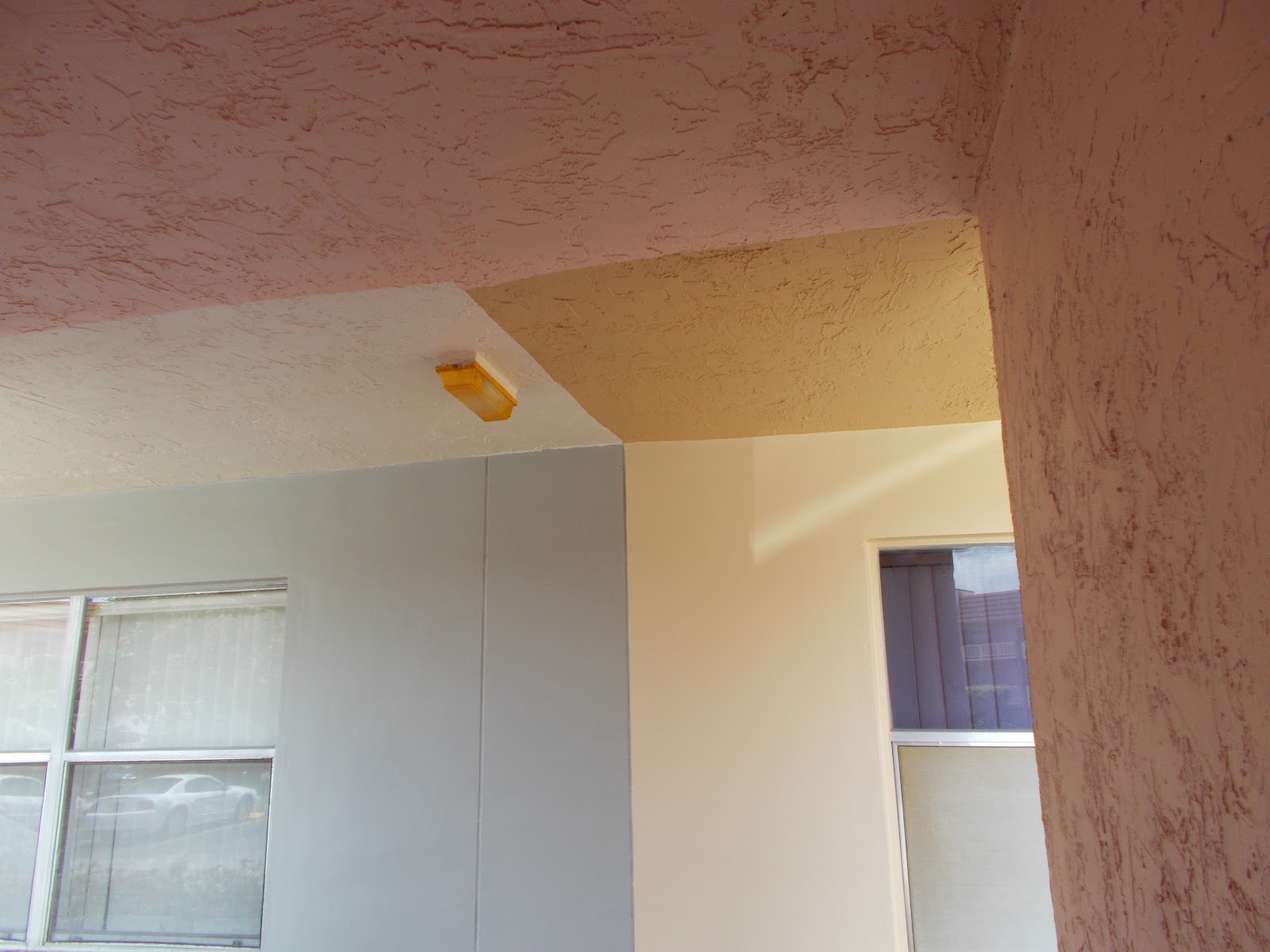
Where my condo touches my neighbour’s condo. Note the old, not-really-pink in the foreground..
Close up detail of above. Four colours touch.

An intersection where the old colours (left) coexist with the new.

Several condo colour scemes: a slightly different almost-yellow and a slightly different greenish-blueish.

Several condo colour scemes.

Here’s what I have managed to cobble together: A new committee (comprised of whom I do not know) is going to select a new colour scheme for the entire complex. A decision was made (by whom I do not know) to paint a few sample colour schemes (chosen by whom I do not know) and have people live with them a while before deciding (with what input from the owners I cannot determine) what colour to paint the complex in the fall.

I LOVE IT!!! Aside from the sheer anarchy of the whole enterprise, suddenly we look like a happy and colourful community, instead of one with a foot already in the grave. My first suggestion was to make all the buildings multi-coloured, just like my floor is now. It creates a really vibrant look to the building, although I would have stuck more to a pastel/ice-cream pallet, which looks good in the Florida sunshine. However, I was told that that would be impossible because of the incorporating documents. My next suggestion was to choose several colour schemes and dot them around the complex, so that no two buildings next to each other were the same colour. Again, the incorporating documents make that impossible and the cost to change the incorporating documents, ie: the condo by-laws, is prohibitively expensive, according to someone in the know.

And therein lies the big Catch 22: These sample colour schemes themselves seem to contravene the condo by-laws. I have yet to hear if there was a vote by the Board of Directors, but the condo board cannot overrule the incorporating documents.

Short HOA rant: ‘Merkins willingly sign documents which give them almost no rights whatsoever. They allowed themselves to be ruled by capricious, mendacious, and sometimes criminal Boards of Directors. Here in “The Land of the Free and the Home of the Brave” ‘Merkins are legally prevented, and afraid, to paint their front door any colour they want, let alone add any other non-conforming element to the house or condo they think they own. Fun HOA trivia: HOAs were specifically invented to keep out Blacks and Jews. Eventually they lost that power (although it is still applied covertly by some condo boards; a charge that’s hard to prove), but that’s one of the few powers HOAs have lost over the years. Today condo boards are very powerful entities and can crush any dissent. Don’t believe me? My treatment when I moved in is Exhibit A. I publicly called the Board President a bully and, ironically, she set out to prove how right I was.

Meanwhile, until further notice, here’s my very colourful building in a very large panorama:

Colour my world. The 3 almost-yellows are not the same, nor are the two greenish-blueish.

Unpacking Coconut Grove, Florida ► Part 1.1

Years of neglect. The front porch of the long-empty E.W.F. Stirrup House.

In researching Part Two of this series, I came across something that demonstrates in stark relief the disparity between the east side of Main Highway and the older Black neighbourhood on the other side, where the Charles Avenue historical marker is located. Just a mile from the E.W.F. Stirrup House is a property that recently hit the market at $22,000,000. An item describes it as:

Baymere, the five-acre former DuPont estate in Coconut Grove, has hit the market asking $22 million. The 33-room residence was built in 1964 and includes a man-made private cove, helicopter pad and putting green. The two-story, 26,981-square-foot house was designed by architect Scott Arnold and includes a full basement and third floor observation deck. Saddy Delgado and Toni Schrager of Avatar Real Estate Services have the listing, which is located at 3500 St. Gaudens Road. — Christopher Cameron

When houses in Coconut Grove are selling for $22 million dollars, why isn’t there enough money to preserve the Coconut Grove Playhouse, the E.W.F. Stirrup House, and the rich history of Coconut Grove?

More neglect. This is the rear door of the E.W.F. Stirrup House, which appears untouched since vacant.

Unpacking Coconut Grove, Florida ► Part One

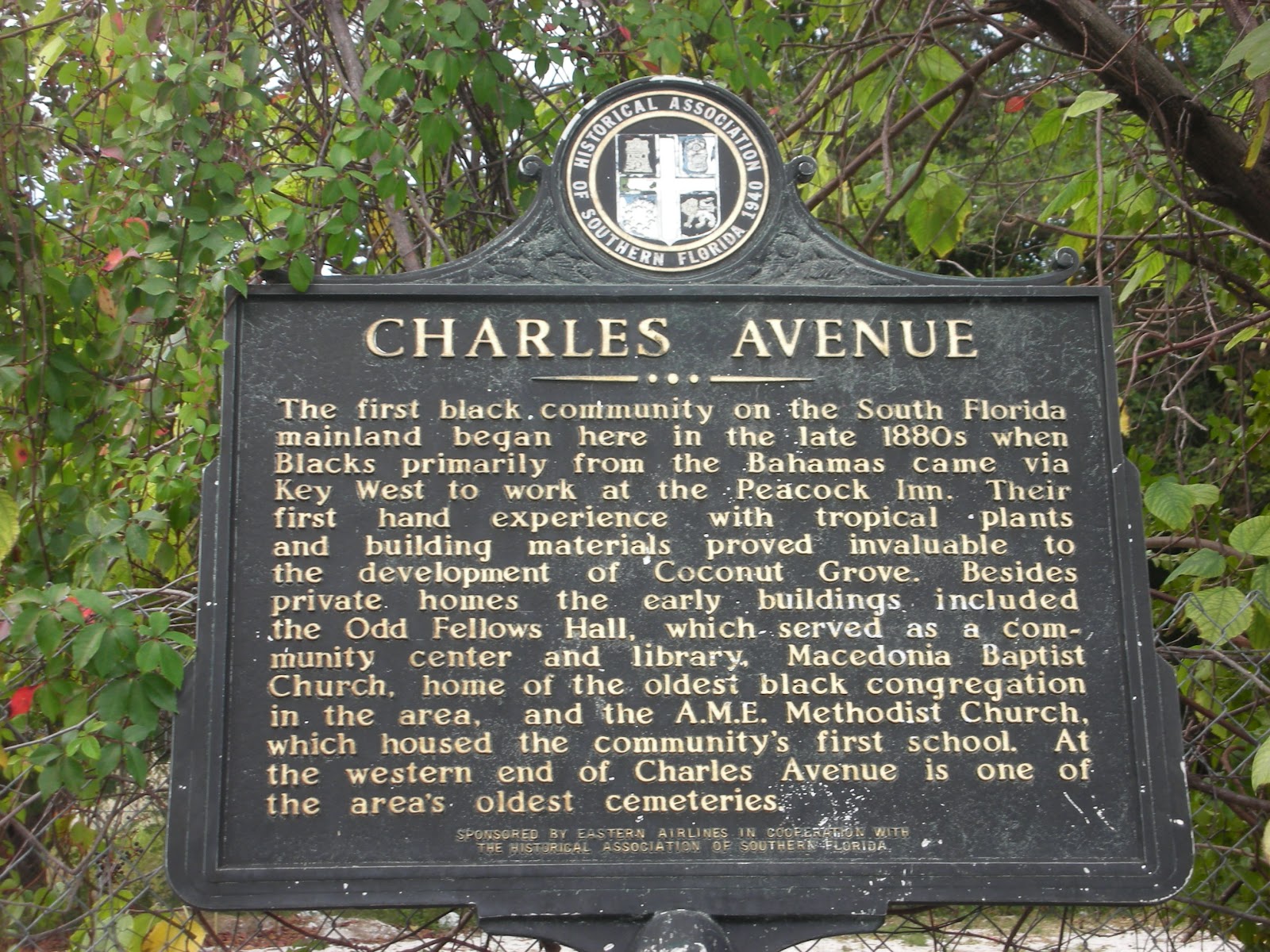
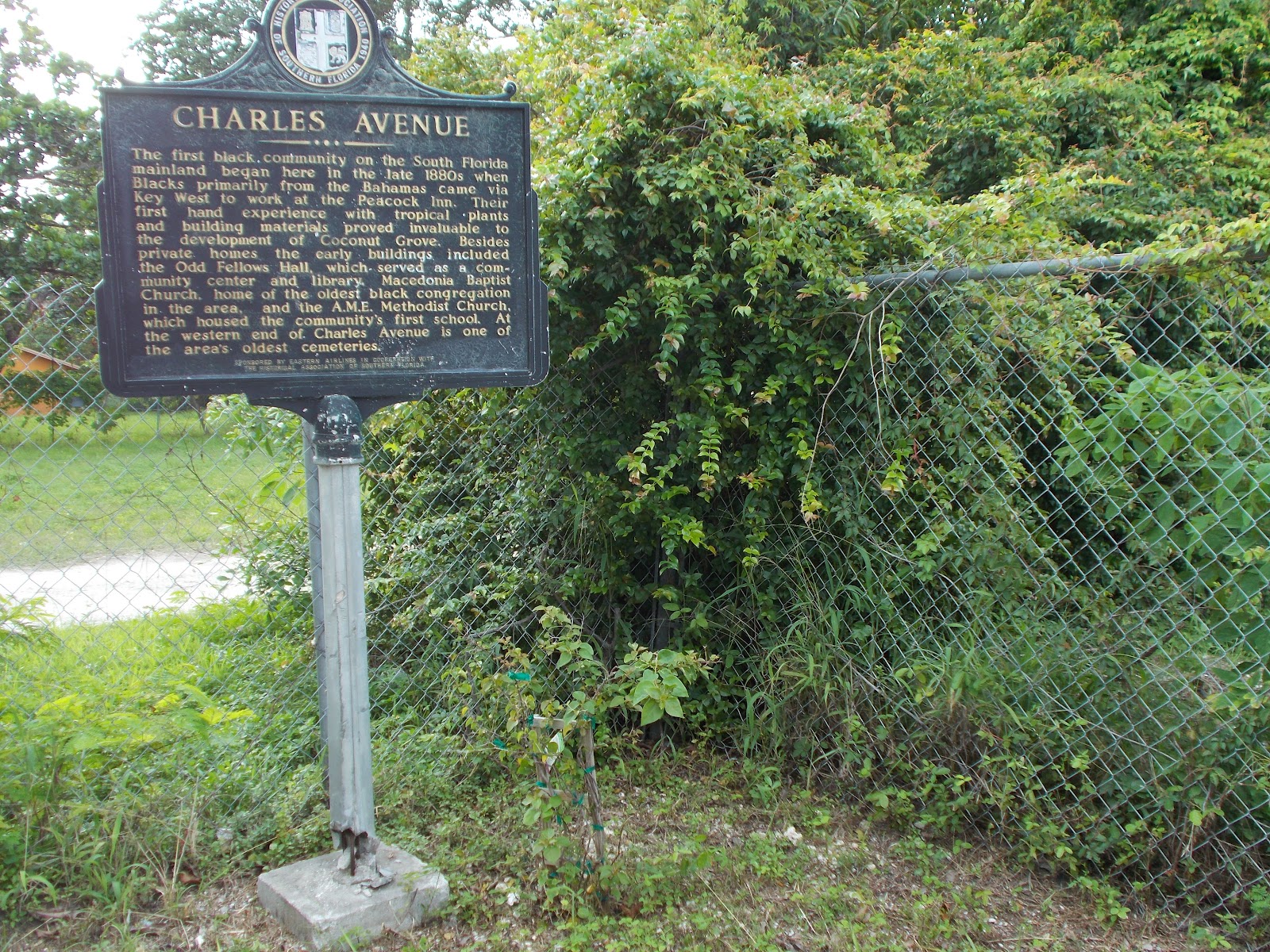
The marker that started my quest. Click to enlarge.

After a short hiatus, here’s a fair warning for those who got tired of hearing me spout off about Charles Avenue and Coconut Grove: I got the bug all over again, so get used to hearing me spout off about Charles Avenue and Coconut Grove all over again.

At my old, former, moribund blog Aunty Em’s Place (now overgrown with spammers and ivy) I started a series called The Shame of Coconut Grove™, which I continued on facebook on my old, former, moribund Aunty Em Ericann account. Before Aunty Em was kicked off facebook, she (me!) had unpacked quite a bit of Coconut Grove, both its history and internal politics, all because of an accidental encounter with a historical marker (at left).

A must read book on race

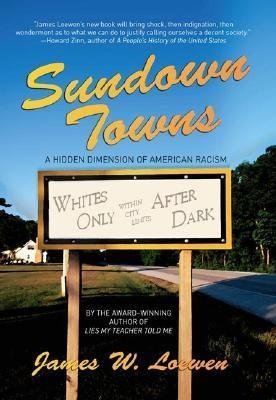
People who have known me a long time know I gravitate towards stories about race relations, a life-long interest. Had I really taken up that Black Studies Program when I first considered it, I’m sure I would be Black by now. Coincidentally on the day I discovered the Charles Avenue historical marker, as part of my independent study reading list, I was in the middle of “Sundown Towns: A Hidden Dimension of American Racism,” by James W. Loewen, which is the single greatest book on race relations I have ever read. It explained to me why every ‘Merkin city looks the way it does and why the overt racism of days gone by led to the covert racism of today. It also explained, for me, how White Privilege was woven into the fabric of life as generations experienced it so that, today, it covers us like a warm blanket that is so comfy we don’t even realize we’re wrapped in it. The events and attitudes described in Loewen’s book affect our lives every day, whether we stop to consider it or not.

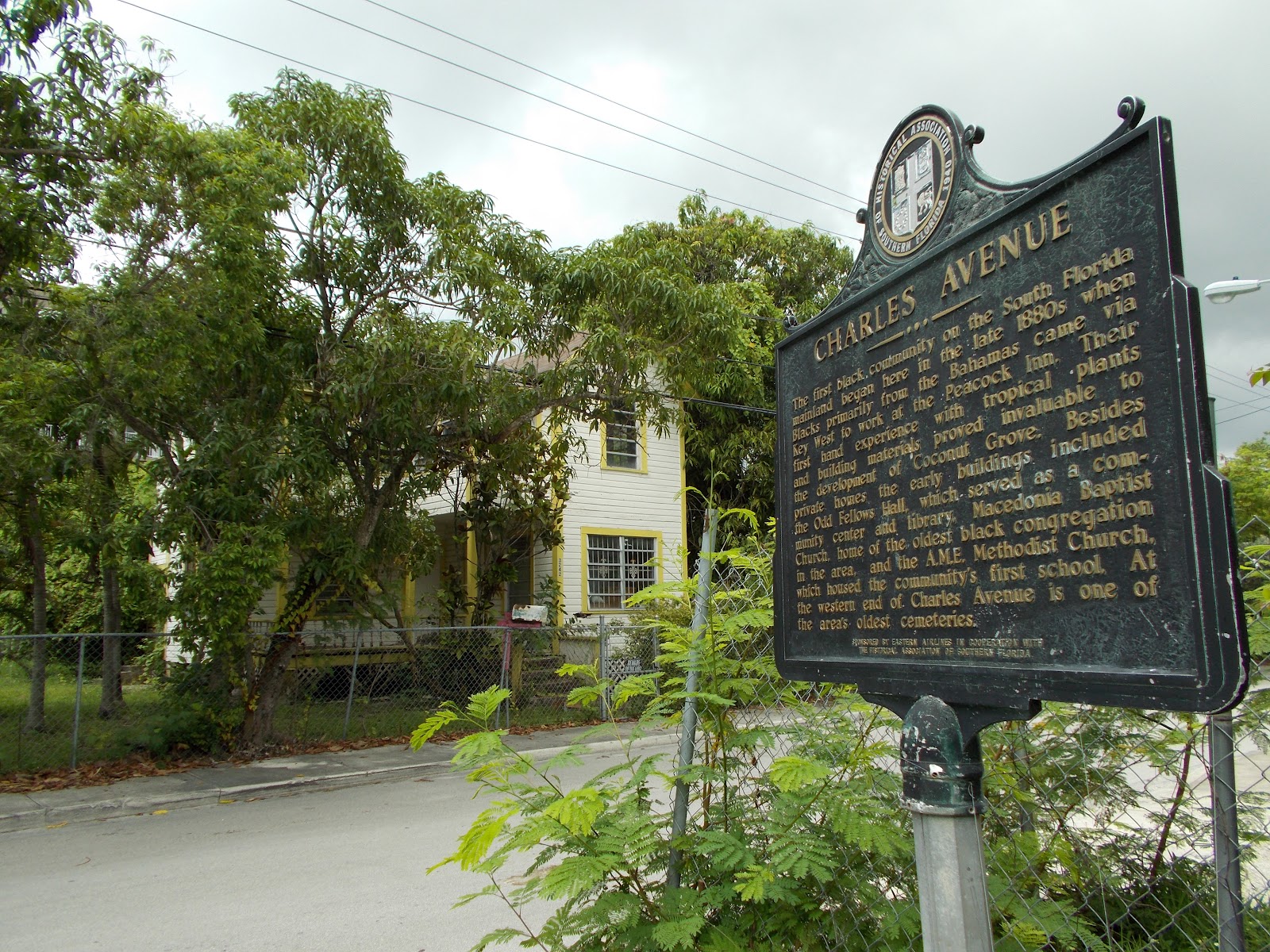
There was just something about the Charles Street historical marker that spoke to me. The sign, the location, and the condition seemed to encapsulate the Black ‘Merkin Experience: a rich history not only ignored and forgotten, but mistreated in its memory. The panorama below shows the condition of the marker and the historic E.W.F. Stirrup House across the street. [More about the house and Mr. Stirrup in later chapters.]

Panorama of the historical marker and the E.W.F. Stirrup House across the street. Click to enlarge.

Detail of sign’s base. Click to enlarge.

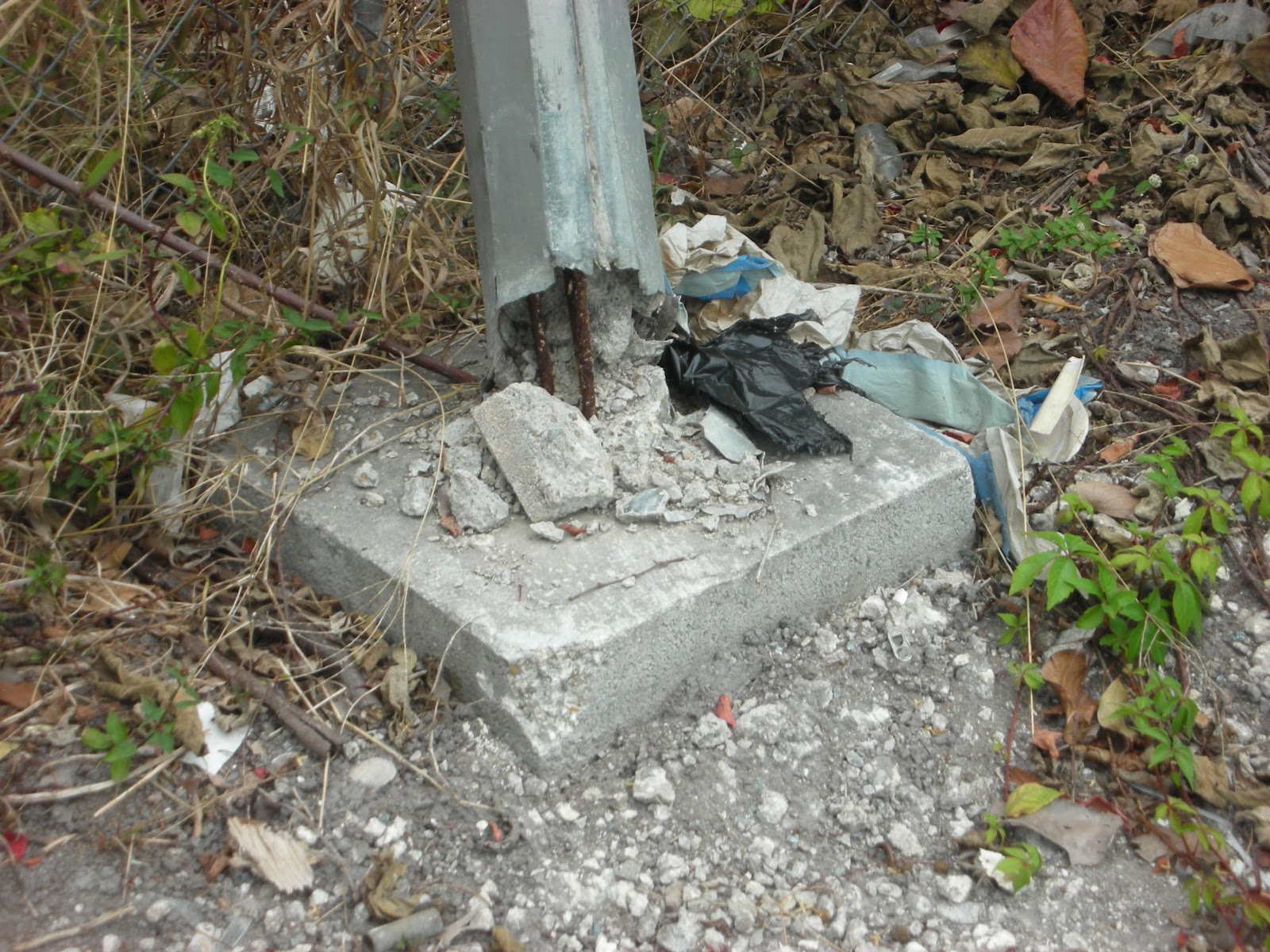
The sign was leaning backwards at an uncomfortable angle. If not for the fence behind it, it might have fallen down completely. The base (see right) was broken. The first time I visited (early 2009) I just thought the pole was bent. I didn’t see the base due to the garbage bags piled up all around it. [I cannot seem to find the pics of my 1st visit, but have all the rest.] On my second visit, and subsequent visits, the garbage had changed, which meant that it was being used as a regular, accepted trash collection site. And, why not? The base had clearly been broken for quite a while to have sustained the damage I saw. The aluminum post, when new, had been filled with cement and steel rebar, which was in a dreadful state of disrepair having been exposed to the elements for…how long? I had no way to estimate, but it was clearly not recent. The sign had been sponsored by Eastern Airlines, a defunct company, in cooperation with The Historical Association of Southern Florida, an entity I could never find.

The location of the sign is no less significant. There’s no way to whitewash this: Coconut Grove, Florida (incorporated into Miami in 1925) is considered one of the most exclusive addresses in all of ‘Merka.


View Charles Avenue, Coconut Grove, Fl, 33133 in a larger map. Zoom out to see Coconut Grove in relation to Miami.

E.W.F. Stirrup House

Let’s get oriented: Coconut Grove is nestled up against the western edge of Biscayne Bay, where the 3,000 mile long intercoastal waterway trails off into nothingness. The E.W.F. Stirrup House (pictured at left), the Coconut Grove Playhouse (pictured below) and the Charles Avenue historic marker are on the eastern end of Charles Avenue at Main Highway,  On the opposite, eastern side of Main Highway is a residential area I have been unable to breach. It is one of the most exclusive areas in ‘Merka, so gated and secured even Google mapping cars aren’t allowed inside. I once walked to the gate and started taking pictures and within a minute was shooed away by a security guard that appeared out of nowhere. These fuckers are serious.

The Coconut Grove Playhouse taken from
the more exclusive side of Main Highway.

I became obsessed with the Charles Avenue historical marker and Coconut Grove, to the point where I decided it was the perfect place to locate my favourite character in my novel-in-progress. That gave me another reason to research Coconut Grove. Work took me through the area every couple of weeks. I would always stop and take as many pictures as I could stand before the oppressive Florida heat got to me. I now have thousands of pictures of Charles Avenue and enough research to think I have uncovered a years old scandal in the village of Coconut Grove that could become a non-fiction book all on its own.

However, two years ago my circumstances changed and I no longer had any reason to drive the 35 miles to
The Grove. When I was visiting it regularly, Aunty Em Ericann would come back and post dozens of pictures on facebook with a small essay describing the lack of changes on Charles Avenue from week to week. I became dejected. Aunty
Em
had spent a considerable amount of my time posting pictures, writing essays, and contacting community
activists. However, I couldn’t get any traction on my
Save the Charles Avenue Sign campaign. Worse, I couldn’t get anyone interested in what I (still) believe is a massive, multi-gajillion dollar real
estate scandal.

Since I couldn’t get anyone to listen, and I am no longer an investigative journalist with an editor to support and sponsor these expensive fishing expeditions into possible malfeasance, I gave up. However, I never forgot about Coconut Grove, especially since my novel character Adrian had moved there at the end of the ’60s, after Detroit had started to become toxic.

Lately Charles Avenue has been nagging at me. Because it’s 35 miles away —
all crazy Florida highway — I have been putting off making the trip for the past few weeks. I knew I would need a minimum of 3 hours to do it justice; get there, take some pictures, check on recent developments, and come home. It was difficult to work into my schedule and the longer I tried, the guiltier I felt for having abandoned Charles Avenue. Last week I finally bit the bullet, gassed up the tank, and made the harrowing highway adventure. I returned more despondent than ever about Charles Avenue. I came back even more pissed off at what is clearly The Shame of Coconut Grove™. However, it also made me more determined than ever to do something about it. What? I do not know. I am still processing and writing about the trip, which will be Part Two in this series. Part One is long enough already, but I felt this background was needed.

However, before I sign off, there was one bit of good news on Charles Avenue. Someone (or a group of someones) have taken it upon themselves to attempt to straighten the Charles Street historical marker. They have also planted a drought-resistant flowering bush next to it. It will look nice when it fills in.

The sign, while still not true, no longer leans against the fence. The new plant is staked in the ground to the right of it.

The late afternoon sun streams down Charles Avenue in this recent panorama.

However, this small sliver of hope doesn’t even begin to mitigate all the negative I saw. That’s why I have decided to take up the cause of Charles Avenue once again. I am going to make Charles Avenue the most famous street in ‘Merka, representing centuries of institutional racism. And, along the way, I just might expose a multi-gajillion dollar Coconut Grove boondoggle. Who’s along for the ride?

Stay tuned for Part Two of Unpacking Coconut Grove.

Unpacking My Toronto ► Iconic Buildings I Have Worked In

While I blather on and on here about Detroit, I do so more as an anthropological study than as a tribute to a once great ‘Merkin city. However, the place I truly consider my home town, no matter where I may be, is Toronto, Ontario, Canada.

I have had the honour of working in some of the most iconic buildings in Toronto, each known as much for its architecture as its history.

Queen’s Park:

When I was Queen’s Park Correspondent for Yorkview Magazine I had a cubby in the Ontario Legislative Building. My Press Card gave me access to many places the General Public could not go. Among my favourites was The Press Gallery, way up on the upper reaches, where journalists would whisper snark back and forth, no matter who was talking, no matter which party. It would have been bad form to create a commotion, so a lot of very loud laughter was stifled. The next day–the very next day!!!–Hansard was delivered to my house by regular mail of the session I just watched, minus the snark. That was less interesting. Witness to history: I was there the day the Mike Harris Conservative government fell to a vote of non-confidence. And, good riddance!

The CHUM/City Building:

I worked in this beautiful building for more than 10 years. I started as a
Security Guard, after driving cab. It was something I could do while continuing to write freelance
articles for several Toronto publications. However, when a News Writer job opened
up in CityPulse, I was eventually hired and spent 10 years on the news desk. I called myself ventriloquist
because I put the words in the mouths of the meat puppets. However,
working behind the scenes in the newsroom (which meant I was on camera
every day, because the newsroom was also the set) was good experience
for later writing about Fox “News” for NewsHounds. Witness to history:
January 8, 1992 – I was on the International Desk the day President George H. W. Bush puked in the Japanese Prime Minister’s lap. That sent
me scrambling. Worst Moment: Learning in real time from the
police Sargent that the accident victim in the single car crash on
Coxwell I was writing about was a dear friend’s father. Best script ever: I once got Kevin Frankish to read “A pair of purple plovers picked a patch of parking lot to procreate.”

A&A RECORDS:


A&A Records was a mainstay of  Yonge Street (which can never be mentioned without also pointing out that it’s the longest street in the world). It tried to be as large as its competitor Sam the Record Man 2 doors south and they could match each other discount for discount. However, Sam’s just had more obscure records than did A&A’s.

A&A was not the first time I worked in a record store (nor would it be the last; another story for another day). I had, several years previously, worked at Round Records on Bloor Street just east of Yonge (see above) where the Holt Refrew Center now is. (Izzit still there?) Round Records was the first of its kind in Toronto: A new & used record store, with seating for relaxing, run by a knowledgeable staff. It was owned by Larry Ellison, who signaled his Hippie status in 2 ways: his long pony-tail and beard were never cut and he was decked top to bottom (including shoes) in denim. It wasn’t unusual to find a Rock and Roll musician popping in. It’s where I met and befriended Mark Volman and Howard Kaylan, aka Flo & Eddie, after Frank Zappa no longer had any use for them. But again, that’s another story for another day.

Larry had himself a goldmine and the record store was making money too. However it had happened Larry had signed a 99-year lease at 46 Bloor Street West, just a stone’s throw from the busiest intersection in the city, the crossroads of Toronto. Larry had been holding up construction of the Holt Renfrew Centre for several years. They kept offering him more and more money to break the lease and he kept holding out until he was the last property on the entire block that had not taken a buy-out. The construction company had put up hoarding around the entire block, except for the small opening that led to the second-floor location to Round Records. Finally they made him an offer he couldn’t refuse. It was a sad day when Round Records closed and it was never replaced in the hearts and minds of Toronto record buyers.

 Working on Yonge Street (see above) was a dream come true. When I first moved to Toronto from Detroit I marveled at Yonge Street. There was nothing like it in Detroit, a thoroughfare where you would see street action. In Detroit the word “pedestrian” had been stricken from the dictionary. On Yonge Street one couldn’t walk without bumping into one, literally. I came to Toronto in ’71 and, in my opinion, saw the last great years of Yonge Street, through the pedestrian mall days, before Eaton Centre changed the entire complexion of the street.

I lost my job at A&A because I came back from a lunch break reeking of ganja smoke. I don’t know how the hell that happened.

Yonge Street Post Office:

This building still on the corner of Charles Street and Yonge Street. When I worked there it was Mr. Gameway’s Ark, one of the craziest places I ever worked. Partially it was what was sold: Games and toys naturally lead to all kinds of buffoonery. However, it was also the staff: Each one an eccentric character on their own led by owners Peter and Maggie, who were like camp counselors to an unruly bunch of kids. I ate my lunch in the captain’s chair of a full-size replica of the bridge of the Star Ship Enterprise that had been constructed on the third floor. Witness to history and biggest regret: Some guy wandered in one day and asked us to invest in a game. We all played the game. It was a lot of fun, but only one of us had the $1,000 to invest. That game was Trivial Pursuit and our co-worker made a lot of money.

Old City Hall

This is stretching the point because I didn’t work at Old City Hall. I
couldn’t receive phone calls or mail there like I could Queen’s Park. I
didn’t even have a cubby. When I was a Law Clerk my work would take me
to Old City Hall 2 or 3 days a week. I would wait in line like
hundreds of other people to get documents filed, stamped, served,
notarized, collected and distributed. If I had time to kill between
dropping documents off and picking documents up I would pop into one of
the courtrooms, a habit I will still do to this day if I am killing time
near a courthouse.
A big h/t to the facebookery fun of Vintage Toronto, that got me thinking about these places and supplied the pictures. Thank you. Go there. There are thousands of pictures grouped by year and several Then and Now albums.

Happy Birthday Roger Ruskin Spear ► Bonzo Dog Band

It wasn’t all that long ago that I celebrated the birth of Dennis Cowan, a founding member of The Bonzo Dog Dada Band. Today let’s all press our trousers for Roger Ruskin Spear, another founding Bonzo. Music/Not Music called Spear “The Forgotten Bonzo” just 12 days ago. Not for me. While Spear never achieved the later fame of Neil Innes, for me Roger Ruskin Spear was the one who put the Dada in The Bonzo Dog Dada Band, those off-the-wall tangents into clothing and other fashion accoutrements that’s clearly a Spear obsession. Ironically, while he played many instruments — tenor saxophone, trumpet, xylophone, bells, clarinet, guitar, oboe, accordion, glockenspiel, as well as sang — he is still best know for playing The Theremin Leg, most notably on the recording “Noises For The Leg.”

Here Roger Ruskin Spear plays the dress form to piano accompaniment on Strauss’ Blue Danube:

I was fortunate to see The Bonzo Dog Doo Dah Band live once at, of all things, The First Annual Detroit Rock and Roll Revival, in May of 1969, my last summer in ‘Merka. That’s where I first heard Bonzo Dog Band and was amazed at the performance they put on. Check out that line-up: Among the other band that performed that weekend
were MC5, Chuck Berry, Sun Ra, Dr. John, Johnny Winter, Stooges, Amboy
Dukes, SRC, The Frost, The Rationals, Teegarden & Van Winkle, Lyman
Woodard, Up, Wilson Mower Pursuit, Grand Funk Railroad, Third Power, New
York Rock & Roll Ensemble, David Peel & The Lower East Side,
Red White & Blues Band, Sky, The Train, Savage Grace, James Gang,
Caste, Gold Brothers, Dutch Elm, Plain Brown Wrapper, Brownsville
Station.

When I moved to Canada, I took with me my love of the Bonzos with me. However, I found that most of the people I tried to turn on to The Bonzos already knew who they were, from the British/Monty Python influence.

Bonzo Dog Band performing at the First Annual Detroit Roch and Roll Revival. Photo by Alan Gotkin.

Because people always get the various Bonzos confused, here’s a handy introduction:

Amazingly, I find that Roger Ruskin Spear still has a few dates on his calendar, even tho’ Neil Innes has him retired, with Three Bonzos and a Piano.

I will go on record again: Bonzo Dog Band is the most influential band no one knows. 

Let’s end with a Roger Ruskin Spear Jukebox:


As always CRANK IT UP!!!

Unpacking The Aunty Em Ericann Blog

Help keep Aunty Em in nail polish. Click on an advert.

One of the cool things that Blogger gives a blogger like me is a bunch of stats. There’s not a lot of ways to view the information, but within the statistics can be found some real information. F’rinstance, since starting this blog, here are the Top 10 countries where my visitors live:

United States [9,601 visitors]
Italy [1,420]
Canada [320]
United Kingdom [284]
Ireland [177]
Russia [168]
Germany [119]
France [67]
Australia [46]
Netherlands [32]

    This is information I find totally useless. It would make more sense to know who they are than what country they come from so I can ask them personally if they enjoyed their stay here and how much they think it was worth.

    However, this is info I found more useful:

    Pageviews by Browsers

    1. Firefox 9,336 (64%)
    2. Internet Explorer 3,472 (24%)
    3. Chrome 619 (4%)
    4. Safari 343 (2%)
    5. Mobile 296 (2%)
    6. Mobile Safari 214 (1%)
    7. Opera 71 (<1%)
    8. Instapaper 21 (<1%)
    9. BingPreview 4 (<1%)
    10. Maxthon 3 (<1%)

    It allowed me to see what the Aunty Em Ericann Blog looked like on other platforms.

    But wait! That’s not all!!!

    Pageviews by Operating Systems

    1. Windows 8,782 (61%)
    2. Macintosh 4,731 (32%)
    3. iPhone 320 (2%)
    4. Android 217 (1%)
    5. Linux 144 (1%)
    6. iPad 115 (<1%)
    7. BlackBerry 41 (<1%)
    8. Other Unix 12 (<1%)
    9. Windows NT 6.1 8 (<1%)
    10. SymbianOS/9.3 2 (<1%)

    HA! There are operating systems on that list I have never heard of.

    As of this moment [1:29 PM DST; June 18, 2012] here are the Top Ten All Time Posts on my Aunty Em Ericann Blog:

    The Top Ten All Time Posts on the Aunty Em Ericann Blog

    257 Pageviews

    Please, click on an advert and help support this blog.