Tag Archives: How Jamaica Conquered The World

The Day I Met Bob Marley ► Part Two

As Part One of The Day I Met Bob Marley ended, I had just been given word by my boss at Island Records that instead of going to the two Bob Marley concerts at the University of Toronto’s Convocation Hall, I was being sent on a secret mission to New York City. You’re on the honour system that you’ve read Part One before continuing.

When Bob Marley and the band arrived in Toronto, the entire Island Records of Canada staff — all 3 of us — headed on over to Convocation Hall for some meeting and greeting, and for me to pick up the audio tapes. These live concert recordings were of the first 5 dates on the tour and had been smuggled into Canada by the band. Now I had to smuggle them back into the United States.

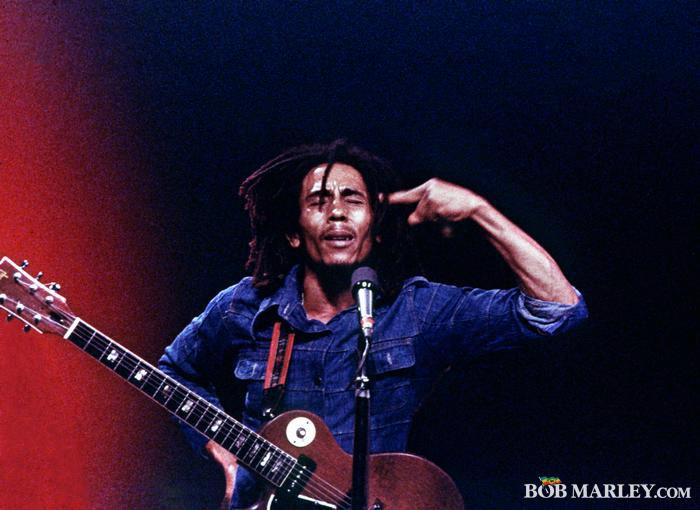
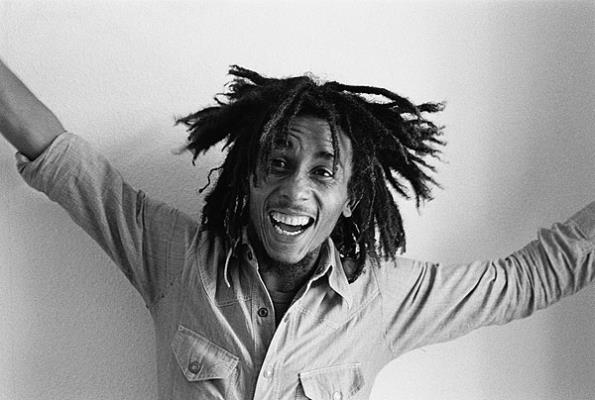
The dressing room at Convocation Hall was about 15’x15′. When we arrived we could barely see across the room due to all the ganja smoke. Marley and the band had a lot of friends in Toronto’s Jamaican community and they had already delivered the sacramental herb. My first shock was that Bob Marley was no taller than I am. I had only seen pictures and videos of him on stage and he seemed like a giant. Yet, he must have clocked in at 5’7″, or so, because we were standing there looking eye to eye. And that’s when the spliff came around to us.

Did I say spliff? This was an uber-spliff. This was the spliff to end all spliffs. Imagine something the size and basic shape of a baseball bat, with the fat end — the business end — — the burning end!!! — as big around as a softball. It tapered to a point and the whole thing was wrapped in a newspaper.
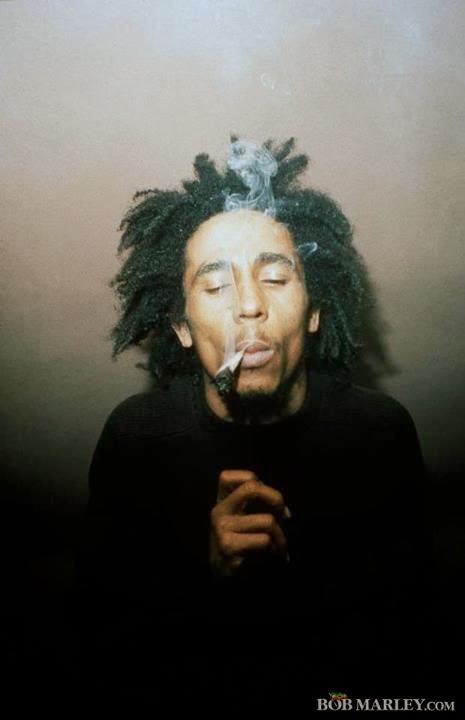
As I stood making pleasantries with Bob Marley, the spliff came around to him. Bob, being polite — or maybe just because he was testing me — passed it to me. Well, I was no rookie at this, and had been know to inhale, so I grabbed that sucker and took a good haul.

IT WAS THE HARSHEST THING I EVER INHALED IN MY ENTIRE LIFE!!!

I started coughing — no, choking — and Bob Marley thought it was the funniest thing he’d ever seen in his entire life. My second shock about Bob Marley: He giggled like a little girl. A happy, infectious, crowd-affecting laugh that had me laughing, even as the tears streamed down my cheeks. He put his arm around my shoulders and rocked at the waist with laughter. So did I. I took a 2nd haul, which was more successful than the first, passed it back to Marley, and then we got on to business.

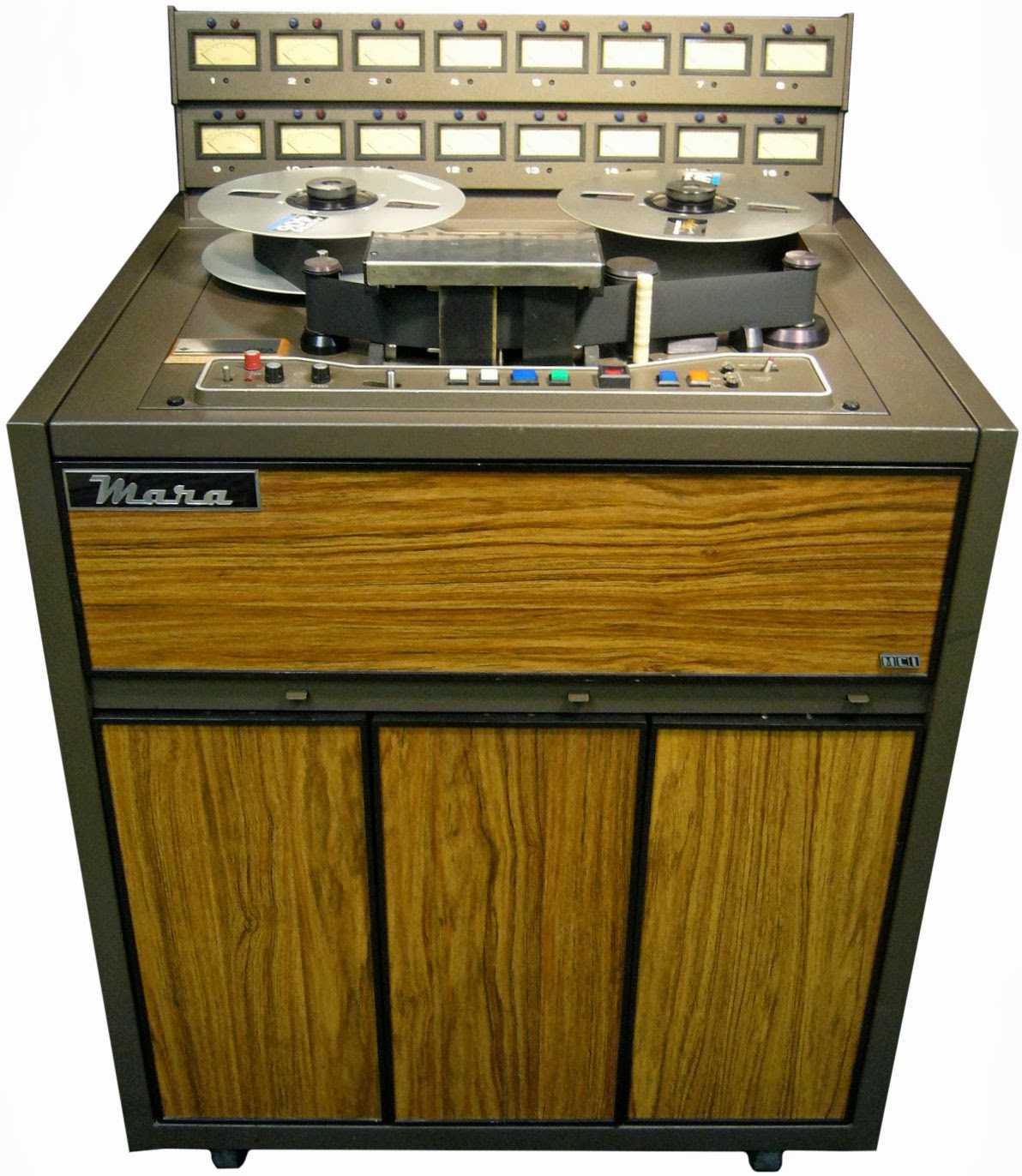
The tour manager handed me my charges: Five, two inch, 24-track audio tapes in cardboard boxes, making it a loose stack almost a foot high. Today this could be put on a thumb drive. Back then this was the only available storage device. My mission: take these tapes, fly them to New York City on my lap, and put them directly into the hands of Chris Blackwell, the founder of Island Records. The tapes are to never leave my sight. The tapes are not to be x-rayed. I am to give them to no one other than Chris Blackwell. Most importantly: When crossing the border I must never admit that the tapes contain live concert recordings. No one knew what the duty on such a thing might be and no one wanted to admit these tapes never should have been smuggled into Canada in the first place.

I never like to leave a smoke-filled room, especially one with Bob Marley in it, but there was only so much time to make my flight to New York. I grabbed the awkward pile of tapes and took them my car, one of a series a of Volkswagon Beetles I owned in the day, with the most amazing sound system in it for the day. It was like sitting in a set of headphones. I slipped in the cassette Bob Marley and the Wailers “Live! and cranked it up as loud as I could stand. If I was going to miss the concert at least I could have a concert in the car.


Crank it up!!!
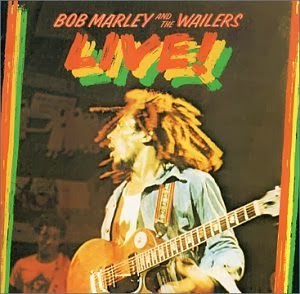
When I arrived at short term parking the shuttle bus was just pulling up. I grabbed the tapes and started running to catch it. The lid of the box on top of the pile caught the wind and flew open, papers flying all over the place. I dropped the tapes I was carrying and started chasing the paper around the parking lot until I got them all. As I grabbed the last one I watched the shuttle bus pull away.

The papers were all 8.5 x 11 photocopied sheets, with all the recording info for each track written in hand. I realized 2 things immediately: 1). There were no other copies of these documents, I had the originals; 2). How can I say I don’t know what’s on these tapes if what’s on these tapes is written on pieces of paper and stored right with the tapes? I opened all the boxes, took out all the paper, folded them up and put them in my pocket, and waited for the next shuttle bus.

Pearson Airport was a lot smaller in those days. Then, as now, travelers pass through U.S. Customs at the Toronto airport. Before you are funneled to your gate, you must satisfy the U.S. Border Patrol in Toronto. Once you pass that checkpoint, you are technically in the U.S. I managed to satisfy the officer on identity and citizenship, but, as you have probably guessed already, got tripped up on the tapes, which I refused to allow them to x-ray. This is an approximation of how that went.

“You’re more than welcome to examine them, but my instructions are they cannot be x-rayed because that would destroy what’s on the tapes.”

He examines them and satisfies himself that the tapes are just tapes, but he’s never seen 2-inch audio tape before, so he’s a bit confused.

“What’s on the tapes?”

“I don’t know. I’m merely a messenger.”

Now he’s really confused.

“Hang on a second.”

He brings another U.S. Customs guy who is higher up the food chain to look at the tapes.
This guy examines them and satisfies himself that the tapes are just tapes,
but he’s never seen 2-inch audio tape before either, so he’s a bit
confused, just like the first guy.

“What’s on the tapes?”

“I don’t know. I’m just a messenger.”

“Hang on a second.”

They both go off to have a private discussion in a room with a window that I can look into. I see them drag a few more Custom agents into the room. A huge discussion ensues and I’m starting to wonder if I need to proclaim my ‘Merkin citizenship to get into ‘Merka with these tapes.

All this time the clock is doing its thing: Tick, tock, boys! Let’s get it on. I’ve got a flight to catch. All the time they’re quite pleasant and I’m quite pleasant, but I’m starting to get insistent that I have to get to New York City by a certain time. I know there is only a 2-hour window before Chris Blackwell has to fly to London with the tapes. If I miss that connection I might have to fly to London to deliver the tapes and I didn’t pack for that. For that matter, I didn’t pack for New York City. All I was carrying were the tapes.

Meanwhile, I missed my flight while these custom agents were arguing amongst themselves. It turned out that what was causing the delay is that they had to charge me duty on the audio tape. However, there were no references to 2-inch tape in the Big Book of Import Duties. They couldn’t let me into the States before I paid duty on the tape, but they didn’t know what to charge me.

Remember when everyone didn’t carry a phone in their pocket? The next argument I had with them was that I had to use their phone to call the office to get further instructions now that they caused me to miss my plane.

“You can’t use the phone while you’re here.”

WAIT!!! WHAT???

I argued that it was their dithering that made me miss my flight. I’m just a courier. I not only need further instructions, but needed someone from the office to rebook my flight if they still wanted me to effect delivery. That was a 15 minute argument that I finally won, as I got louder and louder. Eventually I got Kathy Hahn on the phone in the middle of what was a very hectic day for her. She said she’d take care of it. However, she needed a number where she could call me back.

“What’s the number here?”

“You can’t have people calling you here!”

However, they said I could use the phone as much as I needed while they sorted out their problem. I had just successfully turned the U.S. Customs’ telephone into my personal office. I made several more quick calls and then waited for about 15 minutes more minutes before one of the geniuses at U.S. Customs had a breakthrough of his own. Since the book gave them the duty for a cassette tape, which is an eighth of an inch, why not multiply that by 16 to get the duty for a 2 inch tape? We all celebrated that an answer to our conundrum presented itself. Now came a new conundrum.

“How long is the tape?”

“How the hell am I supposed to know? And, we’re not laying it out on the ground to measure it.”

“Is it 50 feet?”

“Yeah, sure, okay, let’s say it’s 50 feet.”

They took out a calculator and starting hitting the buttons. “Fifty feet, times an eighth inch, times 16 equals . . . “

I can’t remember the exact price of the duty, but let’s pretend it was $34.72. I had $35.00 in my pocket, just enough to pay the duty, but not enough left over for anything else. I paid the duty and called the office. Kathy had managed to book me on another plane to New York. However, what would have been a conversation with Chris Blackwell lasting an hour and a half, would be reduced to a half hour.

My new flight was delayed 15 minutes getting off the ground and I started wondering whether I would end up in London before my next sleep. Toronto to NYC is a mere puddle-jump and no sooner than you get to cruising altitude than it’s time to start your descent. I glanced at my watch and realized it was going to be touch and go. Blackwell’s flight to London was imminent and I am already several hours late. Will he even be at the gate to meet me?
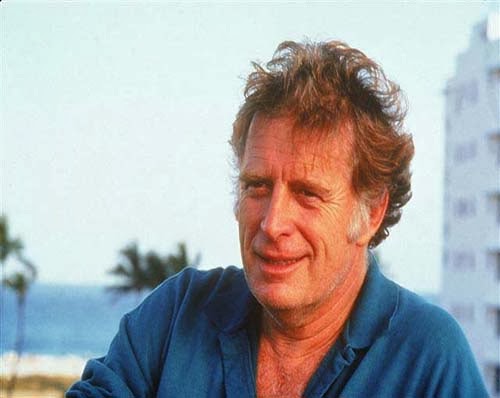
When I got off the plane, there was Chris Blackwell right at my gate, looking incredibly anxious. He thanked me very much and apologized that he had to run, but his flight was on the exact opposite side of the airport and he would be lucky to make it. I fulfilled my sacred obligation and put the tapes directly in Chris Blackwell’s hands. As I did so I stumbled through a sentence that might be interpreted as “I’m so proud to be able to work with Island Records,” but probably came across as total gibberish, and then he was gone.

The first and only time I was ever in Chris Blackwell’s presence.

Now what?

I had the company credit card. I could go have a bacchanalian night in New York City on the company’s dime. However, I just happened to look up at the departure board and saw that there was a flight back to Toronto leaving almost immediately. If I made that flight, it might not be a total loss; I might be able to catch some of the 2nd Marley concert after all. Amazingly there were still seats on that plane. I paid for the tickets with the Island Records credit card and boarded almost immediately. The flight got off the ground on time and there were no other delays. For the first time all day things are going smoothly.

We landed at Pearson Airport. where I caught shuttle bus back to the parking lot, jumped into my car, and cranked up the music. Then I raced down the 427 to the QEW, shot across to the Gardiner and then over to Spadina, screamed north, dodging streetcars and pedestrians in Chinatown, and over to the U of T campus. I drove right up onto the sidewalk to the side door of Convocation Hall.

I no sooner pulled up to the building than the doors opened and the audience rushed out, trapping me and my car for the next 20 minutes while a cop argued I couldn’t park there. I missed both Bob Marley concerts. What’s worse, I spent less time with Chris Blackwell than I had Bob Marley and I only spent 5 minutes with Marley.

And, that kiddies, is the story of the day I met Bob Marley. Island Records was very gracious and paid to have me go see Bob Marley and the Wailers in concert at Detroit’s Masonic Temple. I also hooked a vacation in Detroit, my home town, visiting family and friends before I went back to Toronto.
The Day I Met Bob Marley ► Part One

I’ve dined out on this story among family and friends a few times over the years. However, I never told it in an official forum until interviewed for the wonderful documentary podcast How Jamaica Conquered the World. While Roifield Brown did a terrific job editing my rambling into a coherent story, I knew I could do better in print. However, first I want to put in a good word for Roifield’s great site. In its own words:

For a nation that gained independence from the British only 50 years ago, Jamaicans have left their mark on music, sport, style and language around the globe and have become an international marker of ‘cool’. Jamaican music has colonised the new and old world alike, its athletes break world records with impunity and youngsters the world over are incorporating Jamaican slang into their dialects. Despite this the country has reaped no economic reward in return, unlike empires of old, and Jamaica still remains an economic pygmy. Jamaican influence has unconsciously spawned creative innovation around the globe and to this day it remains a country to be studied, celebrated, and demystified. Through the help of linguists, artists, musicians, and historians we take a closer look as to how Jamaican culture conquered the world. 

How Jamaica Conquered the World is a class act, and I’d be saying that even if I didn’t appear in a couple of segments. As both history and a jukebox of Caribbean music, How Jamaica Conquered the World is worth as much time as you can devote to it.

Okay, kiddies, pull up a chair and pour yourself a cup of coffee, because this one’s going to be long . . .

On the day I met Bob Marley I was already working for Island Records Canada as a Record Promo Guy. It was one of my first jobs out of college and I was the low man on the totem pole in an office of 3 people. We three were required to cover the entire country of Canada, the 2nd largest country in the world

It’s worth mentioning how I came to work at Island Records because that also involves Bob Marley. A year earlier I had been the first full-time paid manager of Radio Sheridan. It was one of the few campus stations that received personal visits from the Record Promo Reps from all the major companies. Campus radio was much maligned in those days by the record companies, and deservedly so. A company would take the time and expense to package records and send them to a campus station, where they would rarely find their way into the library. They’d disappear into someone’s record collection.

By this time Radio Sheridan was 3 years old. It wasn’t an official part of the college; it was merely tolerated by Sheridan College. A small group of us, some attached to the student government and others in the Media Arts program, designed the concept of the radio station broadcasting on a closed-loop antenna system. We pitched it to the student government, which fell into line behind it. They presented it to Administration, which not only approved it, but gave us 2 very small rooms on the 2nd floor of the new wing. The station was entirely student-funded, student-built, and student-operated. I started off as Assistant Manager and later became the first (and as far as I know only) full-time paid Station Manager. I ‘hired’ Lorraine Segato to be one of my DJs and like to feel I set her off on her path to brilliance. 

Unlike other campus stations, from Day One, we felt it important that every record Radio Sheridan ever received was cataloged and shelved in the library. No genre or era was off limits and the only time a record was shelved with the words NO PLAY on it had to do 4-letter words, not musical styles. It was still shelved and everyone of us played George Carlin’s 7 Words You Can’t Say at least once. The rules were as flexible as any DJ wanted to try and get away with. It was the great era of Free Form Radio. We were all trying to emulate David Pritchard and David Marsden of CHUM-FM, when those guys were crazy MoFos on the air and playlists hadn’t been tightened up by the Radio Consultants, who were the real villains that ruined the medium of music radio.

However, Radio Sheridan had 3 things going for it, as far as the Majors (as we called the record companies) were concerned: 1). They could find every record they ever gave us in our library; 2). We would play music the other stations wouldn’t; 3). We were just off the Queen Elizabeth Way (QEW) between Toronto, where they all had head offices, and Hamilton, the next largest radio market in Ontario (if you ignored Windsor and lots tried). More than one Record Rep remarked how it was a nice stopover during a Hamilton swing. And those of us who worked at Radio Sheridan were eager acolytes for their records, posters, and concert tickets.

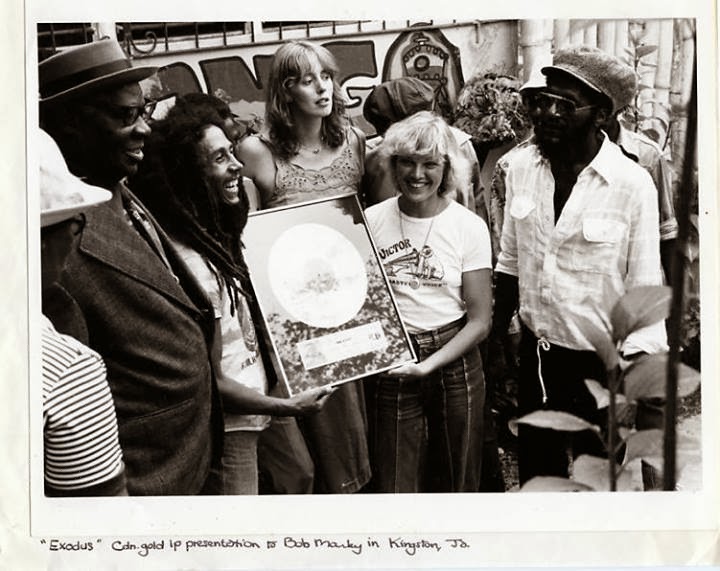
Kathy Hahn, a dear friend to this day, presents Bob Marley with a Canadian
Gold LP for Exodus in Jamaica, the 1st and only time a Canadian Gold
LP awarded outside the country; circa 1979

By the time I became full time Radio Sheridan Station Manager, we were getting so many records sent to us in the mail and hand-delivered by Record Reps that there was always a slush pile. Each record had to be listened to, categorized by genre and artist, duplicate file cards made, and then shelved in the record library. There was a pile of about 50 records on the day I first heard from the head of Island Records Canada. I was impressed that the head of the company was calling. I didn’t know the office consisted of just him and his assistant, Kathy Hahn, who I later discovered actually ran the office and made everything operate on schedule. The head of Island Records Canada was on the phone asking me whether I had received the latest records Kathy had sent in the mail. I assured him that I did, but had not had a chance to listen to them yet before shelving them. Then this guy started in on the hard sell (paraphrasing), “Oh you gotta listen. This is the next big thing. You need to jump on this. You’re going to hear a lot about Bob Marley.”

I hadn’t heard of Bob Marley before. More importantly, as far as I was concerned at that exact moment, I had never had a Record Promo Rep using such hard sell on me. The Promo Guys that serviced Radio Sheridan were all casual. They’d toss a record in our direction and say, “Give this a listen.” If we came back and said, “Hey, we like that artist,” the Rep might arrange to have the entire back catalog sent to us, or posters and concert tickets if those were available. The one thing they knew better than to do was to try and “sell” us on an artist. The music was either in the grooves, or it wasn’t.

However, this guy from Island Records was already irritating me and it was only our first phone call. I assured him I’d listen to his records just as soon as they floated to the top of the slush pile. However, that wasn’t the end of it. A few days later he called back, asking whether I’d listened to them yet. I explained the Hobson’s Choice system I developed: New records go on the bottom of the pile. I listen and shelve from the top of the pile. His records were mid-way in the pile, but they’d eventually make it to the top.

That’s when he started on the hard sell again. No other Promo Rep had ever tried to “promote” their records at me this vociferously and it was beginning to piss me off.

A few days later I go through the whole thing again with him. That’s when I flipped out at him. “Hear what I’m doing? I’m putting your records on the top of the pile. They will be the next records I listen to.”

I hung up absolutely prepared to hate the records almost as much as I had begun to hate the disembodied voice from the Bedford Road offices of “Island Records.” I put the first record on the turntable and dropped the needle. What happened next was four minutes and 15 seconds that changed my life. This is not hyperbole. Listen:

The first 30 seconds of Concrete Jungle were absolutely magical to me. It starts off with two guitars just noodling around, almost as if they are tuning up without structure. A single organ note sings in the background. At about 8 seconds in a drum beat sputters and then locks in. A bass guitar drops in a few notes here and there, while a lead guitar plays a few sustained chords and then a meandering lead line. Another keyboard is adding random notes. These instruments swirl around each other making no music I has ever heard of before. Then, at the 30 second mark, this kaleidoscopic swirl of what sounds like random instrumentation locks into place with the One Drop, bass and drums. Riddem!

I was hooked!!! Immediately!!!

For the first time in my life music SPOKE to me in a way that none had previously. Reggae penetrated my very soul. I felt it deep, deep within me. Within 6 months I was working for Island Records as Record Promo Rep and Chief Cook and Bottle Washer of Island Records Canada. One of my first surprises was that the head office for Island Records Canada was two front rooms of a beautiful house at 93 Bedford Road. The house was semi-famous, having appeared in two movies: The Last Detail and The Paper Chase. The rest of the house was residences, with a family living on the 2nd floor and a bachelor on the third floor. I eventually moved into a basement apartment in the house where I only had to walk upstairs to get to work, until I got hired away to United Artists in Scarberia.

My second surprise is that in a 3-person office, I would be called upon do do anything and everything, as we all did. One day I would be stuffing envelopes with the press release I had written the day before and picked up at the printer’s that morning. The next day I might be the limo driver taking Robert Palmer and his 2 singers to a concert at the CNE grounds, while they practiced the difficult “doobey doobey doops” back-up vocals of Hey Julia and Sneaking Sally Through The Alley in the back seat.

The most exciting and busy time in the life of a Record Promo Rep is the period immediately preceding one of your artists coming to town for a concert. Bob Marley and the Wailers had announced a North ‘Merkin tour for April to June of 1976 to promote the new release, Rastaman Vibration.

When one of your acts is coming to town, there’s a lot of prep work to be done. While the promoter will take out advertising to promote the concert, the record company will also take out adverts to promote the music currently available in stores. Sometimes those ads are designed in-house, but most of the time head office supplies camera-ready artwork, which still needs to be placed where the local office feels the most eyeballs will see it. In the case of Bob Marley, an artist barely known outside his native Jamaica in 1976, we did a lot of non-traditional advertising, naturally targeting the small weeklies and record stores that served Toronto’s large Jamaican population, much of which was strung along Eglington West, around Oakwood.

One of the jobs of a Promo Rep is to put up displays at the record stores and cajole the staff to rack the LPs up front. You see, kiddies, in the olden days of mortar and brick music machines, music could still be an impulse buy, like gum still is at supermarkets. When one of your acts is coming to town, this is done on steroids. At least a month ahead of time you would start putting up displays at all the record stores, beginning with those downtown and working out to the suburbs. The displays would include concert posters and racks for the various LPs the artist had out.

While it’s not exactly Payola, three things a Record Rep has in abundance are free LPs, free posters, and free concert tickets. These are spread around where they will do the artist the most good, as is access to the artist by radio and tee vee people. Artists will let you know in advance what their press availability will be. It’s up to the Promo Rep to apportion that time where it will do the artist the most good. These interviews won’t help concert sales (unless sales are slow, for which last minute interviews can be helpful), but will help record sales, which was the primary goal. The interviews will also be used ‘down the line’ as promo material for the upcoming shows on the tour, which could help ticket sales in future cities, which will lead to record sales.

While all tour arrangements (travel, hotel, meals) are handled by someone else, once the band arrives in town it’s the job of the record company, and most often the Promo Reps, to ferry them around town, make sure they get to any interviews and/or signings on time, and, most importantly, make sure they arrive at the concert venue in time. This often requires precision timing. Itineraries broken down into 15 minute increments are prepared, photocopied, and passed out to everyone who will need them.

The month before an artist comes to town is the most frantic time in the life of a Promo Rep, which only gets more frantic every day as the calendar counts down to Concert Day, which is the most frantic of all. One only gets to breathe a sigh of relief when the artist becomes the responsibility of the next Promo Rep in the next town on the tour.

The day I met Bob Marley was the most frantic day I ever had in the Music Bidnezz. It began in the Bedford Road HQ of Island Canada as we sat around going over a checklist of things that still needed to be done when the boss said, “You won’t be able to go to the concert, Headly.”

WAIT!!! WHAT???

I pretty much exploded.

“I’ve just spent a month working my ass off for this concert. I’ve papered dozens of record store walls in posters and empty LP covers. I’ve cajoled the alternative papers into doing articles in advance of the concert. I convinced some alternative radio stations to play some Marley, even though they’ve never heard of Reggae before. I’ve set up interviews with Bob Marley and made dozens of arrangements with people who will be at the show tonight. And, now you’re telling me I can’t go to the show?”

That’s when it was explained that I would be on a special, secret mission for Island Record International!!!

Here was the master plan: the two concerts at the University of Toronto’s Convocation Hall were the sixth and seventh on the tour, with Montreal the night before. Prior to that were four dates in the States: Upper Darby, Pennsylvania; Washington, D.C.; Boston, and New York City. The tour was being recorded and the band had smuggled several 2-inch reel-to-reel, 24-track recordings of the previous concert dates into Canada. They knew better than to try and smuggle ganja into Canada, knowing there were enough Jamaicans who wanted to present them with the sacramental plant upon their arrival. However, audio tapes? Those they smuggled into Canada without declaring them or paying any duty on them.

My secret mission was to collect the tapes from the band when they arrived, smuggle them back into the United States, and put them directly into the hands of Chris Blackwell.

CHRIS BLACKWELL?!?!?!

At that time in my life Chris Blackwell would have been the only person who I would have missed Marley for. Chris Blackwell was my musical hero. Chris Blackwell was the man who started up Island Records and still the head guy. A slight tangent is in order for A Short Biography of Chris Blackwell:

Although born in London (in 1937), Chris Blackwell spent his childhood in Jamaica. His mother came from a prominent family, said to be one of the 21 families that controlled Jamaica during the 20th century. After his parents divorced his mother took up with Ian Fleming and is said to be the inspiration for Pussy Galore. These days Chris Blackwell owns Goldeneye, where Fleming wrote all the James Bond novels. However, if that were it, there would be no reason to write this tangent.

At the age of 21 Blackwell had a boating accident off Jamaica’s southern coast when he crashed his sailboat on a coral reef. He swam to shore, collapsing on the beach in exhaustion. There he was rescued by some Rastafarian fisherman, who took care of him until he was healthy enough to leave. However, if that were it, there would still be no reason to write this tangent.

A year later, Chris Blackwell started Island Records, naming it after the Alec Waugh novel “Island in the Sun.”  Blackwell started releasing Jamaican music in 1959 and had limited regional success. In 1962 Blackwell moved Island operations to London and started making inroads in the Jamaican community with some early Ska and Bluebeat tunes that he had either recorded or licensed. One of those early licenses was for “My Boy Lollypop” by Millie Small, the cover of a 1956 tune by Barbie Gaye, one of the first hit songs in the newly emerging style of Ska.

Compare Millie Small’s version of My Boy Lollypop with Barbie Gaye’s:

As the WikiWhackyWoo quotes Blackwell:

I didn’t put it [the Millie Small single] on Island because I knew it was going to be so big. Independent labels in those days couldn’t handle hits, because you couldn’t pay the pressing plant in time to supply the demand, so I licensed it to Fontana, which was part of Philips. It was a big hit all around the world, and I really wanted to look after Millie, so I went everywhere with her, which took me into the mainstream of the record industry. I was lucky enough to see Stevie Winwood with the Spencer Davis Group, at a TV show in Birmingham. So then I started to spend more time in that area. This whole new music was emerging.

By “new music” Blackwell wasn’t talking about Reggae; that came later, after Island had already signed a few acts.With the proceeds of the smash Millie Small hit, he started signing bands to Island Records. After Spencer Davis Group and Steve Winwood came other Island signings: Traffic; Emerson, Lake and Palmer; Cat Stevens; Jethro Tull; Free; Fairport Convention; Kevin Ayers; Georgie Fame; Sparks; John Martyn; Spooky Tooth; Nick Drake; Roxy Music, Brian Eno; John Cale; The Chieftains; Richard and Linda Thompson; U2; Pete Wingfield; and many more. While many of these artists were signed to Island Records, Blackwell licensed some of these acts to other record companies in North America. To confuse matters even more, there were times the recordings were licensed to a different record company in Canada than ‘Merka.

And, that’s where I came in. I had been listening to music from Chris Blackwell for years, much longer than I had been listening to Reggae. Sure I’d be willing to miss two Bob Marley concerts at Convocation Hall to meet Chris Blackwell. He was one of my heroes.

Read Part Two of The Day I Met Bob Marley.

Big Up, Jamaica!!! Happy 50th!!!

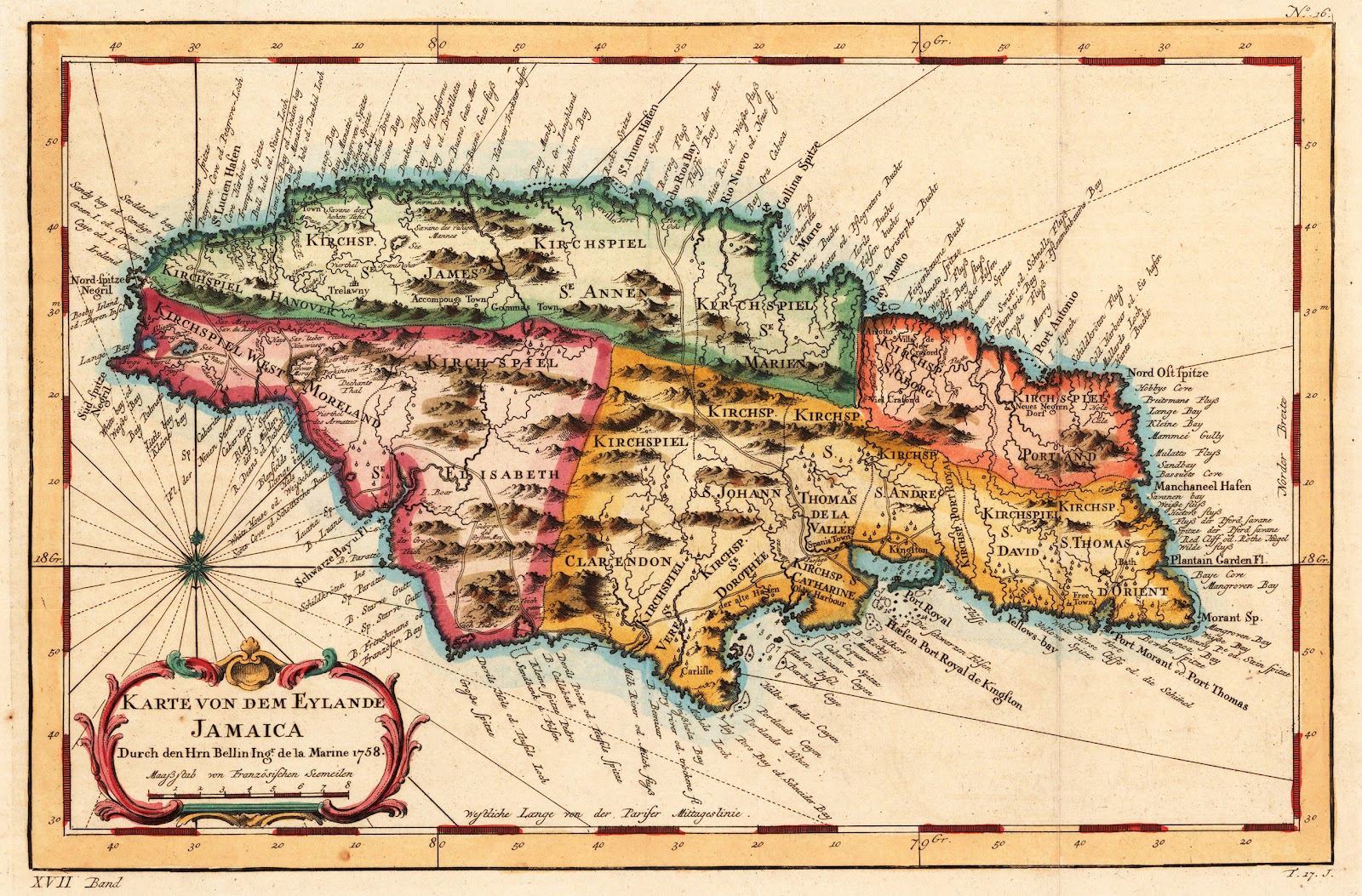
Let’s face facts: Jamaica is probably the closest Christopher Columbus ever came to what was later called the United States of ‘Merka, the country he is alleged to have ‘discovered.’ And, when he landed in Jamaica in 1494, there were already people there. The Arawak and Taino peoples, who had originated in South America, had been on the island by as much as 2,500 – 5,000 years by then. By the time of Columbus’ arrival there were over 200 villages, but he claimed the island in the name of Spain anyway. The British, led by the same William Penn who founded the ‘Merkin province of Pennsylvania, forced the Spanish out in 1655, with slavery and sugar becoming the main exports, until the British abolished slavery in 1807. Then it was just sugar. Still needing a workforce, they imported Indian and Chinese workers as indentured servants. This is one of the reasons Jamaican population is such a multicultural mix and reflects its national motto: “Out of many, one people.” It’s also why so many Jamaican dishes use curry and other hot spices.

Skipping ahead a hundred and fifty years: On this date in 1962, after 4 years of being a province in the Federation of the West Indies, gained full independence and adopted its national anthem.

However, it’s not the music of the National Anthem that has spread Jamaica’s reputation around the world: It’s Reggae music. According to the WikiWackyWoo:

Many other internationally known artists were born in Jamaica including Millie Small, Lee “Scratch” Perry, Peter Tosh, Bunny Wailer, Big Youth, Jimmy Cliff, Dennis Brown, Desmond Dekker, Beres Hammond, Beenie Man, Shaggy, Grace Jones, Shabba Ranks, Super Cat, Buju Banton, Sean Paul, I Wayne, Bounty Killer and many others. Band artist groups that came from Jamaica include Black Uhuru, Third World Band, Inner Circle, Chalice Reggae Band, Culture, Fab Five and Morgan Heritage. The genre jungle emerged from London’s Jamaican diaspora. The birth of hip-hop in New York City, New York also owed much to the city’s Jamaican community.

Chris Blackwell
I had the pleasure of working for Island Records Canada when it was still an independent company run by Chris Blackwell. Blackwell is one of my heroes. He didn’t create Reggae, but he took it global starting with Millie Small. Blackwell discovered the 15-year old singer and produced her single “My Boy Lollipop,” which sold over 7 million records worldwide. Then he signed Bob Marley and many other Reggae artists; launching many careers (and not just Reggae artists) onto the international stage. I met Blackwell once, on the same day I met Bob Marley, yet they were not together, nor were they even in the same country. It’s a long, complicated story that I keep promising to write and, maybe, one day I will.


Usain Bolt, the fastest man on earth, is a fitting
symbol for How Jamaica Conquered The World

I was also honoured to be interviewed for my (very small) part in “How Jamaica Conquered the World,” a terrific series of podcasts which documents Jamaica’s outsized influence, when compared to the small footprint of the small island nation of just 4,244 square miles, smaller than Connecticut, the 48th largest state.

However, let’s face it: It’s the music and ganja for which Jamaica is known. Since I can’t push any ganja through my computer, I am reduced to just sharing a small sampling of the music. Here’s a Jamaican Jukebox so you can celebrate along with Jamaicans all around the world as they proudly wave the flag on their half-century anniversary.

***

***

How Jamaica Conquered The World ► The Day I Met Bob Marley

The latest episode of the excellent podcast-documentary How Jamaica Conquered The World is now online. Episode Eleven is the second part of the story of Bob Marley: Recollections and Legacy. It includes an edited version of my “Meeting Bob Marley” story. The story takes place backstage at Convocation Hall, Toronto.

Here’s the first part of the Bob Marley story:

Some of my recollections are also featured in Episode 3: The Story of Dub Music:

I highly recommend How Jamaica Conquered The World, and not just because I’m in it. It is a high quality documentary on Jamaica’s influence around the world in the past 50 years.

How Jamaica Conquered The World ► An Update

Back on April 20 I wrote about my small part in “How Jamaica Conquered the World.” Every once in a while producer Roifield Brown sends out an email, telling me about the latest progress for this amazing FREE documentary. I’ve combined a few of them to bring you the latest in “How Jamaica Conquered the World” News:

It never rains good news but it pours good news. As of next week, How Jamaica will be promoted by iTunes as its podcast of the week in the UK.

Earlier Roifield sent along more iTunes progress:

Hello, just thought I should send you an email to keep you updated with the progress of the project “How Jamaica Conquered the World.” I’ve been working on the project for some 8 months now and in the last week we seem to have made some real and significant progress with getting the message of Jamaica’s influence throughout the world out there.

The series is now on iTunes and we are experiencing hundreds of downloads each day and we have been promoted by iTunes on the “new and noteworthy” section which is absolutely brilliant. What is important is that we get as many reviews on iTunes as possible, so at the end of this email are itunes links to HJCW so that you can subscribe, tell your friends and hopefully write review. On iTunes the shows are released weekly, with the new episode going up every Sunday evening. Currently there are 5 published.

As well as our success on iTunes where I’m now featured mix on www.mixcloud.com. As well as increasing downloads we had taken on board a PR company which will be getting us press and media exposure for the whole project.

This week was rounded off by a fruitful telephone conference with SABC, South African broadcasting Corporation who are interested in the rights to the project, so the film could well be starting in production in the next two months.

However, the email that excited me the most said:

Hello all, working on this podcast has made me realise that I have way too much material and a lot of good content is being left on the cutting room floor as I try to condense every topic into a 10 minute show. So to remedy this I will be creating a new podcast entitled the Reggae Monologues or the Dublogues. These will feature your interview in full with myself edited out but with a dub soundtrack. I feel that this will be great extra content for people that want to know more about your feelings and insight into the given topics being discussed.

It will be a few weeks before I put up the first episode on iTunes but I will alert you when your show is live.

The thought that I might become a part of a Dub soundtrack is one of the thrills of my life. Thank you, Roifield.

R.I.P. ► Lloyd Brevett ► Skatalites Bassist

Jamaica mourns one of her native sons in the passing of Lloyd Brevett, original bassist for The Skatalites, at the age of 80. Brevett was there at the beginning. It is not hyperbole to say that The Skatalites were one of the most influential bands ever, and not just in the narrow genre of Ska. Ask anybody who knows. No less an authority on Ska Music than the New York Times noted: 
Mr. Brevett, a trained jazz bassist, was an original member of the
Skatalites, which was formed in 1964 during the evolution of Jamaican
music from American-influenced rhythm and blues and jazz to the
homegrown syncopated style known as ska, the precursor of reggae, rock
steady and dub. The band members were also active as studio musicians
and backed up the Wailers and other groups.
The Skatalites broke up in the mid-1960s but regrouped in New York 20
years later. Two of their albums, “Hi-Bop Ska!” and “Greetings From
Skamania,” were nominated for Grammy Awards in the 1990s. 

Not just anyone rates a NYT’s obit. Or condolences from a former Jamaincan Prime Minister, who just happened to be Brevett’s tour manager way back when.  According to David McFadden of the Associated Press:
Former Prime Minister P.J. Patterson, who was
once a tour manager for The Skatalites, said that while the band’s great
horn section often drew most of the accolades, it was “Brevett who
quietly provided the mesmerizing backbone to the Skatalites’ sound.”

“To say that Brevett was a creator of both ska and dub is not to use hyperbole,” Patterson said in a statement.

[…]

Legendary Jamaican musicians say it’s difficult to overestimate the role the trained jazz bassist and the rest of the original Skatalites played in developing the Caribbean island’s unique music.

“He was there from the beginning,” Bunny Wailer told The Associated Press. “All my bass lines from all my recordings have been attributed to bass lines from Lloyd Brevett.”

Wailer, the reggae legend who was one of the original Wailers along with Bob Marley and Peter Tosh, praised Brevett as a devout member of the Rastafarian faith and an elder statesman of the island’s culture.

“Brother Brevett’s music is eternal,” Wailer said.

The Skatalites worked with everybody in the Ska-Reggae-Dub genres. In a way similar to Easy Star All Stars many of The Skatalites biggest hits were Ska reworkings of familiar tunes, even if they seemed to be strange choices for a Ska band. However, listen to the playing and the arrangements. This is some excellent musicianship working against the back beat.
Here’s a little Skatalites Jukebox:…and you’ll be dancing when it’s all over:

Rock on, Lloyd Brevett!!! Rock On!!!

How Jamaica Conquered The World

Recently, through a chance Twitter encounter, I was interviewed about my experiences working for Island Records Canada for a series of documentary podcasts called “How Jamaica Conquered The World.”  As a professional journalist for 4 decades, and having been interviewed myself, one often regrets opening up to a stranger.  Not in this case.  How Jamaica Conquered The World is a quality product and I am thrilled to be connected with it.  I am sure Roifield Brown will not mind me quoting from the site:


Just as the Roman Empire conquered the known world 2000 years ago, in
the 19th century the British, through trade and slaves, created the
largest empire that this planet has ever seen. Today, the United States
may be a super power in decline but its economic power produced a
colossal “soft” empire spanning the late 20th century. It put boots on
the ground in hot spots around the globe, McDonalds restaurants in every
city and the entire world has watched its movies.

However, the small island of Jamaica has forged a new type of empire,
an intangible realm of which there are no physical monuments. There is
no official political or economic sphere of Jamaican influence but when
it comes to popular culture its global reach is immense, far exceeding
the reasonable expectation for a nation of just over 2.7 million people.

For a nation that gained independence from the British only 50 years
ago, Jamaicans have left their mark on music, sport, style and language
around the globe and have become an international marker of ‘cool’.
Jamaican music has colonised the new and old world alike, its athletes
break world records with impunity and youngsters the world over are
incorporating Jamaican slang into their dialects. Despite this the
country has reaped no economic reward in return, unlike empires of old,
and Jamaica still remains an economic pygmy. Jamaican influence has
unconsciously spawned creative innovation around the globe and to this
day it remains a country to be studied, celebrated, and demystified.
Through the help of linguists, artists, musicians, and historians we
take a closer look as to how Jamaican culture conquered the world.

So far my contribution to How Jamaica Conquered the World is limited to Chapter 7: The story of Dub music.  Roifield tells me he had never heard of Easy Star All-Stars until I twigged him to them.  If you are only learning of Easy Star All-Stars, here’s something to dance to while I tell you a bit about ESA-S.

But before I do, let me tell you about my love for Pink Floyd’s original “Dark Side of the Moon”, which I heard on the original vinyl, off the earliest pressings, when the LP was new.  Since then I have listened to that record thousands of times, under just about every illegal drug known to man.  I was one of those people who, early on, heard that one could sync up Dark Side with The Wizard of Oz (@Aunty__Em!!!  @Aunty__Em!!! ) and it was a whole new experience.  Every note of that record is imprinted on every neuron I have left.  It’s one of the greatest LPs ever released.  Yet, Easy Star All-Star’s Dub Side of the Moon kicks its ass.  I’d rather listen to it than the Pink Floyd version that now sounds to these ears tepid and too nuanced. 

Easy Star do something very brave in my opinion: They take iconic record albums and Dub them up.Starting with the above, ESAS’ next release was called Radiodread a recreation of Radiohead’s OK Computer.  AMAZING!  Then…and then…and then…They took one of the most iconic record albums of the Rock and Roll era and turned it into Easy Star’s Lonely Hearts Dub Band.  It is absolutely incredible.  Easy Star is a collective of musicians who also do a lot more than their cover albums.For me their most recent hit was turning over Dub Side to be remixed by the likes of Mad Professor, Dubmatix, Groove Corporation, The Alchemist and Adrian Sherwood.  Dubber Side of the Moon is far more psychedelic and spacey than anything they’ve released so far. 

Roifield tells me I will also pop up in the Bob Marley episode.  I sure hope it’s my “meeting Bob Marley” story because it’s a good one.  If not, I’ll tell it here after the podcast is posted.  Hell, maybe I’ll tell it here even if it’s in the podcast. It’s a great story.

Thanks Roifield.  You are doing a great job.