Category Archives: Unpacking

My Evening With First Lady Michelle Obama

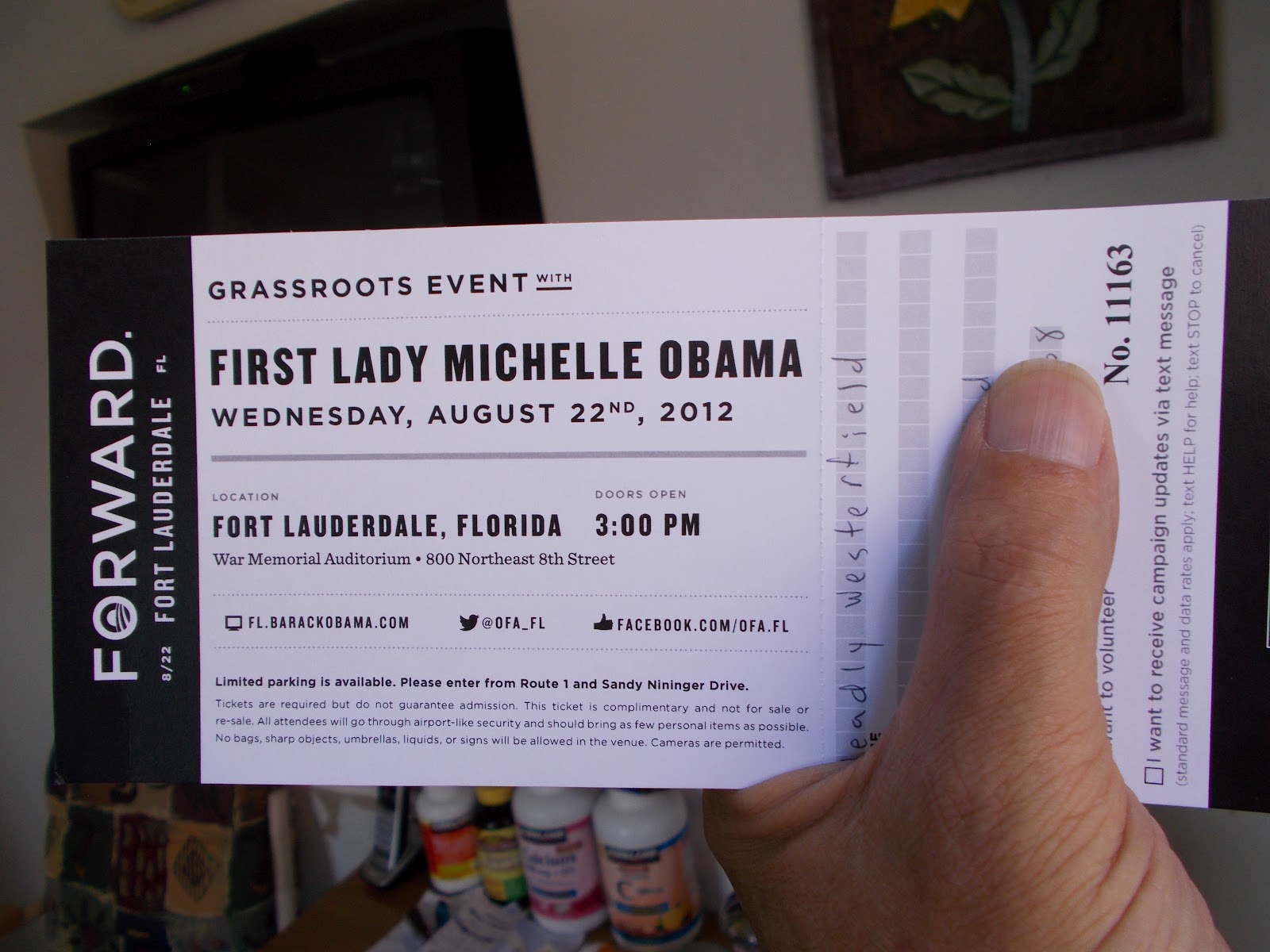
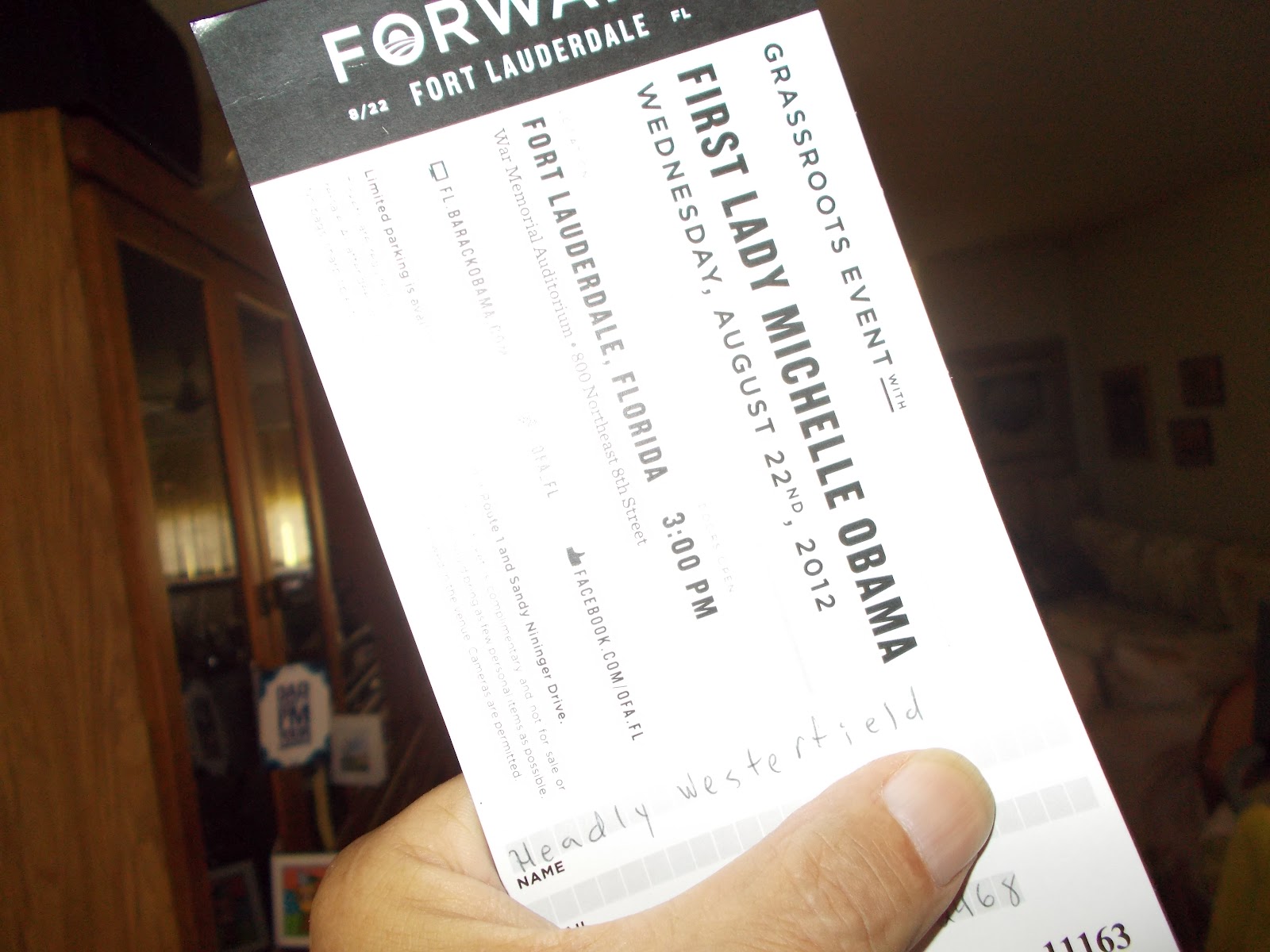
My ticket.

It was a thrill to get my ticket to see The First Lady Michelle Obama. One thing that was less than thrilling: To get the ticket I had to fill out a form on which I left my phone number blank. Before they’d give mer the ticket they insisted I give them my phone number, so I reluctantly did. The night before the First Lady arrived I received 3 calls reminding me the First Lady was coming. The the exact reason I didn’t want to give my phone number: I didn’t want to be bothered by a number of electioneering calls. Three calls for the same thing, within an hour of each other, borders on harassment.

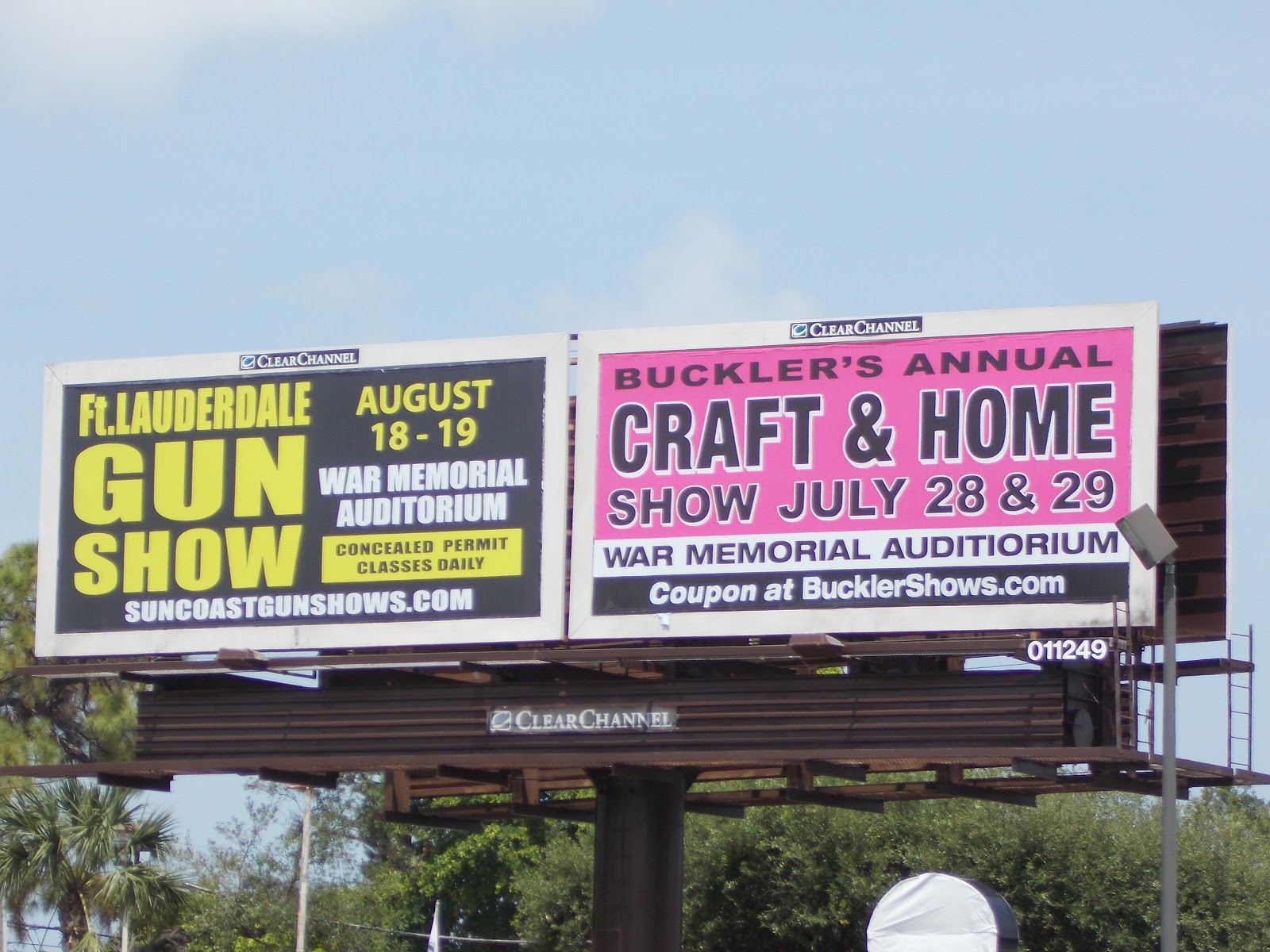
Next year they will combine these
events and you can learn how
to knit your own gun.

The Michelle Obama rally was taking place at Fort Lauderdale’s War Memorial Auditorium, just off Florida’s famous US Route 1 near Sunrise Blvd. In the seven years I’ve lived down here, I’ve not been to War Memorial Auditorum, known as War Memorial to the cognoscenti. Oddly enough, I have been to the Parker Playhouse just catercorner from it. I saw documentarian Ken Burns at the Parker (as the cognoscenti call it), when he brought a preview of his amazing documentary “Prohibition,” and afterwards took questions about his body of work. But never the War Memorial. And, because I approached Parker Playhouse from behind, I didn’t even know War Memorial was there. They hold a lot of different kinds of events at War Memorial Auditorium, as this sign I saw on the way there will testify.

I still have the same 9,514 tunes on my music machine and by happenstance a great Sly and Robbie Reggae tune was blasting out of my windows when I arrived. Several people gave me a thumbs up. However, when that ended “Brown Sugar” started playing. I said, yeah, yeah, yeah, OOOoooo! I wish I was making this up.

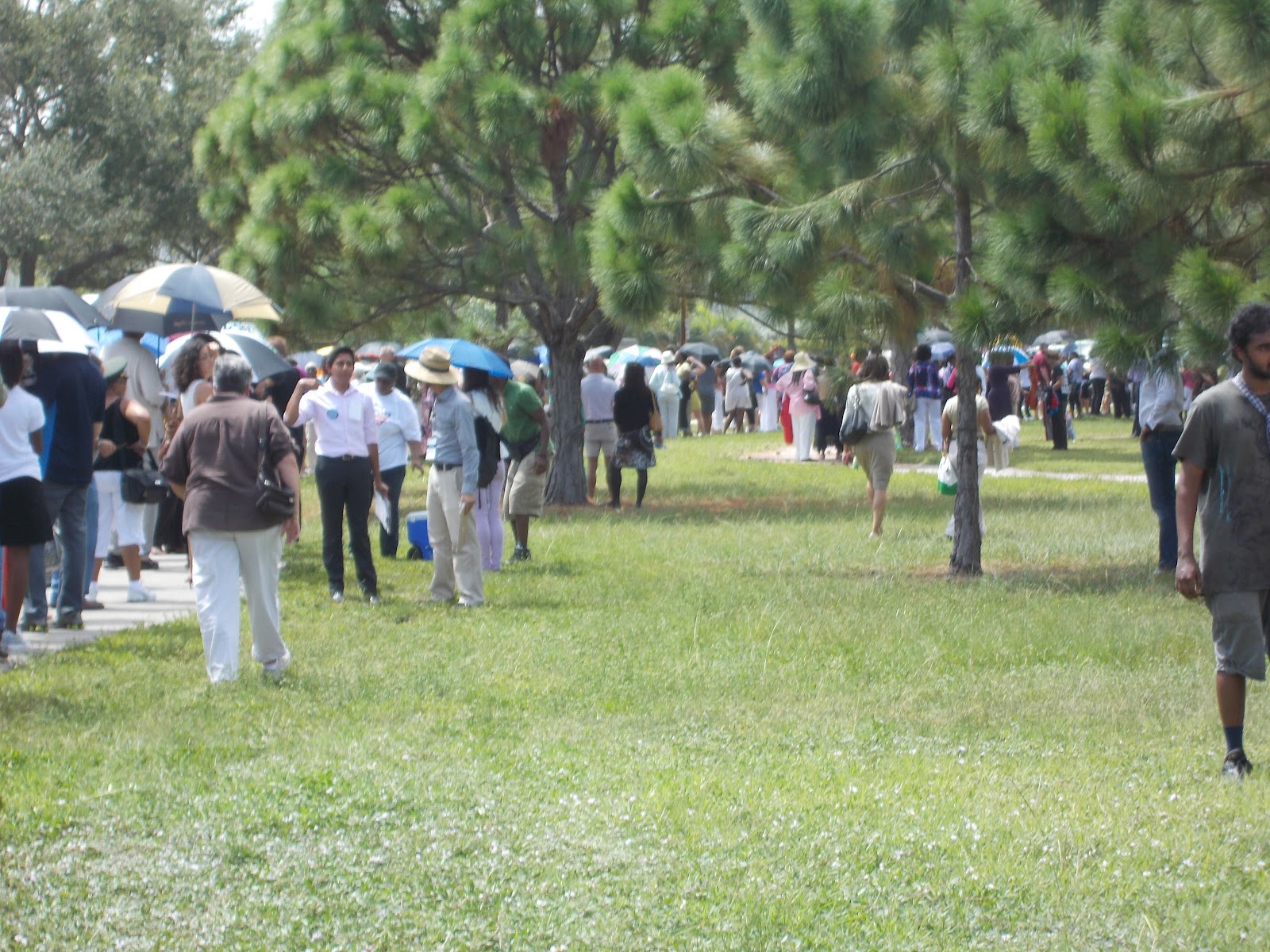
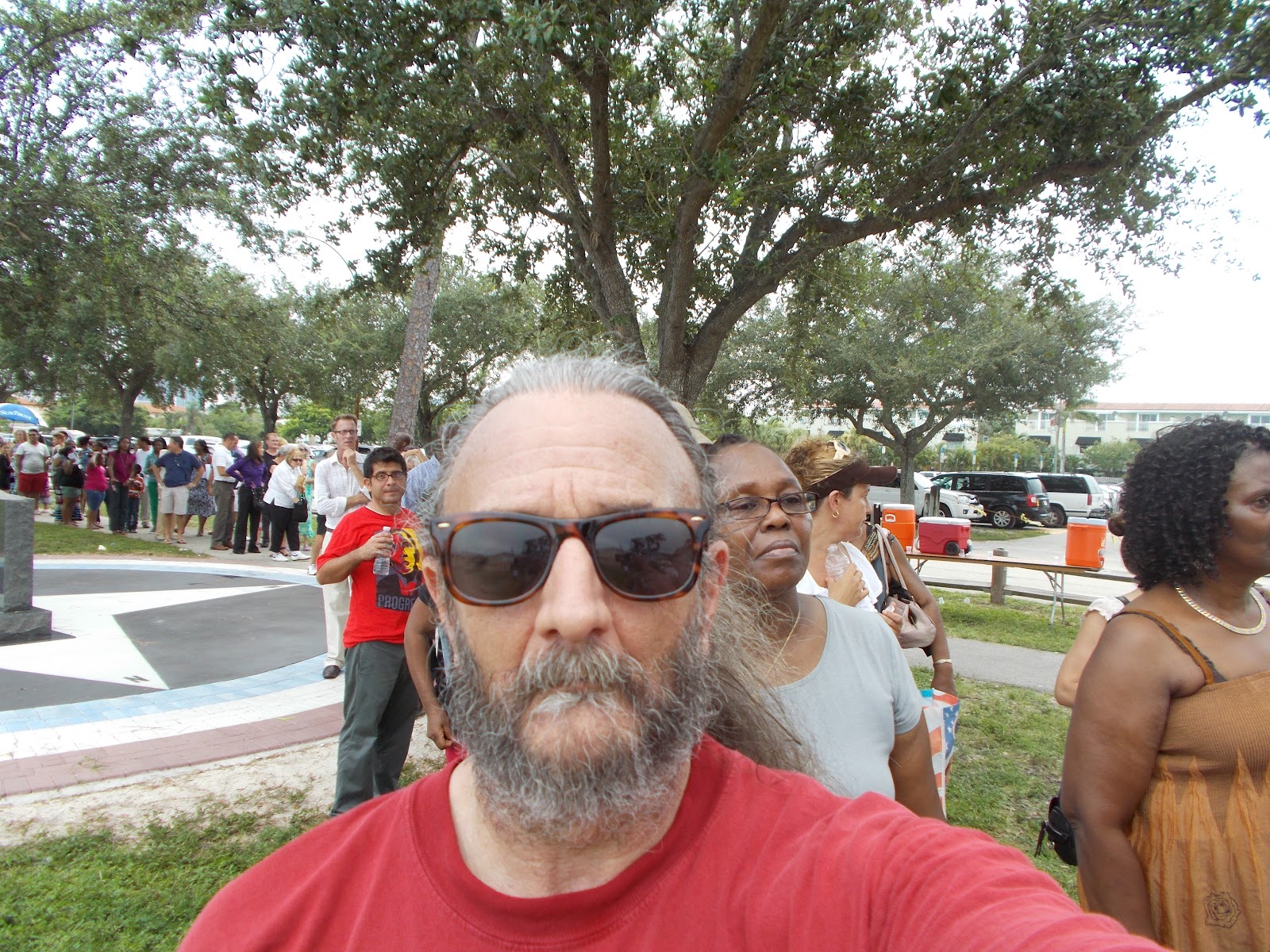
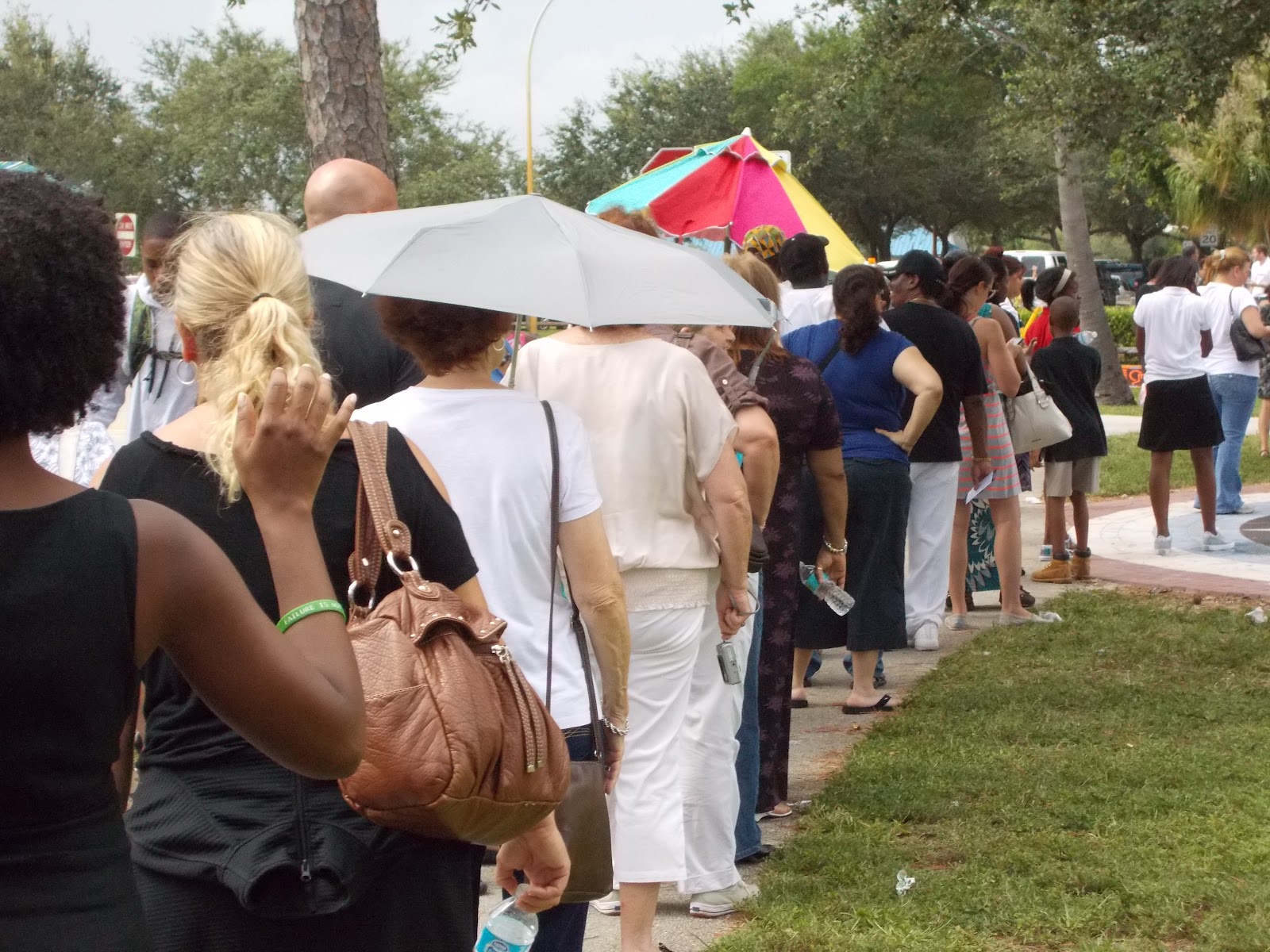
There were loads of people and several fire trucks gathered around the front doors. The fire trucks were necessary because of the 95 degree heat. I saw more than one person drop and need medical attention. The line snaked around the side of the building and there were several hundred people there before I arrived. We settled in for a long wait. Doors were scheduled to open at 3:00, but my part of the line didn’t get in until about 4:30. When I finally got to the doors I looked back. The line stretched way beyond the point where I originally joined it.

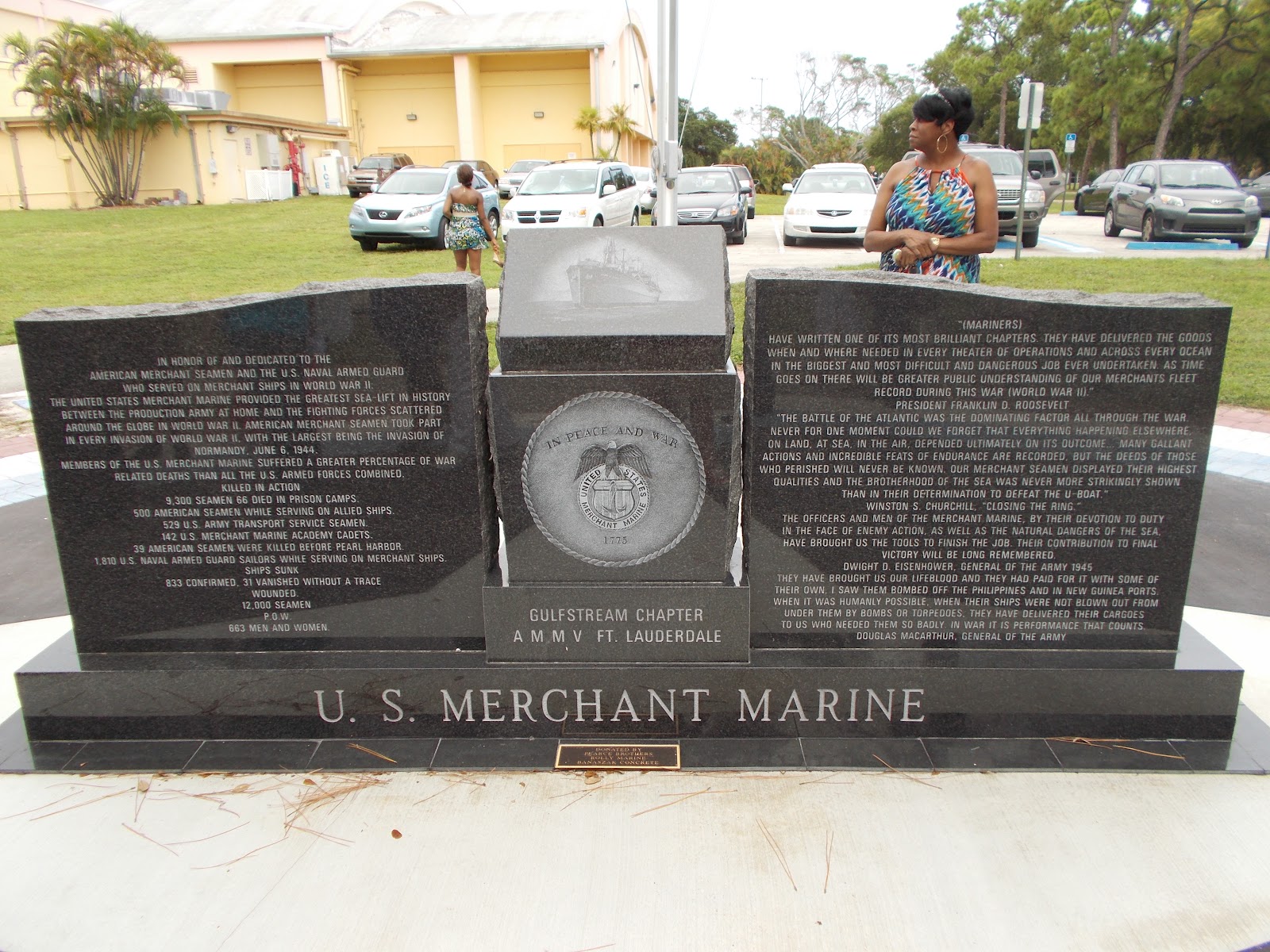
Monument near the doors.
Finally near the doors.

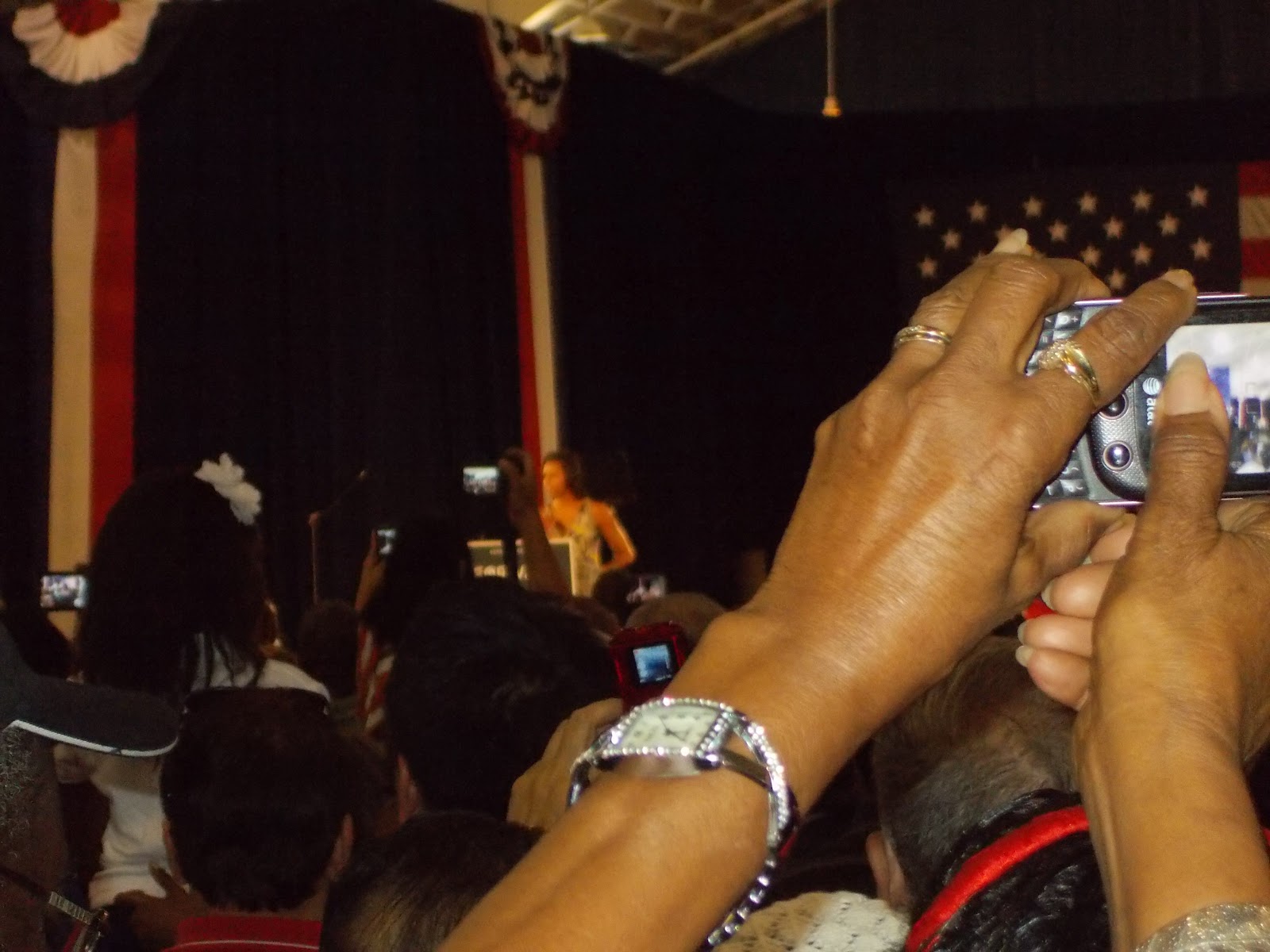
While we waited in line volunteers kept working the crowd, making sure everybody was registered to vote and to see who wanted to volunteer to help President Obama win the election. There was another group of volunteers who worked the crowd to alert us that we couldn’t bring in umbrellas, which many in the crowd carried to protect themselves from the oppressive sun, or cameras. This instruction puzzled a lot of people, who were all carrying cameras, and it had to be explained over and over again. The first explanation was that  phone cameras were okay, but no other cameras. That also puzzled a lot of people, like myself, who were carrying stand-alone cameras. “Why are phone cameras allowed, but not other cameras?!?!” People were getting hot, and it wasn’t entirely from the heat. A lot of people had cameras and it’s only natural to want to document the day you saw the First Lady of the United States. It’s something you’ll want to show your children and grandchildren, provided the Mayans are wrong. Then it was clarified that small cameras, like mine, were allowed by not “big cameras.” However, the volunteers were unable to define “big camera” to anyone’s satisfaction. I presume they meant a 35mm camera with a telephoto lens, but who knows.

Far more amusing: Women were told that large purses were not allowed, which just made all the women near me in line laugh. Most of them had large purses, some the size of small suitcases. The volunteers couldn’t define “large purse,” just as they couldn’t define “big cameras.” 

One other thing that was odd is they confiscated all signs from the people in line, only to pass out signs to people once we got into the auditorium. What’s up with that?

I wanted to take a picture of the security at the door, but as soon as I leveled my camera I got yelled at. When one is being yelled at by Fort Lauderdale police AND Broward Sheriff officers AND the Secret Service, ALL AT THE SAME TIME, one tends to do EXACTLY as they demand. That’s why there are no picture of that part of my adventure. However, I can describe it. All cell phones and cameras had to be turned on and handed to an officer, who inspected them and made sure they were operable. Purses, fanny packs, and knapsacks were also handed to the officers who searched them extensively. Everyone passed through metal detectors and then were ‘wanded’ on the other side. It was all quite similar to boarding an airplane, except we could keep our shoes on and there were no X-ray machines.

The other major difference to the airport security checkpoints: Everyone took it with good humour because we all understood that The First Lady’s safety trumped (no pun intended) any small inconvenience we might have experienced.

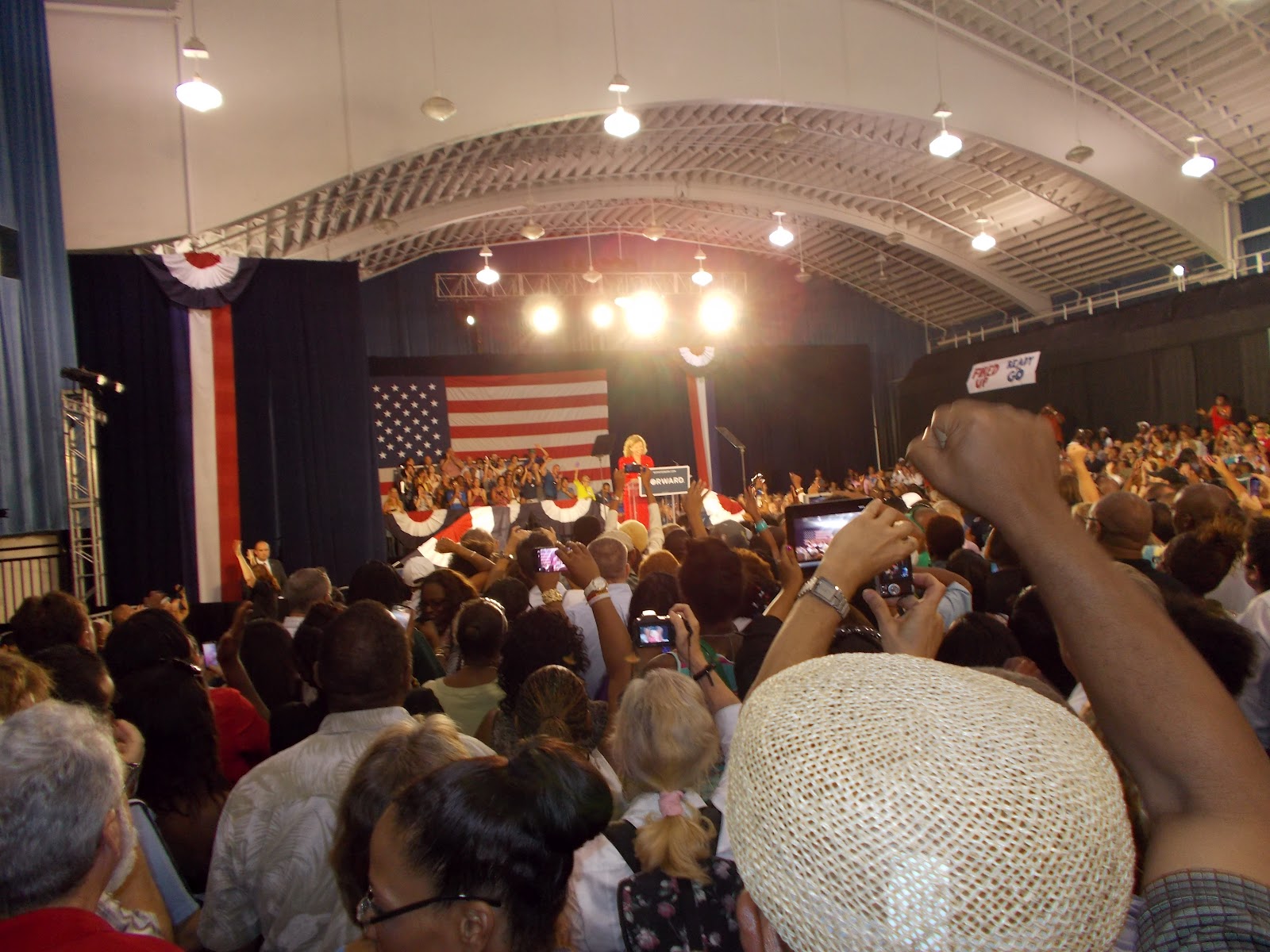
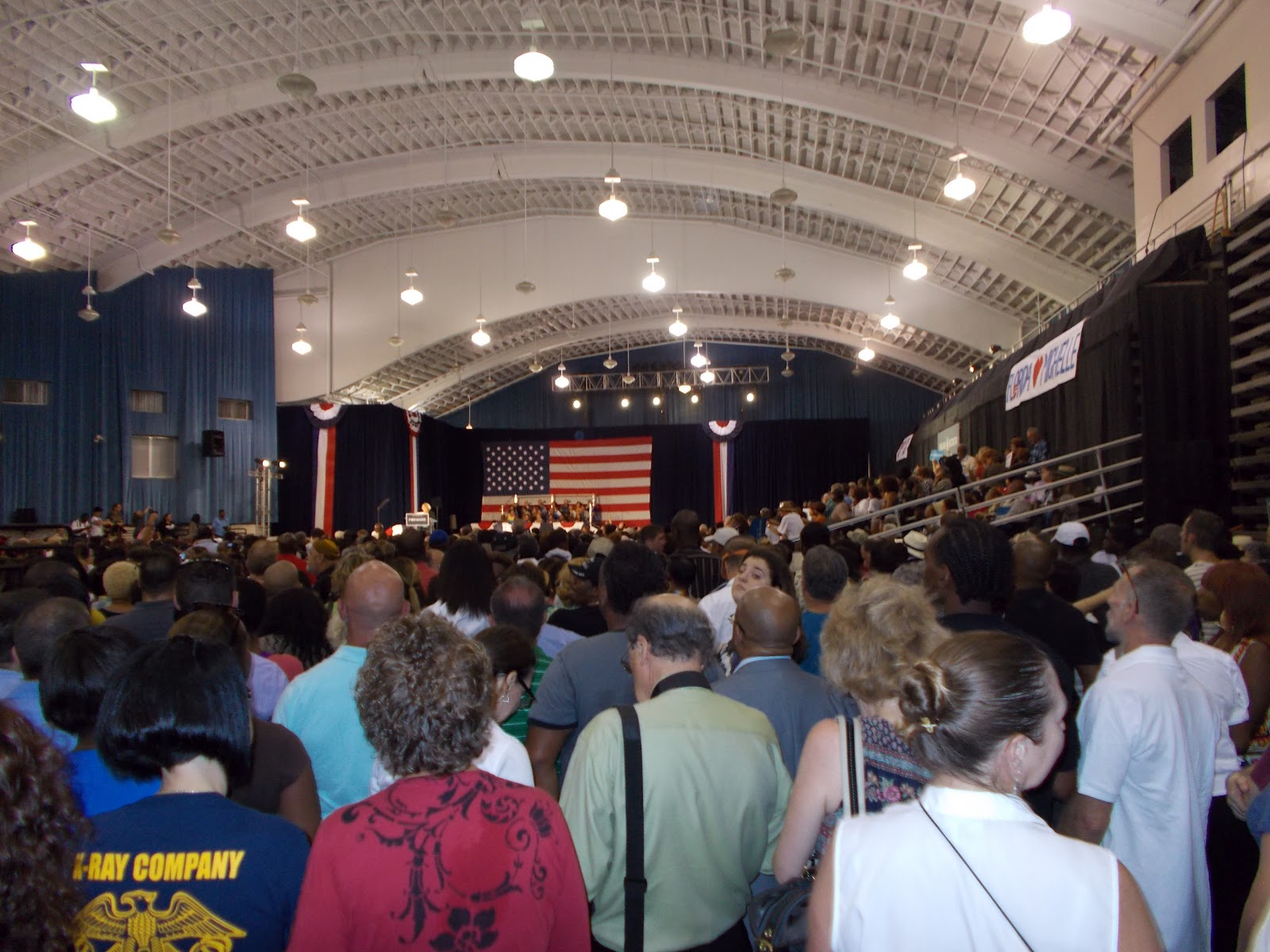
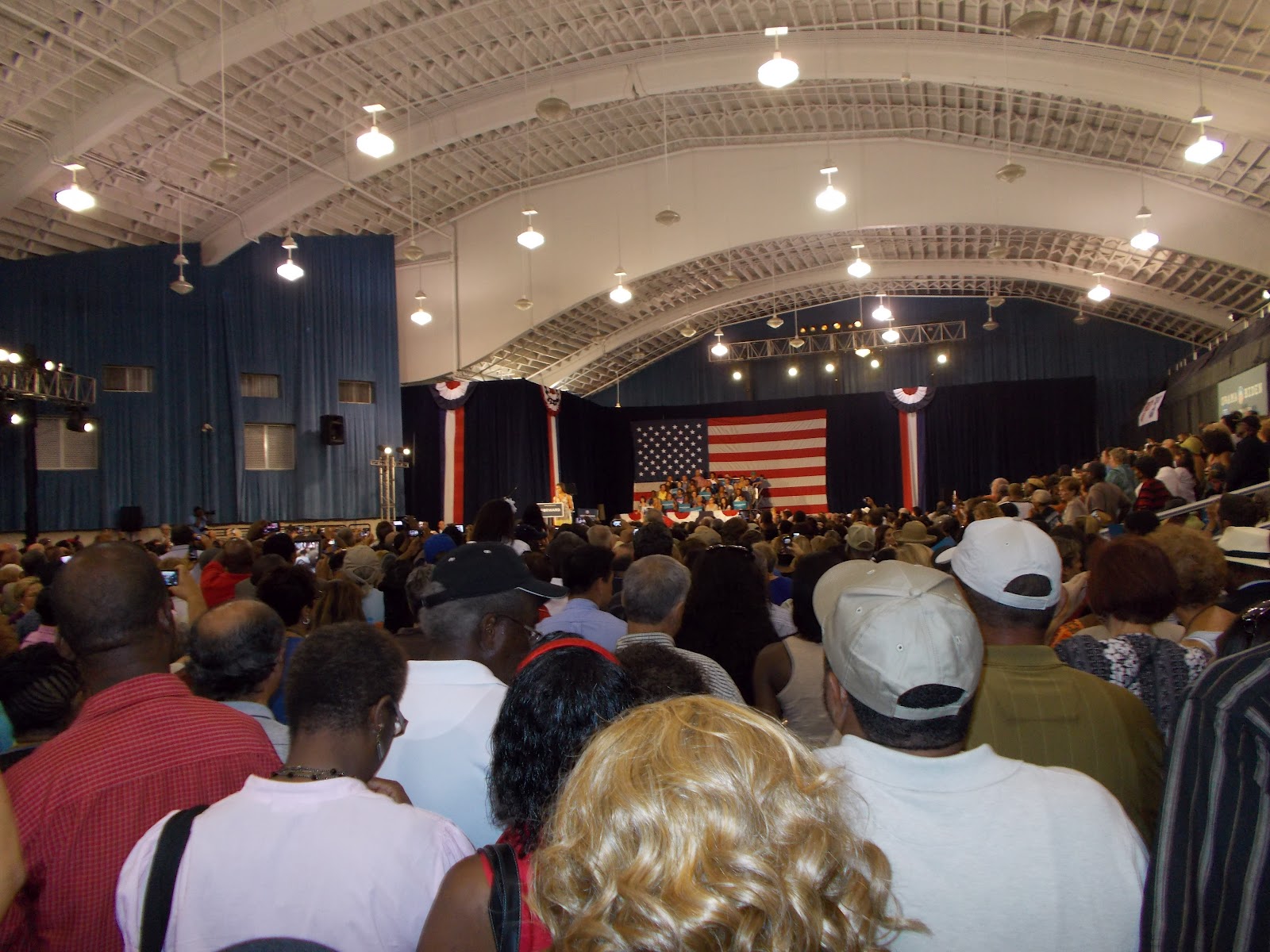
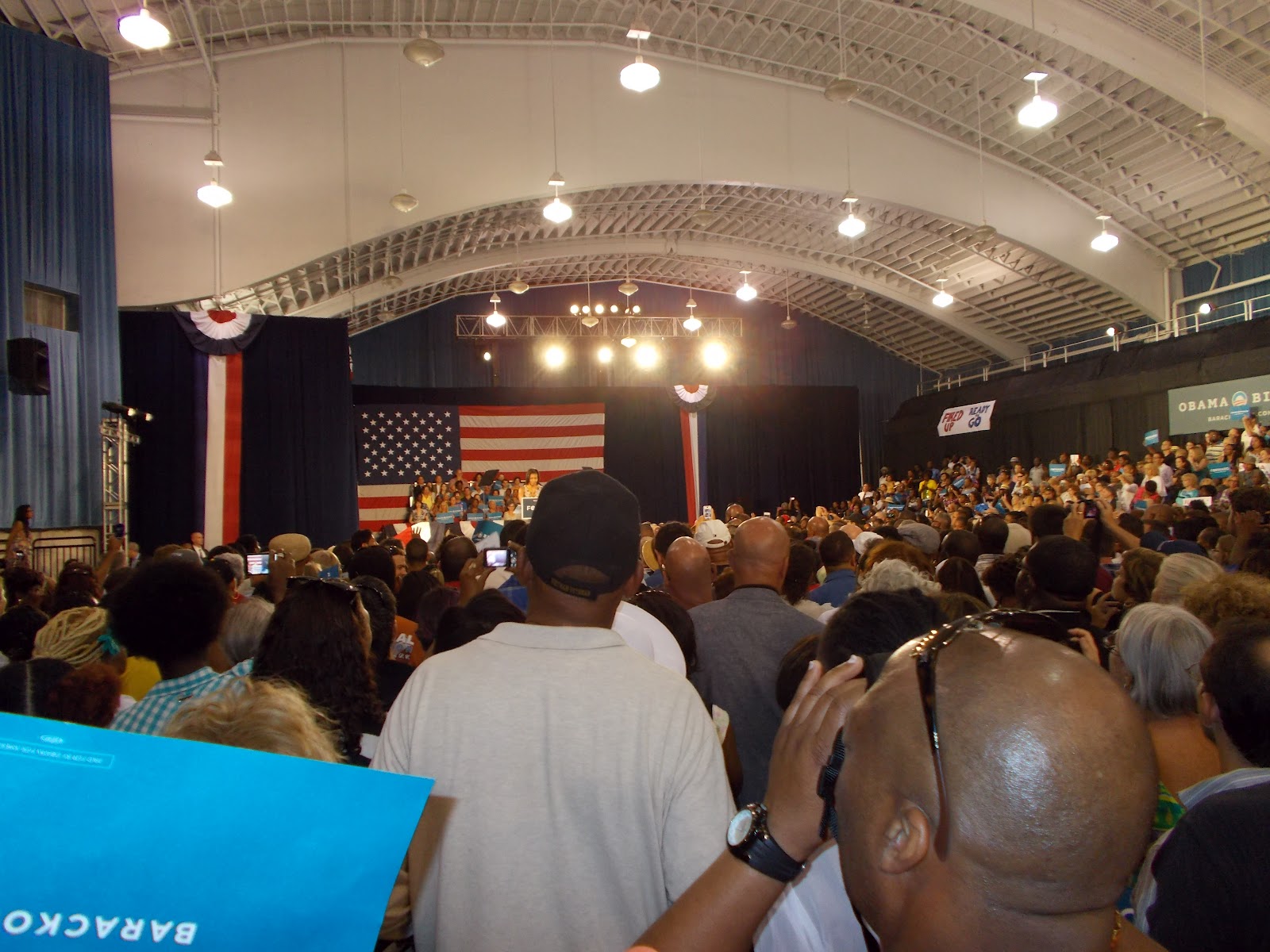
What follows are just some of the 218 pics I took once I was inside War Memorial Auditorium.

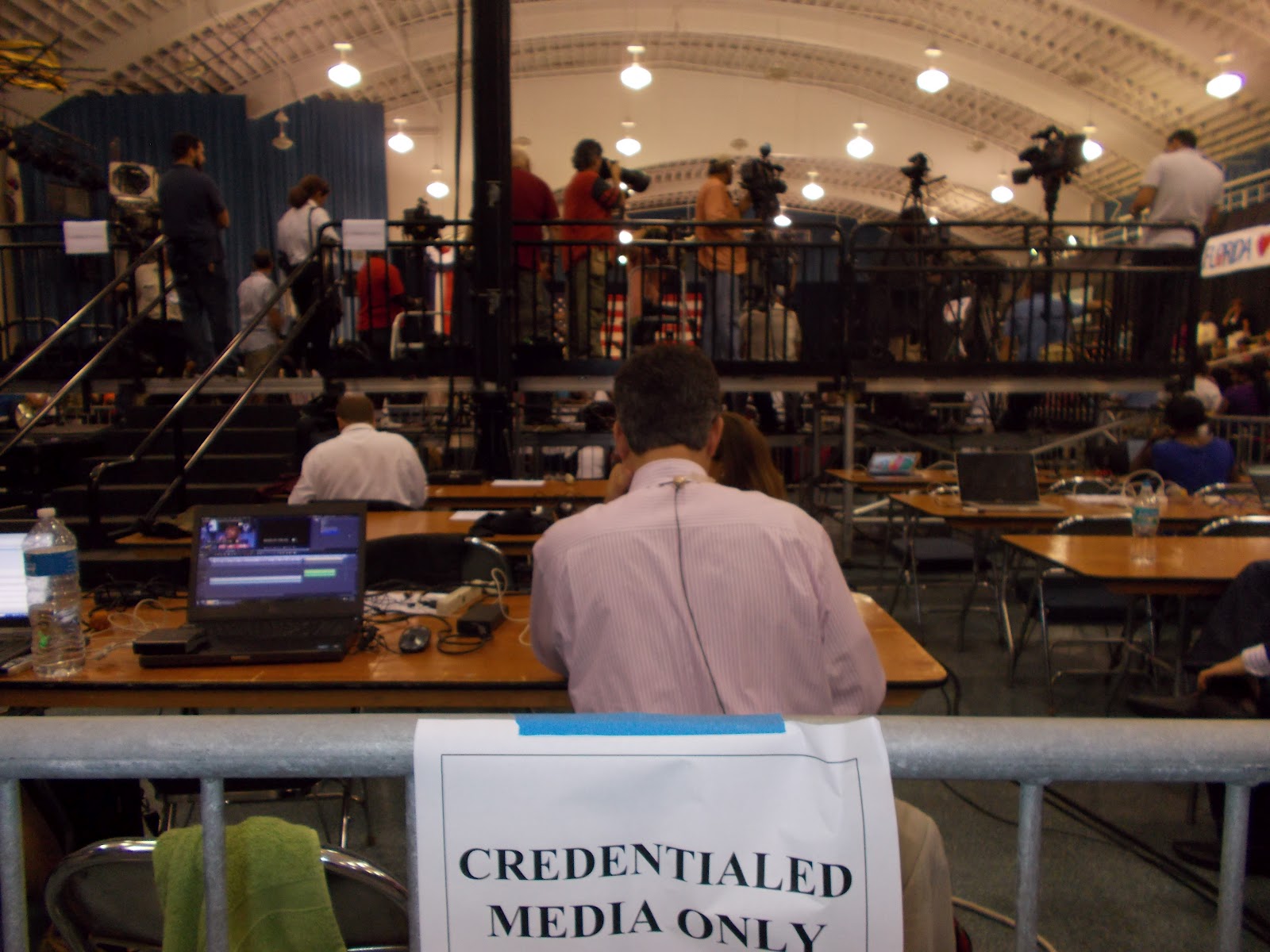
There was a time in my media career I would have been sitting on the other side of this barrier.

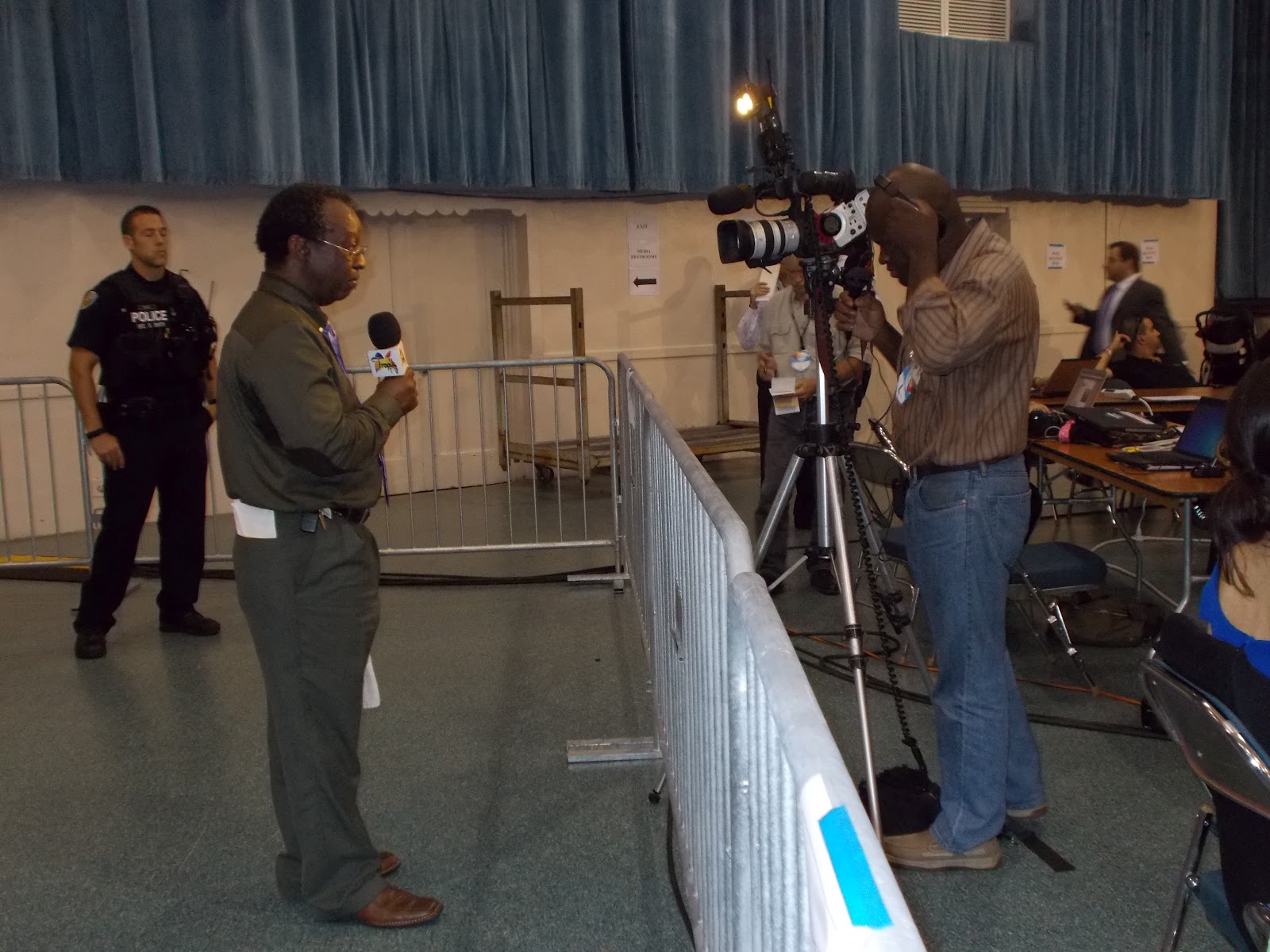
There was a time in my media career when  I would have been field producing segments like this.

Fort Lauderdale Mayor John P. “Jack” Seiler gets to say a few words to the crowd.
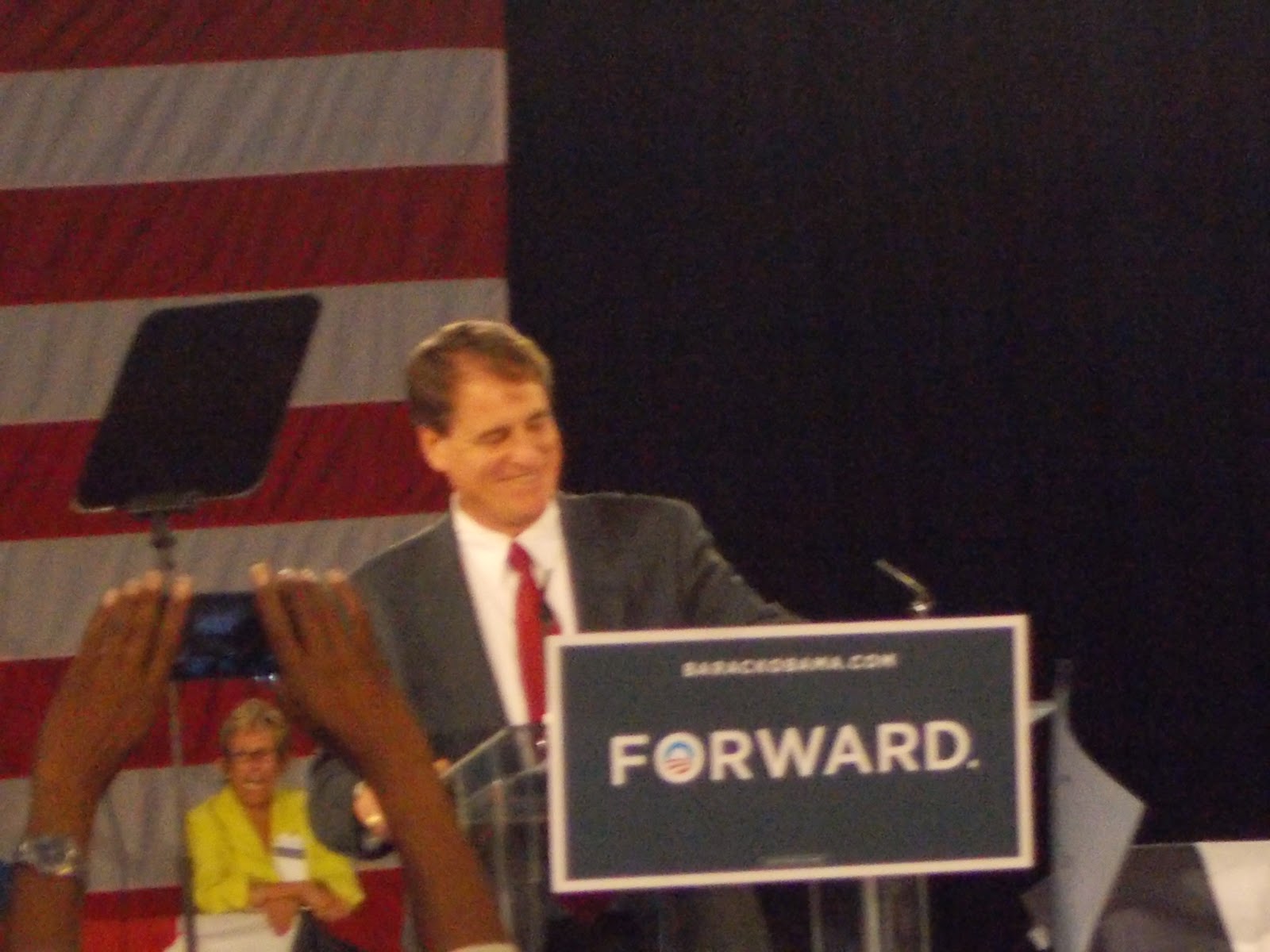
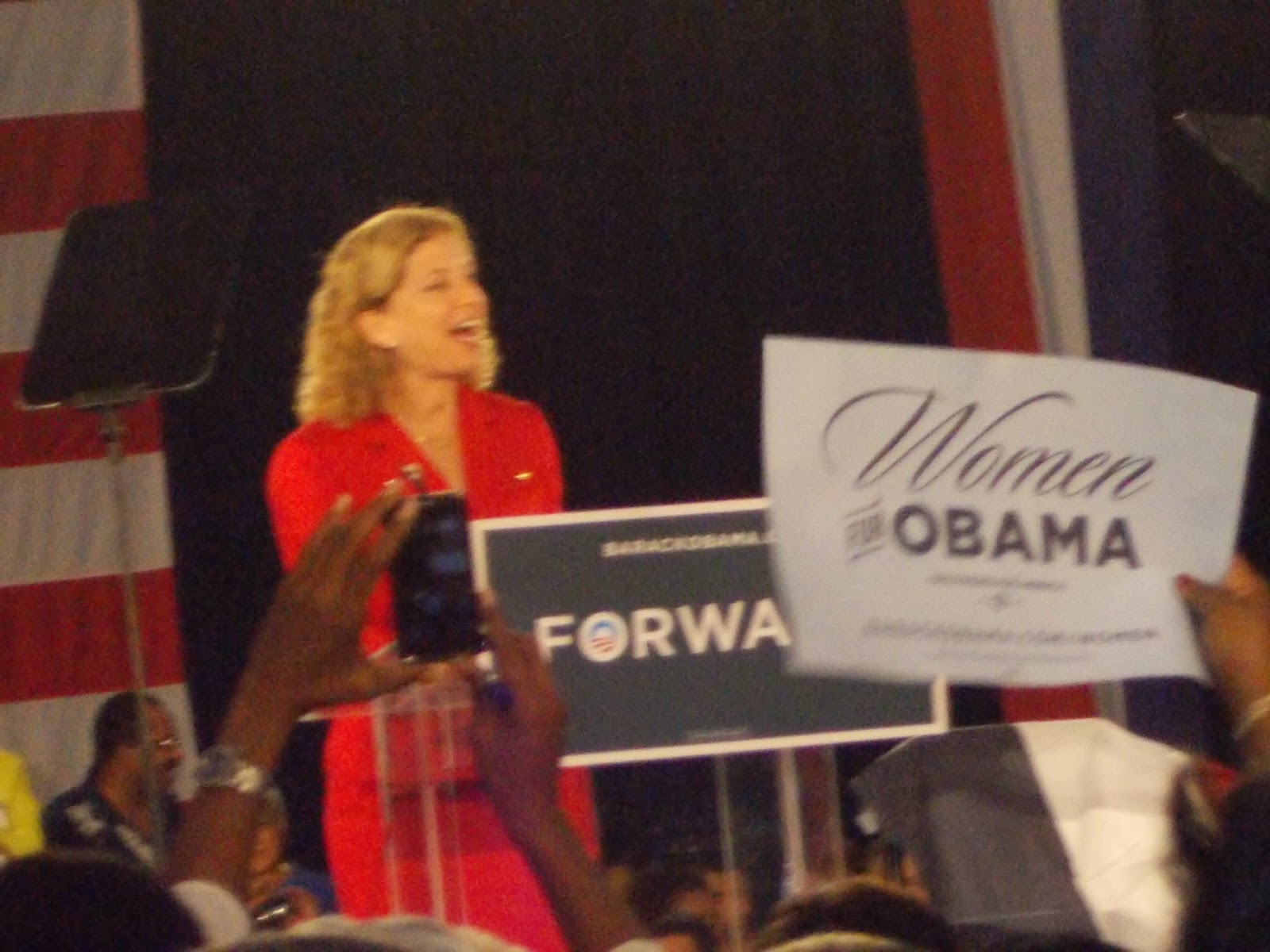
Several people gave pre-game show speeches. Debbie Wasserman Schultz received
the biggest round of applause. She is clearly well-loved by her constituents.

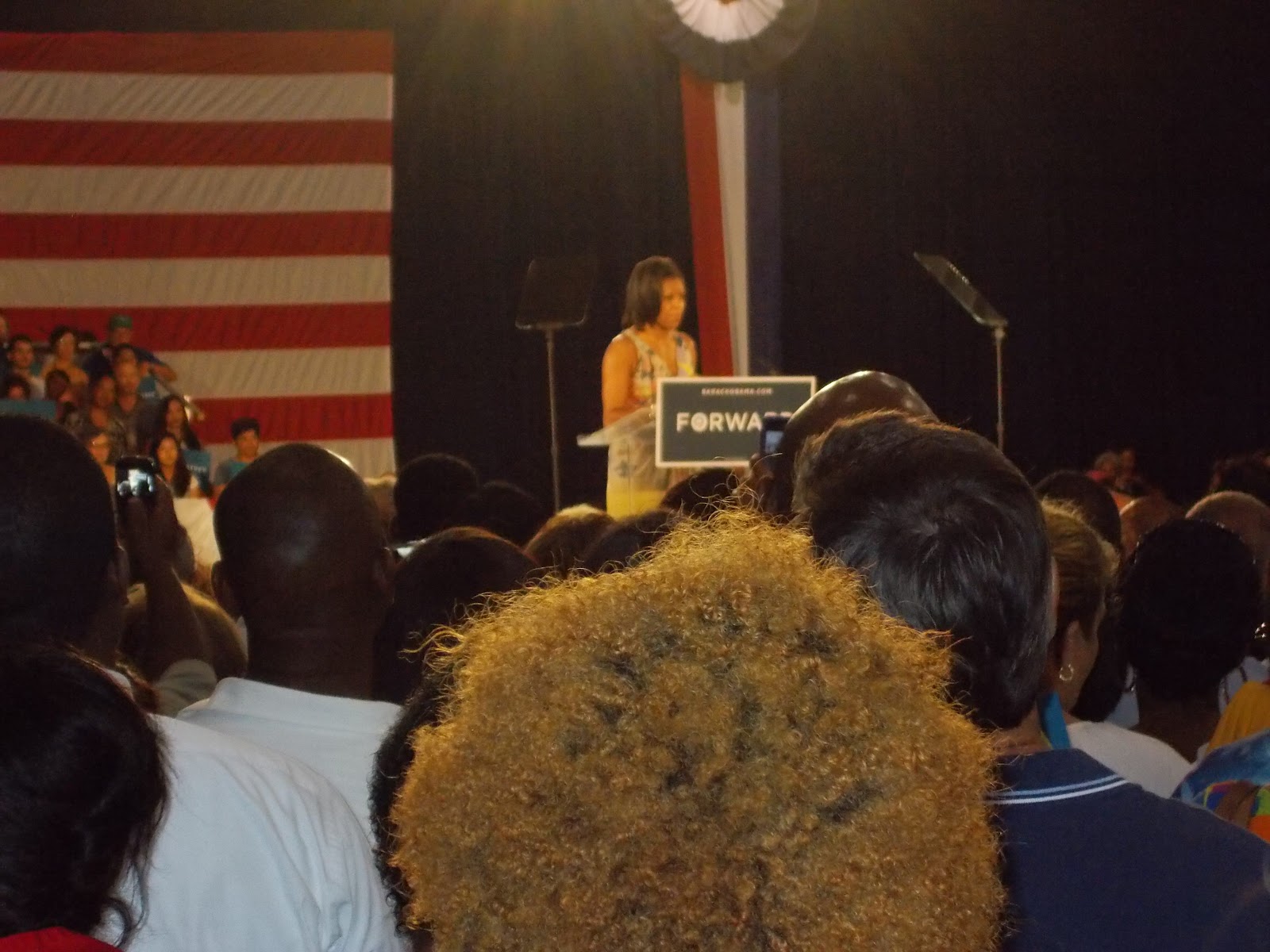
The First Lady must have been delayed at the last minute because I have never seen an intermission after the introductory speeches have already begun. These speeches are supposed to get the crowd revved up for the Main Act. However, they announced from the stage that there would be a 40 minute intermission before the First Lady would come out. That allowed the crowd to both mingle and push closer to the stage. Since it was starting to get a little tight where I was standing I decided to move back, which is why some of my pictures of The First Lady are less clear.

Intermission with an out-of-focus tee vee review stand in the background.

Doing a breathless for Spanish-speaking viewers during intermission.
This woman and the woman seated shared the same cameraman, but spoke different languages.

I finally got pushed back behind the tee vee review stand and had to move to the side to have any view of the stage at all.
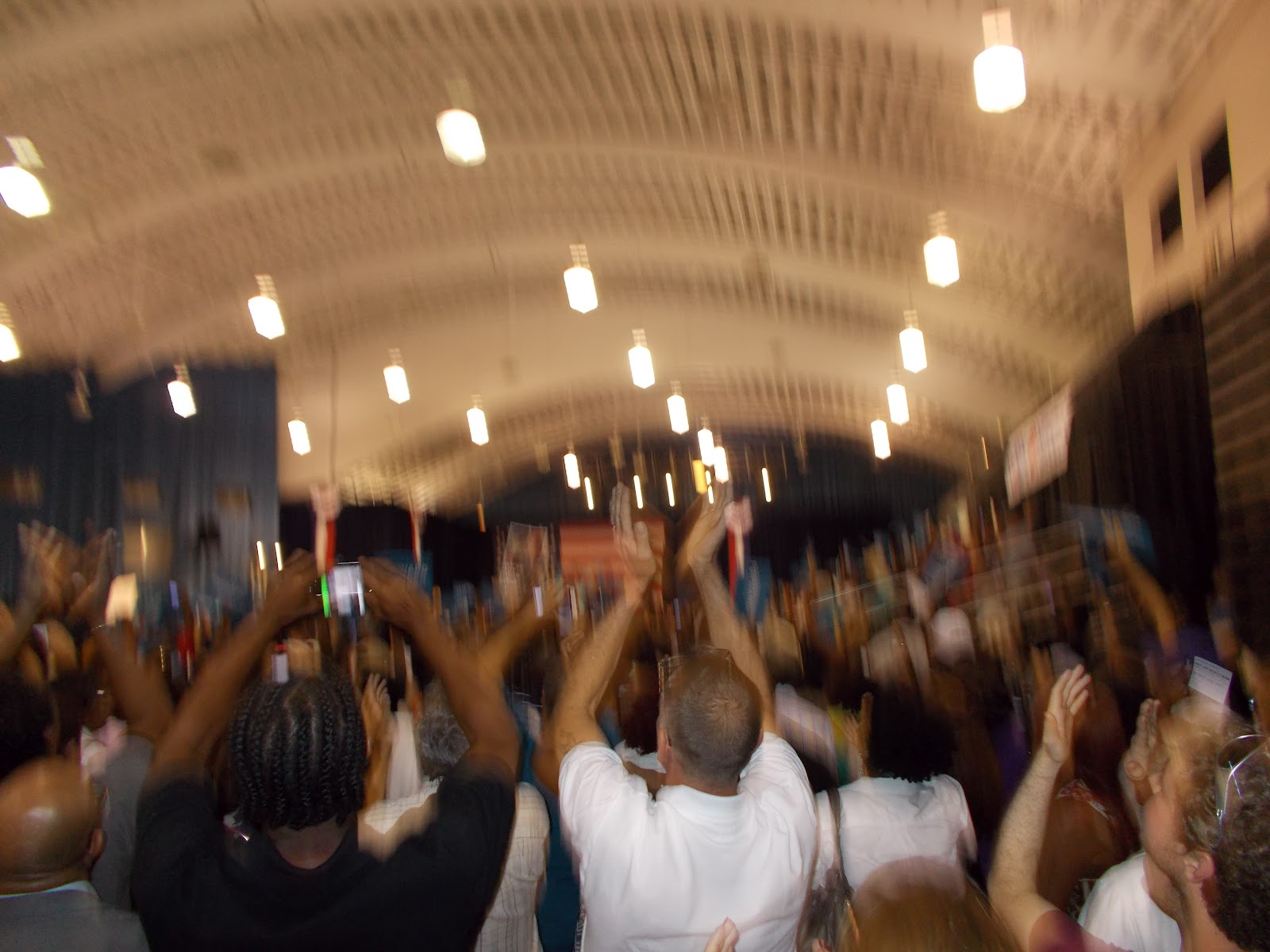
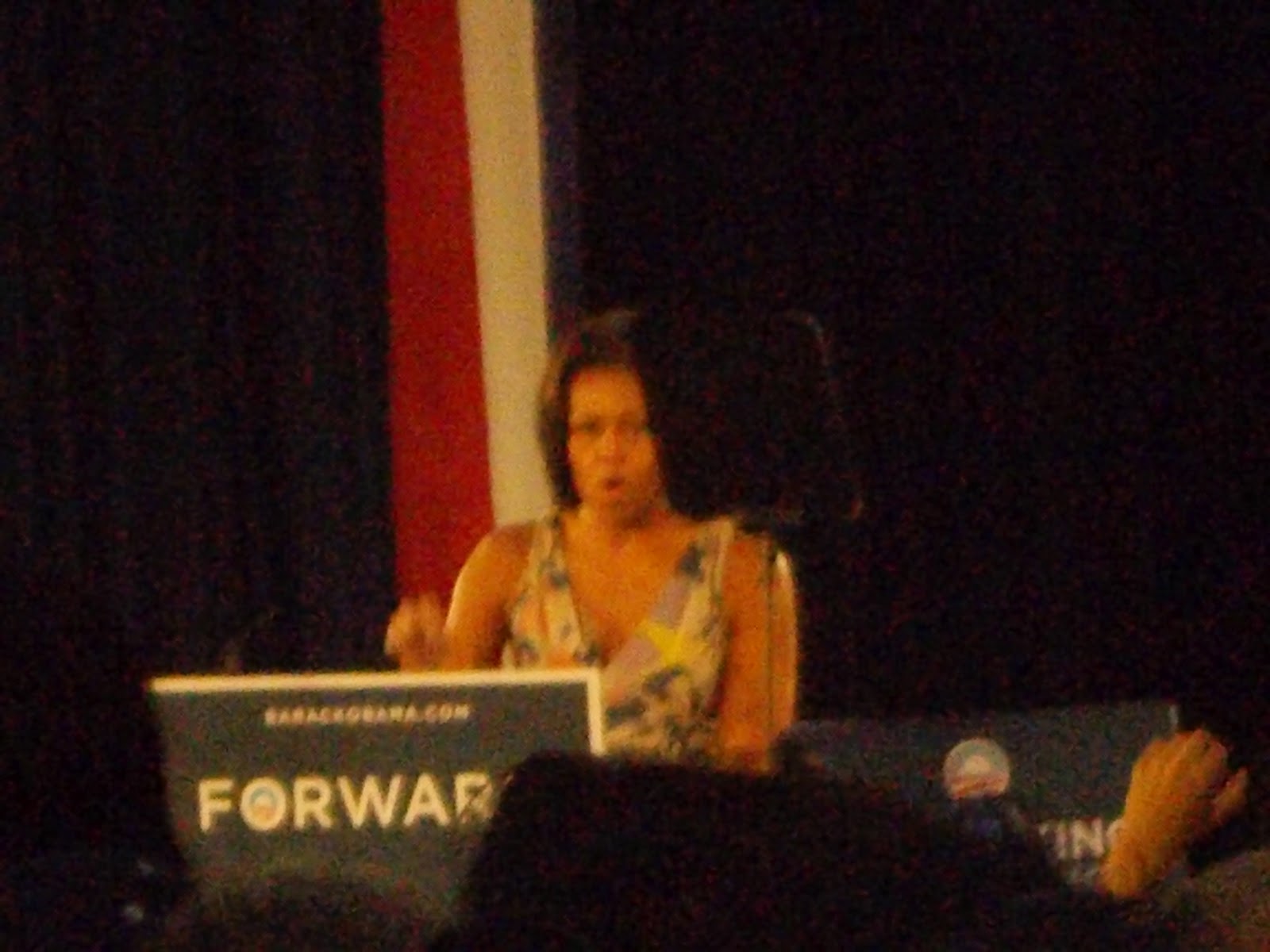
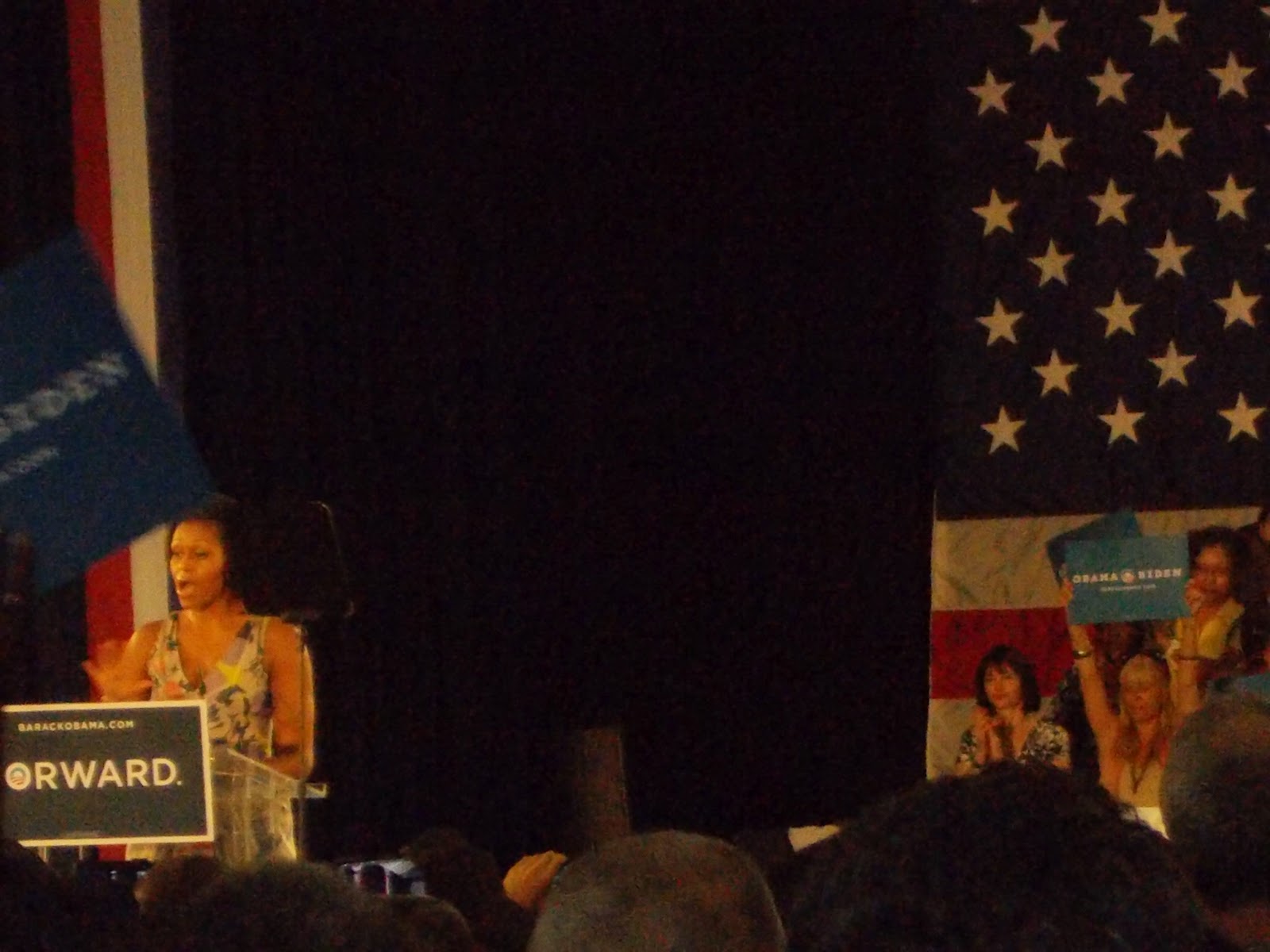
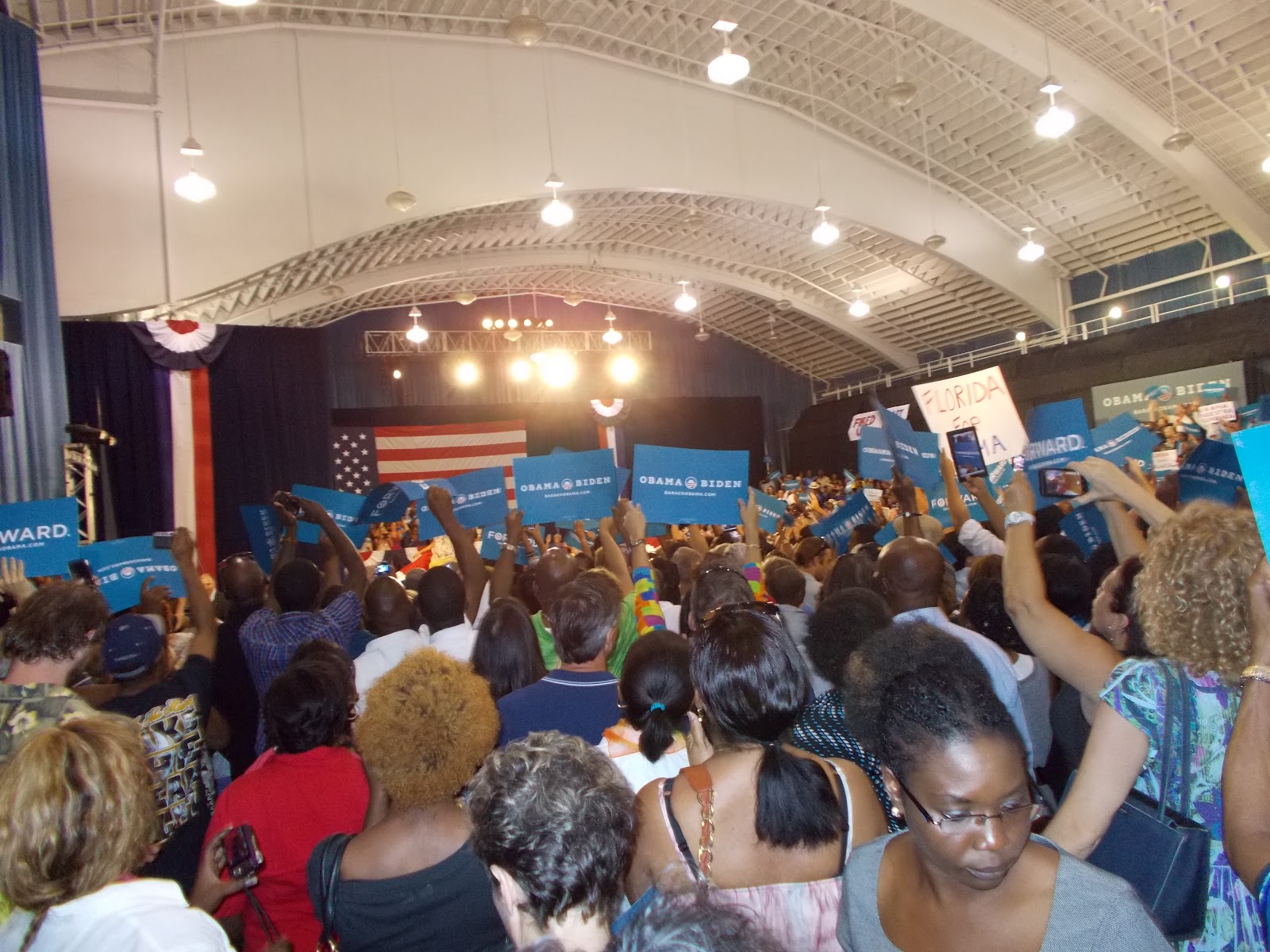
The First Lady didn’t need warm-up acts. As soon as she was announced the crowd went nuts!!!

I have far too many pics like this. No sooner would I line up a shot, than someone in front of me held up their hands.

I was able to move a bit closer and had a better angle.

When First Lady Michelle finished her speech the crowd went crazy, shouting “Four! More!! Years!!! Four! More!! Years!!!” “

Then Mrs. Obama came down to the ‘rope line’ metal barriers and talked to people personally.

There was such a crush to get close to her, I couldn’t even get close enough to get a picture.

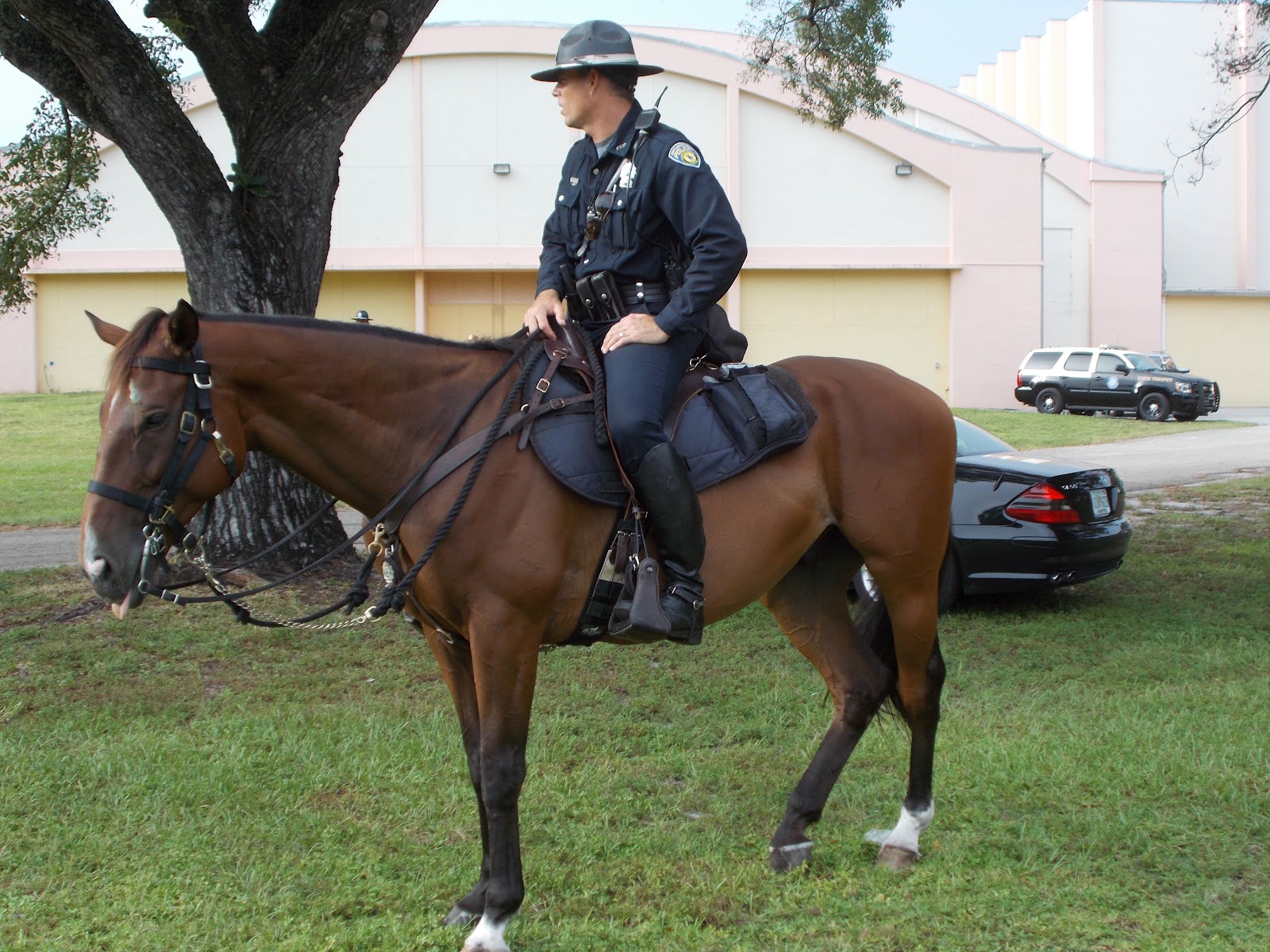
One of the officers who kept as all safe.

Seeing a First Lady was a heady experience. People left smiling, laughing and singing. It took forever to get out of the parking lots, but everyone was in such a good mood there was none of the typical jockeying for position one might see leaving a sporting event, for example.

All in all, it was a great experience, although a hot one.

A Charles Avenue Love Story ► Unpacking Coconut Grove ► Part Five

The Charlotte Jane Memorial Park Cemetery

On the corner of Charles Avenue and South Douglas Rd., on the opposite end of the street from the E.W.F. Stirrup House, is the Charlotte Jane Memorial Park Cemetery. It dates back to the early 1900s and at one time — and for a long time — was the only place in Coconut Grove where Black folk could consecrate and bury their dead.

The entrance to the Charlotte Jane Memorial Park Cemetery. 180 degree panorama by author.

Charlotte Jane was E.W.F. Stirrup’s childhood sweetheart. I know
almost nothing about her, save for this: In the 1870s or 1880s Ebenezer
Woodbury Franklin Stirrup made his first pilgrimage to the United
States. He came up through Key West, where he stopped for a while and apprenticed as a carpenter with an uncle. This is the skill he would eventually utilize in Coconut Grove to great effect, building more than 100 houses in the area, including his own show piece at the other end of Charles Avenue. Stirrup reportedly spent 10 years working for his uncle in Key West before he decided he would head north to see what life was like on the mainland. However, before he did he went back to the Bahamas to marry his childhood sweetheart. Then he brought her
back with him, eventually settling in Cutler Bay for a time.

Photo by Stefan Kokemüller
From Wikipedia Commons

I try to imagine that trip, which Mr. Stirrup took at least 3 times in his life. It could not have been easy. The trip from the Bahamas to Key West was obviously an ocean journey. At one time — and for a long time — Key West was the largest city in Florida and remained unconnected to the mainland until 1912, when Henry Flagler completed his railroad. Consequently the journey from Key West to the mainland was another ocean voyage. It would have been far easier, in those times, to sail directly to Cutler Bay. There would have been few roads, if any. Southern Florida was swampland, overgrown with mangrove, pine, oak and banyan trees, not to mention alligators and snakes. Traversing the lower end of the Florida peninsula by land would have been a harrowing and nearly impossible journey.

E.W.F. and Charlotte Jane Stirrup first settled in Cutler Bay, about 13 miles from where they eventually settled. For
whatever reason Cutler Bay was not to his liking and he decided to move north to
the nascent community of Coconut Grove, where he eventually settled and
built his beautiful house and more than 100 others.

The Charlotte Jane Memorial Park Cemetery was originally known by the more generic names of Coconut Grove Cemetery or Grove’s Bahamian Cemetery. It opened in 1904, or 1906 (both dates are cited in various places) and was originally owned by the city (despite what I stated elsewhere). According to the USGenWeb Archives, Mary Washburn writes:

In 1913, the cemetery property was purchased by five families for the sum of $140.00.  The families that purchased the property are Burrow, Higgs, Reddick, Ross and the E.W.F. Stirrup families.


The first burial was Joseph Mayor he was buried as Daniel Anderson.  Daniel Anderson and his wife Catherine Anderson were the founders of the Christ Episcopal Church.


Also buried here is Capt. John Sweeting, developer and commercial fisherman who Settled the ground now know as Charlotte Jane Memorial Park Cemetery.

There has long been a rumour to the effect that Michael Jackson filmed the cemetery scenes to “Thriller” at the Charlotte Jane Memorial Park Cemetery and you’ll find many references on the innertubes citing that. This is totally incorrect. WikiAnswers states:

Contrary to rumors, the cemetery scenes of Thriller were actually filmed on a soundstage and not at an actual cemetery. This fact is clearly proven by watching the DVD release of Thriller. During the wide-shot of the cemetery set as Michael and Ola walk past, various lighting and rigs can be seen over head.

Again, the cemetery sequence was NOT filmed in a real cemetery.

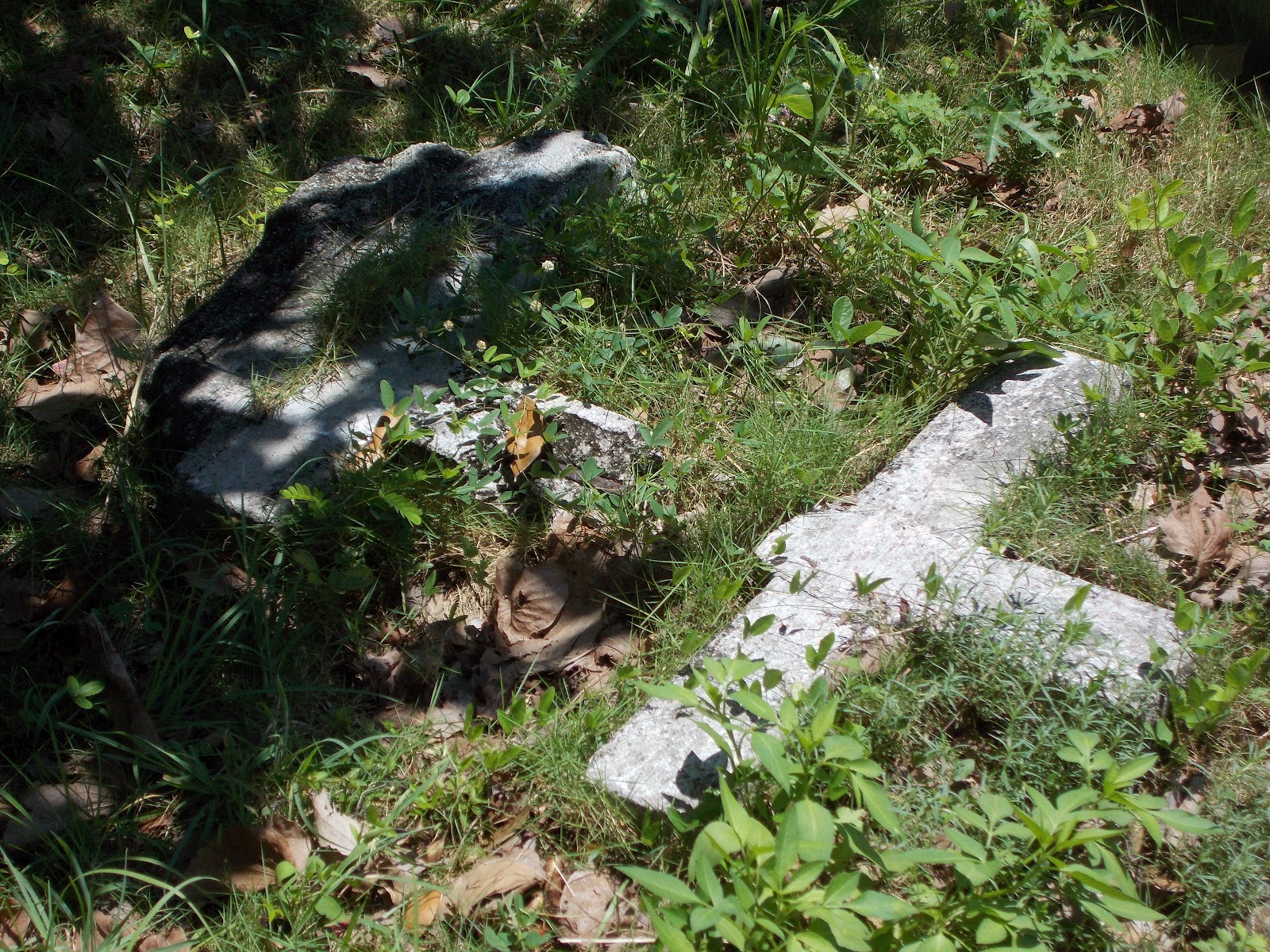
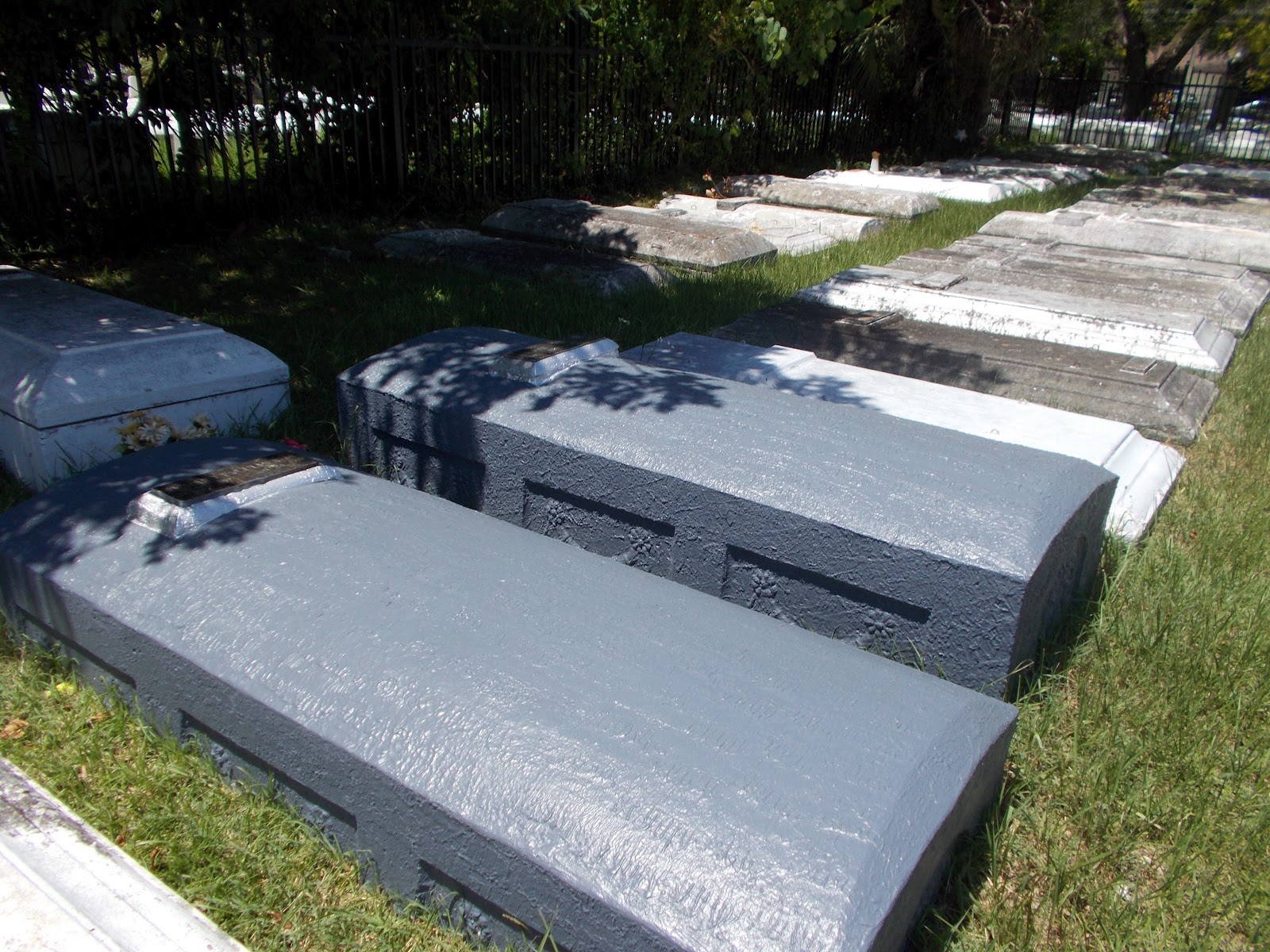
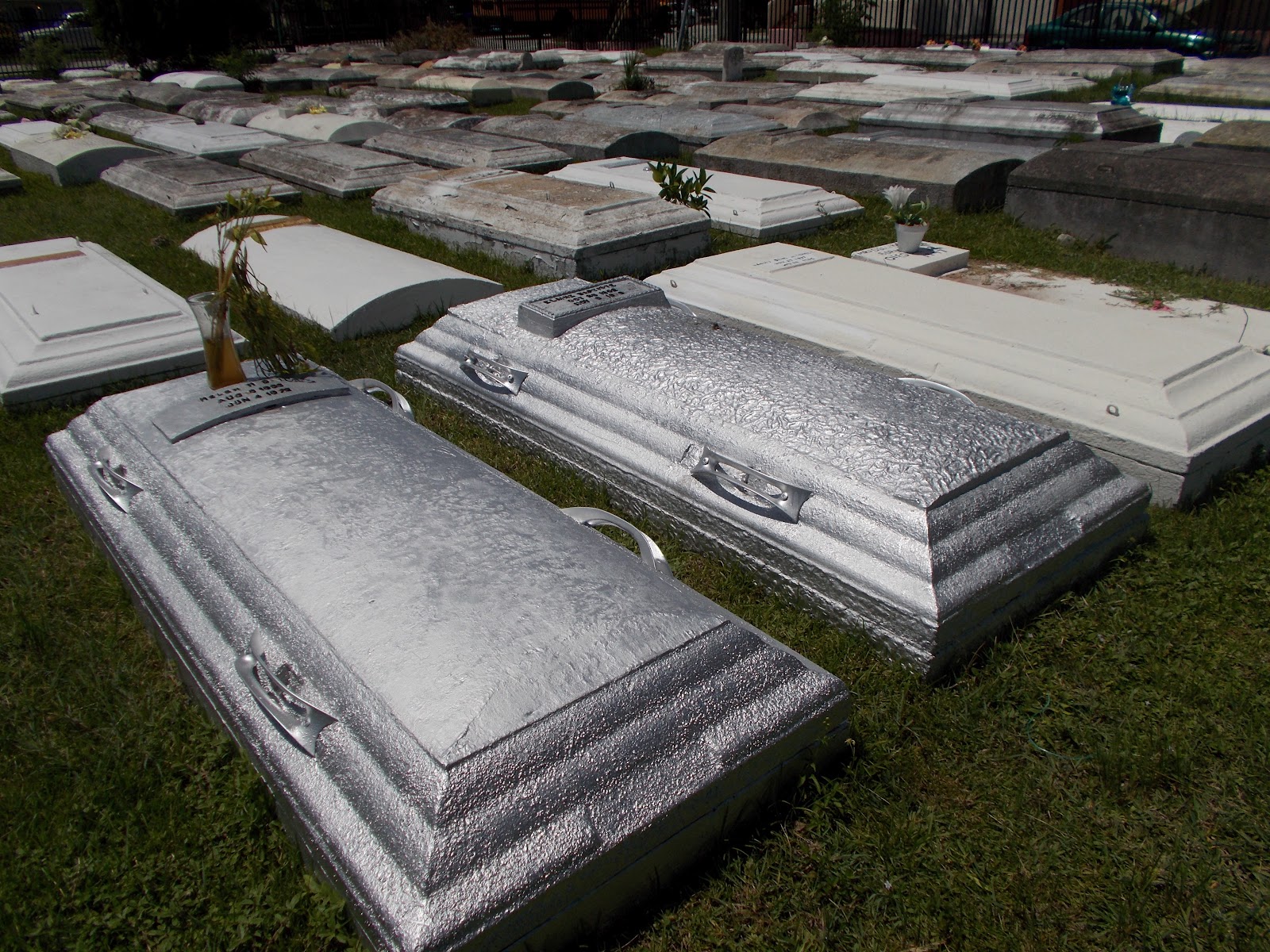
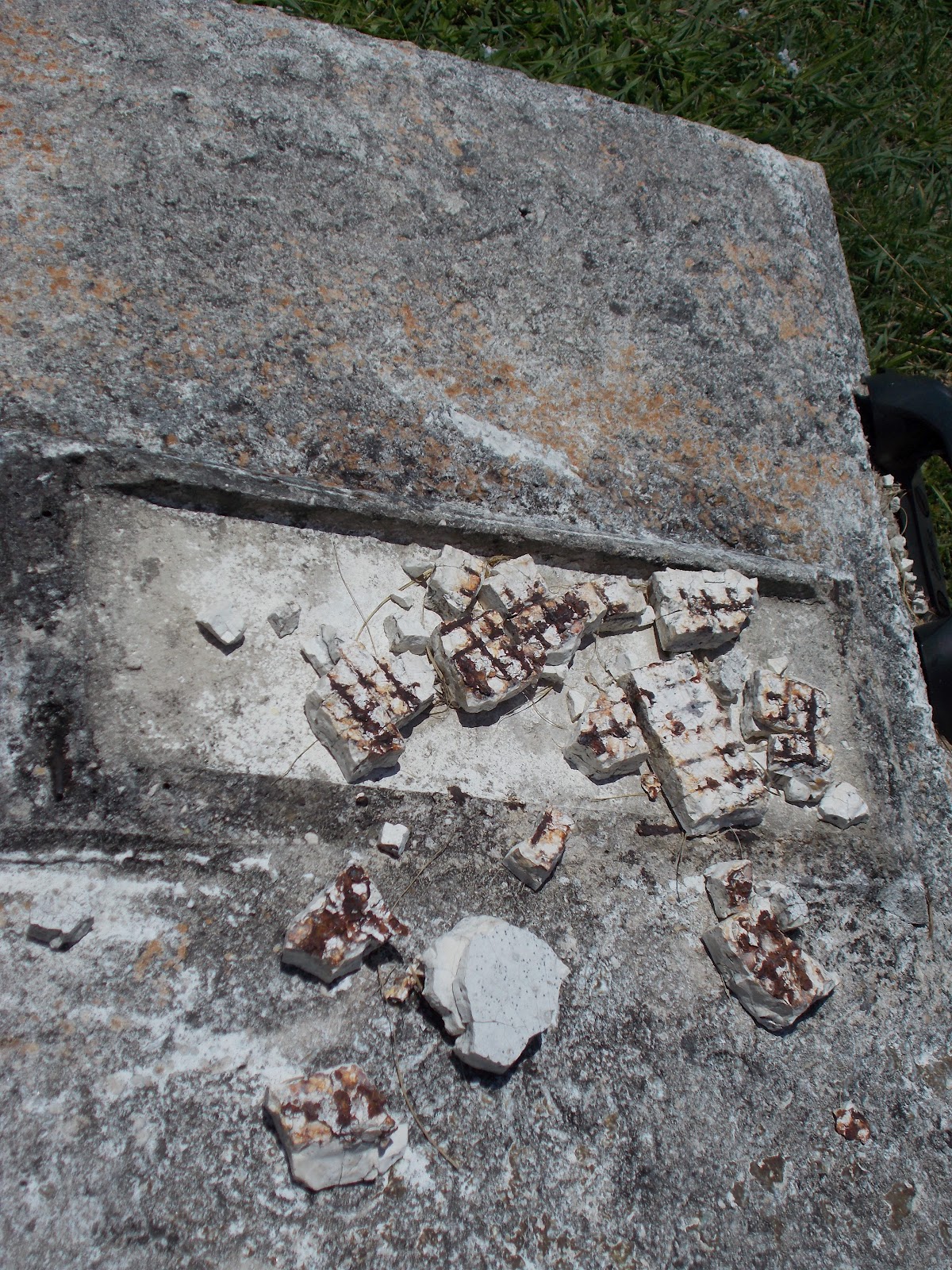
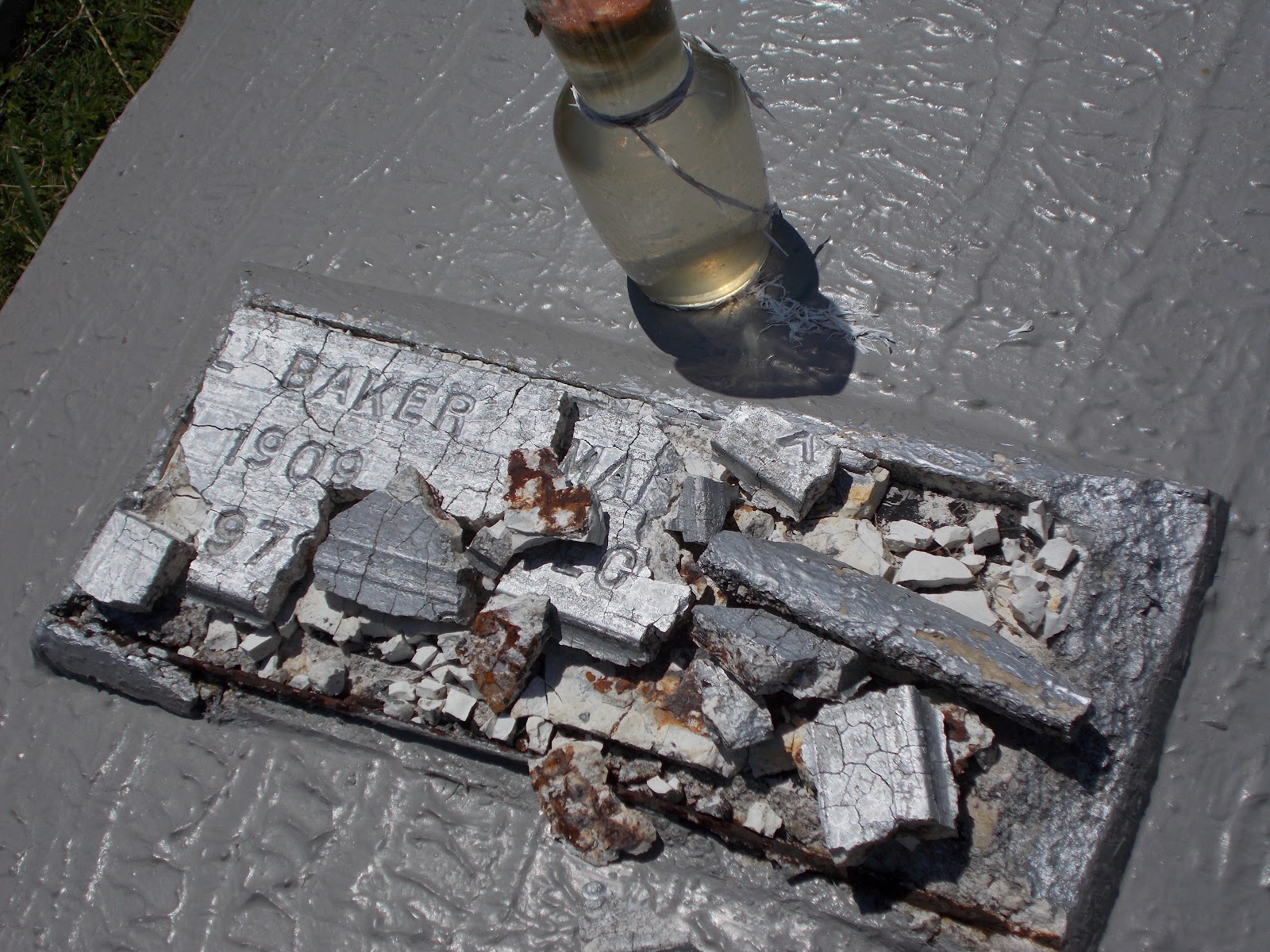
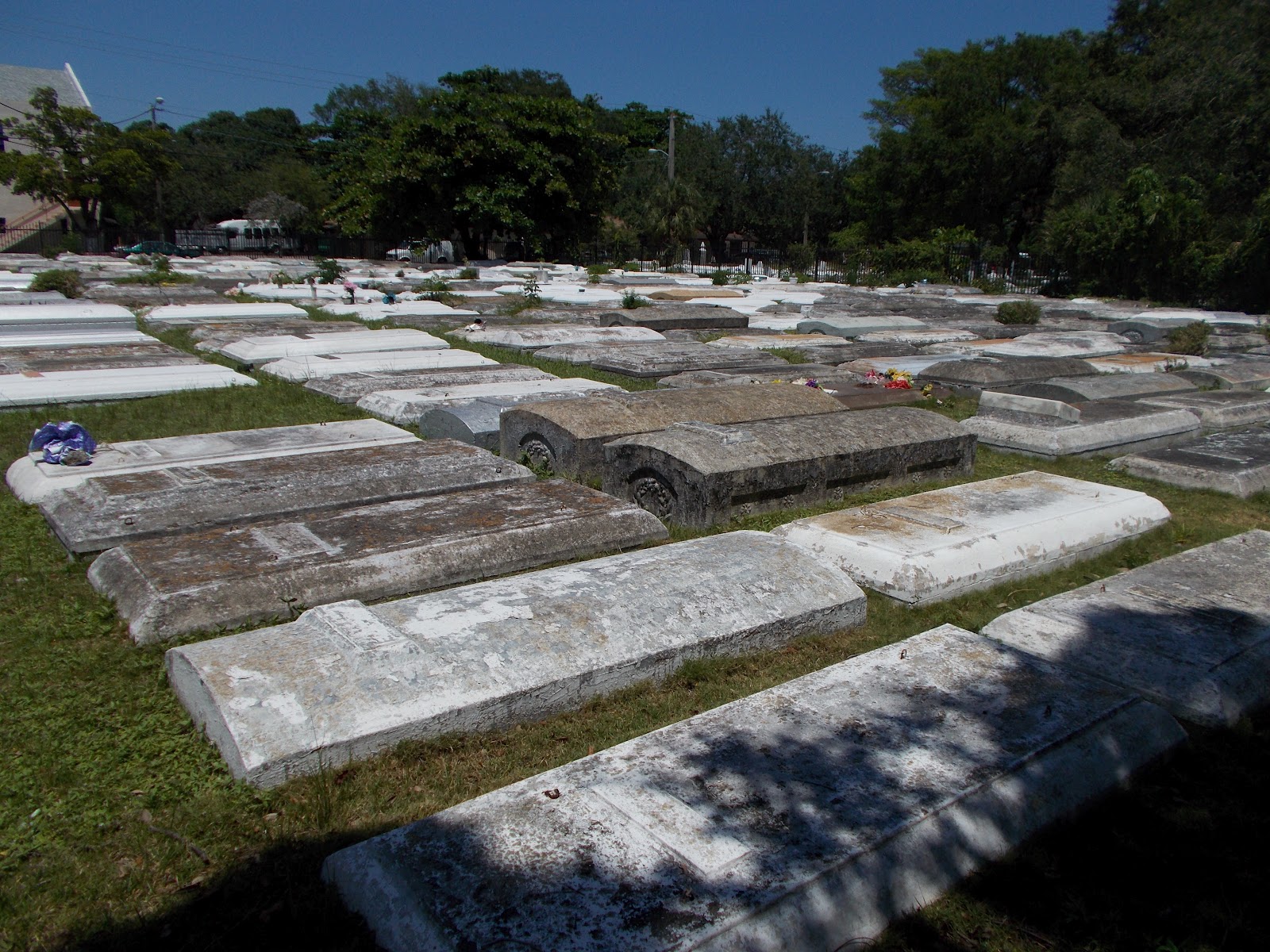
No matter because the Charlotte Jane Memorial Park Cemetery is a lovely little cemetery, with a long history of its own. In Florida, as in New Orleans, caskets cannot be buried below ground because of the water table. Unlike the New Orleans’ crypts you are used to seeing, the graves at the Charlotte Jane Memorial Park Cemetery are simple and uncomplicated, paralleling the economic realities of a Black community in 20th Century ‘Merka.

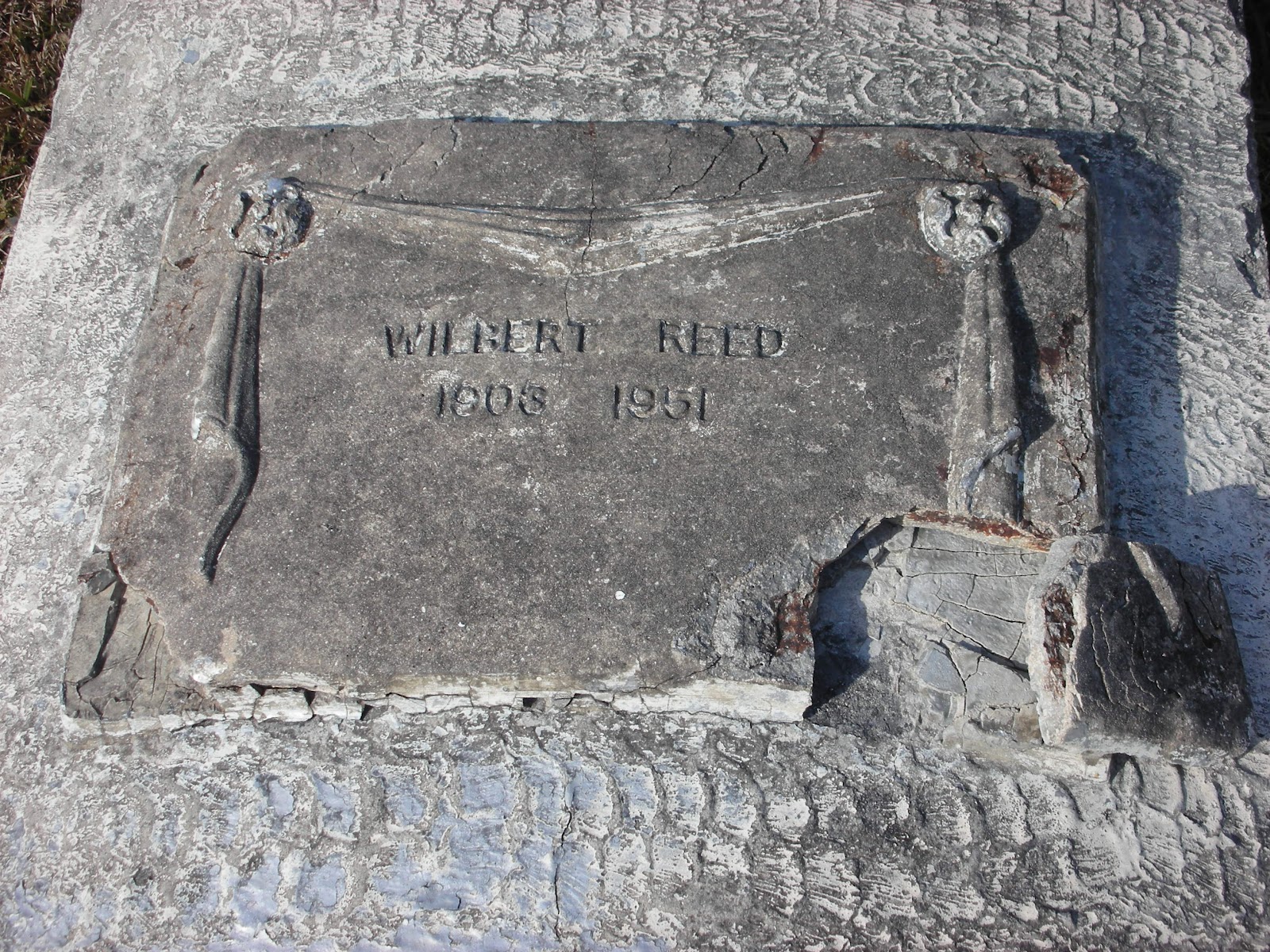
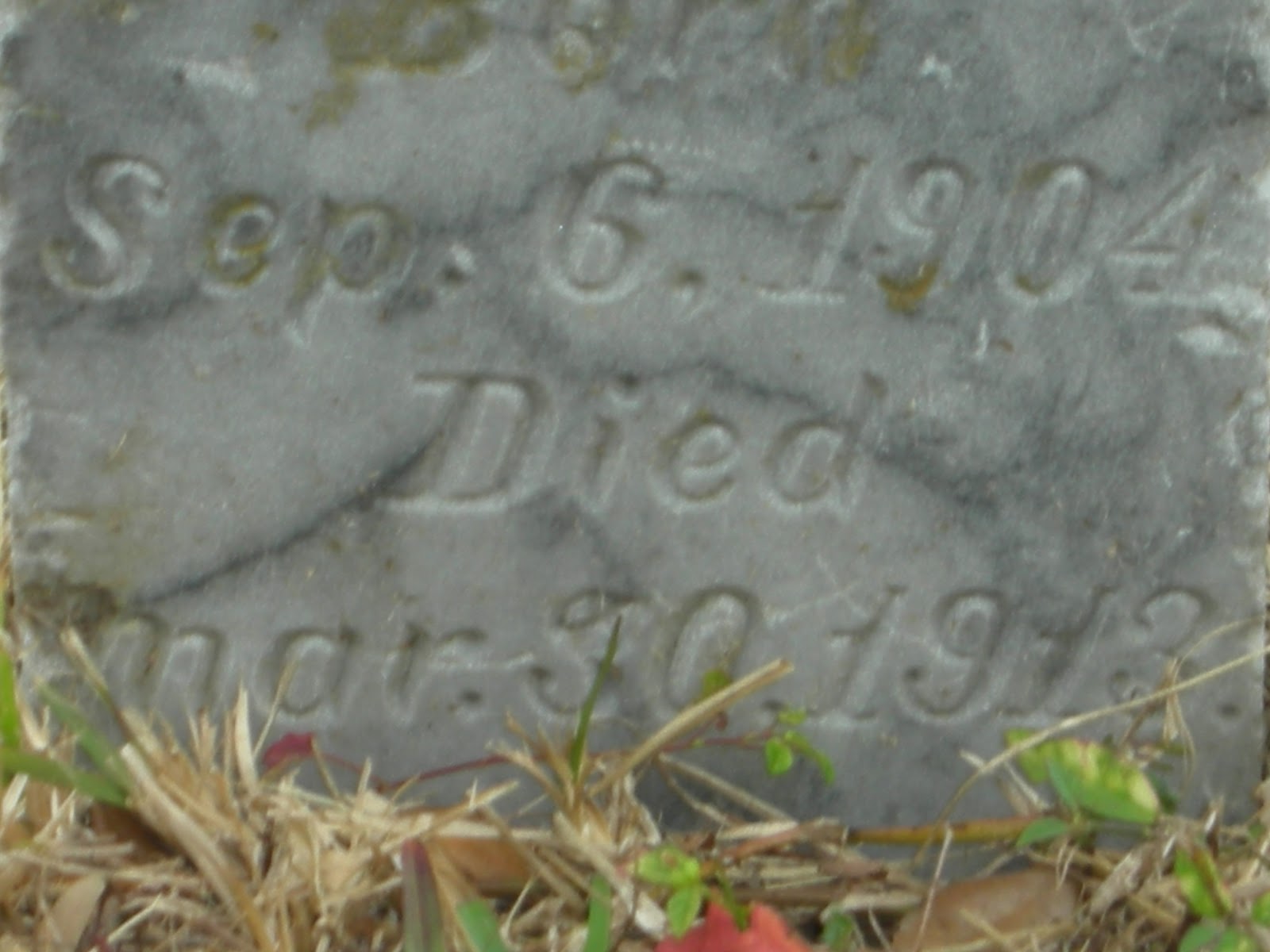
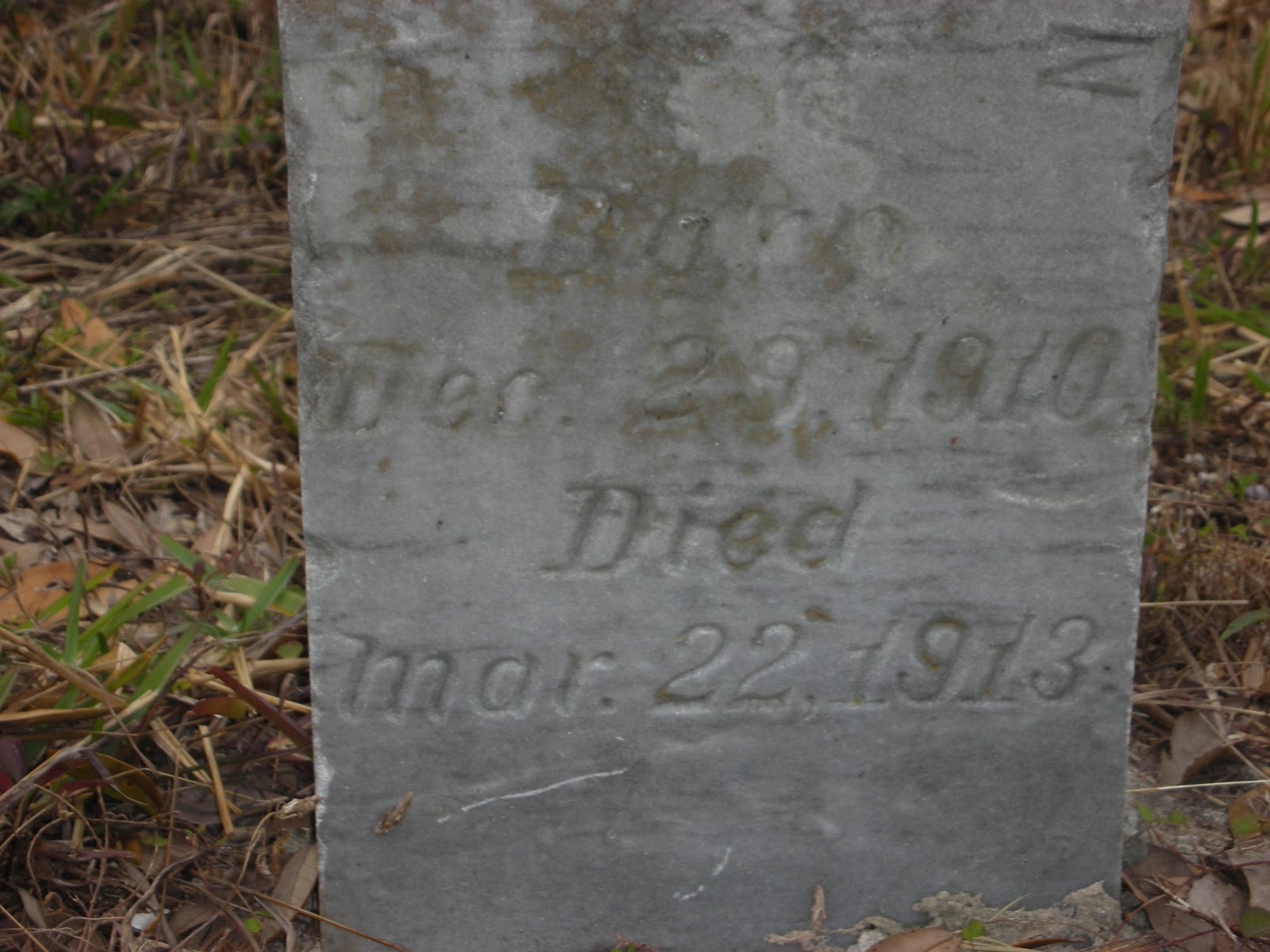
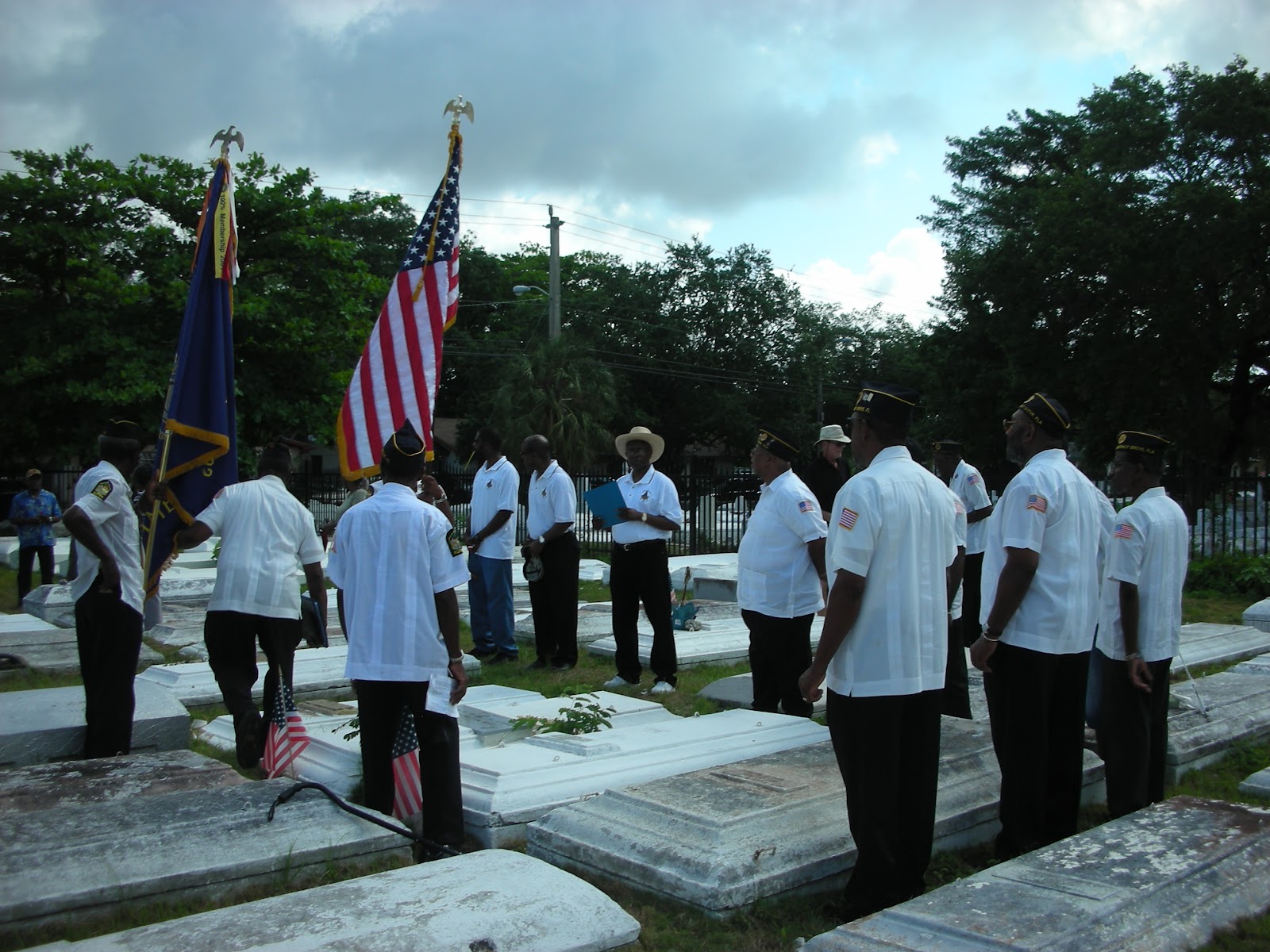
In the years since I have been visiting Charles Avenue I have taken thousands of pictures of the Charlotte Jane Memorial Park Cemetery, some of which I’d like to share with you.

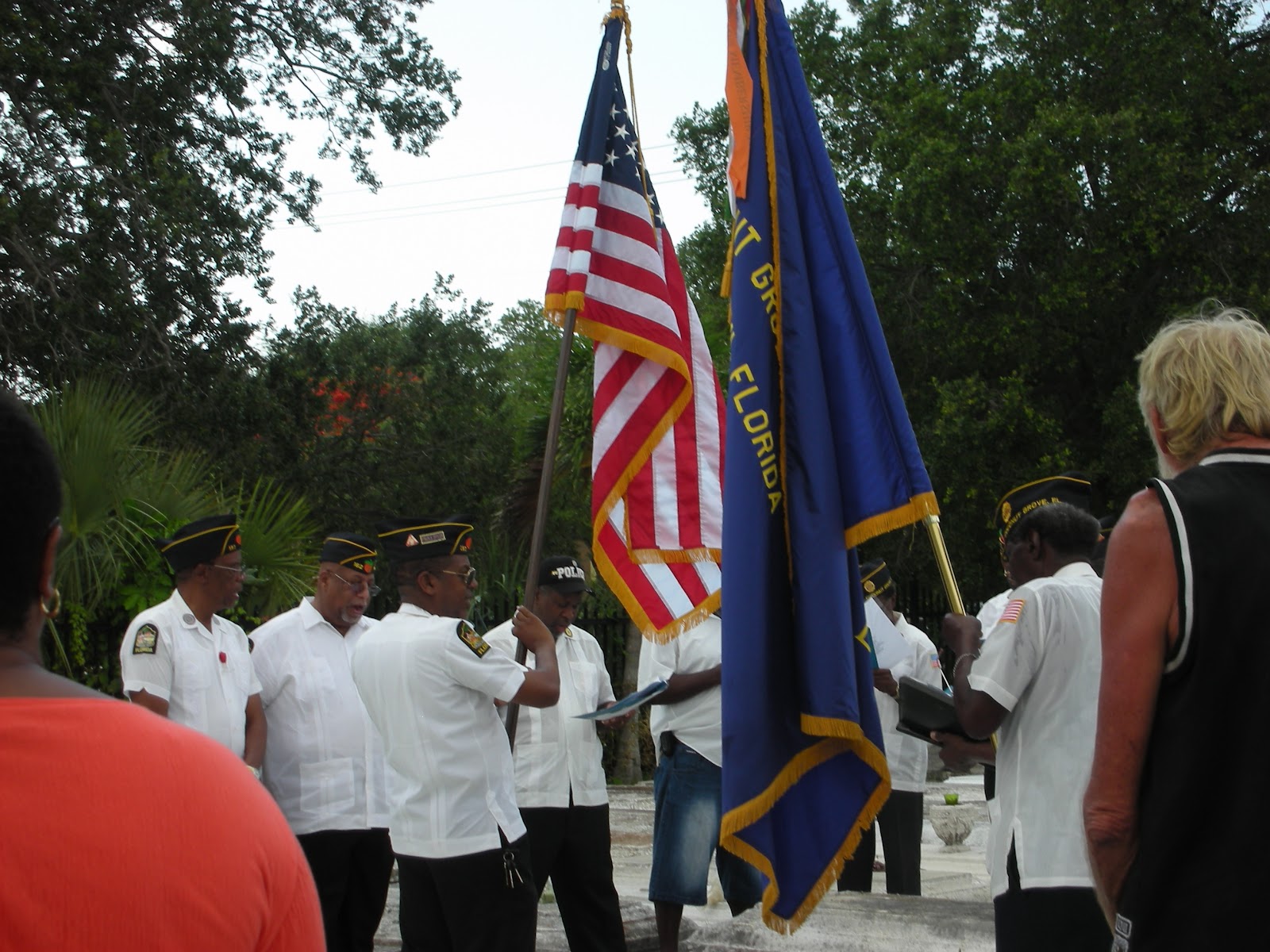
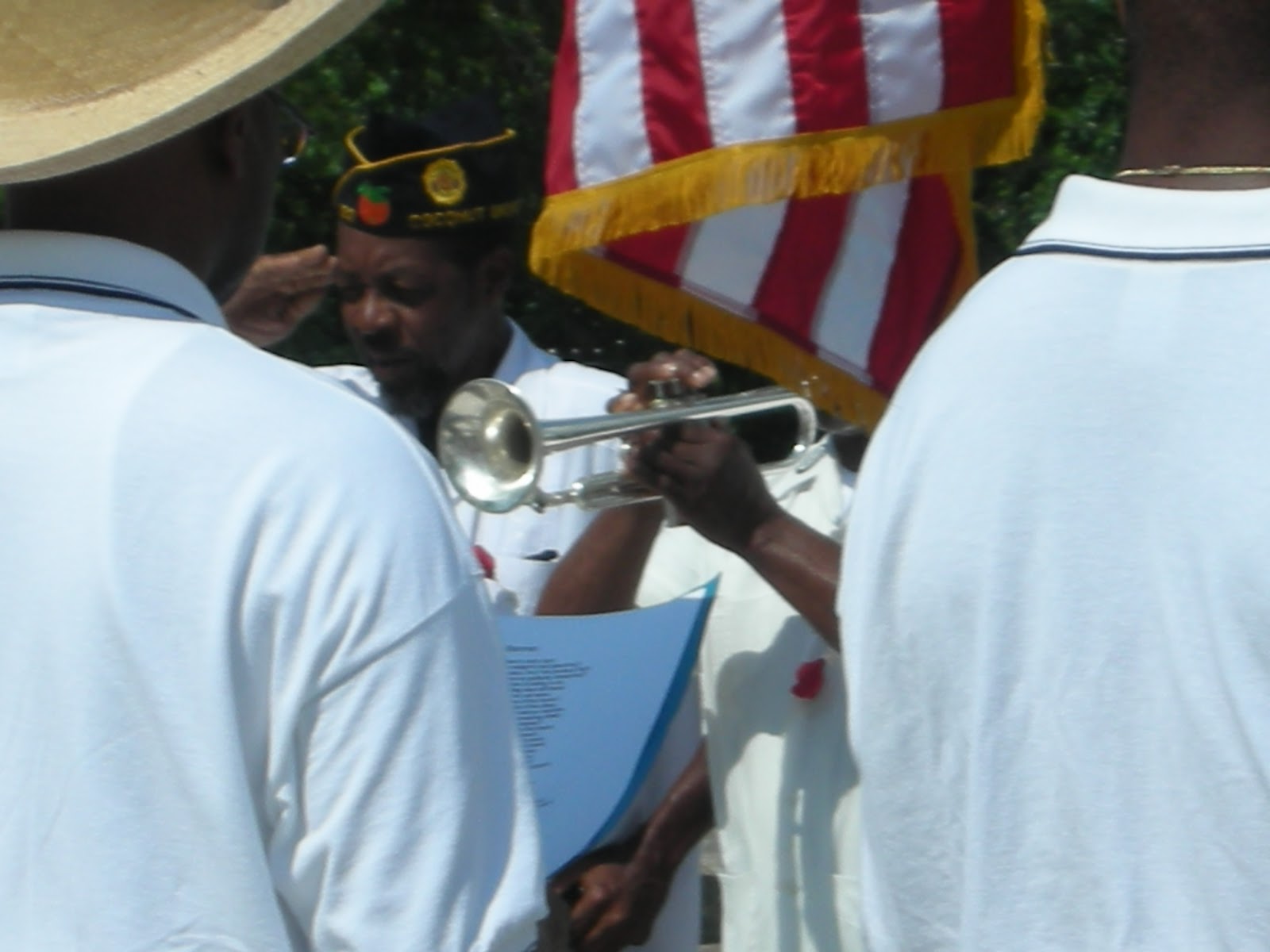
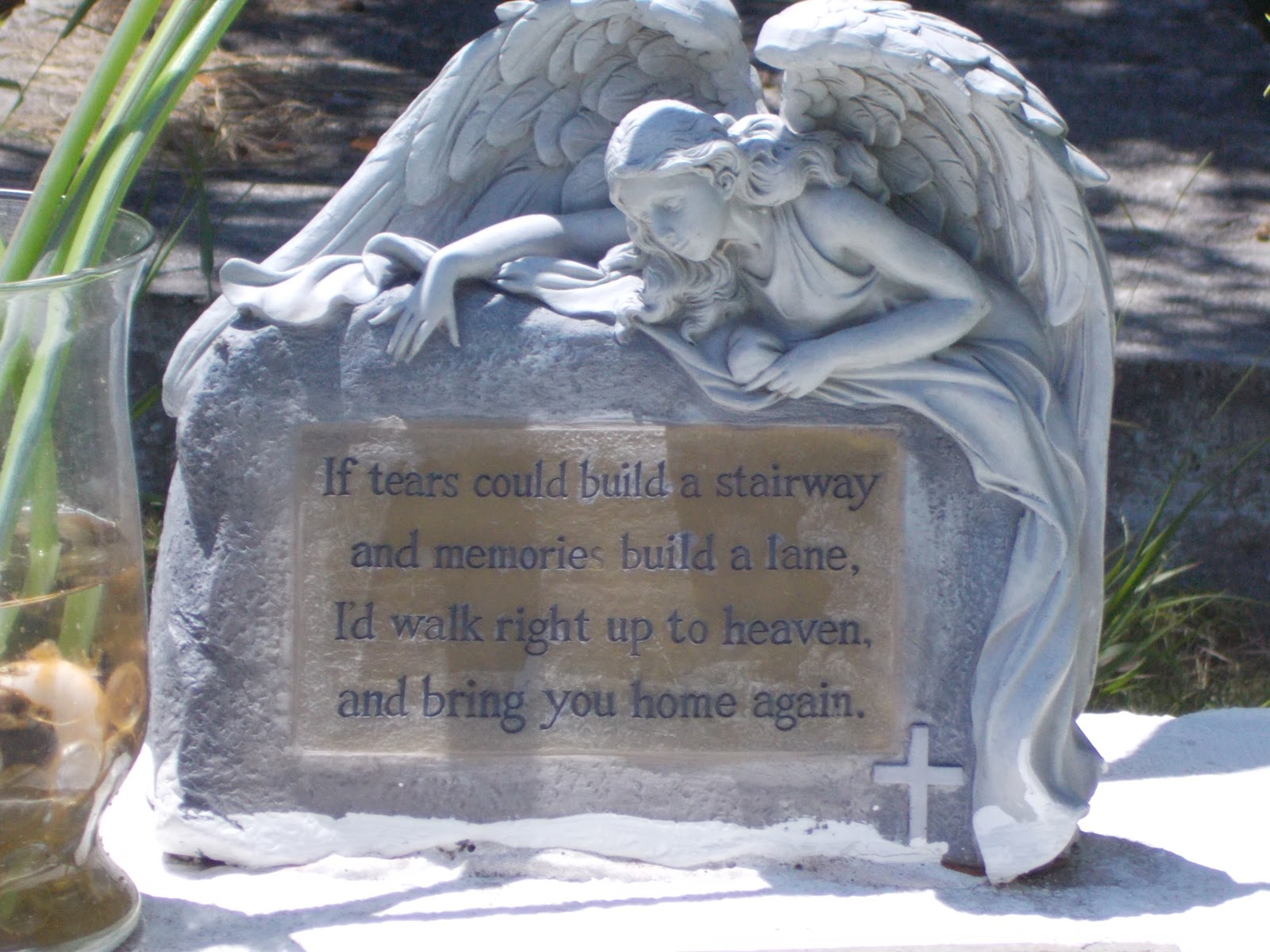
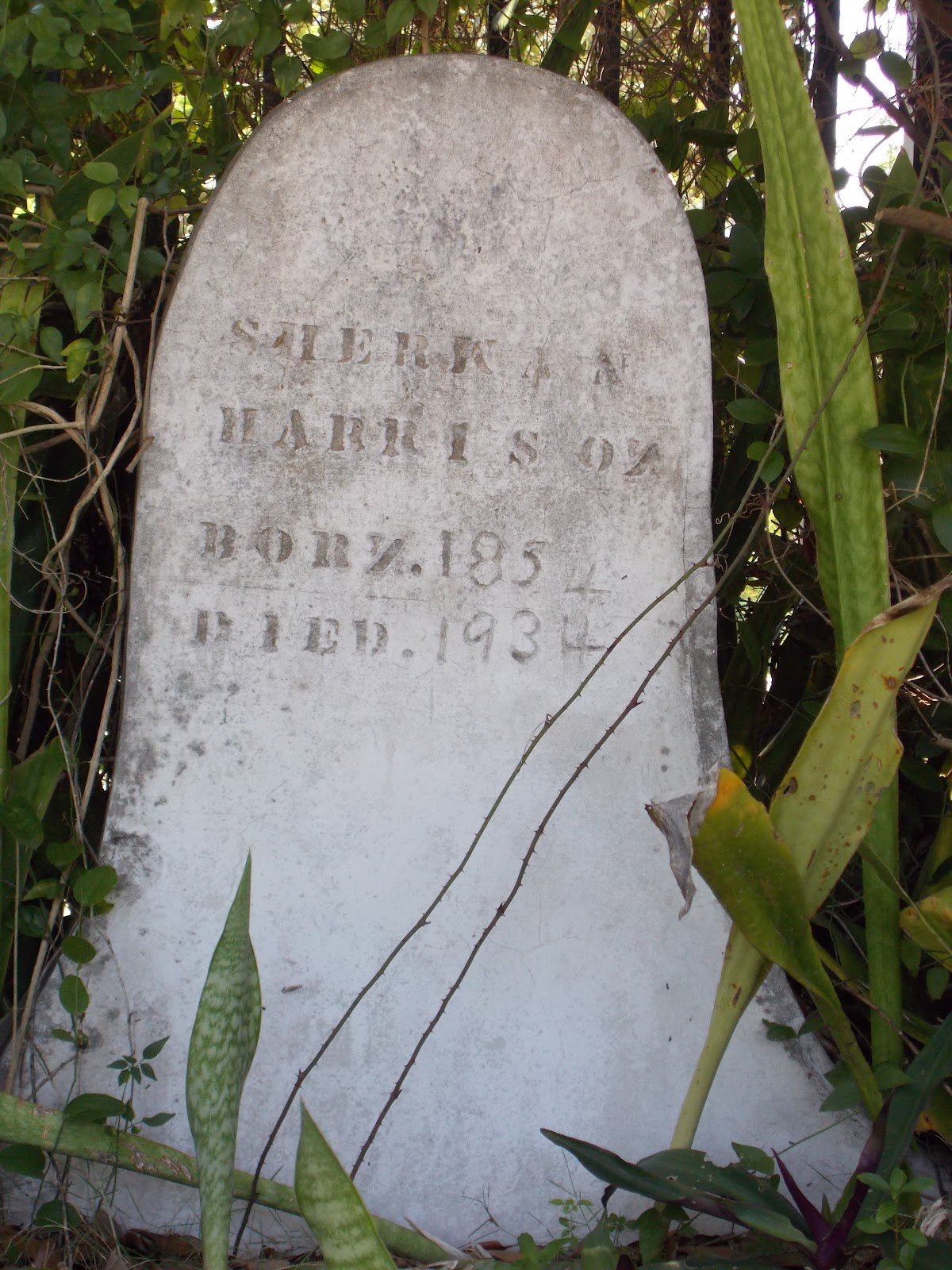
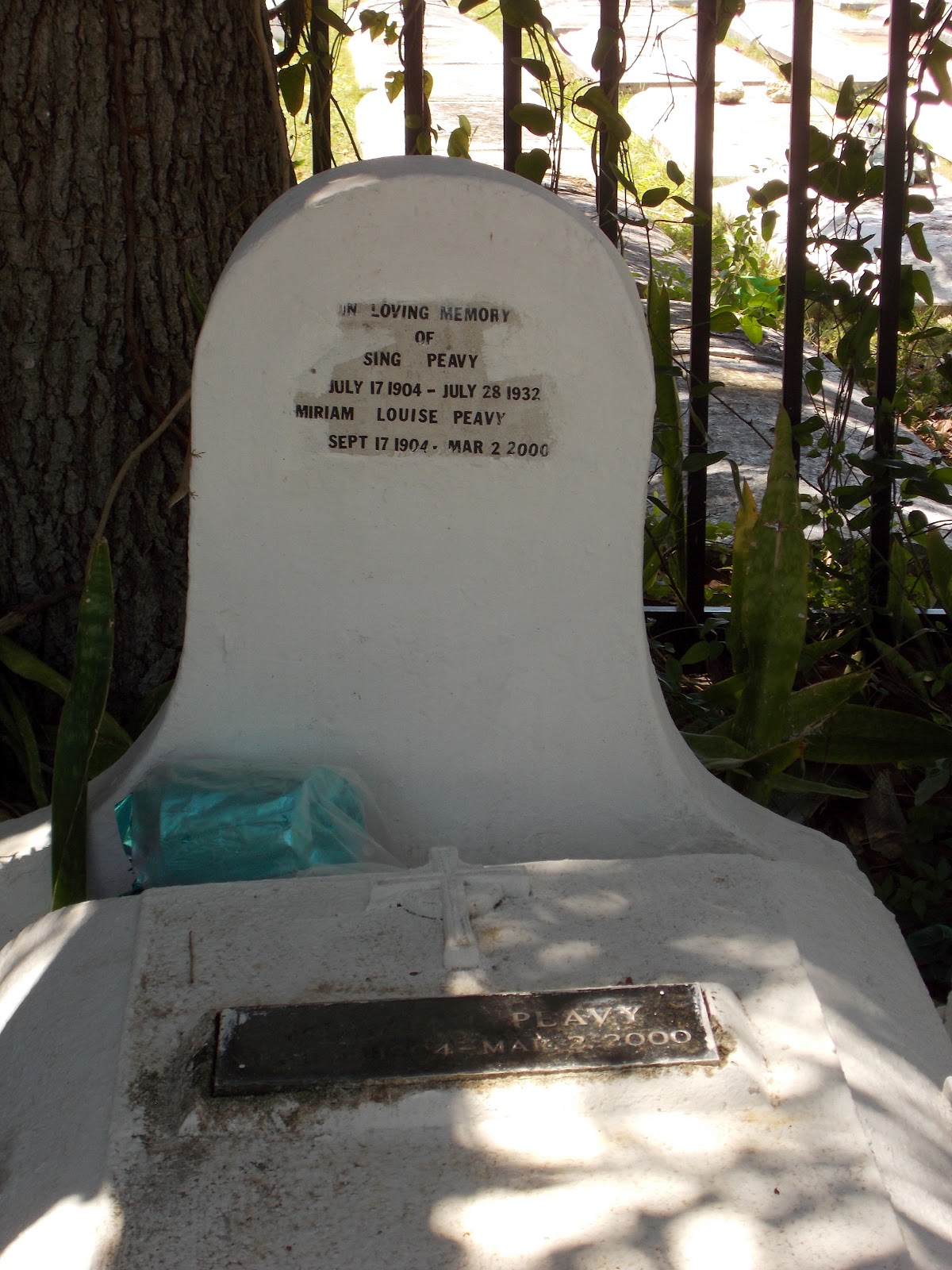
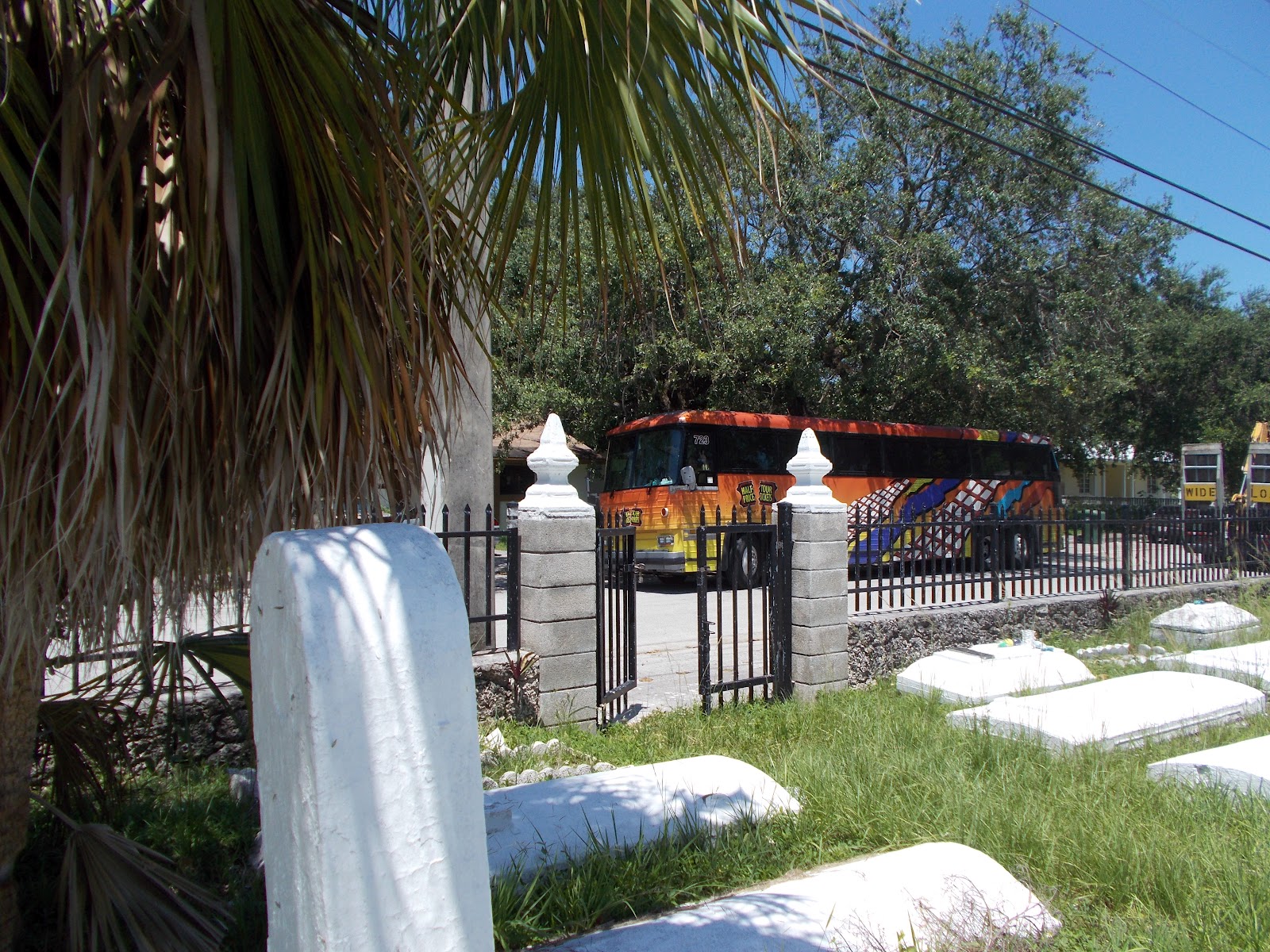
Memorial Day, 2010

Memorial Day, 2010

Memorial Day, 2010

Memorial Day, 2010

Memorial Day, 2010

Memorial Day, 2010

Memorial Day, 2010

All photographs © copyright 2012 by author.

***

***

Unpacking Coconut Grove ► Part 4.1 ► A Photo Essay

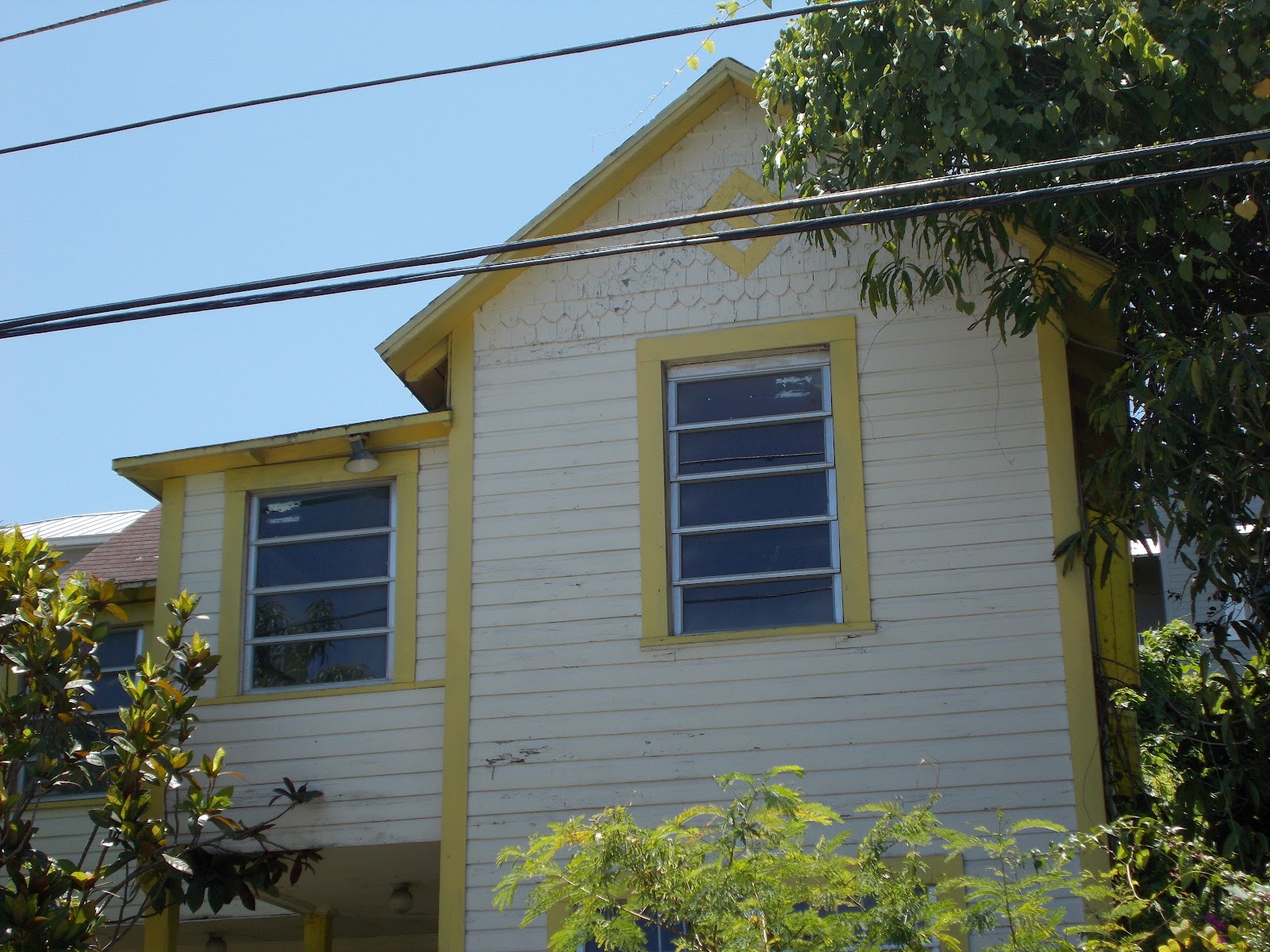
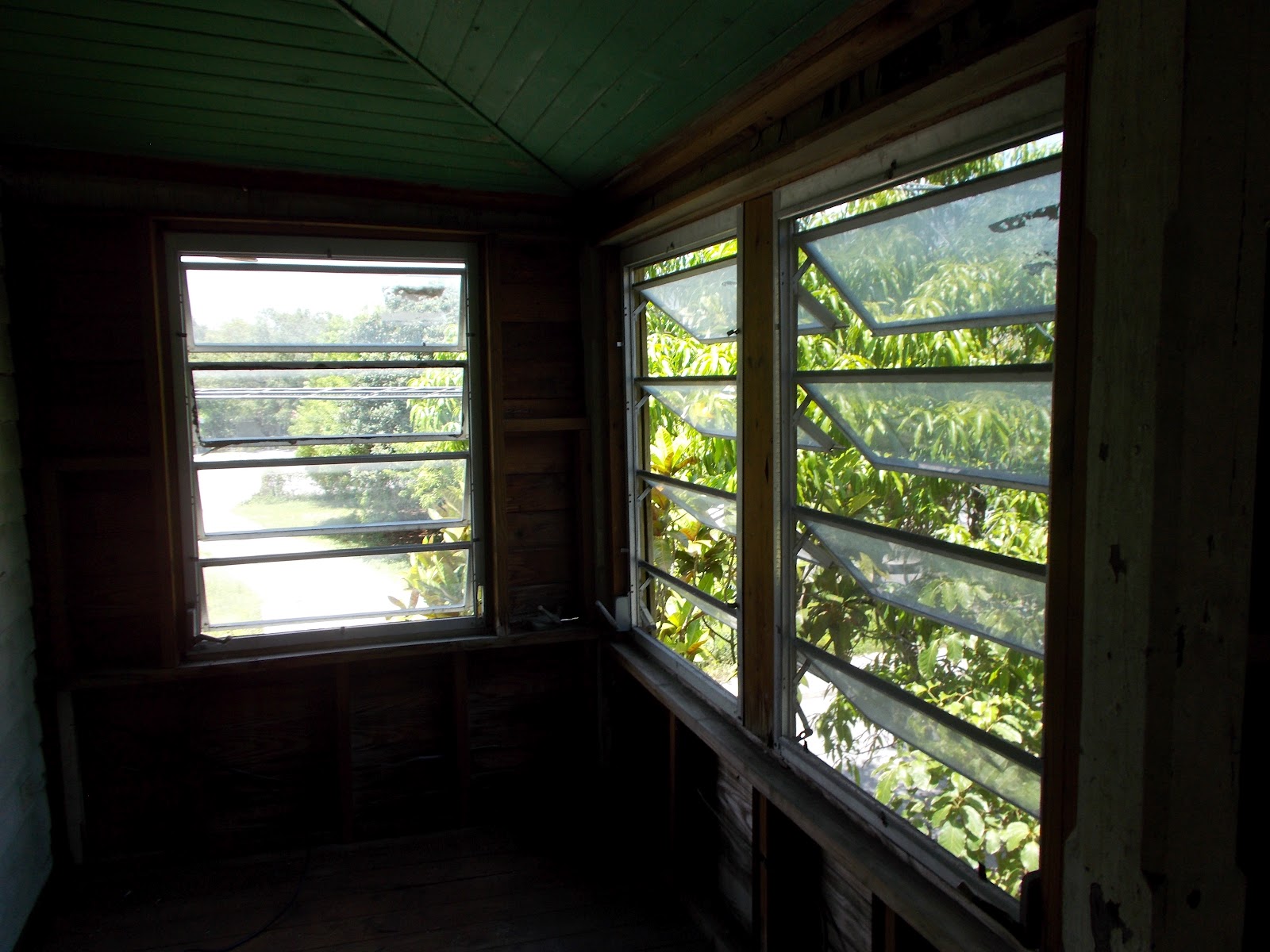
The room on the second floor in
which the (alleged) illegal
demolition was taking place.
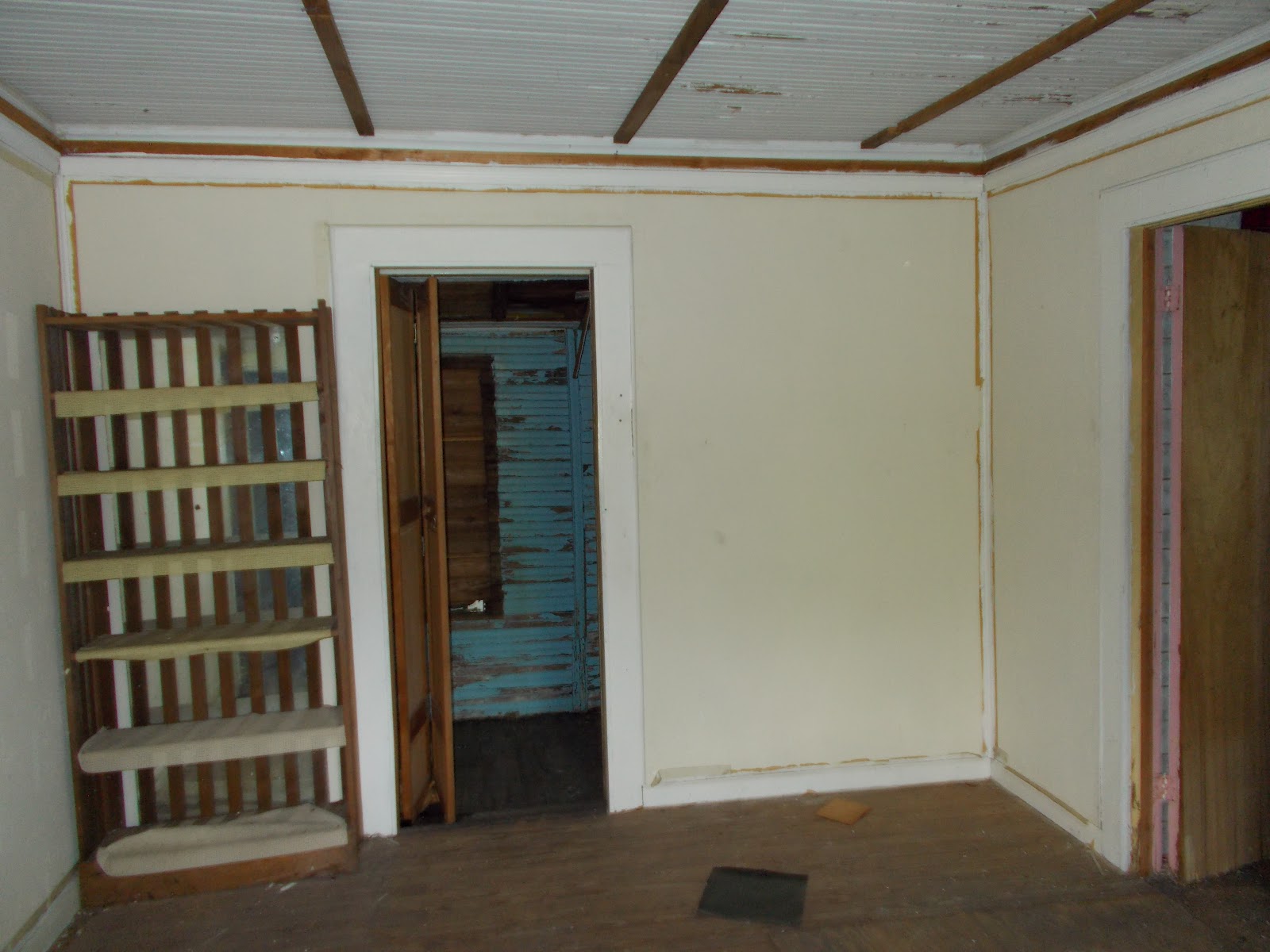
Another angle, showing the 2nd
floor front room and the former
upper porch, now an interior room.

A quick visit to Charles Avenue confirmed the (allegedly) illegal demolition inside the historic, 120-year old E.W.F. Stirrup House has stopped. Whether that was due to my reporting them to the City of Miami Building Department, because of my weekend blog post called Open Houses and Broken Laws, or whether they just ran out of work to do, is something I don’t know.

However, I have a small clue that my post has been read by the alleged rapacious developer. There is now a lock and chain through the double-doors in the wall that separates the E.W.F. Stirrup property from the Grove Gardens Residences Condominiums mentioned in my previous post. I have never seen a chain and lock on that door before. Maybe they think that’s how I get onto the property when I visit and thought this would block my way.

That looks formidable, doesn’t it?

This is the formidable lock on the front gate. The gap is large enough to squeeze through, but I’ve never done that.

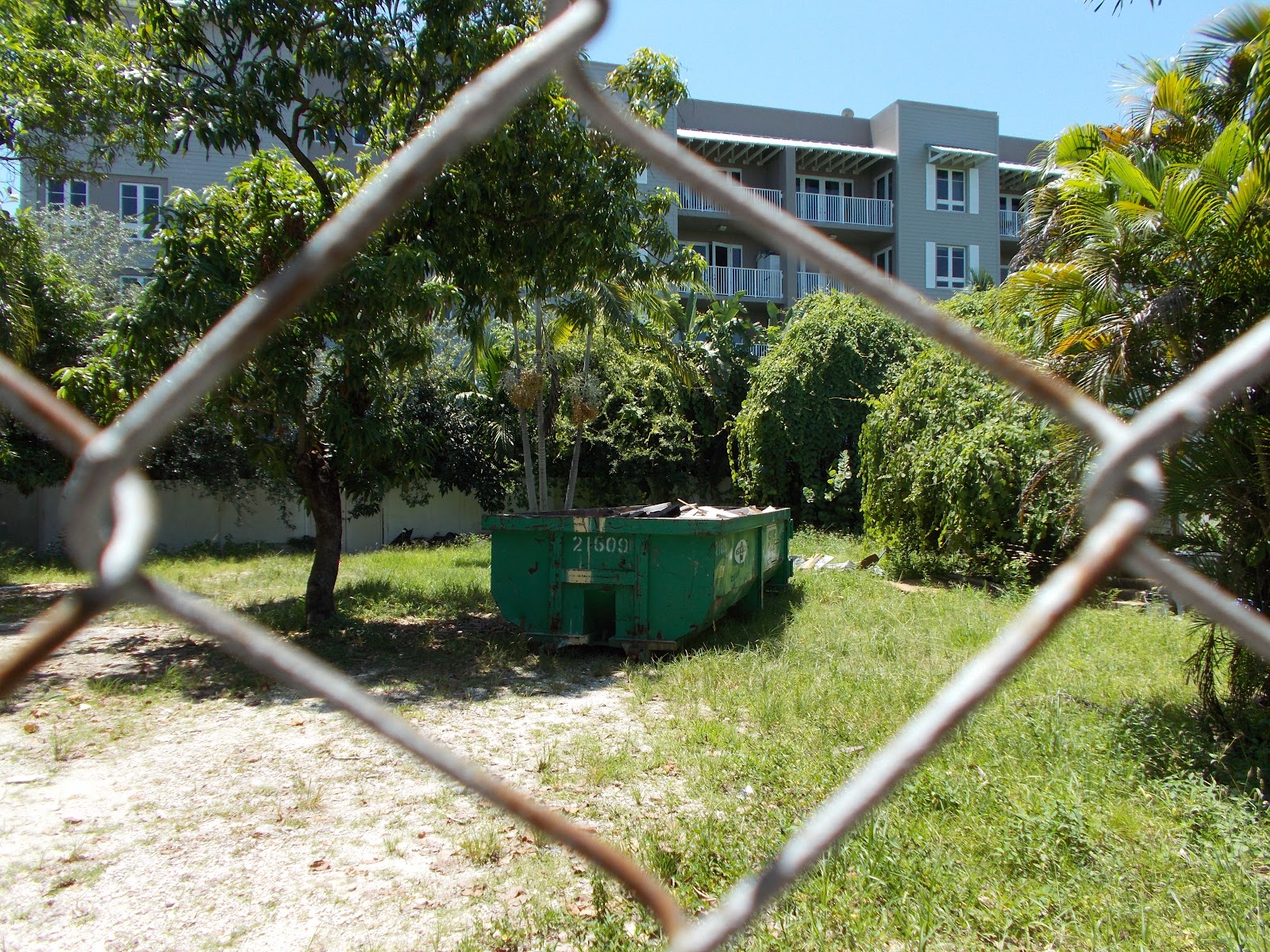
Yet locks do not prevent me from taking pictures through a chain link fence.

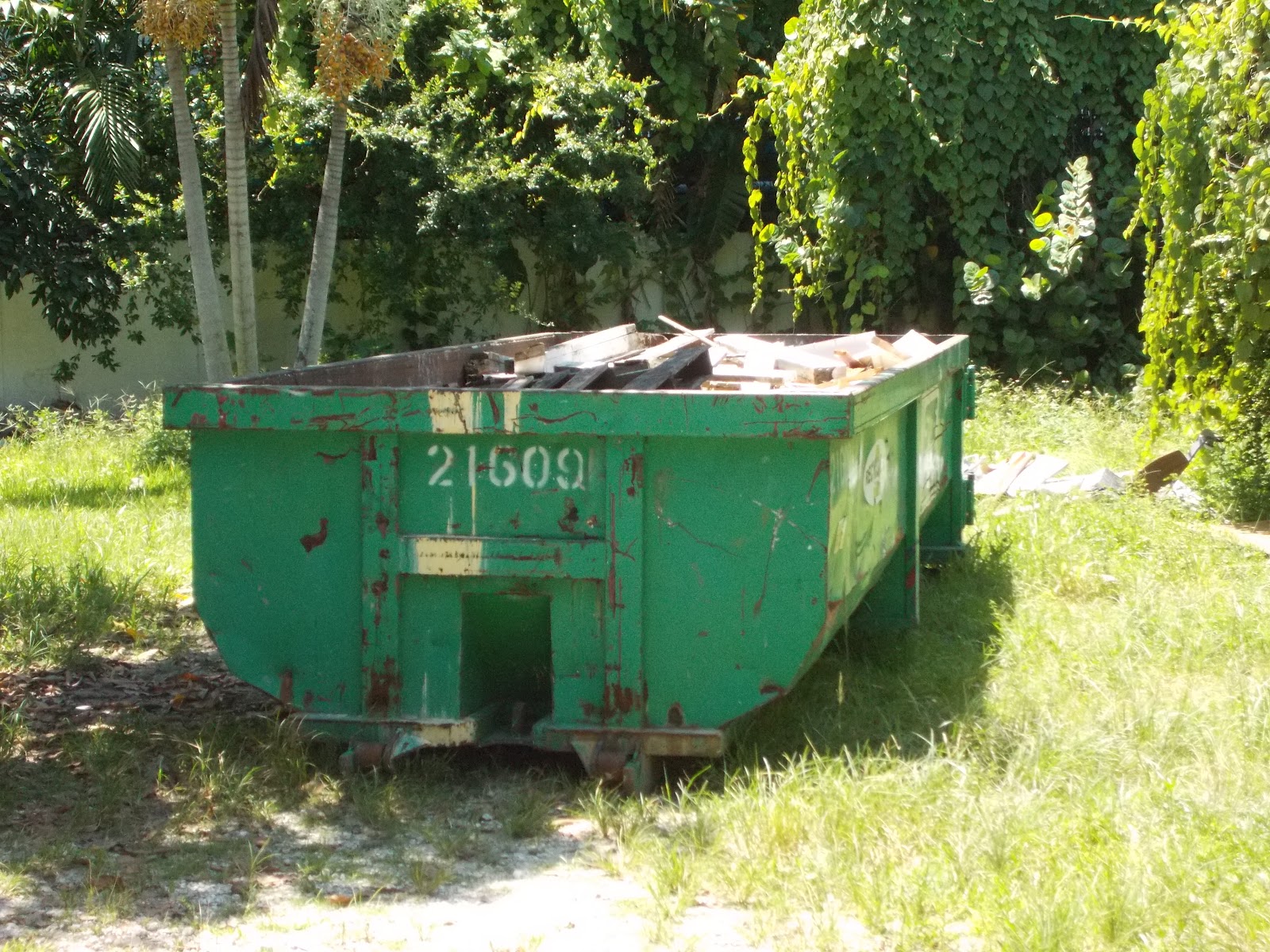
The workers conducting the (alleged) illegal demolition of the
E.W.F. Stirrup House filled this dumpster before work stopped.

If I were in Great Britain I’d call this a skip, which is taken to the tip. In any language, it’s full.

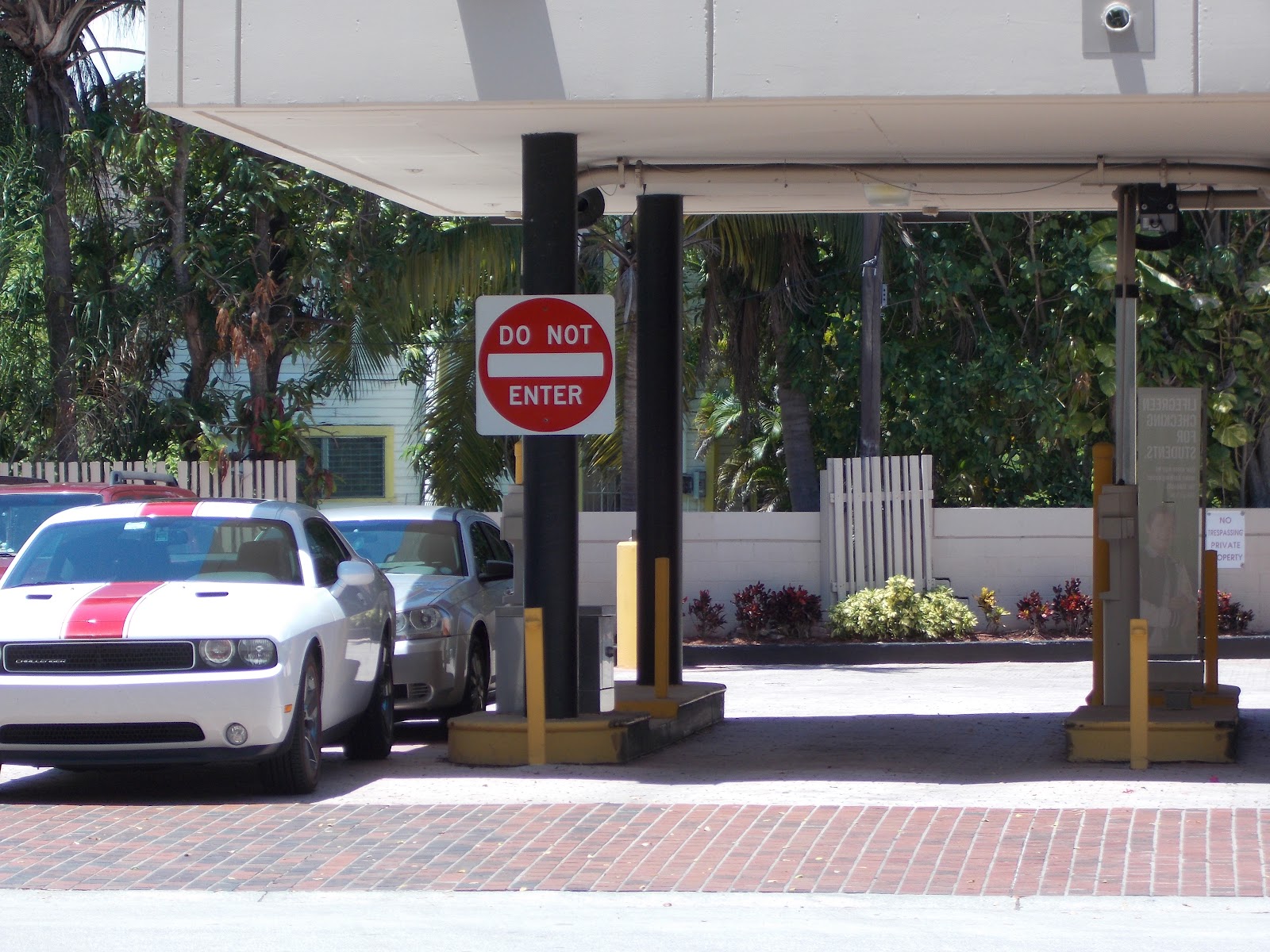
Locks do not prevent me from taking pictures over the wall from the Regions Bank parking lot either.
This angle showed me a new pile of trash that wasn’t there on Friday.
This is the parking lot of the Regions Bank. The wall is chest
high and you can just see the E.W.F. Stirrup House in the background.
It’s not clear what that pile of trash is, but I’d lay money it’s non-conforming.
Note the height of the grass. I’ve seen the property cited previously for a lack of upkeep on the landscaping.

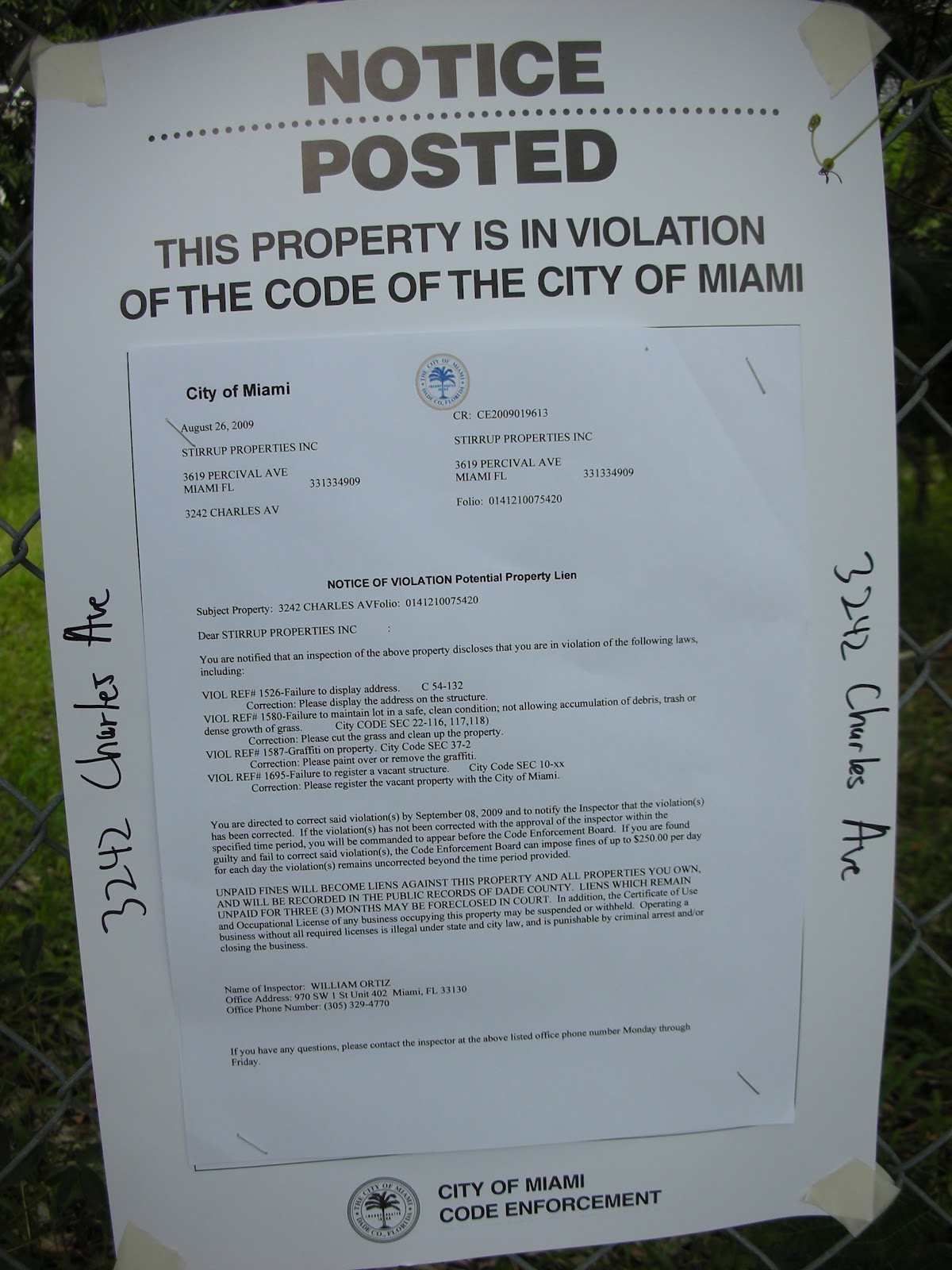
Notice from the City of Miami for code violations taken by author on August 26, 2009
Close up of notice from August 26, 2009. The property is in worse condition now than it was in 2009.
Also from August 2009. The property across from the E.W.F. Stirrup House with a similar citation.
This is the property currently being used to shunt cars in and out of the Coconut Grove Playhouse parking lot.
A new picture from yesterday of the same fence, with far more growth than for
which the property was cited in 2009 (above). Note how it’s impeding the sidewalk.
Back to the Stirrup property and yesterday. It wouldn’t surprise me at all to find
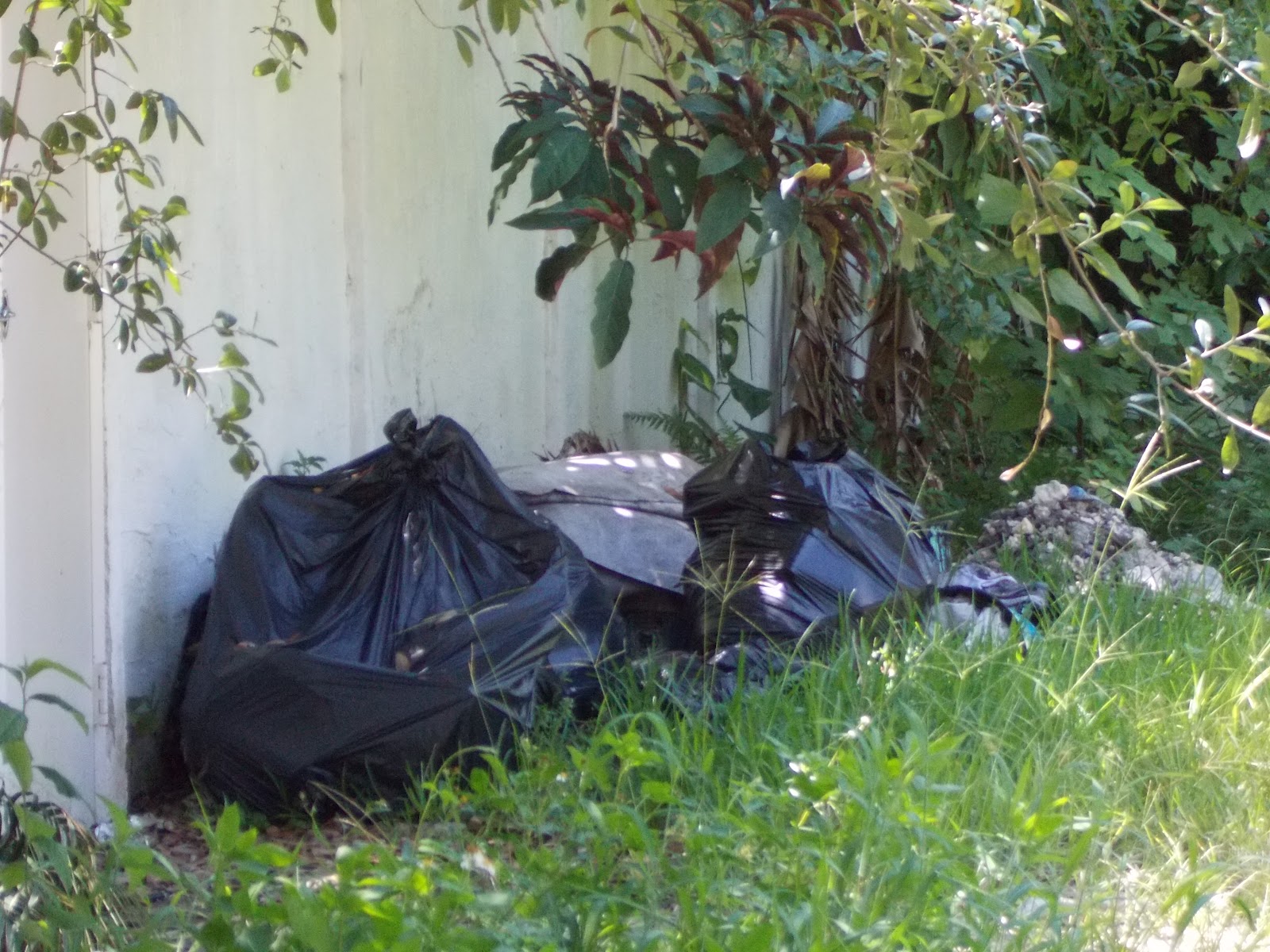
this pile of trash is also non-conforming. This is next to the padlocked doors seen above.
The mailbox at the E.W.F. Stirrup House at 3242 Charles Avenue
indicates the neglect as well as anything else.

Another view of the mailbox at the E.W.F. Stirrup House.
I have photographed this hole in the front of the E.W.F. Stirrup House before.
This is the first time I ever saw a creature come out of it.
It’s always a good day when I see a flyer for Reggae music.
This was on the sidewalk directly in from of the E.W.F. Stirrup House.
***

***

My First First Lady

My coveted ticket

I managed to score a ticket to see First Lady Michelle Obama on Wednesday. I am on her mailing list and she wrote to me personally, along with thousands and thousands of others, that she was coming to town and would just love to see me.

She gave three locations where her minions, aka the President Obama Re-election Campaign workers, would be giving out FREE tickets to see her on a First Come, First Served, one ticket per person basis.

Since there were a finite amount of tickets and, I presumed, an infinite number of people who would want them, I decided I would get there early. So for the 1:00 PM call I was shooting to arrive at high noon and, thinking there was a possibility I would be standing in the 95 degree heat for a while, 3 frozen bottles of water, only one of which would fit in my pocket.

The Obama Re-election office was less than 5 miles away, so it took only about 15 minutes to get there. However, I go no where without my new, little Sansa music machine. It’s a terrific machine, smaller than a pack of matches. It has an internal 8 GB hard drive, and a slot for micro-memory card, in which I added another 16 GB of memory, giving me a grand total of 9,514 tunes of every genre you can name. I throw the thing on random shuffle and head out, windows open. Just as I pull up to the people lined up outside the the songs switches from a Reggae tune to, and I wish I were making this up, Louis Armstrong’s version of “Shine.”

There were about 50 people ahead of me when I arrived.

Luckily no one already standing in line was paying attention to the music emanating from my car. I joined the line and waited. And waited. And waited. I was disconcerted. Every 5 minutes someone new came by and asked us to fill out a form and to make sure we had our 2012 Voter Registration Card ready, or we’d not get tickets. Every 5 minutes I explained to somebody new that I don’t have a 2012 Voter Registration Card because I wasn’t allowed to vote. When a one of the volunteers asked if if it was because I was a felon, I changed my response to “I don’t have a 2012 Voter Registration Card because I’m not a citizen.” That didn’t make me many friends either, but at least I wasn’t mistaken for a felon.

Even though they were all telling us we needed a Voters Registration Card to get a ticket, when I explained they said “Don’t worry about it,” but I was. Mostly because they all kept saying we needed it to get the ticket, before they told me privately that I didn’t need it to get a ticket. That didn’t give me much assurance, especially because I heard many people arguing with the volunteers. Loud voices were yelling, “If we needed to bring out Voters Registration Card, it should have been in the email!!!” and “I don’t take my Voter Registration Card everywhere I go!!!” and “You people done fucked up!!!”

In the end no one asked anyone for a voter registration card once we were getting out ticket to see the First Lady, so all that anger and frustration in line seemed to be just for the fun and entertainment of the volunteers.

I arrived at noon and left at 1:45, most of that time standing in the oppressive heat. I had long finished the frozen water I carried and when I got back to the car the other two bottles were almost completely melted, but at least they were still cold.

Here are a few of the other pics I took while waiting.

Still life: Gecko with cockroach on a wall. In Florida they call these Palmetto bugs so they can pretend they’re not roaches.

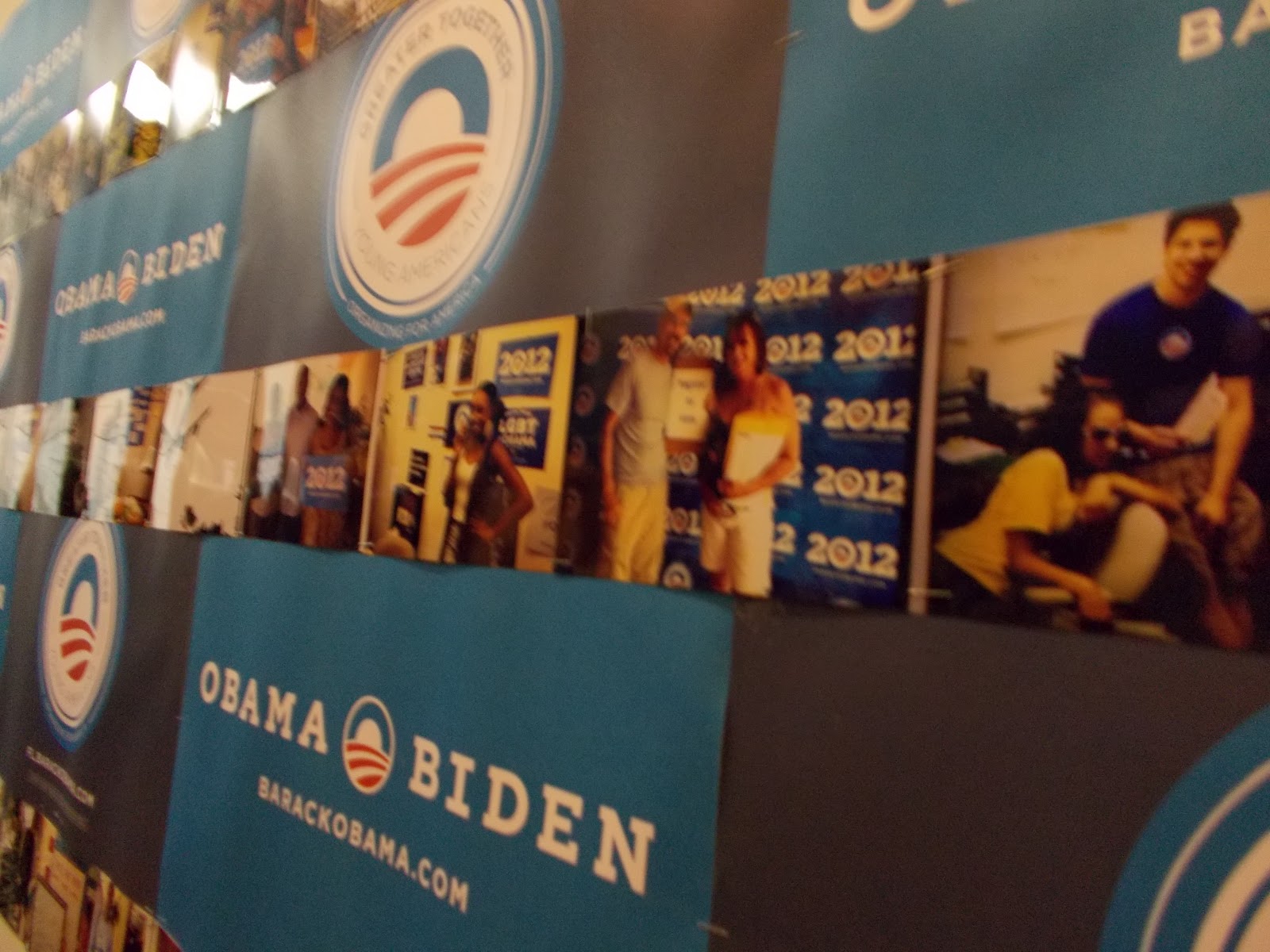
I tried to get one of these signs for my window, but they didn’t have any more. There was also one that said
“African Americans for Obama” which I wanted, because I have racist neighbours, but they were out of those too.

***
***

Unpacking Coconut Grove ► Part Four ► Open Houses and Broken Laws

The meeting place

Is there illegal work going on inside the E.W.F. Stirrup House? I certainly think so. Get comfortable and read on. This is a long one, friends.

It was Friday noon (08-17-2012) and I was to meet someone in front of the Coconut Grove Playhouse. This gent was going to get the full Charles Avenue History Tour, which I have now given to several people, several times. In fact, I’ll give the Charles Avenue History Tour to anyone who shows an interest in helping me get the word out about the E.W.F. Stirrup House. It’s almost like the Coconut Grove Ghost Walk, except the ghosts I’m talking about once lived on Charles Avenue. If you want to book a Charles Avenue History Tour, contact me.

This particular Charles Avenue History Tour turned out to be the longest one yet, almost 2 full hours. Either this gentleman was very interested, or he feigned interest very well; I only saw him glance at his watch once. Or, it could be I’m a much better story teller than I give myself credit for, despite all the swearing.

Since I arrived before he did I had a bit of time to kill and used that time to take a few pictures. The first picture I took was of a brand new structure that’s popped up
on Charles Avenue since the last time I was there, mere weeks ago.

Blessed relief with the E.W.F Stirrup House in background

This Port-A-Potty is just off the Charles Avenue driveway entrance to the Regions Bank, and is situated just east of the locked gate at the E.W.F. Stirrup property. Half off/half on the sidewalk and half off/half in the bank’s driveway seemed a very unusual place for a Port-A-Potty, but I was undaunted. I used it anyway. After the 65 minute drive from Sunrise, it was actually a welcome sight, if my bladder could see. Usually my first stop in The Grove is the washroom for the Taurus Bar. I don’t know how many times I can get away with “I’m a tourist and I need to use your washroom,” but this week I didn’t need to. It appeared as if my every need was being anticipated, and you have no idea how right that thought turned out to be in the end. It was a day of wonderful Synchronicity and being able to take a whiz without lying to the bartender at the Taurus was the least of it.

But, I’m getting ahead of myself.

Still life: Damaged fence with dumpster

I noted some new, recent damage to the fence surrounding the Stirrup House, which is no big deal; chain linked fencing is easily fixed. However, the dumpster in the background MIGHT be a big deal. Then it occurred to me that the dumpster might be connected in some way to the Port-A-Potty. I made a mental note to keep an eye on the dumpster as best I can. I have seen many dumpsters come and go from inside the Stirrup property. However, I’m never around to know what they are being used for because I only get down to Coconut Grove once a week.

Then I hustled over to the front of the Coconut Grove Playhouse, just a few hundred feet away, to meet my Charles Avenue History Tour guest.

Skip ahead about an hour. My guest and I were standing directly in front of the Stirrup House while I conducted my Charles Avenue History Tour as fast as I could, because I never know when someone will tire of it. It’s a long, complicated history that spans 120 years and several different Charles Avenue properties. All of that background becomes necessary before I can even get to what I consider the important part of the story: Who Controls What On Charles Avenue, which, is not coincidentally, Part Three of this continuing series. I was at the part in the Charles Avenue History Tour, where I start connecting all the dots. Suddenly a white pickup truck arrived and the two gents in the truck unlock the gate surrounding the Stirrup property and drive inside.

The Grove Gardens Residence Condominiums

My attention was now divided. I wanted to finish the Charles Avenue History Tour, but I could not help be curious about the pickup truck, the bed of which was filled to the gills with carpet and padding. Are they going to start carpeting the rotting E.W.F. Stirrup House, currently undergoing Demolition by Neglect. That would be like putting lipstick on a GOP vice presidential candidate.

However, it turned out the carpet was merely remnants ripped up from somewhere else and was being tossed into the dumpster. It is my assumption (without any proof whatsoever) that the carpet was ripped up during some renovation from inside the Grove Gardens Residence Condominiums immediately south of the E.W.F. Stirrup House. It’s not such a leap of imagination. The Grove Garden Residence Condominiums, or rather the powers that control it, seem to use the Stirrup property for its own benefit for all kinds of things.

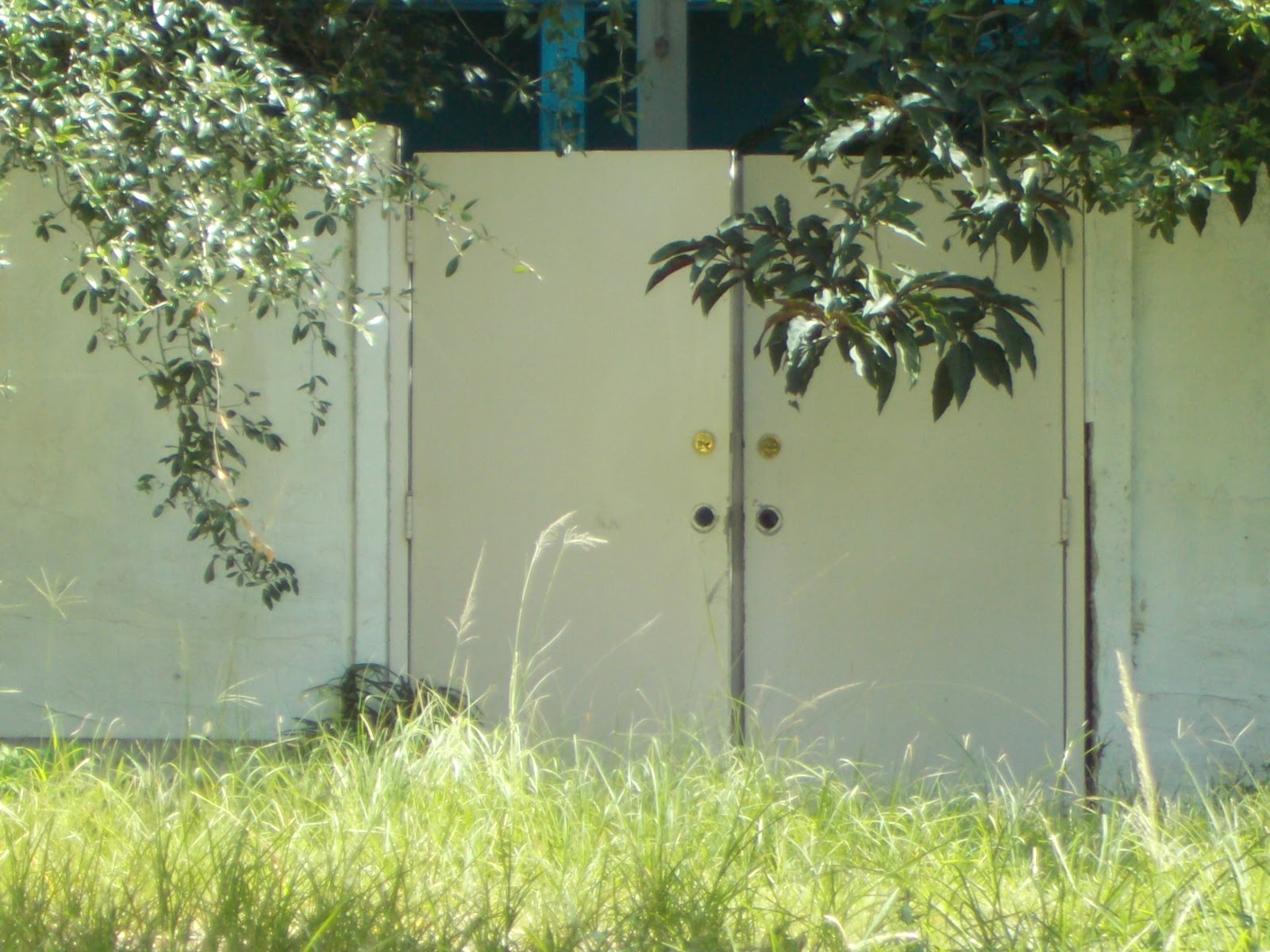
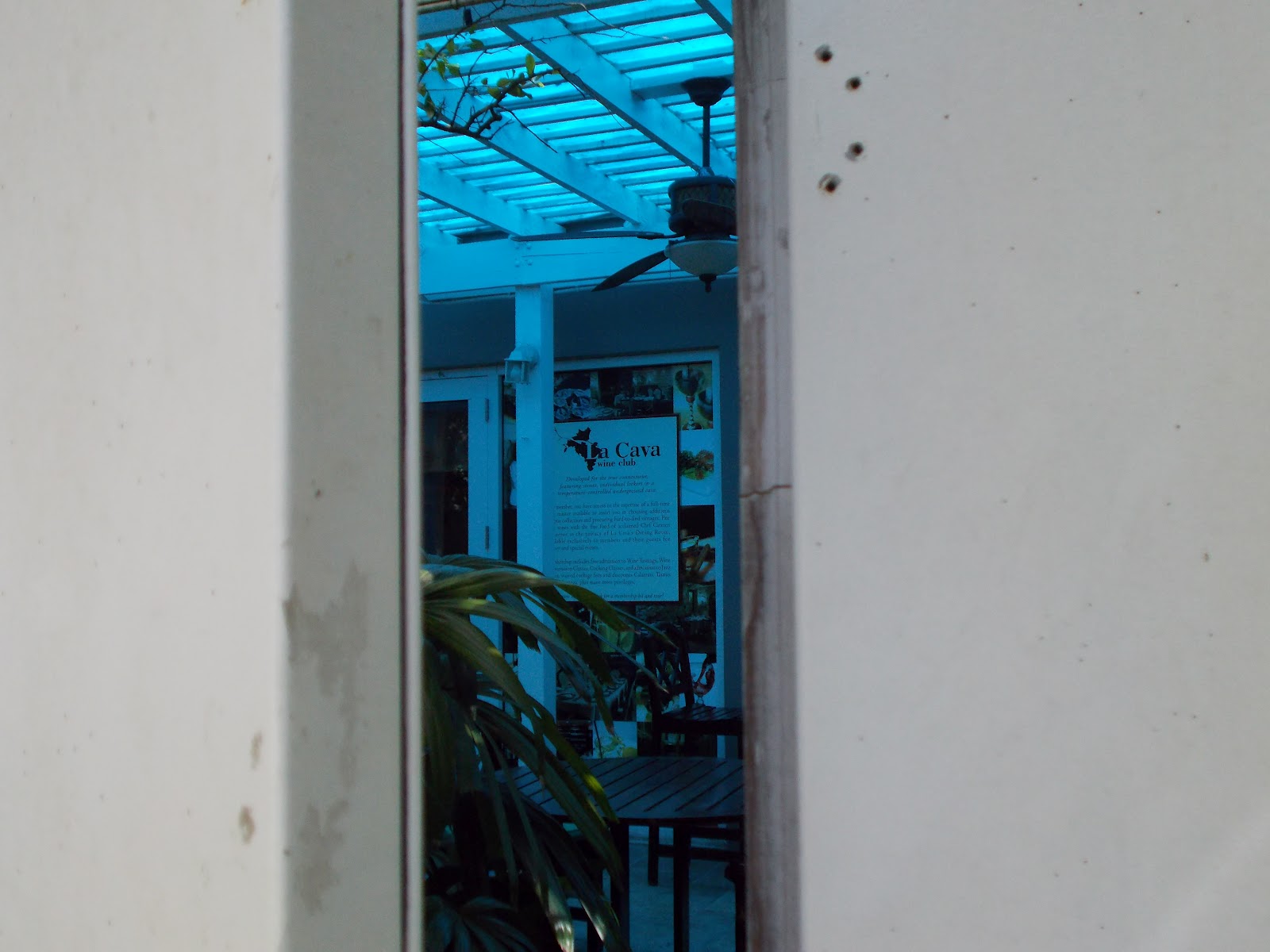
To the left is a set of doors built into the wall that separates the E.W.F. Stirrup property from the Grove Garden Residence Condominiums. If one peeks through the partially open doorway, pictured at right, one discovers the “La Cava Wine Club,” just one of four Chi Chi restaurants that occupy the ground floor of the Grove Garden Residence Condominiums. La Cava Wine Club is a near redundancy, since “la cava” means “the wine cellar.” The other businesses are two high end restaurants, and the 100+ year old structure that houses the Taurus Bar, that began its life as a tea room. It was saved from the wrecker’s ball when the Grove Garden Residence Condominiums was built around it.

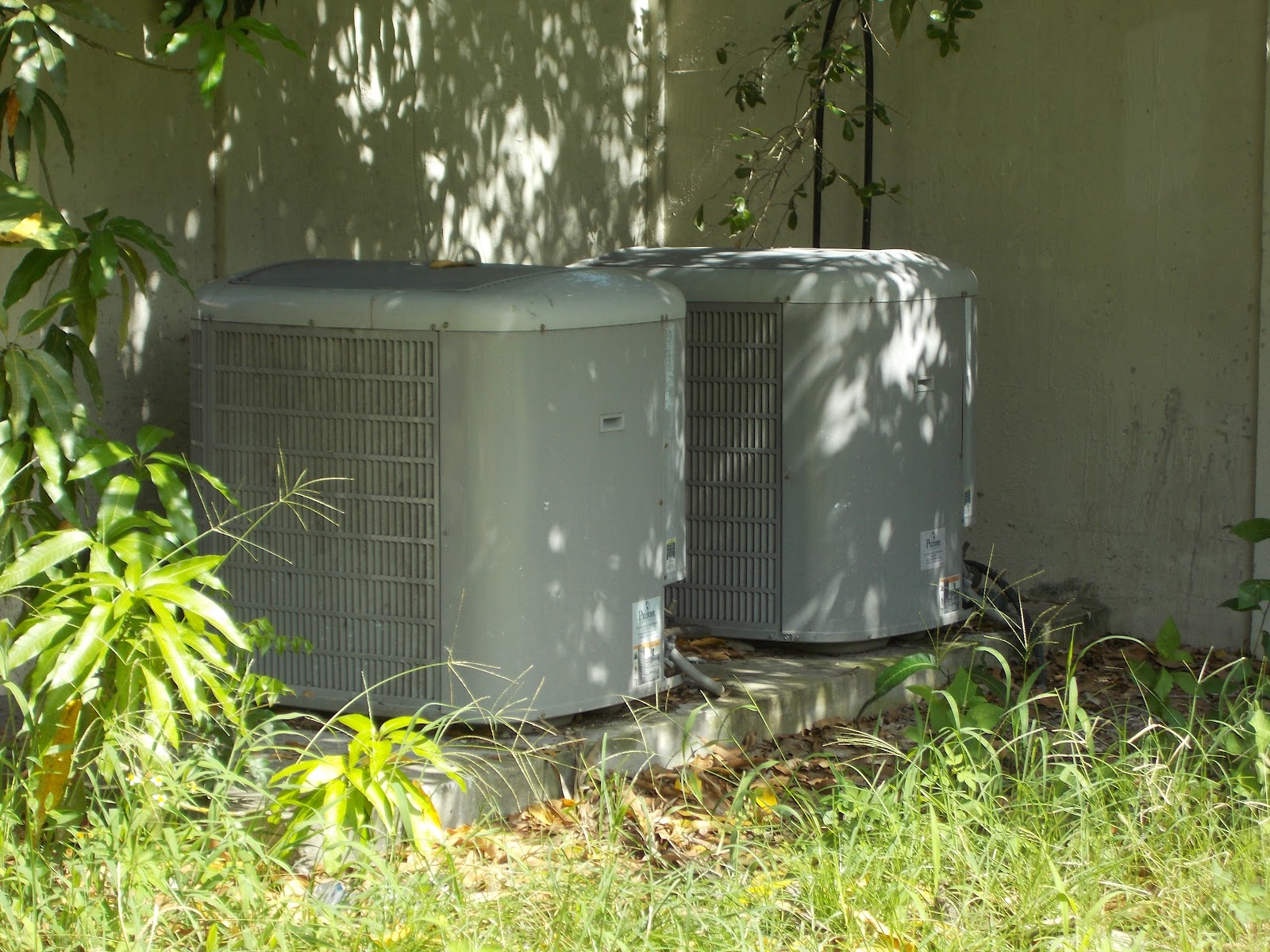
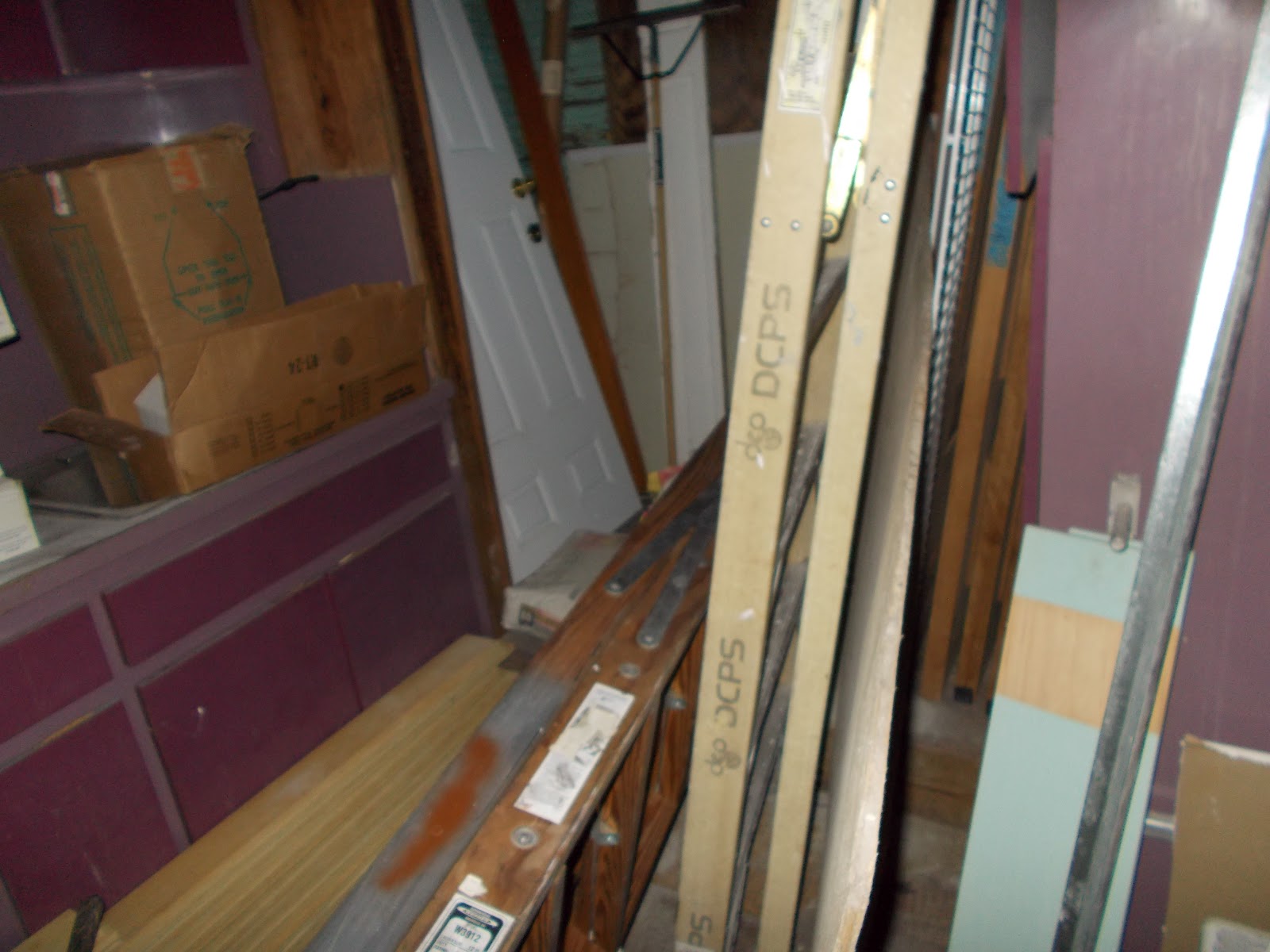
That’s not all the Stirrup property is being used for to benefit the Grove Garden Residence Condominiums. In the southeast corner of the lot are two air conditioning units (left) that feed cold air to somewhere within the condo complex, maybe to the wine bar, which is the closest business. There are also many piles of garbage (just one is pictured at right) and trash hidden behind the E.W.F. Stirrup House, away from the prying eyes of city inspectors, who would levy fines if they knew how much trash was being piled up on the property. This is clearly illegal. Even though I have seen dumpsters come and go, these piles of garbage just get larger and larger. It’s clear the dumpsters are not being used for these piles of garbage. So what, exactly are their purpose? Turns out I wouldn’t have all that long to find out.

But, I’m getting ahead of myself again.

While my attention was divided — giving my Charles Avenue History Tour and trying to see what these gents are doing inside the Stirrup property — I missed the most important thing of all. These men unlocked the side door of the Stirrup House and stepped inside. It happened so fast I didn’t have time to get my camera out of my quick-release holster to take a picture of them entering the side door; I only managed to take a picture of the open door after they passed through it. I have never seen anyone in the Stirrup House before!!!

The open side door to the historic E.W.F. Stirrup House, currently undergoing Demolition by Neglect, and now hammers

Then we heard pounding from inside the house. The two gents are visible through the front window of the upper floor of the Stirrup House and they are ripping the room apart. I yell up, “What’s going on?”  They yell down to me that the E.W.F. Stirrup House is being turned into a Bed & Breakfast.

WAIT!!! WHAT???

No! That can’t be! It was only last week that I was on the City of Miami web site and confirmed for myself that the property is still zoned Residential. I was checking the status because last year, according to CBS Miami, Aries Development Group (oddly not named in the CBS article, but named by the Coconut Grove Grapevine) was petitioning the city for a change of zoning on the E.W.F. Stirrup property from the current Residential to Commercial. According to the CBS report a decision was to be made by May 26th of last year, which apparently had been deferred to the April 6th meeting. Now, fifteen months later — as I mentioned above — the Miami web site still lists it Residential and I can find no OFFICIAL mention anywhere that the zoning has been changed to accommodate the developer.

Now it’s time to get even deeper into the weeds. According to a 2010 article in the South Florida Business Journal a man by the name of Gino Falsetto is head of Aries Development. According to the Coconut Grove Grapevine “Aries Development Group [are] the people [sic] that own Calamari and the Taurus restaurants.” That seems somewhat misleading. It’s my understanding that Aries Development Group also built the Grove Garden Residence Condominiums, which has never been fully occupied.

Who is Gino Falsetto? To begin with Gino Falsetto is, or was, Canadian. So am I, so I don’t hold that against him. What’s IS worth holding against him, however, is the string of bankruptcies Falsetto and his brothers left behind in Ottawa, Ontario, Canada, and just across the river in Quebec, which left Canadian taxpayers on the hook for a good chunk of change. According to the Ottawa Citizen:

An Ottawa success story in the restaurant business ended in failure Tuesday when two restaurants owned by the Falsetto brothers declared bankruptcy owing creditors and the tax department more than $1 million.

Sheriff’s deputies acting on the orders of Revenue Canada Tuesday raided the House of Caesar on Somerset Street, Stephano’s Restaurant and Bar on Bank Street and the Amoretto Restaurant on Lisgar Street seizing items including liquor, beer and cash to offset back taxes.

On Wednesday, Stephano’s (521327 Ont. Inc.) and Amoretto (521326 Ont. Inc.) filed for bankruptcy. House of Caesar is not bankrupt, but has closed.

Stephano’s and Amoretto are still operating under the trusteeship of Thorne Ernst & Whinney until a buyer, or buyers, can be found for the restaurants, said bankruptcy trustee Brian Doyle. [Fri Jan 30 1987, subscription required]

According to a February 3rd article in the same newspaper, the Revenue Canada seizure angered Gino Falsetto:

“They left us to operate three restaurants with no inventory and no cash,” says an irate Gino Falsetto, the president of Falsetto Holding.

The failures mark the end of a restaurant business that in its heyday had annual gross revenues of about $4.5 million, 120 employees and a $1-million payroll.

It started eight years ago when the four Falsetto brothers – Gino, Antonio, Enrico and Stephen – and a handful of shareholders opened the House of Caesar.

Expansion was rapid with Amoretto opening next, then Stephano in 1982 and finally Sapper’s Bridge in 1984.

Revenue Canada’s action was the result of a series of financial problems that started with the opening of Sapper’s Bridge – a classy restaurant in the Atrium in the Byward Market.

In less than two years, the Sapper’s Bridge operation lost $1.2 million, half of that in the six months before it went bankrupt last March.

“Our problems, no question about it, started with our Sapper’s Bridge operation,” Gino said in a recent interview.

A PDF file found on the internet, titled “The Gino Falsetto Bed and Breakfast Con, not only goes into some of Falsetto’s Canadian business failures, but more importantly, traces the various corporations that claim an interest in the E.W.F. Stirrup House. Assuming the information is correct, it’s like those Russian dolls, with one nested inside the next, nested inside the next, nested inside the next. And, whaddaya know, it all goes back to Gino Falsetto and Aries Development.

The author of the PDF, who has his own issues and lawsuits with Gino Falsetto and his
business partner Pierre Heafy (who is also from Canada), maintains a web site called Heafy-Falsetto Leaks. The author comes off as a combination of Crank and Gadfly, leaning towards Crank. Yet, he has obsessively followed the business activities of Gino Falsetto and asks 3 legitimate questions about the nesting-Russian-doll aspect of the property’s ownership, which I don’t feel qualified to answer:

Why, Mr. Falsetto, the shenanigans of hiding the true identity of corporate ownership of 3242 Charles LLC? It couldn’t possibly be simply a maneuver to accrue benefits under the IRS Tax Code? What if it is a means of building a solid wall should creditors knock on Gino Falsetto’s door?

But, I digress.

Back to the story. To remind you: I’m yelling up to the guys tearing apart the front room of the 2nd floor of the historic E.W.F. Stirrup House and they’re yelling down at me. One of the guys agrees with me that it’s a beautiful house, needing restoration. The other one is saying that it should be set on fire because it’s full of wood rot, mold, and termite damage. This is troubling because my guest on the Charles Avenue History Tour had just said almost the exact same thing to me. However, he was talking about how unscrupulous property owners have been known to do away with inconvenient structures standing in the way of development and then blame drug addicts or electrical problems for the ensuing conflagration.

I shudder at the thought that someone would do such a thing to the beautiful, historic 120-year old E.W.F. Stirrup House. As I am shuddering I have a flash of inspiration, so I yell up, “Can I take a look?”

And they said YES!!!  

AMAZING!!!

It has been my dream to see the inside of this house ever since I first discovered it in early 2009. Even though they gave me permission, I knew I was being subversive when I entered the Stirrup House. I took as many pictures as I could while I was in the house before I skedaddled. Not all of them came out good, but I am including those as well.

This is what the inside of the historic E.W.F. Stirrup House looked like as of yesterday.

The mud room just inside the side door of the E.W.F. Stirrup House.
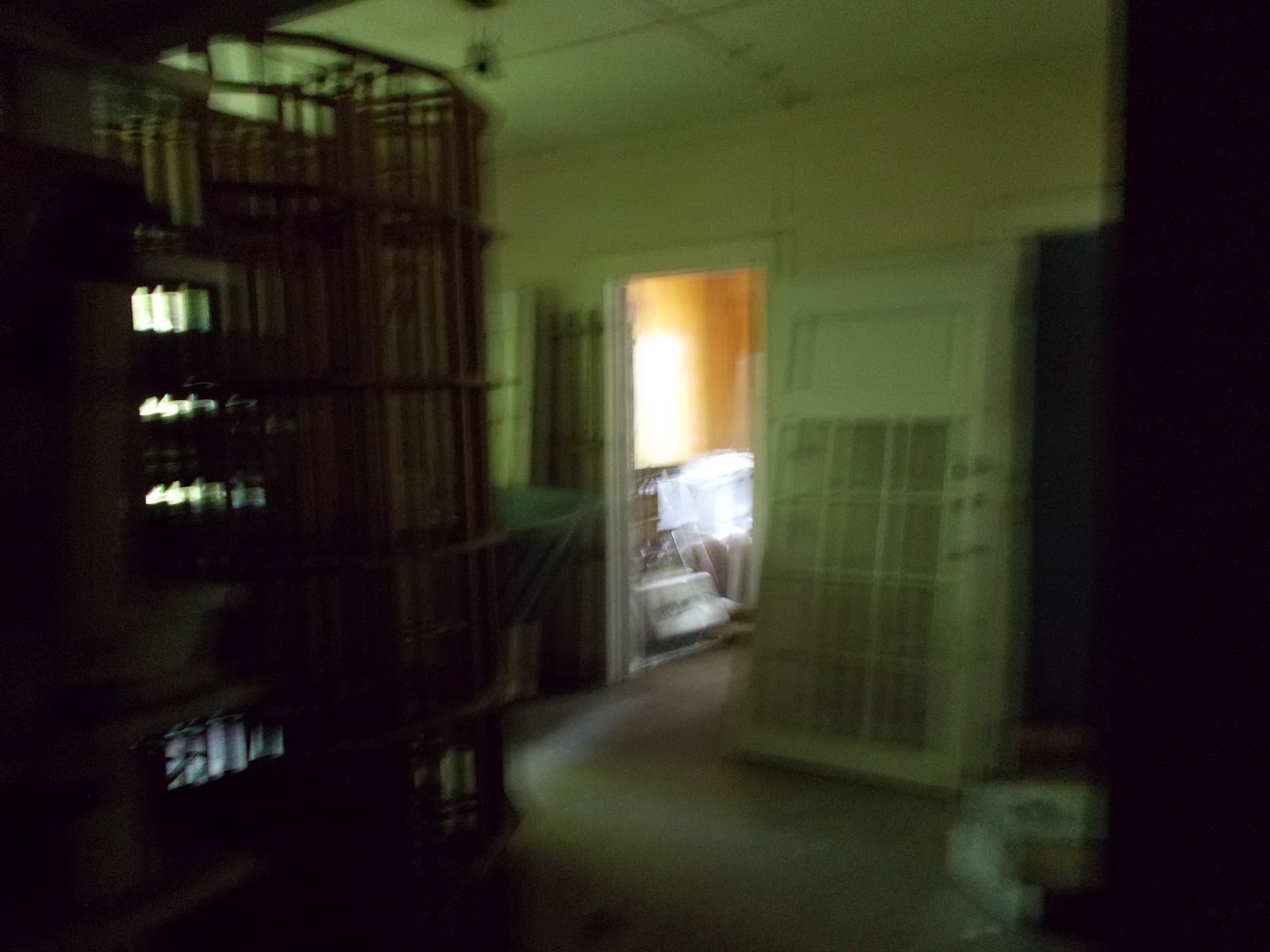
Many of the rooms are used to store construction materials and other junk.

Another ground floor room. The house had many small rooms and no large ones.

This seemed to be the largest room in the entire house. The front of the house is through that door of the bright room.

Another room in a warren’s maze of rooms. More storage.

Another room. More storage.

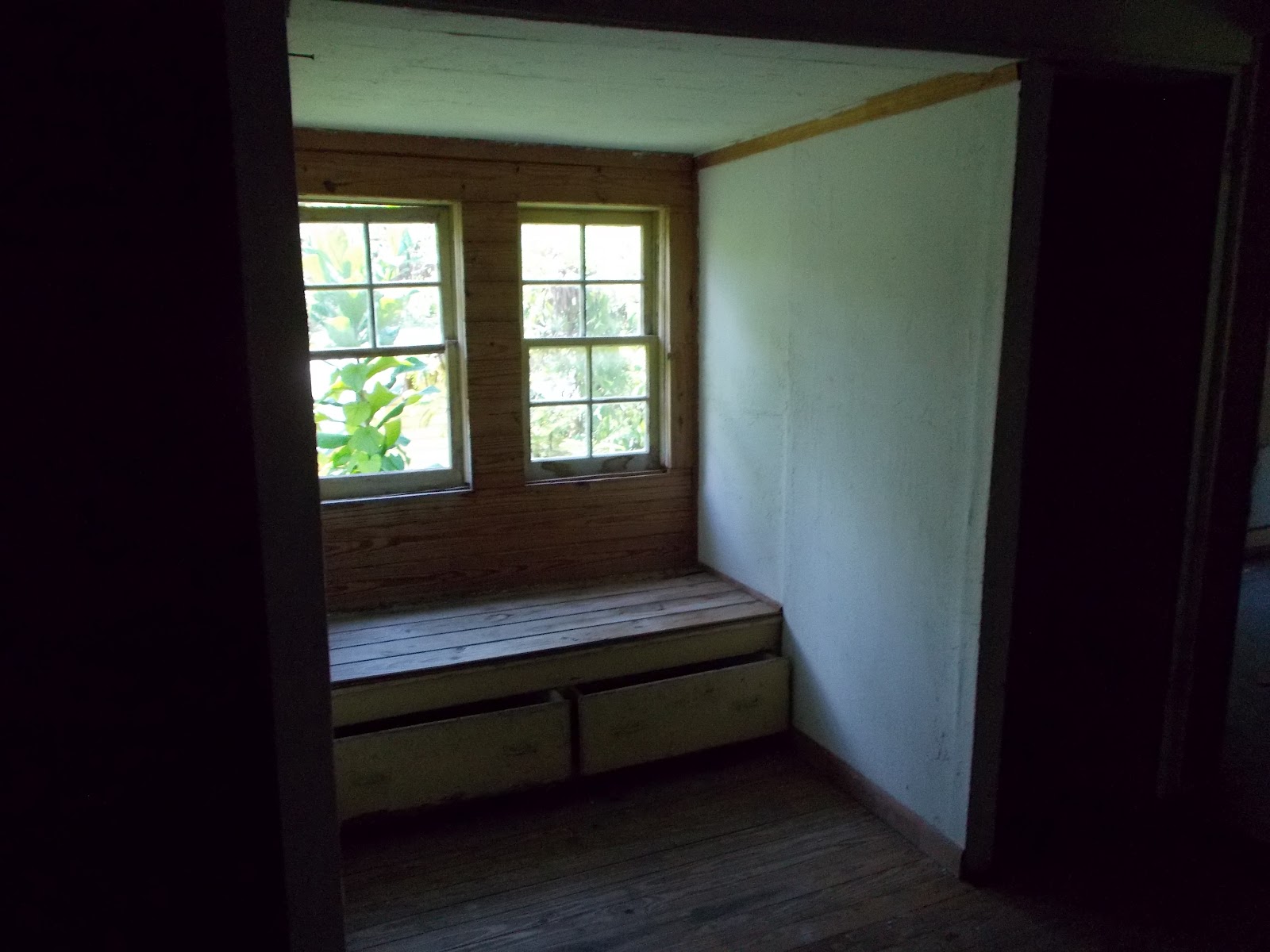
Upstairs. A cute little built in shelving system.
I can imagine E.W.F. Stirrup’s books, family photographs, and knickknacks  here.

A lovely little window seat on the second floor with a western exposure. Afternoon sunlight would fill this window.

Another room on the second floor looking towards the front of the house to the room where the men are working.

Another view of the room on the 2nd floor where the men are working, looking west.

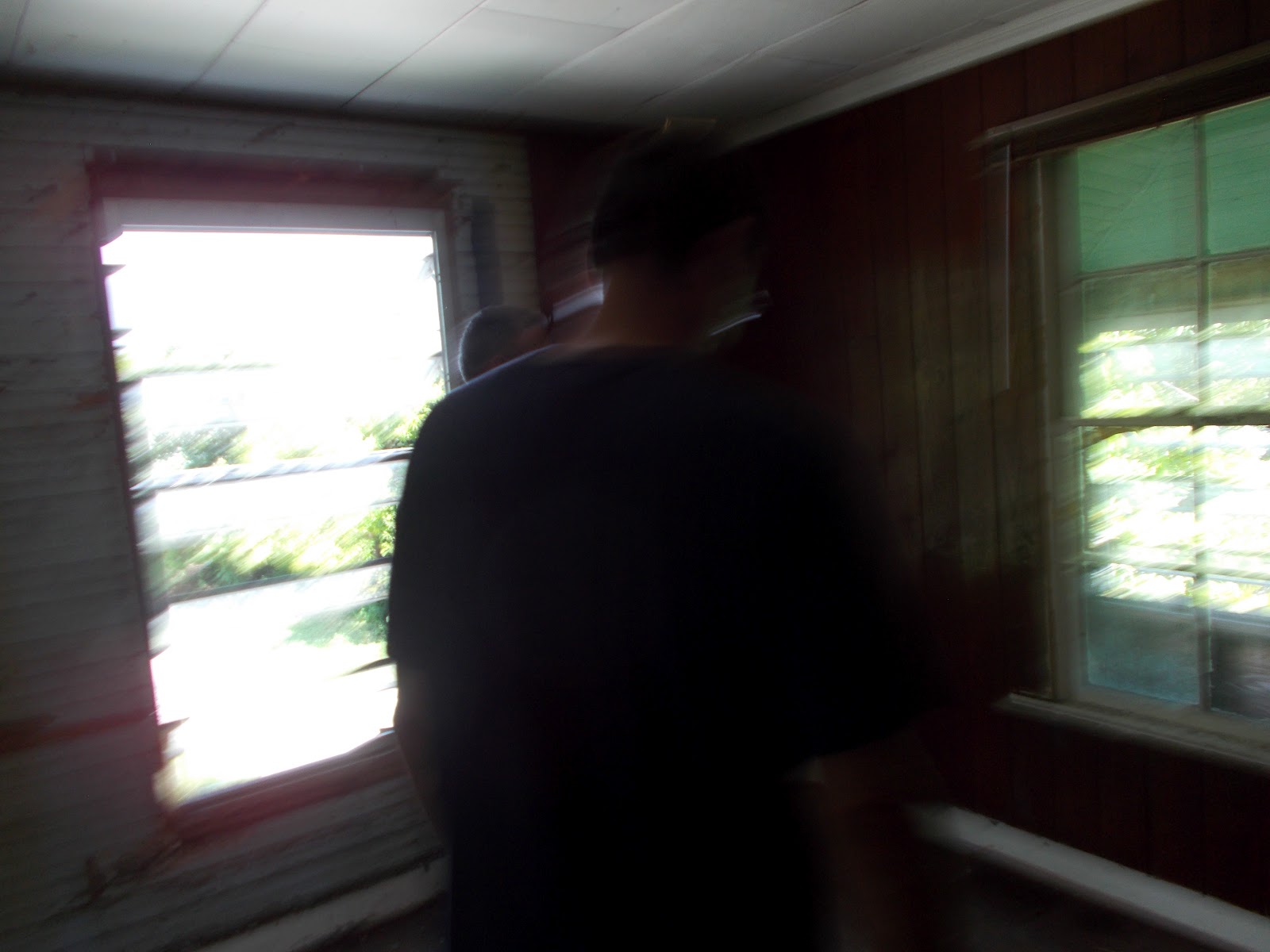
This is where the work was going on, the front room on the 2nd floor. The guys are ripping the paneling off the wall.
While I was unable to get pictures of it, the boards being pulled down have termite tracks all on the back.

Men at work. Behind the wooden paneling are wooden walls, not lathing. Houses of this era were built entirely with
Miami Dade Pine. It is impossible to get Miami Dade pine these days. It’s all been chopped down.

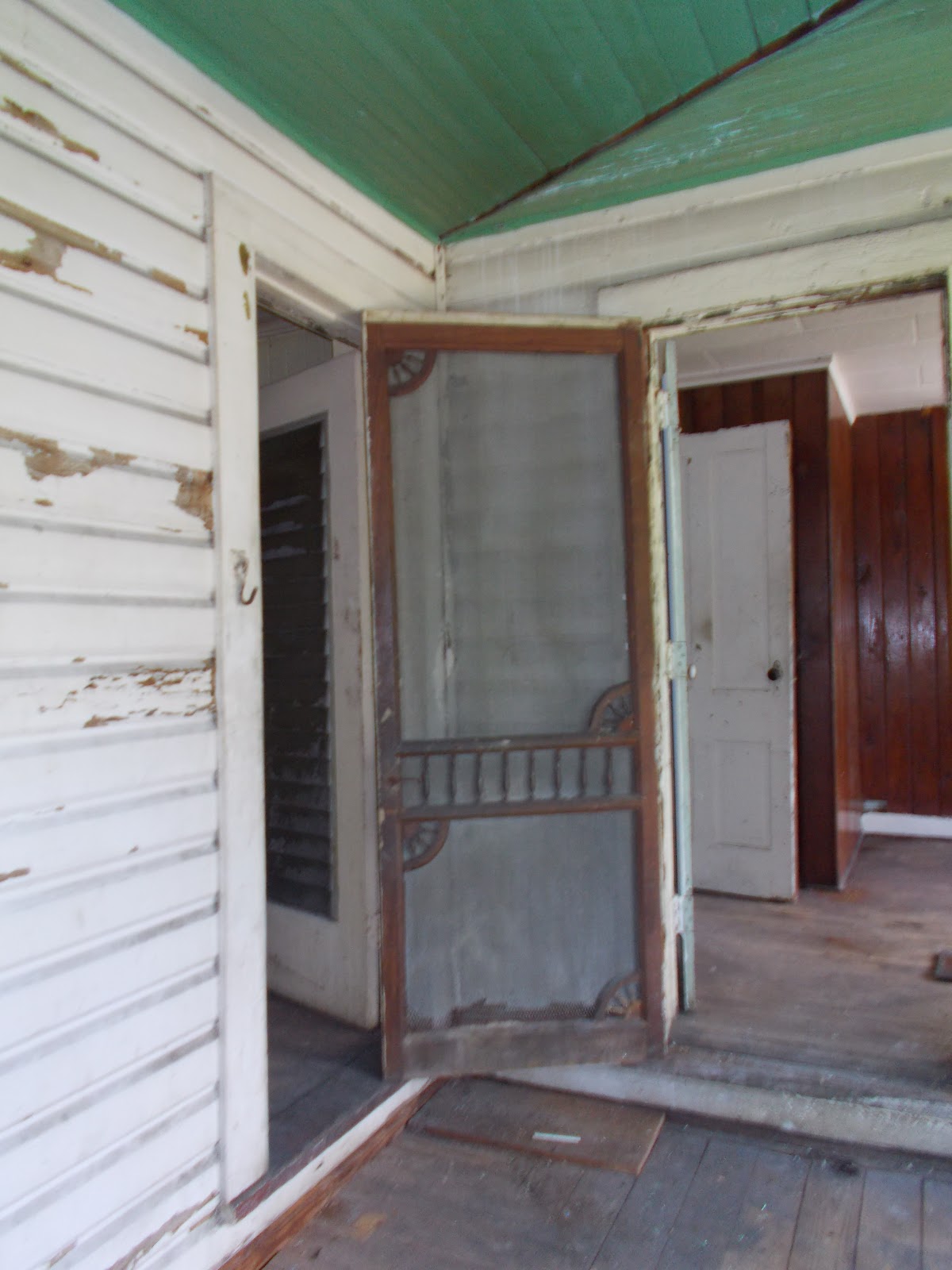
This is the room above the front porch, which provides the shade below. It appears
as if the white wall at left was once an outside wall because it’s made of siding.
That screen door is very pretty and highly sought after by restorationists.

The same room as above, but the reverse angle. It’s very small.

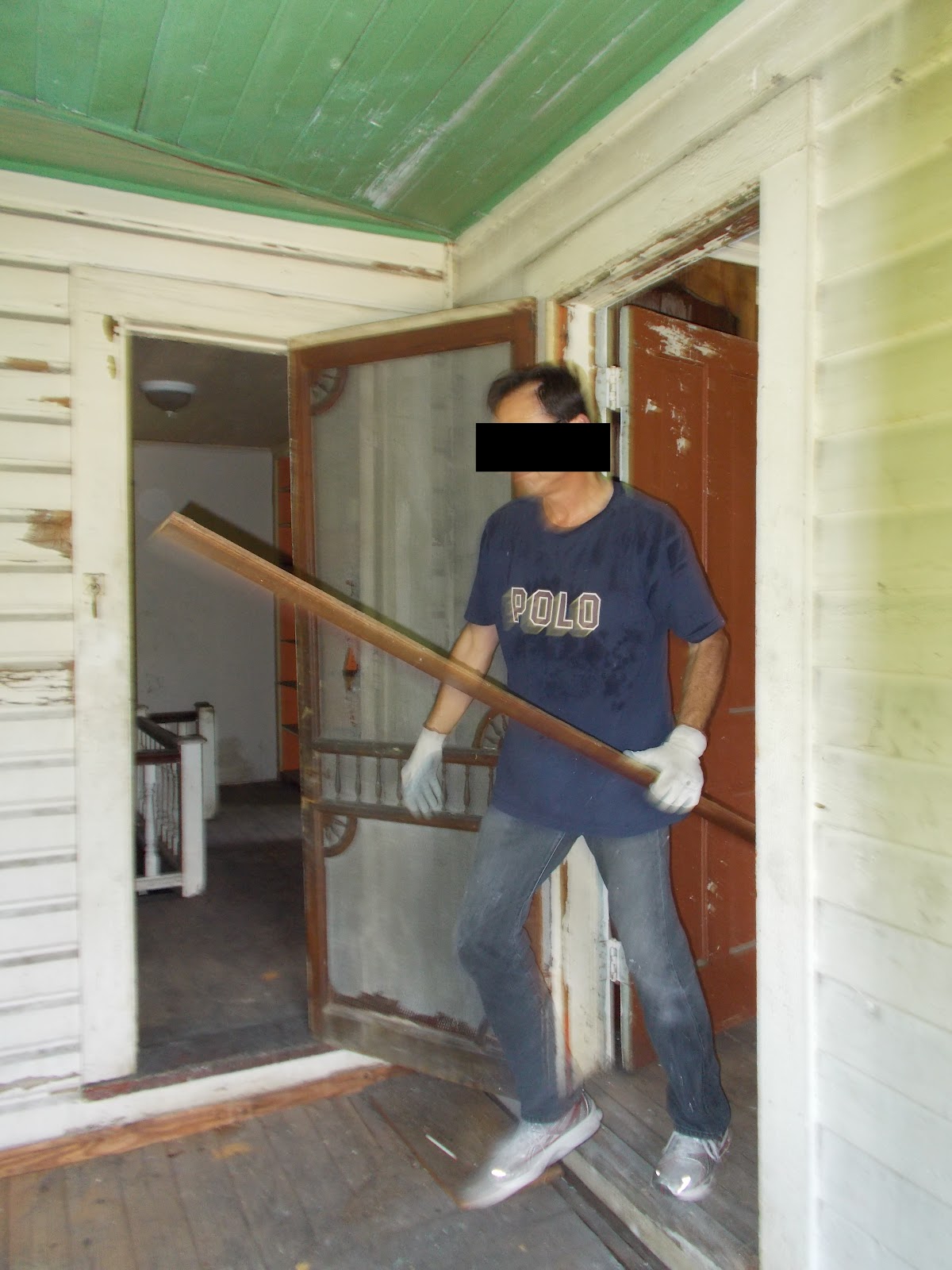
Paneling about to be chucked to the ground from the 2nd story window. You can see the
elements that lead me to believe this was once an exterior 2nd floor porch: the screen door,
the solid door behind the workman, the exterior siding, and the pitched roof above.

The top of the stairs with more built in shelving.

Rooms after rooms after rooms. The back of the house on the 2nd floor.

Aside from the room where the guys were working, this was the least cluttered one.

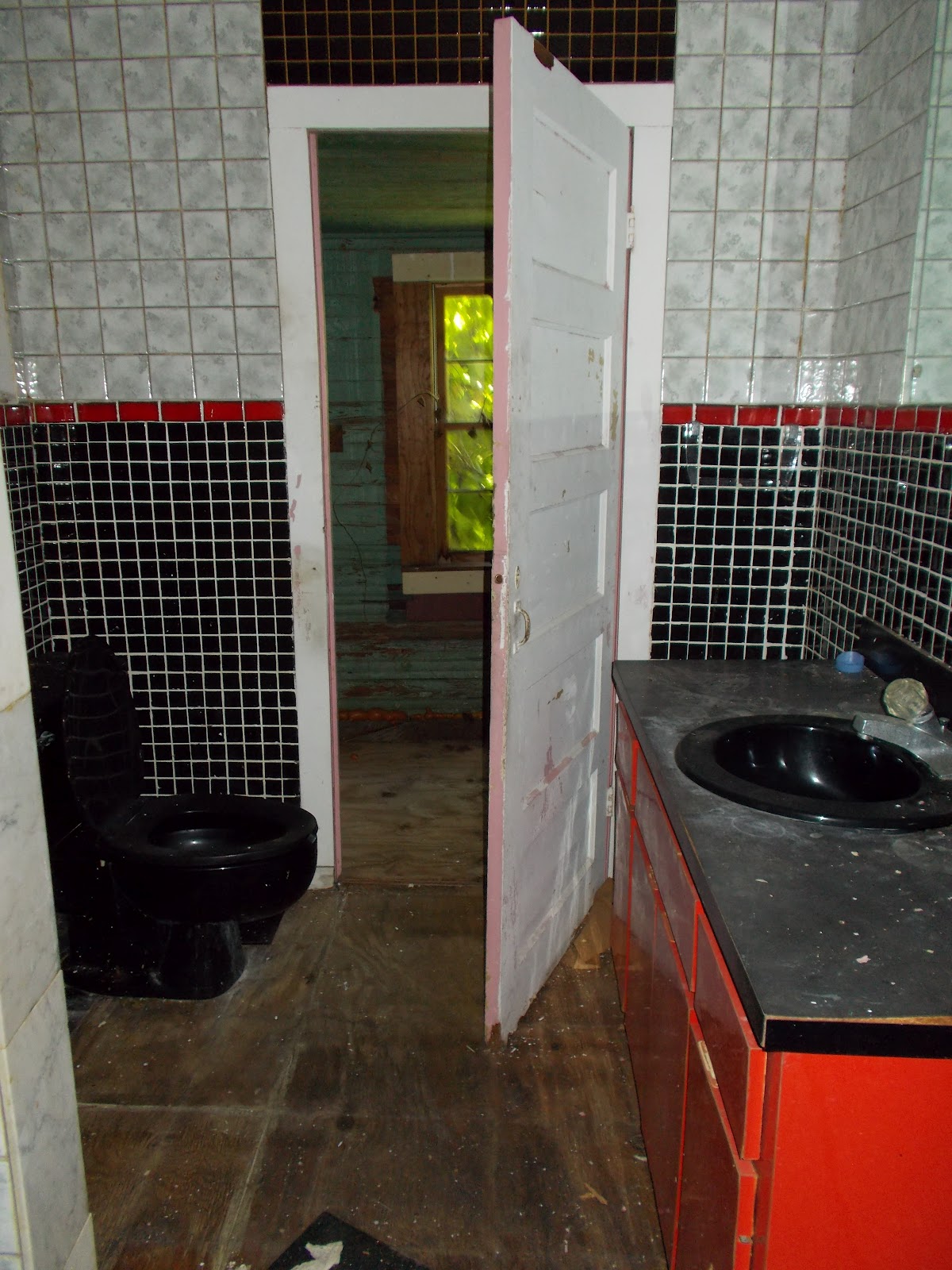
A relatively modern bathroom.

Another view of a relatively modern bathroom.

Coming down the stairs. That’s the front door.

I’m not entirely sure what those things are, but they might be shelves. The rest? Who knows?

Junk and exposed PVC drain pipes. Sorry it’s out of focus.

Another room on the 1st floor, just inside the mud room.

Another view of the same room At this point I decided I better get out while the getting was still good.

Now I wish I had taken more pictures. All told I guess I spent about 15 or 20 minutes inside the house and I was nervous the entire time. Even though the workers gave me permission, if anyone higher up the chain of command showed up it could have gotten dicey, especially if they learned I was the one writing all about the E.W.F. Stirrup House.

Fortunately my guest was still waiting for me when I left. He had declined stepping on to the property himself because, as a newly minted immigrant who had only recently received his Green Card, he didn’t want to do anything that might jeopardize his stay in ‘Merka. However, he was pretty much out of time. So I summed up a few bullet points for him, we shook hands, and parted.

It was only after we parted, and I was already on my drive home, did it occur to me that I had witnessed a potentially illegal act. Whether the property is zoned Residential or Commercial is something that I don’t know for certain. Unconfirmed reports say the zoning has been changed. The City of Miami web site informed me last week that it was Residential. I tried to locate the same information today to see if it had changed and couldn’t even find the place where I had been last week to see if it had changed in the meantime. It’s a very confusing web site.

However, that’s not what is allegedly illegal. The law is pretty clear about construction and renovations and it’s no different in Miami than anywhere else in the country. There must be a Building Permit issued by the Building Department. Furthermore, the Building Permit must be conspicuously displayed. I saw no Building Permit outside the house or inside the house.

That’s why the minute I got home I called the City of Miami and reported it to the Building Inspection Department as a potentially illegal work site. I stressed with the woman who took the information that this needed to be expedited above a normal building inspection because this is a 120-year old structure and there is a fear that the owner/developer is trying to get away with making so many changes it will be too late for the E.W.F. Stirrup House to be the Community Resource Center that neighbourhood rumours say was intended when the Grove Gardens Residences Condominiums was granted ITS building permits.

I have a confirmation number for my complaint and everything. So yeah, MoFos. If you are wondering who reported you, it was me.

Previous Chapters in Unpacking Coconut Grove

***
***

My First Band ► Cobwebs And Strange ► Nostalgia Ain’t What It Used To Be

When I was growing up, like every other kid in ‘Merka, I wanted to be in a band. The Beatles had just broken worldwide and it seemed like the easiest thing in the world. All you had to do is grow your hair long and shake your head every once in a while, right? No, it turns out being in a band actually involved learning an instrument. That’s where I fell down on the job.

We had a crappy acoustical guitar in the house and I would spend hours fumbling on it trying to make it sound like a guitar. It never sounded like a guitar in my hands. That’s when someone suggested I take lessons. Lessons?!?!?! Who knew?

I took many lessons and never seemed to improve. I’d practice for hours V-E-R-Y  S-L-O-W-L-Y and could pull it off the runs and scales. However, the second I tried to speed up it all started to fall apart on me. I could never make my left hand do what I wanted. Eventually my guitar teacher, as gently as he could, told me to give it up. Now keep in mind: he was getting paid for these lessons and could have strung me out forever, earning money on my fumbling. Yet, he was honest enough to tell me that in his career he had seen a couple of people like me before. Slow, I could play anything he gave me. However, the minute we tried to speed it up to anything resembling music, it all fell apart. I had an uncoordinated left hand that wouldn’t obey commands from my brain. I was heartbroken.

It turns out that time proved him right. Over the years I have learned that my left hand is pretty useless for most tasks. When I smoked I couldn’t even use my left hand to hold the cigarette because I managed to drop it so many times. Trying to use a remote with my left hand? Forget it! I’m the EXTREME opposite of ambidextrous. Hell! I’d give my right arm to be ambidextrous.

I was heartbroken until I saw bands like The Turtles and The Rolling
Stones and The Doors. Those bands had lead singers who only had to know
how to shake a tambourine. So, I bought a tambourine and I practiced shaking it, for hours on end. When I felt I had that down I added my next signature move: I’d shake the tambourine, occasionally hitting it with my left hand. Once I perfected that I moved on to Lesson Three: Hitting my thigh with the
tambourine. That was much harder because on Day One of Lesson Three I
created a huge black and blue bruise on my thigh.

Eventually my right thigh toughened up and I could bang a tambourine
with the best of them. It was time to find a bunch of backing musicians.

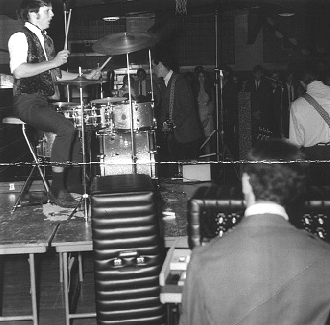
Dean Donaldson, my childhood friend from Gilchrist Avenue

The truth of the matter is the band kind of fell together
organically. Across the street from me lived Dean Donaldson who had
taken up the drums. I can still remember how excited he was when he got his
first pair of drumstick and a practice pad, before he ever got his first
drum set. He came over to the house and put his practice pad on our
kitchen table and said, “I can play ‘Downtown’,” the Petulia Clark hit
that was at the top of the charts right then. Then he started singing
and banging on the pad. Every syllable was punctuated with a thud, alternating hands: ♫
WHEN YOU’RE A-LONE AND LIFE IS MA-KING YOU LONE-LY. YOU CAN AL-WAYS GO
[pause] DOWN-TOWN ♫ and at this he did a little para-diddle. It sounded
like real drumming to me. What did I know? I had just perfected the
tambourine.

I went to summer camp with a fellow named Mark Levine, who played Farfisa organ, and another kid named Howard Deitch, who played guitar. Both were not only proficient on their instruments, but had real equipment with real amplifiers too. That was almost more important than being proficient in those days.

So, now I had a band and we needed a name. One of my favourite songs at the time was a demented instrumental by The Who, written by Keith Moon, called “Cobwebs and Strange.” I don’t remember how I convinced the rest to name the band after this song, but they went for it and Detroit’s “Cobwebs and Strange” were born. Actually, I know why Dean voted for it, because we also did the song and he got to do some wild soloing during that song.

Here’s The Who version. Ours was never recorded for posterity.

The set list was, for the most part, mine. It had to be. I was always the final determining factor for any songs we did, because the song had to be in my very limited vocal range. We did a lot of Doors, The Who, Animals, and Mothers of Invention, The Turtles (which is ironic, due my later friendship with Howard Kaylan; we even did Happy Together and I didn’t have to pay Howard 17 cents either). All those influences were mine, as were the Frank Sinatra covers we did.

Mine, mine, mine!!! ALL MINE!!!

Why am I obsessing over a band I started 45 years ago this year, Daylight Savings Time? Because there’s a web site out there called “My First Band” with a page on Cobwebs and Strange in which I was totally written out of the band’s history, even though I formed the band with my childhood buddies and had the most influence on our set list. Under the rubric of “Cobwebs and Strange/The Greenhalgh Band” it says:

Bill, Howard, Dean and Mark formed “Cobwebs and Strange” in 1967. They won a battle of the bands contest at Cobo Hall (Detroit), winning some equipment. The band did a lot of Doors, Who and Mothers. Also some Motown and Moby Grape.

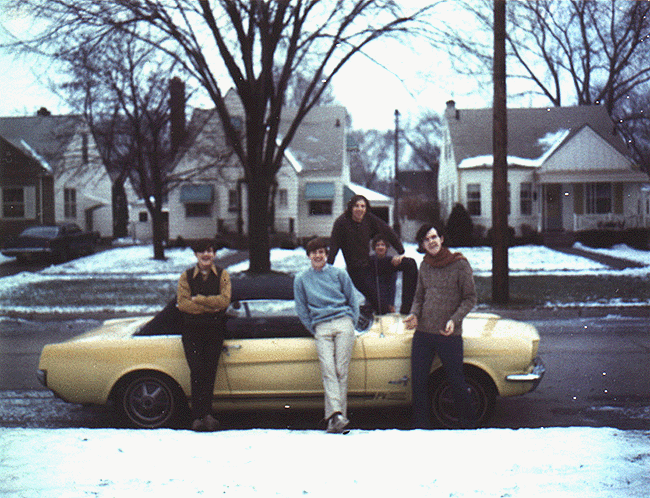
Dean, Bill, Howard and Mark in 1969, after I
had already left the band. I never knew Bill at all.

There is no mention of me anywhere on the web site. I have on 3 separate occasions written to “John Kanaras” for a correction to no avail. He provided the information to “My First Band,” and replaced (according to his own suspect band biography) Mark Levine in Cobwebs and Strange in 1969, having come from Johnny and the Junglemen, which (I’m guessing) was later called The Greenhalgh Band. I have never gotten a response.

Writing to the owner of the web site would do no good. Aside from the fact that he says “we’re no longer taking submissions,” he has a very cleverly worded disclaimer:

The publishers of My First Band™ do not check facts submitted by contributors. All information is expected to be as truthful and factual as possible. My First Band™ is not responsible for any lapses in memory, lack of good taste, assassination of character, disparaging remarks on musicianship, outing of sexual preferences, public exposure of alcohol or pharmaceutical abuse, paternity suits, or any other kinds of vindictiveness festering over 40 years. Information submitted is the sole responsibility of the contributor.

My First Band™ accepts no responsibility for erroneous or fabricated information concerning the bands or individuals listed as members of said bands, so if you’re out to humiliate that guitar player that got all the girls and kicked you out of the band, piss off, we’re just trying to have a little fun here.

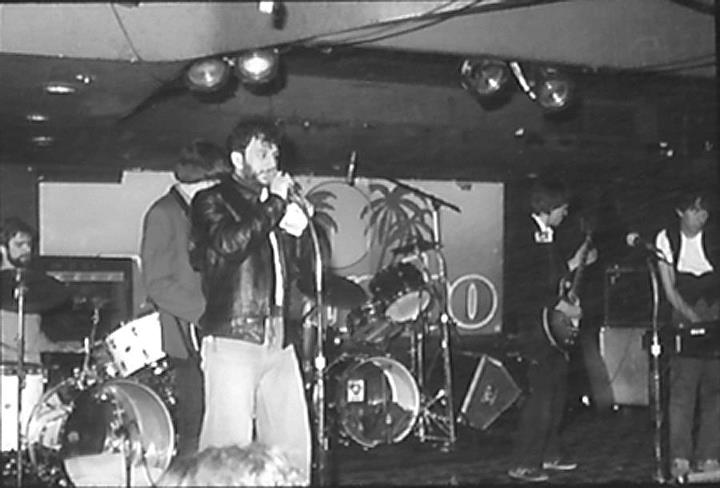
A version  of Cobwebs and Strange I was never in

“Having a little fun here” was the whole reason I started the band in the first place. That and the fact that deep down inside I was a frustrated musician after not being able to play guitar. Maybe that’s why I later went into music promotion and managed several bands.

By 1969 I had already left Cobwebs and Strange because I went to be a councellor at Camp Tamakwa in Algonquin Park, Ontario, Canada and, by the end of that summer, had met a Canadian gal I eventually married. I didn’t live in Detroit a whole lot of time after that and spent 35 years in Canada before returning to the States to take care of Pops.

Me onstage on the venerated El Mocambo stage (where
The Rolling Stones also played) with Drastic Measures.
I love this pic because it appears as if I am singing with
Drastic Measures. I am not. I’m just introducing the band.

The sad, sad truth of the matter is Cobwebs and Strange were probably better off with
out me. I am, to be generous, a mediocre singer with a limited range.
When I do Karaoke, there are some songs I can nail. I do a mean “Sixteen
Tons;” have great fun doing the Otis Redding arrangement of
“Tenderness,” rocking out at the end on the stuttering part; but my favourite is to do the
Louis Prima arrangement of “Just A Gigolo/I Ain’t Got No Body” with my
Louis Armstrong voice. These 3 tunes always go over big because I have
’em down pat. But more importantly, they are in my range and don’t
require me to harmonize. I can’t harmonize worth shit.

Once I was visiting my friend Tony Malone, who I also had the honour of managing when he was the leader of Drastic Measures. He was building up tracks on a song at his home recording studio and asked me if I wanted to add a backup vocal. I was thrilled because I’d finally be on a Tony Malone song. He played me the song and then sang me the part I needed to sing as harmony to his main vocal. I had no trouble singing the part he wrote for me to sing. That is, until he hit playback. Every single time I fell off my harmony line and sang the main melody that the recored Tony was singing. He gave me a nearly a dozen attempts and I did the same thing every time. Without the playback, I had no problem singing that very simple harmony. With the playback, I was a total vocal idiot. Frustrated, Tony gave up on me and sang the harmony line in ONE TAKE! One fucking take!!! I felt humiliated. But I also knew I was watching a true professional at work.

Anyway, that’s my story of My First Band and I am reclaiming my history starting NOW.

***
***

Unpacking My Detroit ► Part 5.1 ► The 1943 Riot

Late last month I wrote about Detroit’s three major riots, one of them being the 1943 Riot. I am currently reading an amazing book that adds a bit more context to that riot. “The Warmth of Other Suns; The Epic Story of America’s Great Migration” by Isabel Wilkerson won the Pulitzer Prize in History, as well as many other prizes and awards. They are all well-deserved. I highly recommend this book to anyone looking to understand the pressures Black folks felt in the south and how moving north didn’t necessarily make them first class citizens.

Wilkerson tells this sweeping story by following the lives of 3 people: Ida Mae Brandon Gladney from Chickasaw County, Mississippi; Robert Joseph Persing Foster, from Monroe, Louisiana; and George Swanson Starling, late of Wildwood, Florida.

George Starling, married too early out of spite, found himself picking citrus fruit (and many other odd jobs) in order to save up enough money to send his wife to hair dressing school and finish his education at a university in Tallahassee. He dropped out due to finances, but always planned to return. However, during World War Two he heard they were hiring in Detroit. Against his wife’s wishes he moved north by himself to help assemble B-29 bombers in what was being called The Arsenal of Democracy; when the entire car industry was turned over to defeating Hitler and Japan. Wilkerson picks up his story:

Then on the humid night of Sunday, June 20, 1943, a fight broke out between several hundred white and colored * men on Belle Isle, a park extending into the Detroit River on the east side of town. The fighting spread north, south, and west as rumors circulated among blacks that white men had killed a colored woman and thrown her baby into the Detroit River and, among whites, that colored men had raped and killed a white woman in the park.

Neither rumor turned out to be true, but it was all that was needed to set off one of the worst riots ever seen in the United States, an outbreak that would mark a turning point in American race relations. Until the 1943 uprising in Detroit, most riots in the United States, from the 1863 Draft Riots in New York to the riots in Tulsa in 1921, to Atlanta in 1906 to Washington, D.C., to Chicago, Springfield, and East St. Louis, Illinois, and Wilmington, North Carolina, among others, had been white attacks on colored people, often resulting in the burning of entire colored sections or towns.

This was the first major riot in which blacks fought back as earnestly as the whites and in which black residents, having become established in the city but still relegated to run down ghettos, began attacking and looting perceived symbols of exploitation, the stores and laundries run by whites and other outsiders that blacks felt were cheating them. It was only after Detroit that riots became known as urban phenomena, ultimately centered on inner-city blacks venting their frustrations on the ghetto that confined them.

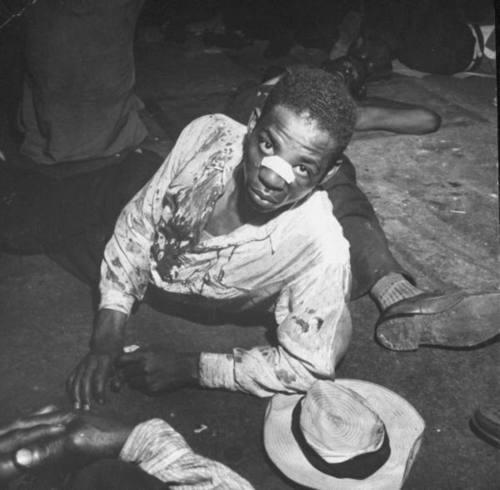
The Detroit Riots went on for close to a week, ending in thirty-four deaths and more than one thousand wounded. The Sunday night the riot began, as many as many as five thousand people joined in the stoning, stabbing, and shooting, so many people injured that the municipal hospital was admitting riot victims at a rate of one a minute.

George was living at 208 Josephine near Hastings and Woodward and heard the mayhem in the streets and on the radio all through the night. He was living in the middle of the crowded colored quarter mockingly called Paradise Valley, where blacks were stoning the cars of passing whites, whites were beating up blacks as they emerged from the all-night theaters on Woodward, and an inspector on the scene reported to the police commissioner that the situation was out of control.

The rioting continued into the next morning. It was now Monday, the start of the work week. A Co-worker of George’s called him up.

“Hey Starling, what you gonna do?”

“Do ’bout what?”

” ‘Bout going to work.”

“I’m going.”

“Man, you must be crazy.”

“What you talking about?”

“Don’t you know? Where you been? You didn’t know it was a riot going on?”

“Yeah, but I ain’t got nothin’ to do with it. I ain’t in no gang.”

“This ain’t no gang fight. This is a riot.”

“Well, they ain’t gonna bother me. I ain’t done nothing to nobody. I’m going to work.”

“You gonna get yourself killed.”

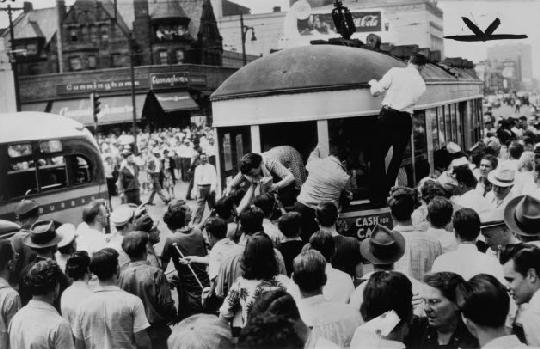
Streetcar violence on Woodward

George had to take two trolleys to get to Hamtramck. He boarded the first in a colored neighborhood, and instantly something was wrong. The colored people were sitting up straight; the white people were crouched in their seats so they couldn’t be seen out the window.

Wonder why these people down on the floor like they are, he asked himself.

The trolley made its way to a white neighborhood, and now the colored people crouched down and the white people sat up.

What in the devil is going on? he said to himself.

The trolley pulled into the intersection. A mob two blocks long stood cursing outside the trolley.

What’s wrong with all them people? he thought.

The mob became a single organism descending on the trolley. The trolley operator moved fast. “He went back the other way,” George said. “That’s the only thing that saved us. And that’s when I began to realize the seriousness of this thing.”

He managed to make it to work that day. But the trouble wasn’t over. The rioting continued all day Monday and into a second night. When he got back home to Hastings Street that evening, a mob was approaching from Woodward, howling and turning over cars.

“I ran so fast my heels were hitting my back,” he said.

As he rounded the corner onto Josephine, he could see a colored mob forming. “They were turning over white cars,” he said, “dumping the people out like you dump ashes out an ashtray and setting the cars on fire.”

Some colored men in his block stood on the sidewalk, trying to figure out what to do. They gathered the empty bottles in their flats to throw at people if it came to that. “We were wondering how it was going to end up.”

A white undertaker in the block joined the colored men contemplating the situation. He did not leave when the other white people fled. He fixed his feet on the ground with the neighbors who happened to be colored and let it be known where he stood. He might need their protection if it came to that.

“You know them white folks raising hell over there on Woodward Avenue,” the white undertaker started to say.

“Yeah, they sure are,” George said.

The white undertaker drew closer and into their circle. “But us colored folks is giving ’em hell over on Hastings,” he said.

The colored men welcomed a new brother, and they all laughed at the meaning of that. **

This book should be read by everyone interested in race relations in ‘Merka. It covers such a wide pallet, from the south to cities all across the nation, from Jim Crow laws to relative freedom. Don’t be put off by its 538 pages (not including index, end notes and notes on methodology). It’s a very well-written book and the pages breeze by, except for all the lynchings and ugliness, which cannot be ignored.

READ IT!!!

* Wilkerson explains that she is using the language of the times
** Hoping “Fair Use” covers this long excerpt; any mistakes or typos are mine

Unpacking Coconut Grove ► Part Three ► Who Controls What On Charles Avenue

East side of the E.W.F. Stirrup House, still undergoing Demolition by
Neglect with the Garden Grove Condominiums in the background.

Some good news came in over the transom this past week. Miami’s Historical and Environmental Preservation Board [HEP cats?] voted unanimously to make Charles Avenue an Historic Designation Roadway, whatever the heck that means. This seems to have no practical effect: no money will be
spent and no signs will be placed. However, signs need not be placed because there are several informational signs along Charles Avenue. In an upcoming chapter of Uncovering Coconut Grove I will talk about all the Charles Avenue signage.

Meanwhile, how will this Historic Designation Roadway thangie affect my campaign to
save the E.W.F. Stirrup House? It’s hard to tell. The designation did
not appear to mention the Stirrup House, nor did it delve into the
survival of the Coconut Grove Playhouse, or the Mariah Brown house, said to be the first home owned
by a Black person in south Florida. These three structures are empty and have been empty for years now.

Yet, as my initial research began informing me, the E.W.F. Stirrup House dates back to a unique time and place in ‘Merka. In later chapters of this series I will explore what makes Charles Avenue, and the Black enclave that grew up around it, totally unique to all other Black neighbourhoods in ‘Merka.

The historical marker that started it all.
The vacant lot is behind this sign.

I first started my campaign to save the Stirrup House several years ago when I just happened to run across the historical marker on Charles Avenue. The marker had seen better days, but there was just enough on the sign to pique my interest. However, it was when I looked across the street did I see the gem of the neighbourhood, the historical Stirrup House, built in 1898. Buildings of any age are a rarity in south Florida, a state that appears to have no sense of history, no sense of of place, and no indigenous architectural style. Florida buildings present a pastiche of other architectural elements, but nothing Floridian.

On that first visit to Charles Avenue I noticed an empty lot immediately across the street from the Stirrup House. Later that day, while using Google Street View, I was surprised to see a house on what had been a vacant lot when I was there. That became the first mystery to solve: Where did that house go, and why?

That mystery was solved pretty quickly. While there had been a house on that lot as late as 2007, it was knocked down to create a marshaling yard for equipment and materials needed to build the Grove Gardens Condominium complex.

I started keeping a paper map on which I added what I had learned interviewing neighbours up and down Charles Avenue. There were many crossoffs on that map. Some of the early information turned out to be bogus, but some of the rumours have actually led to hard information, or additional areas of solid inquiry. Eventually I had to throw out that paper map and have created a new, 21st century, electronic version of the Charles Avenue map as I delve into who controls what on the east end of Charles Avenue.

Like any good reporter, I will continue to follow the money. Right now all the threads I am pulling seems to lead to the same place: Ottawa, Ontario, Canada, of all places.

Meanwhile, here’s my current map of the area on which I have added information on who controls what on Charles Avenue. Click around on the map. Each shaded area and marker has a small explination of what I have been able to confirm so far, along with some of the rumours.

This map will change as I learn new information.

The Detroit Riots ► Unpacking My Detroit ► Part Five

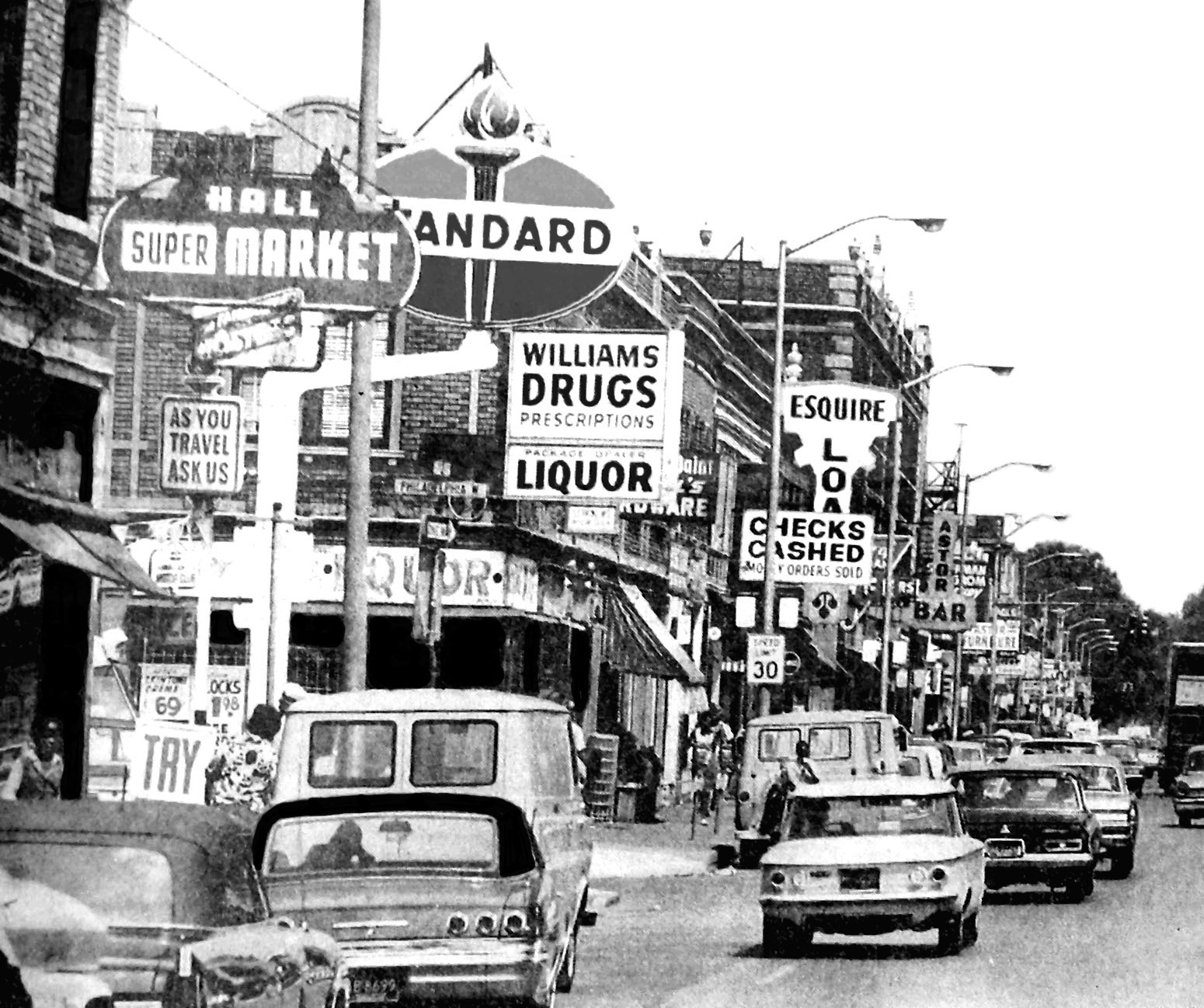
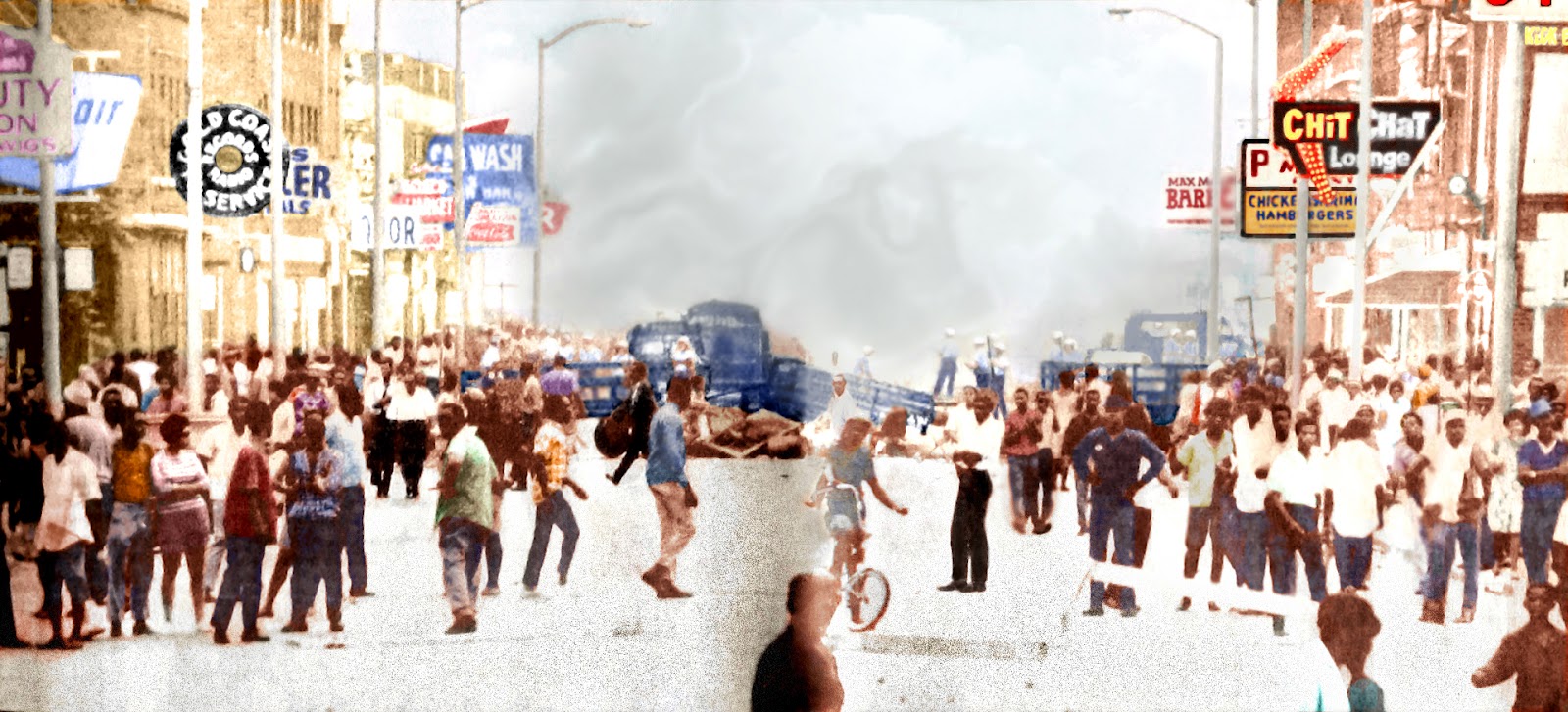
12th Street, Detroit. Michigan, one week before the 1967 Riot.
That’s Pops’ store way down the block on the left: Astor Furniture.

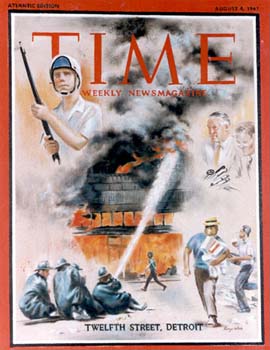
When people hear I am from Detroit, inevitably they ask about the Detroit Riot. “Which one?” I always reply. There was more than one, yet most people are only aware of the 1967 Black Day In July Riot. However, when you look at the history of Detroit, it’s apparent that rioting is in her DNA—both figuratively and literally—but I’ll get to that later. First I will tell you of my personal experiences during the ’67 Riot because that’s what people really want to know when they ask about the Detroit Riot. I want to get it out of the way quickly [or as quickly as my story-telling tangents allow] because there are much better riots to talk about. However, you will need some important context.

Astor Furniture, on Detroit’s 12th Street, was where my father had a new and used furniture store in 1967. The street is now known as Rosa Parks Boulevard and Pops’ store was at the corner of Blaine.  My house on the edge of Detroit, near 8 Mile, was less than 10 miles from Pops’ store on 12th Street. However, it might have been a million miles away, as different as the two places were. My neighbourhood had no Black people; where Pops had his store, there were no White people. Detroit has long been considered one of the most segregated cities in ‘Merka and this gulf between where we lived and where my father earned his living was the personification of that for me as I grew up. 

Gordon Lightfoot tells you all about it:

I used to go down to 12th Street with Pops on the weekends and, as I got older, would often go out on deliveries with the all-Black crew to deliver furniture all around the neighbourhood.  Over the years I got to see the inside of many houses and apartments along 12th Street.  One of the things that always struck me was how many living rooms had little shrines to both Jesus and President Kennedy.  However, that’s not why you’re here. It’s the riot you want to know about.

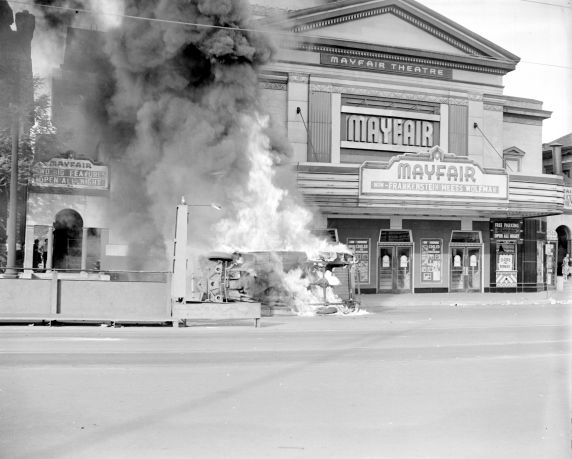
Astor Furniture after the worst of the 1967 Detroit Riot.
Police have made the streets safe for firefighting.

The Detroit Riot of 1967 began on the corner of 12th Street and Clairmont, exactly four blocks from Pops’ store. I was out of town. That’s my alibi and I’m sticking to it.

Every summer I went to camp in the wilds of Ortonville, Michigan.  At some point every year they’d pack us onto a bus and smuggle us into another country. We would head off to Stratford, Ontario, Canada to see a Shakespearean play written by Shakespeare. I guess so they could tell my parents, “We tried to civilize him” at the end of the camp session. After the play we would grab a late meal in Stratford like the young sophisticates we were pretending to be. It was the only place we could spend any of the money we took with us to camp. The Tuck Shop had crap for sale. Every year the counselors made us promise that no matter what we wouldn’t phone home, or otherwise embarrass them in the Sin City of Stratford, Ontario, while they ditched us.

In 1967, when the play ended, we spread out to various restaurants around town.  It was on a newsstand at the restaurant I saw the 1st DETROIT RIOTS headline. On the front of the newspaper was a picture of Pops’ store with the riot in progress right in front of it!!! I started running around Stratford looking for a counselor who could give me permission to phone home. Later we learned that the counselors already knew about the riot, but had withheld that information from us so as to not worry us. Word spread quickly among the campers and eventually there were lineups at all the payphones in Stratford.

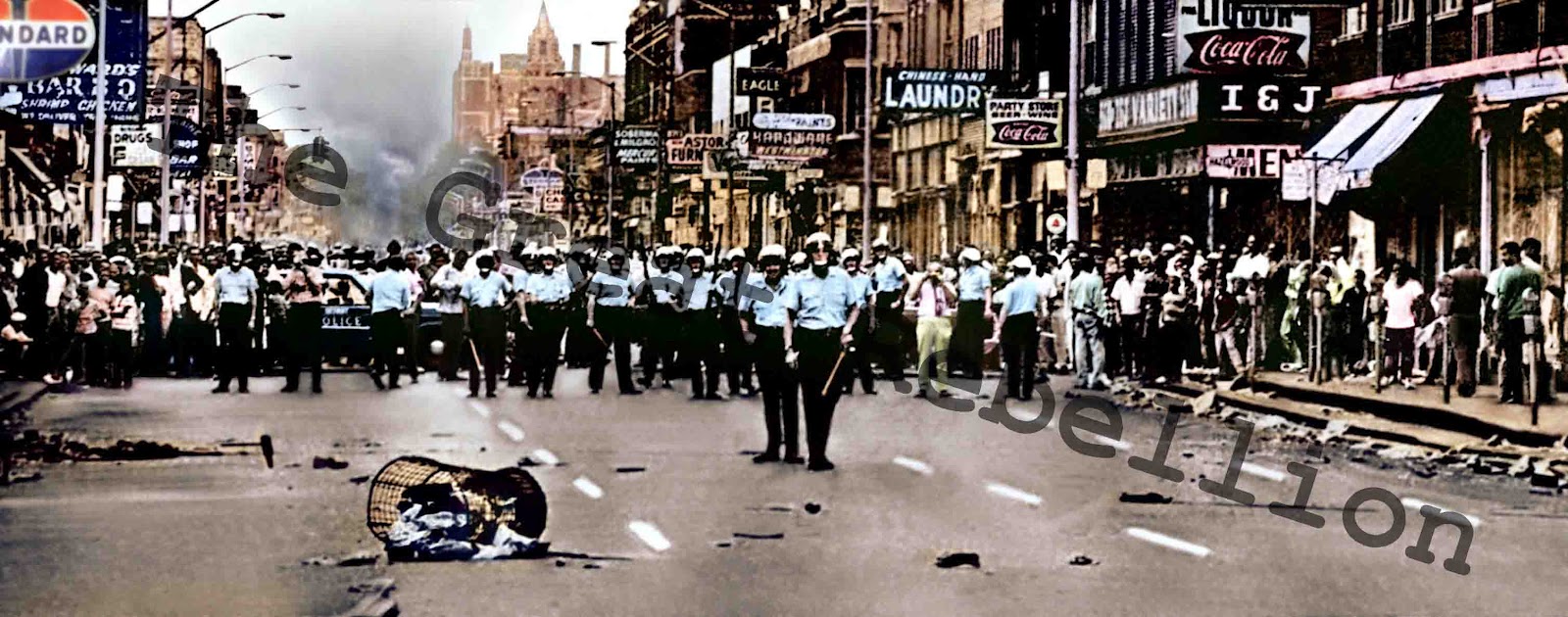
There’s Astor Furniture again on the right as police make the streets safe for firefighting.
This picture is © Kenneth Stahl, of The Great Rebellion who has graciously allowed its use.

So, that’s my Detroit riot story; I missed it entirely.  I bet my father wishes he could say the same.  He lost every stick of furniture in the store, as well as his front windows. However, he was better off than other business owners who were burned out. After Marshall Law was lifted, and civilians were allowed back in the area, he was able to start all over again in the same location.  However, it was a total loss for him.  Insurance was so prohibitively expensive that he did without it. After the riot he was left to pick up the pieces by himself.

I never worked on 12th Street again.

This is the building on the corner of Clairmont and 12th Street,
where police raided a blind pig, triggering the 1967 Riot.

The 1967 Detroit Riot began over a single flash point, following many years of bad mojo between the all-White Detroit Police Department and the all-Black neighbourhoods they patrolled. The trigger was a raid on a “blind pig,” essentially an after-hours, illegal drinking establishment. Police decided they were going to arrest the people in the “blind pig.” That’s the official story and is correct as far as it goes.

Coincidentally, or maybe not, the blind pig was also a celebration for some returning Vietnam Vets. When police came to bust the joint it got loud. The veterans said, in essence, “Enough is enough. We just got back from Vietnam defending this country and we won’t be treated like 2nd class citizens any longer.” However, they didn’t start the riot. They were the straw that broke the camel’s back.

Due to the sheer numbers in the blind pig (reportedly 82) police were forced to call in several paddy wagons. As the arrests proceeded a crowd started to grow. It was a hot night and culturally this neighbourhood kept very different hours than the lily-White block where I lived, with everyone tucked safely into bed by 11 PM. It was always true that Black people were far more visible in their neighbourhood than Whites were in their own. Unemployment was one factor, culture was a bigger factor. During the ’50s and ’60s when White Home Life™ turned to suburbia, car culture, and backyard barbecues, Black Home Life™ was more street oriented; front porches, street corners, back alleys (which my neighbourhood didn’t even have) were all gathering places for friends and family, especially in the days before air conditioning was ubiquitous.

All this to explain why a large crowd gathered almost immediately while
police waited for the paddy wagons. However, that doesn’t explain the anger that
exploded into the ’67 Riot. Years of injustice does. The neighbourhood came to view the Detroit Police Department as an
Occupying Force and, despite the Civil Rights Act and promises of The Great Society,
Blacks were still getting the short end of the stick, and getting it in their own neighbourhoods. The amazing thing to me about the ’67 Detroit Riot was how instantaneous it was. It went from zero to Riot in under an hour and took five days to quell.

One of thousands of pictures of the ’67 Detroit Riot I have viewed. I have only found Pops’ store in two of them.

Just as fires cannot erupt in a vacuum, neither do riots. Among the
several factors underlying the 1967 Detroit Riot three loomed
large: White Flight, Police Brutality and a severe housing shortage. The housing
shortage stemmed, in part, from a growing economy. The Big Three were
hiring in those days. According to a web site at Rutgers:

Like Newark, Detroit was swept by a wave of white flight. During the
1950s the white population of Detroit declined by 23%. Correspondingly,
the percentage of non-whites rose from 16.1% to 29.1%. In sheer numbers
the black population of Detroit increased from 303,000 to 487,000 during
that decade. (Fine 1989:4) By 1967, the black population of Detroit
stood at an estimated 40% of the total population. (National Advisory
Committee on Civil Disorders 1968:89-90). As in Newark, some
neighborhoods were more affected by white flight than others. This was
particularly true for the Twelfth Street neighborhood, where rioting
broke out in the summer of 1967. “Whereas virtually no blacks lived
there in 1940 (the area was 98.7% white), the area was over one-third
(37.2%) non-white in 1950. By 1960, the proportion of blacks to whites
had nearly reversed: only 3.8 percent of the areas residents were white.
Given that the first blacks did not move to the area until 1947 and
1948, the area underwent a complete racial transition in little more
than a decade.” Sugrue 1996:244)

This rapid turnover in population in the neighborhood brought with it
the attendant ills of social disorganization, crime and further
discrimination. It’s impact in the 12th street area was devastating.
According to Sidney Fine, “The transition from white to black on
Detroit’s near northwest side occurred at a remarkably rapid rate…In a
familiar pattern of neighborhood succession, as blacks moved in after
World War II, the Jews moved out. The first black migrants to the area
were middle class persons seeking to escape the confines of Paradise
Valley. They enjoyed about “five good years” in their new homes until
underworld and seedier elements from Hastings Street and Paradise
Valley, the poor and indigent from the inner city, and winos and
derelicts from skid row flowed into the area. Some of the commercial
establishments on Twelfth Street gave way to pool halls, liquor stores,
sleazy bars, pawn shops, and second hand businesses. Already suffering
from a housing shortage and lack of open space, Twelfth Street became
more “densely packed” as apartments were subdivided and six to eight
families began to live where two had resided before. The 21,376 persons
per square mile in the area in 1960 were almost double the city’s
average” (Fine 1989:4) This neighborhood would serve as the epicenter of
the 1967 riot. 

When it’s all gone just the marker remains.
Is this the ultimate fate of the E.W.F. Stirrup House?

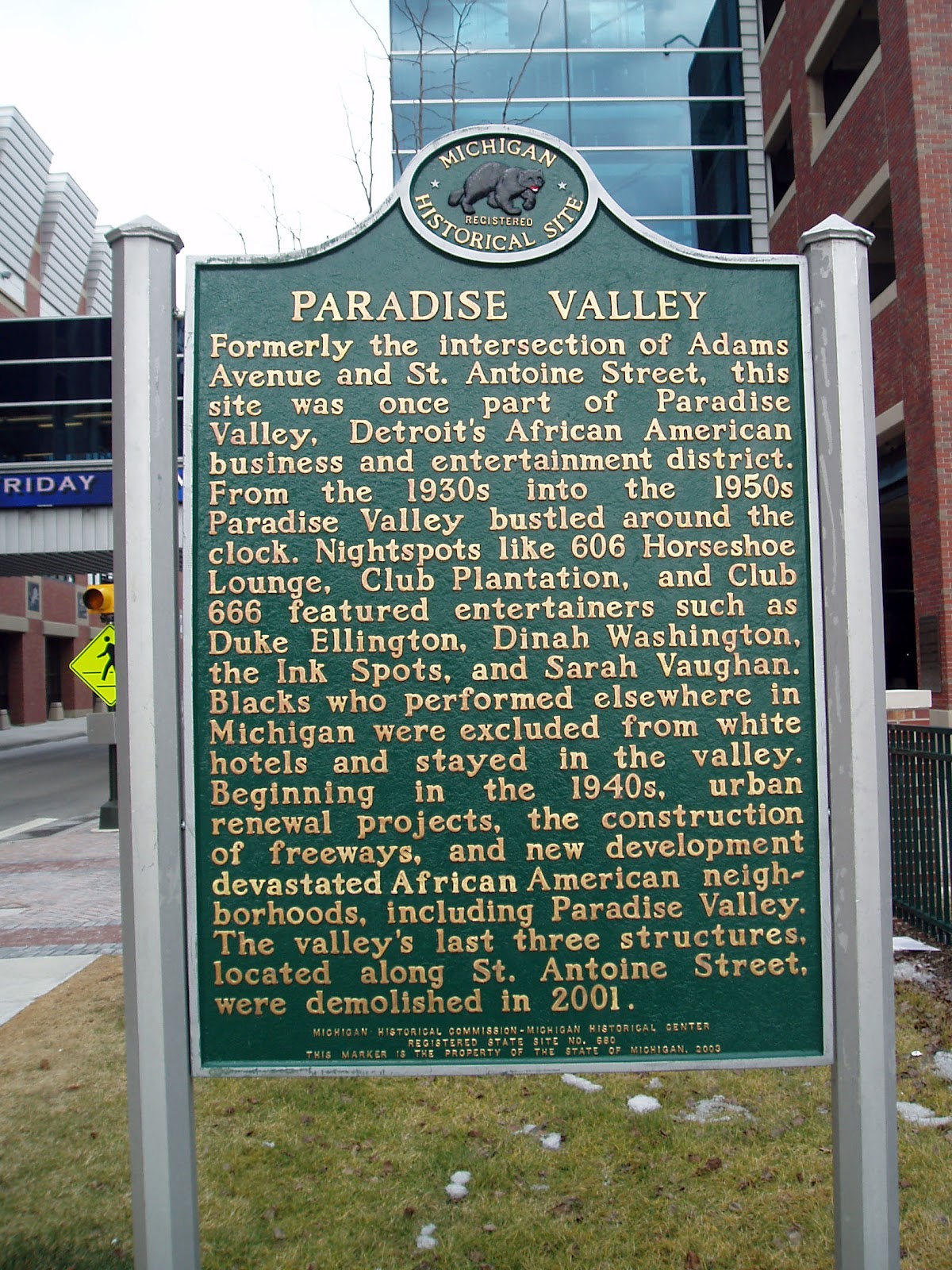
It didn’t help that, under the guise of Urban Renewal, it was decided to ram I-75 through the city. Paradise Valley and Black Bottom, the traditional Black areas of Detroit, were razed and paved over. While it’s true these were some of the worst slums in Detroit, it was also home to the thriving Black Culture of the city, with many self-sustaining businesses along with Jazz and Blues clubs up and down Hastings. When these neighbourhoods were torn down, the people had to go somewhere. Because of redlining, Blacks couldn’t move much farther than 12th Street. Had 12th Street not undergone such a dramatic demographic shift in such a short period of time, who knows how Detroit might have developed. However, that’s all water under the Ambassador Bridge now.

Rutgers also outlined the issue of Police Brutality, another factor leading up to the riot:

In Detroit, during the 1960s the “Big Four” or “Tac Squad” roamed the streets, searching for bars to raid and prostitutes to arrest. These elite 4 man units frequently stopped youths who were driving or walking through the 12th street neighborhood. They verbally degraded these youths, calling them “boy” and “nigger*”, asking them who they were and where they were going. (Fine 1989:98). Most of the time, black residents were asked to produce identification, and having suffered their requisite share of humiliation, were allowed to proceed on their way. But if one could not produce “proper” identification, this could lead to arrest or worse. In a few notable cases, police stops led to the injury or death of those who were detained. Such excessive use of force was manifested in the 1962 police shooting of a black prostitute named Shirley Scott who, like Lester Long of Newark, was shot in the back while fleeing from the back of a patrol car. Other high profile cases of police brutality in Detroit included the severe beating of another prostitute, Barbara Jackson, in 1964, and the beating of Howard King, a black teenager, for “allegedly disturbing the peace”. (Fine 1989:117) But the main issue in the minds of Detroit’s black residents was police harassment and police brutality, which they identified in a Detroit Free Press Survey as the number one problem they faced in the period leading up to the riot. (Detroit Free Press 1968, Fine 1989, Thomas 1967). According to a Detroit Free Press Survey, residents reported police brutality as the number as the number one problem they faced in the period leading up to the riot. (Detroit Free Press 1968, Fine 1989, Thomas 1967).

[…]

Despite the election of a liberal Democratic mayor who appointed African Americans to prominent positions in his administration, and despite Mayor Jerome Cavanaugh’s good working relationship with mainstream civil rights groups, a significant segment of the black community in Detroit felt disenfranchised, frustrated by what they perceived to be the relatively slow pace of racial change and persistent racial inequality. Local militant leaders like the Reverend Albert Cleague spoke of self-determination and separatism for black people, arguing that whites were incapable and or unwilling to share power. The civil rights movement was deemed a failure by these young leaders in the black community. At a black power rally in Detroit in early July 1967, H. Rap Brown foreshadowed the course of future events, stating that if “Motown” didn’t come around, “we are going to burn you down”.

Detroit was ripe for riot by 1967, especially following the mini-Kercheval riot of the previous year.

The WikiWackyWoo sums up:

Over the period of five days, forty-three people died, of whom 33 were black and ten white. The other damages were calculated as follows:

  • 467 injured: 182 civilians, 167 Detroit police officers, 83 Detroit firefighters, 17 National Guard troops, 16 State Police officers, 3 U.S. Army soldiers.
  • 7,231 arrested: 6,528 adults, 703 juveniles; the youngest, 4, the oldest, 82. Half of those arrested had no criminal record.
  • 2,509 stores looted or burned, 388 families rendered homeless or displaced and 412 buildings burned or damaged enough to be demolished. Dollar losses from arson and looting ranged from $40 million to $80 million.[19]

That, ladies and gentleman, is your Detroit Riot of 1967. After John Lee Hooker reports to us via The Blues, we can get to the good stuff.

* I refuse to soften the ugliest word in the English language by using that awful construct “The N Word.” Don’t like it? Me neither.

Part Two – The 1943 Detroit Riot

When I start telling people about the 1943 Detroit Riot, they blink. Huh? What? Yet, the ’43 riot seems almost as predictable as the ’67 Riot. Just as fires cannot erupt in a vacuum, neither do riots. There were several pressures that led to the ’43 riot. Again jobs and housing were two of the main flashpoints, but systemic racism was at the bottom of it all.

Dr. Ossian Sweet, movin’ on up?
Not if the neighbours can help it.

One of the festering resentments in Detroit’s ugly housing legacy goes back to the ’20s, when Dr. Ossian Sweet found himself on trial for murder merely because he wanted to move to a better neighbourhood. Sweet purchased a house on Garland Avenue, on what would become my birthday, June 7, 1925. According to published reports, Sweet paid $6,000 over market-value to a White homeowner who knew how desperate Blacks were to find good housing. The trouble started when Sweet and his family tried to occupy the house in September. When a White mob formed for the second day in a row, it trapped Sweet, his wife Gladys, and nine other men recruited to help Sweet protect his Civil Rights. The mob threw rocks and shots were fired from an upstairs window; one of the mob was killed, another wounded. All 11 in the house were put on trial for murder, with Clarence Darrow defending. After a mistrial, there was an acquittal against Sweet and the prosecutors decided to dismiss all charges against the remaining defendants.

A sign near the Sojourner
Truth housing project.

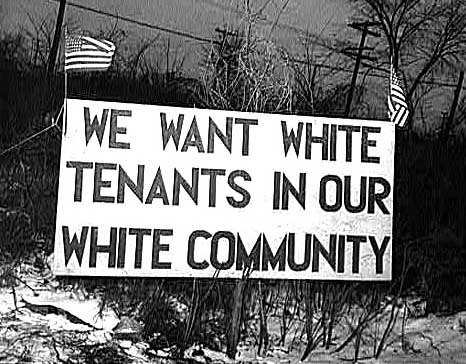
Less than 20 years later Detroit housing would become another flashpoint, with Whites once again the instigators. When the Feds announced a housing projects for Detroit, on the edge of a traditional White neighbourhood, the local community assumed it was for their own kind. When  it was named the Sojourner Truth housing project, Whites protested. The government reversed its decision and decided this would be for Whites and it would find another location for a Black housing project, even tho’ it would retain the Truth name. Then Detroit Mayor Edward Jeffries, Jr. got involved and the Feds reversed their decision again: This housing would be for the Black people of Detroit who desperately needed housing. On moving day Whites protested, turning away the first families. It was months before people would eventually move in.

Less than a year later, according to the WikiWackyWoo:

In early June 1943, three weeks before the riot, Packard Motor Car Company promoted three blacks to work next to whites in the assembly lines. This promotion caused 25,000 whites to walk off the job, effectively slowing down the critical war production. It was clear that whites didn’t mind that blacks worked in the same plant but refused to work side-by-side with them. During the protest, a voice with a Southern accent shouted in the loudspeaker, “I’d rather see Hitler and Hirohito win than work next to a Nigger”*.[7]

The kindling was already there. Tempers were obviously at a boiling point and the muggy heat of a late June evening didn’t help. According to PBS:

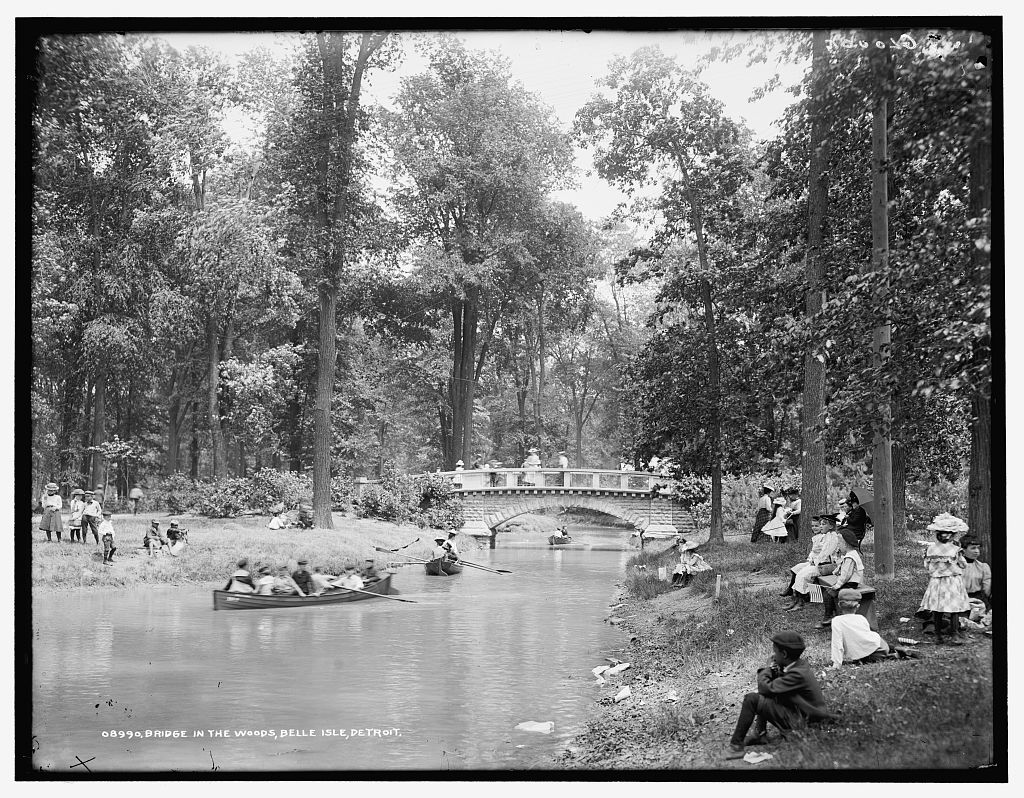
Belle Isle

Detroit riot began at a popular and integrated amusement park known as Belle Isle. On the muggy summer evening of June 20, 1943, the playground was ablaze with activity. Several incidents occurred that night including multiple fights between teenagers of both races. White teenagers were often aided by sailors who were stationed at the Naval Armory nearby. As people began leaving the island for home, major traffic jams and congestion at the ferry docks spurred more violence. On the bridge which led back to the mainland, a fight erupted between a total of 200 African Americans and white sailors. Soon, a crowd of 5,000 white residents gathered at the mainland entrance to the bridge ready to attack black vacationers wishing to cross. By midnight, a ragged and understaffed police force attempted to retain the situation, but the rioting had already spread too far into the city.

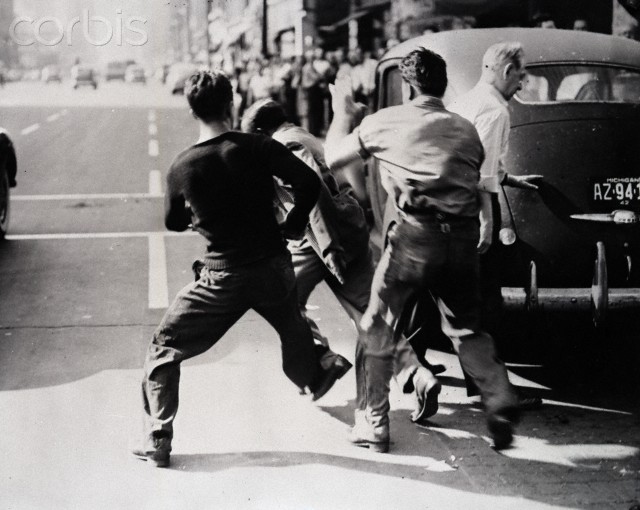
Man being dragged off a
Woodward Avenue streetcar
by an angry White mob.
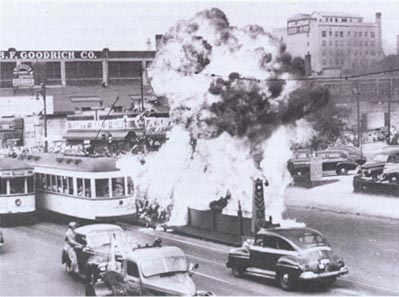
Car burns on Woodward.

Two rumors circulated which exacerbated the conflict. At the Forest Club, a nightclub in Paradise Valley which catered to the black population, a man who identified himself as a police sergeant alerted the patrons that “whites” had thrown a black woman and her baby over the Belle Isle bridge. The enraged patrons fled the club to retaliate. They looted and destroyed white-owned stores and indiscriminately attacked anyone with white skin. Similarly, white mobs had been stirred up by a rumor that a black man had raped and murdered a white woman on the bridge. The white mob centered around the downtown Roxy Theater which harbored a number of black movie-goers. As the patrons exited the theater, they found themselves surrounded by gangs who attacked and beat them. As rumors about the incidents in Paradise Valley and the downtown area spread through the night, so did the nature and the extent of the violence. White mobs targeted streetcars transporting black laborers to work, forced the cars to come to a halt, and attacked the passengers inside. They also targeted any cars with black owners, turning them over and setting them on fire.

White mob overturns car in front of White Tower

By mid morning, black leaders in the community had asked Mayor Edward J. Jeffries to call in federal troops to quell the fighting. But it was not until late that evening, when white mobs invaded Paradise Valley, that Jeffries took the necessary steps to get outside help. Around midnight, a disturbing silence reigned over the city as a truce between the city’s warring factions was kept by U.S. Army troops. More than 6,000 federal troops had been strategically stationed throughout the city. Detroit, under armed occupation, virtually shut down. The streets were deserted, the schools had been closed, and Governor Harry Francis Kelly had closed all places of public amusement. Most of the Paradise Valley community feared to leave their homes. Yet spurts of violence still flared up. As late as Wednesday, white mobs threatened black students leaving their graduation ceremony at Northeastern High School. The graduates had to be escorted home by truckloads of soldiers bearing bayonets.

An arrest by police
A victim

If you read between the lines, it seems pretty clear this is a White riot. While there may have been some skirmishes between isolated groups on Belle Isle, it wasn’t until the [White] Navy got involved that things spun out of control. They were reacting to the rumour that a Black man did something-something to a White something-something.  Does it really matter what details were? That’s the same excuse Whites always used when they went crazy and attacked Blacks. It was a “Get out of jail free” card for Whites for as long as anyone can remember. It was probably used as a knee-jerk excuse without any grounding in reality. The naval cadets attacked any Black leaving the small island over the only bridge and the riot escalated from there.

The chronology above is slightly off. The rumour that swept through the Black community came only AFTER the Whites were already rioting. It very well could have been true, based on what people were already seeing with their own eyes. Whites targeted any and all Blacks they could find, including innocent people who were just minding their own business. This was a White riot, with Black community defending itself and then retaliating. There’s no other way to view the events in retrospect.

Black Past gives another perspective:

As
the violence escalated, both blacks and whites engaged in violence. 
Blacks dragged whites out of cars and looted white-owned stores in
Paradise Valley while whites overturned and burned black-owned vehicles
and attacked African Americans on streetcars along Woodward Avenue and
other major streets.  The Detroit police did little in the rioting,
often siding with the white rioters in the violence.

The
violence ended only after President Franklin Roosevelt, at the request
of Detroit Mayor Edward Jeffries, Jr., ordered 6,000 federal troops into
the city.  Twenty-five blacks and nine whites were killed in the
violence.  Of the 25 African Americans who died, 17 were killed by the
police.  The police claimed that these shootings were justified since
the victims were engaged in looting stores on Hastings Street.  Of the
nine whites who died, none were killed by the police.  The city suffered
an estimated $2 million in property damages.

An eyewitness to history:

Again, the WikiWackyWoo sums up: 

  • 34 people were killed, 25 of whom were African Americans in which 17 of them were killed by the police. 
  • Out of the approximately 600 injured, black people accounted for more than 75 percent and of the roughly 1,800 people who were arrested over the course of the 3 day riots, black people accounted for 85 percent.

Remember: It was War Time. Cartoonists feared the Japanese and the Nazis would use this incident to their propaganda advantage, with Jim Crow discrimination to blame. The mayor blamed Black hoodlums; Wayne County prosecutors blamed the NAACP for instigating. However, Detroit’s Black community knew the truth and passed it along orally for the next 24 years until the next riot.

Ironically, the 1943 Riot was also one of the catalysts for the city’s later decision to tear down Black Bottom and Paradise Valley for its so-called Urban Renewal. This was one of the direct pressures on the 12th Street area described in the section on the 1967 Riot above.

* as above, I refuse to soften the ugliest word in the English language.

Part Three – The 1863 Detroit Riot

Just as fires cannot erupt in a vacuum, neither do riots. The 1863 Detroit Riot — dubbed at the time “the bloodiest day that ever dawned upon Detroit” — has to be seen in context. It was during the Civil War, when Detroit was not yet a great city. Motown was little more than a small town, huddled along the river, which was also the international border to Canada. This is why Detroit was a terminus for so many escaped slaves traveling north on the famed Underground Railroad. This had created certain tensions within the separate Black and White communities of Detroit. Escaped slaves could be arrested and returned by bounty hunters. Some Free Blacks were arrested and sent south. Some Whites were sympathetic to the cause of abolition and others were not. Race was a big factor in the 1863 riot, as was the military draft. Many Whites didn’t see this as their war and resented being forced to fight for a cause diametrically opposed to what they believed.

Was it all President Lincoln’s fault?

In September of the previous year, President Abraham Lincoln signed the Emancipation Proclamation, which went into effect on January 1st. The Proclamation had no practical effect on anyone –North or South. It merely freed the slaves in the southern states, already in rebellion. Those ten states had already refused to kowtow to Washington, having declared a Civil War in the first place, so it seemed unlikely they would do what Washington demanded. The Proclamation did not outlaw slavery, nor did it confer citizenship on ‘Merkin Blacks. It did, however, stir up intense feelings on the part of racist Whites. So did the Detroit Free Press, which published incendiary articles about Blacks in the months prior to the March riot. According to Matthew Kundinger in his thoroughly researched Racial Rhetoric: The Detroit Free Press and Its Part in the Detroit Race Riot of 1863 [PDF]:

Once the articles are examined, it becomes clear that the Detroit Free Press was a racist paper, and it printed racist stories in the months preceding the riot. The paper was pushing a racial ideology, one that taught that blacks were inferior and a threat. I will show this by pointing to four types of stories the paper printed in the months before the war: stories that connected blacks to labor problems, blacks to citizenship issues, blacks to the war, and blacks to crime and a general degradation of the moral order. Within all of these categories the paper portrayed blacks as a threat. The readers of the Free Press were mostly lower class white laborers, a class with little power. Even absent the racial rhetoric, issues of labor, of voting, of war, and of crime—especially sexual transgressions such as rape—are at their core about power. By showing how African-Americans were a threat to whites when it came to these issues, the paper was suggesting that the already limited power of the white working class was at risk. Further, each of these categories represent a function that was vital to a man’s main role in life, being the head of his household. In essence, the articles of the Free Press were portraying a threat to its male readers’ power to fulfill their primary functions. The paper was showing a threat to their masculinity.

Copy of “A Thrilling Narrative…”

Oh, shit! Can’t allow that to happen. Nothing is more fragile than the precious masculinity of the ‘Merkin White Male, especially if threatened by Blacks. In that respect, the situation was not a lot different than it is today.

However, the Free Press didn’t start the riot, no matter how incendiary were its articles. The riot started because somebody said a Black man did something-something to a White something-something. According to the contemporaneous document called A Thrilling Narrative From the Lips of the Sufferers of the Late Detroit Riot, March 6, 1863, with the Hair Breadth Escapes of Men, Women and Children, and Destruction of Colored Men’s Property, Not Less Than $15,000 [Electronic Edition], one of the few eye-witness accounts remaining:

The Detroit Riot in 1863.

On the 6th of March an organized mob made their way from the jail down Beaubien street. They were yelling like demons, and crying “kill all the d–d niggers.”* In the cooper shop, just below Lafayette street, were five men working, namely: ROBERT BENNETTE, JOSHUA BOYD, SOLOMON HOUSTON, LEWIS HOUSTON, MARCUS DALE. These men were busy at work in the shop until the mob made an attack upon the shop. The windows were soon broken and the doors forced open. The men in the cooper shop were determined to resist any that might attempt to come in. The mob discovered this, and did not attempt to come in, but stood off and threw stones and bricks into the windows, a perfect shower. There happened to be one old shot gun in the shop, a couple of discharges from which drove the mob back from the shop. The dwelling house was attached to the shop, in which were three women and four children, namely: Mrs. REYNOLDS, Mrs. BONN and one child, Mrs. DALE and three children.

Some ten minutes after the mob had fallen back from the shop, they made a rush upon the house in which were the women and children. The men in the shop seeing this, rushed out of the shop into the house to protect the women and children. The windows of the houses were soon all broken in; stones and bricks came into the house like hail. The women and children were dodging from one room to another to escape the stones. The men frequently stood before the women and children to shield them from the stones. Very soon after the men went from the shop into the house, the shop was set on fire by the mob. There were plenty of shavings in the shop, which facilitated the burning. The flames soon reached the house in which were the women and children. The mob by this time had completely surrounded the building. Mrs. Reynold attempted to go out at the back door but could not get out, for hundreds of stones were flying at that part of the building. Mr. Dale, in shielding his wife, got a blow in the face with a stone, which his wife might have gotten had he not stood before her. Some person outside was heard to say “the women will be protected–no protection for the men.” Hearing this, Mr. Dale told the women to go out at the front door. Mrs. Dale seeing the blood running.

Anti-slavery newspaper of the time.

And it goes on for pages and pages of hard-to-read, heart-rending descriptions of Whites attacking any and all Blacks who are unable to flee. This includes women and children alike, and didn’t spare the 80-year old pastor of the local A.M.E. Church. Essentially this riot, just like the 1943 Detroit Riot — or the Tulsa riot I wrote about earlier — was a White Riot. Whites went crazy and Blacks paid for it. A full reading of the two documents quoted above gives a much fuller story than can be given here, but you should take the time.

However, what was the legacy of the 1863 Detroit Riot? Wikipedia foolishly tried to sum it up with one prosaic sentence:

Detail from anti-slavery newspaper.

The riot resulted in the creation of a full-time police force for Detroit.

As I said above, Detroit was still not much more than a town and, in 1863, did not have police force. The riot itself had to be quelled by soldiers from Fort Wayne and some of the Michigan’s 27th Infantry out of Ypsilanti. However, 35 burned buildings, 2 people dead and a “multitude of others, mostly African-American, mercilessly beaten” has a way of focusing the citizens on Law and Order. As a result of the 1863 Riot a full time police force was constituted. Written into the originating documents incorporating Detroit’s 1st police force were the fateful words that guided Detroit ever since. Detroit’s first officers were tasked with keeping the Blacks in line, because the 1863 came to be blamed on them. Some things never change.

Is it any wonder why I say riots are in Detroit’s DNA, from 1863 to 1943 to 1967?

* as above, again, I refuse to soften the ugliest word in the English language.

Unpacking Coconut Grove ► Part 2.3 ► The Charles Avenue Rabbit Hole Leads To Canada

The historical marker with the
E.W.F. Stirrup House.
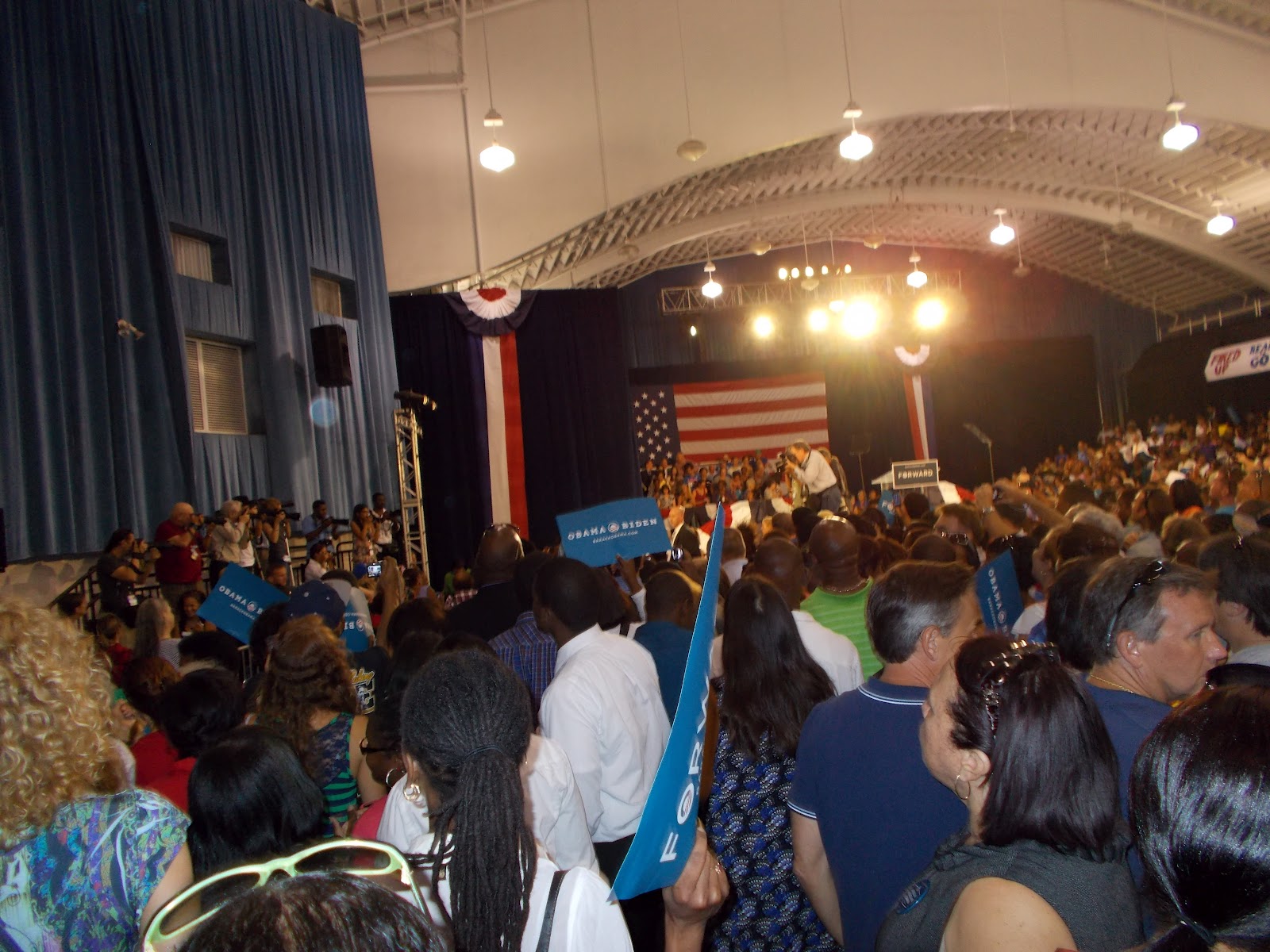
The more I learn about Charles Avenue, the more bizarre it all gets and the farther away from Coconut Grove it takes me. There are times it feels as if I am Alice chasing a White Rabbit, the historical marker I discovered years ago. From that moment on my research on the E.W.F. Stirrup House has sent me down many weird and interesting paths, none of which could have been anticipated when I started. My newest problem, based on the last 24 hours of research, is I don’t know whether I should chase down The Mad Hatter or the Cheshire Cat first (although both will have to be contacted eventually). However, it feels as if synchronicity is working overtime on me again. My newest threads of inquiry are now causing me to look into the ‘Merkin Immigration and Naturalization Service about undocumented foreign workers from Canada, restaurant bankruptcies in Canada, and a proposal to build a casino in Ottawa, Ontario, Canada.
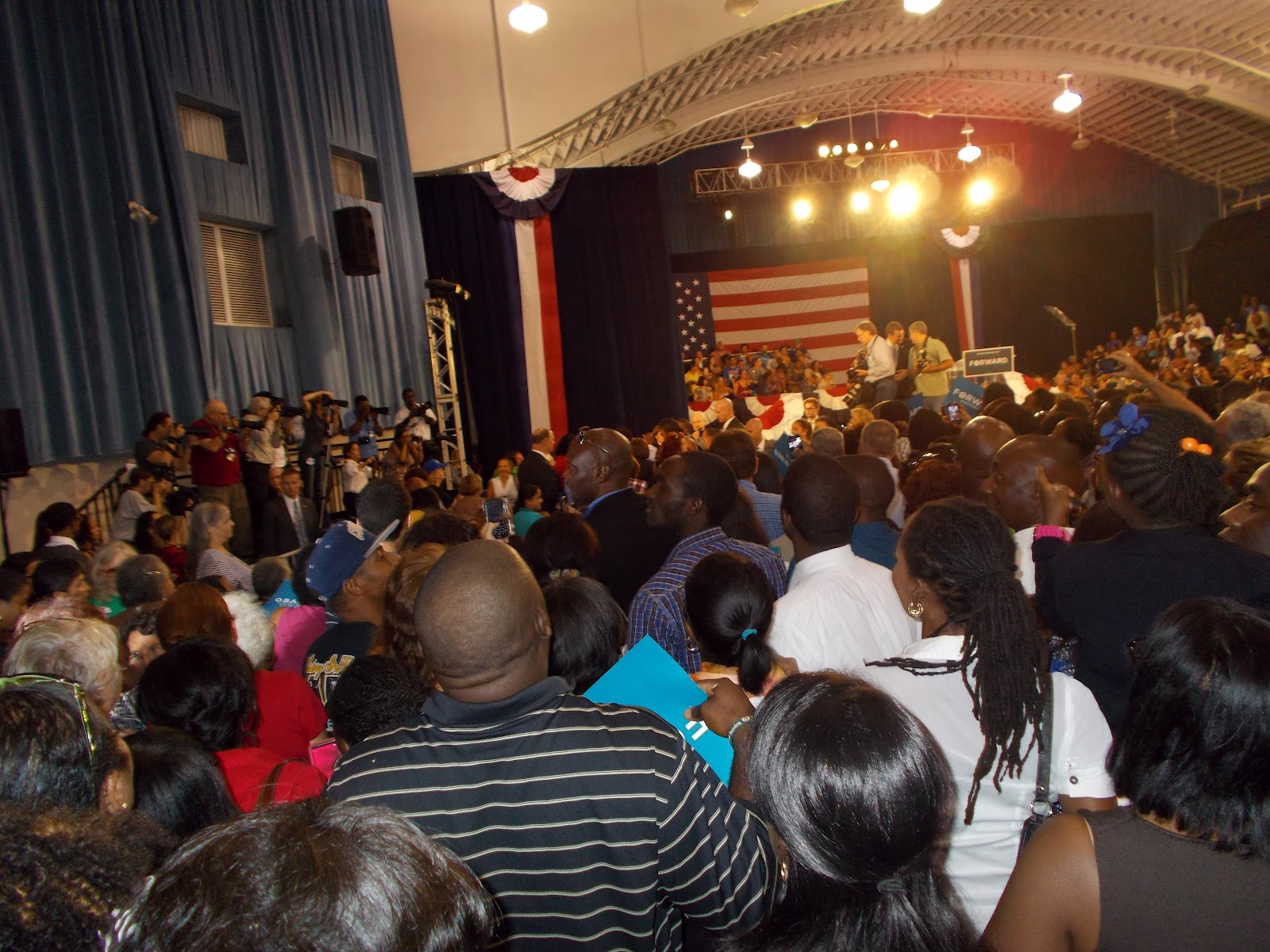
Canada? HEY! I know people there.
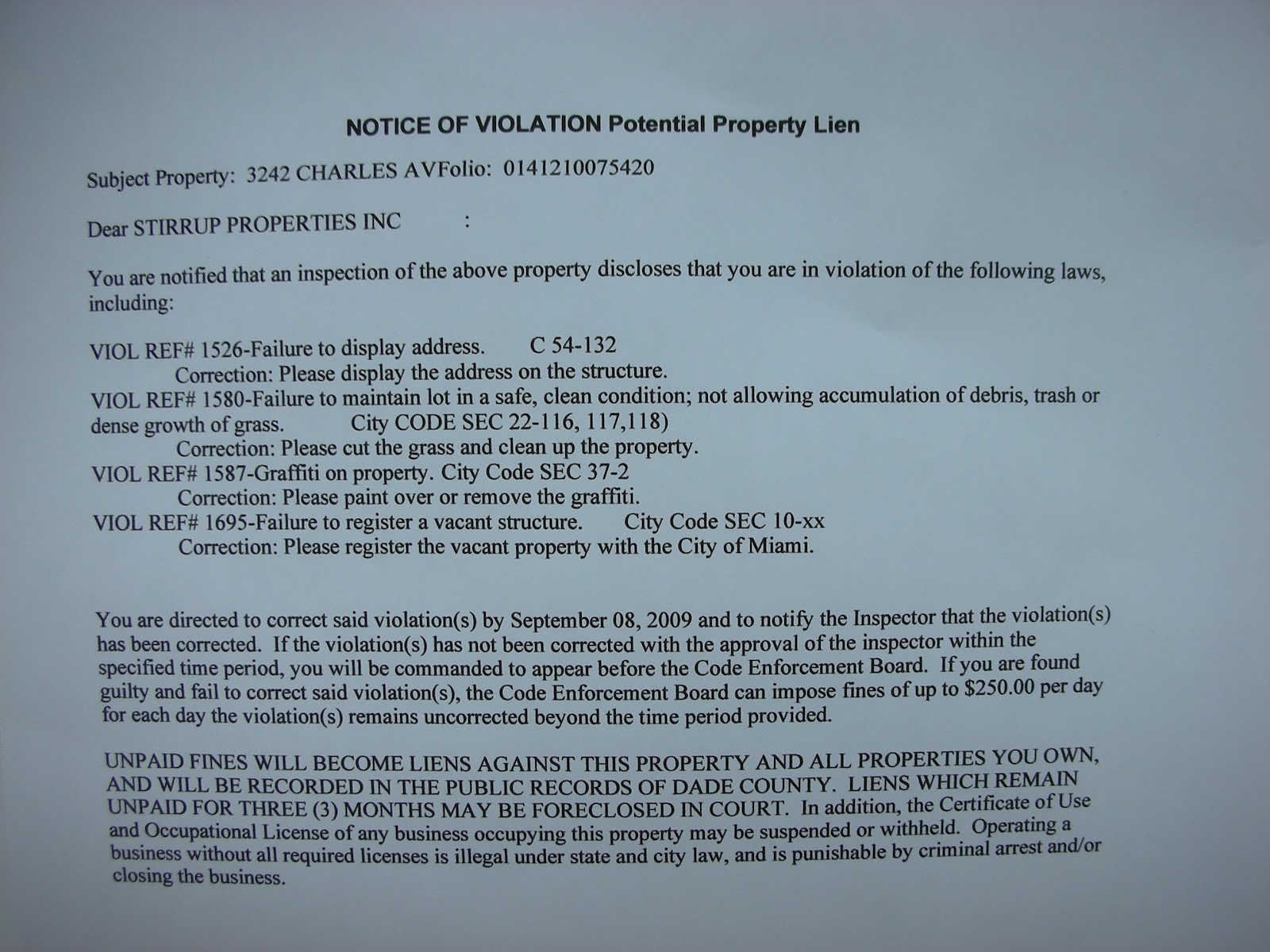
The E.W.F. Stirrup House on July 17, 2012 after a recent landscaping.