Category Archives: Unpacking

Intense Intents in Tents ► Unpacking Grand Avenue

CLICK HERE for a full gallery of Housing for All protest pics

Two gatherings in Coconut Grove on Saturday morning were as different as Black and White. 

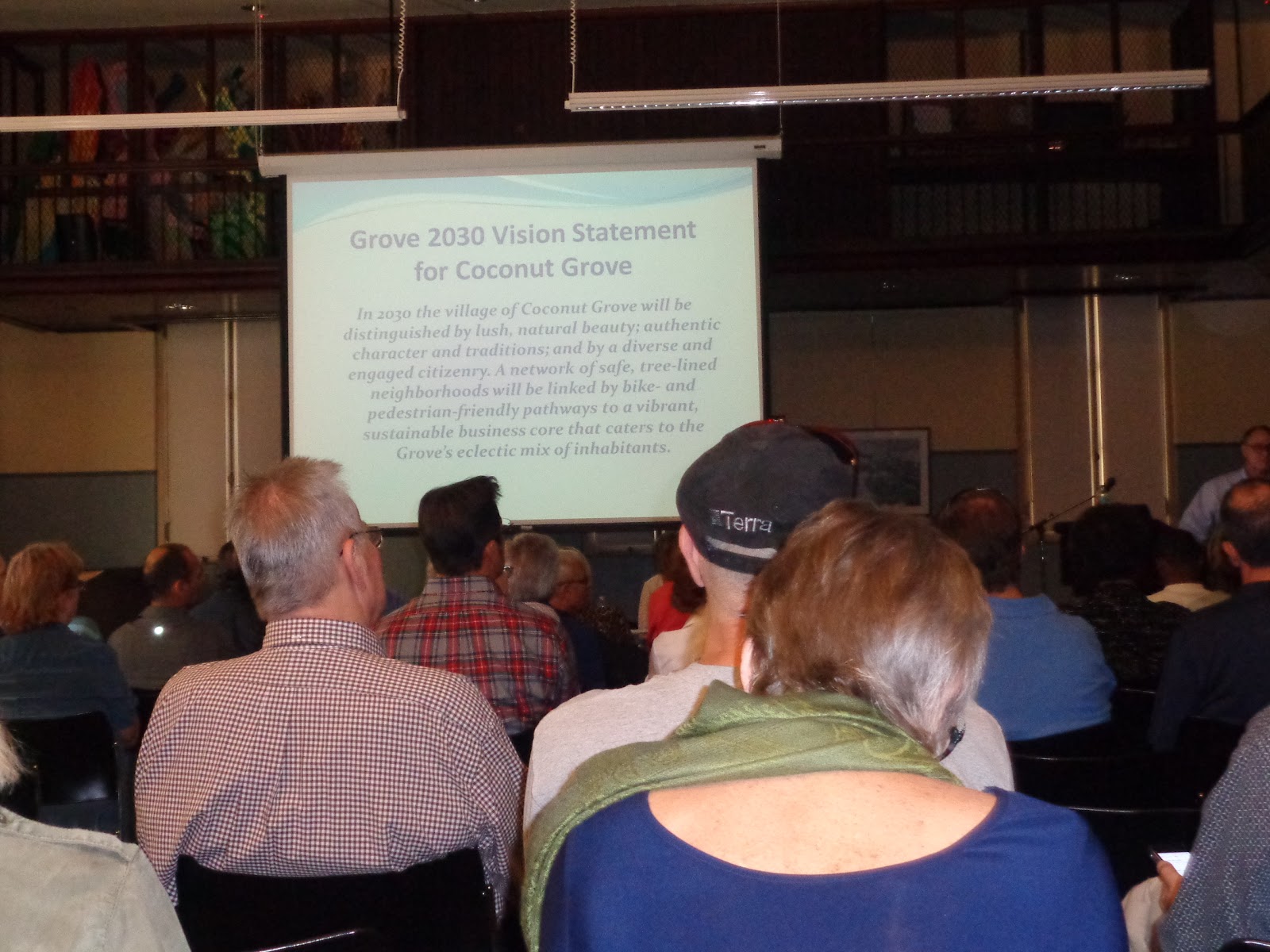
On Grand Avenue Thaddeus Scott and William Wallace were waking up in tents. This to protest a lack of affordable housing and the deplorable living conditions in West Grove. Less than 3 miles away, Grove 2030 was sponsoring a charrette on the practicality of Coconut Grove seceding from the City of Miami.

There was no breakfast waiting for Scott and Wallace in their empty lot on Grand Avenue, but Grove 2030 put out a great spread in the back of Vizcaya Garage: buckets of coffee, choice of juice, donuts, muffins, bagels and the obligatory cream cheese.

The evening prior this reporter arrived to sit on his customary bench on Grand Avenue and watch Housing for All Miami set up their meager Tent City, a show of Civil Disobedience that, theoretically, could lead to arrests. I had been hearing rumblings of this protest for a couple of weeks, but always on the downlow. I was never able to get someone on the record about it. I had less than a day’s notice when I was finally told the protest was a go. From HfA’s Facebook page:

Why Housing for All?

Some very basic facts about #coconutgrove:
There is a housing crisis. Developers buy up single family homes and apartments – some in disrepair, some not – level them, and sit on the land.

Landlords also sell their apartment buildings by the block. They refuse to sign leases with their tenants so when the buildings sell, they evict with 15 days notice. Another common practice is to let the buildings run down to unsafe and uninhabitable, at which point the city steps in and condemns them, forcing the tenants to move out with little-to-no warning. Fifteen days to find housing in one of the nations toughest housing markets.

We are talking about HUNDREDS of people. Kids, parents, grandparents whose families have lived in this neighborhood for generations. They built these houses. Many of them built this city.

This is not ok @cityofmiami @cityofmiamifl @cityofmiamigov


I turned my attention to the slow motion humanitarian crisis on Grand Avenue a little more than a month ago — soon after I gave up on the E.W.F. Stirrup House. As one of my last acts for that story I was able to score an interview with developer Peter Gardner, of Pointe Group, now called Sabal Hill. He had recently signed on — or invested in — the Stirrup House Bed & Breakfast.

By then I had already started researching Grand Avenue. During our interview on the Stirrup House, I pulled a Bait & Switch on Gardner. I whipped out a hand-drawn map of Grand Avenue on which I had the current owner of every property mapped out and colour-coded. The names of Gardner’s companies were featured predominately on many of those properties. I started quizzing him on the plans for Grand Avenue, which have been stuck in limbo for well more than a decade.

The famed model of Grand Avenue

SYNCHRONICITY ALERT: Two years ago — almost to the day — I was invited to the first Grove 2030 charrette. I went as a journalist, but I was cajoled into participating and forced to join one of the brainstorming teams. At one point (no pun intended) someone on our team brought up the upcoming development promised for Grand Avenue by Pointe Group. Having done some perfunctory research on Grand even back then, I blurted out, “That will never happen.”

Little did I know that I was talking to Margaret Nee of Pointe Group. We had a mini-argument in which she invited me to come see the architectural model any time, because it was definitely going to happen. I never went to look at the model because I wasn’t covering Grand Avenue. However, in the interest of FULL DISCLOSURE I told Peter Gardner this story at the beginning of our interview. Who knows whether Margaret had and she was the person who had facilitated this meeting.

In the last few weeks I have left more than a dozen phone messages with Margaret Nee to get Peter Gardner to confirm or deny a rumour I had been hearing about the E.W.F. Stirrup House.

However, this came at the same exact time that many of the properties along Grand Avenue were about to be flipped again, this time to Terra Group. As well, Commissioner Ken Russell had convinced the city to launch a million dollar lawsuit against several of the slumlords along Grand Avenue because of the deplorable conditions in their buildings. This lawsuit has delayed the sale of the properties until all the parties involved figure out who’s going to pay to settle this lawsuit, or whether it will be defended by lawyers for the developers, who are already suing each other.

TO BE FAIR: If I were Peter Gardner, I wouldn’t take my calls either. Not only did I change topics on him, but pretty much warned him that I was now watching Grand Avenue [and 2 lots he had acquired on Charles Avenue]. However, Margaret Nee has not even had the good manners to call me back and say, “We will have no comment.” That would be better than dodging my phone calls, but I expect no less from rapacious developers who say they want to build something wonderful for the neighbourhood, but have no empathy whatsoever for the people currently living in the slum they own.

Yesterday morning I listened to the Grove 2030 people complain about how their lily White neighbourhoods are changing in ways they cannot control. However, my mind was really on Wallace and Scott sleeping in tents on an empty lot on Grand Avenue to bring attention to gentrification in the heart of the historically Black neighbourhood in ways they cannot control. I grew so bored with the Grove 2030 meeting, I sketched out an opening paragraph (now discarded) lovingly describing all the various food and drink options at Grove 2030, wondering what Scott and Wallace had for breakfast.

IRONY ALERT: There was so much food at Grove 2030 that it was all packed up and sent to the Housing for All protest when the charrette was over. While there was something beautiful and magnanimous about the gesture, it also gave off the faint odour of more White colonialism and paternalism. To use an analogy from Canada: Bread and cheese day.

It would have been much better if the Grove 2030 people had shown up, picked up a sign, and joined the protest.

How long will the Housing for All protest continue? William Wallace says they are prepared to camp out indefinitely, or until the slumlord owner shows up and orders the police to clear the lot. Miami police would have no choice but to comply. In that eventuality, there are several contingency plans, which I won’t reveal.

However, what’s really needed is more people, more tents, more noise, and more publicity. As far as I know I have been the only media to show up and cover this story.

Where is the Miami Herald? Asleep again, me thinks. However, it did have the time to write about the Woman arrested in luxury condo protest: City and cops violated my rights. The only time the Miami Herald comes to West Grove is to cover crime.

Where are the local tee vee stations? They’ll put news choppers in the air over Douglas Road and Grand Avenue when police put the local schools and neighbourhood on lockdown. Why haven’t they covered this protest?

Where is the Coconut Grove Grapevine? Tom Falco only seems to concern himself with the West Grove to cover the opening of a new art installation at the Kroma Gallery, the opening of a new fresh fish store, or a new product at the mattress store. However, nothing about the people of West Grove.

Oh, that’s right. This is the poor Black neighbourhood. Never mind.

Waking Up in the Grove ► Unpacking Grand Avenue

Looking east along Grand Avenue with the sun rising over Biscayne Bay
This is Part Two of a series about Grand Avenue in Coconut Grove.

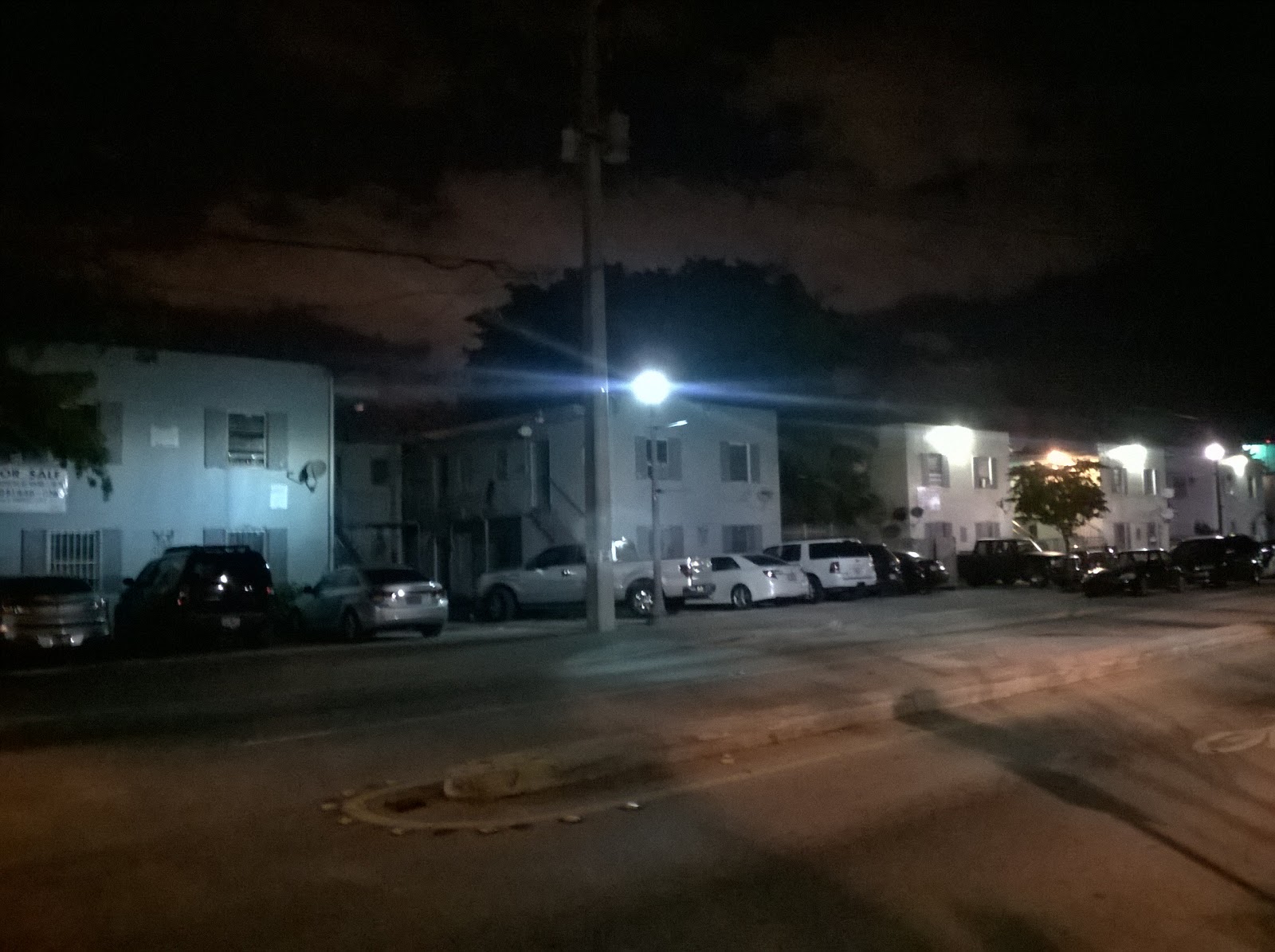
The car creeps west very slowly along Grand Avenue at well below the posted speed limit. It’s 5 in the morning. There are no cars to impede at this hour.

Very few people are even awake at this hour. In the Center Grove, those moving along Grand seem to be working folk. They’re either headed to work, or finishing an overnight shift. In several of the restaurants along this stretch, people are washing the floors, making them spick and span for the next seating at the next meal. At restaurants that serve breakfast the prep cooks are just starting to arrive.

Thirty, or so, bicyclists in tight spandex gather on McFarlane Road, just across from the narrow end of the triangle where it meets Grand and Main Highway at CocoWalk. Their flashing red tail lights make the scene other worldly at this time of the morning until, silently, they’re gone. At 5:30 the Starbucks in CocoWalk opens, which increases foot traffic as working people slowly trickle in for their ridiculously expensive lattes.

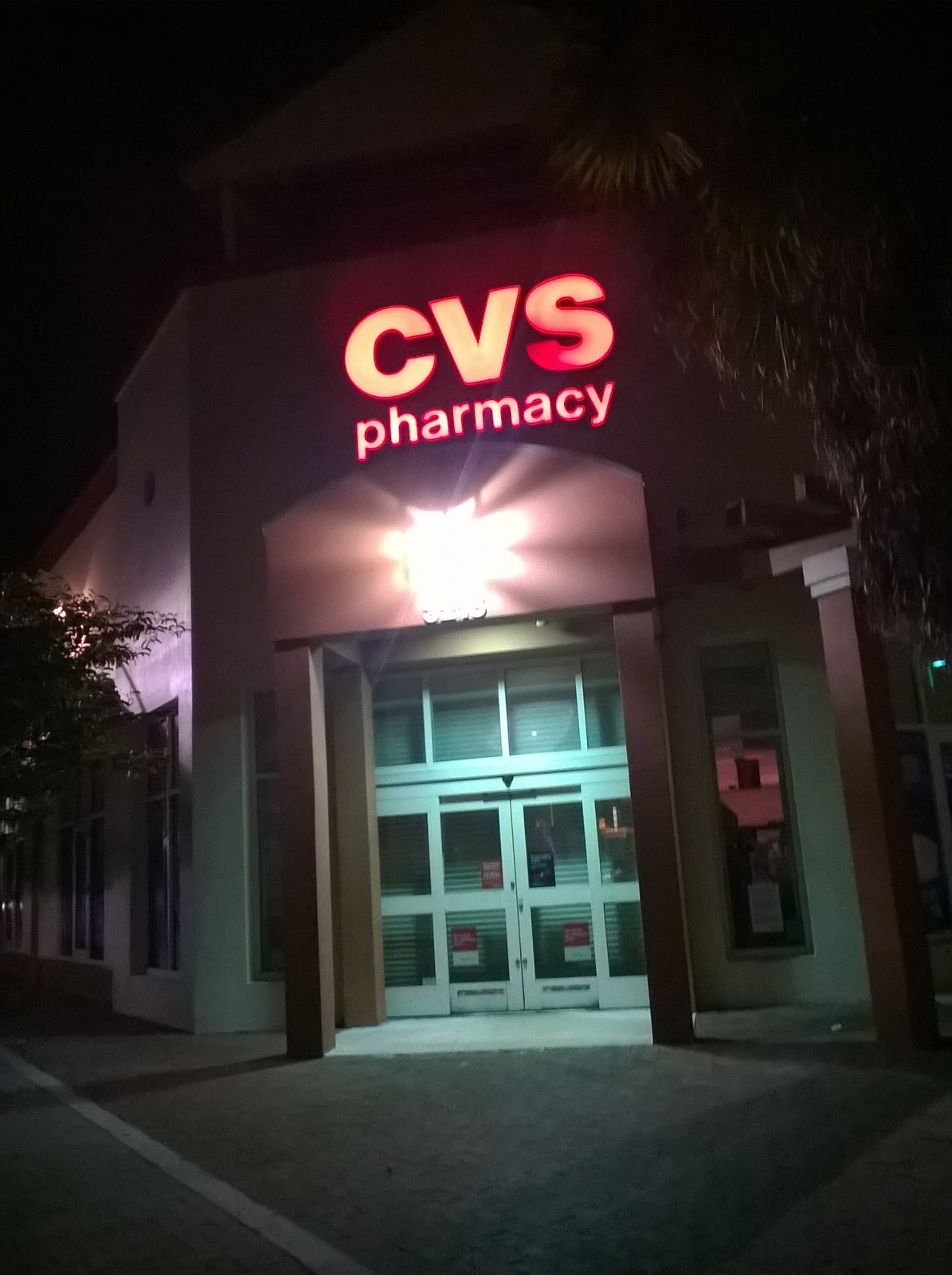
West of Margaret Street you’d be hard pressed to find a single place to buy a coffee — let alone a ridiculously expensive one — at any time of the day or night. That’s because after Margaret things change drastically. Grand Avenue goes from high end businesses and ritzy restaurants to a slum. The dividing line is the CVS Pharmacy.

CVS is the demarcation between East and West Grove

This is not a gradual transition, as it often is in other cities, where a boarded up building leads to a few more on the next block, then more on the next block, until you reach the epicenter of the blight.

Rather, the transition on Grand Avenue is instantaneous. Immediate. Sudden. The difference is so stark that it is noticeable and remarked upon by visitors who have never seen it before. Crossing Margaret is crossing Coconut Grove’s invisible Colour Line, from White Grove to Black Grove; from prosperous Grove to West Grove.

Beyond Margaret is what was once the prosperous main drag of the Black business district of Coconut Grove. Now it is one of the worst slums in all of Miami.

There is another noticeable difference, especially at 5:30 in the morning. The few people on the sidewalks along this stretch of Grand are, for the most part, down-and-out street folks like in all cities: some just homeless, some are addicts, and some are dealers.

Making an illegal U-turn at Douglas Road, the driver makes eye contact with as many of those solitary souls moving along Grand as possible. Sliding into the same parking space near Hibiscus Street week after week, the driver locks the car. Then he sits on a bench near a bus stop making notes, taking pictures, and talking to anyone who will talk back.

This has been my routine for the last many weeks running: observing how this part of Coconut Grove comes alive in the mornings. The advantage to sitting on the same bench week after week is that people get to know me. More of them are willing to talk to me, while others now call to me by name to join their conversations, to introduce me as a writer researching Coconut Grove.

People are starved to talk to anyone who will listen.

The life story I know best (because I’ve spent the most time with them) belongs to Rhonda and Nelson (all names in this story have been changed). Married, with 4 children and a dog, they are living in a building that was recently condemned. The evictions were put on hold while the city sues the owners, but many people have already left. Nelson says that there are only 7 families left in their building.

Rhonda and Nelson have been trying to leave for quite a while, but they have been unable to afford anything even close to the price they’re paying. What’s more is they have no reserve funds, living paycheque to paycheque like so many families in this country. Furthermore, just when it appears they have a small amout of money put aside, they’re hit with another unexpected bill. Just yesterday I heard how their car broke down and they had to put money they couldn’t spare into it.

Click to enlarge
I’ve written about that red line in Where the Sidewalk Ends, Racism Begins

One recent morning I watched as a neighbour walked her little boy across Grand to their place. They take him to school, along with their own kids, while she heads off to work.

I ride with Nelson as he drops one child off at the designated school bus stop. As we talk, he tells me about the complex we are parked next to. It’s called The Kingway Apartments. Despite the fancy name it’s nothing more than a huge grouping of squat, one story cinder block duplexes. It was still dark, so it took me a while to realize we were parked at the west end of Charles Terrace. This is directly in front of The Colour Line witten about in Where the Sidewalk Ends, Racism Begins.

The Kingsway is where Nelson and Rhonda are hoping to move. Every day they check with the landlord to see if a unit is coming open. For some reason there doesn’t appear to be a waiting list on which one can sign up. While The Kingsway is more than they’re paying now, it is almost just within their budget if they scrimp every single penny. However, it’s the only place around that’s remotely affordable.

When we return to his apartment, I let him attend to the rest of the family’s morning routine of getting the little ones dressed and off to school. I go back to sit on my bench and watch. Soon the sidewalks are coming alive with children carrying book bags and knapsacks. They come out of the concrete block buildings along Grand Avenue, and from houses along the residential streets running parallel, north and south of Grand. Some are accompanied by parents, Others travel in groups of two or more.

Morning peacocks on Franklin Avenue

I walk south on Hibiscus. There are a lot of kids walking to school now. When I get down to Franklin, just a few blocks south of Grand, I’m shocked.

Franklin at this time of day is a slow- moving, bumper-to-bumper, eastbound traffic jam from Plaza all the way to Main Highway. The small traffic circles — installed as a traffic calming device — are difficult to navigate with cars filling them.

These are also children going to school, but their rich White parents are taking them to Ransom Everglades School on Main Highway, not the public schools in the area. Each SUV seems to have a single parent and a single child inside. They are only using Franklin, which is still predominately Black owned, as a shunt to get from A to B. Otherwise they wouldn’t be caught dead in this part of West Grove, especially at night.

I walk back to Grand Avenue, the main street where — ironically — there is far less traffic, to get away from the car fumes. I’m back on my bench reviewing my notes about other people who also call this neighbourhood home.

There’s Bill. He was riding a bicycle as I slid into my usual parking spot at 5:30 AM. I nodded as he slowly rode past. When I got out of the car he said, “You okay?” This is street slang for “Would you like to buy some drugs?” Once again I have been racially profiled. The sad truth is that most of the White folk who show up on this end of Grand tend to be looking for drugs.

I told him I didn’t need anything, explained I was a writer, and asked if he’d sit and talk to me for a while. It was as simple as that. Bill and I sat there 25 minutes. I asked him intrusive questions about his business, his family, his home, life on Grand Avenue, and — most importantly — systemic racism in West Grove, where he has lived his entire life.

Bill was nervous every time a police car passed, as several did, and kept saying he should go. He admitted that he carried no drugs. Had we made a deal, it was something he had to retrieve. So I asked him why he was so nervous. A Black guy, known to the police, sitting with a White guy? That will attract undue attention. I kept telling him that we were just 2 men talking on a bench. I know my rights and would love a cop to show up and start asking questions.

Bill, who has been Black longer than I’ve been White (and older than the other bike salesmen in this part of town), was horrified at the thought that I might challenge a police officer. I explained to him how my White Privilege allows me to get away with stuff like that. That’s when Bill brought me up short. “But I’ll still be here tomorrow. Will you?”

Patrice is another of my early morning friends along Grand. She now introduces me to people as “Mr. Headly”, even though I have asked her not to call me Mister. The first time I met her she was with her friend Mary. At first I thought they were trying to hustle me and, maybe, they were. However, I made it clear pretty quickly that I was writing about Coconut Grove history. When they heard I was wrote about the E.W.F. Stirrup House, they were an open book. We went for a long walk along the residential streets where they showed me where there were hidden cameras in the trees in a vacant lot. There weren’t, but their drug paranoia was strong.

Mary is jonesing. She needs a pick me up. She needs to make money. She needs to pack because she’s being thrown out of her place today. She needs to go and take care of business. But she walked with us for another 15 minutes before she finally left, Patrice trying to convince her to stay the whole time.

Patrice and I walked further south to Marler Avenue, where I showed her another segment of the Miami-mandated and still visible Colour Line Wall, built to keep Black Grave and White Grove separate — and, incidentally, still doing a pretty good job of it. [Read Part Two of Where The Sidewak Ends, Racism Begins.]

As I explained to her why Marler is land-locked, I have rarely had a more attentive student on one of my walking history tours. However, while describing the chain link fence that went up across the footpath that connects Marler to Loquat Avenue, a friend of hers rode up on a bicycle. He said something to her that I didn’t hear. Patrice gave me a cute little shrug and went off with him.

The next time I see Patrice she’s sitting behind the wheel of a shiny brand new Mercedes. I don’t know it’s her at first. I was sitting on my customary bench a block away. Even at 5:30 in the morning it was hard not to miss that something was going on over there because the driver’s door was open and people kept walking over to the car to talk to the driver.

After an hour of note-taking, I got up and walked east. As I passed the car, I hear her calling, “Mr. Headly. Mr. Headly.”

She had 2 other people in the car with her. It started to drizzle when I left my bench, but suddenly the skies opened and it rained hard. I quickly ducked under the awning of a nearby store that hasn’t been open for years, but I’m soaked by the time I get there. It’s a brief shower, less than 5 minutes. I go back to the car to help Patrice because they needed to use my phone. Something had gone wrong with the Mercedes keyless ignition and it wouldn’t start. Her phone was out of juice and they needed to call the dealership.

At 6:30 in the morning no one is answering at the dealership and won’t until 9, according to the recording. Plan B is to use their AARP card. However, all AARP will do is arrange to have the car towed and no one wants that. It’s in a legal, free parking space. [Free because it’s west of Margaret, as are all parking spaces.]

The interior of the car looks like a closet exploded. Clothes and garbage bags filled with clothes are on the backseat. An elderly woman is nestled into all of this like it was a beanbag chair. Then I notice she’s smoking something out of a pipe. The car’s owner is in the passenger seat. She doesn’t look like she could afford a beater, let alone this luxury car that won’t start. She can barely communicate, which is why I am making these phone calls.

The woman in the back seat keeps nodding off during the time I’m on the phone. Suddenly she comes awake and decides it’s time to go. It becomes a scene from a situation comedy: an elderly woman trying to extricate herself from a beanbag chair. I offer my hand and help her out, but she loses her sandals in the process, one skittering under the car. As everybody starts looking for her sandals, I say goodbye to Patrice and head back to Center Grove to meet a source who explains to me the difference between affordable housing, sustainable housing, and workforce housing.

Because he’s using numbers — building costs per square foot, lot sizes, basic incomes, financing costs, percentages, and margins — it all goes over my head. [Numbers are my natural enemy.]

But what of the people who live along Grand Avenue? 

Bottom line? The people living along Grand in the cheap, but blighted, apartments are screwed. There will never be any affordable housing built for them. It’s best to think of all new West Grove construction as sustainable housing and/or workforce housing and/or luxury condos. West Grove will eventually look exactly like East Grove and will, no doubt, have the same racial demographic: White.

The basic problem is that these properties have been bought and sold by speculators and developers so many times over the last decade, that the price of the land alone has become astronomical. My real estate source says the land is now trading for far more than the real value should be. But, let’s face it, the actual value is whatever people will pay pay for it. As one developer after another ponied up, the price increased every time. By the time the developers are finished, Grand Avenue will be a concrete canyon 5 stories tall filled with condos, more restaurants, businesses, and not a single affordable unit among them. Anything less would not allow them to recoup their investment.

Along Frow Avenue (1 block north of Grand) and Thomas Avenue (1 block south), the neighbours will be forced to accept the back-ends of these buildings. What is currently two quiet residential streets of 1 story Conch and shotgun houses, will be replaced by 3 story buildings, as the Grand Avenue frontage is ‘stepped back’.  They’ll also have to deal with increased traffic, parking lots, and service entrances to these buildings.

This same inflation has come to the entire area north and south of Grand, the traditional Bahamian neighbourhood that’s older than Miami itself. Property values are such that homes that have been in the same family for generations are being sold by folks who find themselves land rich, but cash poor. As land values rise, it gets harder and harder for some people to keep up with the taxes. I hear anecdotal stories of speculators coming in with low ball offers for the deed and they’ll take over the tax arrears. More gossip is of people who reversed mortgaged their homes in order to stay.

Furthermore, the Coconut Grove Collaborative had a long-term plan for the infilling of inexpensive homes on the empty lots in this area. However, the price of the land has now made that a pipe dream.

Slowly the racial demographic of this historic and unique neighbourhood is being changed after remaining fairly cohesive and predominately Black-owned for close to 130 years.

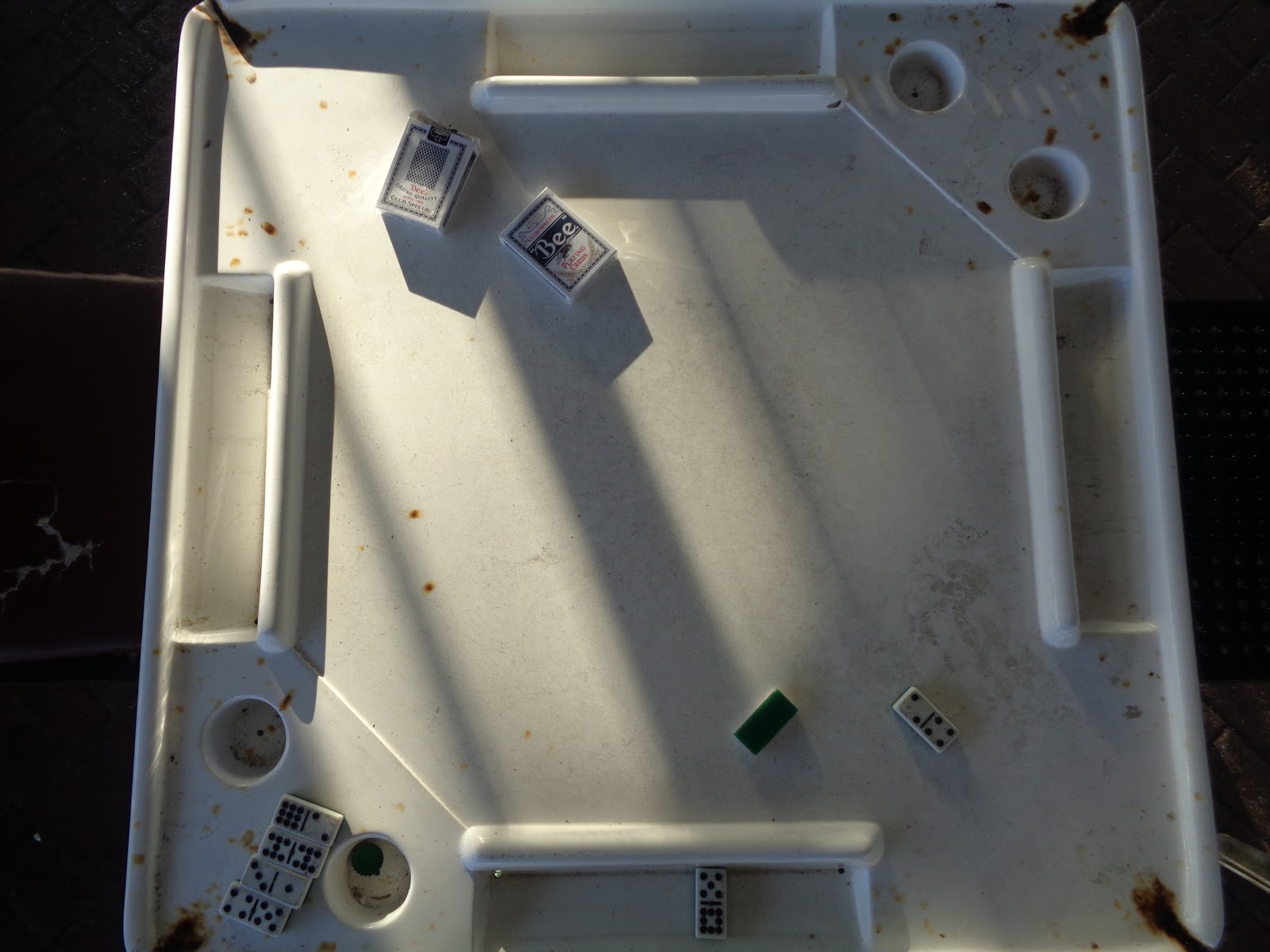
Walking back to West Grove I watch the City of Miami Parks & Rec guy unlock Billie Rolle Domino Park, which is posted closed from sunset to sunrise. However, the sun rose quite a while ago. This is one of the parks that had to be closed due to toxic soil back in 2013. It was also one of the first parks remediated.

Because the park just opened, I’m the first person to use the washroom. It’s clean. I’ve used it much later in the day when it doesn’t look so nice. People have stashed stuff all around this pocket park under the benches. There’s a suitcase under one seat. A duffle bag under another. Under one bench there is a what appears to be an entire camping tent in it’s nylon carrying case. People stored these things here because the park is locked at night and they don’t have to lug this stuff.

Patrice and friends are still waiting for help to arrive. It’s surprising they’re being so conspicuous because the entire neighbourhood has been on edge because of heightened police activity recently.

Just 2 weeks ago I looked up from my computer to turn my attention to the local news on my tee vee. Police and media helicopters were flying over the intersection of Douglas Road and Grand Avenue. It was a weird bit of synchronicity that gave me goosebumps because I was working on Part One of this series, The Grand Avenue 2002 Vision Plan, at that exact moment.

All the local schools were on lockdown as dozens of police cars flooded the area. As I watched these events live at home, 35 miles away, I was texting my sources in The Grove to alert them what was happening in their neighbourhood in real time.

The official story is that police were looking for a robbery suspect who allegedly broke into 3 cars in the area. However, no one I’ve spoken to believes that. They believe police were looking for a suspect in a recent murder, who had been reported in the area because his ex-girlfriend claimed he had just stolen $10 from her and was still in the area.

Whatever brought this mighty show of force down upon West Grove, it served a greater purpose, keeping the folks in line. I have already spoken to several men who were detained that day. None were arrested. All were just harassed, insulted, and held for a while, for no reason at all. Each one (and I am only talking about 3, hardly a representative sample) told me they know the police and the police know them. Being detained was just part of the game being played that day.

From my bench at the western end of Grand Avenue I see the locals start to stir. Car traffic increases by the minute. Out of the side streets, from the residential part of West Grove, come drivers on their way to work. Most of them appear to be Black. They turn either east of west onto Grand and head off to work. However, I also notice that there are a lot of cars that are just using Grand as a shunt — just like Franklin — to get from one place to another. These are, for the most part, White folk.

They don’t/won’t stop in West Grove, long rumoured to be a dangerous neighbourhood. However, in the 7 years I’ve been researching Coconut Grove, wandering these streets at all hours of the day and night, I have never felt unsafe at all. In fact, as I am sitting on a bench getting another resident’s story, a guy walked by and said, “Welcome to the neighbourhood, buddy.” I guess now I’m considered a fixture.


This look at Grand Avenue is based on many visits and interviews over a period of time, although parts read like a single day.


https://www.gofundme.com/NotNowSilly

If you’ve liked anything you’ve read at the Not Now Silly Newsroom,  please consider donating to my Go Fund Me campaign to Support Investigative Journalism. My Freedom of Information requests from the City of Miami are beginning to add up, not to mention all the other costs of researching systemic racism and corruption in Coconut Grove.


The Grand Avenue 2002 Vision Plan ► Unpacking Grand Avenue

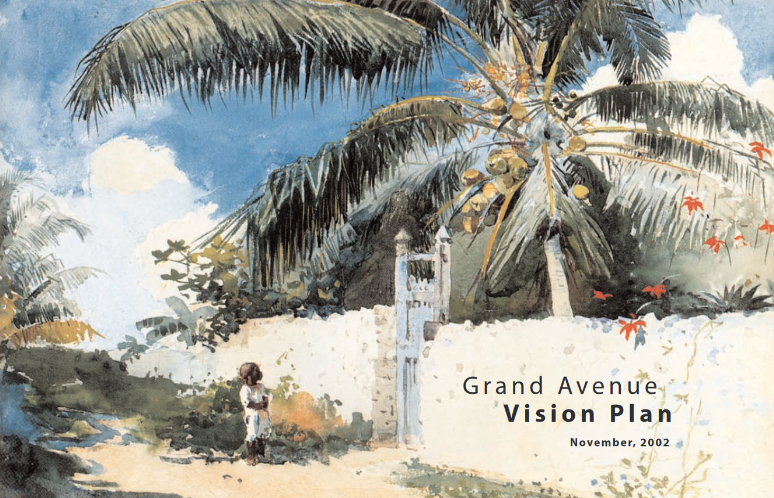
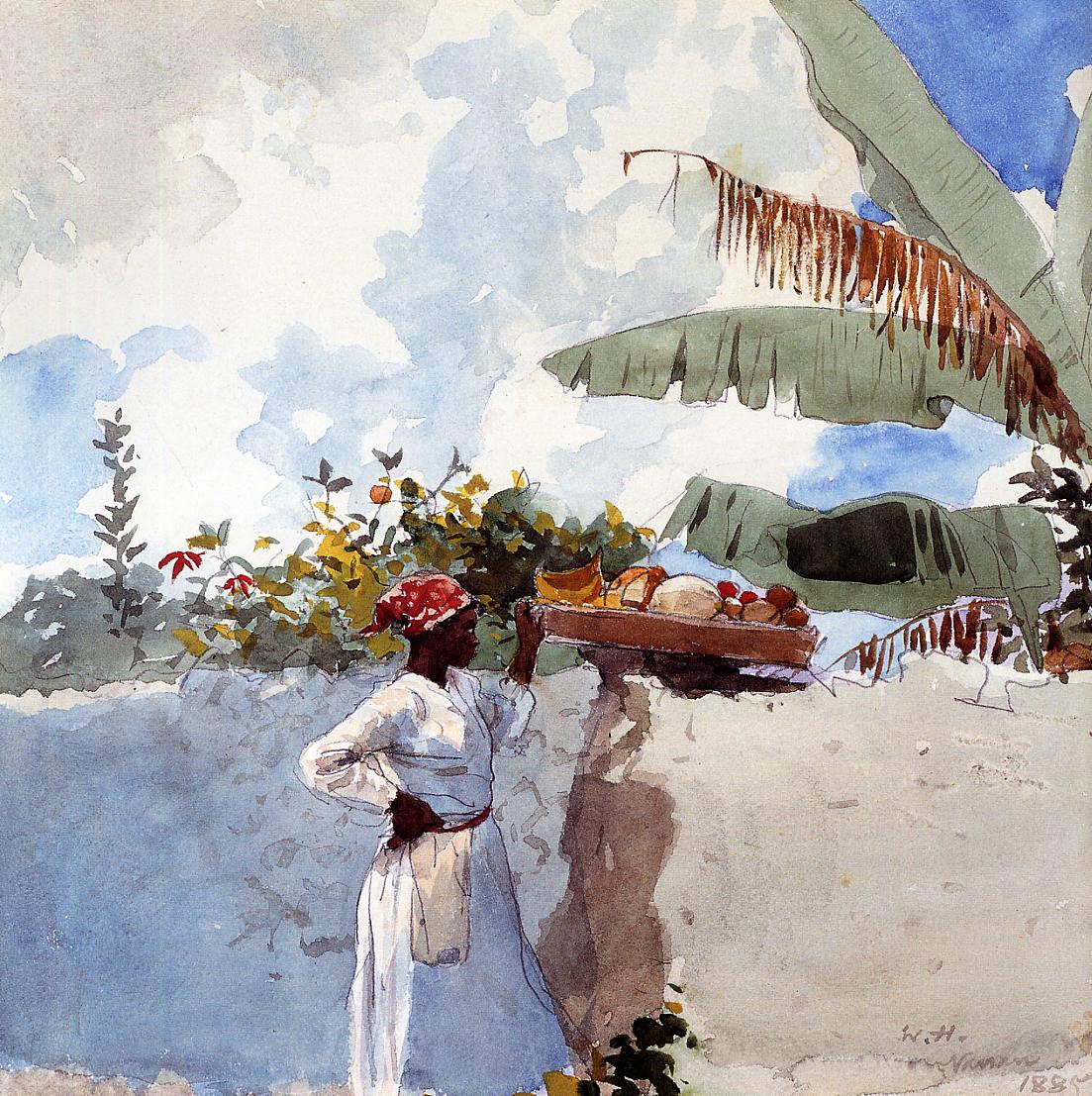
This 1885 watercolour by Winslow Homer is called “A
Garden in Nassau”. Ironically it was used 14 years ago for
this Grand Avenue Vision Plan. Read more about it below.

This is the start of an extensive series on Grand Avenue in Coconut Grove. 


There is a humanitarian crisis currently happening on Grand Avenue. 

Yesterday a number of residents in a blighted building along Grand received eviction notices. The biggest problem they have is that there is no place to go. One couple I’ve spoken to, with several children, has been looking for a new place for months in order to escape their moldy and bug infested apartment. There is absolutely nothing available in their budget and they feel as if they are being gentrified out of the neighbourhood.

The truth of the matter is they are.

At one time the western end of Grand Avenue was the bustling Black business district of West Grove. Today it is one of the worst slums in Miami. The reason West Grove remained a cohesive Black neighbourhood has to do with the efforts of one man who made a difference: E.W.F. Stirrup. And, just like the Stirrup House, which anchors the opposite end of the historic Black neighbourhood, it has undergone a campaign of Demolition by Neglect. [Read: Who Is To Blame For the Destruction of the E.W.F. Stirrup House?]

Ironically, the west end of Grand, blighted as it is, has become some of the most valuable real estate in Miami, having been bought and flipped so many times over the last few decades by speculators looking to gentrify an entrenched Black neighbourhood. Now nothing less than a concrete canyon from Margaret Street west will allow the land to pay for itself. Furthermore, due to Demolition by Neglect, there’s almost nothing left along that stretch worth renovating and saving.

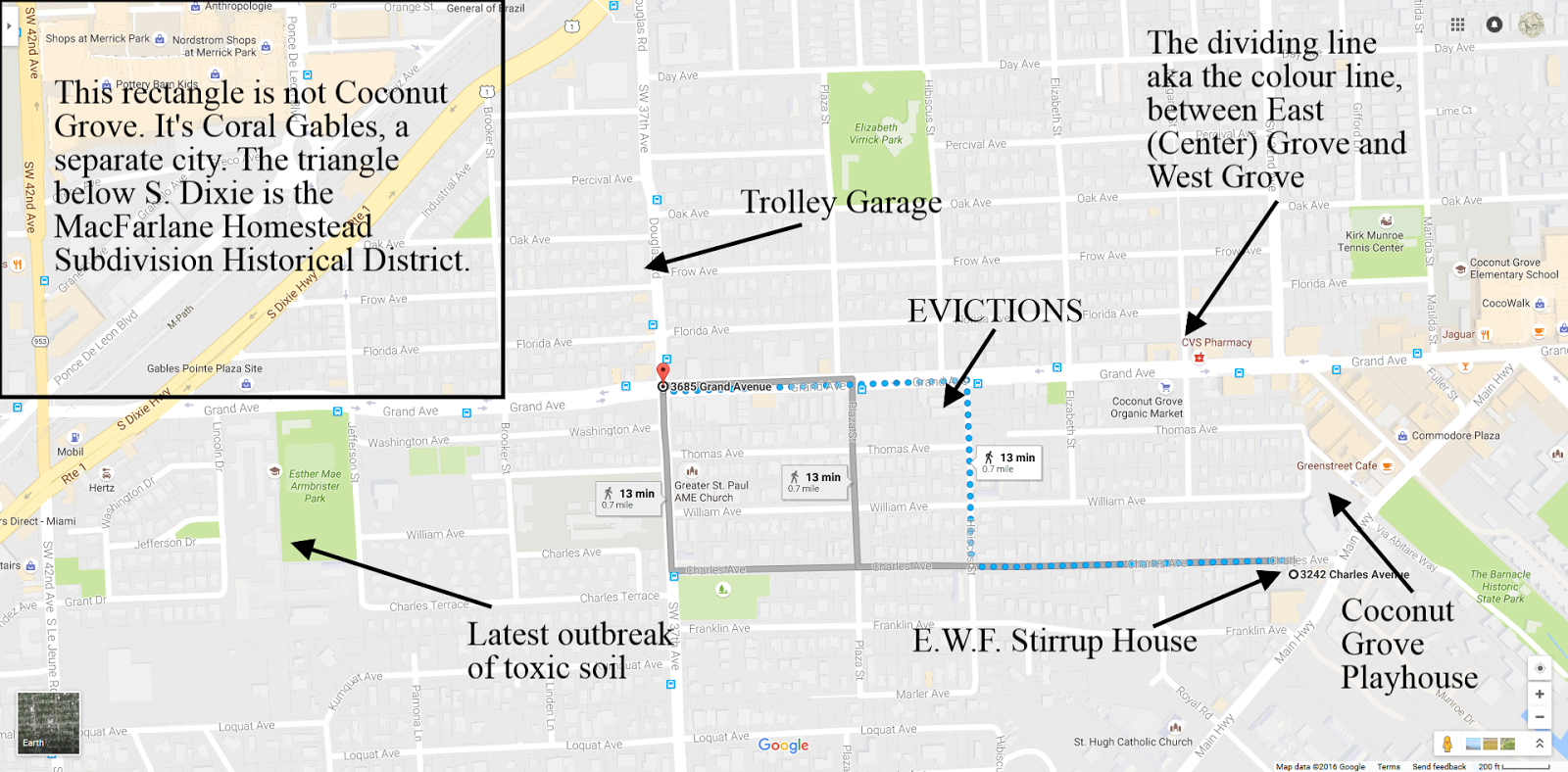
Click to enlarge
This map demonstrates how close Grand Avenue is to
the E.W.F. Stirrup House. Identified on this map are
many stories covered in the Not Now Silly Newsroom.

READ MORE

MacFarlane Homestead Subdivision Historical District
Armbrister Field
Trolleygate
Soilgate
Coconut Grove Playhouse
The Colour Line
Coral Gables

A quick Grand Ave history lesson: The street always suffered from institutional racism, because that’s what always happened in this country. However, it started its slide into irrelevance after segregation was outlawed. Once the folk in West Grove could shop anywhere, the businesses along Grand Avenue no longer had a captive clientele.

Over the next several decades systemic racism kept this end of Coconut Grove in near poverty, even as the other end — the White end — of the 33133 zip code became one of the most exclusive neighbourhoods in the entire country.

Last month the rapacious developers, hoping to gentrify these people out of existence could hide their slum no longer. Local NBC 6 did an exposé, and interviewed District 2 Commissioner Ken Russell in the process. [Read Residents of Derelict Coconut Grove Building Facing Homelessness. I was unable to embed the video, but it’s not for the squeamish.] The issue of Grand Avenue was suddenly in the news, especially after Miami Sues Coconut Grove Landlords for Renting Moldy, Sewage-Filled Apartments, Jessica Lipscomb writes:

Parts of the roof have caved in, creating a breeding ground for mold. Raw sewage, including pieces of toilet paper and human waste, sometimes flow in front of the tenants’ front doors. Recently, the landlord cut the power to the outdoor lights, cloaking the building in dangerous darkness after sunset.

But rent is only $400 a month, an almost unheard-of bargain in Miami, where residents in nearly every stretch of the city are being squeezed by rising housing costs. It’s about all Coats, who is unemployed, can afford to pay each month. “The rent is just getting ridiculous,” she says.

Now the City of Miami is taking legal action against the owners, who — under five corporation names — have 12 properties in Coconut Grove, all of which, the city says, are in various states of disrepair and code violation. The city is fighting to force the owners to pay to relocate all of the tenants to clean and safe apartments they can afford — and many fear they could become homeless if no alternative is provided.

There was a stay of execution on last month’s evictions after Commissioner Russell filed his lawsuit. Until yesterday, that is. Many have already left, but the remaining residents have all been told they have to be out by November.

LET’S BE CLEAR: While these rich, White, deveopers have been buying and selling these properties — and now suing each other — the pawns that have been allowed to live in their fiefdom are suffering. Little money, if any, has been spent on these buildings. Or, on this entire stretch of Grand Avenue, for that matter. This is another clear case of Demolition by Neglect. Unlike the Stirrup House, which was empty, real people are being affected by these deplorable conditions.


Read more in A History of West Coconut Grove from 1925: Slum Clearance, Concrete Monsters, and the Dicotomy of East and West Coconut Grove, by Alex Plasencia, for their Clemson University thesis.


That’s why it’s more than a little ironic that the 2002 Grand Avenue Vision Plan used “A Garden in Nassau” for its cover. The implication of using Homer’s painting would have been crystal clear to those who chose it. The biography Winslow Homer, by Nicolai Cikovsky and Franklin Kelly, describes Homer’s first time in the Bahamas, where he completed some 30 paintings:

Rest by Winslow Homer

Homer’s purpose was clearly to gather as many pictures representative of the scenery of the island and the lives of its citizens as possible, for his watercolors embrace a wide variety of subjects. However, he seems to have been particularly interested in the day-to-day activities of the black inhabitants. There was a substantial African population on Nassau, because English planters had brought slaves to the island to work their plantations. Slavery was abolished in 1834, but the economic conditions of former slaves and their descendants remained extremely difficult. Several of Homer’s watercolors, such as “Rest” and “A Garden in Nassau”, hint at the lingering effects of slavery by showing black figures standing outside the coral limestone walls that typically surrounded white homes, suggesting that they were excluded from the world within.

Nothing depicts the dichotomy between East Grove and the historic Bahamian neighbourhood of West Grove more than the Nassau paintings by Winslow Homer. What the committee that chose his painting for the 2002 Vision Plan could not have known is how little would get done in the intervening 14 years. Presenting this optimistic plan to the City of Miami, there was no way they could have known that the metaphorical wall between the two ends of Coconut Grove would get ever higher.

I’ll be sharing more of the 2002 Grand Avenue Vision Plan — along with the very human stories of people living in this section of town — in the coming weeks. However, I just wanted to provide some historical context before I get too deep into this series.

Here’s some more context from 2009 by filmmaker Ellie Tinto-Poitier, narrated by Jeffrey Poitier:

If anyone knows where I can find a completed
version of this documentary, please contact me.

https://www.gofundme.com/NotNowSilly

If you’ve liked anything you’ve read at the Not Now Silly Newsroom,  please consider donating to my Go Fund Me campaign to Support Investigative Journalism. My Freedom of Information requests from the City of Miami are beginning to add up, not to mention all the other costs of researching systemic racism and corruption in Coconut Grove.

After I Left College ► Throwback Thursday

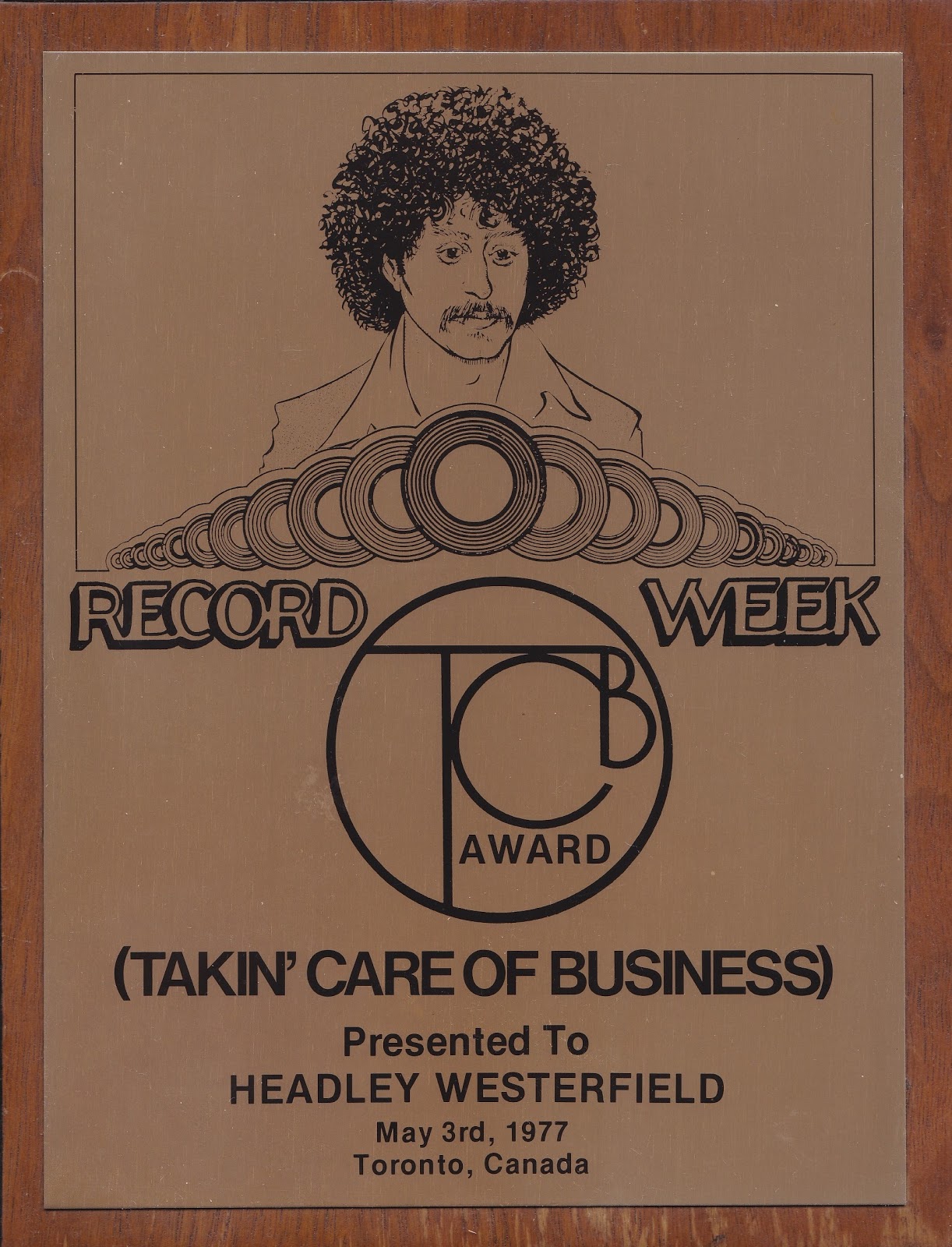
At different times I worked for both companies named
on this plaque: Record Week and Island Records Canada.

“Some people say” if you haven’t unpacked a box in a few years, you should give it away. If I did I would have lost stuff like this. These two plaques, newly rediscovered, tell the backstory of my life.

While I was going to Sheridan College of Applied Arts and Technology in Oakville, Ontario, Canada, the two things I played with most, when I wasn’t finding new ways to hoodwink my instructors:

  • Station Manager at Radio Sheridan;
  • Editor of A Student Magazine.

At the latter I wotked with artist Matthew Rust (who I’ve reconnected with recently on the facebookery) and Martin Herzog. Soon afterwards Marty and I started Zoundz Magazine, a little giveaway found next to the cash registers at Toronto area record stores. Soon we were taking advertising from the majors and adding pages to what had been a one-sheet folded cleverly. I was writer and editor and Marty had the business plan. However, in the end the business plan was that Marty would keep moving up, partnerships be damned.

He came to me one day and said that he was approached by Concert Productions International to take over Cheap Thrills, the house organ for members of the Cheap Thrills Club, in which membership had its privileges. Among them was to be first in line for concerts before tickets went on sale to the general public along with other perks. I followed Marty over to Cheap Thrills as Editor, but we were never partners after that.

Marty had his eyes on even bigger game than that.

One day he came to me, handed me a small pile of records, and told me that he had promised positive capsule reviews on them all. I argued that that’s not how record reviews work. I was young and dumb and had journalistic integrity. [I am no longer young.] Eventually, he told me that either I would write them or he’d find someone who would from the stable of writers we had started building. I told him that I would write the reviews, but to not put me in that position again.

No one ever noticed, but those 3 record reviews never once mentioned the music. I reviewed the covers, the producer, session musicians, whatever I could get away with. In one I actually reviewed the quality of the vinyl, wondering where it was pressed.

The next month Marty did the same thing and I quit on the spot. Yes, I walked away from a company owned by the man who went on to mount Rolling Stone tours, Broadway shows, and personally kick Donald Trump out of his own buildings. It’s a great story that ends thusly:

But, anyway, the bottom line is I look at Donald and said, “You and Marla (Maples) have to go.

You’re fired.” He looks at me and goes berserk.


“You don’t know anything! Your guys suck! I promote Mike Tyson! I promote heavyweight fights!”

And I notice the three shtarkers he’s with, in trench coats, two of them are putting on gloves and the other one is putting on brass knuckles. I go on the walkie-talkie and I call for Jim Callahan, who was head of our security, and I go, “Jim, I think I’m in a bit of trouble.” And he says, “Just turn around.”


I turn around. He’s got 40 of the crew with tire irons and hockey sticks and screwdrivers.

“And now, are you gonna go, Donald?”

And off he went.

And that was the night I fired Donald Trump.

I don’t know who Marty promised positive reviews to and I never asked. However, all 3 records were from CBS, where Marty later found a job. Isn’t that convenient? Bygones be bygones, once he landed at CBS, he’d hire me to write the salesmen one-sheets, the occasional band biography, and the words to populate entire promotional campaigns.

After all, freelance writing work is freelance writing work.

Other related stories:


The Officials’ Story
The Day I Met Bob Marley
Me and Pink Floyd and
Ivor Wynne Stadium

When I left Cheap Thrills I immediately landed at Record Week, a Canadian music industry trade publications that not only went out to every radio station, record store, and player in the business in Canada, but was also subscribed to by movers and shakers in the U.S. and around the world. My masthead title read Concert and Gig Guide Editor.

To be honest, I wasn’t at Record Week very long when I got a great offer to become part time Campus Record Promoter for Island Records Canada. This happened right about the same time I finished my 3rd year at Sheridan College (all of the above was extracurricular). I moved to Toronto, to live in the basement of the house on Bedford Road where Island Records had its Canadian Headquarters (and the only office in the country).

To be honest, I wasn’t at Island Records very long when I got a better offer from United Artists Records Canada to replace Pete Taylor, a legend in Canadian record promo. The pay was stunning to me, having just left school, where I had been surviving on student loans and a part-time McDonald’s job. [There’s a story I should tell one day.]

To be honest, I wasn’t at United Artists very long. I had climbed too high, too fast. I wasn’t ready for Big Time Record Promo™. On my 89th day I was called into the Vice President’s office and fired on the spot. Had they waited another 2 days, after my 90 day probationary period, they would have had to pay severance.

I went back to Island Records with my tail between my legs and I was taken back with open arms. There I finally learned the music promotion business.

Here’s the punchline: In the period between working for Island Records and returning to Island Records, Record Week decided to surprise me with that year’s Taking Care of Business Award. Apparently I had worked for Record Week for so short a time that they misspelled my name on the award.

I eventually went on to manage bands, write for a variety of publications (mostly non-music related) and spent a decade as a News Writer at Citytv. I have also had a lifelong love affair with music. This Throwback Thursday is dedicated to the time in my life when I couldn’t decide what I wanted to be when I grew up, so I chose ALL OF THE ABOVE.

Crank it up and D A N C E ! ! !

Commissioner Ken Russell Opens Up About Losing A Key Vote and West Grove

Ken Russell arrives for his swearing in as a Commissioner

Going in, everyone knew the September 29th Miami Commission meeting was going to be a raucous affair.

District 2 Commissioner Ken Russell had earlier called for the firing of the city lawyer. He contends that she withheld emails he had requested to make a decision. For her part, the City Lawyer Victoria Mendez, says it was just an oversight.

Whatever happened between them was long beside the point. By the time the Commission met there was only one issue: whether the city attorney should be fired because that’s what Commissioner Ken Russell had asked for.

At first the Commissioners tussled over whether there would be any public comment whatsoever, despite the overflow crowd, which had come to comment.

IRONY ALERT!!! Whether the public was allowed to speak required a legal opinion. All eyes turned to the city lawyer, Victoria Mendez, who was sitting on the dais. Obviously, she couldn’t give an opinion about whether people should be allowed to trash her and her reputation. Consequently, she had to recuse herself and the opinion was given by one of her staff. Why was Mendez even up there?

BTW: The legal opinion was that if there is to be action taken — like a vote — the public has the right to speak. If, however, it was only to be a discussion among the Commissioners, there is no obligation to hear from the constituents. The Commissioners voted to open up the floor to public comments.

After the public got to weigh in for about 2 hours — for Mendez, against Mendez — Russell restated his case for Mendez’s removal and responded to everything he had heard. He also alleged a dark conspiracy to smear him and his staff over this issue, saying his office had been hit with multiple Public Records Requests looking for documents and texts from Russell and his entire staff to be used against them.

Russell also reacted angrily to one person who I thought would have been his ally, muckraking radio host Grant Stern. Stern was also calling for the firing of Mendez and during the public comments made the most persuasive case. However, earlier Stern had to be admonished personally by the Chair near the beginning of the meeting when he loudly — and editorially — coughed from the public gallery.

Watch the Special Meeting:

When Russell admonished Stern, I was surprised. But, Russell alleged the one time he met privately with him — and, ironically, Victoria Mendez — Stern was so rude that everyone felt the need to apologize to Mendez.

Apparently, people had been trying to make hay from the fact that Russell was receiving emails from Stern. He acknowledged that, but said that anyone can write to a Commissioner and people should not make too much of it.

Russell finally made his motion at to remove the city attorney. And then there was a long pause waiting for someone to second his motion. No one did. Game over.

Win or lose, Commissioner Russell had agreed to an interview with the Not Now Silly Newsroom after the vote. This is the first 10 minutes of our free-wheeling discussion:

Q: Icarus flew too close to the sun. Now what?

A: Oh. You want to talk about today—
 

Q: Partially.
 

A: There’s so many things. There’s that. There’s your public records request with Armbrister—
 

Q: We’ll get there. *
 

A: And, we lost the Trolley garage.
 

Q: We’ll get there. *

A: You do need some time with me. I may need to go to the bathroom.


Q: I’ve got more topics than you got time.
 

A: I’ve got ‘em too, trust me.
 

Q: My impression is that you’ve set back the cause of reform.
 

A: Oh! Interesting. Okay.
 

Q: What’s that expression, “When you shoot for the King, you better make sure that you get the job done”?
 

A: I disagree. The only way I could have shored that vote up and had it in my pocket walking into that meeting was to have broken “sunshine” [laws] and I knew that if I did this—specifically because I’m fighting about a public records issue and what is right, and about transparency I had to do it the right way. 

So, with 100% sincerity, not one Commissioner up there saw that coming. The City Manager didn’t know about it. The only one who knew about it was Vickie [Victoria Mendez] because I had the courtesy to talk to her before hand.
 

As far as flying too close to the sun: We’ve been doing that since we got in Day One. 

You were probably the first interview that I had when I sat down with you behind the church and talked. We talked about plans and goals and dreams and ideas. And, it’s been 9, 10 months now and we’ve done a lot. I’m really encouraged by what we’ve accomplished. We’ve taken on some big goals and tamed them. We’ve gotten a lot of reform done. We’ve gotten a lot of change done.
 

You can’t win everything, but it doesn’t mean you don’t go for it. 

Before I pulled the trigger on this, I knew this was going to be a tough battle. I knew nobody wanted to fire her. I knew that this re-plat issue—such a small issue in the minds of the other Commissioners because none of their districts need to go to a warrant for a re-plat. Only my district.

So, I knew I was going to have trouble for this, but I knew that documents were withheld from me by my own attorney. And there’s no way I can turn a blind eye to that. There’s no way I cam slap her on the wrist, or say “Don’t do it next time”. To me there is no way a client/attorney privilege can survive without trust. And, that was broken. And, it wasn’t an accident. It wasn’t a knee-jerk to a momentary thing. We had been trying to get information on this case for months and months and months.
 

So I knew, win, lose or draw, I had to bring it to my commissioners and see where they stood. Would they stand with me and agree that that was enough. Unfortunately, I think that a lot of the other pressures that get involved in these situations, caused a lot of distraction.
 

And so, I didn’t prevail. But, what did prevail, and the other conversations that the other Commissioners had after I lost the vote were about reform and the change and the specifics to this case. Everything from not allowing the buiding permit on a T-plat until everything’s right. About forcing the [city] attorney’s office to have an official LSR opinion, instead of being able to weigh in willy nilly when any developer wants them to.
 

They [city attorney’s office] should never have been able to have had an opinion on this case. The fact that they did was because they were requested by an outsider. They don’t work for the outsider; they work for the city. If the city had asked for an opinion, “Oh, we’re not sure about how we’re interpreting our code” the city attorney can help us. That would have been the appropriate time [for the city attorney to get involved]. That never happened. So that was a change that was suggested.
 

More changes are going to be suggested. So, I don’t look at it as a step back for reform. I think I’s just the start.
 

Q: Do you think that following the vote the city attorney has been put on a shorter leash, or do you think it’s business as usual?
 

A: I think if I ever ask for documents in the future, I will get them. And, I think that is a big change that will happen.
 

Q: This all came out of Battersea. But, even the documents I got from this office the other day, of the 13 properties that you identified that may have been illegally split. It turns out that those were all NCD-3 [Neighborhood Construction District; properties in South Grove], when you know my concern is NCD-2 … 

A: [In unison] The NCD-2 [of the West Grove]. Right. Right.
 

Q: I am also one of those people who think that Battersea [in South Grove] got far more attention than it should have when you’ve got people on Grand Avenue that are suffering. And, not just a little bit. That’s probably one of the worst ghettos in Miami. How do you reassure the people of Coconut Grove now — West Grove that you’re on it, when all this attention was for Battersea?
 

A: Of course. You absolutely have to have respect and heart for when you hear [name redacted] come to City Commission and say “Why are you all worried about this when we’re going through this?” And, she’s not wrong. She’s absolutely right.
 

Q: But she was off topic today.
 

A: It will always be off topic because we’re going to be talking about something that’s not that and nothing is as important as that to her. And, she’s not wrong. We’re going to be talking about, yannow, picking up dog poop or something, and that’s not as important as someone getting evicted. We’re going to be talking about the color of houses and that’s not as important.
 

So she can literally come to every meeting and scream that same mantra and she would not be wrong because they are not getting enough attention. It’s not getting fixed.
 

It’s not fair to say that we can’t do any other business until those things are attended to because Battersea came and Battersea had to be attended to.
 

But, guess what? Grand Avenue has come and we are attending to that too. I have knocked on every single door of every potential evicted resident on Grand Avenue. So to say that there’s no attention being paid, is actually incorrect. The lawsuit was filed [against an owner who has not maintained the property, leaving residents living among cockroaches, mold and mildew, and raw sewage backing up] at my request to force the owner, the slumlord, to bring those into code or to help everybody with relocation. That was not a simple thing, but when I realized that that wasn’t enough, at first I went, “We are doing a lot” but then I realized that if the result is not there, then it’s not enough. If I haven’t either saved their home, or found them a new home, it’s not enough. And, the buildings are still coming down. And, it’s not enough.
 

So she’s not wrong. I can’t fault her for being as angry as she is.
 

Q: All the people who stood up [to speak] today — the West Grove people who got up to talk they were all basically saying “We’re being ignored.” How do you reassure them they’re not being ignored? Their perception is different.
 

A: Yes. I don’t know how I should better communicate the actions that we are taking in the West Grove. A lot of the initiatives, like the purchase of the Trolley garage and gifting it back to the community; thematic and historic designation of all the wood frame homes that would then find funding to renovate them, which can then convert them into affordable housing; these are all goals that I have. They’re not overnight goals, but they’re happening. You can see the list of projects that we have intended that are on those Post-it notes on the wall. Those are the legislative things that we’re trying to accomplish. So, there’s a lot on the plate.
 

But that is one of the top—that is one of the top because I know that West Grove is disappearing onn a daily basis and residents are moving out on a daily basis. 


*  Our conversation lasted another 25 minutes. Unfortunately my recorder malfunctioned and the rest of the conversation was lost. It was a wide-ranging discussion that included my records request [Read: An Open Reply To Miami’s Public Records Department and Another Open Email To Miami’s Public Records Department]; the Trolley garage that Russell thought he had purchased on behalf of the city, but found out this week a private owner scooped it out from under him; and Grant Stern. All lost.

Discovering Coconut Grove ► Throwback Thursday

My latest picture of the E.W.F. Stirrup House with its new historic marker,
but it’s no longer the historic E.W.F. Stirrup House. It’s a recreation.

Read: Who Is To Blame For The Destruction Of The E.W.F. Stirrup House?

When I first moved back to ‘Merka in 2005 I used the nom de troll of Aunty Em Ericann.

It was under that name that I first started writing Fox “News” criticism for NewsHounds. And, it was also under this name that I discovered Charles Avenue, which has let to dozens of stories about this community that still suffers from systemic racism.

This is one of the first stories about Coconut Grove I wrote:


Friday, March 13, 2009

The Shame of Coconut Grove

Number Two in a series

I said a picture is worth a thousand words, but either I should have included more pictures, or at least a couple of words, because most people misunderstood what the picture represented.

It was viewed as a current picture of…as what exactly? A political statement? An uncaring neighbour? A lack of respect for those founding Blacks who, having settled the area, helped the Whites survive and conquer the conditions found in this humid, mosquito-infested swampland that was southern Florida in the late 1800s?

Well, yes it’s all that, but it’s more and my picture didn’t tell the full story.

I have since visited Charles Avenue on four subsequent occasions. Only once was there no trash piled at the bottom of the historical marker. But, as you can see, it wouldn’t have mattered. The base is broken and the sign leans at an uncomfortable angle against a wire fence surrounding an empty lot of gravel and weeds.

I have also now done a moderate amount of research on the area. The story of Coconut Grove, writ large, is the story of what happened in every Black neighbourhood in America, save NYC which has always been unique.

This historical marker demonstrates years of neglect of Black heritage, while the heritage (and racial make-up) of the area grew to be overwhelmingly one associated with White folk.

There is one thing that differentiates Black Coconut Grove from all other Black communities. When one speaks of “the other side of the tracks” it is a literal description of these areas. Black Coconut Grove has no railroad tracks to separate it from the more affluent homes. Main Highway is the main dividing line in The Grove.
Coconut Grove, on the west side of Biscayne Bay, was a sleepy holiday destination in the early 1900s, unknown by most United Statesers and frequented by The Very Rich™. However, in December of 1925 “The Cocoanuts,” starring The Four Marx Brothers, opened at the Lyric Theatre in NYC. The madcap antics take place in Cocoanut Grove [sic; the original spelling], Florida, where Groucho runs a bankrupt hotel. The George S. Kaufman play ran for nearly 300 performances and became the first Marx Brothers’ movie in 1929. In the movie Groucho famously said, “You can have any kind of a home you want. You can even get stucco. Oh, how you can get stucco.”

And so, for the longest time, The Grove was associated with carpetbagging land speculators selling swampland to rich northerners.

Yet, something was happening in The Grove. First annexed to Miami in 1925, the same year the Marx Brothers trod the boards in the play, the sleepy town of The Grove already bragged of a library, school, yacht club and chapel, joining the Peacock Inn as structures in town.

Later, after WWII, Coconut Grove became an artists’ destination after servicemen, who had experienced Florida weather for the first time, packed up their families and moved south. The great influx of people occurred in the 50 years since. These days Coconut Grove is one of the richest and most desirable neighbourhoods in these United States.

As more people moved into The Grove the division that Main Highway represented became the colour line.

According to The WikiWackyWoo:

Demographically, Coconut Grove is split up into North-East Grove and South-West Grove, and as of 2000, the total population of both of the neighborhood’s sections made up 18,953.

As of 2000, North-East Grove had a population of 9,812 residents, with 5,113 households, and 2,221 families residing in the neighborhood. The median household income was $63,617.82. The racial makeup of the neighborhood was 35.24% Hispanic or Latino of any race, 2.25% Black or African American, 60.96% White (non-Hispanic), and 1.55% Other races (non-Hispanic).

As of 2000, South-West Grove had a population of 9,141 residents, with 3,477 households, and 2,082 families residing in the neighborhood. The median household income was $63,617.82. The racial makeup of the neighborhood was 14.80% Hispanic or Latino of any race, 48.27% Black or African American, 35.27% White (non-Hispanic), and 1.66% Other races (non-Hispanic).

Which side of that line do you think this historical marker is on? If you cross Main Highway due east from Charles Avenue and the historical sign you will find the gates of “Camp Biscayne,” a lush gated complex less than a football field away. Most of the communities on the east side of this line are gated, as near as I can tell. This is a far cry from those that run along Charles Avenue, small bungalows and shotgun shacks that are set up cheek to jowel.

More to come…
With all my love, Aunty Em

Another Open Email To Miami’s Public Records Department

THIS IS A PUBLIC REPLY

TO: Jones, Isiaa <IJones@miami.gov>
SUBJECT: Frustration Over PRR 16-452: FOIA Request
DATE:
September 28, 2016

CC: Melendez, Eleazar <ElMelendez@miamigov.com>;
Russell, Ken (Commissioner) <krussell@miamigov.com>; Mendez,
Victoria  <VMendez@miamigov.com>; Hannon, Todd
<thannon@miamigov.com>; The Loyal Readers of the Not Now Silly
Newsroom; Various Facebook Groups and Pages of my choosing

Monday
morning I sent an email which stated I’d be at Miami City Hall on
Tuesday to inspect the files you said would be waiting for me. In that
email I asked 2 questions, basically: Whether the fee for the emails I
requested was still on the table and how much it costs to photocopy per
page.

I never got a response to that email, so I didn’t
know when I arrived on Tuesday morning whether my 24 hours notice was
sufficient. Luckily, when I arrived, I was expected.

There were 2
boxes of material for me to look through, but only a small portion of
the total answered any of my search criteria. The rest was just all the
city files that arrived in those boxes from the former-Commissioner’s
office.

While some of it was quite interesting — and
I wish I had the budget to photocopy that entire 2 inch thick Reid
Welch file — and while some of it matched my search criteria, none of
it is what I asked for.

I asked for all of the email, not the files.

I
mentioned this to City Clerk Todd Hannon during a brief conversation
yesterday. He had me second guessing myself because he said I had asked
for everything, and the boxes of files was just one stream for my
request. The other stream was the electronic request for all of the
emails.

I am not sure what instructions Mr.
Hannon received, but this is exactly what I asked for, from my original
email to Commissioner Russell:

I would like to receive any email [from the former District 2 Commissioners office] that references the following keywords:

And, I’m still waiting.

To be perfectly honest, I was requesting the email FIRST in case it gave
me new information to add to a RECORDS search. You see, my RECORDS
search would have come later, based upon what the emails revealed.

I
drove down to Miami from Sunrise yesterday hoping to do all of this on
one trip. No one in the Clerk’s office knew a thing about the email I was supposed to examine.
Aside from the gas wasted, I spent more than 3.5 hours on the road 
[Yeah, it shocked me too. The roads were bad yesterday.]

Thinking
about my time and gas makes me wonder how many keystrokes it took your
IT guy to come up with a cost of $100.31. How many minutes from an IT
guy am I paying for? What is the basic rate?

One
good piece of news: I now know that you charge 15 cents per photocopy,
because I got a few made out of those boxes. That’s Kinko pricing.  

Meanwhile,
I’d like to draw your attention to the penultimate paragraph of a
letter Commissioner Ken Russell sent to the Miami Herald, published
yesterday:

Our decision on Thursday morning is not an easy one, but it is very
simple. Our attorney withheld public records, and I have lost my trust
in her. This cannot be denied, and it’s enough to call for her removal.
What’s at stake, however, is much greater. The commission has this
opportunity to tell the public that we prioritize transparency and
accountability — that we don’t agree that friends in high places should
be able to circumvent our public process.

I’m still waiting for transparency. None of this should be as hard as it has been.

Another Open Email To Miami’s Public Records Department

THIS IS A PUBLIC REPLY

TO: Jones, Isiaa <IJones@miami.gov>
SUBJECT: Frustration Over PRR 16-452: FOIA Request
DATE:
September 28, 2016

CC: Melendez, Eleazar <ElMelendez@miamigov.com>; Russell, Ken (Commissioner) <krussell@miamigov.com>; Mendez, Victoria  <VMendez@miamigov.com>; Hannon, Todd <thannon@miamigov.com>; The Loyal Readers of the Not Now Silly Newsroom; Various Facebook Groups and Pages of my choosing

Monday morning I sent an email which stated I’d be at Miami City Hall on Tuesday to inspect the files you said would be waiting for me. In that email I asked 2 questions, basically: Whether the fee for the emails I requested was still on the table and how much it costs to photocopy per page.

I never got a response to that email, so I didn’t know when I arrived on Tuesday morning whether my 24 hours notice was sufficient. Luckily, when I arrived, I was expected.

There were 2 boxes of material for me to look through, but only a small portion of the total answered any of my search criteria. The rest was just all the city files that arrived in those boxes from the former-Commissioner’s office.

While some of it was quite interesting — and I wish I had the budget to photocopy that entire 2 inch thick Reid Welch file — and while some of it matched my search criteria, none of it is what I asked for.

I asked for all of the email, not the files.

I mentioned this to City Clerk Todd Hannon during a brief conversation yesterday. He had me second guessing myself because he said I had asked for everything, and the boxes of files was just one stream for my request. The other stream was the electronic request for all of the emails.

I am not sure what instructions Mr. Hannon received, but this is exactly what I asked for, from my original email to Commissioner Russell:

I would like to receive any email [from the former District 2 Commissioners office] that references the following keywords:

And, I’m still waiting.

To be perfectly honest, I was requesting the email FIRST in case it gave me new information to add to a RECORDS search. You see, my RECORDS search would have come later, based upon what the emails revealed.

I drove down to Miami from Sunrise yesterday hoping to do all of this on one trip. No one in the Clerk’s office knew a thing about the email I was supposed to examine. Aside from the gas wasted, I spent more than 3.5 hours on the road  [Yeah, it shocked me too. The roads were bad yesterday.]

Thinking about my time and gas makes me wonder how many keystrokes it took your IT guy to come up with a cost of $100.31. How many minutes from an IT guy am I paying for? What is the basic rate?

One good piece of news: I now know that you charge 15 cents per photocopy, because I got a few made out of those boxes. That’s Kinko pricing.  

Meanwhile, I’d like to draw your attention to the penultimate paragraph of a letter Commissioner Ken Russell sent to the Miami Herald, published yesterday:

Our decision on Thursday morning is not an easy one, but it is very simple. Our attorney withheld public records, and I have lost my trust in her. This cannot be denied, and it’s enough to call for her removal. What’s at stake, however, is much greater. The commission has this opportunity to tell the public that we prioritize transparency and accountability — that we don’t agree that friends in high places should be able to circumvent our public process.

I’m still waiting for transparency. None of this should be as hard as it has been.

Rebuilding A Life From The Ground Up ► Unpacking The Writer

Good news, Not Now Silly fans. The Newsroom is making a second attempt at creating a brand new web site under its very own domain.

I’ve now seen the latest test of the format, which I like a lot. It’s very clean and uncluttered. Furthermore, the design will make it far easier for my readers to find all of the stories under the various rubrics I have created. Having signed off on the basic design, I have now asked my web designer (who I have taken on as a full partner) to populate the template with real words (my words) as opposed to all that fake text used as placeholders in the WordPress template.

One of the mistakes I made the last time I tried this was promising too much, too quickly. And, that was before my then-web designer totally fucked me over. Then he refused to return my deposit, which I consider theft. [Read: Webbitez Bitez ► A Consumer Report].

This time I won’t over-promise anything. COMING SOON is the most I will say.

I’m still trying to find the rhythm of my new life, now that Pops has gone to live in Michigan. I took care of him for 11 years, the longest I lived anywhere since I lived on King Street in Toronto. Without Pops in the condo, it feels so lonely and empty. Pops took up a lot of space, even though he wasn’t very big. There are times I actually think, for a brief moment, that I hear him calling me from the living room.

The Top Ten search terms that
got people to Not Now Silly.

I’ve still not gotten used to having the entire condo to myself. When home I find myself spending most of my time in my room watching tee vee — just like I always have — even tho’ there are bigger and better tee vees in the other rooms. Heck, there are bigger rooms and more comfy beds elsewhere in the condo, for that matter. Yet, I am still stuck behind this same keyboard in the very same place in my bedroom, in the same condo, in the same Florida city, in the same country.

Additionally, and no less important, my Cosmic Love Affair dissolved at practically the same time. [Read: Before and After Synchronicity, another in my Pastoral Letter series.] Suddenly, the two things that were the gravitational pull in my life were gone. To mix metaphors, I feel like a tether-ball spinning helplessly out of control after my rope broke. 

None of this is helping my depression.

All of my rhythms are off, especially my writing schedule, which I keep trying to get back to. I’ve neglected Monday Musical Appreciation and Throwback Thursday since I embarked on my last road trip. Maybe promising right here, right now, that I’ll re-fire the boiler under the Steam-Powered Word-0-Matic will help me resolve to pick those up again. As careful readers will see I’ve already started.

What else have I written lately? Just a few important articles, that’s all. I discovered that parts of Armbrister Field were closed because of toxic soil, even though I attended the ribbon cutting a few years back that was supposed to demonstrate that the park was safe. Why wasn’t the toxic soil cleaned up back then? Why was there such a rush to get this park reopened if there was actually toxic soil in it? To that end I launched a Freedom of Information Act request for material on a number of topics surrounding these items.

When it turned Kafkaesque — almost immediately — I posted An Open Reply To Miami’s Public Records Department. While there has already been a response from the city, it doesn’t really
answer my most important question and prompts a new one. I’m not prepared to make the reply public — yet.
However, we’ll see where this goes.

If you can’t help, share. Or do both.

BTW: I have also started a Go Fund Me page to help offset some of the costs incurred researching and writing these stories. Aside from having to pay the City of Miami for each document search, there’s also the per page photocopying fee on top of that. And, the Freedom Of Information requests are just one of the many expenses for Not Now Silly. There’s gas, of course. Coconut Grove is 35 miles from where I live. And, virtually every time I go there I have to pay for parking. It all adds up.

I have one investigative story in the pipeline that I’ve been working on since early June. I’ve never been 100% happy with how it’s shaped, so I keep kicking at it here and there. Recently there’s been some stories in the news that’ll force an update to this article anyway. Now I need to decide whether I will continue to get this draft in the appropriate shape this one, or just start from scratch.

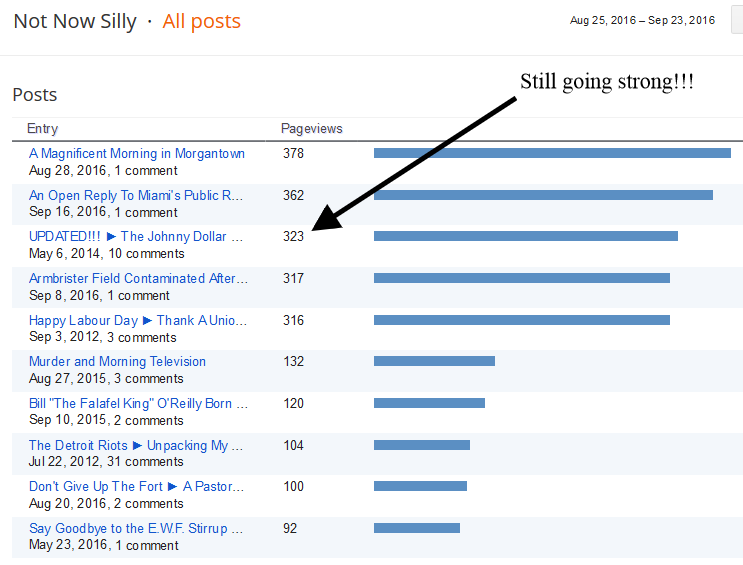
Closing in a half a million page views since launching the Not Now Silly Newsroom

Since my last Unpacking the Writer (almost a monthly series) I have also written a new chapter in my never-ending search for Don Knotts‘ roots, and added another Pastoral Letter, my continued search for where my spirituality comes from if I am a stone cold atheist. I’m not so sure anyone else cares, but I am finding out a whole lot about myself because I’m asking questions.

Just this moment, as I was finishing the final edit to this post before sending it off into the electronic ether to turn it into a page, I came to a new realization about spirituality that will become my next Pastoral Letter. It may also contain my latest Mea Culpa.

Stay tuned . . .

Rebuilding A Life From The Ground Up ► Unpacking The Writer

Good news, Not Now Silly fans. The Newsroom is making a second attempt at creating a brand new web site under its very own domain.

I’ve now seen the latest test of the format, which I like a lot. It’s very clean and uncluttered. Furthermore, the design will make it far easier for my readers to find all of the stories under the various rubrics I have created. Having signed off on the basic design, I have now asked my web designer (who I have taken on as a full partner) to populate the template with real words (my words) as opposed to all that fake text used as placeholders in the WordPress template.

One of the mistakes I made the last time I tried this was promising too much, too quickly. And, that was before my then-web designer totally fucked me over. Then he refused to return my deposit, which I consider theft. [Read: Webbitez Bitez ► A Consumer Report].

This time I won’t over-promise anything. COMING SOON is the most I will say.

I’m still trying to find the rhythm of my new life, now that Pops has gone to live in Michigan. I took care of him for 11 years, the longest I lived anywhere since I lived on King Street in Toronto. Without Pops in the condo, it feels so lonely and empty. Pops took up a lot of space, even though he wasn’t very big. There are times I actually think, for a brief moment, that I hear him calling me from the living room.

The Top Ten search terms that
got people to Not Now Silly.

I’ve still not gotten used to having the entire condo to myself. When home I find myself spending most of my time in my room watching tee vee — just like I always have — even tho’ there are bigger and better tee vees in the other rooms. Heck, there are bigger rooms and more comfy beds elsewhere in the condo, for that matter. Yet, I am still stuck behind this same keyboard in the very same place in my bedroom, in the same condo, in the same Florida city, in the same country.

Additionally, and no less important, my Cosmic Love Affair dissolved at practically the same time. [Read: Before and After Synchronicity, another in my Pastoral Letter series.] Suddenly, the two things that were the gravitational pull in my life were gone. To mix metaphors, I feel like a tether-ball spinning helplessly out of control after my rope broke. 

None of this is helping my depression.

All of my rhythms are off, especially my writing schedule, which I keep trying to get back to. I’ve neglected Monday Musical Appreciation and Throwback Thursday since I embarked on my last road trip. Maybe promising right here, right now, that I’ll re-fire the boiler under the Steam-Powered Word-0-Matic will help me resolve to pick those up again. As careful readers will see I’ve already started.

What else have I written lately? Just a few important articles, that’s all. I discovered that parts of Armbrister Field were closed because of toxic soil, even though I attended the ribbon cutting a few years back that was supposed to demonstrate that the park was safe. Why wasn’t the toxic soil cleaned up back then? Why was there such a rush to get this park reopened if there was actually toxic soil in it? To that end I launched a Freedom of Information Act request for material on a number of topics surrounding these items.

When it turned Kafkaesque — almost immediately — I posted An Open Reply To Miami’s Public Records Department. While there has already been a response from the city, it doesn’t really answer my most important question and prompts a new one. I’m not prepared to make the reply public — yet. However, we’ll see where this goes.


If you can’t help, share. Or do both.

BTW: I have also started a Go Fund Me page to help offset some of the costs incurred researching and writing these stories. Aside from having to pay the City of Miami for each document search, there’s also the per page photocopying fee on top of that. And, the Freedom Of Information requests are just one of the many expenses for Not Now Silly. There’s gas, of course. Coconut Grove is 35 miles from where I live. And, virtually every time I go there I have to pay for parking. It all adds up.


I have one investigative story in the pipeline that I’ve been working on since early June. I’ve never been 100% happy with how it’s shaped, so I keep kicking at it here and there. Recently there’s been some stories in the news that’ll force an update to this article anyway. Now I need to decide whether I will continue to get this draft in the appropriate shape this one, or just start from scratch.

Closing in a half a million page views since launching the Not Now Silly Newsroom

Since my last Unpacking the Writer (almost a monthly series) I have also written a new chapter in my never-ending search for Don Knotts‘ roots, and added another Pastoral Letter, my continued search for where my spirituality comes from if I am a stone cold atheist. I’m not so sure anyone else cares, but I am finding out a whole lot about myself because I’m asking questions.

Just this moment, as I was finishing the final edit to this post before sending it off into the electronic ether to turn it into a page, I came to a new realization about spirituality that will become my next Pastoral Letter. It may also contain my latest Mea Culpa.

Stay tuned . . .