Tag Archives: City of Miami

Is Trolleygate Headed For An Out-Of-Court Settlement?

Before the meeting of the Coconut Village Council got underway

The February 25th Coconut Grove Village Council purred along nicely until the agenda item of Trolleygate. That’s when the wheels fell off the meeting’s diesel bus. Residents broke Robert’s Rules of Order to talk out-of-turn, denouncing the proposed settlement concerning the non-conforming diesel bus maintenance garage on Douglas Road that contravenes not only the Miami 21 plan, but also the Civil Rights Act of 1964. Such was the outrage that the committee presenting the report had to remind the residents that they were just messengers.

So confident are all the parties that an agreement is possible, that they’ve requested a 60-day freeze in all legal proceedings to see if they can all get on the bus. Based on the anger expressed at the Village Council Meeting, it may be an uphill climb on a rough road to a negotiated settlement.

The former future non-conforming diesel bus garage?

The broad outline of the proposed settlement looks like this: Coral Gables agrees to drop its lawsuit against Astor Development that asks a judge to abrogate its contract with the developer. Meanwhile Astor Trolley/Astor Development agrees to stick the new fake trolley garage RIGHT WHERE IT IS NOW, more or less, as opposed to the non-conforming White Elephant on Douglas Road.

Everything old is new again: The new plan is for Astor to build the multimillion dollar mixed use complex with a maintenance bus garage hidden inside. However, because it will take time for Astor to build the multimillion dollar mixed-use development in Coral Gables, these two parties are asking the West Grove residents to allow the Douglas Road vehicle maintenance facility to operate for the next 18-months to 2 years.

That’s when the meeting exploded.

While this is not a scientific survey by any means, it appeared the majority of those present at the Village Council meeting (which was so small a group that it represented only the tiniest fraction of Coconut Grove residents) were vehemently against allowing any use of the non-conforming bus maintenance garage as a bus maintenance garage, even for a day.

And, if those residents read yesterday’s Miami-Herald, they won’t be reassured. According to Jenny Staletovich:

The city would need to use the 12-bay depot that neighbors bitterly oppose in the 3300 block of Douglas Road in the West Grove while the new depot is being constructed. After two or three years, the trolleys would then move out, said Coral Gables City Attorney Craig Leen.

So, the 18-months-to-2-years touted at the meeting is already being stretched to 3 years and that’s before any construction delays — or construction begins, for that matter.

However, let’s assume this deal is accepted. What becomes of the building on Douglas Road after Coral Gables gets done with it? The community is already eyeballing it for some practical use in a community trying to pull itself out of a downward economic spiral. F’rinstance, there is a dearth of grocery stores on that end of Grand Avenue. Or, what about an artist’s cooperative? Indoor/Outdoor all-weather Farmer’s Market? Or a cooperative retail space like that of The Rust Belt, in Ferndale, Michigan, but with a Bahamian/West Grove vibe? These are all ideas already being kicked around. However, that’s putting several carts before all this horsepower.

The main sentiment heard at the Village Council meeting was, “If you give them an inch…” Similar was expressed to Miami New Times’ writer Allie Conti, who writes in today’s Riptide:

Although the plan seems like it could work, the steering committee that represents the West Grove residents says no way. Committee chair Linda Williams says it’s important that the community decide what the garage is used for once it’s vacated. But she is also concerned the plan isn’t binding enough to get the city and developers out of there at all.

“We will not commit to letting them use the garage for two more years, because then we’ll never get them out,” she says. “There will be delays, and even trying to fine them won’t work — these people have deep pockets, so they’ll just pay the fine.”

While an inch hasn’t even been given yet, some people are already planning the next mile of road under these fake trolleys. This vision asks West Grove residents to put up with this non-conforming diesel bus maintenance garage forever, and a day, not just for a couple of years. 

As predicted in these pages only days ago: The Coconut Grove Grapevine asks the musical question, “Maybe we can use it for the Grove trolley?

In other words: Ignore the
century of institutional racism and the [alleged] Miami corruption that
sited the garage on Douglas Road in the first place. Let’s make West Grove live with it because that’s how Modern Day Colonialists operate.

There’s a fascinating story about that blue triangle
above in which Coral Gables was able to hide its
racism in plain sight by making it a historic district

Speaking of Colonialism: In a totally unrelated, but tangential issue, Coral Gables still plans to run its fake trolleys into the MacFarlane Homestead Subdivision Historic District, which it has ignored up until now. This weird triangle of Coral Gables land, wedged between West Grove and famed U.S. Highway #1, housed the Black enclave of Coral Gables. These folks were the servant class of Coral Gables and this is the only area in which they were allowed to live at one time.  U.S. 1 served as The Colour Line in those days, making this neighbourhood the exception that proves the rule.

It would be an irony indeed if this under-served area of Coral Gables is finally brought into the 20th Century as a result of opposition to Trolleygate by their West Grove neighbours. Maybe one day West Grove will be treated with the same belated dignity.

As the Merry Pranksters were fond of saying, “You’re either on the bus, or you’re off the bus.” Can the lawyers get all parties on this bus before the 60-day deadline expires?

An Open Letter To Miami Media

The White Elephant completed and awaiting the end of lawsuits
I sent a variation of this letter to a local reporter. Because I worked on it for so long, and because every word I write is deserving of immortality, I am reprinting it here as an open letter in an amended form. Ahem. Testing . . . one . . . two . . . three . . . Ahem.

Dear Miami Media At Large:

Have I got a story for you. It’s a great story, one you can sink your teeth into and make your investigatory bones. It’s about waste and corruption within the City of Miami. I’d love to do it myself, but I’m just a little guy with a blog, yannow? I don’t have the resources you do, Miami Media, and I’ve been chasing this story for a year. 


I was alerted to Trolleygate right around this time last year, so I wrote “An Introduction to Trolleygate.” That’s when I really started
investigating this story. From the very beginning I
said the siting of the bus garage was, straight up, Institutional
Racism
. It was not dissimilar to the racism that allowed West Grove to be gifted with Old Smokey all those decades ago. Therefore, it was heartening when
the USDOT agreed with me, which is the thrust of a recent Miami Herald article “How fed dollars for trolleys in Miami-Dade, local cities spurred civil rights investigation.” 

The article is correct, as far as it goes. However, it’s missing the entire point, as far as I’m concerned. It never asks:

“How did West Grove get stuck with
this white elephant in the first place?”

The deal between Astor Development and Coral Gables aside, there appears to have been a concerted effort within the City of Miami to get Astor’s dealie done with as little public input and awareness as possible. One of my off-the-record sources, an architect who has attended dozens of development meetings in several cities, tells me they’ve never seen a project approved so quickly in Miami. “A hot knife through butter” was the way it was described. Why? How? These are questions worth exploring, Miami Media.

From the very beginning of this project [allegedly] corrupt Commissioner Marc D. Sarnoff seemed to be interested in making this happen on the QT, with as little muss and fuss as possible. Why? He allegedly helped Astor Development pit one West Grove community group off against another, which culminated in a huge lump sum of money ($250,000, apparently) being proffered by Astor Development for soil remediation of Armbrister Field. According to Miami Herald reporting, those people who were offered the money felt it was a bribe to get their approval for the maintenance garage, but considered it better than nothing if the garage was going to be built anyway. Why was Astor Development suddenly so magnanimous? How did Astor think to offer money to the community group in the first place? Who brokered this soil remediation deal with the community? Was Sarnoff a party to these negotiations? More questions you may wish to explore, Miami Media.

REMEMBER: This was before word broke that there was toxic soil all over Miami. What did Sarnoff know about toxic soil and when did he know it?

While those are all questions that need answers, Miami Media, there is one bigger question that might answer everything:

“Who is responsible for ignoring The Smoking
Gun email in the Miami Development Office?”

I wrote about this last September in “BLOCKBUSTER!!! The Trolleygate Smoking Gun Surfaces.” Follow the bouncing ball. To paraphrase my own reporting:

As the wheels were being greased to get this project through Miami City Hall quietly, Dakota Hendon — Miami Building and Zoning Department — noted something VERY inconvenient. The Astor/Coral Gables/West Grove trolley garage project they had been about to approve DID NOT comply with the Miami 21 Plan. Hendon should know. He helped write the Miami 21 plan. To that end he sent an email to Miami Planning Director Francisco Garcia [embedded here] to say this garage would be non-conforming because vehicle maintenance is an industrial use, which was prohibited on Douglas Road. [Not to mention that the Miami 21 Plan specifically prohibits things called “government operated vehicle maintenance facilities” on the Douglas Road corridor.]

At this point the City of Miami paper trail seems to go cold, except for one curious thing. Astor Development resubmitted its application to the City of Miami. This second, replacement, application was virtually identical to the first one, except this new one removed the word “maintenance” from the intended uses of the building.

Let’s be clear. The intended use of the building never changed. It was just a massaging of the wording on the original application once Hendon discovered there was a problem. And, on the basis of this amended application, the project was approved faster than “a hot knife through butter.”

The former Pan Am air clipper terminal has been restored beautifully
to become Miami City Hal. It’s where the alleged corruption now happens.

MORE QUESTIONS: Who told Astor to change its application? When Miami learned the project was non-conforming, why was the project not stopped dead in its trolley tracks? Why did Marc Sarnoff — only after the controversy erupted in the community — mount a Trolleygate Dog and Pony Show in a futile attempt to placate the West Grove community?

Where was the Miami Media at this laughable Town Hall Meeting? It was the kind of presentation that is usually given to taxpayers and stakeholders BEFORE a project is approved — in order to get it approved — not afterwards. Why was Sarnoff so concerned? Why was Sarnoff so involved? Why did Sarnoff spend taxpayers’ dollars to mount the Trolleygate Dog and Pony Show if it was already a done deal that couldn’t be changed? Who shepherded this project through the rough shoals at City Hall (to mix metaphors)? How did it get past goalkeepers Henden and Garcia? How much taxpayer money is now being spent by Coral Gables, Miami, and Miami-Dade to defend these [allegedly] corrupt backroom deals in the various legal forums that have erupted? (Astor pays its own freight, of course, and the West Grove community has been getting its legal services pro bono.) See, Miami Media, this story practically writes itself.

Miami Media, trust me on this one: You really won’t have much work to do in order to lay this entire fiasco at the feet of [allegedly] corrupt Commissioner Marc D. Sarnoff. You’ll be hailed as a hero, too, because it will come right out of the blue. Sarnoff is rarely mentioned in stories about Trolleygate, despite the fact that he seemed to have his hands in almost every stage of this boondoggle in which Miami doesn’t even receive tax dollars, let alone a fake trolley stop.
Sarnoff’s interest in getting this disaster approved appears to have gone well beyond the basic fact that this polluting garage is in his district. Ask yourself this, Miami Media: If he was truly looking out for the interests of his constituents, Sarnoff could have interpreted every ambiguity in the zoning by-laws in favour of the West Grove community, as opposed to the OUT OF TOWN developer. However, Sarnoff said over and over at the Dog and Pony Show that his hands were tied because the project met all city standards, something we now know is not true.

If Sarnoff was truly looking out for the interests of his constituents, he would not have threatened them at the Dog and Pony Show. It was shocking to hear him casually claim that the West Grove lawsuit not only put in jeopardy the Arbrister Field bribe, but might cause him to withdraw HIS support for a redevelopment project currently in the planning stages for Grand Avenue. It was the most blatant example of Modern Day Colonialism I have ever witnessed. The naked political power dropped casually, as if he could not care less whether these projects go ahead, reminded me of Jim Crow. See, Miami Media? This story is really as old as the hills, if South Florida had any.

The Dog and Pony Show was my first contact with Sarnoff and I saw a bully in action. I’m surprised the Miami Media doesn’t write more about this aspect of his character, before he starts closing down the bridges in Miami.

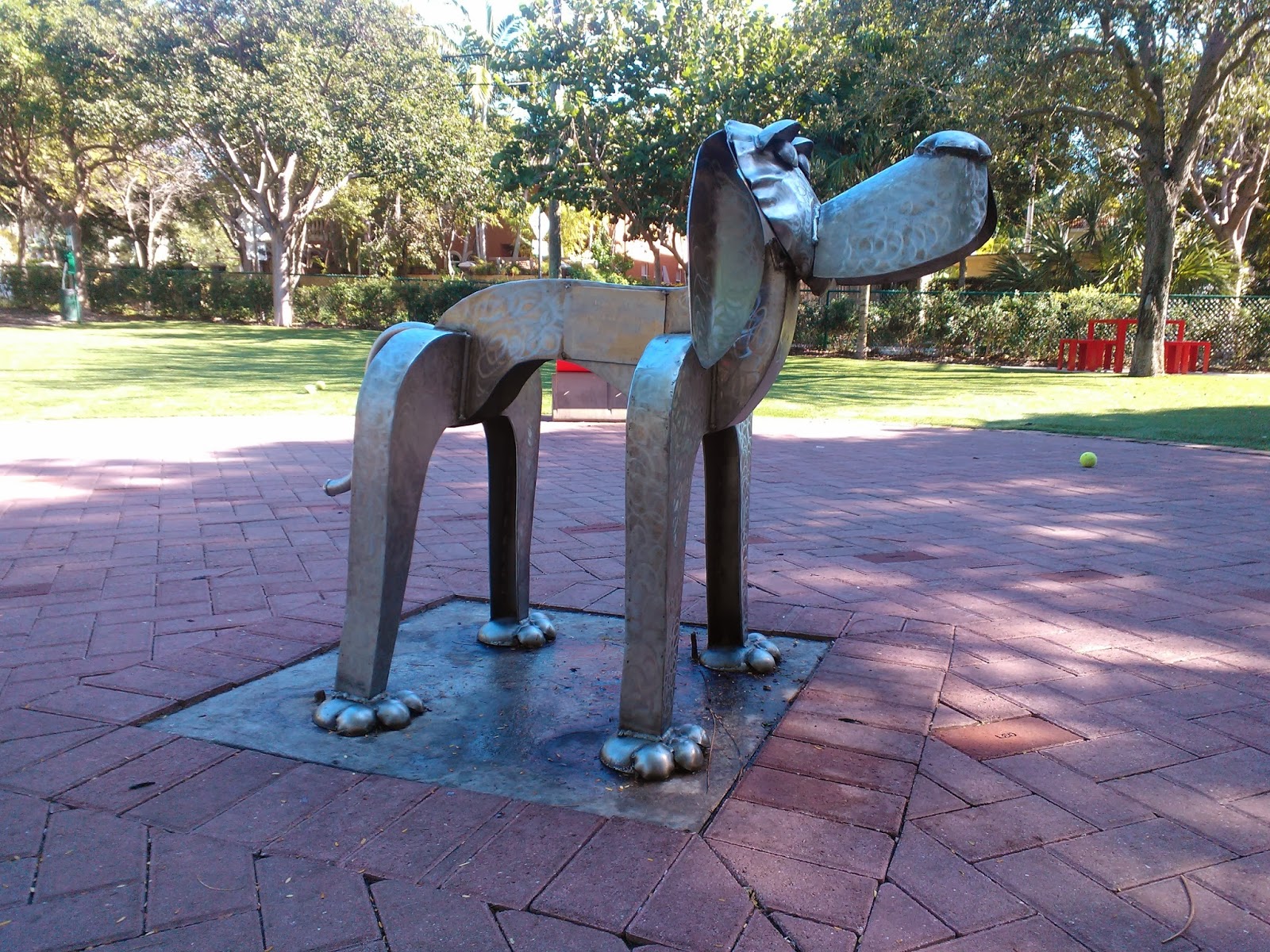
The Marc D. Sarnoff Memorial Dog Park sculpture, which I have
nicknamed Marc. If Sarnoff had any empathy for children and
families he would not have allowed two-thirds of Blanche Park
to go to the dogs at the expense of a children’s playground.

And, just to put a fine point on this whole dealie: if Marc Sarnoff had any empathy for his constituents in West Grove, he would not have lined the back wall of the Dog and Pony Show with a largest police presence anyone can ever remember at a public meeting in Miami.

Could this be one of the [several] reasons my West Grove sources call him racist? Could this quiet racism be what allowed him to not even think about the residents of West Grove when approving this project, except on how to bamboozle them?

Would Marc D. Sarnoff have approved of this garage at, say, Shipping and Virginia, on the site of The Marc D. Sarnoff Memorial Dog Park, right next to The Marc D. Sarnoff Memorial Traffic Circle. Would he have pushed for this in any other residential neighbourhood outside of West Grove? Would it have gone through like “a hot knife through butter”?

So, you see, Miami Media, I think there are a lot of unanswered questions concerning Trolleygate, the least of which concerns the Department of Transportation’s objections concerning the Civil Rights Act of 1964. Which is ironic because Institutional Racism informs the whole project at every level, from the ground up. Ask this basic question, Miami Media, and spread out from here: Why was Astor Development able to find the cheapest land in West Grove?

So, there you have it, Miami Media. It’s a story of naked corruption and racism hiding in plain sight. It’s one you’ve pretty well been ignoring for a year. But, I’ve made it easy for you. I’ve wrapped the entire package with a pretty bow just for you. Start pulling at that ribbon, that leads to all these unanswered questions, you might just discover corruption at Miami City Hall. To paraphrase Captain Renault in Casablanca, “I’m shocked, shocked to find that corruption is going on at Miami City Hall.”

So, Miami Media, you may want to do your job and investigate these acute angles surrounding Trolleygate. And, let me remind you, Miami Media, reporters win Pullet Surprises writing about government corruption.

With all my love,
Headly Westerfield
[aka Aunty Em]

Trolleygate Violates 1964 Civil Rights Act ► Not Now Silly Vindicated

The non-conforming government operated vehicle maintenance
facility appeared virtually finished on a October 16, 2013 visit

Ever since I first began writing about Trolleygate, I have called it an obvious case of Racial Discrimination. Now it appears the United States Department of Transportation, writing the latest jokes in this comedy of errors, agrees with me. All brought to the good people of Miami and Coral Gables by [allegedly] corrupt Commissioner Marc D. Sarnoff.

Legal troubles over the non-conforming, polluting, government operated vehicle maintenance facility have grow exponentially since the residents of West Grove were first made aware of the project and launched a David vs Goliath legal challenge against the cities of Miami and Coral Gables, not to mention the powerful Astor Development, a company with deep pockets. Had the residents not had a legal team willing to work Pro Bono, they would have never been able to afford to take on this legal battle.

Unfortunately when the residents’ lawsuit came up for a hearing the judge, while sympathetic to the residents’ arguments, ruled not to rule, saying he had no jurisdiction. The residents’ legal team vowed to continue to fight the non-conforming, polluting, government operated vehicle maintenance facility and began to prepare an appeal.

And, it’s a good thing that legal battle continued. Intrepid tree-shaking by the West Grove legal team discovered two very important documents, the first of which is the Smoking Gun email. This internal email was from Dakota Hendon (City of Miami Building and Zoning Department) to Francisco Garcia (City of Miami Planning Director). It stated in unequivocal language that the non-conforming, polluting, government operated vehicle maintenance facility did NOT comply with the Miami 21 Plan, which specifically ruled out things called “government operated vehicle maintenance facilities.”

Rather than say “NO” to a multi-million dollar developer, there was some obvious — if not obviously illegal — jiggery-pokery performed by someone [still to be determined] within the City of Miami government. This person ordered the developer to re-write and re-submit the proposal, but this time leave out the word “maintenance.” The developer did so and the building permit was issued under this second application, even though the only thing that had changed was the wording, not the building’s intent.

However, the West Grove legal team shook out something far more important during its research. It turns out that City of Miami officials had been sitting on a report for years that said the soil at Armbrister Field contained high levels of toxins from Old Smokey, the not-so-affectionate name for the incinerator that belched out carcinogens for nearly 100 years — before it was closed down in 1970. That discovery led to soil testing at all the parks in Miami and, GUESS WHAT?!?! It turns out that toxic ash from this incinerator was used as fill all over Miami, including many of its parks. Expensive remedial action will need to be taken while the parks are closed, ironically including the Marc D. Sarnoff Memorial Dog Park.

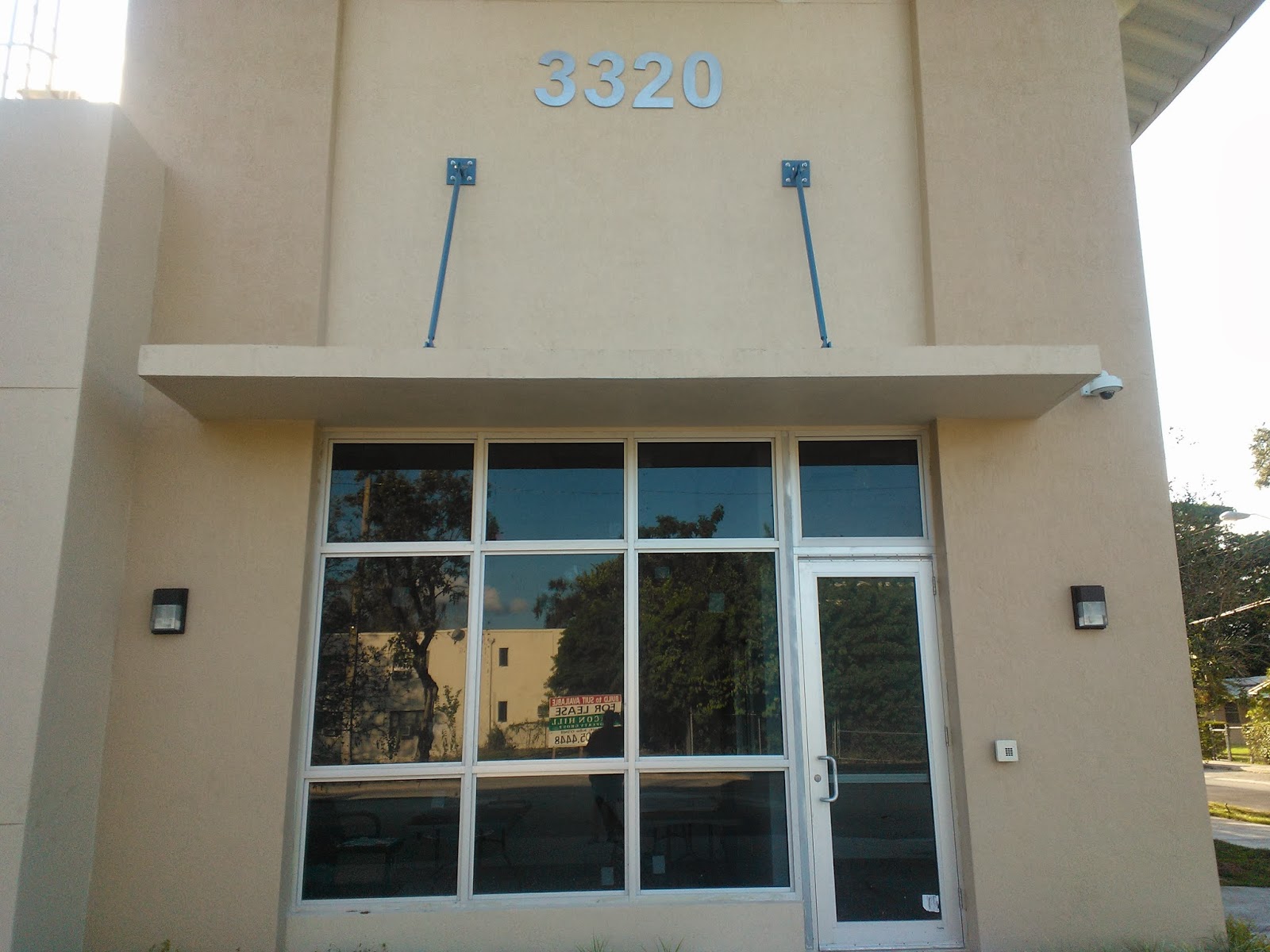
The White Elephant at 3320 South Douglas Road from another angle

NB: Don’t get distracted. Soilgate is merely a side issue to this three-ring circus.

Soon after the West Grove residents had their case tossed out of court, the City of Coral Gablesthe city that Racism builtfiled its own lawsuit against Astor Development and the City of Miami. The suit alleges, essentially, that it was duped. Coral Gables was to accept transfer of a ‘clean’ government operated vehicle maintenance facility that Astor Trolley, LLC, built in exchange for land on which Astor Development, LLC wants to make gazillions of dollars by building a massive mixed-use development. However, Coral Gables is now concerned that the non-conforming, polluting, government operated vehicle maintenance facility is encumbered in lawsuits and wants a judge to either sever the contract it has with Astor or, in the alternative, rule that the non-conforming, polluting, government operated vehicle maintenance facility actually conforms to the Miami 21 Plan, despite the fact that it doesn’t, smoking gun emails notwithstanding.

Which brings us full-circle to the [alleged] Civil Rights violations. According to a Department of Transportation investigation into Trolleygate instigated by a neighbour’s complaint, the cities of Miami and Coral Gables [allegedly] violated the Civil Rights of the West Grove residents by not ensuring the project complied with the Civil Rights Act of 1964, specifically Title VI. The 13 page letter and memorandum from the Federal Transit Administration reads in part [PDF]:

As you know, Title VI of the Civil Rights Act of 1964 (Title VI) provides that “No person in the United States shall, on the ground of race, color, or national origin, be excluded from participation in, be denied benefits of, or be subjected to discrimination under any program or activity receiving Federal financial assistance.” U.S. Department of Transportation (DOT) regulations require that public transportation services be provided in a nondiscriminatory manner. To implement this requirement, DOT regulations and the Federal Transit Administration’s Title VI guidance require that entitles receiving Federal assistance, when determining the site or location of public transportation facilities, may not make site selections with the purpose or effect of excluding persons from, denying them the benefits of, or subjecting them to discrimination with respect to, public transportation services on the grounds of race, color, or national origin.

To ensure compliance with FTA’s Title VI regulatory requirements, entities receiving Federal assistance must conduct a Title VI equity analysis for all public transportation facility siting decisions. This analysis will generally include outreach to persons potentially impacted by the siting of the respective facility, and consideration of the equity impacts of various siting alternatives. When a potentially discriminatory impact is found, the transit agency must revise its plans in order to avoid or mitigate the discriminatory impact. If, upon taking mitigating actions and reanalyzing the proposed site selection, the transit agency determines that minority communities will continue to bear a disparate impact of the proposed site selection, the transit agency may implement the site selection only [emphasis in original] if the agency has a substantial legitimate justification for the site selection and can show that there are no alternatives that would have a less disparate impact on the minority community.

The entrance and maintenance bays for the fake trolley buses as
viewed from Frow, a quiet residential street, on October 16th

Cutting through the verbiage: Because both the cities of Coral Gables and Miami accept Federal Dollars to run the free fake trolley buses, they both need to comply with the Civil Rights Act of 1964, Title VI. When Astor Development decided to build this in a predominately minority neighbourhood without consultation, it [allegedly] violated the Civil Rights of the struggling neighbourhood. Furthermore, when Coral Gables refused to give the residents of West Coconut Grove a Fake Trolley Stop, it [allegedly] violated their Civil Rights.

However, the comedy doesn’t end there. The first paragraph quoted above starts out “As you know…” It turns out that both Miami and Coral Gables claim that they didn’t know and have never considered Title VI of the Civil Rights Act. Oh! Stop!! My!!! Sides!!!! According to Jenny Staletovich of the Miami Herald:

An investigation by the U.S. Department of Transportation, triggered by a neighbor’s complaint, found the county failed to ensure the cities followed the law. The cities, in turn, violated the law by not conducting a study during the garage’s “planning stages” to ensure that race did not play a part in determining where it was built or whether the garage would have an “adverse impact” on the West Grove neighborhood, which has long struggled to attract business.

The two municipalities, which say they were unaware of the requirements, also failed to perform public outreach as required by the law, the investigation found.

[…] University of Miami law professor Anthony Alfieri, whose Center for Ethics & Public Service has helped residents fight the garage, said the ruling calls into question whether the governments violated the law in other projects where federal transportation money was used.

“This letter and memorandum raise a significant question about whether the county and these two municipalities have ever been in compliance with Title VI, because apparently they’re not aware of the objectives and have no program in effect,” he said. “Title VI is one of the main provisions of the Civil Rights Act of 1964, so this statute is 49 years old. People marched and died because of this.”

If this were really a situation comedy, this would be where the plot complications begin. Miami and Coral Gables have now committed to conducting the FTA study that should have happened long before the building permit was ever issued; just like the Trolleygate Dog and Pony Show was only mounted by [allegedly] corrupt Commissioner Marc D. Sarnoff after the residents of West Grove discovered he had worked behind their backs to grease the wheels to get this white elephant approved. That’s our sitcom character Sarnoff: Always putting the cart before the horse. Hilarity ensues.

Still not laughing? Maybe the latest finger-pointing from Astor Development will get a chuckle or two out of you. According to the same Miami Herald article:

Astor, however, believes the city should have made sure the Civil Rights Act was followed.

“The city of Coral Gables recently learned that they were subject to the rules and regulations of the FTA, of which the city manager and the city attorney were not aware of in the past,” Astor spokesman Tad Schwartz said.

“Their compliance with the FTA program was not disclosed in any way with our agreement. This wasn’t in our contract.”

Here’s where the comedy ends because: TAXPAYERS’ MONEY!!! Every dollar spent on this project so far has been a monumental waste. When [allegedly] corrupt Commissioner Marc D. Sarnoff decided to help Astor Development push this project through Miami City Hall, it had the reverse-Midas effect: Everything touched by this project has turned to manure. Astor Development purchased the land and threw up the structure. Astor, Miami and Coral Gables have all hired legal teams for the various lawsuits past, present, and future. This is throwing good money after bad and, except for Astor’s money, the taxpayers are on the hook for it all.

ROLL CREDITS: This comedy of errors has been brought to you by [allegedly] corrupt Miami Commissioner Marc D. Sarnoff, the anti-Midas, who decided a developer’s desire to build once again trumped the interests of his own constituents.

BLOCKBUSTER!!! The Trolleygate Smoking Gun Surfaces

Ready for his close-up: [Allegedly] corrupt Miami Commisioner Marc. D. Sarnoff
at the Trolleygate Dog and Pony Show posing for the Miami Herald.

A whistle-blower on Trolleygate could blow down the house of cards carefully erected by [allegedly] corrupt Miami Commissioner Marc D. Sarnoff. At least that’s what people who call Sarnoff the “Teflon” Commissioner are hoping.

I received a call from an anonymous tipster yesterday telling me of an email being circulated privately (but has since become public) that should have put a stop to the government operated vehicle maintenance facility*, aka Trolleygate, before the first bit of dirt had ever been turned on the project. The email, from Dakota Hendon in Miami’s Miami Building and Zoning Department, said, essentially, that the government operated vehicle maintenance facility being proposed for Douglas Avenue did not
conform to the Miami 21 Plan.

Who is Dakota Hendon? For one thing he helped write the book on the Miami 21 Plan [PDF], so he should know what’s allowed and not allowed. According to an online biography Hendon worked in the City of Miami Planning Department from August 2006 to September of 2010, when he moved to the City of Miami Building and Zoning Department. It was in this capacity he wrote to Francisco Garcia, the City of Miami Planning Director, warning that government operated vehicle maintenance facility being proposed was non-conforming. Yet, like all projects that [allegedly] corrupt Commissioner Marc D. Sarnoff comes into contact with, no one really knows how this non-conforming project got approved, especially after the Zoning department tried to put the kibosh on it.

It just kind of happened. Just like how the Marc D. Sarnoff Memorial Dog Park and the Marc D. Sarnoff Memorial Traffic Circle just kind of happened, even though no one has ever taken responsibility for green-lighting those projects.

However, we now know who tried to stop Trollygate before it even started. On May 24, 2011, Dakota Hendon wrote to Francisco Garcia — City of Miami Planning Director — which included a helpful definition from the Miami 21 Plan:

Francisco,

We have a bit of a problem. The Coral Gables Trolley Station that I met with you and the applicant on a few weeks ago appears to not be an allowable use as we had originally anticipated. See the definition of Auto-related industrial below. I believe this is specifically an industrial use. At this point, they have already submitted for the Warrant and action needs to be taken to stop the application. Additionally, IDR was adamantly against the project in the specific location.  Please call me to discuss at your convenience. 

Auto-Related Industrial Establishment: A facility conducting activities associated with the repair or maintenance of motor vehicles, trailers, and similar large mechanical equipment; paint and body work; major overhaul of engine or engine parts; vehicle impound or wrecking yard; outdoor vehicle sales, storage or repair; and government vehicle maintenance facilities. This includes auto related Uses not otherwise allowed within the commercial auto related establishment category.

The Marc D. Sarnoff Memorial Dog Park and adjacent Traffic Circle

Speaking of the Marc D. Sarnoff Memorial Dog Park: This has not been a very good month for [allegedly] corrupt Commissioner Marc D. Sarnoff and his doggie park. The residents are up in arms after toxic dirt was found polluting not only the dog park, but also that last sliver of land that Sarnoff decided to leave for the children, after carving out a full two-thirds of the park and turning it over to the dogs. Since the residents are also Marc D. Sarnoff’s neighbours, I imagine it’s made for some tense relations along Shipping Avenue.

IRONY ALERT: In what can only be the supreme irony in this entire story, the only reason it was discovered that the Marc D. Sarnoff Memorial Dog Park was polluted in the first place was due to the West Grove residents’ lawsuit against the government operated vehicle maintenance facility, which was thrown out of court last month. While expressing sympathy to the residents’ plight, Judge Ronald G. Dresnick ruled he did not have jurisdiction in the Trolleygate case.

However, part of the pro bono legal team that represented the West Grove neigbourhood was Zach Lipshultz, who is a graduate student at the University of Miami School of Law’s Center for Ethics and Public Service. As part of that case, he started documenting the apparent toxicity in several West Grove locations. Recently the City of Miami ordered them to be tested again and, just for good measure, included the Marc D. Sarnoff Memorial Dog Park, which had never been tested before.

As David Villano of Miami News Times notes, the Marc D. Sarnoff Memorial Dog Park is getting an immediate clean up after toxic dirt was discovered there, while the City of Miami has known about toxic soil at Armbrister Field and 3 other locations for years without taking any action whatsoever. I guess when you’re the commissioner, you just get toxic clean-ups, dog parks, and traffic circles, while the rest of the citizens of Miami can take a flying leap at a rolling donut.

But, I digress. [I’ll be writing more about the Coconut Grove’s tainted soil in an upcoming post. One Sarnoff Scandal™ at a time. Let’s just stick with Trolleygate.]

It’s all about these fake trolley buses from Coral Gables, the next town over

Coincidentally my anonymous tipster (who was the first person to ever tell me about Trolleygate and even coined the name) had contact with Dakota Hendon when he was still with the City of Miami’s Building and Zoning Department. I was told that Hendon was a helpful resource within the office, always friendly, and willing to explain and help navigate the red tape to obtain building permits. The next thing my anonymous tipster knows, Dakota Hendon is no longer
working for the City of Miami and the non-conforming government operated
vehicle maintenance facility was rushed the zoning process “faster than shit
through a goose,” to use one inelegant phrase thrown around.

Now that Dakota Hendon’s email is public, my anonymous tipster wonders whether this is why he no longer works for city and whether he was pushed, or did he quit. Here’s what’s known for certain: [allegedly] corrupt Commissioner Marc D. Sarnoff shepherded this project from beginning to end, working the backrooms with Astor Development to offer a $250,000 ‘bribe’ to improve Armbrister Field, suspected for years of being polluted.

Another long-time Sarnoff critic [who also wishes to remain anonymous. In fact, it’s hard to find someone willing to go on the record about Sarnoff because people are afraid of his vindictiveness. Many have told me stories of how he punishes his perceived enemies, something I witnessed for myself at the Trollygate Dog And Pony Show.] says this is a tried and true Sarnoff tactic: To offer something to one part of the neighbourhood to get them onside, in order to run roughshod over the rest of the neighbours’ objections, and while the various factions are playing off against one another, Sarnoff will do something like push through a government operated vehicle maintenance facility.

No doubt last month Astor Development and [allegedly] corrupt Commissioner Marc D. Sarnoff had hoped that Judge Dresnick had the last word on Trolleygate. While the residents were decided whether they should appeal, the City of Coral Gables decided to sue Astor Development over its own government operated vehicle maintenance facility.

I don’t know if depositions are taken in cases like this, but here are some questions I’d like to ask if given the chance:

I’d ask Dakota Hendon:

1). Why he’s no longer working for the City of Miami;
2). Why does the written record end at his email;
3). Did he follow up with Francisco Garcia;
4). Who approved this project;
5). What contact did he have with [allegedly] corrupt Commissioner Marc D. Sarnoff over this project;
6). What contact did he have with Astor Development.

I’d ask Francisco Garcia:

1). Why does the written record end with the email from Hendon;
2). Did he follow up Hendon;
3). Who approved this project;
4). What contact did he have with [allegedly] corrupt Commissioner Marc D. Sarnoff over this project;
5). What contact did he have with Astor Development. 

Then I would ask some pointed questions of Astor Development:

1). How often did you meet with [allegedly] corrupt Commissioner Marc D. Sarnoff on this project;
2). How many of those meetings were attended by community groups;
3). Who came up with the $250,000 bribe to Arbrister Field;
4). What assurances did you get from [alleged] corrupt Commissioner Marc D. Sarnoff that this building would go ahead as planned;
5). Whose idea was it to put shutters on the building to make it look more Bahamian;
6). What contact did you have with Francisco Garcia and/or Dakota Hendon.

Then, once I had the answers to those questions, I would call [allegedly] corrupt Commissioner Marc D. Sarnoff to the witness stand and, UNDER OATH, based on the triangulation from all those questions above, see if he will admit to being a corrupt Commissioner. I say this because no one else can think of any other reason that [allegedly] corrupt Commissioner Marc D. Sarnoff would go to bat for a developer from the next town over, to build a polluting bus garage for the next town over, that clearly contravenes the Miami 21 Plan, as evidenced by the city’s own Zoning and Planning Department official.

Who is getting what out of this project? Miami gets no tax revenue from this building and has been paying layers to defend it in court. It’s already a millstone around taxpayers’ necks. Meanwhile, the West Grove residents get all the pollution from this building, while the City of Coral Gables has denied them even the courtesy of a bus stop. Because: That might allow predominately Black West Grove to visit the lily White Miracle Mile in Coral Gables, the next town over, which is the purpose of these phony trolley buses in the first place. [Read more about Coral Gables in my series No Skin In The Game and see why I call it the city that racism built.]

Rampant speculation [in almost every conversation I have about Trolleygate] leads people to believe that somehow [allegedly] corrupt Commissioner Marc D. Sarnoff made out like a bandit on this deal, because there is no other logical explanation for him selling out his own constituents the way he did in Trolleygate.

Read all my posts on Trolleygate here.
View all my videos on Trolleygate here.

* The reason I continue to use the awkward phrase “government operated vehicle maintenience facility is two-fold: 1) That’s what it is; 2). That exact phrase is one of the specifically prohibited uses along Douglas Road, according to the Miami 21 Plan.

Edited September 21, 2013: In my anger I used an expletive that I’ve excised. Also, a lawyer suggested I take out the word “bribe.” Instead I have surrounded it in ‘these quotes’ denoting the word is used colloquially and not legally.

Is Gino Falsetto Breaking The Law Again? ► A Charles Avenue Update

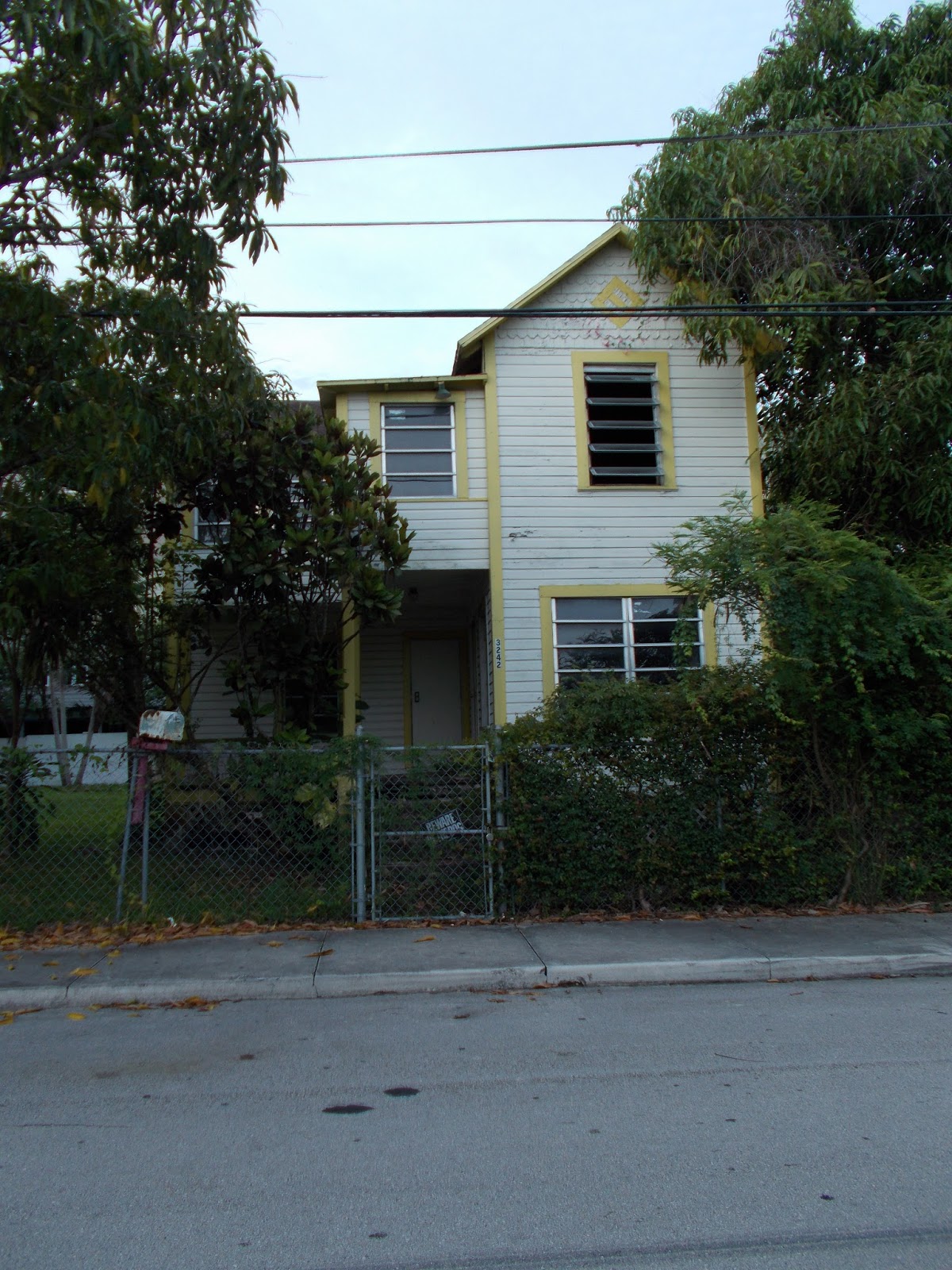
The Charles Avenue historical marker with the
E.W.F. Stirrup House across the street.

It’s always been about the E.W.F. Stirrup House. My research into Ebeneezer Woodbury Franklin Stirrup has led to many interesting tangents, none of which would I have ever heard about had it not been for Mr. Stirrup.

Among those tangents include my series No Skin In The Game, documenting 90 years of Coral Gables racism; my investigations into [allegedly corrupt] Miami Commissioner Marc D. Sarnoff, who managed to build himself a dog park and a traffic circle, not to mention the undying enmity of his West Grove constituents; and my ongoing reporting on Trolleygate, which culminated in a hearing at the Dade-County Courthouse on Friday. However, I would never have come across those stories had I not accidentally encountered the Charles Avenue historical marker in February of 2009. That was the day I first set eyes upon the E.W.F. Stirrup House and fell in love.

That’s the very same day I started researching the history of the house, which quickly led to the discovery that E.W.F. Stirrup was a remarkable man — decades ahead of his time. Mr. Stirrup created an area unique to this entire country. Because of his efforts Coconut Grove at one time had the highest percentage of Black home ownership in the entire country, which might be the only reason West Grove has remained intact all these years.

Elsewhere in ‘Merka, Black neighbourhoods were comprised of a majority of renters, with absentee landlords. This is why I-95 could be punched through the middle of Overtown, or why I-75 totally obliterated Paradise Valley, in my home town of Detroit.

Yet, sadly, Mr. Stirrup’s legacy is barely known to the people of Coconut Grove. If they know the name at all it’s only because of the E.W.F. Stirrup Elementary School. However, that’s not Mr. Stirrup being honoured by having a school named after him. That’s his son. Not that he doesn’t deserve to be commemorated, because he was a man with a legacy in his own right. However, his father was far more significant to the history of Coconut Grove, Miami, Florida and the United States. This is not hyperbole. Read my previous chapters on the E.W.F. Stirrup House to understand why Mr. Stirrup was important and why it’s imperative to save his house.

Even though the E.W.F. Stirrup House has been designated historic by the City of Miami, a rapacious developer got his hands on the Stirrup House 8 years ago and has been allowing it to undergo Demolition by Neglect ever since. Aries Development is the name of the company and and Gino Falsetto is the name of the man who runs it. Falsetto is Canadian, not that I hold that against him because so am I. However, Falsetto left a string of bankrupt restaurants behind in Ottawa, Ontario, Canada on which the Canadian taxpayers lost an estimated $1,000,000. And, of course, all the employees and vendors lost money. However, shortly afterwards Falsetto landed on his feet as one of Miami Real Estate’s big wheelers and dealers. Then he set his eyes on Coconut Grove and built the Grove Gardens Residence Condominiums on Main Highway, immediately behind the E.W.F. Stirrup House. And that’s when the E.W.F. Stirrup House began to fall apart.

One wonders if the Canadian taxpayers provided Gino Falsetto with the grub stake to buy into the always over-heated Miami real estate market.

During Falsetto’s property-trading he managed to acquire a 50-year lease on the E.W.F. Stirrup House, the ownership of which still remains in the Stirrup Family. At the time he acquired the lease, Falsetto promised to restore the house. In the 4 years I have been visiting the house, and the 4 years prior to that, he’s done virtually nothing, except to make things worse by allowing it to undergo Demolition by Neglect.

It was just a year ago, August 18th, that I got into the house for the first time. I documented that in a Not Now Silly post called Unpacking Coconut Grove ► Part Four ► Open Houses and Broken Laws. Compare the pics in that post to the current look of the interior in this video taken on August 16, 2013:

All of that interior destruction is apparently taking place without the benefit of a plan for historic restoration, which I am told must be approved by the Miami Historical Board before any work is to take place. The work is also being done without benefit of a building permit, which must be posted prominently on the property while work is going on and until the completion of the renovation.

A wide-open gate on the Stirrup property says, “C’mon in.”

Let me tell you a little something about getting inside the E.W.F. Stirrup House. Last Friday was the first time I ever surreptitiously entered the house, but the two previous times I was invited in by workmen.

There was a time I used to wander onto the Stirrup property at will. There was a very large hole in the chain link fence at the extreme south-east corner of the property. After I started posting pictures of the property (that had obviously been taken from on the property), I discovered the hole had been patched. Once that hole was fixed I stopped slipping through that gap. Nor did I ever slip through the gap between the two front gates, which are chained together so loosely that Rush Limbaugh could squeeze through. However, I have encountered those gates wide open on many subsequent visits. When the gate is left wide open I take that as a personal invitation to document Gino Falsetto’s shoddy stewardship of a precious Miami historic site.

On August 16th, when I arrived at 7 a.m., the gate was wide open and had clearly been left that way overnight. I wandered onto the property and took several pictures before I headed off to my next appointment. However, I noted something on that visit that required an additional visit later to see whether my eyes were deceiving me.

When I got back to the E.W.F. Stirrup House I discovered my eyes hadn’t deceived me at all. The front door had been left open a crack all night and, at 2 in the afternoon, it was still open the same crack, which meant that there had been no workmen there in the interim. So, if an open gate says, “C’mon in,” so does an unlocked front door. My desire to save the house and protect it from idiots who have no conception of the history the house represents overrules any proprieties about property rights.

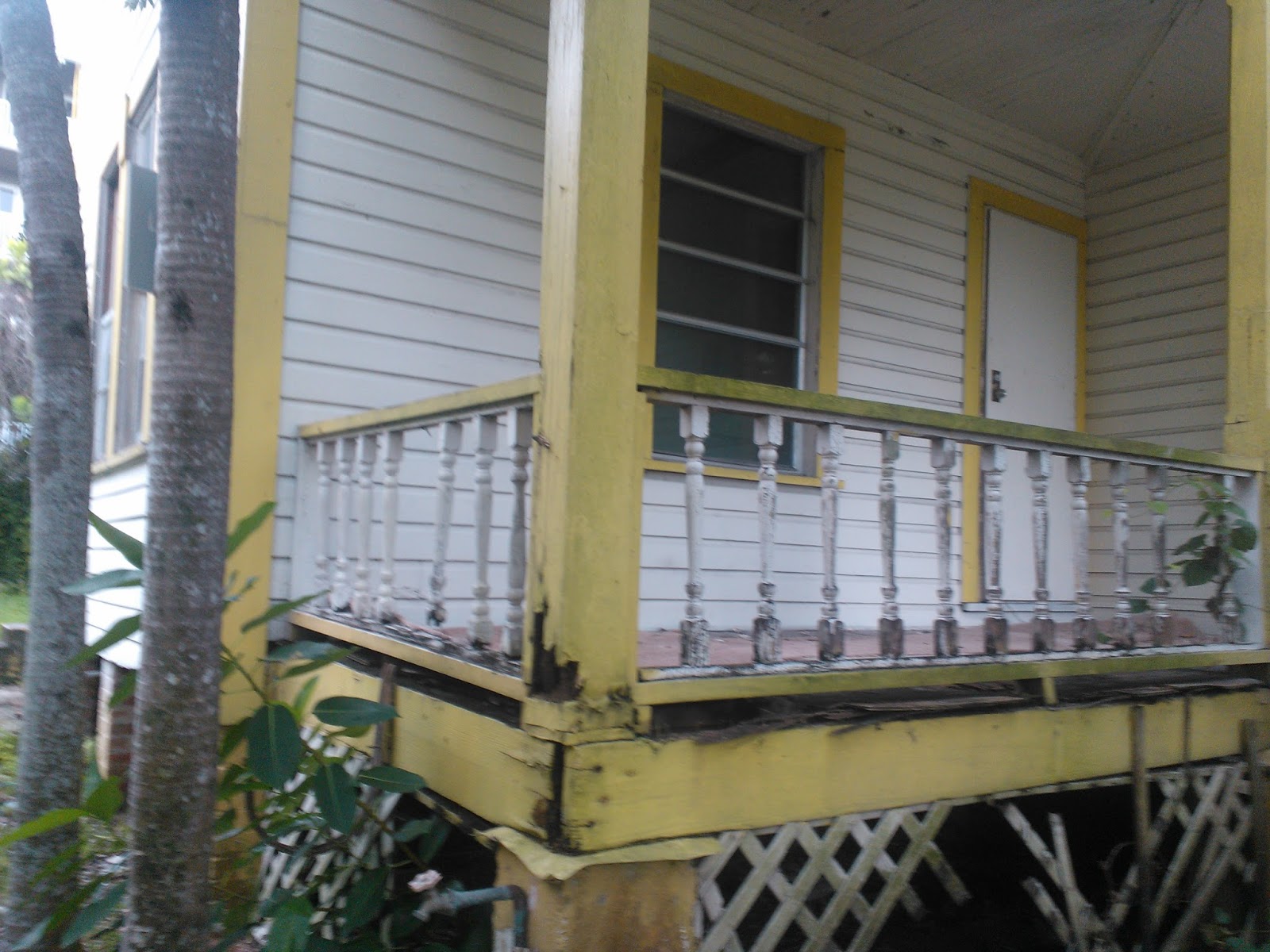
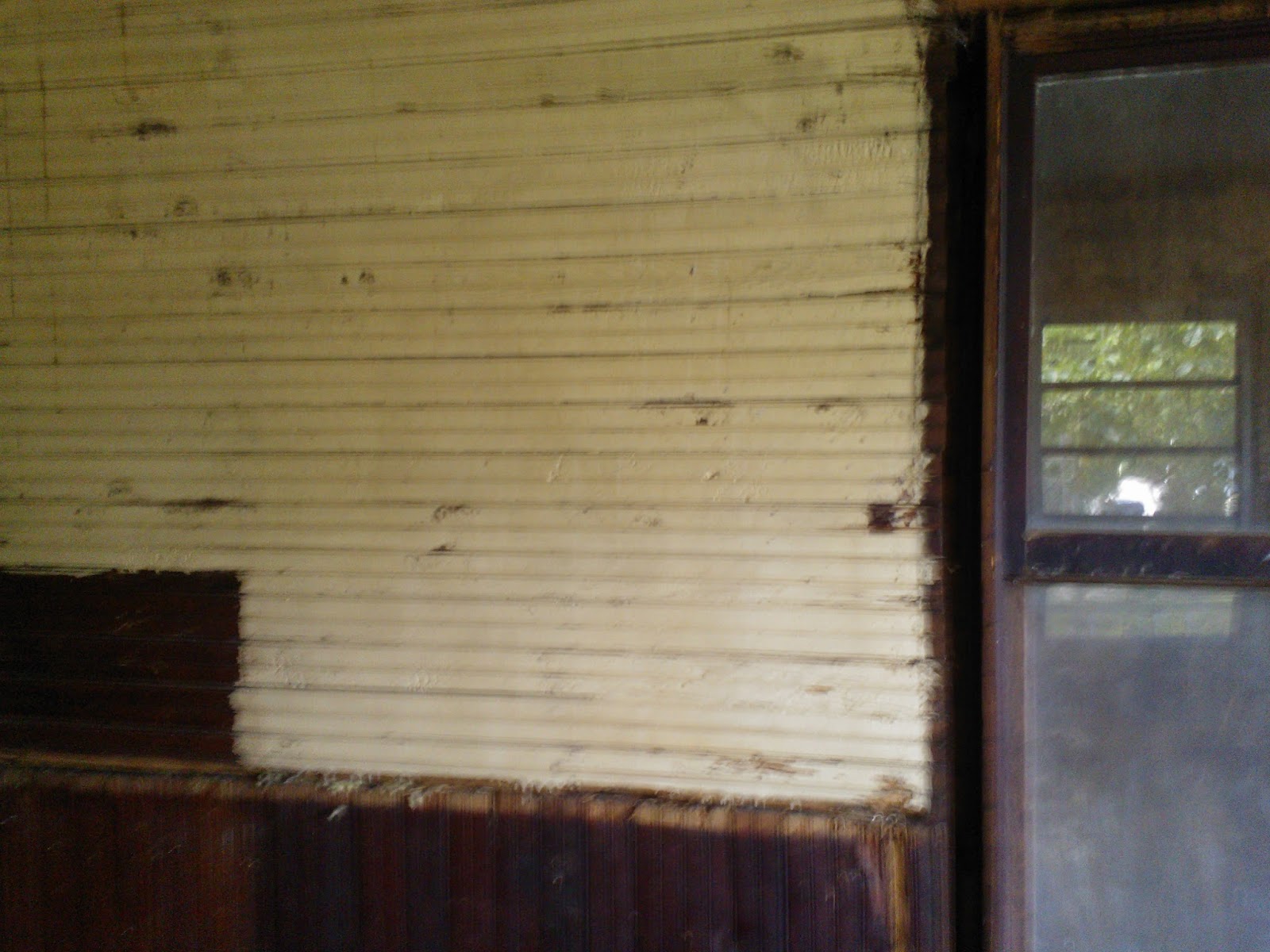
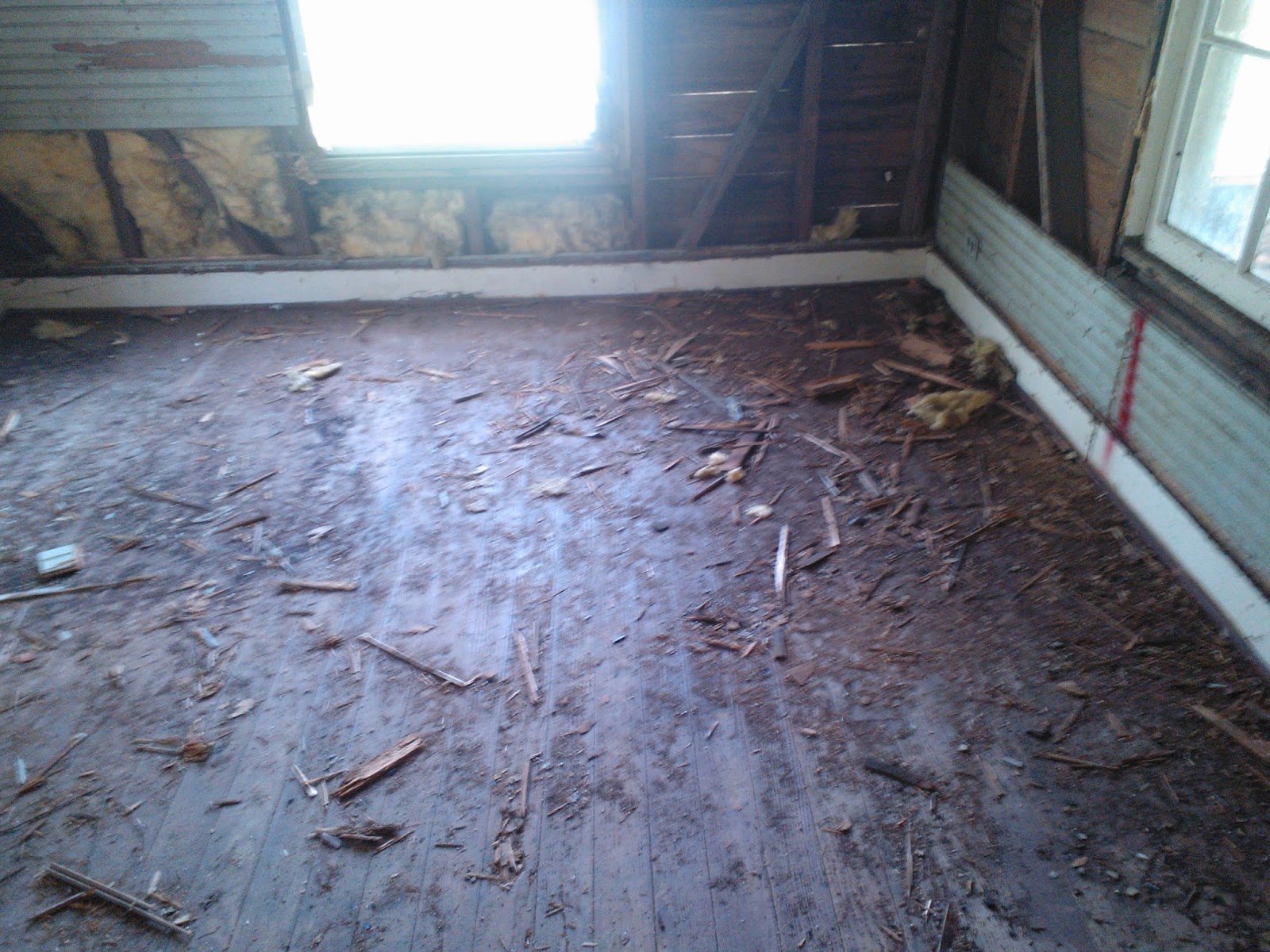
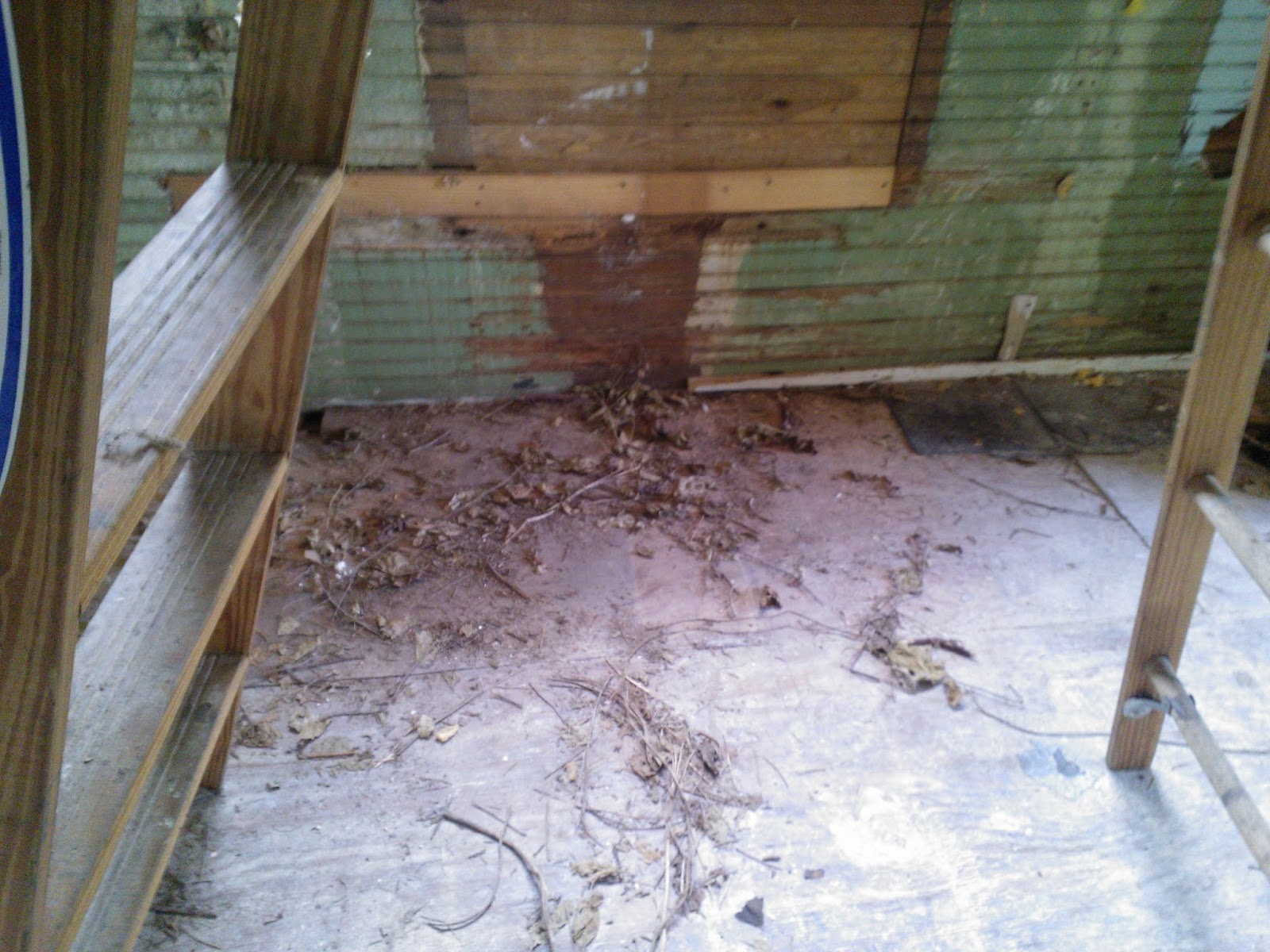
An example of some of the destruction that’s taken place inside the E.W.F. Stirrup House.

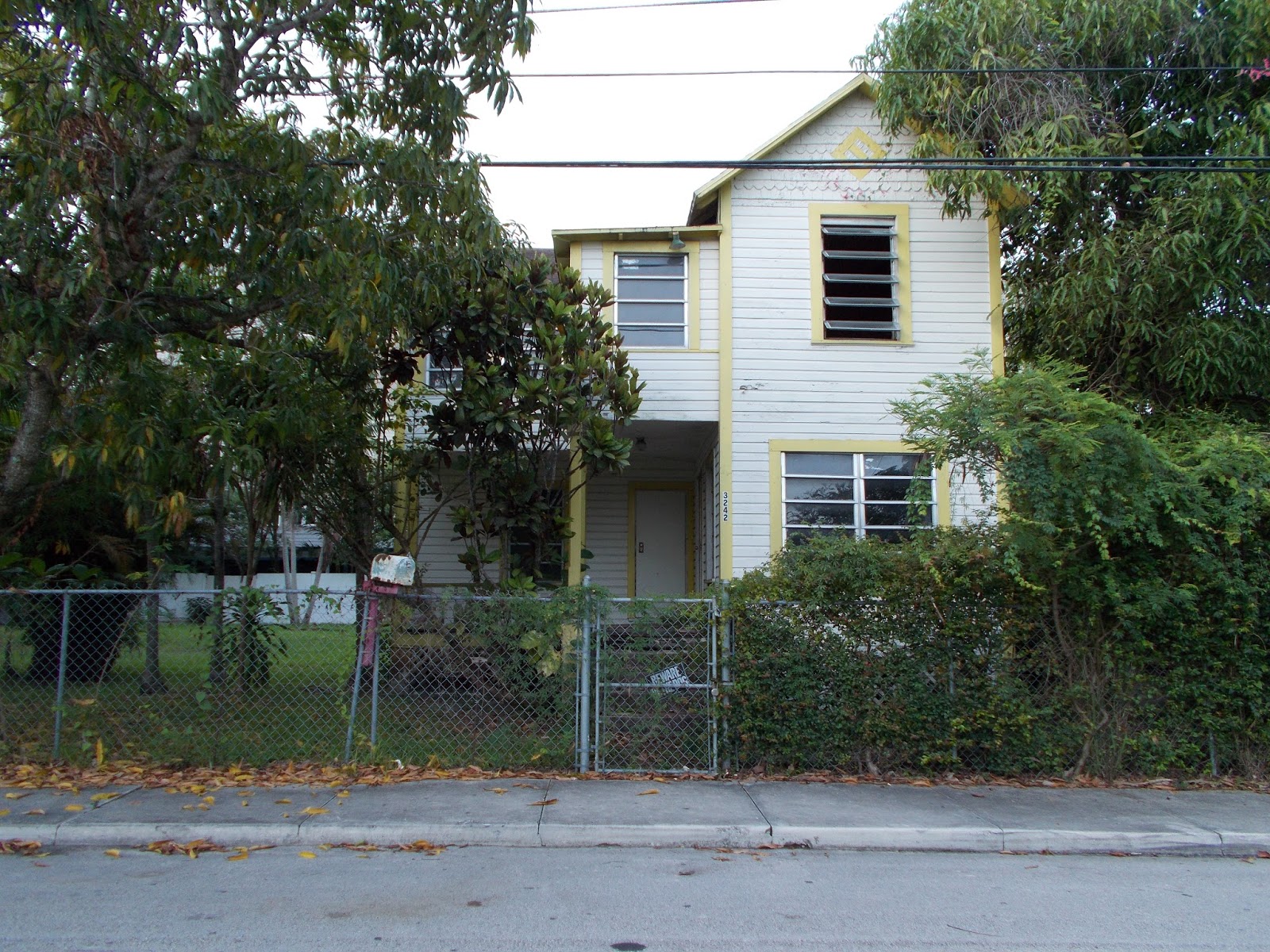
So, yesterday I a very busy boy. I spoke to a very nice woman at the City of Miami Historical Preservation office. She told me that as far as she could tell, there were no plans on file for historic preservation of 3242 Charles Avenue, aka The E.W.F. Stirrup House. However, she would have to do some more research before she could state that categorically.

Then I left a message for Peter Iglesias, who is head of the Building Department, where any building permits would have been issued for work on the E.W.F. Stirrup House. However, I suspect there is no building permit. Just like there was no building permit last year when I reported [allegedly] illegal demolition work inside the house. That file was closed without a determination. What’s crazier is that no matter how many times I called back, no one was ever able to tell me what happened to my complaint, only that it had been closed. I had a confirmation number and everything. I believe it fell into a Black hole, pun intended.

In fact, I have documented here, in an open letter to Miami, how all my previous phone messages left for City of Miami employees have all gone into the same Black hole. Miami employees never answer their phones and have never returned the phone messages I’ve left. I was shocked when Marina Novaes in the Historic Preservation office answered her phone. That was a first! She took my number and said she’d get back to me. That would also be a first.

And, just like last year, and the [allegedly] illegal demolition work inside the house, it’s invisible if and when the building inspector comes around because IT’S ALL HAPPENING INSIDE THE WALLS OF THE HOUSE, not outside. I can’t stress this enough. That’s why Gino Falsetto has been getting away with this [allegedly] illegal work. And, that’s why I took the risk and decided to enter the house. I’ve got it all documented if the City of Miami Building Department Chief Peter Iglesias wants to see what’s happening inside this historic house.

After cutting back the vines in February, they’ve not been cut since. Before
they were cut the last time, they grew 30 feet high and over the top of the house.

And, while I’m on that topic: The City of Miami by-law compliance officers need to see what’s happening behind the house, too. I’ve documented previous occasions when the property has been cited for a lack of landscaping upkeep and graffiti on the back wall. Remember that Gino Falsetto (Aries Development) is the lease-holder. However, it’s the owner, Stirrup Properties, that gets cited for all the deficiencies caused by Falsetto. Do I have to point out the obvious? The Black corporation is being blamed for the White corporation’s misdeeds.

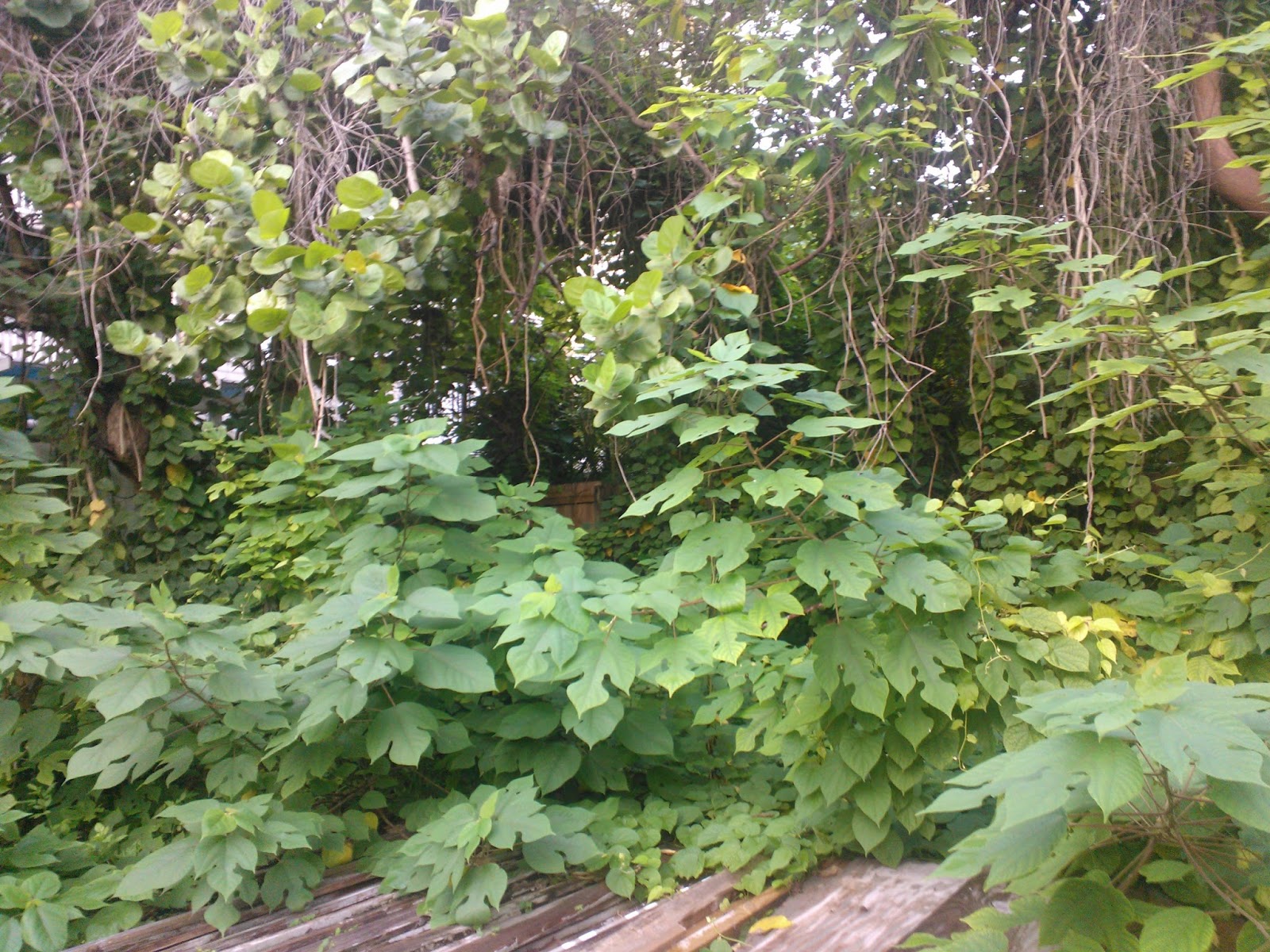
However, Gino Falsetto seems to have learned something else: the by-law compliance officers cannot see what’s behind the house, so that area is almost never landscaped. It became a jungle, which I also documented in previous posts. It grew over 30 feet tall and part way across the roof of the house in the back, all unseen by the by-law compliance officers.

That jungle was cut back drastically in February for the first time in the 4 years I have been visiting the property. However, that had nothing to do with being cited by the city. It was in advance of a meeting of the Charles Avenue Historic Committee, on which Gino Falsetto sits. He wanted to be able to point to SOME WORK having taken place, in case people asked. However, what was done actually destroyed part of the house, as documented here.

Since then the vines have been allowed to grow unmolested again.

Say, I got an idea! Let’s start a pool and bet on how tall the vines are allowed to grow before Gino Falsetto feels he needs to impress someone else with the work he hasn’t been doing on restoring the E.W.F. Stirrup House and it gets cut back again merely for appearance sake, and not because the vines are harming a precious historic house.

Of course, if the City of Miami ever manages to inspect the inside of the E.W.F. Stirrup House and determines that Gino Falsetto has ordered illegal work, it will be Stirrup Properties, LLC, that is cited and/or fined.

Let’s face it, Gino Falsetto doesn’t care about Stirrup Properties, LLC; Coconut Grove history; or the Stirrup legacy; nor has he shown any care of the historic 120-year old E.W.F. Stirrup House. Falsetto is a rapacious developer who cares only about making money by developing property. In fact, having to save the Stirrup House foils Falsetto’s ultimate plan. He has managed to scoop up every bit of property surrounding the Stirrup House, including a financial stake in the Coconut Grove Playhouse. An empty lot where the Stirrup House currently sits would be far more valuable to Falsetto than this house that he’s committed to restoring. Is that why he’s allowed 8 years of Demolition by Neglect to eat away at the house? Is that why the property is left unsecured, hoping for an accident to happen?

Here are several more pictures of the state of the E.W.F. Stirrup House on August 16, 2013:

No Skin In The Game ► Part Three

History is complicated.

Little did I realize how accurate I was in intimating Coral Gables has a long history of Racism, going back to its founding. As reported in Part Two of No Skin In The Game, to this day Coral Gables has a population that is 98% White. This demographic never happens by accident. 

However, there is one Coral Gables neighbourhood that turns out to be the exception . . . the exception that proves the rule.

In my research I recently, accidentally, stumbled across something called the MacFarlane Homestead Subdivision Historic District. It was an odd little reference in the Sun Sentinel that caught my attention. In the article Reference Guide Lists Historic Black Sites, were mentioned Black sites across Florida, including one in 98% White Coral Gables, of all places:

CORAL GABLES

MacFarlane Homestead Subdivision Historic District:

Bounded by Oak Avenue, Grand Avenue and Jefferson Street. The residences were built primarily in the late 1920s and 1930s in a vernacular type of architecture not seen elsewhere in Coral Gables. The styles in the district include bungalows and one-story frame “shotgun“ houses. St. Mary`s Baptist Church at 136 Frow Ave. was built in 1927.

Detail of map showing the MacFarlane Homestead Subdivision Historic District,
the oddly shaped triangle in blue. Everything to the south and east is Coconut
Grove. Everything north of the tracks and U.S.1 is Coral Gables.

That address puts it in the odd triangle section of Coral Gables immediately adjacent to West Coconut Grove. It’s just a little more than a block away from the Coral Gables diesel bus garage that the residents of West Grove have been saddled with.

Reading between the lines:

  • “…built primarily in the late 1920s and 1930s…” can be translated to say “this neighbourhood was created contemporaneously with the founding of Coral Gables;”
  • “…in a vernacular type of architecture not seen elsewhere in Coral Gables. The styles in the district include bungalows and one-story frame “shotgun“ houses…” translates to “built in the inexpensive and expedient Bahamian style, styles of house that would never be allowed elsewhere in hoity-toity Coral Gables, but seen in abundance in neighbouring Black Coconut Grove.”

In other words: this neighbourhood was created so the Black folk who were doing the back-breaking labour of building Coral Gables — and, later, serving Coral Gables — would have a place to live. My understanding of the racial implications was instinctive and immediate. Proving that point would be more difficult.

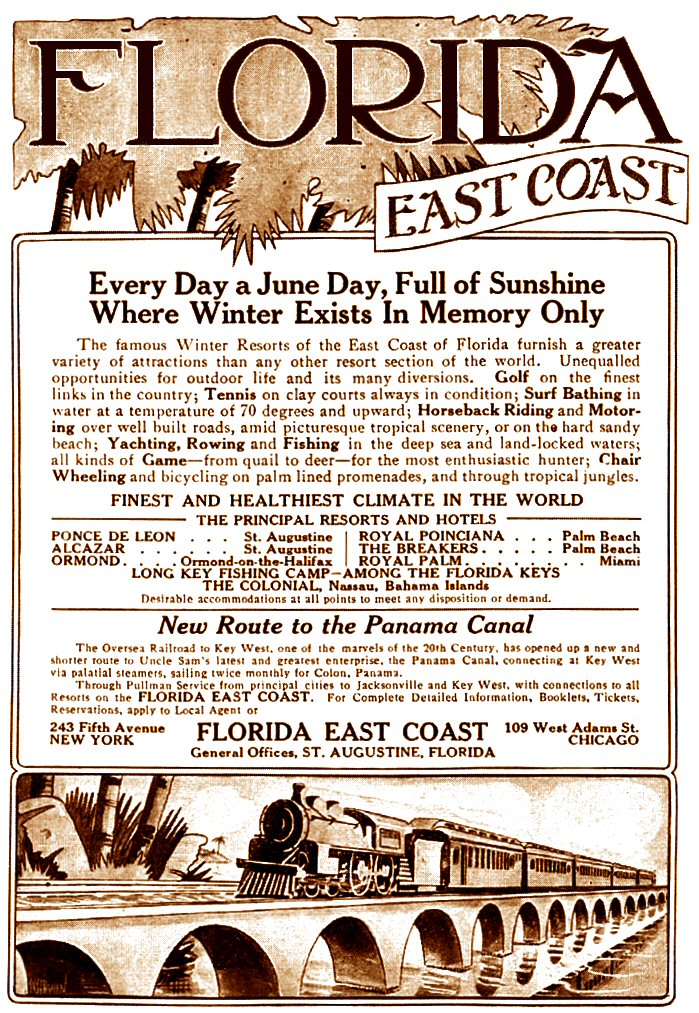
1913 Poster

One thing that made Coconut Grove unique in this country — aside from having the highest percentage of Black home ownership in the nation — is that the Black community in Coconut Grove was NOT on the “other side of the tracks.” Think about that expression for a moment. The “other side of the tracks” was the poor part of town, where Black enclaves originally started near the railroad tracks. That was generally an area where no decent, self-respecting White person would find themselves living, or even traveling. Black folk had far fewer choices for neighbourhoods. And, as has always been true in this country, once there were a few Blacks in an area, it became all Black over time.

While Coconut Grove didn’t have an “other side of the tracks,” it’s clear that Coral Gables did. The blue triangle on the map above (or on this interactive map) is the only area in Coral Gables that Blacks could live. South of U.S. Highway #1, which runs parallel to the railroad tracks, is the other side of the tracks if you live in Coral Gables. It may be technically a part of Coral Gables, but it’s not OF Coral Gables, if you get my meaning.

It turns out the proof I was looking for was tucked away in a book called “African American Sites in Florida” by Kevin M. McCarthy. Within I found the following:

Coral Gables

When I took pictures of George Merrick and Coral Gables City
Hall in August of 2009, who knew they would come in handy?

Coral Gables may have been the second planned community in the United States, after Washington, D.C. George E. Merrick spent much time and money designing the city, including what became the University of Miami, which opened in 1926. To promote the planned community, he used the oratorical skills of William Jennings Bryan in the mid-1920s; Bryan, who had been President Woodrow Wilson’s Secretary of State and a three-time Democratic Party nominee for President, gave impassioned speeches around Merrick’s fabulous Venetian Pool, encouraging visitors to buy and settle in the planned community.

The city never had a large number of blacks, and in 2000 only 3% (1,348) of the total population of 40,091 were black.

MACFARLANE HOMESTEAD SUBDIVISION HISTORIC DISTRICT is a black enclave within the city of Coral Gables. It is bordered by Oak Avenue, S. Dixie Highway (U.S.1), Brooker Street, and Grand Avenue east-northeast of the University of Miami. The district takes its name from Flora MacFarlane, who homesteaded 160 acres of land there and in Coconut Grove in 1892. Some of the houses in the district predate the expansion of the Gables in 1925 and 1926, while others were built in the 1930s at a time when blacks were not allowed to build in the wealthier parts of Coral Gables. One of the earliest structures, St. Mary’s Baptist Church, was built in 1927. Most of the homes in what is called the black Gables are small, single-story homes built from Dade County pine. Many of the blacks worked in the homes of the wealthy white residents or in the construction of such buildings as the City Hall and the Biltmore Hotel. The area is changing rapidly today, with many large homes being built.

The historic 120-year old E.W.F. Stirrup House,
still undergoing Demolition by Neglect

Here’s the supreme irony: Coral Gables is so proud of its little Apartheid Triangle that in 1994 it had it listed on the National Register of Historic Places. That’s like hiding its racism in plain sight. Now, if anyone exposes Coral Gables’ long and complicated history of racism, it can point to the MacFarlane Homestead Subdivision Historic District and claim, au contraire mon frere, it has honoured the original Black builders of Coral Gables.

Which is more than neighbouring Coconut Grove has done. Coconut Grove has continued to ignore its history. Rapacious carpetbagging developers have now taken control of some of the historic elements of Black Coconut Grove and no one seems to care.

People tell me that the E.W.F. Stirrup House is on a registry of historic city homes. I’m calling bullshit on that claim. I can find no historical designation for the E.W.F. Stirrup House by Coconut Grove, the City of Miami, Miami-Dade County, the State of Florida, or the country. Yet E.W.F. Stirrup created a unique place in this country, which is slowly disappearing.

SAVE THE E.W.F. STIRRUP HOUSE!!!

No Skin in the Game – Part One
No Skin in the Game – Part Two

A Return To Frow Avenue

When I was in the Coconut Grove on Saturday, I was so intent on taking pictures of the people celebrating the One Grove mural, that I didn’t notice something that had been right in front of my eyes. In fact, I didn’t notice it until I reviewed the dozens of pictures I took that day.

Part of the reason I missed it was because the cooker/grill had been set
up right in front of it. But, I was also mostly looking through a camera viewfinder. That’s why I returned to Frow Avenue yesterday to take close-ups. Take a look at the
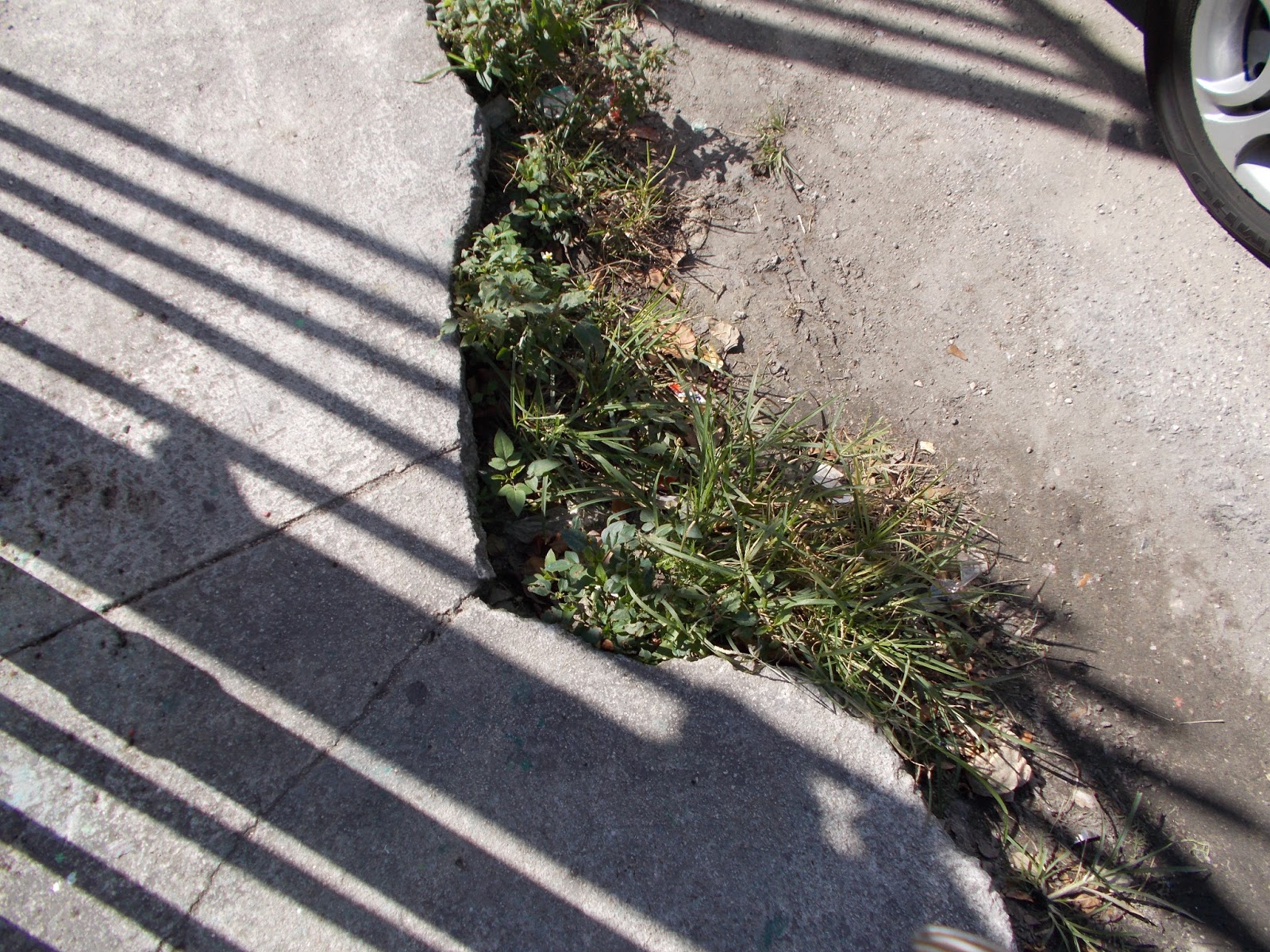
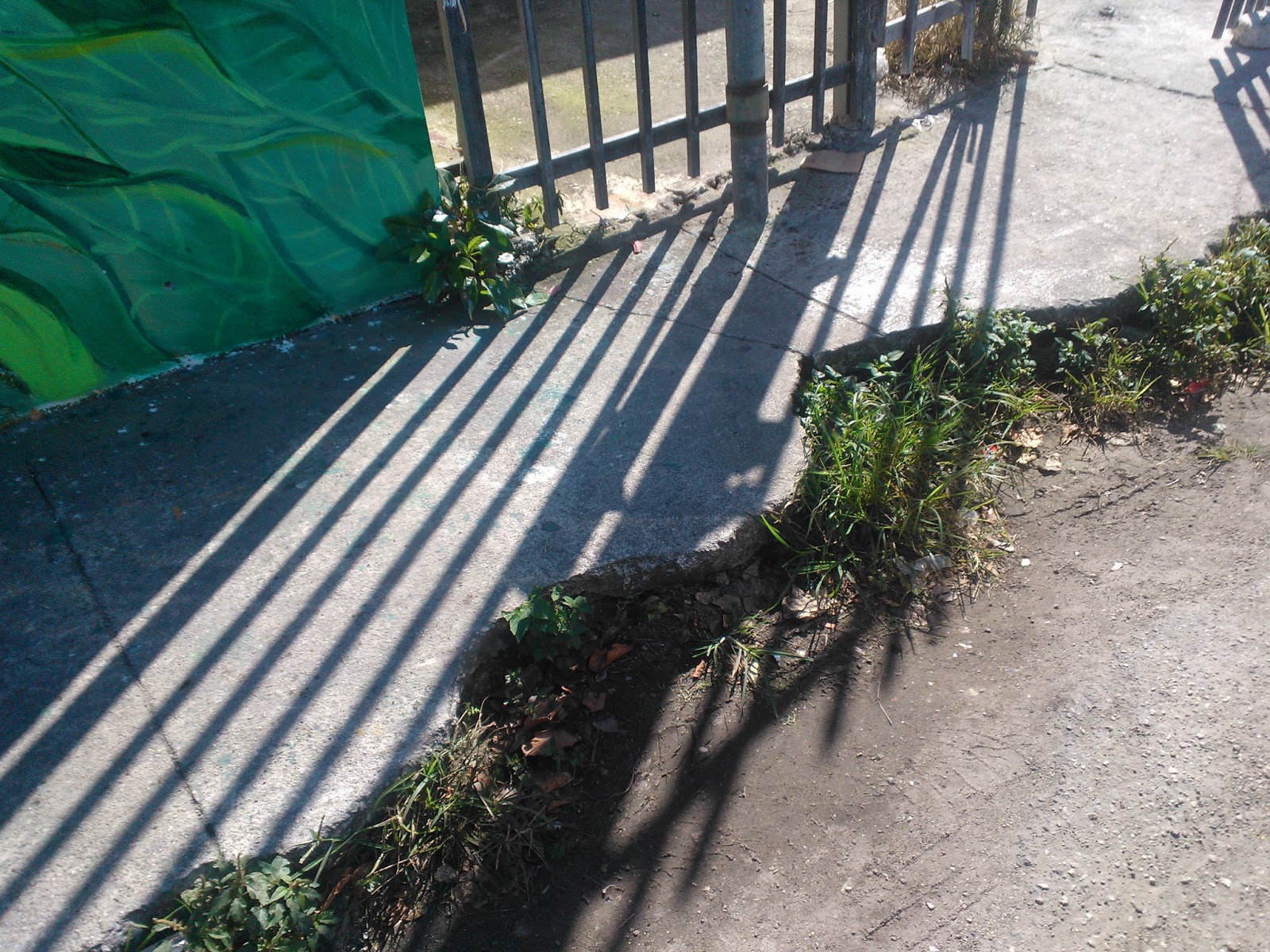
sidewalk adjacent to the mural:


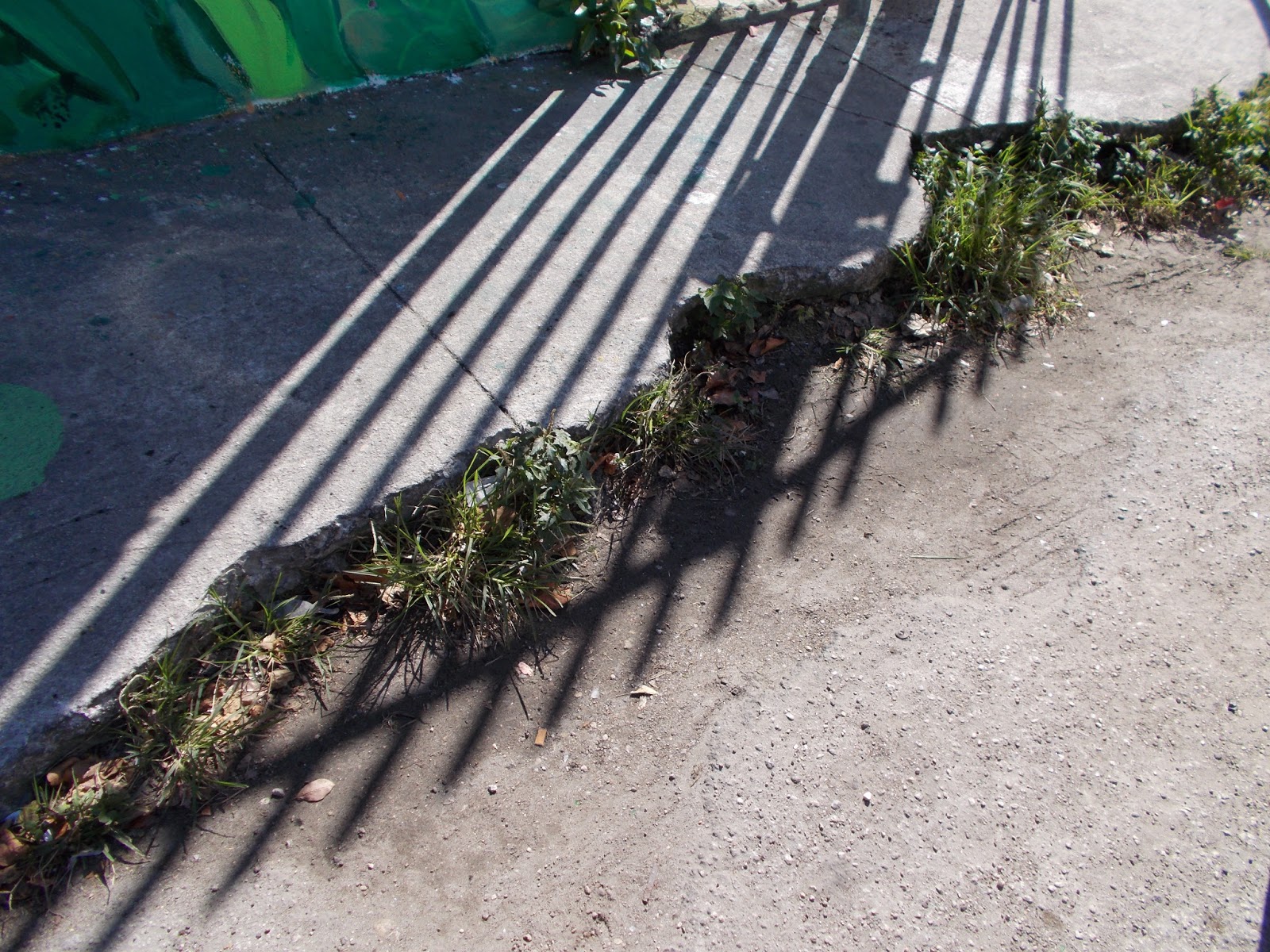
This broken sidewalk is not something new. Clearly it has been disintegrating for a very long time to arrive at its current condition.

Construction continues on the
diesel bus garage, March 4, 2013

To my mind this perfectly illustrates the reality that two Groves exist: Black Grove and White Grove. A sidewalk like this would never be allowed to exist in White Grove. However, because it’s on Frow Avenue in West Grove, this sidewalk can easily be ignored by the City of Miami.

It’s simply more of the same kind of quiet racism that the City of Miami demonstrated in allowing Coral Gables to locate its polluting diesel bus garage in the middle of a residential neighbourhood in West Grove, which (maybe not coincidentally) is being built right across the street from this broken sidewalk.

This is a well-traveled route. Hundreds of pedestrians pass by that sidewalk every day: school children, the people who use the store on which the mural is painted, mothers
with strollers, old people on canes, children riding bicycles . . . you
get the picture. If not, here are a few more:

Maybe “One Grove” is merely a slogan whose time has passed.

Modern Day Colonialism and Trolleygate

To paraphrase Rene Margritte: This is not a trolly

At a lunch meeting yesterday with a Miami developer (who wishes to remain anonymous) I mentioned how my next blog post on Trolleygate would be called “Modern Day Colonialism.” 

I started riffing — kicking around the analogy — and compared developers building in Coconut Grove to the original 13 Colonies. Those colonies were really only business charters, set up by the British Crown/Parliament, that allowed the corporations to plunder all they saw and send the bounty back to the home country. Simply replace “Crown/Parliament” with “Miami City Commission” — and “colonial charters” with “building permits” awarded the Modern Day Colonists™ — and the analogy is complete. Once Marc Sarnoff [allegedly] greases the wheels for them, rapacious developers are free to plunder the rich cultural heritage of West Coconut Grove, aka Black Coconut Grove.

By the time I was done riffing I had the rough outline of my next Trolleygate post in my head. Then I came home and read a Letter to the Editor from Carlos Medina on the Miami Herald website that said what I was going to say a whole lot better and in far fewer words:

Miami, Gables practice ‘brick-and-mortar’ racism
 
I have been invested in the Coconut Grove community for 20 years, as a volunteer, an employee of a business there and a concerned citizen. Moving Coral Gables’ trolley-bus repair depot to the West Grove is an action steeped in historical injustice. Once again, this pleasant community is being treated unjustly, with condescension and with a sense of privileged charity by those in power, whether they are business people or politicians. 

What I saw and heard at a recent meeting run by city of Miami Commissioner Marc Sarnoff was appalling. Sarnoff is on the wrong side of this issue, as are the phantom Coral Gables politicians who sent their lawyer but skipped this important meeting, which was overwhelmingly attended by West Grove residents. Sarnoff’s presentation was self-serving and insulting, publicizing the names of those in need who he so selflessly helped throughout his career. 

This is a racial issue of the first order. It is a replay of the playbook from the ’50s and ’60’s used by people with political and economic power to place their ‘inconvenient’ highways, stadiums, garages, depots, hospitals and prisons in the less powerful neighborhoods. Then they would cite “property rights” to sugarcoat such unseemly actions and the sprinkling of “benefits” already bestowed upon the “ungrateful” neighborhood. 

That is why Sarnoff’s presentation was so demeaning to our local democracy. He defended Coral Gables, with people who do not vote for him; there was the glaring absence of any Coral Gables politician and a “master knows best” attitude vividly on display. I was moved by the large presence of residents and by the many volunteers who are working like mad, on various fronts, to put a stop to this miscarriage of justice. 

I suggest that the West Grove community contact Al Sharpton and Bishop Victor Curry, of Miami’s New Birth Baptist Church Cathedral of Faith International, who sits on the board of Sharpton’s National Action Network. Jesse Jackson should also be informed. If necessary, I am willing to donate funds, time and heart to help make this possible. 

The glaring light of the media that their presence attracts will expose what is going on in Miami. The West Grove is a living witness and survivor of brick-and-mortar racism. 

Let the City Beautiful build its oh-so-perfect repair depot within its own boundaries. Let the West Grove residents have some peace. And let Commissioner Sarnoff, who has done many wonderful things for Miami, get back on the right side of this issue and use his talent to protect and preserve the neighborhood of those who voted for him. 

Carlos Medina, Miami

Mr. Medina hit the nail on the head. I have been doing research into Marc Sarnoff’s interaction with his Black constituents. It’s not good. “Some people say” he shows a fear of Blacks, citing the size of the entourage he took with him to campaign for office in the West Grove. Apparently Sarnoff would send someone to the door of the house, while he waited on the sidewalk until he knew whether it was safe to approach.

I was at the same meeting Mr. Medina attended and thought I detected a threat from Sarnoff during his presentation. While reading between the lines, it sounded like told the West Grove residents if the neighbourhood didn’t play along with the Coral Gables diesel bus garage being plopped into West Grove, the community would not only lose the $200,000 renovation to a football field, but West Grove might also lose his backing for the current urban renewal projects awaiting City of Miami approval. Was that really what I heard? Nah! It couldn’t be. It was far too naked a threat to be real.

As the newbie to Coconut Grove politics I asked someone who has years of experience dealing with Sarnoff, “Did I see a subtle threat?” The emailed reply:

It was a threat. That’s his standard MO. I call it the Sarnoff Dance. It has three steps, Ingratiate, Intimidate, and Attack. There are three steps to his dealing with anyone he considers a potential threat. First, he strokes their ego, makes them feel like they are his friend, includes them in something to make them feel special. That’s enough for him to get most people on his side. If that doesn’t work, he does them a favor, often something they really need and that may not be quite kosher, to get them in line or shut them up. Like arranging for the football field payoff. If that doesn’t work, he resorts to veiled threats, like you saw at the meeting. Finally, if he still doesn’t get what he wants, he attacks. Like I said, economic terrorist.

When I mentioned how Sarnoff struck me as being extremely uncomfortable talking to the Black community and there seemed to be a large police presence in the room, I got the following reply:

Half of the uniformed officers assigned to the Grove were at the back of the Commission Chambers during the Town Hall Meeting. Don’t think that was a normal thing. I have never seen more than one uniformed officer there, even for the most controversial items. He was extremely uncomfortable, and that is what you were seeing. He usually comes across as very polished and well spoken […]

So far no one is willing to go on the record to allege racism on the part of Marc D. Sarnoff. However, I have been given several promising tips. Eventually someone will go on the record and when they do, I’ll publish it here. Just a reminder: I now have a Marc D. Sarnoff tip line. Feel free to contribute information. All tips remain confidential.

Launching The Official Marc D. Sarnoff Tip Line

Sarnoff preparing his troops for the Trolleygate Town Hall.

I might as well make it official. So many people have come forward to give me tips about City of Miami Commissioner Marc D. Sarnoff on DEEP BACKGROUND, that I now have enough investigative leads to last me a lifetime, provided I die by Presidents’ Day. 

It’s clear that people in Miami are eager to unload what they know about Sarnoff and Miami corruption to anyone who will listen. To my regret the tips are coming from people who would prefer to remain OFF THE RECORD, which indicates a fear of Sarnoff among those who know him best. On the other hand, the tips themselves are not off the record. Consequently, I am free to chase them down to see how much truth they contain. I’ve learned through my many years as a writer that it can be a bit like hard rock mining. Some tips won’t pan out, but others will contain valuable nuggets of information. The most recent tip sounds like it might contain pay dirt, but until I run it through the dredger I won’t know how valuable it really is.

In case this latest tip is nothing but Fool’s Gold, I’m launching an Official Marc D. Sarnoff Tip Line. Feel free to tell me what you know. Feel free to tell me what you merely suspect. I won’t print your name if you ask for anonyimity. In fact, I won’t print anything about anything unless — or until — I can confirm it myself. That’s just how I roll.

You can contact me via email, rattle my cage at facebook, or drop a comment below.

I’m most interested in Sarnoff Sightings. If you catch Mark D. Sarnoff out and about, take a picture and send it to me. Especially if he’s having another one of those meetings with a developer to map out how to slip something past his constituents.

Is Marc D. Sarnoff Corrupt Or The Most Corrupt Miami Politician?

His Excellency
Marc D. Sarnoff

In researching the long history of the E.W.F. Stirrup House, one name that never came up was Marc D. Sarnoff, unofficial Emperor of Coconut Grove. 

However, that changed once I started investigating the current state of Coconut Grove. The name “Marc D. Sarnoff” started cropping up with some regularity. The more I uncovered of Gino Falsetto‘s real estate deals, the more I saw the Sarnoff name. When I
started looking into the Coconut Grove Playhouse, I encountered the
Sarnoff name again. It didn’t matter where I turned, Sarnoff always
seemed to be RIGHT THERE. On one level that’s not surprising; Sarnoff is the Commissioner for Miami’s District 2, which takes in Coconut Grove. 

However, it was how his name kept coming up that intrigued the journalist in me. Whenever I read about a new development, I would read about how Marc D. Sarnoff was supporting it, often against neighbours’ objections. The Sarnoff name also came up often when interviewing people on deep background about the history of the Grove Gardens Residence Condominiums behind the E.W.F. Stirrup House in Coconut Grove. The prevailing opinion seems to be that if you are a developer, Marc Sarnoff is on your side. If you live in White Coconut Grove, Marc Sarnoff can be your best friend. If you live in Black Coconut Grove, Marc Sarnoff is the invisible man.

Nothing illustrates this better than last week’s hastily scheduled Town Hall meeting on Trolleygate. Sarnoff only called for this community meeting once the shit hit the fan, not when this diesel bus garage was still on paper. Trolleygate can be a complicated story if one gets too deeply into the weeds. However, clearing away the clutter — and narrowing the focus to a single issue — it is easier to see what’s at stake. In a nutshell:

Diesel bus disguised
as an old-tyme trolley.

On one hand: Marc Sarnoff claims Astor Development complied with all legal requirements and had every right to build a diesel bus garage in the middle of West Grove. 


On the other hand: Lawyers for West Grove say that the Miami21 Plan specifically prohibits a “government vehicle maintenance facility” along Douglas; therefore, building permits never should have been issued. 

They both can’t be right.

True to form, residents say, Sarnoff couldn’t be bothered to look for any reasons to deny a developer, even though West Grove lawyers say many exist. The courts will now sort this mess out, at a cost to all Miami taxpayers (the West Grove lawyers are working pro bono). However, Sarnoff clearly thought his time and energy would be better spent working with the developer, as opposed to the neighbourhood groups that came out against the diesel bus garage.

By his own admission: Once he decided that Astor had every right to build a diesel bus garage on Douglas, that’s when Super Sarnoff sprang into action to get the best possible deal for the neighbourhood. To that end, he claims, he convinced the developer to change the exterior of the building to give the diesel bus garage a Bahamian feel. Sarnoff also claimed that he convinced Astor to donate $200,000 to improve the football field at Armbrister Park. Sarnoff insists the developer did this because “[t]his particular developer, his wife is very charitable. He’s very charitable,” according to what he told the Miami Herald. Of course, it has nothing to do with the fact that Astor Development stands to make several millions of dollars developing the current diesel bus garage property in Coral Gables.

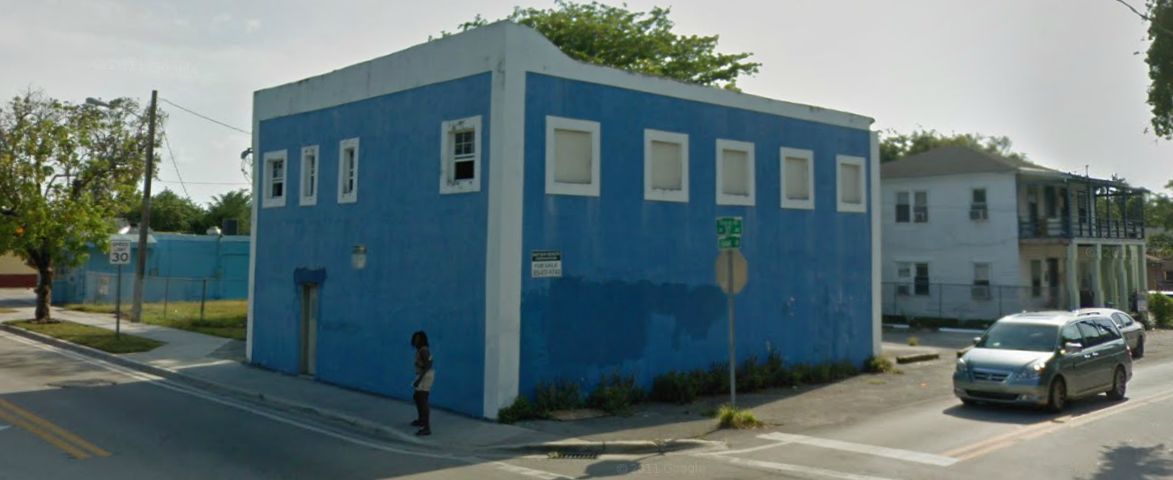
Google Street View showing 3 of the 4 tax-paying buildings along Douglas Road (at Oak Avenue) destroyed to make way for the Coral Gables diesel bus garage, which won’t be paying taxes. Nor will the buses be picking up passengers in Black West Grove. That might allow them to get to Coral Gables, which is 98% White.

West Grove neighbours describe Sarnoff’s bad faith:

But
residents say when he encountered opposition, Sarnoff simply moved on
to another group. In April, he attended a meeting of the Coconut Grove
Ministerial Alliance and, in October, a gathering of football coaches at
Armbrister Park, according to those in attendance.

“He wanted us
to say it was a good project and we were behind it, considering they
were going to renovate the playing facility,” said Rondy Powell, a coach
at the park for 20 years. “I kind of figured when they came, it was
kind of like a back-room deal.”

An artist’s view of Bahamian-influenced diesel
bus garage on the same corner of Douglas and Oak.

If I were Marc Sarnoff’s Day Timer, I would know how much time Marc Sarnoff spent on Trolleygate, both before and after it became a controversial project. I would also know how much time Sarnoff spent negotiating with Astor Development and how much time was spent negotiating with West Grove residents. However, maybe Marc Sarnoff doesn’t put down all his meetings with developers in his Day Timer because the most often used adjective when discussing Marc D. Sarnoff appears to be “corrupt.” 


How long has Marc Sarnoff been corrupt?

That’s up for debate. According to Sarnoff’s own biography at the City of Miami web site, bad grammar and all:

In 1987 I made the big move to paradise: Miami. I settled in Coconut Grove and established my practice as an Aviation Attorney, specializing in representing passengers’ families and airline staff, and pilots, who were wrongfully killed or suffered life threatening injuries in airline crashes. In 1991 I had the honor of representing Eugene Hasenfus, the former Marine whose C123 Maulewas shot down over Nicaragua while delivering guns to the Contras. I also had the honor of representing, Kassenee Sawyer, who was the widow of the pilot in the Hasenfus plane. For those too young to know, this downing was the beginning of the Iran Contra Affair.

While I think we can all agree that even the worst criminals deserve a defense, this was not a defense. Hasenfus was suing because, after he got caught, his CIA handlers and the government cut him loose. Regardless, Sarnoff seems inordinately proud of his association with the criminal Hasenfus, who was serving a 30-year sentence before being pardoned by Nicaurguan President Daniel Ortega. I wonder why Sarnoff doesn’t mention that he lost that case

It might not be a good idea to put much credence in Sarnoff’s official biography. It used to be longer, but he was forced to remove the section where he claimed General David Sarnoff was his grandfather, after the real Sarnoff family said it wasn’t true. 

Then there’s the Marc D. Sarnoff Memorial Dog Park and Traffic Circle

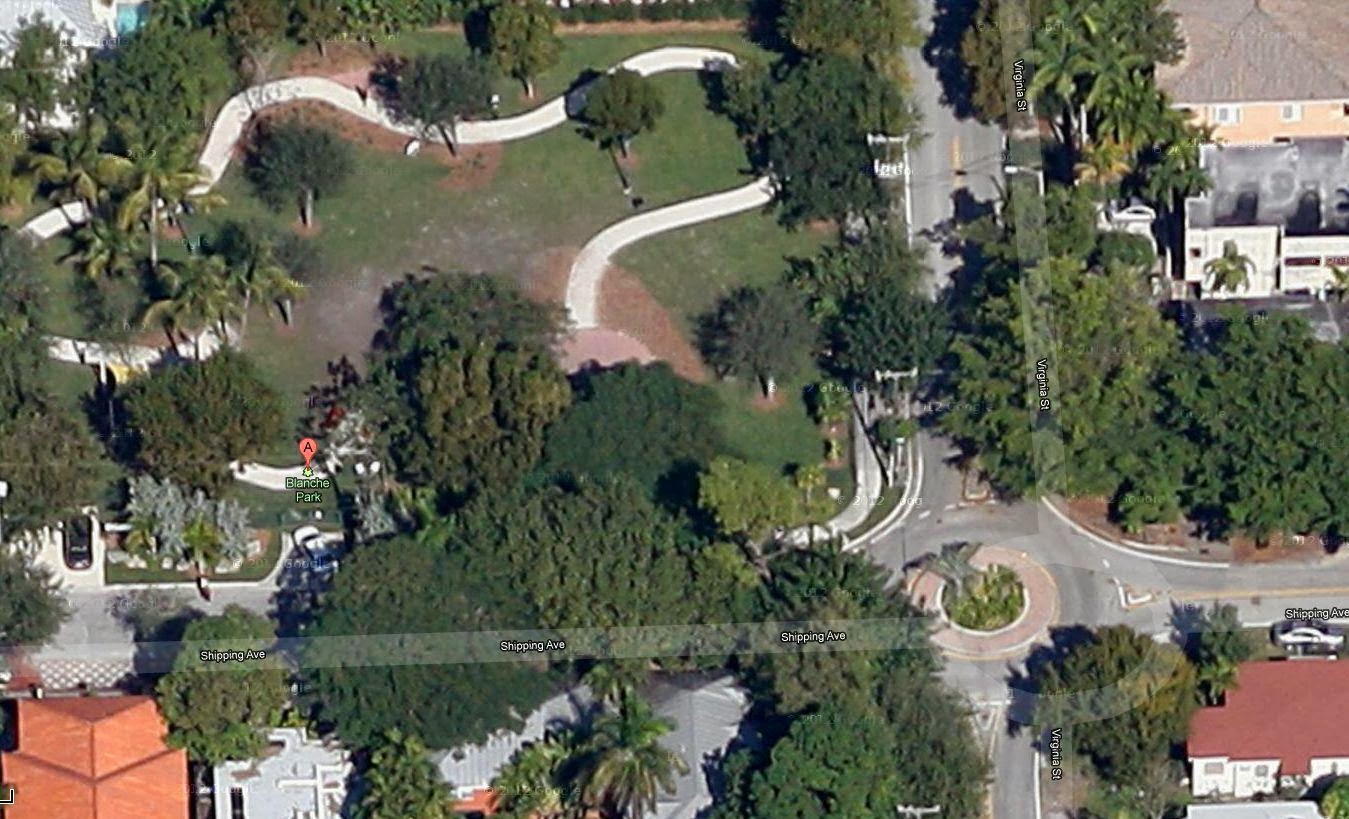
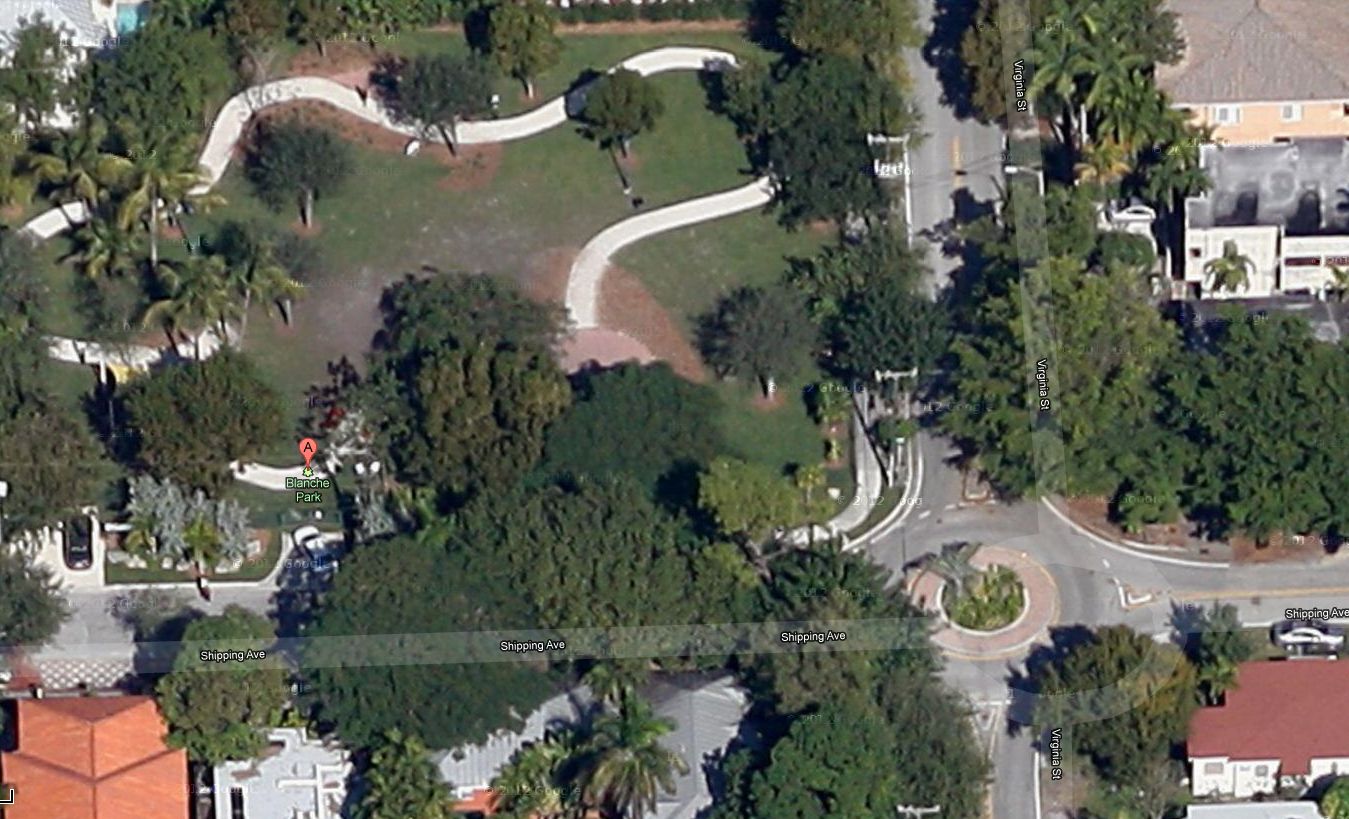
The Marc D. Sarnoff Memorial Dog Park and Traffic Circle can be seen from space.

If you are one of those North Grove residents lucky enough to live near His Excellency Marc D. Sarnoff, then you will have no doubt seen your property values rise due to improvements right across the street from where he lives, and used to do business. According to recent reports the city is spending ANOTHER $190,000 on Blanche Park (that’s the name of the Marc D. Sarnoff Memorial Dog Park on paper, but the dogs know who to thank). The bulk of this cost is to replace the grass with astroturf. Back in my day dogs shit on the grass and liked it.

The Marc D. Sarnoff Memorial Dog Park
Photo by author Feb 6, 2013

How was Marc Sarnoff able to take a small park dedicated entirely to children and turn 2/3rds of it over to dogs? No one is quite sure because all the formalities seem to have not been followed. The same way that no one is quite sure how The Marc D. Sarnoff Memorial Traffic Circle circle came to be located in the middle of the intersection of Shipping Avenue and Virginia Street, right next to the Marc D. Sarnoff Memorial Dog Park. When you’re the Emperor of Coconut Grove good things drop into your neighbourhood, just like a real life version of Sim City. This will be the third time good money has been thrown after bad; Blanche Park appears to undergo regular upgrades. 

Illegal offices and bar closing hours

The Marc D. Sarnoff Memorial Dog Park
Feb 6, 2013

To be fair: it’s just within the realm of possibility, of course, that Sarnoff’s corner really needed a traffic circle. Any increased traffic, however, might have been due to Sarnoff’s illegal law office, located right next to his residence. And, from beginning to end, the story of the illegal law office provides another taste of Sarnoff Scandal.

That Sarnoff had an illegal law office appears to have been an open secret. While references can be found to it on blog comment threads, the home office was never reported to the City of Miami until Coconut Grove bar owner John El-Masry decided to exact a little revenge on Sarnoff. El-Masry, owner of Mr. Moe’s, was angry because Marc Sarnoff had rammed through a new law, which only affected bar closing hours in Coconut Grove. Whereas bars in the City of Miami could stay open until 5AM, suddenly all bars in “Center Grove” were forced to close at 3AM. An active nightlife in downtown Coconut Grove dried up overnight. In addition to launching a lawsuit against the city, El-Masry reported Sarnoff’s illegal law office to City of Miami staff. City of Miami staff promptly ignored the complaint, tipping off Sarnoff in the process. 

Possibly the Miami Department of Code Enforcement viewed Sarnoff as their boss and didn’t want to rattle any cages at City Hall. However, long-time-Sarnoff foe and Miami Muckraker Al Crespo wasn’t going to let the complaint go, and neither was (then) Coconut Grove Village Councilor Stephen Murray. In a letter to City Manager Carlos Migoya, dated August 31, 2010, Murray reminded the city manager of his duty:

I understand you are a public service rookie, so I’d like to take the time to explain something critical to you. Unlike in the private sector, where you have a clear-cut executive, Board of Directors, and stockholders who need to be answered to, as the City Manager you are a public servant. A public servant has one real boss – the public. You, as a public servant, took an oath to protect the residents of the City of Miami. You did not take an oath to allow yourself nor your subordinates to protect crooked politicians who believe they are above the law.

When I recently asked Stephen Murray if he would go on record for this article, Murray replied:

The only on the record thing worth saying is the following: “Commissioner Sarnoff is a scumbag corrupt piece of shit that doesn’t give two fucks about the people of the West Grove.”

It’s easy to find people who agree with that assessment, especially these days. 

Sarnoff eventually moved his illegal office and Mr. Moe’s eventually won its lawsuit against the city, which was forced to fork over $10,000 of taxpayer money to cover the costs of El-Masry’s lawsuit. Mr. Moe’s remains the only bar in “Center Grove” allowed to stay open until 5AM.

The calm before the meeting. Sarnoff preparing
to meet with the community on Trolleygate.

Dog parks. Traffic circles. Bar hours. Illegal offices. This shows how much power Commissioner Sarnoff wields in Coconut Grove, power that he’s not afraid to use openly to his own benefit. While Sarnoff controls just about everything that happens in the Grove, he claims there is no way he could have stopped the building of the Trolleygate garage.


My first Sarnoff encounter

As mentioned above, the name Marc D. Sarnoff kept popping up once I started investigating the recent history of the E.W.F. Stirrup House. According to (unconfirmed) reports Sarnoff worked closely with Aries Developers, and owner Gino Falsetto, in getting the Grove Gardens Residence Condominiums built. This apparently included meetings and accommodations by the developer to mollify neighbourhood concerns. One of those concerns was what would happen to the historic 120-year old E.W.F. Stirrup House, which would be dwarfed by the Grove Gardens Residence Condominiums. Whatever promises were made by Gino Falsetto and Aries Developers concerning the Stirrup House, to both the neighbourhood and Commissioner Sarnoff were broken. [See my ongoing series on the E.W.F. Stirrup House.]

This explains why Marc D. Sarnoff was already on the very periphery of my radar. That all changed a few weeks ago while I was interviewing a West Grove resident about the E.W.F. Stirrup House and Sarnoff’s name came up again. The resident asked, “Did you hear what he did this time?” While he described the broad outline of Trolleygate to me, the story sounded very similar to what had happened with the E.W.F. Stirrup House (Stirrupgate?): A redevelopment project is proposed, neighbours complain, Sarnoff steps in to help the developer, in the end the developer gets what it wants, the immediate neighbours get the shaft.

Trolleygate diesel bus garage; Feb. 6, 2013

I discounted this story almost immediately. While the pattern sounded familiar to what I had discovered in my E.W.F. Stirrup research — not to mention my research into the Coconut Grove Playhouse — I thought, “No one can be that nakedly stupid, can they?”

However, after a few hours of working the phones, the answer came back “YES!” Commissioner Marc Sarnoff is stupid enough to use the same tactics to, once again, help a developer and screw the neighbourhood he represents. That’s when I decided to go to the emergency Town Hall meeting, which I describe it in my previous post The Trolleygate Dog and Pony Show. However, it was only after watching Sarnoff’s performance at that meeting that I decided I needed to do some research on Commissioner Marc D. Sarnoff. I fired up the Googlizer and it’s not a pretty picture. Each headline just makes you want to shake your head that Sarnoff was ever reelected.

View of Trolleygate diesel bus garage from
its closest neighbour’s backyard; Feb. 6, 2013

My favourite two headlines are Marc Sarnoff: ‘Reid Welch Called Me a Cop Cock Sucker!’ and Marc Sarnoff (Allegedly) Told Reid Welch: ‘I’ll Kill You!’ These were just two of the dozens of headlines that arose out of a bizarre incident adjacent to the Marc D. Sarnoff Memorial Dog Park, just across the street from the Sarnoff’s residence.

I’m the first to admit there are two sides to every story. One side says the Commissioner jumped into his metaphorical phone booth, changed into Super Sarnoff, and flew into action, saving a neighbour lady from imminent harm. This is countered by the actual police report and the witness statements, which tell a very different story than the one Sarnoff told. In fact, witnesses allege Sarnoff sucker-punched Reid. Francisco Alvarado, of Miami New Times, makes the undeniable point:

Call us crazy. But if two people saw Banana Republican approach someone, sucker punch him or her, and then pin our victim to the ground, chances are we’d be taking a ride down to Miami-Dade County jail. In fact, any Joe Schmo would have been arrested for assault or battery. But Marc Sarnoff is no regular citizen. He is a Miami city commissioner who has apparently gotten away with beating up his former pal and current nemesis, Reid Welch. 

Sarnoff was never charged in that incident. However, it’s almost as if the Sarnoff Beat is a full time job for Alvarado. Among other stories he’s written about Sarnoff:

Some other random headlines I discovered include some other random Sarnoff scandals:

Cast of Burn Notice. Left to right: Sharon Gless as Madeline
Westen, Bruce Campbell as Sam Axe, Jeffrey Donovan
as Michael Westen, Gabrielle Anwar as Fiona Glenanne.

And, don’t even get me started on Sarnoff’s whacky intervention in the “Burn Notice” lease, which produced weeks of international headlines. The USA Network’s hit show is shot in Coconut Grove and uses the former Convention Center (where Jim Morrison whipped it out) for its production offices. The controversy that Sarnoff instigated, not the Commission, made Miami look small-time and bush league. More specifically Marc D. Sarnoff came off like an uninformed jerk. He even attempted to write the last “Burn Notice” episode. The producers were forced to explain to him, slowly I assume, that they don’t really blow shit up on tee vee when they blow shit up on tee vee. Consequently, Burn Notice wouldn’t accommodate the city and blow up the Convention Center for the show’s finale.

To his credit, Sarnoff was able to squeeze more money out of “Burn Notice.” I’m sure it felt more like extortion on the other end. Why would any other Hollywood production want to locate in Miami if this is the treatment they get? Especially since the weather is not local to Coconut Grove.

Developers Win; Miami Taxpayers Lose

Everywhere you look it appears Sarnoff is acting against the best interests of his constituents and in the best interests of developers. And, in the end, it always seems to cost Miami taxpayers money to support the developer. Take Trolleygate, f’rinstance. Miami taxpayers have already footed the bill for the environmental study produced to justify building the diesel bus garage; a study ordered after the emergency Town Hall meeting had been called. Miami taxpayers also footed the bill for the preparation of Sarnoff’s part of the Trolleygate Dog and Pony Show in which he defended himself against charges from West Grove residents that he doesn’t do anything for them. There are also the various costs associated with holding an emergency Town Hall meeting, from the many police officers who were in attendance to the several City Hall employees who seemed to be there to run the fancy slide show. The biggest expense is yet to come. Now Miami taxpayers have the privilege of paying lawyers to defend Astor Development against the lawsuit launched by West Grove residents.

Meanwhile, Commissioner Marc D. Sarnoff is free to befriend new developers and to create more mischief.