Tag Archives: Coral Gables

Homeowners’ Associations Invented To Discriminate ► History Is Complicated

KEEP OUT! THIS MEANS YOU BLACK &JEW!

Dateline May 3, 1948 – The Supreme Court ruled that restrictive covenants in real estate deeds — which specifically barred sales to Blacks, Jews, and other minorities — was illegal. Prior to that date the courts had ruled these discriminatory practices were simply matters between private contractors, and the courts had been there to enforce these restrictive covenants in deeds for decades.

Contractually enforced discrimination has long, proud history in ‘Merka, going back to the original Founding Fathers and their cruel compromise, counting Black folk as 3/5ths a person and leaving the “peculiar institution” of slavery intact. Hell, a whole war was fought over it.

When the country was built on such a crass foundation, is it any wonder that whole generations of people came to feel privileged? So privileged, in fact, that people thought nothing of putting down that privilege in their real estate deals. The idea really started to take off in the 1920s, when planned communities like Coral Gables became the suburban norm as people started moving out of congested cities. What we now call White Flight can traced to these earliest migrations; it wasn’t just congestion that some people wanted to escape. Blacks and Jews were other ills of cities that people wanted to move away from. The best way to assure yourself that you won’t have to live among THEM is to put restrictive covenants in property deeds, which specifically spelled out to whom you could sell your own property. Therefore, you would be assured that you would only be living among your own kind by moving into planned communities with exclusionary covenants. According to the WikiWackyWoo

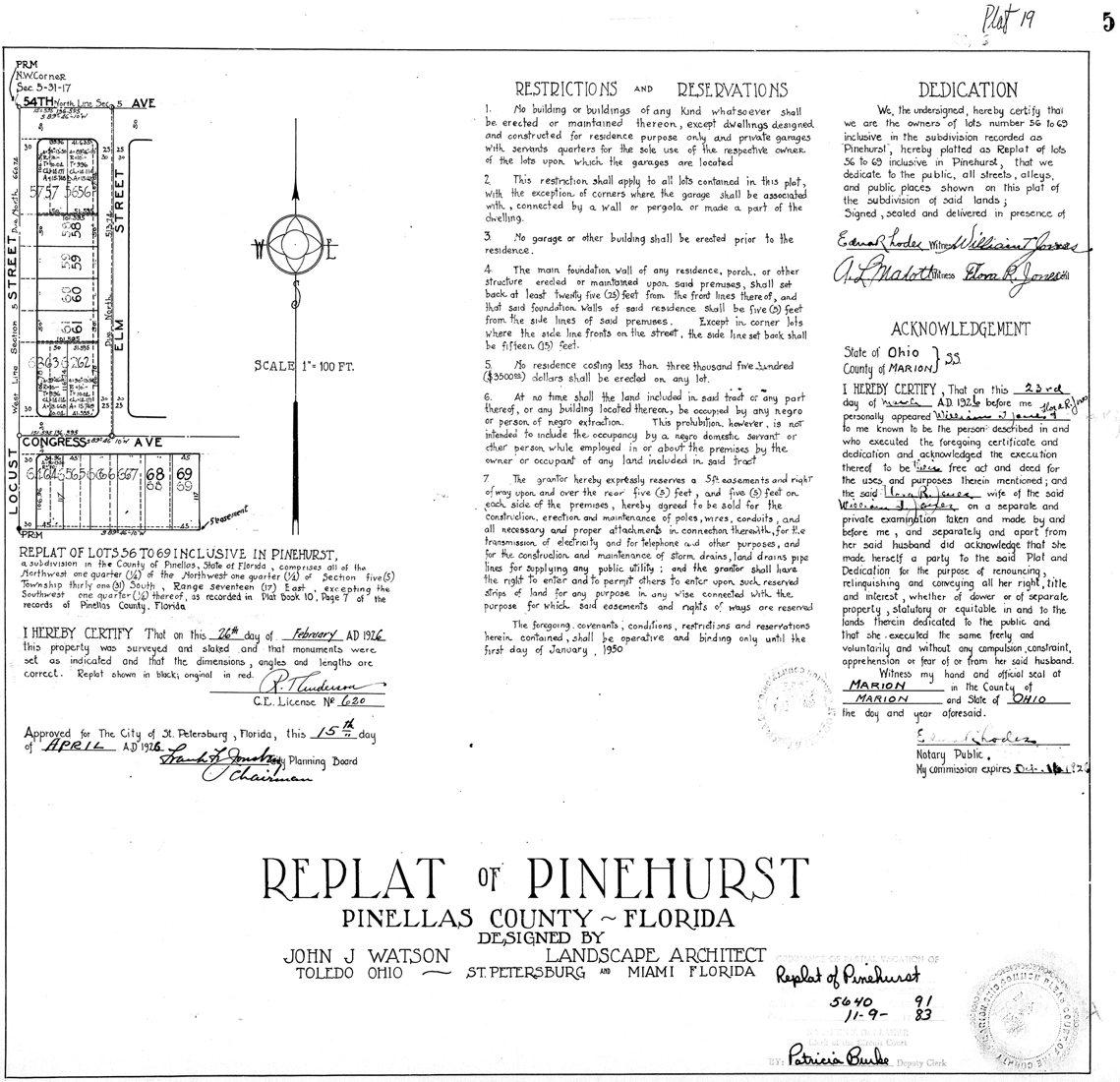
Example of a restrictive Florida deed:

6. At no time shall the land included in said tract
or any part theorof, or any building located thereon,
be occupied by any negro or person, of negro extraction.
This prohibition, however, is not intended to include the
occupancy of a negro domestic servant or other person
while employed in or about the premises by the owner or
occupant of any land in said tract.

In the 1920s and 1930s, covenants that restricted the sale or occupation of real property on the basis of race, ethnicity, religion or social class were common in the United States, where the primary intent was to keep “white” neighbourhoods “white”. Such covenants were employed by many real estate developers to “protect” entire subdivisions. The purpose of an exclusionary covenant was to prohibit a buyer of property from reselling, leasing or transferring the property to members of a given race, ethnic origin and/or religion as specified in the title deed. Some covenants, such as those tied to properties in Forest Hills Gardens, New York, also sought to exclude working class people however this type of social segregation was more commonly achieved through the use of high property prices, minimum cost requirements and application reference checks. In practice, exclusionary covenants were most typically concerned with keeping out African-Americans, however restrictions against Asian-Americans, Jews and Catholics were not uncommon. For example, the Lake Shore Club District in Pennsylvania, sought to exclude various minorities including Negro, Mongolian, Hungarian, Mexican, Greek and various European immigrants.[18] Cities known for their widespread use of racial covenants include Chicago, Baltimore, Detroit and Los Angeles.

History

Racial covenants emerged during the mid-nineteenth century and started to gain prominence from the 1890s onwards. However it was not until the 1920s that they adopted widespread national significance, a situation that continued until the 1940s. Some commentators have attributed the popularity of exclusionary covenants at this time as a response to the urbanisation of black Americans following World War I, and the fear of “black invasion” into white neighbourhoods, which they felt would result in depressed property prices, increased nuisance (crime) and social instability.
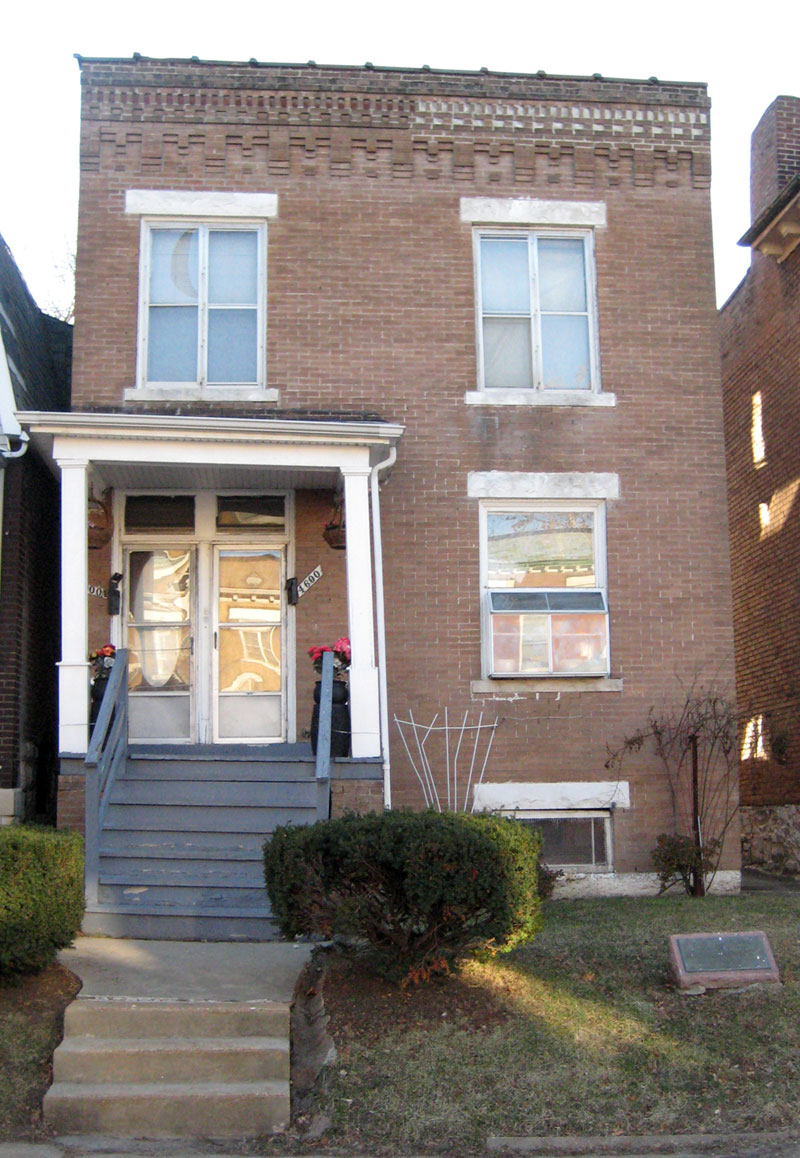
The Shelley House,
4600 Labadie,
St. Louis, Missouri

In 1945 Louis Kraemer sued to prevent the Shelley family from occupying the house they purchased in St. Louis. The Shelleys were Black and there had been a restrictive covenant on the land since 1911, which the family had been unaware of when they made their purchase. Kraemer knew, however, and sued. He was counting on the courts to uphold the contract and keep the Black Shelley family out of the neighbourhood.

The Missouri Supreme Court obliged, ruling as courts had been doing for
decades, that the deed was a private agreement, attached to the land.
Because it was estate law, as opposed to personal, the contract could be
enforced by a third party such as Louis Kraemer, who wanted to keep his
lily White neighbourhood lily White. Shelley appealed the Missouri
decision.
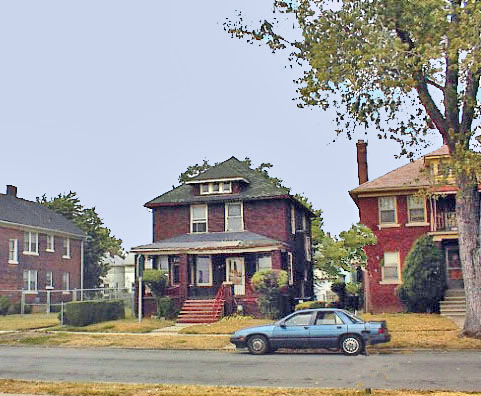
The Orsel and Minnie McGhee House

By 1948 The Supreme Court was ready to decide Shelley v. Kraemer, which came with a companion case along the same lines. McGhee v. Sipes was a case that had bubbled up from Detroit, where the McGhees had purchased property that came with restrictive covenant. By then Detroit had already gone through several racial spasms, such as the Ossian Sweet trial in the 1920s and the 1943 Riot.

Then Orsel and Minnie McGhee purchased the house at 4626 Seebaldt in Detroit, in which they had been living as tenants for a decade. A neighbourhood group decided to sue to uphold the restrictive covenant in the deed and Sipes became the plaintiff in that case. It too was decided in favour of the discriminatory covenant. It was also appealed. When it came up to the Supreme Court it was rolled in with Shelley v. Kelley. Lawyers for the defendants, including Thurgood Marshall for the McGhees, argued their positions under the Equal Protection Clause of the 14th Amendment.
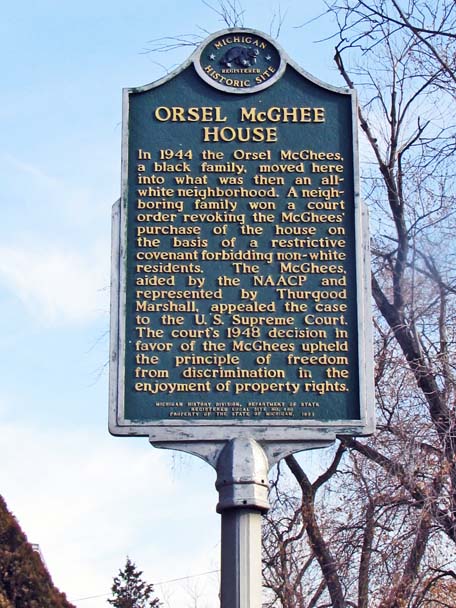
I’m a sucker for historical markers.
Courtesy of Detroit: The History and Future of the Motor City

The Supreme Court didn’t QUITE rule the restrictive covenant was illegal under the 14th Amendment. The court ruled that contracts between private parties can still have restrictive covenants, which the parties can choose to abide by, or not, depending. However, the Supreme Court ALSO ruled that parties in dispute over restrictive covenants could no longer expect judicial review of these contracts because for a court to uphold the contract it would necessarily violate the Equal Protection Act of the Constitution.

And, let’s be clear: The Supreme Court’s decision in Shelley v. Kraemer didn’t end discrimination in housing. It just took new and different forms. Redlining was one way of restricting a neighbourhood. Condo and Homeowners Association Boards have their own ways of restricting who gets in.

As an aside: The Condo Association my parents moved into, and which I now reside to help take care of him, is predominantly White, while the surrounding associations (all a part of a much larger condo complex with several association boards) are far more mixed in the number of Blacks and Latino residents. That doesn’t happen by accident.

Just as Coral Gables being 98% White is no accident.

Additional Reading at Not Now Silly:

The Detroit Riots: Unpacking My Detroit ► Part Five

The 1943 Riot ► Unpacking My Detroit ► Part 5.1
No Skin In The Game ► Part One

No Skin In The Game ► Part Two

No Skin In The Game ► Part Three

You’ve Come A Long Way, Baby – NYT Decides To Capitalize Negro
Montgomery Bus Boycott ► Nostalgia Ain’t What It Used To Be
Happy Birthday Coconut Grove!!! Now Honour Your Past
An Introduction to Trolleygate
The Bible, Subliminal Satan, and Racism
Bulldozing Cultural History

***

***

No Skin In The Game ► Part Three

History is complicated.

Little did I realize how accurate I was in intimating Coral Gables has a long history of Racism, going back to its founding. As reported in Part Two of No Skin In The Game, to this day Coral Gables has a population that is 98% White. This demographic never happens by accident. 

However, there is one Coral Gables neighbourhood that turns out to be the exception . . . the exception that proves the rule.

In my research I recently, accidentally, stumbled across something called the MacFarlane Homestead Subdivision Historic District. It was an odd little reference in the Sun Sentinel that caught my attention. In the article Reference Guide Lists Historic Black Sites, were mentioned Black sites across Florida, including one in 98% White Coral Gables, of all places:

CORAL GABLES

MacFarlane Homestead Subdivision Historic District:

Bounded by Oak Avenue, Grand Avenue and Jefferson Street. The residences were built primarily in the late 1920s and 1930s in a vernacular type of architecture not seen elsewhere in Coral Gables. The styles in the district include bungalows and one-story frame “shotgun“ houses. St. Mary`s Baptist Church at 136 Frow Ave. was built in 1927.

Detail of map showing the MacFarlane Homestead Subdivision Historic District,
the oddly shaped triangle in blue. Everything to the south and east is Coconut
Grove. Everything north of the tracks and U.S.1 is Coral Gables.

That address puts it in the odd triangle section of Coral Gables immediately adjacent to West Coconut Grove. It’s just a little more than a block away from the Coral Gables diesel bus garage that the residents of West Grove have been saddled with.

Reading between the lines:

  • “…built primarily in the late 1920s and 1930s…” can be translated to say “this neighbourhood was created contemporaneously with the founding of Coral Gables;”
  • “…in a vernacular type of architecture not seen elsewhere in Coral Gables. The styles in the district include bungalows and one-story frame “shotgun“ houses…” translates to “built in the inexpensive and expedient Bahamian style, styles of house that would never be allowed elsewhere in hoity-toity Coral Gables, but seen in abundance in neighbouring Black Coconut Grove.”

In other words: this neighbourhood was created so the Black folk who were doing the back-breaking labour of building Coral Gables — and, later, serving Coral Gables — would have a place to live. My understanding of the racial implications was instinctive and immediate. Proving that point would be more difficult.

1913 Poster

One thing that made Coconut Grove unique in this country — aside from having the highest percentage of Black home ownership in the nation — is that the Black community in Coconut Grove was NOT on the “other side of the tracks.” Think about that expression for a moment. The “other side of the tracks” was the poor part of town, where Black enclaves originally started near the railroad tracks. That was generally an area where no decent, self-respecting White person would find themselves living, or even traveling. Black folk had far fewer choices for neighbourhoods. And, as has always been true in this country, once there were a few Blacks in an area, it became all Black over time.

While Coconut Grove didn’t have an “other side of the tracks,” it’s clear that Coral Gables did. The blue triangle on the map above (or on this interactive map) is the only area in Coral Gables that Blacks could live. South of U.S. Highway #1, which runs parallel to the railroad tracks, is the other side of the tracks if you live in Coral Gables. It may be technically a part of Coral Gables, but it’s not OF Coral Gables, if you get my meaning.

It turns out the proof I was looking for was tucked away in a book called “African American Sites in Florida” by Kevin M. McCarthy. Within I found the following:

Coral Gables

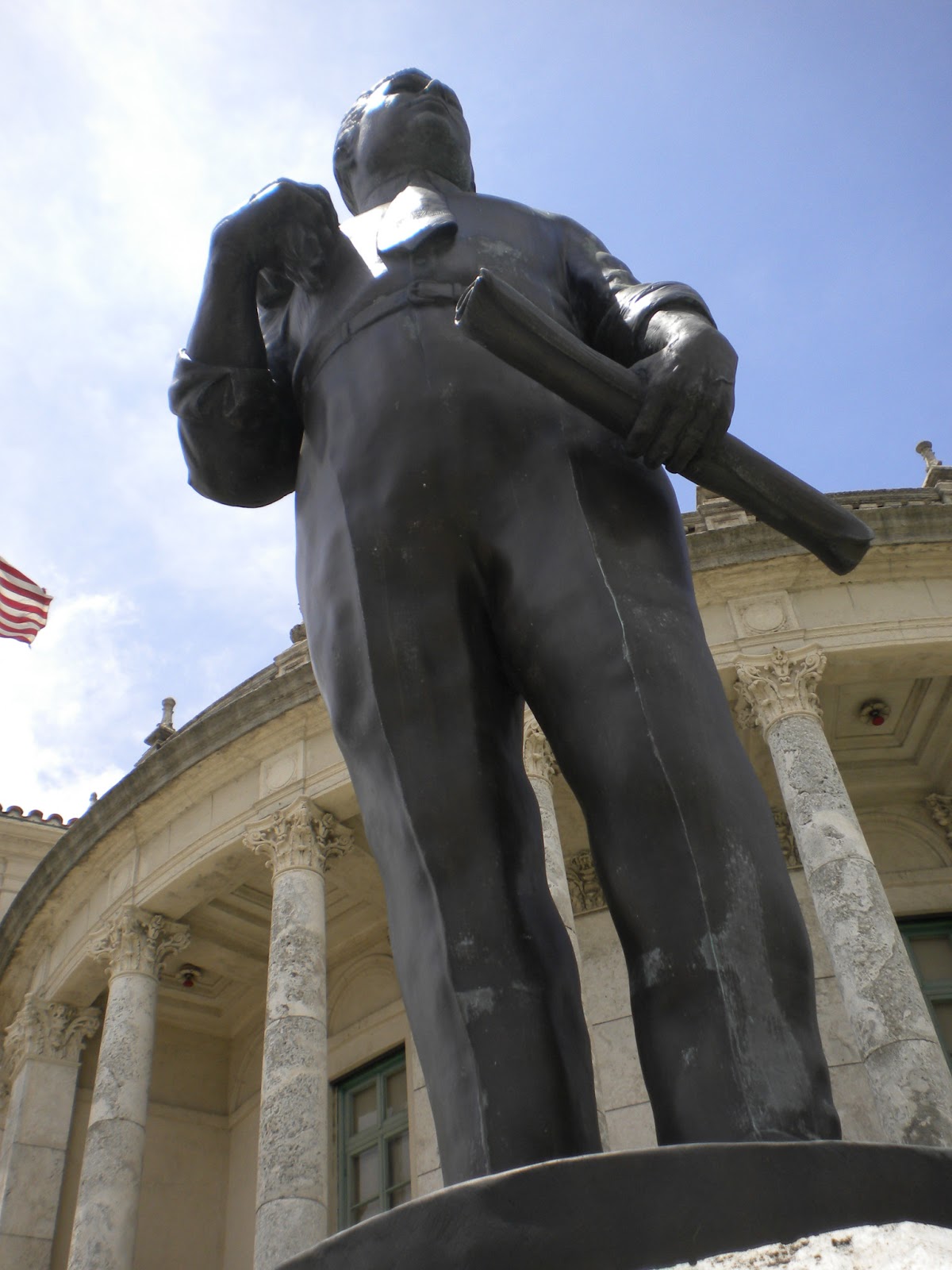
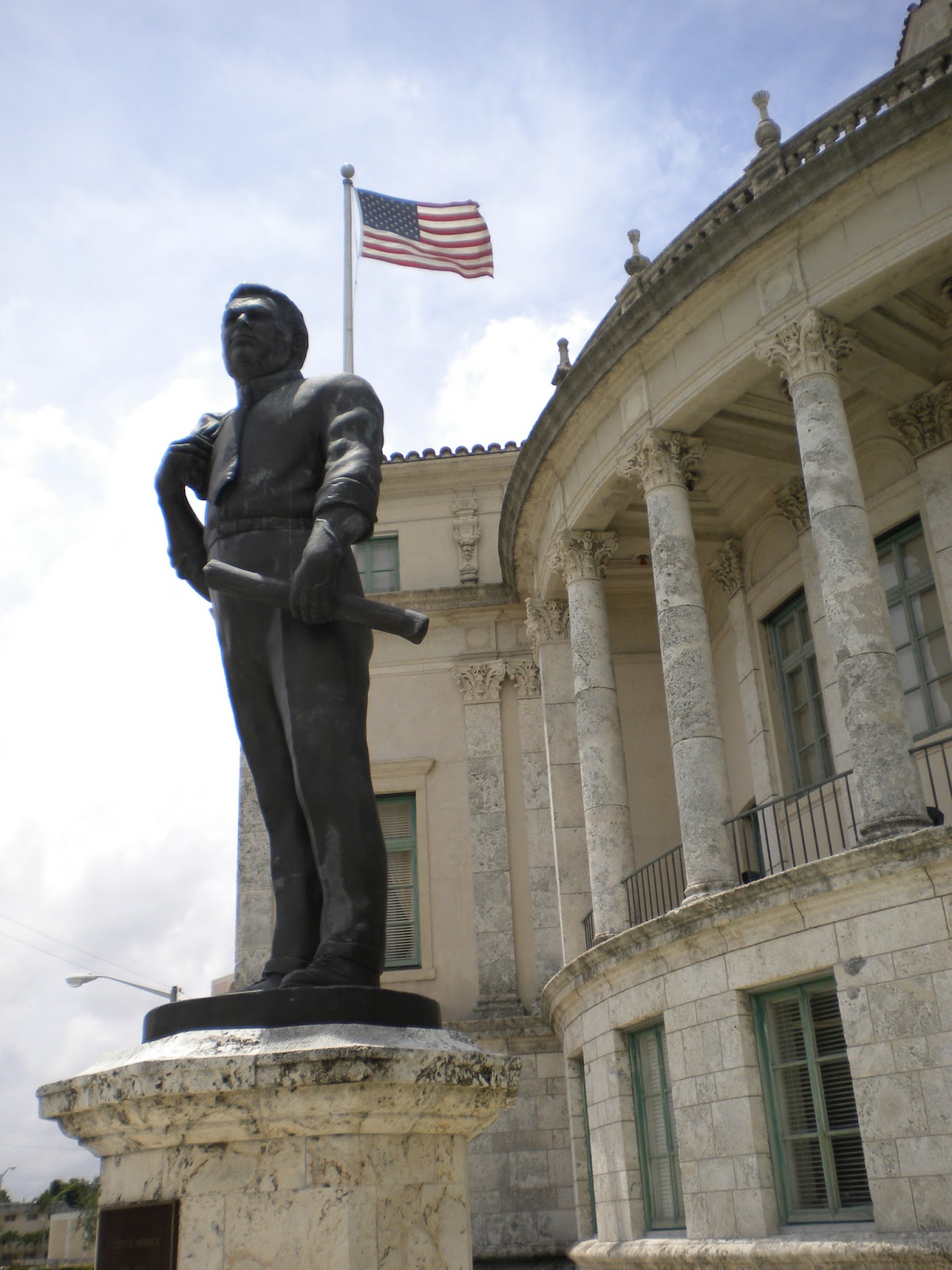
When I took pictures of George Merrick and Coral Gables City
Hall in August of 2009, who knew they would come in handy?

Coral Gables may have been the second planned community in the United States, after Washington, D.C. George E. Merrick spent much time and money designing the city, including what became the University of Miami, which opened in 1926. To promote the planned community, he used the oratorical skills of William Jennings Bryan in the mid-1920s; Bryan, who had been President Woodrow Wilson’s Secretary of State and a three-time Democratic Party nominee for President, gave impassioned speeches around Merrick’s fabulous Venetian Pool, encouraging visitors to buy and settle in the planned community.

The city never had a large number of blacks, and in 2000 only 3% (1,348) of the total population of 40,091 were black.

MACFARLANE HOMESTEAD SUBDIVISION HISTORIC DISTRICT is a black enclave within the city of Coral Gables. It is bordered by Oak Avenue, S. Dixie Highway (U.S.1), Brooker Street, and Grand Avenue east-northeast of the University of Miami. The district takes its name from Flora MacFarlane, who homesteaded 160 acres of land there and in Coconut Grove in 1892. Some of the houses in the district predate the expansion of the Gables in 1925 and 1926, while others were built in the 1930s at a time when blacks were not allowed to build in the wealthier parts of Coral Gables. One of the earliest structures, St. Mary’s Baptist Church, was built in 1927. Most of the homes in what is called the black Gables are small, single-story homes built from Dade County pine. Many of the blacks worked in the homes of the wealthy white residents or in the construction of such buildings as the City Hall and the Biltmore Hotel. The area is changing rapidly today, with many large homes being built.

The historic 120-year old E.W.F. Stirrup House,
still undergoing Demolition by Neglect

Here’s the supreme irony: Coral Gables is so proud of its little Apartheid Triangle that in 1994 it had it listed on the National Register of Historic Places. That’s like hiding its racism in plain sight. Now, if anyone exposes Coral Gables’ long and complicated history of racism, it can point to the MacFarlane Homestead Subdivision Historic District and claim, au contraire mon frere, it has honoured the original Black builders of Coral Gables.

Which is more than neighbouring Coconut Grove has done. Coconut Grove has continued to ignore its history. Rapacious carpetbagging developers have now taken control of some of the historic elements of Black Coconut Grove and no one seems to care.

People tell me that the E.W.F. Stirrup House is on a registry of historic city homes. I’m calling bullshit on that claim. I can find no historical designation for the E.W.F. Stirrup House by Coconut Grove, the City of Miami, Miami-Dade County, the State of Florida, or the country. Yet E.W.F. Stirrup created a unique place in this country, which is slowly disappearing.

SAVE THE E.W.F. STIRRUP HOUSE!!!

No Skin in the Game – Part One
No Skin in the Game – Part Two

No Skin In The Game; Part Two

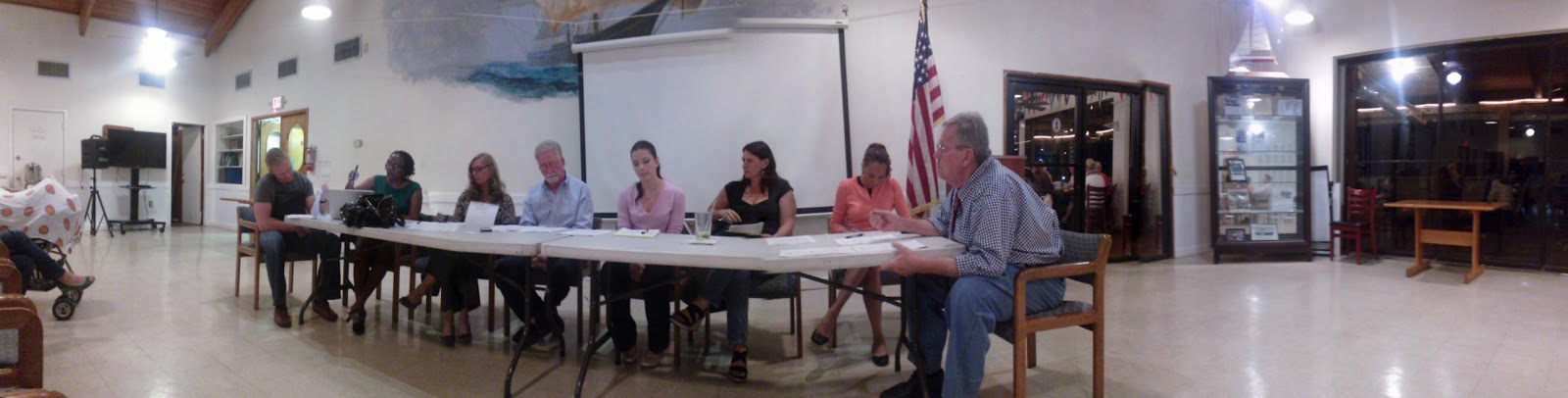
A panorama of the Coconut Grove Village Council.

As we ended our last exciting episode (Part One of No Skin in the Game), I was leaving the Trolleygate protest in Coral Gables — just as the protest signs were arriving. I was running to cover the Coconut Grove Village Council meeting, at which Trolleygate would be an agenda item. In hindsight I made the wrong choice.

During the drive I tried to place what I had seen into a context that I understood. That’s when I decided to call this blog post No Skin In The Game. Nothing better explains the understandable apathy on the part of Coral Gables about Coconut Grove’s problems. Coral Gables is 98% White and both literally and figuratively has no skin in the game.

It may only be 3.5 miles from Coral Cables Congregational Church to the Coconut Grove Sailing Club, but it might as well be several galaxies away. The neighbourhood changes 3 separate times. From the conspicuous opulence of Coral Gables; through the blighted area of West Coconut Grove; past the non-conforming, polluting, Trolleygate diesel bus garage on Douglas; east along across Grand Avenue; where another imaginary line separates West Grove from White Grove, the exact spot where property values pick up again. It’s visually obvious without using Zillow.

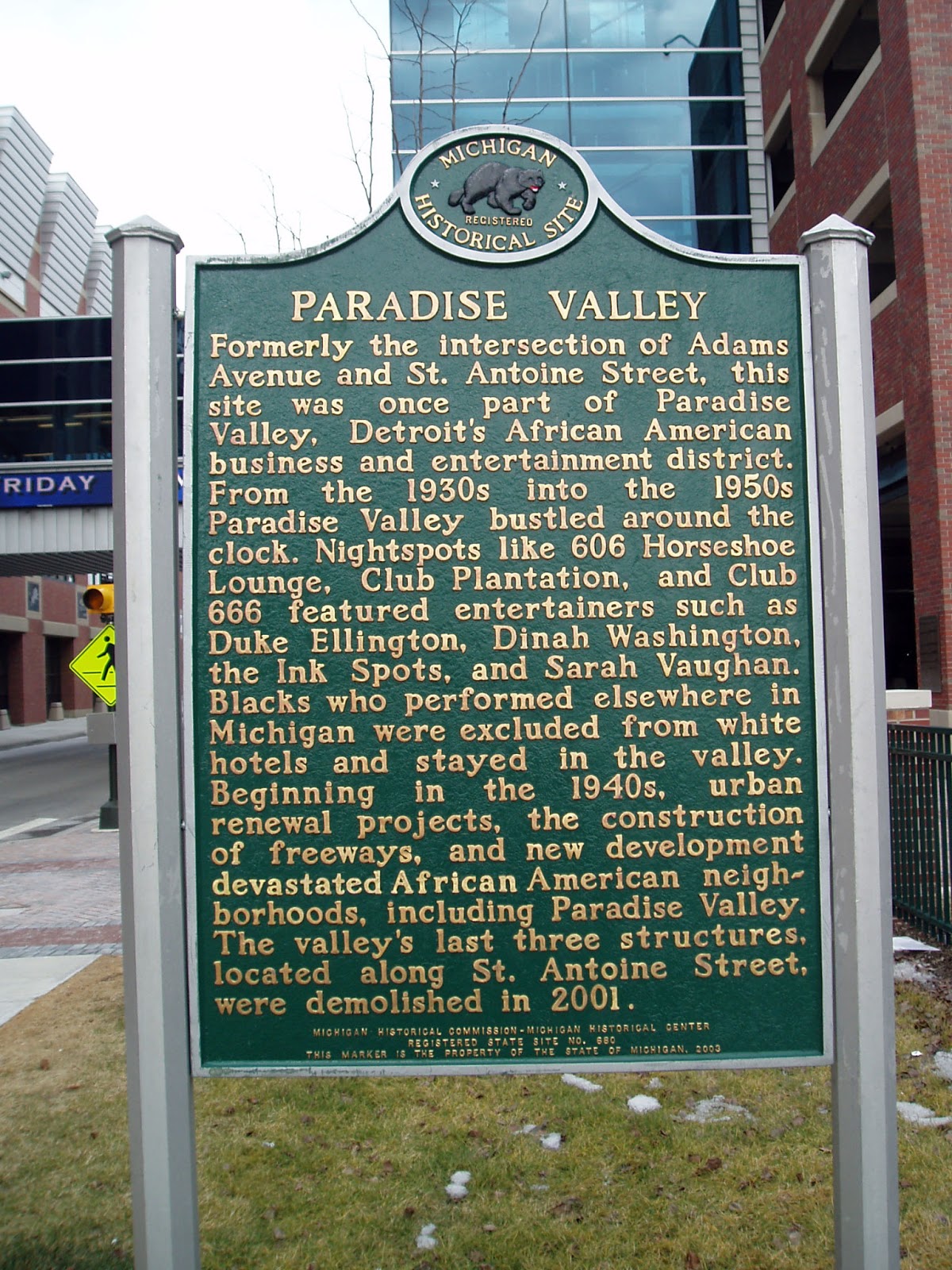
The only clue there was once a place called
Paradise Valley, aka Black Bottom, is this sign.

In other words: Coconut Grove, considered one of the most exclusive Zip Codes (33133) in the entire country, has had an historic Black enclave, surrounded on all sides by White folk, for the last 140 years. This area has been marginalized by racism over the years, the same racism that affected your part of the country during the same period. It has been allowed to become blighted, the same way that Black areas in your part of the country have been allowed to fester during the same period. It has been encroached upon by The Powers That Be — Trolleygate is just the latest, most nakedly obvious example.

TO BE FAIR: Coconut Grove was not encroached upon by The Powers That Be like Overtown, where I-95 was jammed through the middle of the neighbourhood, cutting one side off from another. Nor was it was encroached upon by The Powers That Be like my hometown of Detroit, where only a sign remains of a once vibrant Black residential, retail, commercial, and entertainment district. The people of Overtown and Paradise Valley were mostly tenants with absentee landlords. They had no skin in the game.

Black Coconut Grove always had some skin in the game. This is entirely due to E.W.F. Stirrup. Mr. Stirrup was Black. Had he been White his house would have been restored by now; like The Barnacle, Commodore Munroe’s estate just a block away. It is now a State Park. However, Mr. Stirrup is also the reason West Grove still exists. There have been a few attempts to tear down the entire neighbourhood over the years. All have floundered due to the high percentage of Black home ownership — the highest in the nation. That is directly attributable to E.W.F. Stirrup, who thought that home ownership was important for growing Black families. All the more amazing because it came during a period of racial discrimination. The Powers That Be could only screw with West Grove around the edges. Black Grove had too much skin in the game.

During the 4 years I have been researching Charles Avenue I have been asked many times by White residents of Coconut Grove why I even care about Black Coconut Grove. Some are just curious. Some can’t believe that anyone would care about those people. One person used the expression “no skin in the game” and knew it was a clever racial pun. It echoed through my head ever since, but this drive from Coral Gables to West Grove to White Grove put it into context. It all depends on what skin you have in the game, and what the game is.

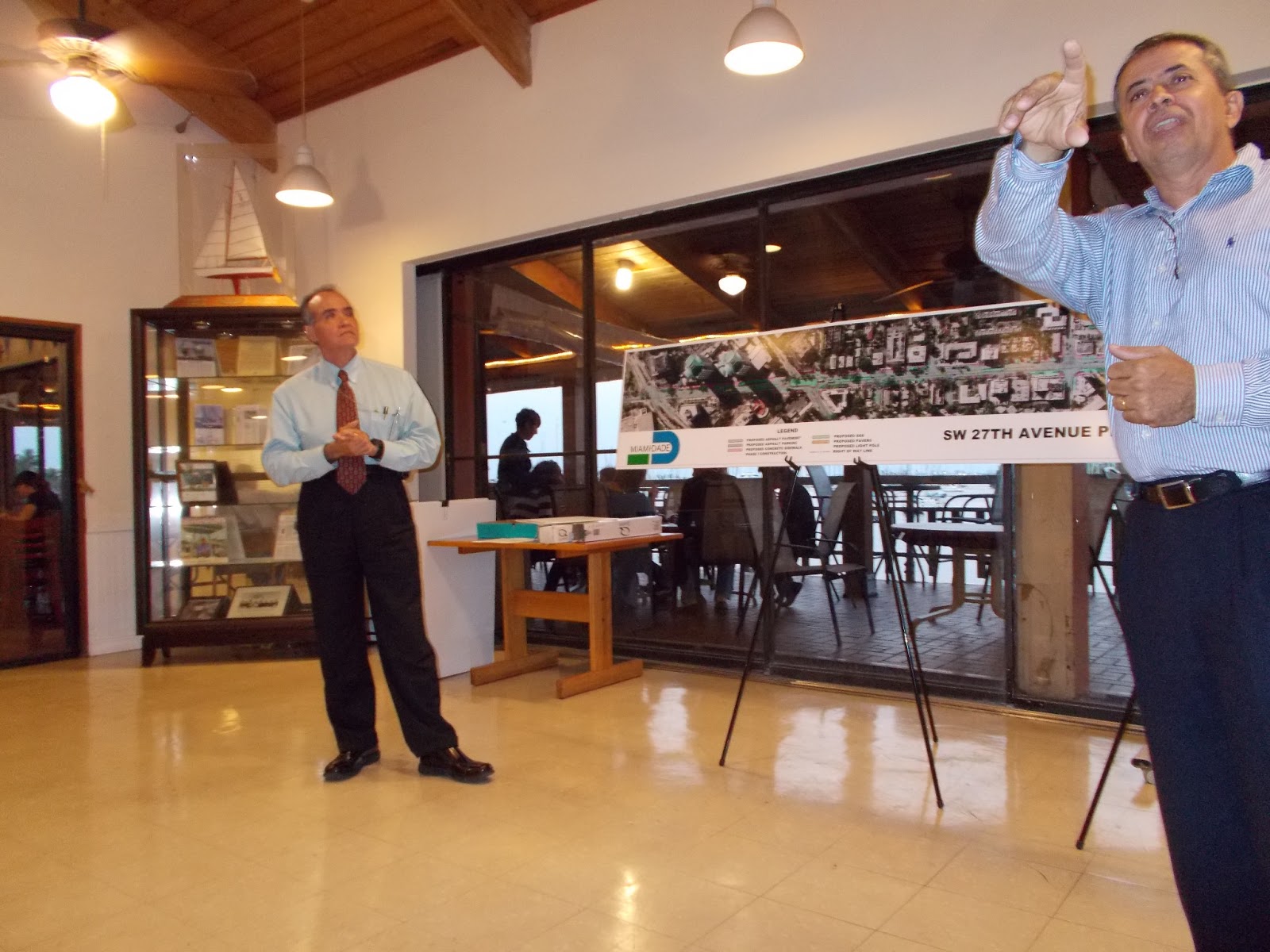
Taking questions about treeremediation along SW 27th. Yawn.

That’s the state of mind I arrived in, late for The Coconut Grove Village Council meeting, which was already in progress. I slipped into the back row of a sparsely attended meeting. More apathy on display. No one seems to have any skin in the game.

There were almost as many people on the executive council as observers in the room. The residents were getting an update from the City of Miami on the redesign of SW 27th Avenue, including its new, radical, peanut-shaped traffic calming circle at Tigertail Avenue. There were questions from the councilors about how traffic circles work (Really?) and questions from the residents about tree remediation. Yawn.

The MEGO factor [My Eyes Glaze Over] kicked in almost immediately. The only topic I care about is Trolleygate. Besides, I already knew the Coconut Grove Village Council was a paper tiger. This presentation was merely a courtesy from the City of Miami to keep Coconut Grove in the loop, the exact opposite to what happened when Commissioner Marc D. Sarnoff quietly slipped a polluting diesel bus garage into West Grove. He said he purposely didn’t inform the Village Council because it just slows things down.

Panorama of SW 27th Avenue presentation.

By the time a project has reached this “presentation stage,” the fix is already in. People can jump and shout all they want. The Village Council can vote unanimously against a project. But . . . but . . . but . . . the Village Council only has an advisory roll and the City of Miami, more likely as not, is going to ignore what the residents of Coconut Grove want and do what Emperor Marc D. Sarnoff wants.

That’s why I tuned out and started writing a children’s parable instead.

George Merrick, founder of Coral Gables, in front of Coral
Gables City Hall, just like Coconut Grove never had.

Okay . . . okay, kiddies, sit down right here and I’ll tell you a little story about the founding of a town called Coral Gables. It’s not the kind of story you can find in the history books. Believe me, because I’ve tried since the first time I heard it about 3 years ago. I promise to keep trying, but this ain’t the kind of thing that gets written down.

However, kiddies, I have now heard pieces of this oral history more than once, from more than one source, which lends it some credence. Call this the Alternative History of Coral Gables and stop fidgeting, Tom.

FADE TO BLACK – FADE UP

Once upon a time there was a sleepy little village called Cocoanut Grove, with what appears to be an extraneous “A”. Cocoanut Grove had a small tourist trade in the Peacock Inn. Commodore Monroe built his house nearby and, immediately south, created Camp Biscayne, a rustic camp that attracted incredibly wealthy people, who wanted to camp and boat and fish and pretend for a week, or so, that they were living in earlier, halcyon times. Camp Biscayne was so exclusive that one can find its guests lists in online searches. So exclusive were all these nascent tourist attractions, they needed Black folk to do the hard work. Consequently, right beside this tourist trade grew a Black enclave, of mostly Bahamians. E.W.F. Stirrup (documented on many different pages on my blog), through hard work and industriousness, wound up becoming the largest landholder in Cocoanut Grove and one of Florida’s first Black millionaires.

In the early ’20s the movers and shakers of Cocoanut Grove saw dollar signs in developing Cocoanut Grove. To that end they hired some architects who put together what became known as the Bright Plan. It was elaborate, like every real estate development reaching for the brass ring. A Cocoanut Grove City Hall was envisioned for where Cocowalk now sits. It would have been magical, children. Imagine: Cocoanut Grove City Hall would have been at the end of a long boulevard with fountains down the middle, all based upon a Mediterranean design. City Hall would have been a short walking distance to the golf course, which would have been located along the streets both north and south of Charles Avenue, stretching all the way to Douglas. In fact, that would have included a fair chunk of what would later become known as Black Grove.

The bottom fell out of the swampland market soon after the Bright Plan was put on paper. It’s all depicted as laughs by the Marx Brothers movie “The Cocoanuts,” which takes place in Cocoanut Grove. But for some it probably wasn’t all laughs. Some people would have lost money.

It’s interesting to speculate, no pun intended, how much E.W.F. Stirrup might have profited had the Bright Plan gone ahead and how much he may have lost when it stalled. He still died a wealthy man, mind you, and did it in a time when Jim Crow laws and discrimination made the achievement all the more incredible. The Bright Plan was never implemented, except for one building: 200 feet from Mr. Stirrup’s front door is the Coconut Grove Playhouse. Had the Bright Plan ever come to fruition, it would have been a
game-changer for Cocoanut Grove.

However, this fable is about how Coral Gables, called one of the country’s first planned communities, was created. I’m still getting to that. If Tom doesn’t keep interrupting, I could get back to our story, kiddies.

Everyone should read this book. ~H.W.

A few years after the Bright Plan died, Miami started sniffing around to annex Cocoanut Grove. Some of the same boosters from earlier saw benefit in being swallowed up by Miami. Some did not. This is often as it always is. According to this alternative oral history one faction of boosters suggested annexation of everything BUT Black Coconut Grove. This thinking, especially in 1925, was not unusual at all. Across the country one can find many instances where communities purposely did not annex the Black areas at the same time the White areas were annexed. The infamous 8 Mile Wall in Detroit is a physical example of this at work. The book “Sundown Towns: A Hidden Dimension of American Racism” by James W. Loewen was instructive in helping me understand how annexation often left out Black neighbourhoods as communities grew and why all ‘Merkin cities look the way they do. But, I digress again.

For whatever reasons The Powers That Be in Miami ignored the racially inspired boundary proposal. Miami wanted it all, so Miami took it all, annexing everything to the bottom of Cocoanut Grove, including the odd little Black enclave in the middle of it. In our alternative history, that’s when Coral Gables became a viable idea in the minds of some people. There were enough . . . okay, I’ll keep calling them boosters for the purposes of this story . . .  BOOSTERS who didn’t want to live near those people in Coconut Grove. What better way than to start your own town from scratch? You can keep out anyone you want. To this day Coral Gables proudly proclaims on its web site it is 98% White. That doesn’t happen by accident.

When Coral Gables incorporated as its own town — one of the first planned communities in the country — it claimed all the land surrounding Coconut Grove, ensuring that the Grove, and Miami, could not grow beyond its borders.

Was George Merrick racist? Not a single
one of my sources mentioned him
specifically, or anyone else..

However, and here’s the ultimate irony: Just like elsewhere in the country, the people of Coral Gables didn’t do their own hard work. Are you kidding? They could hire people to do that, as long as they went home at night. [See: Sundown Towns] The Biltmore (described in Part One of No Skin in the Game) f’rinstance had a large Black staff as did all those mansions in Coral Gables.

One of my sources for these oral fables is a 73 year old gentleman who has lived in the same house on Charles Avenue his entire life. He tells me of a time when Black folk wandering around Coral Gables would be stopped and asked for their “papers.” Papers consisted of a letter from your employer: “Mrs. Jones is our housekeeper/nanny/cook” or “Jim Smith is our handyman/chauffeur/gardener.” If you could not produce your papers you would be arrested for vagrancy.

JUMP CUT TO PRESENT

The Trolleygate item suddenly comes up on the Coconut Grove Village Council agenda. I put my phone on record and drop it in front of Pat Sessions, who drones on for a while. It only takes a minute to realize that he knows less than I reported a few weeks ago about where the case stood. It’s a good he said nothing new because I have now learned that my fancy phone shuts itself off after a few minutes and doesn’t save the recording when it does. Clearly I need a new app, but I digress.

However, Sessions did say that Astor Trolley LLC (a limited company created to spare Astor Development LLC from any adverse consequences due to Marc D. Sarnoff’s Trolly Folly) is now claiming the parcels of land Astor slapped together in blighted Coconut Grove are worth $3 million. It’s just another way West Grove has been fucked with around the edges and another land grab by another developer. Everything I learn about the east end of Charles Avenue makes me see another massive land grab by another developer. But I digress and that truly is another story for another day. Let’s get back to our happy little story of the founding of Coral Gables.

These stone streetsigns are on every corner in Coral Gables.
The White stones are for loading and unloading.

SLOW FADE BACK TO BLACKS JAILED FOR VAGRANCY – FADE UP NARRATION

Picking right up where we were in our little morality tale, boys and girls. It’s hard not to see Coral Gables as one of ‘Merka’s first redlined communities. It’s the town that racism built. It never had any skin in the game because it could keep out any skin that didn’t conform.

Another source told this author about Coral Gables (paraphrasing):
“Growing up, you see those White stones, you know you was going in White
areas. Parents and friends would warn you stay on this side of the White stones.”

Coral Gables was a reaction to Coconut Grove in every way. Coconut Grove had a Black enclave that could not be shaken loose. It could not be shaken loose because of E.W.F. Stirrup and his legacy. Stirrup created a community unique to this country because it had the highest percentage of Black home ownership in the country.

So, you see kiddies, you can’t really tell the story of Coconut Grove without also telling the racist history of Coral Gables, the town next door. Coral Gables never had any skin in the game.

FULL FADE BACK TO PRESENT – COCONUT GROVE VILLAGE COUNCIL MEETING

Sessions doesn’t think there’s anyone who thinks the Coral Gables Trolleygate diesel bus garage will ever open as a bus garage. This echos the sentiment of Edward Harris, from Miami-Dade Commissioner Xavier Suarez’s quoted in Part One of this story. However, as the CGVC goes on to other topics of less interest to me than tree remediation, I reread an email from one of my sources who claims there is a massive land grab going on at the eastern end of Charles Avenue, which includes the E.W.F. Stirrup House. My source tells me it will be turned into a mixed use condo/retail/theater/parking/entertainment extravaganza that will put Cocowalk and Commodore Plaza (combined) to shame. How many people on the Coconut Grove Village Council are aware of what’s happening right in front of their noses. Maybe it’s no skin off their nose, to mix skin metaphors. Maybe they have no skin in the game.

Who has skin in the game and which game do they have skin in? Because there’s a lot of money being made by some people at the expense of others in Coconut Grove.

IRONY ALERT: I literally — and figuratively — have no skin in the game. I’m not a
Miami resident. I’m not speculating on land in Coconut Grove. I’m not
Black. I have merely identified an injustice and want to right it. For
all these reasons, and because I listen to both the residents of West
Grove and White Grove, I am trusted with confidential information and
off the record conversations. Having no skin in the game can be a
benefit as well.

Feel free to feed me any info. I know how to keep my sources private. And, thanks to everyone who read Part One and Part Two all the way to the bottom. You’re my kind of reader.

No Skin In The Game; Part One

The flyer handed out by the protestors.

Thursday night was another night for divided loyalties and for putting things into stark relief. Let me explain.

In Coral Gables protestors from West Grove were expected to gather at 6PM to protest Trolleygate at the Coral Gables Mayoral Debate at 7PM. Also at 7PM, 3-and-a-half miles away, the Coconut Grove Village Council were expected to gather for its oft-delayed regular monthly meeting.* Trolleygate is a promised agenda item at the CGVC. What to do, what to do? The only viable solution: Go to both, like I did last month with the Coconut Grove Playhouse redevelopment meeting and the Charles Avenue Historic Preservation Committee meeting on the same night, and hope for the best. It turned out that I made all the wrong choices on Thursday night, but I’m getting ahead of myself.

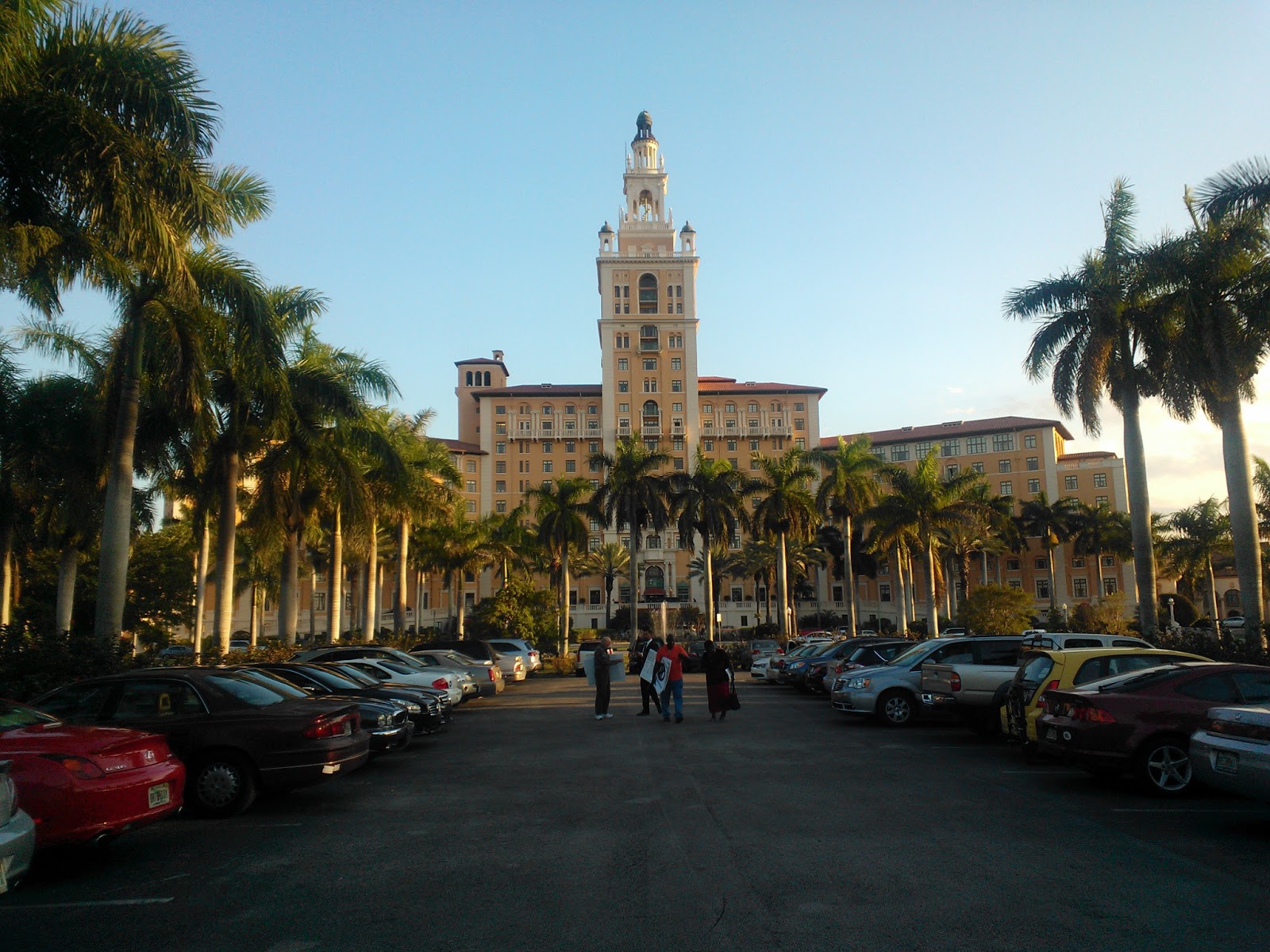
The Biltmore Hotel

I arrived at 6 at the Coral Gables Congregational Church,
the location of the Mayoral Debate, only to see the first protestors just arriving. This is a beautiful little church which covers an entire block
in the middle of an expensive residential neighbourhood. It’s one small
block away from The Biltmore Hotel, one of the most exclusive resorts in the country.

Being dirt poor, I am always struck by the money on display in Coral Gables. It’s conspicuous consumption on a grand scale. The Biltmore is the physical representation of that. According to the WikiWackyWoo

In its heyday, The Biltmore played host to royalty, both Europe’s and Hollywood’s. The hotel counted the Duke and Duchess of Windsor, Ginger Rogers, Judy Garland, Bing Crosby, Al Capone and assorted Roosevelts and Vanderbilts as frequent guests. Franklin D. Roosevelt had a temporary White House office set up at the Hotel for when he vacationed on his fishing trips from Miami. There were many gala balls, aquatic shows by the grand pool and weddings were de rigueur as were world class golf tournaments. A product of the Jazz Age, big bands entertained wealthy, well-traveled visitors to this American Riviera resort.

The Biltmore made it through the nation’s economic lulls in the late 1920s and early 1930s by hosting aquatic galas that kept the hotel in the spotlight and drew the crowds. As many as three thousand would come out on a Sunday afternoon to watch the synchronized swimmers, bathing beauties, alligator wrestling and the young Jackie Ott, the boy wonder who would dive from an eighty-five foot platform. Johnny Weissmuller, prior to his tree-swinging days in Hollywood, broke the world record at the Biltmore pool and was a swimming instructor. Families would attend the shows and many would dress up and go tea dancing afterwards on the hotel’s grand terrace to the sounds of swinging orchestras.

Now I have nothing against Rich folk, per se. Good for them. They got money and aren’t afraid to show it off. Double-plus good for them. As Max Bialystock, in the Producers, famously shouts, “That’s it, baby, when you’ve got it, flaunt it, flaunt it!” However, I had just come from the E.W.F. Stirrup House, currently undergoing Demolition By Neglect so some RICH developer can have his way with the land and turn a lovely and unique spot in ‘Merka into another ugly condo complex. But that’s another story for another day. Or is it? [See Part Two of No Skin In The Game.]

It’s always amazing to me that one only needs to cross an imaginary line on the map separating Coral Gables from Coconut Grove and witness a SPIKE in property values. It’s not something one needs to look up on Zillow. The evidence is right there before your very eyes. From slums to opulence in a few short blocks. Feel free to try it yourself one day. Then ask yourself why.

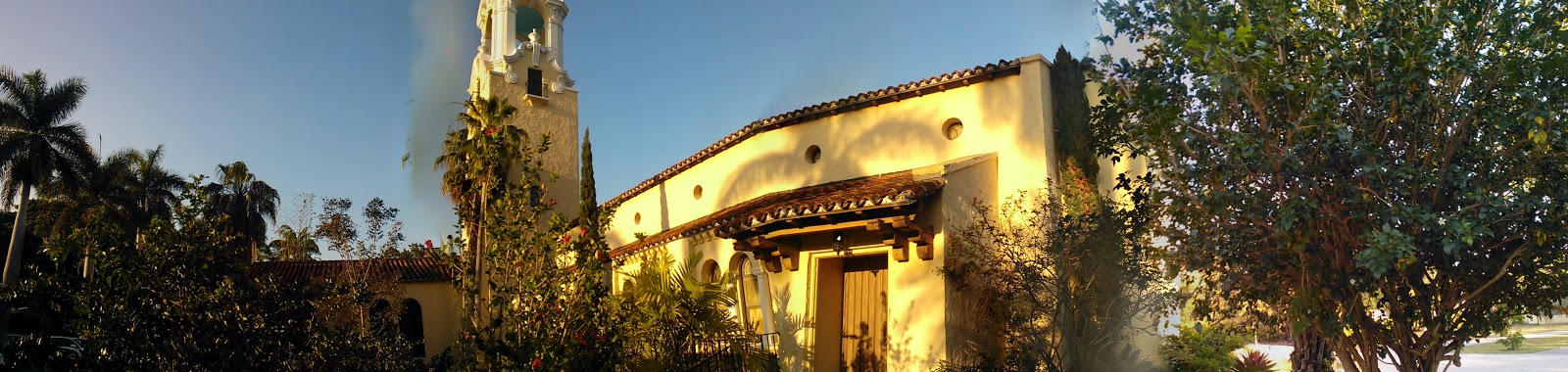
Panorama of the western facade of only the front
section of the Coral Gables Congregational Church.

Despite it taking up a block, the Coral Gables Congregational Church is still a small church that appears to have been added onto a number of times. From the outside, it appears to be a number of small interconnected buildings, with meeting spaces, chapels, a main church, a FREE TRADE gift shop, and band rehearsal spaces. A lot goes on in those buildings and a lot was going on Thursday night. I walked around the block 3 complete times, waiting for the protest and/or debate to get off the ground and took dozens of pictures of this lovely building. I saw sad people arriving for an Al-Anon meeting and happy people arriving for a wedding rehearsal. In the back of the building I listened to a band rehearse the same 16 bars of a Duke Ellington tune over and over again.

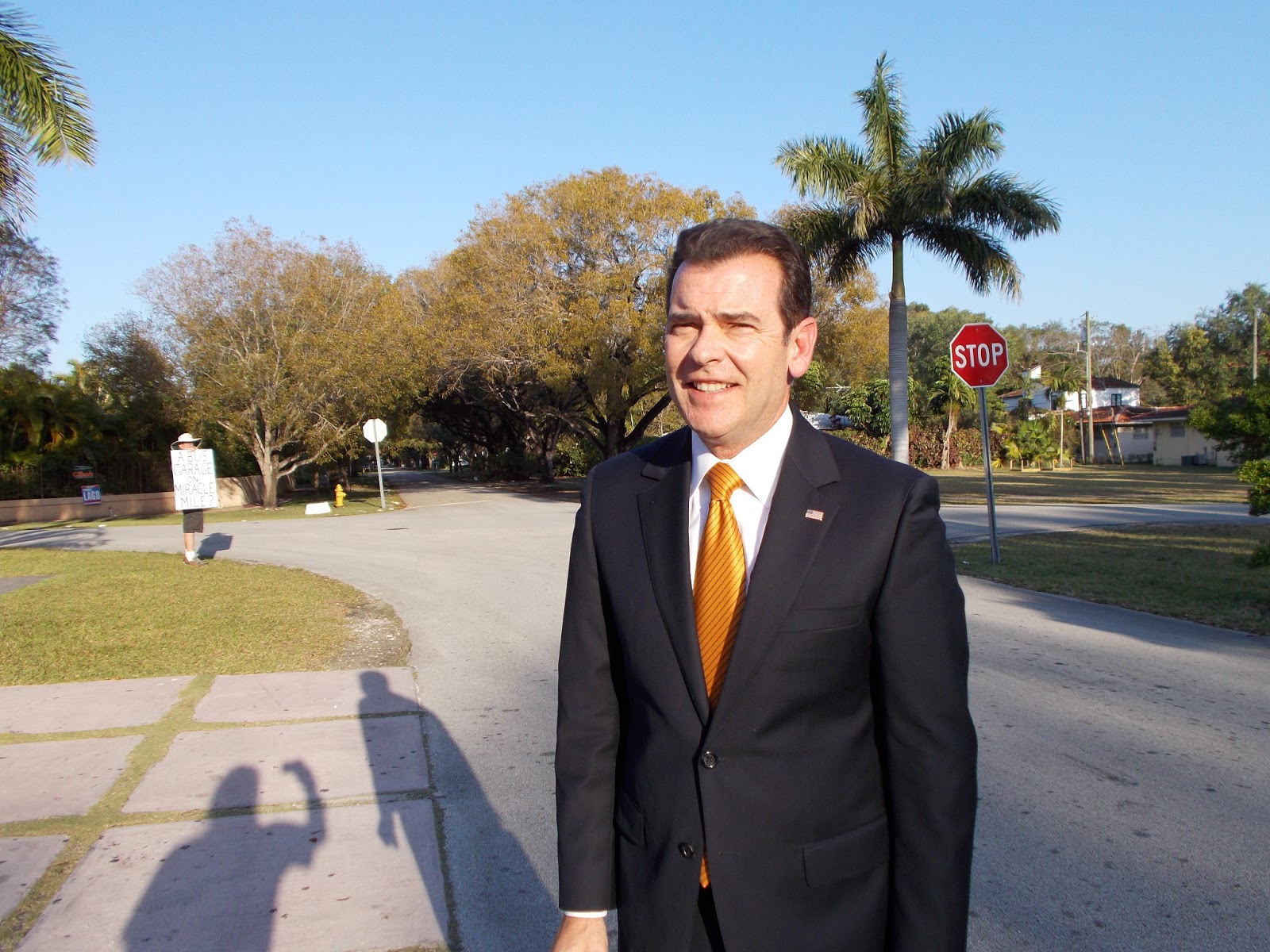
Rafael “Ralph” Cabrera,
posing stiffly for me.

However, the Coral Gables Mayoral Debate was no rehearsal. In this corner: sitting Mayor James Carson. And, in the red trunks, term-limited Commissioner Ralph Cabrera, who now wants the top job for himself. Obviously I have No Skin In The Game, but if I were to vote illegally in Coral Gables, I’d cast my ballot for Cabrera. He is the only politician in Coral Gables who has shown any open concern for the people of West Grove over the issue of Trolleygate. Last year — long before Trolleygate had become a lawsuit pitting West Coconut Grove [David] against the City of Miami and Astor
Development [Goliaths] — Ralph Cabrera was already ringing the [fake] trolley bell loudly
against this injustice by getting it put on the Coral Gables Commission agenda.

When Cabrara saw the Trolleygate protestors, he approached them and introduced himself. He expressed a general apology and said he was very concerned about this project. He thinks the West Grove neighbourhood is getting a raw deal. Cabrera was open in his condemnation, both with the protestors and with me, as I managed to buttonhole him briefly before he headed into the debate. Carbrera knows that none of those people are from Coral Gables and knows that he gains no votes for taking their side. Yet, he did so anyway.

Another gentleman I buttonholed was Edward Harris, a representative from Miami-Dade Commissioner Xavier Suarez’s office.

Commissioner Bob Welsh of South Miami –not to be
confused with Miami, or Miami-Dade — protesting
against the polluting diesel bus garage.

SLIGHT TANGENT & MEA CULPA: There is a confusing array of governmental levels here, which I keep stubbing my toes upon when I confuse them. Miami-Dade County has its own Commission which presides over 1,946 square miles, the third largest county in Florida in area. However, it’s the largest Florida county in population and, according to the WikiWackyWoo, the 7th most populous county in the entire country. It includes “35 incorporated cities and many unincorporated areas.” Cities like Miami and Coral Gables are within Miami-Dade County, but both have their own city commissions. Coconut Grove, on the other hand, is not its own city, at least not since 1925 when it was annexed by the City of Miami

That’s why my questions to Edward Harris were so idiotic and for which I publicly apologize. When Mr. Harris said he was a rep from Commissioner Suarez’s office, I mistook that for Miami Commissioner Francis Suarez, who represents District 4. Although Harris said “District 7,” my brain didn’t make connection to Miami-Dade Commissioner Xavier Suarez of District 7. Consequently, all my questions were Miami-centric and not Miami-Dade-centric. D’oh! However, it also explains why Harris was speaking in broad generalities like “we’re watching it” and “our role is to learn” from the “voices of the people.” He was very polite to me, despite how stupid I was.

Pierre Sands, West Grove Homeowners and Tenants
Association, arriving with more protest signs.

However, when I asked him if he thought the Coral Gables diesel bus garage will ever open, his answer was pretty succinct. “Not as a bus garage.” He went on to say that while the facility is being built, what needs to be considered is environmental safety and the close proximity to the residents. “We can find some use for the facility.” Thinking I had my scoop for the day, I moved on. However, I realized on reflection (after figuring out the mistaken identity), Miami-Dade has little to say about this bus garage. While the county may sympathize with the neighbourhood’s predicament, the project was green-lighted by Miami Commissioner Marc D. Sarnoff, who worked with an out of town developer behind the scenes to bamboozle West Grove. He did this and then justified not allowing the normal neighbourhood notification to his constituents or the Coconut Grove Village Council.

Aside from visually skyrocketing land values, these
corner street signs are a visual symbol one has
entered Coral Gables.

One thing that I think is very telling is that a citizen’s group from Coconut Grove thought its protest would have more traction in Coral Gables than with their own Commissioner in their own district in their own city. After all, it was their Commissioner Marc D. Sarnoff that sold them out, not unlike a Modern Day Colonialist. Follow the bouncing ball to see how only the carpetbagging White folk win, while the native Blacks are screwed:

  • Coral Gables benefits because it gets to off-load a polluting diesel bus garage onto the neighbouring city of Miami [maybe**];
  • Coral Gables also benefits from all the new tax revenue that a multimillion dollar mixed use development brings from a chunk of land that it currently uses for a polluting diesel bus garage; 
  • Astor Development, tasked by Coral Gables to find another location for its polluting diesel bus garage, couldn’t afford land in Coral Gables, by it’s own admission;
  • Astor Development thought nothing of finding cheaper land in in the neighbouring city of Miami;
  • The land is cheap because of it being blighted due to 90 years of Systemic Racism. But that’s another story for another day;*
  • Speaking of not speaking about racism: Coral Gables has a statistic on its web site proudly proclaiming the city as 98% White (Hispanic qualifies as White);
  • Speaking of not speaking about racism: It would take a greater Social Demographic Scientist than I to figure out the racial make-up of West Grove. However, if I had to hazard a guess I’d say it was 98% Black;
  • Speaking of not speaking about racism: Statistics like that are not accidental;
  • Speaking of not speaking about racism: Oh, by the way, Coconut Grove. No! You can’t have a Coral Gables [fake] Trolly Bus stop outside the diesel bus garage because that’s the free bus that takes people around to all the exclusive shops in Coral Gables. If you want to get there, you’ll have to do it on your own steam;
  • Miami will receive no tax revenue from said polluting diesel bus garage;
  • Astor Development wins no matter how this goes. It now believes the 4 parcels of land acquired to build the diesel bus garage is now worth $3.5 million;
  • Marc D. Sarnoff worked behind the scenes with the developer to play one community group off against to find the best way to get this project through with the least amount of fuss;
  • Therefore . . .

Okay . . . okay . . . I’ll ask the question that everyone else is too afraid to ask: What is Commissioner Marc D. Sarnoff getting out of this deal? Why else would he sell his own constituents down the river to work in backrooms with a developer to get a polluting diesel bus garage slipped into the neighbourhood almost in the dead of night?

Just as Pierre Sands arrived with a stack of protest signs, it was time for me to zip over to the Coconut Grove Sailing Club for the Coconut Grove Village Council meeting. I should have stayed at the Mayoral Debate/Protest because the rest of the night was tedious. My GPS logged the fastest route to the Coconut Grove Sailing Club, which took me through another opulent neighbourhood before dumping me out onto 37th, where the real estate takes a markedly visual downturn. I’m back in Coconut Grove. I drove past the polluting diesel bus garage and across Grand Avenue. When one is driving east along Grand Avenue you can also see where White Coconut Grove starts.

The stark relief I spoke of in the first paragraph. In Part Two of No Skin In The Game we’ll explore why;
In Part Three of No Skin Left In The Game: The exception that proves the racist rule

* No Skin In The Game; Part Two – An Alternative History of Coral Gables or The Town That Racism Built
** This is still being adjudicated by a court of law and the law is whatever a judge says it is on the day this is decided

Modern Day Colonialism and Trolleygate

To paraphrase Rene Margritte: This is not a trolly

At a lunch meeting yesterday with a Miami developer (who wishes to remain anonymous) I mentioned how my next blog post on Trolleygate would be called “Modern Day Colonialism.” 

I started riffing — kicking around the analogy — and compared developers building in Coconut Grove to the original 13 Colonies. Those colonies were really only business charters, set up by the British Crown/Parliament, that allowed the corporations to plunder all they saw and send the bounty back to the home country. Simply replace “Crown/Parliament” with “Miami City Commission” — and “colonial charters” with “building permits” awarded the Modern Day Colonists™ — and the analogy is complete. Once Marc Sarnoff [allegedly] greases the wheels for them, rapacious developers are free to plunder the rich cultural heritage of West Coconut Grove, aka Black Coconut Grove.

By the time I was done riffing I had the rough outline of my next Trolleygate post in my head. Then I came home and read a Letter to the Editor from Carlos Medina on the Miami Herald website that said what I was going to say a whole lot better and in far fewer words:

Miami, Gables practice ‘brick-and-mortar’ racism
 
I have been invested in the Coconut Grove community for 20 years, as a volunteer, an employee of a business there and a concerned citizen. Moving Coral Gables’ trolley-bus repair depot to the West Grove is an action steeped in historical injustice. Once again, this pleasant community is being treated unjustly, with condescension and with a sense of privileged charity by those in power, whether they are business people or politicians. 

What I saw and heard at a recent meeting run by city of Miami Commissioner Marc Sarnoff was appalling. Sarnoff is on the wrong side of this issue, as are the phantom Coral Gables politicians who sent their lawyer but skipped this important meeting, which was overwhelmingly attended by West Grove residents. Sarnoff’s presentation was self-serving and insulting, publicizing the names of those in need who he so selflessly helped throughout his career. 

This is a racial issue of the first order. It is a replay of the playbook from the ’50s and ’60’s used by people with political and economic power to place their ‘inconvenient’ highways, stadiums, garages, depots, hospitals and prisons in the less powerful neighborhoods. Then they would cite “property rights” to sugarcoat such unseemly actions and the sprinkling of “benefits” already bestowed upon the “ungrateful” neighborhood. 

That is why Sarnoff’s presentation was so demeaning to our local democracy. He defended Coral Gables, with people who do not vote for him; there was the glaring absence of any Coral Gables politician and a “master knows best” attitude vividly on display. I was moved by the large presence of residents and by the many volunteers who are working like mad, on various fronts, to put a stop to this miscarriage of justice. 

I suggest that the West Grove community contact Al Sharpton and Bishop Victor Curry, of Miami’s New Birth Baptist Church Cathedral of Faith International, who sits on the board of Sharpton’s National Action Network. Jesse Jackson should also be informed. If necessary, I am willing to donate funds, time and heart to help make this possible. 

The glaring light of the media that their presence attracts will expose what is going on in Miami. The West Grove is a living witness and survivor of brick-and-mortar racism. 

Let the City Beautiful build its oh-so-perfect repair depot within its own boundaries. Let the West Grove residents have some peace. And let Commissioner Sarnoff, who has done many wonderful things for Miami, get back on the right side of this issue and use his talent to protect and preserve the neighborhood of those who voted for him. 

Carlos Medina, Miami

Mr. Medina hit the nail on the head. I have been doing research into Marc Sarnoff’s interaction with his Black constituents. It’s not good. “Some people say” he shows a fear of Blacks, citing the size of the entourage he took with him to campaign for office in the West Grove. Apparently Sarnoff would send someone to the door of the house, while he waited on the sidewalk until he knew whether it was safe to approach.

I was at the same meeting Mr. Medina attended and thought I detected a threat from Sarnoff during his presentation. While reading between the lines, it sounded like told the West Grove residents if the neighbourhood didn’t play along with the Coral Gables diesel bus garage being plopped into West Grove, the community would not only lose the $200,000 renovation to a football field, but West Grove might also lose his backing for the current urban renewal projects awaiting City of Miami approval. Was that really what I heard? Nah! It couldn’t be. It was far too naked a threat to be real.

As the newbie to Coconut Grove politics I asked someone who has years of experience dealing with Sarnoff, “Did I see a subtle threat?” The emailed reply:

It was a threat. That’s his standard MO. I call it the Sarnoff Dance. It has three steps, Ingratiate, Intimidate, and Attack. There are three steps to his dealing with anyone he considers a potential threat. First, he strokes their ego, makes them feel like they are his friend, includes them in something to make them feel special. That’s enough for him to get most people on his side. If that doesn’t work, he does them a favor, often something they really need and that may not be quite kosher, to get them in line or shut them up. Like arranging for the football field payoff. If that doesn’t work, he resorts to veiled threats, like you saw at the meeting. Finally, if he still doesn’t get what he wants, he attacks. Like I said, economic terrorist.

When I mentioned how Sarnoff struck me as being extremely uncomfortable talking to the Black community and there seemed to be a large police presence in the room, I got the following reply:

Half of the uniformed officers assigned to the Grove were at the back of the Commission Chambers during the Town Hall Meeting. Don’t think that was a normal thing. I have never seen more than one uniformed officer there, even for the most controversial items. He was extremely uncomfortable, and that is what you were seeing. He usually comes across as very polished and well spoken […]

So far no one is willing to go on the record to allege racism on the part of Marc D. Sarnoff. However, I have been given several promising tips. Eventually someone will go on the record and when they do, I’ll publish it here. Just a reminder: I now have a Marc D. Sarnoff tip line. Feel free to contribute information. All tips remain confidential.

Through The Gates Of Trolleygate

On Oak Avenue looking south towards Frow Avenue.

Yesterday I popped over to the construction site for the Coral Gables diesel bus maintenance garage, which is being foisted upon the residents of West Grove, to see how far along it’s come since my last visit.

Noticing the gate was open, that’s where I stood to take a series of pictures. Within a a few seconds a workman noticed me. He shouted to a foreman and gestured my way. The foreman started walking over, yelling at me in Spanish. When the message is “Get the fuck out of here” I don’t need a translation. However, I stood my ground and continued to take pictures, but responded “No habla Español,”* which I find amusing for its internal contradiction.

“You have to leave! You can’t stand there!”

“Yes I can. Draw a line between those gate posts. I am outside the line on the public sidewalk. You can’t order me to leave.”

As he closed the gate on my face instead, I asked him what he was afraid of. “I’m not afraid of anything,” was his reply as he locked me outside the gate. That just forced me to take pictures over the top of the fence, just like I have done every other time I visited.

Hey, I didn’t just fall off the diesel bus.

The gentleman on the left is the foreman who yelled at me.

In the pic above you can also see what will be the diesel bus entrances, which are located behind the structure. The gates (where I stood to take the pictures) will be approximately 200 feet west of the main street, Douglas, on residential streets. This will necessitate the diesel buses driving in and out on Oak and Frow Avenues. Whenever I visit this corner I see pedestrians — mostly children — all over the place, walking up and down these streets.

Frow and Douglas is a busy little corner with a lot of foot traffic, again a lot of children. The corner also serves as a convenient meeting place, and there always seems to be a few people standing around and talking. Diesel buses driving in and out will do little to enhance the neighbourhood.

As West Grove waits for the court to rule on its lawsuit, you can help by signing the Change.org petition.

Read more about Trolleygate here.

* This should not be construed as a slight against Spanish-speaking people. In this sitch-eee-ay-shun I am the dumb one. I only know one language. Besides, Spanish was spoken in this territory long before English-speakers arrived..

Launching The Official Marc D. Sarnoff Tip Line

Sarnoff preparing his troops for the Trolleygate Town Hall.

I might as well make it official. So many people have come forward to give me tips about City of Miami Commissioner Marc D. Sarnoff on DEEP BACKGROUND, that I now have enough investigative leads to last me a lifetime, provided I die by Presidents’ Day. 

It’s clear that people in Miami are eager to unload what they know about Sarnoff and Miami corruption to anyone who will listen. To my regret the tips are coming from people who would prefer to remain OFF THE RECORD, which indicates a fear of Sarnoff among those who know him best. On the other hand, the tips themselves are not off the record. Consequently, I am free to chase them down to see how much truth they contain. I’ve learned through my many years as a writer that it can be a bit like hard rock mining. Some tips won’t pan out, but others will contain valuable nuggets of information. The most recent tip sounds like it might contain pay dirt, but until I run it through the dredger I won’t know how valuable it really is.

In case this latest tip is nothing but Fool’s Gold, I’m launching an Official Marc D. Sarnoff Tip Line. Feel free to tell me what you know. Feel free to tell me what you merely suspect. I won’t print your name if you ask for anonyimity. In fact, I won’t print anything about anything unless — or until — I can confirm it myself. That’s just how I roll.

You can contact me via email, rattle my cage at facebook, or drop a comment below.

I’m most interested in Sarnoff Sightings. If you catch Mark D. Sarnoff out and about, take a picture and send it to me. Especially if he’s having another one of those meetings with a developer to map out how to slip something past his constituents.

The Trolleygate Dog And Pony Show

Miami once loved Coconut Grove enough to place its City Hall
there. Now it puts Coral Gables’ diesel bus garage there.

Trolleygate was the topic of a heated Town Hall meeting at Miami City Hall last night, pitting David against several Goliaths. In this corner the citizens of West Coconut Grove. And in that corner, the cities of
Miami and Coral Gables and Astor Development. It’s a grudge match with a lot of history. 

Representing the City of Miami was District 2 Commissioner Marc D. Sarnoff, whose district covers Coconut Grove. “Some people say” Sarnoff only represents developers and the rich White folk, while the concerns of Black West Grove residents come last. Mr. Sarnoff was buttressed last night by a phalanx of City of Miami government lackeys, a fancy slide presentation, and, at least, one hired gun.

Coral Gables sent a lawyer. Astor Development went unrepresented. West Grove residents came out in force, filling the chamber with standing room only in the back. This blog was represented by me.

“Ready for my close up.”
Before the meeting starts, Marc D. Sarnoff poses for a reporter.

Marc Sarnoff — who once falsely claimed a heritage with General David Sarnoff (who is actually a relative of mine) before he was forced to admit he made it all up — took the wind out of most sails as he started the meeting. He advised the residents that because a law suit had been filed that afternoon by West Grove residents to stop the diesel bus maintenance garage, there were two subjects the city (himself) could not address on the advice of city lawyers: the issues of zoning and that of notification.

On this, Sarnoff was as good as his word. However, while he never discussed zoning and notification, the assembled residents and lawyers couldn’t get enough of those two topics when it came their turn. But first, it was time for the Dog and Pony Show.

Sarnoff introduced Tim Ogle (SP?) an environmental engineer with Stantec, a company hired by Miami to put on a yadda, yadda, yadda slide presentation that said, essentially, having diesel buses running through the neighbourhood was no worse than licking ice cream, or something. Quite frankly the MEGO factor [My Eyes Glaze Over] set in pretty quickly. I looked around the room and, while people were polite, they appeared skeptical, especially after it was determined that Stantec had been hired by the City of Miami for this very presentation.

I couldn’t help but think that I was watching a presentation normally
given to residents when a project is still on the drawing board, not
when it is already a fait accompli and residents are trying to get it
stopped. However, to be fair, Miami got its money worth. It was a very good presentation and throwing good money after bad to save a developer’s project isn’t a crime, is it? Who knows this better than Commissioner Marc Sarnoff?

Pierre Sand making his points.

After the environmental presentation, Sarnoff opened the floor to questions and statements. First up was Pierre Sands, president of Village West Homeowners and Tenants Association. Despite Sarnoff saying people would be limited to 2 minutes, Sands was given much more than that and even allowed to rebut Sarnoff at one point.

This allowed Sarnoff to cut him off twice later, once when he tried to call bullshit on Sarnoff’s rebuttal and later when Sands wanted to address comments made about him from one of the residents who spoke. Sands made the points [paraphrasing] that the local residents get nothing out of the diesel bus maintenance garage and the City of Miami gets nothing out of it, but it’s clear what the city of Coral Gables gets out of it: It gets rid of a diesel bus maintenance garage and gets a multimillion dollar development. The unasked question hanging in the air was, “What does Marc D. Sarnoff get out of it?” but Sands didn’t go there. Sands closed by expressing extreme disappointment in how Sarnoff has ignored the West Grove since taking office, insisting that Coral Gables’ diesel bus maintenance garage be located “in the City Beautiful,” another name for Coral Gables. He ended on a round of applause.

Sarnoff is a clever man. He anticipated every single one of Sand’s points and was able to rebut them with his own Dog and Pony Show slide show presentation, which had already been prepared. First Sarnoff claimed there was no way he could have stopped the project. Astor Development bought the land fair and square and the building met all city requirements. Once Sarnoff realized the developer had the right to go ahead, he was able to get $200,000 to fix up a football field at Armbrister Park. Sarnoff claimed the developer did this out of the goodness of his heart because he didn’t have to do anything for the community. Sarnoff’s slide show included facts and figures about the football field. As for Sand’s contention that Sarnoff has done nothing for the community, he showed slides of happy builders and residents saying they have, or will be, building up to 80 homes in the area.

Sarnoff’s unspoken message seemed to be, “Screw with this bus garage and not only do you lose these improvements to the football field, but also your biggest champion at city hall to improve the neighbourhood.”  This seemed to be a shot across the bow of the Coconut Grove Collaborative Development Corporation, which has several projects on the drawing board that will need to get City Hall approval.

Some of the back-and-forth between Pierre Sands and Marc D. Sarnoff, discussing the football field at Armbrister Park: 

None of this mollified the residents, who had a litany of objections that hardly touched on diesel fumes and football fields. For West Grove residents it was all about the subjects Sarnoff wasn’t allowed to address: zoning and notification of residents. Two members of the Coconut Grove Village Council said they felt blindsided when the heard the garage was already being built and neighbourhood residents said Sarnoff just did an end run around them after they stated their objections. According to Jenny Staletovich of the Miami Herald, Sarnoff claimed: 

“This particular developer, his wife is very charitable. He’s very charitable,” Sarnoff said. “They agreed to approximately a quarter million (dollars) to improve the football field.”

But residents say when he encountered opposition, Sarnoff simply moved on to another group. In April, he attended a meeting of the Coconut Grove Ministerial Alliance and, in October, a gathering of football coaches at Armbrister Park, according to those in attendance.

“He wanted us to say it was a good project and we were behind it, considering they were going to renovate the playing facility,” said Rondy Powell, a coach at the park for 20 years. “I kind of figured when they came, it was kind of like a back-room deal.”

A spokesman for the Ministerial Alliance said the group neither approved nor objected, but did vote to have UM look at environmental hazards.

Sarnoff said he never brought it to the Grove’s elected body, the Coconut Grove Village Council, which was created in 1991 to give residents a voice at City Hall. “I would rather go directly to the community,” he said. “I don’t think the Village Council is very good at dealing with that type of issue.”

However, one of the contentions of most everyone who spoke last night said Sarnoff never went directly to the community with this project, merely factions within the community.

Several residents making their points about the diesel bus garage:

However, the biggest surprise, was Coral Gables’ lawyer Craig Leen [not captured], who spoke the most sense all evening. He first said that he too had to be careful of what he said because Coral Gables, which is not currently party to any of the court actions, could be dragged into the lawsuit at any time. However, in a nutshell, he said Coral Gables was blindsided by the controversy. Its contract with Astor Development is for the company to locate a diesel bus garage somewhere, anywhere, provided it complies with all local laws. Coral Gables thought it was all a done deal and everyone had signed off on this diesel bus garage. Unless Astor complies with all local laws the City of Coral Gables will not take possession of the diesel bus garage, therefore it would not be able to redevelop the current diesel bus garage for its multimillion dollar development.

West Grove’s Lawyer: “Who would like a bus depot next to their house?”

The current state of the diesel bus garage as of January 31, 2013

Nothing was decided last night, but the West Grove’s lawyers are asking for an emergency injunction that all work on the diesel bus cease. Furthermore, they are asking the court to rule on 3 issues:

• Did Miami give proper notice to West Grove residents under all City of Miami ordinances?

• Does the Miami 21 code of ordinances truly allow for a lack of notification to the community, as Commissioner Sarnoff contends and, if so, is that even constitutional?

• Does the use of a diesel bus maintenance facility at that corner contravene the the Miami 21 city plan? 

Coconut Grove Village Councillor Renata Samuels-Dixon sure thinks so. She found language in the Miami 21 plan that would specifically rule out a “government vehicle maintenance facility” as proper for the corner of S. Douglas Road and Frow Avenue. Since Coral Gables is a “government” under the law, and a diesel bus is defined as a “vehicle,” and the structure was defined at that very meeting as a “maintenance facility,” the case for West Grove residents looks pretty strong. However, you can never tell what will happen in court.

The only thing last night made clear is that the citizens of the West Grove, the City of Miami, the City of Coral Gables, and Astor Development are embroiled in a conflict that is going to cost money, no matter what is decided. West Grove’s lawyers are working pro bono. Miami taxpayer money is being spent to help Marc Sarnoff support another developer, this time in Coral Gables, the next town over.

Is this money well spent?

An Introduction to Trolleygate

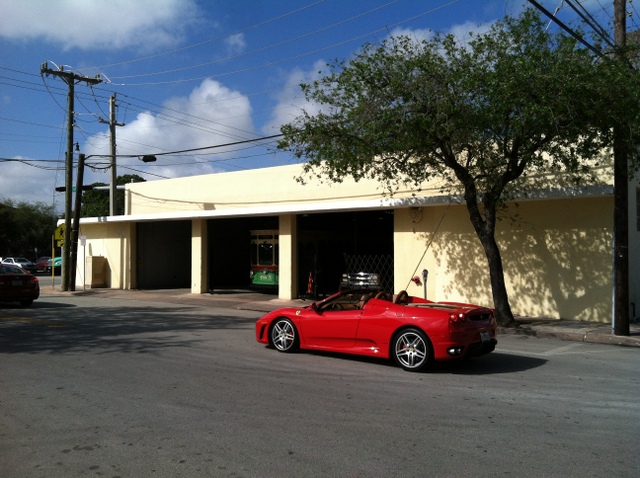
The Coral Gables “Trolley” is not. It is a bus with a diesel-powered
internal combustion engine disguised to look like a cute old-style trolley.

Anger is beginning to roil to the surface in Coconut Grove over the latest scandal involving Miami City Hall. In a nutshell: the city of Coral Gables has been allowed to plunk a polluting diesel bus garage into the middle of a West Coconut Grove residential neighbourhood attempting to rehab. While residents and businesses in Coconut Grove are used to Miami running roughshod over their interests, Trolleygate might just be the straw that breaks the camel’s back. 

This will be the first in what will no doubt be a continuing series as I peel back the layers of the onion of Trolleygate. To understand this scandal first one needs to understand some of the players:


• Coral Gables, a fully incorporated town [which calls itself a city] of about 47,000 people which abuts Miami on the western edge of Coconut Grove. Coral Gables has been called the “first planned community” in Florida, but that designation has also been disputed. Whether it was the first, or not, is immaterial to the reason for its creation. More about that later.

• Miami City Council. Control for everything that has ever happened in
Coconut Grove has resided with Miami City Council since annexation in 1925.

Coconut Grove Village Council. The Coconut Grove Village Council has no power whatsoever to do anything anywhere, except to pass along recommendations to the City of Miami, which then appears to promptly ignore them.

Ironically at one time there was a real Coral Gables Trolley.
This pic is of the Colonnade Building and Coral Gables
Trolley, mid 1920′s. State of Florida Archives.

• The Coral Gables “Trolley.” The word “trolly” is a misnomer. A trolly is defined as:

1. a trolley car. 2. a pulley or truck traveling on an overhead track and serving to support and move a suspended object. 3. a grooved metallic wheel or pulley carried on the end of a pole (trolley pole)  by an electric car or locomotive, and held in contact with an overhead conductor, usually a suspended wire (trolley wire)  from which it collects the current for the propulsion of the car or locomotive. 4. any of various devices for collecting current for such a purpose, as a pantograph, or a bowlike structure (bow trolley)  sliding along an overhead wire, or a device (underground trolley) for taking current from the underground wire or conductor used by some electric railways. 5. a small truck or car operated on a track, as in a mine or factory.

Nowhere in that definition is there room for a bus with rubber tires and a diesel-powered internal combustion engine freely running on roads, not rails. That’s what the Coral Gables “Trolley” really is. Forget the word “trolley.” This is Trolleygate.

Marc D. Sarnoff is a Coconut Grove resident, the City of Miami Commissioner for District 2, Vice-Chairman of the City of Miami Commission (which sounds so much fancier than city council) and uncrowned (and never publicly declared) Emperor of Coconut Grove. It has been said that Marc D. Sarnoff never met a developer he didn’t like (to side with and support above the wishes of the local community).

• Always last and always least: The West Grove, aka Black Coconut Grove. As much as Coconut Grove is used to being ignored by Miami City Hall — which ironically is in Coconut Grove — Black Coconut Grove is used to being ignored by everybody.

The long-abandoned Coconut Grove Playhouse.
Pic by author.

Black Coconut Grove owes its continued existence due to the foresight of E.W.F. Stirrup [a story told elsewhere on this blog at length, so I won’t go into it here]. It was his vision that gave Coconut Grove the highest Black home ownership in the country. That high percentage of Black home ownership is what prevented the city from razing the entire neighbourhood in the 1950s because unlike all the surrounding residential areas, it didn’t have internal plumbing or sewer connections. Way back in 1919, in the wake of the “Bright Plan,” the Charles Avenue neighbourhood was almost lost as well. The entire area was to be turned into a golf course. Several factors — the depression, annexation, hurricanes and the high degree of Black home ownership — put a stop to all that. However, the Bright Plan was based on a Mediterranean-style of architecture. Before the Bright Plan had been abandoned, it brought forth the Coconut Grove Theater (later Coconut Grove Playhouse, which is a whole ‘nother scandal in itself), which is why the theater is in the Mediterranean-style. [Incidentally, E.W.F. Stirrup sold the land on which the Coconut Grove Theater was built.] However, all that to explain why there has always been a Black community in Coconut Grove strong enough to resist most efforts at urban renewal.

The Mediterranean-style of architecture also appears to have influenced George Merrick, who developed Coral Gables. The prevailing architectural style in Coral Gables is Mediterranean. In what appears to be an early example of White Flight, there is strong anecdotal evidence that the founding of Coral Gables was — in and of itself — a racial statement against Coconut Grove’s Black community. The Bahamians, and other Blacks, were fully entrenched and could not be dislodged because of the high percentage of Black home ownership. Hence one could build a Coral Gables. This has been very difficult to confirm because this is not the kind of thing that is recorded in history books.

A man who has lived on Charles Avenue for all of his 73 years told this reporter what it was like for the folks of West Grove who wandered into Coral Gables back in the old days. It wouldn’t take long before you were stopped by police and asked for your “papers.” These consisted of a letter from an employer: “George works as a handyman for our estate” or “Rose is our domestic and needs to come and go as is necessary.” [Editor’s note: invented letters.]

Redlining and racism kept Blacks out of Coral Gables ever since. To this day Coral Gables is overwhelmingly White. Coral Gables own website cites the most recent demographics almost as if they are proud of it: White population: 90.76%; Black population: 2.86%. That doesn’t happen by accident. It looks even worse when compared to Miami’s population with 18.67% Black and 74.05% White residents.

Artists rendering of the diesel bus garage currently
under construction in the West Grove. Do those shutters
and that landscaping make the bus fumes go away?

What is Trolleygate?

Here’s where it gets tricky for a journalist. Recently this writer joined a few gentlemen for what I thought would be chit chat about music, which it had been the last time we were together. The mistake I made was telling these people that I wasn’t there as a journalist, so it was all off the record. I actually used those words. Who knew that it would turn into a meeting about Trolleygate? That’s where I first heard the word. Consequently, much of what I learned is off the record. However, that doesn’t mean I can’t bring you up to speed:

One recent day the residents of the West Grove woke up to find construction beginning on a diesel bus garage at Douglas and Frow in the West Grove. It turns out that Astor Development acquired the land adjacent to the current Coral Gables diesel bus garage. It made a deal with Coral Gables to knock down the garage, locating it elsewhere, and redevelop the entire site for high-end commercial and residential  properties, the last place you’d want a bus garage. Coral Gables loved the idea of new development. However, Coral Gables, oddly enough says it could find no suitable land anywhere in Coral Gables for the Coral Gables diesel bus garage. Through some kind of land deal [that still needs to be explored further] the land at Douglas and Frow — in the City of Miami, no the city of Coral Gables — was purchased and construction began before anyone knew what hit them.

The neighbourhood is pissed, to put it mildly.

Article continues below the pics . . .

The current diesel bus garage. Just put some shutters on it and add some landscaping and you’re golden.

A diesel bus pretending to be a “trolley” in a real bus garage.
Current state of the new bus garage. Residents say it appears work has accelerated along with the public outcry.
It appears as if the developer is hoping this diesel bus garage is so far gone it will be a fait accompli. Some residents appear to be willing to settle for a bus stop, at the very least. Others want it torn down, as it will change the entire character of the neighbourhood and does not conform with any of Miami’s zoning by-laws.

 
Marc D. Sarnoff made some kind of deal with somebody because nothing can happen in Coconut Grove without the imprimatur of Emperor Sarnoff the First. Sarnoff seems to have negotiated with Astor Development and Coral Gables about this project, but no one in West Grove recalls him bringing such a non-conforming building up for public consultation. The issue of building a diesel bus garage in the West Grove appears to have been passed at a Miami City Commissioner’s meeting. However, one of my off-the-record sources, who has attended hundreds of redevelopment meetings in more than one city, says approval was faster than “a hot knife through butter.” No one can remember something like this getting through Miami City Hall so quickly, without someone in the neighbourhood being aroused to public meetings. Which was probably the point to keeping it under everyone’s radar.

Meanwhile, Black Coconut Grove gets stuck with all the negatives of a
diesel bus garage from a neighbouring city. Furthermore, while it gets
the increased traffic and pollution, the residents will not even get
what is normally a benefit of a bus garage: a bus stop. Having a bus
stop might allow Black Grove to get on the bus and ride to Merrick Park,
or Miracle Mile, or any of those other swank places, including any
multimillion dollar project by developers named Astor. It reminds me of
how Robert Moses,
who built the Long Island Expressway, purposely built all the
underpasses too low to allow for buses. That’s so the ‘great unwashed’
couldn’t go to his beaches at Fire Island and Jones Beach.

There’s
not a single positive to the deal, unless Coral Gables is paying Miami
taxes on the land, but no one is alleging that yet.

According to the Miami Herald, this has awoken a paper tiger:

The Coconut Grove Village Council on Thursday joined the chorus of opposition to a new trolley-bus fueling and maintenance garage now under construction on Douglas Road in the predominantly black West Grove.

Meanwhile, West Grove residents have lined up lawyers to fight the project, and a University of Miami law professor is asking federal authorities to assist the residents with possible civil rights issues.

Message sent out by the paper tiger, which also said it only
learned about the bus garage from media reports. Grrr.

That’s not a stretch. I viewed this as a Civil Rights issue the minute I heard about it due to my 4 years of research into Coconut Grove. And, I’m not the only one: the University of Miami’s Center for Ethics and Public Service agrees with me and issued a press release:

Professor Anthony V. Alfieri, Dean’s Distinguished Scholar, Director of the Center for Ethics and Public Service, and Founder of the Historic Black Church Program, has taken up the call with residents of West Grove to try to halt the construction of large trolley garage adjoining a single-family home residential neighborhood. Professor Alfieri, with Zachary Lipshultz, a Post-Graduate Fellow with the Environmental Justice Project, and Dr. Steven Lipshultz, a Professor of Pediatrics and the George E. Batchelor Pediatric Cardiology Endowed Chair at the University of Miami Miller School of Medicine, have been providing those opposing the construction with valuable legal advice and raising awareness through meetings and rallies.

In their most recent salvo in an opinion piece for The Miami Herald, they point out the public health concern caused by exposure to diesel fumes from having a 12-bay garage housing the current fleet of six Coral Gables trolley cars located in a residential neighborhood and the seeming injustice of moving the garage from its present location in an industrial area in Coral Gables into a predominantly black, low-income neighborhood in the City of Miami.

They write: “The recent protests of Coconut Grove and Coral Gables homeowners in opposition to the City of Miami’s decision to approve construction of a new Coral Gables Trolley garage in the West Grove raise important public health and environmental justice concerns. For the West Grove, a predominantly black, low-income neighborhood, the protests arise against the historical backdrop of decades-long racial discrimination, municipal neglect, and Jim Crow segregation. Indeed, during the 1960s, the City of Miami operated a noxious incinerator “Old Smokey” in the West Grove closely abutting homes and schools. Now, years after Florida courts ordered the incinerator shut down as a public nuisance, the City of Miami again seeks to impose the social costs of polluting facilities on the West Grove without any concern for the public health of the community.”

Coincidentally, today’s Melissa Harris-Perry Show was making the same point. Not about Coral Gables’ dirty buses, but in her words, “the ugly, but real link between environmental and racial justice” and what we dump “we don’t dump in our backyard we dump in somebody else’s backyard […] and those are pretty predictably disempowered communities.” It’s as if she was talking about Trollygate. Watch:

Visit NBCNews.com for breaking news, world news, and news about the economy

Public outcry has been such that a there is now a Stop construction of Coral Gables Trolley Garage in historic Coconut Grove petition at Change.org, which begins:

This depot will disrupt our neighborhood, lower property values, bring an industrial project into a residential area, pose a danger to our children, violate zoning codes, and undermine the healthy and prosperous development of our community.

Marc D. Sarnoff appears to be running scared. He knows he awoke a sleeping Black giant. He will never escape the accusations of Racism, but he is certainly going to try at the EMERGENCY TOWN HALL he’s called for Thursday at Miami City Hall at 5:30 P.M.

There is far more to Trolleygate than I can mention here until I get people to go on the record. However, in a last bit of synchronicity for the day: the very White city of Coral Gables is currently advertising for a Trolley [sic] Manager. I presume that Blacks are allowed to apply.