Tag Archives: E.W.F. Stirrup House

No Skin In The Game ► Part Three

History is complicated.

Little did I realize how accurate I was in intimating Coral Gables has a long history of Racism, going back to its founding. As reported in Part Two of No Skin In The Game, to this day Coral Gables has a population that is 98% White. This demographic never happens by accident. 

However, there is one Coral Gables neighbourhood that turns out to be the exception . . . the exception that proves the rule.

In my research I recently, accidentally, stumbled across something called the MacFarlane Homestead Subdivision Historic District. It was an odd little reference in the Sun Sentinel that caught my attention. In the article Reference Guide Lists Historic Black Sites, were mentioned Black sites across Florida, including one in 98% White Coral Gables, of all places:

CORAL GABLES

MacFarlane Homestead Subdivision Historic District:

Bounded by Oak Avenue, Grand Avenue and Jefferson Street. The residences were built primarily in the late 1920s and 1930s in a vernacular type of architecture not seen elsewhere in Coral Gables. The styles in the district include bungalows and one-story frame “shotgun“ houses. St. Mary`s Baptist Church at 136 Frow Ave. was built in 1927.

Detail of map showing the MacFarlane Homestead Subdivision Historic District,
the oddly shaped triangle in blue. Everything to the south and east is Coconut
Grove. Everything north of the tracks and U.S.1 is Coral Gables.

That address puts it in the odd triangle section of Coral Gables immediately adjacent to West Coconut Grove. It’s just a little more than a block away from the Coral Gables diesel bus garage that the residents of West Grove have been saddled with.

Reading between the lines:

  • “…built primarily in the late 1920s and 1930s…” can be translated to say “this neighbourhood was created contemporaneously with the founding of Coral Gables;”
  • “…in a vernacular type of architecture not seen elsewhere in Coral Gables. The styles in the district include bungalows and one-story frame “shotgun“ houses…” translates to “built in the inexpensive and expedient Bahamian style, styles of house that would never be allowed elsewhere in hoity-toity Coral Gables, but seen in abundance in neighbouring Black Coconut Grove.”

In other words: this neighbourhood was created so the Black folk who were doing the back-breaking labour of building Coral Gables — and, later, serving Coral Gables — would have a place to live. My understanding of the racial implications was instinctive and immediate. Proving that point would be more difficult.

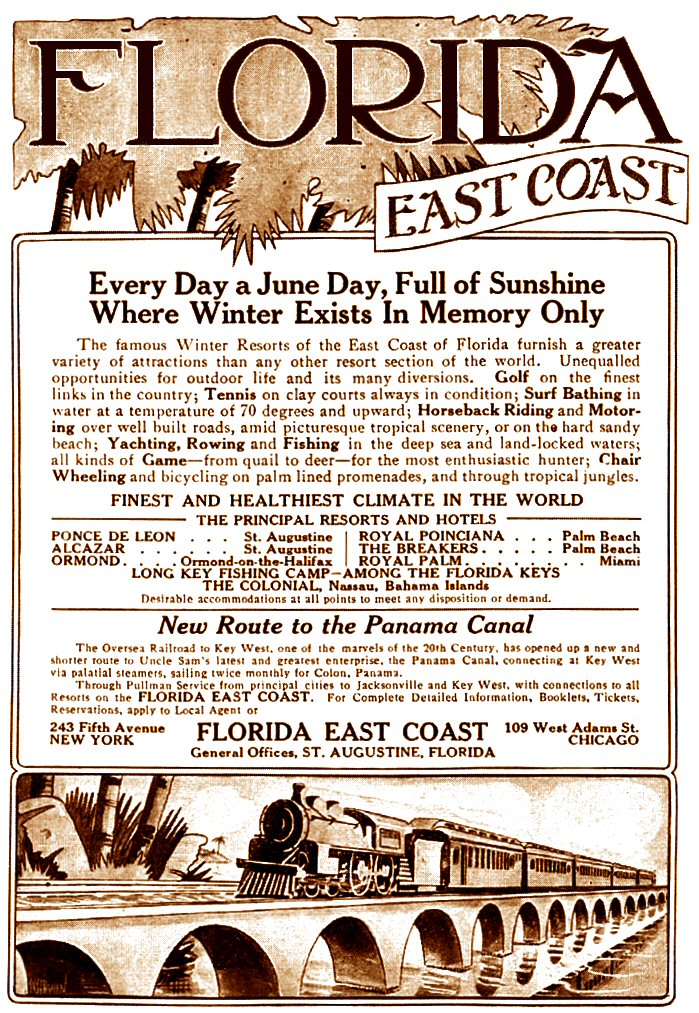
1913 Poster

One thing that made Coconut Grove unique in this country — aside from having the highest percentage of Black home ownership in the nation — is that the Black community in Coconut Grove was NOT on the “other side of the tracks.” Think about that expression for a moment. The “other side of the tracks” was the poor part of town, where Black enclaves originally started near the railroad tracks. That was generally an area where no decent, self-respecting White person would find themselves living, or even traveling. Black folk had far fewer choices for neighbourhoods. And, as has always been true in this country, once there were a few Blacks in an area, it became all Black over time.

While Coconut Grove didn’t have an “other side of the tracks,” it’s clear that Coral Gables did. The blue triangle on the map above (or on this interactive map) is the only area in Coral Gables that Blacks could live. South of U.S. Highway #1, which runs parallel to the railroad tracks, is the other side of the tracks if you live in Coral Gables. It may be technically a part of Coral Gables, but it’s not OF Coral Gables, if you get my meaning.

It turns out the proof I was looking for was tucked away in a book called “African American Sites in Florida” by Kevin M. McCarthy. Within I found the following:

Coral Gables

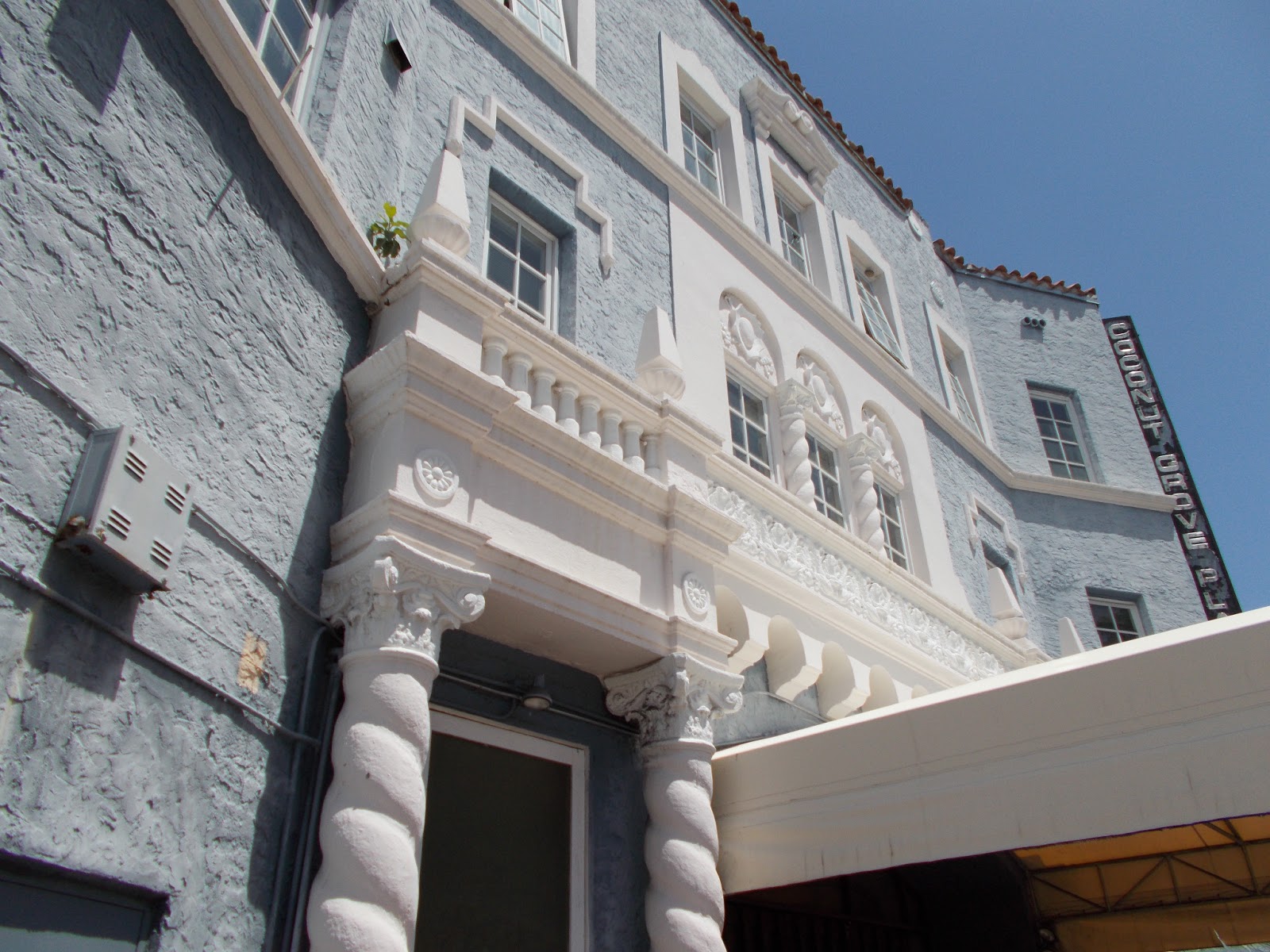
When I took pictures of George Merrick and Coral Gables City
Hall in August of 2009, who knew they would come in handy?

Coral Gables may have been the second planned community in the United States, after Washington, D.C. George E. Merrick spent much time and money designing the city, including what became the University of Miami, which opened in 1926. To promote the planned community, he used the oratorical skills of William Jennings Bryan in the mid-1920s; Bryan, who had been President Woodrow Wilson’s Secretary of State and a three-time Democratic Party nominee for President, gave impassioned speeches around Merrick’s fabulous Venetian Pool, encouraging visitors to buy and settle in the planned community.

The city never had a large number of blacks, and in 2000 only 3% (1,348) of the total population of 40,091 were black.

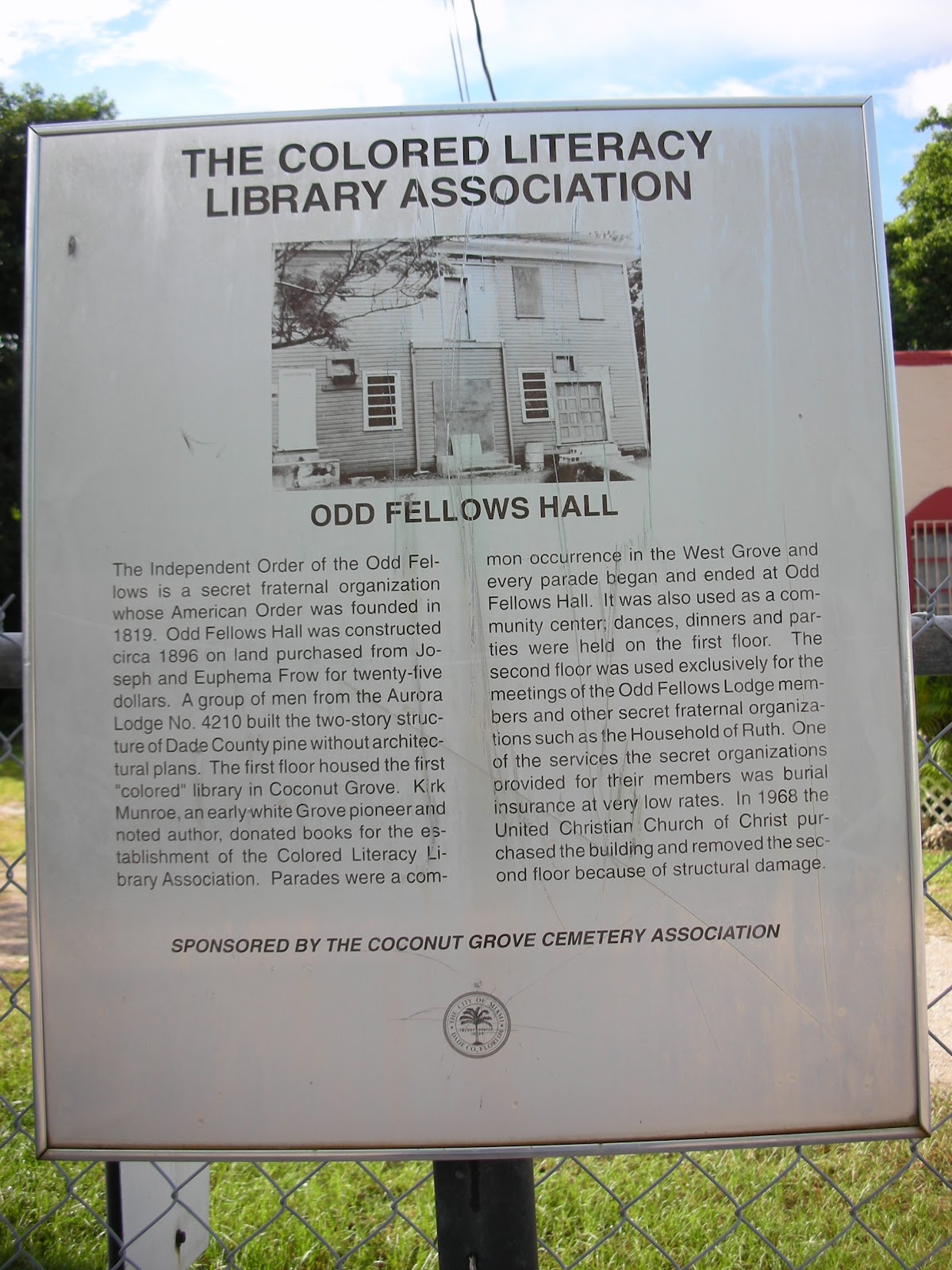
MACFARLANE HOMESTEAD SUBDIVISION HISTORIC DISTRICT is a black enclave within the city of Coral Gables. It is bordered by Oak Avenue, S. Dixie Highway (U.S.1), Brooker Street, and Grand Avenue east-northeast of the University of Miami. The district takes its name from Flora MacFarlane, who homesteaded 160 acres of land there and in Coconut Grove in 1892. Some of the houses in the district predate the expansion of the Gables in 1925 and 1926, while others were built in the 1930s at a time when blacks were not allowed to build in the wealthier parts of Coral Gables. One of the earliest structures, St. Mary’s Baptist Church, was built in 1927. Most of the homes in what is called the black Gables are small, single-story homes built from Dade County pine. Many of the blacks worked in the homes of the wealthy white residents or in the construction of such buildings as the City Hall and the Biltmore Hotel. The area is changing rapidly today, with many large homes being built.

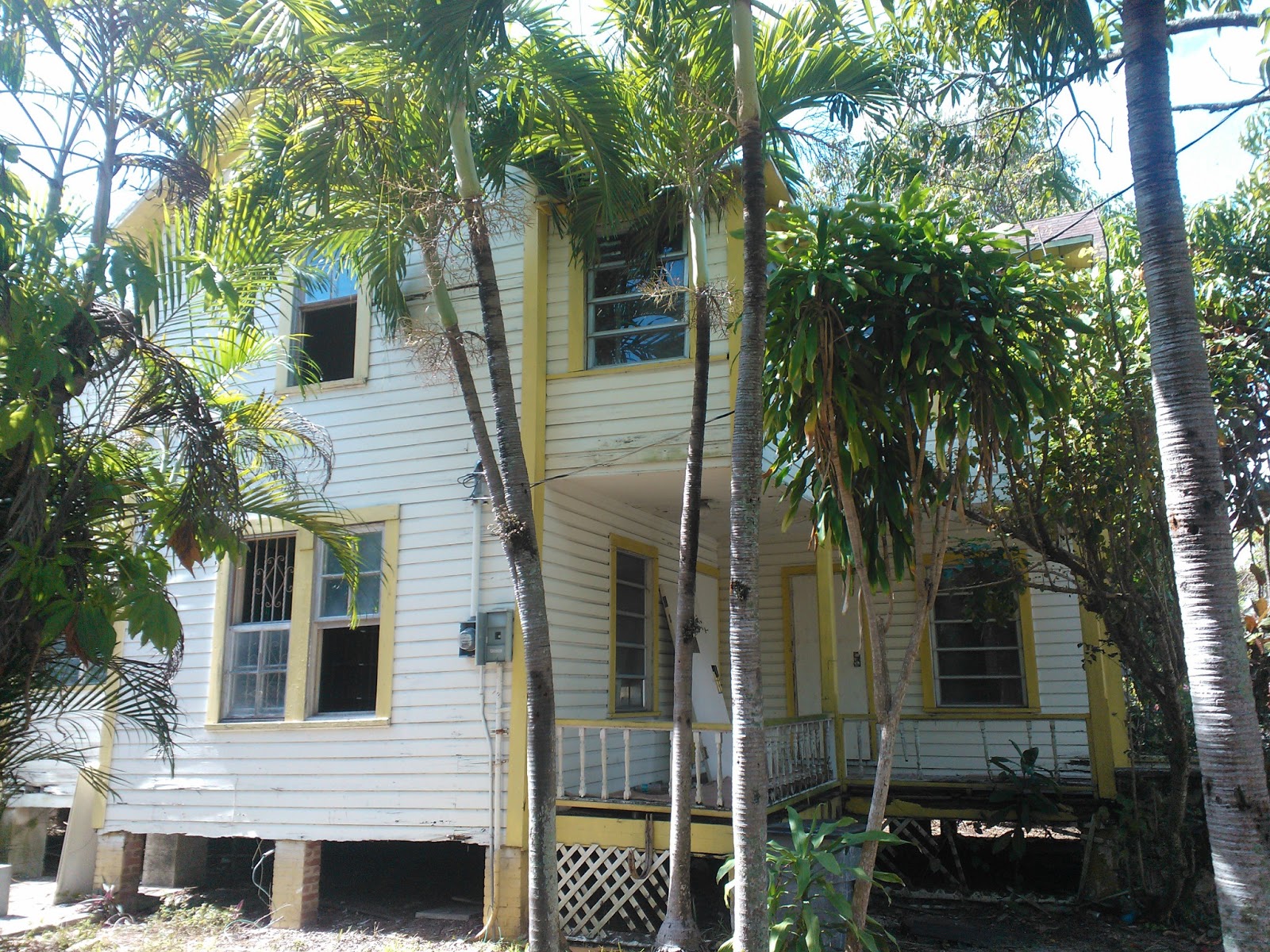
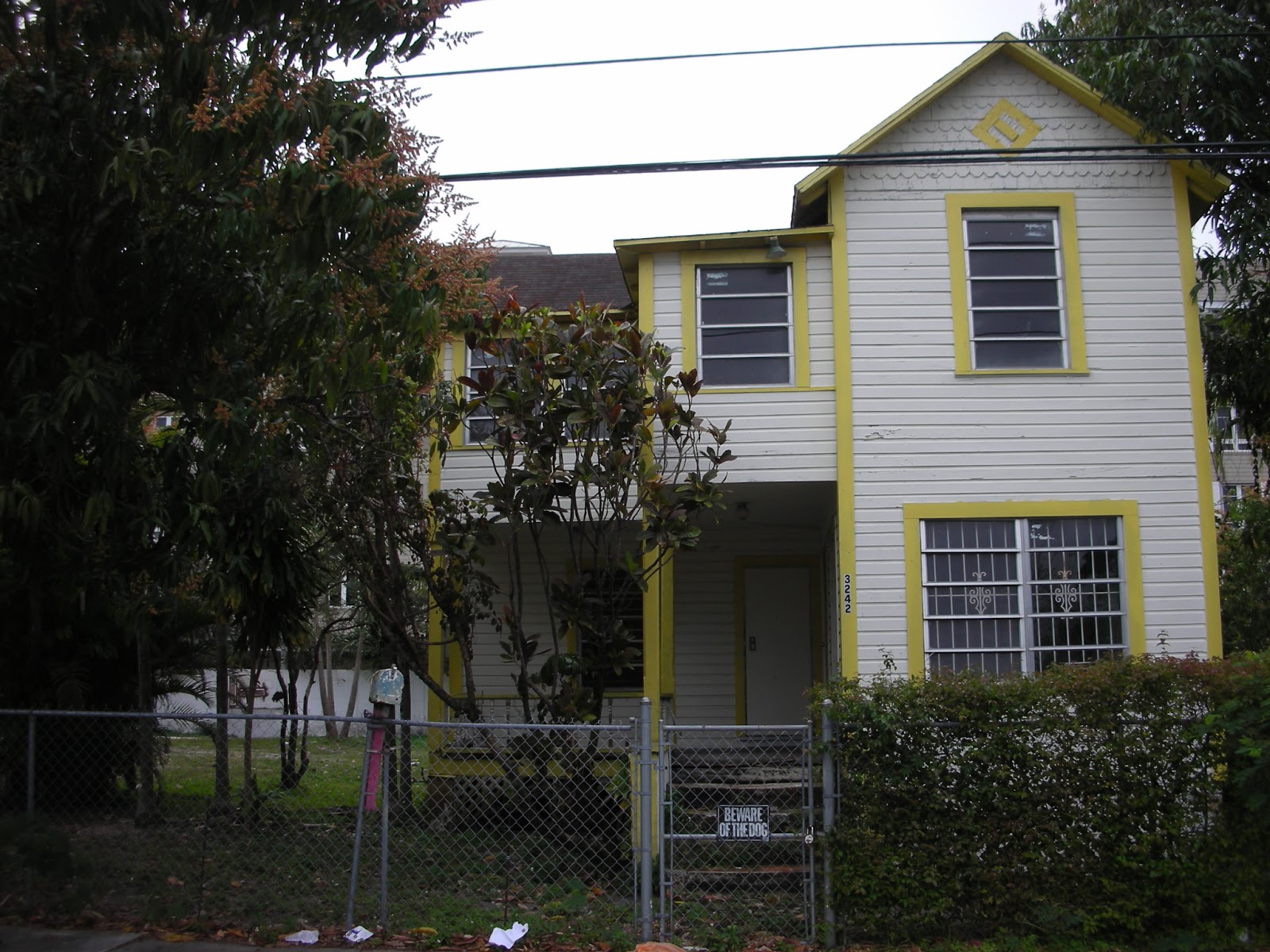
The historic 120-year old E.W.F. Stirrup House,
still undergoing Demolition by Neglect

Here’s the supreme irony: Coral Gables is so proud of its little Apartheid Triangle that in 1994 it had it listed on the National Register of Historic Places. That’s like hiding its racism in plain sight. Now, if anyone exposes Coral Gables’ long and complicated history of racism, it can point to the MacFarlane Homestead Subdivision Historic District and claim, au contraire mon frere, it has honoured the original Black builders of Coral Gables.

Which is more than neighbouring Coconut Grove has done. Coconut Grove has continued to ignore its history. Rapacious carpetbagging developers have now taken control of some of the historic elements of Black Coconut Grove and no one seems to care.

People tell me that the E.W.F. Stirrup House is on a registry of historic city homes. I’m calling bullshit on that claim. I can find no historical designation for the E.W.F. Stirrup House by Coconut Grove, the City of Miami, Miami-Dade County, the State of Florida, or the country. Yet E.W.F. Stirrup created a unique place in this country, which is slowly disappearing.

SAVE THE E.W.F. STIRRUP HOUSE!!!

No Skin in the Game – Part One
No Skin in the Game – Part Two

Does The White Hand Know What The Left Hand Is Doing?

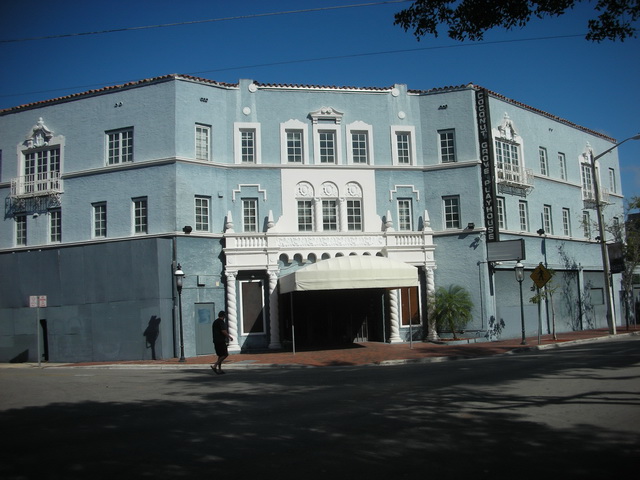
At the east end of Charles Avenue in Coconut Grove, Florida are two festering, open wounds: The Coconut Grove Playhouse and the E.W.F. Stirrup House.

I’ve written extensively about the historic 120-year old E.W.F. Stirrup House, but far less about the 86-year old Coconut Grove Playhouse. In the beginning, despite them being catercorner from each other, I assumed they were two separate stories. My focus has always been in saving the E.W.F. Stirrup House, so I just put the Playhouse out of my mind. I concentrated on learning everything I could about the E.W.F. Stirrup House and Mr. Stirrup’s amazing legacy.

That the Coconut Grove Playhouse was undergoing the exact same kind of Demolition by Neglect as the Stirrup House, seemed like a bizarre coincidence. However, through my research I’ve come to realize two things: 1). Many of the same people are involved in both the Stirrup House and the Playhouse; 2). There are no coincidences in multimillion dollar real estate deals.

While the same rapacious developer claims effective control of both properties — and the same I’ll-do-anything-for-any-developer-City-of-Miami-Commissioner appears poised to help any way he can — something far more important connects the Coconut Grove Playhouse and Mr. E.W.F. Stirrup.

History is complicated: In the years just before Miami annexed the sleepy little village, the power-brokers of early Coconut Grove (read: White folk) drew up the Bright Plan, an ambitious building project that would have transformed the downtown area with Mediterranean-style fountains, a Mediterranean-style town hall, and a large golf course. Nothing ever came of the Bright Plan because the bottom dropped out of the Florida real estate market and Miami annexed Coconut Grove. However, one building from the Bright Plan was actually built: The Coconut Grove Playhouse, hence the faux Mediterranean-style architecture. E.W.F. Stirrup may have felt it was worth selling off a sizable plot of land (of what had traditionally been the Black Grove) to bring culture to Coconut Grove.

Mr. Stirrup had to walk less than 250 feet from his front door to the box office of the Playhouse. I wonder, as I always do in cases like this, whether Mr. Stirrup was allowed to go inside the movie theater he allowed to be built. Movie theaters in those days, if they allowed Black folk at all, were strictly segregated. Black seating tended to be in the upper balconies. I have yet to find the information that would answer these questions for the Coconut Grove Playhouse, but it’s interesting to speculate based on what is known about the period.

White hand, Black hand; Left hand, Right hand

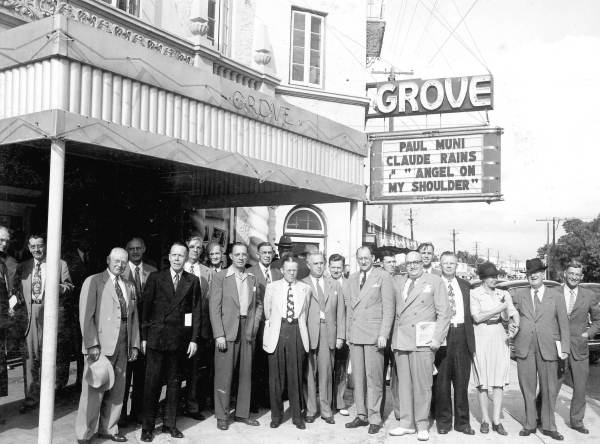
Members of the Coconut Grove Chamber of Commerce in front of the
Coconut Grove Playhouse, 1946, when the building was already 20 years old.

Tonight the right hand and the left hand might as well be in two separate time zones. At 6:00 PM, in White Coconut Grove, Richard Heisenbottle will be presenting architectural drawings of a renovated Coconut Grove Playhouse at a private yacht club. Heisenbottle is well-known for his historic renovation work, which includes the Trapp Homestead in Coconut Grove. Heisenbottle also took part in a Coconut Grove Playhouse Charrette of several years back. No telling whether these designs sprung out of the charrette or are wholly new designs and ideas for the site.

Almost as if there is a competition, at 7:00 PM, in Black Coconut Grove, the Charles Avenue Historic Preservation Committee meets. Among the topics that will hopefully come up at that meeting are the E.W.F. Stirrup House and historic design elements for the Charles Avenue Historic Designation Roadway, a title the street picked up last year.

There’s just one problem: The Coconut Grove Playhouse and the E.W.F. Stirrup House are both on Charles Avenue. These two historic community resources have to be part of the same holistic vision in order to save the unique character of West Grove. However, that will never happen if these groups don’t start talking to each other. The Playhouse people seemed unaware of the Charles Avenue Historic Preservation meeting and the Charles Avenue Preservation people were unaware of the Playhouse meeting.  

IRONY ALERT: The Coconut Grove Village Council was unaware of both meetings. It’s been a well-established pattern for the City of Miami to keep the Coconut Grove Village Council in the dark. It didn’t learn about Trolleygate until the ground had already been broken and the foundation poured. Commissioner Marc D. Sarnoff admitted to purposely making an end run around the Village Council during Trolleygate, and that wasn’t the first time either.

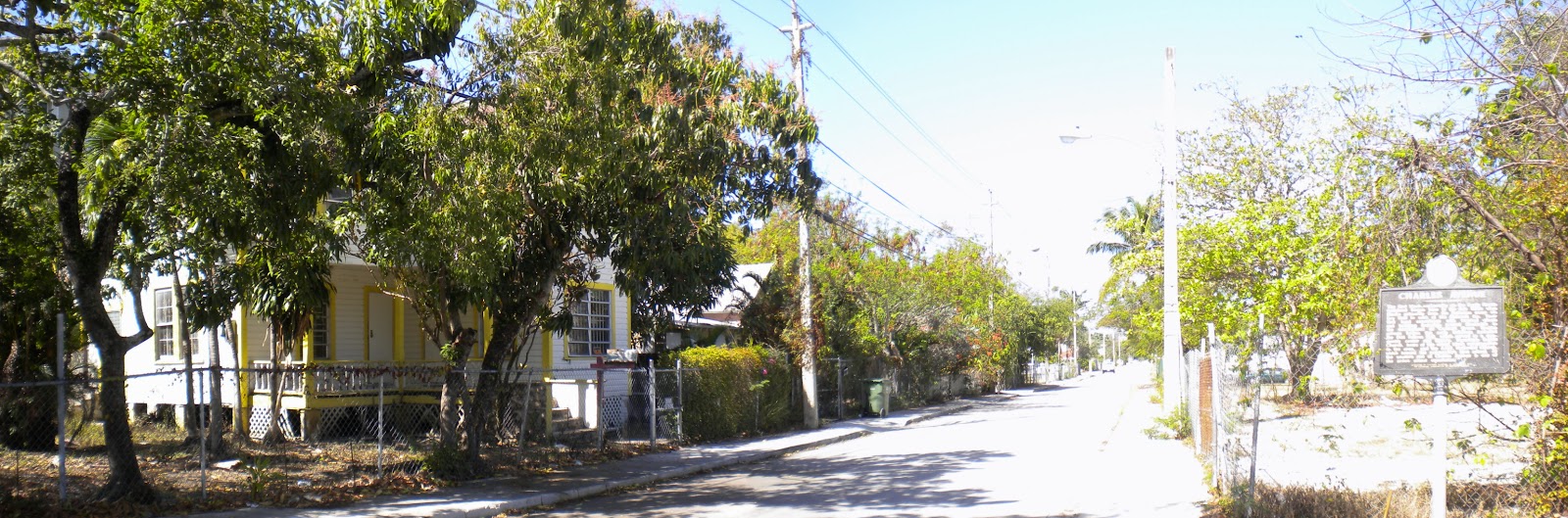
Looking west along Charles Avenue from the back of the Coconut Grove Playhouse. The Charles Avenue historical marker is on the right and the stately, 120-year old E.W.F. Stirrup House on the left.

Coconut Grove could become the jewel of south Florida, if only the Right Hand knew what the Left Hand was doing and if only the White Hand knew what the Black hand was doing. I’m learning that Coconut Grove is just segregated that way, the way it has always been.

Inside The E.W.F. Stirrup House ► Before and After

The E.W.F. Stirrup House on February 22, 2013

I’ve been documenting the E.W.F. Stirrup House since July of 2009, during which time I have researched its rich 120-year old history. In those 4 years absolutely nothing has changed. The house has been allowed to undergo Demolition by Neglect, while the developer that controls the property has done nothing to preserve this architectural jewel. In this follow-up to my recent blog post The E.W.F. Stirrup House ► Before and After, I get back inside the E.W.F. Stirrup House.

Anticipation of Wednesday’s upcoming Charles Avenue Historic Preservation meeting must have rapacious developer Gino Falsetto scrambling to give the appearance that he actually cares about historic preservation. It would be most awkward if, at Wednesday’s meeting, anyone questions whether his stewardship of one of Coconut Grove’s historic landmarks has been a monumental 8-year mistake, even if it has been.

After the vines were ripped away. This is what
happens when a community asset is ignored
for 8 years. February 22, 2013

Efforts this past week to ‘pretty up’ the property — by cutting back the plant growth that has had 8 years to attack the house — is the
equivalent of putting lipstick on a pig. When you’ve allowed a house to
rot for 8 years without even bothering to seal the windows from the
elements, anything done now is only being done for purely cosmetic
reasons. IRONY ALERT: When Falsetto’s work crew indiscriminately ripped out the vines that
had been allowed to penetrate the house, it exposed the damage Falsetto’s 8-year control of the E.W.F. Stirrup House has wrought.

“Some people say” my blog posts have placed Falsetto in an uncomfortable position. Until I happened along, his real estate manipulations were hidden in plain sight. However, as I researched the long history of the E.W.F. Stirrup House, I couldn’t help but learn why the house has been empty for these past 8 years. Posting my research (as I discover it) has built up an awareness in the local community and a trust in my reporting. Community leaders in West Grove were unaware of some of the history I’ve uncovered. Now they come to me for accurate information about the Stirrup House.

Even the immediate neighbours of the E.W.F. Stirrup House are slowly coming to the realization they were hoodwinked 8 years ago. The developer of the Grove Gardens Residence Condominiums promised to save the E.W.F. Stirrup House. No one recalls anyone ever mentioning a Bed and Breakfast at the time. Yet, with the help of Commissioner Marc D. Sarnoff, Aries Development (aka Gino Falsetto) was able to get a change of zoning for the Stirrup House to Commercial from Residential. This only happened within the last year. That couldn’t have been what was proposed 8 years ago, could it? If so, why did it take so long?

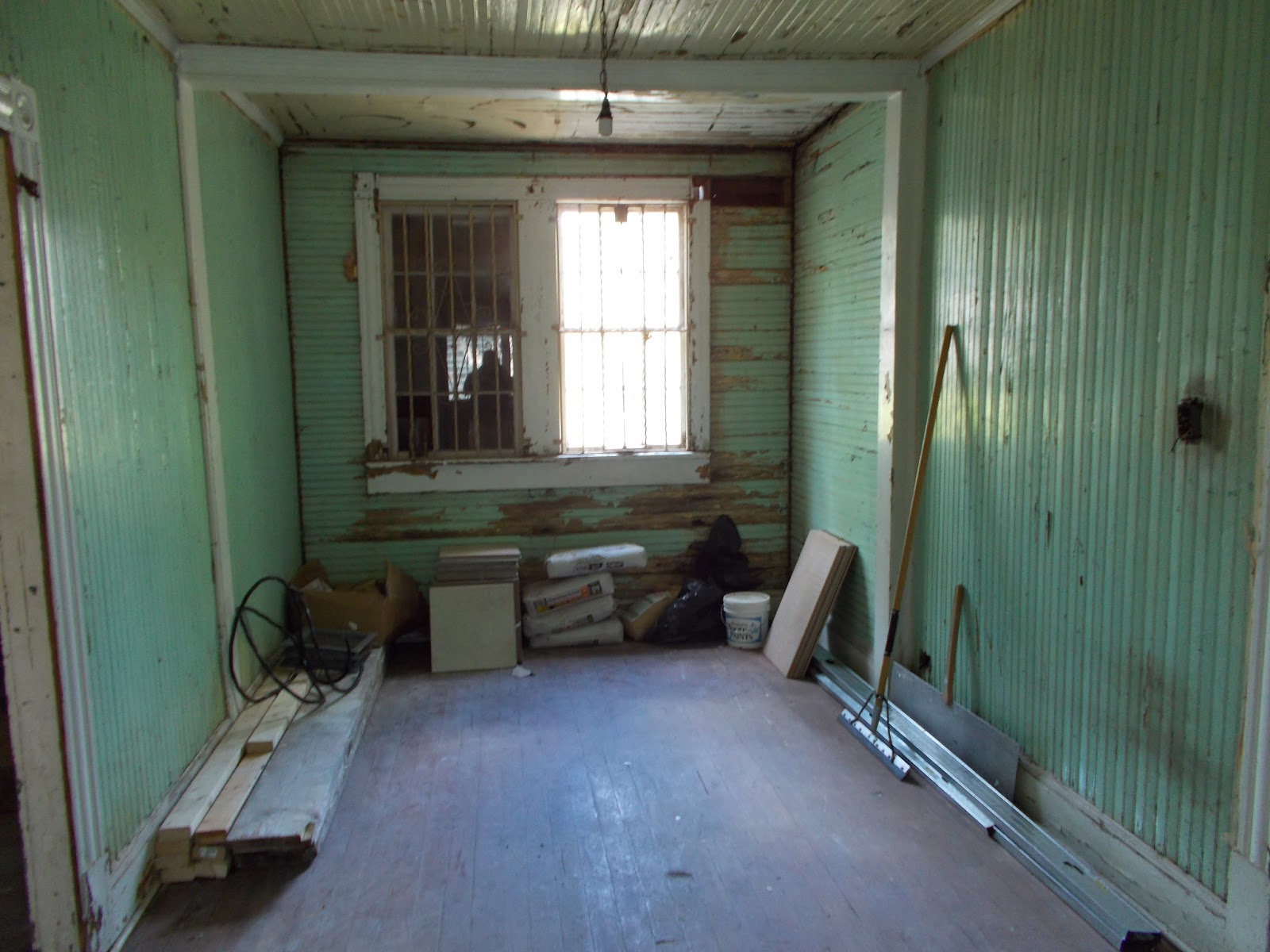
What about the inside of the house? 

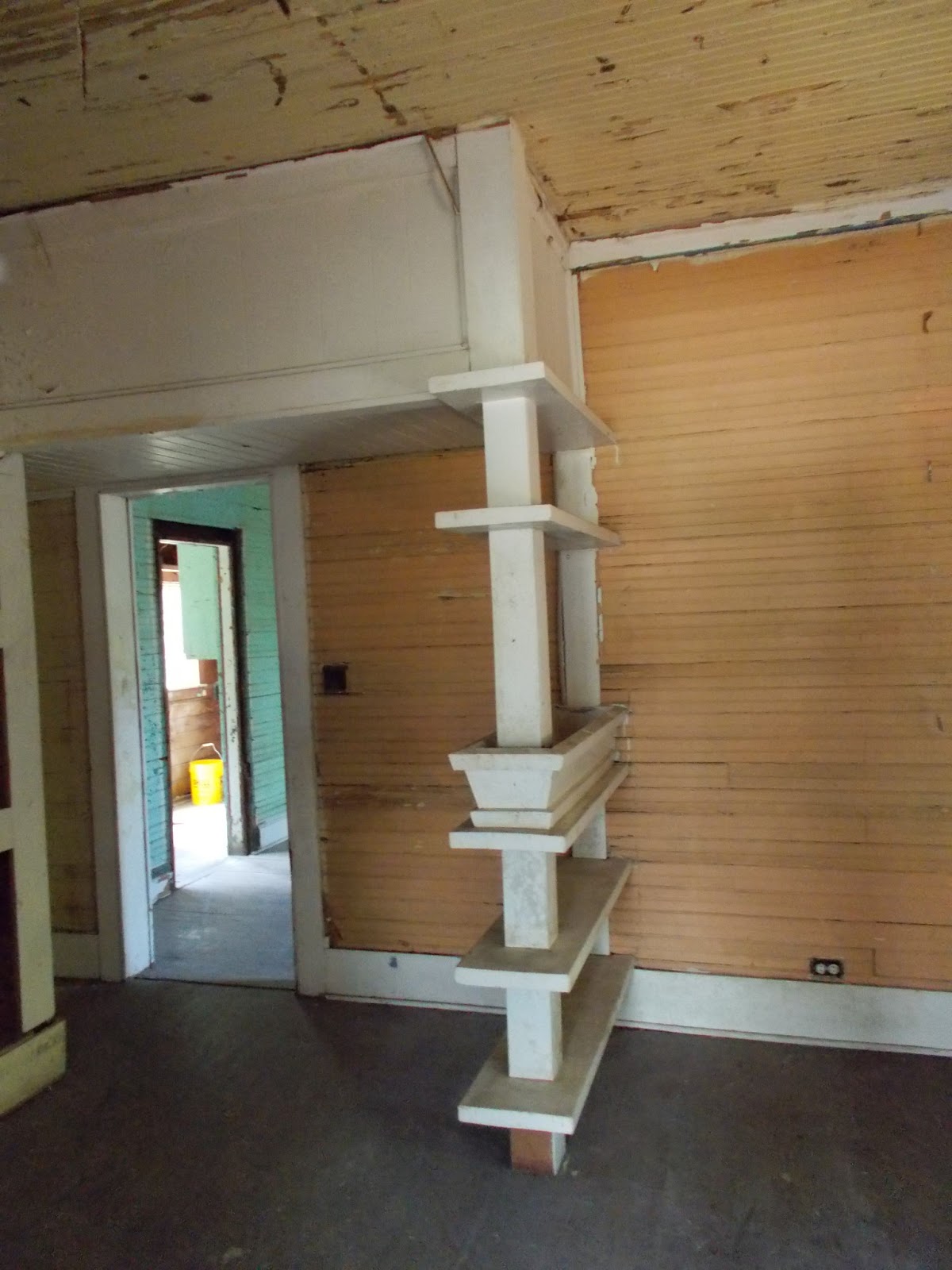
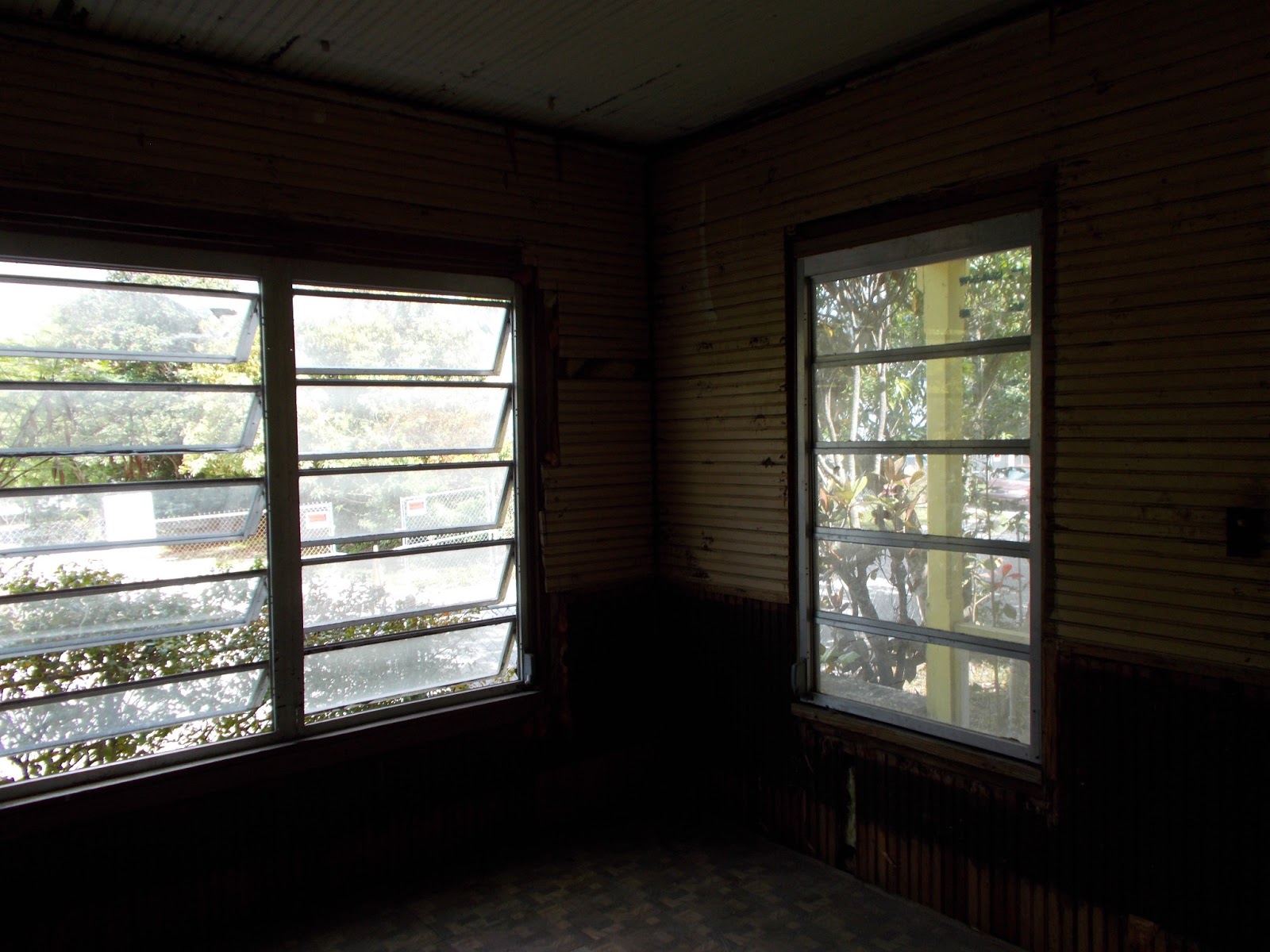
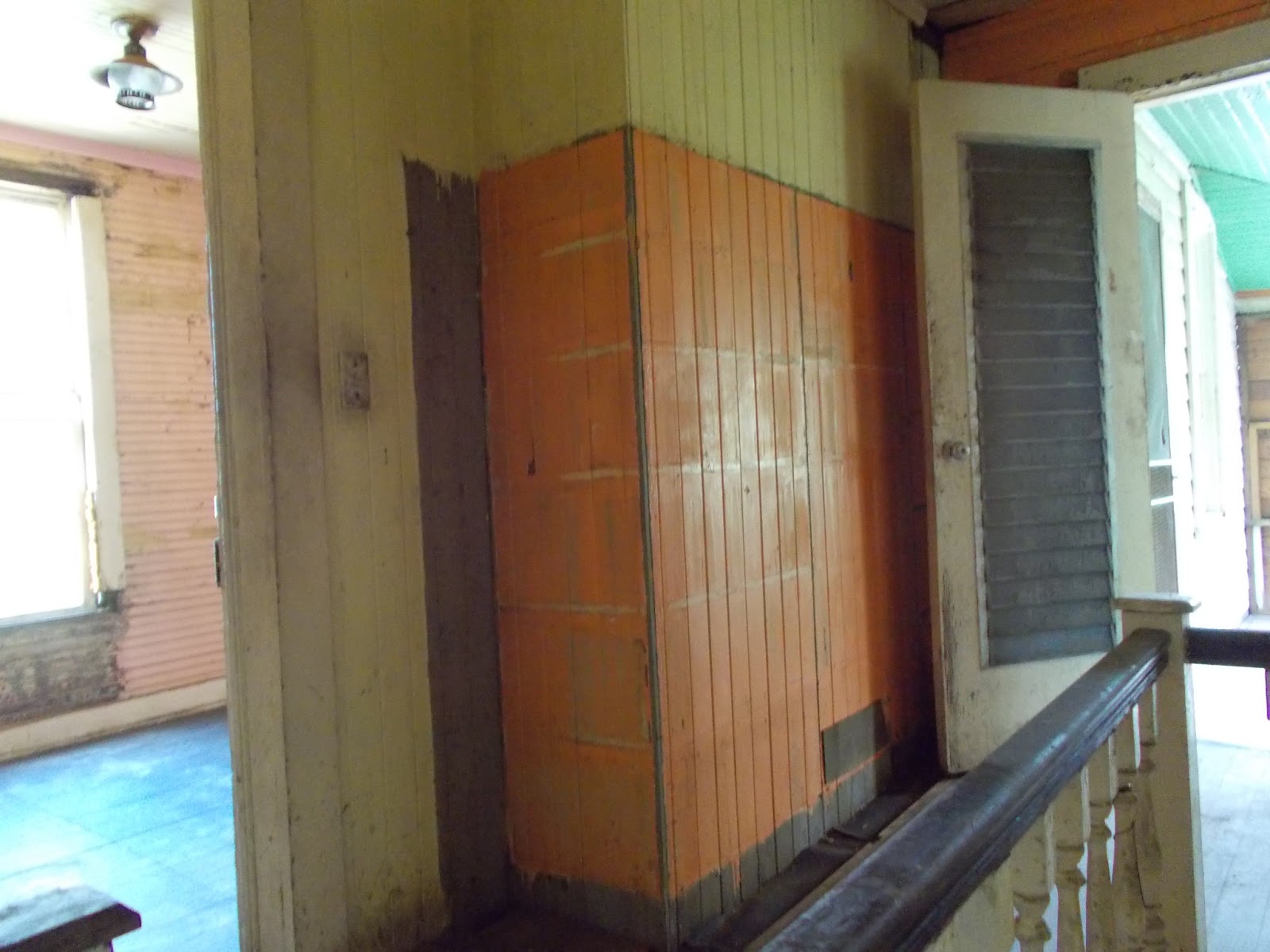
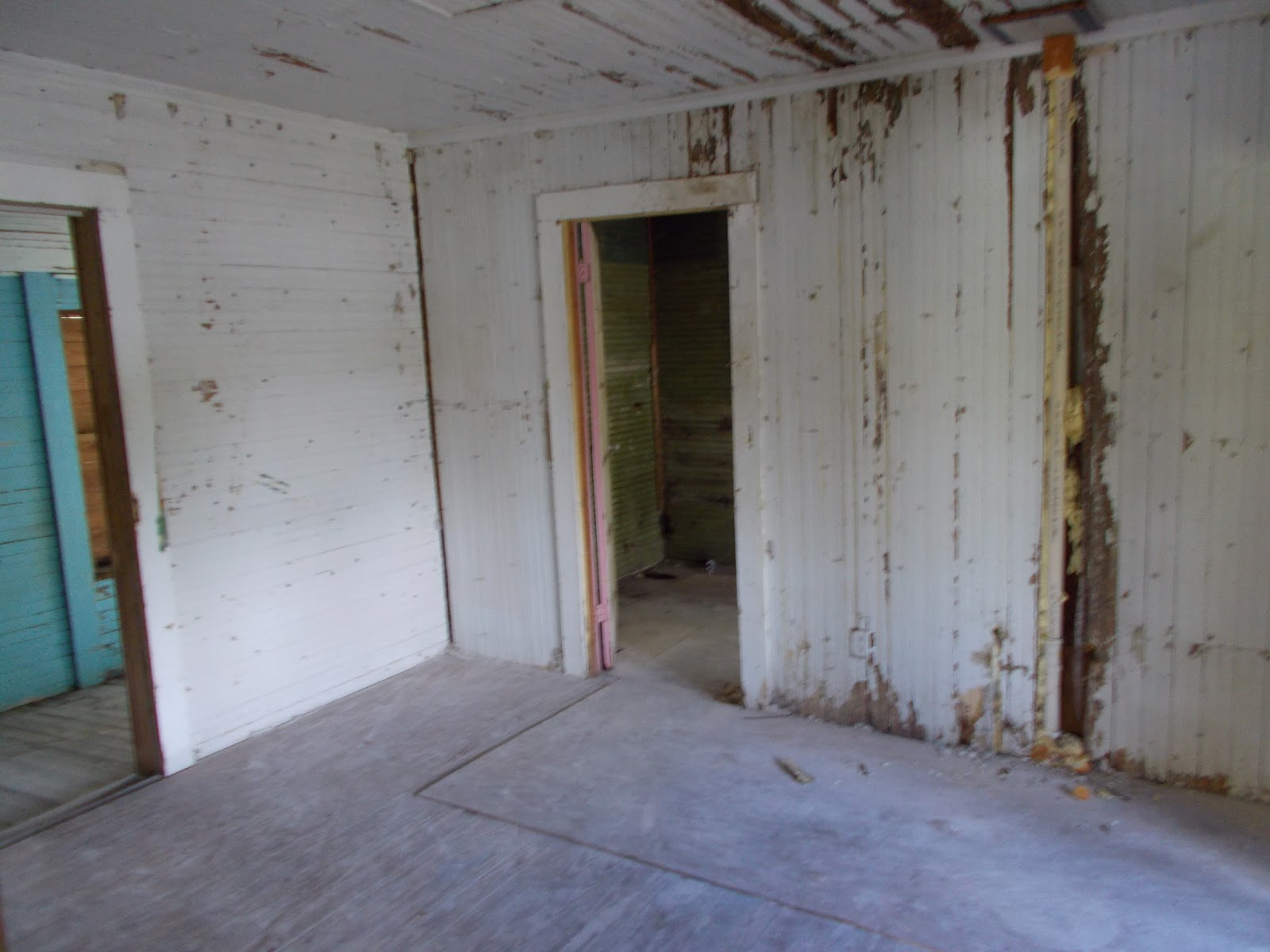
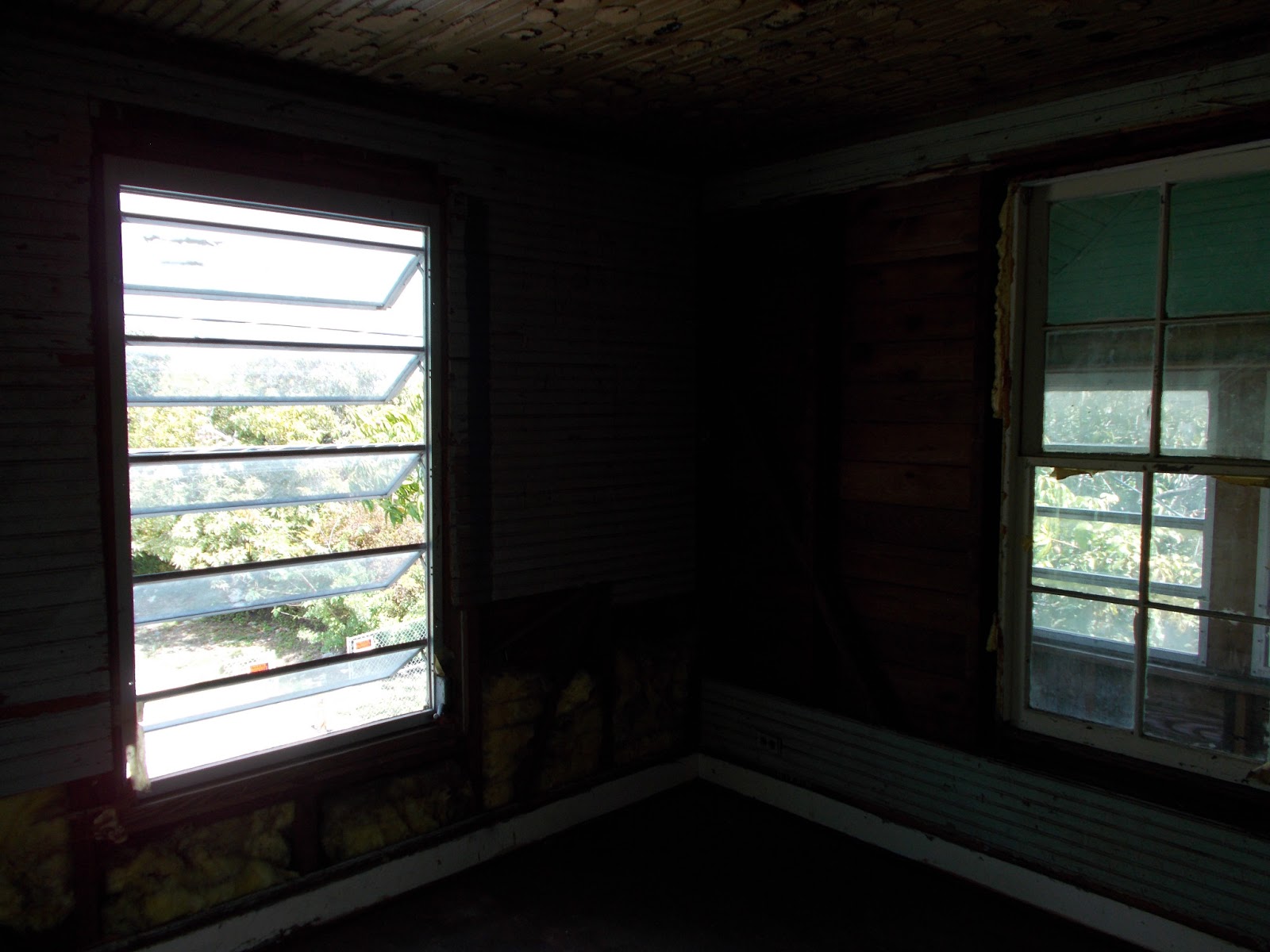
I’ve now been lucky enough to get INSIDE the E.W.F. Stirrup House on 2 separate occasions. The first time was August 17, 2012 and just last Friday, February 22, 2013. In the post Unpacking Coconut Grove ► Part Four ► Open Houses and Broken Laws, I documented how (allegedly) illegal demolition work was being done inside the Stirrup House without benefit of a building permit.

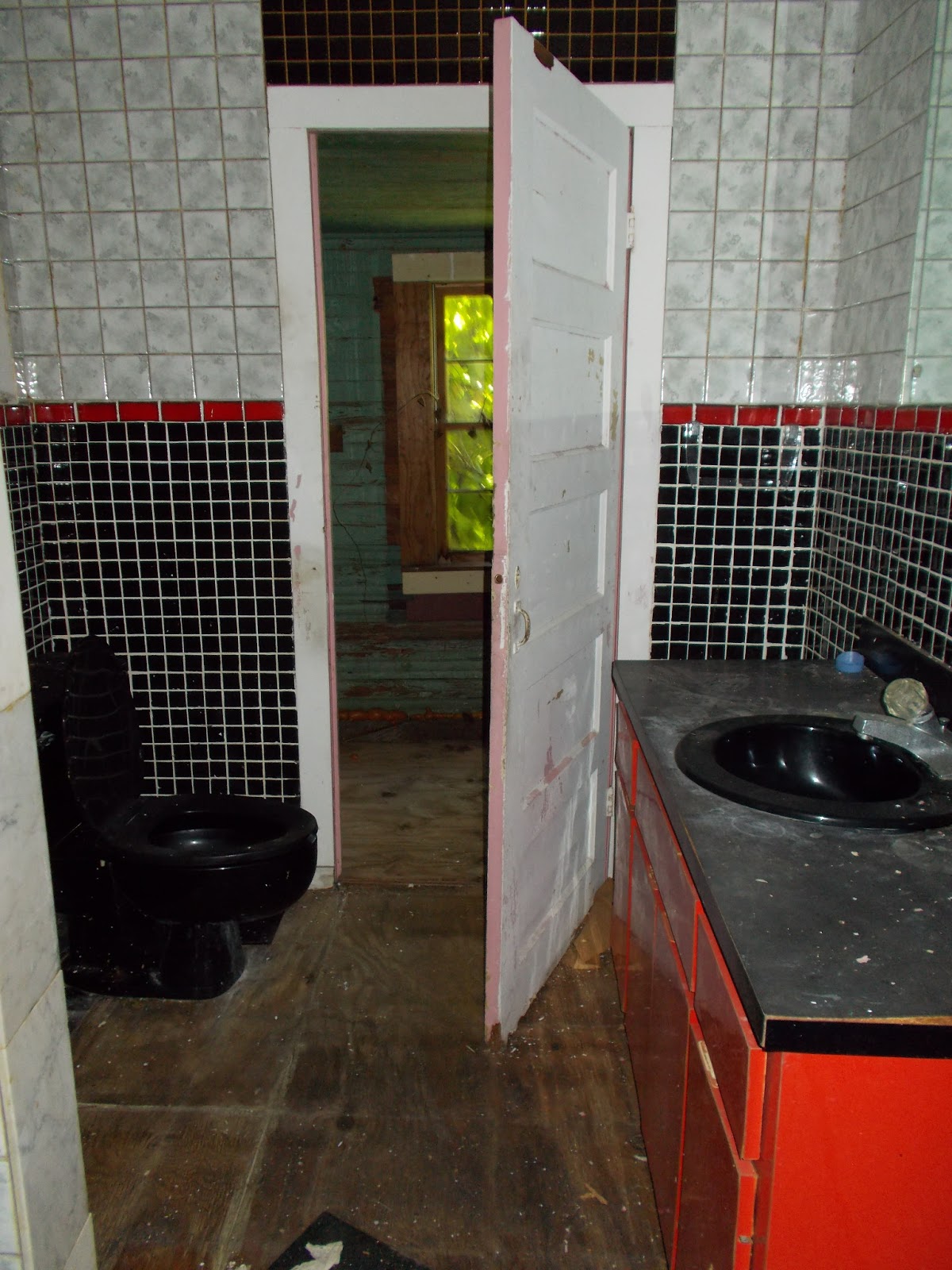
The inside of the house on Friday proved that Falsetto learned nothing from my earlier post. He continued to have (allegedly) illegal demolition work done inside the house without having a proper building permit issued by the City of Miami. There was a bathroom on the second floor in August. It has since disappeared. It’s just another example of Gino Falsetto getting away with something in plain sight.

BEFORE – August 17, 2012:

No one is claiming it was an attractive bathroom
and, to be fair, it would have had to come out anyway.

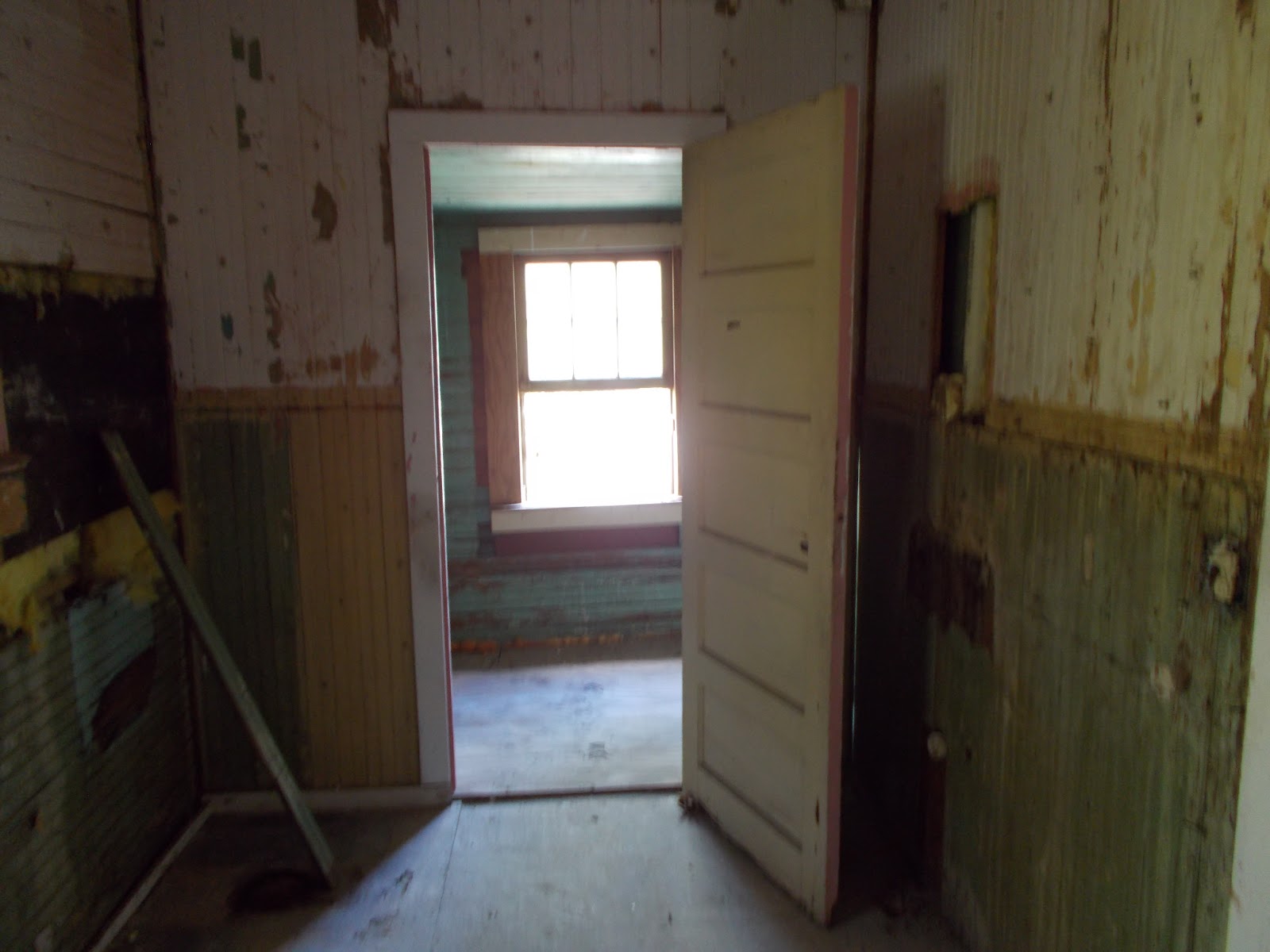
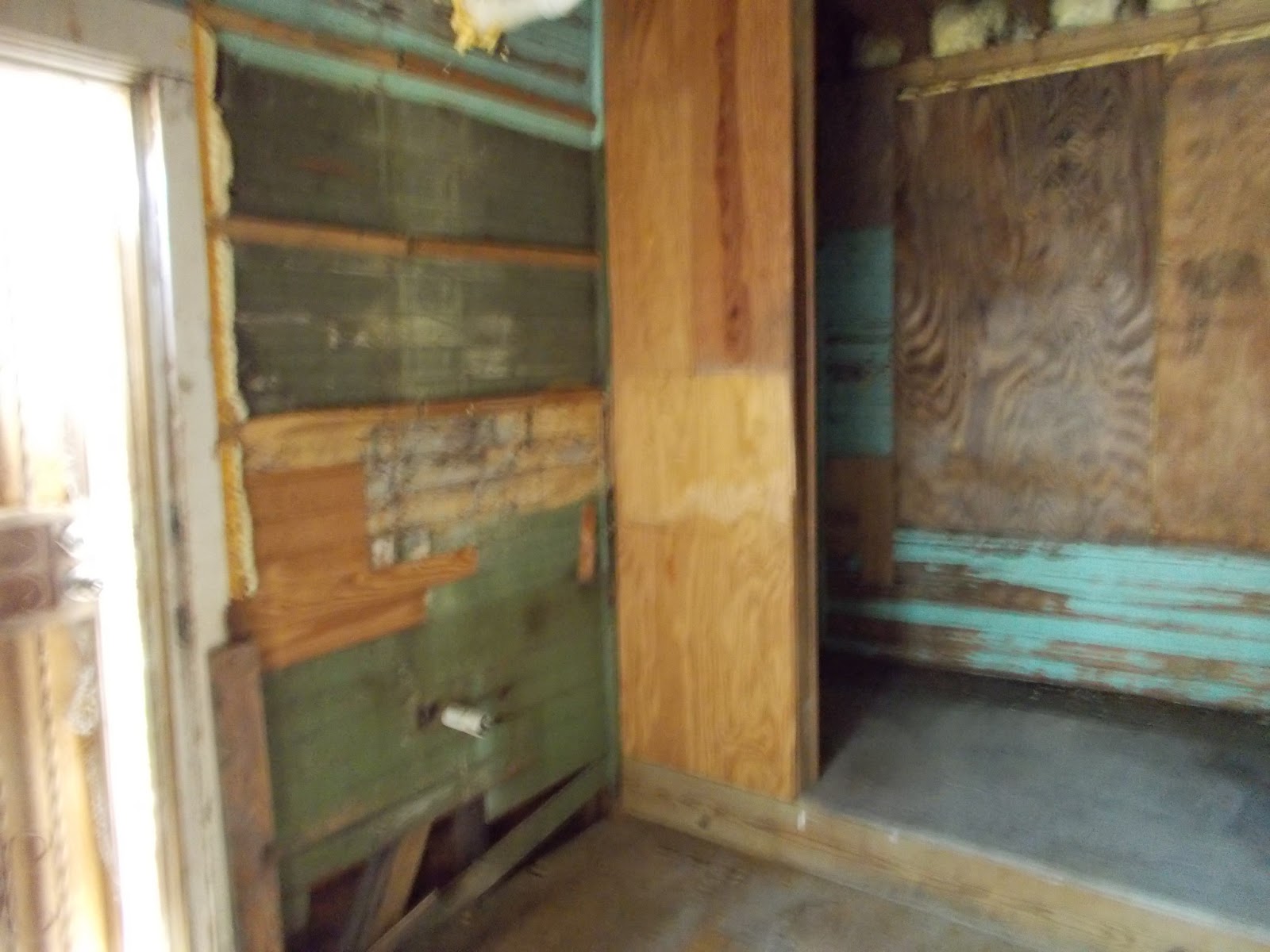
AFTER – February 22, 2013:

And, poof, it’s gone. No building permits were harmed, or issued, during the making of this documentary.

Not obtaining a building permit is just more proof that Gino Falsetto feels the rules are for other people, not himself. I have already documented how he left a string of bankruptcies behind in Ottawa, Ontario. Stiffing the Canadian taxpayers may very well have been how he was able to financially insinuate himself in the Miami real estate market as a player. That takes big money.

However, Gino Falsetto seems to have a pattern of turning his bankruptcies into his own financial gain. Furthermore, not all his schemes seem to be 100% legal. Two posts by an anonymous blogger, if true, appear to show that Gino Falsetto made out like a bandit — both literally and figuratively — on another one of his foreclosures:

Gino Falsetto (1) developed the Grove Garden Residences condominium in Miami’s Coconut Grove.

With his eyes on the financially strapped, closed Coconut Grove Playhouse for acquisition and development into a commercial complex, he aimed for the two vacant lots behind the theater. These two lots totaling 10,620 square feet, zoned single-family residential are located at 3227 and 3247 Charles Avenue in Coconut Grove.

The deal sounds wonderful. The sellers of the two lots took title to two Grove Garden Residences condo units which financial whiz Gino valued at $500,000 each — that’s one million dollars for two overgrown lots that generate no income, not even legitimate parking fees.

Gino Falsetto (2) is now the proud owner of real estate abutting the Coconut Grove Playhouse and promptly secures a $700,000 mortgage loan. After all, the two lots overgrown with weeds are worth a million smackers. Right?

What about the bank? They want to get their money back, don’t they? But Gino Falsetto didn’t repay and the bank initiated foreclosure proceeding just 21 months after they had filled Gino’s pockets with $700,000.

Gino Falsetto didn’t put up a fight and didn’t deliver an offer to make good on his loan obligation. Why should he? Gino’s no fool. The judge handed down a final judgment of $720,546.28; and the two empty lots were picked up by Pierre Heafey (3) for $200,100 in the foreclosure auction.

Just nine months later, Pierre Heafey sold the property to Gino Falsetto (4) with a quitclaim deed for $215,800. Please note, it’s now a different company that owns the property. Is it to fool the creditor, the bank that handed Gino $700,000 and got back $200,100? Does the IRS not tax such windfall profits? Perhaps they don’t know what’s happening here.

That reads like a real estate scam to me, but what do I know? I am new to the world of high finance where all these sleazebags do business. Maybe there’s a legitimate way for Gino Falsetto to default on a property, yet still wind up owning it. But I doubt it.

Remember: This is the man that has effective control over the E.W.F. Stirrup House, the two vacant lots across the street, the Coconut Grove Playhouse, the Taurus Bar, Calamari’s, the Grove Gardens Residence Condominiums and, quite possibly, Commissioner Marc D. Sarnoff. In fact, Gino Falsetto has managed to gain control of every property surrounding the Stirrup House, except for the Regions Bank on the corner and it wouldn’t surprise me to learn he’s got an offer to buy that as well.

But what about the rest of the inside of the house already?

Most of the changes inside the Stirrup House seemed superficial to this reporter. However, a subsequent interview with a developer disabused me of that notion. The whole reason there is a requirement for a building permit is to ensure that all demolition, not to mention renovation, conforms to Miami’s historic preservation laws. IRONY ALERT II: What’s been done inside the E.W.F. Stirrup House so far might not only contravene City of Miami by-laws, but also go against the standards established by very people gathering this Wednesday at the Charles Avenue Historic Preservation meeting, of which Gino Falsetto is listed as an “historic asset.” You can’t make this stuff up, people.

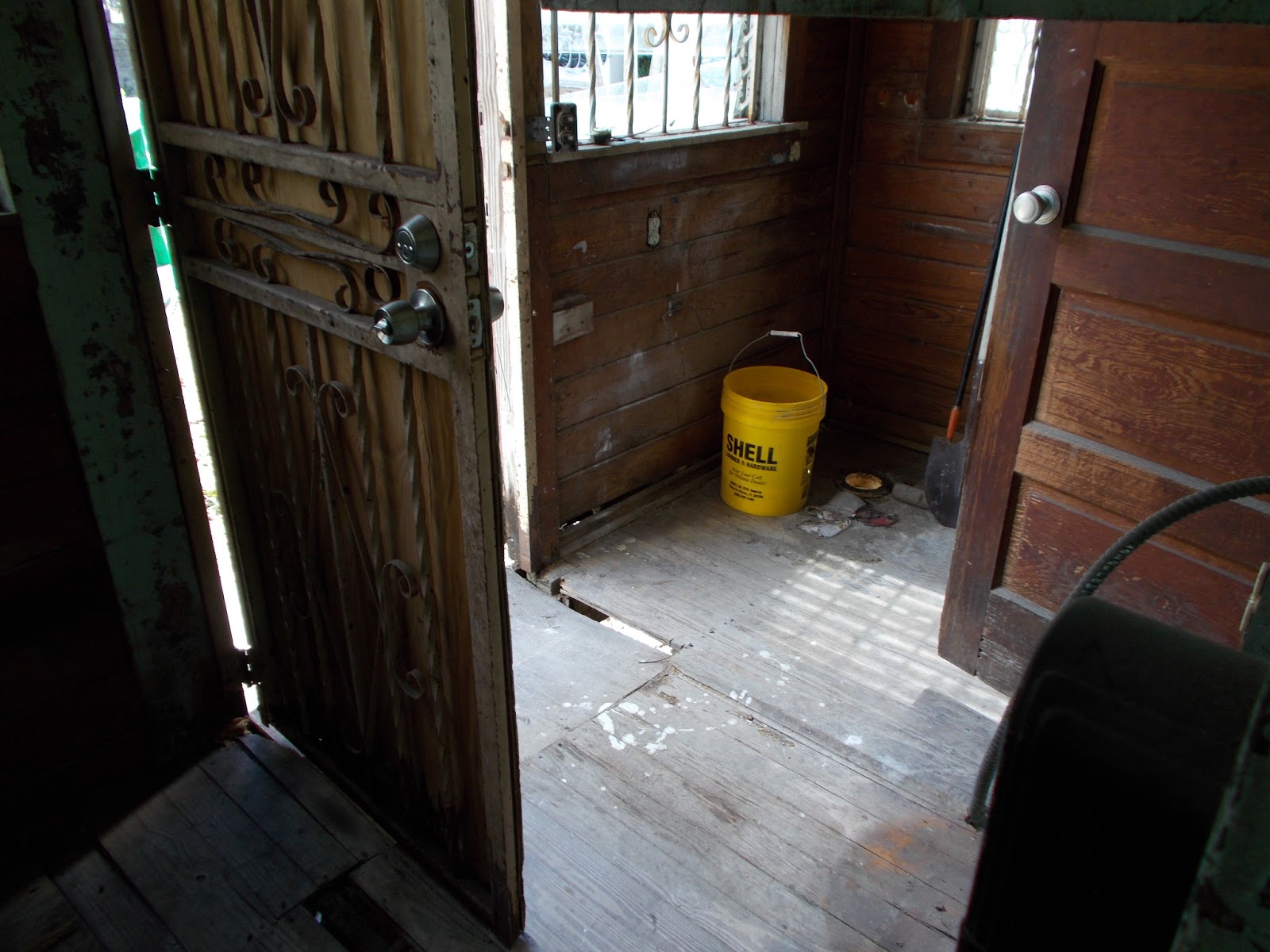
Meanwhile, all the junk cluttering the rooms seen in my previous post has been removed. Except for various doors, and a very small pile of construction materials (which might even get used if there is ever any construction), every bit of crap that had called the E.W.F. Stirrup House home has been removed. That’s progress of a sort, I guess. But it’s not a lot to show for 8 years of stewardship.

Read Part One of this two part series: The E.W.F. Stirrup House ► Before and After

All my posts on the E.W.F. Stirrup House can be found at Unpacking Coconut Grove ► A Compendium.

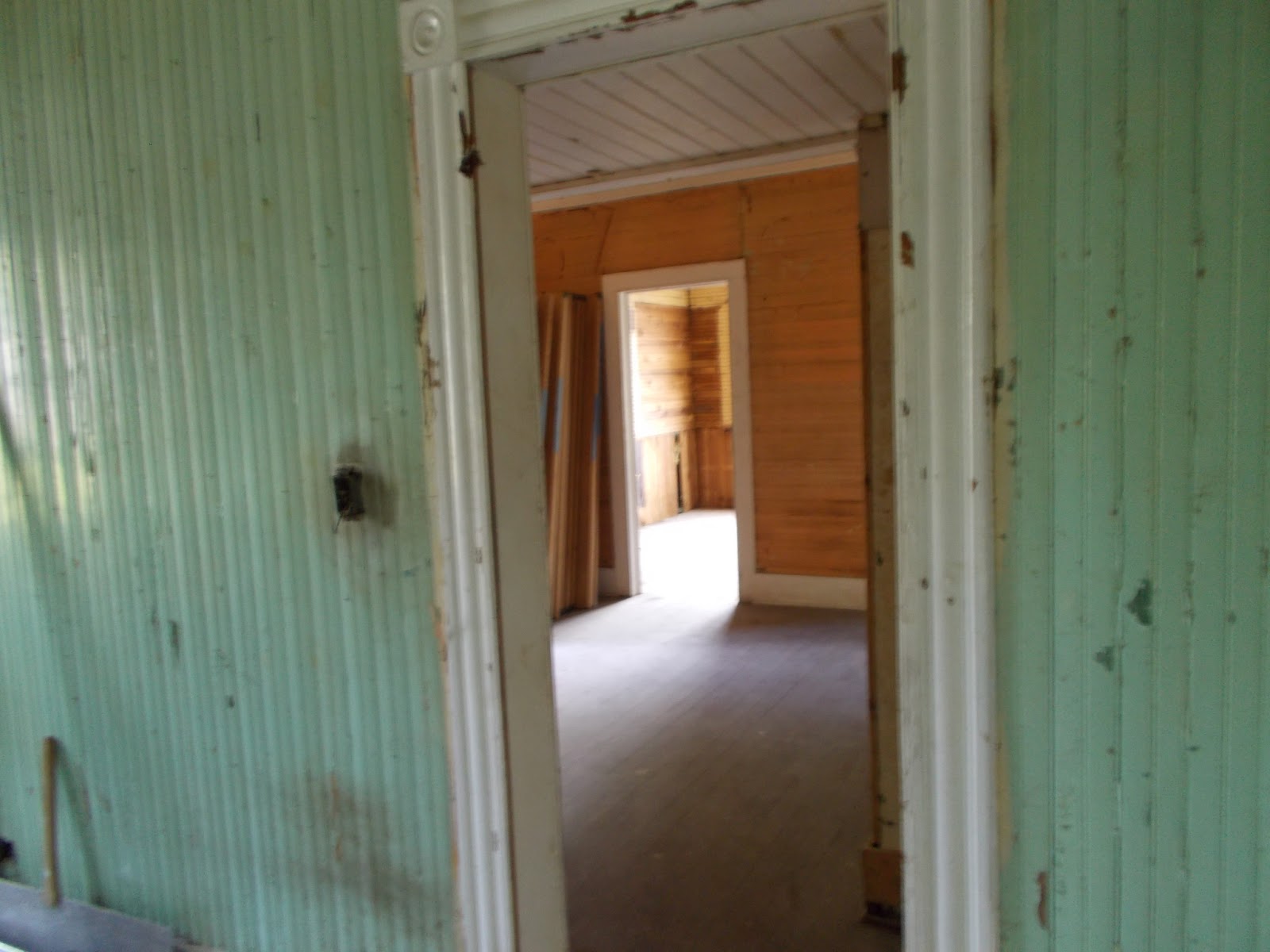
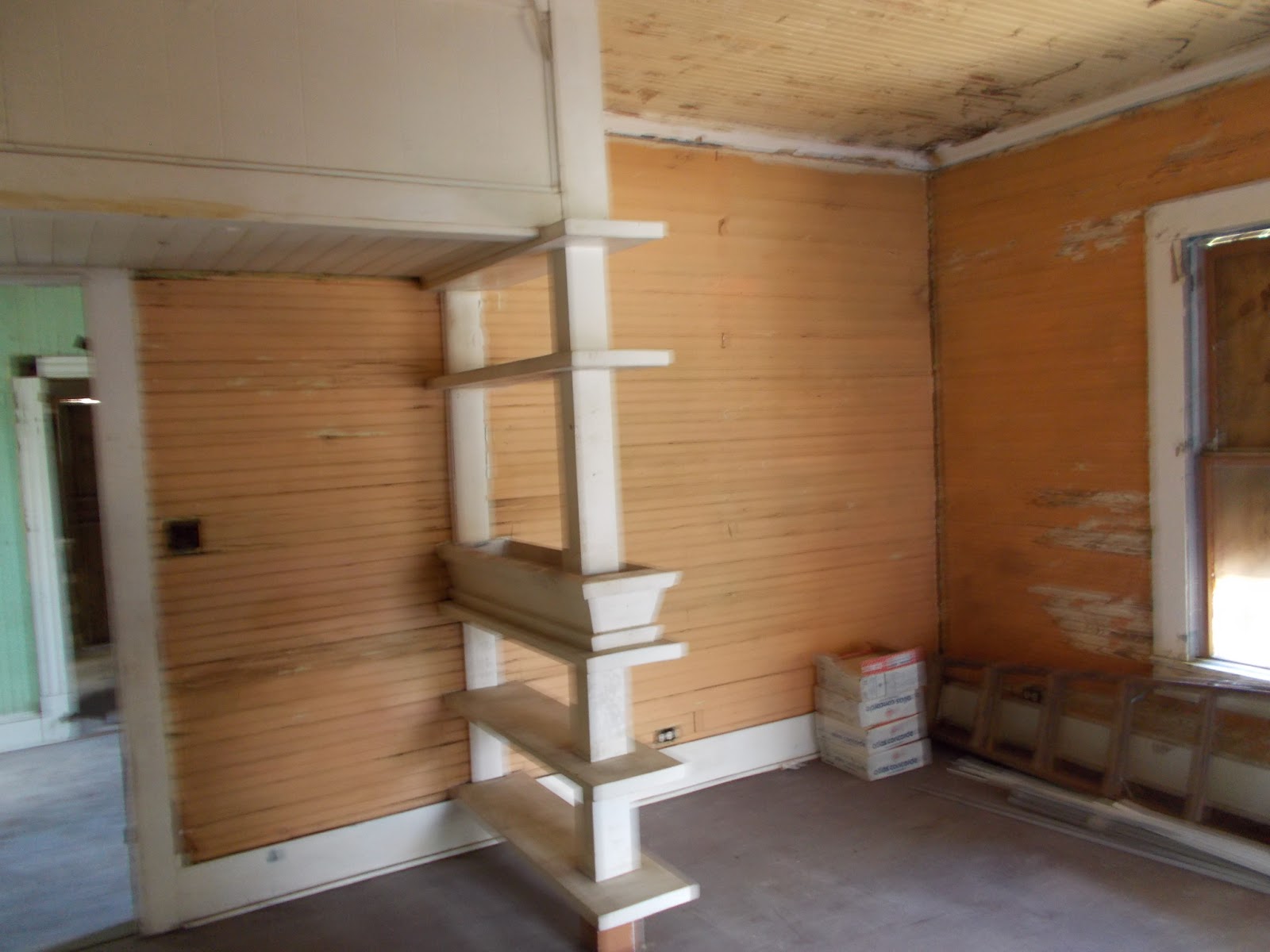
What follows is a small gallery of pics, all taken on February 22nd. They can be compared at your leisure to those taken last August. How much history has been destroyed is anybody’s guess.

The E.W.F. Stirrup House ► Before and After

Meeting announcement
Click to enlarge

It probably has absolutely nothing to do with the fact that the next Charles Avenue Historic Preservation meeting is this Wednesday, but there were big doings afoot at the E.W.F. Stirrup House yesterday.

The meeting announcement (left) lists rapacious developer Gino Falsetto under the rubric “Historic Assets.” Presumably that means the 120-year old E.W.F. Stirrup House, which his Aries Development controls through a 50-year lease. Falsetto claims he wants to preserve and renovate the house, turning it into a Bed and Breakfast. If that were truly the case, why has he been allowing it to undergo Demolition by Neglect for the better part of a decade? Why wouldn’t Falsetto do the bare minimum to protect his asset by — at the very least — sealing the windows to keep out the weather? Wood, water, and Florida humidity don’t mix very well and Gino’s given them 8 years to work their moldy magic on this architectural gem.

However, lo and behold: Yesterday a crew was cleaning up the Stirrup property by removing the vines and bushes that had grown all over the back of the house. This blog has documented how the property becomes an unruly garbage dump between citations from the City of Miami. The property is always cleaned up before fines are levied. Then it’s allowed to slowly fall into disarray until the next city inspector posts a citation on the property about all the garbage, weeds, and graffiti. Despite occasional landscaping, the vast Westerfield Archives has several year’s worth of pictures that prove these bushes and vines have never been cleared away. This was not just another minor clean-up.

Could it be that Gino Falsetto realized that eyes would be on the E.W.F. Stirrup House again this week because of the Charles Avenue Historic Preservation meeting? After 8 years of inactivity, is it possible that Falsetto wants to be able to say at Wednesday’s meeting “Things are happening,” only to let it slid into disarray until the next time it gets cleaned up?

[Continued after the jump.]

BEFORE – September 14, 2012
AFTER – February 22, 2013

You can clearly see the damage of vines having 8 years to work their way into the structure and what happens when they are finally ripped out indiscriminately. [Above]

Before – July 17, 2012
After – February 22, 2013

However, that’s just the property. This clean-up is primarily superficial, except for the new scars left on the structure from the brutal landscaping job. Sadly, the E.W.F. Stirrup House, the object of my affection, continues to rot away. To be fair: There has been some very minor work inside the house, which will be the subject of an upcoming post.

Continue to Part Two: Inside The E.W.F. Stirrup House ► Before and After 

For more on the E.W.F. Stirrup House, please read my continuing series:

Is Marc D. Sarnoff Corrupt Or The Most Corrupt Miami Politician?

His Excellency
Marc D. Sarnoff

In researching the long history of the E.W.F. Stirrup House, one name that never came up was Marc D. Sarnoff, unofficial Emperor of Coconut Grove. 

However, that changed once I started investigating the current state of Coconut Grove. The name “Marc D. Sarnoff” started cropping up with some regularity. The more I uncovered of Gino Falsetto‘s real estate deals, the more I saw the Sarnoff name. When I
started looking into the Coconut Grove Playhouse, I encountered the
Sarnoff name again. It didn’t matter where I turned, Sarnoff always
seemed to be RIGHT THERE. On one level that’s not surprising; Sarnoff is the Commissioner for Miami’s District 2, which takes in Coconut Grove. 

However, it was how his name kept coming up that intrigued the journalist in me. Whenever I read about a new development, I would read about how Marc D. Sarnoff was supporting it, often against neighbours’ objections. The Sarnoff name also came up often when interviewing people on deep background about the history of the Grove Gardens Residence Condominiums behind the E.W.F. Stirrup House in Coconut Grove. The prevailing opinion seems to be that if you are a developer, Marc Sarnoff is on your side. If you live in White Coconut Grove, Marc Sarnoff can be your best friend. If you live in Black Coconut Grove, Marc Sarnoff is the invisible man.

Nothing illustrates this better than last week’s hastily scheduled Town Hall meeting on Trolleygate. Sarnoff only called for this community meeting once the shit hit the fan, not when this diesel bus garage was still on paper. Trolleygate can be a complicated story if one gets too deeply into the weeds. However, clearing away the clutter — and narrowing the focus to a single issue — it is easier to see what’s at stake. In a nutshell:

Diesel bus disguised
as an old-tyme trolley.

On one hand: Marc Sarnoff claims Astor Development complied with all legal requirements and had every right to build a diesel bus garage in the middle of West Grove. 


On the other hand: Lawyers for West Grove say that the Miami21 Plan specifically prohibits a “government vehicle maintenance facility” along Douglas; therefore, building permits never should have been issued. 

They both can’t be right.

True to form, residents say, Sarnoff couldn’t be bothered to look for any reasons to deny a developer, even though West Grove lawyers say many exist. The courts will now sort this mess out, at a cost to all Miami taxpayers (the West Grove lawyers are working pro bono). However, Sarnoff clearly thought his time and energy would be better spent working with the developer, as opposed to the neighbourhood groups that came out against the diesel bus garage.

By his own admission: Once he decided that Astor had every right to build a diesel bus garage on Douglas, that’s when Super Sarnoff sprang into action to get the best possible deal for the neighbourhood. To that end, he claims, he convinced the developer to change the exterior of the building to give the diesel bus garage a Bahamian feel. Sarnoff also claimed that he convinced Astor to donate $200,000 to improve the football field at Armbrister Park. Sarnoff insists the developer did this because “[t]his particular developer, his wife is very charitable. He’s very charitable,” according to what he told the Miami Herald. Of course, it has nothing to do with the fact that Astor Development stands to make several millions of dollars developing the current diesel bus garage property in Coral Gables.

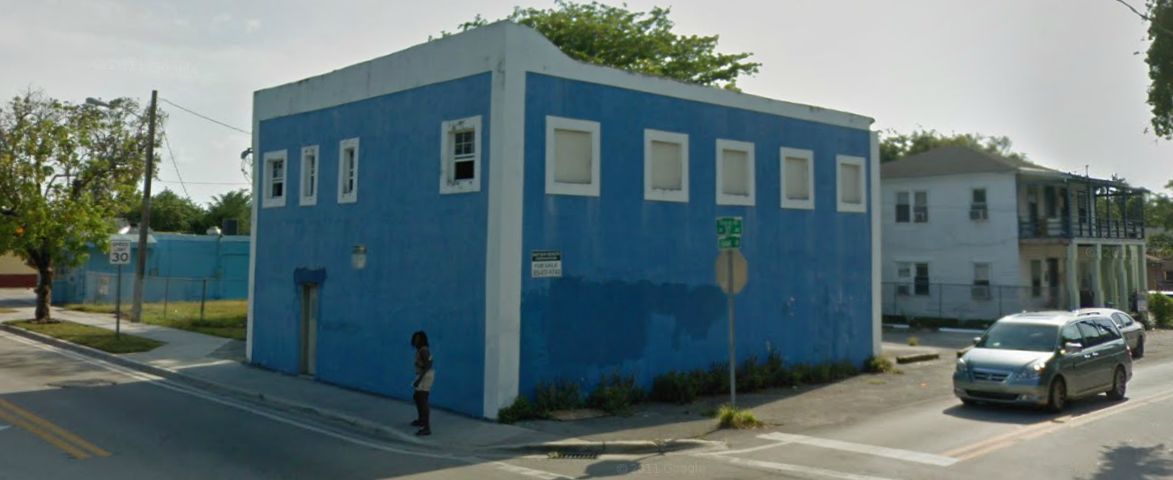
Google Street View showing 3 of the 4 tax-paying buildings along Douglas Road (at Oak Avenue) destroyed to make way for the Coral Gables diesel bus garage, which won’t be paying taxes. Nor will the buses be picking up passengers in Black West Grove. That might allow them to get to Coral Gables, which is 98% White.

West Grove neighbours describe Sarnoff’s bad faith:

But
residents say when he encountered opposition, Sarnoff simply moved on
to another group. In April, he attended a meeting of the Coconut Grove
Ministerial Alliance and, in October, a gathering of football coaches at
Armbrister Park, according to those in attendance.

“He wanted us
to say it was a good project and we were behind it, considering they
were going to renovate the playing facility,” said Rondy Powell, a coach
at the park for 20 years. “I kind of figured when they came, it was
kind of like a back-room deal.”

An artist’s view of Bahamian-influenced diesel
bus garage on the same corner of Douglas and Oak.

If I were Marc Sarnoff’s Day Timer, I would know how much time Marc Sarnoff spent on Trolleygate, both before and after it became a controversial project. I would also know how much time Sarnoff spent negotiating with Astor Development and how much time was spent negotiating with West Grove residents. However, maybe Marc Sarnoff doesn’t put down all his meetings with developers in his Day Timer because the most often used adjective when discussing Marc D. Sarnoff appears to be “corrupt.” 


How long has Marc Sarnoff been corrupt?

That’s up for debate. According to Sarnoff’s own biography at the City of Miami web site, bad grammar and all:

In 1987 I made the big move to paradise: Miami. I settled in Coconut Grove and established my practice as an Aviation Attorney, specializing in representing passengers’ families and airline staff, and pilots, who were wrongfully killed or suffered life threatening injuries in airline crashes. In 1991 I had the honor of representing Eugene Hasenfus, the former Marine whose C123 Maulewas shot down over Nicaragua while delivering guns to the Contras. I also had the honor of representing, Kassenee Sawyer, who was the widow of the pilot in the Hasenfus plane. For those too young to know, this downing was the beginning of the Iran Contra Affair.

While I think we can all agree that even the worst criminals deserve a defense, this was not a defense. Hasenfus was suing because, after he got caught, his CIA handlers and the government cut him loose. Regardless, Sarnoff seems inordinately proud of his association with the criminal Hasenfus, who was serving a 30-year sentence before being pardoned by Nicaurguan President Daniel Ortega. I wonder why Sarnoff doesn’t mention that he lost that case

It might not be a good idea to put much credence in Sarnoff’s official biography. It used to be longer, but he was forced to remove the section where he claimed General David Sarnoff was his grandfather, after the real Sarnoff family said it wasn’t true. 

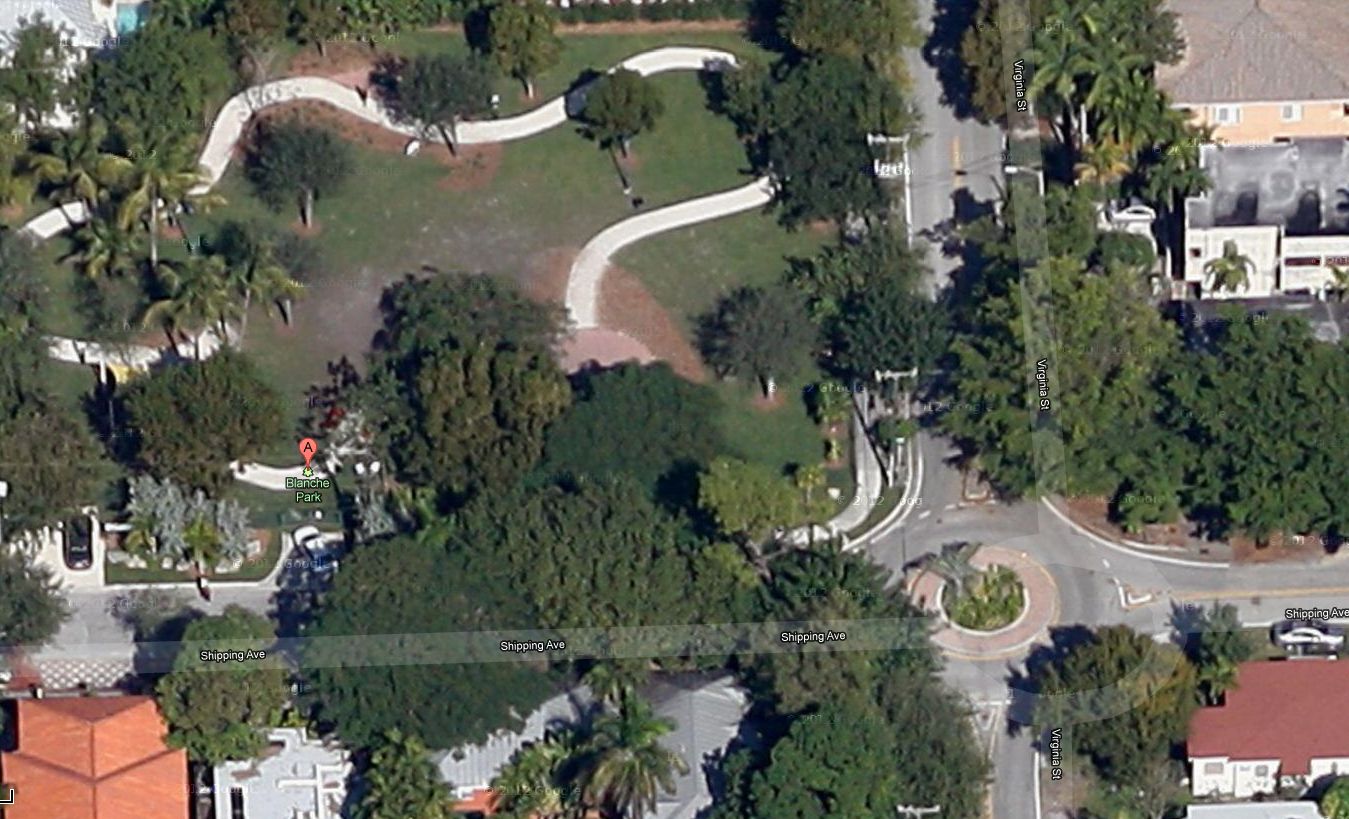
Then there’s the Marc D. Sarnoff Memorial Dog Park and Traffic Circle

The Marc D. Sarnoff Memorial Dog Park and Traffic Circle can be seen from space.

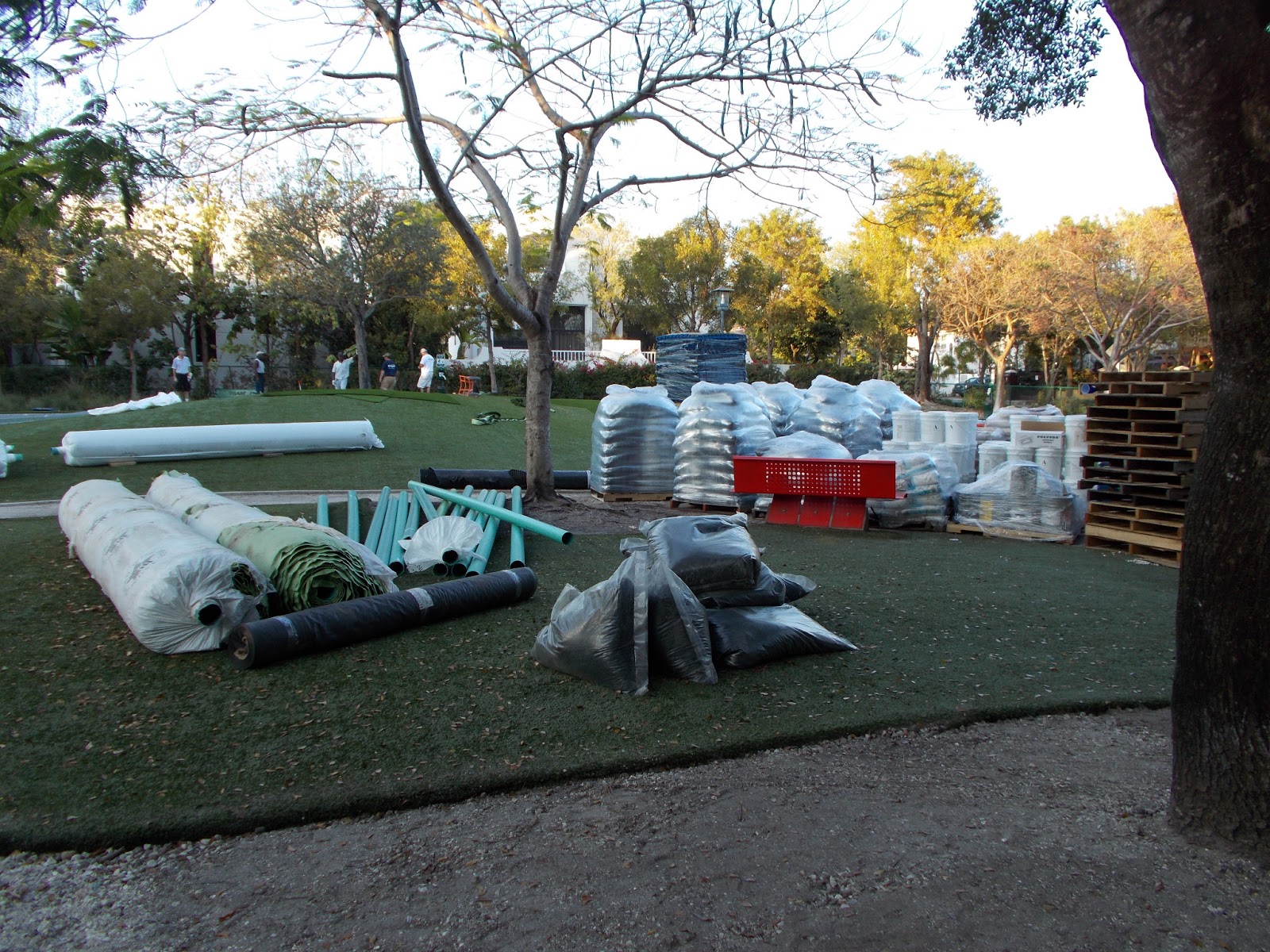
If you are one of those North Grove residents lucky enough to live near His Excellency Marc D. Sarnoff, then you will have no doubt seen your property values rise due to improvements right across the street from where he lives, and used to do business. According to recent reports the city is spending ANOTHER $190,000 on Blanche Park (that’s the name of the Marc D. Sarnoff Memorial Dog Park on paper, but the dogs know who to thank). The bulk of this cost is to replace the grass with astroturf. Back in my day dogs shit on the grass and liked it.

The Marc D. Sarnoff Memorial Dog Park
Photo by author Feb 6, 2013

How was Marc Sarnoff able to take a small park dedicated entirely to children and turn 2/3rds of it over to dogs? No one is quite sure because all the formalities seem to have not been followed. The same way that no one is quite sure how The Marc D. Sarnoff Memorial Traffic Circle circle came to be located in the middle of the intersection of Shipping Avenue and Virginia Street, right next to the Marc D. Sarnoff Memorial Dog Park. When you’re the Emperor of Coconut Grove good things drop into your neighbourhood, just like a real life version of Sim City. This will be the third time good money has been thrown after bad; Blanche Park appears to undergo regular upgrades. 

Illegal offices and bar closing hours

The Marc D. Sarnoff Memorial Dog Park
Feb 6, 2013

To be fair: it’s just within the realm of possibility, of course, that Sarnoff’s corner really needed a traffic circle. Any increased traffic, however, might have been due to Sarnoff’s illegal law office, located right next to his residence. And, from beginning to end, the story of the illegal law office provides another taste of Sarnoff Scandal.

That Sarnoff had an illegal law office appears to have been an open secret. While references can be found to it on blog comment threads, the home office was never reported to the City of Miami until Coconut Grove bar owner John El-Masry decided to exact a little revenge on Sarnoff. El-Masry, owner of Mr. Moe’s, was angry because Marc Sarnoff had rammed through a new law, which only affected bar closing hours in Coconut Grove. Whereas bars in the City of Miami could stay open until 5AM, suddenly all bars in “Center Grove” were forced to close at 3AM. An active nightlife in downtown Coconut Grove dried up overnight. In addition to launching a lawsuit against the city, El-Masry reported Sarnoff’s illegal law office to City of Miami staff. City of Miami staff promptly ignored the complaint, tipping off Sarnoff in the process. 

Possibly the Miami Department of Code Enforcement viewed Sarnoff as their boss and didn’t want to rattle any cages at City Hall. However, long-time-Sarnoff foe and Miami Muckraker Al Crespo wasn’t going to let the complaint go, and neither was (then) Coconut Grove Village Councilor Stephen Murray. In a letter to City Manager Carlos Migoya, dated August 31, 2010, Murray reminded the city manager of his duty:

I understand you are a public service rookie, so I’d like to take the time to explain something critical to you. Unlike in the private sector, where you have a clear-cut executive, Board of Directors, and stockholders who need to be answered to, as the City Manager you are a public servant. A public servant has one real boss – the public. You, as a public servant, took an oath to protect the residents of the City of Miami. You did not take an oath to allow yourself nor your subordinates to protect crooked politicians who believe they are above the law.

When I recently asked Stephen Murray if he would go on record for this article, Murray replied:

The only on the record thing worth saying is the following: “Commissioner Sarnoff is a scumbag corrupt piece of shit that doesn’t give two fucks about the people of the West Grove.”

It’s easy to find people who agree with that assessment, especially these days. 

Sarnoff eventually moved his illegal office and Mr. Moe’s eventually won its lawsuit against the city, which was forced to fork over $10,000 of taxpayer money to cover the costs of El-Masry’s lawsuit. Mr. Moe’s remains the only bar in “Center Grove” allowed to stay open until 5AM.

The calm before the meeting. Sarnoff preparing
to meet with the community on Trolleygate.

Dog parks. Traffic circles. Bar hours. Illegal offices. This shows how much power Commissioner Sarnoff wields in Coconut Grove, power that he’s not afraid to use openly to his own benefit. While Sarnoff controls just about everything that happens in the Grove, he claims there is no way he could have stopped the building of the Trolleygate garage.


My first Sarnoff encounter

As mentioned above, the name Marc D. Sarnoff kept popping up once I started investigating the recent history of the E.W.F. Stirrup House. According to (unconfirmed) reports Sarnoff worked closely with Aries Developers, and owner Gino Falsetto, in getting the Grove Gardens Residence Condominiums built. This apparently included meetings and accommodations by the developer to mollify neighbourhood concerns. One of those concerns was what would happen to the historic 120-year old E.W.F. Stirrup House, which would be dwarfed by the Grove Gardens Residence Condominiums. Whatever promises were made by Gino Falsetto and Aries Developers concerning the Stirrup House, to both the neighbourhood and Commissioner Sarnoff were broken. [See my ongoing series on the E.W.F. Stirrup House.]

This explains why Marc D. Sarnoff was already on the very periphery of my radar. That all changed a few weeks ago while I was interviewing a West Grove resident about the E.W.F. Stirrup House and Sarnoff’s name came up again. The resident asked, “Did you hear what he did this time?” While he described the broad outline of Trolleygate to me, the story sounded very similar to what had happened with the E.W.F. Stirrup House (Stirrupgate?): A redevelopment project is proposed, neighbours complain, Sarnoff steps in to help the developer, in the end the developer gets what it wants, the immediate neighbours get the shaft.

Trolleygate diesel bus garage; Feb. 6, 2013

I discounted this story almost immediately. While the pattern sounded familiar to what I had discovered in my E.W.F. Stirrup research — not to mention my research into the Coconut Grove Playhouse — I thought, “No one can be that nakedly stupid, can they?”

However, after a few hours of working the phones, the answer came back “YES!” Commissioner Marc Sarnoff is stupid enough to use the same tactics to, once again, help a developer and screw the neighbourhood he represents. That’s when I decided to go to the emergency Town Hall meeting, which I describe it in my previous post The Trolleygate Dog and Pony Show. However, it was only after watching Sarnoff’s performance at that meeting that I decided I needed to do some research on Commissioner Marc D. Sarnoff. I fired up the Googlizer and it’s not a pretty picture. Each headline just makes you want to shake your head that Sarnoff was ever reelected.

View of Trolleygate diesel bus garage from
its closest neighbour’s backyard; Feb. 6, 2013

My favourite two headlines are Marc Sarnoff: ‘Reid Welch Called Me a Cop Cock Sucker!’ and Marc Sarnoff (Allegedly) Told Reid Welch: ‘I’ll Kill You!’ These were just two of the dozens of headlines that arose out of a bizarre incident adjacent to the Marc D. Sarnoff Memorial Dog Park, just across the street from the Sarnoff’s residence.

I’m the first to admit there are two sides to every story. One side says the Commissioner jumped into his metaphorical phone booth, changed into Super Sarnoff, and flew into action, saving a neighbour lady from imminent harm. This is countered by the actual police report and the witness statements, which tell a very different story than the one Sarnoff told. In fact, witnesses allege Sarnoff sucker-punched Reid. Francisco Alvarado, of Miami New Times, makes the undeniable point:

Call us crazy. But if two people saw Banana Republican approach someone, sucker punch him or her, and then pin our victim to the ground, chances are we’d be taking a ride down to Miami-Dade County jail. In fact, any Joe Schmo would have been arrested for assault or battery. But Marc Sarnoff is no regular citizen. He is a Miami city commissioner who has apparently gotten away with beating up his former pal and current nemesis, Reid Welch. 

Sarnoff was never charged in that incident. However, it’s almost as if the Sarnoff Beat is a full time job for Alvarado. Among other stories he’s written about Sarnoff:

Some other random headlines I discovered include some other random Sarnoff scandals:

Cast of Burn Notice. Left to right: Sharon Gless as Madeline
Westen, Bruce Campbell as Sam Axe, Jeffrey Donovan
as Michael Westen, Gabrielle Anwar as Fiona Glenanne.

And, don’t even get me started on Sarnoff’s whacky intervention in the “Burn Notice” lease, which produced weeks of international headlines. The USA Network’s hit show is shot in Coconut Grove and uses the former Convention Center (where Jim Morrison whipped it out) for its production offices. The controversy that Sarnoff instigated, not the Commission, made Miami look small-time and bush league. More specifically Marc D. Sarnoff came off like an uninformed jerk. He even attempted to write the last “Burn Notice” episode. The producers were forced to explain to him, slowly I assume, that they don’t really blow shit up on tee vee when they blow shit up on tee vee. Consequently, Burn Notice wouldn’t accommodate the city and blow up the Convention Center for the show’s finale.

To his credit, Sarnoff was able to squeeze more money out of “Burn Notice.” I’m sure it felt more like extortion on the other end. Why would any other Hollywood production want to locate in Miami if this is the treatment they get? Especially since the weather is not local to Coconut Grove.

Developers Win; Miami Taxpayers Lose

Everywhere you look it appears Sarnoff is acting against the best interests of his constituents and in the best interests of developers. And, in the end, it always seems to cost Miami taxpayers money to support the developer. Take Trolleygate, f’rinstance. Miami taxpayers have already footed the bill for the environmental study produced to justify building the diesel bus garage; a study ordered after the emergency Town Hall meeting had been called. Miami taxpayers also footed the bill for the preparation of Sarnoff’s part of the Trolleygate Dog and Pony Show in which he defended himself against charges from West Grove residents that he doesn’t do anything for them. There are also the various costs associated with holding an emergency Town Hall meeting, from the many police officers who were in attendance to the several City Hall employees who seemed to be there to run the fancy slide show. The biggest expense is yet to come. Now Miami taxpayers have the privilege of paying lawyers to defend Astor Development against the lawsuit launched by West Grove residents.

Meanwhile, Commissioner Marc D. Sarnoff is free to befriend new developers and to create more mischief.

Unpacking The Aunty Em Ericann Blog ► A Writer’s Rant

Having been a professional writer for my entire adult life, I have come to the conclusion that Bill Gates ruined my trade.

Writing has always been something I did for as long as I can remember. If I wasn’t being paid to write, I was writing something for which one day I hoped to be paid. If neither, I was journaling, trying to capture smoke with my pen and ink hieroglyphics that often only I could decipher.

It was back at Sheridan College in the early ’70s that I got my first taste of writing to a deadline. I also learned how to publish on deadline, when I became the editor of “A” Student Magazine, working with an entire staff of writers and graphic designers to get issues out on time.

I was taking Media Arts and always assumed I would go into tee vee, or movies. Writing for the college paper was just for fun. So was being a DJ at Radio Sheridan, the ‘underground’ radio station that myself and several others had built from scratch a few years before. When I graduated, I became the first full-time paid manager for Radio Sheridan, which had been floundering after a series of part-time, student volunteer Station Managers almost drove the station into the ground.

Writing about music. What could be more fun?

During this period I started my first freelance writing/editing career. [There have been several.] First came ZoundZ Magazine, a small Rock and Roll handout placed at record store cash registers all over Toronto. Marty Herzog was my business partner and managing editor for a couple of years, for a couple of publications, as far back as “A” Student Magazine. ZoundZ [the second “z” was backwards] led to being asked to edit Cheap Thrills by Concert Productions International. It had promised a publication as part of its Cheap Thrills membership, a VIP line for ordering concert tickets. However a Cheap Thrills publication had never been produced and they were getting flack.

I was 100% against the idea. I loved the idea of having our own publication, without adult supervision. ZoundZ was starting generate income. We were being forced to consider more pages and a larger print run to justify the advertising we were getting from some of the “majors.” However, I didn’t have the headaches Marty did. He had been fronting all the money to have ZoundZ published. Aside from this, he did all the running around to printers and vendors, and sold all the advertising. Marty decided to ‘sell out’ to Michael Cohl and CPI (which really only solved his money headache) and I went along for the ride. [See my previous post on Ivor Wynne Stadium] For the first time in our loose partnership I was suddenly an employee. When Marty started ordering up good reviews of certain records because that’s what he promised the record company, I took a hike. My opinion was never for sale. I went back to freelancing. Marty went on to work for the record company to which he promised good reviews.

Over the years I have done every kind of writing there is, except the greeting card. I’ve crafted Hollywood puff pieces and gritty Rock and Roll profiles; written for Canadian music trade papers and various record companies; created artist bios, as well as reviewed concerts and records; practiced investigative and political journalism; did an entire decade as a tee vee news writer, where I called myself a ventriliquist; and, using the nom de plume Travis Bickel, wrote a regular column for Taxi News, while I drove cab and continued to sharpen my free lance Word-0-Matic Machine.

One of the supreme ironies is that I also wrote the first column in Canada which explored the nascent World Wide Web, still being called The Information Superhighway. I sucessfully pitched the editor of “We Computes,” a publication about hardware, the idea of monthly consumer-style column on those funny “http” things that had started to crop up everywhere you looked. At first Eric was baffled because even he didn’t know what an URL was and what it did. However, in the end, he took a monthly column for a couple of years, until a guide for navigating the World Wide Web seemed superfluous.

This is the same period when Bill Gates was turning the Information Superhighway into a point-and-click dealie. In the days of 300 baud modems and BBSs, one needed to know EXACTLY what to type on the C: prompt to get the computer to do anything whatsoever. Before Bill Gates made it easy, one needed to know programs like PINE and understand how to navigate USENET. Then came the mouse and GUIs and everything changed.

Suddenly HTML ruled and everybody and their brother thought they were a writer, which totally devalued the craft. Everywhere I go (on the innertubes) from the smallest sites to the largest, I see poorly written and poorly edited web sites. Most of these are making money hand-over-fist (whatever the hell that cliche means). Meanwhile, I’ve barely figured out how to monetize this web site. [I continue to be open to suggestions.] If I were being paid by the hour for these words, I’d starve. The irony is that I should have seen this coming and found a way to cash in. 

That’s why every once in a while I write one of these Unpacking The Aunty Em Ericann Blog posts, which my regular readers recognize as my way of urging them to click on one of the adverts. They know it doesn’t cost a cent, but will put a few — and I do mean few — cents in my pocket. Go ahead. It won’t hurt at all.

Now, don’t you feel better? Meanwhile, let’s break down the Top Ten Posts for the last 30 days, pulling back the curtain:

A moment on this blog frozen in time.

My post on the Detroit Riots has exploded. While it’s #1 for the month at 488 hits, it’s managed to climb to #3 on the All Time Top Posts with 916 views. That means most of the growth came in the past month for reasons that totally elude me. I’m grateful, because it’s one of the posts I’m most proud of.

The next 3 posts are all interrelated. I’ve been researching Coconut Grove, more specifically E.W.F. Stirrup, for several years now. The #2 post contains the latest research and celebrates Coconut Grove’s birthday. During my research into West Grove, someone in the neighbourhood alerted me to a controversy that was already being called Trolleygate. An Introduction to Trolleygate and The Trolleygate Dog and Pony Show are my first two investigative pieces on Trolleygate, a scandal that’s sure to keep on giving.

The rest of the Top Ten is filled with Fox News Snark, but sneaking into the pack at #7 is my post on Josephine Baker, another one I’m proud of. It also seems to be a favourite of my readers because it clocks in as #2 on the All Time Top Posts list with, 1,235 clicks.

So, there you have it. If you got this far, you owe me. Click on an advert or you’ll never be able to look at yourself in the mirror without feeling a pang of guilt. Seriously.

EmTV Presents: The E.W.F. Stirrup House

The E.W.F. Stirrup House in the background, as
seen from the Charles Avenue Historical Marker.
Photograph by author.

This blog is moving into the digital age today with the official launch of EmTV. See? Now I’m just like Glenn Beck.

I thought I’d test the video recorder in my new camera on the historical 120-year old E.W.F. Stirrup House. Surprised at how good it turned out, I decided to post it to my blog.

Aries Development, owned in part by Gino Falsetto, has a 50-year lease on the E.W.F. Stirrup property. Rather than take the most minimal actions to preserve the house, Falsetto is allowing the E.W.F. Stirrup House to fall into Demolition By Neglect. Since 2009, when I began writing about, researching, and documenting the E.W.F. Stirrup House, it has only gotten worse.

Miami has had a law against Demolition By Neglect. City inspectors are falling down on their jobs.

Please watch:

You can see my entire series in my Unpacking Coconut Grove Compendium.

Welcome Back Coconut Grove Grapevine

Despite my minor feud with Tom Falco, it was with great interest that I noted that he’s fired up the Coconut Grove Grapevine again. For those not paying attention, Falco wrote back in September


I have decided to end the Grapevine, but maybe not totally end it, I don’t know yet. What I am doing is stopping daily publication for now, only because I feel that I have other things I need to do and I believe that you physically have to shut one door to have another door open. I want to immerse myself into the cartooning world and so that is what I am going to do. I plan on traveling often, my first trip is to New York for the New York Comic Con, where I can mix and mingle and pick up tricks from other cartoonists. I need to promote myself and my comic, Tomversation, full time. While I bought a 4-day pass, I was also given a press pass, so I will be covering the event for publication, maybe for the Huffington Post.

I could keep the Grapevine up and running, but not on a daily basis, but I feel that would be doing it in a half-assed way. I don’t want to do that. I have tried hiring photographers and writers but it doesn’t seem to work. So rather than run the thing into the ground, I will take this break, most likely it will be final, but I am a Gemini and I change my mind often, so maybe I’ll start it up again in a few months, we’ll see. [Editor’s note: That’s a hell of a run-on sentence, Tom.] There are almost 9000 stories here believe it or not, all done in the 7.5 years we’ve been up and running, so you can always go back into the archives and have a laugh or two if you feel like it. [And, again.]

Tomversation, Falco’s cartooning site,
is also part of his vast publishing empire.

However, 4 months later comes word that it’s all been a terrible dream and Bobby was just in the shower for the season. The other day Coconut Grove Grapevine announced:

I’m a bit rusty, but I am thinking of returning to the Grapevine. Why? I need the money. My business has been floundering, like many in this economy, I assume, and I am stopped daily, literally daily, on the street, and asked by people to come back. [Same Ed. note] I am thinking of doing so, but with some changes.

One big change — no politics. I don’t want to get back into that. I really don’t I never enjoyed that part of it and sort of got sucked in years ago and never got out. Most people who stop me on the street tell me they want news but news of what’s going on around the village, you know, what’s new? what’s coming in, what’s going out, etc. I’ll do that. I will also cover events and such, but this is going to be a money making venture now. In the past, I had ads, but 99% of those ads were not paid for.

I’ve been cheated by people, one prominent restaurant still owes me lots of money, oh wait, I said I wouldn’t go there. But most of the ads were friends or trades or things like that. I didn’t make money in the past. I honestly didn’t. Now I plan to make money. I am going to charge for coverage.

No politics? That’s really a damned shame, Tom. As I have been trying to get you to understand since we first made contact, you have (had?) a strong voice in the community and could use it for good. When you gave my blog just ONE mention, I received 122 visits from your readers. That’s still the largest referring URL to my blog (discounting my own front page). That’s a testament to the influence you have (had?).

And it’s not like there are no serious political issues to explore in Coconut Grove, Tom. Certainly the E.W.F. Stirrup House (my own pet project) is one. The Coconut Grove Playhouse is another. That Marc D. Sarnoff runs Coconut Grove like an Imperial and Imperious Emperor is another. You almost touched on politics this morning when you mentioned Emperor Marc Sarnoff’s upcoming meeting on Trolleygate. You’re really missing a trick here, Tom. Trolleygate is a scandal that’s tailor-made for a good muck-raking journalist working for the interests of ALL the people of Coconut Grove. Too bad you aren’t that guy. Hopefully, someone will come along and take up the mantle of Coconut Grove Muckraker, but it won’t be me. I am too far removed geographically from the Grove to do an adequate job, as much as I have fallen in love with the West Grove and would love to be that guy.

SPOILER ALERT: However, I will tackle Trolleygate, Tom, so stay tuned for my new series on the so-called Trolley Garage. Overall it will be about the wisdom of putting a mechanical garage for diesel buses smack dab in the middle of a residential neighbourhood that’s trying to rehab itself with several urban renewal projects — literally — on the drawing boards pending approval. It’s a story I will be able to use to prove my original thesis about Coconut Grove: That its curious development over the years, from Mariah Brown right up to today, is the result of systemic racism. Same as it ever was.

IRONY ALERT: During my previous criticism of the Coconut Grove Grapevine I accused Tom Falco of only writing about topics that would help his bottom line, such as stores in the Grove and community events with an advertising budget. I also accused him of not writing about topics that might hurt his bottom line. F’rinstance, as just one example: writing about the Coconut Grove Playhouse and/or the E.W.F. Stirrup House might anger the rapacious developer Gino Falsetto, who controls both and owns restaurants that advertise in the Coconut Grove Grapevine. Accused (by me) of not wanting to bite the hand that feeds him, Falco denied this most vociferously. However, it appears I gave him an idea. You’re welcome, Tom:

So I’ve come up with a price schedule for coverage, also for running regular, good old fashioned ads that will surround the content.

I am going to offer actual ads in the content area, you know, event flyers, then, there is a price for press releases, photos and also having me actually come out and cover an event. I feel these prices are fair. I went by the monthly circulation to see how many eyes will see the content, keeping in mind that various other publications also pick up and share my content. The Huffington Post links to the Grapevine and also the actual stories are picked up, so many eyes see these Grapevine posts from other publications, too. And keep in mind that once your name or business name is posted, it is picked up by the search engines, which gives you extra cache.

I think by now that we all know that everyone reads the Grapevine and if you want to get your event, business or party noticed, this is the place to be seen. All the other Grove publications are now gone and Community Newspapers and Neighbors stories are few and far between. By the way, you’ll notice the Herald ran a story on the new Pan Am Museum/store last week and it is running in today’s Neighbors in print. My content (your content) gets around.

So, if you want to learn about what all the cool, groovy White hipsters in The Grove are doing, read the Coconut Grove Grapevine. If you care about what’s really happening in the Grove, you may have to go elsewhere.

Welcome back, Tom. Hopefully Coconut Grove politics will get along fine without you.

Unpacking Coconut Grove ► A Compendium [UPDATED]

This is the historical marker I just happened to discover
one day in early 2009. It led to all the research that followed.

As I add chapters to my ongoing series “Unpacking Coconut Grove” this compendium will be updated with the latest on top. The first entry for 2013 is:

Happy Birthday Coconut Grove!!! Now Honour Your Past

In which I briefly lay out the history of Coconut Grove from the mid-1800s to the present-day and make the case that systemic racism is the reason the E.W.F. Stirrup House and the Mariah Brown House have not been renovated, despite promises to do so.

Previous chapters:

The corner of Charles Avenue and
Main Highway
in Coconut Grove.

Unpacking Coconut Grove, Florida – Part One

This is an overview of the area, the issues at stake, how I came to discover Coconut Grove, and why I became so passionate about it.

Unpacking Coconut Grove, Florida – Part 1.1

This chapter contrasts the 120-year old E.W.F. Stirrup House, currently undergoing Demolition by Neglect, with a house built in 1964 less than a mile away. One is rotting away and the other is for sale for $22,000,000.

Unpacking Coconut Grove – Part Two – E.W.F. Stirrup House

The E.W.F. Stirrup House,
standing proud on Charles Avenue.

This chapter delves deeper into the history of the E.W.F. Stirrup House and the history of Ebenezer Woodbury Franklin Stirrup. It explains why this proud Bahamian man’s legacy is in need of preserving for the community, as opposed to rapacious developers. E.W.F. Stirrup almost single-handedly created a Black community unique in the entire United States.

Unpacking Coconut Grove – Part 2.2 – The Neighbourhood Around The E.W.F. Stirrup House

Musings upon recent discoveries in my continued research of Coconut Grove, Charles Avenue and the Grove Gardens Residence Condominiums immediately behind the E.W.F. Stirrup House. It also includes a close up photo essay showing the damage that years of neglect have caused on the E.W.F. Stirrup House.

Unpacking Coconut Grove – Part 2.3 – The Charles Avenue Rabbit Hole Leads To Canada

Imagine my surprise when I discover my ongoing research on the E.W.F. Stirrup House leads to Canada, the country I chose to become a citizen of.

Unpacking Coconut Grove – Part Three – Who Controls What On Charles Avenue

The Coconut Grove Playhouse at the corner of Charles Avenue
and Main Highway. The City of Miami has been trying to wrest
control of it back, but one person is holding up all progress.

After extensive research I share what I have learned on who controls, or owns, properties along Charles Avenue. It turns out it’s all the same guy, or companies owned, in part, by the same guy, or properties controlled by the same guy. And, that even includes the Coconut Grove Playhouse, which I never even considered to be a part of my original research. Come on down, Gino Falsetto.

Unpacking Coconut Grove – Part Four – Open Houses and Broken Laws

In which I discover that demolition work is proceeding within the E.W.F. Stirrup House without the benefit of a Building Permit issued by the City of Miami. Also, for the first time, I get inside the Stirrup House after being invited inside by one of the men doing the demolition. This entry has lots of pictures of the inside of this historic 120-year old architectural treasure.

Unpacking Coconut Grove – Part 4.1 – A Photo Essay

Another visit to Charles Avenue seems to indicate that my blog posts are being read because the property is locked up tight again and all (allegedly) illegal demolition work appears to have stopped after being reported to the City of Miami Building Department. 

Unpacking Coconut Grove – Part Five – A Charles Avenue Love Story

180 degree panorama of the entrance to the Charlotte Jane Memorial Park Cemetery,
at one time the only place around where Black folk could bury their dead.

I would like to know more about the love affair between E.W.F. Stirrup and his childhood sweetheart, and wife, for whom the Charlotte Jane Memorial Park Cemetery, at the far end of Charles Avenue, is named. Here is the little I have been able to learn so far.

One of the informational
signs along Charles Avenue.

Unpacking Coconut Grove – Part Six – Still Building With No Building Permit

An update a week later, where I discover that (allegedly) illegal work is still proceeding within the E.W.F. Stirrup House without benefit of a work permit on prominent display.

Unpacking Coconut Grove – Part 6.1 – An Open Email to the City of Miami

Since the City of Miami has not seen fit to respond to my email, I have printed it here for all the world to read.

Unpacking Coconut Grove – Part Seven – Signs along Charles Avenue

At some point in the recent past a series of informational signs were erected along Charles Avenue. Here they are for you to read.

Unpacking Coconut Grove ► Part Eight ► The Powers That Be

Read along as I try to unpack the power structure in Coconut Grove. Pay no attention to the man behind the curtain, even if it is Gino Falsetto, a Canadian who left a string of bankruptcies behind before he left cold Canada for warm Miami.

Unpacking Coconut Grove ► Part Nine ► Good Neighbours and Bad Neighbours 

What makes a good neighbour and what makes a bad neighbour? In this latest chapter of Unpacking Coconut Grove I state the difference and name names.

Unpacking Coconut Grove ► Part 9.1 ► A Bad Neighbour Photo Essay 

A follow-up to last week’s entry with some hot, new information: How did The Bad Neighbour acquire his 50-year lease on the E.W.F. Stirrup House? It wasn’t by putting up any hard-earned cash. Read this chapter to find out how a (alleged) scumbag works real estate a deal.

Unpacking Coconut Grove ► Part 9.2 ► A Photo Essay Follow Up

Why did the alleged scumbag, aka The Bad Neighbour, allow the owners of the E.W.F. Stirrup House to be cited for contravening city by-laws by the City of Miami?  ALSO: More on how the alleged rapacious developer, aka Gino Falsetto, managed to acquire his 50-year lease on the E.W.F. Stirrup House. It isn’t pretty.

***

***

Happy Birthday Coconut Grove!!! Now Honour Your Past

Peacock Inn circa 188?.
Courtesy State Archives of Florida, Florida Memory

Dateline January 6, 1874 – Dr. Horace P. Porter establishes the first post office in Cocoanut Grove. In the 138 years since, Coconut Grove dropped the “a” and became one of the most exclusive areas in the country, as it continues to bury its past in a way that can only be viewed as racist.

One of the first tourist attractions in south Florida was the Bay View House, built in 1883 by Charles and Isabella Peacock. It was later renamed the Peacock Inn (and is now the site of Peacock Park). Ralph Middleton Monroe also began building The Barnacle (now Barnacle Historic State Park) around the same time and Camp Biscayne a little later. While Cocoanut Grove (it didn’t lose the “a” until it was annexed by Miami in 1925) was still a virtually swamp infested wilderness, all of this development required staffing. Consequently, a parallel service industry grew around this progress and, as has always been the case in ‘Merka, these people tended to be Black.

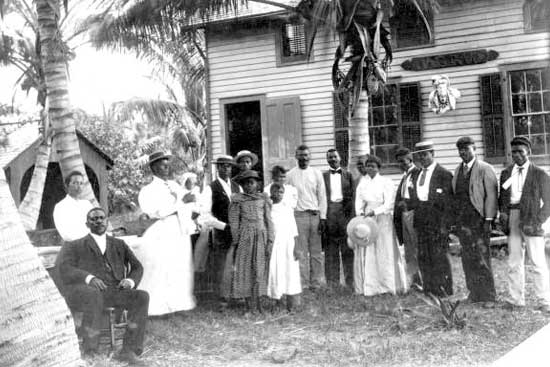
“Black citizens of Coconut Grove”
The entire Black community of Coconut Grove gathered
together in front of Commodore Ralph M. Munroe’s
boathouse. Photo taken 189?
Courtesy State Archives of Florida, Florida Memory

A Black population requires a Black enclave, of course; a place where White people don’t want to live, mostly because any Black person is welcomed. What is now known as West Grove became the area where Blacks, mostly from the Bahamas, congregated. One of the first was Mariah Brown, a Bahamian who lived in Key West. She had been hired by The Peacocks and, as “Mary the Washerwoman,” originally lived at the Inn. However, after she married Charles Brown they purchased a lot from Joseph Frow (who sold the Peacocks their plot of land as well), and built a house on Evangelist Street (now Charles Avenue) around 1892.

Joseph Frow was the first person to buy property off Biscayne Bay, in what later became Cocoanut Grove. His father Simeon had been appointed Cape Florida Lighthouse keeper in 1859. His brother John became lighthouse keeper in 1868. The lighthouse is on the southern tip of Key Biscayne and is the oldest standing structure in Miami-Dade county, even though it had to be rebuilt in the 1840s. Well familiar with the area, Joseph Frow bought up a very large chunk of land which he parceled off over the years.

1774 Map of Biscayne Bay, with Key Biscayne almost dead center.
Note: Where Coconut Grove would be located 100 years later
is labeled Grand Marsh. It was one. Map courtesy of Janthina Images,
which sells beautiful photo cards of the Cape Florida Lighthouse.

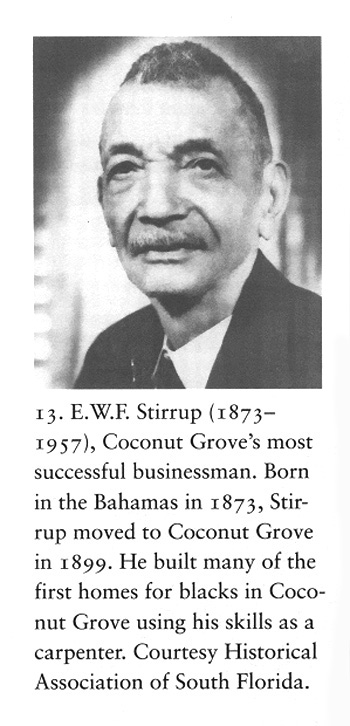
One of the men who worked in Cocoanut Grove was Ebenezer Woodbury Frankin
Stirrup, another Bahamian who came up through Key West. Being a carpenter
by trade, Stirrup’s skills were probably in high demand. It’s likely
that he worked for a variety of employers, Joseph Frow undoubtedly among them. Stirrup cleared land for Frow and it was backbreaking work. The area was little more than swamp land with occasional dry hummocks. Frow repaid Stirrup with land; for every plot of land Stirrup cleared, Frow deeded him a plot of land. Eventually E.W.F. Stirrup became one of the largest landowners in Coconut Grove and, eventually, one of Florida’s first Black millionaires.

From Black Miami . . . a brief look back

E.W.F. Stirrup was a man well ahead of his time. He believed that home ownership was important to growing Black families. To that end he used his land on which to build more than 100 houses on the streets surrounding Evangelist Street, which he sold or rented to the families that had emigrated to serve the growing tourist trade. This is also what made Coconut Grove unique. It had a higher Black home ownership than any other Black enclave in ‘Merka.

Over the years the neighbourhood has remained predominately Black, as families passed the homes down from one generation to the next, the way some families pass down precious jewels. This is also what kept the neighbourhood intact, as one urban renewal plan after another faltered when the City of Miami and developers couldn’t convince the homeowners to sell their most prized possession for peanuts.

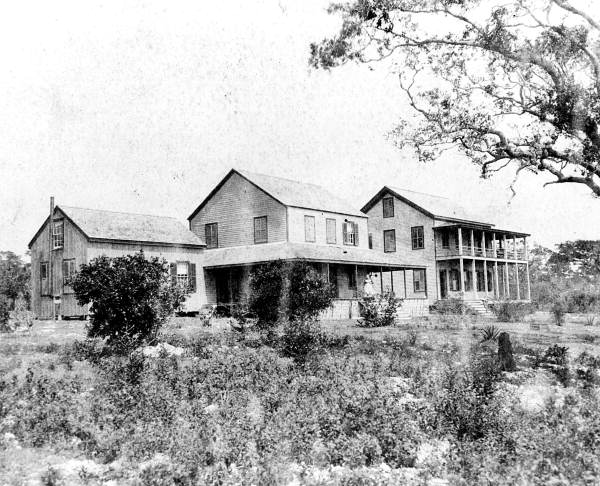
Stirrup built his own home, of course, in late 1890s. The E.W.F. Stirrup House is the showplace he built for himself near the corner of Charles Avenue and Main Highway. Unlike most of the other houses in the West Grove, the Stirrup House is 2 stories. While it’s based on the simple Conch Style that informs the Mariah Brown House, it has been elaborated upon and added to over the years. At one time the house looked out over Stirrup’s substantial holdings. According to a report prepared by the City of Miami [PDF] to consider an historical designation for the E.W.F. Stirrup House:

The contributions of the African-American community to the City of Miami actually predate the City’s incorporation in 1896. As early as 1880, Black Bahamians arrived in Coconut Grove and began a community that still thrives today. Ebenezer Woodbury Franklin Stirrup migrated from the Bahamas to South Florida in 1888 and worked as a carpenter’s apprentice in Key West, and then as a laborer in a pineapple field in South Dade. He ultimately became a millionaire Coconut Grove property owner. Stirrup built his home in Coconut Grove, using all his construction skills to create an impressive, yet understated, residence for his family. Mr. Stirrup lived in the house until his death in 1957, a total of 58 years.

Mr. Stirrup is remembered today as an extraordinary example of entrepreneurship, a man who made the transition from immigrant to enormously successful Coconut Grove landholder, and who built more than 100 houses for African-Americans. His is an amazing legacy, as his success is all the more incredible when it is remembered that his accomplishments took place in an overwhelmingly segregated and discriminatory environment. When Ebenezer Woodberry Franklin Stirrup died in 1957 at the age of 84, he was not only one of the largest landholders in Coconut Grove, but also had done much to improve the housing conditions of the African-American community.

Panorama by author of E.W.F. Stirrup House with the Charles Avenue Historical Marker in foreground

Meanwhile, the E.W.F Stirrup House — the last remaining symbol of an important man who once shaped what is now one of the most exclusive areas in the country — is allowed to undergo Demolition By Neglect by a rapacious developer who hopes to develop the property.

There can be no doubt that if Mr. Stirrup were White, his home would have been a shrine by now. The Barnacle, Commodore Monroe‘s old homestead just a block away from Stirrup’s, is now a state park and the house restored to its earlier splendour. Commodore Plaza, which begins two blocks north of the Stirrup House, is named after him. However, try and find something named after E.W.F. Stirrup, aside from E.W.F. Stirrup Elementary School, which is 10 miles from the community in which he made his fortune. Not even the historical marker across the street from his property, which honours the original Black Bahamian immigrants, mentions E.W.F. Stirrup by name.

Likewise the Mariah Brown House. If Brown were White, and owned the first house in an important historical district, her house would not sit empty and boarded up today. Even worse, the Mariah Brown was slated to have been renovated as a museum and community/historical resource. That project started in 1995 and has been stalled since 2000!!! However, unlike the Stirrup House, the current Mariah Brown house is not even the original structure. According to GrandAveNews:

The original house, 3298 Charles Ave., was built in 1889. The Coconut Grove Cemetery Association bought the home, which was in severe disrepair. The group razed it in 1999 and built a replica in 2000.

However, the E.W.F. Stirrup House is the real deal. While there appears to have been been several additions over the years, it’s still the original house, much of it built by Ebenezer’s own hands. As it continues to undergo Demolition by Neglect, the E.W.F. Stirrup House is also a symbol of something else in Coconut Grove: the quiet racism that has kept West Grove impoverished right from the beginning. Despite the The Grove’s reputation for more than a century as a laid-back, funky, village which attracted painters, Bohemians and later Hippies, Black Coconut Grove has been allowed to slowly slide into disrepair as White Coconut Grove has become one of the ritziest in the country. The 33133 Zip Code is now considered one of the most exclusive in the country. Within a mile’s radius of the Stirrup House today one can find homes, condos, and townhouses priced from a million dollars all the way up to $22 million, or so.

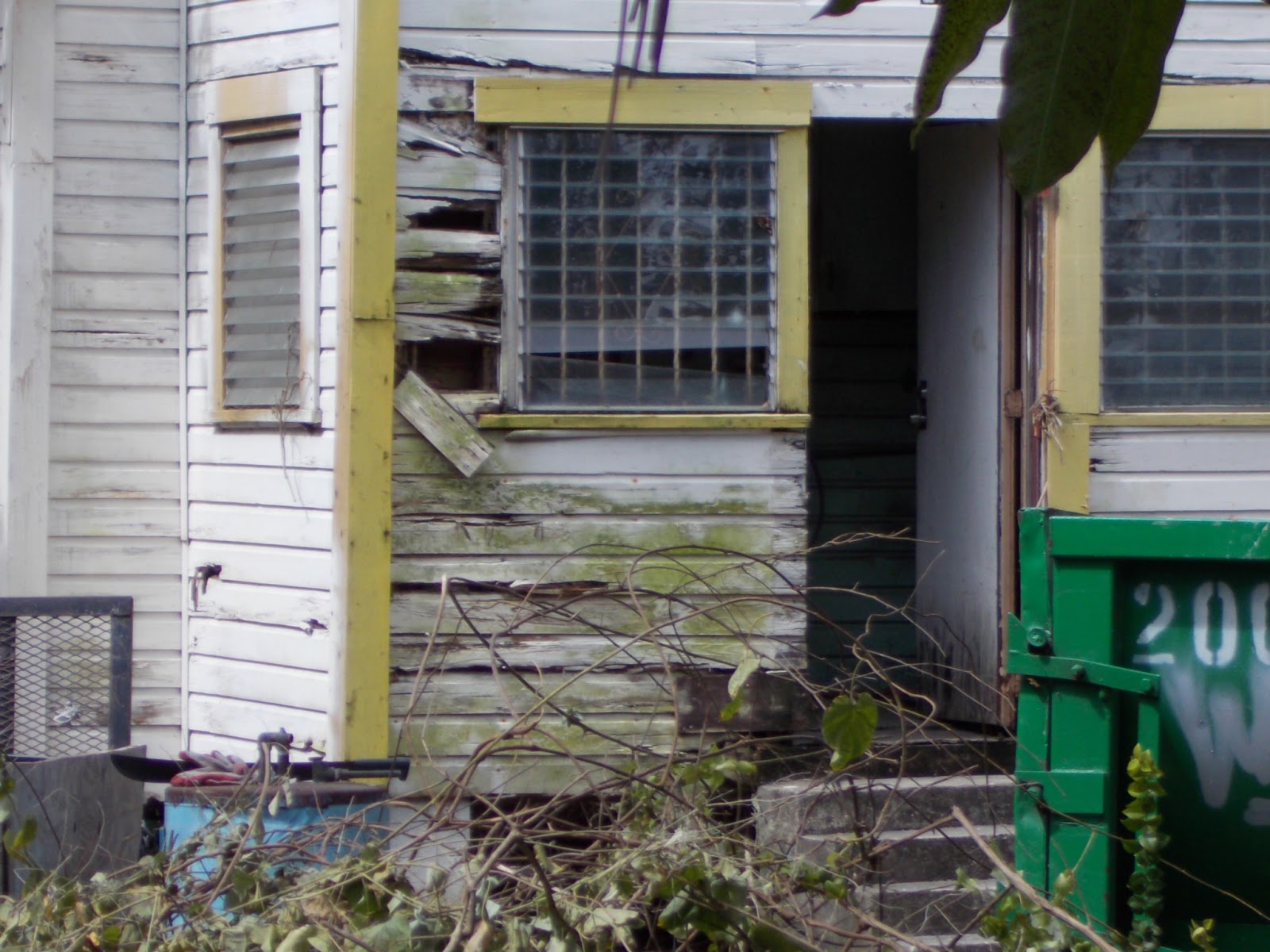
Developer Gino Falsetto controls the Stirrup property through a 50-year lease. However, due to provisions in Ebenezer Stirrup’s will the Stirrup House must remain in the hands of the Stirrup Family. Ever since he wrested away control from E.W.F. Stirrup’s descendants several years ago, Falsetto appears to have conducted a deliberate campaign of Demolition By Neglect. It has been empty for many years now and he has not even done the barest minimum to ensure the house doesn’t fall apart. The house is entirely exposed to the elements with glass not in several of the window frames facing the ocean, where the prevailing winds come from. Vines have been allowed to grow up the walls and across the roof, with roots no doubt causing damage to those areas of the house. There is exposed wood rot all around the outside of the house, mold and mildew being one of the greatest concerns for any wooden structure in south Florida, which is why wood is no longer used as a building material here. The mold continues inside the house as well, living along side the termites that are eating the structure away from the inside. The property has been cited several times by City of Miami inspectors because of a lack of upkeep, in contravention of several Miami by-laws. Between citations by the City of Miami, the E.W.F. Stirrup property is allowed to become a trash heap, until it’s cited all over again.

Eventually City of Miami building inspectors will come along and condemn
the structure, saying it’s too far gone to save. No doubt this is what
Aries Development, the company that holds the Stirrup lease,
wants. The E.W.F Stirrup House stands in the way of Aries making mega-millions of moolah.

From the large white structure on the bottom (Grove Gardens Residence
Condominiums) to the larger white structure at the top (Commodore Plaza)
is a massive area that could be developed for mixed-use by Aries if only
that pesky E.W.F. Stirrup House didn’t stand in its way. Click to enlarge.

Follow the bouncing ball: Aries developed the Grove Gardens Residence Condominiums, the white building immediately south of the E.W.F. Stirrup House (yellow rectangle in map on the right). Right across Charles Avenue are two vacant lots (the orange rectangle) that also appear to be controlled by Gino Falsetto and/or Aries Development and/or a shell company. Aries had owned these lots previously, but defaulted and the bank took them back in foreclosure. However, who should win the auction, but Gino Falsetto’s long-time partner-in-(alleged)-crime Pierre Heafy. It hardly appears to be a hands-off sale. Lastly, Immediately to the east of those vacant lots is the Coconut Grove Playhouse, which the state of Florida just recently took back from the bankrupt board that ran it into the ground 7 years ago. Through a loan that Aries claims it made to the board several years ago in an attempt to keep it solvent, Aries has always claimed a legal control of The Playhouse as well. Until recently that has stalled any progress on the Playhouse being renovated. Aries doesn’t appear to have dropped its claim, so it might have to be tested in a court of law no matter what happens to the Playhouse down the road. The state of Florida has put the property up for sale as surplus.

As tangled as all of that sounds, here’s the simple takeaway: The E.W.F. Stirrup House is the only remaining impediment to Aries Development (Gino Falsetto) having one of the last sizable properties that could be zoned for mixed-use in Coconut Grove. No doubt that’s the reason Gino Falsetto has done nothing to protect the E.W.F. Stirrup House. It stands in the way of progress and a huge profit.

It’s time for Coconut Grove to honour its entire history — the Black as well as the White that’s already been memorialized — and say no to a developer who is trying to destroy an important part of Coconut Grove history.

SAVE THE E.W.F STIRRUP HOUSE!!!


Read my entire “Unpacking Coconut Grove” series by clicking the link below:

Unpacking Coconut Grove ► A Compendium