Tag Archives: institutional racism

50 Years Ago ► St. Augustine Beaches Integrated ► History Is Complicated

Florida Memory reminds us that it took blood and guts to integrate Florida beaches. On this day — June 25, 1964 — White segregationists attacked the participants of a “Wade-In” at St. Augustine, Florida:

Demonstrators held several nonviolent “wade-ins” at segregated hotel pools and beaches. This film shows footage taken by the Florida Highway Patrol of one of the largest demonstrations, a wade-in held at St. Augustine Beach on June 25, 1964 (see full-length version).

Civil rights leaders, such as Martin Luther King Jr., came to northeast Florida to show their support for the Movement. King is said to have remarked that St. Augustine was “the most segregated city in America” at the time. He pledged to defeat segregation using nonviolence, even “if it takes all summer.”


Fort Lauderdale’s beaches were integrated a few years earlier. Two years ago Fort Lauderdale celebrated 50 years of integrated beaches, which began with illegal Wade Ins in 1961. According to CBS Miami:
On July 4, 1961, Lorraine Mizell, her sister, her uncle and some friends waded into the ocean on a beach where blacks were not allowed. Mizell would later say she didn’t know how significant her actions would be.

Fort Lauderdale’s beaches had been segregated since 1927. Civil rights pioneer Eula Johnson led wade-ins like Mizell’s over the summer of 1961 in spite of threats. A year later, a state judge ruled against the city and its whites-only beach policy.

As the Sun Sentinel tells it:

Lorraine Mizell remembers the looks of disgust and catcalls as she crossed the sand. She remembers other beachgoers fleeing from the water as she waded in.

She remembers not being afraid.

For the 19-year-old college freshman, the Fourth of July in 1961 started with a phone call from her uncle. He wanted to know if she, her sister and some of their friends would like to go to the beach with him.

Their outing will be commemorated on Monday as a turning point in the history of Fort Lauderdale and racial equality.

Her uncle, Von D. Mizell, and fellow civil rights activist Eula Johnson had decided the time had come to force the city to open its beaches to all people, both black and white. July 4 began a series of wade-ins that led to a court-ordered end of segregation on Fort Lauderdale beaches.

“When we did it, I didn’t realize how significant it would be,” said Lorraine Mizell, now 69. “I knew we were doing something to break down barriers. This was a beach that I had never been able to go to, never able to put my feet in the sand. But I didn’t know we were going to be able to change things.”

If this whetted your appetite read this PDF: The Long Hard Fight for Equal Rights: A History of Broward County’s Colored Beach and the Fort Lauderdale Beach ‘Wade-ins’ of the summer of 1961

Fifty years is not that long ago and fifty years later there are still inequities built into the system.

A Return To Frow Avenue

When I was in the Coconut Grove on Saturday, I was so intent on taking pictures of the people celebrating the One Grove mural, that I didn’t notice something that had been right in front of my eyes. In fact, I didn’t notice it until I reviewed the dozens of pictures I took that day.

Part of the reason I missed it was because the cooker/grill had been set
up right in front of it. But, I was also mostly looking through a camera viewfinder. That’s why I returned to Frow Avenue yesterday to take close-ups. Take a look at the
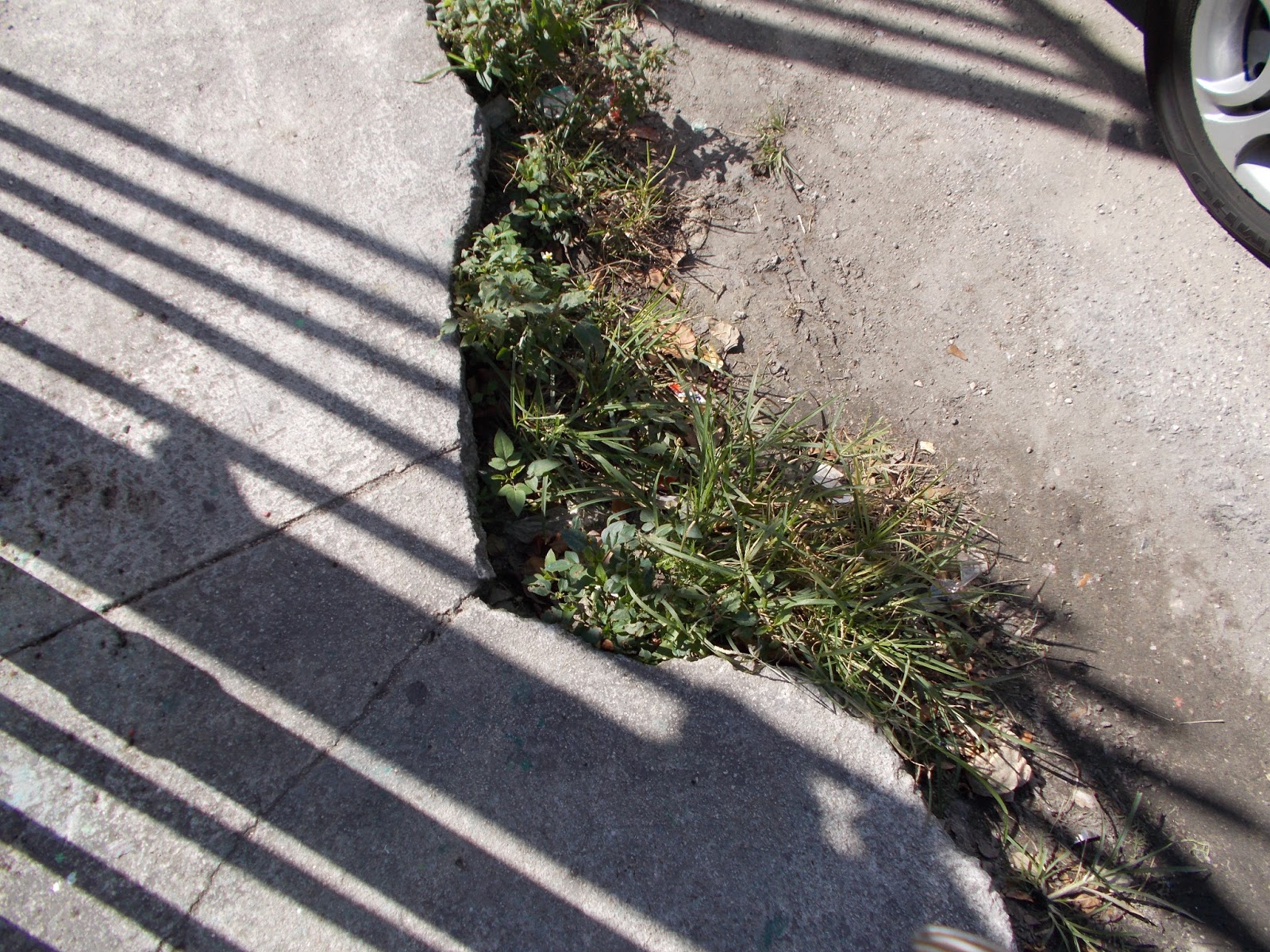
sidewalk adjacent to the mural:


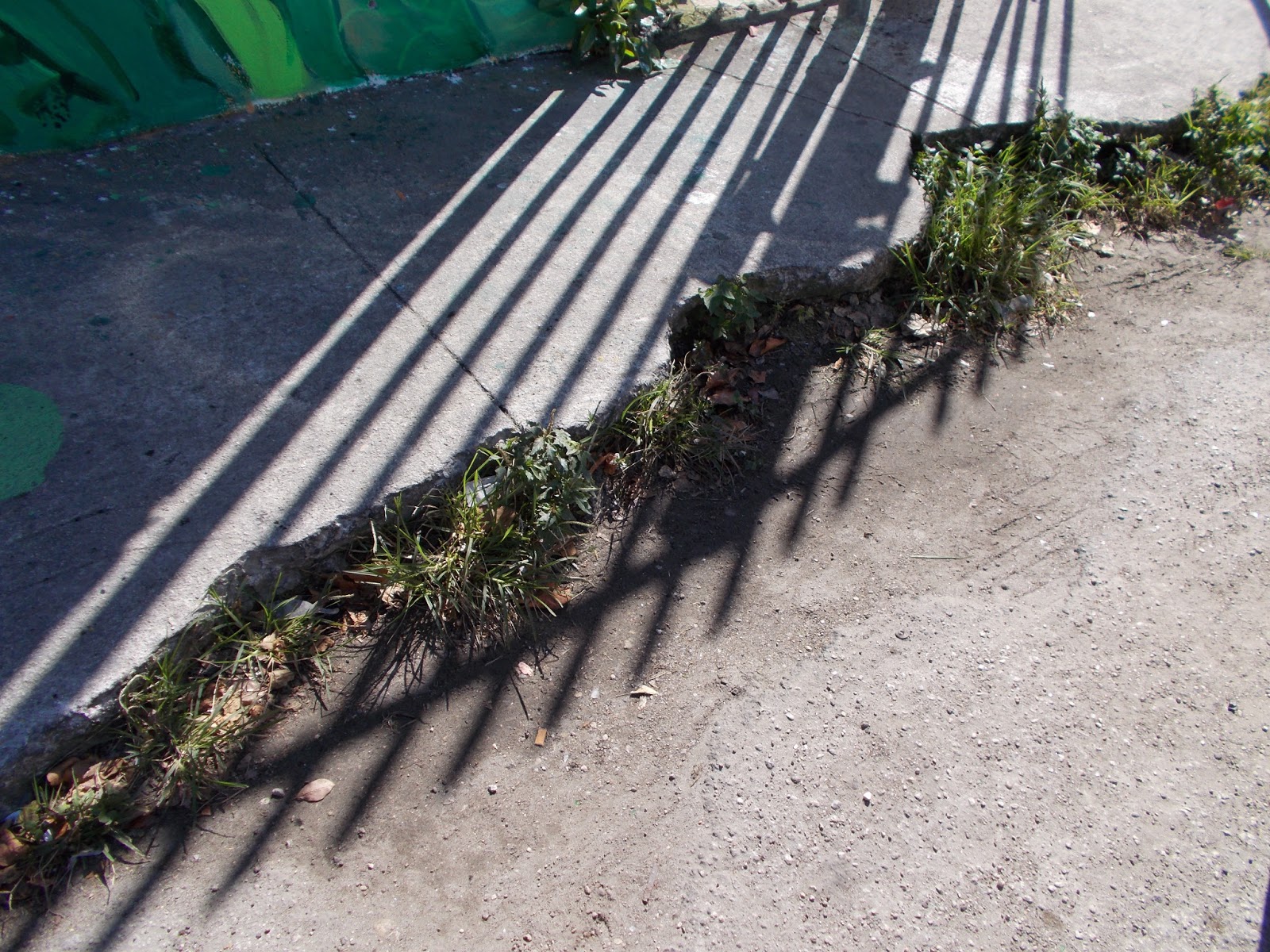
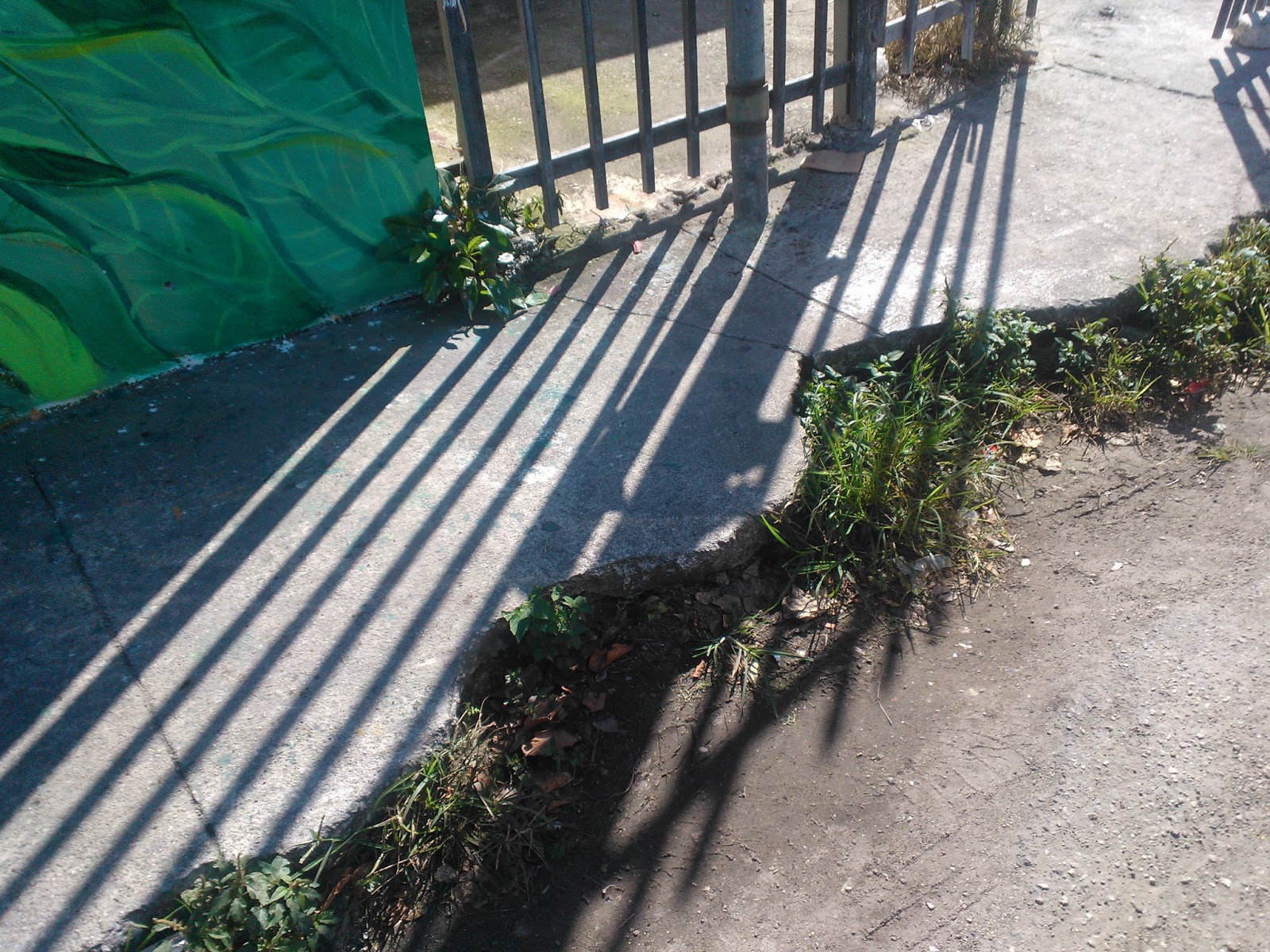
This broken sidewalk is not something new. Clearly it has been disintegrating for a very long time to arrive at its current condition.

Construction continues on the
diesel bus garage, March 4, 2013

To my mind this perfectly illustrates the reality that two Groves exist: Black Grove and White Grove. A sidewalk like this would never be allowed to exist in White Grove. However, because it’s on Frow Avenue in West Grove, this sidewalk can easily be ignored by the City of Miami.

It’s simply more of the same kind of quiet racism that the City of Miami demonstrated in allowing Coral Gables to locate its polluting diesel bus garage in the middle of a residential neighbourhood in West Grove, which (maybe not coincidentally) is being built right across the street from this broken sidewalk.

This is a well-traveled route. Hundreds of pedestrians pass by that sidewalk every day: school children, the people who use the store on which the mural is painted, mothers
with strollers, old people on canes, children riding bicycles . . . you
get the picture. If not, here are a few more:

Maybe “One Grove” is merely a slogan whose time has passed.

Montgomery Bus Boycott ► Nostalgia Ain’t What It Used To Be

Dateline December 5, 1955 – Rosa Parks and E.D. Nixon began the Montgomery Bus Boycott. It lasted for just over one year. 

This is something that happened within my lifetime. It’s not all that long ago: a mere 57 years.

The Montgomery Bus Boycott didn’t end racism, of course. It’s just not institutionalized and is far less overt. Hell, President Obama’s reelection hasn’t ended racism. It’s just done through dog whistles these days.

Some years later my father had a store on 12th Street in Detroit, the city to which Parks had moved in 1957. Twelfth Street was at the epicenter of the 1967 riot and was eventually renamed Rosa Parks Boulevard.

Rosa Parks died in Detroit on October 24, 2005.

Further reading:

Unpacking My Detroit; Part Five ► The Detroit Riots

Unpacking Coconut Grove ► Part Three ► Who Controls What On Charles Avenue

East side of the E.W.F. Stirrup House, still undergoing Demolition by
Neglect with the Garden Grove Condominiums in the background.

Some good news came in over the transom this past week. Miami’s Historical and Environmental Preservation Board [HEP cats?] voted unanimously to make Charles Avenue an Historic Designation Roadway, whatever the heck that means. This seems to have no practical effect: no money will be
spent and no signs will be placed. However, signs need not be placed because there are several informational signs along Charles Avenue. In an upcoming chapter of Uncovering Coconut Grove I will talk about all the Charles Avenue signage.

Meanwhile, how will this Historic Designation Roadway thangie affect my campaign to
save the E.W.F. Stirrup House? It’s hard to tell. The designation did
not appear to mention the Stirrup House, nor did it delve into the
survival of the Coconut Grove Playhouse, or the Mariah Brown house, said to be the first home owned
by a Black person in south Florida. These three structures are empty and have been empty for years now.

Yet, as my initial research began informing me, the E.W.F. Stirrup House dates back to a unique time and place in ‘Merka. In later chapters of this series I will explore what makes Charles Avenue, and the Black enclave that grew up around it, totally unique to all other Black neighbourhoods in ‘Merka.

The historical marker that started it all.
The vacant lot is behind this sign.

I first started my campaign to save the Stirrup House several years ago when I just happened to run across the historical marker on Charles Avenue. The marker had seen better days, but there was just enough on the sign to pique my interest. However, it was when I looked across the street did I see the gem of the neighbourhood, the historical Stirrup House, built in 1898. Buildings of any age are a rarity in south Florida, a state that appears to have no sense of history, no sense of of place, and no indigenous architectural style. Florida buildings present a pastiche of other architectural elements, but nothing Floridian.

On that first visit to Charles Avenue I noticed an empty lot immediately across the street from the Stirrup House. Later that day, while using Google Street View, I was surprised to see a house on what had been a vacant lot when I was there. That became the first mystery to solve: Where did that house go, and why?

That mystery was solved pretty quickly. While there had been a house on that lot as late as 2007, it was knocked down to create a marshaling yard for equipment and materials needed to build the Grove Gardens Condominium complex.

I started keeping a paper map on which I added what I had learned interviewing neighbours up and down Charles Avenue. There were many crossoffs on that map. Some of the early information turned out to be bogus, but some of the rumours have actually led to hard information, or additional areas of solid inquiry. Eventually I had to throw out that paper map and have created a new, 21st century, electronic version of the Charles Avenue map as I delve into who controls what on the east end of Charles Avenue.

Like any good reporter, I will continue to follow the money. Right now all the threads I am pulling seems to lead to the same place: Ottawa, Ontario, Canada, of all places.

Meanwhile, here’s my current map of the area on which I have added information on who controls what on Charles Avenue. Click around on the map. Each shaded area and marker has a small explination of what I have been able to confirm so far, along with some of the rumours.

This map will change as I learn new information.

Unpacking Coconut Grove ► Part Two ► E.W.F. Stirrup House

Standing proud. The beautiful E.W.F. Stirrup House.

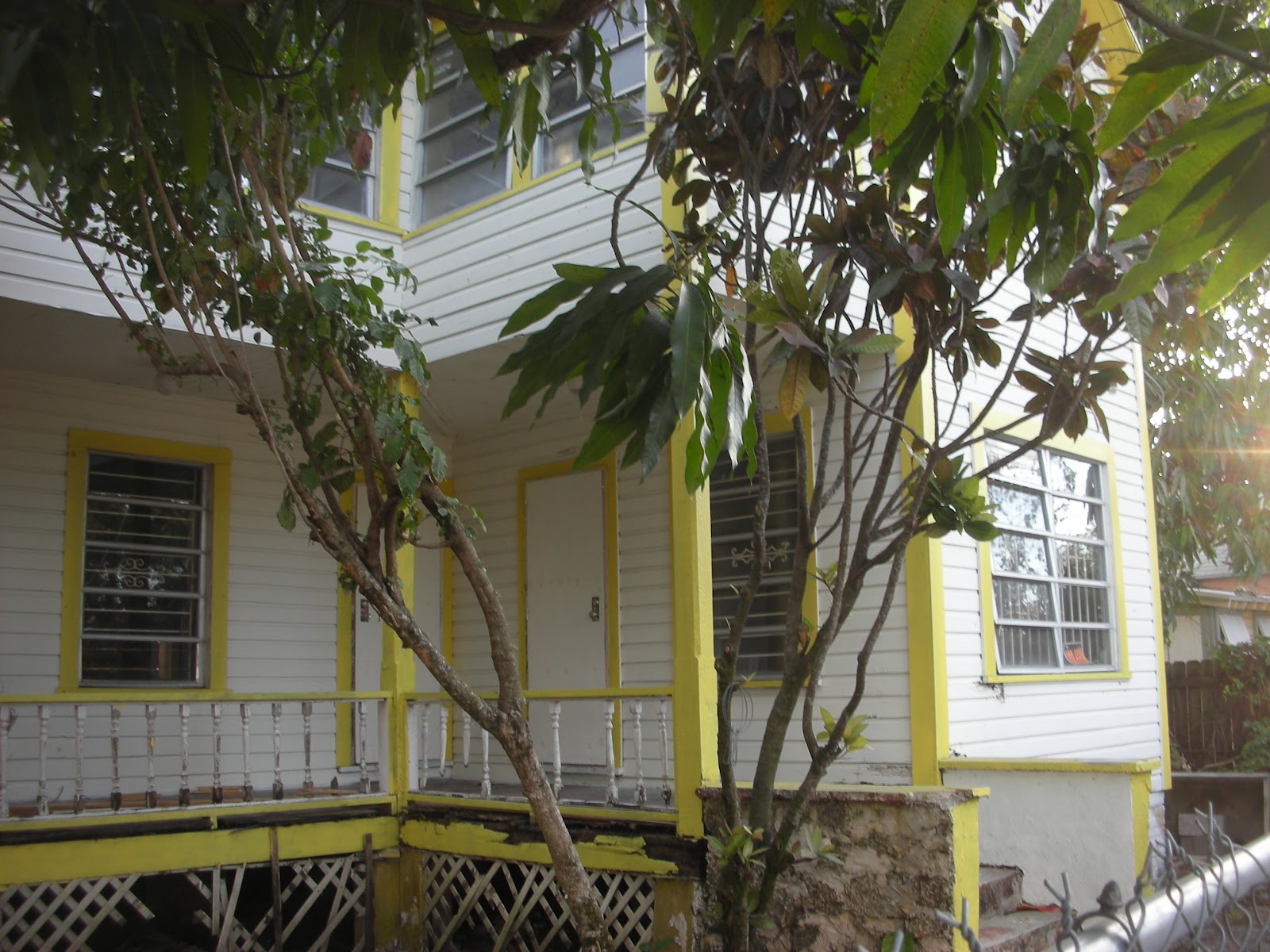
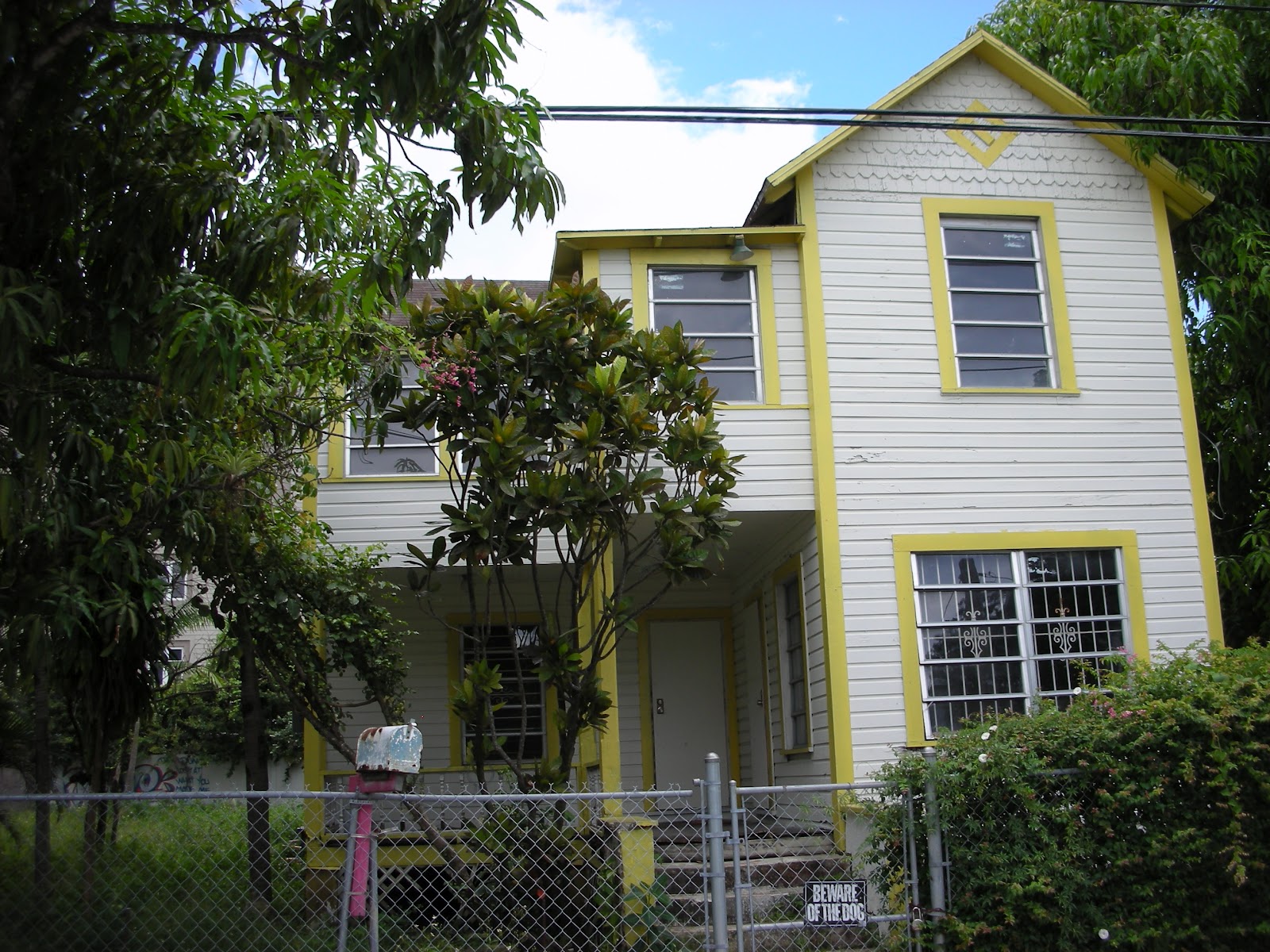
The E.W.F. Stirrup House (left) at 3242 Charles Avenue, Miami, FL, 33133, is reportedly one of the last wood frame homes in Miami-Dade County. It is almost certainly one of the oldest houses, built in the late 19th century, as Caribbean Blacks started arriving in lower Florida to work at the Peacock Inn. The house sticks out on Charles Avenue, but also in Florida. Homes don’t look like this anywhere else. According to a report looking in to designating the E.W.F. Stirrup House a Miami historical site:

The key elements that reflect its nineteenth century origins are its extremely narrow proportions, the size and shape of the fenestration, and its L-shaped plan. This design is based on a builder’s tradition, and was especially popular throughout America in the last half of the nineteenth century.
There is more than one way to describe this property type. In their book A Field Guide to American Houses, Virginia and Lee McAlester describe it as a “front gable folk house.” In a more detailed article, Barbara Wyatt of the State Historical Society of Wisconsin described it as a “Gabled Ell.” Wyatt explains that this type was especially common in late–nineteenth century America, and was almost exclusively a residential type. The Gabled Ell takes the form of two gabled wings that are perpendicular to one another, and that are frequently of different heights.

The longitudinal face parallel to the street almost always had the lower height. The result was typically an L-shaped plan. Ms. Wyatt explains that the form allowed for outdoor living space (the porch) and a sheltered entrance. Entry is always via the porch at the “ell,” or junction of the two wings.

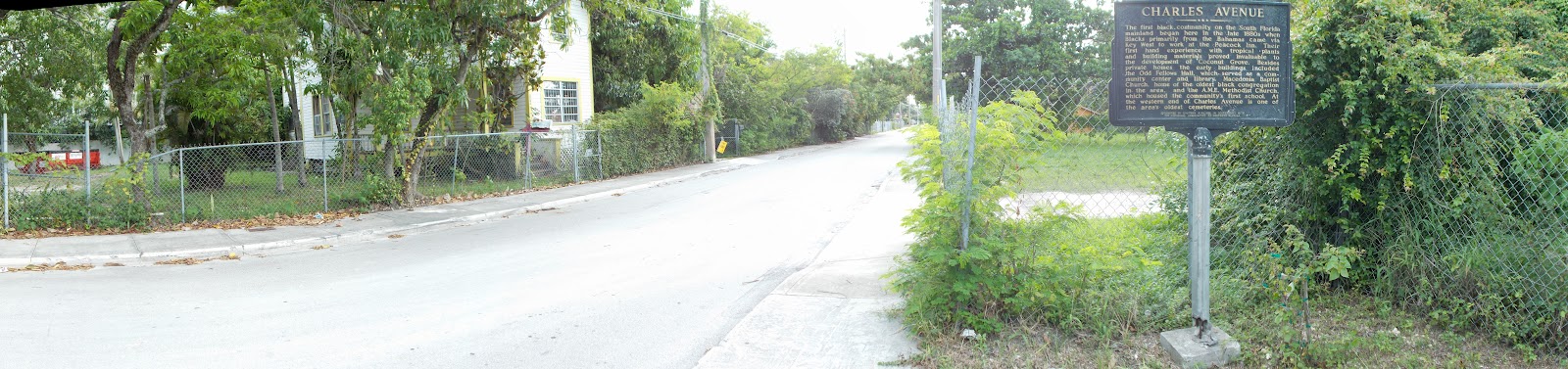
My latest panorama of the E.W.F. Stirrup House and the historical marker that started my journey.

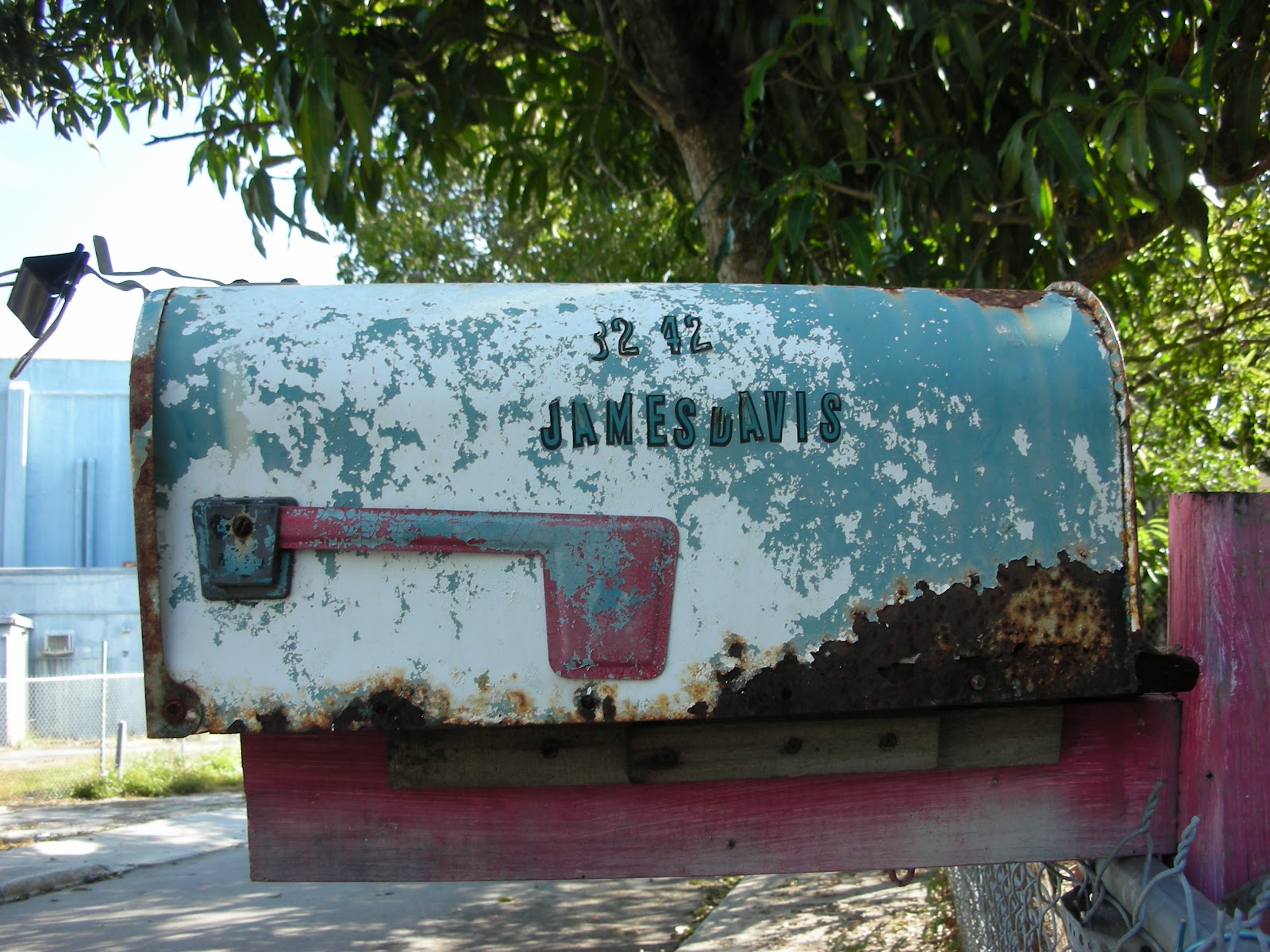
The Stirrup House mailbox in 2010

While the E.W.F. Stirrup House certainly deserves to be preserved for its age and architecture, it also needs to be preserved as a standing monument to Ebenezer Woodbury Franklin Stirrup, one of the people who built Coconut Grove with his bare hands.

E.W.F. Stirrup arrived in Coconut Grove in 1899 at the age of 25. Like a lot of Bahamians, he first migrated to Key West. There he apprenticed with an uncle as a carpenter, a trade he would utilize later. After 10 years, and unhappy with the financial arrangement with his uncle, Stirrup first moved to Cutler, Florida, working in pineapple fields and clearing lots for houses. Occasionally, instead of cash, Stirrup was paid in land, which began his real estate holdings that at one time included most of downtown Coconut Grove. That’s what made him one of Florida’s first Black millionaires. However, that’s not what made him extraordinary, especially for his times.

As his landholdings increased Stirrup began building houses which he rented and sold to other Bahamians who had emigrated up through Key West to take the jobs offered by Coconut Grove’s growing tourist industry. According to Kate Stirrup Dean, Stirrup’s oldest daughter:

Father believed in every family having a house, a yard and a garden, so you would feel like you had a home. He felt that people became better citizens when they owned their own homes.

The Mariah Brown House with its marker and No Trespassing sign.

Stirrup apparently built more than 100 houses, often at night after a full day’s work. Because of this Coconut Grove had a greater percent of Black home
ownership than any other ‘Merkin city I have studied. Most other cities
had a higher percentage of rental properties and absentee landlords as a result
of the neighbourhoods once belonging to other ethnic types who moved up
and out, a natural progression. Coconut Grove was an area settled almost entirely by Blacks when there was nothing but swamp and wilderness surrounding it. They didn’t inherit the neighbourhood, they built it and owned it themselves.

Stirrup was obviously a proud man because his house, which once dominated a large lot at the east end of Charles Avenue overlooking his estate, is a showpiece. It looks nothing like the simple Bahamian style homes he built for his neighbours. One of the last surviving examples of the Bahamian style is The Mariah Brown House, which pre-dates Stirrup’s arrival by nine years. It is thought to be the first house owned by a Black person in the area. A report was also prepared to designate the Brown House a Miami historical property. The report declares the Brown House:

[O]ne of the most important remaining sites from this early black Bahamian settlement in Coconut Grove. The house is also a good example of the type of architecture of the nineteenth century frame vernacular architecture that was inspired by the houses of the Bahamas and Key West.
The importance of the contributions made by African Bahamians to the develoment [sic] of Coconut Grove and the City of Miami has long been overlooked. Although recent studies show that by 1920 West Indian blacks made up over 16 percent of Miami’s population, information about their community and lifestyle has been basically undocumented.

Undocumented? Overlooked? Yes!!! Researching the Bahamian phase of Coconut Grove has been a monumental task. I have it through 2nd and 3rd hand information that in the ’20s, or ’30s, or ’40s, and well into the ’60s according to some, Coconut Grove was an artists’ community. It attracted a certain type of Bohemian Beatnik hipster, the archetype of which had little problem mixing with Blacks, listening to Jazz, and smoking reefer. That’s where my novel is going.

However that’s not where my research keeps taking me. My research keeps taking me to the E.W.F. Stirrup House, the Mariah Brown House, and the Coconut Grove Playhouse [another boondoggle I have yet to write about, but which I believe is just one more piece in the giant corruption jigsaw puzzle I find myself investigating] . Yet, the more I find out, the less I know. A little over a year ago the local NBC affiliate and CBS affiliate both filed reports which filled in some more of the blanks of the Stirrup House:


What has happened since then? Aside from someone straightening the historical marker? Nothing. I have now been documenting Charles Avenue in photos and essays for three years. In that time there has been no change to the Mariah Brown House or the E.W.F Stirrup House. Aside from more weather damage they stand in the EXACT same state of disrepair as they were the day I discovered them. My research confirms that each of them were vacant for years before I stumbled across them.

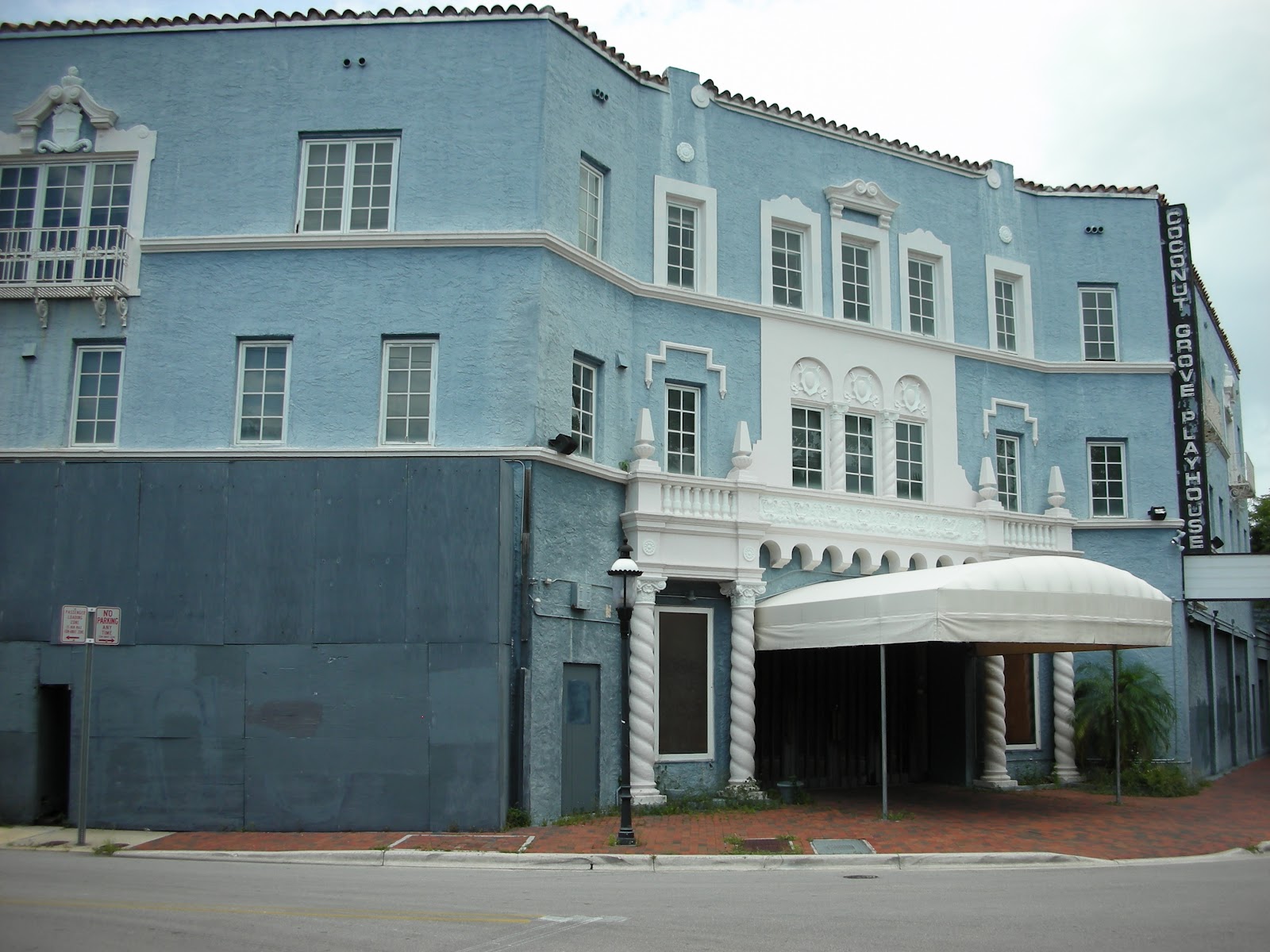
The Coconut Grove Playhouse in 2009.

In April of this year a “Give It Back!!! Give It Back!!!” campaign fired up to save the Coconut Grove Playhouse. However, it appears to have sputtered out almost as quickly as it flared up. More importantly, it was only concentrated on the Playhouse. What’s clearly needed is a comprehensive plan for a specially designated historical district from the Charlotte Jane Memorial Cemetery (named after Stirrup’s wife and childhood sweetheart and once the only place Blacks could be buried in the area because it was owned by Mr. Stirrup) to the Coconut Grove Playhouse, which could be the jewel in the rich tapestry of historical preservation of a Black neighbourhood unique in this country.

If such a designation can be done for a DAMNED DESIGN DISTRICT, then Miami can certainly see to it that this stretch of Charles Avenue be saved, and preserved. What physically remains of Coconut Grove’s rich history has been neglected and allowed to rot. I believe this has always been the original intent, ever since these three properties went vacant. Ask yourselves this question? In the middle of one of the most exclusive Zip Codes in the country, why has Miami allowed this to happen? Have you ever heard of Demolition by Neglect?

I believe the fix was in a long time ago. Therefore the question has always been, in my mind, who would benefit from from these properties being razed to the ground?

Coming soon: Unpacking Coconut Grove ► Part Three ► Who has a financial stake in the east end of Charles Avenue?

Previous entries:
Unpacking Coconut Grove ► Part One
Unpacking Coconut Grove ► Part 1.1

Unpacking Coconut Grove, Florida ► Part 1.1

Years of neglect. The front porch of the long-empty E.W.F. Stirrup House.

In researching Part Two of this series, I came across something that demonstrates in stark relief the disparity between the east side of Main Highway and the older Black neighbourhood on the other side, where the Charles Avenue historical marker is located. Just a mile from the E.W.F. Stirrup House is a property that recently hit the market at $22,000,000. An item describes it as:

Baymere, the five-acre former DuPont estate in Coconut Grove, has hit the market asking $22 million. The 33-room residence was built in 1964 and includes a man-made private cove, helicopter pad and putting green. The two-story, 26,981-square-foot house was designed by architect Scott Arnold and includes a full basement and third floor observation deck. Saddy Delgado and Toni Schrager of Avatar Real Estate Services have the listing, which is located at 3500 St. Gaudens Road. — Christopher Cameron

When houses in Coconut Grove are selling for $22 million dollars, why isn’t there enough money to preserve the Coconut Grove Playhouse, the E.W.F. Stirrup House, and the rich history of Coconut Grove?

More neglect. This is the rear door of the E.W.F. Stirrup House, which appears untouched since vacant.

Unpacking Coconut Grove, Florida ► Part One

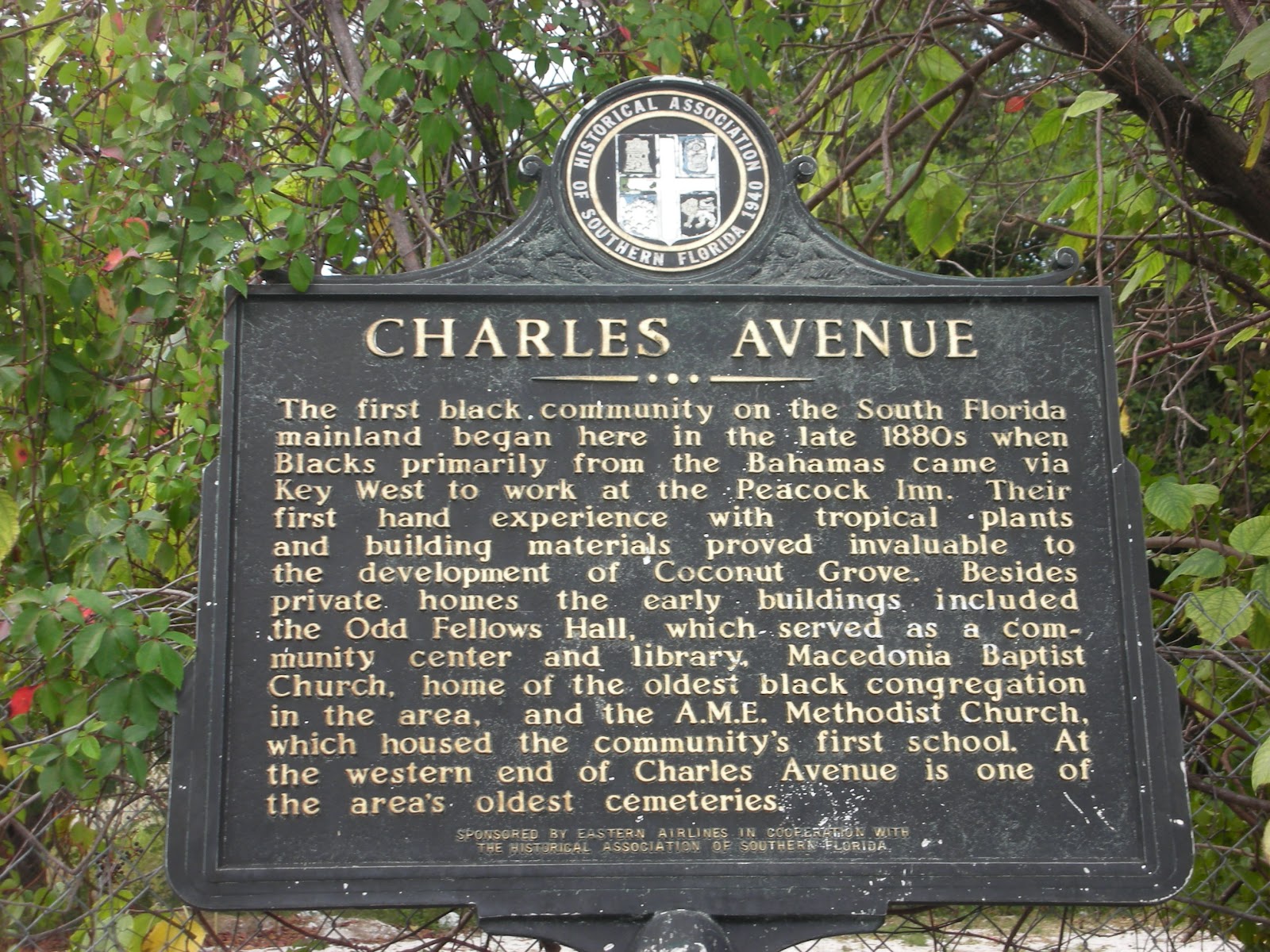
The marker that started my quest. Click to enlarge.

After a short hiatus, here’s a fair warning for those who got tired of hearing me spout off about Charles Avenue and Coconut Grove: I got the bug all over again, so get used to hearing me spout off about Charles Avenue and Coconut Grove all over again.

At my old, former, moribund blog Aunty Em’s Place (now overgrown with spammers and ivy) I started a series called The Shame of Coconut Grove™, which I continued on facebook on my old, former, moribund Aunty Em Ericann account. Before Aunty Em was kicked off facebook, she (me!) had unpacked quite a bit of Coconut Grove, both its history and internal politics, all because of an accidental encounter with a historical marker (at left).

A must read book on race

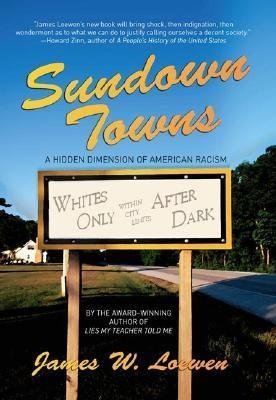
People who have known me a long time know I gravitate towards stories about race relations, a life-long interest. Had I really taken up that Black Studies Program when I first considered it, I’m sure I would be Black by now. Coincidentally on the day I discovered the Charles Avenue historical marker, as part of my independent study reading list, I was in the middle of “Sundown Towns: A Hidden Dimension of American Racism,” by James W. Loewen, which is the single greatest book on race relations I have ever read. It explained to me why every ‘Merkin city looks the way it does and why the overt racism of days gone by led to the covert racism of today. It also explained, for me, how White Privilege was woven into the fabric of life as generations experienced it so that, today, it covers us like a warm blanket that is so comfy we don’t even realize we’re wrapped in it. The events and attitudes described in Loewen’s book affect our lives every day, whether we stop to consider it or not.

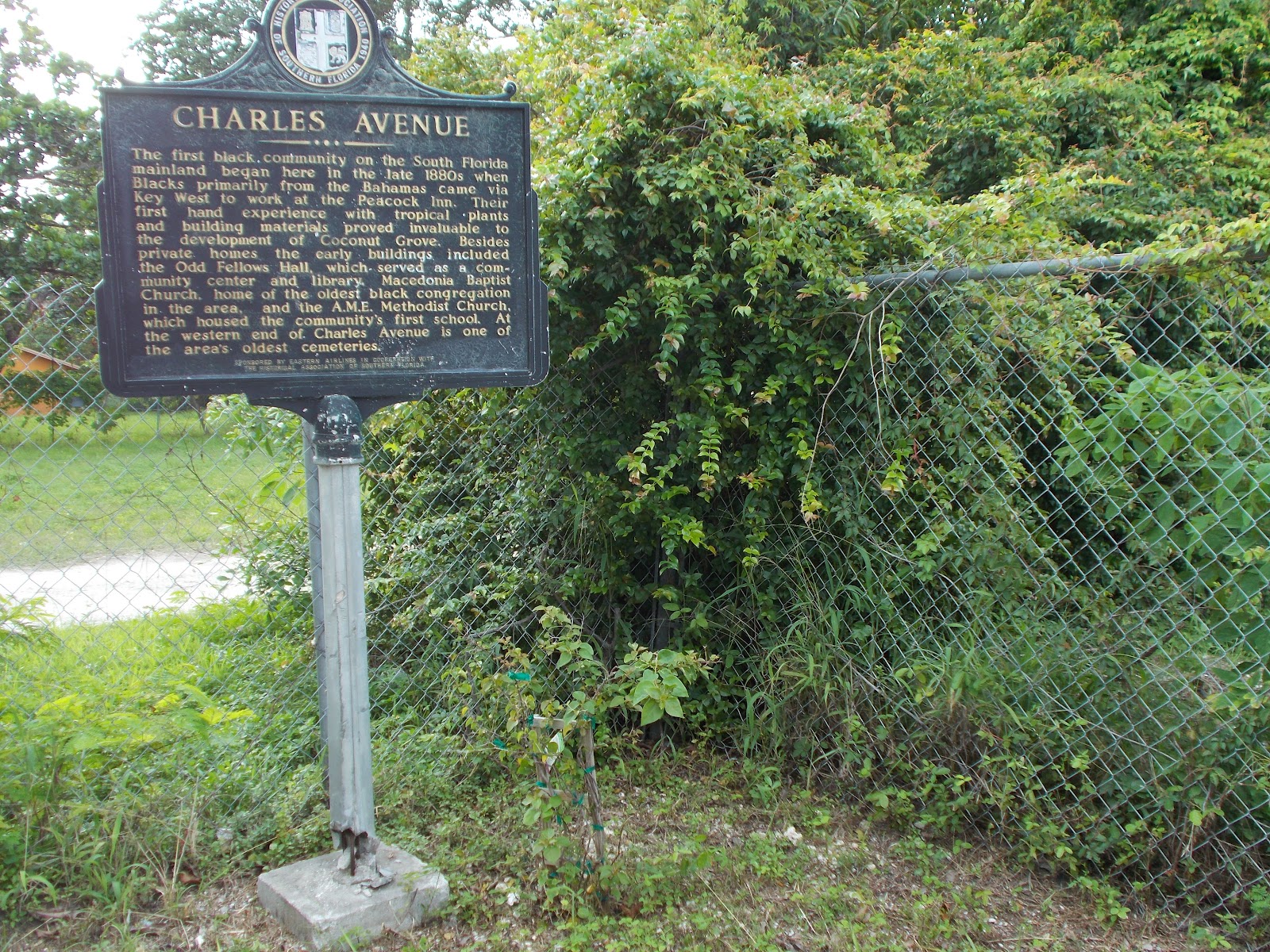
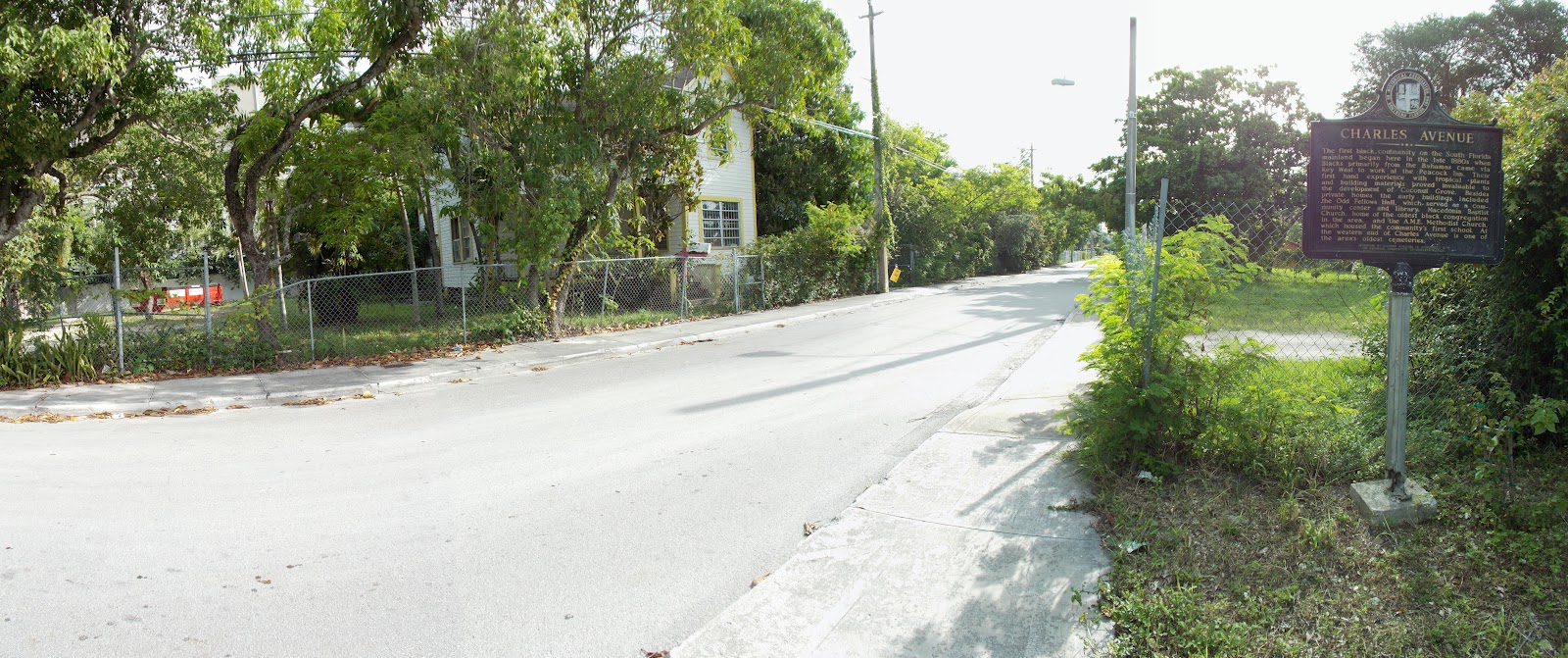
There was just something about the Charles Street historical marker that spoke to me. The sign, the location, and the condition seemed to encapsulate the Black ‘Merkin Experience: a rich history not only ignored and forgotten, but mistreated in its memory. The panorama below shows the condition of the marker and the historic E.W.F. Stirrup House across the street. [More about the house and Mr. Stirrup in later chapters.]

Panorama of the historical marker and the E.W.F. Stirrup House across the street. Click to enlarge.

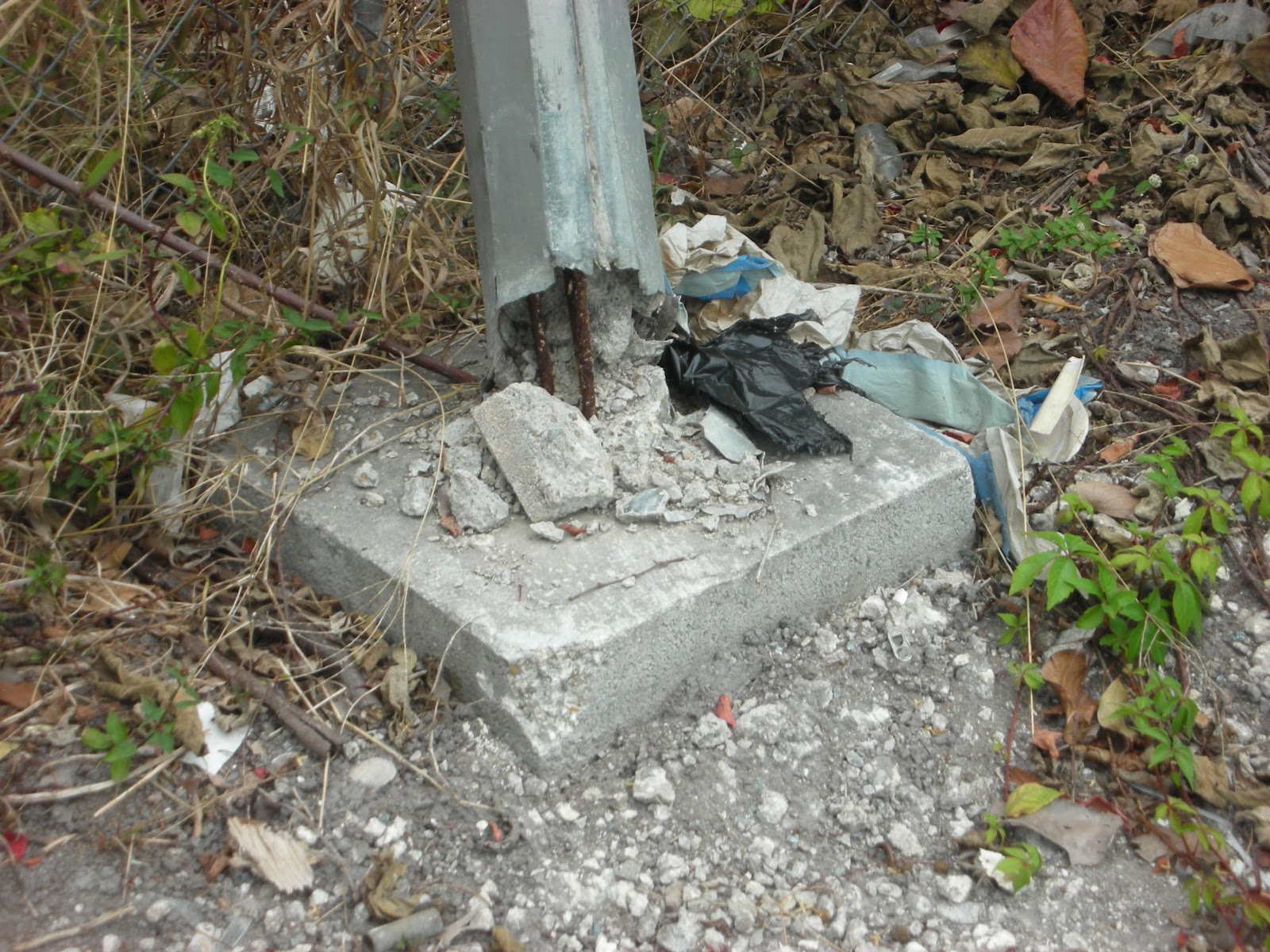
Detail of sign’s base. Click to enlarge.

The sign was leaning backwards at an uncomfortable angle. If not for the fence behind it, it might have fallen down completely. The base (see right) was broken. The first time I visited (early 2009) I just thought the pole was bent. I didn’t see the base due to the garbage bags piled up all around it. [I cannot seem to find the pics of my 1st visit, but have all the rest.] On my second visit, and subsequent visits, the garbage had changed, which meant that it was being used as a regular, accepted trash collection site. And, why not? The base had clearly been broken for quite a while to have sustained the damage I saw. The aluminum post, when new, had been filled with cement and steel rebar, which was in a dreadful state of disrepair having been exposed to the elements for…how long? I had no way to estimate, but it was clearly not recent. The sign had been sponsored by Eastern Airlines, a defunct company, in cooperation with The Historical Association of Southern Florida, an entity I could never find.

The location of the sign is no less significant. There’s no way to whitewash this: Coconut Grove, Florida (incorporated into Miami in 1925) is considered one of the most exclusive addresses in all of ‘Merka.


View Charles Avenue, Coconut Grove, Fl, 33133 in a larger map. Zoom out to see Coconut Grove in relation to Miami.

E.W.F. Stirrup House

Let’s get oriented: Coconut Grove is nestled up against the western edge of Biscayne Bay, where the 3,000 mile long intercoastal waterway trails off into nothingness. The E.W.F. Stirrup House (pictured at left), the Coconut Grove Playhouse (pictured below) and the Charles Avenue historic marker are on the eastern end of Charles Avenue at Main Highway,  On the opposite, eastern side of Main Highway is a residential area I have been unable to breach. It is one of the most exclusive areas in ‘Merka, so gated and secured even Google mapping cars aren’t allowed inside. I once walked to the gate and started taking pictures and within a minute was shooed away by a security guard that appeared out of nowhere. These fuckers are serious.

The Coconut Grove Playhouse taken from
the more exclusive side of Main Highway.

I became obsessed with the Charles Avenue historical marker and Coconut Grove, to the point where I decided it was the perfect place to locate my favourite character in my novel-in-progress. That gave me another reason to research Coconut Grove. Work took me through the area every couple of weeks. I would always stop and take as many pictures as I could stand before the oppressive Florida heat got to me. I now have thousands of pictures of Charles Avenue and enough research to think I have uncovered a years old scandal in the village of Coconut Grove that could become a non-fiction book all on its own.
However, two years ago my circumstances changed and I no longer had any reason to drive the 35 miles to
The Grove. When I was visiting it regularly, Aunty Em Ericann would come back and post dozens of pictures on facebook with a small essay describing the lack of changes on Charles Avenue from week to week. I became dejected. Aunty
Em
had spent a considerable amount of my time posting pictures, writing essays, and contacting community
activists. However, I couldn’t get any traction on my
Save the Charles Avenue Sign campaign. Worse, I couldn’t get anyone interested in what I (still) believe is a massive, multi-gajillion dollar real
estate scandal.

Since I couldn’t get anyone to listen, and I am no longer an investigative journalist with an editor to support and sponsor these expensive fishing expeditions into possible malfeasance, I gave up. However, I never forgot about Coconut Grove, especially since my novel character Adrian had moved there at the end of the ’60s, after Detroit had started to become toxic.

Lately Charles Avenue has been nagging at me. Because it’s 35 miles away —
all crazy Florida highway — I have been putting off making the trip for the past few weeks. I knew I would need a minimum of 3 hours to do it justice; get there, take some pictures, check on recent developments, and come home. It was difficult to work into my schedule and the longer I tried, the guiltier I felt for having abandoned Charles Avenue. Last week I finally bit the bullet, gassed up the tank, and made the harrowing highway adventure. I returned more despondent than ever about Charles Avenue. I came back even more pissed off at what is clearly The Shame of Coconut Grove™. However, it also made me more determined than ever to do something about it. What? I do not know. I am still processing and writing about the trip, which will be Part Two in this series. Part One is long enough already, but I felt this background was needed.

However, before I sign off, there was one bit of good news on Charles Avenue. Someone (or a group of someones) have taken it upon themselves to attempt to straighten the Charles Street historical marker. They have also planted a drought-resistant flowering bush next to it. It will look nice when it fills in.

The sign, while still not true, no longer leans against the fence. The new plant is staked in the ground to the right of it.

The late afternoon sun streams down Charles Avenue in this recent panorama.

However, this small sliver of hope doesn’t even begin to mitigate all the negative I saw. That’s why I have decided to take up the cause of Charles Avenue once again. I am going to make Charles Avenue the most famous street in ‘Merka, representing centuries of institutional racism. And, along the way, I just might expose a multi-gajillion dollar Coconut Grove boondoggle. Who’s along for the ride?

Stay tuned for Part Two of Unpacking Coconut Grove.