Tag Archives: Nostalgia Ain’t What It Used To Be

I’m the Barber of Oakville ► Throwback Thursday

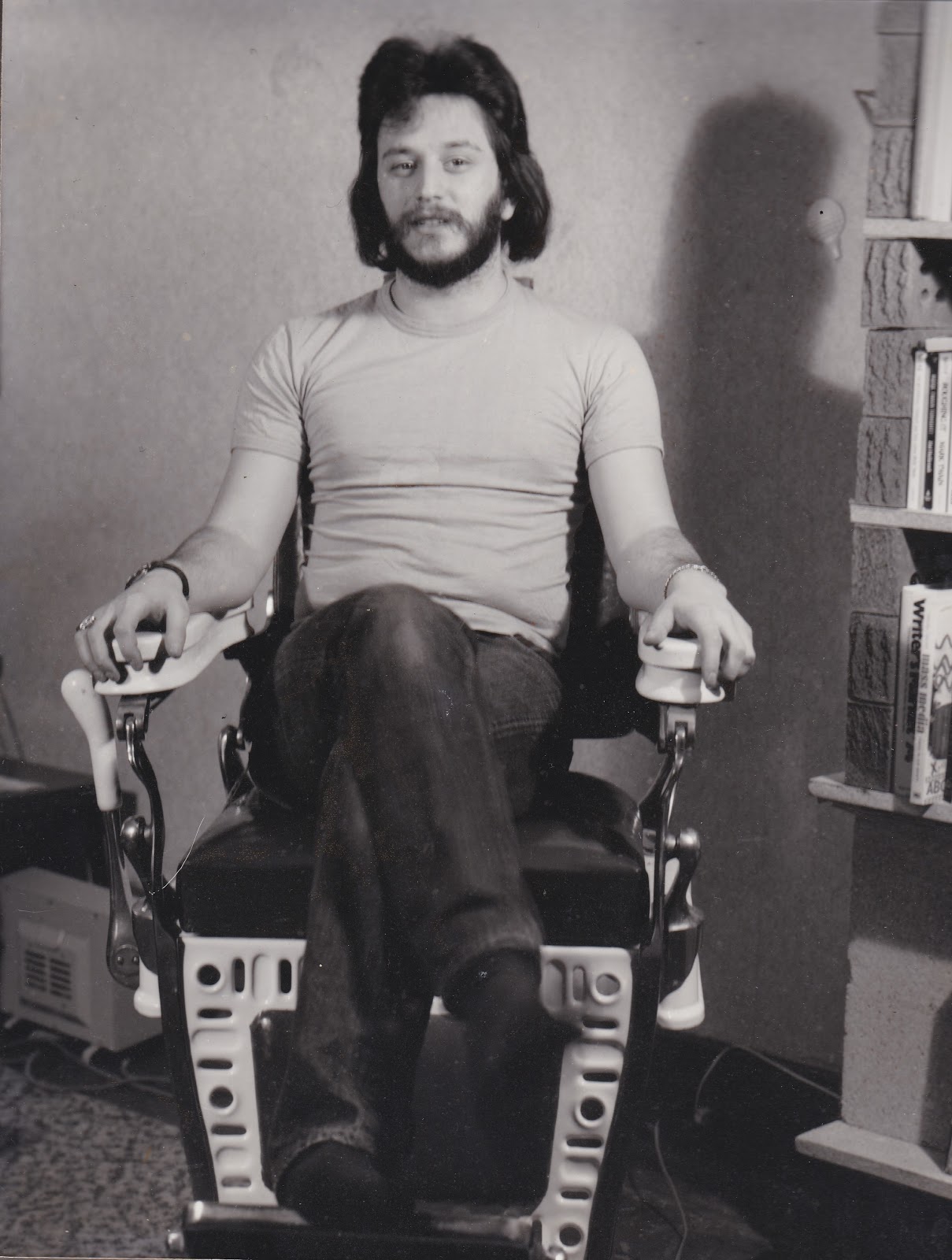
When I was about 20 years old I bought a barber’s chair, something I treasured for many years.

I found it in an antique store on Lakeshore Road in downtown Oakville, Ontario. It was one of the first big purchases of my life. It was easily the heaviest purchase of my life, until I bought my first car, a Volkswagen Beetle, a few years later. The Volkswagen was infinitely easier to move.

It was a wonderful, comfortable chair, which was fully functional. The handle (on the left) had several actions. Pushing it out would allow the chair to tip all the way back to recline, which is what barbers would do when they needed shave you. Your head would sit on the adjustable, padded headrest.

Pumping the handle forward would adjust the height of the chair, using an oil-filled hydraulic mechanism. From its lowest position to the highest was about a foot-and-a-half. It was a whole lot of fun to raise the chair up to its highest position and then release it.

The chair would also rotate 360 degrees. It was far more fun to put someone in the chair and spin them around, making them dizzier than a GOP candidate trying to explain their policies.

When I bought it it was delivered to my house on Brant Street. I never really considered what it would be like to move it from one residence to another … and boy, did I move a lot over the years.

This thing was easily 500 pounds. The metal parts were made from
chromed, cast steel. The white parts were made out of the same material
as old ceramic bathtubs. The padding on the seat (as well as the back)
had horsehair above a set of metal springs. Everything about it was
solid and heavy.

It took a minimum of 4 people to move it anywhere. Even when using a 2-wheel hand truck, it required a small cadre of folks to get it from one place to another. Stairs were its worst enemy. Yet, it made it up several sets of stairs to several apartments over the years.

The last place I had my barber’s chair was my 2nd floor apartment on Roncesvalles Avenue. When I moved from there to a 4-storey walk up on Lauder Avenue, at St. Clair, I couldn’t find anyone who would help me with the chair. It went into storage in a friend’s garage, but I lost it when he moved without telling me, abandoning the thing to a new owner.

I still miss that chair. It was a beaut.

All Hail the King of Late Night Talk Shows ► Throwback Thursday

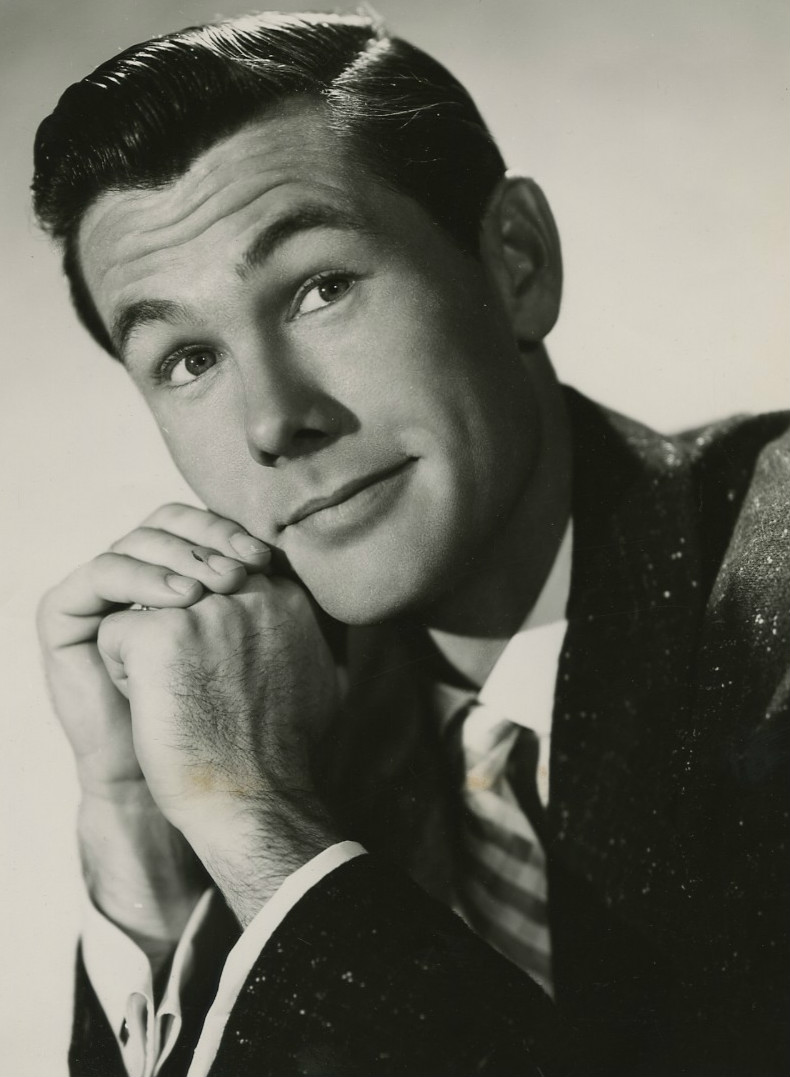
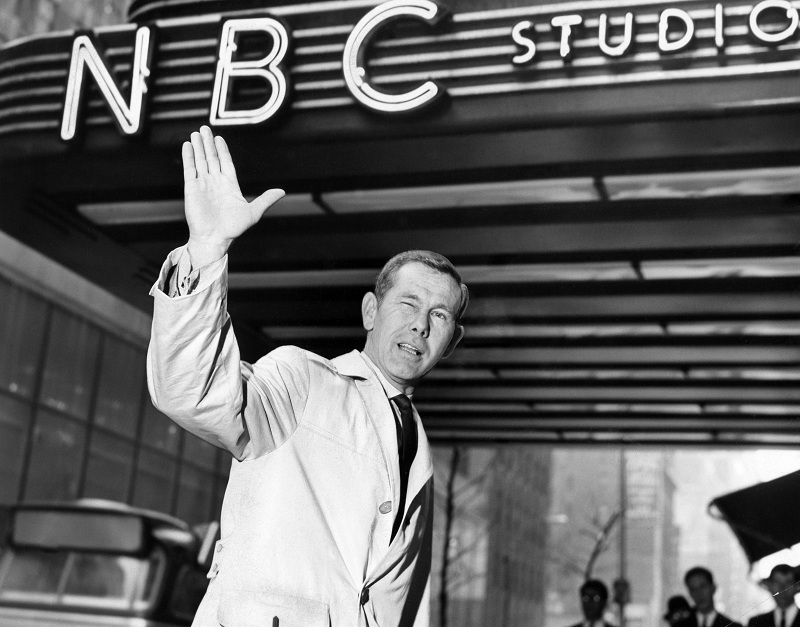
The undisputed King of Late Night is — and forever will be — Johnny Carson. On this day in 1962, Carson took the helm of The Tonight Show, and nothing was ever the same again.

Carson didn’t invent the modern talk show. That honour goes to Steve Allen. However, Carson reinvented the talk show and kept reinventing it night after night for 30 years, racking up nearly 5,000 shows. But it wasn’t his endurance that made Johnny Carson a star. According to Biography:

Audiences found comfort in Carson’s calm and steady presence in their living rooms each evening. Revered for his affable personality, quick wit and crisp interviews, he guided viewers into the late night hours with a familiarity they grew to rely on year after year. Featuring interviews with the stars of the latest Hollywood movies or the hottest bands, Carson kept Americans up-to-date on popular culture, and reflected some of the most distinct personalities of his era through impersonations, including his classic take on President Ronald Reagan. Carson created several recurring comedic characters that popped up regularly on his show, including Carnac the Magnificent, an Eastern psychic who was said to know the answers to all kinds of baffling questions. In these skits, Carson would wear a colorful cape and featured turban and attempt to answer questions on cards before even opening their sealed envelopes. Carson, as Carmac, would demand silence before answering questions such as “Answer: Flypaper.” “Question: What do you use to gift wrap a zipper?”

In August I was thrilled when Variety announced Johnny Carson Returns: Antenna TV to Air Full ‘Tonight Show’ Episodes starting January 1st:

Antenna TV has struck a multi-year deal with Carson Entertainment Group to license hundreds of hours of the NBC late-night institution. Antenna will run episodes that aired from 1972 through the end of Carson’s 30-year reign in in 1992. Because NBC owns the rights to “The Tonight Show” moniker, Antenna TV’s episodes will be billed simply as “Johnny Carson.”

“This is not a clip show. This is full episodes of Johnny Carson, the man that everyone in late-night agrees was the greatest host of all time, airing in real time as he did back in the day,” Sean Compton, Tribune’s president of strategic programming and acquisitions, told Variety. “Tuning in to ‘The Tonight Show’ is like taking a walk down Main Street in Disneyland. The minute you step in there, you feel good and you know it’s a place you want to stay. We cannot wait to bring this show to fans who remember Carson and to a new generation of viewers who have never had the chance to see Johnny in his prime.”

Starting January 1st we’ll see more comedy brilliance like this:


The Nuptial Nostalgia Tour ► Throwback Thursday

In August I announced my Road Trip to Canada, which took me to Hamilton and Toronto, cities I’ve written about previously. It was transformed into a magical road trip, filled with Deja Vu and synchronicity; a trip when finished felt preordained. It was truly throwback in ways I could have never imagined and I’m still trying to process it all.

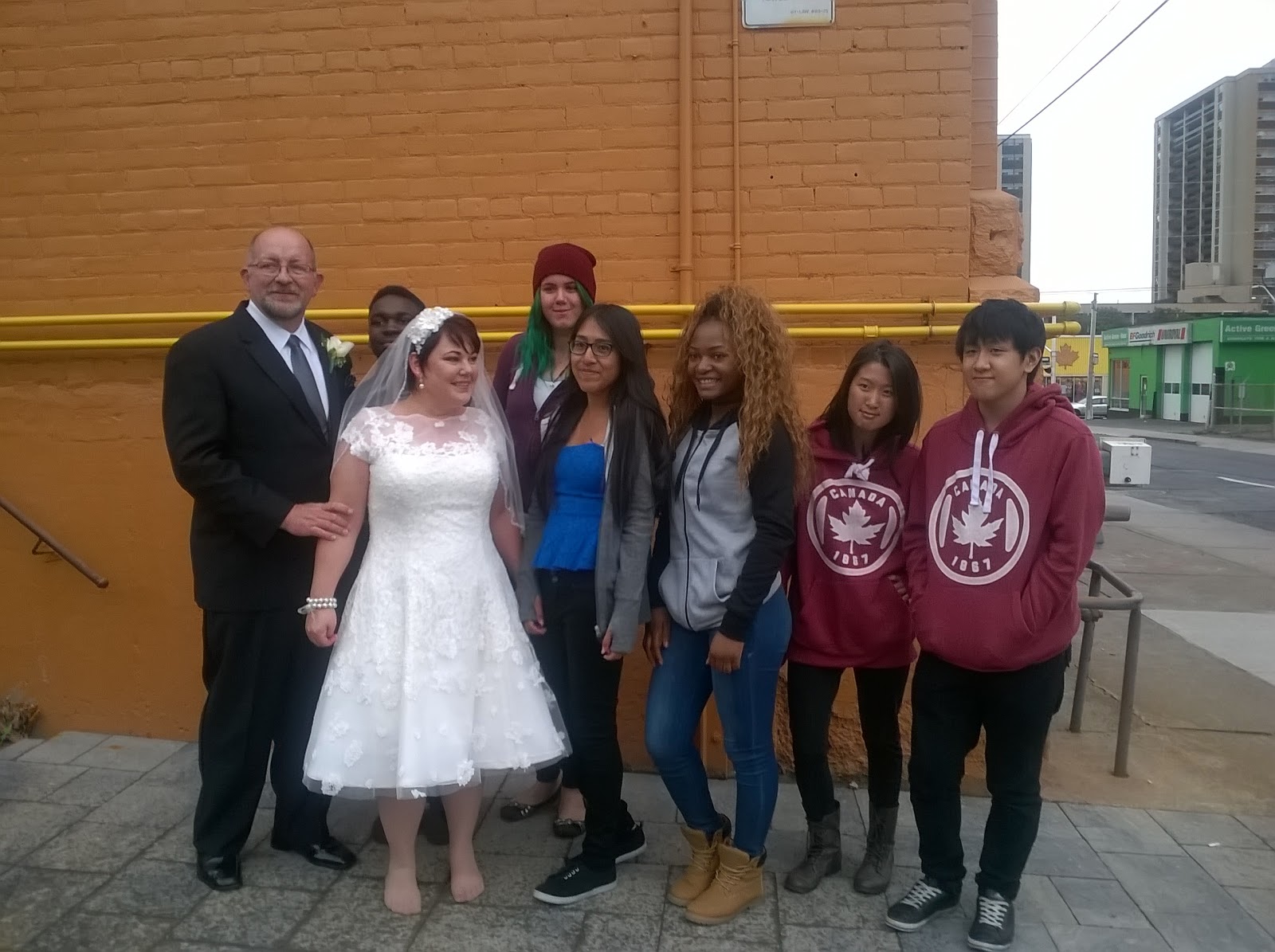
Wedding photography outside The Werx The Spice Factory

The first strong echo of the past was the wedding venue. The Spice Factory is in a building that was once called The Werx, but that was several owners ago. After the building sat idle for a while, the new owner renovated it to be a bar/special event venue. However, The Werx was the place in Hamilton where we all used to hang and put on our own events more than a decade ago. Now we were back in the building experiencing extreme Deja Vu.

In fact, The Werx was the location of the ghost hunt I conducted with the Girly Ghostbusters, first described in Hamilton Magazine.

It was great being in that building again. It was also pretty special being back with that group of people again. These are people I dearly love, but only get to have computer contact with. At one point we were all standing out in front of the building — in our tuxedos and fancy dresses — and realized, “How many times have we done this?” We laughed and laughed and laughed, just like we used to.

And yet, as comfortable as this all was, there was also a sense of dislocation. While some things were the same, other things were very different. And, the same is also true for all the other experiences I will relate below.

That’s my old apartment on the top floor, left

After the Hamilton wedding I went to Toronto, the city I truly consider home.

One of the best apartments I ever had in Toronto (and I’ve had several great ones) is in a building I never thought I’d be in again after moving out some 17 years ago and leaving behind a pull-out couch that was too heavy to carry.

Yet, recently my daughter was looking for a new apartment and found one in the very same building. I spent 2 nights with her and it was so weird and wonderful being in the same building again.

While in the old neighbourhood I spent a couple of days looking for my old supers, who had moved to an apartment above a store on Queen Street West, above one of the antique stores. I had absolutely no luck. If anyone knows where to find Shane and Margaret, I’d be most interested in hearing all about it. They were two people I had really hoped to find while in Toronto.

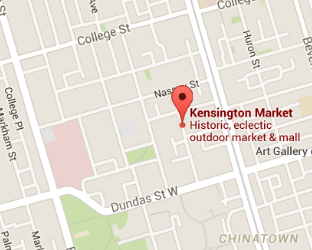
While in Toronto I used Kensington Market as my home base because it was convenient to everything and everybody.

It was wonderful being in Kensington Market again. I lived in the Market 40 years ago, when the Island Records Canada offices were on the ground floor of a house on Nassau, at Augusta. That’s why I’m considered a Marketeer and why this was a long-delayed homecoming.

There are few places on earth quite like Kensington Market. The WikiWackyWoo says:

Kensington Market is a distinctive multicultural neighbourhood in Downtown Toronto, Ontario, Canada. The Market is an older neighbourhood and one of the city’s most well-known. In November 2006, it was designated a National Historic Site of Canada.[1][2] Robert Fulford
wrote in 1999 that “Kensington today is as much a legend as a district.
The (partly) outdoor market has probably been photographed more often
than any other site in Toronto.”[3] 

Kensington Market: A small
place with a very big heart.

However, there’s no way the Googlizer can convey the sense of family one finds in The Market. It only runs a few blocks in any direction and feels like a small village. Everyone looks out for everyone. While I was there I saw store owners bring out food to give to the Punks that congregate near the alley. There’s an amazing energy in The Market, with the sidewalks crowded from early morning to late at night.

I could easily see myself living in The Market because it felt like home. Everyone welcomed me with open arms and seemed truly sorry that I had to leave.

For the most part The Market is The Market. On the surface it appears to have not changed at all. The cheese shop is still there. The fishmonger has the same smells. The green grocer next to my old house is as busy as it ever was. Yet on closer examination one notices new businesses tucked between the same stores as before: New Age stores, fancy coffee shops and restaurants, and funky vintage clothing stores.

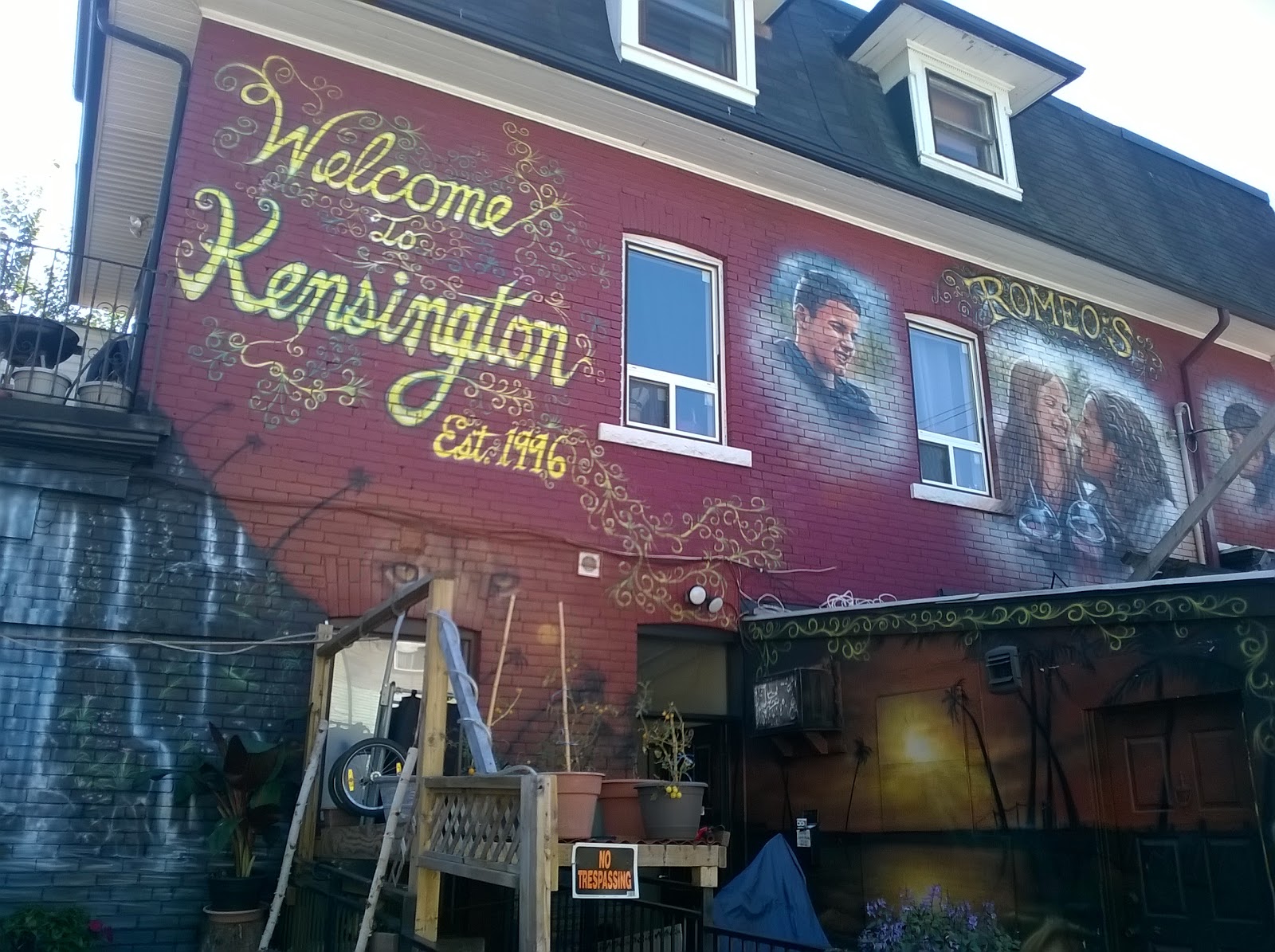
You can take the boy out of the Market, but you can’t take the Market out of the boy. That’s my
old house behind me. Island Records was on the ground floor and I lived above on the third floor.
When I  walked into Lola, I ran into Brad, who I worked with at
Citytv for over decade. Now that he’s retired, this is his hangout.

It was terrific being in the Market again!

And, I want to extend a special THANK YOU to Gwen and Huong Bang, the two sisters who own Lola in Kensington Market.

I had this crazy idea to throw myself a party while in Toronto. It was borne out of practicality. I couldn’t possibly visit everybody I wanted to see and who wanted to see me in the 4 days I was there. But, what if they all came to me?

I approached a woman I knew slightly 40 years ago, when she became friends with my first wife after we had split. They went to George Brown college together. Barbette Kensington and I reconnected a few years back on the facebookery. I knew she was an event organizer so I asked her where she would hold a party for me. She found Lola (because it’s one of her hangouts) and, somehow, ‘convinced’ Gwen and Haung to allow all of my crazy friends to descend on their place. [I’m told they were happy to do so.]

Barbette Kensington making sure all goes well at my party.
That’s the infamous Richard Flohill in the foreground.

In fact, Barbette took that ball and ran with it. My party went off flawlessly and I had such a wonderful time that I wished it would have never ended.

In some respects it hasn’t.

I’ve had a smile on my face since my trip to Toronto and my spirit has been changed in ways I can barely describe, despite my facility with words.

All I can say for now is that my life has been transformed and there are new roads and adventures in my future.

Sally Kellerman and Me ► Nostalgia Ain’t What It Used To Be

People ask, “But what about that Sally Kellerman story you keep promising?” Grab your favourite beverage and sit back kiddies. It’s finally arrived. 

Back in 1973 I was a starving Media Arts student at Sheridan College of Applied Arts and Technology in Oakville, Ontario Canada. Despite being a naive 21-year old, I already had a failed marriage behind me.

When my marriage broke up, I threw myself into college activities, helping run the Radio Sheridan, which a bunch of us tricked the Student Activity Council into financing and editing “A Student Magazine,” an alternative publication that we tricked the Student Activity Council into financing. In fact, that’s where and when I started my writing career.

My first regular column — in a lifetime filled with banging words together — was called “Octoroon Expressway; Next Left,” a title that would probably generate outrage today, but these were much simpler times. At first I was just attracted to the word “octoroon” because of all those Os. It’s just a great looking word. However, when I learned the definition, I knew that’s what I wanted to call it. It’s hard to imagine that people once kept track of that sort of thing, but I digress.

The Media Arts course was somewhat of a free-wheeling mess, no offense to my instructor Jim Cox, whom I’ve only just recently reconnected with on Facebook. It was just so loosey-goosey. The course had only recently been created and this was the very first year a 2-year Media Arts course was offered. Everyone was looking at this period as a shakedown cruise. We were all — faculty and students alike — feeling our way. Consequently, the students got a way with a lot. It was like Hogan’s Heroes in that regard.

I remember arriving one day to see boxes stacked 6 feet high lined up along both walls of the entrance hallway. I started moving them into the center of the hallway. People arriving and leaving started to help. Within a few minutes we had created a maze which people had to navigate to get in or out of the building.

Today I know better than to create a maze at the entrance to a building. Of course, I wasn’t thinking about fire regulations. I was just having fun. But, it wasn’t fun sitting in the Dean of Student Affairs’s office getting chewed out by Dean John Bromley and the Chief of the Oakville Fire Department.

I digress. This was supposed to be about me and Sally Kellerman.

But first, A Dollar’s Worth Of Trouble, a comedic episode of Bonanza guest starring Sally Kellerman:

Still with me? Good.

Once a week, for Film Appreciation (or whatever it was called), Jim Cox would show us a movie or two. These were not limited to your typical Hollywood fare. We saw movies from the entire world; from every era; and every genre, from experimental, to documentary, to animation. From Metropolis to The Lady From Shanghai. From El Topo to Point Of Order. From Norman McLaren to Don’t Look Back.

It was this class, more than any other, that opened my eyes to what film could accomplish and this is as good a place as any to thank Jim Cox for instilling in me a lifelong love of the medium.

One week Film Appreciation was your typical Hollywood fare, but even that was atypical. I don’t know how Cox managed it, but he got a hold of the movie Slither to screen for us, and it had not been released to theaters yet. If that weren’t enough, when the movie finished in walked Sally Kellerman, who did an hour’s Q&A with everyone who stayed through the movie. Not everyone did.

Naturally, I knew who Sally Kellerman was. M*A*S*H, the movie on which the tee vee show was based, was a huge hit when it was released. She was nominated for an Academy Award and a Golden Globe for her role as Hot Lips Houlihan, and deservedly so. The movie is far darker, and a much greater condemnation of the insanity of war, than the Alan Alda series of the same name. And, of course I also knew her as Elizabeth Dehner in “Where No Man Has Gone Before,” the Star Trek episode famous for being the second pilot, although it was the third episode aired.

We had a real live Hollywood star in class. To be honest, I can’t remember if I even asked Sally Kellerman a question.

And that’s my story about me and Sally Kellerman.

Just kidding. If that were all, there’d be no reason to write about it. However, as far as I knew at the time, that was the end of it. Until later that night . . .

It was already after dark and I was already settled in for the night when my phone rang. One of my classmates was inviting me over to the townhouse she shared with several other gals. I declined. She got more forceful. I declined again.

“Get your ass over here or you’ll be sorry. And, that’s all I can tell you.”

This was a 13 miles drive along Lakeshore Drive, in winter, from Oakville to Burlington. However, my curiosity got the best of me and I bundled up and drove to the townhouse. When I arrived I was told that everyone was in the back room and just to head on back. There was one long corridor with rooms off to the side. As I approached, I came into view of more and more people who all said, “Hi, Headly.” “Hi, Headly.” “Hi, Headly.”

As I entered the room to this chorus of Hi Headlys, the last corner of the room came into my view. There, curled up in a beanbag chair, was Sally Kellerman, the last person to say “Hi, Headly.”

It turned out that my classmate got to talking to Sally after the Q&A and, out of the blue, invited her to spaghetti dinner back at the townhouse. To her surprise Sally accepted. They had been eating and smoking dope for hours before I got there.

During this period of my life (and for decades afterwards, on fact) I kept a journal, which I carried everywhere. I used it to put down all kinds of nonsense, not just words, but entire collages of pictures and words. [Another project I want to perform when I find the time is digitizing some of it for Not Now Silly. They are currently packed away.] Sally took my journal and thumbed through it and anointed it in 2 places. On a sexy picture she found of lips sucking a straw she wrote something to the effect of “I didn’t know you still had this picture of me.”

We all had a great time talking and laughing and one by one people drifted off. As it got very late, Sally said she had to go back to Toronto. That seemed to be the end of the night and I stood up with her. We walked out together and I walked her to her limo, where the driver sat waiting all night. We kept talking and suddenly she said, “Why don’t you come back with me to my hotel?”

Here’s how naive I was at 21: It never occurred to me that Sally Kellerman was inviting me back to her hotel room for anything other than continuing our scintillating conversation. All I could think was the logistics of “How do I get back to Burlington to get my car” and “I have a class in the morning.” So, I declined.

Later I read she liked younger men and I certainly qualified at the time.

I’ve been kicking myself ever since.

Me and Jim Kale ► Nostalgia Ain’t What It Used To Be

More than once I’ve been called the Zelig of the innertubes, popping up to witness pivotal moments in history. A night I spent with Jim Kale, of The Guess Who and Scrubbaloe Caine, is one of those times.

Get comfortable, kiddies, because we’re taking the Wayback Machine all the way back to the early ’70s.

Back then I was the station manager of Radio Sheridan, the campus radio station at Sheridan College in Oakville, Ontario, Canada. Radio Sheridan was one of the few campus stations in the country respected by the major record companies. They knew that normally records sent to a campus station went into a black hole, never to be seen again. When the Promo Reps visited Radio Sheridan, which they did often because we were on the route between Toronto and Hamilton, they could find every record they ever sent us in the library ready for a DJ to select it.

Not only could we count on the personal touch from the Record Reps, but we were also getting interview offers for Big Deal Rock and Roll artists, concert tickets with occasional backstage passes, free records for our personal collections, and posters for our home walls. We knew these were all perks normally reserved for broadcast radio jocks and the music reviewers from the national press. We felt honoured to be included, but it was also a testament to how well organized Radio Sheridan was in the day.

Long before the night in question, Jim Kale was a member of The Guess Who. It’s easy to forget that The Guess Who was an international hit band back in the days before CanCon radio regulations mandated stations play 33% Canadian Content. Kale stayed with The Guess Who until soon after the 1972 release of release of Live at the Paramount. The reason was ascribed to undefined “health problems,” something cited more than once in biographies about more than one point in Kale’s career. However, it has always been rumoured in Canadian Show Biz, which is a very small pond, that this was a euphemism for alcoholism.

Soon after leaving The Guess Who, Kale hooked up as bass player with Scrubbaloe Caine. As manager of Radio Sheridan I listened to every record that arrived to decide what genre it fell into. There was no genre off limits and it wasn’t unusual to hear Rock and
Roll rubbing shoulders with Jazz, Blues, or Big Band Swing. Then I’d log them into the library alphabetically and let all the DJs know what was new. That’s how I became an early adopter of a lot of different music such as (for the sake of this story) Scrubbaloe Caine.

I fell in love with Scrubbaloe Caine on first listen. There weren’t many Rock and Roll bands with a lead violinist/lead singer. That was Henry Small, who went on to found Small Wonder and later sang with Prism. Also in the band was the double-lead guitar team of Paul Dean, later of Streetheart and Loverboy, and Jim Harmata. Filling out the band was Al Foreman on keys and harmonica and Bill McBeth hitting the skins.

Scrubbaloe Caine should have been HUGE. I thought they were so great that I raved about them to John Murphy, the RCA Promo Rep, the next time he came around. A short time later Murph called to say he was driving up to catch Scrubbaloe Caine live in Sudbury, Ontario, Canada, a long way from Oakville. He wanted to know if I was down for a ROAD TRIP!!! I said yes immediately, but made him promise that we’d see the Giant Nickle first, because I had never seen it before.


Road trip music: As always, CRANK IT UP!!!
I lived in Canada for 35 years and this is still the most Canadian thing I did in the entire time I lived there. After a quick trip to the Giant Nickle we headed into the Sudbury Arena, where Scrubbaloe Caine was opening for Crowbar. It doesn’t get more Canadian than that.

This was one of those times I got a backstage pass, not that backstage at a hockey arena is anything to write to ‘Merka about. However, that allowed me to wander at will in all the dressing rooms. That night the Sudbury Arena was Party Central and I was INVITED.

Crowbar and Jim Kale had played on many of the same concert bills over the years and it was like old home week and — boy, oh, boy — did they catch up on old times. I didn’t know Jim Kale had a drinking problem. I was just a wide-eyed kid (in my early 20s, to be honest) amazed that I was partying with Crowbar and a former member of The Guess Who and current member of Scrubbaloe Caine, my favourite new band.

As the night wore on, Kale got drunker and drunker. By the end of the evening Kale was shitfaced and Murphy was tasked with getting him back to Toronto. It’s not all glamour for Promo Reps. Sometimes they have to clean up after the band.

Along the way we also acquired some gal (who I barely remember, other than there being one) that needed a ride back to Toronto. She got in the front and Kale and I poured ourselves into the back seat. We were still wending our way out of Sudbury when Kale made a deliberate fist, with his middle knuckle sticking out, and started punching me in the upper arm. HARD!!!


Looking for trouble? Not me. I just want to sit quietly in the back seat.
“John! He’s hitting me!!!”

“Jim! Stop hitting him!”

Jim kept hitting me. In the same place. With the knuckle. It hurt like hell. I had the bruise for weeks.

“He won’t stop hitting me!”

So John decided we had better stop at a Tim Horton’s and get some coffee into Kale before we get on the highway for the 5 hour drive home. Meanwhile, I scrunched myself into the corner of the backseat behind the driver’s seat, fending off Kale with my feet as he kept trying to land blows. Murph finds the Timmies and I scrambled out of the car as soon as it came to a stop. We all walked around the car to the passenger’s side and watched Kale get out of the car. He stood up fully erect and filled with the dignity only someone who is stinking drunk can approximate.

Then we all watch helplessly as he went down like a tree in the forest. TIMBER!!! With a loud thump his forehead hit the curb.

Now Jim Kale is out cold and bleeding like crazy from a gash on his forehead. We each grabbed a corner, tossed him back into the backseat, and raced off to the hospital. Hospital staff got him out of the car and onto a gurney. After a real quick examination they told us that he’s going to have to have stitches. That’s pretty much when Kale regained consciousness. He was still bleeding, but wouldn’t let anyone treat him. The staff tried to have us hold him down because we’re his friends, yannow. But, he was too strong for all of us as he tried to fight the entire hospital staff, landing a solid blow or two. At some point someone called the police. When they arrived they told us to go home because Kale was going to jail if they ever manage to stitch him up. We were forced to leave him there.

I am told that’s the night Scrubbaloe Caine broke up. But, still, they should have been huge!!! Listen to just one more:

Postscript: Over the years The Guess Who have participated in several reunions, which featured various line-ups and members of the band. After one of these renions Jim Kale discovered that no one had ever bothered to register the name The Guess Who, so he did. He’s owned it ever since, with drummer Garry Peterson, and they continue to perform as The Guess Who.


The Classic Line up
CRANK IT UP!!!

Hurricanes I Have Known

The crazy trajectory of Hurricane Wilma. When it began,
the liklihood of hit hitting Florida was almost zero.

DATELINE: October 19, 2005 — On this day Wilma became “the most intense hurricane on record with a minimum pressure of 882 mb.”

Everybody remembers Katrina, but Wilma has always been the bridesmaid. But, it should be the other way around. Here’s why from the WikiWhackyWoo: “Hurricane Wilma was the most intense tropical cyclone ever recorded in the Atlantic basin. Part of the record breaking 2005 Atlantic hurricane season, which included three of the six most intense Atlantic hurricanes ever (along with #4 Rita and #6 Katrina), Wilma was the twenty-second storm, thirteenth hurricane, sixth major hurricane, fourth Category 5 hurricane, and second-most destructive hurricane of the 2005 season.” 

At the time I had just moved to Florida and wondering what the hell I had gotten myself into. All the news stations down here were going crazy with hurricane coverage and were saying that such an active hurricane season might be the “new normal.”

CLICK TO ENLARGE: Top left: One of the building’s roof peeled off by the wind;
Top right: Trees took the brunt of Hurricane Wilma; Lower left: A neighbour’s
car after the roof was peeled of its roof; Lower right: Roof where it don’t belong.
That yellow thing is the ‘igloo’ where we put our recycling. They became airborne.

While a couple of hurricanes had skirted by Florida prior to Wilma, and Hurricane Katrina crossed the state much farther north, no one thought that Wilma would hit Florida.

It formed as a Tropical Depression, as they all do. But, rather than getting organized in the eastern Atlantic Ocean, it formed in the Caribbean, near Jamaica. Two days later it became a Tropical Storm and received a name: Wilma. A day later it was already a monster Category 5 hurricane.

Then it moved over the Yucatan Peninsula of Mexico, where it simply stopped moving. Hurricane Wilma churned over the Yucatan for almost 2 days, as tourists in Cozumel and Cancun hunkered down as best they could. During those 2 days Hurricane Wilma lost much of its energy, decreasing to a Cat 2 when it entered the Gulf of Mexico. Then the fucker made a right turn and headed straight for my condo.

My condo’s on the east side of Florida. First it made landfall in Cape Romano as a Category 3. However, it also picked up lateral speed, moving across Florida faster than it had the Gulf of Mexico.

Top left: Why trees didn’t do well. Roots have a hard time going down in sand, so
root systems grow outward. With not enough purchase, winds just push them over;
Upper right: Same car. Lower left: Pops giving the ‘thumbs down’ to the tree my
mother, who had recently died, planted when the condo was new; Lower right:
A totally different tree which shows the horizontal extent on the root system.

Pops was an old hand at hurricanes. He’d ridden out many since moving to Florida. In fact, during Hurricane Andrew in 1992 I was working in the CityPulse [sic] Newsroom on BreakfastTelevision. [sic] Through sheer luck of the draw, it fell to me to write up the Hurricane Andrew Story™ that morning. While it was on my mind — and I had free long distance at my disposal — I called Pops in Sunrise to check up on him. At the time I didn’t really know Florida geography and didn’t realize that Homestead, which took a direct hit from Andrew was almost 60 miles away. While on the phone with Pops, who was hunkered down with my mother in the interior closet, Producer Bud Pierce asked if he’d be willing to do a live phoner during our newspacks, which is how he ended up on the air 3 times that morning.

As I said, Pops was an old hand at hurricanes and nothing was going to budge him. That’s why we remained in the condo as it took a direct hit. However, rather than hunker down in Pops’ closet or my bathroom (the only 2 places in the condo that doesn’t have windows), we wandered around the condo, occasionally looking out the windows to watch huge things fly past. We were crazy and lucky nothing happened.

There was one point when everything calmed down and I walked outside in the eye of the hurricane. It was beautiful and clear and one couldn’t even see the eye walls. That lasted only about 15 minutes. Then it all started going to hell again, with the wind coming from the opposite direction.

These pictures are just a small portion from my facebook album Hurricane Wilma Damage.

BTW: We were without power for 18 days after that. People ask me how that was. It was like camping, but with more comfortable furniture.

Ed Sullivan Changes Rock and Roll Forever ► Another Magical Tee Vee Moment

Animation by author from White House still photo archives

I was 4 years old when it happened, which is why I don’t remember. However, on September 9, 1956, when Ed Sullivan brought Elvis Presley on his show, the world of Rock and Roll changed forever.

It wasn’t Elvis’ first time on the tee vee tube, nor was it even his first time on network tee vee. Presley had already been signed to a year’s worth of Saturday Night shows on the radio show Louisiana Hayride, a competitor of the Grand Old Opry, when that august body passed on the Rockabilly artist. He made his first tee vee appearance on March 3, 1955, on local Shreveport station KSLA’s version of the Louisiana Hayride, after failing his audition to appear on Arthur Godfrey’s Talent Scouts, a network show. At this early point Elvis was still releasing his earliest 45s on Sun Records.

But, there was no stopping Presley. Sun Records sold his contract to RCA Records and in January of 1956 he made his first recordings for that company.

On January 28th, the day after Heartbreak Hotel was released, Elvis made his first network appearance on CBS’s Sound Stage.

Then came two odd appearances on The Milton Berle Show on NBC. The first (April 3) was from the deck of the USS Hancocock. However, it was his 2nd appearance on the Berle Show that made the Headlines Du Jour of the day. The WikiWhackWoo, as always, tells the story:

Berle persuaded the singer to leave his guitar backstage, advising, “Let ’em see you, son.” During the performance, Presley abruptly halted an uptempo rendition of “Hound Dog” with a wave of his arm and launched into a slow, grinding version accentuated with energetic, exaggerated body movements. Presley’s gyrations created a storm of controversy. Television critics were outraged: Jack Gould of The New York Times wrote, “Mr. Presley has no discernible singing ability. … His phrasing, if it can be called that, consists of the stereotyped variations that go with a beginner’s aria in a bathtub. … His one specialty is an accented movement of the body … primarily identified with the repertoire of the blond bombshells of the burlesque runway.” Ben Gross of the New York Daily News opined that popular music “has reached its lowest depths in the ‘grunt and groin’ antics of one Elvis Presley. … Elvis, who rotates his pelvis … gave an exhibition that was suggestive and vulgar, tinged with the kind of animalism that should be confined to dives and bordellos”. Ed Sullivan, whose own variety show was the nation’s most popular, declared him “unfit for family viewing”. To Presley’s displeasure, he soon found himself being referred to as “Elvis the Pelvis”, which he called “one of the most childish expressions I ever heard, comin’ from an adult.”

Making the Headlines Du Jour is always good for business, so Steve Allen booked Elvis on his show. However, Allen was not a fan of Rock and Roll. Elvis was used, mostly, as comic fodder. He would later call this the most ridiculous performance of his career.

The Steve Allen performance, however absurd, beat the Ed Sullivan Show in the ratings. Ed had earlier vowed not to have Presley on his show, but he relented, signing Elvis to three appearances for a record $50,000. These are the appearances that catapulted Presley to national fame. Ironically, Sullivan was not around for Elvis’ first appearance on September 9th. He was resting after a car crash and actor Charles Laughton took over the hosting duties. However, Ed made his views known:

According to Elvis legend, Presley was shot from only the waist up. Watching clips of the Allen and Berle shows with his producer, Sullivan had opined that Presley “got some kind of device hanging down below the crotch of his pants–so when he moves his legs back and forth you can see the outline of his cock. … I think it’s a Coke bottle. … We just can’t have this on a Sunday night. This is a family show!” Sullivan publicly told TV Guide, “As for his gyrations, the whole thing can be controlled with camera shots.” In fact, Presley was shown head-to-toe in the first and second shows. Though the camerawork was relatively discreet during his debut, with leg-concealing closeups when he danced, the studio audience reacted in customary style: screaming. Presley’s performance of his forthcoming single, the ballad “Love Me Tender”, prompted a record-shattering million advance orders. More than any other single event, it was this first appearance on The Ed Sullivan Show that made Presley a national celebrity of barely precedented proportions.

It was Sullivan’s tacit approval that Rock and Roll was ready for prime time that opened the floodgates to all the other shows booking the earliest acts in a still nascent Rock and Roll. Nothing was ever the same again. And, that’s how Ed Sullivan changed Rock and Roll forever.

A Tribute to Don Knotts ► Morgantown’s Favourite Son

DATELINE: Morgantown, West Virginia – As part of the 2nd Annual Sunrise to Canton Road Trip for Research, the Not Now Silly Newsroom sent ace investigative reporter Headly Westerfield to Morgantown, West Virginia, for a privately conducted Don Knotts Memorial Nostalgia Tour. Here is his uncensored report: *

I drove into Morgantown after midnight, although I had been expected hours earlier. Because I was running so late, my correspondent had already gone to bed. To make matters worse, due to a faulty GPS and an incredibly dark section of road on the outskirts of town, I passed the driveway of the condo complex several times before I finally gave up and phoned. A teenager I had never spoken to before answered. Even with his help I managed to pass the entrance another two times. Finally he came out to the main road, while still on the phone, and waved a flashlight. To my chagrin, I was in the parking lot right next door. I hoped this would not be an omen for the Don Knotts Memorial Nostalgia Tour.

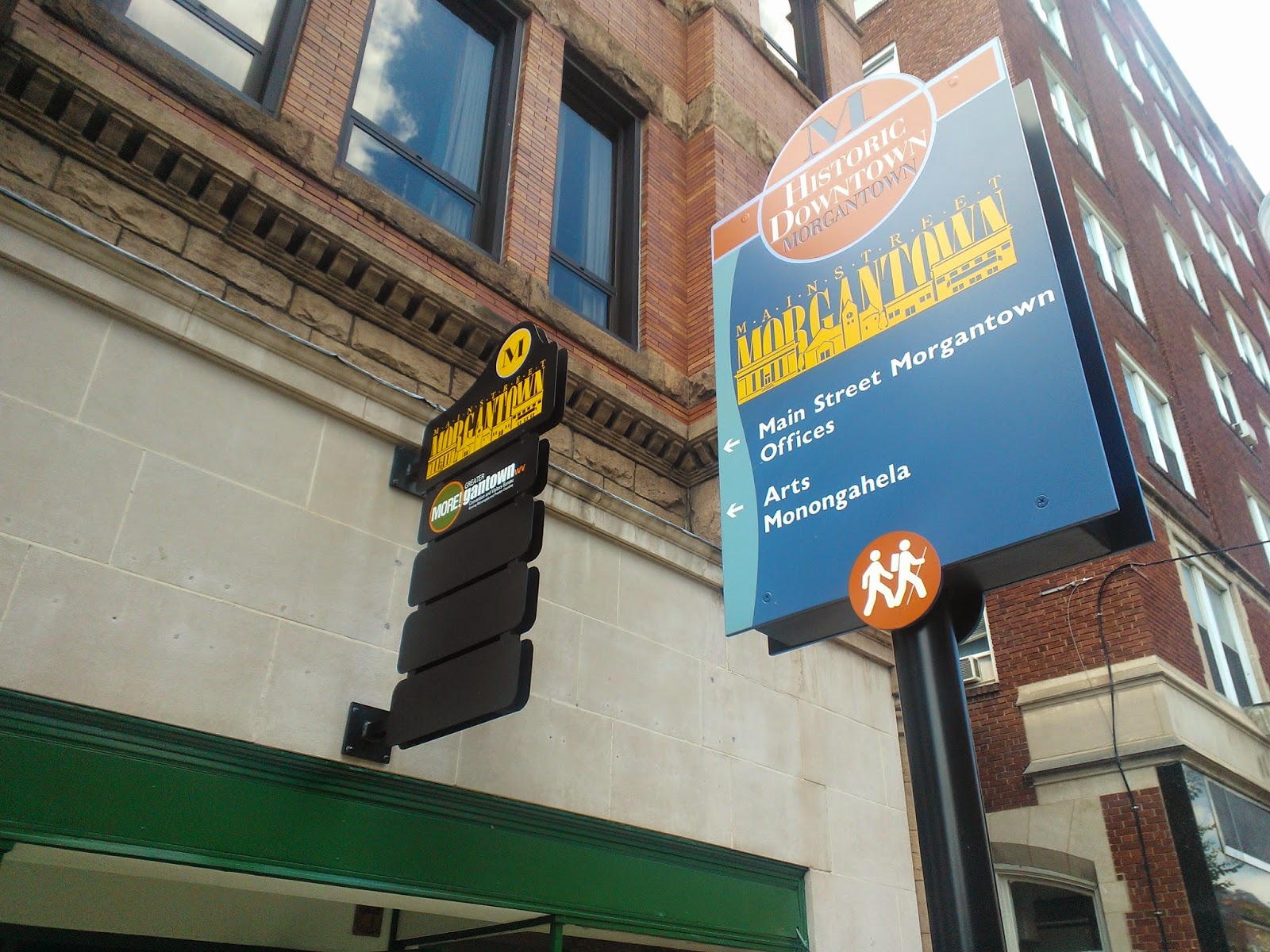
Morgantown is city tucked into a valley, in the crook between Cheat Lake and the Monongahela River. Downtown Morgantown has the appearance of a small town. What is known as Greater Morgantown, these days, is really comprised of several distinct neighbourhoods. Some of these had been separate towns that were annexed into the city proper. The surrounding area is so hilly, and with suburban sprawl occurring wherever they could make the land flat, each neighbourhood is almost a town onto itself, connected by highways and roads which wind up one side of a mountain and down the other.

A quick dip into the WickyWhackyWoo also tells me that Morgantown was named after one of the first homesteaders, Zackquill Morgan. Morgans Town was incorporated as Morgantown by the Virginia General Assembly in 1838. It is best known — for better or worse — as being the birthplace of Don Knotts.

Before my editor arranged for the privately conducted Don Knotts Memorial Nostalgia Tour, I didn’t know a whole lot about Don Knotts, other than many of his roles. I remember as a kid seeing him on the Steve Allen Show, often playing a nervous man-in-the street. Then, of course, there was Deputy Barney Fife, the role that made him famous. Another of his tee vee roles was that of swinging-single-man-about-town, Ralph Furley. Knotts jumped into the already successful Three’s Company after ABC ill-advisedly spun off The Ropers, which barely lasted a season and a half before it was cancelled. And, of course, I knew all those whacky movies from the ’60s: The Incredible Mr. Limpet, The Ghost and Mr. Chicken, The Reluctant Astronaut, and The Shakiest Gun in the West, among others. I grew up on Don Knotts comedy. He made me laugh.

Don Knotts with Danny “Hootch” Matador (right)

But, I have to admit I didn’t know anything about Don Knotts, the person. Imagine my surprise to learn he led an early life of heartbreak and confusion. Again, the WikiWhackyWoo saved me from abject ignorance:

Knotts’ paternal ancestors had emigrated from England to America in the 17th century, originally settling in Queen Anne’s County, Maryland. Knotts’ father was a farmer. William Knotts had a nervous breakdown due to the stress of the fourth child, Don, being born so late (Don’s mother was 40). Afflicted with schizophrenia and alcoholism, he sometimes terrorized his young son with a knife, causing the boy to turn inward at an early age. Knotts’ father died of pneumonia when Don, the youngest son, was 13 years old. Don and his three brothers were then raised by their mother, who ran a boarding house in Morgantown.

Like so many that have experienced early tragedy, Don Knotts became a comedian. During his teen years Knotts had a successful ventriloquist act, entertaining his Morgantown High School classmates at parties and other paid performances, including appearing occasionally at The Metropolitan Theatre, the big deal theater in town that opened the same year Knotts was born.

The Metropolitan Theatre in beautiful downtown Morgantown

After a failed trip to New York City to see if he could make it in the Big Time, Knotts returned home, enrolling in West Virgina University. However, WWII intervened and, like most of his peers, Knotts signed up for duty. Knotts didn’t see much combat. He was assigned to the Special Services Branch, where he and his dummy Danny “Hootch” Matador entertained the troops for the duration.

When the war was over, Knotts decided to try New York City all over again.This time he used the connections he made during his tour of duty to get a toe-hold in the business called Show. Aside from appearing at some comedy clubs, Knotts started to get a bit of radio work. Tee vee was still in its infancy when, in 1953, Knotts took on the regular role of Wilbur Peterson on Search For Tomorrow, his only dramatic part in a long comedic career. However, it was on Steve Allen’s show where he gained his first brush with real fame. While he was appearing on that show, Knotts his Broadway debut in No Time For Sergeants

No Time For Sergeants has an interesting history, especially since it’s the vehicle that brought Don Knotts and Andy Griffith together as an enduring comedy team. It started as a 1954 novel by Mac Hyman, about the antics of an unsophisticated country boy drafted into the Army Air Force during WW2. It was adapted a year later by Ira Levin as a 1-hour segment of The United States Steel Hour, which starred Andy Griffith (and some folks that few people remember). Andy Griffith had become an over-night sensation when his rural comedy monologue, What It Was, Was Football, was released as a single in ’53. It was a no-brainer to look at Andy Griffth when a country bumpkin was needed for the No Time role.

The Don Knotts Childhood Home

After Levin adapted No Time For Sergeants for Broadway, Griffith reprised his tee vee role with an up-and-coming Don Knotts playing several parts, the first pairing of this comedy team.

Then Levin adapted the teleplay and Broadway hit into a full-length motion picture, called, not surprsingly, No Time For Sergeants. Both Knotts and Griffith reprised their roles in that 1958 hit movie directed by Mervyn Leroy. This flick is considered the springboard that launched the national careers of Don Knotts and Andy Griffith.

Two years later when Andy was looking for a second banana for The Andy Griffth Show he didn’t have to look much farther than Don Knotts. The rest is tee vee history.

The Morgantown High School auditorium

The Don Knotts Memorial Nostalgia Tour began soon after the crack of noon, because that’s when teenagers wake up.

The first stop was, fittingly, the Don Knotts Childhood Home, which sadly is unmarked or commemorated in any way. The house presents a very small façade from the street, but because it was built on one of Morgantown’s many hills, the land drops away sharply in the back revealing a deep 3-storey structure that could have easily been used as a boarding house. It’s a humble beginning for the 5-time Emmy Award winner.

Not very far away, after navigating a few more of Morgantown’s hills and one way streets, we come to Morgantown High School, where Don Knotts began his long career as an entertainer. Outside the school’s auditorium there is an appropriately moving tribute to those alumni who gave their lives fighting in various wars. However, there was nothing that this reporter could see that commemorated Morgantown High’s most famous graduate, Don Knotts, ranked by TV Guide as #27 on its list of 50 Greatest TV Stars of All Time.

Bigger disappointment was still to come.

This reporter heard through the grapevine that there was one place in Morgantown where Don Knotts was commemorated as he so rightly deserved. According to the requisite several confidential sources, I should head over to the Metropolitan Theatre immediately. There, according to urban legend, I would find a large brass plaque embedded in the sidewalk which honours the location where Don Knotts got his start in Legit Show Biz.

Jumping back into the car, we raced the several blocks to the location, fighting the heavy downtown Morgantown traffic all the way. We were forced to pay for parking at an available meter more than a block away. Walking up to the building, this is what greeted us:

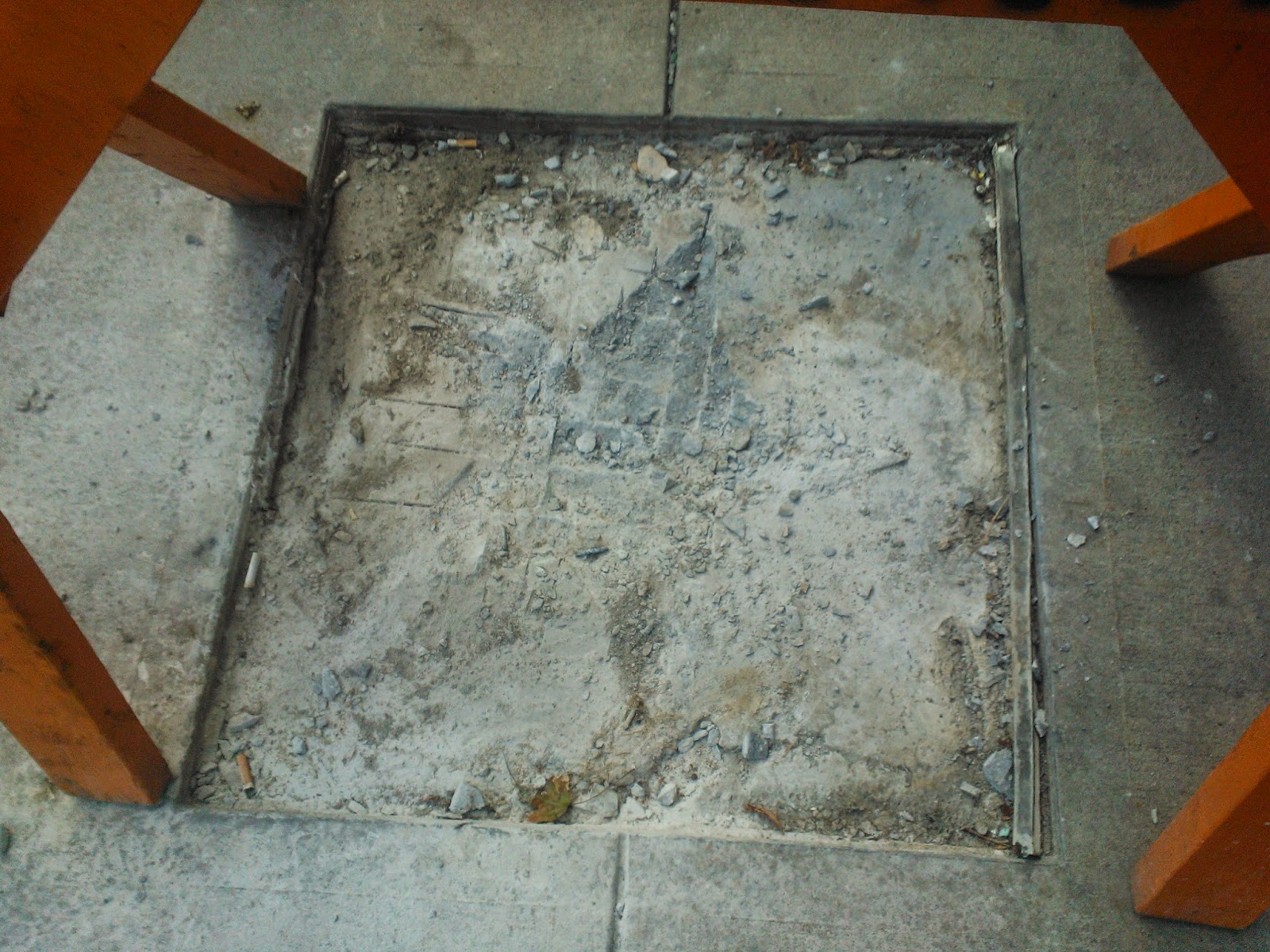
The scene of the crime against humanity! Where is the brass plaque honoring Don Knotts that was embedded in the sidewalk?
And, I made sure I wiped my dirty shoes on their nice rug, too!

I was heartbroken!!!

Now, keep in mind that I had already
traveled some 2,000 miles on the Sunrise to Canton Road Trip for Research to get this far (not counting several touristy
side trips). Why wasn’t Don Knotts getting the kudos he deserved, other than a small section of University Avenue renamed Don Knotts Boulevard during a Don Knotts Day held while the comedian was still alive?

There was no way I was going to put up with this bullshit.

I stormed inside and marched right up to the ticket windows. The two women inside the booth cowered as I demanded to know where the Don Knotts Memorial sidewalk plaque was. I made sure they learned some new expletives. I impressed upon them how many thousands of miles I had already traveled. Raising my voice to the highest dudgeon, I informed him that, as an employee of the Not Now Silly Newsroom, I refused to leave unless they gave me satisfactory answers to my questions. As they shuddered under the power of the press and the weight of The First Amendment, I threatened to expose them, the Metropolitan Theatre, and their entire bullshit town, which merely pretends to honour its greatest citizen of all time, but in actuality thumbs its nose at all the rubes who come to Morgantown for the full Don Knotts Experience.

In reality: I walked up to the ticket booth in the lobby and politely asked the two very sweet women if they knew what had happened to the plaque. All they knew for sure is that it had just recently been removed for repairs and they didn’t know when would be returned. Just then the manager of the theater came along and suggested I inquire up the street at the Morgantown Visitors Center, where they might know when the plaque would be returning.

Morgantown Visitors Center

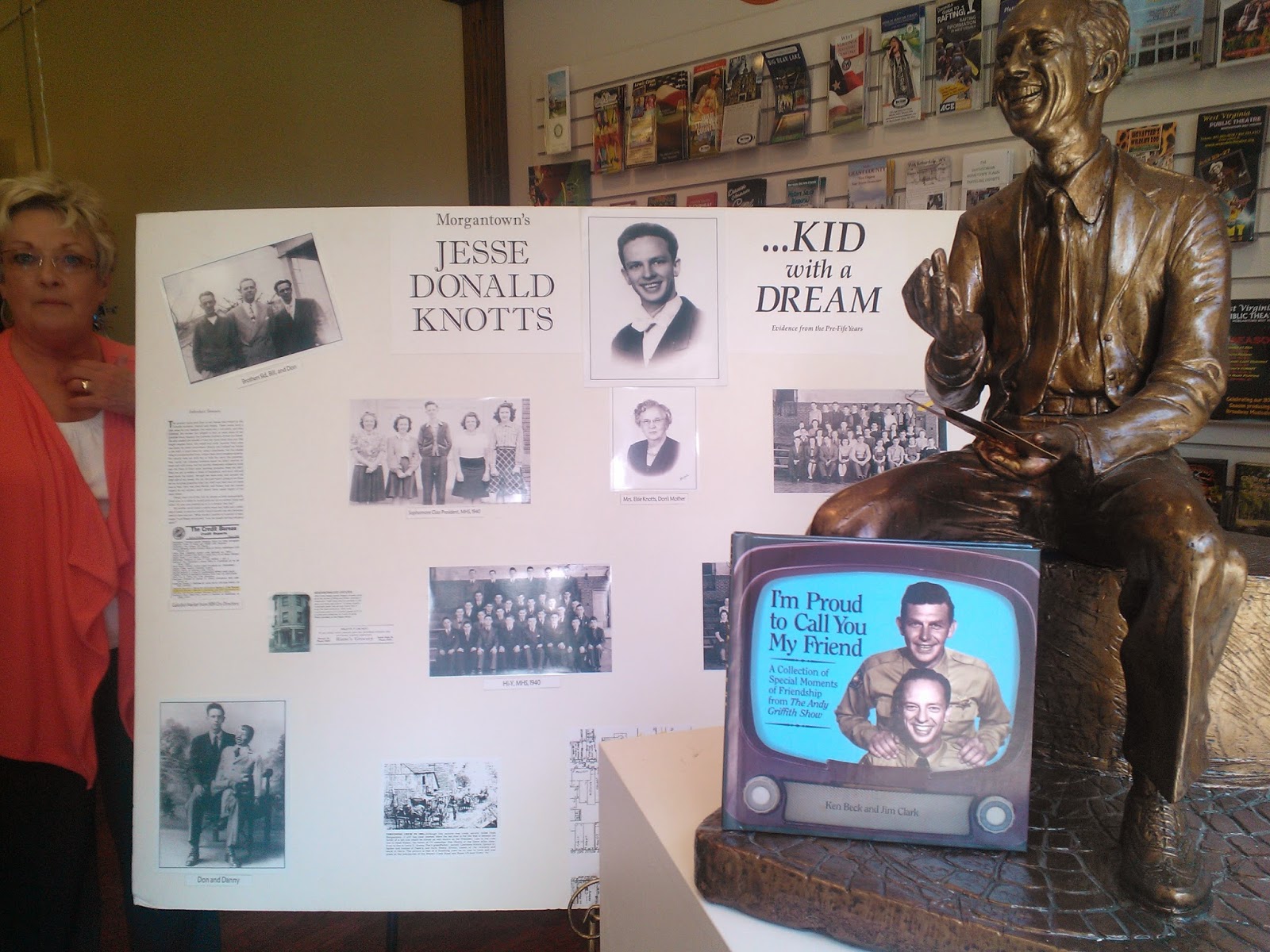
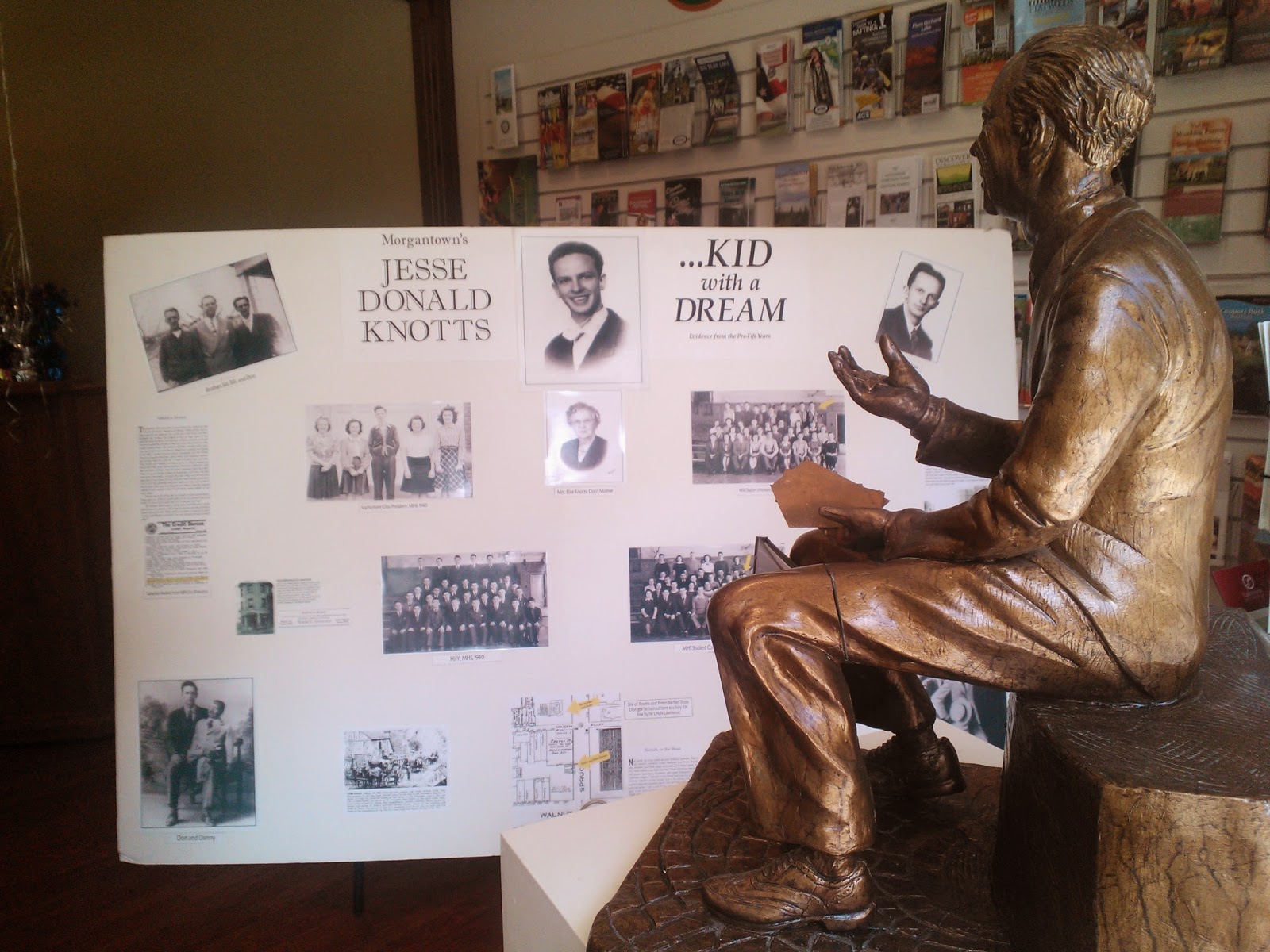
Back into the car, fighting the awful downtown traffic all over again, we finally pitched up at the Morgantown Visitors Center, a mere two blocks away. And, it’s there that the entire Don Knotts Memorial Nostalgia Tour was redeemed because, there, just inside the front window, was an entire display all about Morgantown’s favourite son, Don Knotts.

Taking a picture through the window wouldn’t work because of the glare. I was so excited to finally hit pay dirt that I rushed inside and started taking pictures. It’s my normal practice to ask permission before taking pictures because it’s the polite thing to do. However, I simply forgot my manners and knew I had screwed up mightily when a woman started screaming at me, “STOP! Don’t touch it! What are you doing? STOP!” Only my mother has ever yelled at me like that.

As if I was answering my mother, it all came out in a torrent: “I’m so sorry, I would never touch a display, but had traveled thousands of miles for the Don Knotts Memorial Nostalgia Tour, and this was the first acknowledgement of Don Knotts I’ve found, and just down the street was supposed to be a huge brass plaque embedded in the sidewalk, but it’s missing, and they sent me down here because you might know about it, and, I’m so sorry, I should have asked, but all I want is get some close up pictures. Honest, lady. Don’t hurt me.”

That’s when she relaxed. To help me get better pictures, she even turned the entire display around, so I could get a better angle. If you look closely at the pic above, you can see why the woman was so protective of the maquette. Just above the knee is a crack that runs right through the leg. It seems that just the week before my arrival someone grabbed the leg and broke it. Now the woman makes sure that Don Knotts doesn’t get damaged any further.

Guarding Don Knotts

This maquette is to become a larger-than-life statue of Don Knotts to be erected on the waterfront. Morgantown is hoping to create a whole day of it, whenever it is, with a dedication and unveiling. An entire weekend of Don Knotts Days might include parades, picnics, band concerts, beauty pageants, culminating in a massive fireworks display. I sure hope I’m invited to the event I just created in my head.

I am always looking for the hidden Easter eggs real life has to offer. Finally, there are two weird pieces of synchronicity on which we’ll end the Don Knotts Memorial Nostalgia Tour.

SYNCHRONICITY #1: Almost 300 miles south of Morgantown I was reminded of the enuring legacy of Don Knotts on ‘Merkin culture.

After leaving Morgantown, with more than a thousand miles still to go before I get home, the Sunrise to Canton Road Trip for Research was just marking off the miles with no more side trips. The farther south I traveled, the less hilly the terrain. The road began to level out in southern Virginia. Crossing the state line into North Carolina, I was in great need of rest stop. The first one I happened across was not far into the state, just outside of Mount Airy, North Carolina.

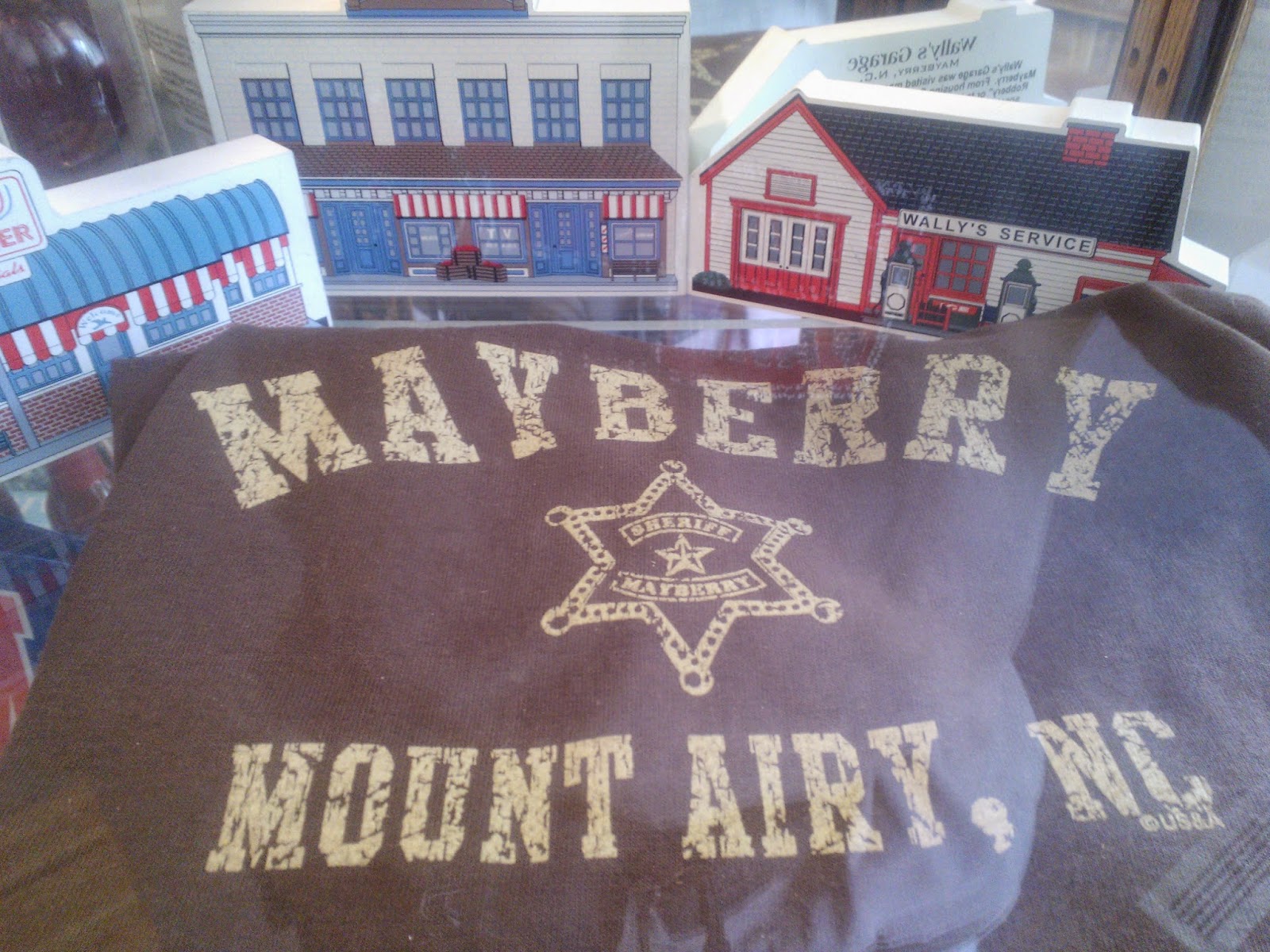
I didn’t realize it until I walked inside, but Mount Airy was the birthplace of Andy Griffith. Inside the rest stop, in a display cabinet given pride of prominence is a tribute to Mount Airy’s favourite son. Of course no tribute to Mayberry is complete without a nod to Dan Knotts, second banana extraordinaire.

SYNCHRONICITY #2: As I was editing this into a coherent arrangement of words, sentences, and paragraphs, the tee vee was playing in the background. A noisy commercial distracted me and I looked up to see what it was about. There, on my tee vee tube, was Don Knotts!!! As it turns out, MeTV is bringing The Andy Griffith Show to its comedy calvacade, replacing the ever-dreadful Gilligan’s Island, starting September 1st, and every weeknight at 8PM Eastern, 7 Central.

* As the Not Now Silly Newsroom Fact-Checkers were preparing this article for print it was discovered that not all events took place as described. We were going to just scrap this travelogue as not worthy of publication, but Headly has already cashed the cheque.

Les Paul ► The Man Who Made Rock and Roll Possible

Not Now Silly celebrates the birth of the man that made it all possible: Lester William Polsfuss, better known as Les Paul.

Les Paul didn’t invent the guitar, which falls into the family of chordophones.Those go back several thousands of years to India and China. Modern descendants include the lute and violin, not to mention the guitar as we now know it.

Les Paul didn’t even invent the electric guitar. That happened in 1931 when George Beauchamp invented a magnetic pick-up for the Ro-Pat “Frying Pan” lap steel guitar. Les Paul didn’t get around to inventing his solid body electric guitar until 10 years later and even then it was just a 2×4 with the electronics hidden inside. It was so ugly, and Les received so many negative comments on it, he disguised it by hiding it in a dummy guitar.

Les Paul didn’t even invent overdubbing, although he perfected it and popularized the technique.
Yet, Les Paul is often credited with inventing all three. The New York Times 2009 obituary stated:
Mr. Paul was a remarkable musician as well as a tireless tinkerer.
He played guitar alongside leading prewar jazz and pop musicians from Louis Armstrong to Bing Crosby.
In the 1930s he began experimenting with guitar amplification, and by
1941 he had built what was probably the first solid-body electric
guitar, although there are other claimants. With his guitar and the
vocals of his wife, Mary Ford, he used overdubbing, multitrack recording
and new electronic effects to create a string of hits in the 1950s.

Mr.
Paul’s style encompassed the twang of country music, the harmonic
richness of jazz and, later, the bite of rock ’n’ roll. For all his
technological impact, though, he remained a down-home performer whose
main goal, he often said, was to make people happy.

Nothing I could write would explain it any better than the wonderful documentary “Chasing Sound,” which intercuts contemporary footage of Les Paul performing at the Iridium Jazz Club — which he did right up to his death at the age of 94 — with historic footage and music telling Les Paul’s life story. Watch:

I’ve also put together a Les Paul Jukebox for your listening pleasure:
***

***

Happy Birthday Frank Lloyd Wright

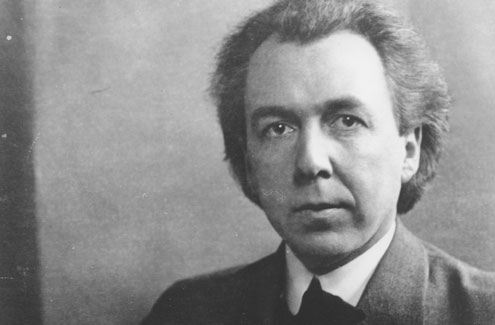
Dateline June 8, 1867 – Frank Lloyd Wright is born in Wisconsin. By the time he died at the age of 92, he would be considered the greatest architect that ever lived.

By 1956 Wright was so famous that the What’s My Line panel had to be blindfolded when he Wright appeared before them. And, as usual, Dorothy Kilgallen was the smartest person in the room.


If you were to remove all the buildings from the equation, Frank Lloyd Wright still lived a life that can hardly be believed. At the height of his initial fame, with a wife and 7 children, he ran away with a client’s wife. While in Europe he was denounced from pulpits across the country and he lost all commissions. People thought his career was over. However, he eventually returned to the States with Memeh Cheney and started all over again from the bottom.

Wright built Taliesin and restarted his career, reaching new heights. Then one tragic day in 1914, while Wright was off working on a building, a male servant set fire to Taliesin during a lunch Mameh was hosting. As people fled the smoke-filled dining room, Julian Carlton hacked seven people to death with an axe. Among the dead was Mameh Cheney and her two children. Wright was shattered.

But, it’s all about the buildings. It didn’t hurt that Wright was a consummate salesman and his #1 product was Frank Lloyd Wright.


More than anything else Frank Lloyd Wright changed the way all suburbs looked. His beautiful Prairie Home was copied tens of millions of times over by bad architects to become the ranch-style house that crowds out good architecture in our suburban landscape.

***

***