Tag Archives: systemic racism

Another Dispatch From Detroit, ‘Merka’s First Throwaway City

Once upon a time Detroit was called “The Arsenal of Democracy.” However, the consequences of 60 years of White Flight — systemic racism, to be blunt — finally came home to roost in Detroit, my hometown. On July 18, 2013, at approximately 4:06 PM EDT, Detroit’s unelected, possibly illegal, Emergency Manager Kevin Orr filed for bankruptcy. 

It’s conventional wisdom — conventional, but completely wrong — that Detroit’s White Flight began after the 1967 riot. White Flight had already been going on for almost 20 years at that point. The ’67 riot only accelerated the exodus.

Detroit: The Arsenal of Democracy

Detroit’s race problems go right back to the earliest days of the city. In my earlier [very long] essay The Detroit Riots I report on the little known 1943 riot and the far lesser known 1863 riot. Understanding these earlier riots is the key to understanding Detroit’s current demographics. Both of these earlier riots not only set the table for the 1967 riot, but also set the table for the Detroit’s systemic racism, which manifested itself in the White Flight that eventually killed the Motor City.

The 1863 Detroit riot exploded in the wake of Lincoln’s Emancipation Declaration. There had already been tensions between Blacks and Whites, and the openly racist Detroit Free Press was happy to fan the flames for months on end. When a rumour swept through the neighbourhoods that a Black man did something, something, something to a White person, White folks went crazy. [Isn’t that always the way? See: May 31, 1921 ► When Whites Went Crazy In Tulsa] They roamed the streets screaming, “Kill all the niggers,” beating people on sight. At the time it became known as “the bloodiest day that ever dawned on Detroit.”

Prior to that day Detroit did not have a police force. However, one was quickly formed and in the original incorporating documents the city fathers of Detroit made it clear that one of its primary jobs would be to keep the Blacks folk in line.

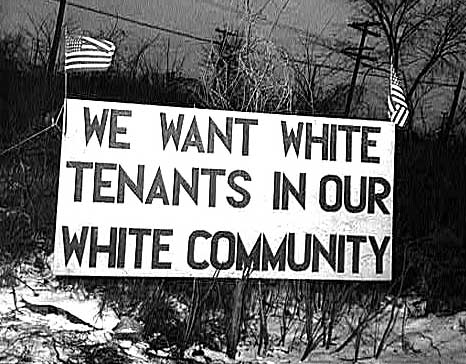
A sign in Detroit during the war, when the Feds proposed
to build Black housing to relieve overcrowding

The 1943 Detroit riot came during war time, but it also came in the midst of what has been called The Great Migration, when rural and southern Blacks made their way to cities in the north. Detroit was clamoring for unskilled workers and Black folk came by the tens of thousands. However, that didn’t mean anyone wanted to share their neighbourhoods with Black folk, nor work side-by-side with them. The 1943 riot was a result of these tensions and more.

[This is the simplified version. The conditions that led to these 3 riots are explained in much greater detail in The Detroit Riots, my earlier article on these topics.]

As soon as World War Two was over, prosperity reigned, in Detroit and across the nation. Part of that prosperity was due to the fact that all across the country houses had to be built for all the returning soldiers. ‘Merka saw a housing boom like no other. This was great for the economy and for the growing White Middle Class. However, it didn’t trickle down to Black folk.

In the Detroit area, developers started building north of 8 Mile, the city limits made famous by Eminem’s 2002 movie. These suburbs grew exponentially during the ’50s and ’60s and were attractive to the people with the same mindset as those who refused to share their neighbourhoods and work places with Blacks during the 40s.

The last remnant of a vibrant Black
neighbourhood and business district

Black families were redlined out of the suburbs, just as they were from most of the neighbourhoods in north Detroit. During the ’40s and ’50s Blacks were unable to expand much beyond Black Bottom and Paradise Valley, the neighbourhoods they already occupied. During the early ’50s a few Middle Class Blacks moved to the 12th Street area, which had been predominantly White. That’s when the first Whites started leaving because — you guessed it — they didn’t want to live in the same neighbourhood as Blacks. By the time Black Bottom and Paradise Valley were razed for I-75, the die was cast. The only area accepting Black folk was surrounding 12th Street, because the first Blacks had already “busted the blocks,” in the parlance of the day. White folk fucked off in droves. The entire demographics of the neighbourhood reversed itself in a single decade. [This is also told in greater detail in The Detroit Riots.]

Then came several decades of terrible local government, which just made
everything in Detroit a whole lot worse. But, let’s be clear. What these
politicians made worse was already there: an absolute division of Black
and White and the continued blighting of a once great city. Systemic
racism is the foundation on which it was built. The White folk of Wayne
County moved across 8 Mile and, quite literally, turned their back on
Detroit.

That, dear reader, has been the story of Detroit from the very beginning. As soon as Black folk gained a small toehold in a neighbourhood, that neighbourhood eventually turned all Black. Block by block. Neighbourhood by neighbourhood. Until the entire city was virtually Black, while the suburbs became predominantly White. Eventually integration came to the suburbs, but it never had a chance in the City of Detroit.

IRONY ALERT:
Detroit’s seal, which represents the fire of 1803
Speramus Meliora = We hope for better things
Resurcet Cineribus = It will rise from the ashes

This White Flight to the suburbs reduced Detroit’s population and ‘Merka’s systemic racism kept it low. At one
time there were almost 2 million people in Detroit proper. When I was
growing up in Detroit, we were proud to call Detroit the 5th largest
city in the country. Now it’s the 18th, sandwiched between Charlotte,
North Carolina, and El Paso, Texas. Its population of just over 700,000
is about a 3rd of what it was during the go go ’50s. As the city’s
population shrank, so did it’s tax base. These are the conditions that led to Detroit’s bankruptcy.

This would be as good a time to remind people that Detroit is responsible for two things that not only made ‘Merka better, but made ‘Merka great: Cars and Motown. These products of Detroit have been bought and sold all around the country during the same 6 decades that Detroit has slid into decline. Detroit cars and Motown — and it almost seems like they were made for each other — were bought and sold all around the world over the last 6 decades.

The people north of 8 Mile, the greater country at large, and the rest of the world took ittle notice of the problems facing Detroit until recently. During the last 6 decades they couldn’t have cared less what was happening to the city. That’s why I call Detroit ‘Merka’s first throwaway city.

Take it away, MC5:


CRANK IT UP!!!

Further Reading on Not Now Silly:
Unpacking My Detroit

50 Years Ago ► St. Augustine Beaches Integrated ► History Is Complicated

Florida Memory reminds us that it took blood and guts to integrate Florida beaches. On this day — June 25, 1964 — White segregationists attacked the participants of a “Wade-In” at St. Augustine, Florida:

Demonstrators held several nonviolent “wade-ins” at segregated hotel pools and beaches. This film shows footage taken by the Florida Highway Patrol of one of the largest demonstrations, a wade-in held at St. Augustine Beach on June 25, 1964 (see full-length version).

Civil rights leaders, such as Martin Luther King Jr., came to northeast Florida to show their support for the Movement. King is said to have remarked that St. Augustine was “the most segregated city in America” at the time. He pledged to defeat segregation using nonviolence, even “if it takes all summer.”


Fort Lauderdale’s beaches were integrated a few years earlier. Two years ago Fort Lauderdale celebrated 50 years of integrated beaches, which began with illegal Wade Ins in 1961. According to CBS Miami:
On July 4, 1961, Lorraine Mizell, her sister, her uncle and some friends waded into the ocean on a beach where blacks were not allowed. Mizell would later say she didn’t know how significant her actions would be.

Fort Lauderdale’s beaches had been segregated since 1927. Civil rights pioneer Eula Johnson led wade-ins like Mizell’s over the summer of 1961 in spite of threats. A year later, a state judge ruled against the city and its whites-only beach policy.

As the Sun Sentinel tells it:

Lorraine Mizell remembers the looks of disgust and catcalls as she crossed the sand. She remembers other beachgoers fleeing from the water as she waded in.

She remembers not being afraid.

For the 19-year-old college freshman, the Fourth of July in 1961 started with a phone call from her uncle. He wanted to know if she, her sister and some of their friends would like to go to the beach with him.

Their outing will be commemorated on Monday as a turning point in the history of Fort Lauderdale and racial equality.

Her uncle, Von D. Mizell, and fellow civil rights activist Eula Johnson had decided the time had come to force the city to open its beaches to all people, both black and white. July 4 began a series of wade-ins that led to a court-ordered end of segregation on Fort Lauderdale beaches.

“When we did it, I didn’t realize how significant it would be,” said Lorraine Mizell, now 69. “I knew we were doing something to break down barriers. This was a beach that I had never been able to go to, never able to put my feet in the sand. But I didn’t know we were going to be able to change things.”

If this whetted your appetite read this PDF: The Long Hard Fight for Equal Rights: A History of Broward County’s Colored Beach and the Fort Lauderdale Beach ‘Wade-ins’ of the summer of 1961

Fifty years is not that long ago and fifty years later there are still inequities built into the system.

No Skin In The Game; Part Two

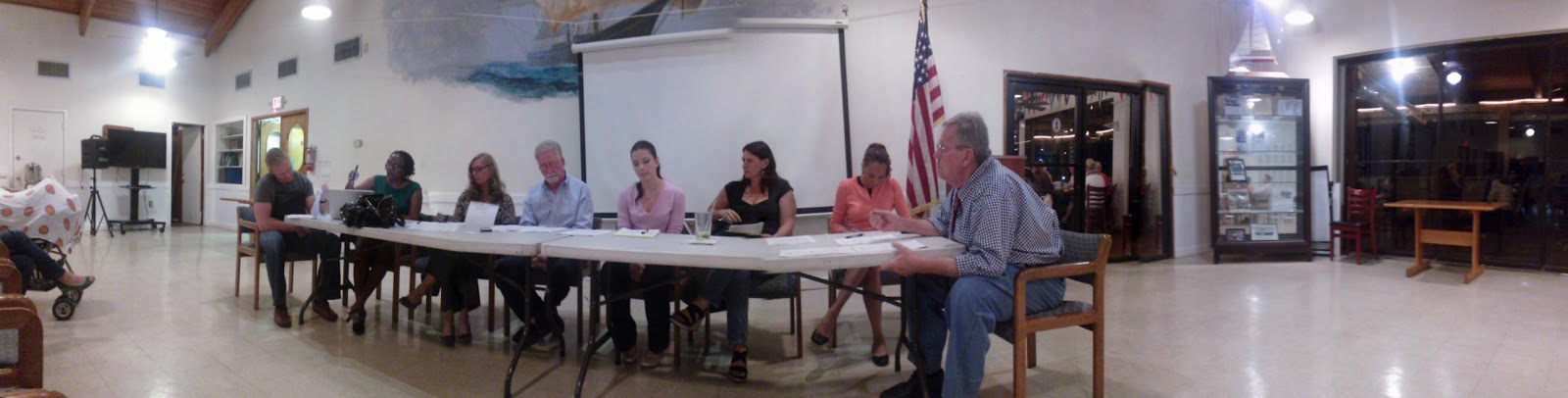
A panorama of the Coconut Grove Village Council.

As we ended our last exciting episode (Part One of No Skin in the Game), I was leaving the Trolleygate protest in Coral Gables — just as the protest signs were arriving. I was running to cover the Coconut Grove Village Council meeting, at which Trolleygate would be an agenda item. In hindsight I made the wrong choice.

During the drive I tried to place what I had seen into a context that I understood. That’s when I decided to call this blog post No Skin In The Game. Nothing better explains the understandable apathy on the part of Coral Gables about Coconut Grove’s problems. Coral Gables is 98% White and both literally and figuratively has no skin in the game.

It may only be 3.5 miles from Coral Cables Congregational Church to the Coconut Grove Sailing Club, but it might as well be several galaxies away. The neighbourhood changes 3 separate times. From the conspicuous opulence of Coral Gables; through the blighted area of West Coconut Grove; past the non-conforming, polluting, Trolleygate diesel bus garage on Douglas; east along across Grand Avenue; where another imaginary line separates West Grove from White Grove, the exact spot where property values pick up again. It’s visually obvious without using Zillow.

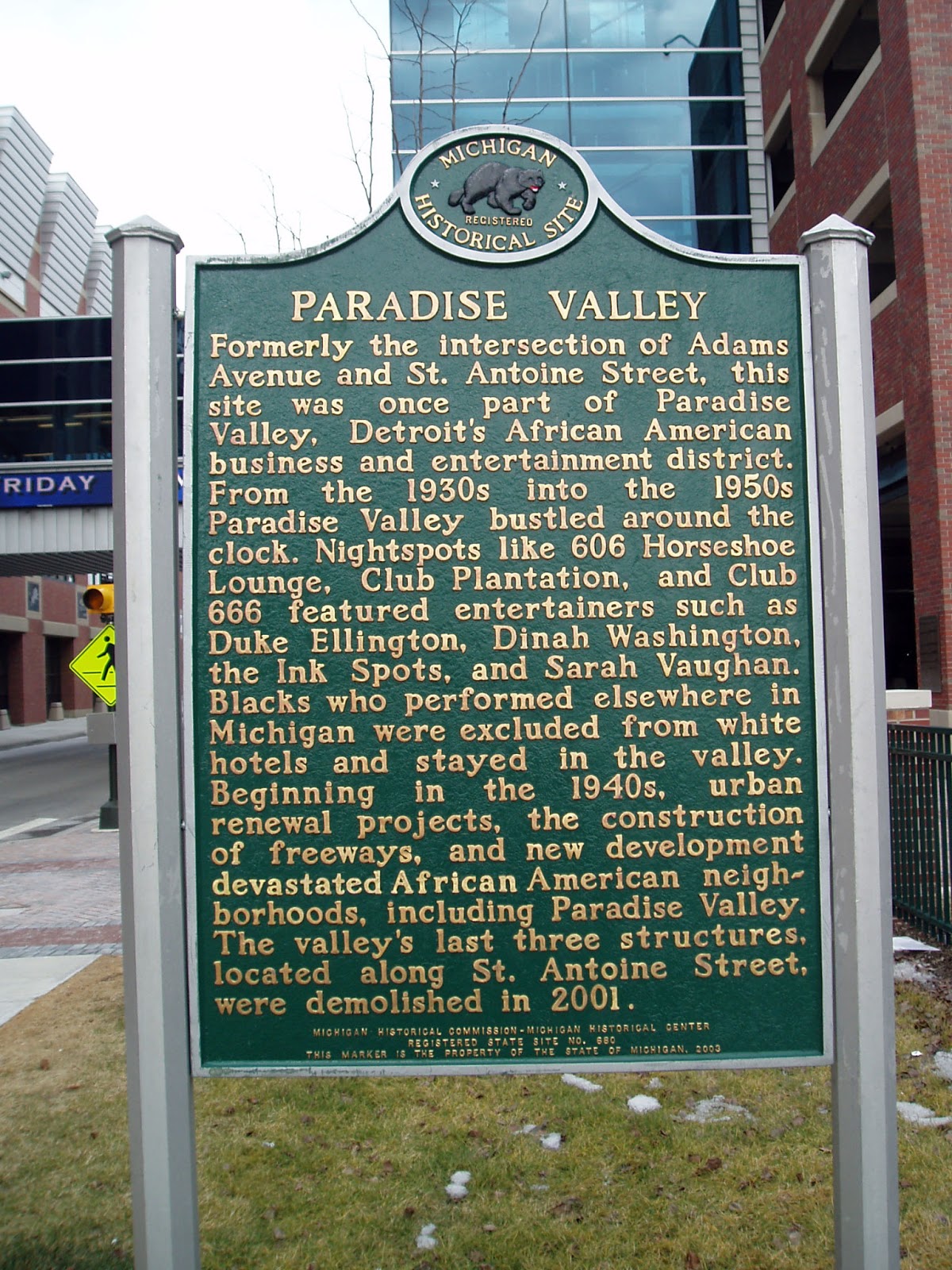
The only clue there was once a place called
Paradise Valley, aka Black Bottom, is this sign.

In other words: Coconut Grove, considered one of the most exclusive Zip Codes (33133) in the entire country, has had an historic Black enclave, surrounded on all sides by White folk, for the last 140 years. This area has been marginalized by racism over the years, the same racism that affected your part of the country during the same period. It has been allowed to become blighted, the same way that Black areas in your part of the country have been allowed to fester during the same period. It has been encroached upon by The Powers That Be — Trolleygate is just the latest, most nakedly obvious example.

TO BE FAIR: Coconut Grove was not encroached upon by The Powers That Be like Overtown, where I-95 was jammed through the middle of the neighbourhood, cutting one side off from another. Nor was it was encroached upon by The Powers That Be like my hometown of Detroit, where only a sign remains of a once vibrant Black residential, retail, commercial, and entertainment district. The people of Overtown and Paradise Valley were mostly tenants with absentee landlords. They had no skin in the game.

Black Coconut Grove always had some skin in the game. This is entirely due to E.W.F. Stirrup. Mr. Stirrup was Black. Had he been White his house would have been restored by now; like The Barnacle, Commodore Munroe’s estate just a block away. It is now a State Park. However, Mr. Stirrup is also the reason West Grove still exists. There have been a few attempts to tear down the entire neighbourhood over the years. All have floundered due to the high percentage of Black home ownership — the highest in the nation. That is directly attributable to E.W.F. Stirrup, who thought that home ownership was important for growing Black families. All the more amazing because it came during a period of racial discrimination. The Powers That Be could only screw with West Grove around the edges. Black Grove had too much skin in the game.

During the 4 years I have been researching Charles Avenue I have been asked many times by White residents of Coconut Grove why I even care about Black Coconut Grove. Some are just curious. Some can’t believe that anyone would care about those people. One person used the expression “no skin in the game” and knew it was a clever racial pun. It echoed through my head ever since, but this drive from Coral Gables to West Grove to White Grove put it into context. It all depends on what skin you have in the game, and what the game is.

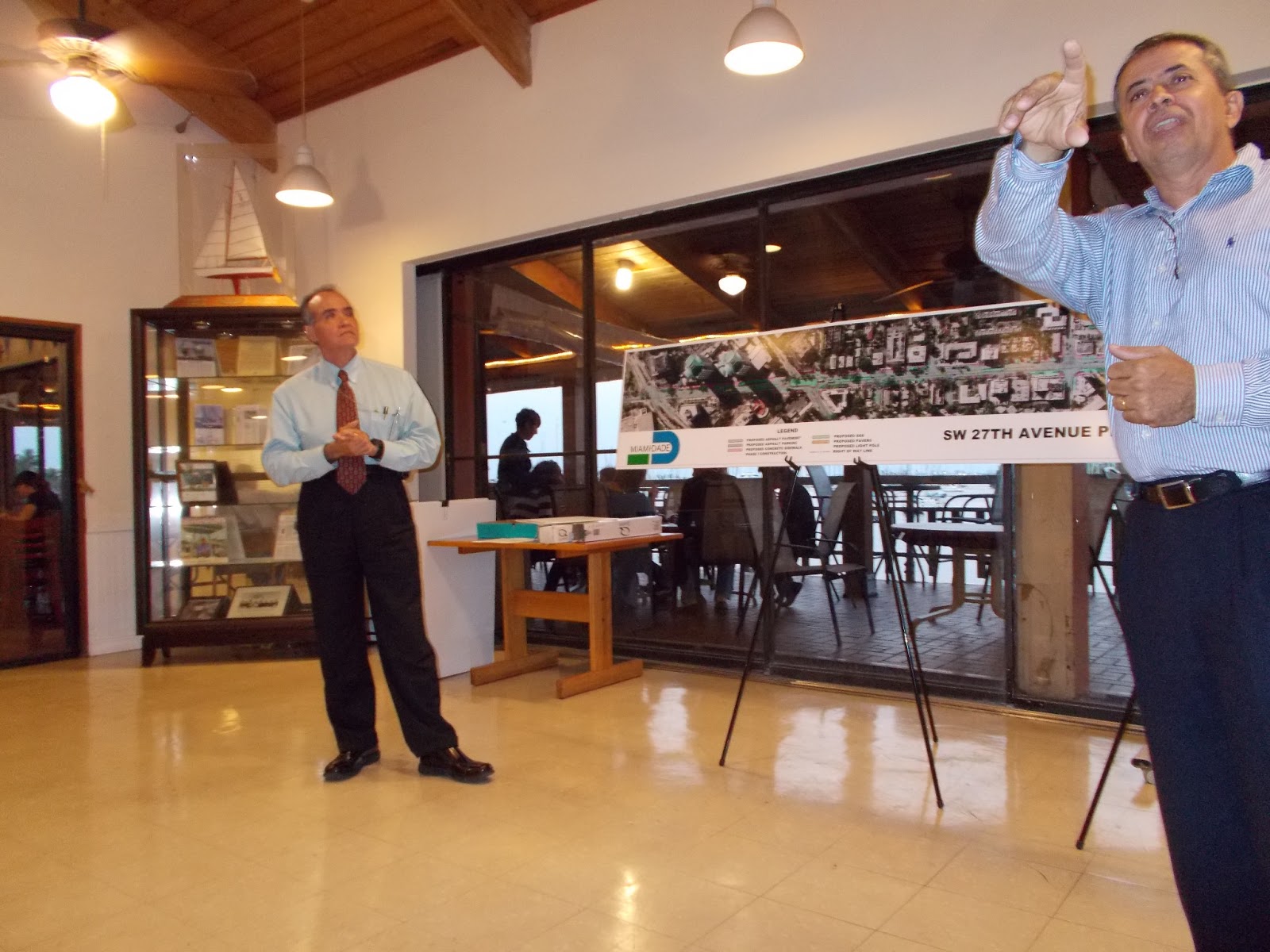
Taking questions about treeremediation along SW 27th. Yawn.

That’s the state of mind I arrived in, late for The Coconut Grove Village Council meeting, which was already in progress. I slipped into the back row of a sparsely attended meeting. More apathy on display. No one seems to have any skin in the game.

There were almost as many people on the executive council as observers in the room. The residents were getting an update from the City of Miami on the redesign of SW 27th Avenue, including its new, radical, peanut-shaped traffic calming circle at Tigertail Avenue. There were questions from the councilors about how traffic circles work (Really?) and questions from the residents about tree remediation. Yawn.

The MEGO factor [My Eyes Glaze Over] kicked in almost immediately. The only topic I care about is Trolleygate. Besides, I already knew the Coconut Grove Village Council was a paper tiger. This presentation was merely a courtesy from the City of Miami to keep Coconut Grove in the loop, the exact opposite to what happened when Commissioner Marc D. Sarnoff quietly slipped a polluting diesel bus garage into West Grove. He said he purposely didn’t inform the Village Council because it just slows things down.

Panorama of SW 27th Avenue presentation.

By the time a project has reached this “presentation stage,” the fix is already in. People can jump and shout all they want. The Village Council can vote unanimously against a project. But . . . but . . . but . . . the Village Council only has an advisory roll and the City of Miami, more likely as not, is going to ignore what the residents of Coconut Grove want and do what Emperor Marc D. Sarnoff wants.

That’s why I tuned out and started writing a children’s parable instead.

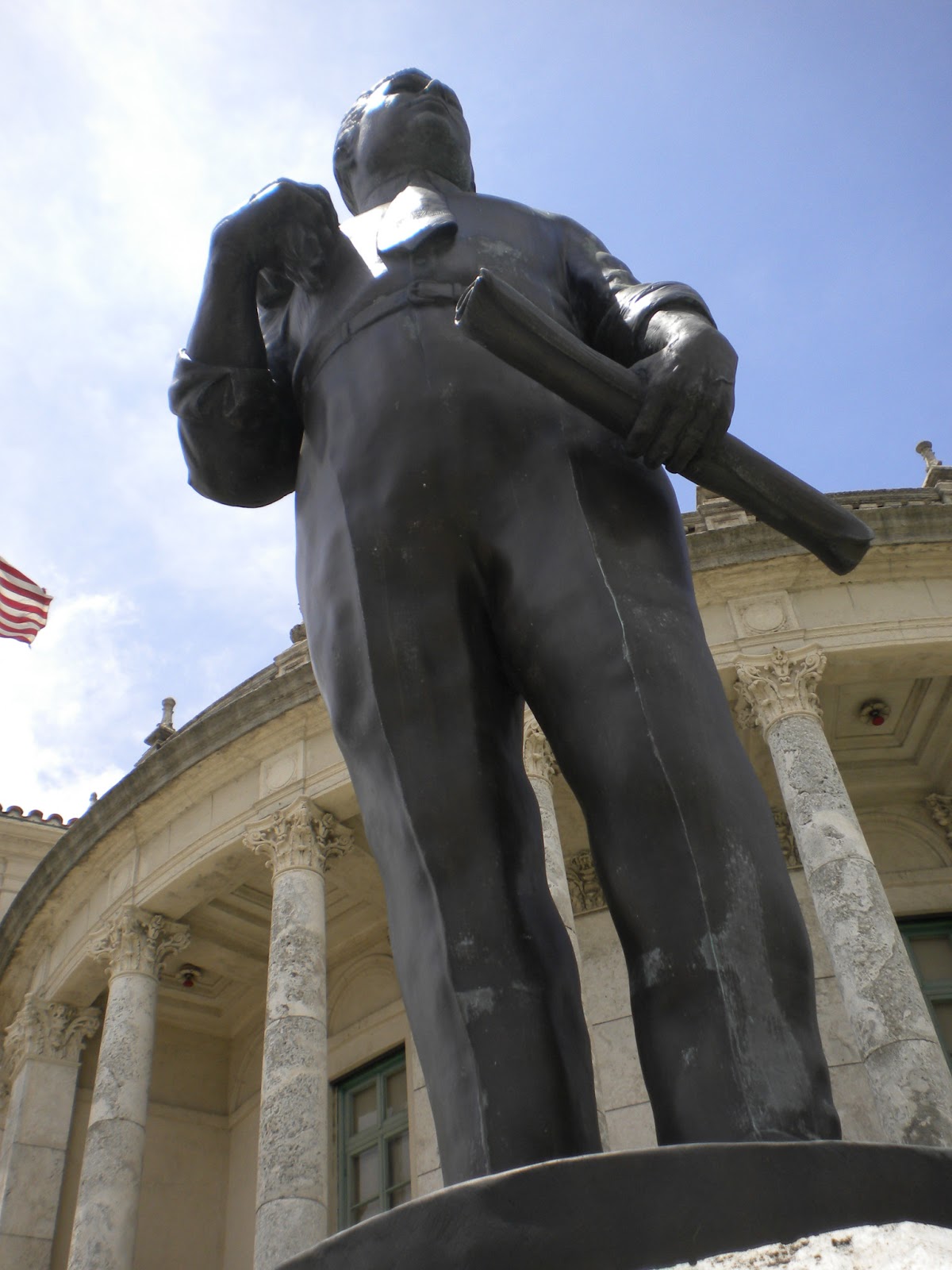
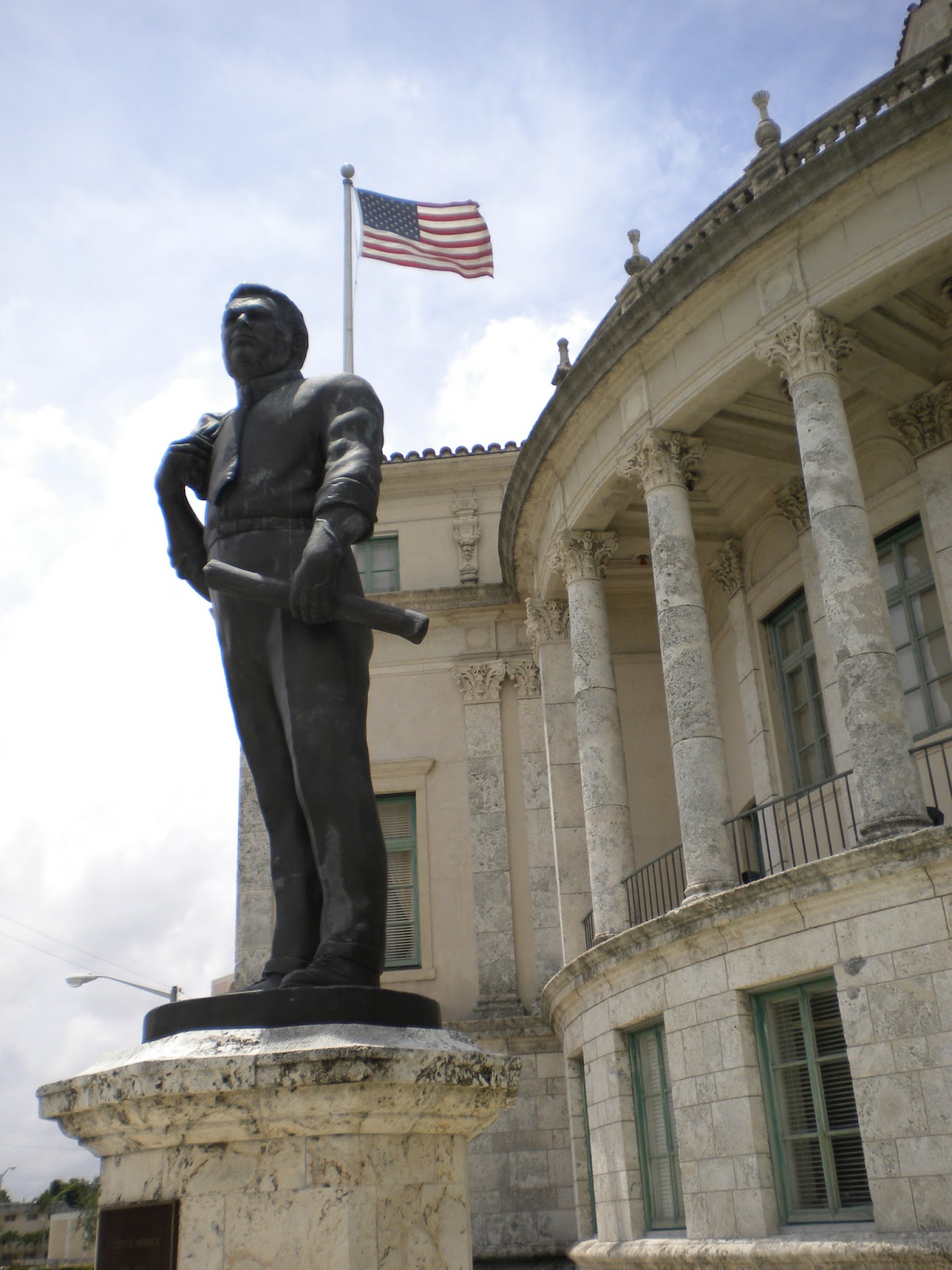
George Merrick, founder of Coral Gables, in front of Coral
Gables City Hall, just like Coconut Grove never had.

Okay . . . okay, kiddies, sit down right here and I’ll tell you a little story about the founding of a town called Coral Gables. It’s not the kind of story you can find in the history books. Believe me, because I’ve tried since the first time I heard it about 3 years ago. I promise to keep trying, but this ain’t the kind of thing that gets written down.

However, kiddies, I have now heard pieces of this oral history more than once, from more than one source, which lends it some credence. Call this the Alternative History of Coral Gables and stop fidgeting, Tom.

FADE TO BLACK – FADE UP

Once upon a time there was a sleepy little village called Cocoanut Grove, with what appears to be an extraneous “A”. Cocoanut Grove had a small tourist trade in the Peacock Inn. Commodore Monroe built his house nearby and, immediately south, created Camp Biscayne, a rustic camp that attracted incredibly wealthy people, who wanted to camp and boat and fish and pretend for a week, or so, that they were living in earlier, halcyon times. Camp Biscayne was so exclusive that one can find its guests lists in online searches. So exclusive were all these nascent tourist attractions, they needed Black folk to do the hard work. Consequently, right beside this tourist trade grew a Black enclave, of mostly Bahamians. E.W.F. Stirrup (documented on many different pages on my blog), through hard work and industriousness, wound up becoming the largest landholder in Cocoanut Grove and one of Florida’s first Black millionaires.

In the early ’20s the movers and shakers of Cocoanut Grove saw dollar signs in developing Cocoanut Grove. To that end they hired some architects who put together what became known as the Bright Plan. It was elaborate, like every real estate development reaching for the brass ring. A Cocoanut Grove City Hall was envisioned for where Cocowalk now sits. It would have been magical, children. Imagine: Cocoanut Grove City Hall would have been at the end of a long boulevard with fountains down the middle, all based upon a Mediterranean design. City Hall would have been a short walking distance to the golf course, which would have been located along the streets both north and south of Charles Avenue, stretching all the way to Douglas. In fact, that would have included a fair chunk of what would later become known as Black Grove.

The bottom fell out of the swampland market soon after the Bright Plan was put on paper. It’s all depicted as laughs by the Marx Brothers movie “The Cocoanuts,” which takes place in Cocoanut Grove. But for some it probably wasn’t all laughs. Some people would have lost money.

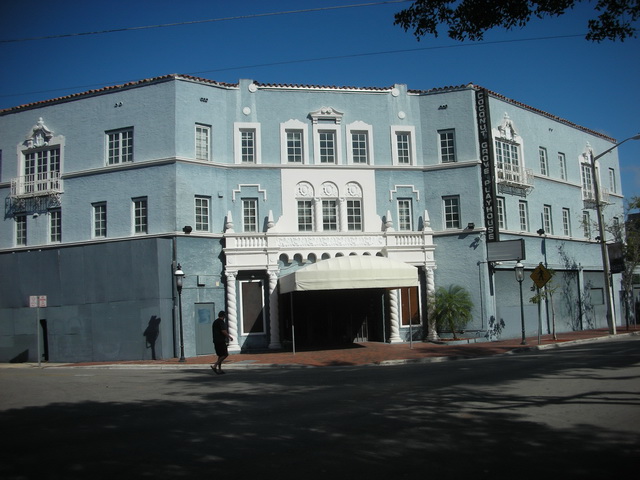
It’s interesting to speculate, no pun intended, how much E.W.F. Stirrup might have profited had the Bright Plan gone ahead and how much he may have lost when it stalled. He still died a wealthy man, mind you, and did it in a time when Jim Crow laws and discrimination made the achievement all the more incredible. The Bright Plan was never implemented, except for one building: 200 feet from Mr. Stirrup’s front door is the Coconut Grove Playhouse. Had the Bright Plan ever come to fruition, it would have been a
game-changer for Cocoanut Grove.

However, this fable is about how Coral Gables, called one of the country’s first planned communities, was created. I’m still getting to that. If Tom doesn’t keep interrupting, I could get back to our story, kiddies.

Everyone should read this book. ~H.W.

A few years after the Bright Plan died, Miami started sniffing around to annex Cocoanut Grove. Some of the same boosters from earlier saw benefit in being swallowed up by Miami. Some did not. This is often as it always is. According to this alternative oral history one faction of boosters suggested annexation of everything BUT Black Coconut Grove. This thinking, especially in 1925, was not unusual at all. Across the country one can find many instances where communities purposely did not annex the Black areas at the same time the White areas were annexed. The infamous 8 Mile Wall in Detroit is a physical example of this at work. The book “Sundown Towns: A Hidden Dimension of American Racism” by James W. Loewen was instructive in helping me understand how annexation often left out Black neighbourhoods as communities grew and why all ‘Merkin cities look the way they do. But, I digress again.

For whatever reasons The Powers That Be in Miami ignored the racially inspired boundary proposal. Miami wanted it all, so Miami took it all, annexing everything to the bottom of Cocoanut Grove, including the odd little Black enclave in the middle of it. In our alternative history, that’s when Coral Gables became a viable idea in the minds of some people. There were enough . . . okay, I’ll keep calling them boosters for the purposes of this story . . .  BOOSTERS who didn’t want to live near those people in Coconut Grove. What better way than to start your own town from scratch? You can keep out anyone you want. To this day Coral Gables proudly proclaims on its web site it is 98% White. That doesn’t happen by accident.

When Coral Gables incorporated as its own town — one of the first planned communities in the country — it claimed all the land surrounding Coconut Grove, ensuring that the Grove, and Miami, could not grow beyond its borders.

Was George Merrick racist? Not a single
one of my sources mentioned him
specifically, or anyone else..

However, and here’s the ultimate irony: Just like elsewhere in the country, the people of Coral Gables didn’t do their own hard work. Are you kidding? They could hire people to do that, as long as they went home at night. [See: Sundown Towns] The Biltmore (described in Part One of No Skin in the Game) f’rinstance had a large Black staff as did all those mansions in Coral Gables.

One of my sources for these oral fables is a 73 year old gentleman who has lived in the same house on Charles Avenue his entire life. He tells me of a time when Black folk wandering around Coral Gables would be stopped and asked for their “papers.” Papers consisted of a letter from your employer: “Mrs. Jones is our housekeeper/nanny/cook” or “Jim Smith is our handyman/chauffeur/gardener.” If you could not produce your papers you would be arrested for vagrancy.

JUMP CUT TO PRESENT

The Trolleygate item suddenly comes up on the Coconut Grove Village Council agenda. I put my phone on record and drop it in front of Pat Sessions, who drones on for a while. It only takes a minute to realize that he knows less than I reported a few weeks ago about where the case stood. It’s a good he said nothing new because I have now learned that my fancy phone shuts itself off after a few minutes and doesn’t save the recording when it does. Clearly I need a new app, but I digress.

However, Sessions did say that Astor Trolley LLC (a limited company created to spare Astor Development LLC from any adverse consequences due to Marc D. Sarnoff’s Trolly Folly) is now claiming the parcels of land Astor slapped together in blighted Coconut Grove are worth $3 million. It’s just another way West Grove has been fucked with around the edges and another land grab by another developer. Everything I learn about the east end of Charles Avenue makes me see another massive land grab by another developer. But I digress and that truly is another story for another day. Let’s get back to our happy little story of the founding of Coral Gables.

These stone streetsigns are on every corner in Coral Gables.
The White stones are for loading and unloading.

SLOW FADE BACK TO BLACKS JAILED FOR VAGRANCY – FADE UP NARRATION

Picking right up where we were in our little morality tale, boys and girls. It’s hard not to see Coral Gables as one of ‘Merka’s first redlined communities. It’s the town that racism built. It never had any skin in the game because it could keep out any skin that didn’t conform.

Another source told this author about Coral Gables (paraphrasing):
“Growing up, you see those White stones, you know you was going in White
areas. Parents and friends would warn you stay on this side of the White stones.”

Coral Gables was a reaction to Coconut Grove in every way. Coconut Grove had a Black enclave that could not be shaken loose. It could not be shaken loose because of E.W.F. Stirrup and his legacy. Stirrup created a community unique to this country because it had the highest percentage of Black home ownership in the country.

So, you see kiddies, you can’t really tell the story of Coconut Grove without also telling the racist history of Coral Gables, the town next door. Coral Gables never had any skin in the game.

FULL FADE BACK TO PRESENT – COCONUT GROVE VILLAGE COUNCIL MEETING

Sessions doesn’t think there’s anyone who thinks the Coral Gables Trolleygate diesel bus garage will ever open as a bus garage. This echos the sentiment of Edward Harris, from Miami-Dade Commissioner Xavier Suarez’s quoted in Part One of this story. However, as the CGVC goes on to other topics of less interest to me than tree remediation, I reread an email from one of my sources who claims there is a massive land grab going on at the eastern end of Charles Avenue, which includes the E.W.F. Stirrup House. My source tells me it will be turned into a mixed use condo/retail/theater/parking/entertainment extravaganza that will put Cocowalk and Commodore Plaza (combined) to shame. How many people on the Coconut Grove Village Council are aware of what’s happening right in front of their noses. Maybe it’s no skin off their nose, to mix skin metaphors. Maybe they have no skin in the game.

Who has skin in the game and which game do they have skin in? Because there’s a lot of money being made by some people at the expense of others in Coconut Grove.

IRONY ALERT: I literally — and figuratively — have no skin in the game. I’m not a
Miami resident. I’m not speculating on land in Coconut Grove. I’m not
Black. I have merely identified an injustice and want to right it. For
all these reasons, and because I listen to both the residents of West
Grove and White Grove, I am trusted with confidential information and
off the record conversations. Having no skin in the game can be a
benefit as well.

Feel free to feed me any info. I know how to keep my sources private. And, thanks to everyone who read Part One and Part Two all the way to the bottom. You’re my kind of reader.

An Update On Sarnoff’s Trolleygate aka Astor’s Trolley Folly

The view of the diesel bus garage from the closest house, a
mere 100 feet from where the polluting buses will be idling.

These days whenever I visit Coconut Grove I check on the progress of the Coral Gables diesel bus garage. I am always surprised that the building of what will be a polluting bus garage continues unabated. The lawsuit launched by residents of the West Grove demanded for it to be stopped in its tracks — even though these are not really trolley cars and they don’t use tracks. 

Curious that the work continues, I reached out to Ralf Brookes, one of the lawyers who has taken on the case pro bono, for an update. Here’s where the case stands:

The City of Miami filed a motion in the 11th Circuit Court to dismiss the case, arguing that Astor Development, which had not been originally named in the lawsuit, was an indispensable party to the suit.

In the meanwhile, Astor Trolly LLC filed a motion to intervene in the case. Astor Trolley LLC is a new-ish “limited liability company” owned by Astor Development Holdings LLC [which itself seems to be a wholly-owned subsidiary of Astor Development Group, LLC], incorporated to isolate Astor Development from any financial fallout of Trolleygate. While it seemed inevitable that Astor would eventually be drawn into this case, I don’t know why it willingly asked to have its head put on the chopping block. No matter. The judge granted that motion on February 26th and has given Astor Trolley LLC until March 18th to file a response to the lawsuit.

And that where it all sits as of today.

However, just about everyone seems to agrees the diesel bus garage will never be used for the purpose for which it was designed and intended. It does not conform to the Miami21 plan, which specifically forbids a “government vehicle maintenance facility” along the South Douglas Road corridor. One wonders why Astor Development wouldn’t just cut its losses and stop building and fighting.

Well (I speculate), it’s probably because Astor Development has too much invested in the project already. It acquired the land, purchased the building materials, has been paying the work crews, and (presumably) already bought all the equipment that will have to installed in the diesel bus government maintenance facility. The losses would be too great to just cut and run. It might be better to be ordered by a court of law to do the right thing, as opposed to doing the right thing in the first place. Then it can turn around and try to sell the structure for a profit.

Since the West Grove lawyers are working pro bono, this is not costing the community a penny. However, it is costing the City of Miami (read: every Miami taxpayer) money to defend Astor’s Trolley Folly. Those costs can be placed squarely at the feet of Commissioner Marc “Doggy” Sarnoff, who rammed through this diesel bus garage project without the normal neighbourhood consultation.

The Marc Sarnoff Memorial Dog Park with the Marc Sarnoff Memorial
Traffic Circle in the lower right. Click here for an interactive map.

Commissioner Marc Sarnoff is used to ramming through projects — which cost the Miami taxpayers big bucks — without the normal neighbourhood consultation. Exhibit A: The Marc Sarnoff Memorial Dog Park [right], across the street from his house. No one seems to know who approved this, but to date this boondoggle has already cost Miami taxpayers $546,065.00. The latest renovation to the Marc Sarnoff Memorial Dog Park came within the last month. Work crews installed astroturf for the dogs because these are privileged dogs, donchaknow, and shitting on grass in their own backyards just won’t do.

Clearly these dogs are more privileged than the children in the community. The bigger crime is how a pocket park created for the enjoyment of children, has gone to the dogs. Prior to Doggygate the length of the children’s playground was approximately 300 feet. Once Marc Sarnoff was done with it the children’s portion of the park was reduced to approximately 100 feet, while the dogs get 200 feet.

See an interactive map of the Marc Sarnoff Memorial Dog Park

Go by the park yourself and you’ll see what I have noted every time I go there: The children’s area is packed tight, with barely any room for kids to run and play: The playground equipment is overcrowded and there are not enough benches for the parents to sit. [While I’ve tried to take pictures that illustrate this, every time I show up with a camera I get the evil eye from parents.] Meanwhile, the Marc Sarnoff Memorial Dog Park always appears underutilized, with a whole lot of room for the dogs to run free.

Luckily for the taxpayers of Miami Commissioner Marc Sarnoff is term-limited. Unless he runs for mayor he only has to the end of his term to waste taxpayer’s money.

For more on Trolleygate, aka Astor’s Trolley Folly, click here.

A Return To Frow Avenue

When I was in the Coconut Grove on Saturday, I was so intent on taking pictures of the people celebrating the One Grove mural, that I didn’t notice something that had been right in front of my eyes. In fact, I didn’t notice it until I reviewed the dozens of pictures I took that day.

Part of the reason I missed it was because the cooker/grill had been set
up right in front of it. But, I was also mostly looking through a camera viewfinder. That’s why I returned to Frow Avenue yesterday to take close-ups. Take a look at the
sidewalk adjacent to the mural:


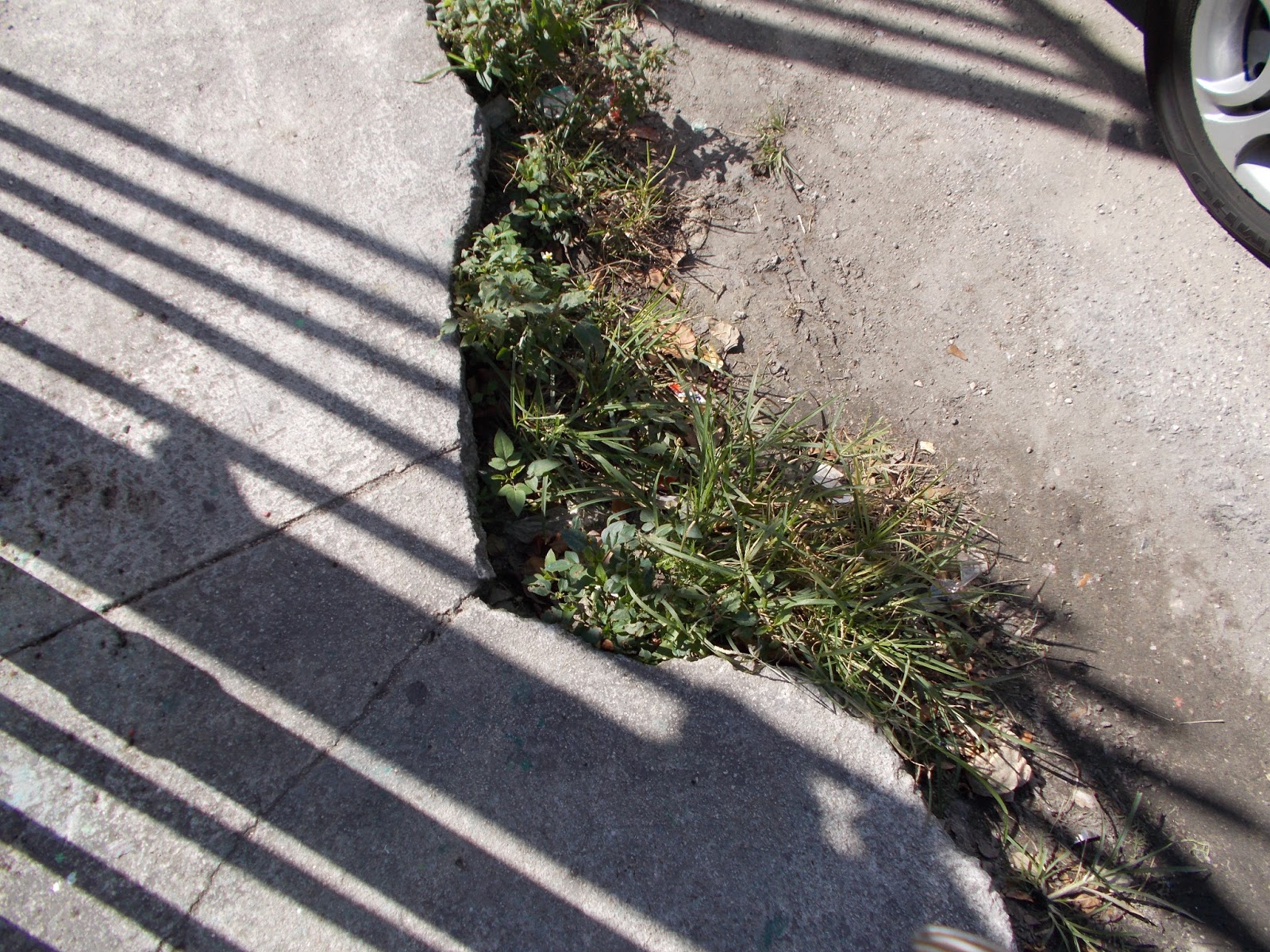
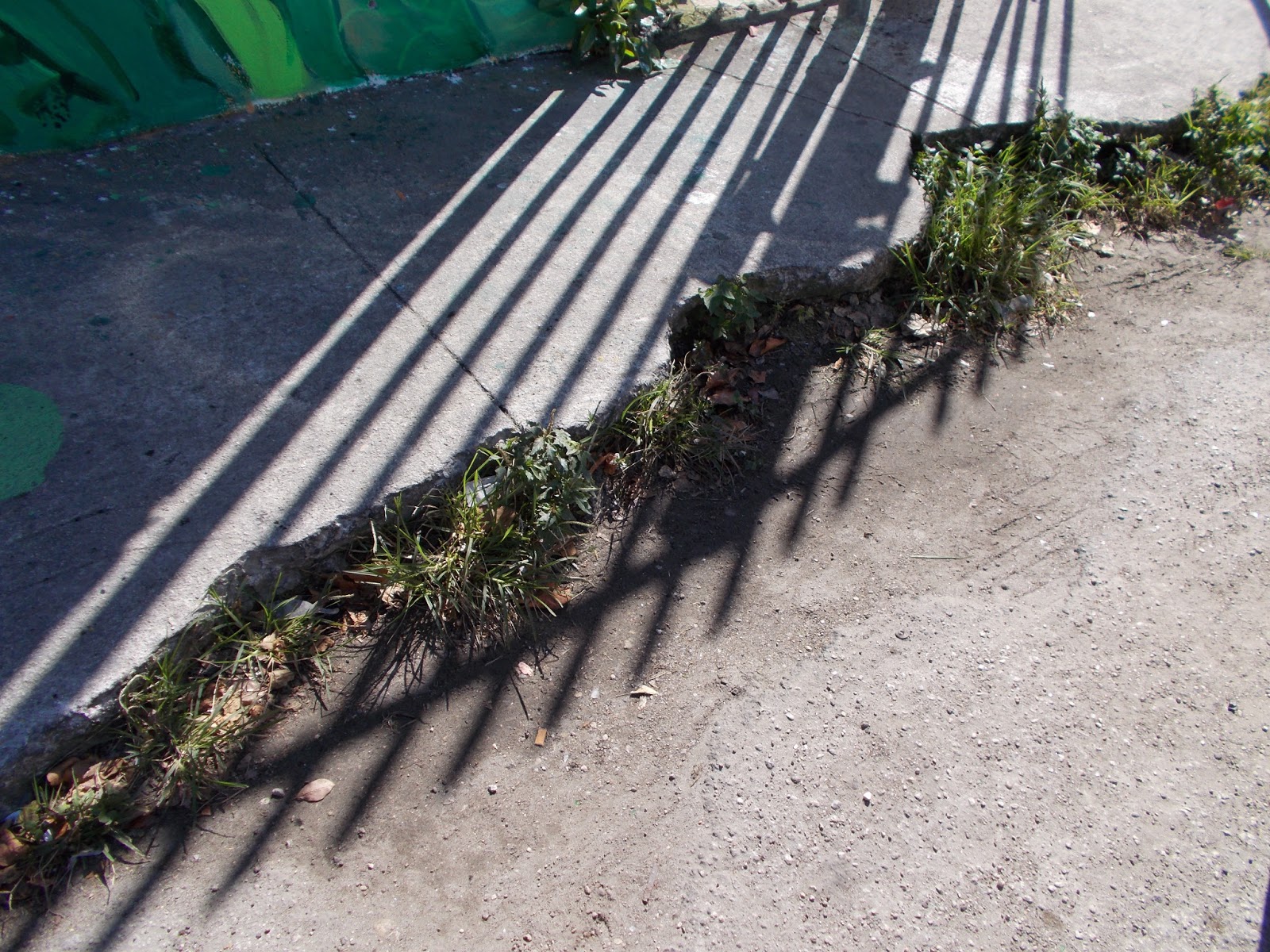
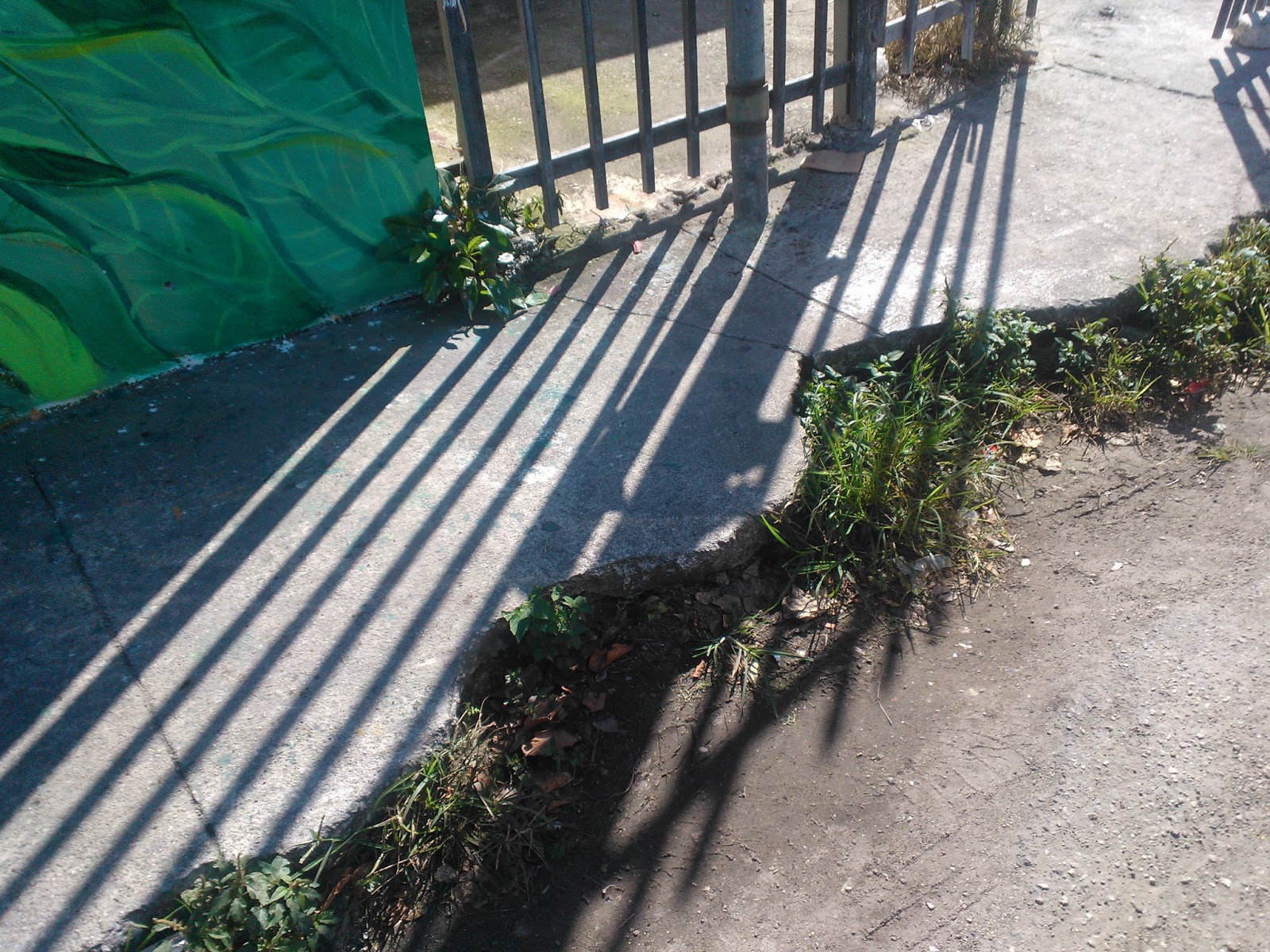
This broken sidewalk is not something new. Clearly it has been disintegrating for a very long time to arrive at its current condition.

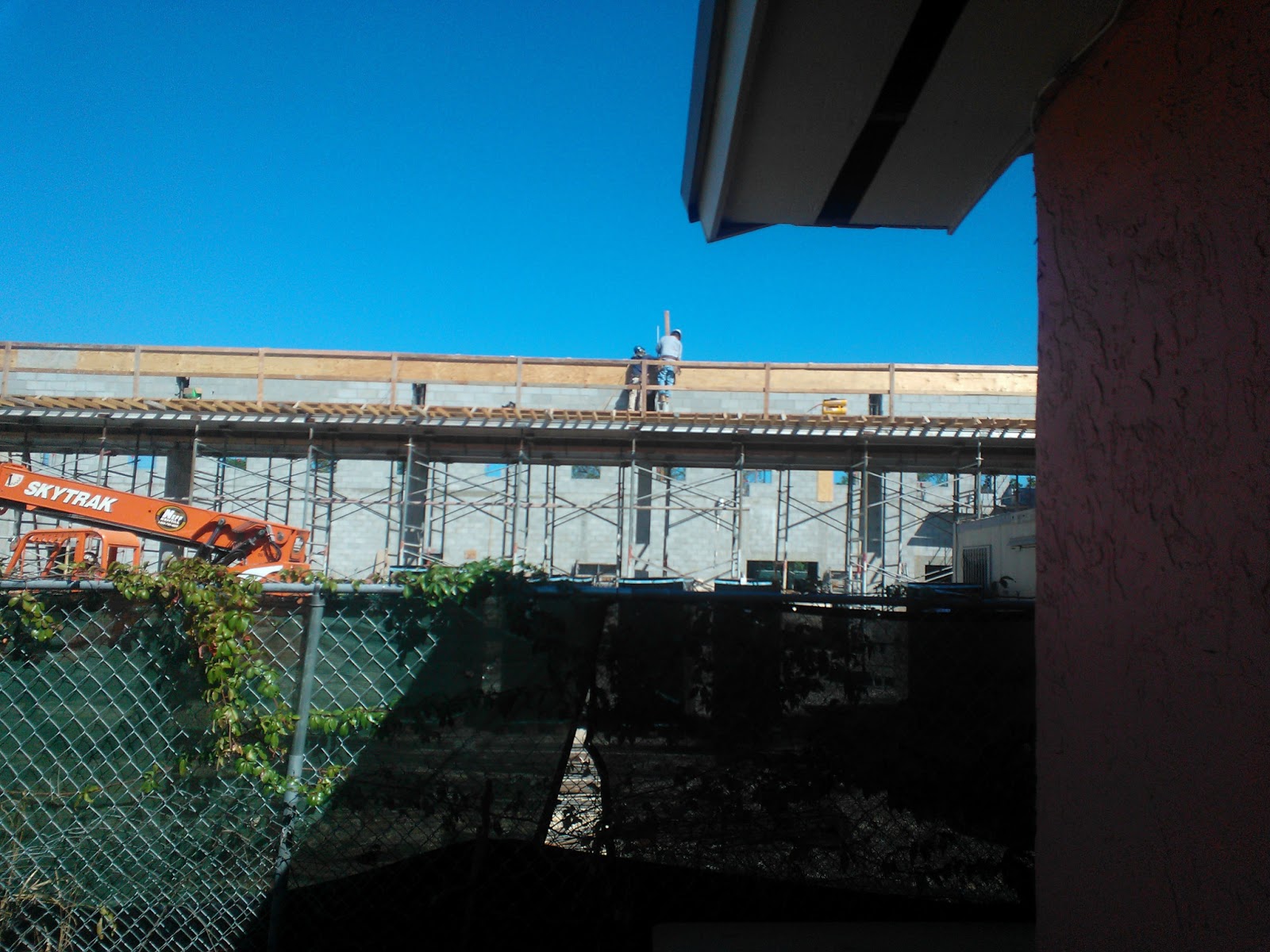
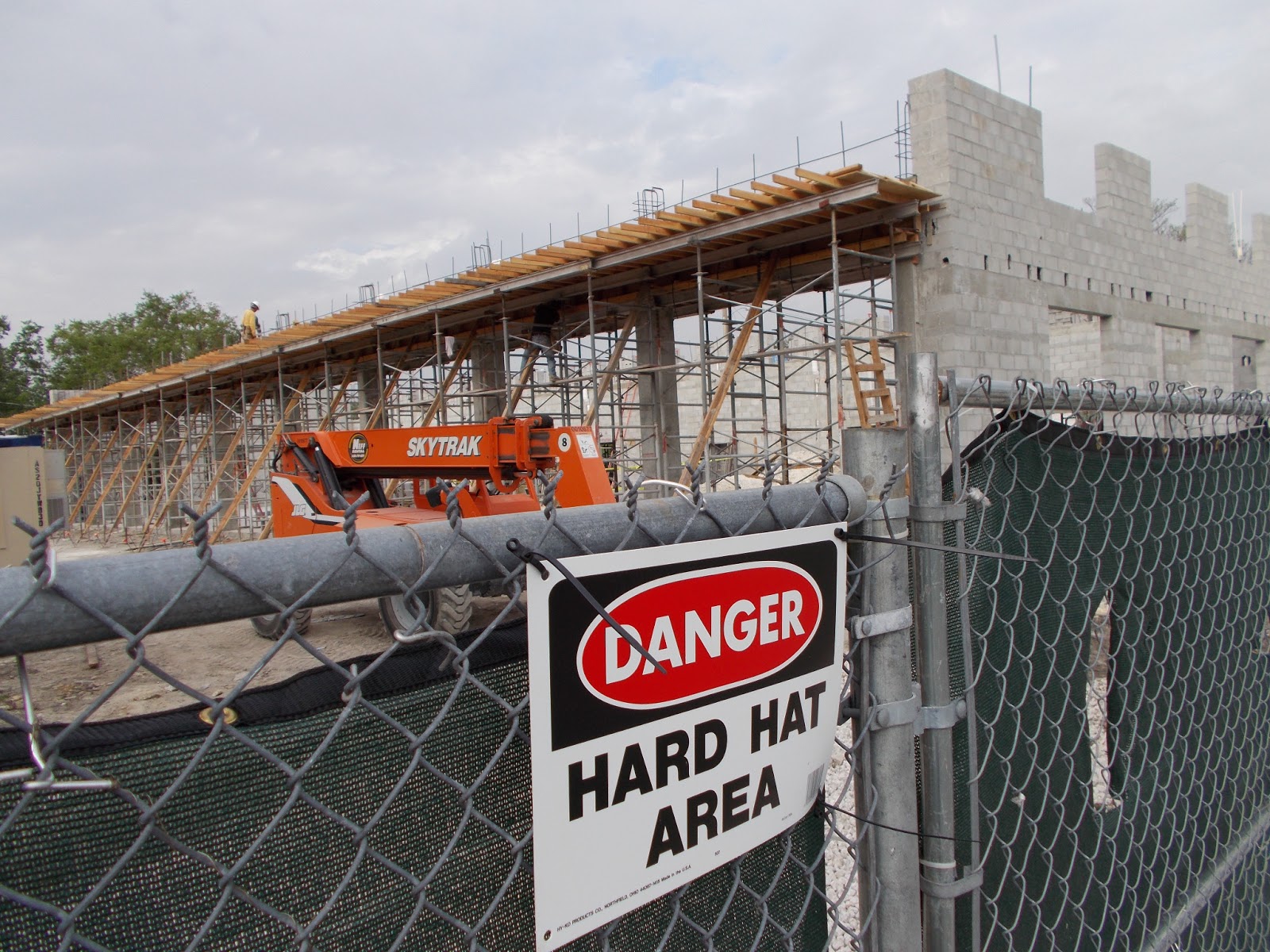
Construction continues on the
diesel bus garage, March 4, 2013

To my mind this perfectly illustrates the reality that two Groves exist: Black Grove and White Grove. A sidewalk like this would never be allowed to exist in White Grove. However, because it’s on Frow Avenue in West Grove, this sidewalk can easily be ignored by the City of Miami.

It’s simply more of the same kind of quiet racism that the City of Miami demonstrated in allowing Coral Gables to locate its polluting diesel bus garage in the middle of a residential neighbourhood in West Grove, which (maybe not coincidentally) is being built right across the street from this broken sidewalk.

This is a well-traveled route. Hundreds of pedestrians pass by that sidewalk every day: school children, the people who use the store on which the mural is painted, mothers
with strollers, old people on canes, children riding bicycles . . . you
get the picture. If not, here are a few more:

Maybe “One Grove” is merely a slogan whose time has passed.

Trolleygate Brings A Community Together

Diesel bus garage, February 27, 2013

While crews continue to build the nonconforming Coral Gables diesel bus garage, a lawsuit by West Grove residents is working its way through the court system. If the residents of the community have their way, (and why shouldn’t they?) the bus garage will never open. If Commissioner Marc D. Sarnoff has his way, his constituents will get screwed . . . again.

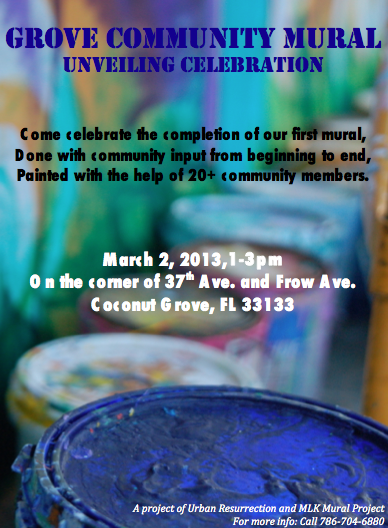
Flier announcing tomorrow’s unveiling.

The residents of West Grove have sued to stop Coral Gables, the neighbouring town, from building its polluting bus garage in the residential neighbourhood of west Coconut Grove. Oddly enough, the border between Coral Gables and Coconut Grove is just one block west of this construction site.

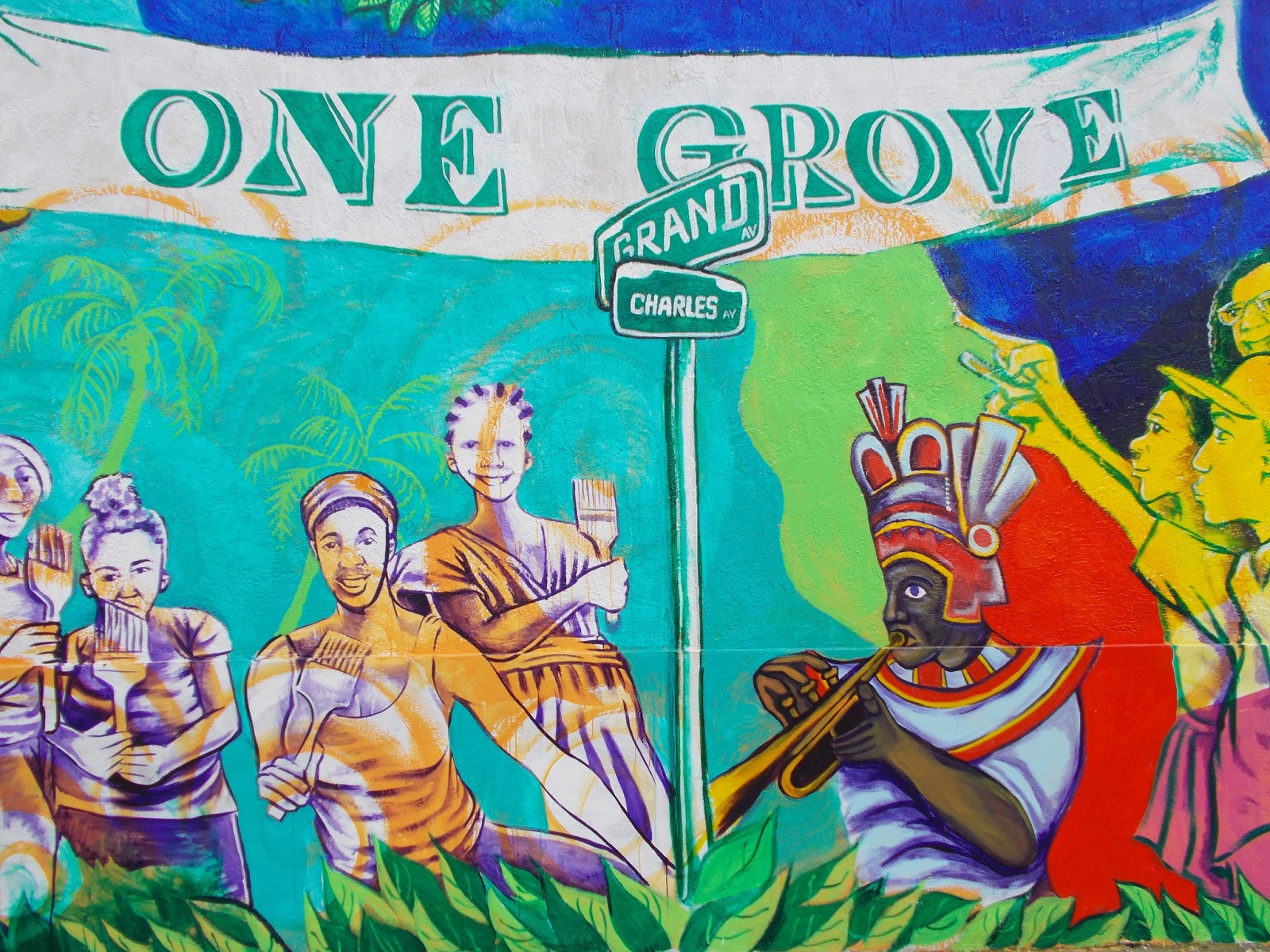
However, before the residents even knew about the diesel bus garage they were already looking at the corner of Frow and Douglas for an urban renewal project. Teaming up with MLK Community Mural Project, the community decided to paint a mural on the wall of a convenience store. With the announcement of the diesel bus garage, the mural has now become a rallying point.

The design of the mural came together organically from the ground up. A survey was sent around asking neighbours three questions:

1). What symbols of the community would you like to see in a mural?

2). What elements of the community are you most proud of? 

3). What are the future dreams you wish for the community?

The wall before it had been transformed.

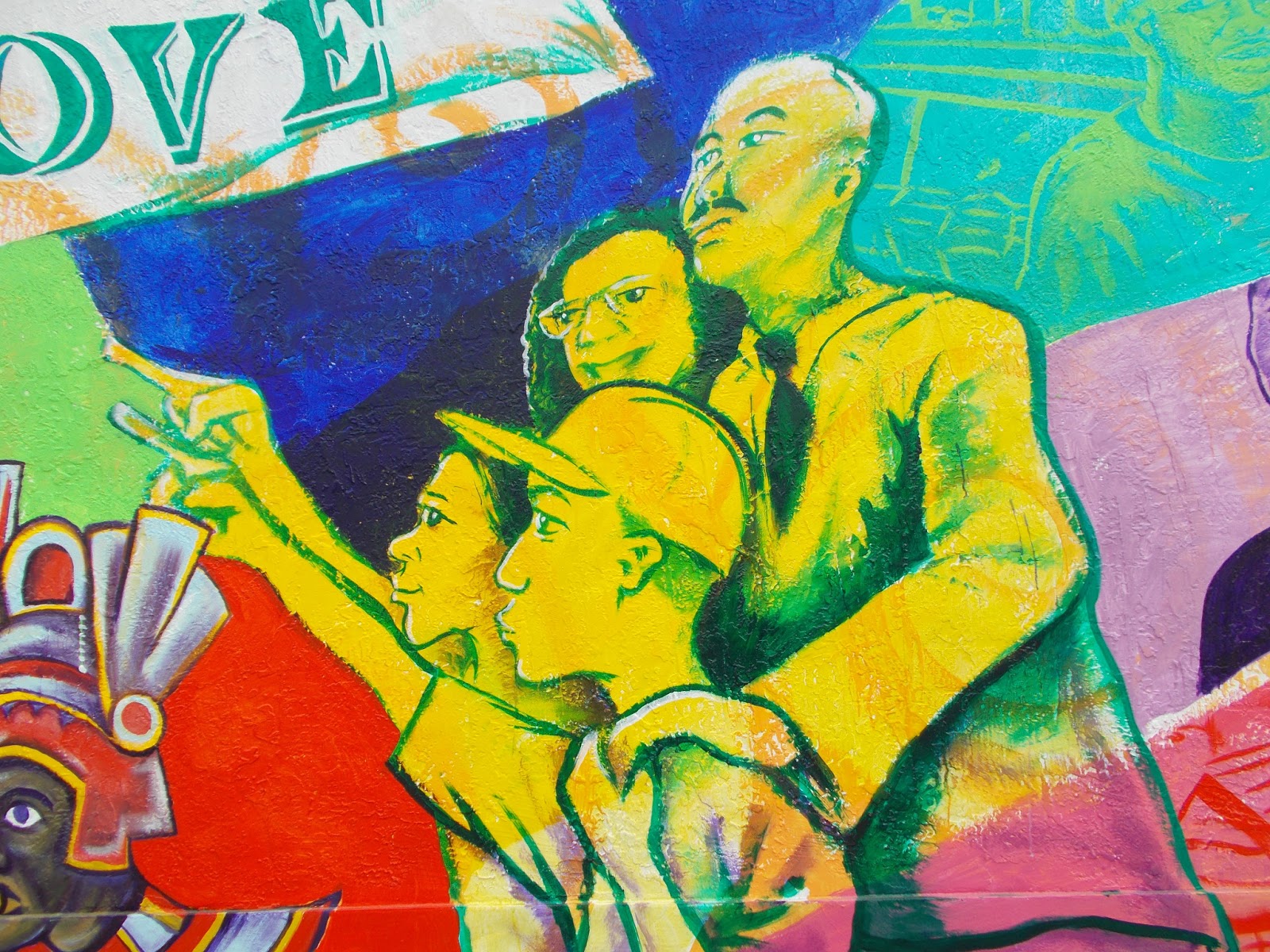
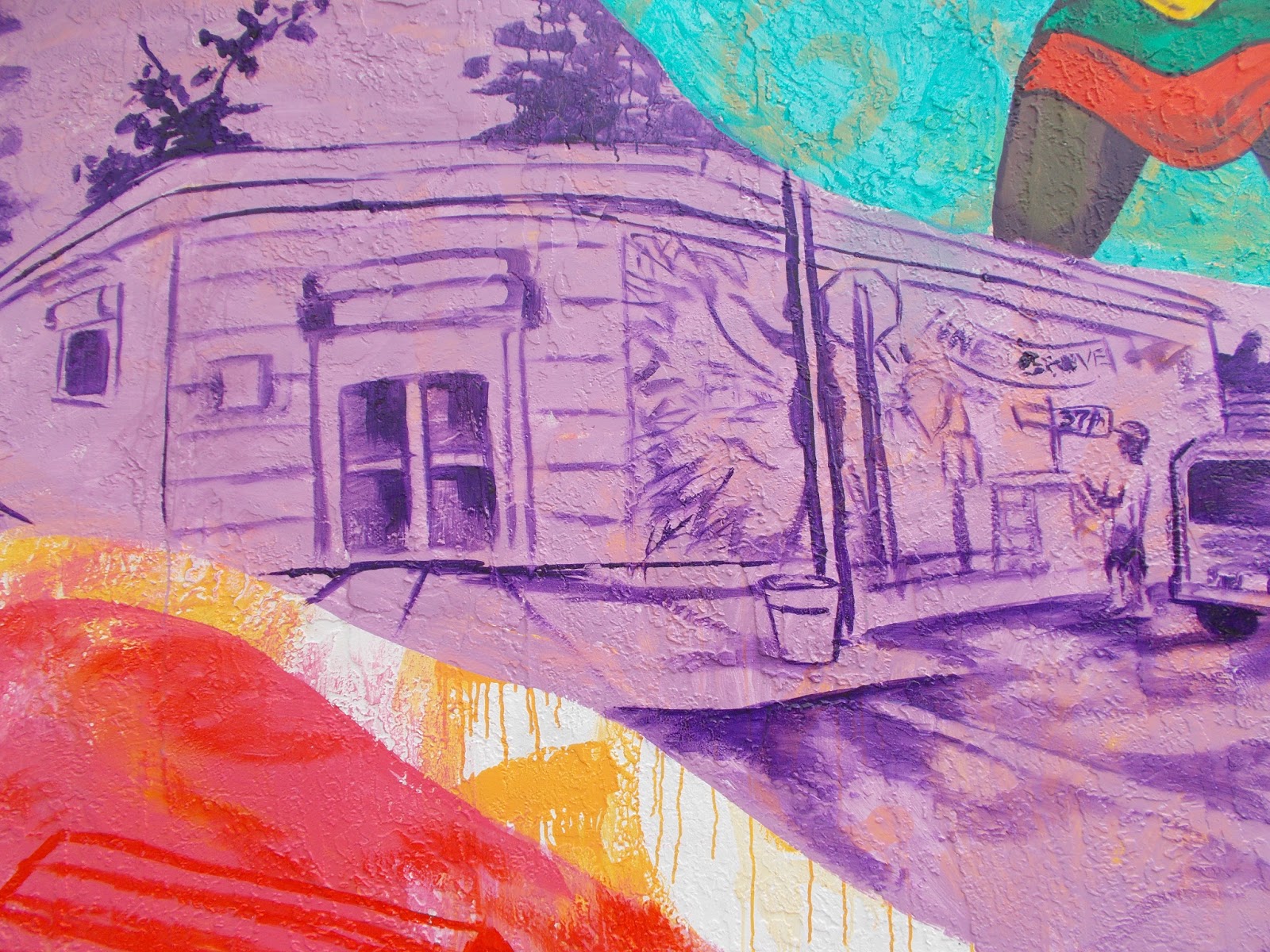
Kyle Holbrook, of MLK Mural, took all the suggestions and created 3 different designs for the mural, incorporating them all. The designs were then voted on, with the winning one translated to the wall in colourful paint. What had been a nondescript wall has been turned into a vibrant mural and symbol of community pride. The painting pays tribute to the original Bahamians who settled the area, as it also
honours the history and people that made the Grove what it is today.

Tomorrow afternoon at 1 the community will come together to dedicate this wonderful work of art.

One of the things I have heard several times recently, from more than one person, is how people used to just call it The Grove, or Coconut Grove. These days, however, people refer to North Grove, East Grove, West Grove, Black Grove, White Grove. The mural reflects the concept of One Grove, with a banner proclaiming that at the very top of the mural. Reunification seems to be the desire of the community and return to the idea that everybody is in this together. This is something Commissioner Marc D. Sarnoff should take the time to learn, as opposed to pitting community groups against each other in order to divide and conquer. 
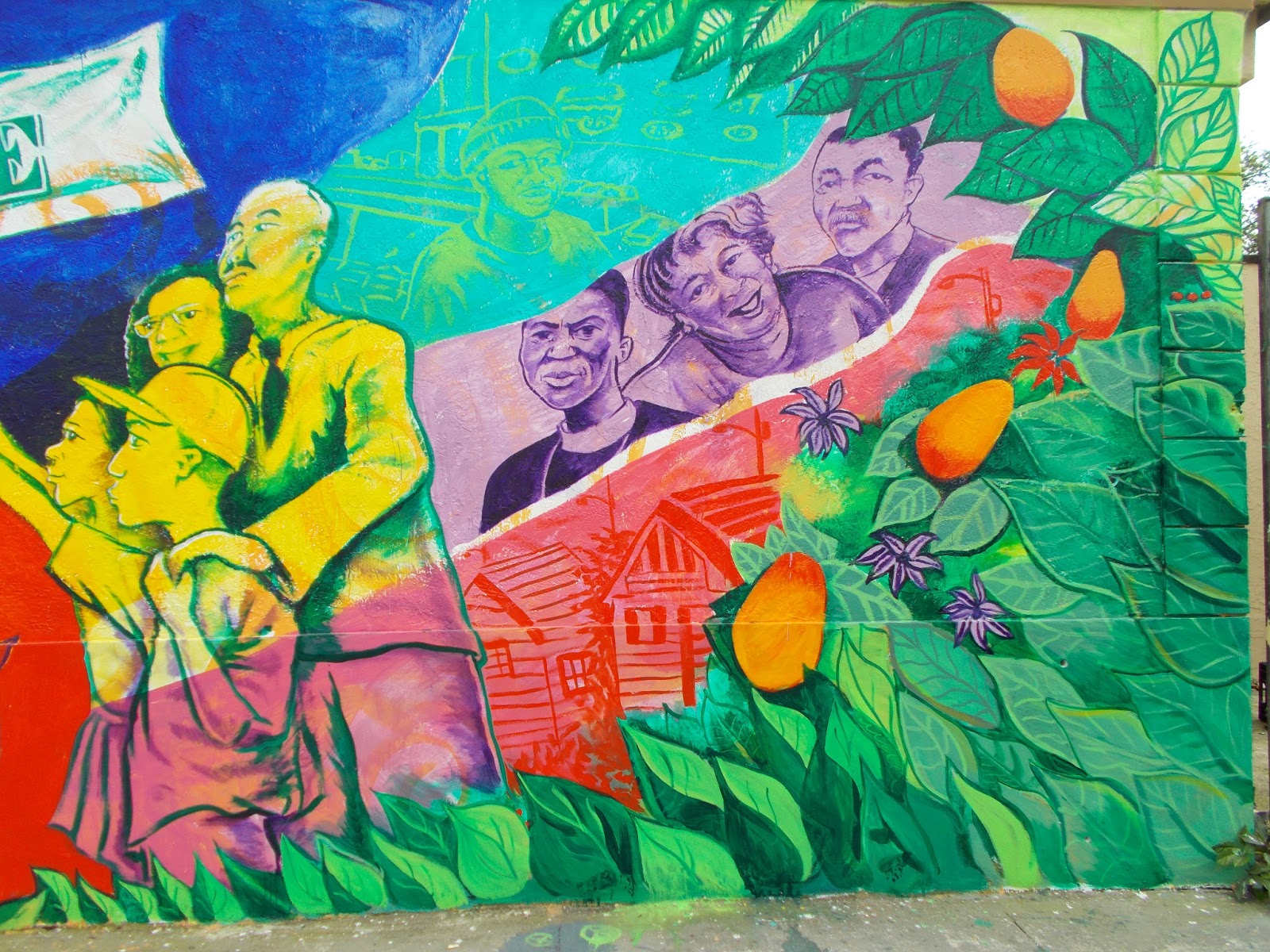
The wall after it had been transformed.

Close up of the center section of the mural. Grand Avenue and Charles Avenue do not actually meet, except as the two streets around which the community congregated and thrived.
Another close up.

A family visiting the mural, as the parents teach the children about their history and heritage.

Three of the important pioneers of Coconut Grove: (L to R) Father Theodore Gibson, who did so much to integrate Coconut Grove during the various Civil Rights struggles; Esther Mae Armbrister, who championed turning the Mariah Brown House into a museum and community resource, among other good works in a lifetime dedicated to serving others; E.W.F. Stirrup, whose forward thinking ideas about Black home ownership more than 120 years ago is what makes Coconut Grove a unique place in this country to this very day.

Mangos! Shotgun houses! Foliage! All symbols of Coconut Grove.

These four young ladies were among the first to show up to paint the mural. A photograph was taken of them posing with their paintbrushes, which was then incorporated into the mural.

Caribbean dancers! More foliage and shotgun houses. And, the very building on which the mural is painted.

Full circle: Young man admiring the mural within the mural.

This is a wonderful work of art which will adorn this building for many years to come. It has also become a symbol of pride for a neighbourhood coming together to fight the Coral Gables diesel bus garage.

Launching The Official Marc D. Sarnoff Tip Line

Sarnoff preparing his troops for the Trolleygate Town Hall.

I might as well make it official. So many people have come forward to give me tips about City of Miami Commissioner Marc D. Sarnoff on DEEP BACKGROUND, that I now have enough investigative leads to last me a lifetime, provided I die by Presidents’ Day. 

It’s clear that people in Miami are eager to unload what they know about Sarnoff and Miami corruption to anyone who will listen. To my regret the tips are coming from people who would prefer to remain OFF THE RECORD, which indicates a fear of Sarnoff among those who know him best. On the other hand, the tips themselves are not off the record. Consequently, I am free to chase them down to see how much truth they contain. I’ve learned through my many years as a writer that it can be a bit like hard rock mining. Some tips won’t pan out, but others will contain valuable nuggets of information. The most recent tip sounds like it might contain pay dirt, but until I run it through the dredger I won’t know how valuable it really is.

In case this latest tip is nothing but Fool’s Gold, I’m launching an Official Marc D. Sarnoff Tip Line. Feel free to tell me what you know. Feel free to tell me what you merely suspect. I won’t print your name if you ask for anonyimity. In fact, I won’t print anything about anything unless — or until — I can confirm it myself. That’s just how I roll.

You can contact me via email, rattle my cage at facebook, or drop a comment below.

I’m most interested in Sarnoff Sightings. If you catch Mark D. Sarnoff out and about, take a picture and send it to me. Especially if he’s having another one of those meetings with a developer to map out how to slip something past his constituents.

Unpacking Coconut Grove ► A Compendium [UPDATED]

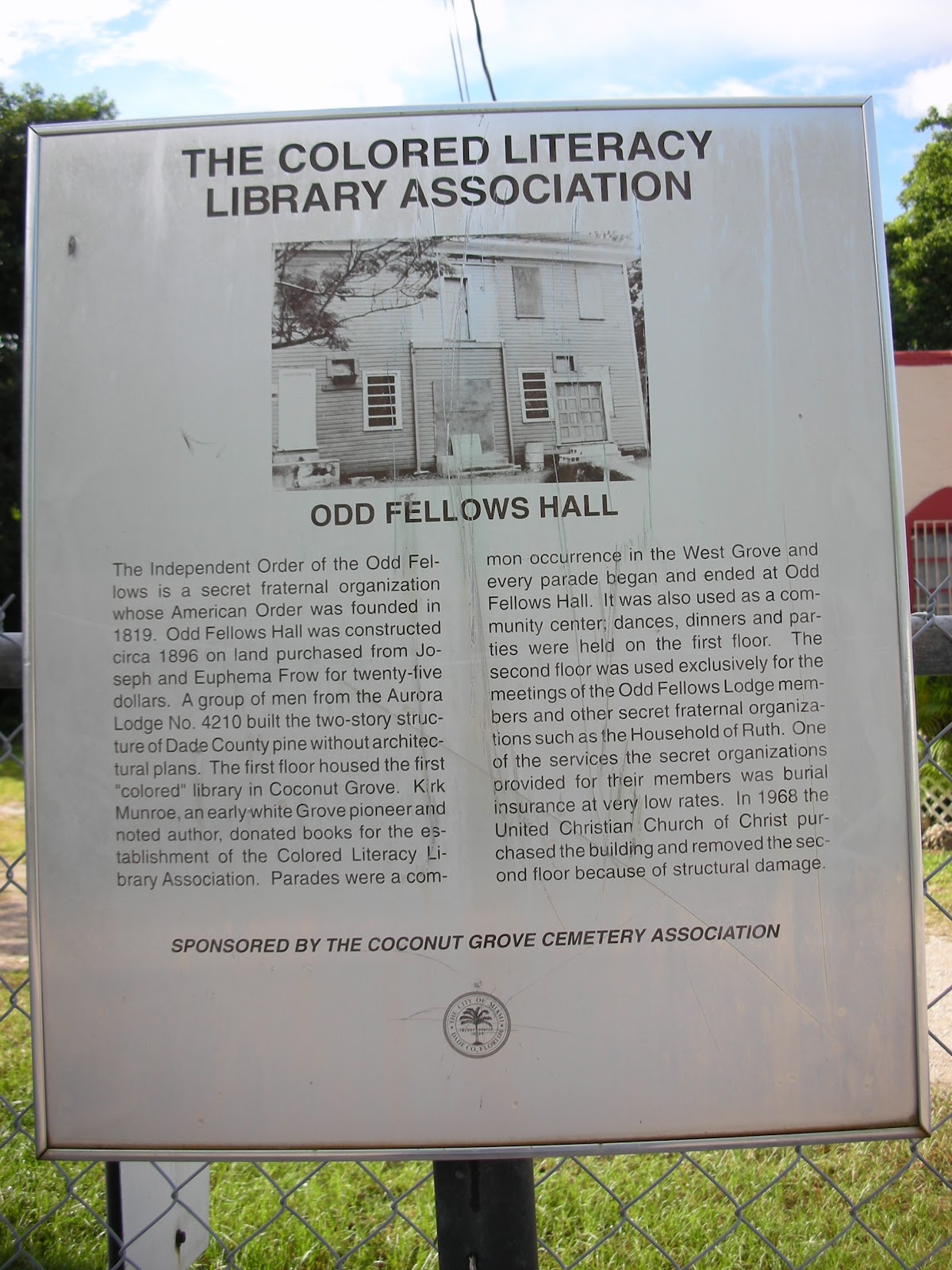
This is the historical marker I just happened to discover
one day in early 2009. It led to all the research that followed.

As I add chapters to my ongoing series “Unpacking Coconut Grove” this compendium will be updated with the latest on top. The first entry for 2013 is:

Happy Birthday Coconut Grove!!! Now Honour Your Past

In which I briefly lay out the history of Coconut Grove from the mid-1800s to the present-day and make the case that systemic racism is the reason the E.W.F. Stirrup House and the Mariah Brown House have not been renovated, despite promises to do so.

Previous chapters:

The corner of Charles Avenue and
Main Highway
in Coconut Grove.

Unpacking Coconut Grove, Florida – Part One

This is an overview of the area, the issues at stake, how I came to discover Coconut Grove, and why I became so passionate about it.

Unpacking Coconut Grove, Florida – Part 1.1

This chapter contrasts the 120-year old E.W.F. Stirrup House, currently undergoing Demolition by Neglect, with a house built in 1964 less than a mile away. One is rotting away and the other is for sale for $22,000,000.

Unpacking Coconut Grove – Part Two – E.W.F. Stirrup House

The E.W.F. Stirrup House,
standing proud on Charles Avenue.

This chapter delves deeper into the history of the E.W.F. Stirrup House and the history of Ebenezer Woodbury Franklin Stirrup. It explains why this proud Bahamian man’s legacy is in need of preserving for the community, as opposed to rapacious developers. E.W.F. Stirrup almost single-handedly created a Black community unique in the entire United States.

Unpacking Coconut Grove – Part 2.2 – The Neighbourhood Around The E.W.F. Stirrup House

Musings upon recent discoveries in my continued research of Coconut Grove, Charles Avenue and the Grove Gardens Residence Condominiums immediately behind the E.W.F. Stirrup House. It also includes a close up photo essay showing the damage that years of neglect have caused on the E.W.F. Stirrup House.

Unpacking Coconut Grove – Part 2.3 – The Charles Avenue Rabbit Hole Leads To Canada

Imagine my surprise when I discover my ongoing research on the E.W.F. Stirrup House leads to Canada, the country I chose to become a citizen of.

Unpacking Coconut Grove – Part Three – Who Controls What On Charles Avenue

The Coconut Grove Playhouse at the corner of Charles Avenue
and Main Highway. The City of Miami has been trying to wrest
control of it back, but one person is holding up all progress.

After extensive research I share what I have learned on who controls, or owns, properties along Charles Avenue. It turns out it’s all the same guy, or companies owned, in part, by the same guy, or properties controlled by the same guy. And, that even includes the Coconut Grove Playhouse, which I never even considered to be a part of my original research. Come on down, Gino Falsetto.

Unpacking Coconut Grove – Part Four – Open Houses and Broken Laws

In which I discover that demolition work is proceeding within the E.W.F. Stirrup House without the benefit of a Building Permit issued by the City of Miami. Also, for the first time, I get inside the Stirrup House after being invited inside by one of the men doing the demolition. This entry has lots of pictures of the inside of this historic 120-year old architectural treasure.

Unpacking Coconut Grove – Part 4.1 – A Photo Essay

Another visit to Charles Avenue seems to indicate that my blog posts are being read because the property is locked up tight again and all (allegedly) illegal demolition work appears to have stopped after being reported to the City of Miami Building Department. 

Unpacking Coconut Grove – Part Five – A Charles Avenue Love Story

180 degree panorama of the entrance to the Charlotte Jane Memorial Park Cemetery,
at one time the only place around where Black folk could bury their dead.

I would like to know more about the love affair between E.W.F. Stirrup and his childhood sweetheart, and wife, for whom the Charlotte Jane Memorial Park Cemetery, at the far end of Charles Avenue, is named. Here is the little I have been able to learn so far.

One of the informational
signs along Charles Avenue.

Unpacking Coconut Grove – Part Six – Still Building With No Building Permit

An update a week later, where I discover that (allegedly) illegal work is still proceeding within the E.W.F. Stirrup House without benefit of a work permit on prominent display.

Unpacking Coconut Grove – Part 6.1 – An Open Email to the City of Miami

Since the City of Miami has not seen fit to respond to my email, I have printed it here for all the world to read.

Unpacking Coconut Grove – Part Seven – Signs along Charles Avenue

At some point in the recent past a series of informational signs were erected along Charles Avenue. Here they are for you to read.

Unpacking Coconut Grove ► Part Eight ► The Powers That Be

Read along as I try to unpack the power structure in Coconut Grove. Pay no attention to the man behind the curtain, even if it is Gino Falsetto, a Canadian who left a string of bankruptcies behind before he left cold Canada for warm Miami.

Unpacking Coconut Grove ► Part Nine ► Good Neighbours and Bad Neighbours 

What makes a good neighbour and what makes a bad neighbour? In this latest chapter of Unpacking Coconut Grove I state the difference and name names.

Unpacking Coconut Grove ► Part 9.1 ► A Bad Neighbour Photo Essay 

A follow-up to last week’s entry with some hot, new information: How did The Bad Neighbour acquire his 50-year lease on the E.W.F. Stirrup House? It wasn’t by putting up any hard-earned cash. Read this chapter to find out how a (alleged) scumbag works real estate a deal.

Unpacking Coconut Grove ► Part 9.2 ► A Photo Essay Follow Up

Why did the alleged scumbag, aka The Bad Neighbour, allow the owners of the E.W.F. Stirrup House to be cited for contravening city by-laws by the City of Miami?  ALSO: More on how the alleged rapacious developer, aka Gino Falsetto, managed to acquire his 50-year lease on the E.W.F. Stirrup House. It isn’t pretty.

***

***

Montgomery Bus Boycott ► Nostalgia Ain’t What It Used To Be

Dateline December 5, 1955 – Rosa Parks and E.D. Nixon began the Montgomery Bus Boycott. It lasted for just over one year. 

This is something that happened within my lifetime. It’s not all that long ago: a mere 57 years.

The Montgomery Bus Boycott didn’t end racism, of course. It’s just not institutionalized and is far less overt. Hell, President Obama’s reelection hasn’t ended racism. It’s just done through dog whistles these days.

Some years later my father had a store on 12th Street in Detroit, the city to which Parks had moved in 1957. Twelfth Street was at the epicenter of the 1967 riot and was eventually renamed Rosa Parks Boulevard.

Rosa Parks died in Detroit on October 24, 2005.

Further reading:

Unpacking My Detroit; Part Five ► The Detroit Riots

Unpacking Coconut Grove ► Part 9.2 ► A Photo Essay Follow Up

It’s amazing what a phone call to the right City of Miami department can do. When I arrived for my weekly visit to the E.W.F. Stirrup House yesterday, there was a city inspector taking pictures of the house and surrounding area. Apparently the day after my visit last week, City of Miami by-law inspector Raghubir Sandhu cited and posted the E.W.F. Stirrup property for “Failure to maintain lot in a safe, clean condition; not allowing accumulation of debris, trash or dense growth of grass,” a contravention of City of Miami Zoning Ordinance 11000. Unfortunately, this was not done due to any of my blog posts (DARN!). A lovely man, Mr. Sandhu spent a bit of time with me explaining the City of Miami’s view on
non-compliance, while I told him the history of the E.W.F. Stirrup
House and Black Coconut Grove, which he had never heard before. Mr. Sandhu seemed interested in what I have been documenting in my Unpacking Coconut Grove series and took the URL of my blog with him. He said he’d take a look, which is all I ever ask (beg?) of anybody. 

Detail of notice directed to Stirrup Properties Inc.

Aries Development, through its owner Gino Falsetto, has bragged about having a 50-year lease on the E.W.F. Stirrup House. However, Aries/Falsetto is not the owner of record. That dubious distinction goes to Stirrup Properties Inc., a company held by 3 descendants of E.W.F. Stirrup, who left a codicil in his will that the house that the house must remain in the family in perpetuity. However, Bad Neighbour Gino Falsetto is the one who controls the E.W.F. Stirrup property through that lease. Falsetto is the person who allowed the property to turn into a garbage dump. Aries Development, which built the Grove Gardens Residence Condominiums, acquired control of the property by trading 2 condo units (#304 and #403) in the Grove Gardens Residence Condominiums — each valued at $500,000 at the time of the swap — for the 50-year lease on the Stirrup House. Somehow I don’t think this is what E.W.F. Stirrup had in mind when he wrote his will. Why does the phrase “40 acres and a mule” keep coming to mind?

It would appear that the descendants of Ebeneezer Woodbury Franklin Stirrup cared far less about his legacy, and the rich history of Black Coconut Grove, than they did for having a nice new condominium in a nice new condominium complex. They allowed themselves to be hoodwinked into giving Aries Development total control of the Stirrup property. This also gave Gino Falsetto the right to turn it into a garbage dump, outside as well as inside the house. Stirrup Properties Inc., and not Aries Development, would be on the hook for any fines imposed by the city.

Whenever a property
is cited for noncompliance, aside from a letter like above posted on
the actual property, a duplicate is sent by registered mail to the owner
of record, in this case Stirrup Properties, Inc. It informs the owner that it has 10 days from the issuance of the citation to correct the deficiency, otherwise fines of between $50 to $500 a day could be levied against the owner. If those tickets are not paid, a lien can be issued against the property. Yesterday Mr Sandhu was back to see whether the owners of the property had taken his citation to its corporate heart.

And, lo and
behold, it was. The grass on the property was cut and most, if not all,
of the trash was piled into the dumpster, which is now overflowing. While it’s a half-assed job, comparing these new pictures with
those taken last week and the week before, show a marked difference. Maybe one day soon Aries Development and/or Gino Falsetto might do a proper job of cleaning up the property, and not just the barest minimum to get the city inspector off his back.

While not everything has made it into the overflowing dumpster, at least the fridge is now upright.
However, there’s still a lot of trash laying around, some of it right next to the dumpster.
Some of these trash piles have been there for weeks.
A view over the dumpster of the Grove Gardens Residence Condominiums. For all I know the
descendants of E.W.F. Stirrup could have a bird’s eye view of the garbage dump left in their name.
This is what I mean by half-assed job. This litter is still right where it has
been for many weeks, literally right on the E.W.F. Stirrup House doorstep.
However, credit where credit’s due: having the grass cut makes a world of difference visually . . .
. . . until one starts to focus on the trash that’s still left on the property.
Even the bowers have been trimmed back, revealing the heaps of trash behind the E.W.F. Stirrup House.
It must be noted that those bowers are not formed by shrubs or bushes. Those are vines and weeds run amok.
To be fair: There is one tree hiding in the far back, left corner, but it’s entirely overrun by the vines and weeds.
The graffiti on the wall contravenes the city by-laws, as do these trash heaps
that have been there for several months. Maybe another citation is in order.
This is also what I mean by half-assed. Some of this litter, documented in my last two posts, has been cleaned
up. Some of it was left right where it was. Just enough work was done to please the by-law inspector.
However, good news!!! This is the exact spot where the Reggae flyer
sat
for the last 5 weeks. It is now gone, as are all the dead leaves.
However, there’s a brand new Reggae flyer for me to keep track of. I wonder how long it will remain.
The record to beat is 5 weeks. We will follow its progress as the colours fade like the last one.
Gino Falsetto also controls, through a dummy corporation owned by one of his partners, the two
empty lots across from the E.W.F. Stirrup House. They were also cited for the same thing as the
Stirrup Property. Now the notices are just part of the litter allowed to accumulate on Charles Avenue.
This is also an example of the half assed job that was done. This is base of the Charles
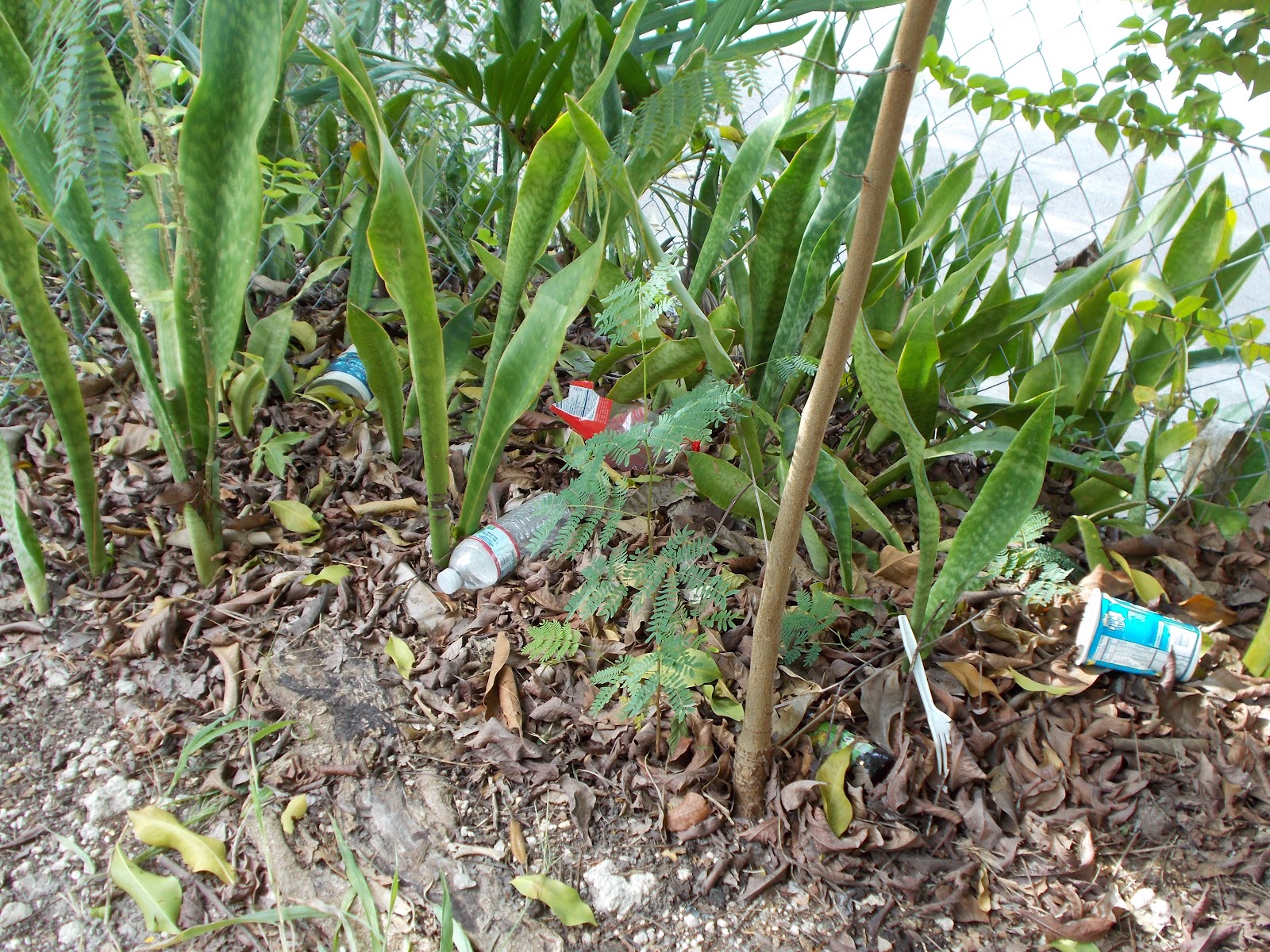
Avenue historical marker across the street from the E.W.F. Stirrup House on property
also controlled by Gino Falsetto. Some of the weeds were cut and some remain.
The latest view of the Charles Avenue historical
marker that began my quest more than  3 years ago.
It’s a never-ending battle to keep litter from overwhelming the property. A good
neighbour would see to it that the job is done without having to be cited by the city.

However, let me be clear. None of the landscaping and hauling away of the trash on the property will do anything to save the E.W.F. Stirrup House from a rapacious developer. Gino Falsetto appears to have already decided that if he cannot turn the house into a Bed and Breakfast, then he will allow it to undergo Demolition by Neglect.

Open questions to Gino Falsetto and/or Aries Development:
1). What promises were made to the City of Miami and to the residents of Black Coconut Grove in order to get your building permit?

2). Why won’t you honour those agreements?

***

***