Jamaica mourns one of her native sons in the passing of Lloyd Brevett, original bassist for The Skatalites, at the age of 80. Brevett was there at the beginning. It is not hyperbole to say that The Skatalites were one of the most influential bands ever, and not just in the narrow genre of Ska. Ask anybody who knows. No less an authority on Ska Music than the New York Times noted:
Mr. Brevett, a trained jazz bassist, was an original member of the
Skatalites, which was formed in 1964 during the evolution of Jamaican
music from American-influenced rhythm and blues and jazz to the
homegrown syncopated style known as ska, the precursor of reggae, rock
steady and dub. The band members were also active as studio musicians
and backed up the Wailers and other groups.
The Skatalites broke up in the mid-1960s but regrouped in New York 20
years later. Two of their albums, “Hi-Bop Ska!” and “Greetings From
Skamania,” were nominated for Grammy Awards in the 1990s.
Not just anyone rates a NYT’s obit. Or condolences from a former Jamaincan Prime Minister, who just happened to be Brevett’s tour manager way back when. According to David McFadden of the Associated Press:
Former Prime Minister P.J. Patterson, who was
once a tour manager for The Skatalites, said that while the band’s great
horn section often drew most of the accolades, it was “Brevett who
quietly provided the mesmerizing backbone to the Skatalites’ sound.”
“To say that Brevett was a creator of both ska and dub is not to use hyperbole,” Patterson said in a statement.
[…]
Legendary Jamaican musicians say it’s difficult to overestimate the role the trained jazz bassist and the rest of the original Skatalites played in developing the Caribbean island’s unique music.
“He was there from the beginning,” Bunny Wailer told The Associated Press. “All my bass lines from all my recordings have been attributed to bass lines from Lloyd Brevett.”
Wailer, the reggae legend who was one of the original Wailers along with Bob Marley and Peter Tosh, praised Brevett as a devout member of the Rastafarian faith and an elder statesman of the island’s culture.
“Brother Brevett’s music is eternal,” Wailer said.
The Skatalites worked with everybody in the Ska-Reggae-Dub genres. In a way similar to Easy StarAll Stars many of The Skatalites biggest hits were Ska reworkings of familiar tunes, even if they seemed to be strange choices for a Ska band. However, listen to the playing and the arrangements. This is some excellent musicianship working against the back beat.
Here’s a little Skatalites Jukebox:…and you’ll be dancing when it’s all over:
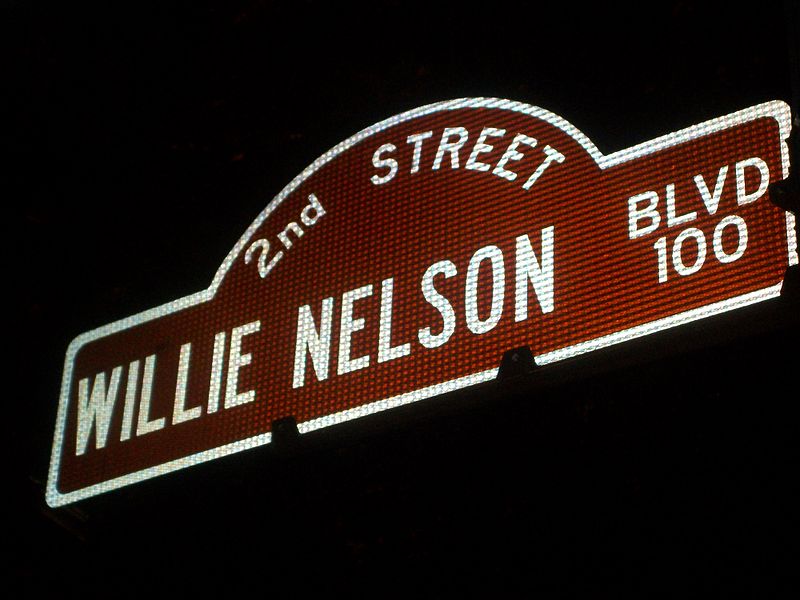
Willie Nelson turns 79 today and he’s still going strong, dropping his new CD “Heroes” next month, featuring Merle Haggard, Snoop Dogg, Kris Kristofferson, Billy Joe Shaver,
and Sheryl Crow, among others. Who would have predicted that back in 1961, when Willie was just an itinerant song-plugger trying to sell “Crazy” to Patsy Cline, that one day he would be singing for presidents?
New York City Mayor Michael Bloomberg has declared today Duke Ellington Day, on what would have been the 110th birthday of the musical legend. Edward Kennedy “Duke” Ellington died in 1974 at the age of 75, but his music will never die. According to UPI:
To commemorate the musician’s life, The Islands of the Bahamas said
they are sponsoring a special run of New York’s last surviving 1939 A
Train, made famous in Ellington’s signature tune “Take the A Train.”
“Take the A Train,” written by BillyStrayhornwhile he was taking the A Train to rehearsal, I have dozens of recordings of “Take the A Train,” by Ellington because he recorded it so many times. Some live. Some solo. Some with a small group. Some with a full orchestra. Every single one holds new surprises, no matter how familiar I am with the tune. Here are three great versions of Ellington’s signature tune. The first is Duke with a rockin’ trio, followed by an early version with his orchestra, and finally, one with Ella Fitzgerald on vocals.
With thousands of compositions, and so many interpretations of Duke Ellington tunes, it was hard to pick a stand-out performance until I remembered Dr. John’s tribute CD “Duke Elegant.” Boogie now!!!
This is such a great video. The SMiLE Sessions is hours and hours of tape from the never-released masterpiece SMiLE by The Beach Boys, who are celebrating their 50th Anniversary this year.
This is how Brian Wilson always wanted Heroes and Villains to play.
People, who know that Dub Reggae is my favourite musical genre, and that I was also a ‘60s psychedelic, hard-driving, product of Detroit, are often surprised to learn that my favourite singer of all is Mr. Bing Crosby. Here’s something totally stupid and incomprehensible to whet your appetite while I try and convince you that Bing was best.
I admit. I didn’t come to appreciate Bing until about 10 years ago. I was born in the early ‘50s. By the time I was rocking out to the MC5 and Iggy Stooge at the Grande Ballroom, I had pretty much dismissed Bing Crosby in my mind as an untalented hack that had only lucked into a singing and acting career. He was the guy that was so easy to imitate—so ubiquitous—that anyone saying “buh buh buh blooo” was referencing him. You couldn’t escape the muther. He would pop up as a caricature in kiddy cartoons of my youth. Nothing says “has been” more to a kid than a caricature someone popping up in a cartoon. Nothing demonstrates this better than the Warner Brother’s cartoon, “Bingo Crosbyana.”
Of course, this was long before I knew what “homage” meant.
Another thing I disliked about Bing Crosby is that he owned Christmas. As a Jewish boy being called kike in the ‘50s and ‘60s, I was sure that Bing was somehow connected with it all. Hell, maybe he was behind it all, for all I knew. According to Gary Giddins (see below) Crosby “made the most popular record ever, ‘White Christmas,’ the only single to make American pop charts twenty times, every year but one between 1942 and 1962. In 1998, after a long absence, his 1947 version hit the charts in Britain.” And let’s not even talk about all the Christmas movies.
However, worst of all, Bing Crosby was the guy who almost ruined David Bowie for me for all time. I heard Bowie was going to make a rare appearance on a Bing Crosby Christmas special. Wait! What? Yes. True. It took me a long time to forgive Bowie for that. Crosby’s Christmas specials occupy its own niche in the category of Hollywood kitsch. On reflection, with so many years to assuage hurt feelings, the harmonies are lovely and the arrangement of “Little Drummer Boy/Peace on Earth” medley is clever. Still, you have to admit this is the low point of David Bowie’s career, especially the 1st minute, forty nine. Watch:
Here’s what I’m trying to say: I had absolutely no appreciation of Bing Crosby. This, despite being a huge Frank Sinatra fan. I just didn’t think Bing was fit to hold Sinatra’s trench coat.
This began to change about 10 years ago. I was watching a documentary on Louis Armstrong (a musical hero of mine) and in it Mr. Armstrong made 2 remarks: 1). All singing begins and ends with Bing Crosby; 2). Bing’s voice was like honey being poured out of a golden cup.
Well, Louis Armstrong ain’t no slouch and he knows his Jazz. If he’s saying these wonderful things about Bing Crosby, maybe I should reassess my opinion. I started doing a little reading and found that pretty much every singer subsequent to Bing said they merely imitating Crosby and owe it all to him. Elvis name-checked him as an influence, as did both Sinatra and Dean Martin. Here’s a clip from “Robin and the Seven Hoods,” where Sinatra and Martin have a whole lot of fun with Bing’s sartorial choices in “Style.”
Now I was more curious than ever. What was I missing?
Coincidentally (or just another instance of synchronicity), right at this same time I happened to see a book on my local retailer’s remainder table called “Bing Crosby; A Pocketful of Dreams; The Early Years; 1903-1940” by Gary Giddins (who was quoted extensively in that Armstrong documentary referenced above). Amazingly this 592 page book (published in 1991) ends at “White Christmas” and is merely the first volume in a proposed 2-volume set. While reading the book, I also immersed myself in Bing’s earliest recordings, something I had never taken the time to do before.
The light went on!!! I am now a believer!!!
There were recordings I knew, but didn’t realize they were by a young Bing Crosby because his voice had changed so much over the years. His “Pennies From Heaven” or “Brother, Can You Spare A Dime?” are transcendent, blissful, and (here’s the most important part) are full of pathos. His voice carries the drama of the songs in a way that few singers have ever been able to pull off. For so many people of my parent’s age these songs, and Bing Crosby’s version of them, represented the Great Depression.
Everyone knows the dreadful David Lee Roth rip off of the Louis Prima arrangement of “Just a Gigolo/I Ain’t Got Nobody,” however those arrangements make the song swing and being a gigolo doesn’t seem like such a bad life. Even Louis Armstrong’s version swings. However, I never really understood the song until I heard Bing Crosby’s version of “Just a Gigolo” To begin with, it’s a very, very sad song, something you don’t get from Prima, Roth, or Armstrong. When Bing sings it, you hear every ounce of the pathos in the song. Bing also sings the introduction, left off most other versions. I can’t listen to Bing’s version without feeling great empathy for that sad, unemployed, World War One doughboy. Get out a hanky:
I now own a great deal of Bing Crosby’ recordings and I hear something new in them every time I listen.
Finally, here’s a partial list of Bing’s accomplishments, by Giddin in the Introduction to his book, I find most impressive, especially the second-to-last, because that changed Show Business forever:
He was the first full-time vocalist ever signed to an orchestra.
He made more studio recordings than any other singer in history (about 400 more than Sinatra).
He made the most popular record ever, “White Christmas,” the only single to make American pop charts twenty times, every year but one between 1942 and 1962. In 1998, after a long absence, his 1947 version hit the charts in Britain.
Between 1927 and 1962 he scored 368 charted records under his own name, plus 28 as vocalist with various bandleaders for a total of 396. No one else has come close; compare Paul Whiteman (220), Sinatra (209), Elvis (149), Glenn Miller (129), Nat “King” Cole (118), Louis Armstrong (85), The Beatles (68).
He scored the most number one hits ever, thirty-eight, compared with twenty-four by The Beatles and eighteen by Presley.
In 1960 he received a platinum record as First Citizen of the Record Industry for having sold 200 million discs, a number that had doubled by 1980.
Between 1915 and 1980 he was the only motion-picture star to rank as the number one box office attraction five times (1944-48). Between 1934 and 1954 he scored in the top ten fifteen times.
“Going My Way” was the highest-grossing film in the history of Paramount Pictures until 1947; “The Bells of St. Mary” was the highest grossing film in the history of RKO Pictures until 1947.
He was nominated for an Academy Award for best actor three times and won for “Going My Way.”
He was a major radio star longer than any other performer, from 1931 until 1954 on network; 1954 until 1962 in syndication.
He appeared on approximately 4,000 radio broadcasts, nearly 3,400 of them his own programs, and single-handedly changed radio from a live-performance to a canned or recorded medium by presenting, in 1946, the first transcribed network show on WABC — thereby making that also-ran network a major force.
He financed and popularized the development of tape, revolutionizing the recording industry.
He created the first and longest-running celebrity pro-am golf championship, playing host for thirty-five years, raising millions in charity and was the central figure in the development of the Del Mar racetrack in California.
Taste is subjective. We won’t all like the same things in food or music, f’rinstance. However, I suggest you take another listen to Bing Crosby. He’s a lot better than your parents ever told you.
Quality never goes out of style and Bing Crosby has quality!

Recently, through a chance Twitter encounter, I was interviewed about my experiences working for Island Records Canada for a series of documentary podcasts called “How Jamaica Conquered The World.” As a professional journalist for 4 decades, and having been interviewed myself, one often regrets opening up to a stranger. Not in this case. How Jamaica Conquered The World is a quality product and I am thrilled to be connected with it. I am sure Roifield Brown will not mind me quoting from the site:
Just as the Roman Empire conquered the known world 2000 years ago, in
the 19th century the British, through trade and slaves, created the
largest empire that this planet has ever seen. Today, the United States
may be a super power in decline but its economic power produced a
colossal “soft” empire spanning the late 20th century. It put boots on
the ground in hot spots around the globe, McDonalds restaurants in every
city and the entire world has watched its movies.
However, the small island of Jamaica has forged a new type of empire,
an intangible realm of which there are no physical monuments. There is
no official political or economic sphere of Jamaican influence but when
it comes to popular culture its global reach is immense, far exceeding
the reasonable expectation for a nation of just over 2.7 million people.
For a nation that gained independence from the British only 50 years
ago, Jamaicans have left their mark on music, sport, style and language
around the globe and have become an international marker of ‘cool’.
Jamaican music has colonised the new and old world alike, its athletes
break world records with impunity and youngsters the world over are
incorporating Jamaican slang into their dialects. Despite this the
country has reaped no economic reward in return, unlike empires of old,
and Jamaica still remains an economic pygmy. Jamaican influence has
unconsciously spawned creative innovation around the globe and to this
day it remains a country to be studied, celebrated, and demystified.
Through the help of linguists, artists, musicians, and historians we
take a closer look as to how Jamaican culture conquered the world.
So far my contribution to How Jamaica Conquered the World is limited to Chapter 7: The story of Dub music. Roifield tells me he had never heard of Easy Star All-Stars until I twigged him to them. If you are only learning of Easy Star All-Stars, here’s something to dance to while I tell you a bit about ESA-S.
But before I do, let me tell you about my love for Pink Floyd’s original “Dark Side of the Moon”, which I heard on the original vinyl, off the earliest pressings, when the LP was new. Since then I have listened to that record thousands of times, under just about every illegal drug known to man. I was one of those people who, early on, heard that one could sync up Dark Side with The Wizard of Oz (@Aunty__Em!!! @Aunty__Em!!! ) and it was a whole new experience. Every note of that record is imprinted on every neuron I have left. It’s one of the greatest LPs ever released. Yet, Easy Star All-Star’s Dub Side of the Moon kicks its ass. I’d rather listen to it than the Pink Floyd version that now sounds to these ears tepid and too nuanced.
Easy Star do something very brave in my opinion: They take iconic record albums and Dub them up.Starting with the above, ESAS’ next release was called Radiodread a recreation of Radiohead’s OK Computer. AMAZING! Then…and then…and then…They took one of the most iconic record albums of the Rock and Roll era and turned it into Easy Star’s Lonely Hearts Dub Band. It is absolutely incredible. Easy Star is a collective of musicians who also do a lot more than their cover albums.For me their most recent hit was turning over Dub Side to be remixed by the likes of Mad Professor, Dubmatix, Groove Corporation, The Alchemist and Adrian Sherwood. Dubber Side of the Moon is far more psychedelic and spacey than anything they’ve released so far.
Roifield tells me I will also pop up in the Bob Marley episode. I sure hope it’s my “meeting Bob Marley” story because it’s a good one. If not, I’ll tell it here after the podcast is posted. Hell, maybe I’ll tell it here even if it’s in the podcast. It’s a great story.