Category Archives: Media

Harpo Plays! ► Monday Musical Appreciation

He never said a word in the movies, but Harpo Marx never had a problem getting his point across. At a time when Talkies were all the rage, Harpo remained gloriously mute.

Adolph Marx — he later changed his name to Arthur  — was born on this day in 1888, the 2nd oldest of the 5 Marx Brothers. With his older brother Chico (Leonard) and his younger brother Groucho (Julius), The Marx Brothers became one of the greatest comedy teams of all time. [Gummo never appeared with his brothers on film and Zeppo left after the first five.]

Much to Groucho’s regret, because he was considered the “smart one,” Harpo was a member in good standing of The Algonquin Round Table, an exclusive club that included such notables as Robert Benchley, Heywood Broun, Marc Connelly, George S. Kaufman, Dorothy Parker, Harold Ross (The New Yorker editor), Robert E. Sherwood, Alexander Woollcott, Tallulah Bankhead, and Noel Coward.

However, it’s not Harpo’s mime shtick or his intelligence Not Now Silly wants to commemorate today; it’s his harp playing, for which he got his nickname. According to the WikiWackyWoo:

Harpo gained his stage name during a card game at the Orpheum Theatre in Galesburg, Illinois. The dealer (Art Fisher) called him “Harpo” because he played the harp.[5][6] He learned how to hold it properly from a picture of an angel playing a harp that he saw in a five-and-dime.
No one in town knew how to play the harp, so Harpo tuned it as best he
could, starting with one basic note and tuning it from there. Three
years later he found out he had tuned it incorrectly, but he could not
have tuned it properly; if he had, the strings would have broken each
night. Harpo’s method placed much less tension on the strings.[citation needed]
Although he played this way for the rest of his life, he did try to
learn how to play correctly, and he spent considerable money hiring the
best teachers. They spent their time listening to him, fascinated by the
way he played.[6]

Here are some of Harpo’s greatest musical performances:


Dan Penn ► Monday Musical Appreciation

Celebrating a birthday today is Dan Penn, a name almost unknown, but the writer of some of the greatest Soul tunes ever recorded.

Born Wallace Daniel Pennington according to his official biography he was:

 A native of Vernon, Alabama, Penn moved to the Florence/Muscle Shoals area while still a teenager and assumed the role of lead vocalist in a local group calling itself the Mark V Combo. When asked what kind of music they played, Penn replies, “R&B, man. There was no such thing as rock. That was somethin’ you picked up and throwed.” He laughs. “Or threw.” It was around this time that he penned his first chart record, Conway Twitty’s “Is a Bluebird Blue”. During the early ’60s, Penn began working with Rick Hall at Fame Studios in Muscle Shoals, first as a songwriter, and then as an artist under the names Lonnie Ray, Danny Lee, and finally Dan Penn. 

The WikiWackyWoo picks up the story:

In early 1966, Penn moved to Memphis, began writing for Press Publishing Company, and worked with Chips Moman at his American Studios.[5]
Their intense and short-lived partnership produced some of the best
known and most enduring songs of the genre. Their first collaboration,
the enduring classic “The Dark End of the Street”, was first a hit for James Carr and has since been recorded by many others. A few months later, during the legendary recording sessions that saw Jerry Wexler introduce Aretha Franklin
to FAME Studios and her first major success, the pair wrote “Do Right
Woman, Do Right Man” in the studio for her, which went to #37 in
Billboard in 1967. In early 1967 Penn produced “The Letter” for The Box
Tops. He and long-time friend and collaborator Spooner Oldham also wrote
a number of hits for the band, including “Cry Like a Baby”, another
song which has been covered many times.[6]

As always, it’s all about then music. Here are just some of the many hit tunes penned by Penn:


A Song So Great They Named It Twice ► Monday Musical Appreciation

When I was going to Coffey Junior High School, in Detroit, a prized piece of ephemera was a mimeographed sheet of paper with what was purported to be the real, DIRTY, lyrics to Louie, Louie, released on this day in 1963.

I had one passed to me by a classmate. Where he got it from, I don’t know. Of course, it had to be hidden from teachers and parents, so it was folded in eighths and kept tucked away until it was needed.

That’s why it was so dog-eared by the time I finally lost it, after loaning the sheet to someone who never returned it. It didn’t matter. By then I had memorized the dirty lyrics and can recite them to this very day.

Who knows how many of those mimeographed sheets were in circulation? By the time I lost mine, it had been read by dozens of young boys who guffawed over the juvenile humour. We were astounded by what The Kingsmen had gotten away with, right under the nose of the record industry, and everybody!

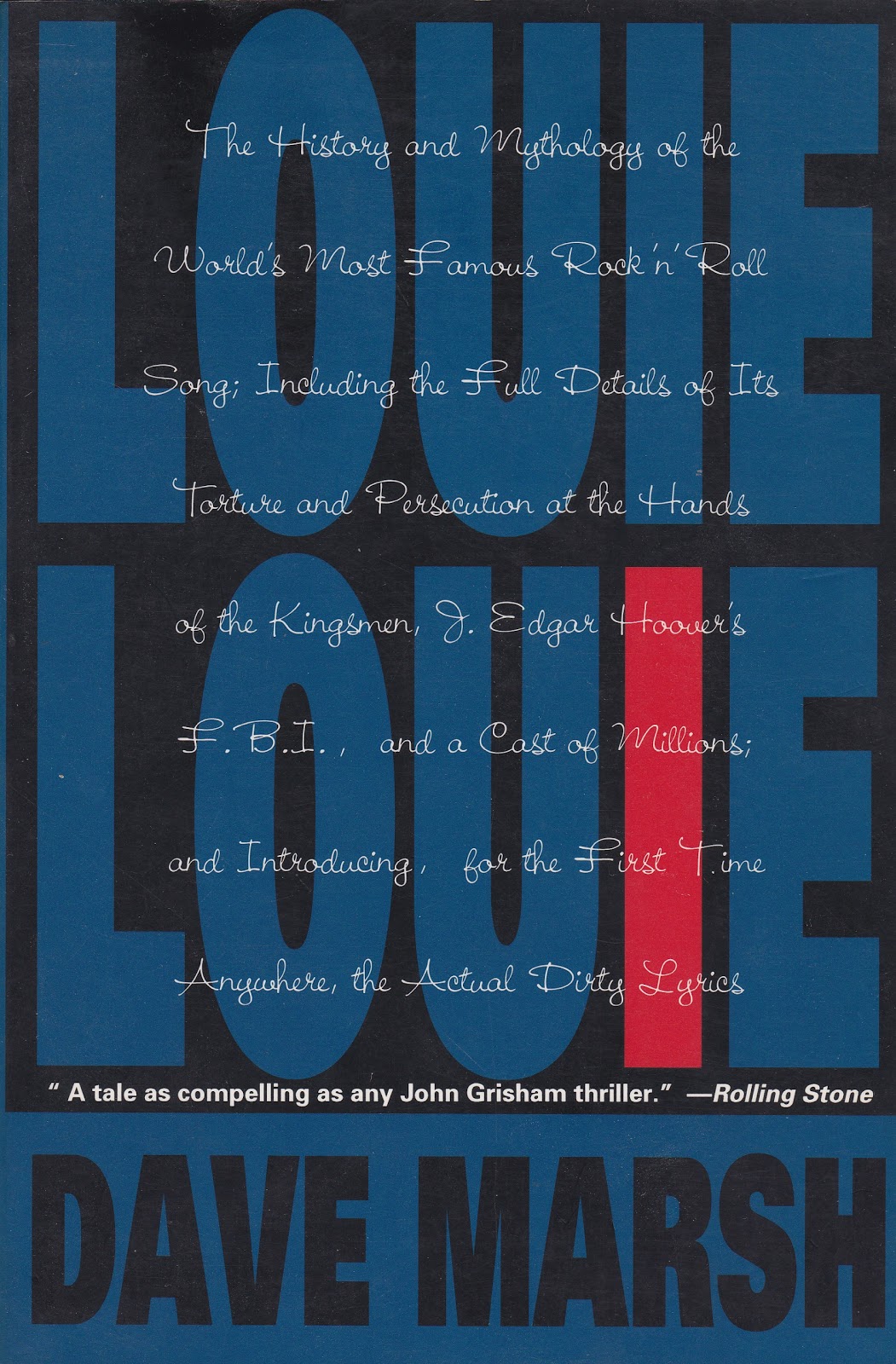
When I read the great book by Dave Marsh, Louie Louie; The History and
Mythology of the World’s Most Famous Rock ‘n Roll Song; Including the
Full Details of Its Torture and Persecution at the Hands of the
Kingsmen, J. Edgar Hoover’s FBI, and a Cast of Millions; and Introducing
for the First Time Anywhere, the Actual Dirty Lyrics
, I was gratified
to see that the dirty lyrics he reproduced were the exact same dirty lyrics I had in my possession for a while.

Of course, the joke was on us. The lyrics weren’t really dirty, just totally undecipherable. However, now Louie, Louise is one of the most recognizable and covered songs in all of Rock and Roll. As the WikiWackyWoo tells us:

“Louie Louie” has been recognized by organizations and publications
worldwide for its influence on the history of rock and roll. A partial
list (see “Recognition and rankings” table below) includes the Rock and Roll Hall of Fame, the Grammy Hall of Fame, National Public Radio, VH1, Rolling Stone, the National Endowment for the Arts, and the Recording Industry Association of America. In addition to new versions appearing regularly on YouTube and elsewhere, other major examples of the song’s legacy include the unsuccessful attempt in 1985 to make it the state song of Washington, the celebration of International Louie Louie Day every year on April 11, the annual Louie Louie Parade in Philadelphia from 1985 to 1989, the LouieFest in Tacoma from 2003 to 2012, and the ongoing annual Louie Louie Parade and Festival in Peoria.

The most amazing thing about Louie, Looue is that the FBI spent untold dollars, and wasted much time, researching the lyrics to decide whether the song was a Communist plot to destroy the minds of youth, or sumptin’. The FBI web site says:

In 1963, a rock group named the Kingsmen
recorded the song “Louie, Louie.” The popularity of the song and
difficulty in discerning the lyrics led some people to suspect the song
was obscene. The FBI was asked to investigate whether or not those
involved with the song violated laws against the interstate
transportation of obscene material. The limited investigation lasted
from February to May 1964 and discovered no evidence of obscenity.

CLICK HERE to read the actual FBI file in PDF form.

The Kingsmen’s tune was actually a cover of a Richard Berry song, written as a Jamaican ballad in 1955, which he released as a B side to a single in 1957. It became popular on the west coast, especially the Pacific Northwest, where The Kingsmen hailed from. They heard it, recorded it, and the rest is history. Nothing was ever the same again.

IRONY ALERT: When Dave March published his book, copyright infringement prevented him from passing along the real, actual lyrics to Louie, Louie, something easily found on the innertubes today.

I queried Der Google and here are the actual lyrics of Louie, Louie.

LOUIE LOUIE
The Kingsmen

Louie Louie, oh no

Sayin’ we gotta go,

yeah yeah, yeah yeah yeah

Said Louie Louie, oh baby

Said we gotta go

A fine little girl, she waits for me

Catch a ship across the sea

Sail that ship about, all alone

Never know if I make it home

Louie Louie, oh no no no

Sayin’ we gotta go, oh no

Said Louie Louie, oh baby

Said we gotta go

Three nights and days I sail the sea

Think of girl, all constantly

On that ship I dream she’s there

I smell the rose in her hair

Louie Louie, oh no

Sayin’ we gotta go,
yeah yeah, yeah yeah yeah

Said Louie Louie, oh baby

Said we gotta go

Okay, let’s give it to ’em, right now!

See, see Jamaica, the moon above

It won’t be long, me see me love

Take her in my arms again

I’ll tell her I’ll never leave again

Louie Louie, oh no

Sayin’ we gotta go,
yeah yeah, yeah yeah yeah

Said Louie Louie, oh baby

Said we gotta go

I said we gotta go now

Let’s take this on outta here

Let’s go!

Proving the song is as mild as milk, even Paul Revere and the Raiders covered it.

k.d. lang ► Monday Musical Appreciation

Celebrating a birthday today is k.d. lang, born Kathryn Dawn Lang in Edmonton, Alberta, Canada. 

Canadians have been enjoying k.d. lang since 1983, when she was performing what she called Cow Punk Music, which was really a combination of Country, Rockabilly, and Rock and Roll, all delivered with a unique attitude. Watch:

At the time she maintained she was the reincarnation of Patsy Cline and even called her back up band the Reclines. They put out three LPs together: A Truly Western Experience, Angel with a Lariat, and Absolute Torch and Twang, all of which were well received by both Country and Rock and Roll fans.

However, she was still considered an underground artist. As the WikiWackyWoo explains:

Lang first earned international recognition in 1988 when she performed, as “The Alberta Rose”, at the opening ceremonies of the Winter Olympics.[10] 

Lang’s career received a huge boost when Roy Orbison chose her to record a duet of his standard, “Crying, “ a collaboration that won them the Grammy Award for Best Country Collaboration with Vocals in 1989. The song was used in the Jon Cryer film Hiding Out released in 1987. Due to the success of the song, Lang received the Entertainer of the Year award from the Canadian Country Music Association.
Lang would win the same award for the next three years, in addition to
two Female Vocalist of the Year awards in 1988 and 1989. 

After that, there was no holding her back. Canadians have to share this gigantic talent with the rest of the world. But, we’re used to that.

Here’s just some more examples of k.d. lang’s incomparable talent, starting with her cover of another Canadian tune, Leonard Cohen’s Hallelujah:


You’re The Top ► Monday Musical Appreciation

Eighty-one years ago today one of the greatest songwriters in the English language recorded one of his greatest songs.

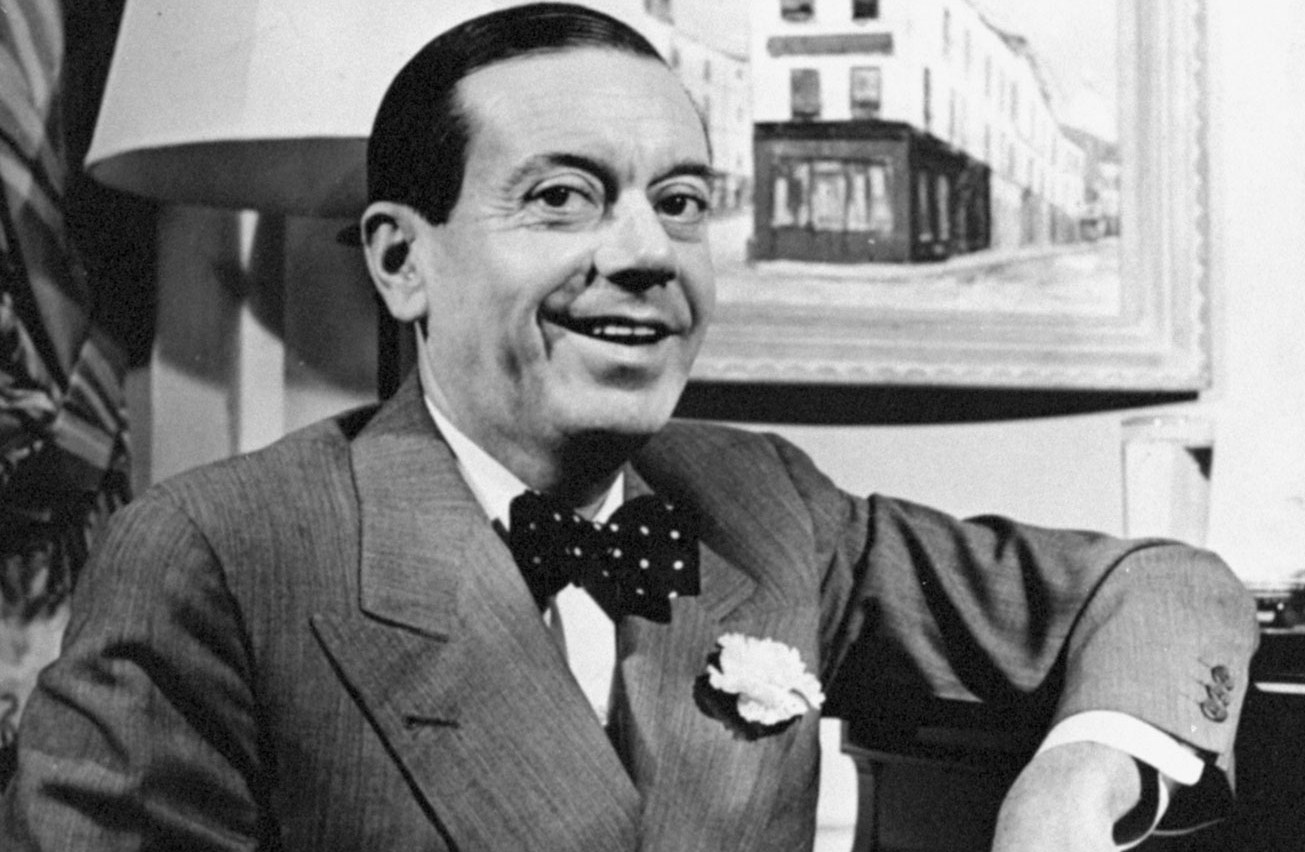
Cole Porter was already famous when hired to write the tunes for Anything Goes. As his official biography at the Songwriters’ Hall of Fame tells us:

But while his social life [in Paris] was dazzling, Cole’s career was moving frustratingly slowly.
He studied briefly with the noted French composer Vincent d’Indy. He had a few small
successes, contributing songs to such shows as Hitchy-Koo 1919 and the Greenwich
Village Follies of 1924
. And in 1923 he had a success in Paris with a short ballet called
Within the Quota. But Broadway producers had little interest in his work. However, in
1928, Irving Berlin recommended Cole to the producers of a “musicomedy” called Paris,
starring Irene Bordoni. Cole wrote five songs for the show, and one of those songs
“Let’s Do It (Let’s Fall In Love)”, became Cole’s first big success.

Finally, the Broadway career that had so long escaped him began to be a reality. He
followed up on Paris with another “French” show, and a full musical this time, Fifty
Million Frenchmen
(1929). The show, with a book by Herbert Fields, ran for 257
performances, and included “You’ve Got That Thing”, and “You Do Something To Me”.
And then, for a London show called Wake Up and Dream (1929), Cole wrote “What Is
This Thing Called Love?”

Now living in New York, Cole entered an extraordinarily productive period in which
show followed show on Broadway, and hit song followed hit song. The New Yorkers
(1930) introduced “Love For Sale”. His 1932 musical Gay Divorce starred Fred Astaire,
in Astaire’s last Broadway role and Astaire’s only Broadway appearance without his
sister and longtime dancing partner Adele. The show ran for 248 performances, and
included “Night And Day” and “After You, Who?”

In 1934, Cole wrote one of his greatest scores for a show with a book by Guy Bolton,
P.G. Wodehouse, Howard Lindsey, and Russel Crouse, Anything Goes. The show
starred Ethel Merman, William Gaxton, Bettina Hall, and Victor Moore and included
“Anything Goes”, “I Get A Kick Out Of You”, “All Through The Night”, “Blow, Gabriel,
Blow”, and “You’re The Top”.

Cole Porter wasn’t known for his singing voice and he recorded so very few of his own songs. However, we’re fortunate to have Porter’s own version of the song, from October 26, 1934, the first time it was ever recorded:

From page 34 of F. Scott Fitzgerald’s Fiction: “An Almost Theatrical Innocence:”

CHAPTER 2

On October 26, 1934, Cole Porter, accompanying himself on the piano, recorded the song “You’re the Top” from his new musical Anything Goes (its book by Guy Bolton and P.G. Wodehouse, revisited by Howard Lindsay and Russel Crouse), a show that would open for its tryout in Boston on November 5, 1934, and on Broadway on November 21, and run for 420 performances. Anything Goes was not only one of the great musical comedies of the 1930s but a high point in the history of the musical theater. Five of the show’s numbers became popular song standards: along with “You’re the Top,” there was “I Get a Kick Out of You,” “All Through the Night,” “Anything Goes,” and “Blow, Gabriel, Blow.”

What makes “You’re the Top” so wonderful is the clever wordplay, the spectacular rhyming scheme, and all those terrific Pop Cultural references, which would have been known by Mr. and Mrs. First Nighter, but some of which are almost unknown today:

At words poetic, I’m so pathetic
That I always have found it best,
Instead of getting ’em off my chest,
To let ’em rest unexpressed,
I hate parading my serenading
As I’ll probably miss a bar,
But if this ditty is not so pretty
At least it’ll tell you
How great you are.

You’re the top!
You’re the Coliseum.
You’re the top!
You’re the Louver Museum.
You’re a melody from a symphony by Strauss
You’re a Bendel bonnet,
A Shakespeare’s sonnet,
You’re Mickey Mouse.
You’re the Nile,
You’re the Tower of Pisa,
You’re the smile on the Mona Lisa
I’m a worthless check, a total wreck, a flop,
But if, baby, I’m the bottom you’re the top!

Your words poetic are not pathetic.
On the other hand, babe, you shine,
And I can feel after every line
A thrill divine
Down my spine.
Now gifted humans like Vincent Youmans
Might think that your song is bad,
But I got a notion
I’ll second the motion
And this is what I’m going to add;

You’re the top!
You’re Mahatma Gandhi.
You’re the top!
You’re Napoleon Brandy.
You’re the purple light
Of a summer night in Spain,
You’re the National Gallery
You’re Garbo’s salary,
You’re cellophane.
You’re sublime,
You’re turkey dinner,
You’re the time, 

of a Derby winner.
I’m a toy balloon that’s fated soon to pop
But if, baby, I’m the bottom,
You’re the top!

You’re the top!
You’re an arrow collar
You’re the top!
You’re a Coolidge dollar,
You’re the nimble tread
Of the feet of Fred Astaire,
You’re an O’Neill drama,
You’re Whistler’s mama!
You’re Camembert.
You’re a rose,
You’re Inferno’s Dante,
You’re the nose
On the great Durante.
I’m just in a way,
As the French would say, “de trop”.
But if, baby, I’m the bottom,
You’re the top!

You’re the top!
You’re a dance in Bali.
You’re the top!
You’re a hot tamale.
You’re an angel, you,
Simply too, too, too diveen,
You’re a Boticcelli,
You’re Keats,
You’re Shelly!
You’re Ovaltine!
You’re a boom,
You’re the dam at Boulder,
You’re the moon,
Over Mae West’s shoulder,
I’m the nominee of the G.O.P.
Or GOP!
But if, baby, I’m the bottom,
You’re the top!

You’re the top!
You’re a Waldorf salad.
You’re the top!
You’re a Berlin ballad.
You’re the boats that glide
On the sleepy Zuider Zee,
You’re an old Dutch master,
You’re Lady Astor,
You’re broccoli!
You’re romance,
You’re the steppes of Russia,
You’re the pants, on a Roxy usher,
I’m a broken doll, a fol-de-rol, a flop,
But if, baby, I’m the bottom,
You’re the top!

Coincidentally, on the same day Cole Porter recorded his version of “You’re the Top,” so did Paul Whiteman. Even though the show wouldn’t open up on Broadway for another month, Whiteman brought his orchestra into the studio to accompany vocalists Peggy Healy and John Hauser for this version:

Happy birthday to one of the greatest tunes ever recorded. Here are a few other versions:


This song is THE TOPS!!!

Peter Tosh ► Monday Musical Appreciation

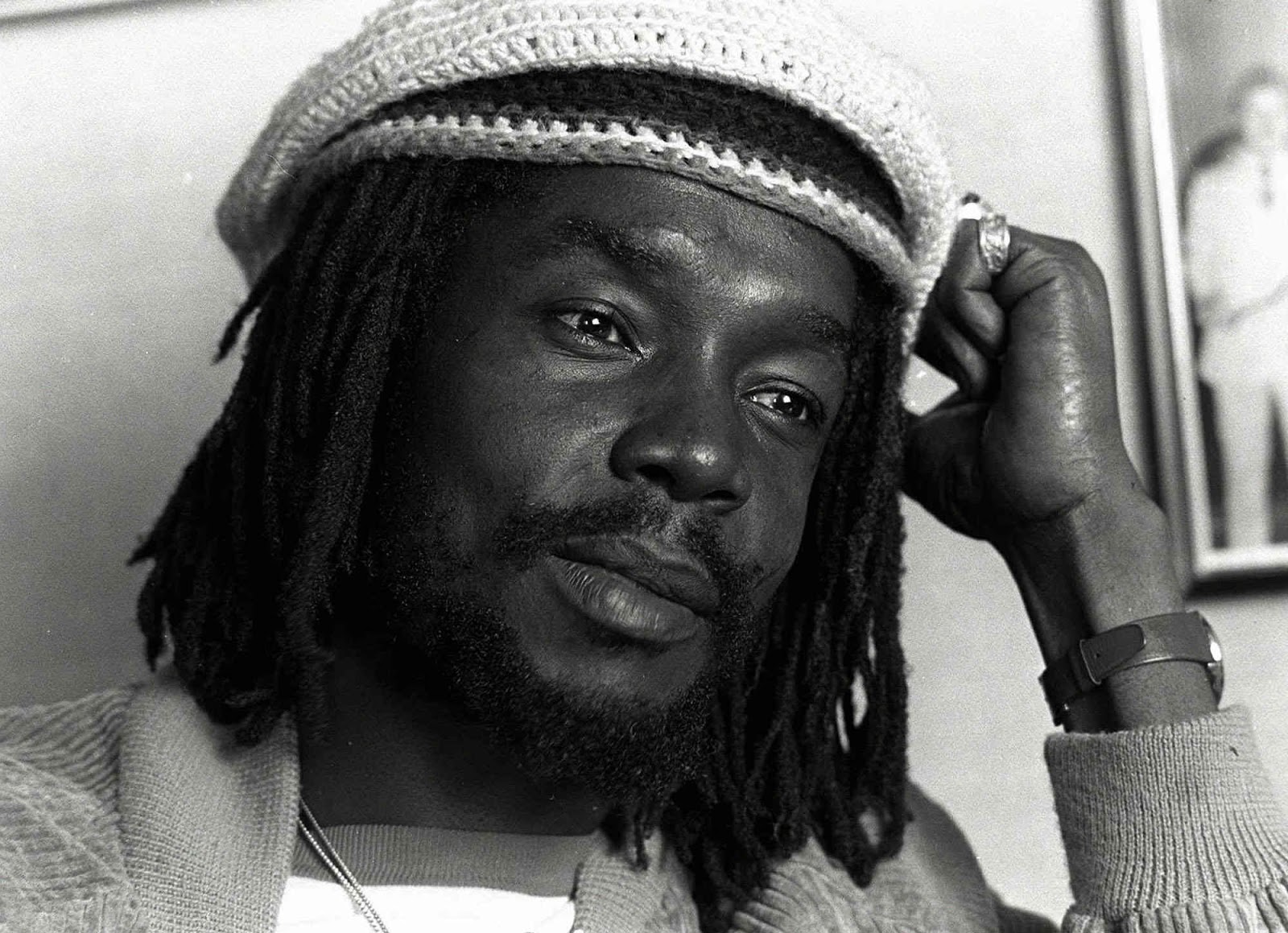
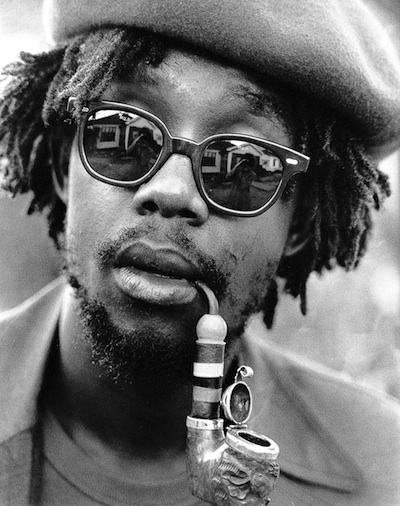
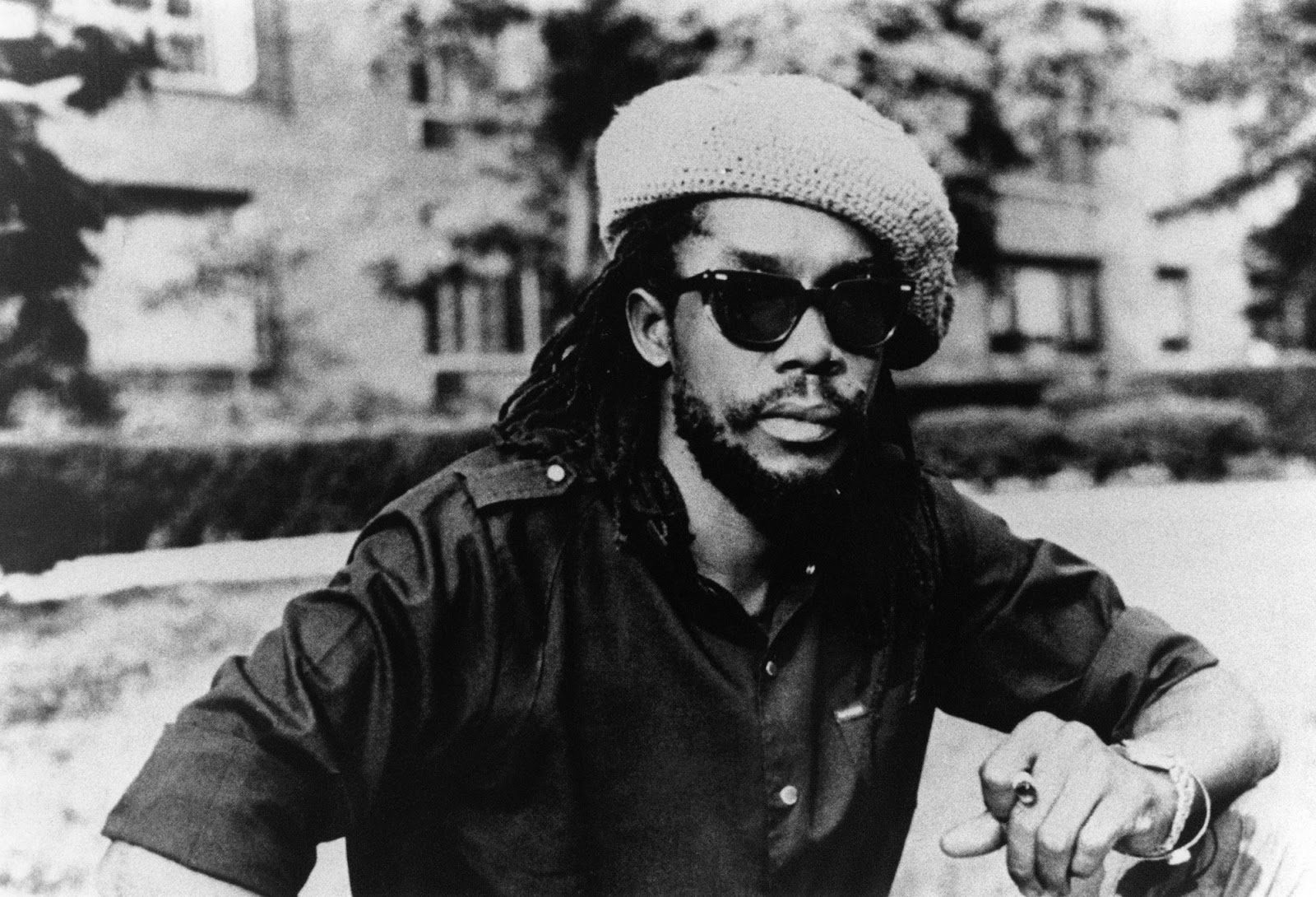
Born on this day: Winston Hubert McIntosh, better known to Reggae fans as Peter Tosh, one of the original Wailers. 

At the age of 15 Tosh moved to Trench Town in Kingston, Jamaica, after the death of his aunt in Westmoreland, Jamaica, where he was born. According to the legend, recounted by the WikiWackyWoo:

He first picked up a guitar by watching a man in the country play a song that captivated him. He watched the man play the same song for half a day, memorizing everything his fingers were doing. He then picked up the guitar and played the song back to the man. The man then asked McIntosh who had taught him to play; McIntosh told him that he had.[2] During the early 1960s Tosh met Robert Nesta Marley (Bob Marley) and Neville O’Reilly Livingston (Bunny Wailer) and went to vocal teacher Joe Higgs, who gave out free vocal lessons to young people, in hopes to form a new band. He then changed his name to become Peter Tosh and the trio started singing together in 1962. Higgs taught the trio to harmonize and while developing their music, they would often play on the street corners of Trenchtown.[3]

[…] In 1964 Tosh helped organize the band The Wailing Wailers, with Junior Braithwaite, a falsetto singer, and backup singers Beverley Kelso and Cherry Smith. Initially, Tosh was the only one in the group who could play musical instruments. According to Bunny Wailer,
Tosh was critical to the band because he was a self-taught guitarist
and keyboardist, and thus became an inspiration for the other band
members to learn to play. The Wailing Wailers had a major ska
hit with their first single, “Simmer Down”, and recorded several more
successful singles before Braithwaite, Kelso and Smith left the band in
late 1965. Marley spent much of 1966 in Delaware in the United States of America with his mother, Cedella (Malcolm) Marley-Booker and for a brief time was working at a nearby Chrysler
factory. He then returned to Jamaica in early 1967 with a renewed
interest in music and a new spirituality. Tosh and Bunny were already
Rastafarians when Marley returned from the U.S., and the three became
very involved with the Rastafari faith. Soon afterwards, they renamed
the musical group The Wailers. Tosh would explain later that they chose
the name Wailers because to “wail” means to mourn or to, as he put it,
“…express one’s feelings vocally”. He also claims that he was the
beginning of the group, and that it was he who first taught Bob Marley
the guitar. The latter claim may very well be true, for according to Bunny Wailer, the early wailers learned to play instruments from Tosh.[4]

The Wailing Wailers eschewed the rapid, feel-good Ska beat for a slower, slinkier beat, which became known as Rocksteady, One Drop, and eventually Reggae. They dropped the “Wailing” from their name and became The Wailers. Some of Marley’s biggest hits were originally recorded during this time and written, or co-written, by Peter Tosh. It wasn’t until Chris Blackwell signed them to Island Records did they become Bob Marley and the Wailers.

[FULL DISCLOSURE: I once worked for Island Records Canada.]

Peter Tosh and Bunny Wailer left Island Records when Blackwell, who had groomed Marley to become a star, refused to release their solo records. Soon after, Tosh released the Legalize It LP. The titular song is still an anthem for the Marijuana Movement worldwide.

A few years later Tosh appeared at the One Love Peace Concert and lit a spliff onstage, lecturing the assembled politicians on the unfair marijuana laws. According to the Wiki: Several months later he was apprehended by police as he left Skateland
dance hall in Kingston and was beaten severely while in police custody.

Peter Tosh was posthumously awarded the Order of Merit by the Jamaican government and while he never achieved the fame of Bob Marley, he never lost his street cred and is considered the most controversial member of The Wailers.

To celebrate his birthday, there will be 2 symposiums, today and tomorrow, in Jamaica. According to the Jamaican Observer:

The first is staged by the Kingston and St Andrew Ganja Growers and
Producers Association and the National Alliance for the Legalisation of
Ganja in partnership with the Kingston and St Andrew Corporation at
Curphey Place in St Andrew.

It reflects on the life and legacy of Tosh, an unrepentant advocate for
the legalisation of ganja. Mayor of Kingston Angela Brown-Burke will
address the forum, which has a panel moderated by her husband Paul
Burke, Tosh’s former manager Herbie Miller, social activist Louis
Moyston, and UWI lecturer, Dr Michael Barnett.

Guest speakers include Tosh’s friend, former Jamaica footballer Allan
‘Skill’ Cole; president of the National Ganja Growers Association,
Orville Silvera, and Minister of Transport Dr Omar Davies.

Tomorrow’s event is the annual Peter Tosh Symposium at the University of the West Indies’ Mona campus.

Arguably reggae’s most militant figure, Tosh (born Winston Hubert
McIntosh) was killed by gunmen at his home on September 11 1987. He was
42.

I Love Lucy Premiers ► Throwback Thursday

On this date in 1951 “I Love Lucy” premiered on the CBS network. Although it went off the air in 1957, it has run virtually non-stop in syndication ever since.

One of the reasons we have all those episodes of “I Love Lucy” is because, unlike other sitcoms of the era, it was shot on 35mm film in front of a live studio audience, and edited into a half hour show for airing. It’s ground-breaking technique was eventually copied by all sitcoms, right down to having a live studio audience, as opposed to a canned laugh track. 

According to the WikiWackyWoo

Another component to filming the show came when it was decided to use
three 35 mm film cameras to simultaneously film the show. The idea had
been pioneered by Ralph Edwards on the game show Truth or Consequences, and had subsequently been used on Amos ‘n’ Andy as a way to save money, though Amos n’ Andy
did not use an audience. Edwards’s assistant Al Simon was hired by
Desilu to help perfect the new technique for the series. The process
lent itself to the Lucy production as it eliminated the problem
of requiring an audience to view and react to a scene three or four
times in order for all necessary shots to be filmed. Multiple cameras
would also allow scenes to be performed in sequence, as a play would be,
which was unusual at the time for filmed series. Retakes were rare and
dialogue mistakes were often played off for the sake of continuity.

However, if I Love Lucy didn’t feature the incomparable slapstick comedy of Lucille Ball, no amount of film would have saved it.

The Internet Movie Data Base tells us:

She entered a dramatic school in New York City, but while her classmate Bette Davis received all the raves, she was sent home; “too shy”. She found some work modeling for Hattie Carnegie‘s and, in 1933, she was chosen to be a “Goldwyn Girl” and appear in the film Roman Scandals (1933).

She was put under contract to RKO Radio Pictures and several small roles, including one in Top Hat
(1935), followed. Eventually, she received starring roles in B-pictures
and, occasionally, a good role in an A-picture, like in Stage Door (1937) or The Big Street (1942). While filming Too Many Girls (1940), she met and fell madly in love with a young Cuban actor-musician named Desi Arnaz.
Despite different personalities, lifestyles, religions and ages (he was
six years younger), he fell hard, too, and after a passionate romance,
they eloped and were married in November 1940. Lucy soon switched to
Metro-Goldwyn-Mayer, where she got better roles in films such as Du Barry Was a Lady (1943); Best Foot Forward (1943) and the Katharine HepburnSpencer Tracy vehicle Without Love
(1945). In 1948, she took a starring role in the radio comedy “My
Favorite Husband”, in which she played the scatterbrained wife of a
Midwestern banker. In 1950, CBS came knocking with the offer of turning
it into a television series. After convincing the network brass to let
Desi play her husband and to sign over the rights to and creative
control over the series to them, work began on the most popular and
universally beloved sitcom of all time.

Laugh all over again at these famous clips, all involving food:


Join the I Love Lucy facebookery HERE.

Paul Is Dead ► Monday Musical Appreciation

Forty-six years ago today occurred one of the craziest events in the annals of Rock and Roll Music History, in which I played a minor role. Here’s how it all came about

According to The Music History Calendar:

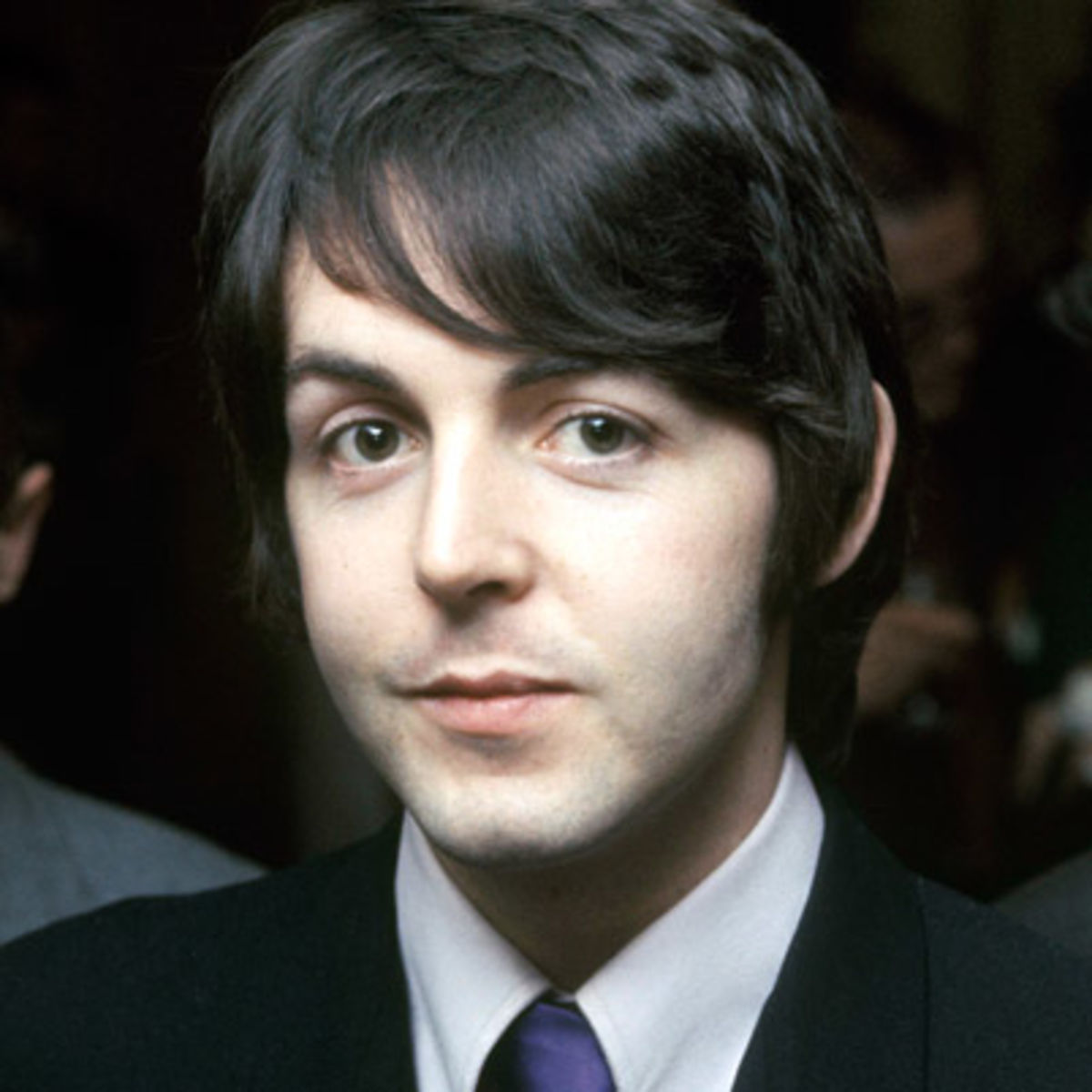
1969 : Russ Gibb, a DJ at WKNR in Detroit, takes a call from a listener who tells him that if you play The Beatles song “Revolution 9” backwards, a voice says, “Turn me on, dead man.” Gibb plays the record in reverse on the air, and the phone lines light up with astonished listeners offering more clues as to why Paul McCartney might be dead. For about a week, Gibb entertains a stream of rumors on the show, as ratings explode and the story goes national. Other clues include a voice at the end of “Strawberry Fields Forever” that says “I Buried Paul” (actually John Lennon saying “Cranberry Sauce”) and the cover of the Sgt. Pepper album, where Paul is wearing an armband that says “OPD” – “Officially Pronounced Dead.”

This Day In Music erroneously writes about this event:

1969, A DJ on Detroit’s WKNR radio station received a phone call telling him that if you play The Beatles ‘Strawberry Fields Forever’ backwards, you hear John Lennon say the words “I buried Paul.” This started a worldwide rumour that Paul McCartney was dead.

What does this have to do with your humble correspondent? According to Paul is dead?!?, “introduced and explicated by saki” on the old USENET group rec.music.beatles:

Another
source for clues invention was a popular radio show hosted by
disc-jockey Russell Gibb of WKNR-FM in Detroit was a vital element in
the spread of the hoax. A regular r.m.b. reader, Headly Westerfield, who
was not only a friend of Gibb but was present in-studio that afternoon
(12 October 1969), recalls reading an “underground newspaper” (it may
have been one of the the college papers then carrying the “clues”,
similar to the ones Dartanyan Brown remembers seeing) with a list of
“Paul Is Dead” clues.

Gibb and cohorts were sufficiently inspired
to read them on the air and to improvise new ones on the spot.
Listeners to the show even recall someone calling up Gibb to report that
if you played “Revolution No. 9” backward, you’d hear a secret message.
(Note: radio-show collectors used to offer an aircheck of this show or a
followup show for trade! Anyone have a copy?)

Within days, Gibb
& Co. were astonished when newspapers and reporters took their
on-air joke seriously and spread the tale more widely. Some clues which
have become part of established folklore, Westerfield reports, were
invented that obscure day at WKNR-FM, but have since been accepted as
part of the original hoax. Gibb and friends were not the source of the
hoax, he emphasizes, but played a part in its initial wider
dissemination. 

TommyGarcia2’s YouTubery has a 2 part exposé on the Paul Is Dead rumour:


When this rumour broke wide I was shocked and ashamed. From just goofing around in a radio studio, to it becoming a worldwide sensation, freaked me out. I was just 17 years old and unsophisticated in the ways of the world. I was worried that somehow this would all blow back on me in a horrible way. Therefore, I didn’t mention my involvement to anyone for about 20 years. Then I allowed myself to be interview by saki, who got word of my involvement from a mutual friend.

When I saw what was finally printed, I went underground for another 20 years. Recently I told the whole, deeper story to my nephew Adam, one of the subjects of my blog post My Days With John Sinclair. He suggested I just live with it, in essence echoing the advice at the end of the wonderful 1962 John Wayne/James Stewart/Lee Marvin Western The Man Who Shot Liberty Valance:

Ransom Stoddard: You’re not going to use the story, Mr. Scott?
Maxwell Scott: No, sir. This is the West, sir. When the legend becomes fact, print the legend.

I’ll let Sir Paul, with a little help from his friends, have the last word:

A Follow-Up to Treacherous Double-Dealing from June

I woke up to the sad news this morning that Harry Nilsson was not among the those nominated to be inducted into the 2016 class at the Rock and Roll Hall of Fame.

Back in June I published a post called Treacherous Double-Dealing, which concerned my horrible treatment at the hands of two people who wanted to claim all the credit for the campaign. Now, as far as I am concerned, they should share all the blame for it not happening. Step right up Gabriel Szoke and Todd Lawrence to take your bows.

After I was summarily kicked off the triumvirate committee that was spearheading this drive, those two crazy MoFos came up with what I always thought was a stupid idea. Milo Bender, Willie Aron, and Rob Laufer wrote a cute little jingle called “Let’s Put Harry in the Hall.” Sure it was a catchy little number, but the last thing that was needed was to turn it into a We Are The World-style vanity project. Watch:

I have no idea how much time, energy, and money was wasted on this vanity project, but I can tell you, without fear of contradiction, that it all would have been better spent actually doing some of the things that we had discussed, and agreed upon, before I was dumped.

It was my idea that we needed to start a grassroots campaign for Harry’s last birthday, something that was actually done. However, we knew that the Rock and Roll Hall of Fame committee ignores grassroots campaigns because all bands and artists have those. The bigger idea, which never seems to have been implemented, was to use this grassroots campaign to influence the next level of influencers, who would then influence the next level of influencers, until it became a snowball rushing down the mountain that couldn’t be ignored.

But, a cute little video?

Oh, puh-leeze!!!

And, yes, at this point this is sour grapes. I was never in this for the credit, but merely to get Harry in the Hall. However, those two MoFos were all about getting credit. They made sure to get their credits on the video (and Gabriel made sure he got his name on there twice) and they were delighted whenever their names were mentioned in the scanty press they were able to garner.

Had I still been part of the committee, I guarantee that there would have been far more publicity. Furthermore, I would have been able to attract much bigger names to sign onto the campaign. I can’t say we would have succeeded getting Harry nominated, but it would not have been such an anemic and fruitless attempt.

Back in June I tried to warn people about these two. Sadly no one listened.

Since it’s Thursday, this seems like an appropriate way to end this post.

Mrs. Miller ► Monday Musical Appreciation

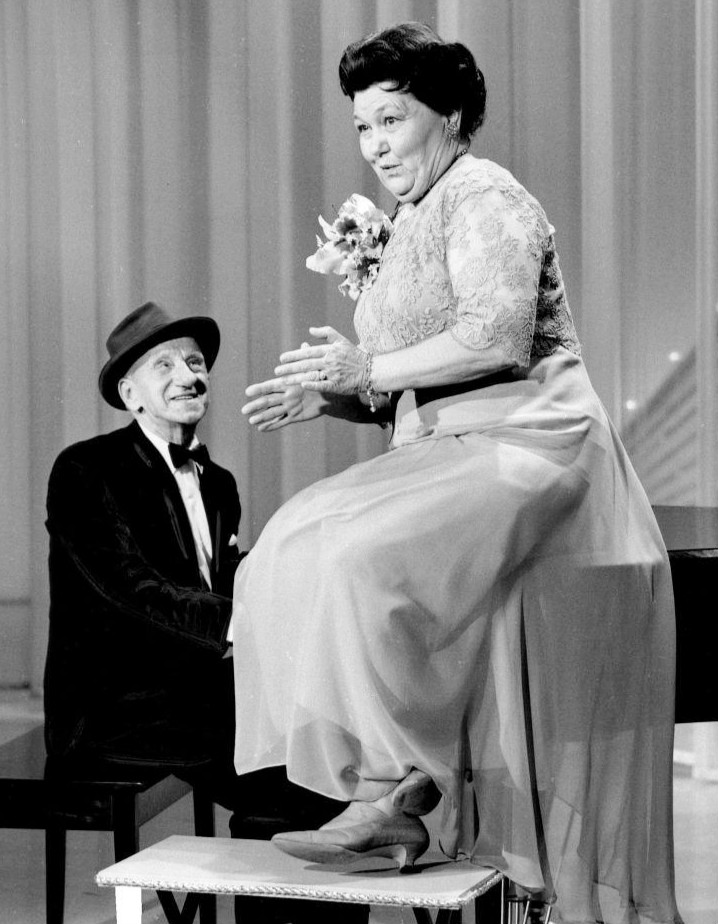
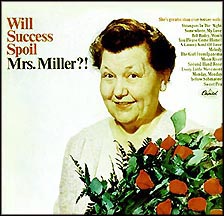
The ’60s are known for great discoveries in music, from Motown to The British Invasion to Psychedelia. However, there was no greater discovery than Mrs. Miller, born on this day in 1907. 

Mrs. Miller was Kitch before Kitch was Kool.

She was discovered in the early ’60s by LA DJ Gary Owens, better known as the announcer on Laugh-In. However, her star didn’t begin to rise until she was signed to Capitol Records in 1965. According to the WikiWackyWoo:

Singing in an untrained, Mermanesque, vibrato-laden style, according to Irving Wallace, David Wallechinsky and Amy Wallace in The Book of Lists 2, Miller’s voice was compared to the sound of “roaches scurrying across a trash can lid.” [1]

While growing up in the ’60s, I was fascinated by Mrs. Miller. I couldn’t wait for her many appearances on the various talk shows of the day. I thought, “If she can make it in Show Biz, then so can I,” which may have been my impetus for starting Cobwebs and Strange, a band I formed with my childhood friends.


According to Searching For Mrs. Miller:

From Claremont [where she lived] to Capitol is two hours in average traffic. There is a piece of story missing here, being that an organist/pianist on these sessions, Fred Bock, by all accounts a smart man with a sharp sense of humor, knew he’d found something unique. Fortunately, he knew somebody of consequence in the music business.

Lois Bock recalls: “Mrs. Miller would come to the L.A. studios and make recordings to send as gifts to orphanages those old, old songs like ` Alice Blue Gown’ in what she called her `operatic style’, and, on one of these sessions, Fred talked her into doing `Downtown’, which he took to Lex, who was an employee of Capitol at the time, and he heard something there.” She was signed to the venerated label, and work began on her debut, Mrs. Miller’s Greatest Hits.

Barry Hansen, a/k/a Dr. Demento raised an interesting point. “It took some imagination on Lex De Azevedo’s part to make an album of her doing all rock ‘n’ roll songs. It certainly was a departure from what she had recorded before.” Conventional legend has it that Mrs. Miller had no idea that she was a novelty act, but Lois Bock is quite clear about what Mrs. Miller was told. “Fred and I were honest with her. We told her it would be funny. And the audience loved it. The more they laughed, the more she would, you know, work it. I don’t know if she knew more than she let on, because she was always quite a character. But she loved audiences.”

Like so many superstars that burned far too bright, Mrs. Miller eventually flamed out:

As Lois Bock said, “She had a good run for eighteen months, which was seventeen-and-a-half more than anyone had a right to expect.” Mrs. Miller continued to perform sporadically, playing more benefits than just about any performer I can name, including one to raise funds to build a hospital in her hometown Jetmore, KS. When the hospital was built, she personally furnished the nurse”s lounge. She also devoted much time to raising her niece, Audrey.

[…] She retired officially in 1973, resigning from the Screen Actors’ Guild in honorable standing, and eventually settled into a condo at 9535 Reseda Blvd in Northridge, CA (the Valley). Unfortunately, in January 1994, the huge Northridge Quake destroyed the complex. Old age took its toll. Elva relocated to the Garden Terrace Retirement Center, in Vista, CA, where she died in 1997, at the age of 90. She is interred at the Pomona Mausoleum, near her beloved Claremont.

However, we still have her music to keep us warm on those cold nights: