

|
Category Archives: TeeVee


George Carlin, Johnny Carson, and Comedy ► Throwback Thursday

George Carlin, the man who challenged both censors and the institution of Stand Up Comedy, would have celebrated his 79th birthday today, had he not been so foolish to die in 2008.
Carlin started his career in radio while he was still in the USAF. While it only lasted a few months, it gave him that first taste of Show Biz. Soon he teamed up with Jack Burns as a comedy duo, and the two of them went on to some success, appearing on tee vee and recording an album. After 2 years they went their separate ways. As his official biography tells us:
After splitting with Burns, Carlin spent about a year working in
nightclubs without much success and with no television exposure. In
1963, he branched out into folk clubs and coffee houses where the
audiences were more progressive, and where he could develop both styles
of material he felt capable of. He balanced mainstream material with the
more outspoken, irreverent routines that were closer to his heart. In
1963 in he found the Café au Go Go in Greenwich Village and spent the
better part of two years developing his comic style. Ironically, it was
in this folk/jazz setting that he developed the first bits which got him
on television, the ultimate establishment medium. The Indian Sergeant,
Wonderful Wino, and the Hippy Dippy Weatherman were all born during this
period. So was George and Brenda’s only daughter, Kelly.
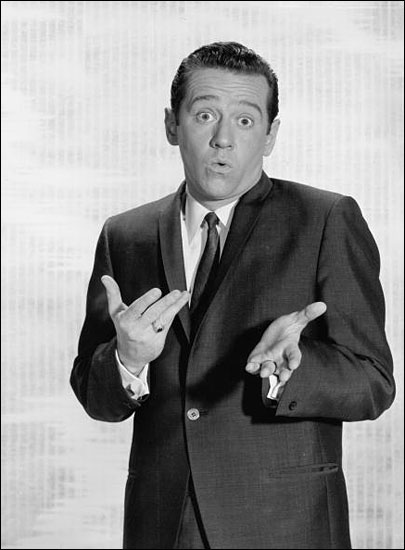
At the time Carlin was still a straight comedian, with short hair, no facial hair, and wearing a suit and tie — a far cry from the way he looked later in his career.
However, he was already moving away from conformity. As the WikiWackyWoo tells us:
Carlin was present at Lenny Bruce‘s
arrest for obscenity. As the police began attempting to detain members
of the audience for questioning, they asked Carlin for his
identification. Telling the police he did not believe in
government-issued IDs, he was arrested and taken to jail with Bruce in
the same vehicle.[21]
Starting in the mid ’60s Carlin started to appear regularly on television. But . . .
During the late 1960’s, because of the influence television was
having on his career, Carlin’s new material grew bland and safe. The
rebellious, anti-establishment tone of some of his earlier routines had
disappeared, and increasingly he felt bored and dissatisfied with his
material and the places he was working. By 1970, his self-imposed
restrictions no longer applied; his acting and career had been put on
hold, and the country was changing. The people who had inhabited the
folk clubs and coffee houses of the early ’60s were now the
“counterculture,” a large ready-made audience which shared many of
Carlin’s out-of-step attitudes and opinions. He began to drift in their
direction.During 1970 the irreverent tone returned to his material, he grew a
beard, and began to dress more casually. However, the “new” George
Carlin didn’t sit well with his middleclass audiences nor with nightclub
owners. A series of incidents with audiences and owners that year
culminated in his being fired from the Frontier Hotel in September for
saying “shit.” In December he worked his last “establishment” job: The
San Francisco Playboy Club. From then on, his comedic identity became
more and more associated with the counterculture.
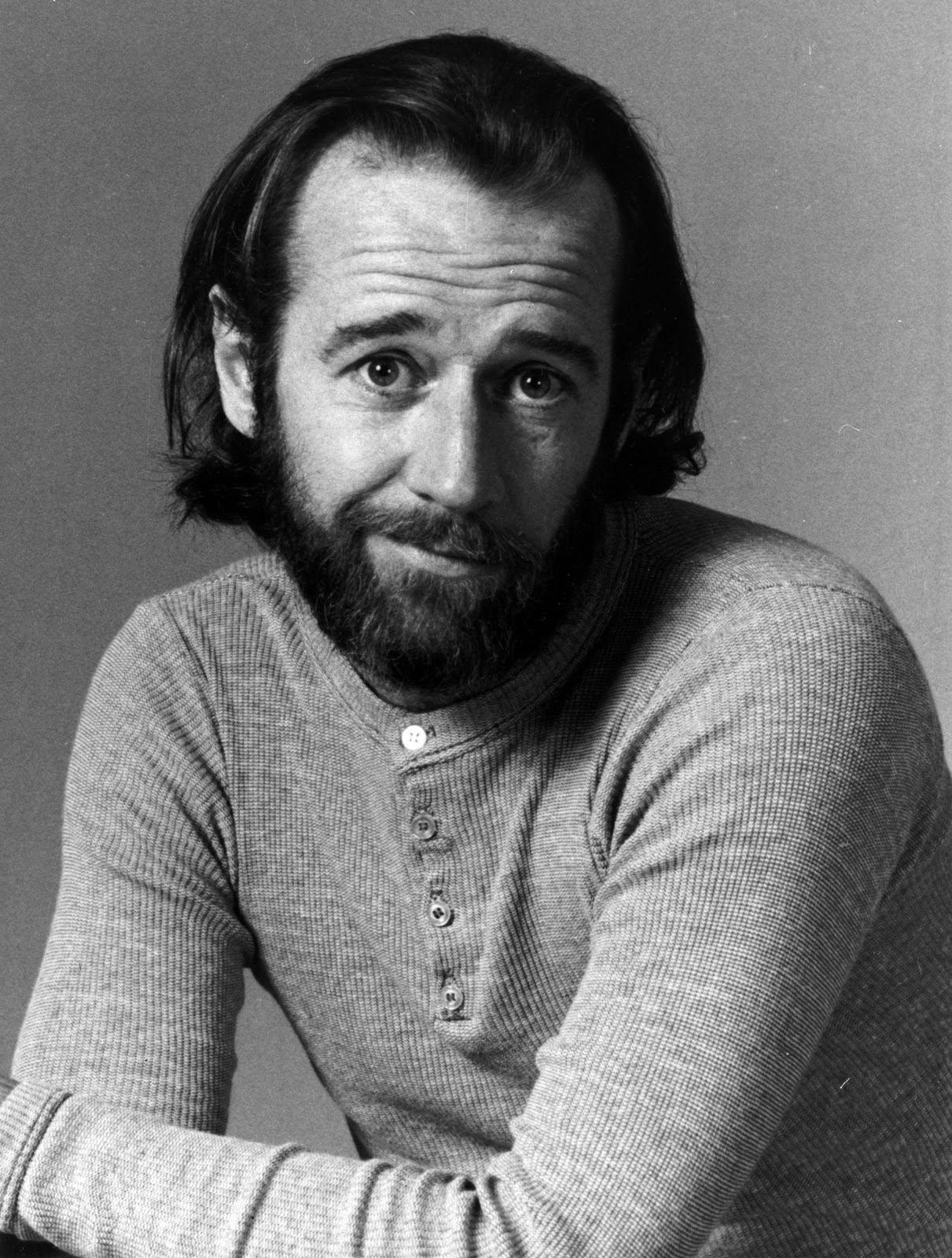
Then came his most famous routine, Seven Words You Can Never Say On Television, which itself was subject to an obscenity trial when he was arrested in 1972 for performing it. Eventually, the case was dismissed. While the judge agreed the words were indecent, he affirmed Carlin’s First Amendment Right to say them.
Along the way Carlin took up acting, appearing in a number of movies, including the cult favourite Bill & Ted’s Excellent Adventure.
Carlin died of a heart attack on June 22, 2008. Just 4 days earlier he was announced as the latest recipient of the Mark Twain Prize for American Humor by the John F. Kennedy Center for the Performing Arts. He was the first to given the award posthumously at a star-studded affair in November.
Back in January Antenna TV, one of a several nostalgia stations that have cropped up in the last few years, started running entire episodes of The Tonight Show with Johnny Carson, renamed Johnny Carson for these rebroadcasts at 11PM every night. As often as I am able — because it’s past my bedtime — I try and tune into the beginning of the show to catch who the guests are, and to watch the opening monologue. Tuesday night Carlin was Johnny’s guest and I forced myself to stay up and watch him performing a very funny routine of non sequiturs, small jokes that had no linkage.
Comedy has sure changed a lot since George Carlin started in the ’50s and he is one of the main agents of that change.
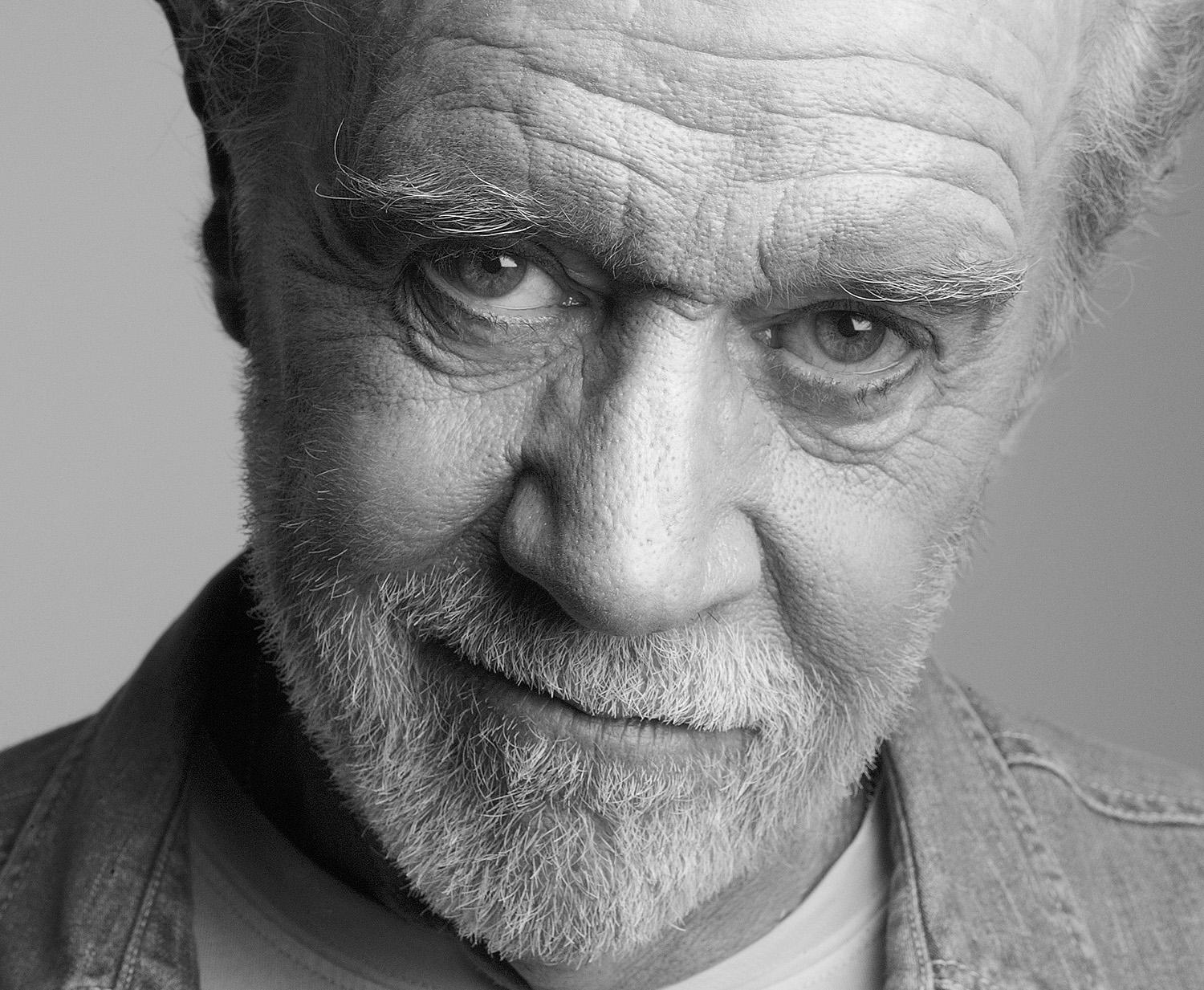
On Tuesday night, the same night he was being rerun on Carson’s show, his daughter Kelly announced at a private event that she was donating the Carlin’s archives to the newly formed National Comedy Center. According to NPR:
“Everybody’s gotta have a little place for their stuff. That’s all life is about. Trying to find a place for your stuff.” — George Carlin
It’s one of his most famous routines and, like all great comedy, contains more than a grain of truth.
Since
he died eight years ago, the keeper of George Carlin’s “stuff” has been
his daughter, writer and performer Kelly Carlin. She says he kept
everything: Scrapbooks. Arrest records. The pink slip to his first car, a
Dodge Dart. VHS tapes.From “handwritten notes of his actual working on comedy ideas to
his kind of OCD-esque way of making lists of things, like every routine
he ever did on a late night show,” she says. “When comedians would come
over to my house and I would say, ‘Do you want to take a glance at my
dad’s stuff?’ Their eyes would light up. I knew how to get to their
hearts immediately,” she says, laughing.
While he was alive George Carlin entered the pantheon of Great Comedians. His fame has only increased in the years since his death.
Here are a few laughs courtesy of George Carlin:
Mighty Mouse ► Throwback Thursday

On this day in 1955 Mighty Mouse Playhouse is first broadcast on tee vee.
Mighty Mouse originally appeared 1942 as cartoon shorts in movie theaters. According to the WikiWackyWoo:
The character was originally conceived by Paul Terry.[1] Created as a parody of Superman, he first appeared in 1942 in a theatrical animated short titled The Mouse of Tomorrow. His original name was Super Mouse, but after seven films produced with that name from 1942-1943, it was changed to Mighty Mouse for 1944’s The Wreck of the Hesperus, after Paul Terry learned that another character named “Super Mouse” was to be published by Marvel Comics.
Sing along with me:
Mister Trouble never hangs around
When he hears this Mighty sound.
When he hears this Mighty sound.
“Here I come to save the day”
That means that Mighty Mouse is on his way.
Yes sir, when there is a wrong to right
Mighty Mouse will join the fight.
On the sea or on the land,
He gets the situation well in hand.
In one of his first appearances on Saturday Night Live,
Andy Kaufman does the Mickey Mouse theme song.
Mighty Mouse moved from movie theaters to television in 1955, where the cartoons lived on for decades, inculcating generations of children with the theme song. Again, according to the WikiWackyWoo:
Mighty Mouse was not extraordinarily popular in theatrical cartoons, but was still Terrytoons‘
most popular character. What made him a cultural icon was television.
Most of the short film studios, both live-action and animated, were in
decline by the 1950s, pressured both by the loss of film audiences to
television as well as the increased popularity (and financial benefits)
of low-budget, stylized, limited animation.
Most of the studios cashed out of the short-film production business
and began licensing or selling their back catalogs to television. Paul Terry went as far as to sell the entire Terrytoon company to CBS in 1955.[1] The network began running Mighty Mouse Playhouse in December 1955. It remained on the air for nearly twelve years (and featured The Mighty Heroes
during the final season). Mighty Mouse cartoons became a staple of
children’s television programming for a period of over thirty years,
from the 1950s through the 1980s.
Just pretend it’s Saturday morning and you are a kid again. Here’s some Mighty Mouse for you to enjoy:
I Love Lucy Premiers ► Throwback Thursday
On this date in 1951 “I Love Lucy” premiered on the CBS network. Although it went off the air in 1957, it has run virtually non-stop in syndication ever since.
One of the reasons we have all those episodes of “I Love Lucy” is because, unlike other sitcoms of the era, it was shot on 35mm film in front of a live studio audience, and edited into a half hour show for airing. It’s ground-breaking technique was eventually copied by all sitcoms, right down to having a live studio audience, as opposed to a canned laugh track.
According to the WikiWackyWoo:
Another component to filming the show came when it was decided to use
three 35 mm film cameras to simultaneously film the show. The idea had
been pioneered by Ralph Edwards on the game show Truth or Consequences, and had subsequently been used on Amos ‘n’ Andy as a way to save money, though Amos n’ Andy
did not use an audience. Edwards’s assistant Al Simon was hired by
Desilu to help perfect the new technique for the series. The process
lent itself to the Lucy production as it eliminated the problem
of requiring an audience to view and react to a scene three or four
times in order for all necessary shots to be filmed. Multiple cameras
would also allow scenes to be performed in sequence, as a play would be,
which was unusual at the time for filmed series. Retakes were rare and
dialogue mistakes were often played off for the sake of continuity.
However, if I Love Lucy didn’t feature the incomparable slapstick comedy of Lucille Ball, no amount of film would have saved it.
The Internet Movie Data Base tells us:
She entered a dramatic school in New York City, but while her classmate Bette Davis received all the raves, she was sent home; “too shy”. She found some work modeling for Hattie Carnegie‘s and, in 1933, she was chosen to be a “Goldwyn Girl” and appear in the film Roman Scandals (1933).
She was put under contract to RKO Radio Pictures and several small roles, including one in Top Hat
(1935), followed. Eventually, she received starring roles in B-pictures
and, occasionally, a good role in an A-picture, like in Stage Door (1937) or The Big Street (1942). While filming Too Many Girls (1940), she met and fell madly in love with a young Cuban actor-musician named Desi Arnaz.
Despite different personalities, lifestyles, religions and ages (he was
six years younger), he fell hard, too, and after a passionate romance,
they eloped and were married in November 1940. Lucy soon switched to
Metro-Goldwyn-Mayer, where she got better roles in films such as Du Barry Was a Lady (1943); Best Foot Forward (1943) and the Katharine Hepburn–Spencer Tracy vehicle Without Love
(1945). In 1948, she took a starring role in the radio comedy “My
Favorite Husband”, in which she played the scatterbrained wife of a
Midwestern banker. In 1950, CBS came knocking with the offer of turning
it into a television series. After convincing the network brass to let
Desi play her husband and to sign over the rights to and creative
control over the series to them, work began on the most popular and
universally beloved sitcom of all time.
Laugh all over again at these famous clips, all involving food:
All Hail the King of Late Night Talk Shows ► Throwback Thursday
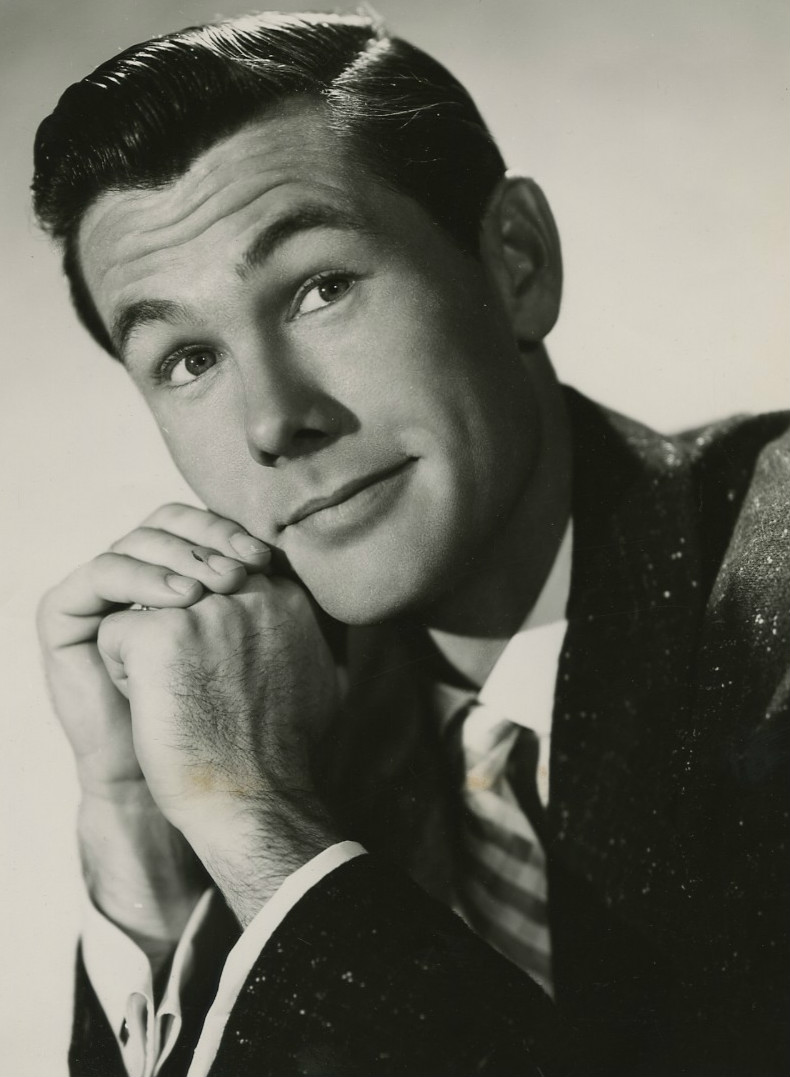
The undisputed King of Late Night is — and forever will be — Johnny Carson. On this day in 1962, Carson took the helm of The Tonight Show, and nothing was ever the same again.
Carson didn’t invent the modern talk show. That honour goes to Steve Allen. However, Carson reinvented the talk show and kept reinventing it night after night for 30 years, racking up nearly 5,000 shows. But it wasn’t his endurance that made Johnny Carson a star. According to Biography:
Audiences found comfort in Carson’s calm and steady presence in their living rooms each evening. Revered for his affable personality, quick wit and crisp interviews, he guided viewers into the late night hours with a familiarity they grew to rely on year after year. Featuring interviews with the stars of the latest Hollywood movies or the hottest bands, Carson kept Americans up-to-date on popular culture, and reflected some of the most distinct personalities of his era through impersonations, including his classic take on President Ronald Reagan. Carson created several recurring comedic characters that popped up regularly on his show, including Carnac the Magnificent, an Eastern psychic who was said to know the answers to all kinds of baffling questions. In these skits, Carson would wear a colorful cape and featured turban and attempt to answer questions on cards before even opening their sealed envelopes. Carson, as Carmac, would demand silence before answering questions such as “Answer: Flypaper.” “Question: What do you use to gift wrap a zipper?”
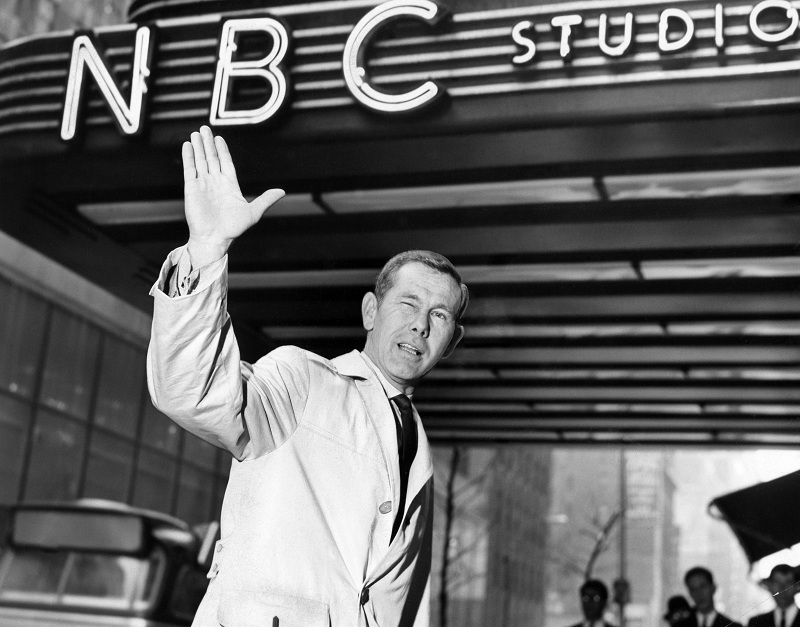
In August I was thrilled when Variety announced Johnny Carson Returns: Antenna TV to Air Full ‘Tonight Show’ Episodes starting January 1st:
Antenna TV has struck a multi-year deal with Carson Entertainment Group to license hundreds of hours of the NBC late-night institution. Antenna will run episodes that aired from 1972 through the end of Carson’s 30-year reign in in 1992. Because NBC owns the rights to “The Tonight Show” moniker, Antenna TV’s episodes will be billed simply as “Johnny Carson.”
“This is not a clip show. This is full episodes of Johnny Carson, the man that everyone in late-night agrees was the greatest host of all time, airing in real time as he did back in the day,” Sean Compton, Tribune’s president of strategic programming and acquisitions, told Variety. “Tuning in to ‘The Tonight Show’ is like taking a walk down Main Street in Disneyland. The minute you step in there, you feel good and you know it’s a place you want to stay. We cannot wait to bring this show to fans who remember Carson and to a new generation of viewers who have never had the chance to see Johnny in his prime.”
Starting January 1st we’ll see more comedy brilliance like this:
Murder and Morning Television
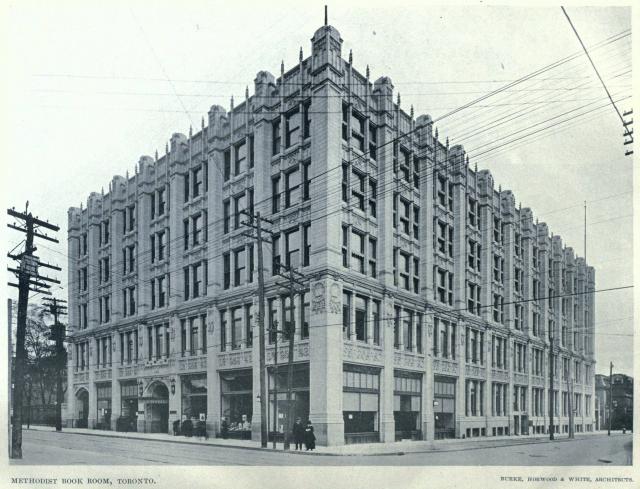 |
| 299 Queen Street West became the CHUM/City Building. |
There are some news stories that hit harder than others. That describes yesterday, which left me bereft.
Back in the ’90s, as many of you know, I was a News Writer for BreakfastTelevision on Toronto’s Citytv. In many ways BT was, and still is, the template for almost every newsy, happy talk, morning show since.
However, not many people know that before I started writing news for CityPulse, I was hired at Citytv as a Security Guard. For several years I worked at the front desk in the lobby for 12 hour shifts. It was 2 weeks of days followed by 2 weeks of nights, both 9-9. Night shifts were easy. Once an hour I would walk around inside the locked 5-story building, rattling doorknobs and taking note of who was still working.
Day shifts were a whole ‘nothing thing. One could be called upon to do anything and everything, from guarding talent live on the air on the sidewalk to finding a way to sneak mega-stars in and out of the building (which is why there is video footage of me and George Harrison doing a Walk & Talk; a story still to be written).
Any number of things could go wrong while doing live segments, all of them out of my control. Luckily nothing ever happened on one of my shifts. However, while setting up for live segments, I witnessed first-hand how people had a strange, proprietary interest in our on air personalities. Maybe because they came into everybody’s living room, people felt they were approachable in ways that, say, Hollywood celebrities are not.
Whenever we were out in the field, the hard part was getting rid of all the people wanting to talk to the talent as we were about to go live. The potential for someone stumbling into the shot was always great. I stopped more than one person from walking up to David Onley while he was delivering the weather.
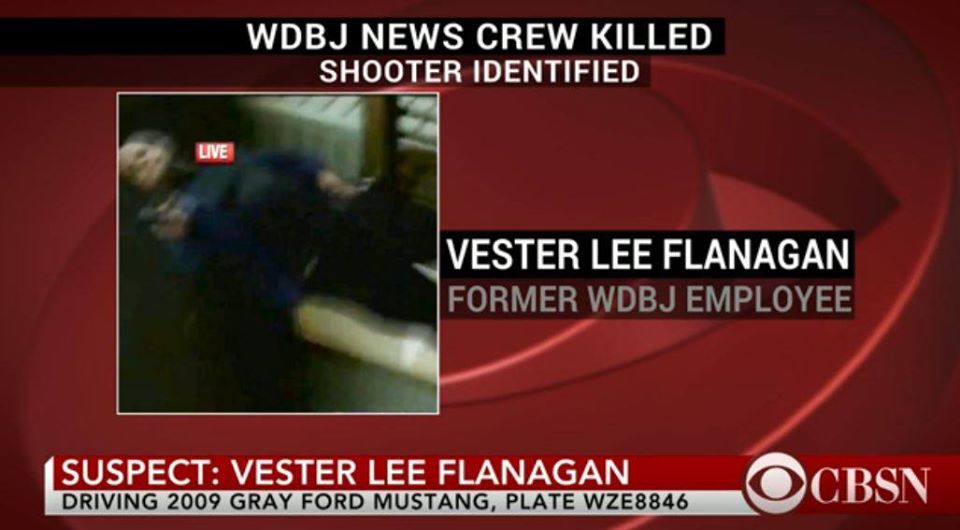
The Now Now Silly Newsroom chooses not to post the videos of this heinous act. If you absolutely have to see it, it can be found at: Vester Lee Flanagan: 5 Fast Facts You Need to Know, which has some other good info.
One thing I never considered were guns. Because there are far fewer guns in circulation in Canada, it would never have entered my mind.
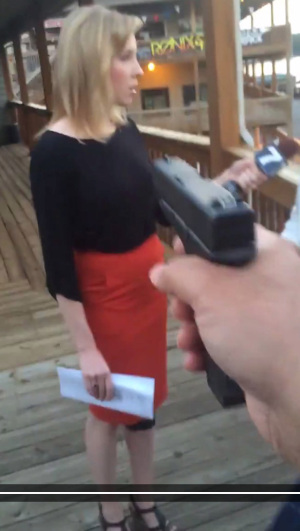 |
| A screen cap from the gunman’s perspective |
When the news flashed across the Not Now Silly Breaking News Desk yesterday, I did as most people: started channel flipping to learn as much as I could. What was this? Domestic Terrorism? Foreign Terrorism? A grudge against a news department? A grudge against a tee vee station? Domestic violence? A Right Wing whack job? Left Wing whack job? Plain old whack job?
None of the above. It was Workplace Violence by a whack job, a very narrow category. A disgruntled employee held a grudge for 2 years before he finally went off yesterday. The gunman’s rambling manifesto mentions grievances against the station and the 2 employees killed. He claimed to have been radicalized by the murder of 9 Black folk in a Charlestown church in June and described himself as a “human powder keg” … “just waiting to go BOOM!!!!”
For maximum effect, the murders were timed to occur when the reporter was live, and for a while the footage was played on a loop on CNN before cooler heads prevailed and they yanked it off the air.
However, there were greater horrors to come. The assassin posted his own version of the murders on Facebook from his point of view. While both Twitter and Facebook suspended his accounts almost immediately, the video had already escaped into the wild and there is no pulling it back. Ever.
I have viewed all the video there is to see, so you don’t have to. It’s not a macho thing. It’s a newsman thing. While it is the most chilling video I’ve ever seen, because you know what’s coming but it takes almost 30 seconds for it to happen, it’s not the worst video I’ve ever watched. That would be a tie between footage of the massacres in Rwanda and brains all over Highway 427 after a car crash, which the cameraman kept shooting and framing artistically and lovingly, even though he knew there was no way the footage would ever make it to air. I had to watch it to see what we could put on the air.
So, I watched the footage made by the gunman, knowing it would not be the worst thing I’ve ever seen. However, I had no idea how close to home it would hit.
I only watched it once (because once is enough), but can describe the entire thing. Vester Flanagan made Rookie Mistake #1: The camera is tilted to portrait, not landscape. As he moves closer to his targets, he adjusts the zoom, in and then out again. Then you see his hand holding the gun enter the frame. It moves from one person to another, as if he can’t believe no one’s paid any attention to him yet. Cameraman Adam Ward has panned off to the right and has his back turned to Flanagan. Alison Parker is so focused on interviewing Vicki Gardner, of the Smith Mountain Lake Regional Chamber of Commerce, that she doesn’t even notice the danger as Flanagan waves the gun back and forth in what may have been her peripheral vision. Then the shooting begins.
I’ve been there! I’ve guarded live shots!! I have stood right there!!!
I spent the rest of the day shivering and reliving that footage in my head. This one hit a lot closer to home and a lot closer than I expected when I started following the story.
►►► R.I.P. ◄◄◄
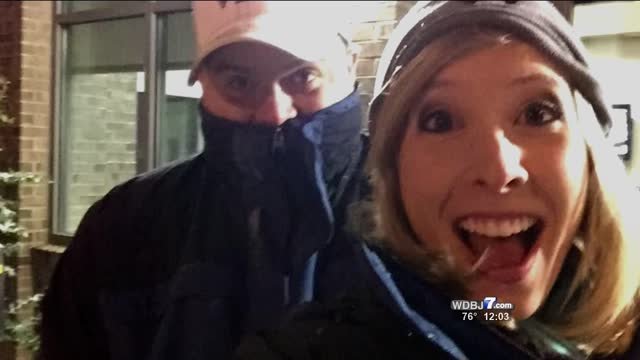
Alison Parker and Adam Ward
both described as having a very bright future.
Alison Parker and Adam Ward
both described as having a very bright future.
Richard Nixon’s Synchronicity In Death
 On the day Richard Nixon died, 21 years ago today, I happened to be visiting the United States from my home in Canada.
Coincidentally, I was wearing my blue jean jacket with my treasured Nixon pin on the collar. It was given to me by my dear friend Stephen, many decades ago, and I have treasured it ever since.
I was standing at the cash register in a K-Mart at Lincoln and Greenfield, in Oak Park, Michigan, waiting to pay for a cheap pair of sunglasses. I didn’t yet know Nixon had died; it happened the night before. Suddenly the cashier started screaming at me about how rude and offensive I was. I had no idea why I was suddenly singled out and, for a brief moment, thought I was in the middle of a racial argument, since the cashier was Black and incredibly angry at a slight I didn’t understand.
When I was finally informed that Nixon had died overnight, I apologized profusely for my accidental faux pas, removed the button, and have never worn it again.

Eight years later, to the very day, I was watching the news when it was blasted that Linda Lovelace, born Linda Susan Boreman, had died.
To me it seemed to be a cosmic joke. Linda Lovelace, famous for the movie Deep Throat, died on the same day as Richard Nixon, who was brought down by Deep Throat, the nom de guerre given by Washington Post reporters Bob Woodward and Carl Bernstein to their secret Watergate tipster.
The book “All The President’s Men,” and later the movie of the same name starring Robert Redford and Dustin Hoffman, further publicized the connection between their whistle-blower and the movie that changed the erotic entertainment industry.
Three years after Linda Lovelace’s death, and 11 years after Nixon’s death, W. Mark Felt, former Deputy Director of the FBI, came out as Deep Throat on his deathbed.
Read: My exposé on Treason, Watergate, and Roger Ailes:
Did Roger Ailes Dupe James Rosen, Or Did Rosen Dupe ‘Merka?
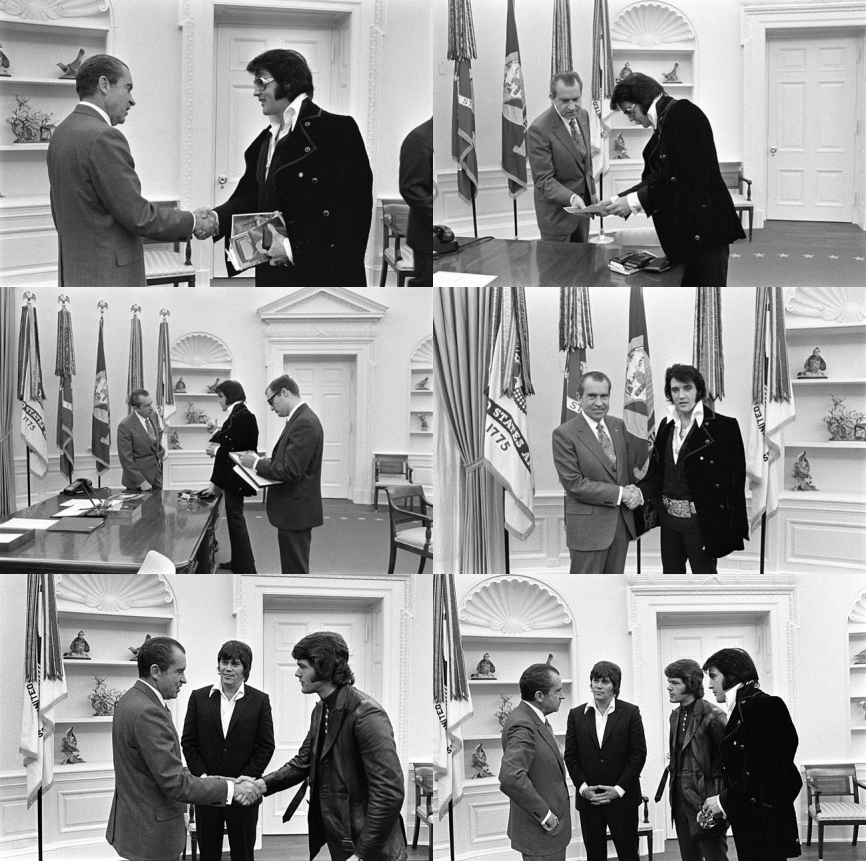 |
| Animation by author from White House press photos |
Playing Checkers or Chess?

Happy Anniversary!!! It was 62 years ago today that Richard Milhous Nixon cemented himself into the national consciousness with his Checkers speech.
Oh, sure, Nixon had been in the news before. He already had a reputation for dirty politics and anti-Communism, linking his opponent in the 1946 campaign to communists. As a Congressman he used his relationship with J. Edgar Hoover, and access to secret FBI files, to push himself as Chair of the Committee on Un-American Activities (HUAC) investigating the Alger Hiss spy ring. He was even allowed to accompany FBI agents to the Pumpkin Patch, where secret microfilm was discovered inside a hollowed pumpkin. No. Really!

He used this press to catapult himself into the Senate in 1950. And, even that election had its share of dirty mudslinging on Nixon’s part. Running against Rep. Helen Gahagan Douglas, he accused her of being “pink right down to her underwear.”
Just 14 years after entering national politics Richard Nixon was tapped as Dwight D. Eisenhower running mate in the 1950 election. However, there was a little wrinkle. The Backroom Boys back in California — the ones that had originally pushed for him to run for Congress and later Senator — were quietly supporting him on the QT by topping up his salary.
The press got wind of this slush fund. There was nothing illegal in it, of course, but it gave off a terrible stench. Was there any Quid Pro Quo? Conflict of interest? Nixon was about to be dumped from the ticket. In order to save his political life Nixon went on tee vee to deliver what became known as The Checkers Speech.
It was a cloying speech, watched by more than 60 million people, but it saved Nixon’s ass. The ‘Merkin public sent in telegram after telegram in support of Nixon for Veep. However, Eisenhower kept Nixon dangling on whether he still had the general’s support. Nixon came this close to withdrawing from the ticket, but was urged to hold on. Eventually Eisenhower felt the groundswell of public support and backed Nixon wholeheartedly.
I was only 3 months old when Nixon gave his Checkers speech, yet there are whole passages I can practically recite by heart. Why is it called The Checkers Speech? Because this:
Let me say this: I don’t believe that I ought to quit because I’m not a quitter. And, incidentally, Pat’s not a quitter. After all, her name was Patricia Ryan and she was born on St. Patrick’s Day, and you know the Irish never quit.
One other thing I probably should tell you because if we don’t they’ll probably be saying this about me too, we did get something-a gift-after the election. A man down in Texas heard Pat on the radio mention the fact that our two youngsters would like to have a dog. And, believe it or not, the day before we left on this campaign trip we got a message from Union Station in Baltimore saying they had a package for us. We went down to get it. You know what it was.
It was a little cocker spaniel dog in a crate that he’d sent all the way from Texas. Black and white spotted. And our little girl-Tricia, the 6-year old-named it Checkers. And you know, the kids, like all kids, love the dog and I just want to say this right now, that regardless of what they say about it, we’re gonna keep it.
IRONY ALERT: Nixon also said, “Let me say this: I don’t believe that I ought to quit because I’m not a quitter. And, incidentally, Pat’s not a quitter. After all, her name was Patricia Ryan and she was born on St. Patrick’s Day, and you know the Irish never quit.”
What amazes me is everything that came AFTER the Checkers speech. In point form:
• Nixon runs and loses against John Kennedy in 1960′
• Nixon runs for the governorship of California and loses, resulting in “You won’t have Nixon to kick around anymore speech to the press;
• Everyone counts him out as a political force;
• Wins the 1968 Republican nomination;
• Goes on to win the presidency
• Becomes the first, and so far only, president to resign in disgrace.
You have to admit Nixon’s entire story has the arc of a tragic opera. Yet, had it not been for his success on the Checkers speech, Nixon might have just been a footnote in the history books.
 |
| Video created by author from public domain photographs |
Further reading: All my writing on Watergate and Nixon can be found HERE.
See how I memorialized the 60th Anniversary in Richard Nixon’s Checkers Speech ► Another Magical Tee Vee
Ed Sullivan Changes Rock and Roll Forever ► Another Magical Tee Vee Moment
 |
| Animation by author from White House still photo archives |
I was 4 years old when it happened, which is why I don’t remember. However, on September 9, 1956, when Ed Sullivan brought Elvis Presley on his show, the world of Rock and Roll changed forever.
It wasn’t Elvis’ first time on the tee vee tube, nor was it even his first time on network tee vee. Presley had already been signed to a year’s worth of Saturday Night shows on the radio show Louisiana Hayride, a competitor of the Grand Old Opry, when that august body passed on the Rockabilly artist. He made his first tee vee appearance on March 3, 1955, on local Shreveport station KSLA’s version of the Louisiana Hayride, after failing his audition to appear on Arthur Godfrey’s Talent Scouts, a network show. At this early point Elvis was still releasing his earliest 45s on Sun Records.
But, there was no stopping Presley. Sun Records sold his contract to RCA Records and in January of 1956 he made his first recordings for that company.

On January 28th, the day after Heartbreak Hotel was released, Elvis made his first network appearance on CBS’s Sound Stage.
Then came two odd appearances on The Milton Berle Show on NBC. The first (April 3) was from the deck of the USS Hancocock. However, it was his 2nd appearance on the Berle Show that made the Headlines Du Jour of the day. The WikiWhackWoo, as always, tells the story:
Berle persuaded the singer to leave his guitar backstage, advising, “Let ’em see you, son.” During the performance, Presley abruptly halted an uptempo rendition of “Hound Dog” with a wave of his arm and launched into a slow, grinding version accentuated with energetic, exaggerated body movements. Presley’s gyrations created a storm of controversy. Television critics were outraged: Jack Gould of The New York Times wrote, “Mr. Presley has no discernible singing ability. … His phrasing, if it can be called that, consists of the stereotyped variations that go with a beginner’s aria in a bathtub. … His one specialty is an accented movement of the body … primarily identified with the repertoire of the blond bombshells of the burlesque runway.” Ben Gross of the New York Daily News opined that popular music “has reached its lowest depths in the ‘grunt and groin’ antics of one Elvis Presley. … Elvis, who rotates his pelvis … gave an exhibition that was suggestive and vulgar, tinged with the kind of animalism that should be confined to dives and bordellos”. Ed Sullivan, whose own variety show was the nation’s most popular, declared him “unfit for family viewing”. To Presley’s displeasure, he soon found himself being referred to as “Elvis the Pelvis”, which he called “one of the most childish expressions I ever heard, comin’ from an adult.”
Making the Headlines Du Jour is always good for business, so Steve Allen booked Elvis on his show. However, Allen was not a fan of Rock and Roll. Elvis was used, mostly, as comic fodder. He would later call this the most ridiculous performance of his career.
The Steve Allen performance, however absurd, beat the Ed Sullivan Show in the ratings. Ed had earlier vowed not to have Presley on his show, but he relented, signing Elvis to three appearances for a record $50,000. These are the appearances that catapulted Presley to national fame. Ironically, Sullivan was not around for Elvis’ first appearance on September 9th. He was resting after a car crash and actor Charles Laughton took over the hosting duties. However, Ed made his views known:
According to Elvis legend, Presley was shot from only the waist up. Watching clips of the Allen and Berle shows with his producer, Sullivan had opined that Presley “got some kind of device hanging down below the crotch of his pants–so when he moves his legs back and forth you can see the outline of his cock. … I think it’s a Coke bottle. … We just can’t have this on a Sunday night. This is a family show!” Sullivan publicly told TV Guide, “As for his gyrations, the whole thing can be controlled with camera shots.” In fact, Presley was shown head-to-toe in the first and second shows. Though the camerawork was relatively discreet during his debut, with leg-concealing closeups when he danced, the studio audience reacted in customary style: screaming. Presley’s performance of his forthcoming single, the ballad “Love Me Tender”, prompted a record-shattering million advance orders. More than any other single event, it was this first appearance on The Ed Sullivan Show that made Presley a national celebrity of barely precedented proportions.
It was Sullivan’s tacit approval that Rock and Roll was ready for prime time that opened the floodgates to all the other shows booking the earliest acts in a still nascent Rock and Roll. Nothing was ever the same again. And, that’s how Ed Sullivan changed Rock and Roll forever.
Elvis Scandalizes ‘Merka ► Another Magical Tee Vee Moment

Dateline June 5, 1956 – Elvis Presley appeared on the Milton Berle Show. Coming during his first brush with national fame, his pelvic gyrations were so suggestive that it became a national scandal. No, really!
In March of ’56 Elvis had released his eponymous debut LP on RCA. The label bought out his contract from Sun Studios the previous year. This LP would go on to become the first #1 Rock and Roll album, topping the Billboard charts for 10 weeks. Some 50 years later it ranked #56 on Rolling Stone’s list of the 500 Greatest Albums of All Time. However, Elvis was barely known at this point in his career. All that would change within the next six months.
Just a month after the LP’s release, Elvis appeared for the first time on the Milton Berle Show, singing an extremely hot version of Heartbreak Hotel from the deck of the USS Hancock. (Don’t ask.) When the performance finished, Elvis continued his tour. There was no public outcry. Watch:
To show how much Show Bidnezz has changed since then: Heartbreak Hotel wasn’t even on the LP Elvis had just released. He wasn’t promoting his new LP; Elvis was still promoting his January single, which had already topped the Billboard charts for 7 weeks. The music industry still thought of 45s as the money-makers, with LPs often an afterthought. Heartbreak Hotel would go on become the biggest selling single that year.
Elvis was just on the cusp of national and international fame. He had recently signed a 7-year Hollywood contract to star in movies and was still touring extensively. Milton Berle, who was trying to save his show from cancellation (unsuccessfully, as it turned out), booked Elvis for a return visit to his show in June, this time appearing at NBC’s studio in Hollywood. Before the show began Milton Berle, the show biz veteran of Vaudeville, radio, and tee vee, gave Elvis some advice; five words that changed history.
“Let ’em see you, son,” Milton Berle reportedly told Elvis, successfully convincing him to leave his guitar behind when he performed Hound Dog, a song he hadn’t even recorded yet. Without his guitar to hide behind, Elvis’ dancing was more exaggerated than his previous visit. While some girls screamed, much of the audience is confused, laughing and tittering. Clearly, they’ve never seen anything quite like this before:
‘Merka clutched its metaphorical pearls. According to the WikiWackyWoo:
Presley’s gyrations created a storm of controversy. Television critics were outraged: Jack Gould of The New York Times wrote, “Mr. Presley has no discernible singing ability. … His phrasing, if it can be called that, consists of the stereotyped variations that go with a beginner’s aria in a bathtub. … His one specialty is an accented movement of the body … primarily identified with the repertoire of the blond bombshells of the burlesque runway.” Ben Gross of the New York Daily News opined that popular music “has reached its lowest depths in the ‘grunt and groin’ antics of one Elvis Presley. … Elvis, who rotates his pelvis … gave an exhibition that was suggestive and vulgar, tinged with the kind of animalism that should be confined to dives and bordellos”. Ed Sullivan, whose own variety show was the nation’s most popular, declared him “unfit for family viewing”.
Ed Sullivan was brutal in his assessment of Elvis Presley:
Watching clips of the Allen and Berle shows with his producer, Sullivan had opined that Presley “got some kind of device hanging down below the crotch of his pants–so when he moves his legs back and forth you can see the outline of his cock. … I think it’s a Coke bottle. … We just can’t have this on a Sunday night. This is a family show!” Sullivan publicly told TV Guide, “As for his gyrations, the whole thing can be controlled with camera shots.”
Which is exactly what he did.
Sullivan was forced to book Elvis when Steve Allen’s show with Elvis singing Hound Dog to an actual hound dog, beat Sullivan’s show in the ratings. Elvis has called this the most ridiculous performance of his career:
Quickly reversing his principled stand to obtain boffo ratings, Sullivan offered Elvis the unheard of sum of $50,000 for three appearances. In case anything went terribly wrong on the first Sullivan performance, Ed Sullivan made sure that he could not be blamed. He had guest host Charles Laughton filling in while he recuperated from a car accident. Elvis performed Love Me Tender for the 60 million viewers who tuned in.
While his first Sullivan appearance cemented Elvis Presley’s fame, it was his appearance on the Milton Berle Show that earned him the nickname of Elvis the Pelvis. He hated this phrase the rest of his life, calling it, “one of the most childish expressions I ever heard comin’ from an adult.”
***
***