Category Archives: Unpacking

Bulldozing Cultural History

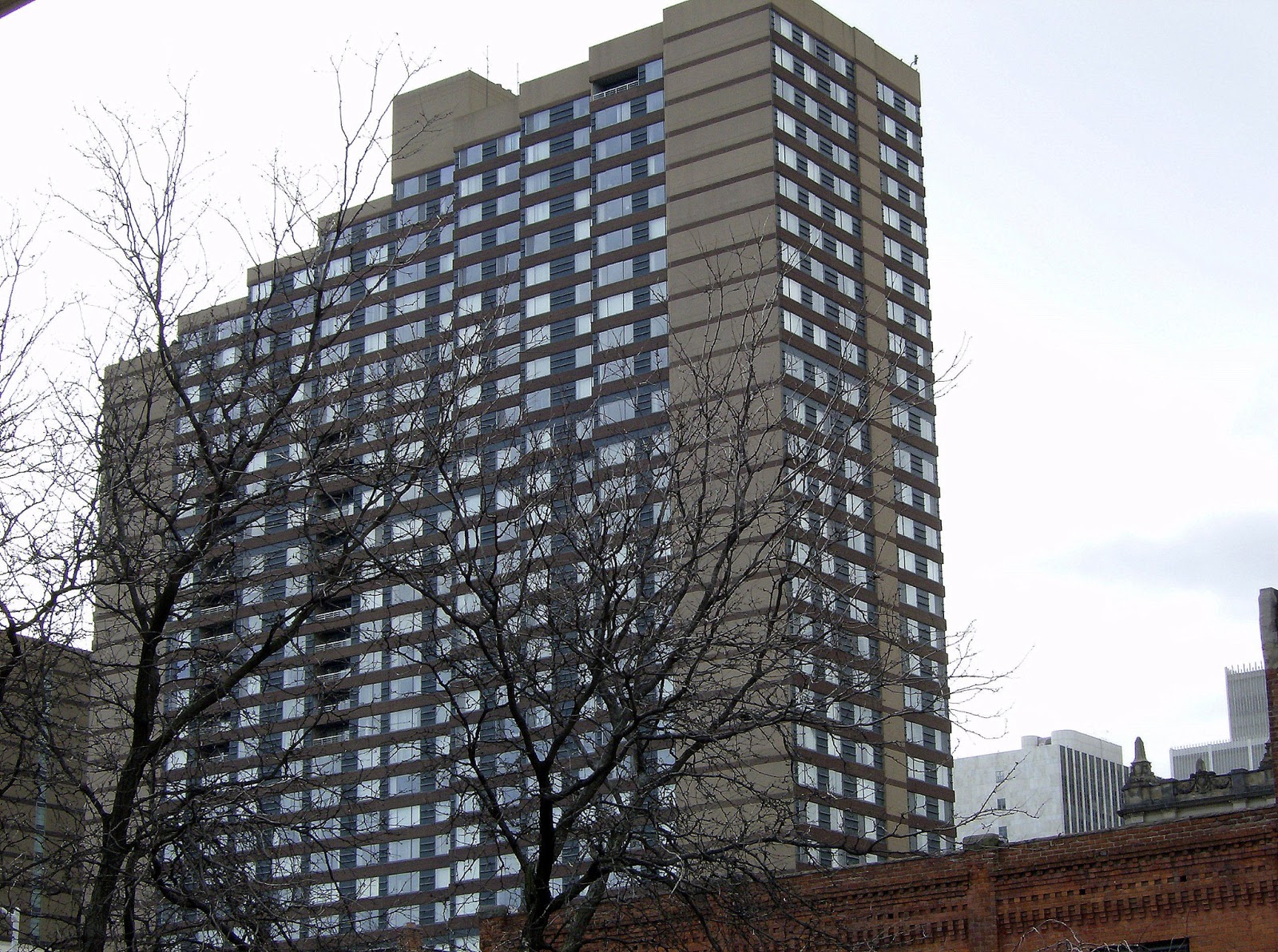
The soon-to-be-former Millender Apartments in Detroit

A recent article at Deadline Detroit got me thinking about how cultural history can be bulldozed without any structures being lost. Bill McGraw was writing about the rename of the Millender Apartment building, but, in a way, he could be writing about the E.W.F. Stirrup House and Coconut Grove.

McGraw’s article is on the topic of the renaming of the Millender Apartments. I was unfamiliar with the 33-storey highrise building in downtown Detroit, for good reason: It was built 15 years after I had already left Detroit. However, I’m sorry I was unaware of Robert Millender, a man whose accomplishments are enough to have garnered him a page on the Detroit African-American History Project:

Millender [after getting his law degree following the war] became interested in politics as a way for African Americans to exert power, given that they were often denied economic power. In the mid-1950s he began to develop political strategies and to recruit young African-American leaders to run for political office. Millender and George Crockett, Jr. were instrumental in finding the logical boundaries and legal grounds for creating a new congressional district in Detroit that would elect an African American to the United States House of Representatives. These efforts paid off in 1964 with the election of John Conyers, for whom Millender acted as campaign manager. Millender was known for his tireless efforts on behalf of African-American candidates, spending countless hours canvassing neighborhoods and meeting with voters and city leaders. His dedication paid off in a number of significant political victories in which he managed campaigns. He served as campaign manager for George Crockett’s 1966 election as the first African-American Recorder’s Court Judge and for Detroit City Council members Robert Tindal and Erma Henderson. Millender managed Richard Austin’s 1969 campaign as the first African-American mayoral candidate and his 1970 successful candidacy for secretary of state, making Austin the first African American to hold that post. Millender’s political activism reached an apex with Coleman Young’s 1973 election as mayor of Detroit.

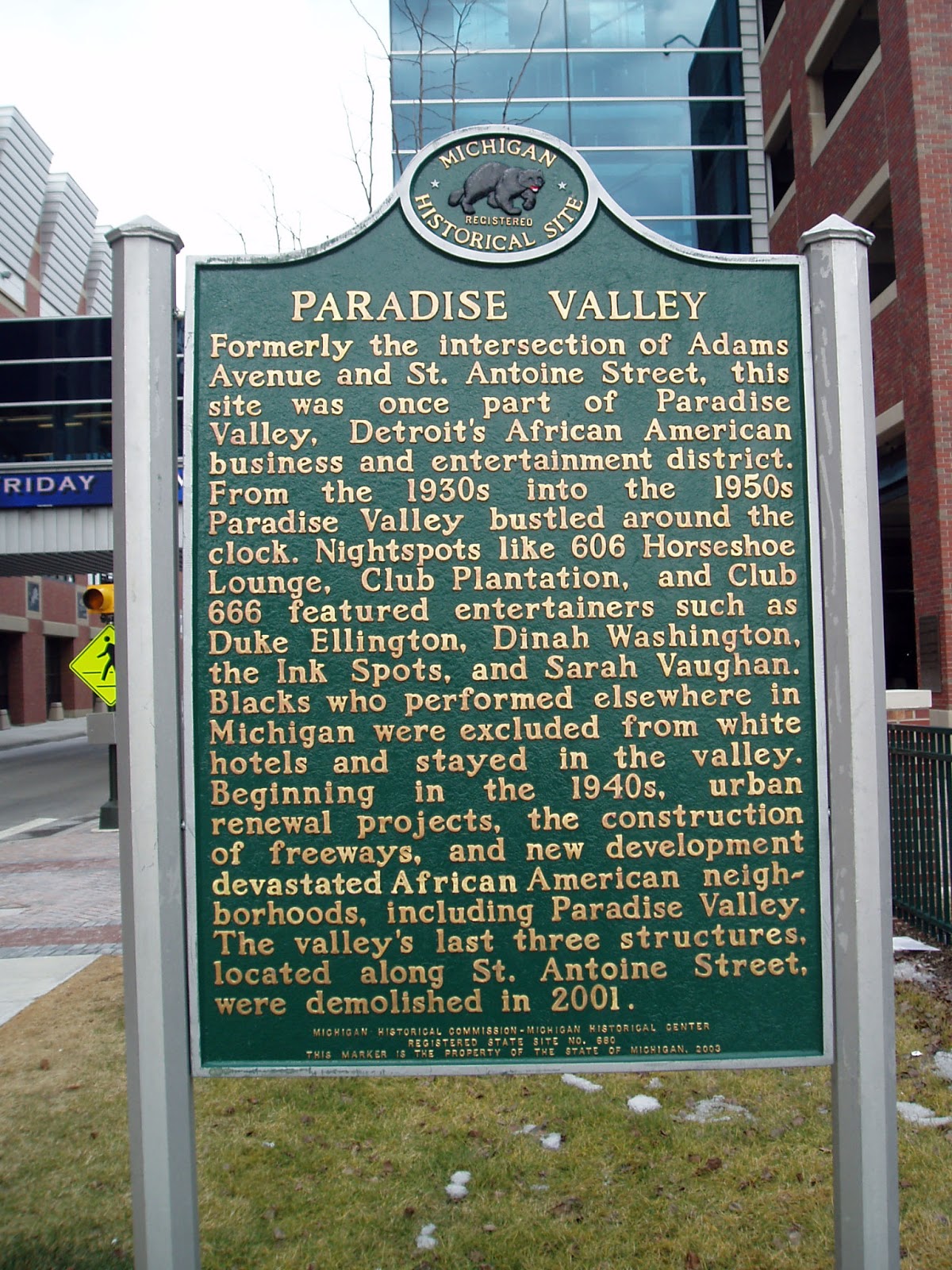
One of the saddest historical markers I know.

Bill McGraw’s article “Renaming The Millender Apartments Is Not a Neighborly Thing To Do” expresses his frustration that while the building will remain, Robert Millender’s name will be bulldozed into the dustbin of history by a new owner:

[…] Detroiters who were paying attention recalled Millender as a giant of black Detroit.

Bob Berg, a public relations executive who served as a spokesman for both Gov. William Milliken and Mayor Coleman Young, said Millender continues to enjoy “legendary status” in Detroit’s  African American community.

“Coming in and changing the name is extremely insensitive and confirms the worst fears many have about the impact of growing suburban influence in the city,” said Berg, who happens to be white.

[…]

Memory is important to every ethnic and racial group. That’s why many buildings, parks and streets around the world are named after people.  Detroit, despite being the biggest black-majority city in the nation, has relatively few African Americans memorialized within its city limits.

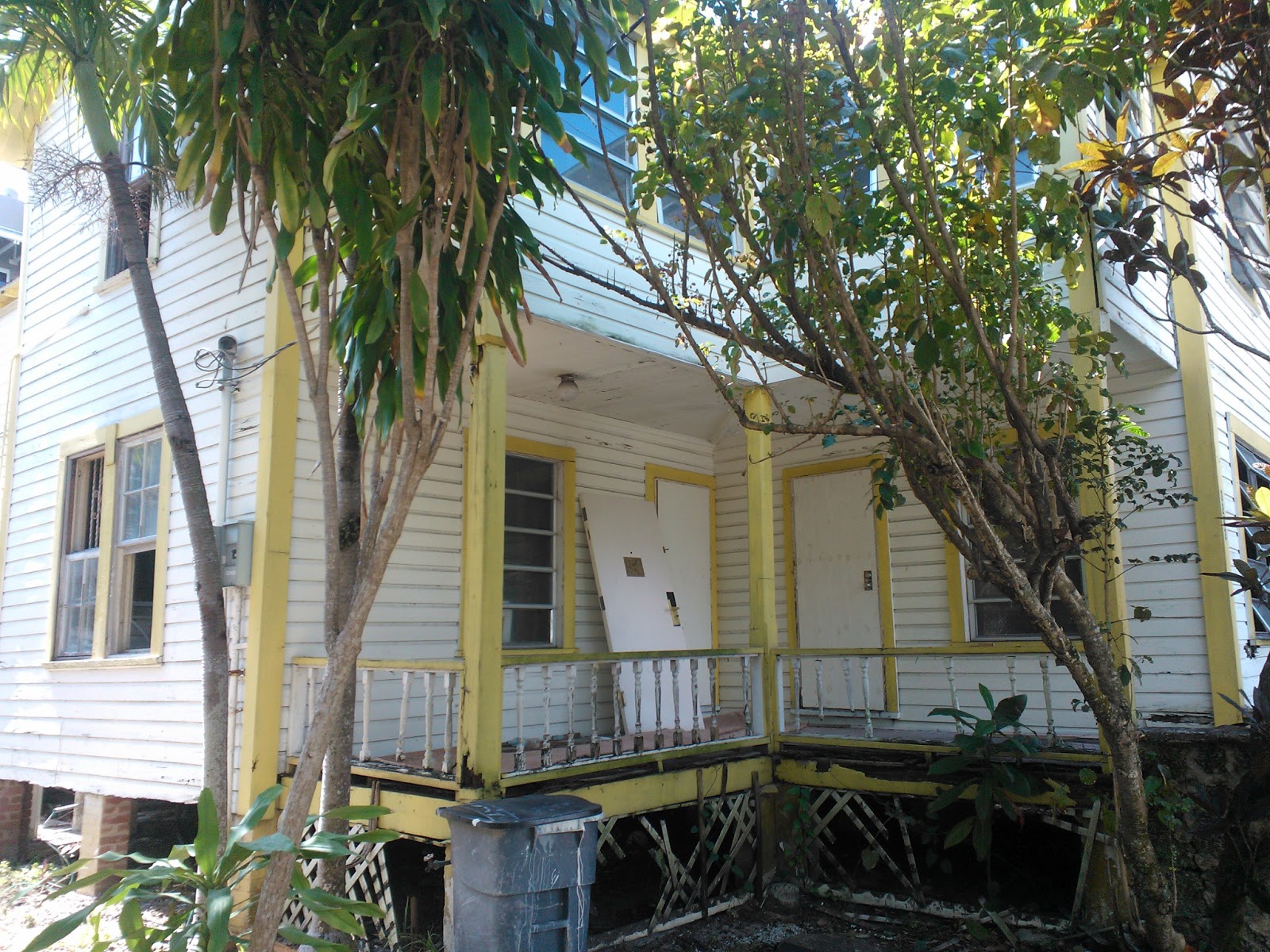
The E.W.F. Stirrup House currently undergoing demolition by neglect.

I cannot help but think of the parallels to the E.W.F. Stirrup House, the rich cultural legacy of which is slowly being allowed to undergo Demolition by Neglect by a rapacious developer who cares more about making money than Coconut Grove history.

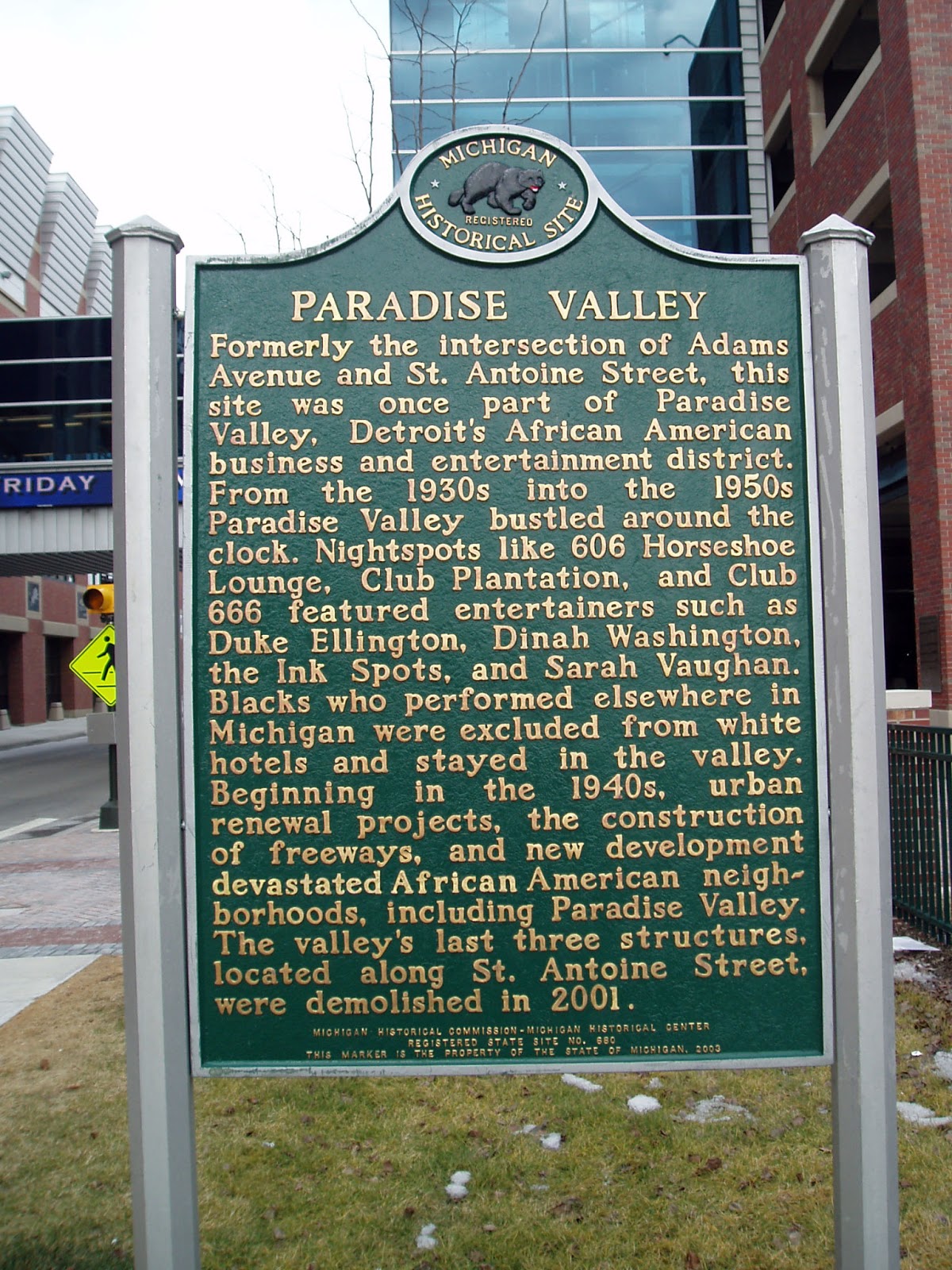
When cultural history is lost, it cannot be replaced. The historical marker in Detroit (above), which marks where Paradise Valley was once a vibrant community is one of the saddest I know. There had been plenty of time to save some of the structures in Paradise Valley, but clearly there was no will to do so.

Rapacious developer Gino Falsetto, one of the owners of Aries Development, claims he will turn the E.W.F. Stirrup House into a Bed and Breakfast. However, in the 8 years he’s had effective control of the property, he’s done NOTHING to protect his investment, not even sealing the house from the elements during all that time. Wind, rain, and animals have all been allowed to attack the house unmolested.

This is all the proof needed to know the E.W.F. Stirrup House is of no concern to Falsetto. In fact, the house stands in his way. Falsetto is after a much bigger prize. He has acquired all the land that surrounds the Stirrup House and wants to bring to West Grove the biggest mixed-use condo development since the Grove Gardens Residence Condominiums, which was Aries’ last mixed-use monstrosity.

Save the E.W.F. Stirrup House!!!

No Skin In The Game ► Part Three

History is complicated.

Little did I realize how accurate I was in intimating Coral Gables has a long history of Racism, going back to its founding. As reported in Part Two of No Skin In The Game, to this day Coral Gables has a population that is 98% White. This demographic never happens by accident. 

However, there is one Coral Gables neighbourhood that turns out to be the exception . . . the exception that proves the rule.

In my research I recently, accidentally, stumbled across something called the MacFarlane Homestead Subdivision Historic District. It was an odd little reference in the Sun Sentinel that caught my attention. In the article Reference Guide Lists Historic Black Sites, were mentioned Black sites across Florida, including one in 98% White Coral Gables, of all places:

CORAL GABLES

MacFarlane Homestead Subdivision Historic District:

Bounded by Oak Avenue, Grand Avenue and Jefferson Street. The residences were built primarily in the late 1920s and 1930s in a vernacular type of architecture not seen elsewhere in Coral Gables. The styles in the district include bungalows and one-story frame “shotgun“ houses. St. Mary`s Baptist Church at 136 Frow Ave. was built in 1927.

Detail of map showing the MacFarlane Homestead Subdivision Historic District,
the oddly shaped triangle in blue. Everything to the south and east is Coconut
Grove. Everything north of the tracks and U.S.1 is Coral Gables.

That address puts it in the odd triangle section of Coral Gables immediately adjacent to West Coconut Grove. It’s just a little more than a block away from the Coral Gables diesel bus garage that the residents of West Grove have been saddled with.

Reading between the lines:

  • “…built primarily in the late 1920s and 1930s…” can be translated to say “this neighbourhood was created contemporaneously with the founding of Coral Gables;”
  • “…in a vernacular type of architecture not seen elsewhere in Coral Gables. The styles in the district include bungalows and one-story frame “shotgun“ houses…” translates to “built in the inexpensive and expedient Bahamian style, styles of house that would never be allowed elsewhere in hoity-toity Coral Gables, but seen in abundance in neighbouring Black Coconut Grove.”

In other words: this neighbourhood was created so the Black folk who were doing the back-breaking labour of building Coral Gables — and, later, serving Coral Gables — would have a place to live. My understanding of the racial implications was instinctive and immediate. Proving that point would be more difficult.

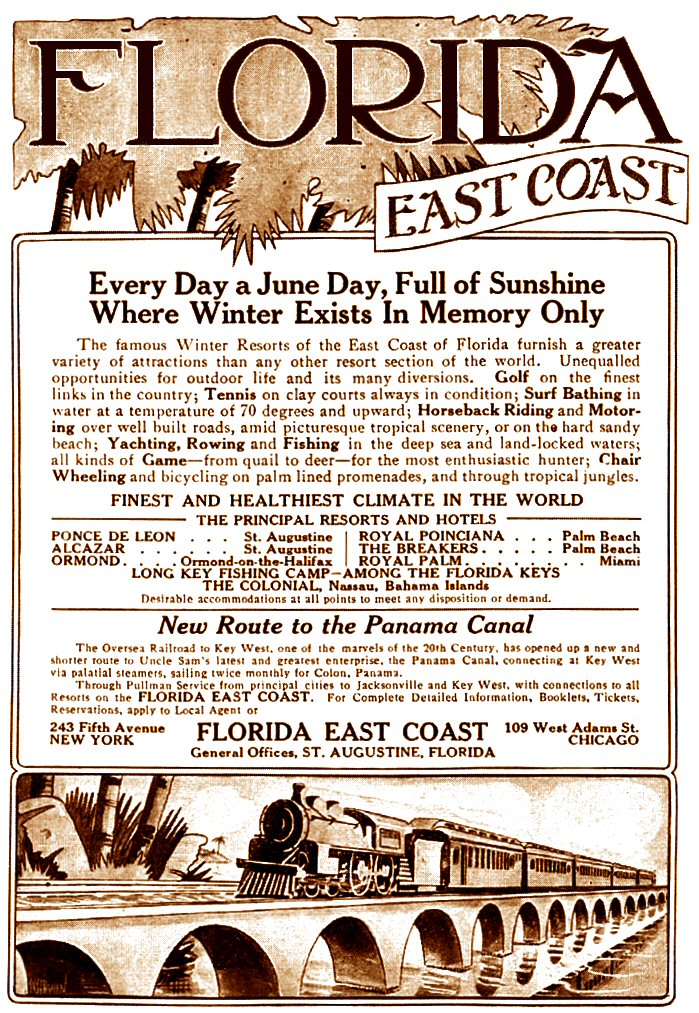
1913 Poster

One thing that made Coconut Grove unique in this country — aside from having the highest percentage of Black home ownership in the nation — is that the Black community in Coconut Grove was NOT on the “other side of the tracks.” Think about that expression for a moment. The “other side of the tracks” was the poor part of town, where Black enclaves originally started near the railroad tracks. That was generally an area where no decent, self-respecting White person would find themselves living, or even traveling. Black folk had far fewer choices for neighbourhoods. And, as has always been true in this country, once there were a few Blacks in an area, it became all Black over time.

While Coconut Grove didn’t have an “other side of the tracks,” it’s clear that Coral Gables did. The blue triangle on the map above (or on this interactive map) is the only area in Coral Gables that Blacks could live. South of U.S. Highway #1, which runs parallel to the railroad tracks, is the other side of the tracks if you live in Coral Gables. It may be technically a part of Coral Gables, but it’s not OF Coral Gables, if you get my meaning.

It turns out the proof I was looking for was tucked away in a book called “African American Sites in Florida” by Kevin M. McCarthy. Within I found the following:

Coral Gables

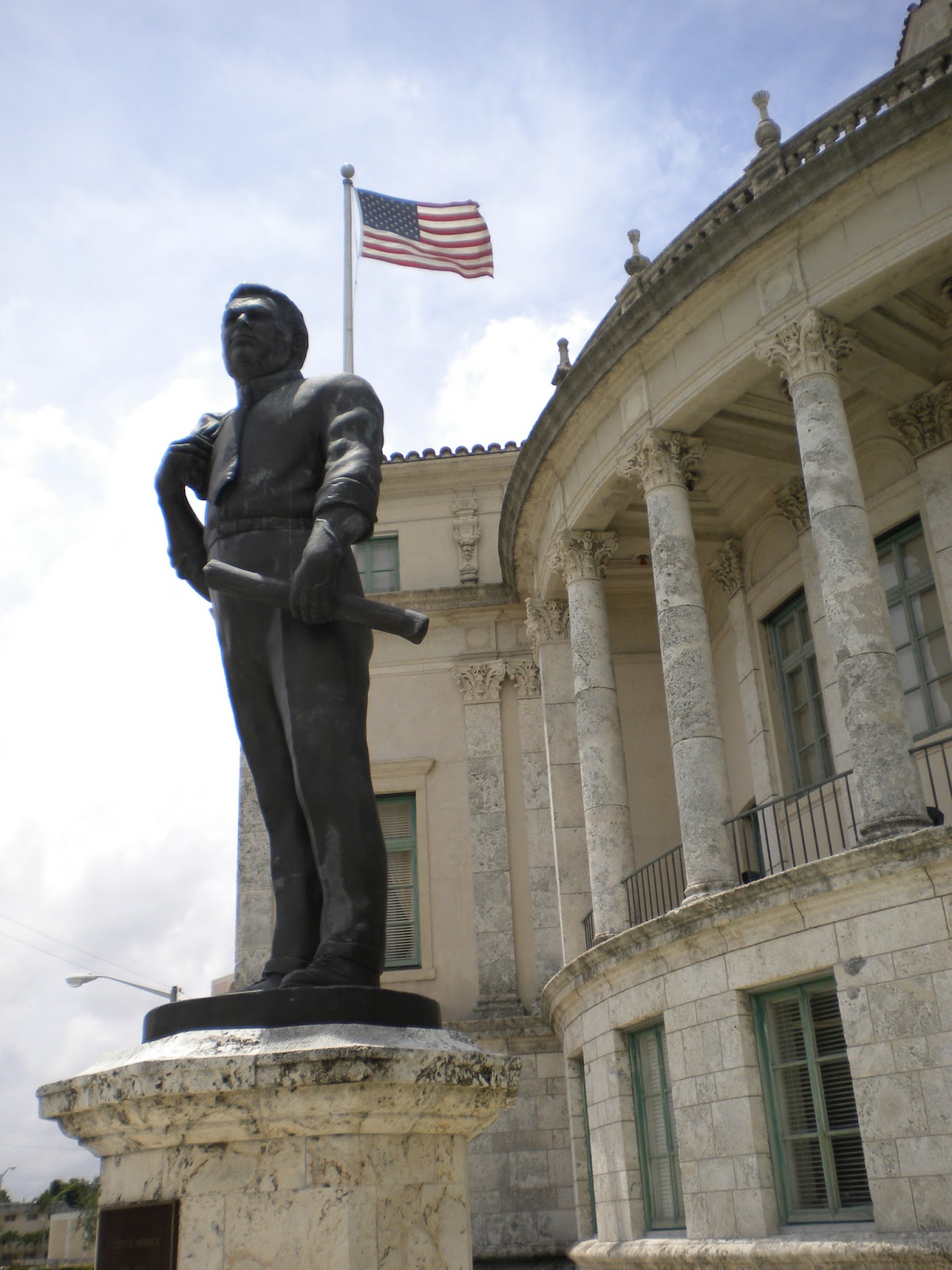
When I took pictures of George Merrick and Coral Gables City
Hall in August of 2009, who knew they would come in handy?

Coral Gables may have been the second planned community in the United States, after Washington, D.C. George E. Merrick spent much time and money designing the city, including what became the University of Miami, which opened in 1926. To promote the planned community, he used the oratorical skills of William Jennings Bryan in the mid-1920s; Bryan, who had been President Woodrow Wilson’s Secretary of State and a three-time Democratic Party nominee for President, gave impassioned speeches around Merrick’s fabulous Venetian Pool, encouraging visitors to buy and settle in the planned community.

The city never had a large number of blacks, and in 2000 only 3% (1,348) of the total population of 40,091 were black.

MACFARLANE HOMESTEAD SUBDIVISION HISTORIC DISTRICT is a black enclave within the city of Coral Gables. It is bordered by Oak Avenue, S. Dixie Highway (U.S.1), Brooker Street, and Grand Avenue east-northeast of the University of Miami. The district takes its name from Flora MacFarlane, who homesteaded 160 acres of land there and in Coconut Grove in 1892. Some of the houses in the district predate the expansion of the Gables in 1925 and 1926, while others were built in the 1930s at a time when blacks were not allowed to build in the wealthier parts of Coral Gables. One of the earliest structures, St. Mary’s Baptist Church, was built in 1927. Most of the homes in what is called the black Gables are small, single-story homes built from Dade County pine. Many of the blacks worked in the homes of the wealthy white residents or in the construction of such buildings as the City Hall and the Biltmore Hotel. The area is changing rapidly today, with many large homes being built.

The historic 120-year old E.W.F. Stirrup House,
still undergoing Demolition by Neglect

Here’s the supreme irony: Coral Gables is so proud of its little Apartheid Triangle that in 1994 it had it listed on the National Register of Historic Places. That’s like hiding its racism in plain sight. Now, if anyone exposes Coral Gables’ long and complicated history of racism, it can point to the MacFarlane Homestead Subdivision Historic District and claim, au contraire mon frere, it has honoured the original Black builders of Coral Gables.

Which is more than neighbouring Coconut Grove has done. Coconut Grove has continued to ignore its history. Rapacious carpetbagging developers have now taken control of some of the historic elements of Black Coconut Grove and no one seems to care.

People tell me that the E.W.F. Stirrup House is on a registry of historic city homes. I’m calling bullshit on that claim. I can find no historical designation for the E.W.F. Stirrup House by Coconut Grove, the City of Miami, Miami-Dade County, the State of Florida, or the country. Yet E.W.F. Stirrup created a unique place in this country, which is slowly disappearing.

SAVE THE E.W.F. STIRRUP HOUSE!!!

No Skin in the Game – Part One
No Skin in the Game – Part Two

Marc D. Sarnoff: Trolleygate Hypocrite Takes A Bridge Too Far

I couldn’t help but laugh at a recent quote from Emperor Marc D. Sarnoff, Commissioner of Miami’s District 2. 

Marc (along with Mayor Tomas Regalado) is suing the Florida Department of Transportation over a “signature” bridge that the city thought it was getting before FDOT changed the design. Sarnoff thinks FDOT participated in a classic “bait and switch” getting approval for the “signature” bridge before switching to more mundane and cheaper design.


“The people of Miami were promised a signature bridge, along the lines of those found in other major cities including Boston and Tampa. Miami taxpayers pour millions into state coffers and it’s time that the politicians and bureaucrats in Tallahassee stop spending our tax dollars in other parts of the state and instead make good on their promises to build our signature bridge,” said Commissioner Sarnoff, whose district encompasses Downtown Miami.

The polluting diesel bus garage being built to please Marc
D. Sarnoff’s newest developer friend: Astor Development.

If anyone knows anything about “bait and switch” it’s Emperor Sarnoff, who went on to say, “They are actually lying to organizations that may not know better.” Kind of the same way that Marc D. Sarnoff lied to his constituents, hoping they wouldn’t know better?

The constituents of District 2 were BAITED with the PROMISE that Marc D. Sarnoff would be THEIR Commissioner, which is why they voted him back into office. They didn’t realize that, once in office, he would SWITCH his allegiance and become the Commissioner for a Coral Gables Developer instead. However, that’s what he did when he worked behind the scenes to help Astor Development sneak a polluting diesel bus garage into the residential community of West Grove in the middle of the night.

Meet the Hypocritical Commissioner of Bait and Switch: Marc D. Sarnoff.

No Skin In The Game; Part Two

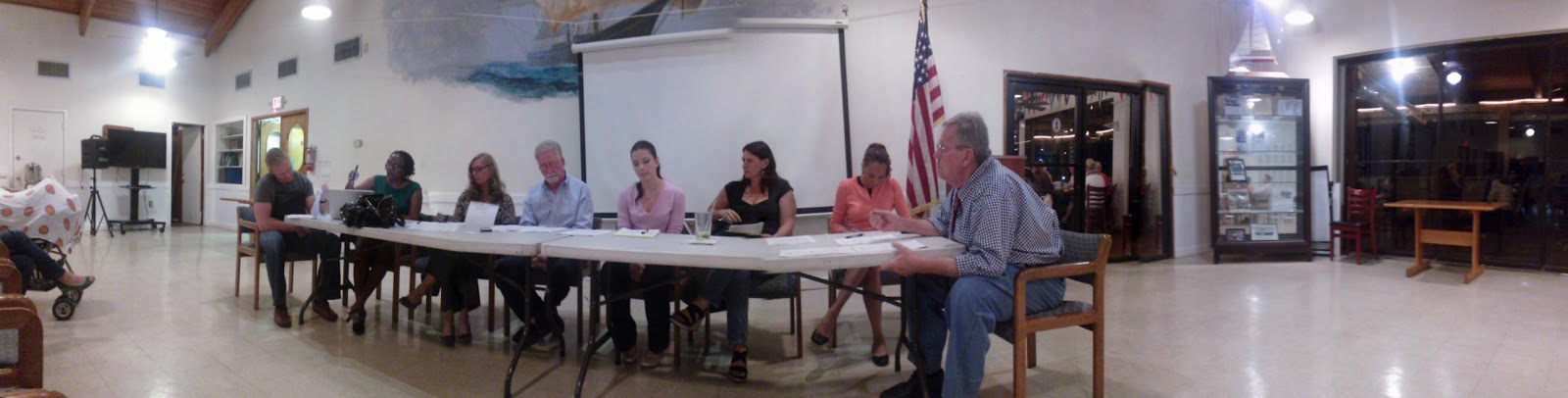
A panorama of the Coconut Grove Village Council.

As we ended our last exciting episode (Part One of No Skin in the Game), I was leaving the Trolleygate protest in Coral Gables — just as the protest signs were arriving. I was running to cover the Coconut Grove Village Council meeting, at which Trolleygate would be an agenda item. In hindsight I made the wrong choice.

During the drive I tried to place what I had seen into a context that I understood. That’s when I decided to call this blog post No Skin In The Game. Nothing better explains the understandable apathy on the part of Coral Gables about Coconut Grove’s problems. Coral Gables is 98% White and both literally and figuratively has no skin in the game.

It may only be 3.5 miles from Coral Cables Congregational Church to the Coconut Grove Sailing Club, but it might as well be several galaxies away. The neighbourhood changes 3 separate times. From the conspicuous opulence of Coral Gables; through the blighted area of West Coconut Grove; past the non-conforming, polluting, Trolleygate diesel bus garage on Douglas; east along across Grand Avenue; where another imaginary line separates West Grove from White Grove, the exact spot where property values pick up again. It’s visually obvious without using Zillow.

The only clue there was once a place called
Paradise Valley, aka Black Bottom, is this sign.

In other words: Coconut Grove, considered one of the most exclusive Zip Codes (33133) in the entire country, has had an historic Black enclave, surrounded on all sides by White folk, for the last 140 years. This area has been marginalized by racism over the years, the same racism that affected your part of the country during the same period. It has been allowed to become blighted, the same way that Black areas in your part of the country have been allowed to fester during the same period. It has been encroached upon by The Powers That Be — Trolleygate is just the latest, most nakedly obvious example.

TO BE FAIR: Coconut Grove was not encroached upon by The Powers That Be like Overtown, where I-95 was jammed through the middle of the neighbourhood, cutting one side off from another. Nor was it was encroached upon by The Powers That Be like my hometown of Detroit, where only a sign remains of a once vibrant Black residential, retail, commercial, and entertainment district. The people of Overtown and Paradise Valley were mostly tenants with absentee landlords. They had no skin in the game.

Black Coconut Grove always had some skin in the game. This is entirely due to E.W.F. Stirrup. Mr. Stirrup was Black. Had he been White his house would have been restored by now; like The Barnacle, Commodore Munroe’s estate just a block away. It is now a State Park. However, Mr. Stirrup is also the reason West Grove still exists. There have been a few attempts to tear down the entire neighbourhood over the years. All have floundered due to the high percentage of Black home ownership — the highest in the nation. That is directly attributable to E.W.F. Stirrup, who thought that home ownership was important for growing Black families. All the more amazing because it came during a period of racial discrimination. The Powers That Be could only screw with West Grove around the edges. Black Grove had too much skin in the game.

During the 4 years I have been researching Charles Avenue I have been asked many times by White residents of Coconut Grove why I even care about Black Coconut Grove. Some are just curious. Some can’t believe that anyone would care about those people. One person used the expression “no skin in the game” and knew it was a clever racial pun. It echoed through my head ever since, but this drive from Coral Gables to West Grove to White Grove put it into context. It all depends on what skin you have in the game, and what the game is.

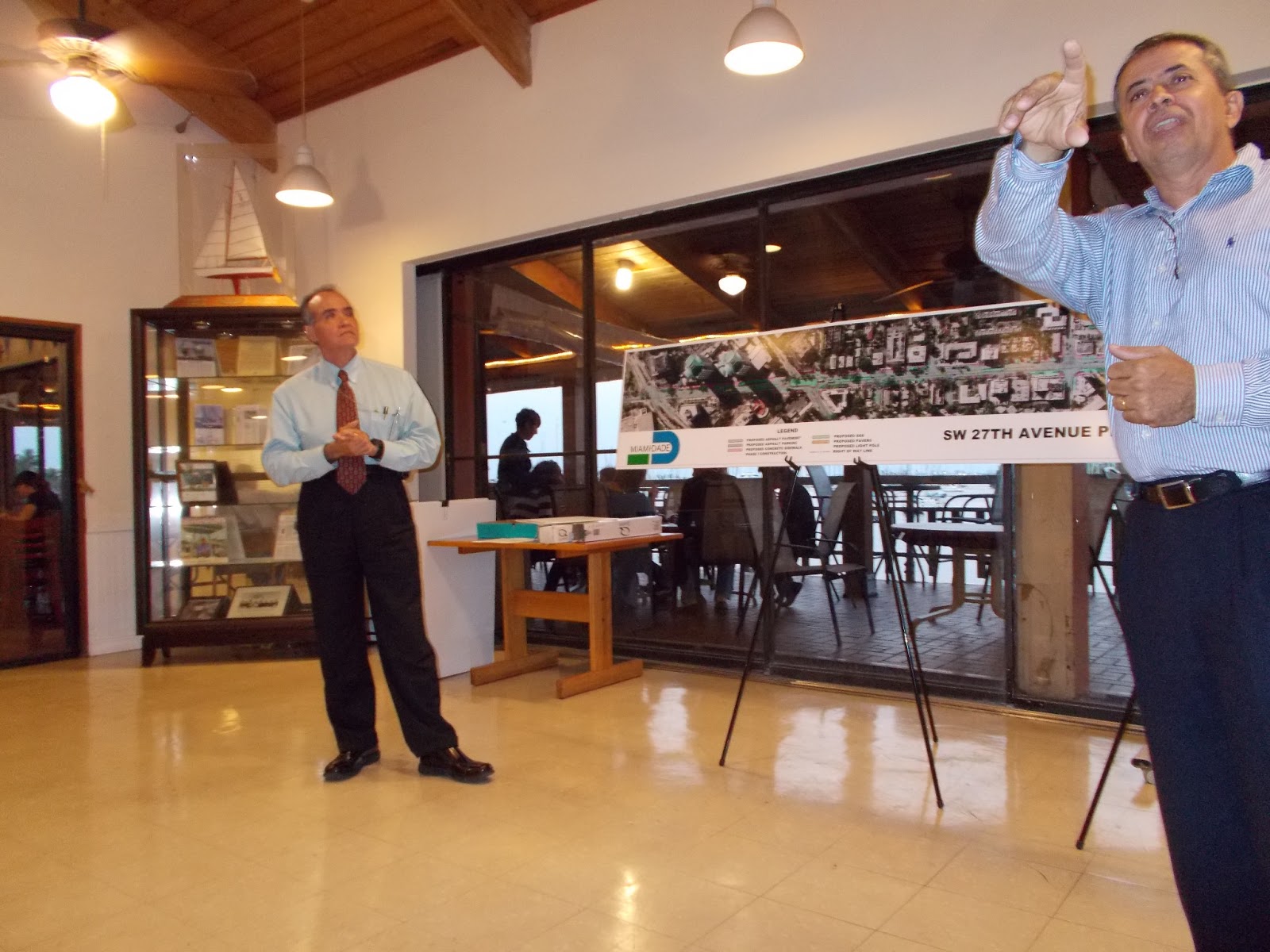
Taking questions about treeremediation along SW 27th. Yawn.

That’s the state of mind I arrived in, late for The Coconut Grove Village Council meeting, which was already in progress. I slipped into the back row of a sparsely attended meeting. More apathy on display. No one seems to have any skin in the game.

There were almost as many people on the executive council as observers in the room. The residents were getting an update from the City of Miami on the redesign of SW 27th Avenue, including its new, radical, peanut-shaped traffic calming circle at Tigertail Avenue. There were questions from the councilors about how traffic circles work (Really?) and questions from the residents about tree remediation. Yawn.

The MEGO factor [My Eyes Glaze Over] kicked in almost immediately. The only topic I care about is Trolleygate. Besides, I already knew the Coconut Grove Village Council was a paper tiger. This presentation was merely a courtesy from the City of Miami to keep Coconut Grove in the loop, the exact opposite to what happened when Commissioner Marc D. Sarnoff quietly slipped a polluting diesel bus garage into West Grove. He said he purposely didn’t inform the Village Council because it just slows things down.

Panorama of SW 27th Avenue presentation.

By the time a project has reached this “presentation stage,” the fix is already in. People can jump and shout all they want. The Village Council can vote unanimously against a project. But . . . but . . . but . . . the Village Council only has an advisory roll and the City of Miami, more likely as not, is going to ignore what the residents of Coconut Grove want and do what Emperor Marc D. Sarnoff wants.

That’s why I tuned out and started writing a children’s parable instead.

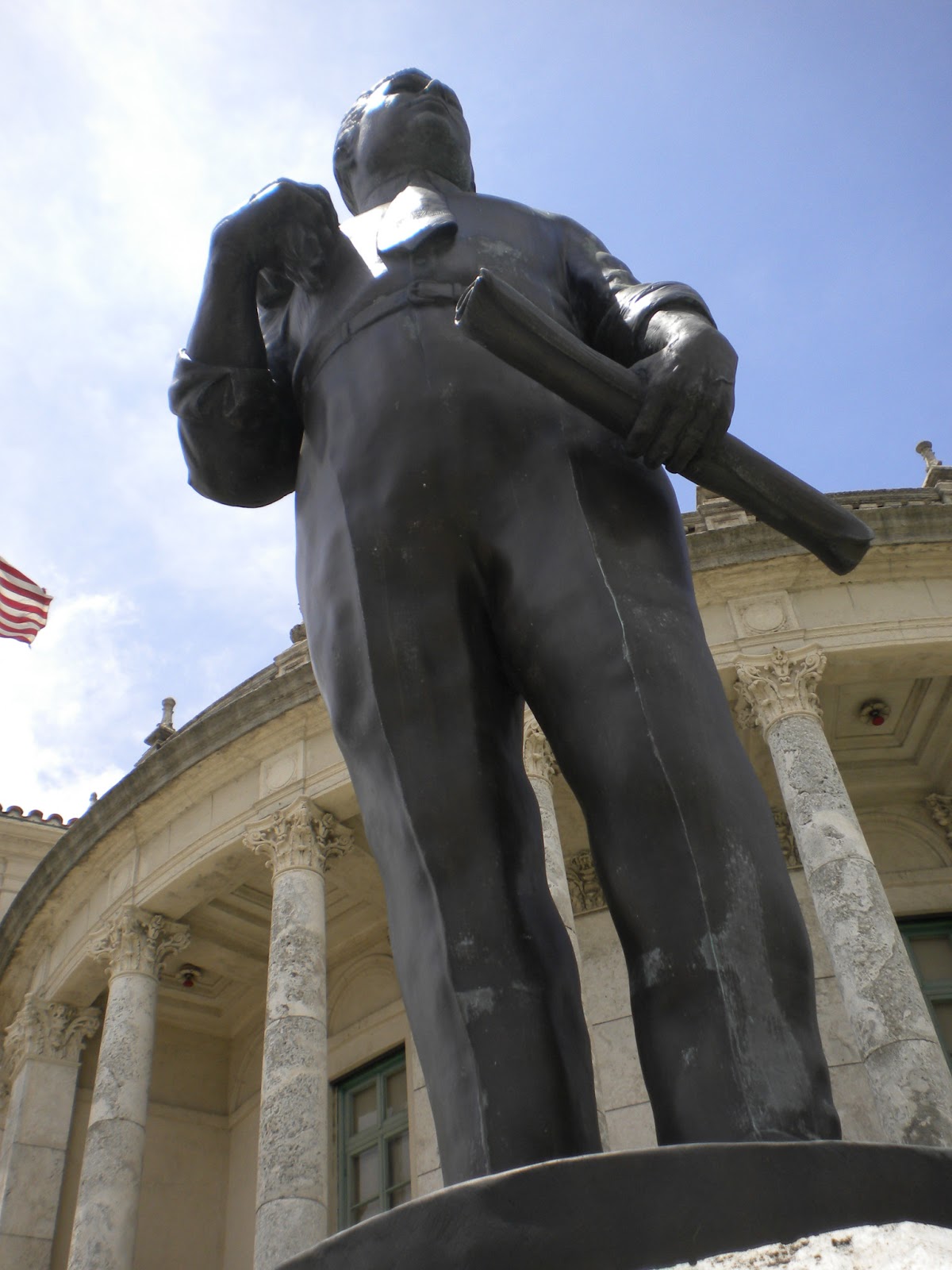
George Merrick, founder of Coral Gables, in front of Coral
Gables City Hall, just like Coconut Grove never had.

Okay . . . okay, kiddies, sit down right here and I’ll tell you a little story about the founding of a town called Coral Gables. It’s not the kind of story you can find in the history books. Believe me, because I’ve tried since the first time I heard it about 3 years ago. I promise to keep trying, but this ain’t the kind of thing that gets written down.

However, kiddies, I have now heard pieces of this oral history more than once, from more than one source, which lends it some credence. Call this the Alternative History of Coral Gables and stop fidgeting, Tom.

FADE TO BLACK – FADE UP

Once upon a time there was a sleepy little village called Cocoanut Grove, with what appears to be an extraneous “A”. Cocoanut Grove had a small tourist trade in the Peacock Inn. Commodore Monroe built his house nearby and, immediately south, created Camp Biscayne, a rustic camp that attracted incredibly wealthy people, who wanted to camp and boat and fish and pretend for a week, or so, that they were living in earlier, halcyon times. Camp Biscayne was so exclusive that one can find its guests lists in online searches. So exclusive were all these nascent tourist attractions, they needed Black folk to do the hard work. Consequently, right beside this tourist trade grew a Black enclave, of mostly Bahamians. E.W.F. Stirrup (documented on many different pages on my blog), through hard work and industriousness, wound up becoming the largest landholder in Cocoanut Grove and one of Florida’s first Black millionaires.

In the early ’20s the movers and shakers of Cocoanut Grove saw dollar signs in developing Cocoanut Grove. To that end they hired some architects who put together what became known as the Bright Plan. It was elaborate, like every real estate development reaching for the brass ring. A Cocoanut Grove City Hall was envisioned for where Cocowalk now sits. It would have been magical, children. Imagine: Cocoanut Grove City Hall would have been at the end of a long boulevard with fountains down the middle, all based upon a Mediterranean design. City Hall would have been a short walking distance to the golf course, which would have been located along the streets both north and south of Charles Avenue, stretching all the way to Douglas. In fact, that would have included a fair chunk of what would later become known as Black Grove.

The bottom fell out of the swampland market soon after the Bright Plan was put on paper. It’s all depicted as laughs by the Marx Brothers movie “The Cocoanuts,” which takes place in Cocoanut Grove. But for some it probably wasn’t all laughs. Some people would have lost money.

It’s interesting to speculate, no pun intended, how much E.W.F. Stirrup might have profited had the Bright Plan gone ahead and how much he may have lost when it stalled. He still died a wealthy man, mind you, and did it in a time when Jim Crow laws and discrimination made the achievement all the more incredible. The Bright Plan was never implemented, except for one building: 200 feet from Mr. Stirrup’s front door is the Coconut Grove Playhouse. Had the Bright Plan ever come to fruition, it would have been a
game-changer for Cocoanut Grove.

However, this fable is about how Coral Gables, called one of the country’s first planned communities, was created. I’m still getting to that. If Tom doesn’t keep interrupting, I could get back to our story, kiddies.

Everyone should read this book. ~H.W.

A few years after the Bright Plan died, Miami started sniffing around to annex Cocoanut Grove. Some of the same boosters from earlier saw benefit in being swallowed up by Miami. Some did not. This is often as it always is. According to this alternative oral history one faction of boosters suggested annexation of everything BUT Black Coconut Grove. This thinking, especially in 1925, was not unusual at all. Across the country one can find many instances where communities purposely did not annex the Black areas at the same time the White areas were annexed. The infamous 8 Mile Wall in Detroit is a physical example of this at work. The book “Sundown Towns: A Hidden Dimension of American Racism” by James W. Loewen was instructive in helping me understand how annexation often left out Black neighbourhoods as communities grew and why all ‘Merkin cities look the way they do. But, I digress again.

For whatever reasons The Powers That Be in Miami ignored the racially inspired boundary proposal. Miami wanted it all, so Miami took it all, annexing everything to the bottom of Cocoanut Grove, including the odd little Black enclave in the middle of it. In our alternative history, that’s when Coral Gables became a viable idea in the minds of some people. There were enough . . . okay, I’ll keep calling them boosters for the purposes of this story . . .  BOOSTERS who didn’t want to live near those people in Coconut Grove. What better way than to start your own town from scratch? You can keep out anyone you want. To this day Coral Gables proudly proclaims on its web site it is 98% White. That doesn’t happen by accident.

When Coral Gables incorporated as its own town — one of the first planned communities in the country — it claimed all the land surrounding Coconut Grove, ensuring that the Grove, and Miami, could not grow beyond its borders.

Was George Merrick racist? Not a single
one of my sources mentioned him
specifically, or anyone else..

However, and here’s the ultimate irony: Just like elsewhere in the country, the people of Coral Gables didn’t do their own hard work. Are you kidding? They could hire people to do that, as long as they went home at night. [See: Sundown Towns] The Biltmore (described in Part One of No Skin in the Game) f’rinstance had a large Black staff as did all those mansions in Coral Gables.

One of my sources for these oral fables is a 73 year old gentleman who has lived in the same house on Charles Avenue his entire life. He tells me of a time when Black folk wandering around Coral Gables would be stopped and asked for their “papers.” Papers consisted of a letter from your employer: “Mrs. Jones is our housekeeper/nanny/cook” or “Jim Smith is our handyman/chauffeur/gardener.” If you could not produce your papers you would be arrested for vagrancy.

JUMP CUT TO PRESENT

The Trolleygate item suddenly comes up on the Coconut Grove Village Council agenda. I put my phone on record and drop it in front of Pat Sessions, who drones on for a while. It only takes a minute to realize that he knows less than I reported a few weeks ago about where the case stood. It’s a good he said nothing new because I have now learned that my fancy phone shuts itself off after a few minutes and doesn’t save the recording when it does. Clearly I need a new app, but I digress.

However, Sessions did say that Astor Trolley LLC (a limited company created to spare Astor Development LLC from any adverse consequences due to Marc D. Sarnoff’s Trolly Folly) is now claiming the parcels of land Astor slapped together in blighted Coconut Grove are worth $3 million. It’s just another way West Grove has been fucked with around the edges and another land grab by another developer. Everything I learn about the east end of Charles Avenue makes me see another massive land grab by another developer. But I digress and that truly is another story for another day. Let’s get back to our happy little story of the founding of Coral Gables.

These stone streetsigns are on every corner in Coral Gables.
The White stones are for loading and unloading.

SLOW FADE BACK TO BLACKS JAILED FOR VAGRANCY – FADE UP NARRATION

Picking right up where we were in our little morality tale, boys and girls. It’s hard not to see Coral Gables as one of ‘Merka’s first redlined communities. It’s the town that racism built. It never had any skin in the game because it could keep out any skin that didn’t conform.

Another source told this author about Coral Gables (paraphrasing):
“Growing up, you see those White stones, you know you was going in White
areas. Parents and friends would warn you stay on this side of the White stones.”

Coral Gables was a reaction to Coconut Grove in every way. Coconut Grove had a Black enclave that could not be shaken loose. It could not be shaken loose because of E.W.F. Stirrup and his legacy. Stirrup created a community unique to this country because it had the highest percentage of Black home ownership in the country.

So, you see kiddies, you can’t really tell the story of Coconut Grove without also telling the racist history of Coral Gables, the town next door. Coral Gables never had any skin in the game.

FULL FADE BACK TO PRESENT – COCONUT GROVE VILLAGE COUNCIL MEETING

Sessions doesn’t think there’s anyone who thinks the Coral Gables Trolleygate diesel bus garage will ever open as a bus garage. This echos the sentiment of Edward Harris, from Miami-Dade Commissioner Xavier Suarez’s quoted in Part One of this story. However, as the CGVC goes on to other topics of less interest to me than tree remediation, I reread an email from one of my sources who claims there is a massive land grab going on at the eastern end of Charles Avenue, which includes the E.W.F. Stirrup House. My source tells me it will be turned into a mixed use condo/retail/theater/parking/entertainment extravaganza that will put Cocowalk and Commodore Plaza (combined) to shame. How many people on the Coconut Grove Village Council are aware of what’s happening right in front of their noses. Maybe it’s no skin off their nose, to mix skin metaphors. Maybe they have no skin in the game.

Who has skin in the game and which game do they have skin in? Because there’s a lot of money being made by some people at the expense of others in Coconut Grove.

IRONY ALERT: I literally — and figuratively — have no skin in the game. I’m not a
Miami resident. I’m not speculating on land in Coconut Grove. I’m not
Black. I have merely identified an injustice and want to right it. For
all these reasons, and because I listen to both the residents of West
Grove and White Grove, I am trusted with confidential information and
off the record conversations. Having no skin in the game can be a
benefit as well.

Feel free to feed me any info. I know how to keep my sources private. And, thanks to everyone who read Part One and Part Two all the way to the bottom. You’re my kind of reader.

Unpacking The Writer – Out of the Archives

A writer is always a writer. This writer has always been a writer. Over the course of my career I have written hundreds of articles that have been published. Every once in a while I reprint one of them here. This originally appeared in Hamilton Magazine.

The Ghost In The Machine

Nobody remembers who first named the ghost Harvey.

Harvey lives, if that’s the right word, at 121 Hughson Street North.  This non-descript building has, over the years, housed the Sons of England (in 1916 as the first tenant of record) and several other fraternal benevolent organizations; 2 insurance companies; both a dance and photographic studio, at separate times; the Unemployment Insurance Commission; a spice factory; and churches of several denominations, including Catholic and Hindu.

In 1980, the 121 Café took up residence.  The building has been a bar ever since.  Today the building is home to The Werx.

Considering its current use, it’s a fair question: Is it the spirit of Harvey that haunts the bar, or the spirits of Johnny Walker Black?

It’s almost certain that Harvey is not his real name.  His history cannot be confirmed. It is whispered he was once the building’s custodian and lived in a small room at the back of the main floor.  Injured in a fire in the building, he later died at Hamilton General Hospital, about a kilometre away.  The distance meant nothing, because he’s back at 121 Hughson Street North as if he never left. 

Rob McConnell is a long time student of “strange and mysterious stuff and things that go bump in the night.”   He’s been interested in the paranormal since childhood, when he saw what he describes as flying cigar-shaped object.  “It definitely was a UFO because it was unidentified.  Whether or not it was from planets beyond the solar system, I couldn’t tell you.”

More than 40 years later McConnell is considered one of the southern Ontario’s foremost experts on the unusual.  He’s host & Executive Producer of The ‘X’ Zone Radio/Television Show; President of Ghost Tours of Canada and part owner of Niagara Ghost & Paranormal Tours.  He has also narrated segments of Creepy Canada, the Discovery Network’s excursion into the paranormal.

McConnell has no problem believing Harvey could exist.  “Do I believe?  I certainly do.  Have I ever seen a ghost?  Unfortunately, not.” 

“There are so many theories out there on what a ghost is.  Some people believe it’s a magnetic imprint in time.  Other people believe it is somebody who was taken without finishing their earthly mission.  Other people believe ghosts come back to console those they’ve left behind.  There are so many hypotheses out there, but there is no fact.”

And what does McConnell believe? 

“It’s just another part the multi-dimensional world we live in.  This is just a theory, [but] the sighting of a spirit could be the transition of one dimension into the other.”

Despite the fact that McConnell conducts his own ghost tour of the Niagara region, he’s not so gullible to believe every story he’s heard. 

“The paranormal is a heyday for those who want to make a quick buck.  There are many, many less-than-credible people out there, charging phenomenal amounts to go in and exorcize your house of ghosts.  [….] The paranormal is a very strong marketing tool.  I don’t know how many places in Niagara on the Lake, and throughout Niagara, use spirits to bring customers in.“

Haunted Hamilton has only recently come to realize the marketing potential of ghosts.  Started 4 years ago by Stephanie Lechniak, 24, and Daniel Cumerlato, 26, after seeing a similar endeavour in Toronto, Haunted Hamilton has grown faster than envisioned.  Now, nearly every Saturday night, Haunted Hamilton conducts a ghost walk, exploring either the Hermitage, downtown Hamilton, the Customs House, or the Stoney Creek Battlefield.  Word of mouth is spreading.  An average of 30 people go on the walks, at $10 a head, but there have been as many as 75 on a walk. 

With such expansion and growth, they are talking about adding regular Friday night ghost walks.  Earlier this year Haunted Hamilton hosted the 1st Annual Paranormal Summit and future plans have it opening Haunted Hamilton Headquarters in an historic James Street South location, where they can sell tickets to the ghost walks full time.  Stephanie and Daniel take pride their walks are as much about Hamilton history as specters spooking downtown, since they spent untold hours in the Special Collections department of the main library, in research. 

*  *  *

Which brings us back to Harvey.

It’s the night of a new moon, if that matters.  It is also Karaoke Night at The Werx.  A dozen patrons hug the bar, but not for support.  It’s the only place you can puff away under Hamilton’s smoking by-law.  No paranormal activity is apparent, unless one considers Damien Dommer channelling Freddie Mercury on Somebody to Love.

Dommer is the owner of The Werx and host of its Karaoke Night.  He’s a barrel-chested 37-year old who bought the property in 2001, with his partner Tom.  As a patron of the bar long before he bought it, Dommer knew that he was also buying Harvey’s residency, but was unconcerned. 

“I just figured that at some particular time he would probably realize that we weren’t going to be going anywhere.”

He’s so matter of fact on the subject.  “I’m a Pagan, in all senses of the term.  It’s very open for me to believe a spirit could be here.”

Besides, “I didn’t care if he wanted to reside here.  Some of the things he did weren’t very bothersome.”

That all changed on the night a large stained-glass logo of the bar crashed to the floor.  Naturally, Harvey got the blame. 

“I was in the bar, but not in the same room.  How that ever came off we have no idea.  It was literally screwed through the links [of a chain] onto the wall.  It went flying off the wall onto the ground.  It’s not as if it fell.  It totally missed everything on top of the beer fridge.  The one customer who was sitting there when it happened, was white.  She was pale.  She could not believe that that thing had moved horizontally.  It didn’t tumble down.  It flew down.”

Dommer points to where the stained glass landed.  It’s about 10 feet from where it once hung.  To have fallen from the screws on the wall, which are still visible, would mean the object had to defy gravity, moving south 3 feet, east 8 feet, and vaulting the bar….all at the same time.

Of the current staff at The Werx, Nancy Gleeson has known Harvey the longest.  She’s been the building custodian for 12 years and has had several encounters.

“He’s very playful.  He likes to play with the customers and the staff.  He’ll go along the bar and brush customers’ shoulders all the way down the line.  They would all turn around at the same time.

“[Another] night he was playing that piano in the small dining room.  There were 8 of us sitting around after work, having a drink, and we all heard it.  We walked down the hallway and as soon as my friend put his hand on the doorknob, it stopped.  The door was locked.  We opened it up and there was nobody there.”

Tonight, hopefully, there will be somebody there.  Within hours, the Kitchener Waterloo Paranormal Research Society – also known as the Girly Ghostbusters – will arrive to conduct a ghost hunt. 

*  *  *

The writer has brought the Girly Ghostbusters to this location to find Harvey.  The writer has heard all of these stories before, as a long time patron of the bar.  With an assignment to write about ghosts in Hamilton, he figures it might be worth a Nobel Prize to sit down and interview Harvey.

The staff has mixed feelings about hunting Harvey.  Gleeson says, “I would love to find Harvey.  I think that’s one of the reasons I’ve had the most encounters with him, is because he’s looking for somebody to –“ her voice trails off, realizing Harvey might soon be moving on.

Dommer is more succinct. 

“If somebody could communicate to him that we don’t mean him any harm.  We would be interested in finding out why here’s here.  And if he needs to stay here, then he’s welcome here.  If he’s searching for something or needs us on this side to help him pass over, it would be interesting if he could communicate that to us.  If he is wanting to be on the other side, and he’s stuck in a sort of a limbo, we would be interested.  If I had to get 50 people to stand in a circle to wish him well onto the other side, I can arrange that.”

The Girly Ghostbusters burst into The Werx just after midnight.  While photographs show them to be Goth Gals, they arrive looking more Josie and the Pussycats than The Craft.  Attire for a ghost hunt is more pedestrian: jeans and t-shirts. 

The Girly Ghostbusters are Nicole Dobie, 21, Dana Matthews, 23, Jen Kieswetter, 19, and Corrie Matthews, also 19. 

Dana and Corrie are sisters.  Jen is their cousin.  Nicole has been a friend for nearly a decade.  Interviewing them is difficult as one finishes the thought of another.  Asked how they arrived at the improbable hobby of ghost busting, Corrie says, “Each one of us has always had an interest in the paranormal.  About 2 years ago we separately started becoming interested in ghost hunting.  We found out you can actually ghost hunt – you could go out with your equipment and try and document your own paranormal proof.”  

Dana finishes.  “We went out one night, after surfing through the Internet and looking at some pictures, then watching ghost shows on TV.  We decided we were going to go out with an old 35 mm camera and a bunch of bent coat hangers to the local cemetery and we’ve been hooked ever since.”

Corrie carries a heavy case with the group’s scientific equipment.  When asked what scientific equipment she has in there she replies, “All kinds of crap.”

The Girly Ghostbusters have been told nothing about Harvey, other than the fact that he’s in the building.  It will be up to them to find him.

Dana and Nicole bring out their pendulums to look for “energy,” which could be residual traces of Harvey.  One of the first surprises is the direction where Dana’s pendulum keeps pointing.  It’s clearly pointing to a locked door at the bottom of the stairs leading to the top floor, a space that’s unoccupied and used for storage. 

Right outside this door Harvey has been known to play tricks.

Before the GG arrive, a tape recorder captures Dommer’s story.  “Tom, my partner, was vacuuming.  He shut the vacuum cleaner off and walked away and the vacuum went on by itself.  It’s one of those where you press the button, it actually clicks off and you have to click it back on again.  It went on all by itself and there was no one else around.”

Now, the Girlies want to climb those stairs, based on the readings of the pendulum.  On the top floor, they feel disquieted.  According to the GG there are pockets of cold and dead air in the smaller of the two rooms on the top floor.  The writer cannot detect the changes in temperature.

The ghost hunt continues.  The GG are told there is no place they cannot explore, so every room is investigated, every nook and cranny of the labyrinthine building is examined.  Two tape recorders are running constantly, while the Girly Ghostbusters relate their sensations. 

At one point Dana feels a tug on her sleeve and describes it as if someone is trying to get her attention.  No one is near her when that happens.  A flurry of camera flashes and the spot where the tug is felt is documented on digital disc for later examination.  Looking in the small viewfinder, Jen thinks she may have captured an “orb” with the camera.

She explains, “Orbs are, what some ghosthunters believe, are tiny little balls of light.  They’re 3-dimensional, they’re not dust.  You can actually see them as moving balls of light.  What they believe is an orb is one of the first steps that the spirit has into making a full apparition.  So, orbs would be first.  Spirit eco would be next, which is that sort of smoky, foggy vapour.  Then you would get vortexes, which are really strong dark spirals that, sort of, zoom through pictures.  Those are just the different levels spirits take to fully form.“

At another point Dana is convinced someone has whispered the name “Rick” in her ear.  Coincidentally, Harvey has been known to tease staff by whispering their names in their ears.  However, no one present knows what “Rick” could mean, unless Harvey is trying to reveal his real name.

After all four floors are examined, the Girly Ghostbusters and Damien go back to the Zen Lounge to compare notes and for the GG to finally learn about Harvey. 

This is where it gets a little strange. 

In a building with four floors and thousands of square feet on each – with small rooms off larger rooms and crawl spaces everywhere – there are many places one could say one felt something mysterious.  However, the Girly Ghostbusters only had sensations where Harvey has been known to play his tricks.  Where Harvey has never been sighted, they report nothing.  It’s clear to the writer that the Girly Ghostbusters have had many more hits than misses. 

Elation turns to disappointment when the Girly Ghostbusters admit they don’t communicate with spirits, they just document their existence.  If Dommer wants to get his message of welcome to Harvey, he’s going to have to bring in a clairvoyant to pass along the sentiments, or resort to Ouija board.

*  *  *

A few days later, Dommer agrees to another interview. 

It’s hard to keep him to the subject of the ghost hunt because he has pictures to show, taken the afternoon of the evening in question.

“These were some pictures taken by my friend’s digital camera the day we were outside doing the patio.  You remember they [GG] were talking about orbs, and they said they felt it immediately around the building.  This may freak you out.  My friend was taking some very innocent pictures and he came across, without even knowing, what I believe to be exactly what it is they were talking about.”

The pictures are examined.  Some clearly show some orb-like things floating in the frames.  It’s not something on the lens because some of the pictures are normal.  Sunlight or reflection are ruled out because the pictures were taken from all directions, not to mention from ground level and from the height of the fire escape.

Nothing seems to satisfactorily explain the orbs in the pictures.

Pulling Dommer back to the subject at hand.  Will he continue to look for Harvey?

“I think I will.  They said to get a clairvoyant in here or ask Harvey to reveal himself in a dream.  I have no problems sleeping upstairs and asking Harvey to come to me in a dream.  I hope I remember what it is.  Look.  Maybe Harvey doesn’t really exist.  We don’t know.  We don’t have any concrete proof, but I would love to know if there is somebody here, what he’s doing here, and what’s his story.”

If that ever happens, 121 Hughson Street North could officially be on the ghost walk of downtown conducted by Haunted Hamilton.

NB: This was my final draft before my editor made any subsequent changes. Any typos, or bad grammar, are mine. The title of the article and the graphics were not part of the article as originally published.

An Update On Sarnoff’s Trolleygate aka Astor’s Trolley Folly

The view of the diesel bus garage from the closest house, a
mere 100 feet from where the polluting buses will be idling.

These days whenever I visit Coconut Grove I check on the progress of the Coral Gables diesel bus garage. I am always surprised that the building of what will be a polluting bus garage continues unabated. The lawsuit launched by residents of the West Grove demanded for it to be stopped in its tracks — even though these are not really trolley cars and they don’t use tracks. 
Curious that the work continues, I reached out to Ralf Brookes, one of the lawyers who has taken on the case pro bono, for an update. Here’s where the case stands:

The City of Miami filed a motion in the 11th Circuit Court to dismiss the case, arguing that Astor Development, which had not been originally named in the lawsuit, was an indispensable party to the suit.

In the meanwhile, Astor Trolly LLC filed a motion to intervene in the case. Astor Trolley LLC is a new-ish “limited liability company” owned by Astor Development Holdings LLC [which itself seems to be a wholly-owned subsidiary of Astor Development Group, LLC], incorporated to isolate Astor Development from any financial fallout of Trolleygate. While it seemed inevitable that Astor would eventually be drawn into this case, I don’t know why it willingly asked to have its head put on the chopping block. No matter. The judge granted that motion on February 26th and has given Astor Trolley LLC until March 18th to file a response to the lawsuit.

And that where it all sits as of today.

However, just about everyone seems to agrees the diesel bus garage will never be used for the purpose for which it was designed and intended. It does not conform to the Miami21 plan, which specifically forbids a “government vehicle maintenance facility” along the South Douglas Road corridor. One wonders why Astor Development wouldn’t just cut its losses and stop building and fighting.
Well (I speculate), it’s probably because Astor Development has too much invested in the project already. It acquired the land, purchased the building materials, has been paying the work crews, and (presumably) already bought all the equipment that will have to installed in the diesel bus government maintenance facility. The losses would be too great to just cut and run. It might be better to be ordered by a court of law to do the right thing, as opposed to doing the right thing in the first place. Then it can turn around and try to sell the structure for a profit.

Since the West Grove lawyers are working pro bono, this is not costing the community a penny. However, it is costing the City of Miami (read: every Miami taxpayer) money to defend Astor’s Trolley Folly. Those costs can be placed squarely at the feet of Commissioner Marc “Doggy” Sarnoff, who rammed through this diesel bus garage project without the normal neighbourhood consultation.

The Marc Sarnoff Memorial Dog Park with the Marc Sarnoff Memorial
Traffic Circle in the lower right. Click here for an interactive map.

Commissioner Marc Sarnoff is used to ramming through projects — which cost the Miami taxpayers big bucks — without the normal neighbourhood consultation. Exhibit A: The Marc Sarnoff Memorial Dog Park [right], across the street from his house. No one seems to know who approved this, but to date this boondoggle has already cost Miami taxpayers $546,065.00. The latest renovation to the Marc Sarnoff Memorial Dog Park came within the last month. Work crews installed astroturf for the dogs because these are privileged dogs, donchaknow, and shitting on grass in their own backyards just won’t do.

Clearly these dogs are more privileged than the children in the community. The bigger crime is how a pocket park created for the enjoyment of children, has gone to the dogs. Prior to Doggygate the length of the children’s playground was approximately 300 feet. Once Marc Sarnoff was done with it the children’s portion of the park was reduced to approximately 100 feet, while the dogs get 200 feet.

See an interactive map of the Marc Sarnoff Memorial Dog Park

Go by the park yourself and you’ll see what I have noted every time I go there: The children’s area is packed tight, with barely any room for kids to run and play: The playground equipment is overcrowded and there are not enough benches for the parents to sit. [While I’ve tried to take pictures that illustrate this, every time I show up with a camera I get the evil eye from parents.] Meanwhile, the Marc Sarnoff Memorial Dog Park always appears underutilized, with a whole lot of room for the dogs to run free.

Luckily for the taxpayers of Miami Commissioner Marc Sarnoff is term-limited. Unless he runs for mayor he only has to the end of his term to waste taxpayer’s money.

For more on Trolleygate, aka Astor’s Trolley Folly, click here.

A Return To Frow Avenue

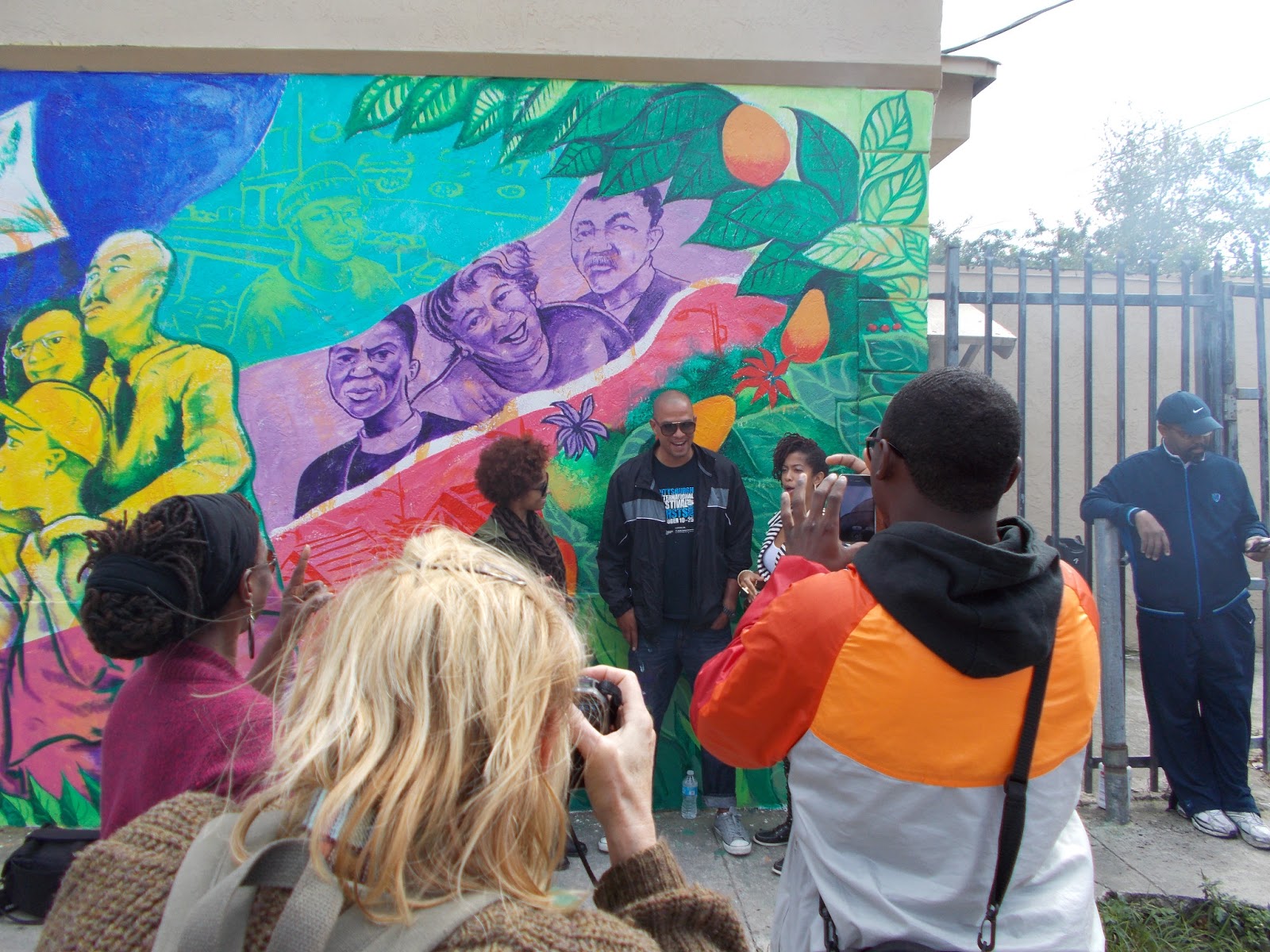
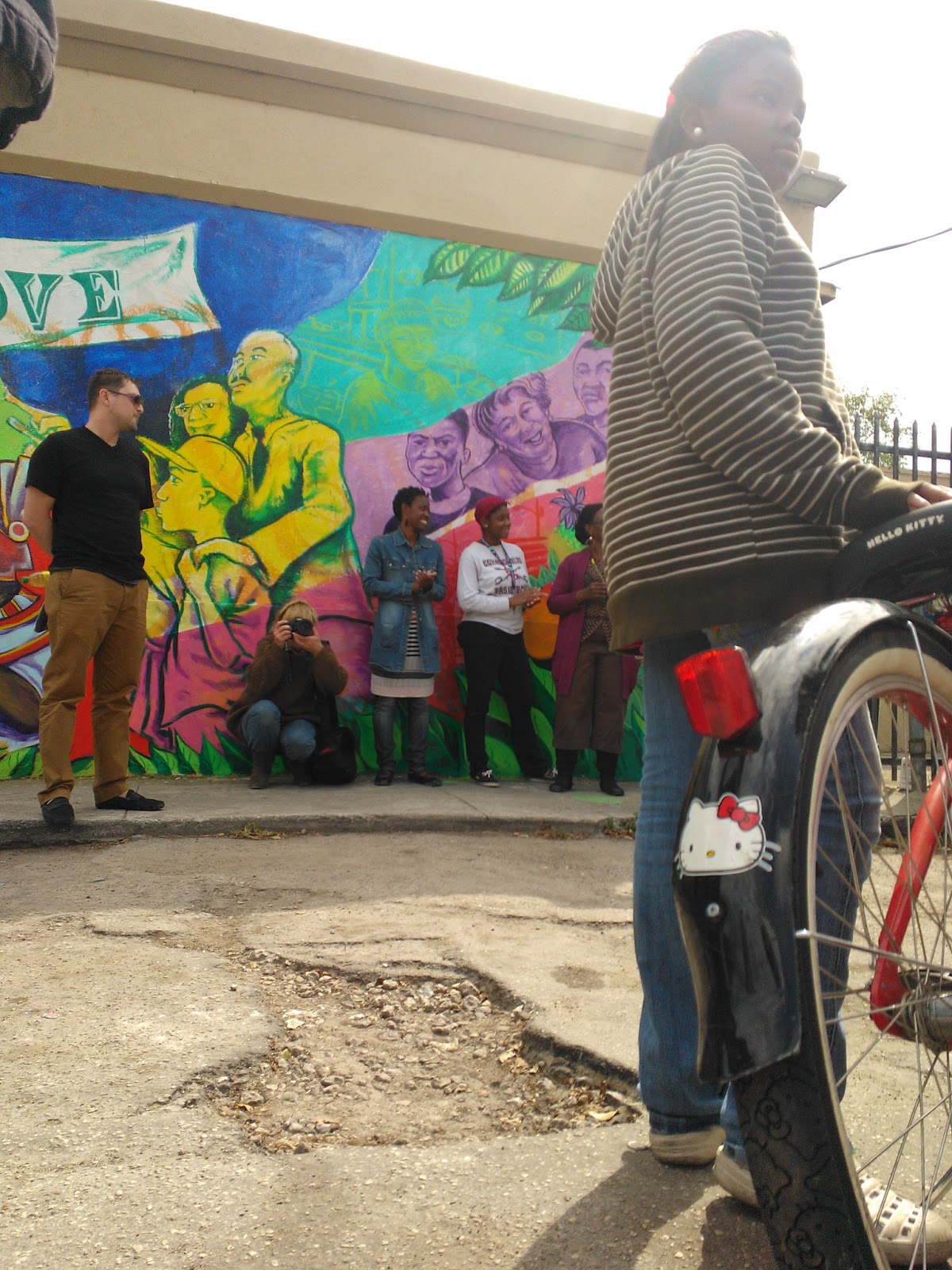
When I was in the Coconut Grove on Saturday, I was so intent on taking pictures of the people celebrating the One Grove mural, that I didn’t notice something that had been right in front of my eyes. In fact, I didn’t notice it until I reviewed the dozens of pictures I took that day.

Part of the reason I missed it was because the cooker/grill had been set
up right in front of it. But, I was also mostly looking through a camera viewfinder. That’s why I returned to Frow Avenue yesterday to take close-ups. Take a look at the
sidewalk adjacent to the mural:


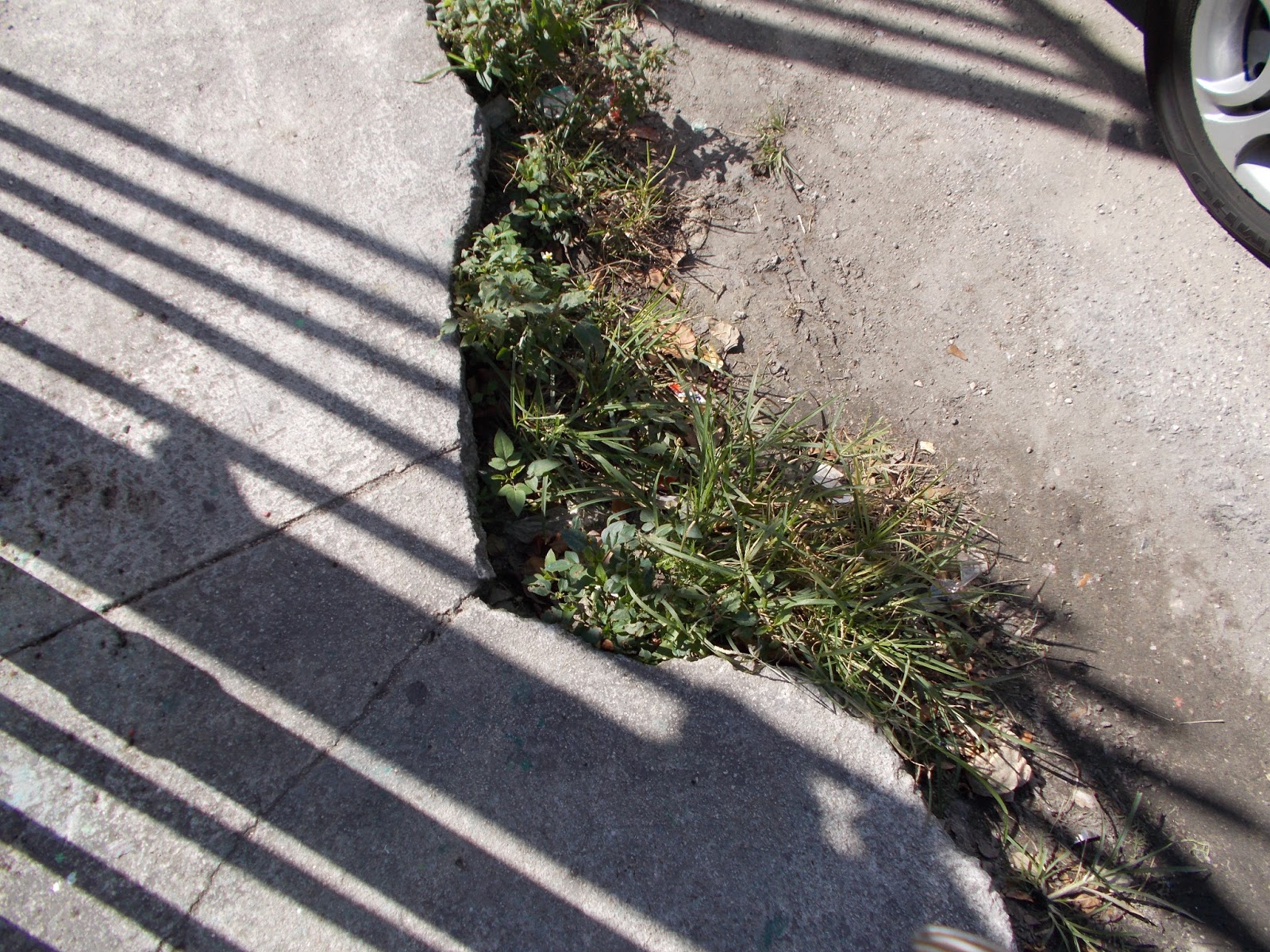
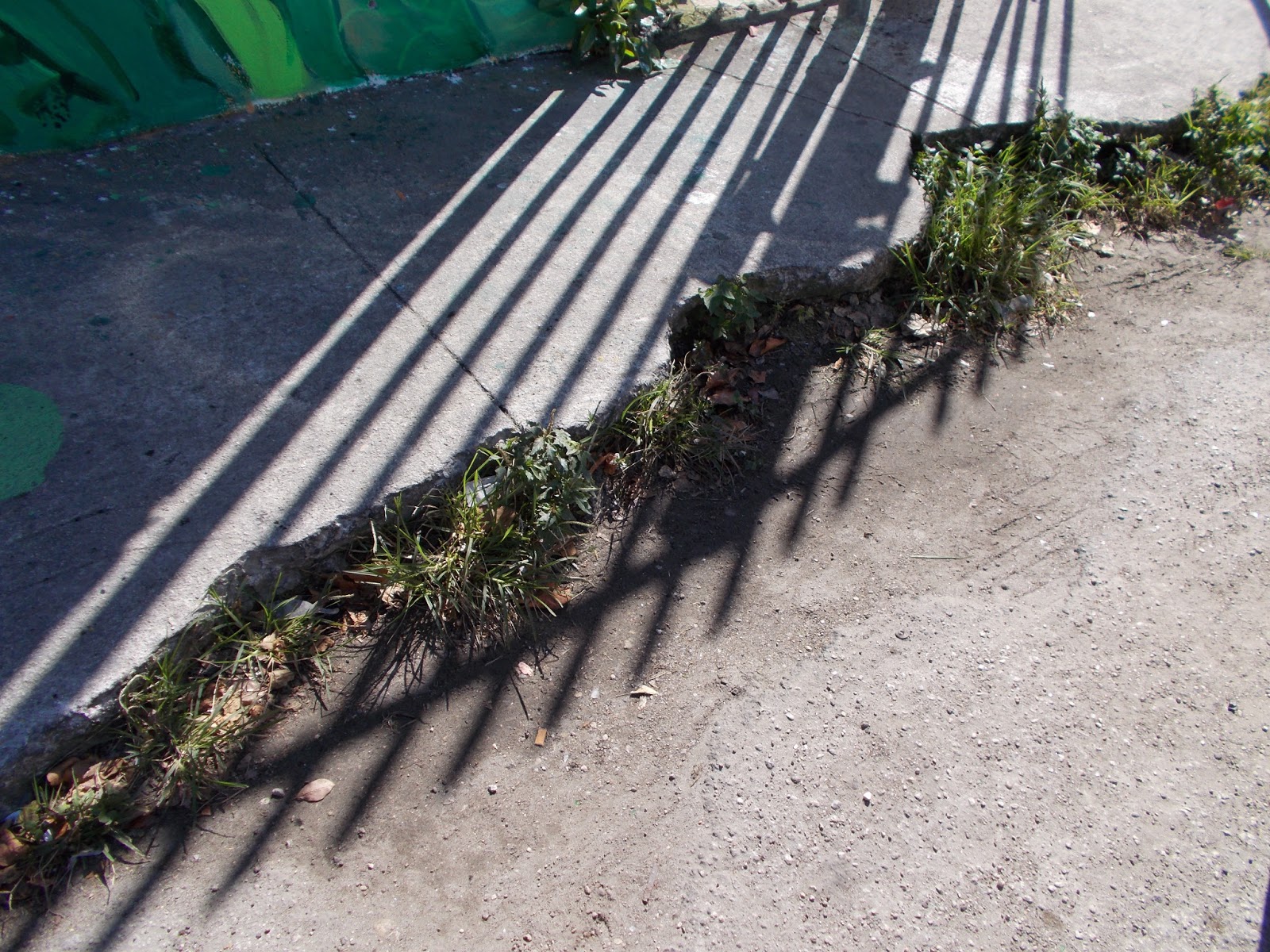
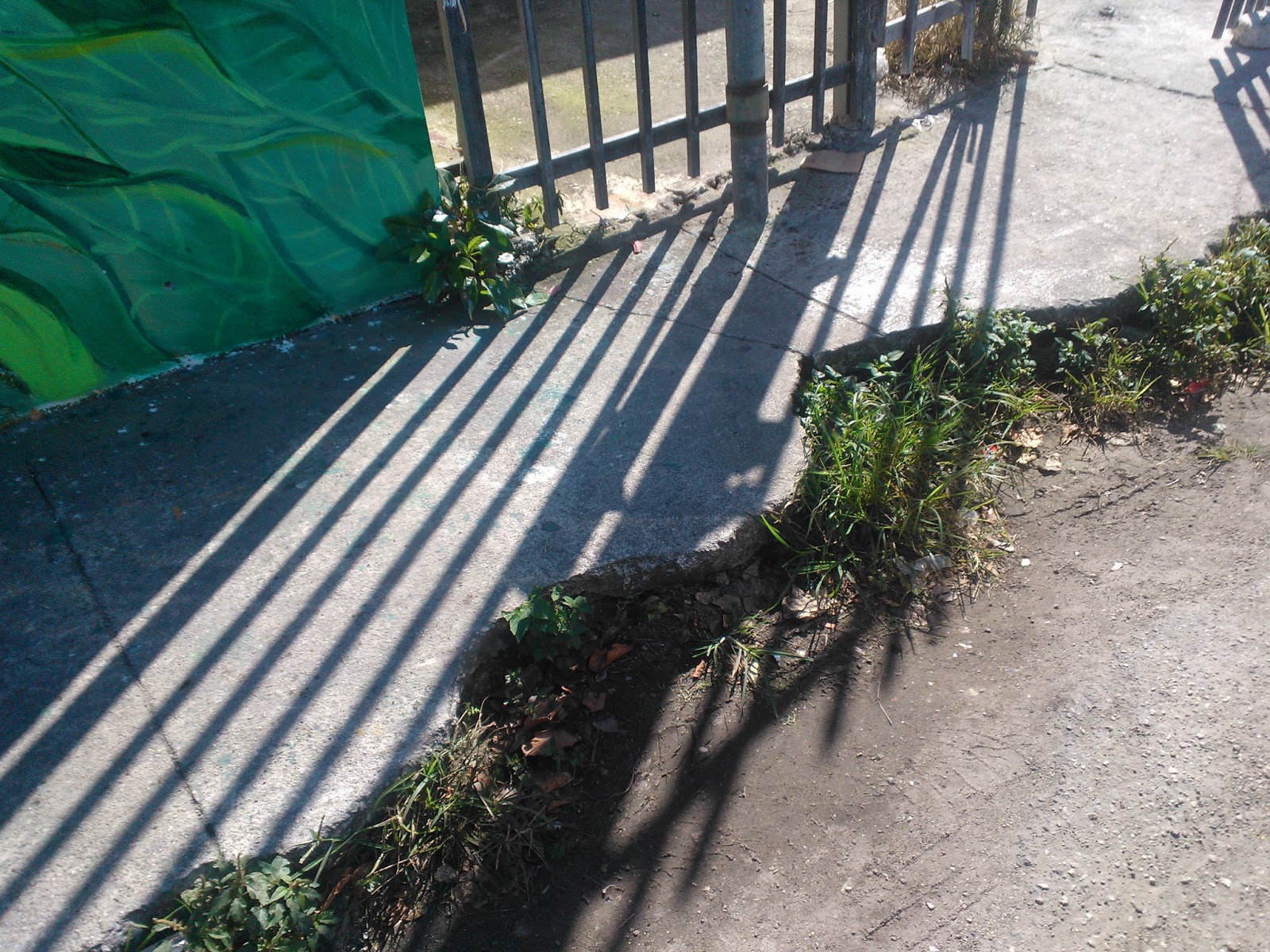
This broken sidewalk is not something new. Clearly it has been disintegrating for a very long time to arrive at its current condition.

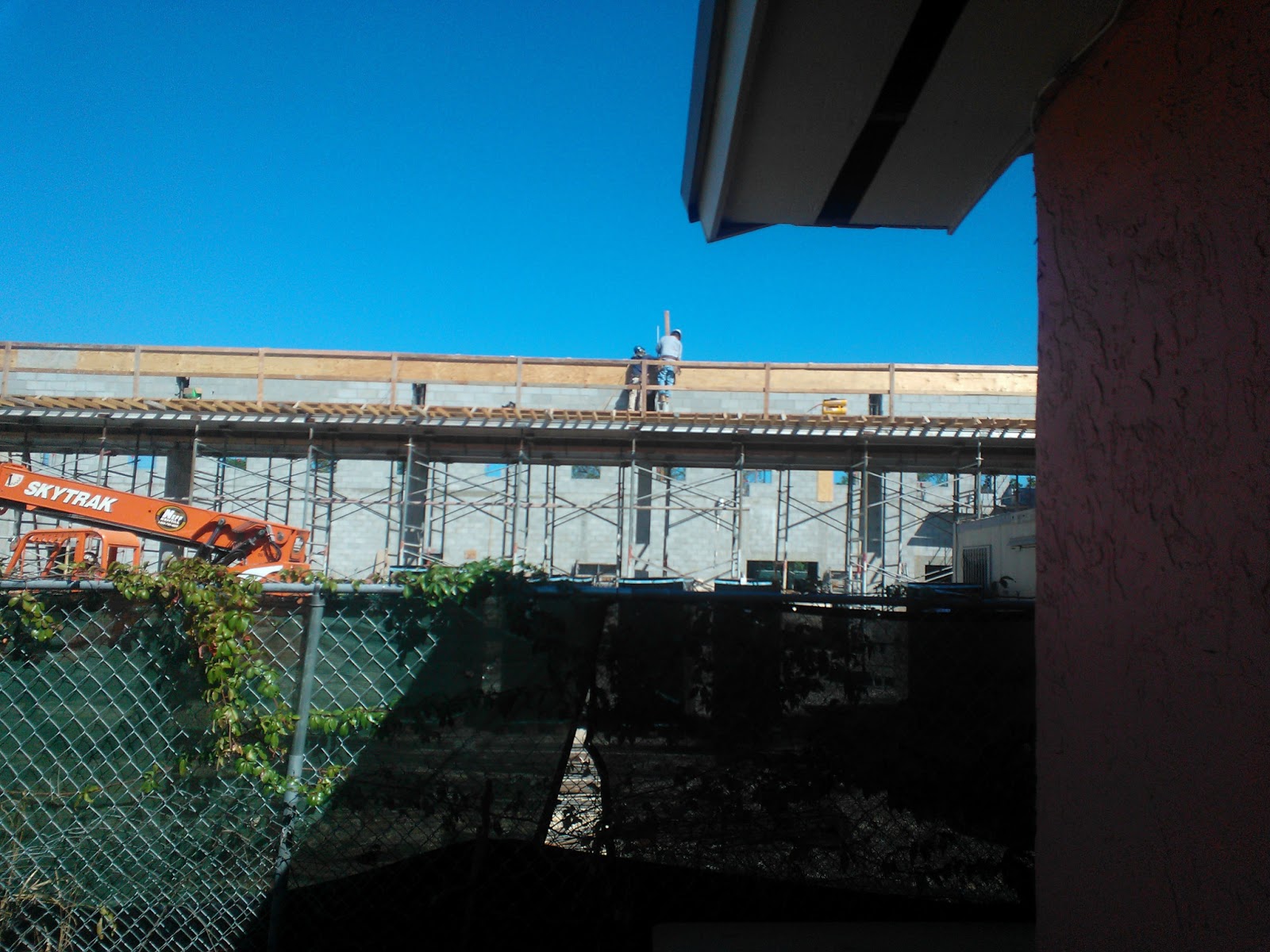
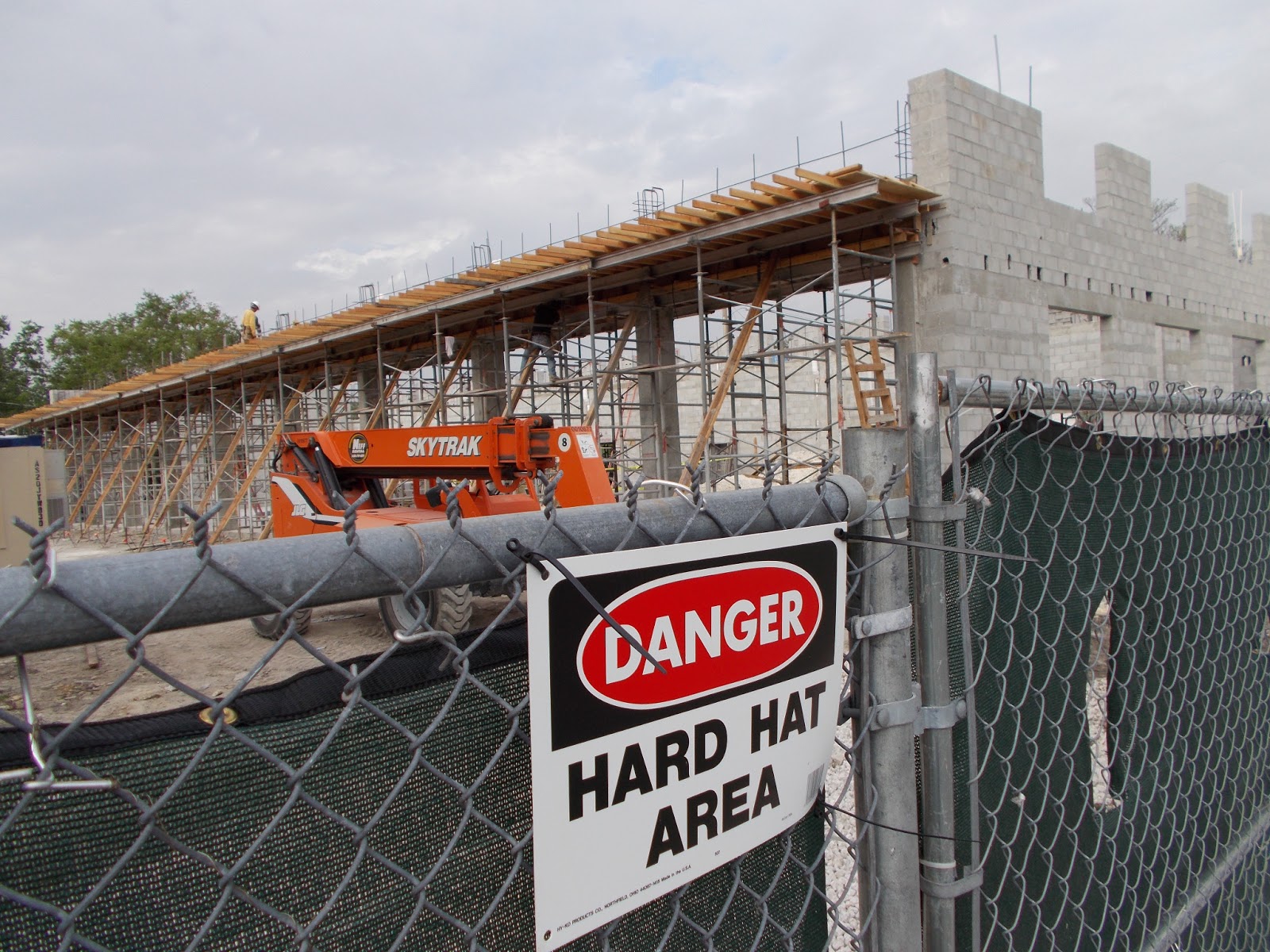
Construction continues on the
diesel bus garage, March 4, 2013

To my mind this perfectly illustrates the reality that two Groves exist: Black Grove and White Grove. A sidewalk like this would never be allowed to exist in White Grove. However, because it’s on Frow Avenue in West Grove, this sidewalk can easily be ignored by the City of Miami.

It’s simply more of the same kind of quiet racism that the City of Miami demonstrated in allowing Coral Gables to locate its polluting diesel bus garage in the middle of a residential neighbourhood in West Grove, which (maybe not coincidentally) is being built right across the street from this broken sidewalk.

This is a well-traveled route. Hundreds of pedestrians pass by that sidewalk every day: school children, the people who use the store on which the mural is painted, mothers
with strollers, old people on canes, children riding bicycles . . . you
get the picture. If not, here are a few more:

Maybe “One Grove” is merely a slogan whose time has passed.

Unveiling the One Grove Mural – A Photo and Video Essay

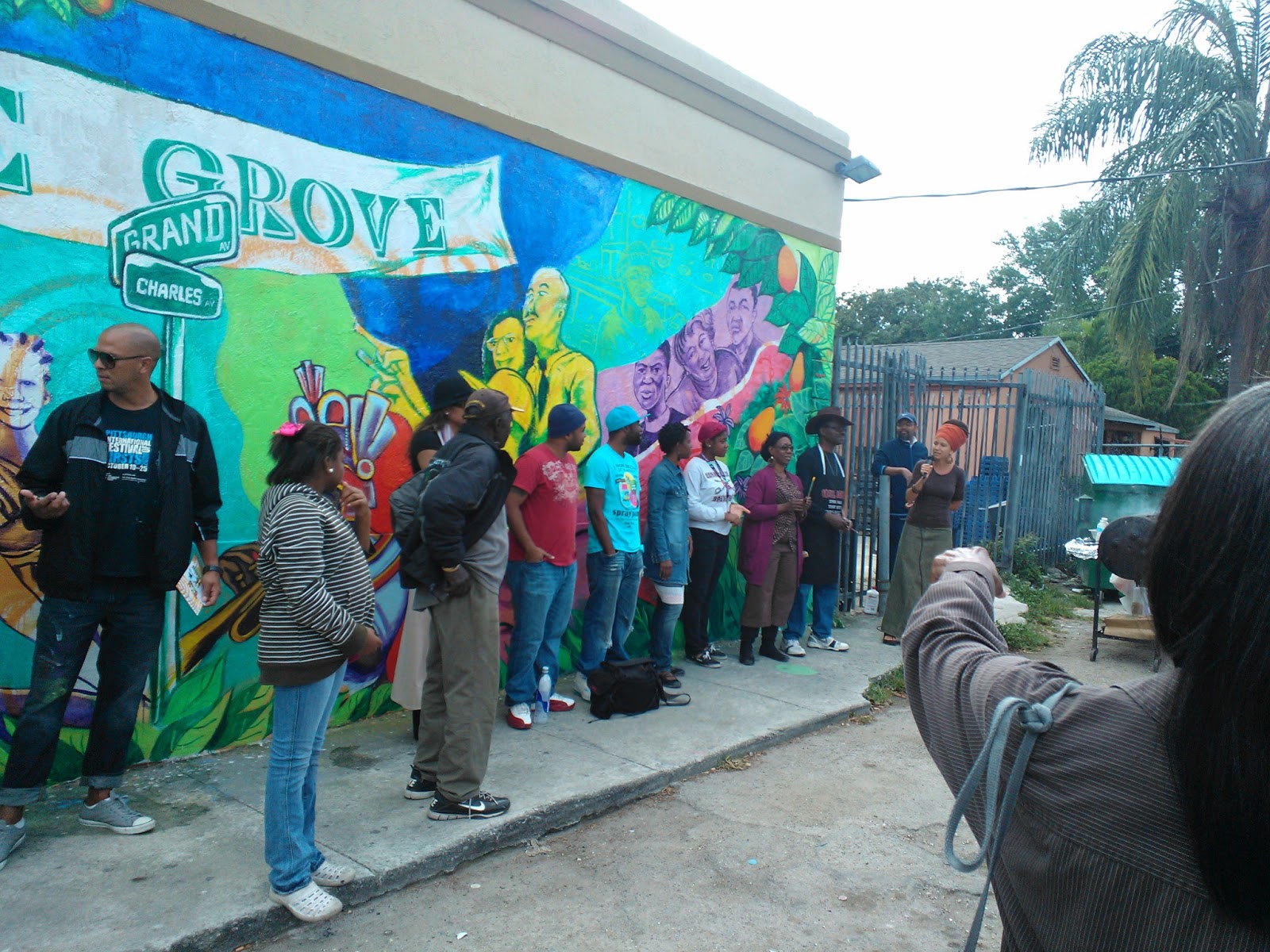
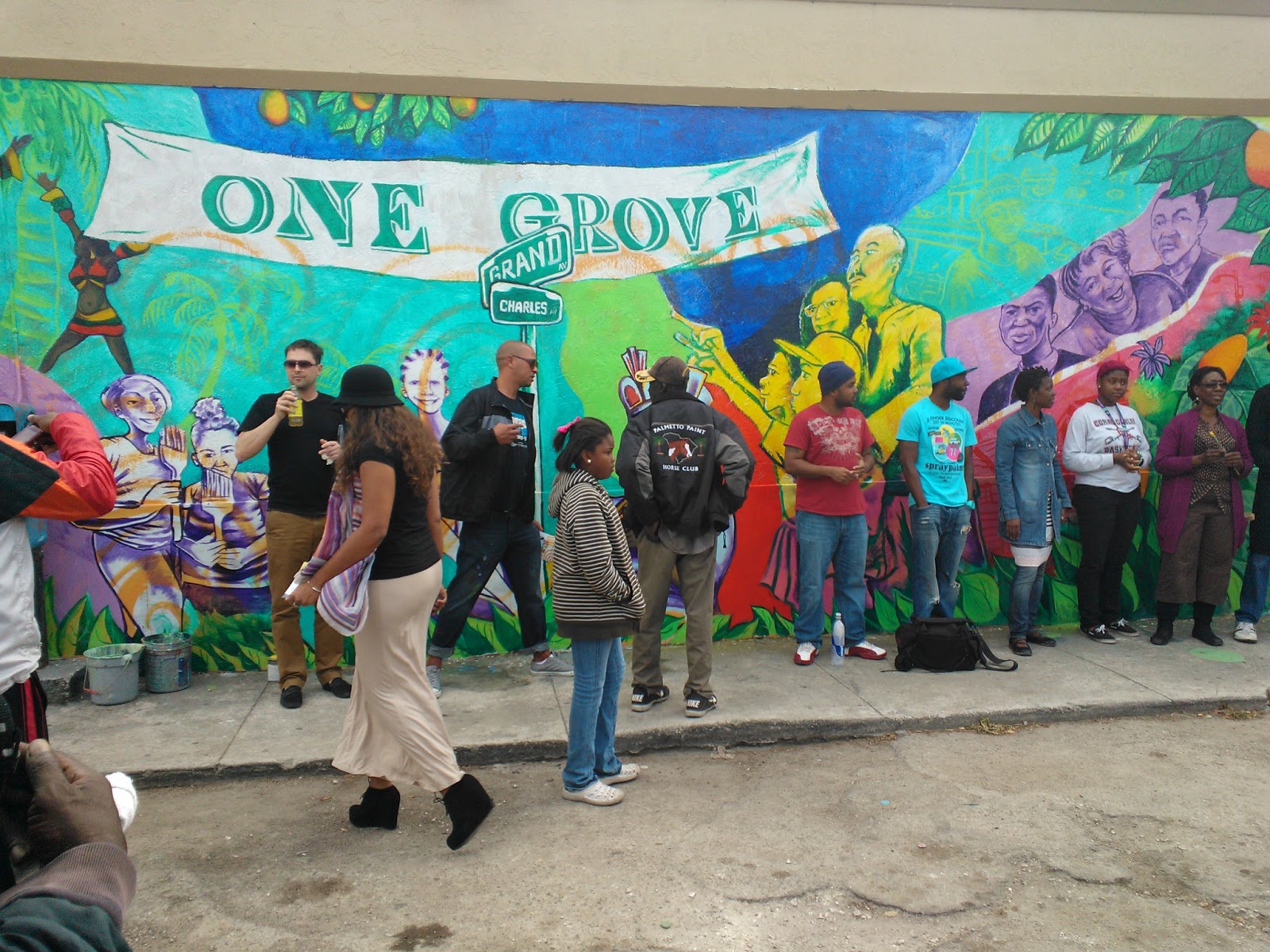
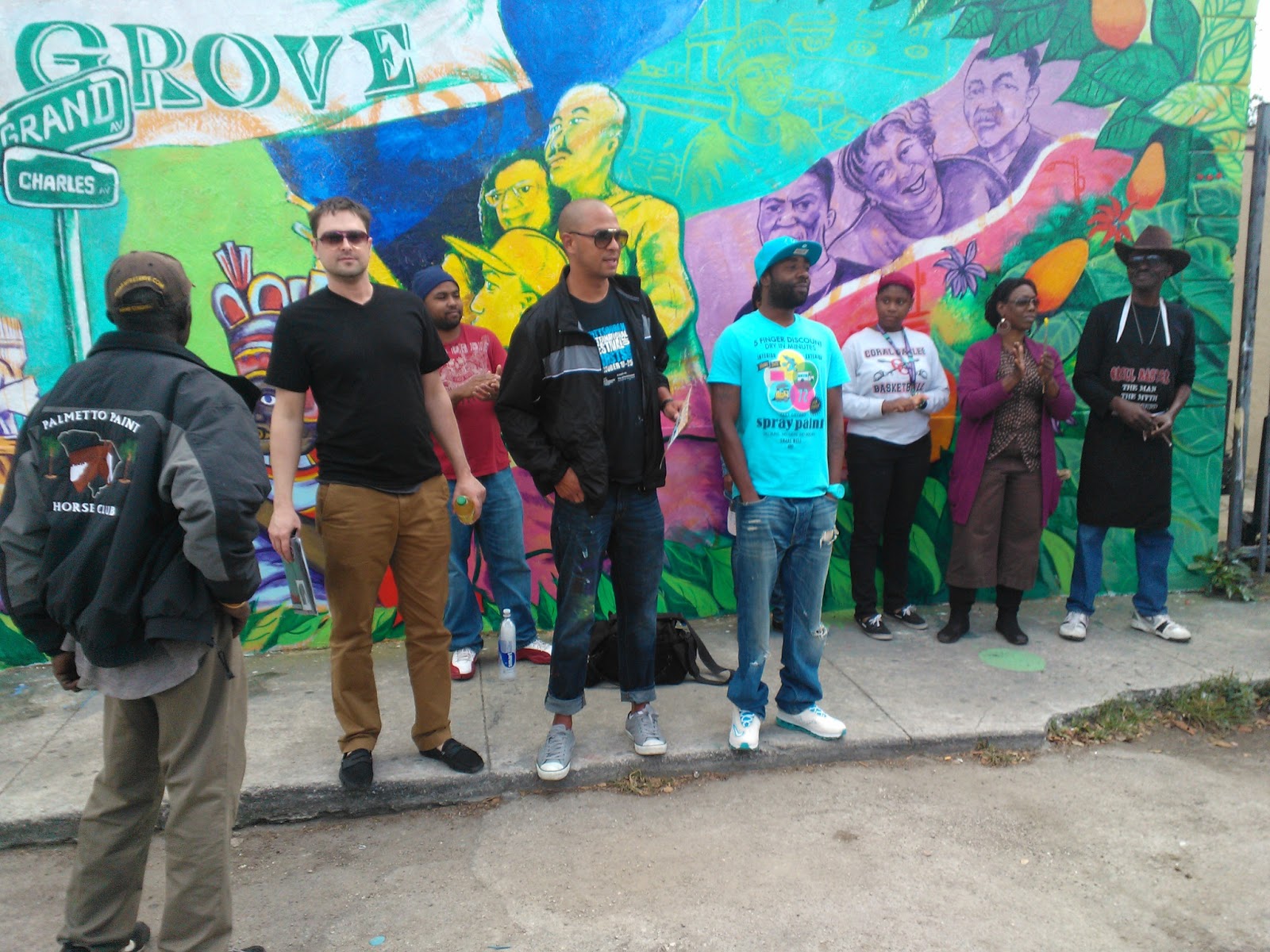
Dateline March 2, 2013 – Residents of West Grove get together to unveil the One Grove mural at the corner of Frow Avenue and Douglas, right next to the Coral Gables diesel bus garage, still under construction.

This first video shows the proximity of the Coral Gables diesel bus garage to the houses in the community.

Some of the festivities of the day.

Introducing myself to Laurie Cook of Urban Resurrection, the organization that spearheaded
the creation of the “One Grove” mural. Prior to this we had only spoken on the phone.

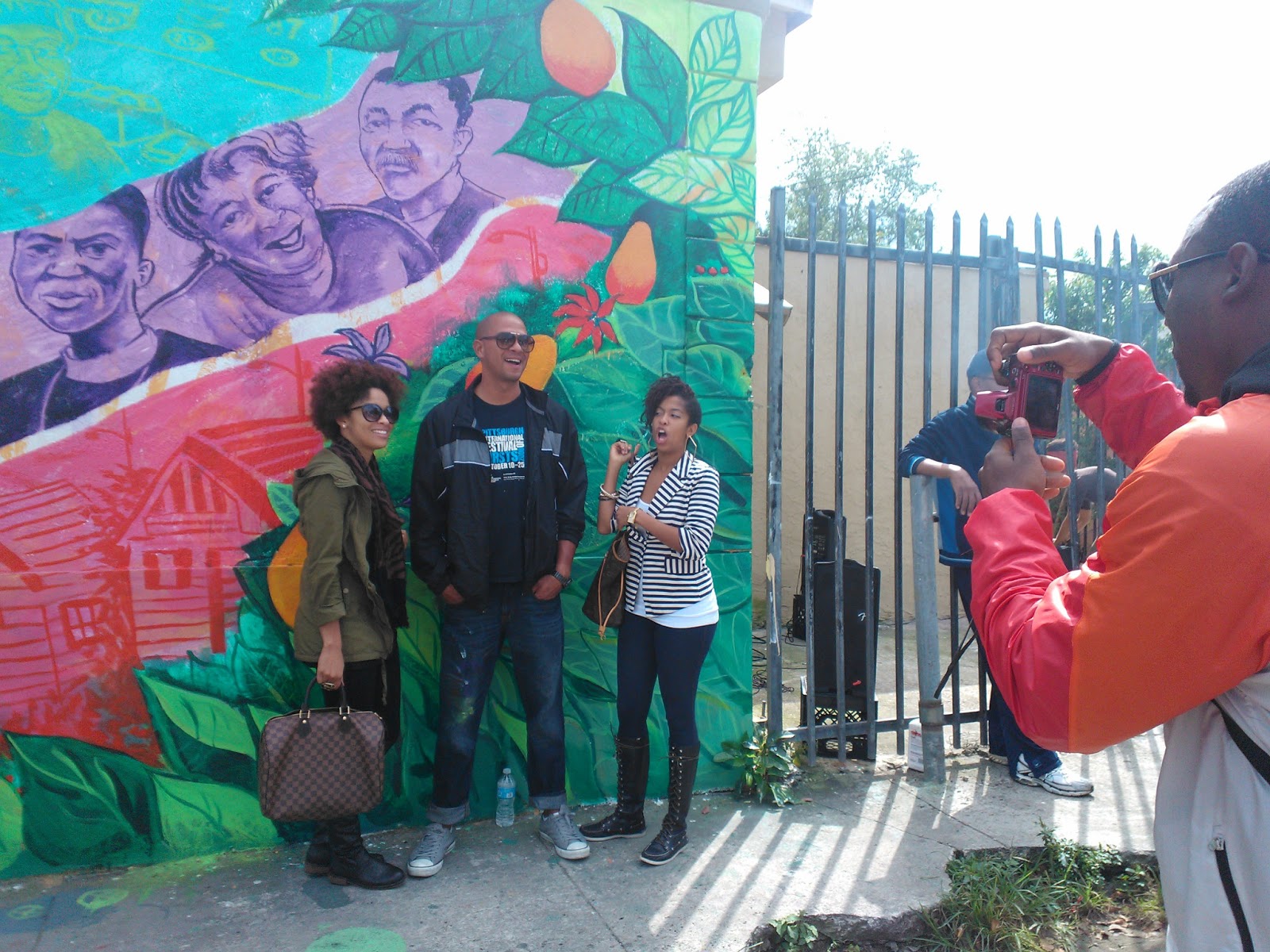
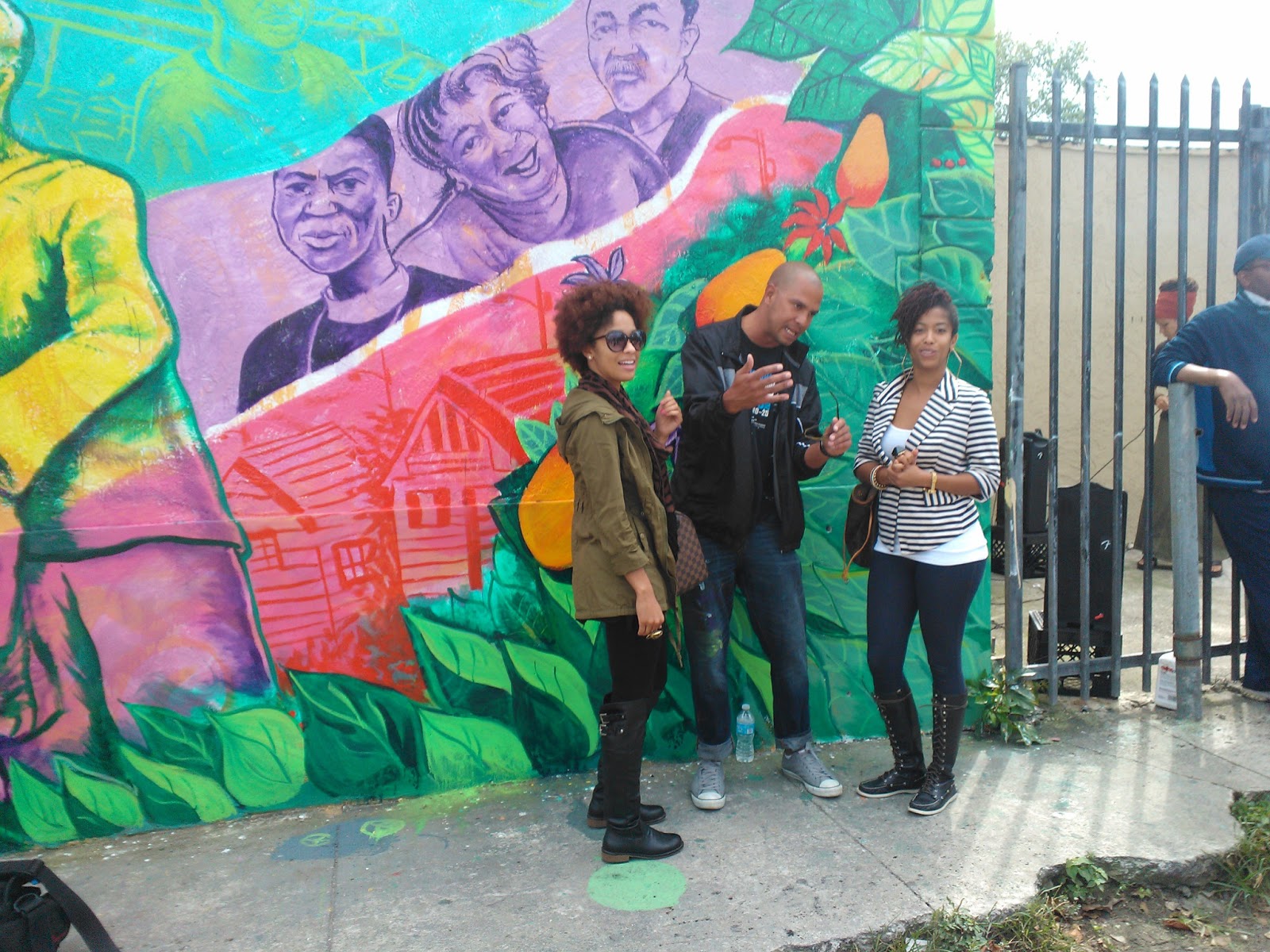
LaTasha (L) and LaToya Stirrup, great great granddaughters of E.W.F. Stirrup, were the center of attention as photographers capture them
flanking Kyle Holbrook of the MLK Community Mural Project, designer of
the mural. That’s Mr. Stirrup’s likeness in the upper-right hand corner.

At the dedication ceremony Laurie Cook invited descendants of important Coconut Grove pioneers to come up and be recognized:

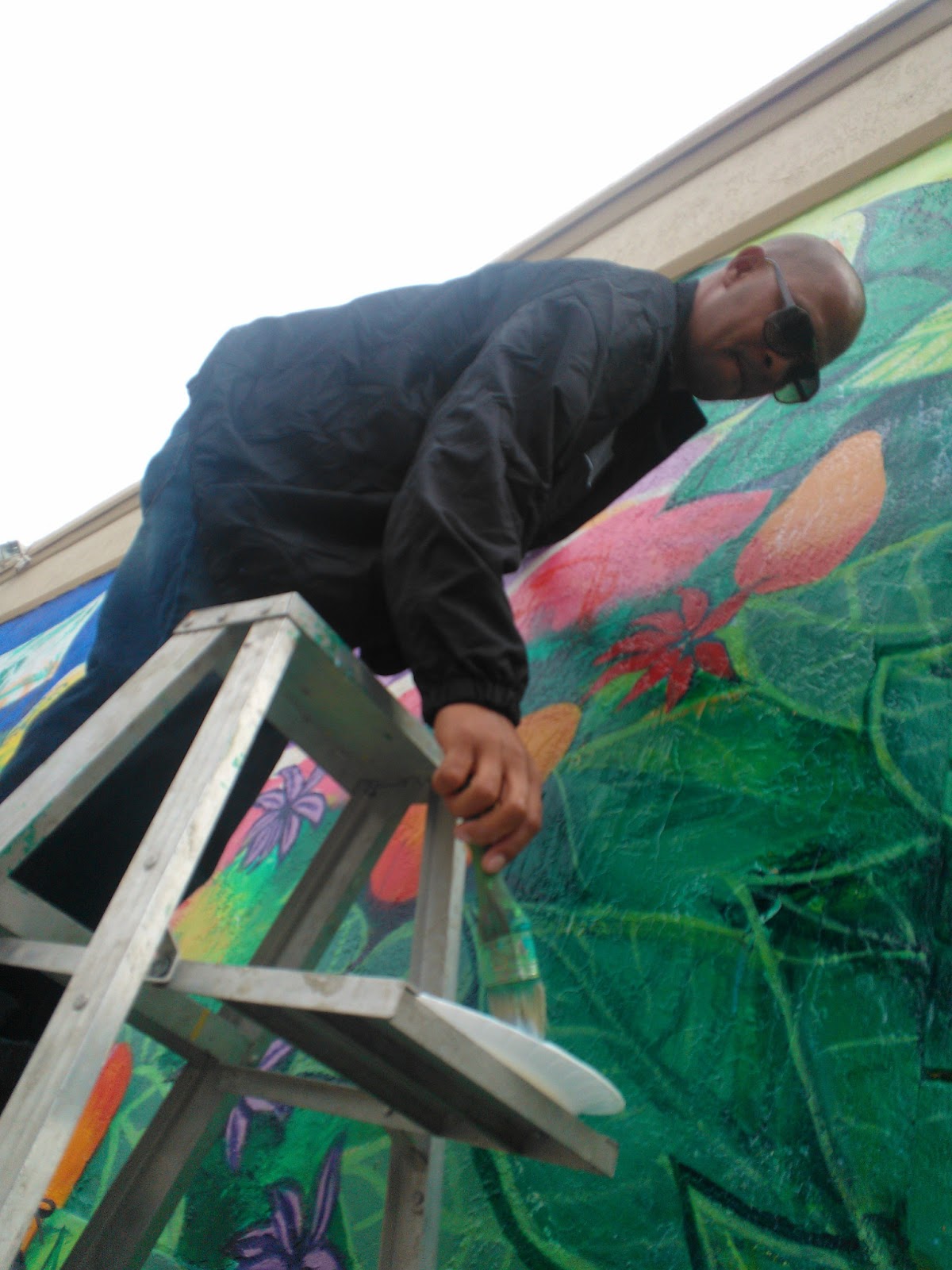
Kyle Holbrook puts the final touches on the mural, a clear protective coat.

Kyle Holbrook puts the final touches on the mural, a clear protective coat.

All of those who worked on the mural were asked up to be recogized:


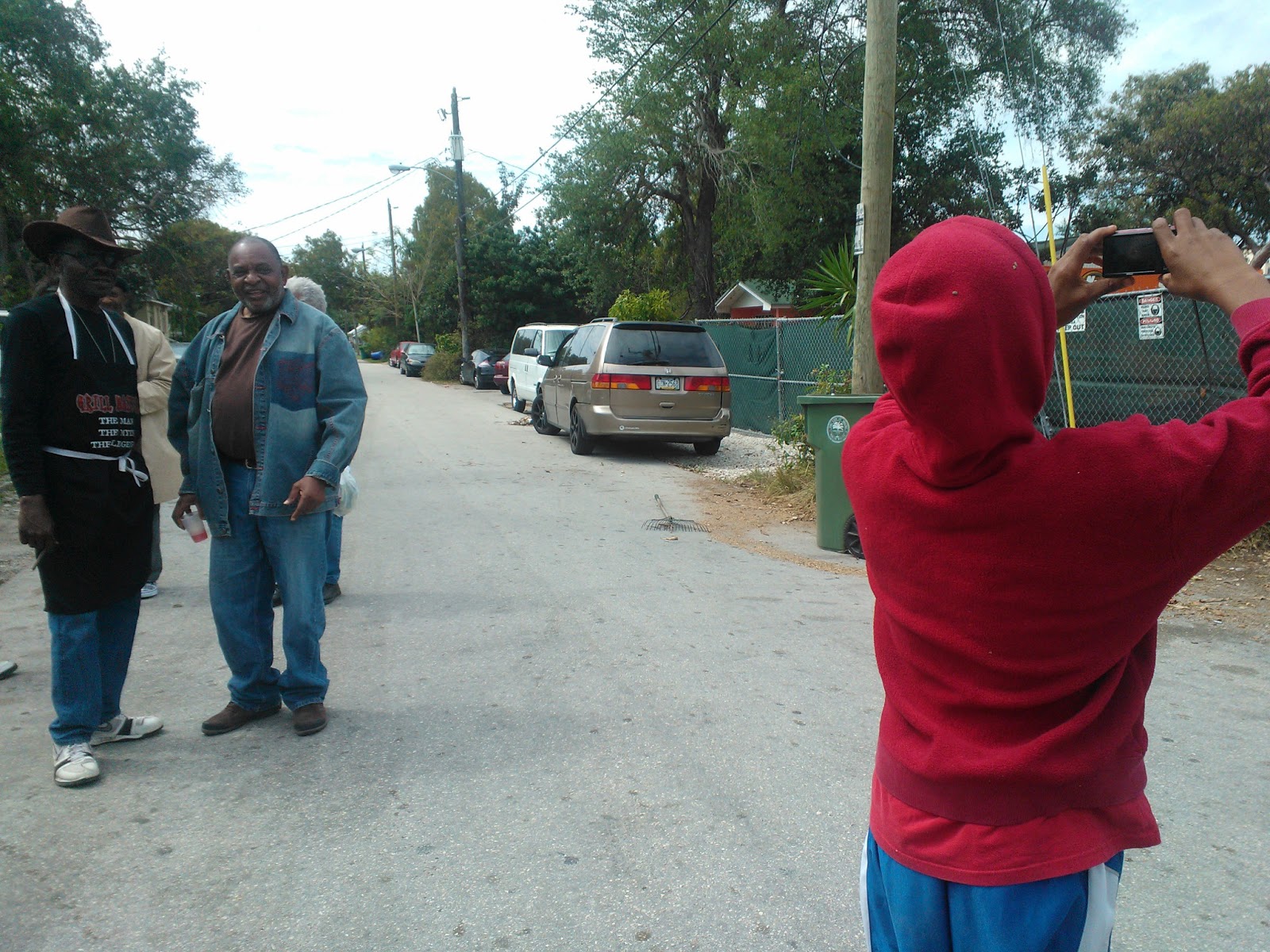
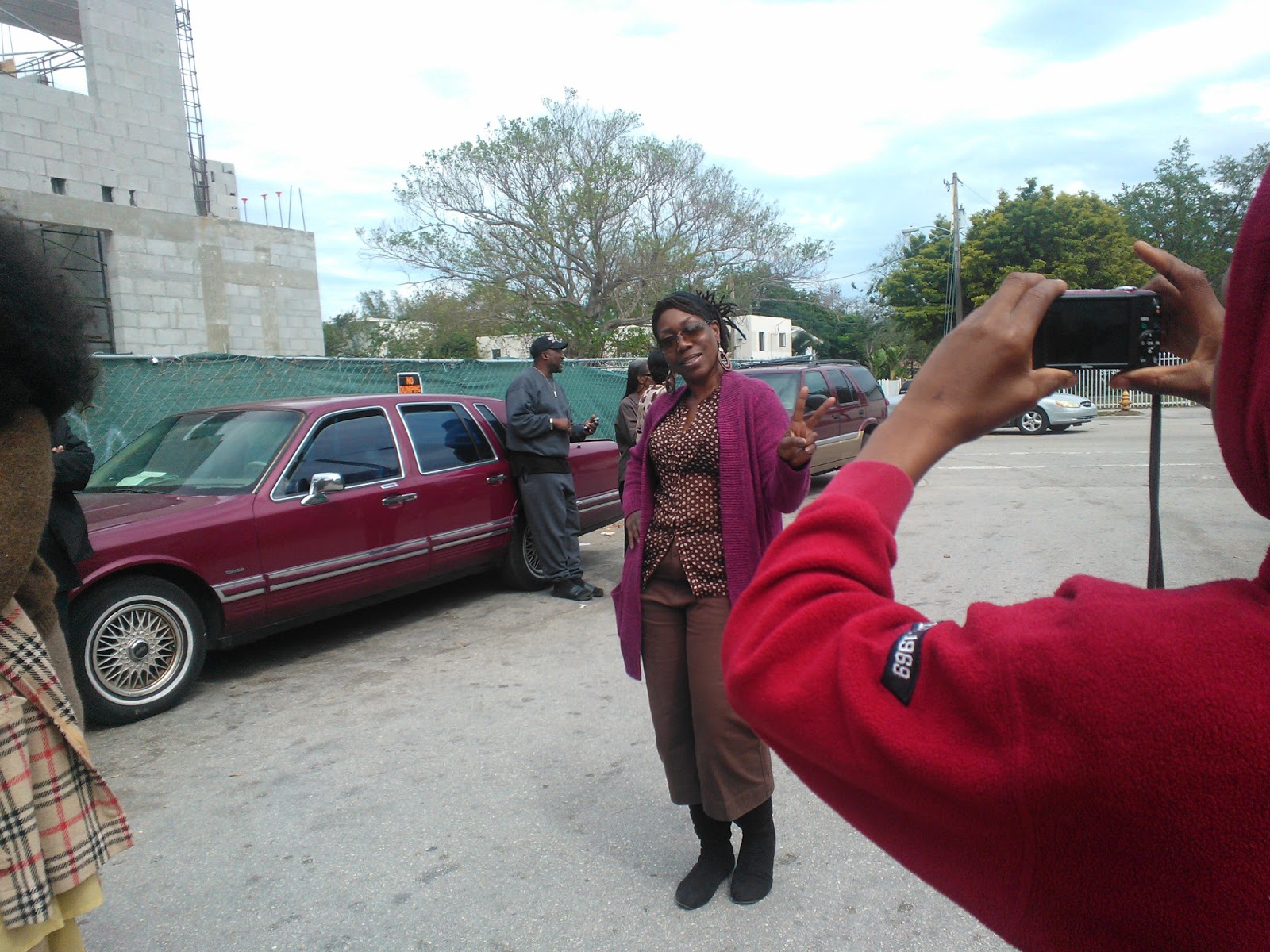
I loaned Mikey one of my cameras for a while. He started taking portraits of everyone.
Mikey got more people to pose for him than I did.

Portrait by Mikey.
Another portrait by Mikey.


Trolleygate Brings A Community Together

Diesel bus garage, February 27, 2013

While crews continue to build the nonconforming Coral Gables diesel bus garage, a lawsuit by West Grove residents is working its way through the court system. If the residents of the community have their way, (and why shouldn’t they?) the bus garage will never open. If Commissioner Marc D. Sarnoff has his way, his constituents will get screwed . . . again.

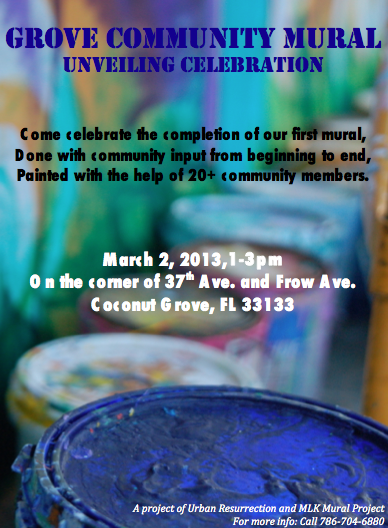
Flier announcing tomorrow’s unveiling.

The residents of West Grove have sued to stop Coral Gables, the neighbouring town, from building its polluting bus garage in the residential neighbourhood of west Coconut Grove. Oddly enough, the border between Coral Gables and Coconut Grove is just one block west of this construction site.

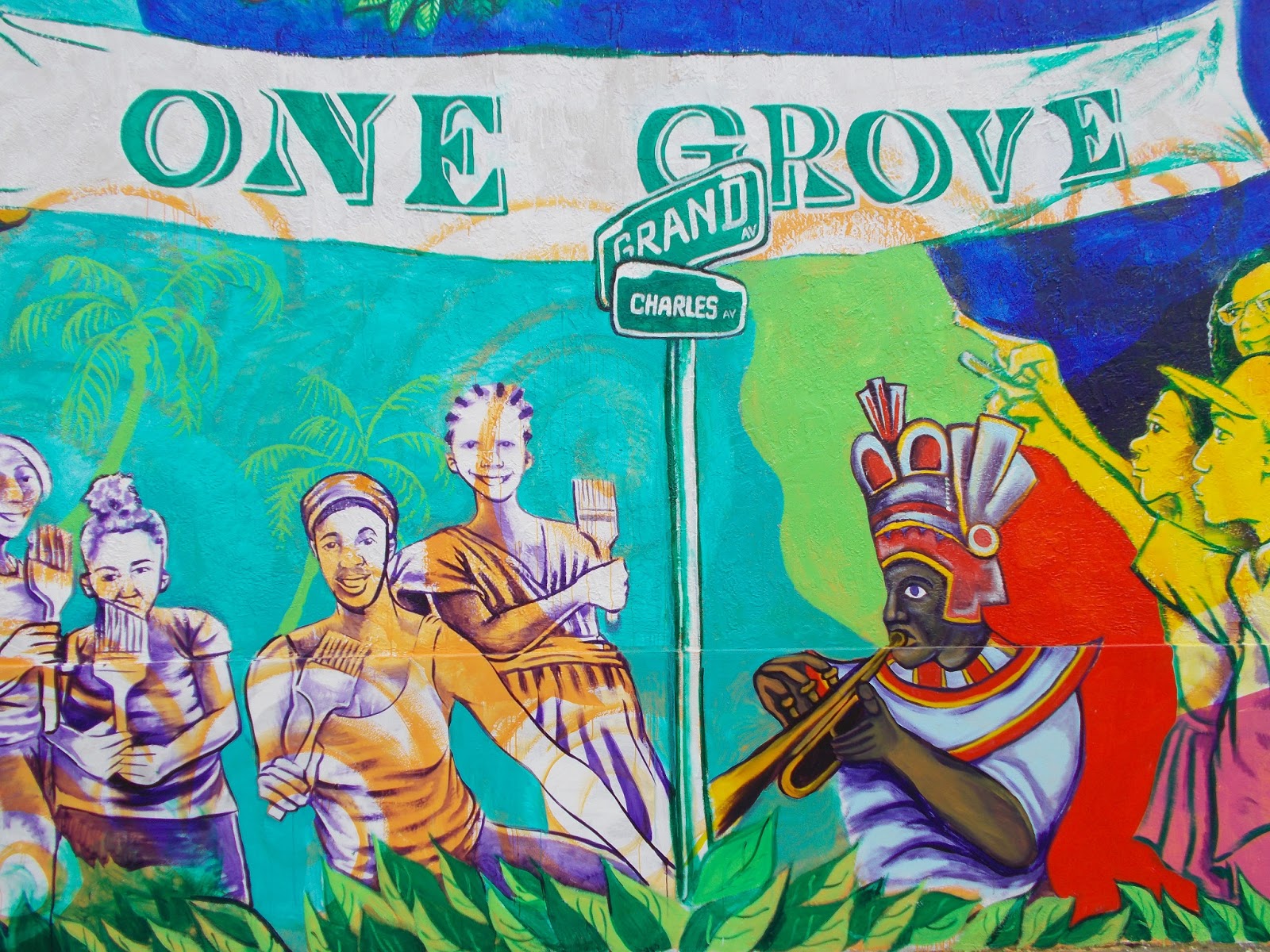
However, before the residents even knew about the diesel bus garage they were already looking at the corner of Frow and Douglas for an urban renewal project. Teaming up with MLK Community Mural Project, the community decided to paint a mural on the wall of a convenience store. With the announcement of the diesel bus garage, the mural has now become a rallying point.

The design of the mural came together organically from the ground up. A survey was sent around asking neighbours three questions:

1). What symbols of the community would you like to see in a mural?

2). What elements of the community are you most proud of? 

3). What are the future dreams you wish for the community?

The wall before it had been transformed.

Kyle Holbrook, of MLK Mural, took all the suggestions and created 3 different designs for the mural, incorporating them all. The designs were then voted on, with the winning one translated to the wall in colourful paint. What had been a nondescript wall has been turned into a vibrant mural and symbol of community pride. The painting pays tribute to the original Bahamians who settled the area, as it also
honours the history and people that made the Grove what it is today.

Tomorrow afternoon at 1 the community will come together to dedicate this wonderful work of art.

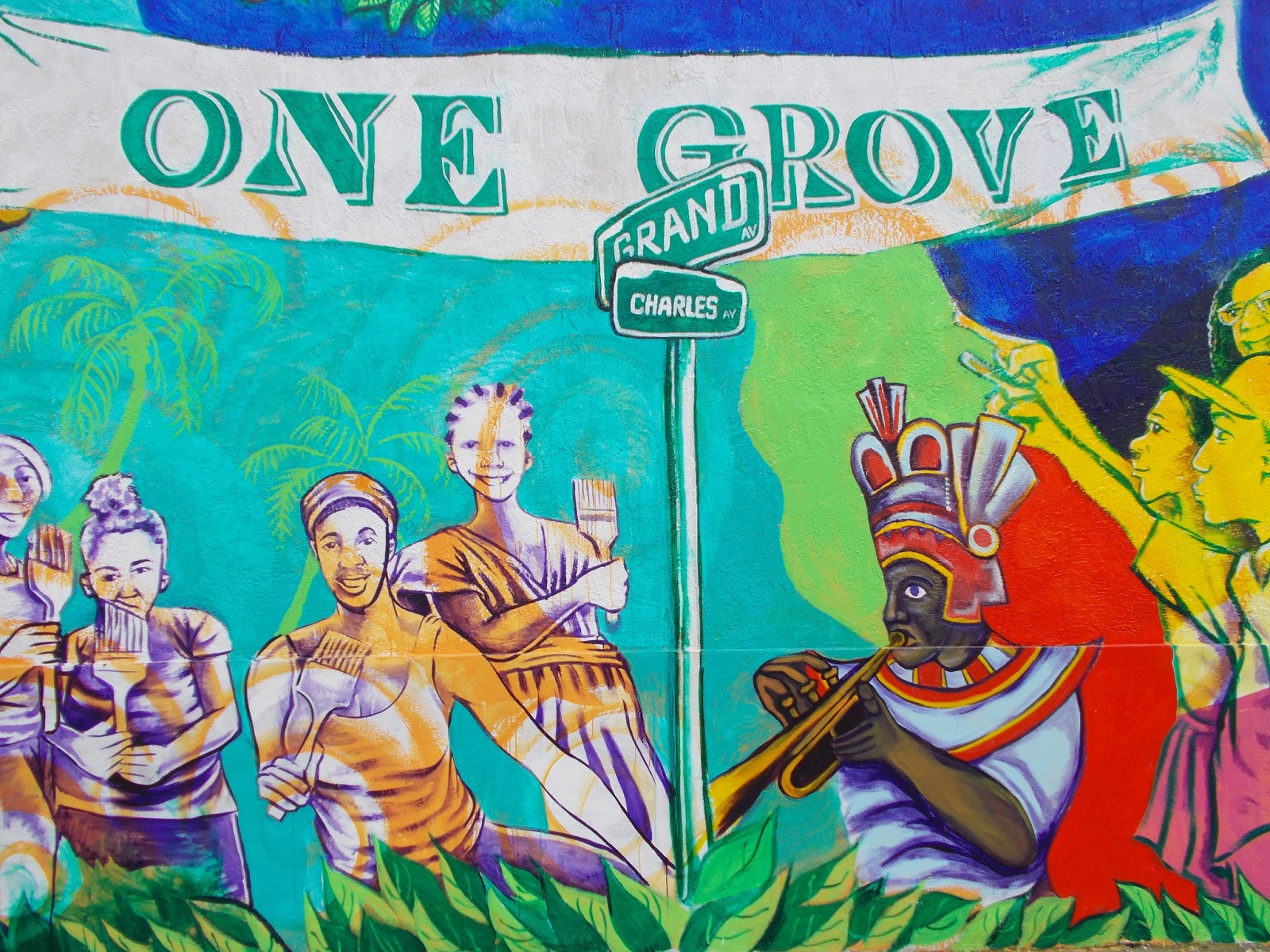
One of the things I have heard several times recently, from more than one person, is how people used to just call it The Grove, or Coconut Grove. These days, however, people refer to North Grove, East Grove, West Grove, Black Grove, White Grove. The mural reflects the concept of One Grove, with a banner proclaiming that at the very top of the mural. Reunification seems to be the desire of the community and return to the idea that everybody is in this together. This is something Commissioner Marc D. Sarnoff should take the time to learn, as opposed to pitting community groups against each other in order to divide and conquer. 

The wall after it had been transformed.

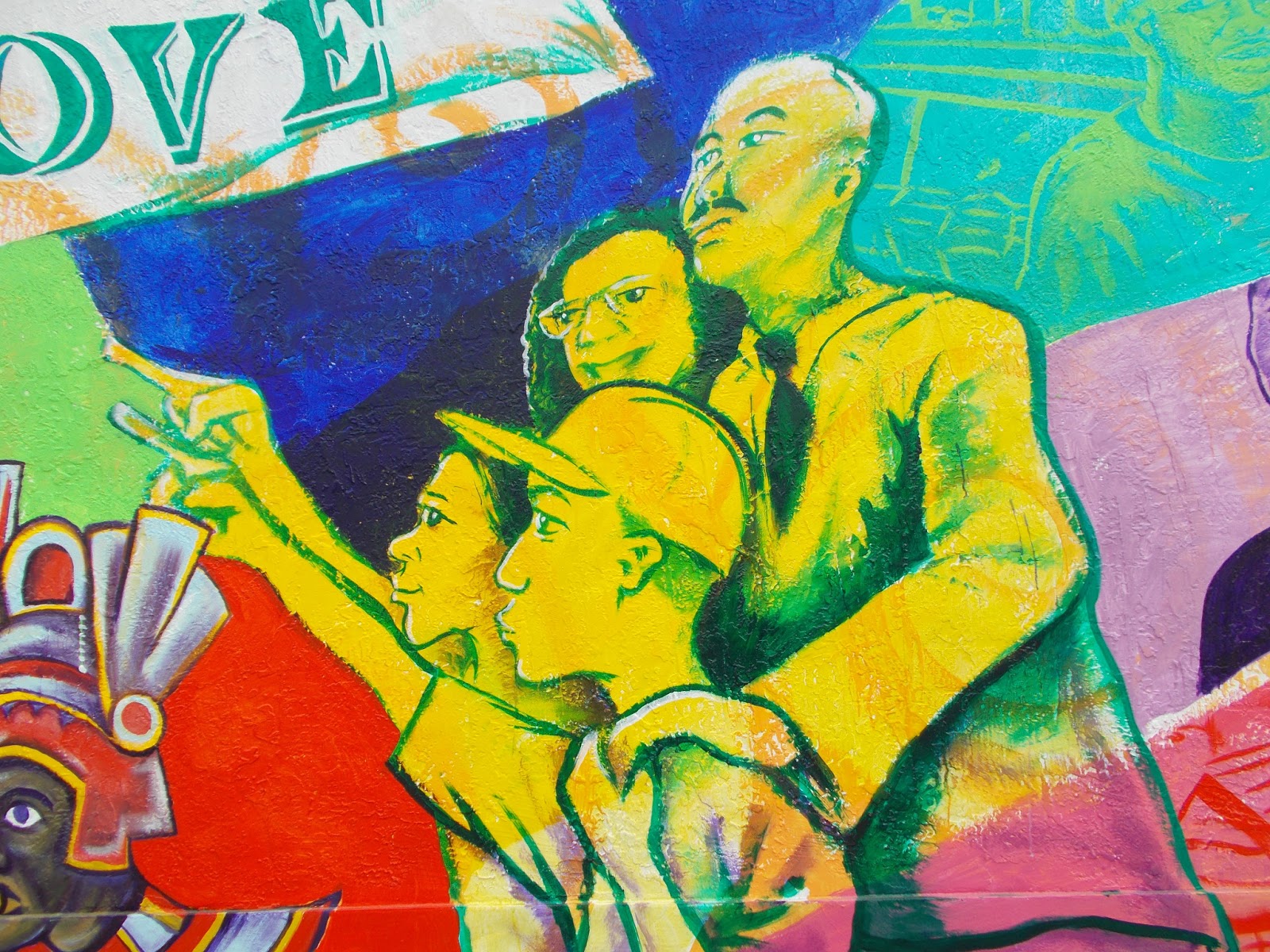
Close up of the center section of the mural. Grand Avenue and Charles Avenue do not actually meet, except as the two streets around which the community congregated and thrived.
Another close up.

A family visiting the mural, as the parents teach the children about their history and heritage.

Three of the important pioneers of Coconut Grove: (L to R) Father Theodore Gibson, who did so much to integrate Coconut Grove during the various Civil Rights struggles; Esther Mae Armbrister, who championed turning the Mariah Brown House into a museum and community resource, among other good works in a lifetime dedicated to serving others; E.W.F. Stirrup, whose forward thinking ideas about Black home ownership more than 120 years ago is what makes Coconut Grove a unique place in this country to this very day.

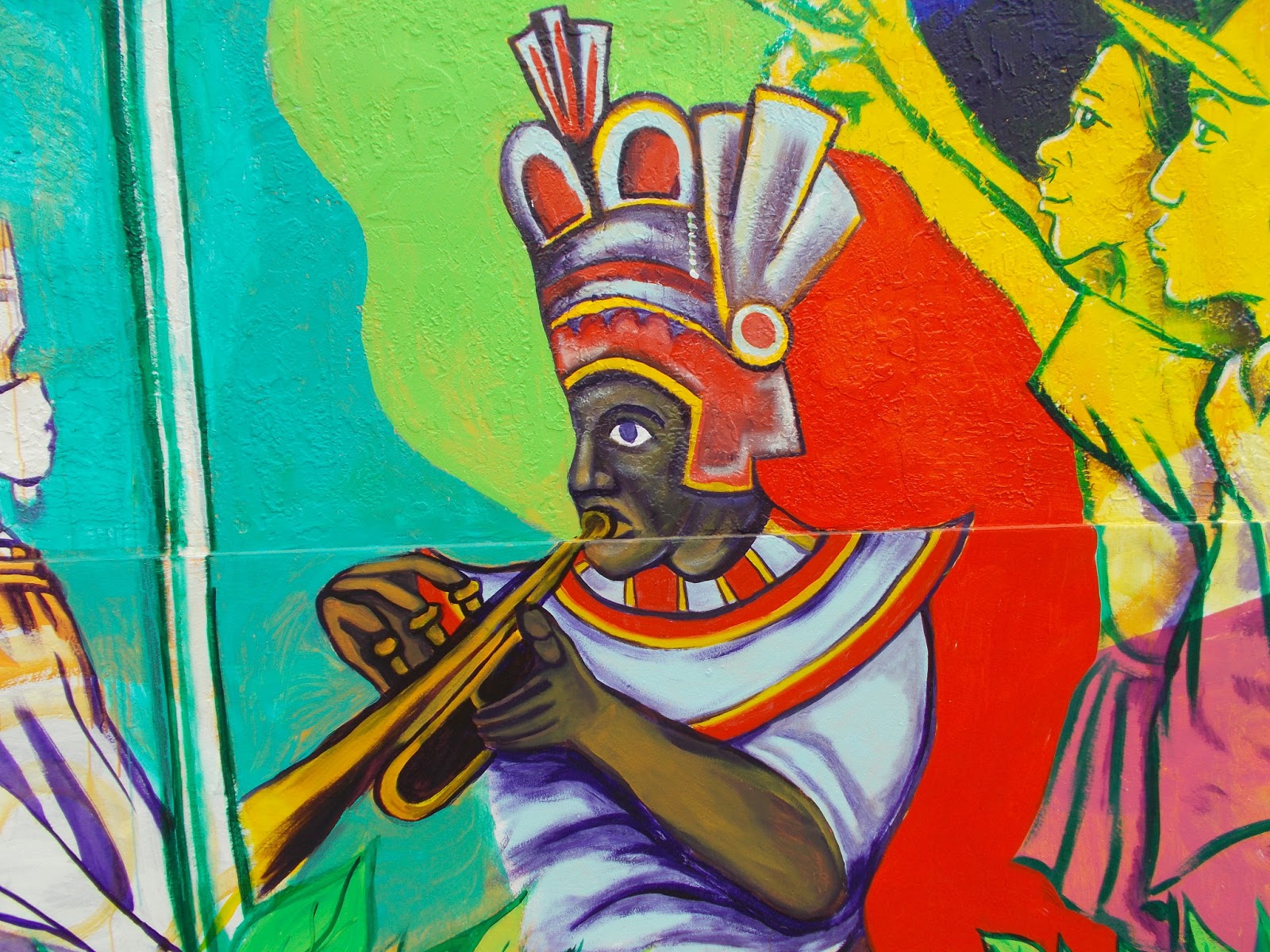
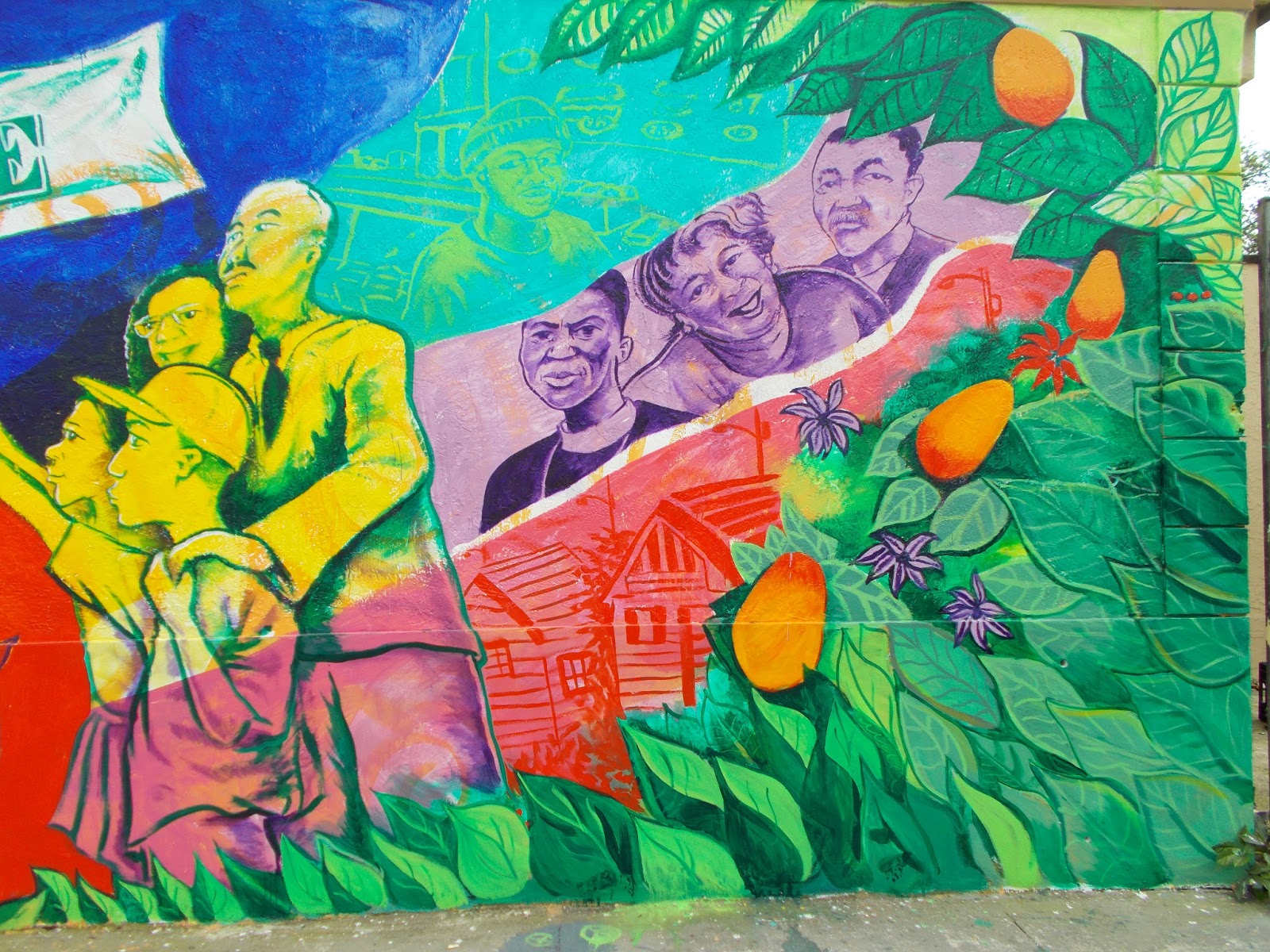
Mangos! Shotgun houses! Foliage! All symbols of Coconut Grove.

These four young ladies were among the first to show up to paint the mural. A photograph was taken of them posing with their paintbrushes, which was then incorporated into the mural.

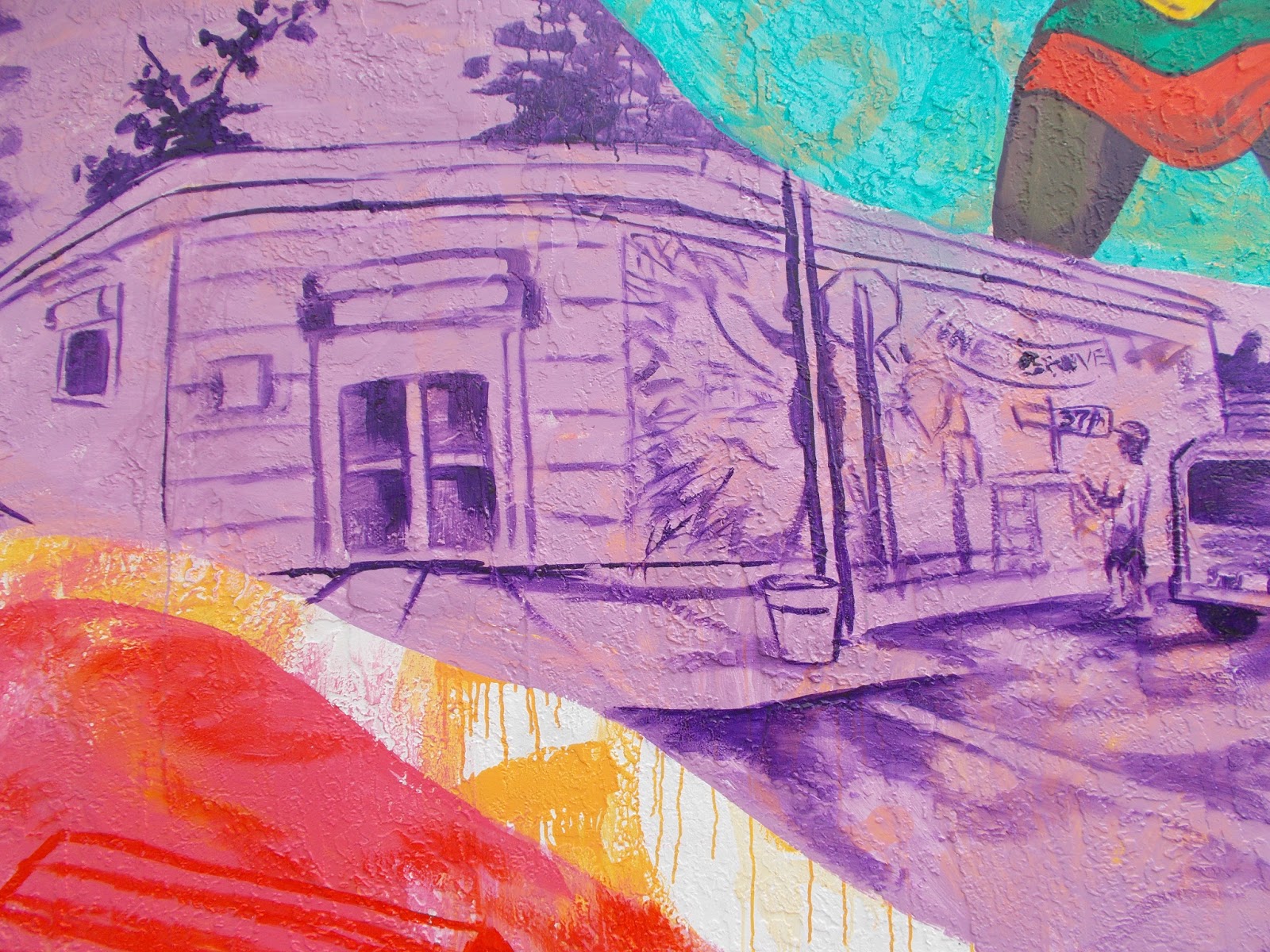
Caribbean dancers! More foliage and shotgun houses. And, the very building on which the mural is painted.

Full circle: Young man admiring the mural within the mural.

This is a wonderful work of art which will adorn this building for many years to come. It has also become a symbol of pride for a neighbourhood coming together to fight the Coral Gables diesel bus garage.

Does The White Hand Know What The Left Hand Is Doing?

At the east end of Charles Avenue in Coconut Grove, Florida are two festering, open wounds: The Coconut Grove Playhouse and the E.W.F. Stirrup House.

I’ve written extensively about the historic 120-year old E.W.F. Stirrup House, but far less about the 86-year old Coconut Grove Playhouse. In the beginning, despite them being catercorner from each other, I assumed they were two separate stories. My focus has always been in saving the E.W.F. Stirrup House, so I just put the Playhouse out of my mind. I concentrated on learning everything I could about the E.W.F. Stirrup House and Mr. Stirrup’s amazing legacy.

That the Coconut Grove Playhouse was undergoing the exact same kind of Demolition by Neglect as the Stirrup House, seemed like a bizarre coincidence. However, through my research I’ve come to realize two things: 1). Many of the same people are involved in both the Stirrup House and the Playhouse; 2). There are no coincidences in multimillion dollar real estate deals.

While the same rapacious developer claims effective control of both properties — and the same I’ll-do-anything-for-any-developer-City-of-Miami-Commissioner appears poised to help any way he can — something far more important connects the Coconut Grove Playhouse and Mr. E.W.F. Stirrup.

History is complicated: In the years just before Miami annexed the sleepy little village, the power-brokers of early Coconut Grove (read: White folk) drew up the Bright Plan, an ambitious building project that would have transformed the downtown area with Mediterranean-style fountains, a Mediterranean-style town hall, and a large golf course. Nothing ever came of the Bright Plan because the bottom dropped out of the Florida real estate market and Miami annexed Coconut Grove. However, one building from the Bright Plan was actually built: The Coconut Grove Playhouse, hence the faux Mediterranean-style architecture. E.W.F. Stirrup may have felt it was worth selling off a sizable plot of land (of what had traditionally been the Black Grove) to bring culture to Coconut Grove.

Mr. Stirrup had to walk less than 250 feet from his front door to the box office of the Playhouse. I wonder, as I always do in cases like this, whether Mr. Stirrup was allowed to go inside the movie theater he allowed to be built. Movie theaters in those days, if they allowed Black folk at all, were strictly segregated. Black seating tended to be in the upper balconies. I have yet to find the information that would answer these questions for the Coconut Grove Playhouse, but it’s interesting to speculate based on what is known about the period.

White hand, Black hand; Left hand, Right hand

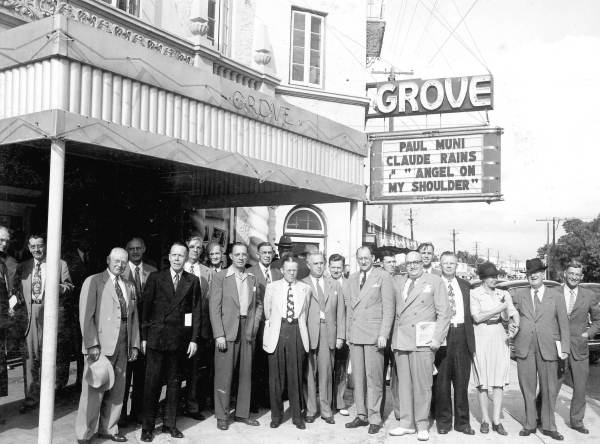
Members of the Coconut Grove Chamber of Commerce in front of the
Coconut Grove Playhouse, 1946, when the building was already 20 years old.

Tonight the right hand and the left hand might as well be in two separate time zones. At 6:00 PM, in White Coconut Grove, Richard Heisenbottle will be presenting architectural drawings of a renovated Coconut Grove Playhouse at a private yacht club. Heisenbottle is well-known for his historic renovation work, which includes the Trapp Homestead in Coconut Grove. Heisenbottle also took part in a Coconut Grove Playhouse Charrette of several years back. No telling whether these designs sprung out of the charrette or are wholly new designs and ideas for the site.

Almost as if there is a competition, at 7:00 PM, in Black Coconut Grove, the Charles Avenue Historic Preservation Committee meets. Among the topics that will hopefully come up at that meeting are the E.W.F. Stirrup House and historic design elements for the Charles Avenue Historic Designation Roadway, a title the street picked up last year.

There’s just one problem: The Coconut Grove Playhouse and the E.W.F. Stirrup House are both on Charles Avenue. These two historic community resources have to be part of the same holistic vision in order to save the unique character of West Grove. However, that will never happen if these groups don’t start talking to each other. The Playhouse people seemed unaware of the Charles Avenue Historic Preservation meeting and the Charles Avenue Preservation people were unaware of the Playhouse meeting.  

IRONY ALERT: The Coconut Grove Village Council was unaware of both meetings. It’s been a well-established pattern for the City of Miami to keep the Coconut Grove Village Council in the dark. It didn’t learn about Trolleygate until the ground had already been broken and the foundation poured. Commissioner Marc D. Sarnoff admitted to purposely making an end run around the Village Council during Trolleygate, and that wasn’t the first time either.

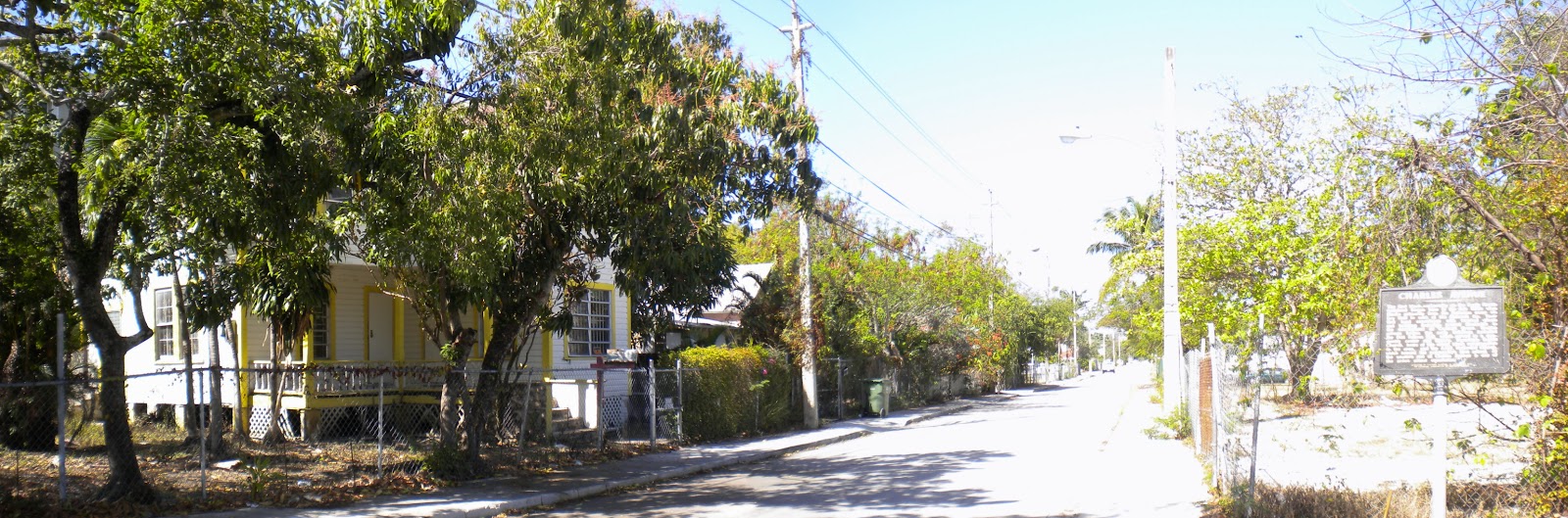
Looking west along Charles Avenue from the back of the Coconut Grove Playhouse. The Charles Avenue historical marker is on the right and the stately, 120-year old E.W.F. Stirrup House on the left.

Coconut Grove could become the jewel of south Florida, if only the Right Hand knew what the Left Hand was doing and if only the White Hand knew what the Black hand was doing. I’m learning that Coconut Grove is just segregated that way, the way it has always been.