Tag Archives: E.W.F. Stirrup House

A Playhouse Trojan Horse Update

These are the arrows in Question 3. I’m not sure
why they were blocked off this way yesterday.

Last week I received a call from the executive assistant of Art Noriega, CEO of the Miami Parking Authority. Because it began with a fulsome apology for not answering my email [See: The Coconut Grove Playhouse Trojan Horse; Part II], I was willing to listen. 

Mr. Noriega wanted to have a meeting at my convenience to discuss my email. I suggested Wednesday [yesterday] and, instead of meeting at his office, we meet at the Playhouse Parking lot. He was more than willing. In the exchange of emails confirming our meeting, I made one last demand: that he still answer my email. That way we could have a conversation, as opposed to a grilling, and get to better understand each other and the issues. He was more than willing to do that, as well.

Here is Mr. Noriega’s replies to the questions that applied to the Miami Parking Authority, followed by those [allegedly] corrupt Miami Commissioner Marc D. Sarnoff has refused to answer:

Feb 17
Headly,

In anticipation of our meeting tomorrow, here is our response to your original e-mail. Really looking forward to a lively discussion.

[…] 2). When neighbours complained previously that the 45 valet parking spots rented from the MPA would bring additional traffic, they were assured there would be no additional traffic on Charles Avenue as a result. This is clearly false. Why has this been allowed to continue for the past year despite occasional complaints by the neighbours?

The MPA was not made aware of any complaints. The valet has been operating for quite some time. If there were complaints, they haven’t come to us.

3). If there was to be no additional traffic on Charles Avenue then why did the MPA, when it resurfaced the Main Street parking lot, paint a giant arrow on the ground immediately BEHIND the Playhouse directing cars to exit onto Charles Avenue?

The arrows were placed to add clarity to the ingress and egress of traffic through that area.  The traffic, to our understanding, always flowed that way even before MPA took over the management.

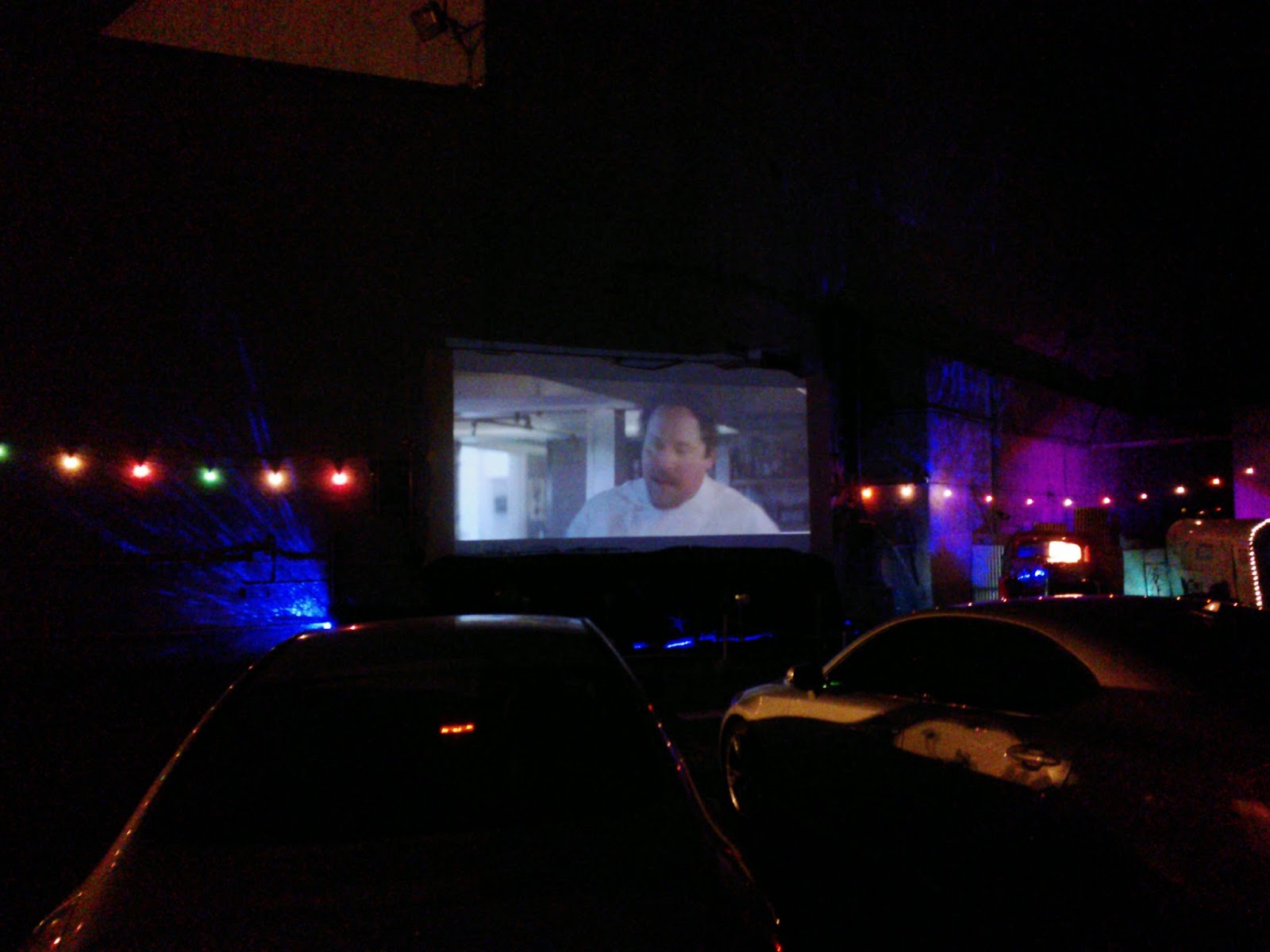
4). Some of these 45 spots rented from the MPA are now being used several days a week as a drive-in movie theater. How is this being done?

MPA entered into an agreement with Miami Dade County to allow this drive-in theater to operate in that section of the lot, Mon-Thurs Nights. Is there a sub-lease? Yes A contract? Yes A gentleman’s agreement? Is the MPA involved? Yes

5). What permits were needed to run a drive-in theater in that parking lot?

Blue Star Lite is the company running the drive-in theater and they pulled all the necessary permits from the city of Miami.  What are the insurance requirements and who is paying for it? The insurance requirements are detailed in the contract and is paid for by Blue Star Lite and are approved by the city of Miami risk management department.

6). When these 45 spaces are full of cars and/or drive-in movie patrons, where does the overflow parking go now that the gate on the residential lot has been locked again? [It’s been locked and unlocked as needed for overflow parking until now.]

Overflow is directed to the front portion of the lot located adjacent to Main Highway.

7). At the far west end of the MPA parking lot on Main Highway there is a chain-link fence with a double-gate that feeds onto William Avenue. Why is this gate locked most daylight hours, but quietly unlocked and left wide open on busy nights in Coconut Grove, when the Playhouse parking lot is full?

The gate should be closed at all times.  We have addressed with our security to ensure this is indeed the case.  It should not be open at any time.

8). What will the City of Miami do about monitoring these valet parking infractions going forward?

MPA monitors all valet companies working on the public right of way. Any  Valet companies working in or on private property are monitored by the city of Miami code enforcement division.

9). What will the City of Miami do to reduce all the added traffic these parking lots have caused on Charles and William Avenues?

This question needs to be addressed by City of Miami transportation division. The traffic flow there now is much lower than it was when the Playhouse was operational.

[…]

Regards,
Art

Art Noriega
Chief Executive Officer
Miami Parking Authority

Just to remind readers, here are the questions [allegedly] corrupt Miami Commissioner Marc D. Sarnoff has refused to answer, merely replying that the resident who complained had her complaint satistfied in 2 business days. 

 1). Why did Charles Avenue resident Cynthia Hernandez have to insist that the police do something after they first tried to tell her that there was nothing they could do since the property owner hadn’t made a complaint?

[To their credit, but only after additional phone calls, the police finally ordered the residential lot to be emptied of cars; a process, I am told, that took 45 minutes and created the 2nd traffic jam of the night on Charles Avenue. The first was filling the empty lot with some 40-50 cars in the first place.]

[…] 10). Considering Gino Falsetto is one of the owners of Aries; and considering he also has financial interests in the empty residential lot being used for the last year as overflow parking to the 45 spaces rented from the MPA; and considering he is also part owner of Paradise Parking; and considering it’s his 3 restaurants that use the valet parking; and considering that his brother Andrew Falsetto is a part of South Park, the company that took the fall for Friday night’s parking fiasco; isn’t all this circular finger-pointing just a little too convenient for everyone to duck responsibility by blaming this ongoing situation as a one-time event?

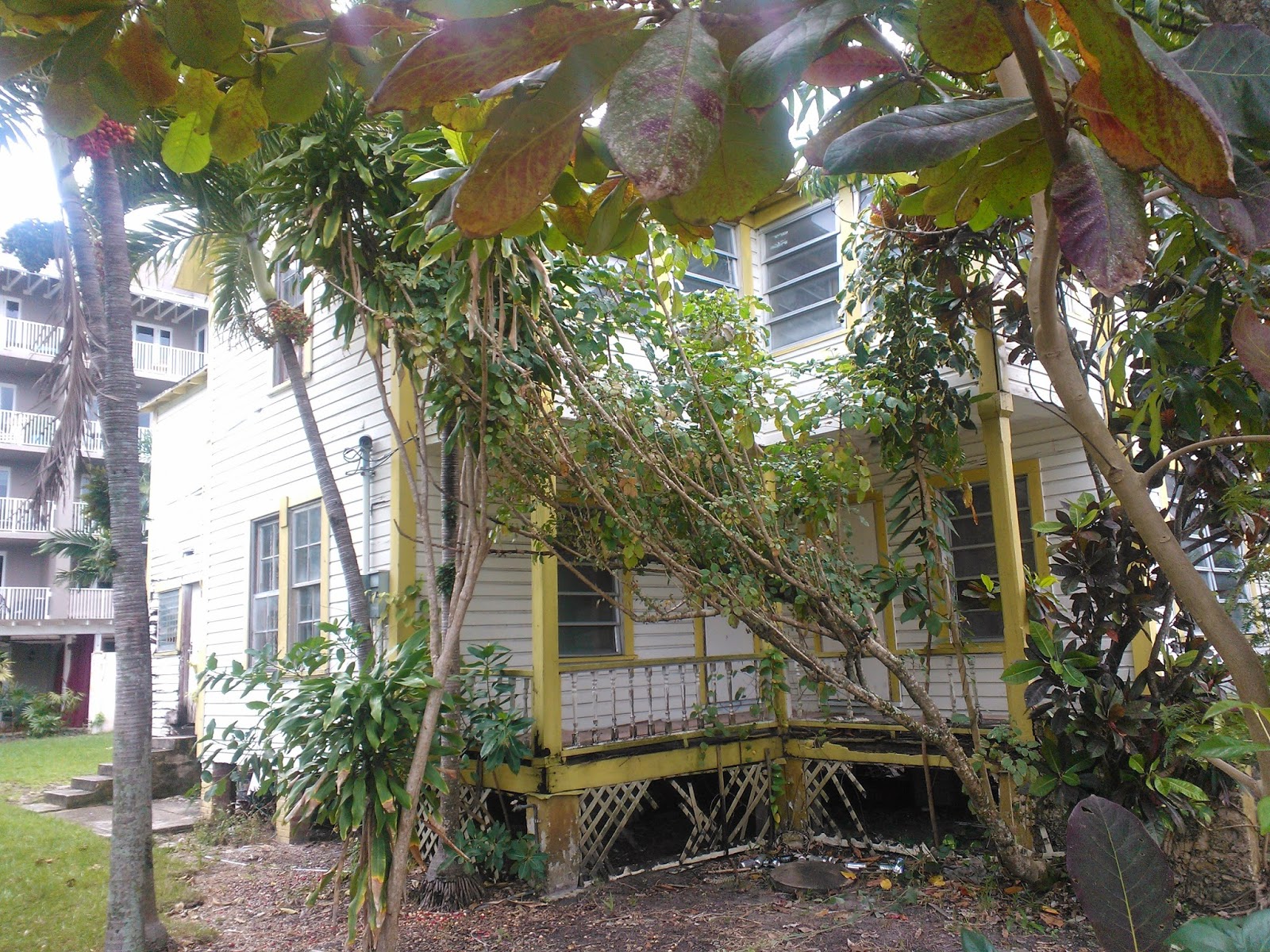
The E.W.F. Stirrup House on February 18, 2015
after nearly a decade of Demolition by Neglect.

11). And, most important of all: Considering all I have uncovered and written about Gino Falsetto’s shenanigans — his Demolition by Neglect of the 120-year old E.W.F. Stirrup House; the destruction of the old trees on that property without the proper plans and permits; the interior demolition of the E.W.F. Stirrup House without permit or historic plan on file; the destruction of the wall that separated La Bottega from the current construction zone of the E.W.F. Stirrup lot without the proper permits; the removing the roof of the Bicycle Shop without a demolition permit; his alleged squatting on the Playhouse parking lot for several years; etc., so forth, and so on — isn’t it time that Falsetto, and the series of companies he hides behind, are held responsible for the downgrading of the quality of life of your West Grove constituents who live around his fiefdom?
The residents on Charles Avenue may be gratified to learn that Art Noriega suggests they call Miami Code Enforcement for any further valet parking shenanigans and they’ll take care of it, especially now that he’s on the case.

The Charles Avenue Historic Marker is right across
the street from the E.W.F. Stirrup House and immediate
behind the Coconut Grove Playhouse. Any restoration that
doesn’t pay attention to this rich history is an insult to the
Black folk that have lived in the West Grove for generations.

I didn’t bother to ask Noriega any questions about the Blue Star-Lite Drive-In because it will be kicked to the curb, literally, when — and if —  the Coconut Grove Playhouse becomes a construction zone. However, Norienga did mention, in an off-hand way, that all the valet parking companies sharing these lots will be in trouble when — and if — the Coconut Grove Playhouse becomes a construction zone.

My sense of Art Noriega is that he’s a nice guy with a difficult job. He has to balance Miami’s need for more and more parking spaces with a sensitivity to neighbourhoods, traffic patterns, and culture. I did my usual sales job on him about the rich cultural history of West Grove. I think I impressed him with my sincerity. More to the point: I hope I made him understand that what was being ignored in all this talk of a revival for the Coconut Grove Playhouse is the neighbourhood immediately behind it.

Noriega seemed genuinely pained when he spoke of the Coconut Grove Playhouse being dark for all these years. The way he described it, back in the day, made it sound as if The Playhouse was the stable cultural center of a swirling art scene that encompassed the entire Grove. He contends its shuttering created a black hole for businesses throughout that entire south end of downtown Coconut Grove, from which Commodore Plaza is only just recovering.

Noriega also said that any talk of how many parking spaces will be needed [200-300 is what I’ve heard] on the Playhouse footprint is premature. They still don’t know how much of the building can be saved, if any, how big the theater will be, and whether there will be one theater or two, as a recently floated plan suggests.

He seems genuinely concerned to see that forward progress continues on the Playhouse Renovation/Revival. His biggest fear seems to be that the State of Florida (which owns the land) gets tired of waiting for something to happen and sells the land, as it has always had the power to do once the Playhouse board went bankrupt.

It’s been a year since Miami-Dade Cultural Czar Michael Spring cut all the deals that allowed the Playhouse Renovation to go ahead. Since then, and only recently, Arquitectonica was chosen to oversee the project. How long will Florida wait for plans to arrive on a builder’s drawing board is anybody’s guess, but it certainly won’t be forever.

The Coconut Grove Playhouse Trojan Horse; Part II

Gate [H] left open for the valet parking allowing traffic to
go out onto William and Thomas Avenues. Note the arrow
on the ground directing traffic out onto Charles Avenue.

Part I of The Coconut Grove Trojan Horse presented a capsule history of the Coconut Grove Playhouse, the surrounding area, and how a good neighbour’s complaint to City Hall led to this long investigative article. 

After researching the parking issues around the Playhouse for the last year and seeing how the residents were being abused by these valet companies, especially following a night of havoc they created on Charles Avenue in December, this reporter emailed [allegedly] corrupt Miami Commissioner Marc D. Sarnoff a series of questions which have yet to be answered:

FROM: Headly Westerfield
TO: msarnoff@salawmiami.com, rnelson@miamigov.com
Fri, Dec 19, 2014 at 3:36 PM
SUBJECT: ON THE RECORD – PLEASE RESPOND

For
the past year I have been quietly researching the parking lots
surrounding the Coconut Grove Playhouse. This week I was forwarded an
email chain in which your name appears. This seems like a good time to
write up the result of some of that research. My forthcoming article
concerns more than the illegal parking last Friday night on the empty
residential lot on the north side of the Historic Roadway of Charles
Avenue.

Since this is not the first time this lot has been used
for overflow valet parking — just the latest and most egregious — the
denials by Daniel Radrizzani ring hollow. I have witnessed this
residential lot being used on many Friday and Saturday nights and have
taken pictures of it. The neighbours will confirm that this has been an
ongoing problem. And, Coconut Grove Village Council Chair Javier
Gonzales will no doubt remember the several nights I interrupted his
evenings to tell him he should rush on over there to see it for himself.

Consequently,
I have a series of questions about *ALL* the parking surrounding the
Coconut Grove Playhouse, of which this residential lot is only one piece
of the entire puzzle.

1). Why did Charles Avenue resident
Cynthia Hernandez have to insist that the police do something after they
first tried to tell her that there was nothing they could do since the
property owner hadn’t made a complaint?

[To their credit, but
only after additional phone calls, the police finally ordered the
residential lot to be emptied of cars; a process, I am told, that took
45 minutes and created the 2nd traffic jam of the night on Charles
Avenue. The first was filling the empty lot with some 40-50 cars in the
first place.]

2). When neighbours complained previously that the
45 valet parking spots rented from the MPA would bring additional
traffic, they were assured there would be no additional traffic on
Charles Avenue as a result. This is clearly false. Why has this been
allowed to continue for the past year despite occasional complaints by
the neighbours?

3). If there was to be no additional traffic on
Charles Avenue then why did the MPA, when it resurfaced the Main Street
parking lot, paint a giant arrow on the ground immediately BEHIND the
Playhouse directing cars to exit onto Charles Avenue?

4). Some of
these 45 spots rented from the MPA are now being used several days a
week as a drive-in movie theater. How is this being done? Is there a
sub-lease? A contract? A gentleman’s agreement? Is the MPA involved?

5).
What permits were needed to run a drive-in theater in that parking lot?
What are the insurance requirements and who is paying for it?

6).
When these 45 spaces are full of cars and/or drive-in movie patrons,
where does the overflow parking go now that the gate on the residential
lot has been locked again? [It’s been locked and unlocked as needed for
overflow parking until now.]

7). At the far west end of the MPA
parking lot on Main Highway there is a chain-link fence with a
double-gate that feeds onto William Avenue. Why is this gate locked most
daylight hours, but quietly unlocked and left wide open on busy nights
in Coconut Grove, when the Playhouse parking lot is full?

8). What will the City of Miami do about monitoring these valet parking infractions going forward?

9).
What will the City of Miami do to reduce all the added traffic these
parking lots have caused on Charles and William Avenues?

10).
Considering Gino Falsetto is one of the owners of Aries; and considering
he also has financial interests in the empty residential lot being used
for the last year as overflow parking to the 45 spaces rented from the
MPA; and considering he is also part owner of Paradise Parking; and
considering it’s his 3 restaurants that use the valet parking; and
considering that his brother Andrew Falsetto is a part of South Park,
the company that took the fall for Friday night’s parking fiasco; isn’t
all this circular finger-pointing just a little too convenient for
everyone to duck responsibility by blaming this ongoing situation as a
one-time event?

11). And, most important of all: Considering all I
have uncovered and written about Gino Falsetto’s shenanigans — his
Demolition by Neglect of the 120-year old E.W.F. Stirrup House; the
destruction of the old trees on that property without the proper plans
and permits; the interior demolition of the E.W.F. Stirrup House without
permit or historic plan on file; the destruction of the wall that
separated La Bottega from the current construction zone of the E.W.F.
Stirrup lot without the proper permits; the removing the roof of the
Bicycle Shop without a demolition permit; his alleged squatting on the
Playhouse parking lot for several years; etc., so forth, and so on —
isn’t it time that Falsetto, and the series of companies he hides
behind, are held responsible for the downgrading of the quality of life
of your West Grove constituents who live around his fiefdom?

I will publish when I think my story is ready and would like to include your response. A prompt response ensures that.

My questions to [allegedly] corrupt Miami Commissioner Marc D. Sarnoff
were punted to the Miami Parking Authority, which has still yet to answer.

The area surrounding the
Coconut Grove Playhouse
[Click map to enlarge]
LEGEND:


A). Grove Gardens Condominiums;
aka The Monstrosity;
B). Regions Bank;
C). The E.W.F. Stirrup House;
D). Zoned residential lots, used
for illegal parking;
E). Part of the 45 parking spaces
leased for Valet Parking;
F). Blue Star Drive In & remaining 45
spaces leased to Valet parking;
G). Playhouse Parking Lot
operated by the MPA;
H). Unlocked gate directing traffic
onto William and Thomas Streets
and location of arrow directing cars
to exit onto Charles Avenue;
I). Main entrance/exit for main
Playhouse parking lot;
J). The Bicycle Shop;
K). The Barnacle, now a State Park,
once belonged to Commodore Ralph
Monroe, a contemporary of E.W.F.
Stirrup;
L). Rich people in gated enclaves;
M). Far less well off people in West
Grove, which has remained
predominately Black and depressed
during the last 125 years;
N). Commodore Plaza, named after
Ralph Monroe, is lined with pricy
eateries and more expensive art
galleries, meant for people with
more disposable incomes than
those on the surrounding blocks.

In the meantime, I emailed back [allegedly] corrupt Miami Commissioner Marc D. Sarnoff to
re-ask questions 1, 2, 8, 9, 10, and 11, since those questions could ONLY
be addressed by an elected representative on behalf of his
constituents. The response from Sarnoff’s office, paraphrasing, “As we
told you before, the neighbour is satisfied her complaint was resolved
within 2 business days. We’re done here.”

While I didn’t get a response from people paid by the City of Miami to answer questions, I did get a response from Regions Bank [B],
which is treating this issue seriously.

The Regions Bank parking lot is
another small piece to the parking puzzle. On many occasions I watched the valets zip cars in and out of the bank parking lot after hours. After asking a few discrete questions I was told the local Regions manager had an informal
agreement with the valet parking company to use the bank’s parking lot
at night. Consequently, I contacted Regions’ HQ and asked several questions about its
Coconut Grove branch:

1).
Is Regions Bank aware of any arrangement between the manager of your
Coconut Grove branch and the manager of the 3 restaurants next door
(Calamari, La Bottega, The Taurus) to use the bank parking lot for the
restaurant’s valet parking during the bank’s off hours?

2). Is there an [sic] written agreement on this arrangement or is it just an understanding?

3).
The valets get $6 per car. I have counted more than a dozen cars at any
given time in this parking lot, with cars constantly being brought in
and out as I watched. These valet fees represent several hundred dollars
on the busy Friday and Saturday nights that I have witessed [sic]
myself. Is any of this money shared with Regions Bank? With the Coconut
Grove Regions Bank manager?

4). Has liability insurance has been
arranged for the shunting of cars in and out of this parking lot? If so,
who is the provider and who pays for the insurance? If not, who would
be responsible were there to be a fatality as cars zip in and out on
this residential street?

5). Why is your parking lot being used
to secure profits for a valet company, and customers for 3 restaurants,
who would otherwise eat elsewhere were it not for the valet parking?

Please
respond as soon as is convenient because I plan to post my story when
it’s finished and would like to give Regions Bank the opportunity to
respond.

Once I started asking questions about this arrangement, it was formalized: 

Headly,

You can attribute the following to me:

We do have a license agreement between Regions and the valet parking company.

We do not receive any financial compensation.

What
Regions and our customers do receive is that the parking company helps
manage the lot after hours.  Before this agreement, there was an issue
with cars parking in the lot after hours and blocking access to the
night drop and ATM.  This kept customers from being able to access their
funds – or make deposits in their accounts – in an efficient manner. 
The agreement was developed to help remedy that issue and to help people
in the community access the ATM and night drop as needed.

You would need to consult with the valet company regarding insurance arrangements covering their activities on the lot.

Thank you.

Jeremy D. King
Corporate Communications
Regions Financial Corporation
205-XXX-XXXX
jeremyd.king@regions.com

So
… While Regions Bank has seen fit to reply to me, neither [allegedly] corrupt Miami Commissioner Marc. D. Sarnoff, nor the Miami Parking
Authority have answered any of my questions. Which brings us to this:

The Parking Problem at Charles Avenue and Main Highway
~~or~~
Why Is The Playhouse a Trojan Horse for a Huge Parking Garage?

A sign on the Regions Bank parking lot.

If you want to see some hard-working men and women, wander on over to Main Highway and Charles Avenue and watch the valets at work.

Diners pull up in their cars
in front of The Monstrosity [A] because they are going to one of the 4
restaurants on the property: The Taurus; Calamari; La Bottega; and the
member’s only, private wine club, La Cava. These restaurants were forced
to offer valet parking because they were struggling from a lack of
customers. Blame it on the Broken Window Syndrome; people were loathe to walk
past the boarded-up Coconut Grove Playhouse to get to Falsetto’s
restaurants. In fact, you will rarely see pedestrians walk any further
south on Main Highway than The Greenstreet Cafe, Falsetto’s biggest competitor just up the block. Everything south of that is a virtual No Pedestrian Zone.

When cars pull up the valets collect $6.00, give it a parking tag, and zip them on over to parking lots [B], [E], or [F]
as quickly as possible. Then they run back for the next diner or to
retrieve a car for a satiated diner. At the end of a hot night the valets are drenched in sweat. I have absolutely nothing against these
people and actually admire their work ethic. [In fact, some of them have
become quite friendly and provide me with background information even though
they know I am working against their boss’ interests.] However, there is no denying these valet companies are destroying the quality of life for the residents on Charles,
William and Thomas Avenues.

Recently I was SHOCKED to learn something I
hadn’t discovered in the 6 years I have been researching West Grove: The Monstrosity
has 2 underground levels, one a parking level and
the other the private, members only faux wine cave known as La Cava.

I
can hear a gigantic “So what?” to that news, except this is Florida.
Dig a small hole in the ground with a spoon and it fills up with water. That’s why basements are not built here, as dry basements are hugely expensive in South Florida.

When The Monstrosity was built there were obviously concerns about residential parking, as is standard for any project. To that end the building was designed with an underground
parking lot for the residents in the condos above. Not having to share any above-ground space for parking allowed Aries to build a structure with more residential and restaurant space for the footprint and height for which it was zoned. However, it’s clear that the City
of Miami, or anyone else, did not anticipate sufficient parking for the building’s multi-use — the restaurants — which
is why the valets are forced to use every available parking space in the area.

Last
year, when Miami-Dade County Cultural Czar Michael Spring cut the deal that gave Aries Development the
Bicycle Shop [J], another part of that deal was that the valet companies
could rent 45 parking spaces [E & F] at $6.00 p/day p/space from the Miami Parking Authority.

The Blue Star-lite Drive-In at night

There’s one last player to be introduced into this story and that’s the Blue Star-Lite Drive-In, which uses parking lot [F] several nights a week to project movies onto a screen attached to the back wall of the Coconut Grove Playhouse.

When
I first heard about this new use of the parking lot, I thought it was a
great idea to help revitalize the neighbourhood, not only bringing movies back to that corner, but creating a fun event for the neighbourhood. However, I have since
changed my mind for the following reasons:

1). To begin
with, this is an expensive night out. Just like the rest of Coconut
Grove, to be honest. A normal night out at the megaplex is barely
more
expensive than the Blue Star-Lite Drive-In and you don’t have to bring
your own lawn chairs or cars or bug spray. This is not priced for the
families that live in the areas marked [M].

I’ll take a Sliders Basket and a Hot Dog Basket, please.

2). My next thought, because I know how these things work, was, “How does Gino Falsetto make money off this deal?”

Falsetto’s
valet parking company rents these spaces from the MPA. Is the Blue
Star-Lite Drive-In paying any rent to Paradise Parking or the MPA? I
still don’t have the answer to that question from the MPA, but I didn’t
have to search very far to see at least one way that Falsetto is making
money off the drive-in. He’s selling overly expensive hot dogs and
hamburgers to the people who have enough disposable income to pay these
crazy rates for a movie in a parking lot.

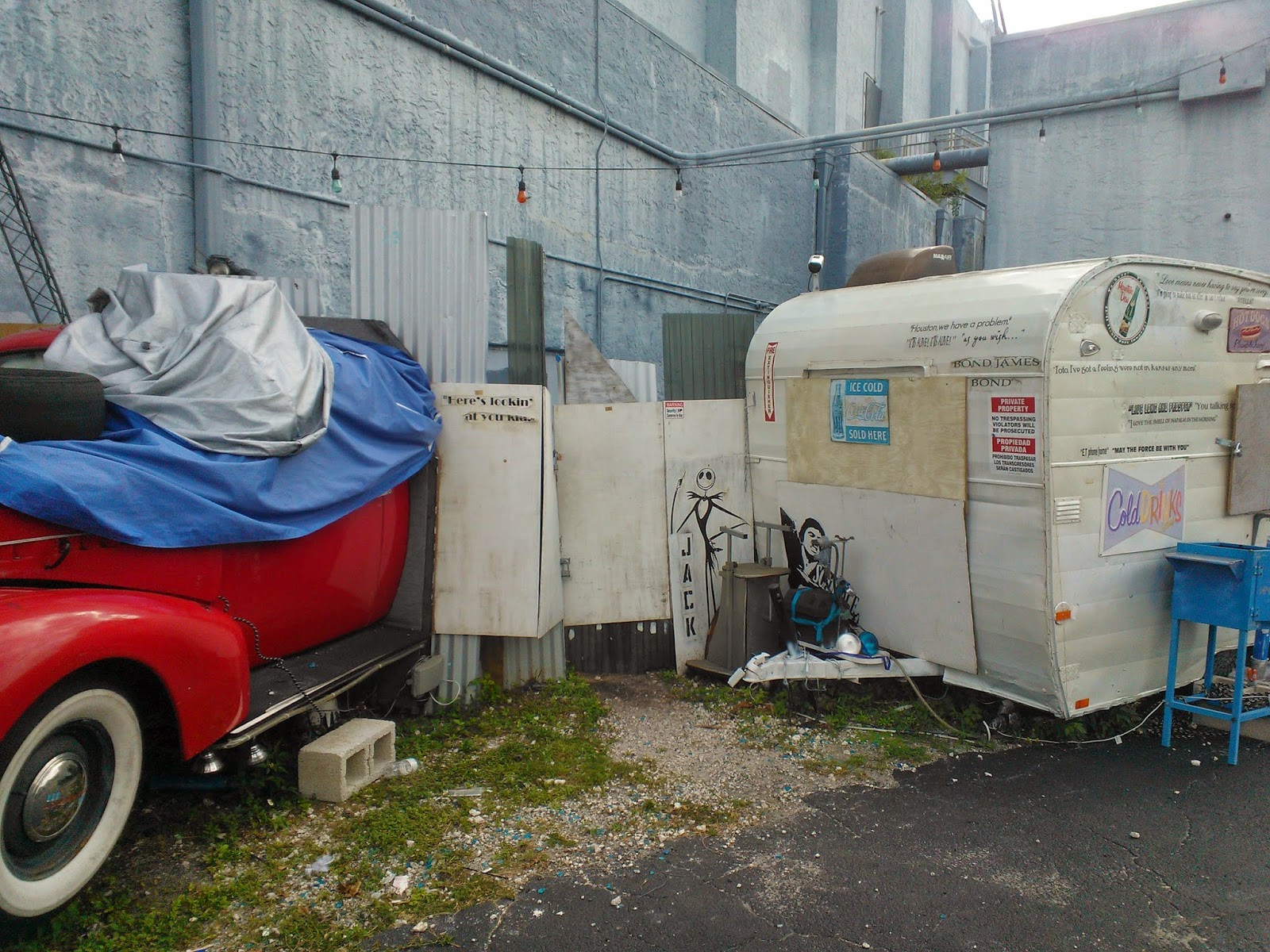
The Blue Star-lite Drive-In during the day

3). Josh Frank, owner of the Blue Star-Lite, has
turned his portion of the parking lot [F] into a junk yard, complete with
rust imported from other locations. Admittedly, all this junk gives
the drive-in a funky, street- level feel, despite its sky-high prices. However, if any of the homeowners along Charles, William, or Thomas
Avenues [M again] loaded up their property with this junk, they’d
be cited by the city for creating a hazard and/or an unsightly mess.
The Blue Star-Lite Drive-In is allowed to load up this property with
everything from camper trailers to porta-potties. The only thing missing
is the junk yard dog.

The fine facilities at the Blue Star-Lite Drive-In

4). The first time I met Josh Frank I gave him my
card and he was friendly, quite open, and willing to talk. The second time I tried
to talk to Frank he was not only rude, but told me where I could line my
car up to pay an admission to see a movie. I declined the offer.
However, I couldn’t help but wonder whether he had seen any of my posts
on Falsetto posted here in the interim.

I have now
spent many hours over the past year just observing these various parking
lots and the traffic patterns along these streets. As well, I have interviewed valets, security guards, and neighbours at properties
surrounding the Coconut Grove Playhouse. Consequently, I now have answers to some of my questions. 

The answer to
Question #7 above is this: This gate is opened to traffic on Friday and
Saturday nights so the valets working the restaurants on Commodore
Plaza [N] — which I never knew about until this all blew up — can zip in and out the back way [H and pics above and below] without having to drive out onto
Main Highway. Therefore, the valets are entirely responsible for the
added traffic onto William and Thomas Avenues because they are the only reason
that gate is left opened on busy Friday and Saturday nights.

IRONY ALERT: It
was actually the valets on Commodore Plaza [N] and not The Monstrosity
[A] that caused the mess on Charles Avenue which led to the neighbour
outrage. [Which is a distinction without a difference because all these
valet companies are owned by Falsetto and/or companies owned, in part,
by Falsetto.]

On December 12th there was a big event at the Cruz Building — the fake New
Orleans structure on Commodore Plaza [N] rumoured to have been built with cocaine money — and
the valets needed a place to park all those cars. Gino Falsetto
graciously lent the 2 residential lots across the street from the E.W.F.
Stirrup House that had been used for overflow parking for the last
year. They had been getting away with it for so long, but they finally overplayed their hand by trying to park that many cars at once.

And so
finally we come to how all of this leads the Not Now Silly Newsroom to
conclude that the Playhouse rehab is really the cultural Trojan horse to
build a huge, misshapen glass and steel parking structure — the kind Arquitectonica is best known for — with a 300-seat
auditorium attached.

An artist’s rendering of a massive development on Main Highway at Charles Avenue hiding a parking garage, possibly 2 theaters, and what could turn out to be condo-style residences for thespians and others who might eventually work in the theaters. A secret source tells me I can discount the rumour that there will be retail on the premises because it’s all State of Florida land, despite Miami-Dade County running all the backroom deals, and the charter prevents retail. However, that’s assuming a gift shop doesn’t count and the rules don’t change.

Another view of the arrows on the ground directing
traffic out to Charles Avenue. Picture was taken from
the approximate location of the unlocked gate [H].

To begin with all of the valet
parking machinations have proven 2 things: 1). Parking is the only thing
generating money at Charles and Main Highway; 2). There’s a growing
need for parking surrounding the Playhouse. [I don’t want to get too
deeply in the weeds, but there’s also a plan for nearby Ransom School to use
these parking lots for overflow.]

Second, it always
struck me as odd that the MPA was on the committee making decisions
about the future of the Playhouse. It had a place at the table by virtue
of [G], the parking lot it wrestled away from the squatting Paradise Parking.

I
was recently able to get my hands on the Notice to Professional
Consultants, the document that lays out the criteria to which anyone bidding on
the project should adhere [emphasis added]:

Providing
a master plan which may include both immediate and future development
based on the existing property’s historic designation, programming goals
for the facility, and the available funding. The components envisioned
for the site include a state of the art theater (target capacity:
300-600 seats), including all required front-of-house and back-of-house
spaces necessary for the successful operation of the theater, parking, and future compatible development that may address the need for additional parking, a second theater (target capacity 600-900 seats) and complementary site amenities such as retail, restaurants, etc.;

No
sooner had I acquired that document than Cultural Czar Michael Spring
announced that Arquitectonica won the bid. In an email to Javier
Gonzales, Chair of of the Coconut Grove Village Council, Spring put the
best shine on all the backroom machinations. One paragraph stuck out
[emphasis added]:

The
5-person CSC appointed by the Mayor to evaluate the teams included: the
Executive Director of the Black Archives (who has overseen the
renovation and expansion of the historic Lyric Theater in Overtown and
who currently serves as a member of the City of Miami’s Historic and
Environmental Preservation Board, and was its chair from 2007 to 2009); a
representative from FIU, the co-lessee of the Playhouse property (a
senior university executive who has expertise in finance and served on
the committee that negotiated the eventual contract with
Arquitectonica); the CEO of the City of Miami’s Parking Authority
(who will be involved in assessing the potential for a parking garage on
the site
and who has extensive experience managing and improving
Gusman Center for the Performing Arts); the capital projects manager
from my department who will be the lead in managing the architectural
process (who has a background in architecture and extensive experience
in building and renovating theaters); and myself.

When I talk about backroom decisions, I am not talking about the selection process that just ended. I am talking about all the backroom decisions that were made before the process was set out for tender. Even
before any designs were considered Michael Spring downsized the
size of the theater from 1100 to 300, and added a possible second theater. The presence of the MPA assures there will be a giant parking structure on the property and the choosing of Arquitectonica,increases the likelihood that it will be some gigantic glass and steel structure that will look totally out of place viewed from the quiet residential neighbourhood marked [M] on the map.

And, I am willing to place a bet that when this new monstrosity is being argued in front of whatever baords are going to vet it, they will point to Gino Falsetto’s Monstrosity as the thing that opened the door to this kind of over-development at Main Highway and Charles Avenue and, OH, BY THE WAY, we just gotta solve the parking problem around the Coconut Grove Playhouse if it is ever to be taken seriously as a tourist destination for the kind of folks who have the kind of money it takes to live in Coconut Grove.

And that, dear readers, is why I believe the Coconut Grove Playhouse renovation is a Trojan horse for a big, huge, honking garage. I would love to be proven wrong.

Another rendering of a potential structure to replace, not renovate, the Coconut Grove Playhouse.

Save The Coconut Playhouse
is a Facebook group not affiliated with the Not Now Silly Newsroom. It
has far more detail about the backroom machinations of the current plan
to renovate and/or tear down the Coconut Grove Playhouse.

Please join if you care about historic preservation.

The Coconut Grove Playhouse Trojan Horse; Part I

Some of the parking lots described in this post.
[See map legend below for matching location.]

Background: Looking south towards [C] the E.W.F. Stirrup
House, dwarfed by [A] The Monstrosity, aka Grove Gardens
Condominiums. Foreground: Looking across [F] The Blue
Star- Lite Drive-In and [E] the 45 parking spaces leased from
the MPA for Valet Parking. Behind the fence at right are [D]
the two vacant residential lots used illegally for parking rich
folk. Immediate left: The back wall of the Coconut Grove
Playhouse, the Blue Star-Lite Drive-In screen, and some junk.

Events have been moving quickly this week. Just as I was finishing a blog post writing up a full year’s worth of research on the parking lots
surrounding the Coconut Grove Playhouse, Miami-Dade County selected Arquitectonica to restore/ renovate/raze the structure (depending on who you ask). That forced a drastic rewrite to what follows.

Get comfortable, kiddies, because this is a long one. It needs to be long so I can develop the thesis in the headline: “Why is the reno of the Coconut Grove Playhouse really a Trojan horse for a gigantic glass and steel parking garage with a small theater attached?” It’s a sprawling Michener-like story — so long I’ve had to chop it up into 2 parts — covering almost a century and a cast of characters that number in the tens. Like Michener, lets take a quick look at who you will be meeting:  

  1. First and foremost, E.W.F. Stirrup, one of Florida’s
    first Black millionaires, who had more to do with the creation
    of Coconut Grove and the building of West Grove than anyone else you can
    name. Almost with his own hands he built an entire, cohesive Black neighbourhood in the Jim Crow south that lasts to this day. His house and his legacy have been allowed to undergo Demolition
    by Neglect; 
  2.  Commodore Ralph Monroe, a contemporary of Stirrup’s whose house The Barnacle, only a few thousand feet away from Stirrup’s, is now a State Park [K] and polished within an inch of its life, for whom Commodore Plaza [N] is named, and who gets most of the credit for creating the early Coconut Grove;
  3. Aries Development in the Snidely Whiplash persona of Gino Falsetto, who built The Monstrosity that changed the entire character of West Grove, has allowed the  E.W.F. Stirrup House to go to wreck and ruin through nearly a decade of Demolition by Neglect, and who, through several of his valet and parking companies, is destroying the quiet enjoyment of his neighbours; 
  4. The [allegedly] corrupt Miami District 2 Commissioner Marc D. Sarnoff, who refuses to answer any questions posed to him by this reporter and is now running his puppet wife for his seat, now that he’s been term-limited off the City of Miami Gravy Train; 
  5. Miami-Dade Cultural Czar Michael Spring, who recently defended the legitimate “cone of silence” during the Coconut Grove Playhouse selection process, but doesn’t mention any of the backroom deals and decisions that were made prior to starting the selection process and dropping the cone of silence; 
  6. Arquitectonica, chosen by Michael Spring’s selection committee to oversee the Coconut Grove Playhouse destruction, or renewal, depending on which side of the fence you sit;
  7. Luis Choter, of The Miami Parking Authority, who has likewise refused to answer the questions forwarded to him by [allegedly] corrupt Miami Commissioner Marc D. Sarnoff, despite his email to me of January 27th apologizing for his lack of attention and promising he will be “looking into all the concerns and responding accordingly within the next couple of days.”;
  8. Cameo appearances by Sharie Blanton, of [allegedly] corrupt Miami Commissioner Marc D. Sarnoff‘s office; Ron Nelson, of same; Arthur Noriega, CEO of the Miami Parking Authority; Alejandra Argudin, who does something or other with the MPA; and Rolando Tapanes, another MPA employee; all of whom are in the email’s CC: field dodging my questions;
  9. Entrepreneur Josh Frank and his Blue Star-Lite Drive-In; 
  10. Jeremy D. King, a media flack at Regions Bank’s HQ; 
  11. The Movers and Shakers of Coconut Grove, both now and then;
  12. 1920s architect John Irwin Bright who designed the Coconut Grove Playhouse; 
  13. Several valet companies with dozens of valets;
  14. A number of private parking companies;
  15. A number of different parking lots;
  16. And, neighbours both good and bad.

Let’s begin:

After a years research — and a lack of clear answers from the city of Miami — Not Now Silly concludes the small 300-seat theater being proposed as a replacement for the Coconut Grove Playhouse, is nothing more than a cultural Trojan Horse being used to sneak a huge parking structure onto the corner of Charles Avenue and Main Highway.

I started researching the parking problems around the Coconut Grove Playhouse a year ago as a natural outgrowth of my research on the E.W.F. Stirrup House and The Colour Line in West Grove. Six years ago, when I first started researching Ebenezer Woodbury Frankling Stirrup, I could have hardly imagined that his house, The Coconut Grove Playhouse and the Playhouse parking lot were interconnected in a very complicated ways, both now and historically.

The Bright Plan shows the proposed city hall and golf course,
with “Colored Town” moved to “the other side of the tracks.”

A QUICK HISTORY LESSON: Prior to the illegal annexation of Cocoanut [sic] Grove by Miami in 1925, the town’s monied interests — the Movers and Shakers — of The Grove envisioned turning the small, nascent tourist village into a big tourist destination. So they hired Philadelphia architect John Irwin Bright, who came up with The Bright Plan in 1921, the very first of an untold number of urban renewal plans for Coconut Grove over the years.

The Bright Plan called for a fancy hotel; a golf course across most of West Grove, from Main Highway to Douglas; and a city hall approximately where Cocowalk now is. A wide boulevard ran from city hall to Biscayne Bay with a reflecting pool down the middle. The entire Bright Plan was based on Mediterranean-style architecture and would have been beautiful. However, it never got built. The bottom fell out of the Florida real estate market almost before the ink on The Bright Plan had dried.

However, there was one item on the Bright Plan that eventually got built: The Coconut Grove Theater (now the Coconut Grove Playhouse) was erected in 1927 and was based on Bright Plan drawings, which is why the building has a faintly Mediterranean feel. It first showed movies, but was later converted to live theater before it closed in ignominious bankruptcy 2006.

This is just one rendering of a potential gigantic development on Main Highway.
Don’t be fooled. The facade will be a facsimile. There is no plan to save it.

Save The Coconut Playhouse is a Facebook group not affiliated with the Not Now Silly Newsroom. It has far more detail about the backroom machinations of the current plan to renovate and/or tear down the Coconut Grove Playhouse.

Please join if you care about historic preservation.

Another rendering of a potential glass and steel parking garage hiding a tiny theater..

Back in 1927 monied interests — the Movers and Shakers — got together to built the movie house to bring culture to Coconut Grove. However, before the theater could be built the land had to be acquired from E.W.F. Stirrup, by then one of the largest landholders in Coconut Grove. It’s still an open question whether Mr. Stirrup, who was Black, could even go into the movie theater just 200 feet from his front door. At the time movie theaters were heavily segregated. The Ace Theater, on Grand, was later built for the Black folk of West Grove.

Back in 1927 parking cars wasn’t a big issue, but there are times these days when it seems like the parking of cars is the only issue.

When Miami developers present plans for new buildings one of the first questions that needs answering is “Where’s the parking?” Providing adequate parking often seems more important than an eye-catching design or quality of life considerations. This is especially true of Coconut Grove, where residents are howling over the fact that Cars2Go and Citi Bike are taking up precious parking spaces in The Grove because parking for their precious cars is more important than taking a chance on new, alternative forms of transportation.

A year ago Miami-Dade Cultural Czar Michael Spring untangled the Gordian Knot of the Coconut Grove Playhouse in an attempt to revive and renovate it. In other words: Bring culture back to the corner of Main Highway and Charles Avenue.

And, that’s when today’s monied interests — our modern day Movers and Shakers — got involved to screw the taxpayers behind closed doors. 

The backroom Playhouse deal had many moving parts. One part of the deal was to give to Aries Development the former-Bicycle Shop [J on map below] and $15,000. This was done because Aries floated a loan [in an amount I’ve never been able to determine] to the former-Playhouse board before it went belly up. At the time Aries was given a lien on the Bicycle Shop as collateral. That’s not that unusual. What is unusual is that Paradise Parking (another tentacle of the rapacious developer Gino Falsetto, aka Aries Development) is said to have squatted on the Playhouse Parking lot in order to satisfy the loan.

In my exposé from last year, The Coconut Grove Playhouse Deal begins to Unfold, I speculated that a possible future use of the Bicycle Shop could be a restaurant:

[T]urning the Bicycle Shop into a restaurant makes sense because
that’s another cash business. Gino Falsetto [allegedly] learned how
lucrative restaurants can be when he (and his brothers) bankrupted four
of them in the Ottawa, Ontario, Canada, area. When the government
finally moved in to seize the assets (cash in the till and the cutlery,
essentially), Canadians lost an estimated $1,000,000.00 in unpaid taxes.
However, that’s chump change compared to what Falsetto’s investors
lost. That figure is estimated to be upwards of ten million dollars. And
then, next thing you know, Gino Falsetto has enough resources after his
business went bankrupt to buy his way into the hot Miami real estate
market.


Of course, it has to be said, that there are many honest and reputable
restaurant owners. In fact, the vast majority are. However, that doesn’t
mean that restaurant ownership has not been known as a source of illegal profit skimming. Just sayin’.


Speaking of cash businesses, that brings us to the Playhouse parking
lot. On March 1st the Miami Parking Authority (MPA) will take over
control of the Playhouse parking lot. On February 25th the new signage
was being erected. However, most of the old signs hadn’t been removed
yet.


Who had the parking concession until now?


Double Park, Paradise Parking, and Caribbean Parking. Bring Truth To Light
has written extensively about Gino Falsetto; his several various
partners in several various companies; Aries Development Group; shady
Coconut Grove real estate deals; and this particular parking lot. It’s worth quoting extensively: [Click the link to read more of this alleged nefariousness.]

How much money did these companies collect from parking fees in the
time it [allegedly] squatted on the Playhouse parking lot? Was it forced to
return any of that money to the MPA, or was it all just gravy on top of getting the Main Highway frontage, potentially worth millions? And, while I’m asking questions: How much money did these companies report on their income taxes for the years it allegedly squatted on the parking lot?

When I learned these parking companies may have been squatting on the
Playhouse Parking Lot for who-knows-how-long?, I began desultory research on the issue of parking in West Grove, but I had no real reason to write it all up into a post until December 12th.

The area surrounding the
Coconut Grove Playhouse
[Click map to enlarge]
LEGEND:


A). Grove Gardens Condominiums;
aka The Monstrosity;
B). Regions Bank;
C). The E.W.F. Stirrup House;
D). Zoned residential lots, used
for illegal parking;
E). Part of the 45 parking spaces
leased for Valet Parking;
F). Blue Star Drive In & remaining 45
spaces leased to Valet parking;
G). Playhouse Parking Lot
operated by the MPA;
H). Unlocked gate directing traffic
onto William and Thomas Streets
and location of arrow directing cars
to exit onto Charles Avenue;
I). Main entrance/exit for main
Playhouse parking lot;
J). The Bicycle Shop;
K). The Barnacle, now a State Park,
once belonged to Commodore Ralph
Monroe, a contemporary of E.W.F.
Stirrup;
L). Rich people in gated enclaves;
M). Far less well off people in West
Grove, which has remained
predominately Black and depressed
during the last 125 years;
N). Commodore Plaza, named after
Ralph Monroe, is lined with pricy
eateries and more expensive art
galleries, meant for people with
more disposable income than
those on the surrounding blocks.

Not Now Silly has often highlighted the Bad Neighbours on Charles Avenue. For a change of pace let me introduce you to a good neighbour.

Immediately west of the E.W.F. Stirrup House [C] lives Cynthia Hernandez, her husband, and their 2 children. I knew little about Cynthia’s credentials until a recent exchange of emails. That’s when I realized she is a Senior Research Associate, Instructor, & Director of Internship Programs, Research Institute on Social and Economic Policy, Center for Labor Research & Studies, at Florida International University. That’s a mouthful.

I first met Hernandez while photographing the Bicycle Shop for last year’s story. We started talking and, as always, I started pitching the history of the area, especially the E.W.F. Stirrup House. That’s when I learned she lived right next door to the Stirrup House, designated a historic site by the City of Miami, which hasn’t prevented it from undergoing nearly a decade of Demolition by Neglect.

Why is preserving the E.W.F. Stirrup House so important to the cultural history of Coconut Grove? Read: Happy Birthday Coconut Grove!!! Now Honour Your Past

Since then we’ve exchanged information on the house and Charles Avenue whenever I’m visiting. Hernandez couldn’t care any
more about what’s going on if she were an actual home owner. Unfortunately, she just
rents. One of the issues we’ve talked about extensively over the past year is the valet parking business that operates out of the Grove Gardens Residence Condominiums, aka The Monstrosity [A]. She feels her complaints about the additional valet car traffic on Charles Avenue have fallen onto deaf ears.

ANOTHER QUICK HISTORY LESSON: Across the street from the Stirrup House, are 2 residential lots [D] devoid of residences. They once had residences, of course: 2 cute little Conch-style houses. In the same complicated swap that gave Aries Development a 50-year lease on the Stirrup House, it acquired ownership of these 2 lots. The first thing Aries did was knock the houses down to use as a marshaling yard in order to build The Monstrosity in 2006.

The Monstrosity is the mixed-use, 5-storey condo complex, with 3
restaurants offering valet parking. While it fronts onto Main Highway,
it’s immediately behind the Stirrup House and dwarfs the modest 2-storey structure. While Zyscovich Architects did its best to design a building with a Key West/Bahamian feel, The Monstrosity looks totally out of place and out of scale when viewed from Charles Avenue, designated a Historic Roadway as the first street in Miami.

After these 2 lots were no longer needed to build The Monstrosity, they remained empty and poorly maintained. The property has been cited several times for a lack of upkeep, when the weeds were more than knee-high in some places. I have been told off the record, by someone in the know, that these two lots can NEVER be zoned for anything other than Single Family Residential use. However, the same thing was once said about the E.W.F. Stirrup House before the developer managed to get its zoning flipped to Commercial in anticipation of turning it into a Bed & Breakfast.

In mid-December I got an out-of-breath phone call from Hernandez about new parking shenanigans on Charles Avenue. While we had spoken many times over the last year, she had never phoned me before.

I took these pictures of residential lots [D] being used illegally for overflow
parking on November 8, 2014, long before the December kerfuffle. [There
are several cars parked to the right of this open gate which can’t be seen.]

Coconut Grove Village Council Chair Javier Gonzales may remember
me calling him that evening to suggest popping over to check it out for
himself; one of several times this reporter alerted him to this problem.

Hernandez’s concern was that the two residential lots across the street were ONCE AGAIN being illegally used as overflow
parking to the 45 spaces the valet parking companies rent from the Miami Parking Authority behind the Coconut
Grove Playhouse [E & F]. She described to me how there were some 40 cars parked on these residential lots, with the valets zipping cars in and out, and creating a traffic jam Charles Avenue, a residential street.

What made her even angrier was that when she called the police to complain she was told nothing could be done about it because — get this — the property owner had not complained. However, the property owner, through a complicated series of companies and familial relationships, also owns the valet parking outlets and the restaurants in The Monstrosity. He benefits financially by illegally parking cars on these residential lots. Why would he complain?

That’s when she called me. I told Hernandez to take pics and video. I also advised her to call the police back and ask, if they couldn’t do anything, would they at the very least make a written report so that there was proof a complaint had been made because previous complaints to the city fell upon deaf ears.

To their credit, after her second call Miami Police sent out a higher-up, who actually ordered the lots cleared. That took some 45 minutes and led to the 2nd traffic jam of the night on Charles Avenue.

I also advised Hernandez on a list of people she should send the pictures to come Monday morning, which she did. She then forwarded me the entire email chain generated by her complaint. That’s when I decided to collate my year’s worth of parking research for a Not Now Silly article. However, I needed some questions answered to adequately flesh out any such article. Consequently, I shot out an email to [allegedly] corrupt Miami Commissioner Marc D. Sarnoff asking 11 pointed questions in order to finish my article.

READ MORE . . . 

PART TWO of ‘The Coconut Grove Playhouse Trojan Horse quotes my email to [allegedly] corrupt Miami Commissioner Marc D. Sarnoff, his lack of adequate reply, and outlines why the Coconut Grove Playhouse is the Trojan horse for the gigantic Coconut Grove Parking Garage, coming soon to the corner of Main Highway and Charles Avenue.

It’s All Nothing But Words ► Unpacking the Writer

Hello again, dear readers. For newbies: Unpacking the Writer is the monthly series in which I expose some of the wrinkles of being a Writer for Hire.

I’m excited about a new (potential) series I started just this week. I almost called it “Pastoral Letters,” but opted to slot it under the ongoing rubric Unpacking My Detroit instead. Finding An Old Friend is an innocuous title for what could turn out to be an important exchange of ideas, especially for me as I grapple with my place in this world in my 6th decade. If it continues it could be far more revelatory than these monthly Unpacking the Writer episodes. While writing Finding An Old Friend I was conscious that in my head, where I do most of my living, the concept felt like Tuesdays With Morrie, the memoir by another Detroit writer, Mitch Alborn. However, the biggest difference is that Kenny and I are contemporaries. Other differences may reveal themselves.

I was also conscious of how we, as a society, have lost the art of letter writing. I’m no different or, maybe, I’m the worst. I’m terrible at answering letters and email. When I’m not writing the last thing I want to do is write, yannow, so I don’t. Taking coals to Newcastle. Busman’s holiday. Preaching to the choir, Kenny? Whatever you want to call it, it’s a bad habit I’ve developed in my life that has allowed old friends to slip out of the berth of my life.

I’ve already heard back from Pastor Kenny. He sent a one-liner to say that he will be more forthcoming with a reply suitable for publication. He did say my email made his day so I can’t wait to read his reply. And, while he included his phone number and asked me to call, I think I’ll wait for his response, so as not to taint his reply.

If you’re reading this, Kenny, I’m waiting.

It’s been a month of near-frantic writing as the Not Now Silly Newsroom makes its deadlines. Most of those deadlines are self-imposed and loosey-goosey. They can always be pushed off if needs be.

But not all deadlines are so fluid. Just before our last exciting episode Head Writer Headly Westerfield arranged a new leisure time activity for the Not Now Silly Newsroom. It has a hard deadline that can’t be pushed no matter how much of the staff has called in sick. Every week for the last 7, he’s had the entire news team pumping out a new edition of Friday Fox Follies for PoliticusUSA. They are meant to be funny and informative. Your mileage may vary.

The Friday Fox Follies are not the first articles by Westerfield published there. Detroit is the New Conservative Wet Dream and Why Florida’s Stand Your Ground Law Has Got To Go are more than a year old, but as true today as they were when written.

But, it’s not just been Friday Fox Follies keeping the Not Now Silly Newsroom busy.

As long time readers of Not Now Silly will attest, I have been trying to Save The E.W.F. Stirrup House from Demolition by Neglect ever since the first time I laid eyes upon it. After I learned the amazing history of the man who built the house, saving it became an obsession. It should be something other than a Bed and Breakfast for tourists to Coconut Grove. The legacy of E.W.F. Stirrup is too deep and rich for his house to become a commercial enterprise enriching a rapacious developer. It’s the oldest house on Charles Avenue, the oldest street in Miami, and the 2nd oldest house in Miami.

November 17, 2014 – What Demolition by Neglect looks like up close

I’ve been at this for several years without making any discernible progress. Worse yet, there’s been no discernible progress on the house in the entire time I’ve been documenting how it is has been undergoing Demolition by Neglect for nearly a decade at the hands of a rapacious developer. However, between times of research and activity, I get dejected. My campaign to Save the E.W.F. Stirrup House is limited only by my inability to to make my campaign go viral.

Recently, I was energized all over again when I learned there were FINALLY plans on file of the E.W.F. Stirrup House at the City of Miami’s Historical Preservation Office. It took a FOI request to get access at the file. Imagine my disappointment to discover these plans are totally inadequate for historical preservation.

However, having been energized, I wrote a number of posts this month about Coconut Grove, the E.W.F. Stirrup House and Infamous Rapacious Developers:

I have a brand new one coming under the “Bad Neighbour” banner, but this time it’s an entirely different neighbour. It may take another week, or so, to put that one together.

Earlier this week I showed up at the stroke of 8AM and spent
several hours on the public City of Miami computer system researching
several of the Coconut Grove threads I’ve been pulling at for the last
few years to see what can be pulled out of the official records.

Oddly enough, there is only one computer in the entire city
that a member of the public can use to research all the files,
documents, and PDFs collected by the City Clerk. It’s in the City
Clerk’s office, which seems like a very public place to do my very private research. How long before I bump into [allegedly] corrupt Miami Commissioner Marc D. Sarnoff while using the washroom?

Now that I have been able to read and absorb what I
collected on my 1st visit, my appetite has only been whetted for more. I
think the answers I seek are in that infernal machine somewhere. All I need to
do is stumble upon the right search terms.

Meanwhile, tonight I will be on Miami After Dark, AM880, talking about the E.W.F. Stirrup House and historic preservation. When the podcast is posted, I’ll share it with you all.

At one point I was thinking of this as the new logo. This animation
is merely a proof of concept. Had I not decided against it, I would
have also animated my face in the screen. Maybe I still should.

The other thing that’s still taking place behind the scenes is building the NEW, IMPROVED Not Now Silly Newsroom. With fingers crossed it will launch soon. My web designer in Northern Ireland and I have scheduled a weekly Skype meeting as the pace picks up. I’ve seen the templates and mock-ups. This week I locked in the menus and ordered up a few changes. Meanwhile, my graphic designer is working on a new logo. She’s responsible for the logo at the top of the page, based on an archival picture I found of a Depression Era camp.

This time I’m giving her far more leeway. All I’ve told her is that I prefer a serif font with NOT NOW SILLY on 1 line and NEWSROOM on the next, with both lines taking up an equal width. I have also said it should have gravitas, because this is a fucking newsroom, dammit!!! In order to pretend to be more serious I may also retire the 2 slogans “Home of the Steam Powered Word-0-Matic” and “Your Rest Stop on the Information Highway.” 

However, on second thought, I’m really thinking of keeping the second one.

That’s it. That’s all. See you next month with another exciting episode of Unpacking the Writer, brought to you by The Steam-Powered Word-0-Matic, the only machine of its kind on the innertubes.

The Steam-Powered Word-0-Matic is a labour intensive device, which takes 2 people to operate, but it’s worth it for my readers!!!

Another Charles Avenue Bad Neighbour Update

The empty residential lots are immediately
behind the Charles Avenue Historic Marker.

One of the things the folks who live along Charles Avenue were promised was the valet parking at The Monstrosity would not increase traffic on Charles, designated a Historic Roadway.

Another thing the residents along Charles Avenue were promised is that the two empty lots on the north side of Charles Avenue, across from the E.W.F. Stirrup House (and also controlled by Aries Development) would not be used for parking.

Both of these promises are being broken on a regular basis. Worse still: The residents on Charles Avenue tell this reporter that complaining to the City of Miami has been a waste of their time.

The valets (who — I wish to stress — are innocent freelancers caught in the middle) zip in and out Charles Avenue to get to the lot behind the Coconut Grove Playhouse. Making traffic matters worse, Miami Parking Authority painting an arrow on the ground, directing traffic to an exit on Charles Avenue.

Last night, as the photo on the right depicts, cars were being parked on the empty lot behind the Charles Avenue Historic Marker. This was overflow from the 45 spaces Aries already rents from the Miami Parking Authority behind the Coconut Grove Playhouse.

In addition, I watched a valet park a car in an empty space on the Regions Bank parking lot, where there were 9 other cars parked. It is unknown what arrangements Aries Development has made with Regions Bank, but after my recent dust up with Regions, I may just ask some pointed questions the next time I go in and ask for change for the parking meter.

That all these promises are being broken is important for reasons beyond the additional parking and the traffic problems. I have been assured that the zoning on the two vacant lots across the street from the E.W.F. Stirrup House, on which cars are now being parked, are zoned residential. I’ve been further told that this is the type of zoning that can never be changed. It will always be zoned “single family.”

However, 1). This same official (speaking off the record) who also told me there would never be parking on those residential lots and, if there was, the neighbours should complain [see above]; 2). That’s exactly what everybody said about the E.W.F. Stirrup House, before Aries managed to get the zoning flipped to commercial. Just another example of of how developers get whatever they want in Miami.

TO MAKE A SHORT STORY LONGER: Before Aries Development got its rapacious, grimy hands on these two lots there were cute, little shotgun houses on each. Aries knocked them down to use these lots as a marshaling yard to build The Monstrosity. Later it, apparently defaulted on a loan it had taken out using these lots as collateral. As a result they were sold at auction. However, in a supposedly arm’s-length sale, the property appears to be back under the control of Aries Development. How does that ever happen, except illegally?

Anywho . . . it’s just another example of Aries Development being The Worst Neighbour Ever!!!

Shocker!!! E.W.F. Stirrup House Plans Are Finally On File

CLICK TO ENLARGE: This is the overall plan for the
E.W.F. Stirrup
House and Property. Charles Avenue runs
along the top and
Main Highway is the angled street at the
right. The irregular shape on the bottom half is the Grove
Gardens Residence Condominiums, known in these pages
as The
Monstrosity. To the left of that are two other buildings
belonging to The Monstrosity. What the rest of this post will
concern itself with is the 100′ x 100′ square at the top of the
plan. Of note is how this plan shows a continuous flow from
The Monstrosity through the Stirrup Property to Charles Avenue.

While there has actually
been no approval given to create one
large property from Franklin through to Charles Avenue, the
developer has already removed the 8 foot wall that once separated
the
two properties. It was done without a demolition permit, as
Aries seems to do
everything: without the proper permits.

It took a FOI request, but Not Now Silly has FINALLY acquired the plans for what Aries Development (read: Gino Falsetto) intends for the E.W.F. Stirrup House — and it’s not good!

These plans are a disaster for those who care about historical preservation. These plans do nothing to maintain the quiet, residential ambiance of Charles Avenue.

A short history lesson: Charles Avenue, originally called Evangelist Street for its many churches, was the first street in Miami. It was laid out by E.W.F. Stirrup himself, slightly off true east/west because he had no surveying tools. Charles has been designated an Historic Roadway and Stirrup’s house has been made an historic site.

Like a bookend, at the far end of Charles Avenue, is the Charlotte Jane Memorial Park Cemetery, named after E.W.F.’s childhood sweetheart. It was once the only place in Miami where Black folk could be buried. To put it simply: The history of Charles Avenue is the beginning of Miami’s history, but it also tells a story unique to this country. Because of the almost single-handed efforts of Mr. Stirrup, Coconut Grove once had the highest percentage of Black home ownership than anywhere else in this country.

These architectural plans take a figurative bulldozer to that rich legacy.

Let me state upfront, in case I’ve not made it abundantly clear in previous posts, that I am totally opposed to turning the E.W.F. Stirrup House into a Bed and Breakfast. A Bed and Breakfast does nothing to honour the legacy of Mr. Stirrup. Furthermore, these plans do nothing to honour the legacy of a Black neighbourhood that’s been
struggling since the very beginning. However, these plans do everything for Aries Development and the continued gentrification of West Grove. To truly honour Ebenezer Woodbury Franklin Stirrup, his house needs to relate to its neighbours on the west, not those in the other directions.

Plans for the E.W.F. Stirrup House have been hard to come by.

The last time this reporter spoke to anyone about plans for the E.W.F. Stirrup Property was around the time of The Great Miami Tree Massacre. Talking to the City of Miami, I learned there were no plans whatsoever on file for the E.W.F. Stirrup House. Of greater concern was that there were no plans on file to cut down the trees on the property. Miami takes its canopy seriously; more seriously than it takes its historic buildings, ironically enough. It’s illegal to cut down trees without the proper permits, which are only issued after a landscaping site plan has been submitted and approved. Because no landscaping plans had been filed, and no permits issued, the city cited and
fined the property owner* $1,000.00 per tree, or $4,000.00 total, and ordered a remediation plan.

CLICK TO ENLARGE: The landscaping plan that was approved after
the fact. This square is all we are going to concern ourselves with.

NB: A landscaping plan was eventually submitted — after the fact — which was eventually approved — after the fact — and all the fines were eventually expunged — after the fact. After all, this IS Miami, where developers get whatever they ask for.

As a result of a Freedom Of Information request, I finally have schematics of what Aries Development intends to do with the E.W.F. Stirrup Property. Gino Falsetto has been saying for years that he intends it to be a Bed and Breakfast. However, “some people say” the original promise was to turn it into a neighbourhood museum. TO BE FAIR: Another neighbourhood faction remembers it always being proposed to be a B&B. Interestingly, neither promise can be found in the City of Miami records. [However, Not Now Silly has recently been given another source of Miami documents to search. There may be more on this aspect of the development coming soon.]

As a novice in studying architectural plans, I took these to an architect who also renovates properties under historic protection. While I thought I had pure gold, I was cautioned not to put too much credence in these plans:

The plans are conceptual at this point and not yet fully compliant with the Secretary of the Interior’s Standards for Rehabilitation of Historic Properties. A process needs to be initiated to designate the property properly if that has not been done yet so that it will be eligible for Historic Rehabilitation Tax Credits. There is a note on the plans that the developer is seeking compliance with these Standards so that they can access federal historic tax credits and incentives as a part of the financing but there is no evidence that this process has been initiated. The process includes designation as a property individually listed on the National Register or a contributing building as part of a Historic District, then a 3-part application for the Historic Tax Credits through local, state and federal agencies.

This is the note referred to above. It’s the only thing on the entire plan that gives me any hope
that, after almost a decade of Demolition by Neglect, the developer MIGHT do the right thing.

What makes the E.W.F. Stirrup House significant? Read: Happy Birthday Coconut Grove!!! Now Honour Your Past

The E.W.F. Stirrup Property plan

A detailed explanation of the E.W.F. Stirrup property plans:

The E.W.F. Stirrup House is the irregular grey structure at the upper left. Currently, it’s the only structure on the property. It’s been undergoing nearly a decade of
Demolition by Neglect. It has still yet to be sealed from the elements and is never secured. [More about that later.]

On the plan the Stirrup House retains its current footprint. However, there is nothing in these 14 pages of plans that speak to what is intended for the renovations that need to take place inside of the house to turn it into a Bed and Breakfast and bring it up to code, while retaining its historical significance. That will remain a mystery until Aries eventually files those plans. I won’t hold my breath.

Bisecting this plan from top to bottom is a paved driveway. I have been
told this won’t be used as a driveway. I don’t believe it for one second. It’s as wide as the
front gate on Charles Avenue, a gate large enough to allow container trucks through. I do not for one minute accept the proposition that cars won’t
be parked along this driveway in the fullness of time. However, if it
pleases you to call it a footpath, who am I to disabuse you of that
silly notion?

The plan indicates a desire to build four additional ‘structures’ on the property. Five, if you include the new fountain. Let’s take them one by one:

CLICK TO ENLARGE: This drawing shows
the New Guest Suites Pavilion as it relates
to the E.W.F. Stirrup House. TO BE FAIR:
At least they are making it look as much like
a Bahamian Conch Style House as possible.

1). Immediately behind the E.W.F. Stirrup House is a brand new proposed structure. On the plans it’s labeled the “New Guest Suites Pavilion.” I’m sure when the preliminary approval was given for a Bed & Breakfast no mention was made of a separate structure on the property to hold bedrooms.That being said, the New Guest Suites Pavilion is composed of, essentially, two 22′ 2″ x 11′ hotel rooms, side by side, under the same roof, with two storage areas along the west wall.

TO BE FAIR: The New Guest Suites Pavilion have been designed to imitate the Bahamian-style Conch house architecture of some other homes in Coconut Grove.

However, these questions needs to be asked: A). Why does Aries Development need two additional guest suites to add to its Bed & Breakfast? B). Isn’t there enough room in the 2-story, historically designated, E.W.F. Stirrup House that Aries already promised to restore?

2). To the east of that structure, past the new fountain, is a small 12′ x 12′ storage shed.

While everyone always needs more storage, isn’t there any place in the 5-storey Monstrosity for storage? Why does Aries need to dump a storage shed on the Stirrup Property?

TO BE [SARCASTIC AND] FAIR: At least they are tucking it out of the way, next to the air conditioners that cool the restaurants in The Monstrosity, which were dumped on the Stirrup Property years ago. In point of fact: The Stirrup Property has always been where Aries dumped whatever it didn’t want to spoil the perfect ambiance of The Monstrosity.

3). Just north of the storage shed is an area called “Terrace” on the plans. It appears to be a large tree surrounded by 4 tables for restaurant seating. No doubt this is related to:

4). The Grill. On the drawing it is called a Parillada [sic] Grill. Not only is it misspelled, but it’s a redundancy since “parrillada” translates to “grill.”

It’s this last feature I find the most offensive, but it’s the clue that everything about this plan has been designed to line the developer’s pockets. Nothing about this plan speaks to the rich history of the original Bahamian community. To my thinking, this plan screams Rich White Hipster, while it doesn’t even whisper Black Historic Preservation.

The Parrillada Grill, as it relates to the E.W.F. Stirrup House (far
left). The floor plan is counterclockwise to actual orientation.

The drawing shows an open-air structure with a roof. Inside there appears to be everything needed for an indoor/outdoor kitchen, including what appears to be BBQ cookers, stovetops, ovens, and fridges.

Surrounding three sides of the Parrillada Grill is a waist-high counter, over which food can be served, with bar stools surrounding it.

How does a Parrillada Grill fit into the overall Charles Avenue Historic Roadway? How does adding all of these amenities to the Stirrup Property benefit the neighbours to the west? It’s clear how it benefits the bad neighbour to the south.

Not Now Silly is filled with five years worth of stories about Aries Development and Gino Falsetto. Each one demonstrates how Aries has been a bad neighbour, failing to maintain the grass on the property and demolishing the interior of the E.W.F. Stirrup House without benefit of a historic preservation plan or demolition permit. Then there’s the removal of the wall and the clear-cutting of the old trees, both also done without permits. Not just a bad neighbour, but a scofflaw besides.

If I were making the decisions, and clearly I’m not, I would refuse to allow Aries Development to expand its little empire before Gino Falsetto has made good on his original promise to RESTORE the E.W.F. Stirrup House.

Lookie: Newly sodded!!! The E.W.F. Stirrup House still ignored.

Why should Gino Falsetto be rewarded with approval for these grandiose plans to turn the E.W.F. Stirrup Property into his own personal fiefdom when he has yet to do the barest minimum to preserve the E.W.F. Stirrup House, the 2nd oldest house in Miami?

However, when Aries needs to pretend there has been some progress, it does something superficial. A few years back, in anticipation of a Charles Avenue Historic Preservation Committee meeting, it removed all of the vines growing up the back of the house and across the roof. However, in the process it destroyed parts of the house. Now that people have started sniffing around about its plans for the property, Aries laid down sod. Once again, Aries will be able to point at something and say, “See? It’s getting better.”

But, “better” would also mean that Aries is PROTECTING the house. All available evidence points to the opposite. The house has been empty and undergoing Demolition by Neglect for the entire time Aries has held the lease. Aries has yet to even seal the Stirrup House from the elements, which are extremely hard on wooden structures. Water, mold and mildew are its worst enemies and it rains here almost daily.

Front gate left open at 7:15 AM

Furthermore, Aries Development does not even secure the house or the property. This past Saturday morning, at 7:15 AM, this reporter was able to walk right in the unsecured front gate of La Bottega, one of the restaurants on the ground floor of The Monstrosity.

However, even if that front gate were left locked, the fence behind it
is only waist-high and provides no deterrent to those with nefarious
intent. [Original renderings show the waist-high fence was to be as tall as the 6′ gate.]

As I walked through the gate, I stopped several times to take pictures. I did not hide or act furtive. Nor did I rush. No one stopped me. No one challenged me. In fact, I did not see another person the entire half hour I wandered around.

Access to La Bottega’s patio seating.
The E.W.F. Stirrup House is to the right.

Once this gate is navigated, one has free access to The Stirrup Property, through the patio seating at La Bottega. It’s not just early in the morning when no one’s around. It’s all day long. When Calamari, La Bottega and The Taurus are open for business, any of their patrons can access the Stirrup Property.

And, not just patrons. Absolutely anyone. Later in the day, at around noon, I strolled in and walked past the hostess saying, “I need to use the washroom.” But I didn’t. While still within her sight lines I walked past the washrooms, through to La Bottega’s outdoor patio, to the very back of the Stirrup House. There I met a guy who worked for the Grove Gardens Residence Condominiums. We had a 15 minute conversation about the house and his boss, Gino Falsetto. I think I told him that his boss is the devil incarnate, but I may have just called him evil. At no time did he ever challenge me for being there and happily engaged in conversation until I excused myself.

7:15 AM: The back door is open. At noon it was open wider.

The back door of the E.W.F. Stirrup House is never locked!!! 

It’s almost as if Aries Development doesn’t REALLY care about the E.W.F. Stirrup House. For all it knows people have been sneaking inside to sleep or smoke crack.

A developer who cares about his investment will make sure it is kept safe. A developer who doesn’t care turns a blind eye to what’s going on, with the hopes that somehow the house, an impediment to his larger plans, might just disappear when no one is looking, either by Demolition by Neglect or fire. Aries Development seems to think that proposing a white picket fence at the front of the property will make people forget nearly a decade of Demolition by Neglect.

I’m here to see that doesn’t happen.

Join the Facebook group Save the
E.W.F. Stirrup House
. Let’s pressure the
city and developer to do the right thing.

[Pictured above are details of the architectural drawings. See the full documents below.]

* The property owner of record is not the rapacious developer who got his grubby mitts on a 50-year lease on the E.W.F. Stirrup House. However, whenever the lessee is delinquent in its commitment to provide upkeep on the property, it’s the owner of record which is cited and fined.

Full architectural drawings:

Where The Sidewalk Ends, Racism Begins ► Chapter Three

CLICK to enlarge: Red lines represent streets
never built, despite being on original planning maps.

I’ve written about Marler Avenue previously (Read Part Two of Where The Sidewalk Ends, Racism Begins). However, a (not so) quick history lesson here will better help you follow today’s bouncing ball:

Marler Avenue is a street in Coconut Grove just one block long, that connects to no streets, other than Hibiscus and Plaza, the two that feed it on either end. But, Marler was never supposed to just one block long. On the earliest planning maps of Coconut Grove, Marler is shown to have 3 other access points. Plaza Street, after a slight dogleg at Marler, was supposed to have extended south past Loquat Avenue. Likewise Hibiscus was supposed to continue past Marler and connect to Hibiscus in South Grove.

When and where the land grab was codified.
The Miami News – May 11, 1984

Most egregious, however, is Marler itself. It should have continued westward to connect to 37th, aka Douglas Road. However, the Loquatians (as those on Loquat call themselves), who lived along that stretch backing up onto Marler west of Plaza, just extended their backyards into the right of way, closing off direct access to Douglas. When, years later, the City of Miami figured out these White homeowners illegally squatted on city land, it chose to ‘grandfather’ the illegal land seizure, tax the larger parcels, and allow the building of a gated community — St. Hugh Oak — on the west end. However, no one seems to have considered what practical effect this might have.

The removal of these three lines on the street grid had an intended effect. It closed off Black Grove from White Grove. That this hemming in of Marler Avenue was Racism in Action is not even in dispute. It’s just a small part of the history of Race Relations (or lack thereof) in Coconut Grove that I’ve discovered since I began my research on E.W.F. Stirrup.

CLICK to enlarge: A 1947 planning map show
the three streets that were, eventually, never built.

I was alerted to Marler Avenue in an article in the Miami New Times called The Wall and have been fascinated by it ever since. I visit Marler as often as I do the E.W.F. Stirrup House, whenever I am in Coconut Grove. I have become such a fixture that neighbours invite me onto their porches for tea. I’ve been told of their struggles keeping children on the straight and narrow. Conversely, others have railed against cops at the new(ish) Miami police substation in Coconut Grove, because they treat all the kids alike, the good ones as well as the bad. Pastor Edmond Stringer, of Sweetfield Baptist Church on the corner of Marler and Plaza, proudly gave me a tour of his simple place of worship, telling me about the few pastors who preceded him and showing me their pictures.

The point I’m trying to make is I am no longer a stranger on Marler Avenue. The folks along the street approach me, freely sharing information, whereas they are, more often than not, wary of White folk who come ’round asking questions about race relations in Coconut Grove.

When Google Maps stands at the corner of Marler Avenue and Plaza Street
looking east, it can see THE WALL on the right, with the Sweetfield Baptist
Church on the far left. This is how THE WALL looked until this week.

One of the more interesting aspects of this short street, once you get over the whole racial angle that hemmed it in on all sides, is Marler Avenue only has one side to the street. Every house on Marler faces The Wall, which is set back about 4 feet from the curb. On the other side of this wall are the backyards of the houses on Loquat. In the most literal sense White Coconut Grove turned its back on Black Coconut Grove decades ago and never the twain shall meet.

And this is how it has been for the residents on Marler Avenue almost as long as anyone can remember. Until this week!!!

Not only did they bump out the wall, but stole one of
the trees. I wonder why they didn’t just take them all.

On Saturday I cruised along Marler Avenue and saw a work crew with a small CAT bulldozer with a pneumatic drill on the end. Wondering what was going on, I pulled over. When the work crew started up the drill, one of the White family came out to see what was going on as well. We talked for a minute or two. I told him it appeared as if they were moving the fence to abut the the curb, Mr. White assured me that would never happen, as that would be illegal.

Guess what I found when I went back yesterday, dear readers? I’ll give you three guesses and the first two don’t count.

For reasons that are, as yet, unexplained. A property owner decided to bump out a portion of their backyard 4 feet. Originally there was a never-used gate there. However, because there is a tree there, it would have been useless to pull a car in and out. The gate section was moved east a few fence posts, which would allow for a car to go in and out. That part of ‘fixing’ the fence makes perfect sense. What makes no sense whatsoever (as yet) is this bump out.

Here’s a Google Maps image from March 2014. Note the new
garage [above left] that is not in this picture. I wonder if they
got a building permit for that structure.

How is this any different to the land grab made decades ago along the western extension of Marler Avenue? That was eventually forgiven, codified and part of it turned into a gated community.

As soon as I saw this bump out I went to talk to Mr. White. No one was home, so left a note and scooted over to Loquat to see which house owner decided he was entitled to more land than they purchased.

However, I need to stress this: the word “scooted” is a misnomer. Even though I was only a few dozen or so feet away from this house, the only way I could get to it is drive west on Marler, north on Plaza, west on Franklin, out to Douglas Avenue, make a left, drive one block south to Loquat — past the gated community of St Hugh Oaks — make another left and drive along Loquat, a number of houses past what once might have been the southern leg of Plaza Street. When I got there I realized I could have walked it easier through the Plaza Path. [See Part Two of Where The Sidewalk Ends, Racism Begins for a full explanation of the Plaza Path.]

While taking a picture of the house (really a duplex, two low-slung units side by side) I got a call from a different Mr. White, who lives with his brother. Having got my note, he saw the bumped out portion of the wall I referenced and called right away. Even though he was only a few dozen or so feet away from me,  I had to totally reverse the trip described above. Because it was afternoon rush hour, and Douglas is such a thoroughfare and hard to turn onto, I told him I’d be by in 3 minutes. Had I not been illegally parked on Loquat I would have walked.

Mr. White had not noticed the change in the wall until he read my note and looked across the street. He assured me he would tell his brother about my latest visit. After that we talked generally about Coconut Grove history, the systemic racism, the E.W.F. Stirrup House and the Not Now Silly Newsroom. Or, rather, I did. However, for me the biggest thrill of meeting the White Brothers over the last few days is that, vicariously, I knew their father.

That article I mentioned way up there, The Wall, in Miami New Times; the article that led me to care about Marler Avenue, begins:

When David White was a boy back in the 1930s, he and his family used to walk the three blocks from their one-story house in the Bahamian section of Coconut Grove to Plymouth Congregational Church in the white neighborhood, just through the trees to the south. The Whites’ house was on the middle of the block on Marler Avenue, which shared a tree line with that wealthier white area. From their front yard the Whites would meander a half-block to the end of Marler Avenue, then turn right onto a footpath that led to Hibiscus Street, which was then a dirt road. Two blocks more would bring them to Plymouth. For decades the majestic coral stone church was the only racially integrated house of worship in Dade County; it still towers over Main Highway.

In those days residents of the Bahamian Grove, now known as the black Grove, routinely walked to and from the white neighborhood — the adults to work, the children to play. White’s parents, who moved to Coconut Grove from the Bahamian island of Eleuthera in 1901, were no exception. His father worked as a gardener and his mother as a maid. As a young man David also worked as a gardener and made the same brief commute, on foot, as his father.

White and his wife Tessie still live on Marler Avenue, in a house next to the one he was born in. But nowadays he would have to climb a ten-foot chainlink fenced topped with strands of barbed wire to take that first right onto Hibiscus Street into the predominantly white section. Not too easy for a 66-year-old retired public school administrator who is moving kind of slow these days.

At the very least, it seems I made some new friends on Marler Avenue and at least one enemy on Loquat.

The Accidental Tour Guide ► Unpacking The Writer

This will be a short Unpacking The Writer this month. For the uninitiated, Unpacking the Writer is the monthly feature in which I pull back the curtain and share some of what it’s like to be a writer (and a human) at this critical juncture, as some people say. 

This’ll be shorter than usual because: 1). I posted that big, honkin’ A Writer’s Biography just recently, which I prolly shoulda made an official Unpacking the Writer episode, then I wouldna hadda write this; 2). It’s Thursday, the day on which I start writing the Friday Fox Follies, a new weekly feature at PoliticusUSA, due every … err … Friday; 3). I’m still beavering away on the redesign of the Not Now Silly Newsroom and, to that end, have a Skype meeting with my web spinner scheduled for any minute, which will probably interrupt the writing of this post; 4). Yesterday I started a new post on [allegedly] corrupt Miami Commissioner Marc D. Sarnoff, which I want to get back to so I can finish it by Saturday; and 5). I don’t owe you any explanations, so stop badgering me. Nor do I feel I have to justify long sentences, as long as they’re punctuated properly.

One of the touristy things my sister and I did was to
go to the Swap Shop. She had Zoltar read her fortune.

One year ago the Not Now Silly Newsroom covered a Homeowners Association meeting in Coconut Grove in the cheekily titled No Safe Harbour In Coconut Grove. SPOILER ALERT: The meeting exploded in resident rage when [allegedly] corrupt Miami Commissioner Marc D. Sarnoff and Miami Mayor Tomás Regalado skipped out on the meeting.

I’ve not written about Sarnoff or The Grove lately. Part of the problem is I’ve not had the time to get down to Coconut Grove. And, a post about The Grove I started months ago has been languishing while I do some more desultory research and figure out the best way to frame a very complex topic.

A year ago I still had passion for the Coconut Grove stories I was
writing. However, my inability to make my campaign to Save the E.W.F. Stirrup House go viral had diminished a lot of that enthusiasm.

I think I got it back this week. My sister was visiting from Oak Park, Michigan. Since I had to pick her up at the Miami airport, we took a side trip to Coconut Grove where I laid out the entire history of Coconut Grove, Kebo, E.W.F. Stirrup, Coral Gables, and The Colour Line(s). We walked some of it. Some of it was related while cruising past the Mariah Brown House, Marler Avenue, the Charlotte Jane Memorial Park Cemetery, Coral GablesMacFarlane Homestead Subdivision Historic District, Grand Avenue, and beautiful downtown CocoWalk, the mall that ate up all the quaint.

I’ll be back in Coconut Grove before you can say The Barnacle, but it made me think that I should be conducting History Tours of Coconut Grove.

Where The Sidewalk Ends, Racism Begins ► Chapter Two

Our next destination in Where The Sidewalk Ends, Racism Begins.

This path runs along another section of The Colour Line in
Coconut Grove. Note the fence. We’ll get back to that later.

Before beginning our second West Grove stroll, it’s worth reading the last Where The Sidewalk Ends, Racism Begins. Since it was published in December, additional info about the Coconut Grove Colour Line has been found. In Dismantling Racism: The Continuing Challenge to White America [published by Augsburg Fortress, 1991], Joseph R. Barndt writes:

A southern version of these traceable corporate decisions to create a Black ghetto exists in Miami Florida. Running through the entire area called Coconut Grove on the South End of Miami are the remains of an eight-foot stone wall, built to separate Black and white residential neighborhoods. Resolution 745, adopted at Miami City Planning Board meeting of July 21, 1941, reads as follows: “A resolution recommending that the establishment of a permanent diving line between white and colored occupancy in the area north of Grand Avenue and east of Douglas Road.” There are also later resolutions that describe the placement, size, access, roads, and responsibility for maintenance of the wall. The wall’s remains still stand, but few citizens of Coconut Grove remember its original purpose, or the decisions that created it.

Fewer remember the next Colour Line we will visit on our Where The Sidewalk Ends, Racism Begins walking tour, although it’s far less hidden. Rather than running along the backyards of a neighbourhood, it’s in plain sight. An entire block of houses stare out at it. Furthermore, it’s not just in plain sight, but maintained and fortified to this very day. Let’s go for a walk.

From where one sidewalk ends to where the next sidewalk ends.

We begin right where we left off the last time. While standing on Douglas Road at The Colour Line facing The Wall of Shame, turn left, and cross Douglas. This will put you on Franklin Avenue. Walk east along the southern edge of the Charlotte Jane Memorial Park Cemetery, named after the wife and childhood sweetheart of E.W.F. Stirrup. This was once the only place in Miami where Black folk could be buried and, contrary to some references found on the internet, is not where Michael Jackson filmed Thriller. Past the cemetery is one modern 2-story home and then several single family homes in the Coconut Grove vernacular of being either modified Conch or Shotgun styles. Turn right at the little traffic circle at Plaza, the first street, and walk down to where the sidewalk ends. That’s where racism begins and Marler Avenue begins.

Marler Avenue is a funny little street in Coconut Grove, “little” being the operative word. It runs east-west for one short block, from Hibiscus Street to Plaza Street, with houses only along the north side. Every one of those houses looks out at a wall — overgrown with foliage and almost invisible in parts, unless you know where to look.

I first learned of Marler Avenue from an article called The Wall, which Kirk Nielsen wrote for Miami New Times way back in 1998:

One look at Marler Avenue clarifies [Marler resident David] White’s frustration: Not only are he and his neighbors fenced in at both ends of the block, but along the southern edge of the tiny street is a ten-foot fence. “This all used to be open,” White explains, standing in his driveway and pivoting 180 degrees as he points from one end of the street to the other. “We used to walk through there.” He gestures toward one section of fence with a coil of concertina barbed wire — the kind used in military operations: “Totally unnecessary,” White exclaims, shaking his head, his hands now tucked inside his back pockets.


Will Johnson, who returned home to the black Grove four years ago after eighteen years in the U.S. Army, is offended by the notion that white Grovites would put up barricades to protect themselves from their black neighbors. “The idea that a man would put that damn concertina wire on top of the fence there,” says Johnson, age 46, surveying the barrier with White. “The truth is it won’t make any difference at all. The guys know how to get over there and rob their ass anyway. It’s not a deterrent.”


White regards the barriers as vestiges of “segregation and white dominance. And I say, look, I pay taxes the same as anyone else. I don’t necessarily want to go into their community, but I do want to make sure that if I need to go over there for anything I have the accessibility. Now, if I’m going to go over to Plymouth Congregational, I gotta go all the way around” — he twirls slowly in a half-circle to indicate the circuitous route he would have to take — “instead of the way the streets were supposed to be.”

A map dated 1947-1949, before Marler Avenue was closed off on all sides.

That wall is the Marler Avenue Colour Line, but it also demarcates the end of the backyards of houses that front along Loquat, one block south. If you look closely at the map above, you will see a faint line running west from Marler, which would have extended the street all the way to Douglas Road, also known as 37th. In fact Marler was supposed to have gone through to Douglas, as this map from the late ’40s indicates. It also shows some other Marler mysteries. For instance both Plaza and Hibiscus were also supposed to link up to Loquat Avenue.

Back then Marler, Plaza, and Hibiscus were nothing more than a dirt roads that became mired in mud during the rainy season. However, a curious thing happened on what should have been the western end of Marler Avenue. The White homeowners on Loquat Avenue illegally extended their backyards into the right of way, closing off Marler. And, that’s how Marler Avenue lost access to Douglas Road. Quietly. Illegally. Racially.

Hibiscus Street never went through to Loquat as it should have either. Eventually that land was sold off and condos built. And, that’s how Hibiscus lost access to Loquat Avenue. Even more curious is the evolution of how Plaza Street lost access to Loquat.

Plaza Street begins its southward trek at the famed US-1. At Grand Avenue, once the thriving Black business district of Coconut Grove, it takes a slight jog. Today, it continues all the way down to Marler, where the sidewalk ends. According to that 1940s map, [above] Plaza Street was supposed to take another slight jog at Marler before continuing south past Loquat in South Grove, where at Poinciana Avenue, it would make a gentle left turn to connect to Main Highway. However, that was not to be.

When the lower section of Plaza, along with Marler and Hibiscus, were paved sometime in the ’70s, this dogleg, between Marler and Hibiscus remained dirt. It was little traveled by vehicles because it wasn’t well maintained and, quite frankly, South Grove had little reason to go north into West Grove, which was considered unsafe. West Grove, for the most part, traveled north to Grand Avenue to shop and be entertained. This little section of what should have been Plaza Street eventually became an overgrown footpath that crossed the Coconut Grove Colour Line from West Grove to South Grove, Black Grove to White Grove.

It remained a footpath until some time in the early ’90s when — without warning and city approval — a chain link fence was erected that closed off the bottom of Marler Avenue entirely. No one knows who paid to have it put up, but fingers were pointed at White residents in South Grove reacting to a perception of heightened crime, accusing the perps using this path.

The chain link fence didn’t stay up very long.

IRONY ALERT: Just like it was the complaints of White folk that got Old Smokey closed down, and
just like it was the White folk that finally got the western edge of the Wall of Shame taken down, it was the White folk of South Grove who were
responsible for getting the chain link fence taken down. A good many of the residents of West Grove worked for families in South Grove as gardeners, maids, handymen, and nannies. When the Plaza extension was closed off to foot traffic, these tradesfolk started complaining to their employers because, suddenly, they were forced to walk a lot farther to get to work. The fence came down.

There had been other leaks in The Wall of Shame. Along the south side of Marler that section of the wall had been porous. People remember using dirt paths to take shortcuts to Loquat and walk to Plymouth Congregational Church. But over the years one link after another was closed off until the Plaza foot path became the last surviving link between West Grove and South Grove along residential streets.

For the longest time it remained a dirt path. Eventually this rough footpath was improved by the City of Miami. Paving stones were added and the foliage would be cut back occasionally. However, it was poorly maintained over the years. That is, until quite recently.

In February this reporter first visited Marler Avenue to begin research on this post, and to scope out the lay of the land. Way back then the edges of the path were falling apart. Many pavers had been stolen. Sinkholes in several places made walking a baby stroller difficult. A second visit a few weeks later showed newer destruction. The post that would keep vehicles off the foot path had been flattened, probably by a vehicle. [A big rock at the south end of the path would have kept it from exiting on Loquat, however.] A third, more recent, visit held a much bigger surprise. A new, sturdier post had been installed to keep vehicles out and the path had been repaired. All the pavers were replaced and leveled, with the edges shored up. It wasn’t until I started taking videos to document the maintenance that I noticed something very disturbing.

BEFORE:

February 25, 2014: Crossing The Colour Line in Coconut Grove, from
Black Grove to White Grove, from Marler Avenue to Loquat Avenue

AFTER:

April 21, 2014: Note the brand new
addition to the fence along The Colour Line.

This is pretty much where maps say Marler Avenue should have met Douglas Road

As the path became more navigable, and the wild foliage cut back drastically, someone must have felt far more vulnerable. Why else would another 2 feet be added to the top of The Wall of Shame, The Colour Line of Coconut Grove? Furthermore, it was done in the cheesiest way possible, by just nailing new boards on top of the old ones.

No matter. It still makes a statement about keeping Black Grove separate from White Grove in 2014, 16 years after Black residents told Miami New Times how offended they are by a constant reminder of systemic racism. Despite the One Grove mural, the Black and White communities in The Grove are quite separate, and have been for decades.

As I said in the first entry in this series:

The Coconut Grove Wall of Shame™ is not unlike the wall in my home town of Detroit known alternatively as The 8 Mile Wall, The Wailing Wall, or the Birwood Wall. A search on the Googalizer for the 8 Mile Wall turns up references, history, as well as tons of images. However, one has to go digging to find any images or references to the Coconut Grove Wall, the history of which is being buried like much of the history of West Grove.

The Coconut Grove Wall of Shame is far longer that the 8 Mile Wall. The more I research Coconut Grove, the more I realize it is the story of Race Relations in this country writ large. However, West Grove is the exception that proves the rule. What has always put Coconut Grove into stark relief is the fact that, at one time, it had the highest percentage of Black home ownership than anywhere else in the country. Consequently it couldn’t be colonized; it had to be surrounded and walled in on all sides. Much of that wall still exists and the current invisible Colour Line can still be traced.

COMING SOON: Another walking tour along the Coconut Grove Colour Line.

Unpacking The Writer ► April 2014

Welcome readers both new and old. Once a month, on an irregular schedule, I drop a blog post under the rubric Unpacking the Writer, where I pull back the curtain and expose some of what’s happening on this side of the keyboard, much like Toto did to The Wizard of Oz.

Which is only appropriate because I wrote under the nom de plume of Aunty Em for NewsHounds, the motto of which is “We watch Fox so you don’t have to.” Clearly, I did a very good job of exposing Fox “News” mendacity. You know how I can tell? Although I left NewsHounds more than 2 years ago, the same crazy, obsessive Fox “News” defending, cyber-stalking bullies I picked up back then continue to hound me to this very day. [See what I did there?]

BOOK CORNER: I’ve been writing about the exciting adventures battling my cyber-stalking bullies — chapter by chapter — since the day I launched this blog. They’ve been published at Not Now Silly as needed and now comprise quite a thick dossier on what crazy obsessives do in the Age of the Internet. In previous times they’d be standing on street corners babbling incoherently. This medium keeps them off the street, unless they have a phone smarter than they are.

As of late [and mentioned only to satisfy Grayhammy’s vast curiosity, because he keeps asking] I have been working with an editor to give the project more ‘”shape,” as they keep putting it. They believe The Johnny Dollar Wars could be turned into a Laff Riot Situation Comedy or a blockbuster Gothic Horror movie. [It works both ways.] Until I post a compendium, the best place to start is Anatomy of a Cyber-Feud, which is currently the #3 most popular post at Not Now Silly for the past 30 days, despite it being published way back in December. If you want to keep up with the daily shoot & miss tactics of The Flying Monkey Squad, you’re personally invited to join The Johnny Dollar Depreciation Society, on the facebookery.

Follow the day-to-day craziness of my cyber-stalking bullies at The Johnny Dollar Depreciation Society page.
HARD WORK: Forging Farce Au Pain from the raw alphabet.

CHAPTER TWO: My other book, Farce Au Pain, proceeds a lot slower than I ever expected when I promised serialization way back when. I anticipated having more time to work on it, but life and new Coconut Grove stories keep getting in the way. It doesn’t help that I chose to make my task more difficult. Because it’s being published on the Internet, I decided to link all the facts and references to the existing internet proofs as I edit the manuscript. There are a lot of those, which you’ll notice when it’s eventually published. I’m closing in on it, but I’ve learned better to make any hard promises, otherwise Grayhammy will squawk again. Hopefully I’ll have some news on that front very soon. Stay tuned. Check your local listings. Coming to a browser near you, and all that Jazz.

COCONUT GROVE CORNER: Still awaiting news of a Trolleygate settlement in West Grove. Almost 2 months ago I wrote Is Trolleygate Headed For An Out Of Court Settlement? To quote myself:

So confident are all the parties that an agreement is possible, that they’ve requested a 60-day freeze in all legal proceedings to see if they can all get on the bus. Based on the anger expressed at the Village Council Meeting, it may be an uphill climb on a rough road to a negotiated settlement.


The broad outline of the proposed settlement looks like this: Coral Gables agrees to drop its lawsuit against Astor Development that asks a judge to abrogate its contract with the developer. Meanwhile Astor Trolley/Astor Development agrees to stick the new fake trolley garage RIGHT WHERE IT IS NOW, more or less, as opposed to the non-conforming White Elephant on Douglas Road.

Those 60 days are just about up, if they haven’t expired already. I should put in a few calls. I’ll add that to my ever-increasing To Do List.

This is where the next sidewalk ends.
This historic walkway has been fixed.

MY LATEST WRITING PROJECT: I’ve slowing been crafting another chapter in my ongoing series Where The Sidewalk Ends, Racism Begins (of which there has been only one so far). The next one will delineate another segment of The Colour Line in Coconut Grove, pictured at left.

The Coconut Grove Colour Line has existed for decades. The line was
always meant to keep Black Grove separated from White Grove. But, it’s not just ancient history.

Current segments of The Colour Line are as concrete as the cinder block wall described in Where The Sidewalk Ends, Racism Begins.
Other parts of The Colour Line in Coconut Grove are subtle and almost
imperceptible to the naked eye, unless you know what to look for. Still
other parts of The Colour Line are as clear as black and white when
looking at maps of property values and demographics in Coconut Grove. 

A close up of the fence seen in the background [above left]. Two
feet have been added to the top of it within the last few weeks.

Although the building of The Colour Line in Coconut Grove is ancient history, some of the walls along it were not only maintained, but made taller and more formidable as time went on, a process that continues to this very day. Shockingly so.

Within the last few weeks the latest spot I have been struggling to write about has had its fence — this small segment of The Colour Line — grow 2 feet taller by just nailing new boards over the old. Look for the next blog post on The Colour Line, coming soon to a browser near you.

THE CORNER OF MAIN HIGHWAY AND CHARLES AVENUE: This is where it all began for me 5 years ago when I discovered the Historical Marker and started researching and writing about this small corner of the world. Here are some quick updates:

The deal concerning the Coconut Grove Playhouse continues to unfold exactly as the residents had hoped it never would. The Miami Parking Authority has now painted HUGE arrows in the parking lot on Main Highway, directing traffic to an exit on Charles Avenue. This has increased the traffic in both directions along the Historic Roadway, along which you will find the Coconut Grove Playhouse; the Charles Avenue Historical Marker; the E.W.F. Stirrup House; the former Odd Fellows Hall; the Mariah Brown House, the first house built on Charles; ending at the Charlotte Jane Memorial Park Cemetery, named after the wife and childhood sweetheart of Mr. Stirrup and at the time of its founding the only place in Miami Black folk could be buried.

Meanwhile rapacious developer Gino Falsetto continues to chip away at The Colour Line in Coconut Grove. His Aries Development has checkmated the Coconut Grove Playhouse with the acquisition of the Bicycle Shop on Main Highway at one end. This adds to the property he’s controlled for a while: the two empty lots immediately west of the Playhouse and the E.W.F. Stirrup House immediately across the street. Now whatever people want to build in between all those properties will have to go begging to Aries Development, hat in hand.

Pops on his 88th birthday, February 14, 2014

PERSONAL CORNER: My family and closest friends know, but I’ve not shared this with Not Now Silly readers yet: I came to Florida after the death of my mother to look after Pops. It’s starting to weigh on me and maybe writing about it will help me work some things out.

I’ve been in Sunrise for 9 years, arriving just in time for Hurricane Wilma. When I arrived, Pops was fine, despite his having a stroke about 20 years ago. He battled back and you would never know he had had one.

Pops didn’t really need me to care for him. He was capable of accomplishing more in a day than I did. However, he is of a generation of men who knows where the kitchen is, but just doesn’t know what kind of magic gets food on the table. If I weren’t here, he’d be getting all his meals out of the microwave. A fried egg is beyond his expertise.

However, in every other way he was competent. Three or 4 days a week Pops played 9 holes of golf on the course that wends its way around the condo complex. He’d hang with his buddies at Subway or the condo clubhouse. The last few years he’s been slowing down. At first he’d only play 8 holes of golf, knocking off at the one closest to our building. Then it was 5 holes, meeting up with his crew on the 4th and playing with them through 8.

He may have battled back against the stroke, but he’s getting pummeled by the years. Within the last year he’s been admitted to the hospital twice, both times for having a bit of trouble catching his breath. The last visit was 3 weeks ago. He’s just not bounced back the way we all thought he would afterwards. And, he hasn’t played any golf since. He’s just had a round of tests to see whether we can get to the bottom of this latest problem and we’ll get the results in a few days when we visit the pulmonologist again. Meanwhile he’s on a Nebulizer twice a day and an inhaler 4 times a day and his movements are resricted by his lack of energy.

We’ve recently convinced Pops to start using a cane. After the stroke he always had a very slight imbalance. However, lately it’s been more pronounced. He seems unaware of how he tacks to the right as he walks without assistance. My biggest fear, of course, is that he’s going to fall when I’m not here or when I’m asleep. That’s why I now always make sure a walker and cane are within reach.

This all means I am getting to Coconut Grove less often than I would like, but I wouldn’t suggest Gino Falsetto relax. I still pop into Coconut Grove when I’m least expected. Recently I was fortunate enough to meet his wife Magda. Maybe one day soon I can meet the brains behind Aries Development and can ask him questions directly. Meanwhile, you can help Save the E.W.F. Stirrup House by joining the Facebook group.