Tag Archives: unpacking-coconut-grove

A Charles Avenue Love Story ► Unpacking Coconut Grove ► Part Five

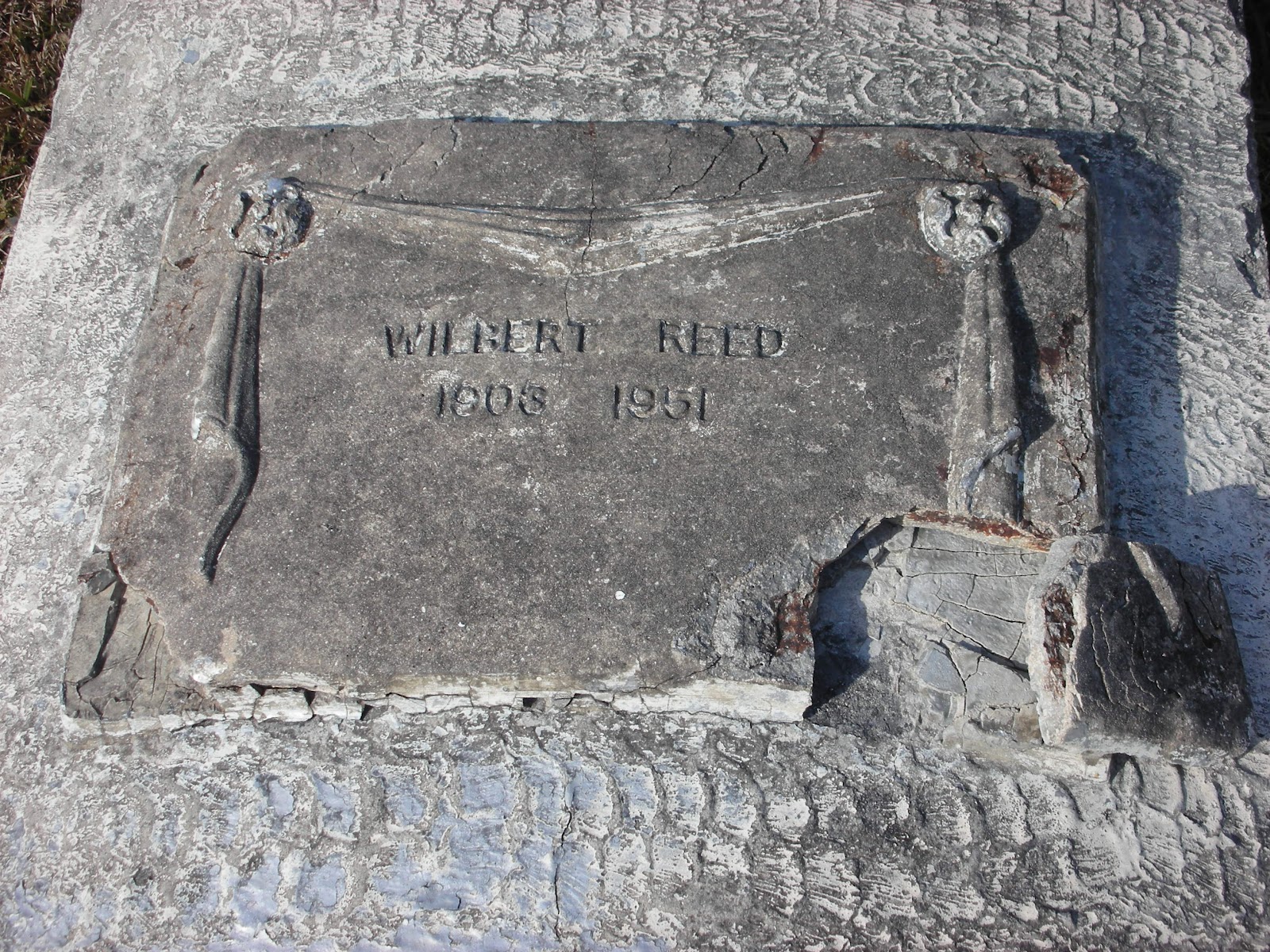
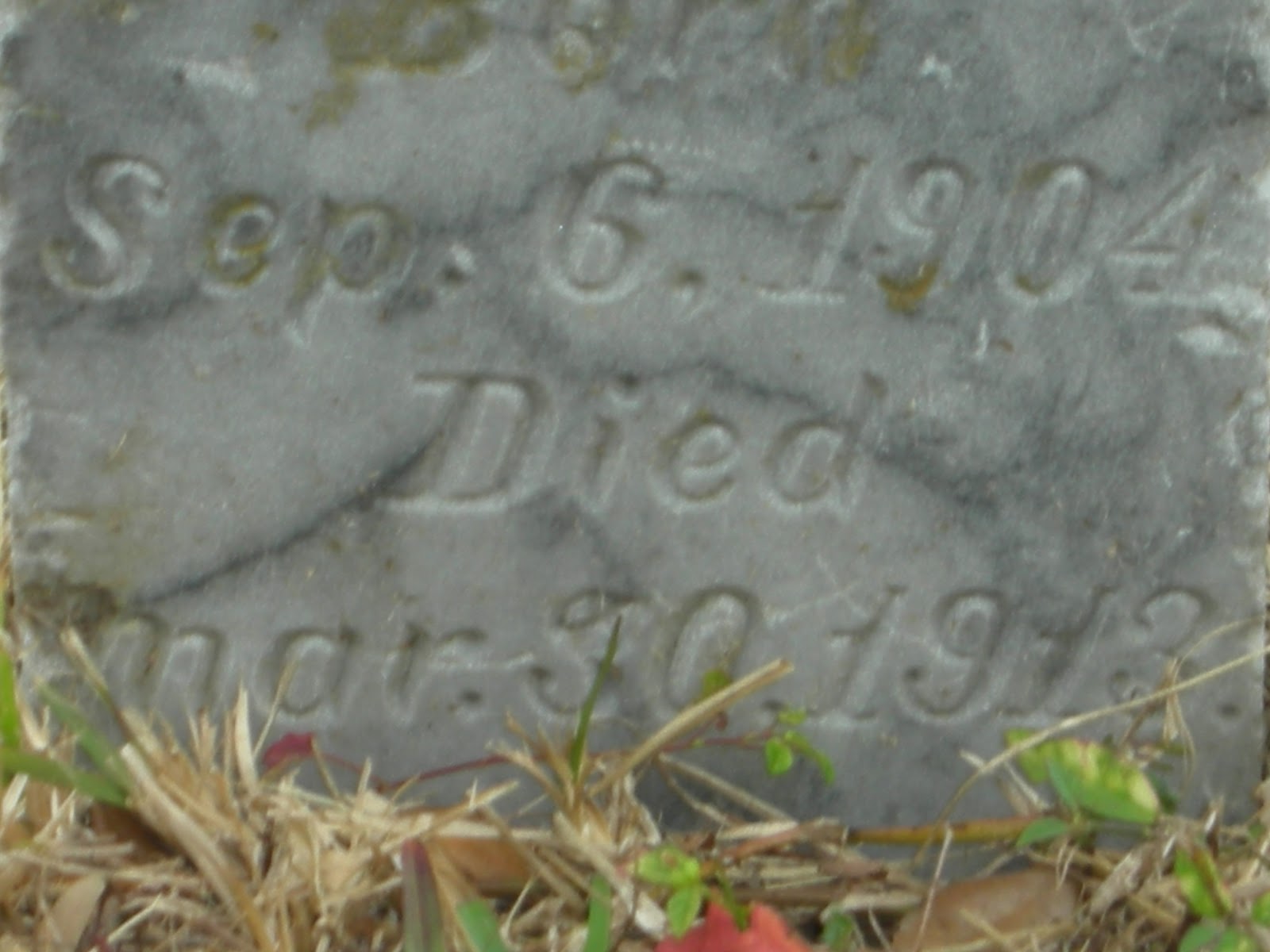
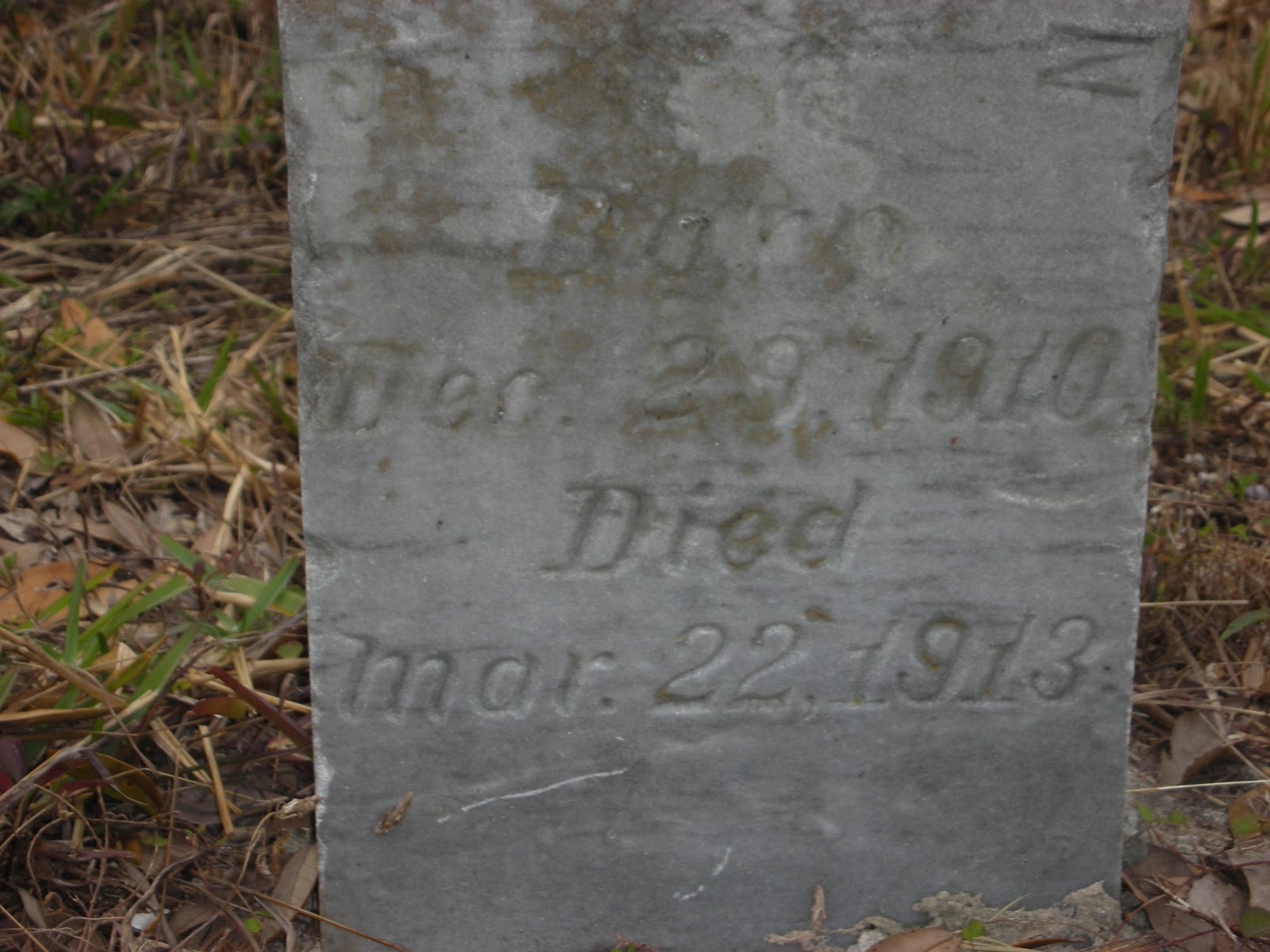
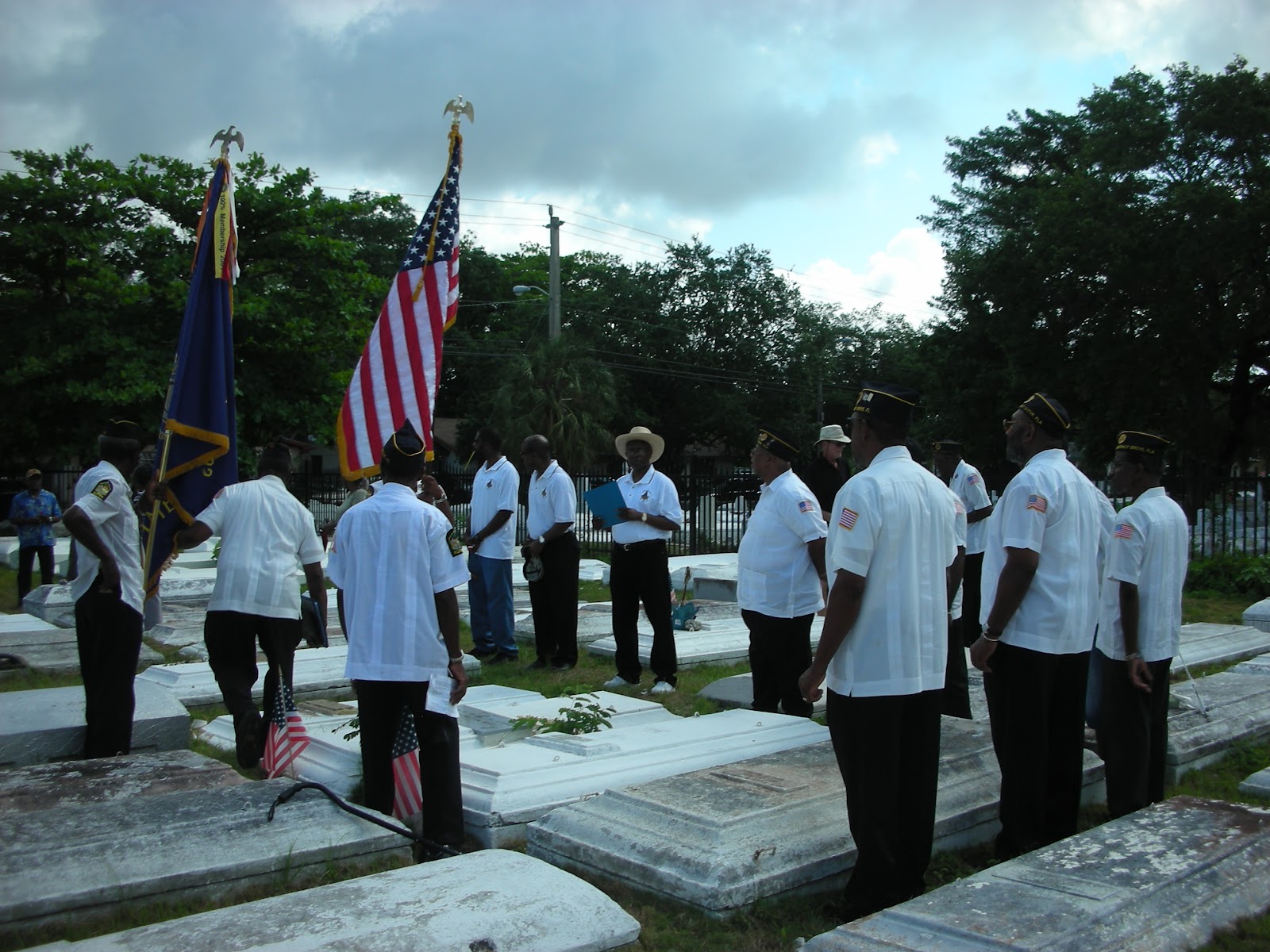
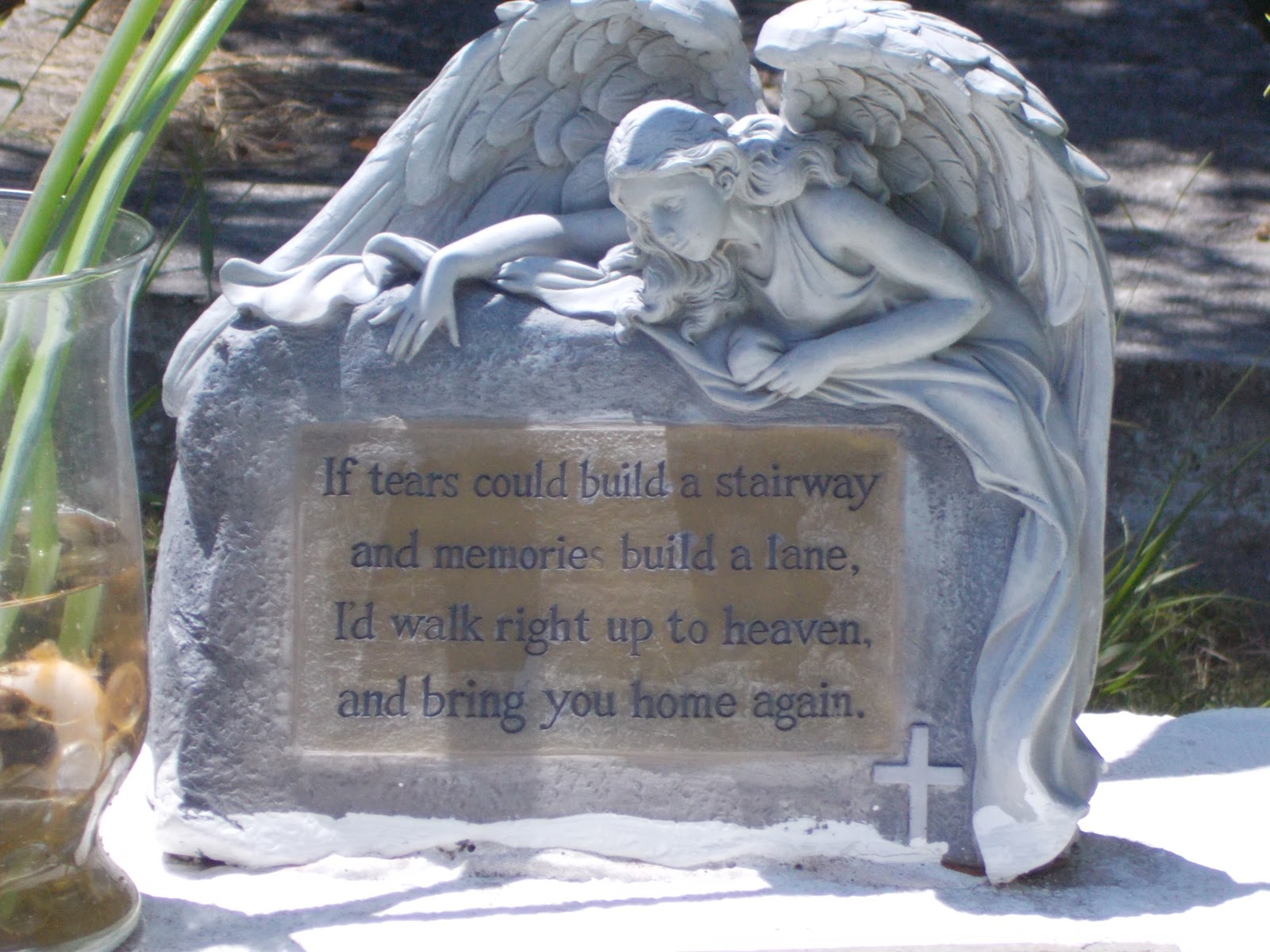
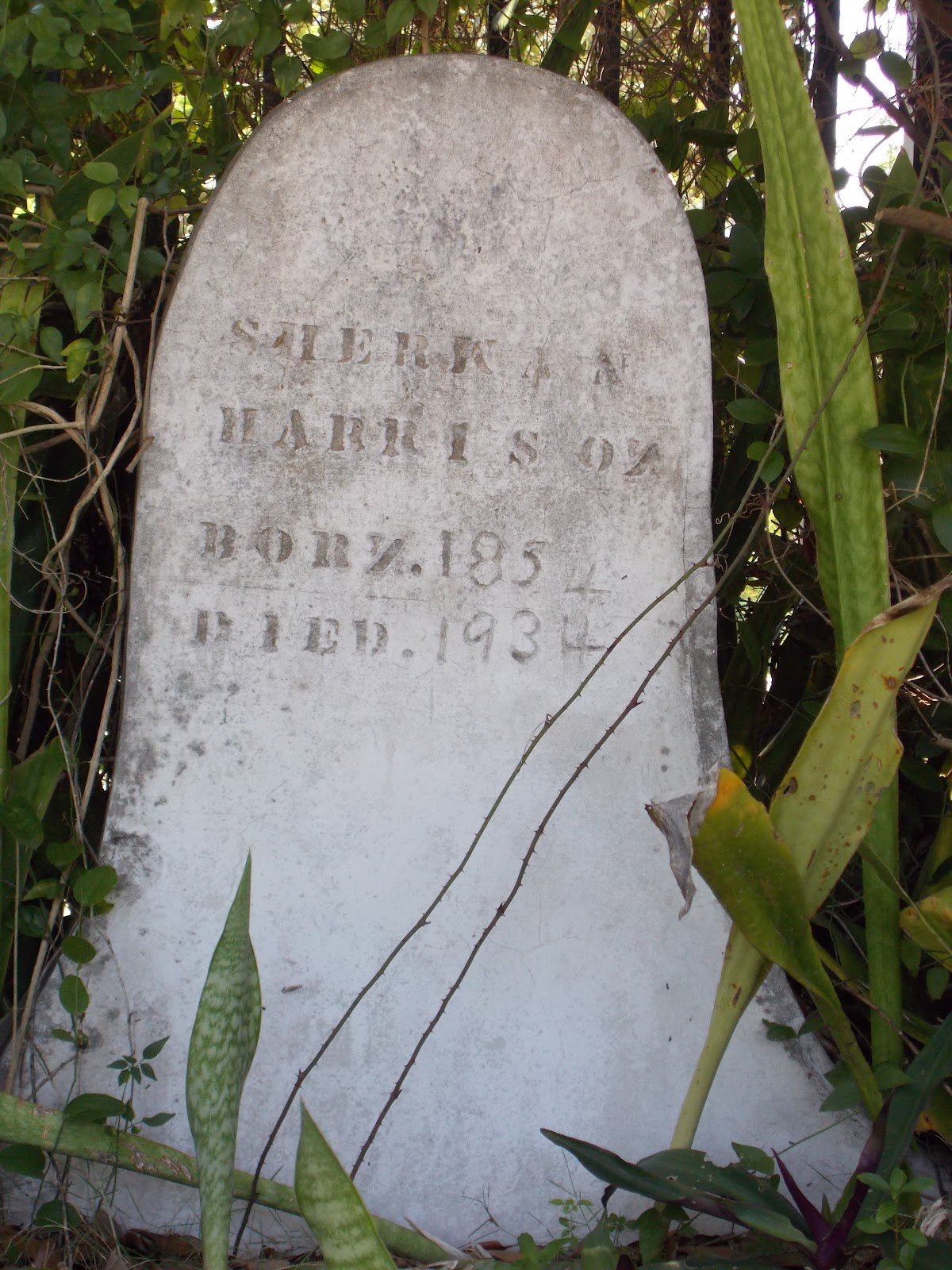
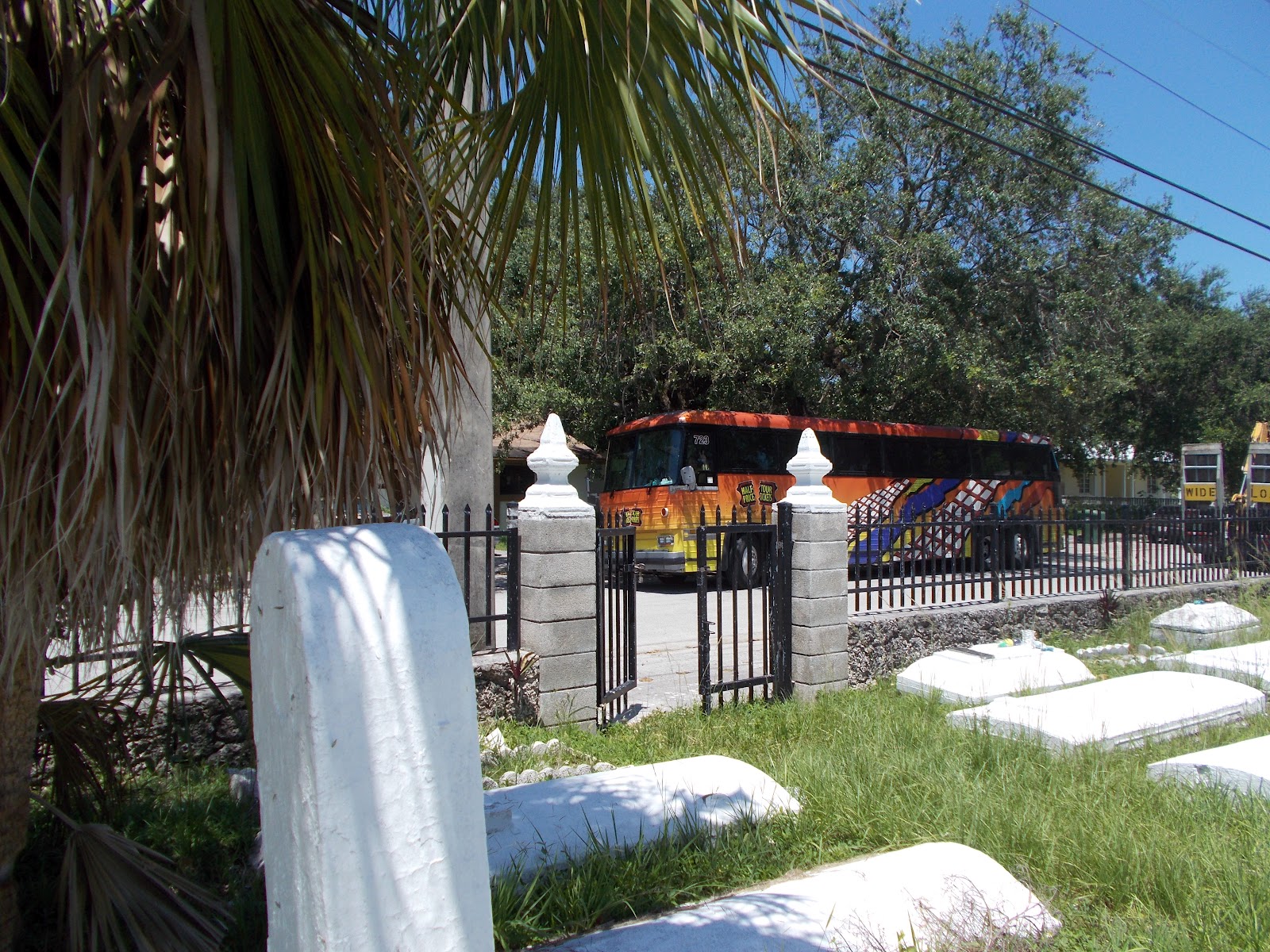
The Charlotte Jane Memorial Park Cemetery

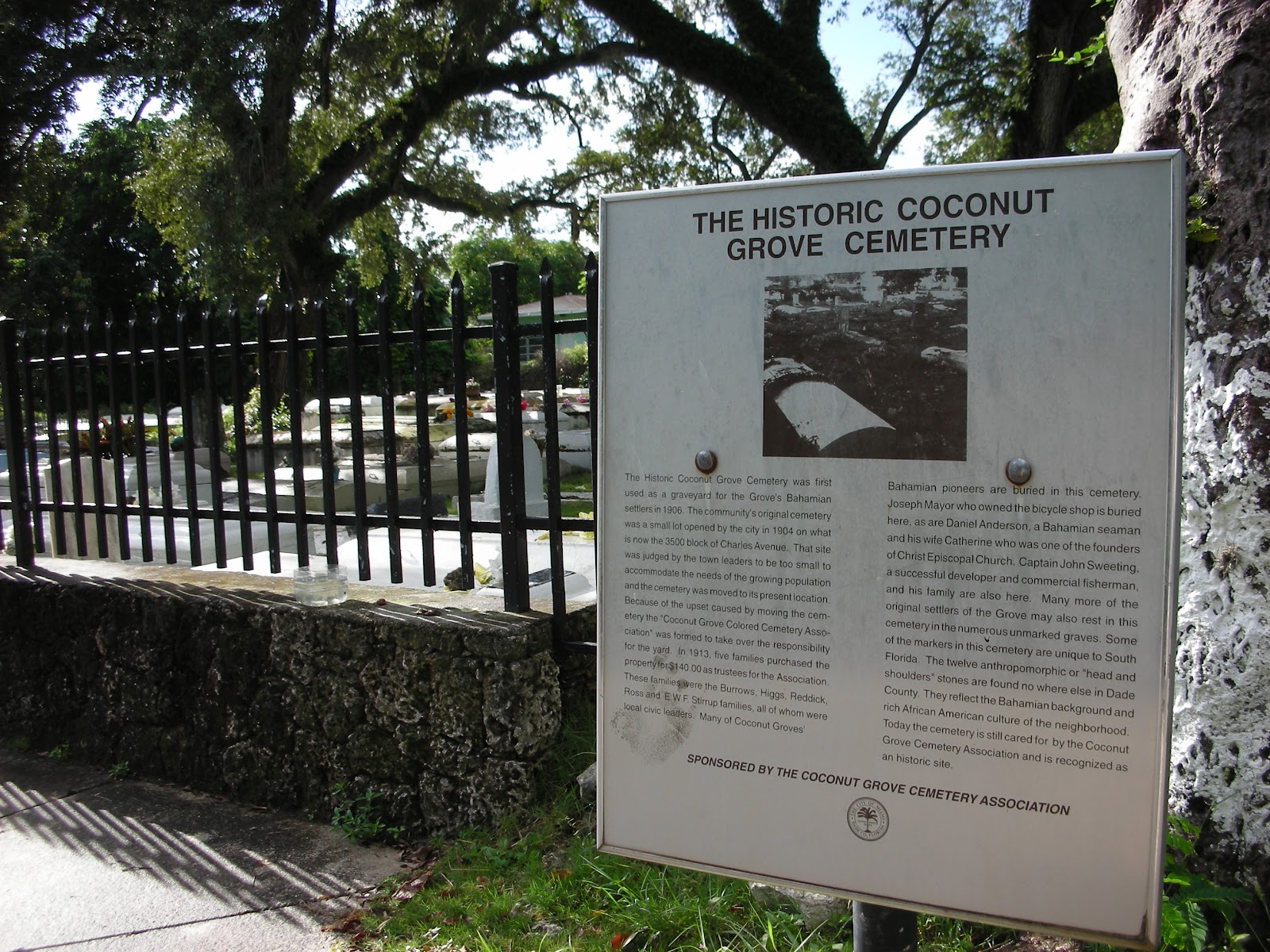
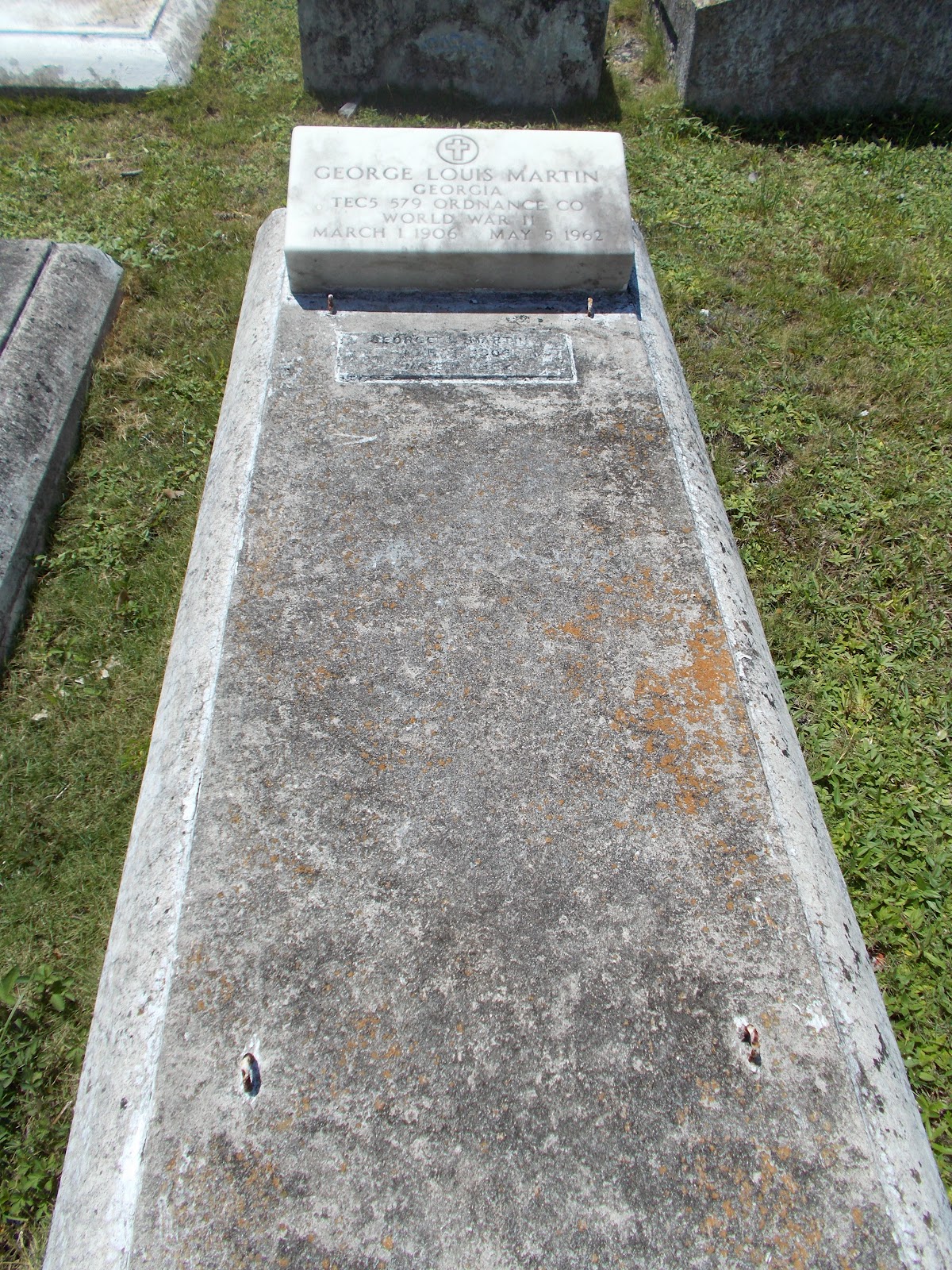
On the corner of Charles Avenue and South Douglas Rd., on the opposite end of the street from the E.W.F. Stirrup House, is the Charlotte Jane Memorial Park Cemetery. It dates back to the early 1900s and at one time — and for a long time — was the only place in Coconut Grove where Black folk could consecrate and bury their dead.

The entrance to the Charlotte Jane Memorial Park Cemetery. 180 degree panorama by author.

Charlotte Jane was E.W.F. Stirrup’s childhood sweetheart. I know
almost nothing about her, save for this: In the 1870s or 1880s Ebenezer
Woodbury Franklin Stirrup made his first pilgrimage to the United
States. He came up through Key West, where he stopped for a while and apprenticed as a carpenter with an uncle. This is the skill he would eventually utilize in Coconut Grove to great effect, building more than 100 houses in the area, including his own show piece at the other end of Charles Avenue. Stirrup reportedly spent 10 years working for his uncle in Key West before he decided he would head north to see what life was like on the mainland. However, before he did he went back to the Bahamas to marry his childhood sweetheart. Then he brought her
back with him, eventually settling in Cutler Bay for a time.

Photo by Stefan Kokemüller
From Wikipedia Commons

I try to imagine that trip, which Mr. Stirrup took at least 3 times in his life. It could not have been easy. The trip from the Bahamas to Key West was obviously an ocean journey. At one time — and for a long time — Key West was the largest city in Florida and remained unconnected to the mainland until 1912, when Henry Flagler completed his railroad. Consequently the journey from Key West to the mainland was another ocean voyage. It would have been far easier, in those times, to sail directly to Cutler Bay. There would have been few roads, if any. Southern Florida was swampland, overgrown with mangrove, pine, oak and banyan trees, not to mention alligators and snakes. Traversing the lower end of the Florida peninsula by land would have been a harrowing and nearly impossible journey.

E.W.F. and Charlotte Jane Stirrup first settled in Cutler Bay, about 13 miles from where they eventually settled. For
whatever reason Cutler Bay was not to his liking and he decided to move north to
the nascent community of Coconut Grove, where he eventually settled and
built his beautiful house and more than 100 others.

The Charlotte Jane Memorial Park Cemetery was originally known by the more generic names of Coconut Grove Cemetery or Grove’s Bahamian Cemetery. It opened in 1904, or 1906 (both dates are cited in various places) and was originally owned by the city (despite what I stated elsewhere). According to the USGenWeb Archives, Mary Washburn writes:

In 1913, the cemetery property was purchased by five families for the sum of $140.00.  The families that purchased the property are Burrow, Higgs, Reddick, Ross and the E.W.F. Stirrup families.


The first burial was Joseph Mayor he was buried as Daniel Anderson.  Daniel Anderson and his wife Catherine Anderson were the founders of the Christ Episcopal Church.


Also buried here is Capt. John Sweeting, developer and commercial fisherman who Settled the ground now know as Charlotte Jane Memorial Park Cemetery.

There has long been a rumour to the effect that Michael Jackson filmed the cemetery scenes to “Thriller” at the Charlotte Jane Memorial Park Cemetery and you’ll find many references on the innertubes citing that. This is totally incorrect. WikiAnswers states:

Contrary to rumors, the cemetery scenes of Thriller were actually filmed on a soundstage and not at an actual cemetery. This fact is clearly proven by watching the DVD release of Thriller. During the wide-shot of the cemetery set as Michael and Ola walk past, various lighting and rigs can be seen over head.

Again, the cemetery sequence was NOT filmed in a real cemetery.

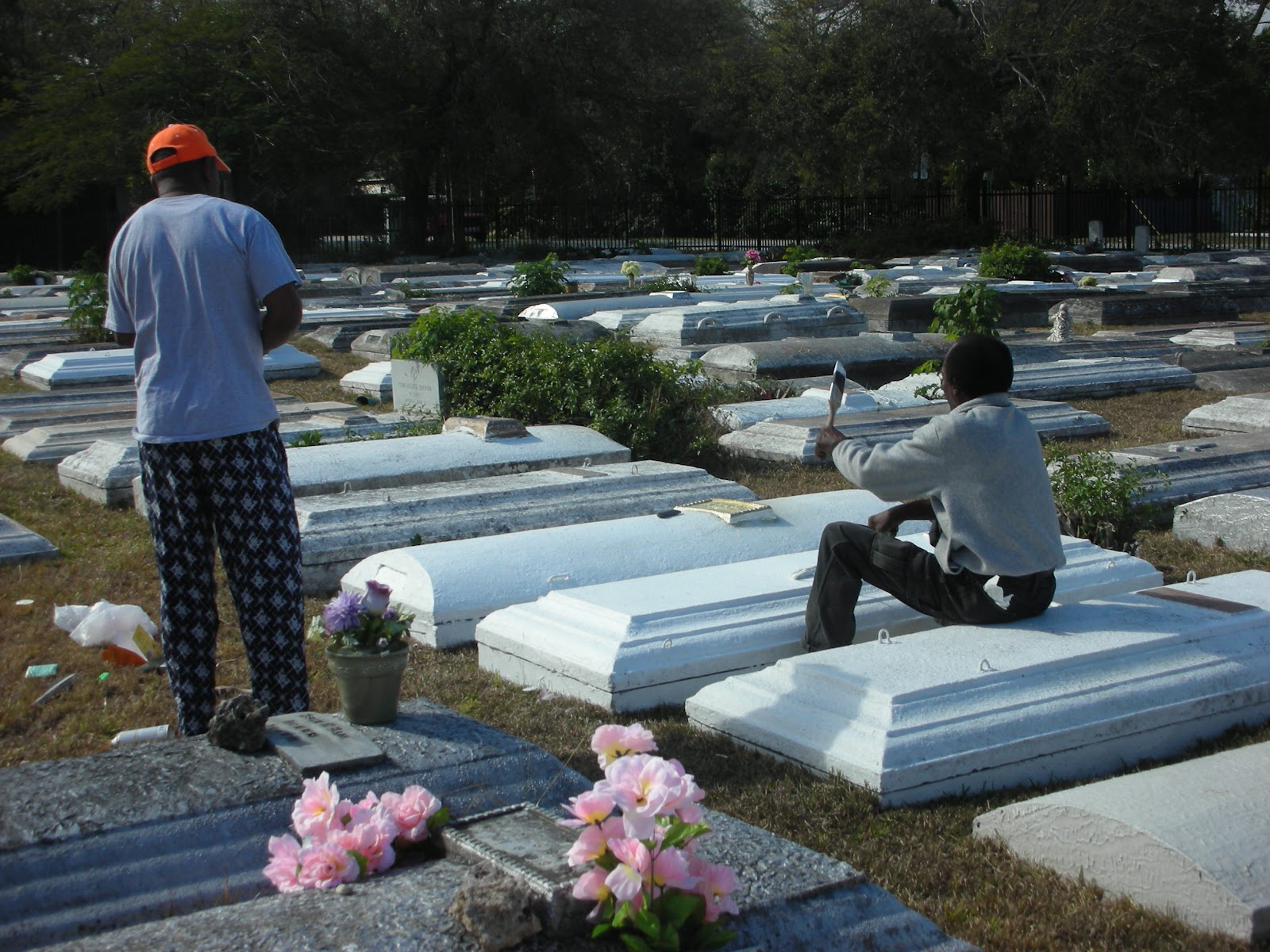
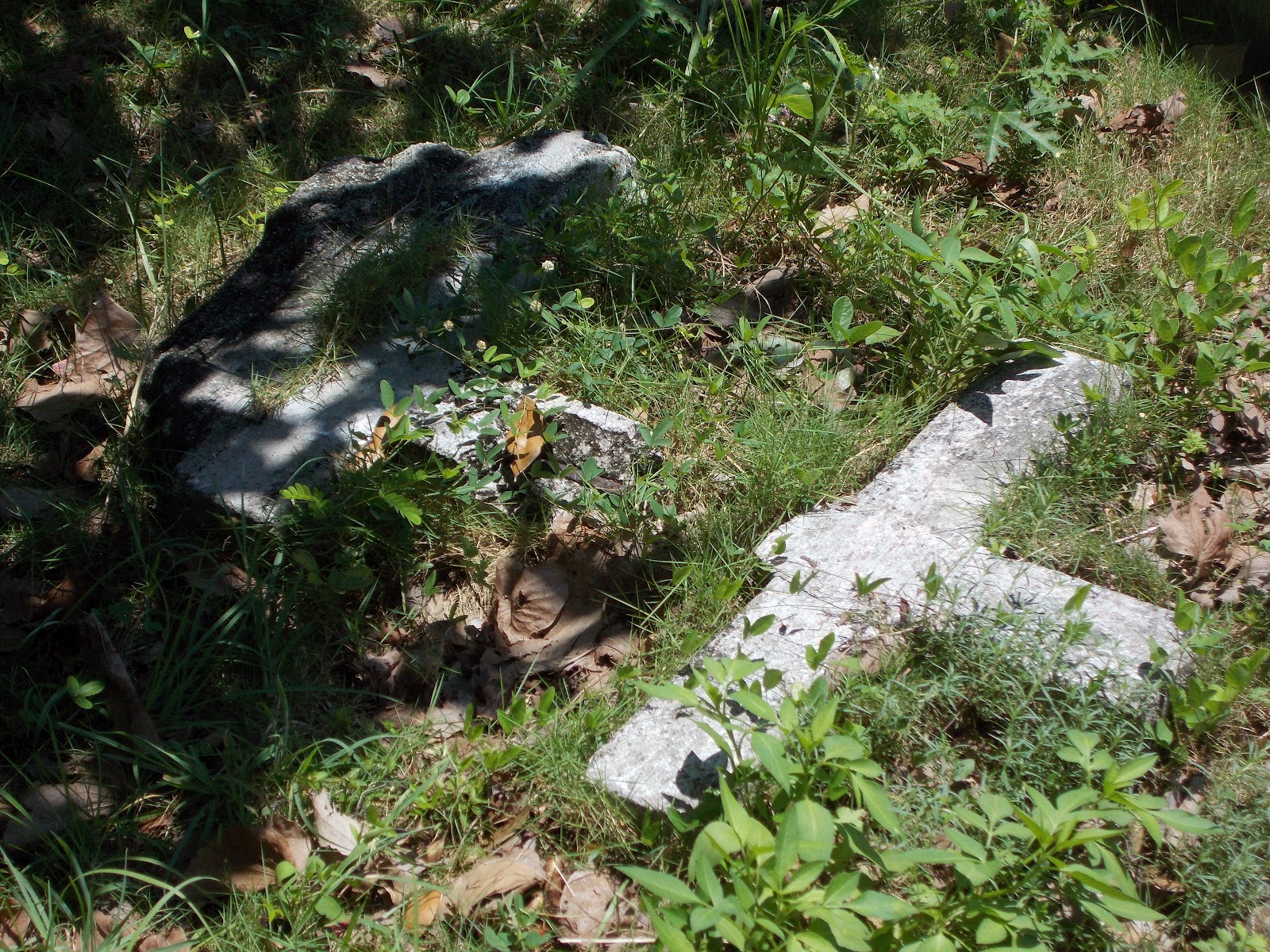
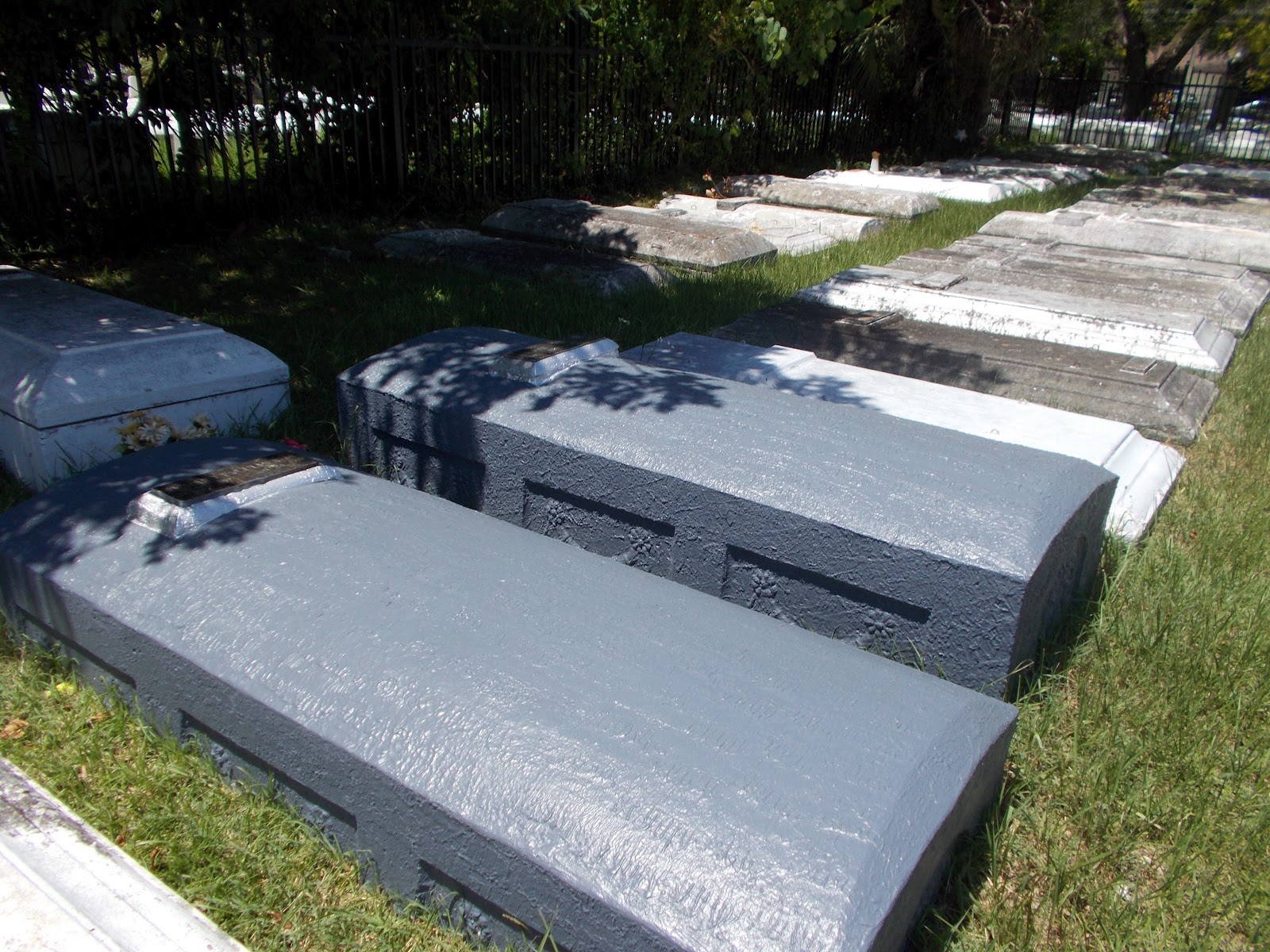
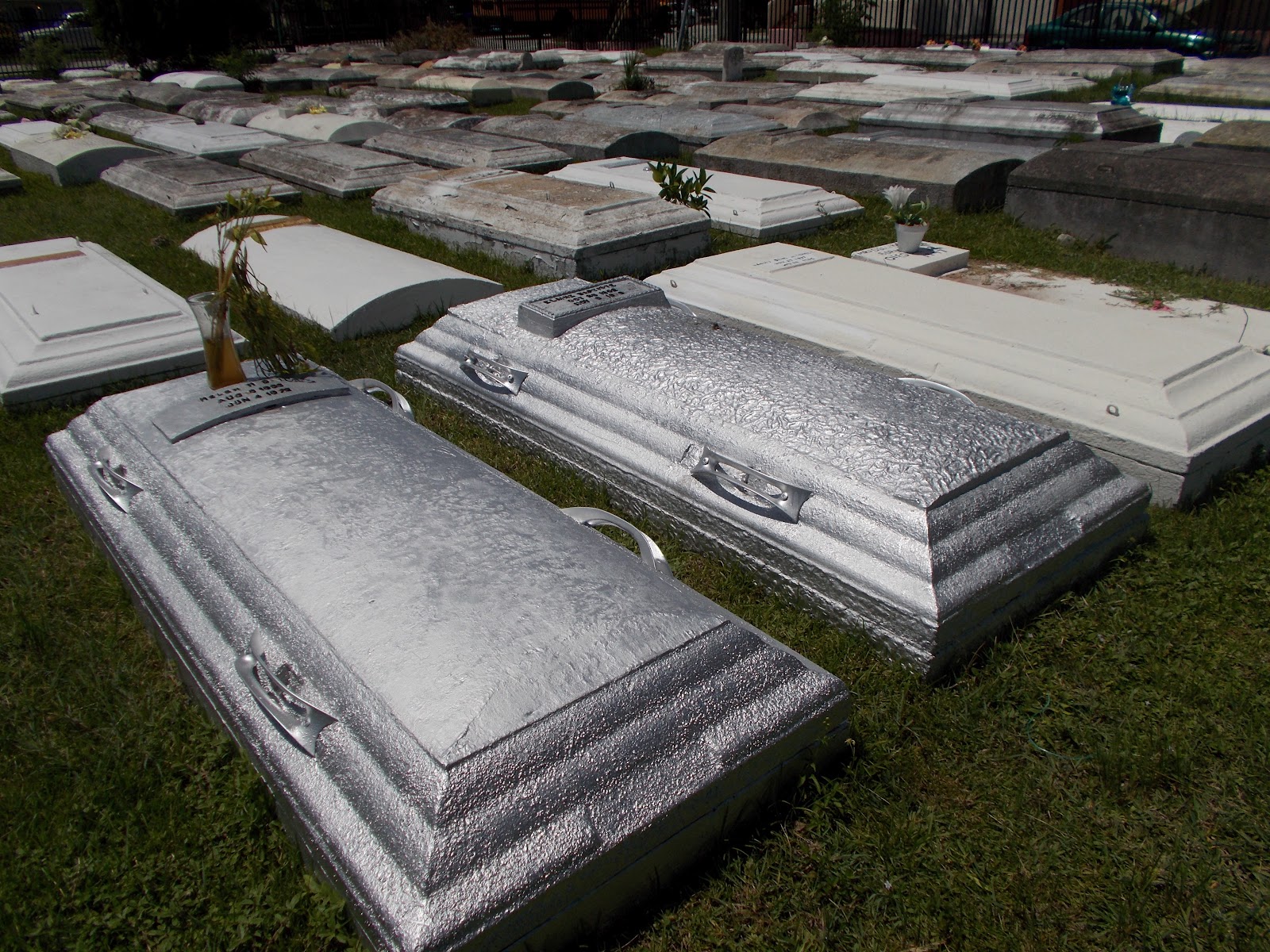
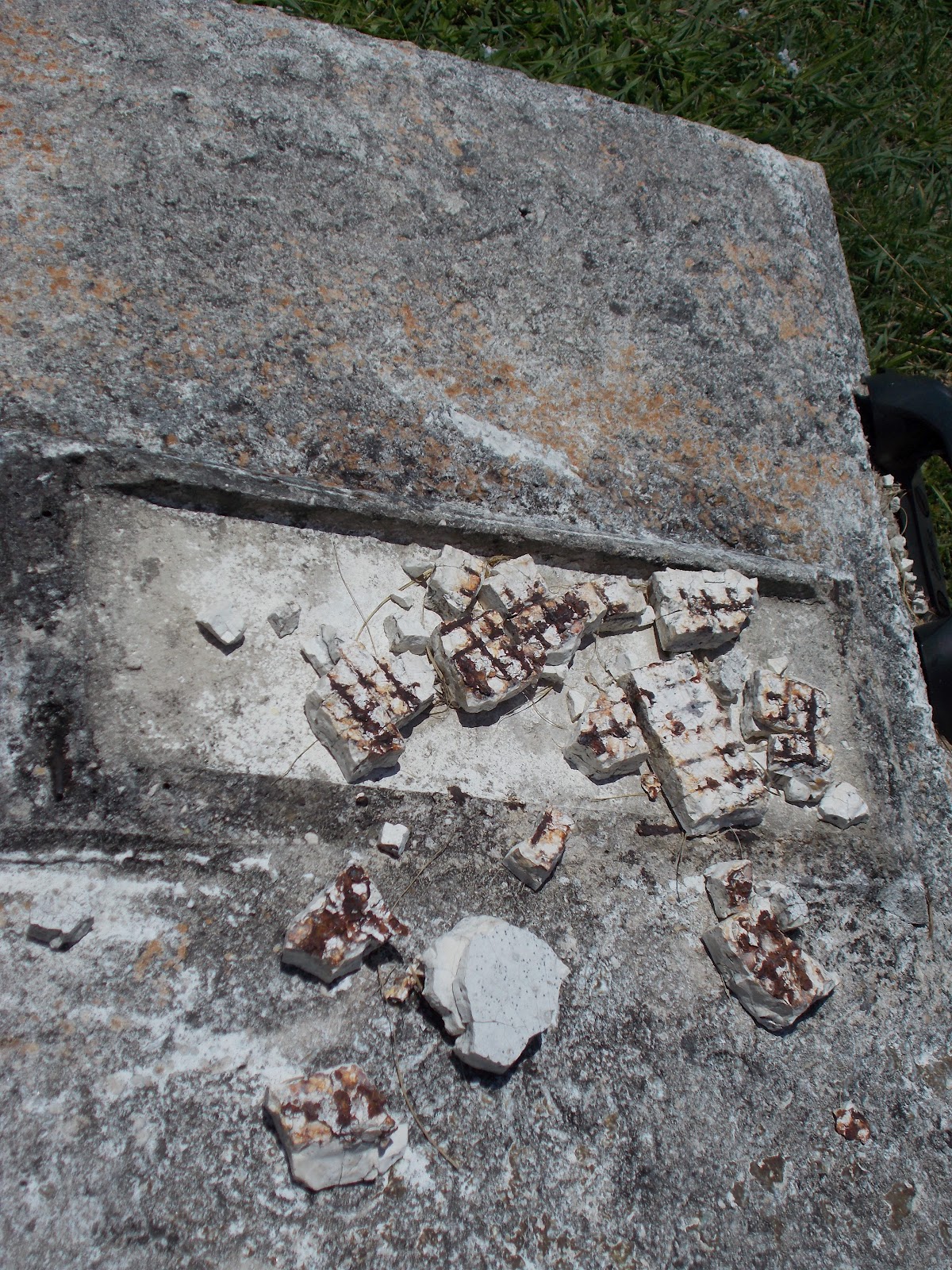
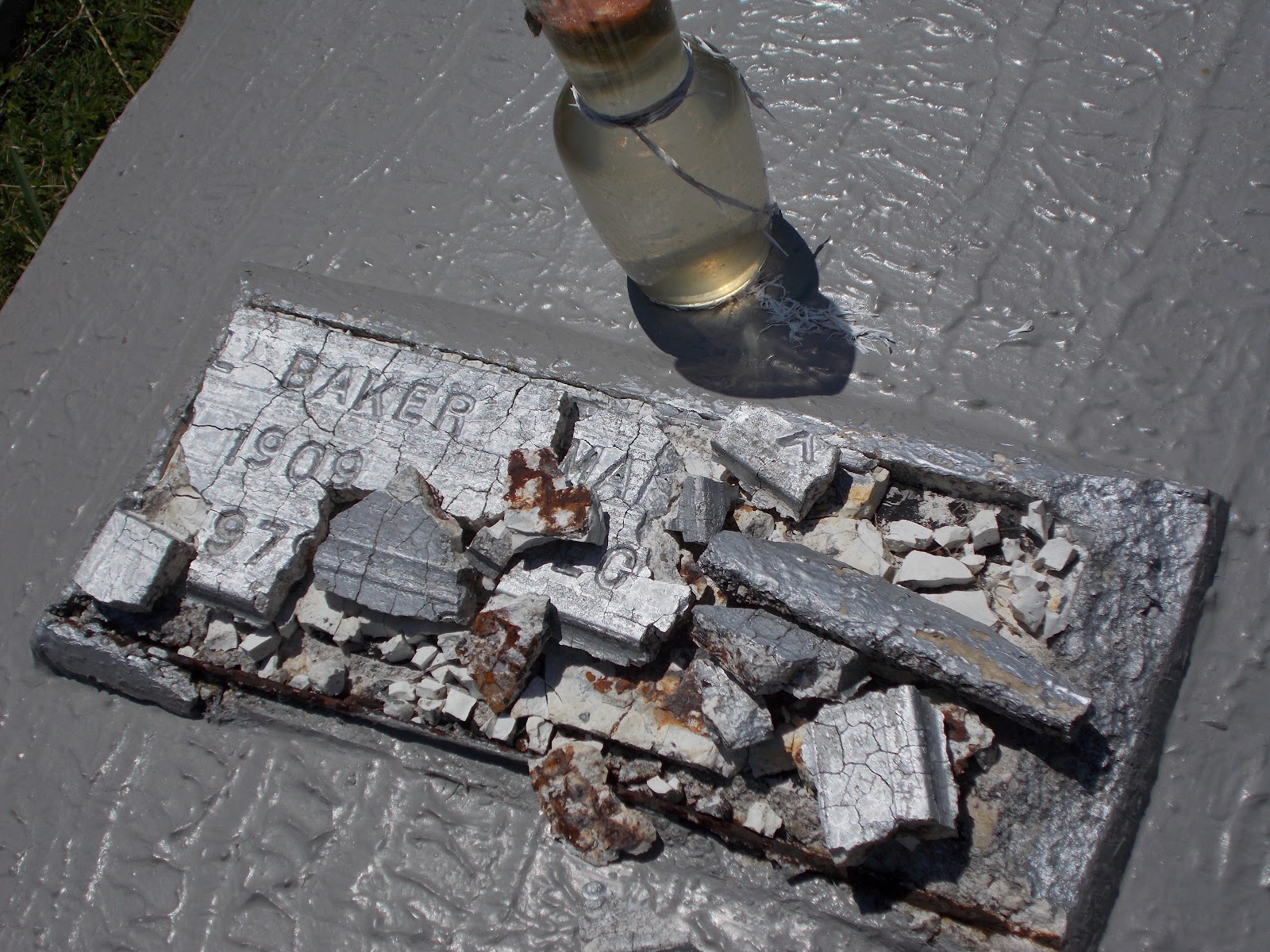
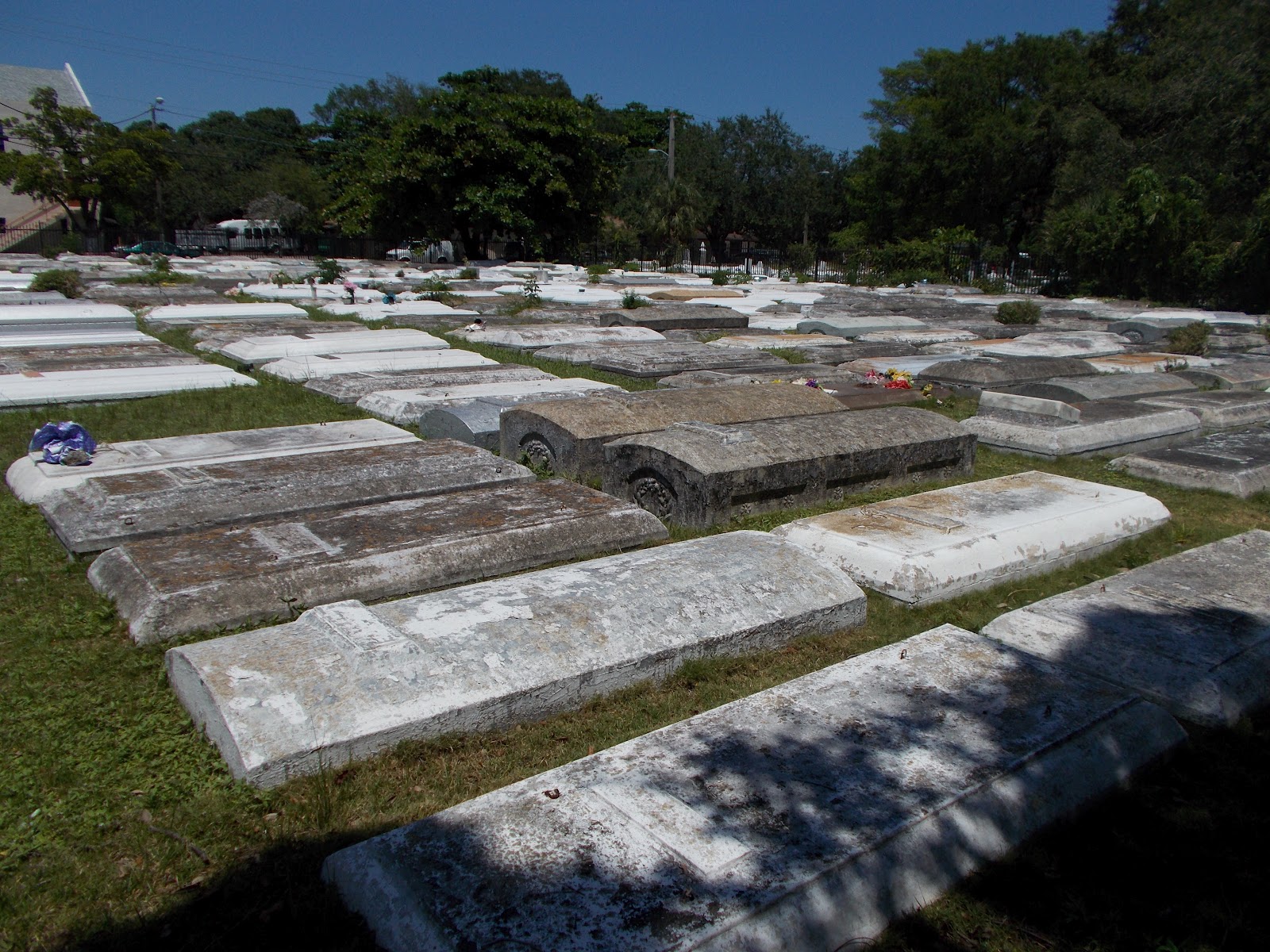
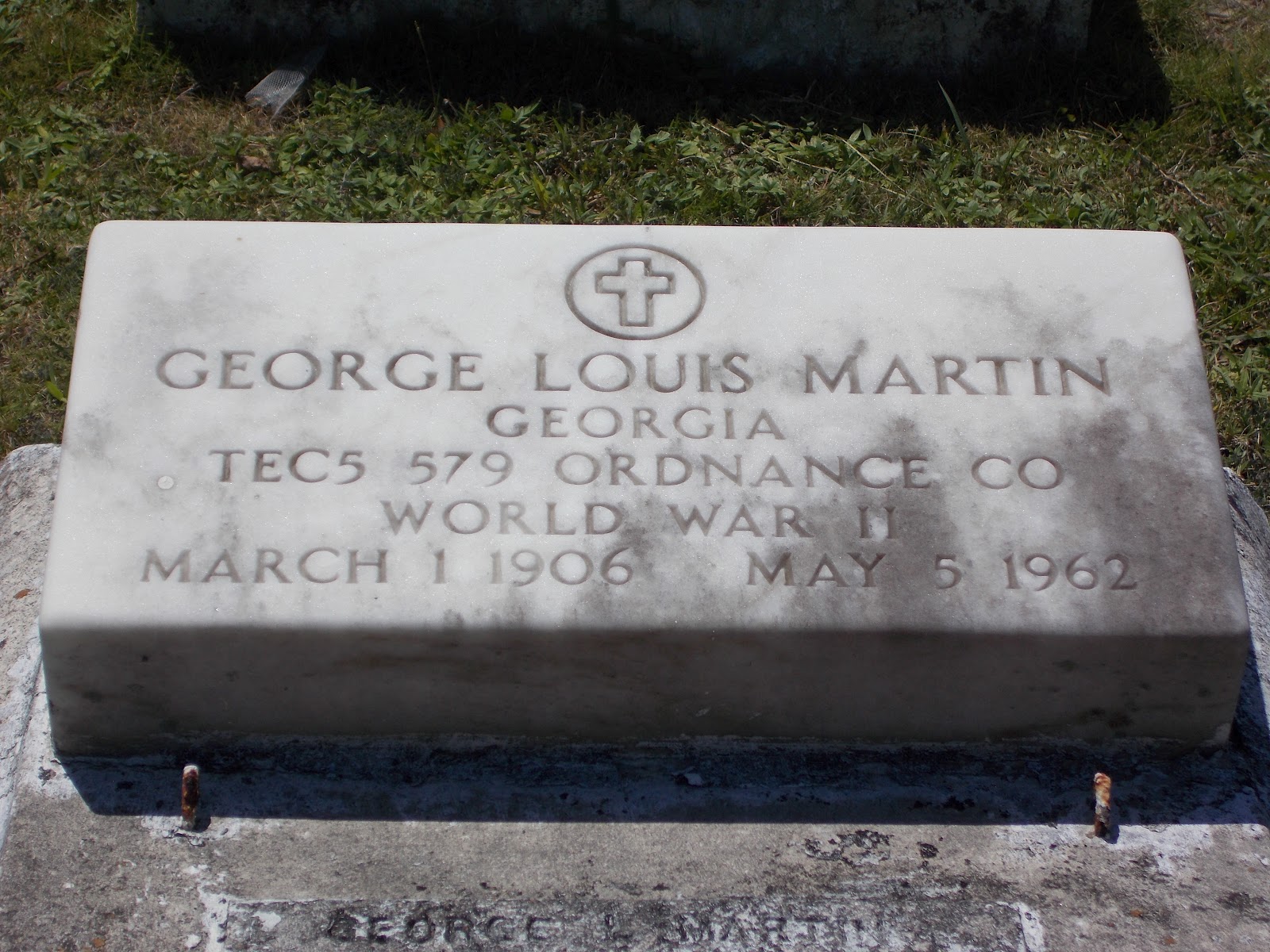
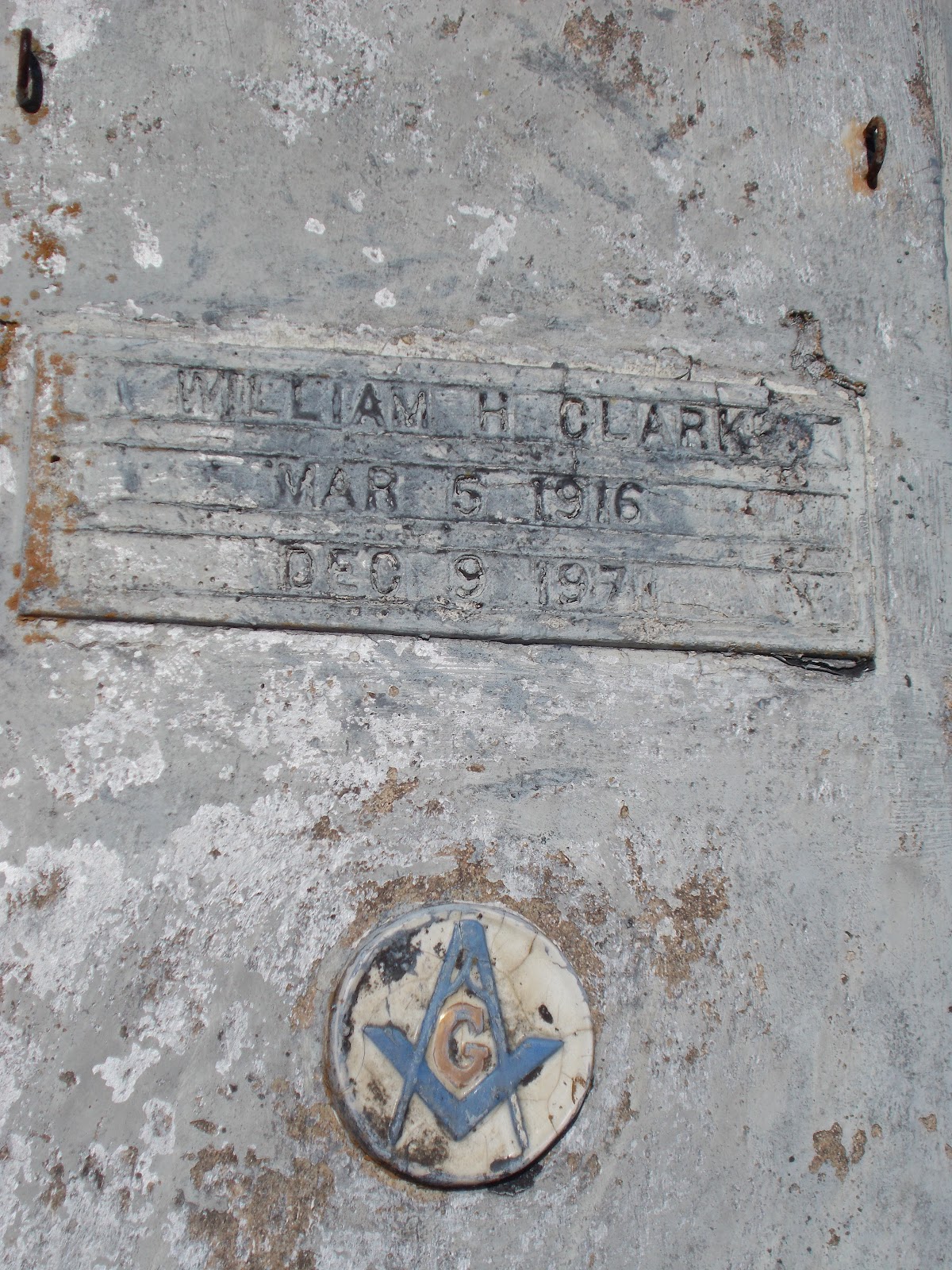
No matter because the Charlotte Jane Memorial Park Cemetery is a lovely little cemetery, with a long history of its own. In Florida, as in New Orleans, caskets cannot be buried below ground because of the water table. Unlike the New Orleans’ crypts you are used to seeing, the graves at the Charlotte Jane Memorial Park Cemetery are simple and uncomplicated, paralleling the economic realities of a Black community in 20th Century ‘Merka.

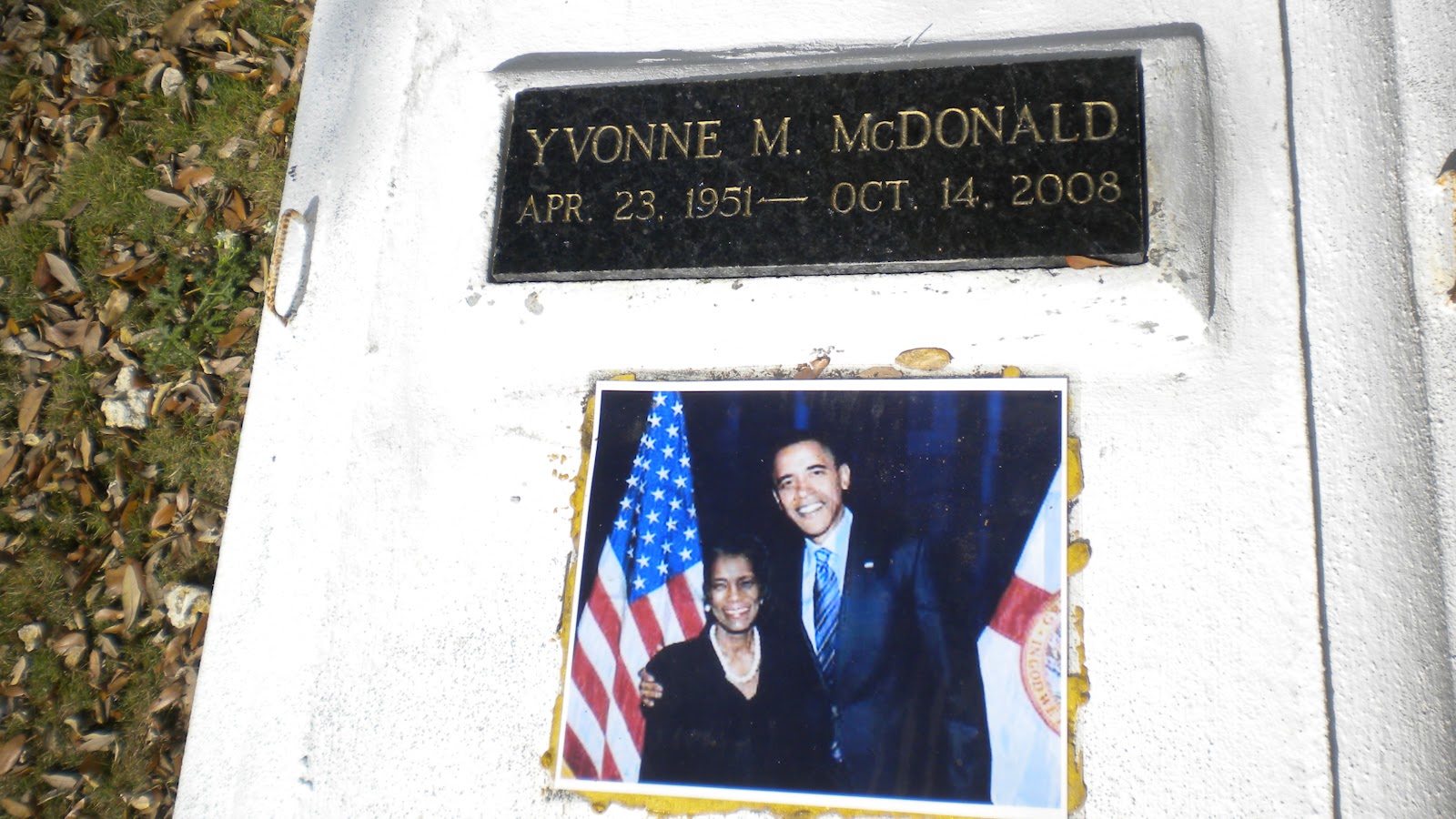
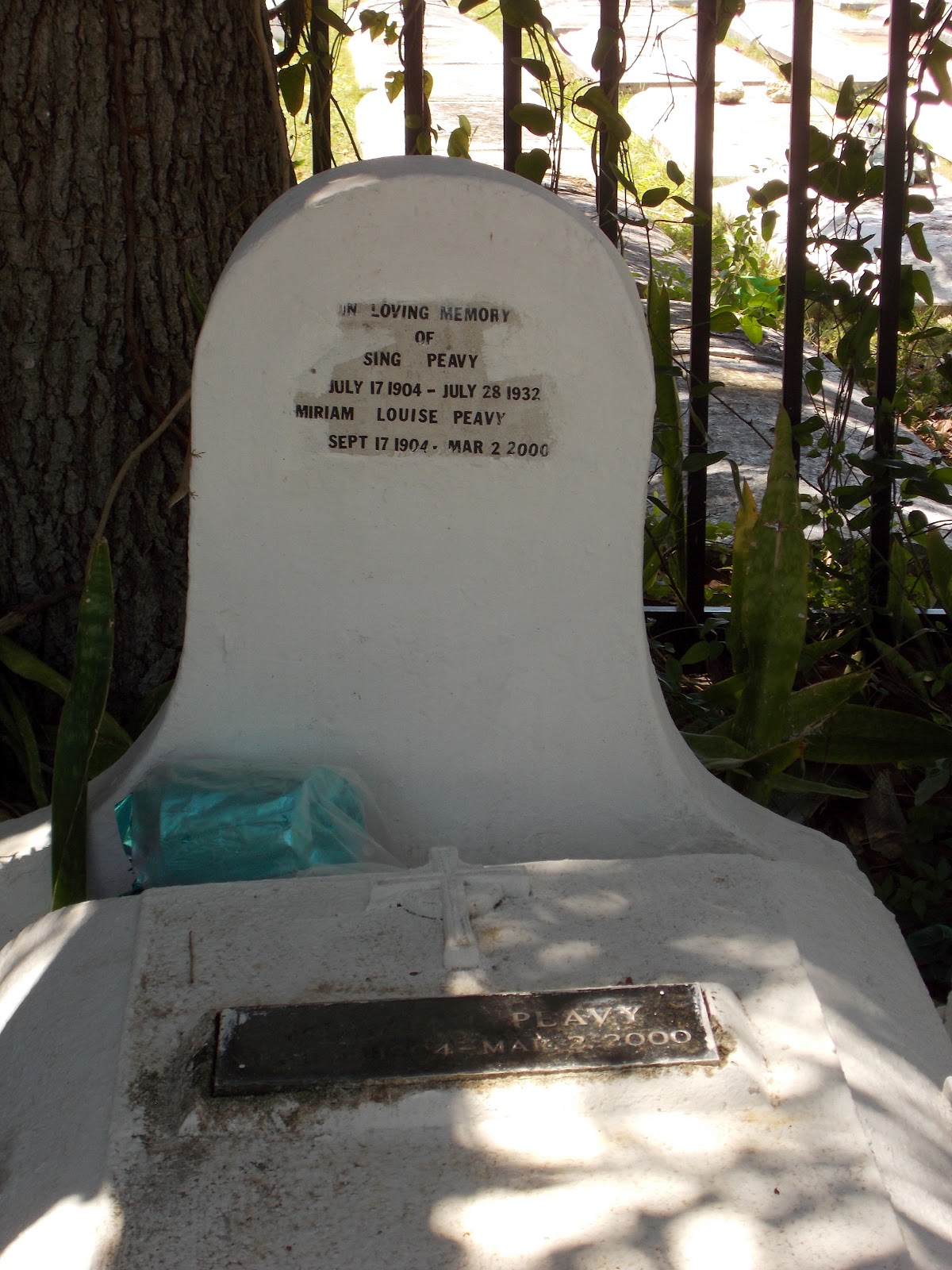
In the years since I have been visiting Charles Avenue I have taken thousands of pictures of the Charlotte Jane Memorial Park Cemetery, some of which I’d like to share with you.

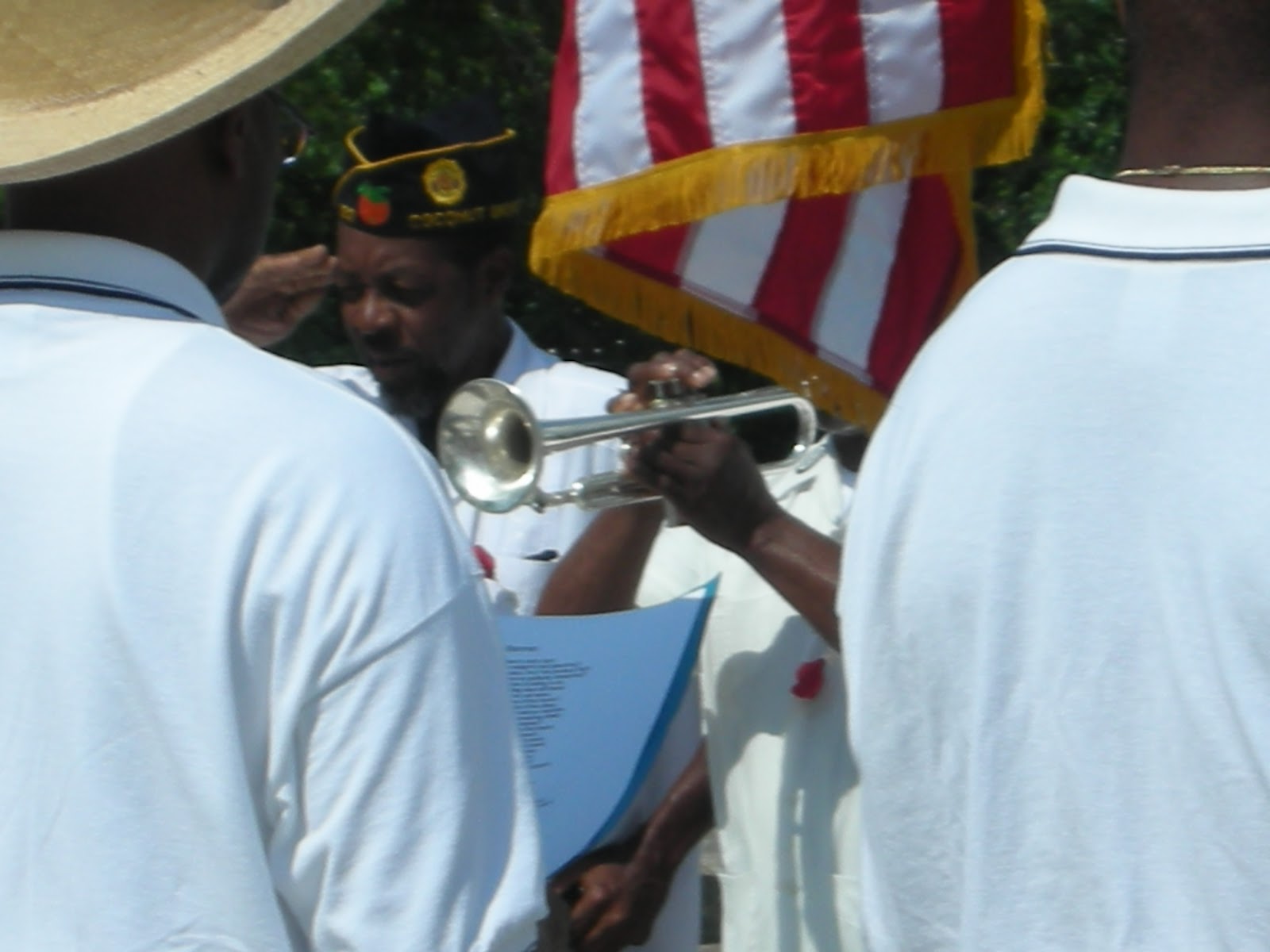
Memorial Day, 2010

Memorial Day, 2010

Memorial Day, 2010

Memorial Day, 2010

Memorial Day, 2010

Memorial Day, 2010

Memorial Day, 2010

All photographs © copyright 2012 by author.

***

***

Unpacking Coconut Grove ► Part 4.1 ► A Photo Essay

The room on the second floor in
which the (alleged) illegal
demolition was taking place.
Another angle, showing the 2nd
floor front room and the former
upper porch, now an interior room.

A quick visit to Charles Avenue confirmed the (allegedly) illegal demolition inside the historic, 120-year old E.W.F. Stirrup House has stopped. Whether that was due to my reporting them to the City of Miami Building Department, because of my weekend blog post called Open Houses and Broken Laws, or whether they just ran out of work to do, is something I don’t know.

However, I have a small clue that my post has been read by the alleged rapacious developer. There is now a lock and chain through the double-doors in the wall that separates the E.W.F. Stirrup property from the Grove Gardens Residences Condominiums mentioned in my previous post. I have never seen a chain and lock on that door before. Maybe they think that’s how I get onto the property when I visit and thought this would block my way.

That looks formidable, doesn’t it?

This is the formidable lock on the front gate. The gap is large enough to squeeze through, but I’ve never done that.

Yet locks do not prevent me from taking pictures through a chain link fence.

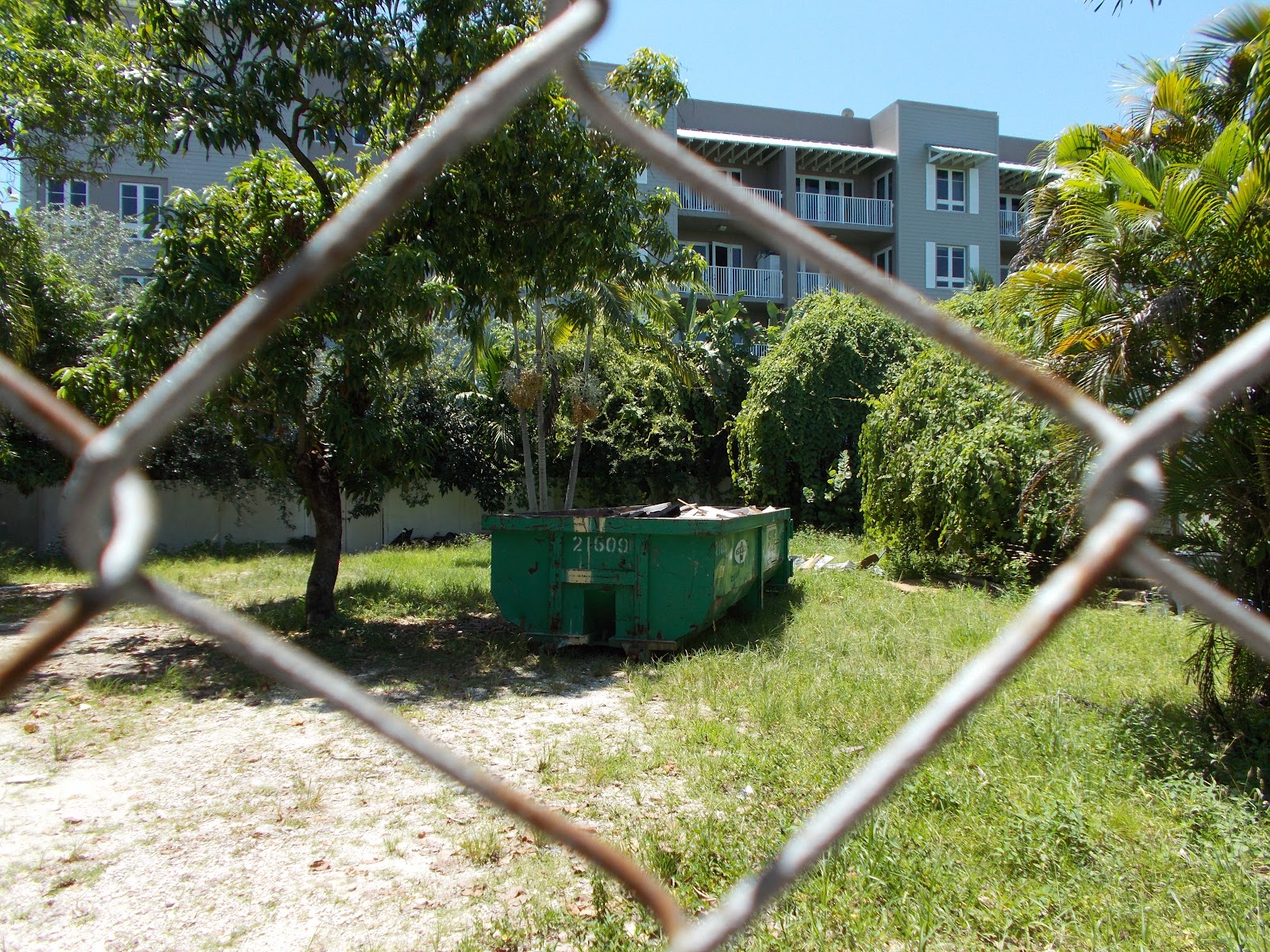
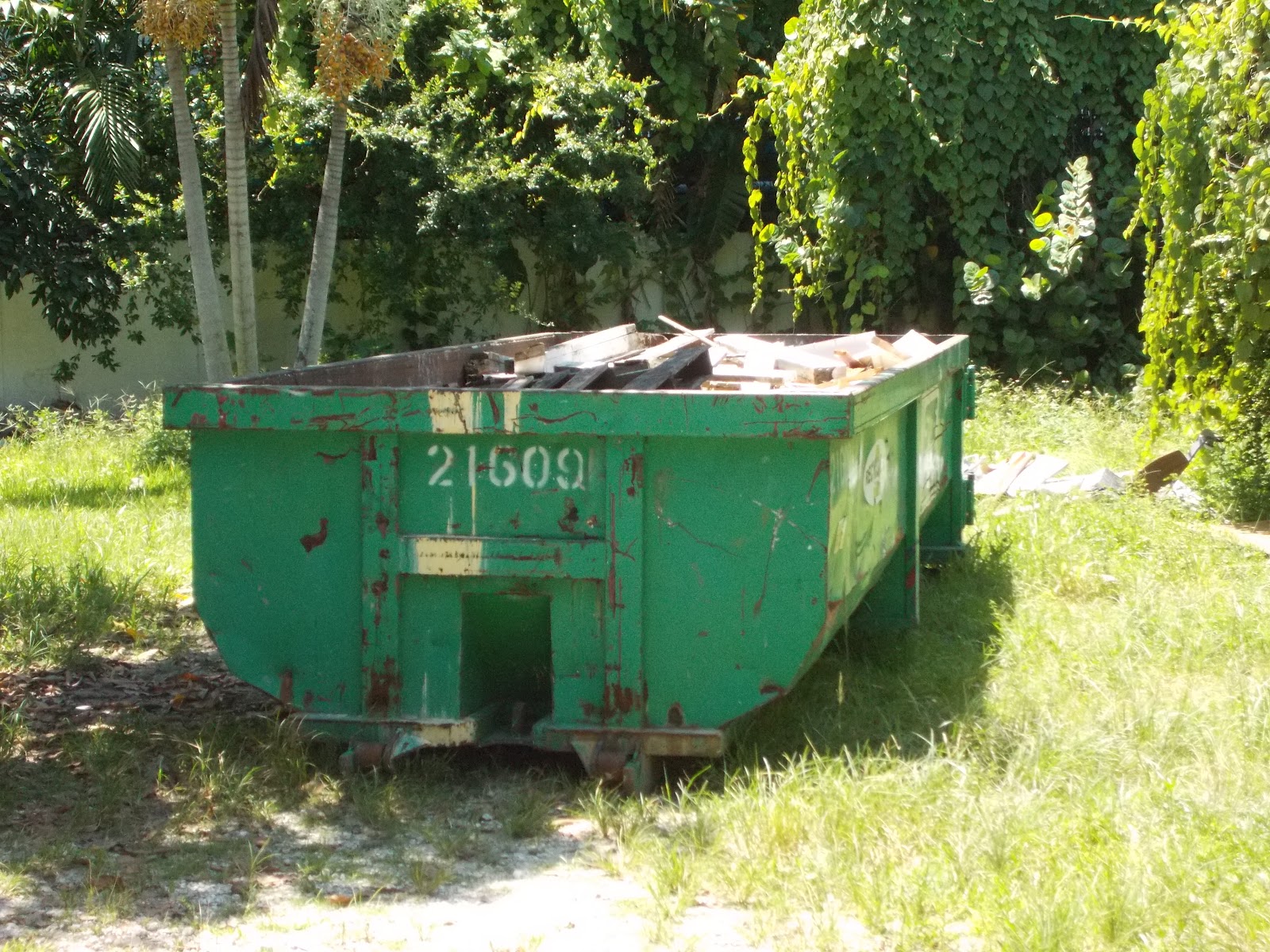
The workers conducting the (alleged) illegal demolition of the
E.W.F. Stirrup House filled this dumpster before work stopped.

If I were in Great Britain I’d call this a skip, which is taken to the tip. In any language, it’s full.

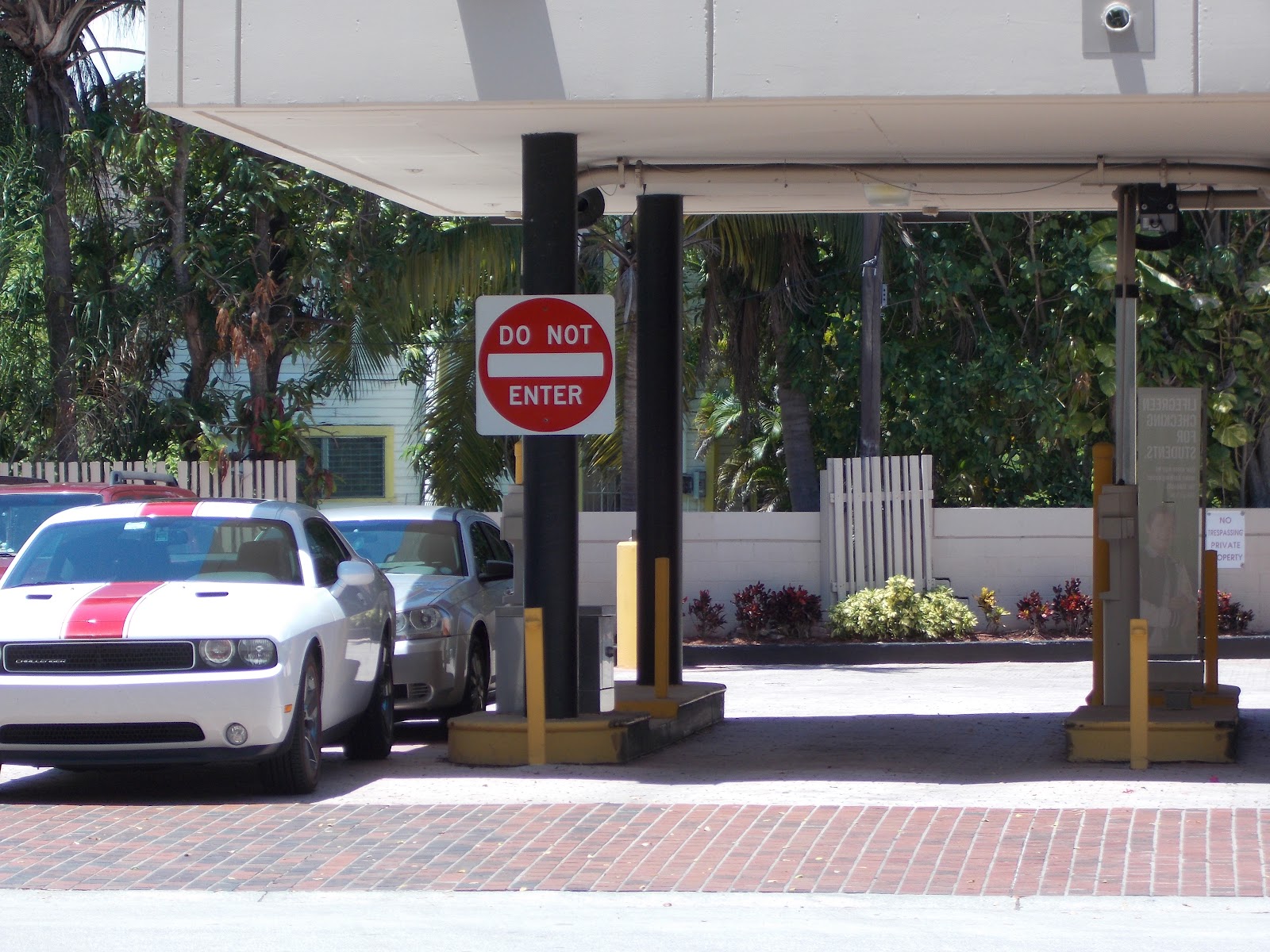
Locks do not prevent me from taking pictures over the wall from the Regions Bank parking lot either.
This angle showed me a new pile of trash that wasn’t there on Friday.
This is the parking lot of the Regions Bank. The wall is chest
high and you can just see the E.W.F. Stirrup House in the background.
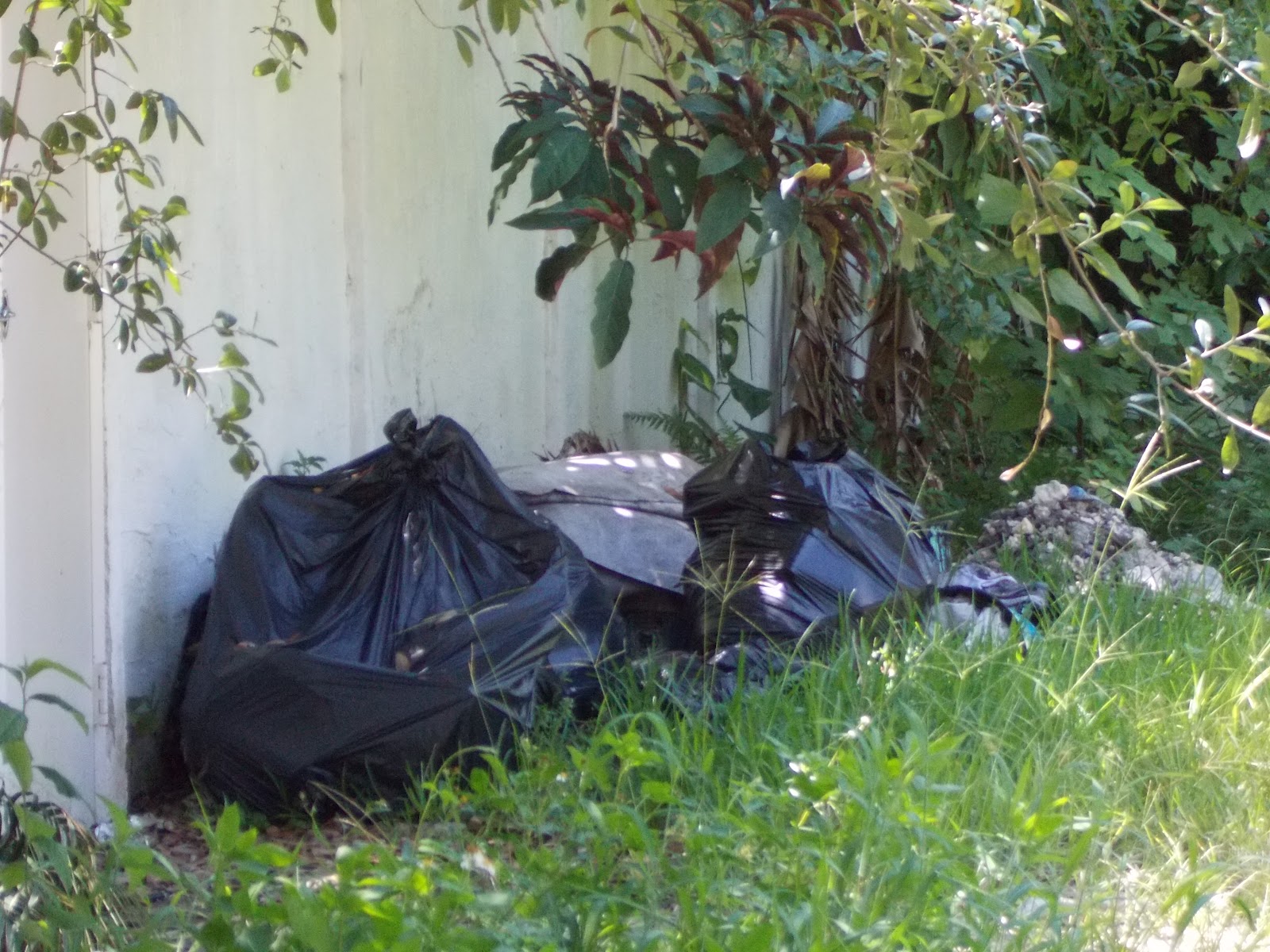
It’s not clear what that pile of trash is, but I’d lay money it’s non-conforming.
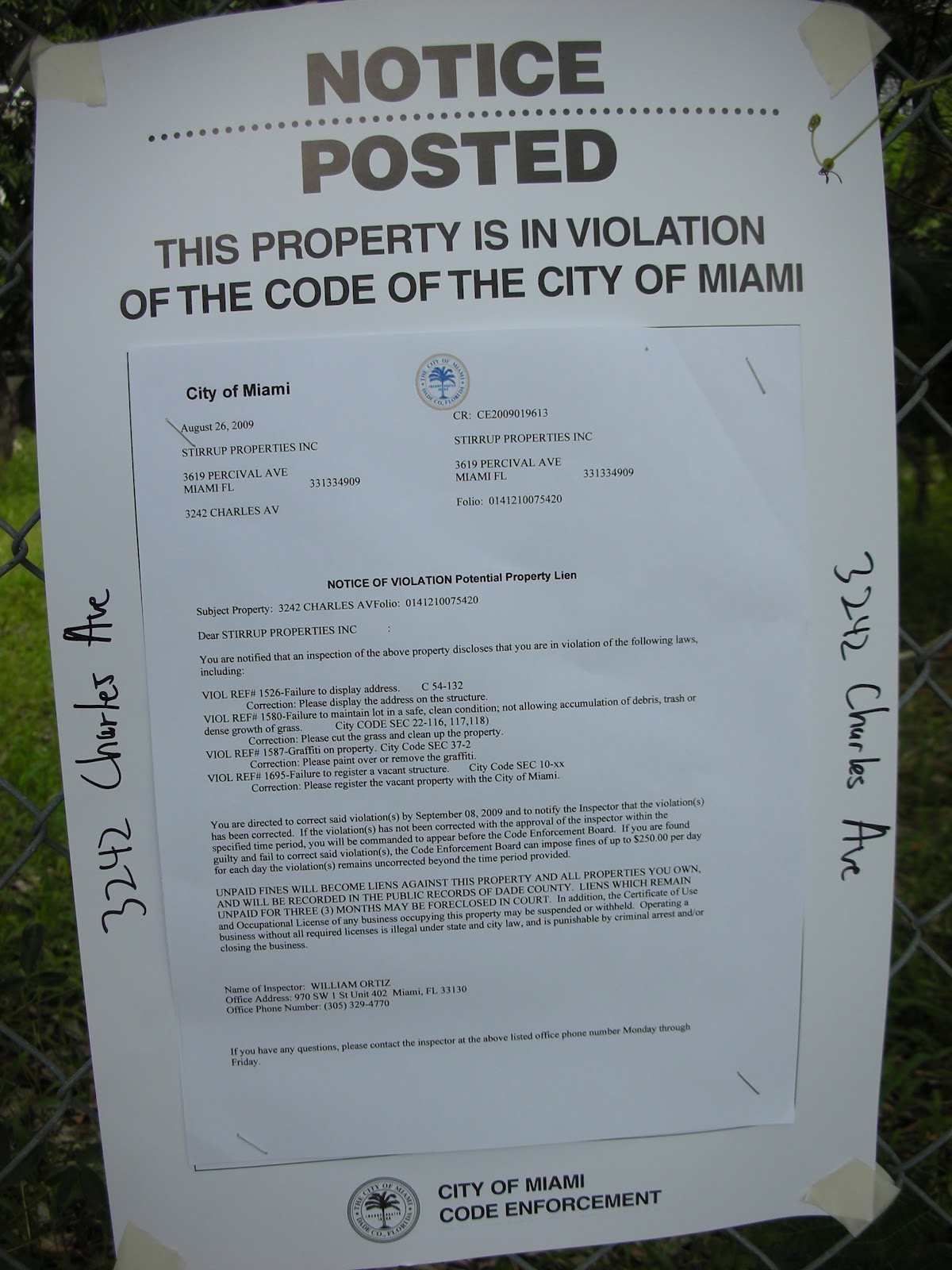
Note the height of the grass. I’ve seen the property cited previously for a lack of upkeep on the landscaping.

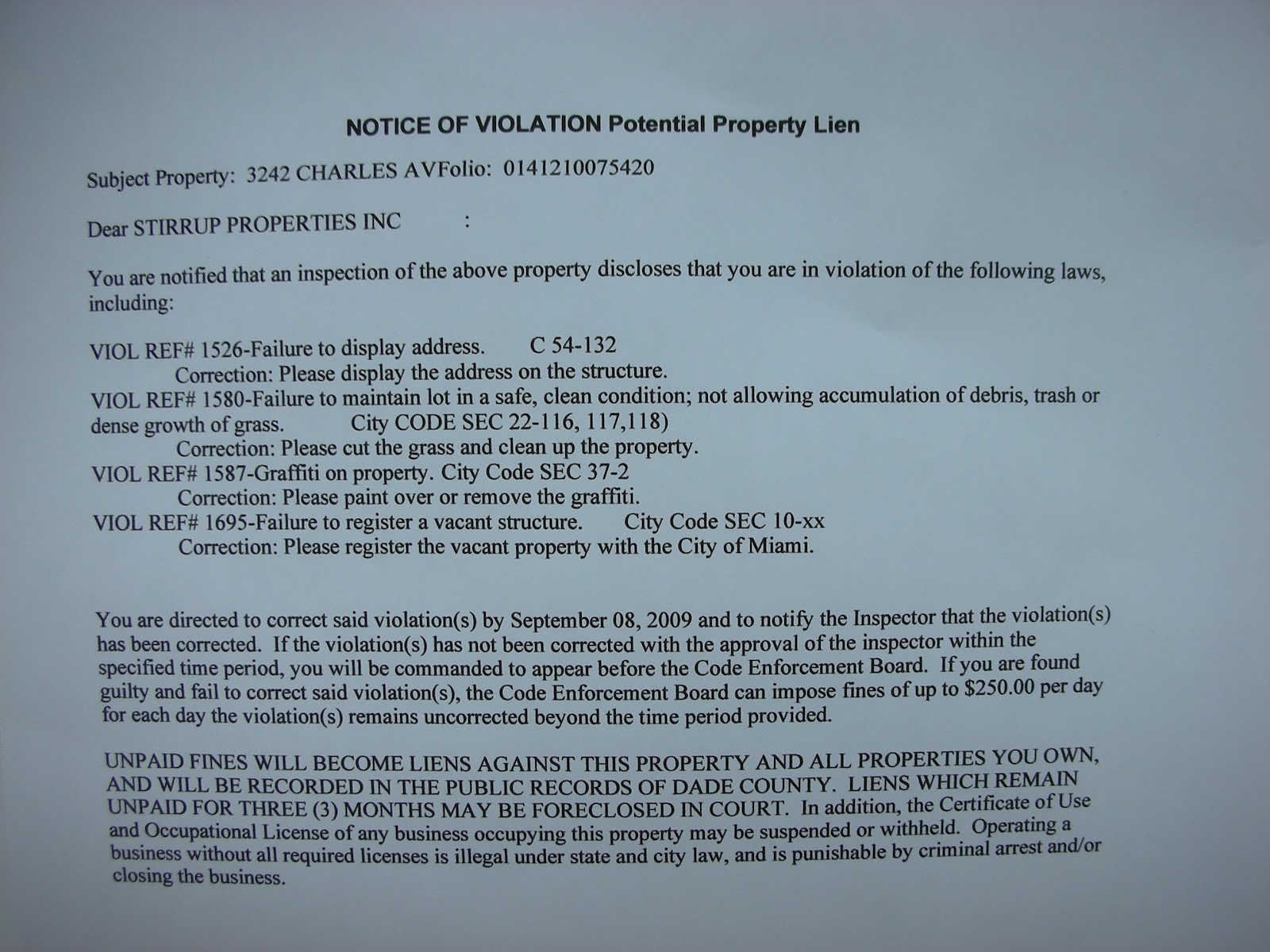
Notice from the City of Miami for code violations taken by author on August 26, 2009
Close up of notice from August 26, 2009. The property is in worse condition now than it was in 2009.
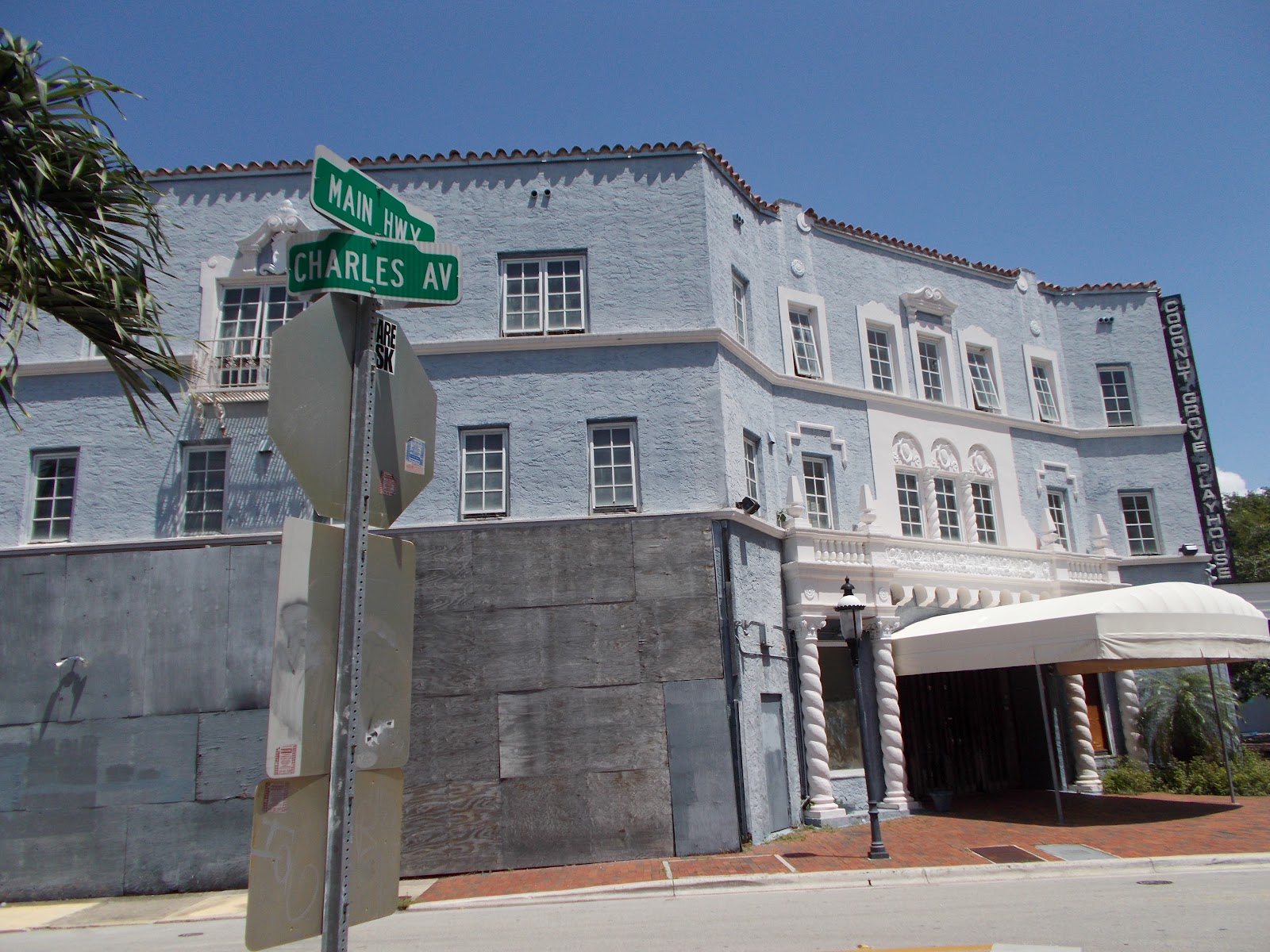
Also from August 2009. The property across from the E.W.F. Stirrup House with a similar citation.
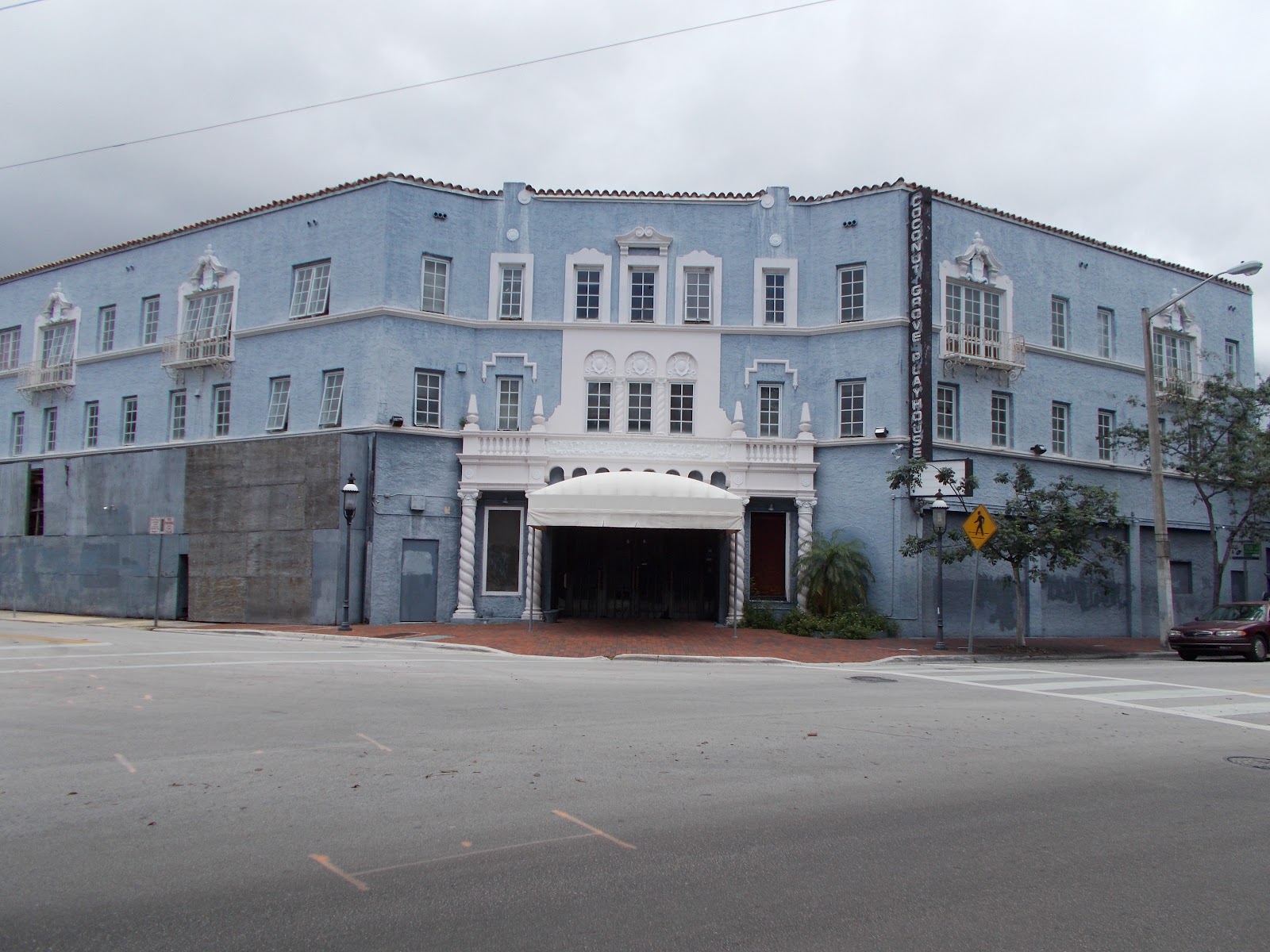
This is the property currently being used to shunt cars in and out of the Coconut Grove Playhouse parking lot.
A new picture from yesterday of the same fence, with far more growth than for
which the property was cited in 2009 (above). Note how it’s impeding the sidewalk.
Back to the Stirrup property and yesterday. It wouldn’t surprise me at all to find
this pile of trash is also non-conforming. This is next to the padlocked doors seen above.
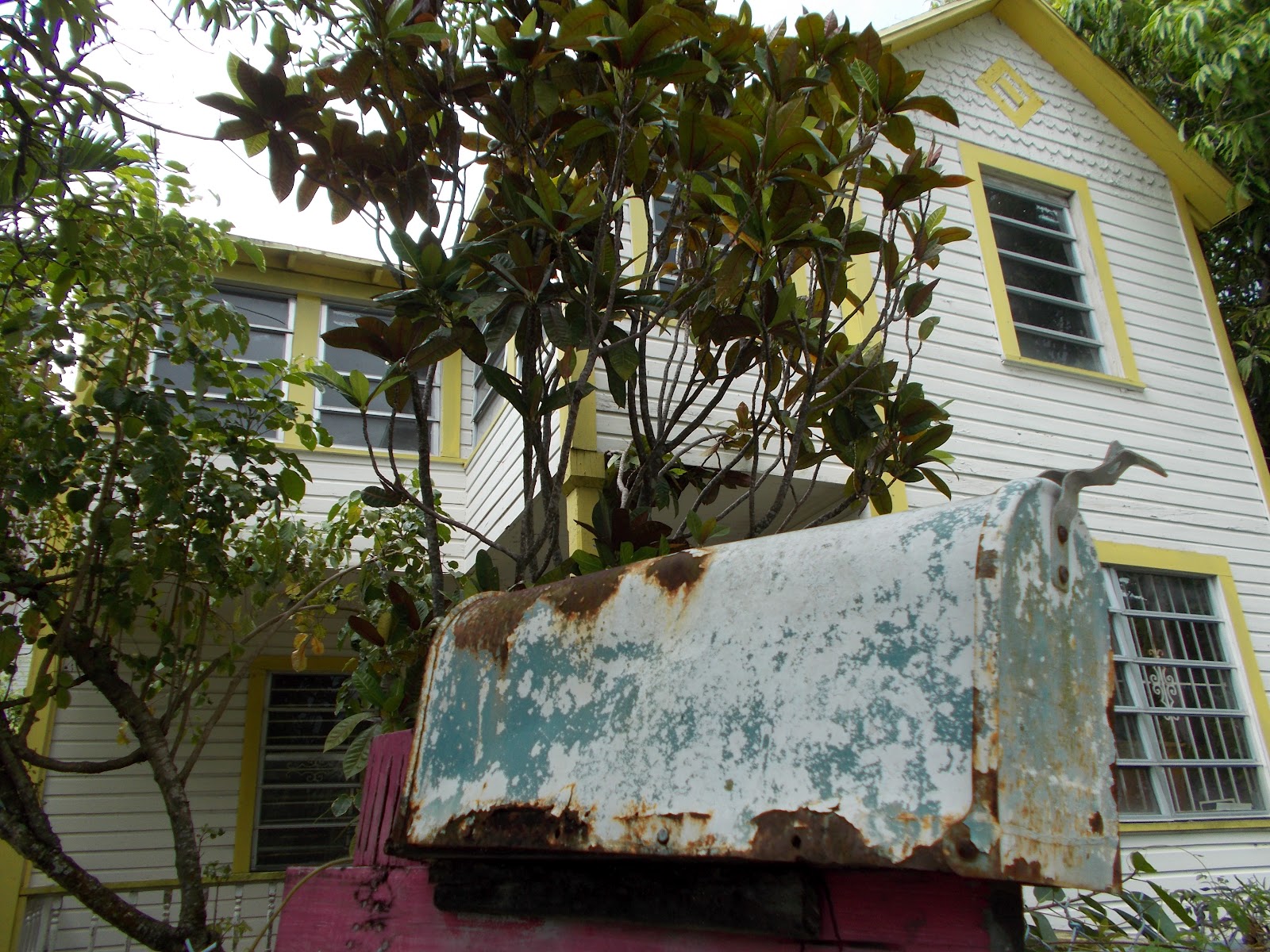
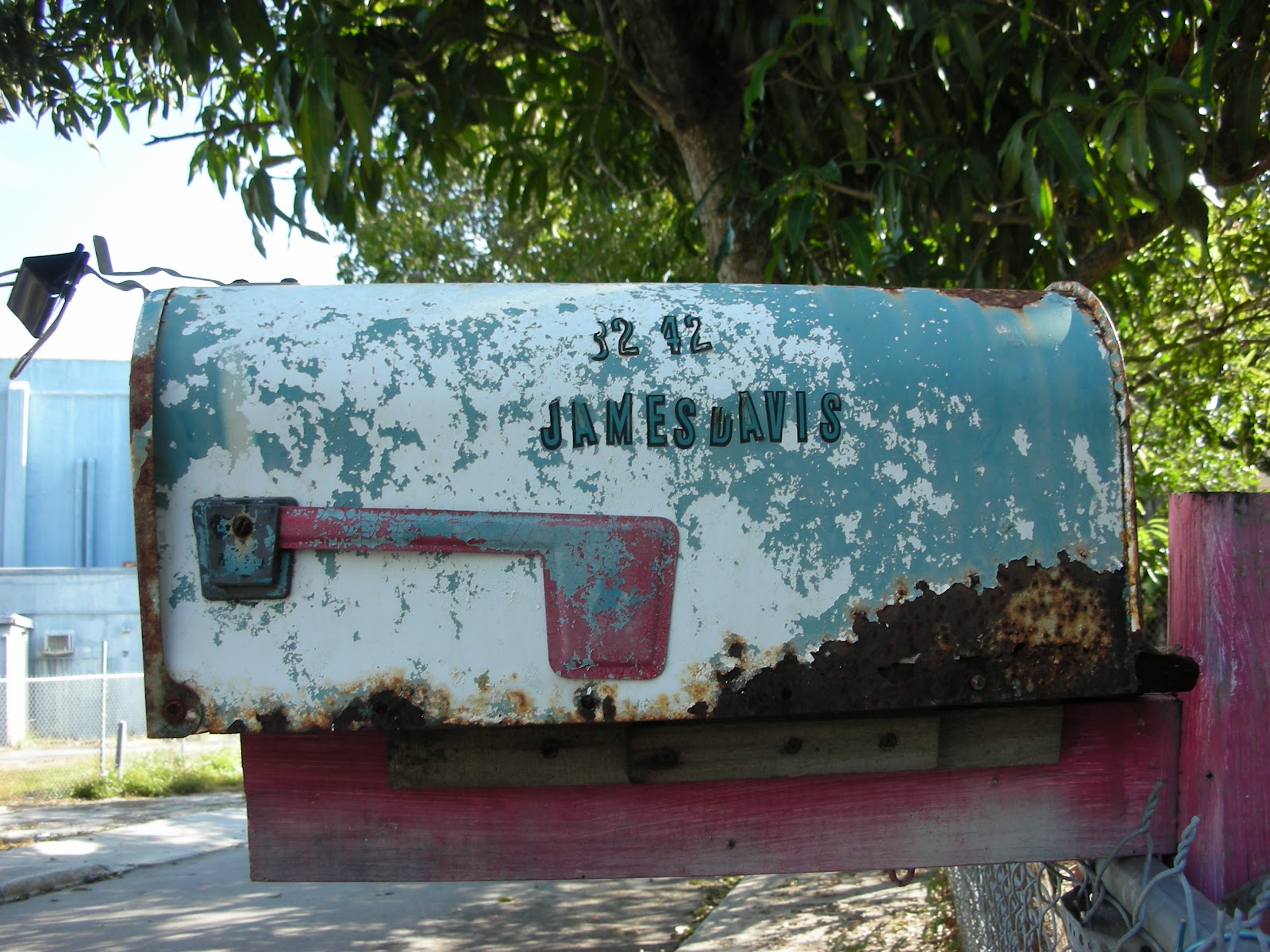
The mailbox at the E.W.F. Stirrup House at 3242 Charles Avenue
indicates the neglect as well as anything else.

Another view of the mailbox at the E.W.F. Stirrup House.
I have photographed this hole in the front of the E.W.F. Stirrup House before.
This is the first time I ever saw a creature come out of it.
It’s always a good day when I see a flyer for Reggae music.
This was on the sidewalk directly in from of the E.W.F. Stirrup House.
***

***

Unpacking Coconut Grove ► Part Four ► Open Houses and Broken Laws

The meeting place

Is there illegal work going on inside the E.W.F. Stirrup House? I certainly think so. Get comfortable and read on. This is a long one, friends.

It was Friday noon (08-17-2012) and I was to meet someone in front of the Coconut Grove Playhouse. This gent was going to get the full Charles Avenue History Tour, which I have now given to several people, several times. In fact, I’ll give the Charles Avenue History Tour to anyone who shows an interest in helping me get the word out about the E.W.F. Stirrup House. It’s almost like the Coconut Grove Ghost Walk, except the ghosts I’m talking about once lived on Charles Avenue. If you want to book a Charles Avenue History Tour, contact me.

This particular Charles Avenue History Tour turned out to be the longest one yet, almost 2 full hours. Either this gentleman was very interested, or he feigned interest very well; I only saw him glance at his watch once. Or, it could be I’m a much better story teller than I give myself credit for, despite all the swearing.

Since I arrived before he did I had a bit of time to kill and used that time to take a few pictures. The first picture I took was of a brand new structure that’s popped up
on Charles Avenue since the last time I was there, mere weeks ago.

Blessed relief with the E.W.F Stirrup House in background

This Port-A-Potty is just off the Charles Avenue driveway entrance to the Regions Bank, and is situated just east of the locked gate at the E.W.F. Stirrup property. Half off/half on the sidewalk and half off/half in the bank’s driveway seemed a very unusual place for a Port-A-Potty, but I was undaunted. I used it anyway. After the 65 minute drive from Sunrise, it was actually a welcome sight, if my bladder could see. Usually my first stop in The Grove is the washroom for the Taurus Bar. I don’t know how many times I can get away with “I’m a tourist and I need to use your washroom,” but this week I didn’t need to. It appeared as if my every need was being anticipated, and you have no idea how right that thought turned out to be in the end. It was a day of wonderful Synchronicity and being able to take a whiz without lying to the bartender at the Taurus was the least of it.

But, I’m getting ahead of myself.

Still life: Damaged fence with dumpster

I noted some new, recent damage to the fence surrounding the Stirrup House, which is no big deal; chain linked fencing is easily fixed. However, the dumpster in the background MIGHT be a big deal. Then it occurred to me that the dumpster might be connected in some way to the Port-A-Potty. I made a mental note to keep an eye on the dumpster as best I can. I have seen many dumpsters come and go from inside the Stirrup property. However, I’m never around to know what they are being used for because I only get down to Coconut Grove once a week.

Then I hustled over to the front of the Coconut Grove Playhouse, just a few hundred feet away, to meet my Charles Avenue History Tour guest.

Skip ahead about an hour. My guest and I were standing directly in front of the Stirrup House while I conducted my Charles Avenue History Tour as fast as I could, because I never know when someone will tire of it. It’s a long, complicated history that spans 120 years and several different Charles Avenue properties. All of that background becomes necessary before I can even get to what I consider the important part of the story: Who Controls What On Charles Avenue, which, is not coincidentally, Part Three of this continuing series. I was at the part in the Charles Avenue History Tour, where I start connecting all the dots. Suddenly a white pickup truck arrived and the two gents in the truck unlock the gate surrounding the Stirrup property and drive inside.

The Grove Gardens Residence Condominiums

My attention was now divided. I wanted to finish the Charles Avenue History Tour, but I could not help be curious about the pickup truck, the bed of which was filled to the gills with carpet and padding. Are they going to start carpeting the rotting E.W.F. Stirrup House, currently undergoing Demolition by Neglect. That would be like putting lipstick on a GOP vice presidential candidate.

However, it turned out the carpet was merely remnants ripped up from somewhere else and was being tossed into the dumpster. It is my assumption (without any proof whatsoever) that the carpet was ripped up during some renovation from inside the Grove Gardens Residence Condominiums immediately south of the E.W.F. Stirrup House. It’s not such a leap of imagination. The Grove Garden Residence Condominiums, or rather the powers that control it, seem to use the Stirrup property for its own benefit for all kinds of things.

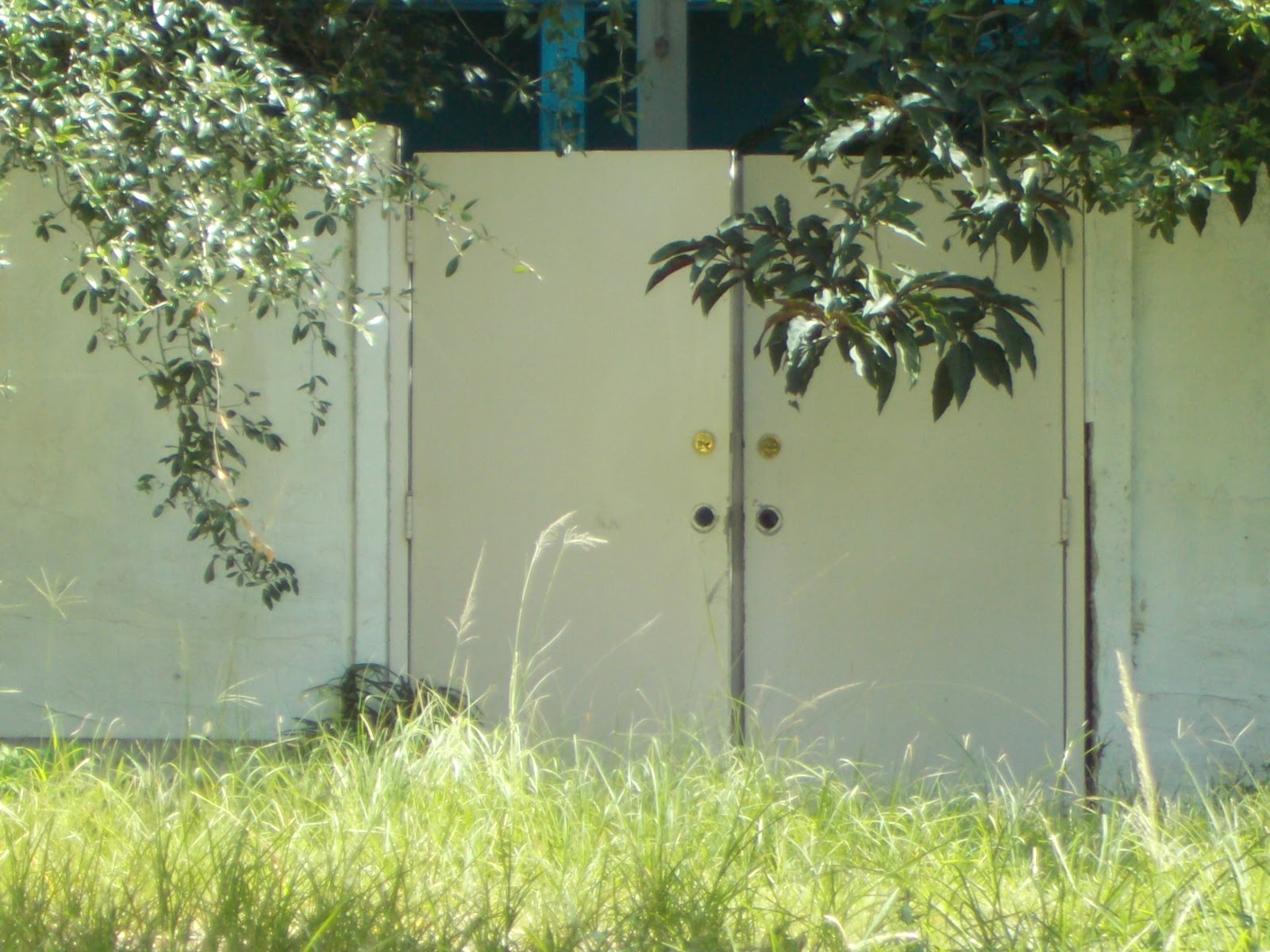
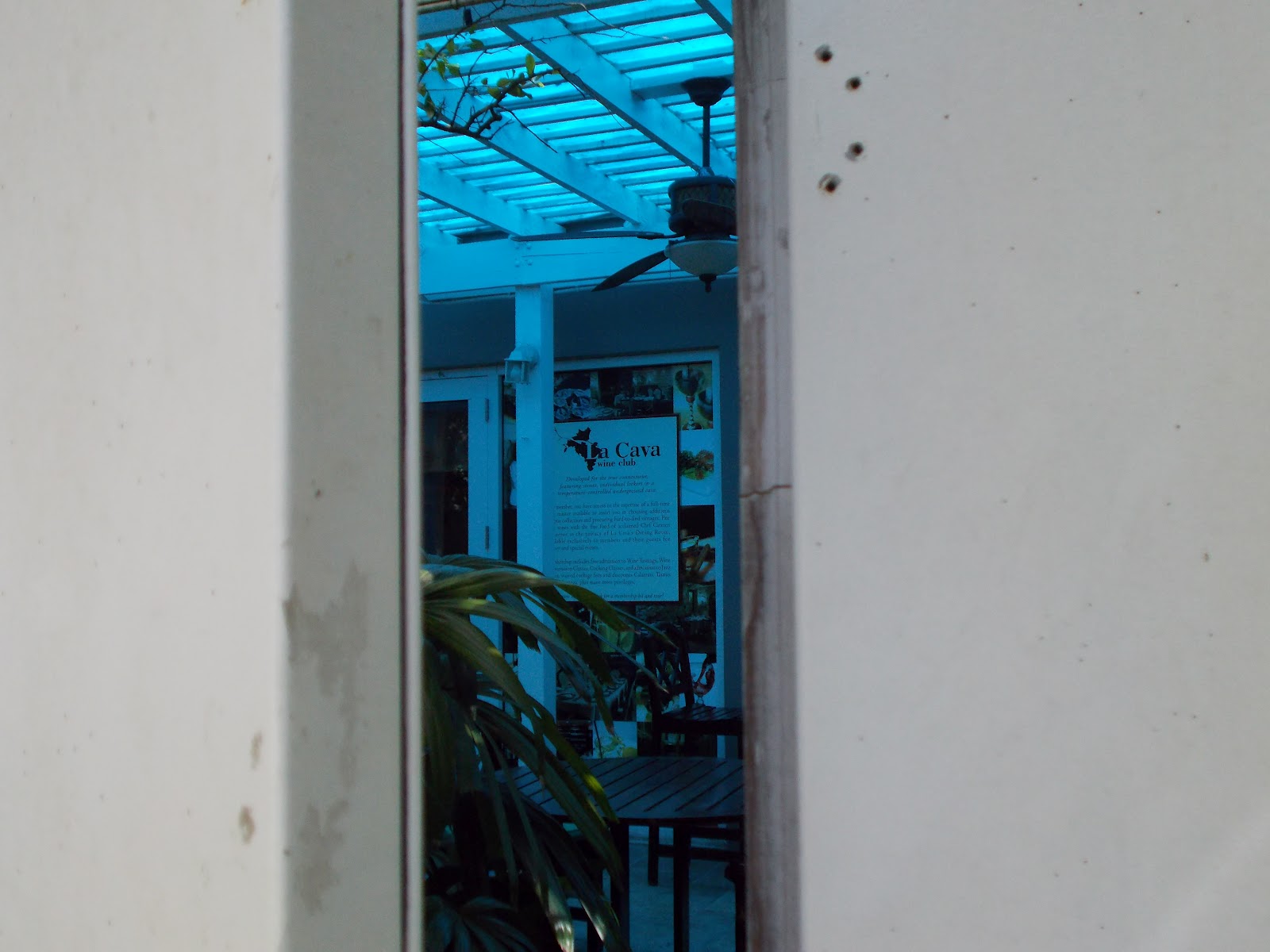
To the left is a set of doors built into the wall that separates the E.W.F. Stirrup property from the Grove Garden Residence Condominiums. If one peeks through the partially open doorway, pictured at right, one discovers the “La Cava Wine Club,” just one of four Chi Chi restaurants that occupy the ground floor of the Grove Garden Residence Condominiums. La Cava Wine Club is a near redundancy, since “la cava” means “the wine cellar.” The other businesses are two high end restaurants, and the 100+ year old structure that houses the Taurus Bar, that began its life as a tea room. It was saved from the wrecker’s ball when the Grove Garden Residence Condominiums was built around it.

That’s not all the Stirrup property is being used for to benefit the Grove Garden Residence Condominiums. In the southeast corner of the lot are two air conditioning units (left) that feed cold air to somewhere within the condo complex, maybe to the wine bar, which is the closest business. There are also many piles of garbage (just one is pictured at right) and trash hidden behind the E.W.F. Stirrup House, away from the prying eyes of city inspectors, who would levy fines if they knew how much trash was being piled up on the property. This is clearly illegal. Even though I have seen dumpsters come and go, these piles of garbage just get larger and larger. It’s clear the dumpsters are not being used for these piles of garbage. So what, exactly are their purpose? Turns out I wouldn’t have all that long to find out.

But, I’m getting ahead of myself again.

While my attention was divided — giving my Charles Avenue History Tour and trying to see what these gents are doing inside the Stirrup property — I missed the most important thing of all. These men unlocked the side door of the Stirrup House and stepped inside. It happened so fast I didn’t have time to get my camera out of my quick-release holster to take a picture of them entering the side door; I only managed to take a picture of the open door after they passed through it. I have never seen anyone in the Stirrup House before!!!

The open side door to the historic E.W.F. Stirrup House, currently undergoing Demolition by Neglect, and now hammers

Then we heard pounding from inside the house. The two gents are visible through the front window of the upper floor of the Stirrup House and they are ripping the room apart. I yell up, “What’s going on?”  They yell down to me that the E.W.F. Stirrup House is being turned into a Bed & Breakfast.

WAIT!!! WHAT???

No! That can’t be! It was only last week that I was on the City of Miami web site and confirmed for myself that the property is still zoned Residential. I was checking the status because last year, according to CBS Miami, Aries Development Group (oddly not named in the CBS article, but named by the Coconut Grove Grapevine) was petitioning the city for a change of zoning on the E.W.F. Stirrup property from the current Residential to Commercial. According to the CBS report a decision was to be made by May 26th of last year, which apparently had been deferred to the April 6th meeting. Now, fifteen months later — as I mentioned above — the Miami web site still lists it Residential and I can find no OFFICIAL mention anywhere that the zoning has been changed to accommodate the developer.

Now it’s time to get even deeper into the weeds. According to a 2010 article in the South Florida Business Journal a man by the name of Gino Falsetto is head of Aries Development. According to the Coconut Grove Grapevine “Aries Development Group [are] the people [sic] that own Calamari and the Taurus restaurants.” That seems somewhat misleading. It’s my understanding that Aries Development Group also built the Grove Garden Residence Condominiums, which has never been fully occupied.

Who is Gino Falsetto? To begin with Gino Falsetto is, or was, Canadian. So am I, so I don’t hold that against him. What’s IS worth holding against him, however, is the string of bankruptcies Falsetto and his brothers left behind in Ottawa, Ontario, Canada, and just across the river in Quebec, which left Canadian taxpayers on the hook for a good chunk of change. According to the Ottawa Citizen:

An Ottawa success story in the restaurant business ended in failure Tuesday when two restaurants owned by the Falsetto brothers declared bankruptcy owing creditors and the tax department more than $1 million.

Sheriff’s deputies acting on the orders of Revenue Canada Tuesday raided the House of Caesar on Somerset Street, Stephano’s Restaurant and Bar on Bank Street and the Amoretto Restaurant on Lisgar Street seizing items including liquor, beer and cash to offset back taxes.

On Wednesday, Stephano’s (521327 Ont. Inc.) and Amoretto (521326 Ont. Inc.) filed for bankruptcy. House of Caesar is not bankrupt, but has closed.

Stephano’s and Amoretto are still operating under the trusteeship of Thorne Ernst & Whinney until a buyer, or buyers, can be found for the restaurants, said bankruptcy trustee Brian Doyle. [Fri Jan 30 1987, subscription required]

According to a February 3rd article in the same newspaper, the Revenue Canada seizure angered Gino Falsetto:

“They left us to operate three restaurants with no inventory and no cash,” says an irate Gino Falsetto, the president of Falsetto Holding.

The failures mark the end of a restaurant business that in its heyday had annual gross revenues of about $4.5 million, 120 employees and a $1-million payroll.

It started eight years ago when the four Falsetto brothers – Gino, Antonio, Enrico and Stephen – and a handful of shareholders opened the House of Caesar.

Expansion was rapid with Amoretto opening next, then Stephano in 1982 and finally Sapper’s Bridge in 1984.

Revenue Canada’s action was the result of a series of financial problems that started with the opening of Sapper’s Bridge – a classy restaurant in the Atrium in the Byward Market.

In less than two years, the Sapper’s Bridge operation lost $1.2 million, half of that in the six months before it went bankrupt last March.

“Our problems, no question about it, started with our Sapper’s Bridge operation,” Gino said in a recent interview.

A PDF file found on the internet, titled “The Gino Falsetto Bed and Breakfast Con, not only goes into some of Falsetto’s Canadian business failures, but more importantly, traces the various corporations that claim an interest in the E.W.F. Stirrup House. Assuming the information is correct, it’s like those Russian dolls, with one nested inside the next, nested inside the next, nested inside the next. And, whaddaya know, it all goes back to Gino Falsetto and Aries Development.

The author of the PDF, who has his own issues and lawsuits with Gino Falsetto and his
business partner Pierre Heafy (who is also from Canada), maintains a web site called Heafy-Falsetto Leaks. The author comes off as a combination of Crank and Gadfly, leaning towards Crank. Yet, he has obsessively followed the business activities of Gino Falsetto and asks 3 legitimate questions about the nesting-Russian-doll aspect of the property’s ownership, which I don’t feel qualified to answer:

Why, Mr. Falsetto, the shenanigans of hiding the true identity of corporate ownership of 3242 Charles LLC? It couldn’t possibly be simply a maneuver to accrue benefits under the IRS Tax Code? What if it is a means of building a solid wall should creditors knock on Gino Falsetto’s door?

But, I digress.

Back to the story. To remind you: I’m yelling up to the guys tearing apart the front room of the 2nd floor of the historic E.W.F. Stirrup House and they’re yelling down at me. One of the guys agrees with me that it’s a beautiful house, needing restoration. The other one is saying that it should be set on fire because it’s full of wood rot, mold, and termite damage. This is troubling because my guest on the Charles Avenue History Tour had just said almost the exact same thing to me. However, he was talking about how unscrupulous property owners have been known to do away with inconvenient structures standing in the way of development and then blame drug addicts or electrical problems for the ensuing conflagration.

I shudder at the thought that someone would do such a thing to the beautiful, historic 120-year old E.W.F. Stirrup House. As I am shuddering I have a flash of inspiration, so I yell up, “Can I take a look?”

And they said YES!!!  

AMAZING!!!

It has been my dream to see the inside of this house ever since I first discovered it in early 2009. Even though they gave me permission, I knew I was being subversive when I entered the Stirrup House. I took as many pictures as I could while I was in the house before I skedaddled. Not all of them came out good, but I am including those as well.

This is what the inside of the historic E.W.F. Stirrup House looked like as of yesterday.

The mud room just inside the side door of the E.W.F. Stirrup House.
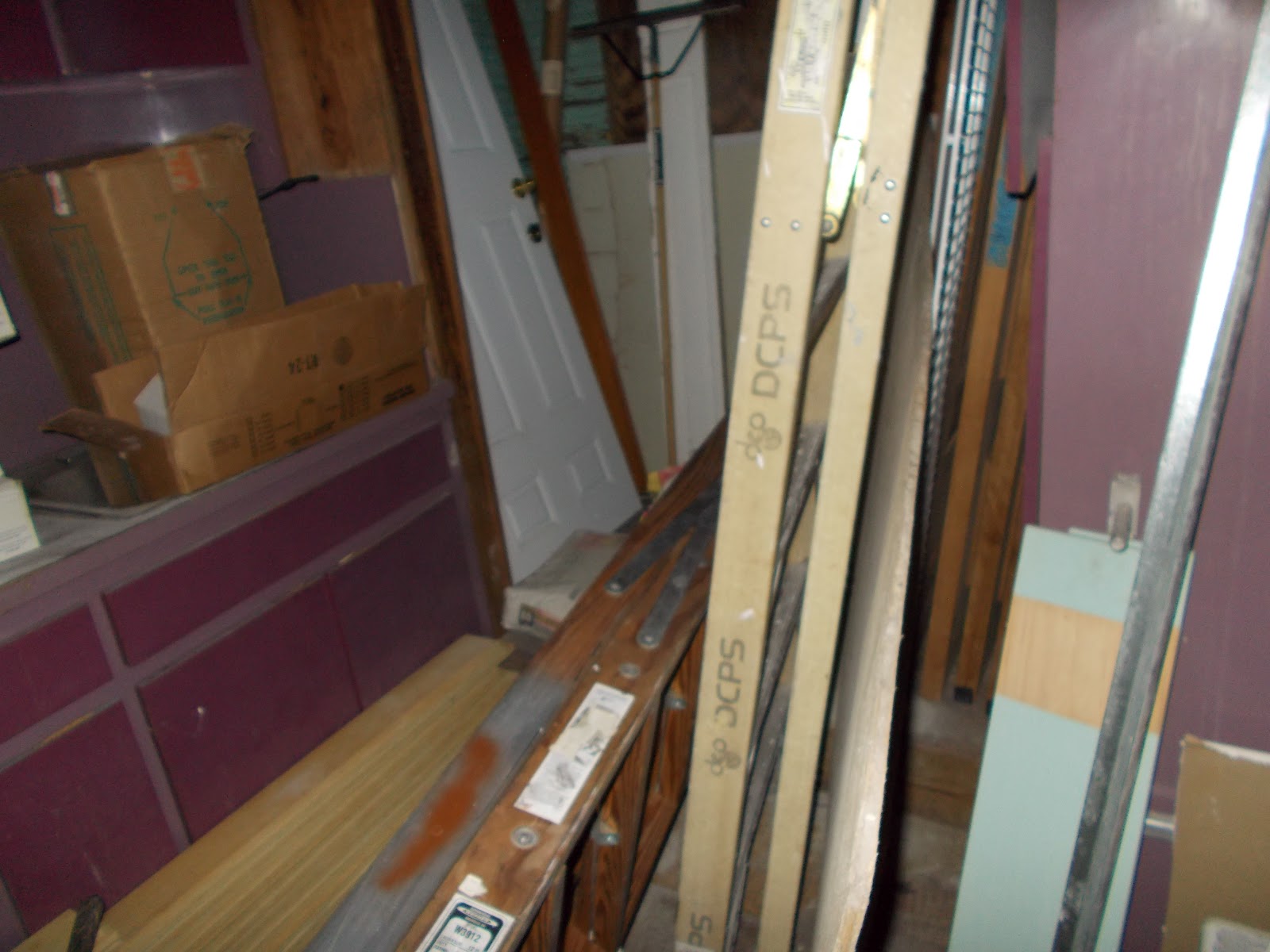
Many of the rooms are used to store construction materials and other junk.

Another ground floor room. The house had many small rooms and no large ones.

This seemed to be the largest room in the entire house. The front of the house is through that door of the bright room.

Another room in a warren’s maze of rooms. More storage.

Another room. More storage.

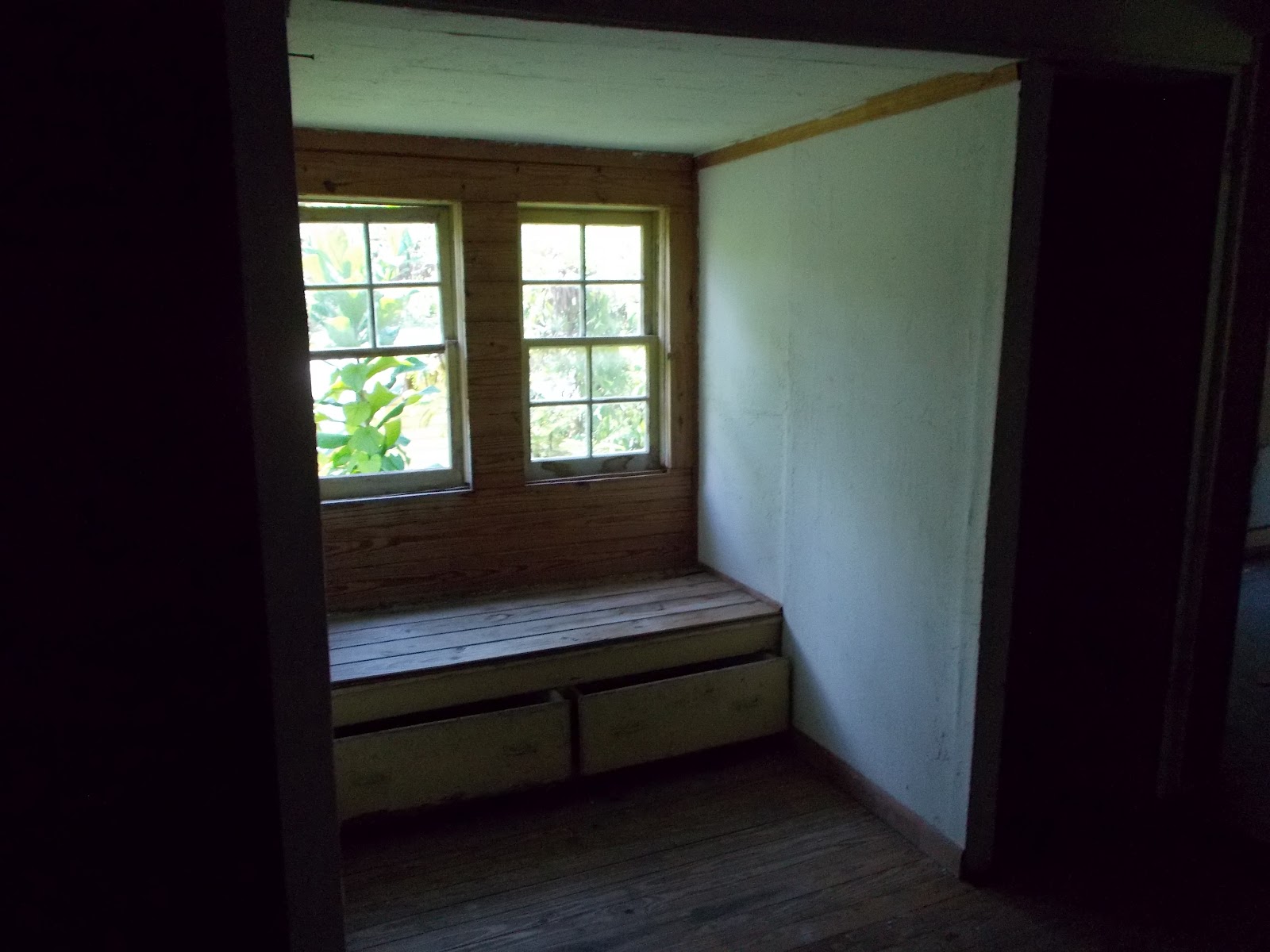
Upstairs. A cute little built in shelving system.
I can imagine E.W.F. Stirrup’s books, family photographs, and knickknacks  here.

A lovely little window seat on the second floor with a western exposure. Afternoon sunlight would fill this window.

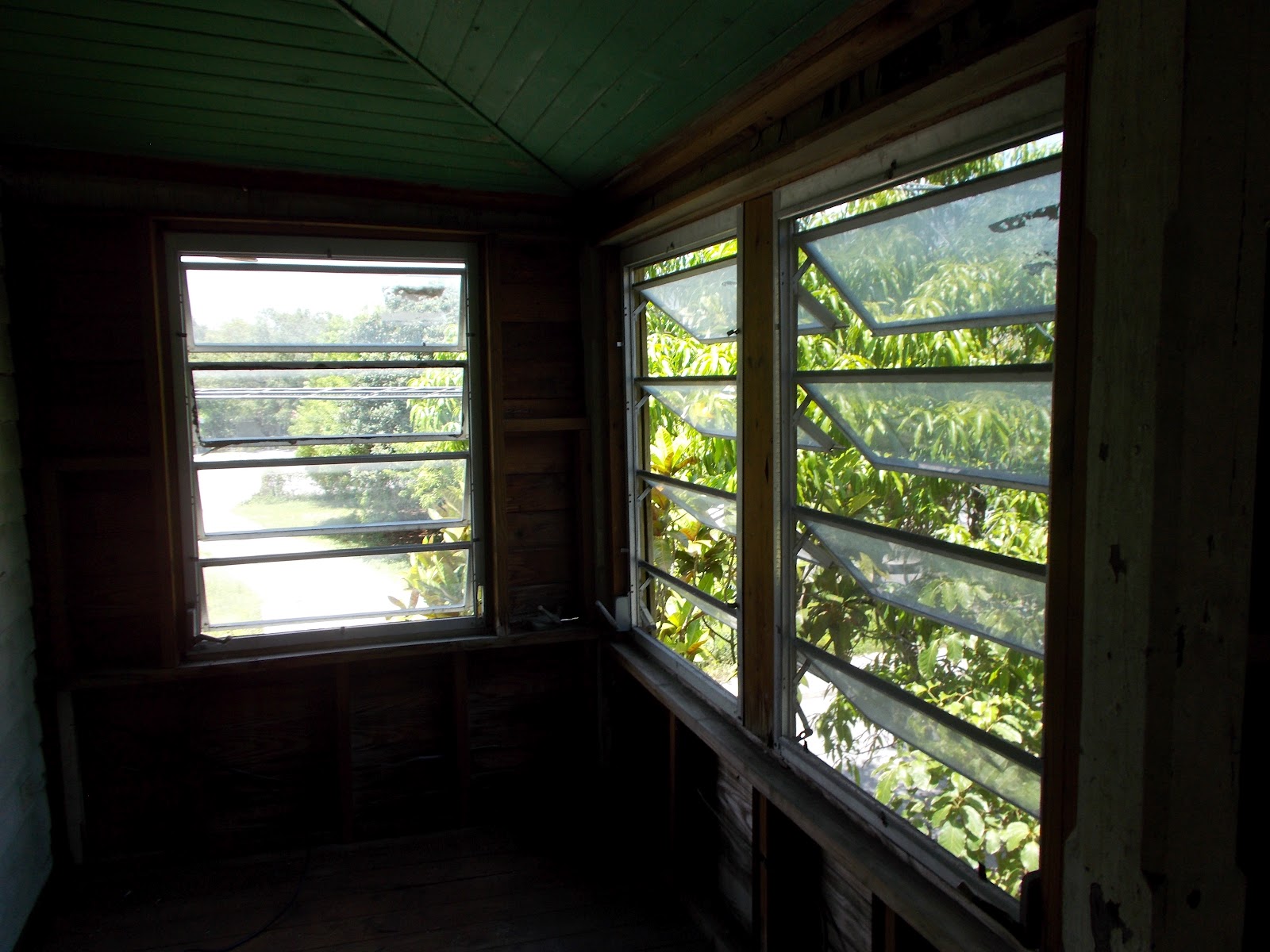
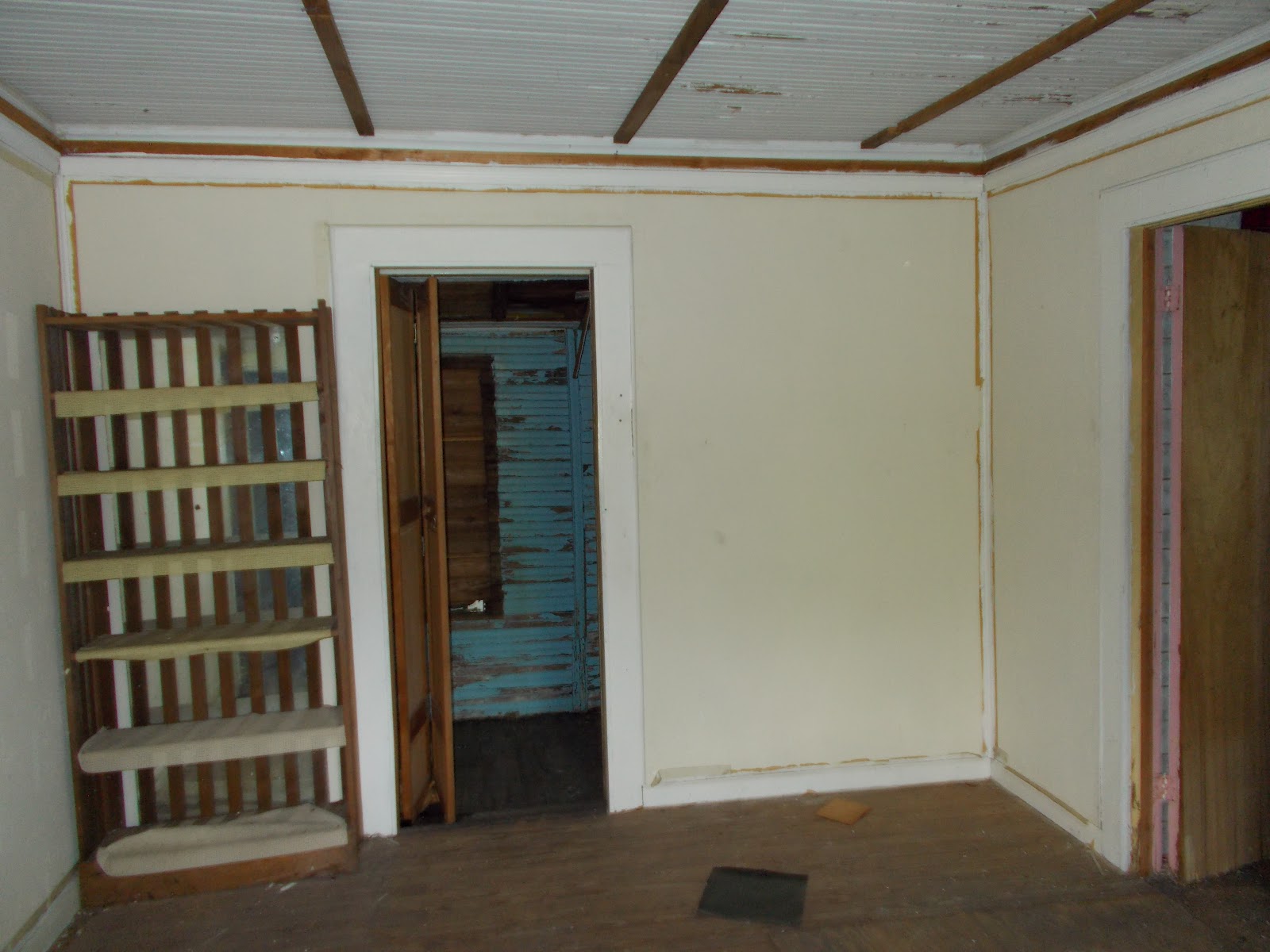
Another room on the second floor looking towards the front of the house to the room where the men are working.

Another view of the room on the 2nd floor where the men are working, looking west.

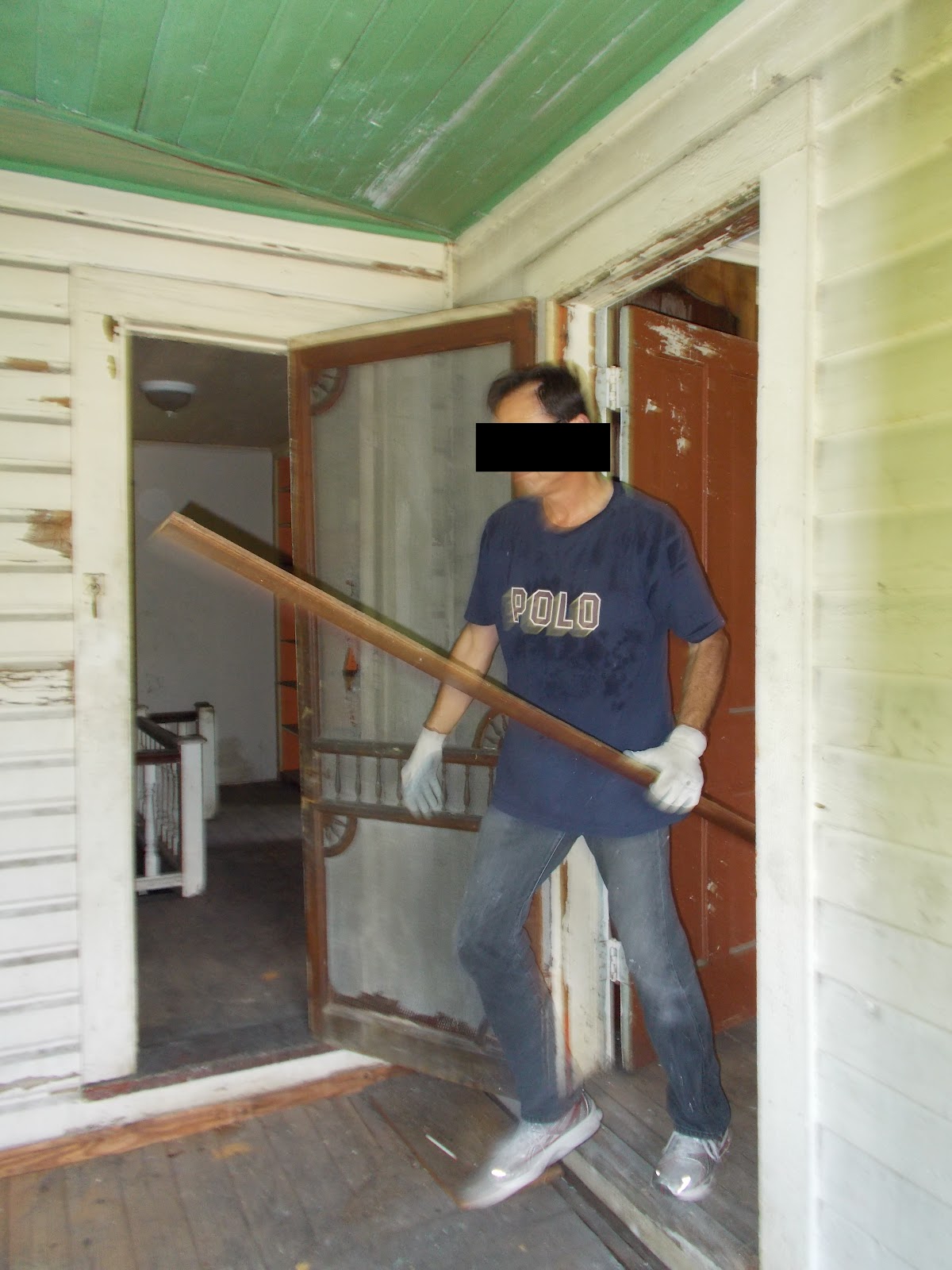
This is where the work was going on, the front room on the 2nd floor. The guys are ripping the paneling off the wall.
While I was unable to get pictures of it, the boards being pulled down have termite tracks all on the back.

Men at work. Behind the wooden paneling are wooden walls, not lathing. Houses of this era were built entirely with
Miami Dade Pine. It is impossible to get Miami Dade pine these days. It’s all been chopped down.

This is the room above the front porch, which provides the shade below. It appears
as if the white wall at left was once an outside wall because it’s made of siding.
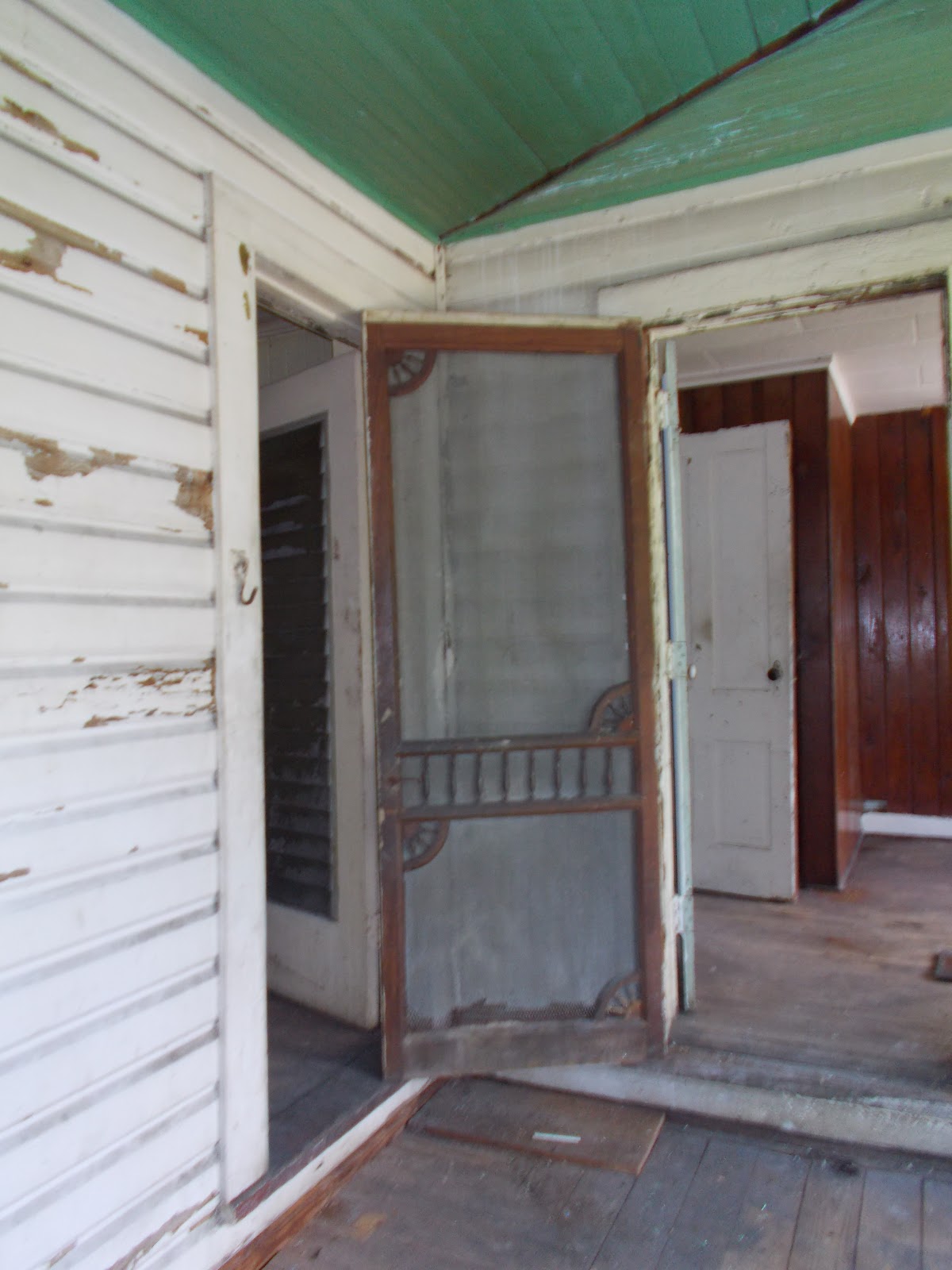
That screen door is very pretty and highly sought after by restorationists.

The same room as above, but the reverse angle. It’s very small.

Paneling about to be chucked to the ground from the 2nd story window. You can see the
elements that lead me to believe this was once an exterior 2nd floor porch: the screen door,
the solid door behind the workman, the exterior siding, and the pitched roof above.

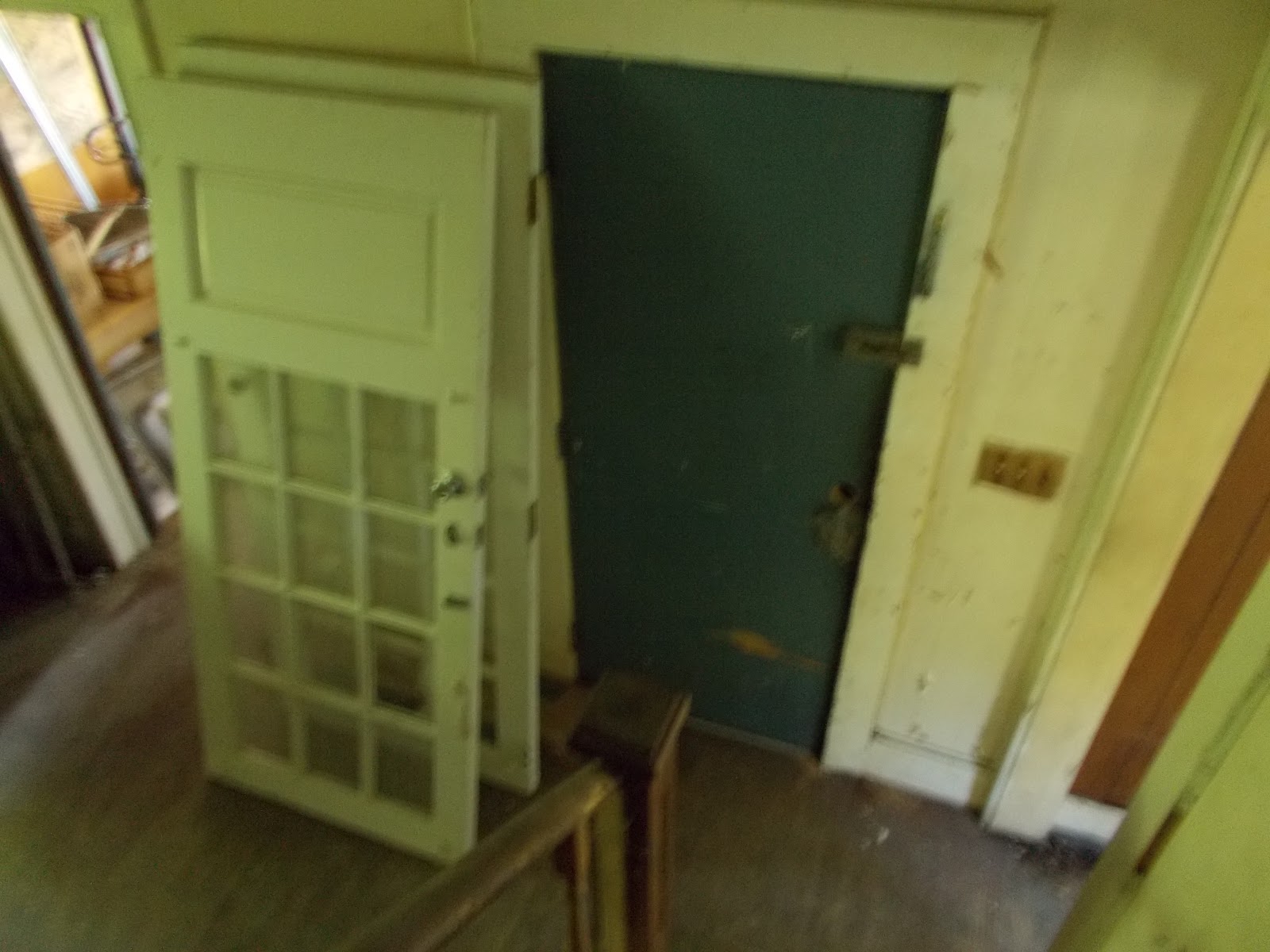
The top of the stairs with more built in shelving.

Rooms after rooms after rooms. The back of the house on the 2nd floor.

Aside from the room where the guys were working, this was the least cluttered one.

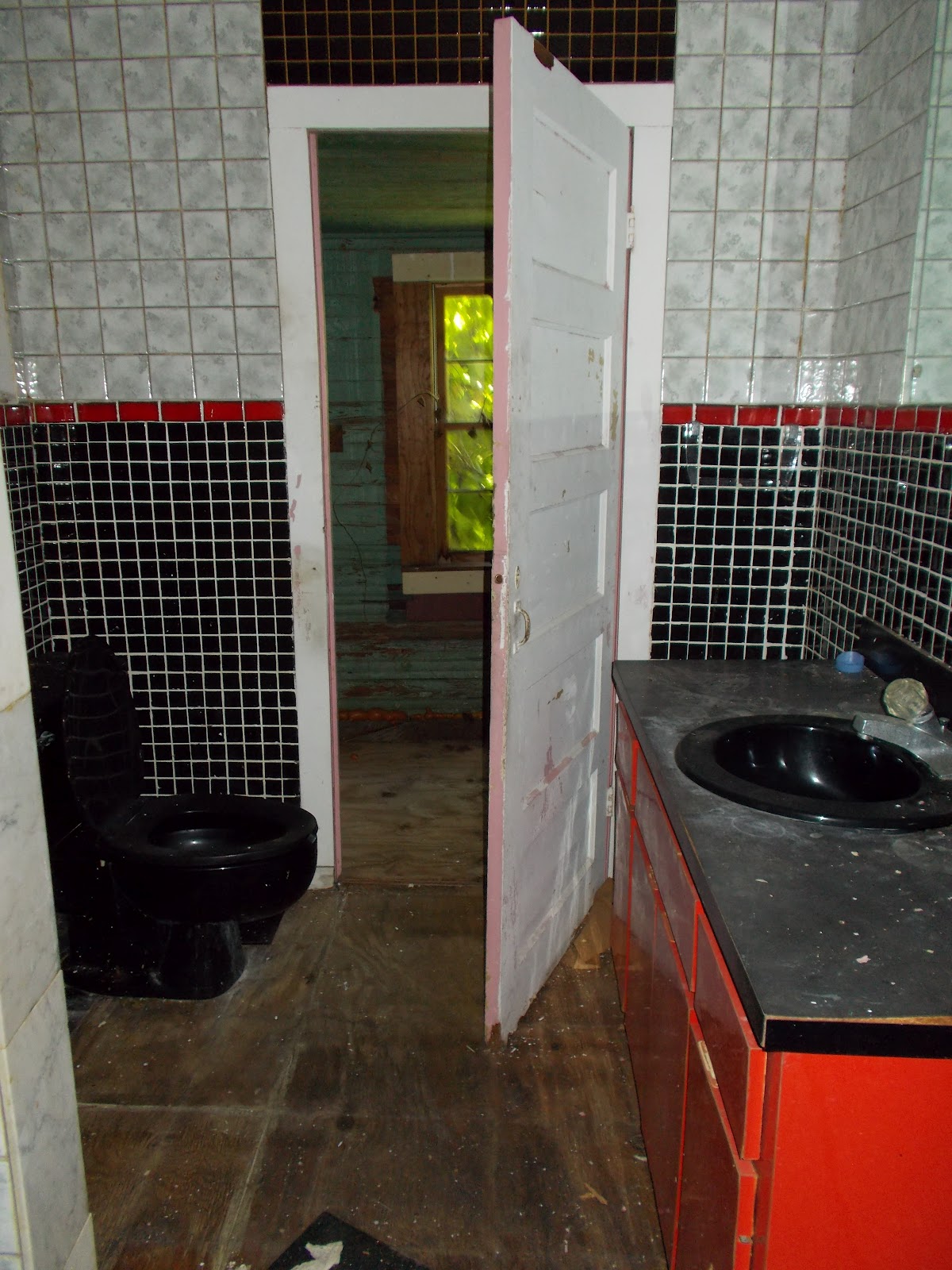
A relatively modern bathroom.

Another view of a relatively modern bathroom.

Coming down the stairs. That’s the front door.

I’m not entirely sure what those things are, but they might be shelves. The rest? Who knows?

Junk and exposed PVC drain pipes. Sorry it’s out of focus.

Another room on the 1st floor, just inside the mud room.

Another view of the same room At this point I decided I better get out while the getting was still good.

Now I wish I had taken more pictures. All told I guess I spent about 15 or 20 minutes inside the house and I was nervous the entire time. Even though the workers gave me permission, if anyone higher up the chain of command showed up it could have gotten dicey, especially if they learned I was the one writing all about the E.W.F. Stirrup House.

Fortunately my guest was still waiting for me when I left. He had declined stepping on to the property himself because, as a newly minted immigrant who had only recently received his Green Card, he didn’t want to do anything that might jeopardize his stay in ‘Merka. However, he was pretty much out of time. So I summed up a few bullet points for him, we shook hands, and parted.

It was only after we parted, and I was already on my drive home, did it occur to me that I had witnessed a potentially illegal act. Whether the property is zoned Residential or Commercial is something that I don’t know for certain. Unconfirmed reports say the zoning has been changed. The City of Miami web site informed me last week that it was Residential. I tried to locate the same information today to see if it had changed and couldn’t even find the place where I had been last week to see if it had changed in the meantime. It’s a very confusing web site.

However, that’s not what is allegedly illegal. The law is pretty clear about construction and renovations and it’s no different in Miami than anywhere else in the country. There must be a Building Permit issued by the Building Department. Furthermore, the Building Permit must be conspicuously displayed. I saw no Building Permit outside the house or inside the house.

That’s why the minute I got home I called the City of Miami and reported it to the Building Inspection Department as a potentially illegal work site. I stressed with the woman who took the information that this needed to be expedited above a normal building inspection because this is a 120-year old structure and there is a fear that the owner/developer is trying to get away with making so many changes it will be too late for the E.W.F. Stirrup House to be the Community Resource Center that neighbourhood rumours say was intended when the Grove Gardens Residences Condominiums was granted ITS building permits.

I have a confirmation number for my complaint and everything. So yeah, MoFos. If you are wondering who reported you, it was me.

Previous Chapters in Unpacking Coconut Grove

***

***
Unpacking Coconut Grove ► Part Three ► Who Controls What On Charles Avenue

East side of the E.W.F. Stirrup House, still undergoing Demolition by
Neglect with the Garden Grove Condominiums in the background.

Some good news came in over the transom this past week. Miami’s Historical and Environmental Preservation Board [HEP cats?] voted unanimously to make Charles Avenue an Historic Designation Roadway, whatever the heck that means. This seems to have no practical effect: no money will be
spent and no signs will be placed. However, signs need not be placed because there are several informational signs along Charles Avenue. In an upcoming chapter of Uncovering Coconut Grove I will talk about all the Charles Avenue signage.

Meanwhile, how will this Historic Designation Roadway thangie affect my campaign to
save the E.W.F. Stirrup House? It’s hard to tell. The designation did
not appear to mention the Stirrup House, nor did it delve into the
survival of the Coconut Grove Playhouse, or the Mariah Brown house, said to be the first home owned
by a Black person in south Florida. These three structures are empty and have been empty for years now.

Yet, as my initial research began informing me, the E.W.F. Stirrup House dates back to a unique time and place in ‘Merka. In later chapters of this series I will explore what makes Charles Avenue, and the Black enclave that grew up around it, totally unique to all other Black neighbourhoods in ‘Merka.

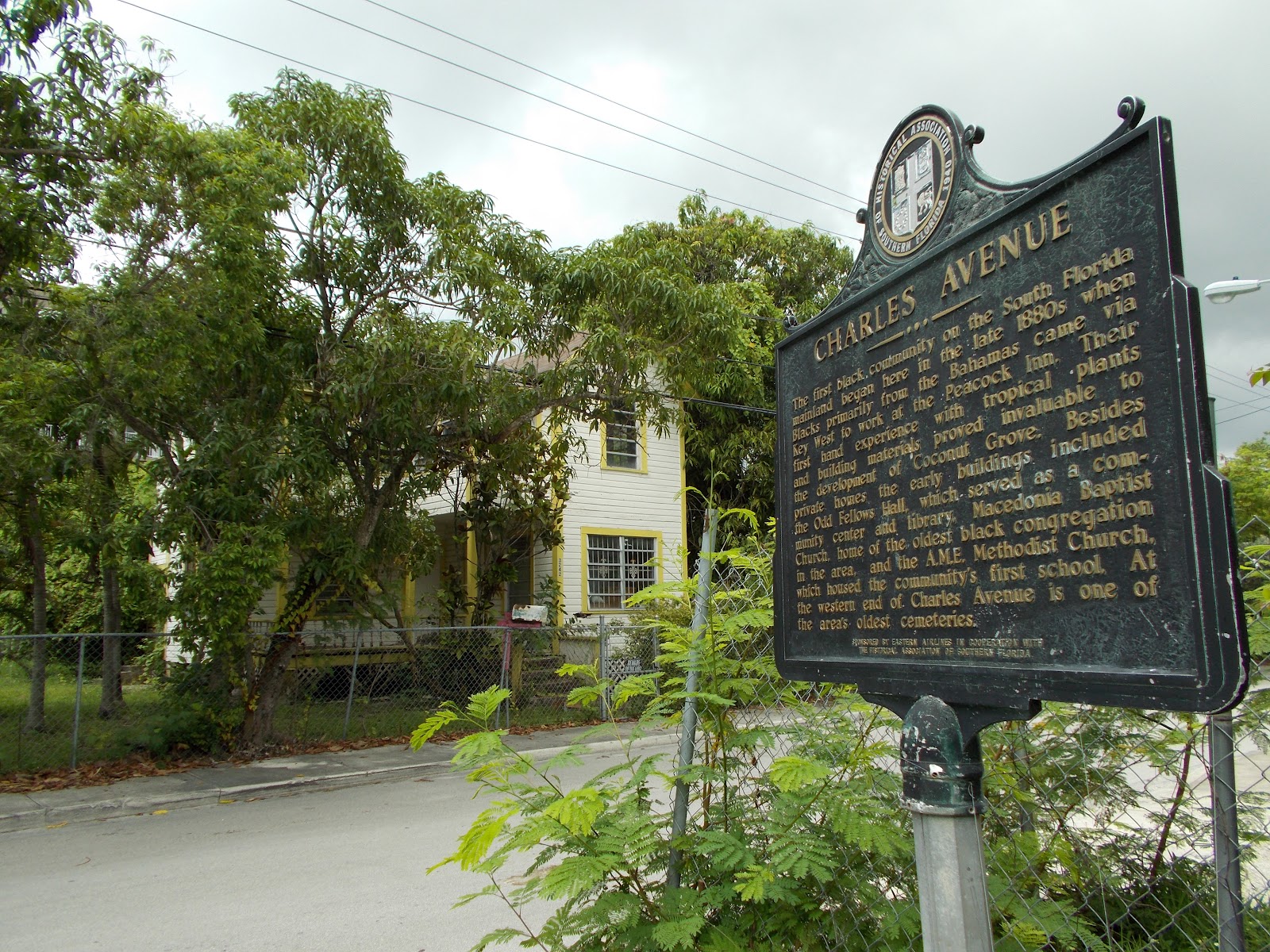
The historical marker that started it all.
The vacant lot is behind this sign.

I first started my campaign to save the Stirrup House several years ago when I just happened to run across the historical marker on Charles Avenue. The marker had seen better days, but there was just enough on the sign to pique my interest. However, it was when I looked across the street did I see the gem of the neighbourhood, the historical Stirrup House, built in 1898. Buildings of any age are a rarity in south Florida, a state that appears to have no sense of history, no sense of of place, and no indigenous architectural style. Florida buildings present a pastiche of other architectural elements, but nothing Floridian.

On that first visit to Charles Avenue I noticed an empty lot immediately across the street from the Stirrup House. Later that day, while using Google Street View, I was surprised to see a house on what had been a vacant lot when I was there. That became the first mystery to solve: Where did that house go, and why?

That mystery was solved pretty quickly. While there had been a house on that lot as late as 2007, it was knocked down to create a marshaling yard for equipment and materials needed to build the Grove Gardens Condominium complex.

I started keeping a paper map on which I added what I had learned interviewing neighbours up and down Charles Avenue. There were many crossoffs on that map. Some of the early information turned out to be bogus, but some of the rumours have actually led to hard information, or additional areas of solid inquiry. Eventually I had to throw out that paper map and have created a new, 21st century, electronic version of the Charles Avenue map as I delve into who controls what on the east end of Charles Avenue.

Like any good reporter, I will continue to follow the money. Right now all the threads I am pulling seems to lead to the same place: Ottawa, Ontario, Canada, of all places.

Meanwhile, here’s my current map of the area on which I have added information on who controls what on Charles Avenue. Click around on the map. Each shaded area and marker has a small explination of what I have been able to confirm so far, along with some of the rumours.

This map will change as I learn new information.

Unpacking Coconut Grove ► Part 2.3 ► The Charles Avenue Rabbit Hole Leads To Canada

The historical marker with the
E.W.F. Stirrup House.

The more I learn about Charles Avenue, the more bizarre it all gets and the farther away from Coconut Grove it takes me. There are times it feels as if I am Alice chasing a White Rabbit, the historical marker I discovered years ago. From that moment on my research on the E.W.F. Stirrup House has sent me down many weird and interesting paths, none of which could have been anticipated when I started. My newest problem, based on the last 24 hours of research, is I don’t know whether I should chase down The Mad Hatter or the Cheshire Cat first (although both will have to be contacted eventually). However, it feels as if synchronicity is working overtime on me again. My newest threads of inquiry are now causing me to look into the ‘Merkin Immigration and Naturalization Service about undocumented foreign workers from Canada, restaurant bankruptcies in Canada, and a proposal to build a casino in Ottawa, Ontario, Canada.

Canada? HEY! I know people there.

The E.W.F. Stirrup House on July 17, 2012 after a recent landscaping.

Unpacking Coconut Grove ► Part 2.2 ► The Neighbourhood Around The E.W.F. Stirrup House

The open gate with the condo complex in the distance.

On a visit to Charles Avenue yesterday the gate was open on the E.W.F. Stirrup property, so I walked right in. I was able to take some interesting close up pictures of wood rot and other damage that normally can’t be seen from the sidewalk or the bank parking lot. It revealed how much damage has been caused by simple neglect of this house that stands as a testament to one of Florida’s first Black millionaires, a man who once owned most of Coconut Grove and helped build the early Bahamian community of The Grove, literally with his own hands.

The last time I found the gate left open it was because the landscaping crew had unlocked it, but were working on the empty lot across the street. So I wandered onto the property and started taking pictures. The landscaping crew noticed and started yelling at me, waving frantically. I waved back as if to say, “Hello!” One of the guys got on his cell phone and within minutes a Security Guard from the condo complex behind the Stirrup House (see below) showed up to shoo me off the property. I was able to engage him in conversation for a while and he revealed a few clues about what may have happened to stall all work on the Stirrup House, which had apparently been promised as a gift of sorts to the neighbourhood as a historical community center of some sort. Unfortunately, it’s not something I have been able to confirm as of yet, so I dare not repeat it.

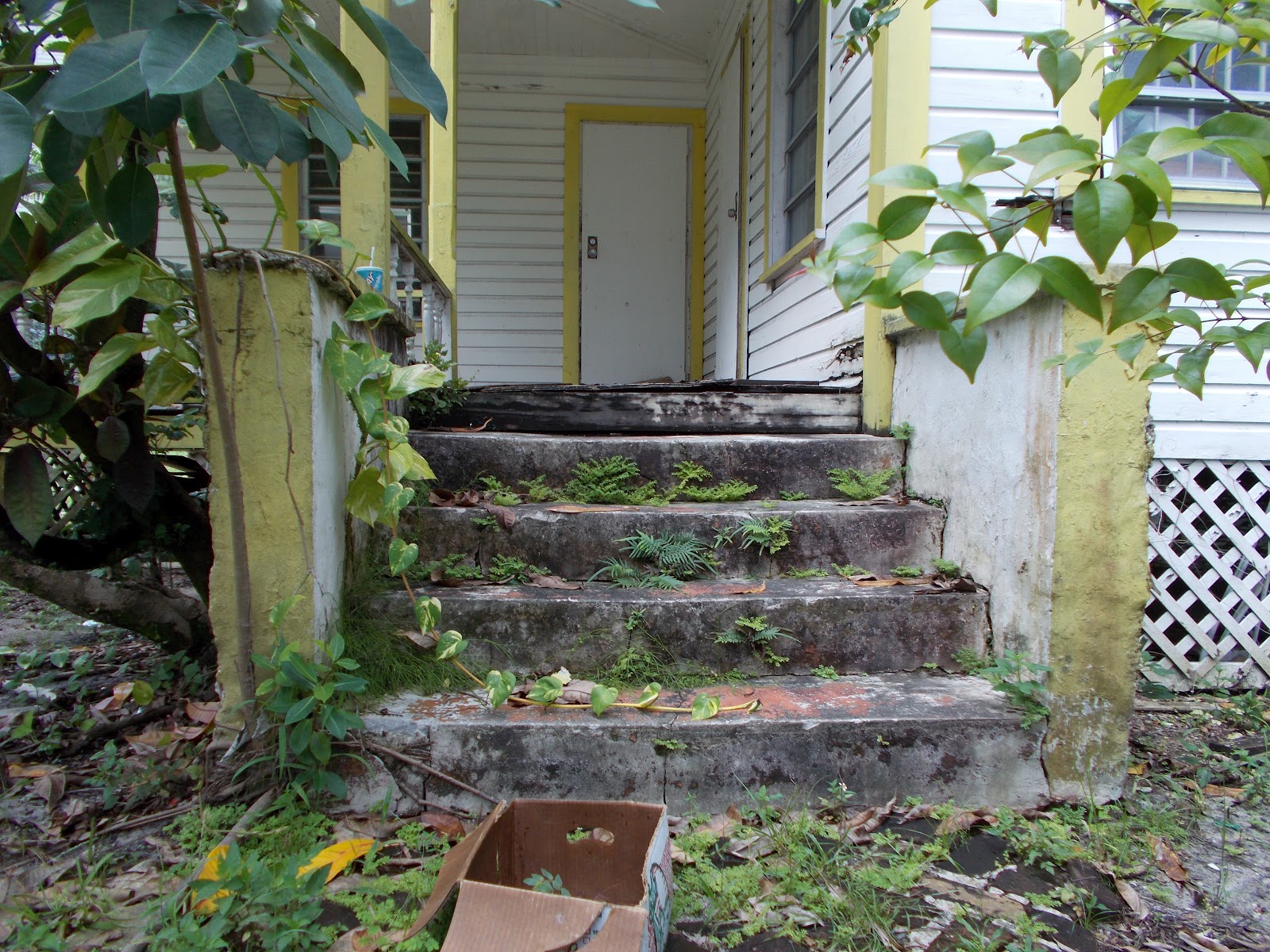
The front door of the E.W.F. Stirrup House taken from
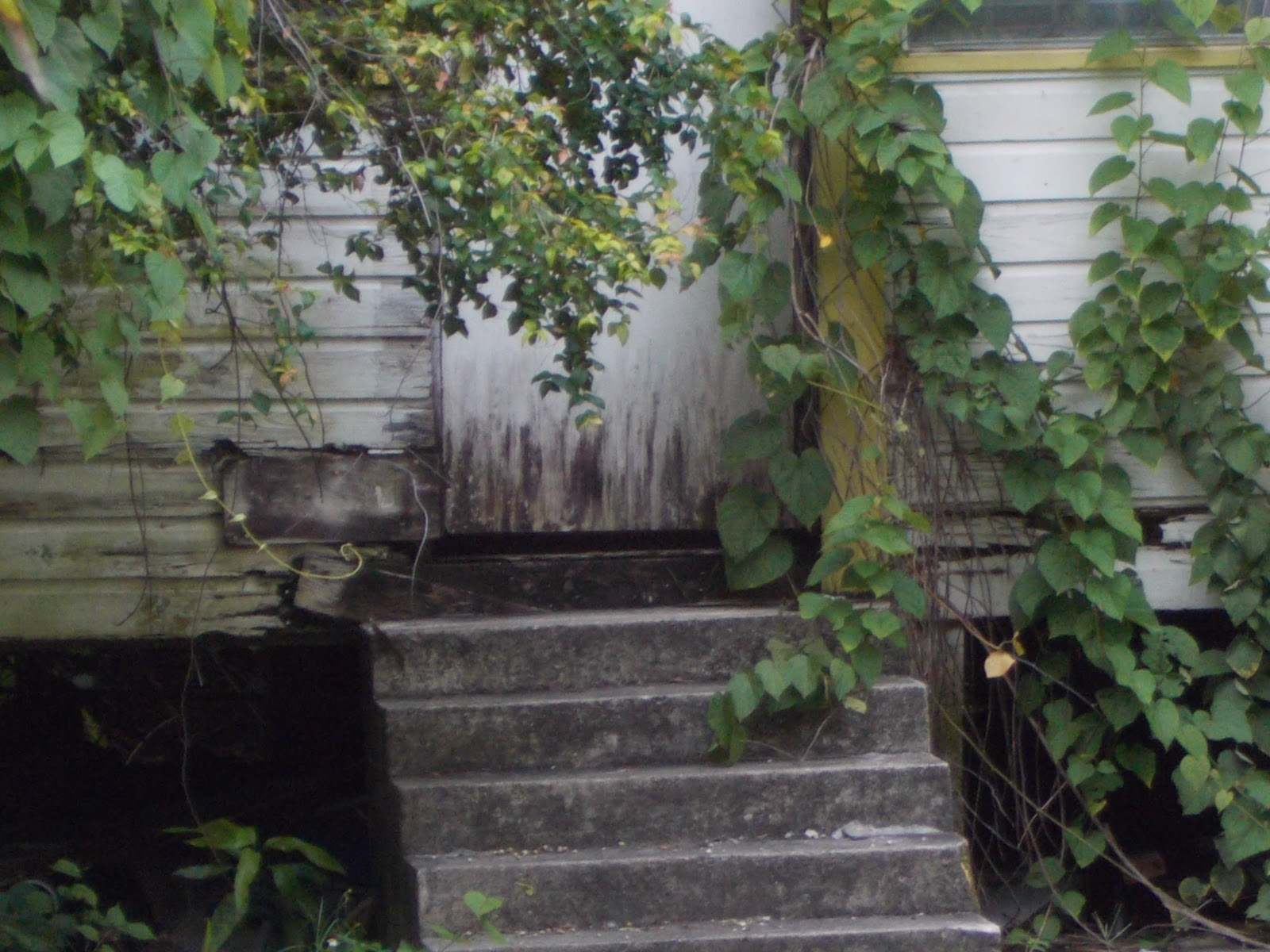
outside the fence. Ferns now grow on the concrete.

Synchronicity may have been at work again yesterday when I spoke to another gentleman who just happened to be riding past on a bicycle. He’s lived in the Grove 50 years and seems to know where all the bodies are buried. We had a good conversation and would be talking still, I imagine, if not for the lightening and thunder of an approaching storm. He wanted to pedal home before he got soaked. Unless he lived a block away, he got drenched. The sky opened up in a deluge, with barely a drop or two to give final warning.

When I told him I was a journalist investigating the E.W.F. Stirrup House, he told me some wonderful stories concerning ‘interesting’ real estate deals in The Grove, including some about the 3 lots that were assembled to build the condo complex behind the Stirrup House. During this conversation he dropped one important name — one I had not heard before — and a cursory investigation of that name reveals that he is actually the guy that might have piled up all the bodies needing burying.

All of this — what the security guard told me, what this bicyclist told me, the gentleman who appears to have assembled the 3 lots — are just more unconfirmed threads for me to pull to see how this story unravels. However, now I have the name of someone who knows all the players and may no longer have an axe to grind. Or, in the alternative, may have a very large axe to grind. Either way, if I can connect with this gentleman I might be able to solve the riddle of the E.W.F. Stirrup House.

Meanwhile, nothing really changes on Charles Avenue as long as you don’t consider continued deterioration as no change. This is why I am calling this DEMOLITION BY NEGLECT, because nothing else makes any sense. Why would such a beautiful example of a 19th Century house, a house that has survived on that spot for more than 100 years be allowed to rot? Nothing in Florida, it seems, is allowed to get much older than 20 years. In the many decades I’ve been visiting (and 7 years living here) I have seen buildings go up and down and up and down and up and down on the same piece of land. Who cares? They’re usually gas stations or banks or were gas stations and became banks, or vice-versa. There’s no sense of age — of history — in Southern Florida, except for a few small pockets. Most of those have been preserved, restored with love, and maintained as historical sites or museums.

The clock is ticking as the E.W.F. Stirrup House rots.

Take a look at the rest of my photo essay below and please read the previous chapters of Unpacking Coconut Grove, Florida, 33133 ► Part OnePart 1.1Part Two: E.W.F Stirrup, His House and All His Other HousesPart 2.1

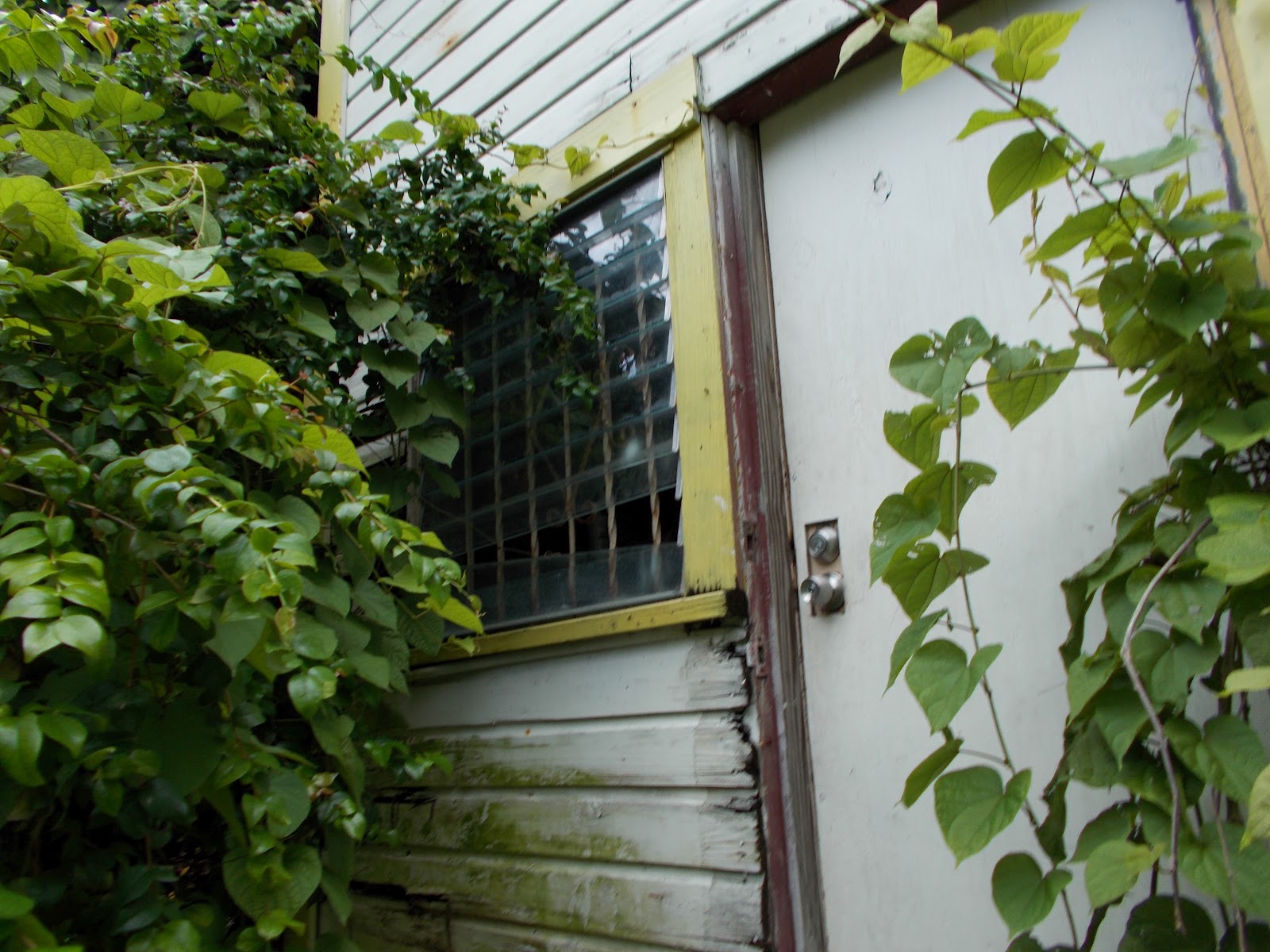
Wood rot under the window frame on the side of the E.W.F. Stirrup House.

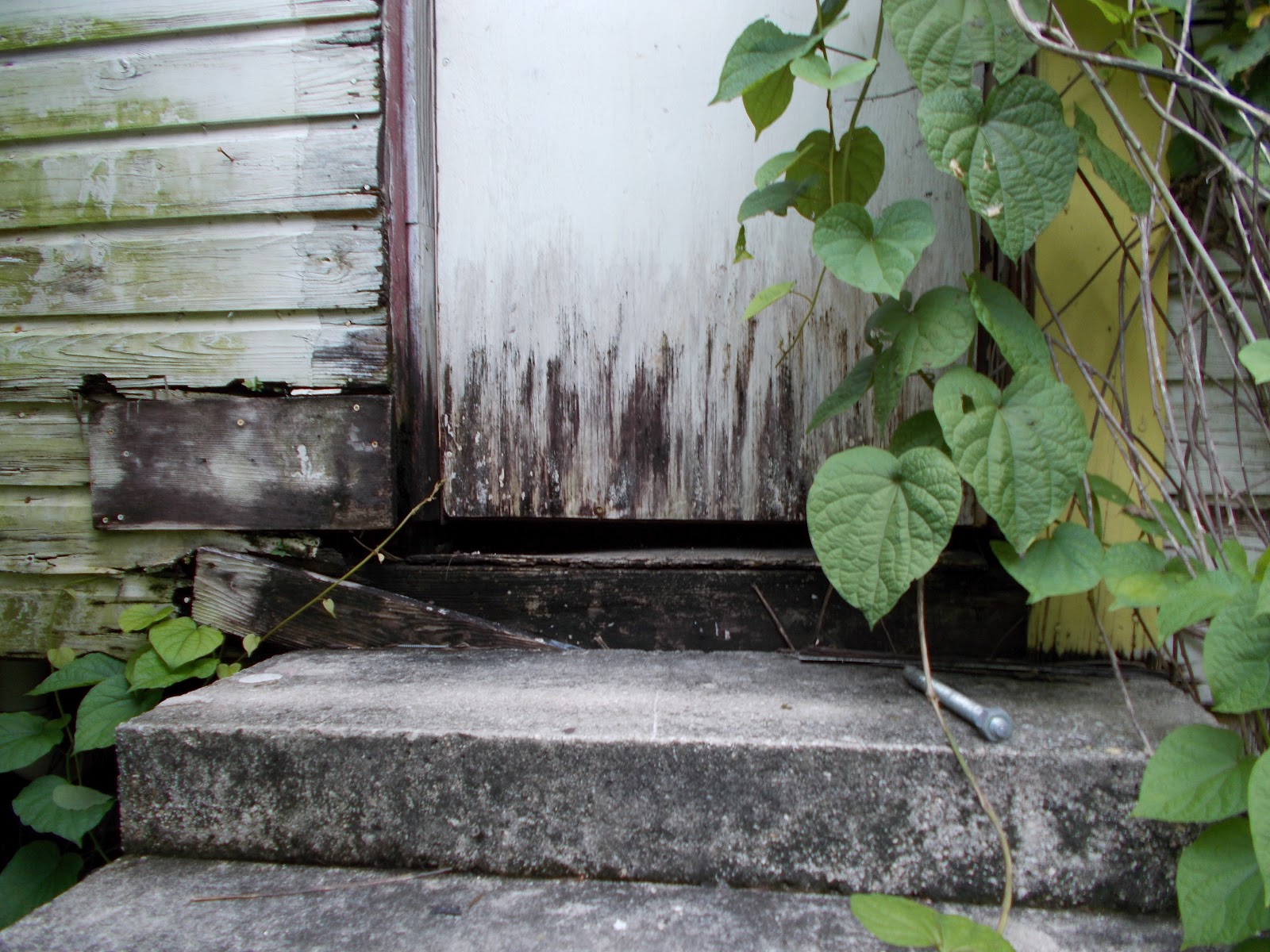
Wood rot at the side door, which is now being invaded by vines.

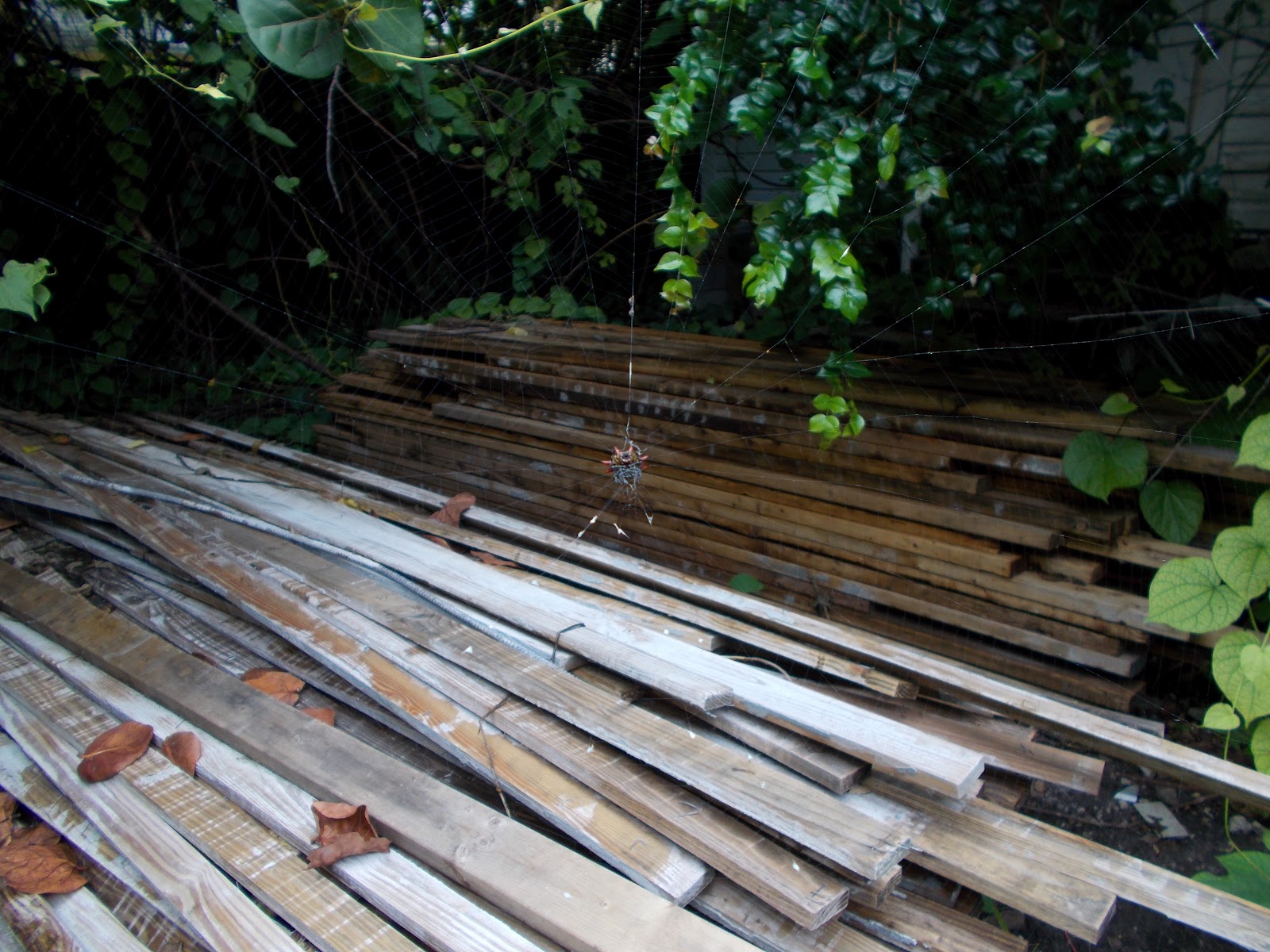
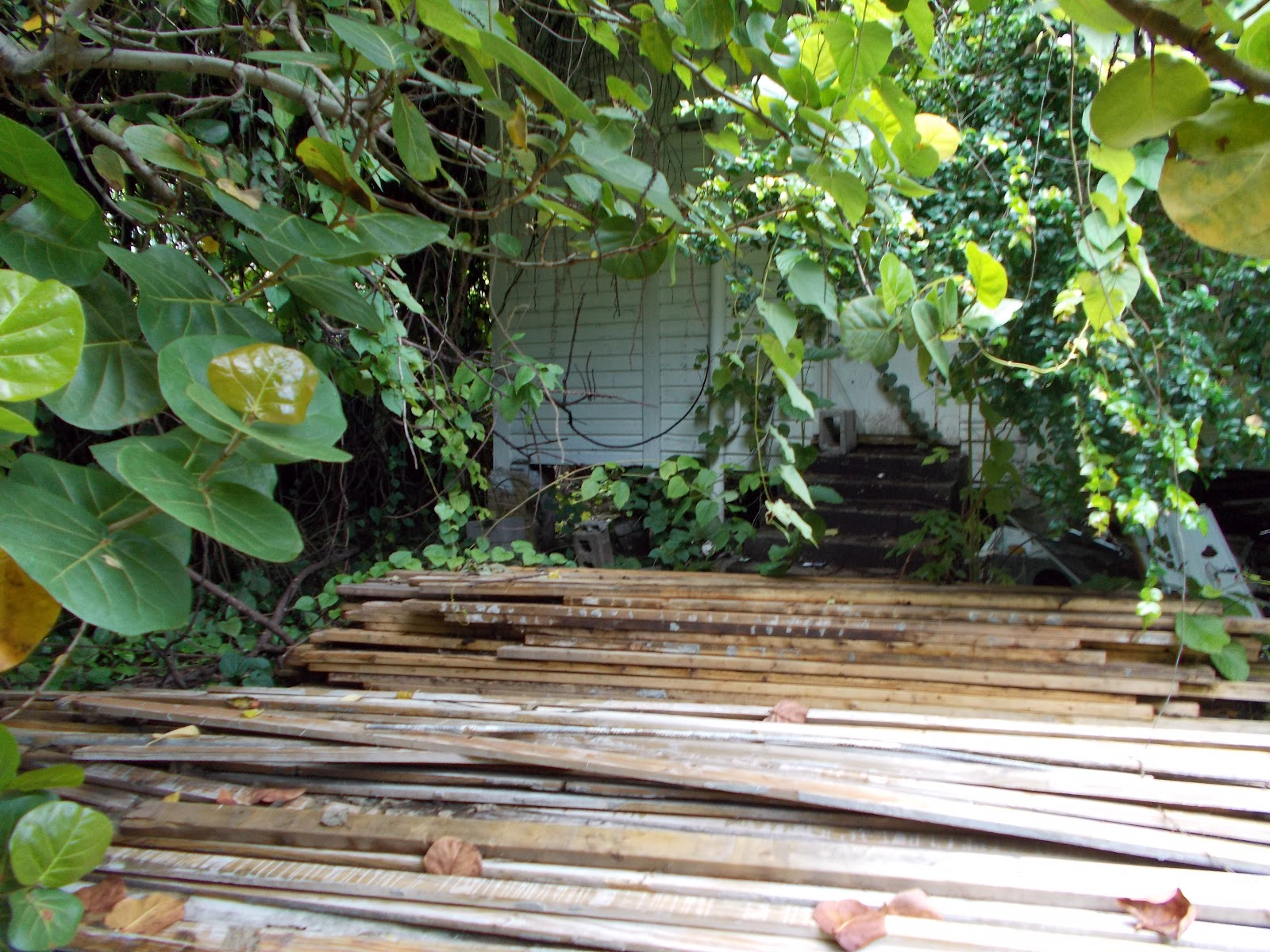
A pile of wood behind the house, under a huge bower that developed from all the vegetation. It’s where trash is
hidden from the prying eyes of Miami by-law inspectors because it’s against the law to pile up trash on your property.

This pile of landscaping clippings is also under the bower. It also (allegedly) breaks the law.
It doesn’t look like much in this pic, but it’s about 3 feet tall. That’s a nine foot palm frond on top.
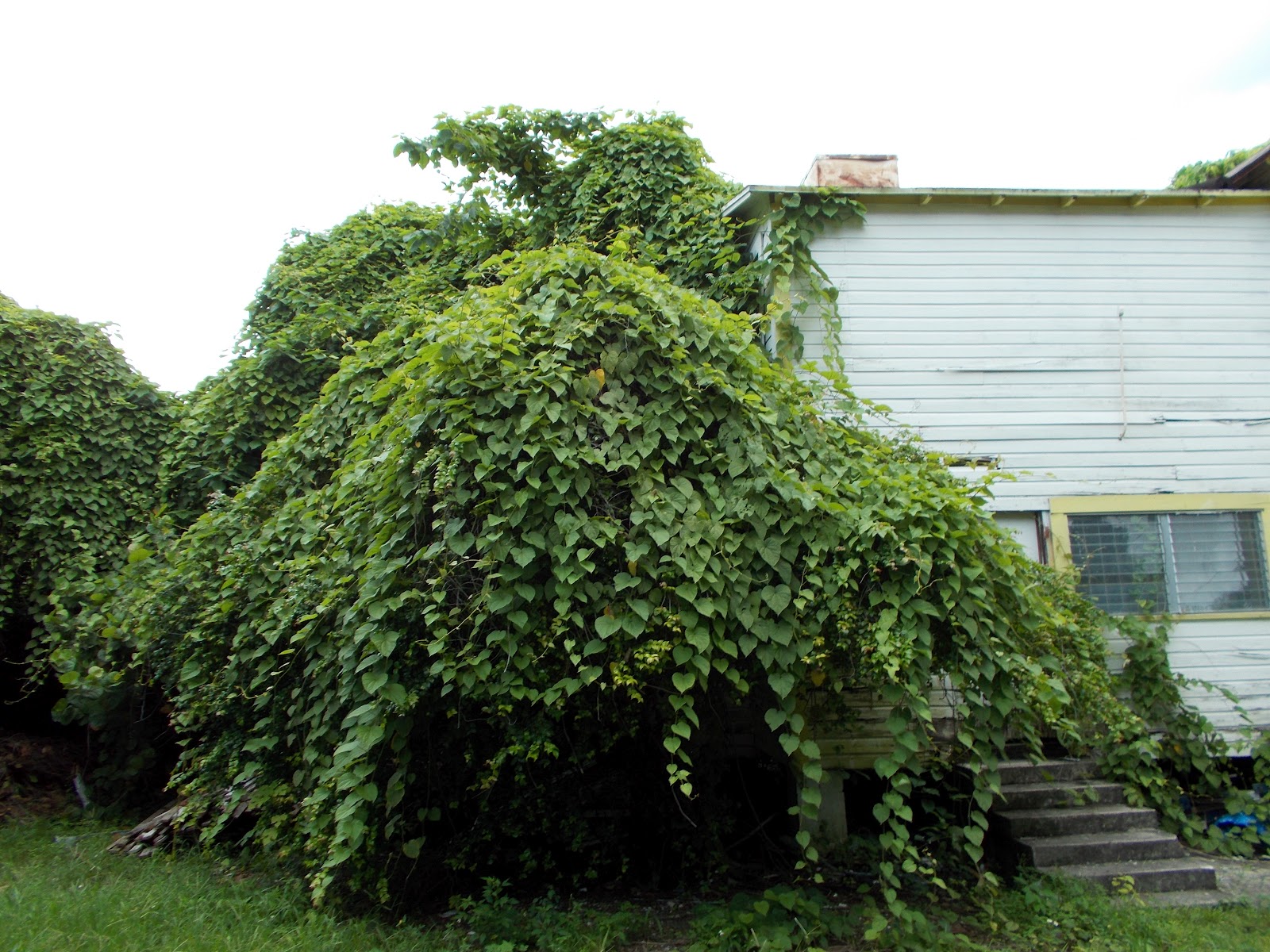
The extent of the wood pile under the bower. It’s several feet high. This is the opening of the bower.

What kid wouldn’t want to play in a bower this size?
While it was impossible to tell from any vantage point, these plants must be invading the E.W.F. Stirrup House.

The plants are clearly invading the house through a side window.

The side door with the other window, open to the elements. The bower is on the left.

The condition at the bottom of the side door.

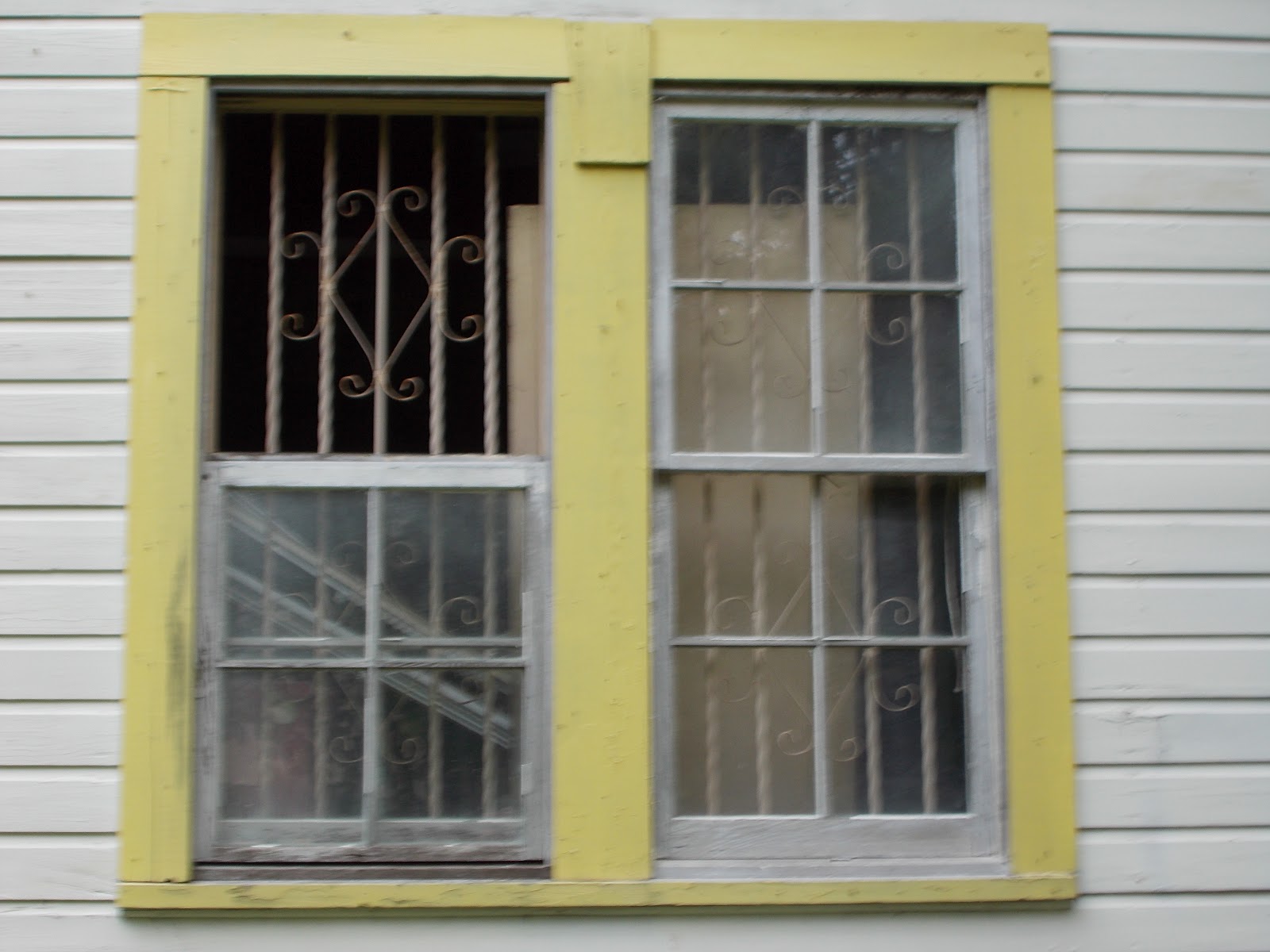
A window on the east side of the house open to the elements. The house appears to store construction debris.
Any thunderstorm coming in from the ocean will blow water right into this window.
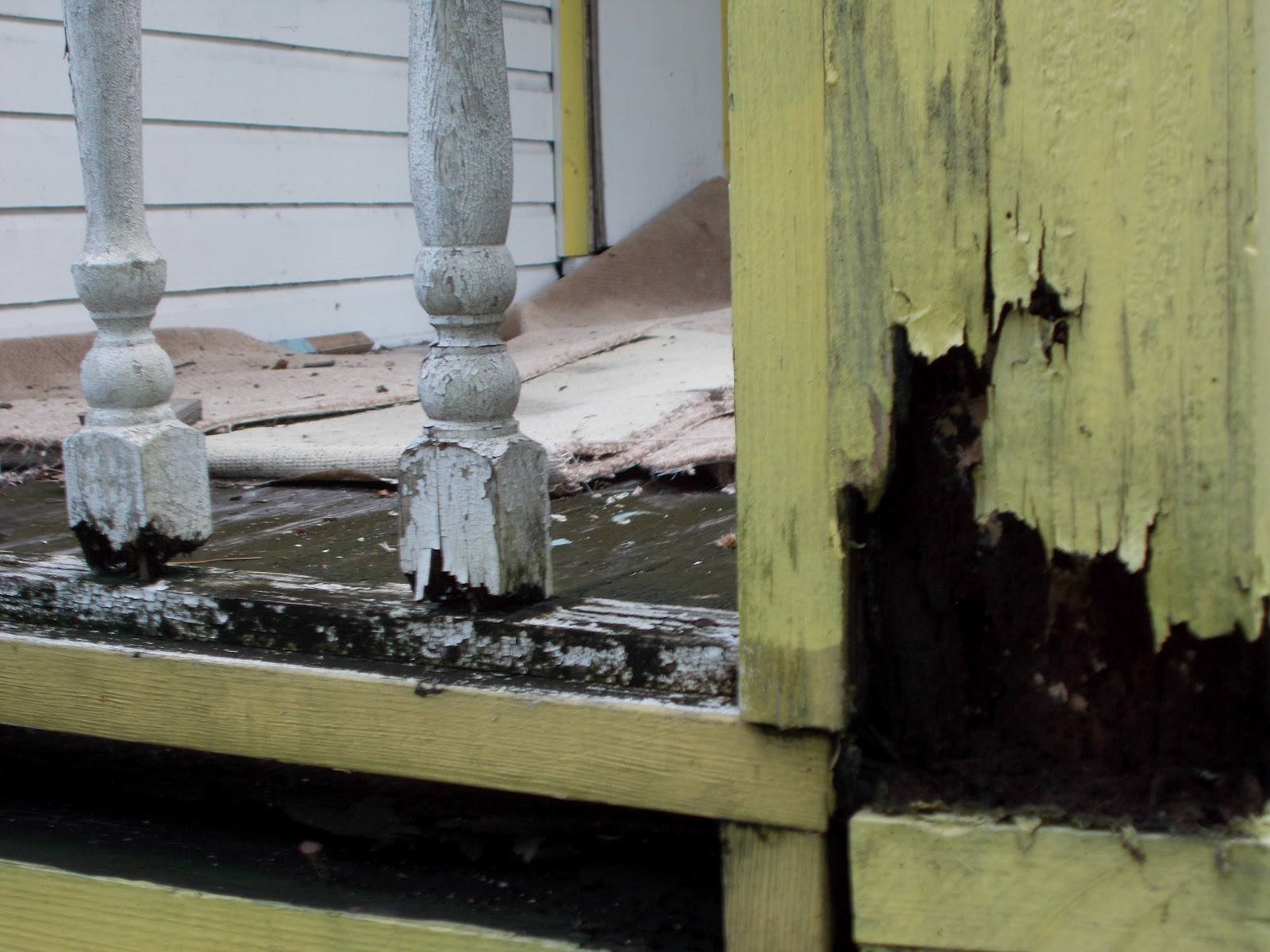
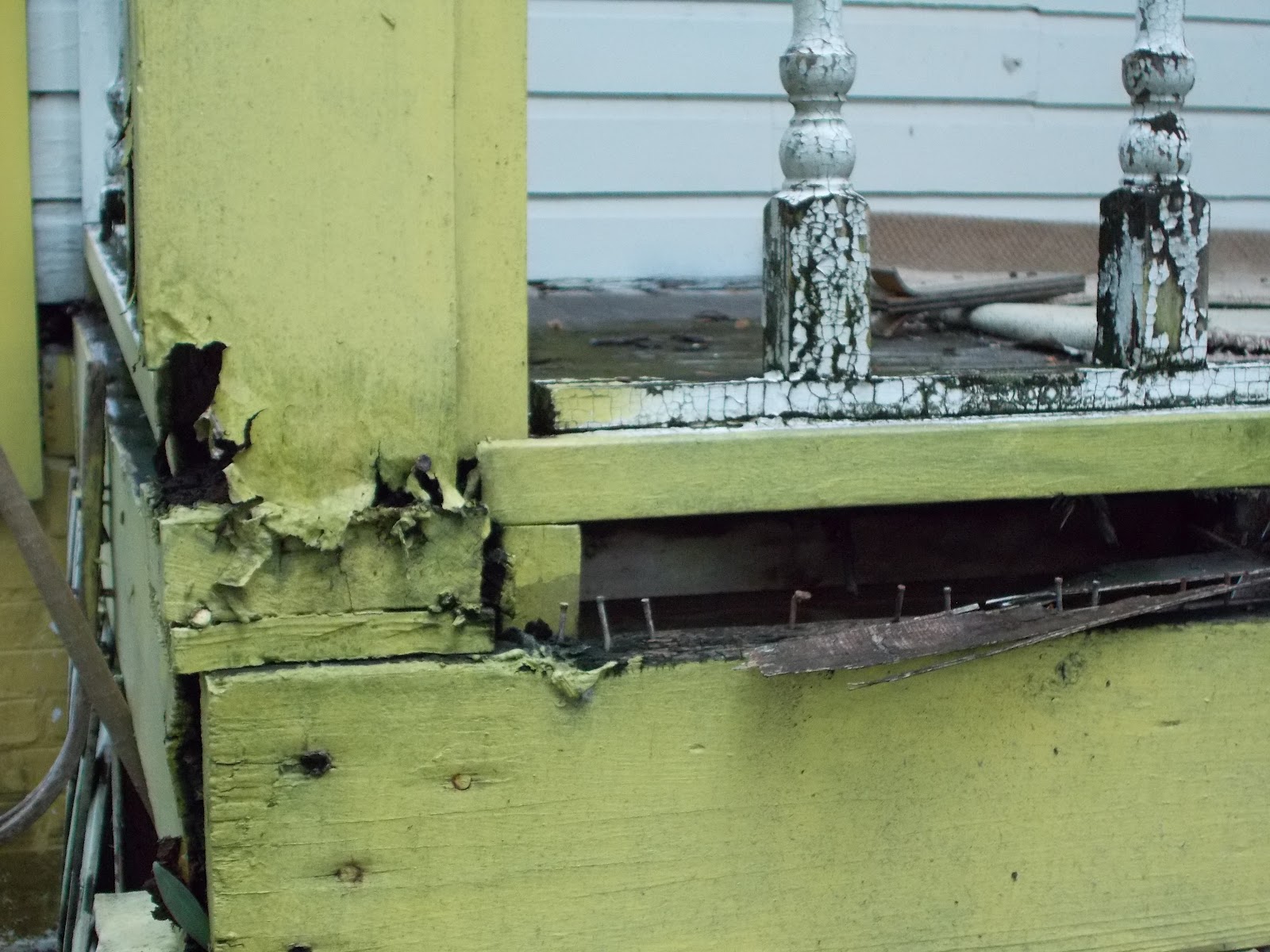
Close up of the porch of the E.W.F. Stirrup House.

Other side of same post.

She’s a beauty, ain’t she?
Just a reminder of what this is all about.

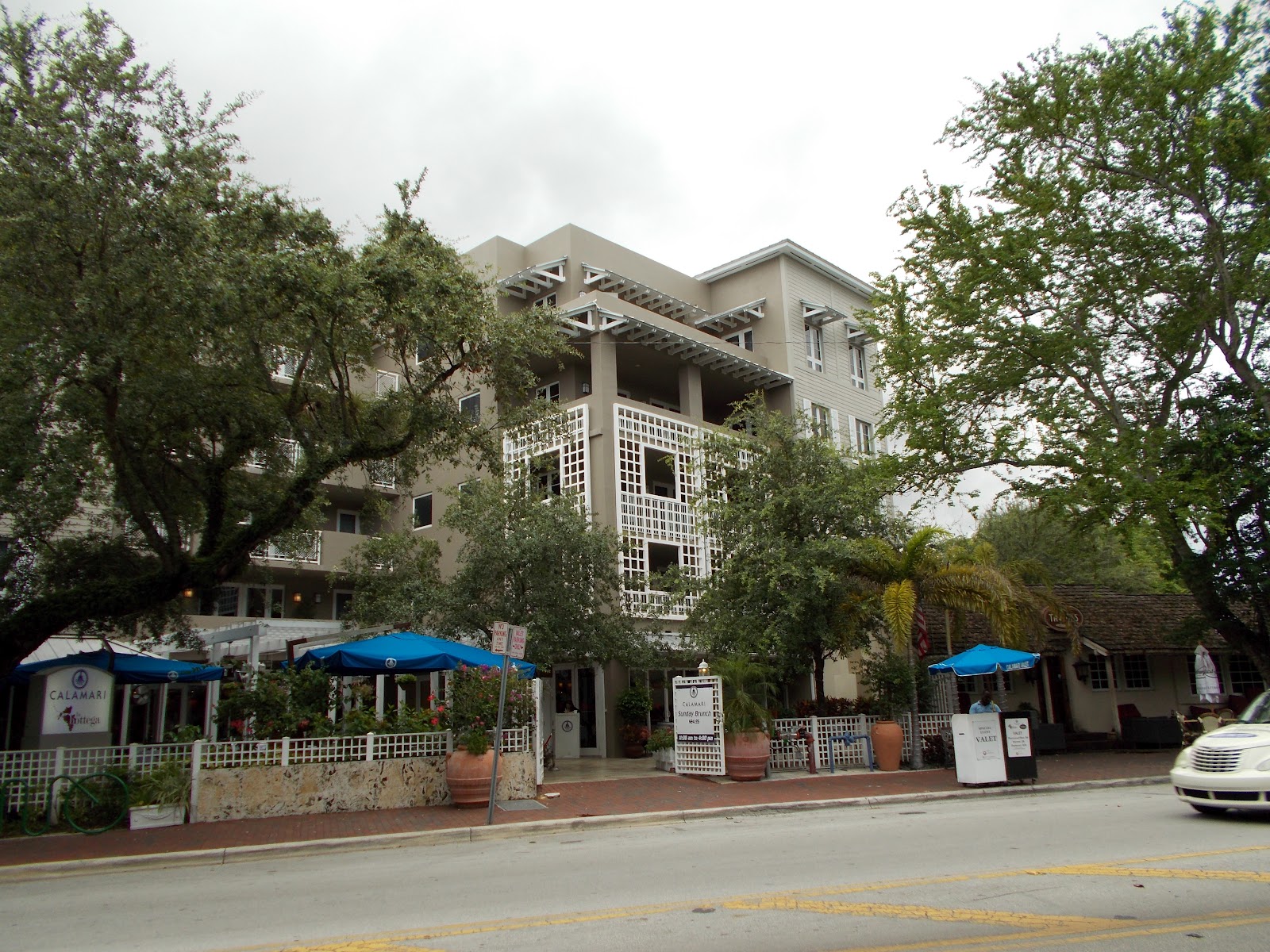
The condo complex behind the Stirrup House sits on the corner of Franklin and Main Highway. It includes unobstructed views of Biscayne Bay from the upper floors, 2 high-end restaurants, a recreation of a former venerated neighbourhood bar called The Taurus, and valet parking. I have been told there was a “Save the Taurus” campaign when the possibility of its demise was announced years ago. I’ll be writing more about this complex in Part Three of Unpacking Coconut Grove, Florida.

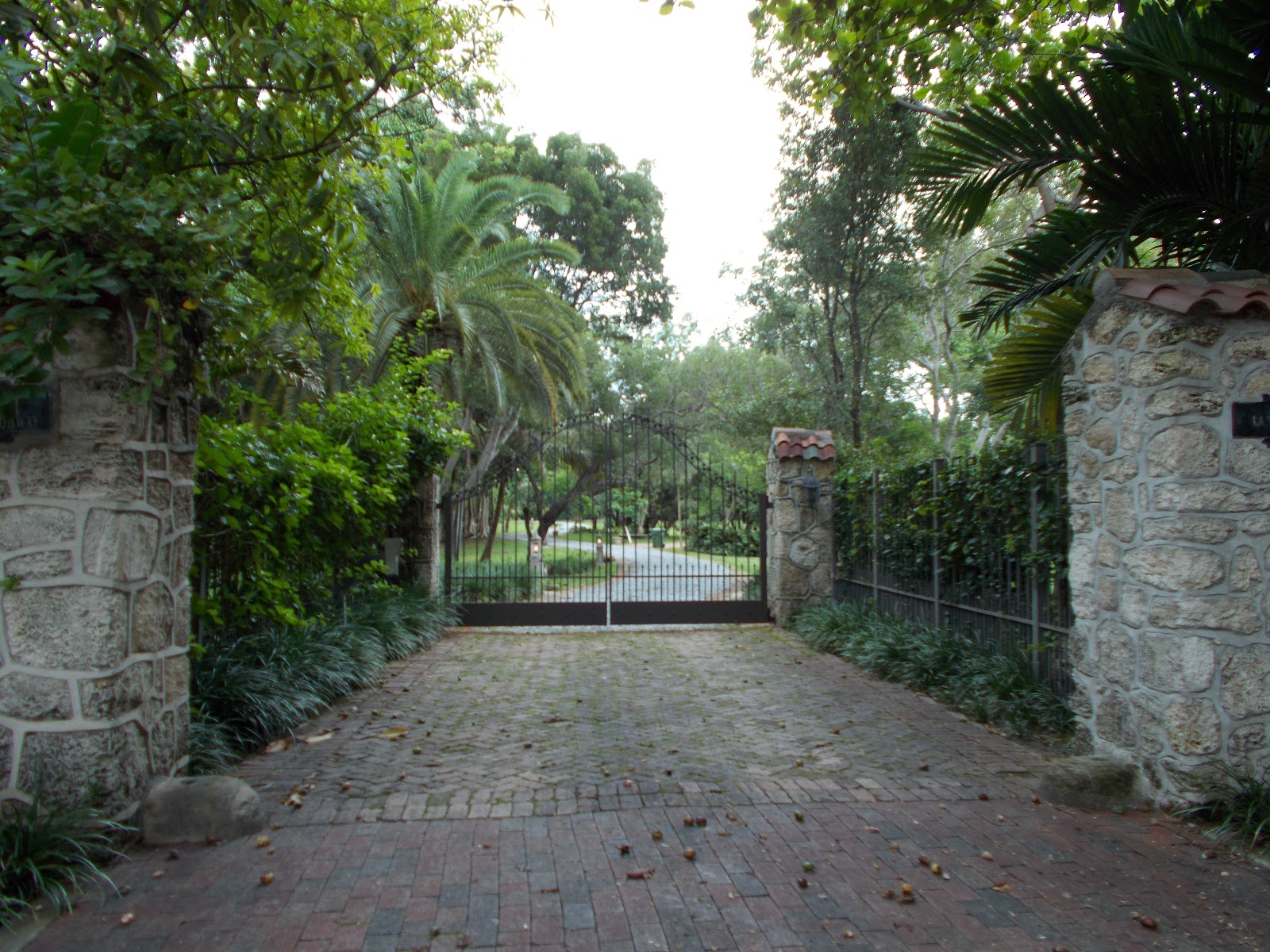
This is one of the gated communities on the opposite side of Main Highway. At one time it was the extension of Franklin Avenue to Biscayne Bay. Now it’s gated and inaccessible, even to the Google Street View Car.

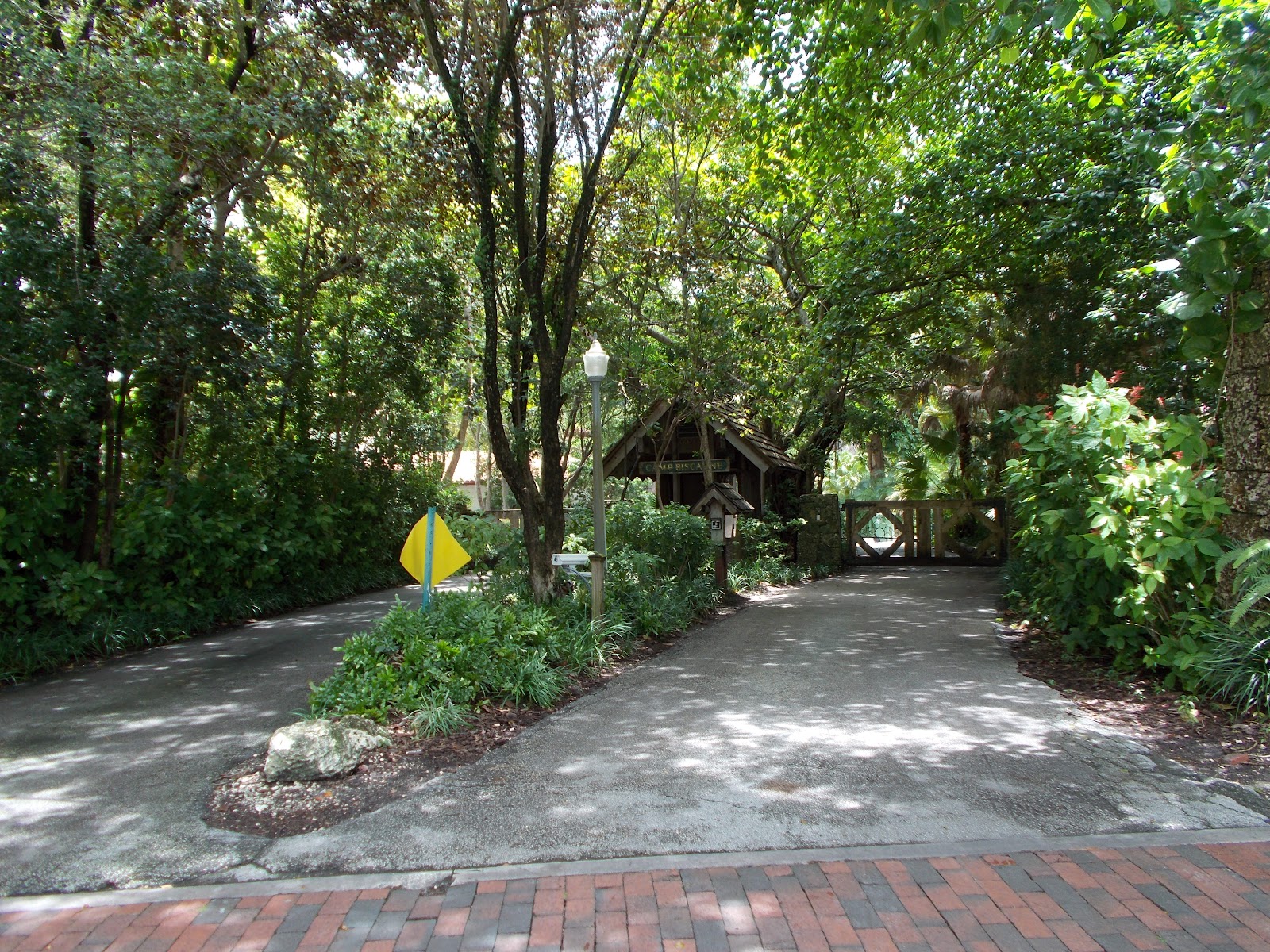
This is another of the gated communities on the other side of Main Highway. Camp Biscayne, which is also closed to Google Street View, has a long and rich history going back 109 years. Camp Biscayne is so exclusive that even though it’s only a short block away from gated Franklin, there is no access from Franklin, or vice-versa.

Picture of the abandoned Coconut Grove Playhouse, taken from Camp Biscayne entrance where the gentleman and I spoke.

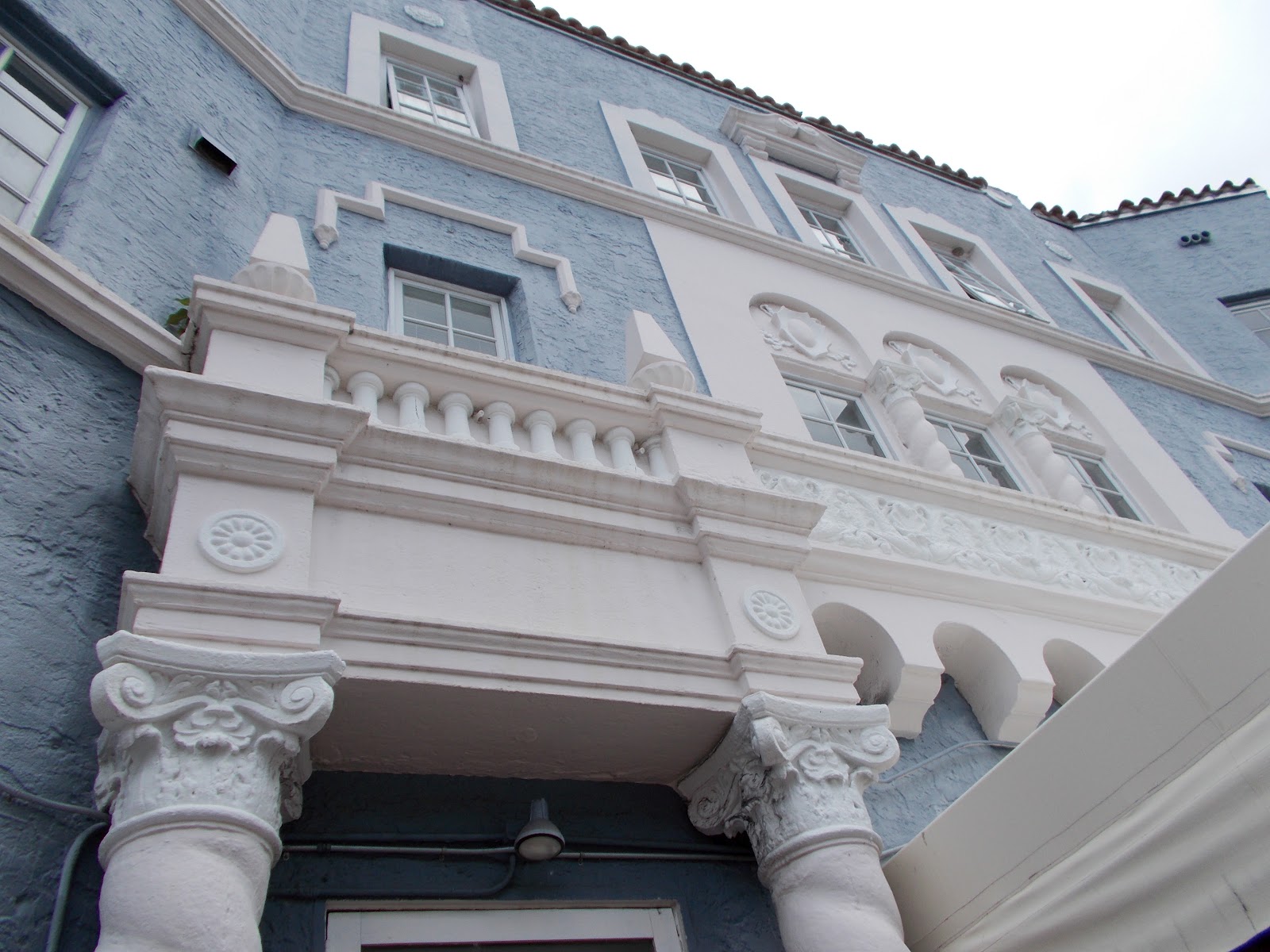
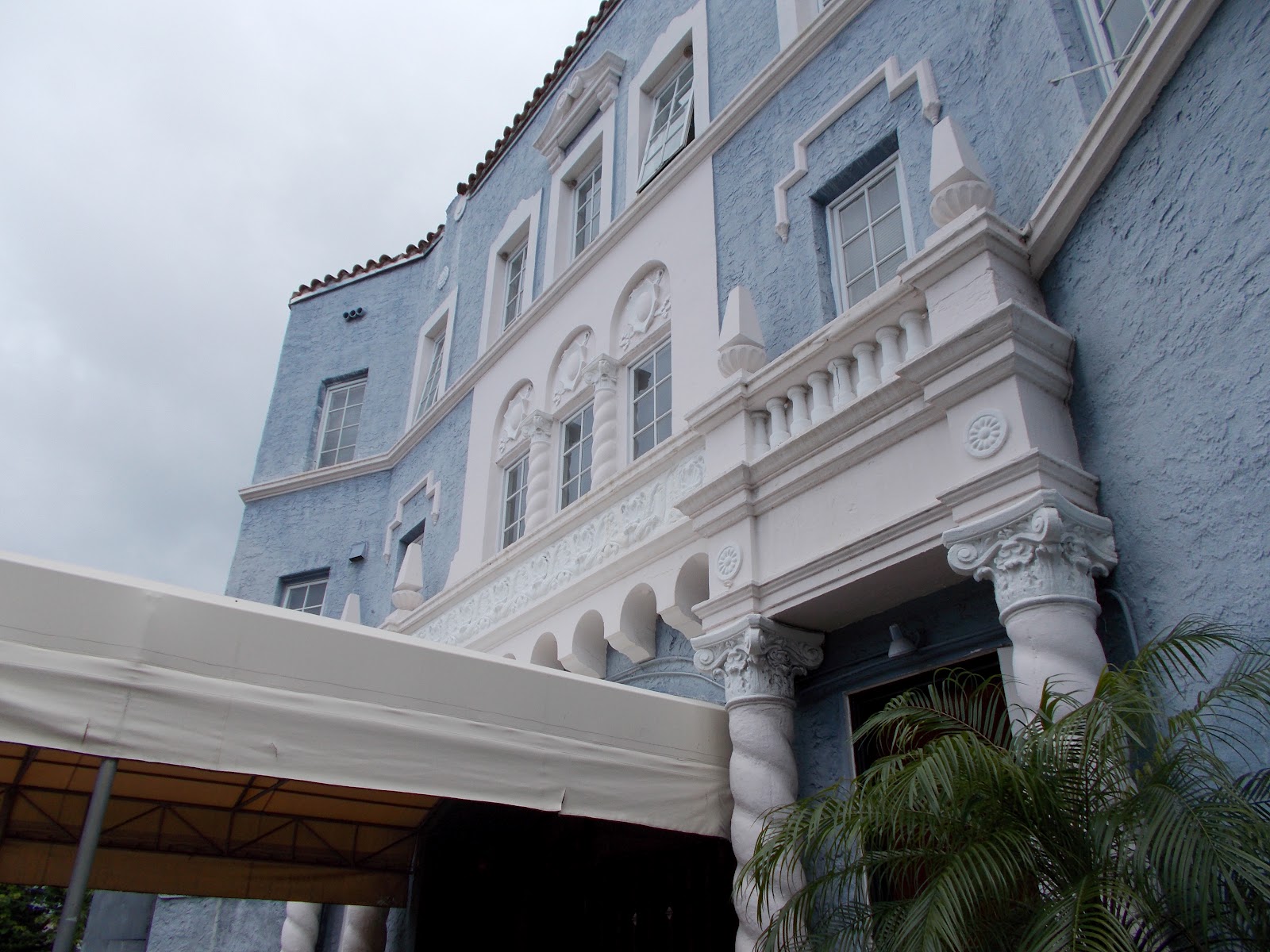
Detail of the Coconut Grove Playhouse.

Detail of the Coconut Grove Playhouse.

Picture of the Coconut Grove Playhouse sign taken from inside the car after the skies opened up.

If you want to help me save the E.W.F. Stirrup House you could provide no greater service than sharing this with people you think may care.

Unpacking Coconut Grove ► Part 2.1 ► Today in The Grove

I love Google alerts. While not everything below belongs to Miami’s Coconut Grove, most of it does. And, what’s there has all the appearance of bling in the Florida sun: ritzy hotels, bed races, show biz, outdoor cafes, wine tasting, high fashion, and high end real estate. Imagine how much money is exchanging hands today in The Grove, just in food and drink service.

To hell with Coconut Grove’s history when there’s money to be made.

News 8 new results for Coconut Grove
Newton assault victim on suicide watch
Herald Sun
Miami
trial lawyer Michael Seth Cohen has filed a complaint on behalf of
Ariel Vargas, 42, who was working the graveyard shift in the Coconut Grove Courtyard Marriott on April 17 when Newton launched an attack that was captured on CCTV. Mr Cohen said
See all stories on this topic »
Magic and more: Singers, comedians, performers to showcase talent in variety
Cherokee Tribune

and more: Singers comedians performers to showcase talent in variety
show – CANTON — The Canton Theatre hopes to bring some laughs to
downtown Canton with two nights of a variety show. The Coconut Grove Players which consists of six perform…
See all stories on this topic »
Man ordered to stand trial for murder of parents
ABC Online
Thomas Bradley, 40, is charged murdering his parents, Bill and Hilary Bradley, in their Coconut Grove
townhouse in March. An autopsy showed both were killed by stabbing.
Bradley was today committed to stand trial in the Northern Territory
Supreme Court.
See all stories on this topic »
Matthew Newton ‘sued over hotel assault’
Yahoo!7 News
Ariel Vargas was doing the graveyard shift just before 5am on April 17 at the Courtyard Marriott Hotel in Miami’s Coconut Grove. Video surveillance at the hotel appears to show Newton punch the 42-year-old in the face. The 35-year-old Underbelly star
See all stories on this topic »

Yahoo!7 News
New Providence Police investigate alleged drowning – Mobile division make
thebahamasweekly.com
A 17 year old male of 2nd Street, Coconut Grove
is in police custody after being found in possession of a handgun and
ammunition. According to police reports around 11:23 pm on Monday 9th
July, 2012 police received information of gunshots being heard
See all stories on this topic »

thebahamasweekly.com
On the Road Again
New York Times
One long-haired owner hops on his ride, fires her up and smoothly navigates her into a well-to-do avenue of Coconut Grove.
The loud, wet growl of her pipes instantly stops all talk in the
open-air cafes and along the crowded sidewalks down which women
See all stories on this topic »
Filming in Miami
Miami Today
Newspaper;
Filming; Fashion Photography; Photography; Commercials; Videos; Miami,
Florida; Miami Today; MiamiTodayNews; Miami-Today; South Florida; Coral
Gables; Coconut Grove; Aventura; Miami Beach; Ocean Drive; Lincoln Road; South Beach;
See all stories on this topic »
Miami-Dade way ahead of state in spending rebound
MiamiHerald.com
“On
average, we’re still about 10 or 15 percent behind that pace” hit in
2007 and 2008, said Robert Finvarb, owner of several Marriott hotels in
Miami-Dade, including a 196-room Courtyard by Marriott along the Coconut Grove waterfront. “We’re getting
See all stories on this topic »

Blogs 3 new results for Coconut Grove
Coconut Grove Grapevine: Great Grove Bed Race registration is
By Grapevine
Good, cause the sign-up form is now open for the 2012 Great Grove Bed Race, which will take over the streets of Coconut Grove on Sunday, September 2. This is one of the Grove’s big signature event, thousands of people crowd the village to
Coconut Grove Grapevine
New Wine tasting series at the Ritz Carlton 7/12/12 « Soul Of Miami
By soulofmiami
Guests’
palates will be greeted with complimentary hors d’oeuvres, while
sipping on carefully selected winesthemed by varietal type, region or
country of origin, for an educational wine tasting at The Ritz-Carlton-Coconut Grove in Miami’s
Soul Of Miami
Destination Miami | Fashion News, The latest trends, Catwalk – Motilo
By CressidaMeale
Districts such as Coral Gables, Little Havana and Coconut Grove
offer the kind of sultry indulgences their names suggest, but it is
South Beach (SoBe) that’s the heart of the party scene in a city that
takes its hedonism, ostentation and
Fashion News, The latest trends,…

Web 6 new results for Coconut Grove
3400 27 Avenue UNIT 401, Coconut Grove, FL 33133. MLS
3400 27 Avenue UNIT 401, Coconut Grove, FL 33133. RITZ CARLTON. MLS# A1663109.
www.yellowkeyrealty.com/…/3400-27-avenue-unit-401-coco…
Sonesta New Orleans, Boston, Miami, St. Maarten, Brazil, Peru, Egypt
Cruises and Beach Resorts. Discover the distinctive Sonesta resorts and hotels in New Orleans, Maho Beach, Boston / Cambridge, Coconut Grove, and more.
www.sonesta.com/Orlando/index.cfm?fa=c.HPRedirect…
Miami planning board to consider proposed school on July 18
IF YOU GO What: Miami Planning, Zoning and Appeals Board Where: Miami City Hall, 3500 Pan American Drive, Coconut Grove When: 6:30 p.m. on July 18
www.miamiherald.com/…/miami-planning-board-to-consider….
Coconut Grove-$900 Mostly Furnished with Parking & Utilities
This is a great housing opportunity for a responsible male or female in the center of Coconut Grove! $900 per month includes room (180 sq ft), garage parking,
miami.craigslist.org/mdc/roo/3129302623.html
ESL Jobs in Coconut Grove Florida | ESLemployment
Job search for ESL jobs in Coconut Grove Florida at ESLemployment.com.
www.eslemployment.com/…/esl-jobs-Coconut-Grove-Florida….
Buyer Representation For Coconut Grove Commercial Retail
3340 GRAND AV – Coconut Grove, FL 33133. Beds: 0 Baths: 0; Type: Commercial/Industrial; MLS ID: D1369668; Sq Ft: 4500. on grand ave one block from the
www.agreservices.com/…/coconut-grove-retail-properties-for-…

Unpacking Coconut Grove ► Part Two ► E.W.F. Stirrup House

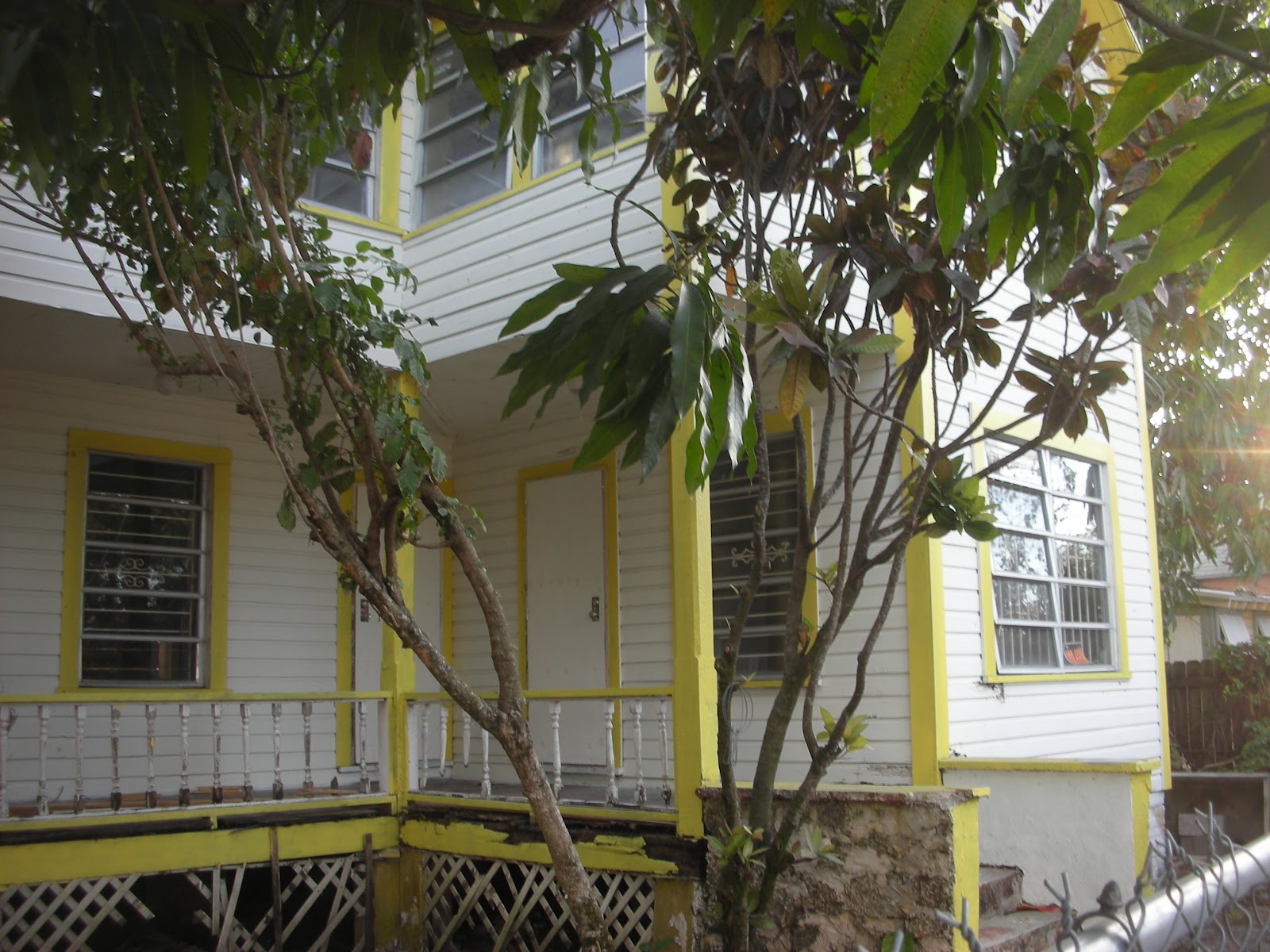
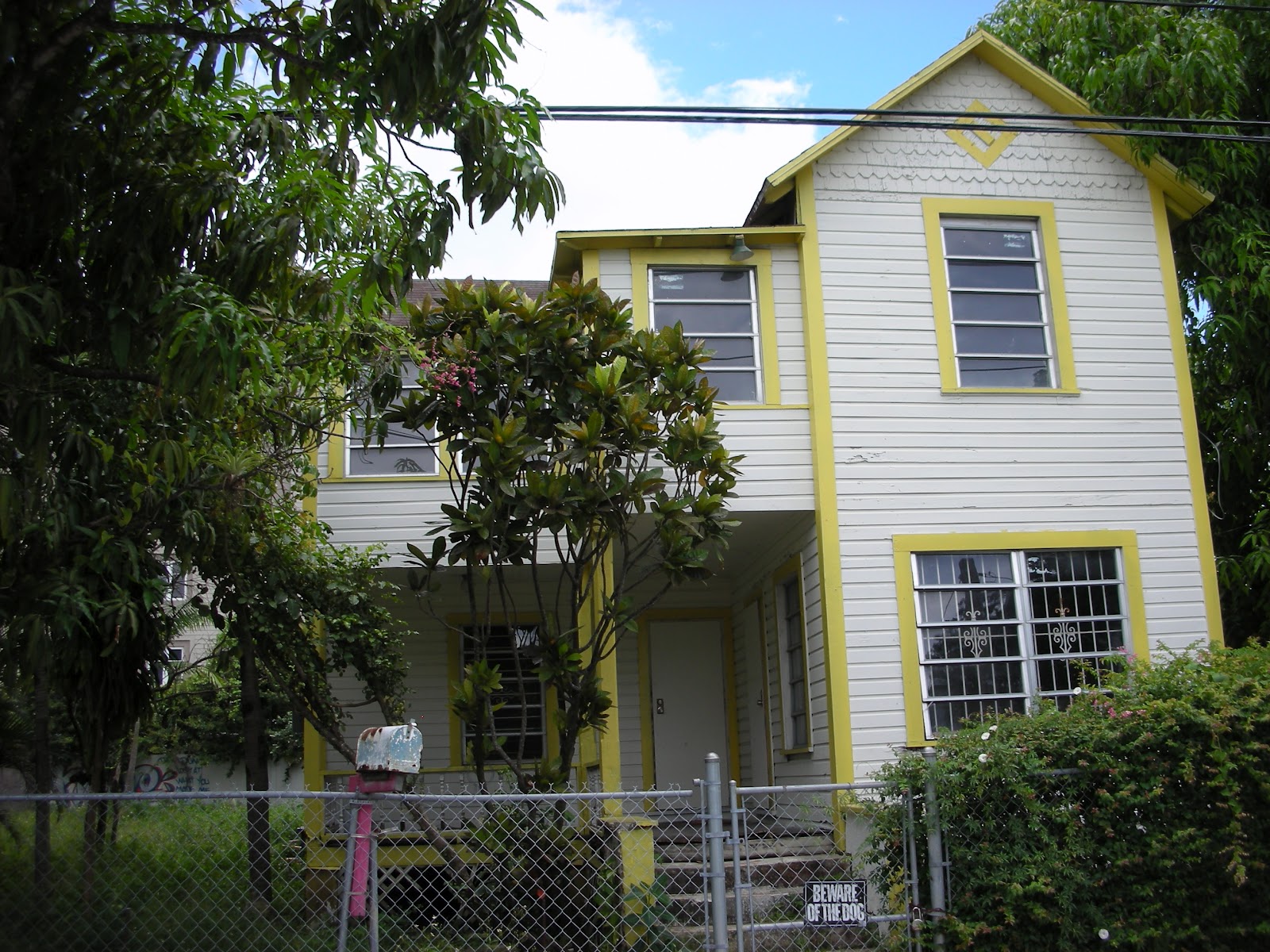
Standing proud. The beautiful E.W.F. Stirrup House.

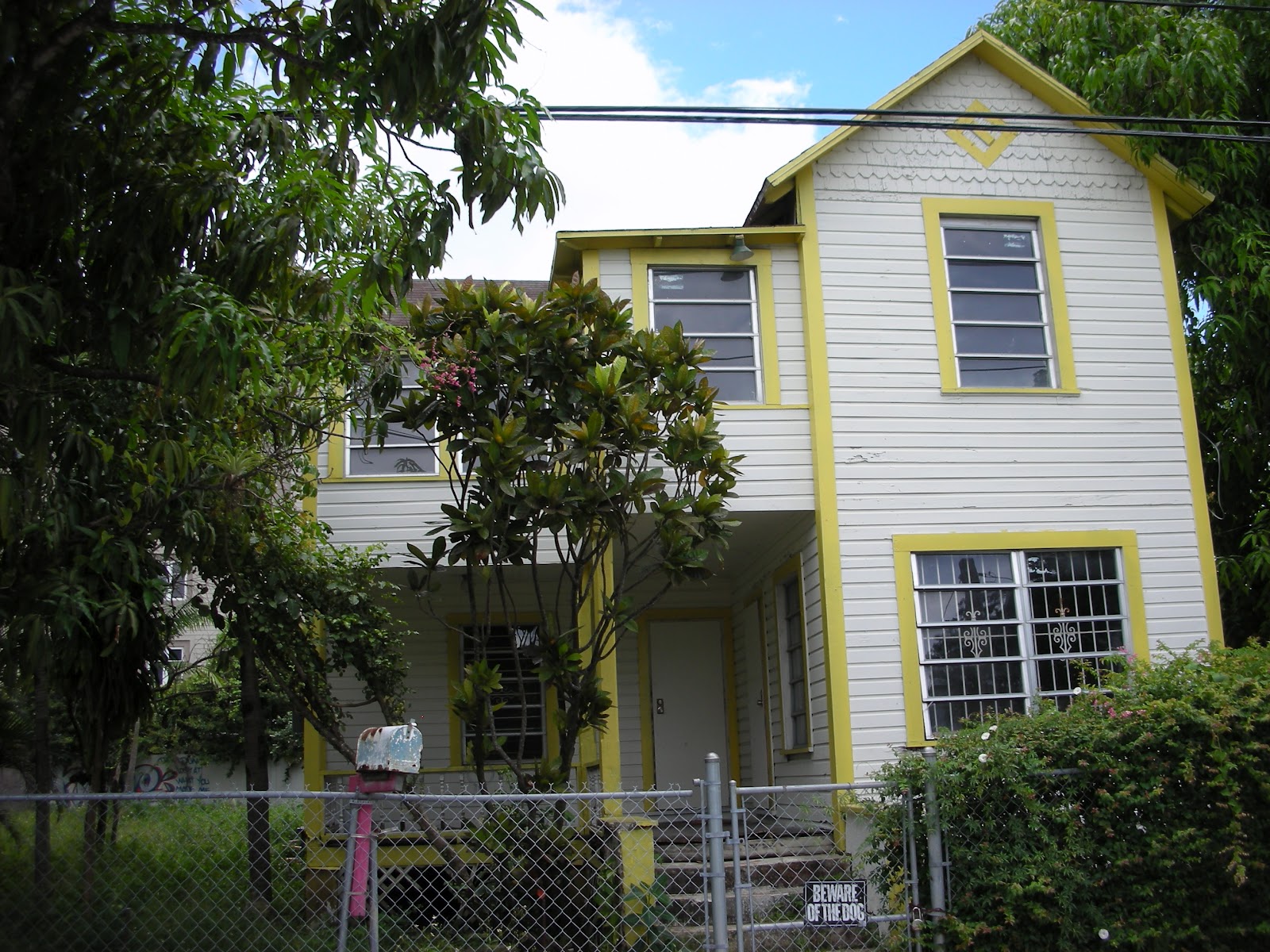
The E.W.F. Stirrup House (left) at 3242 Charles Avenue, Miami, FL, 33133, is reportedly one of the last wood frame homes in Miami-Dade County. It is almost certainly one of the oldest houses, built in the late 19th century, as Caribbean Blacks started arriving in lower Florida to work at the Peacock Inn. The house sticks out on Charles Avenue, but also in Florida. Homes don’t look like this anywhere else. According to a report looking in to designating the E.W.F. Stirrup House a Miami historical site:

The key elements that reflect its nineteenth century origins are its extremely narrow proportions, the size and shape of the fenestration, and its L-shaped plan. This design is based on a builder’s tradition, and was especially popular throughout America in the last half of the nineteenth century.
There is more than one way to describe this property type. In their book A Field Guide to American Houses, Virginia and Lee McAlester describe it as a “front gable folk house.” In a more detailed article, Barbara Wyatt of the State Historical Society of Wisconsin described it as a “Gabled Ell.” Wyatt explains that this type was especially common in late–nineteenth century America, and was almost exclusively a residential type. The Gabled Ell takes the form of two gabled wings that are perpendicular to one another, and that are frequently of different heights.

The longitudinal face parallel to the street almost always had the lower height. The result was typically an L-shaped plan. Ms. Wyatt explains that the form allowed for outdoor living space (the porch) and a sheltered entrance. Entry is always via the porch at the “ell,” or junction of the two wings.

My latest panorama of the E.W.F. Stirrup House and the historical marker that started my journey.

The Stirrup House mailbox in 2010

While the E.W.F. Stirrup House certainly deserves to be preserved for its age and architecture, it also needs to be preserved as a standing monument to Ebenezer Woodbury Franklin Stirrup, one of the people who built Coconut Grove with his bare hands.

E.W.F. Stirrup arrived in Coconut Grove in 1899 at the age of 25. Like a lot of Bahamians, he first migrated to Key West. There he apprenticed with an uncle as a carpenter, a trade he would utilize later. After 10 years, and unhappy with the financial arrangement with his uncle, Stirrup first moved to Cutler, Florida, working in pineapple fields and clearing lots for houses. Occasionally, instead of cash, Stirrup was paid in land, which began his real estate holdings that at one time included most of downtown Coconut Grove. That’s what made him one of Florida’s first Black millionaires. However, that’s not what made him extraordinary, especially for his times.

As his landholdings increased Stirrup began building houses which he rented and sold to other Bahamians who had emigrated up through Key West to take the jobs offered by Coconut Grove’s growing tourist industry. According to Kate Stirrup Dean, Stirrup’s oldest daughter:

Father believed in every family having a house, a yard and a garden, so you would feel like you had a home. He felt that people became better citizens when they owned their own homes.

The Mariah Brown House with its marker and No Trespassing sign.

Stirrup apparently built more than 100 houses, often at night after a full day’s work. Because of this Coconut Grove had a greater percent of Black home
ownership than any other ‘Merkin city I have studied. Most other cities
had a higher percentage of rental properties and absentee landlords as a result
of the neighbourhoods once belonging to other ethnic types who moved up
and out, a natural progression. Coconut Grove was an area settled almost entirely by Blacks when there was nothing but swamp and wilderness surrounding it. They didn’t inherit the neighbourhood, they built it and owned it themselves.

Stirrup was obviously a proud man because his house, which once dominated a large lot at the east end of Charles Avenue overlooking his estate, is a showpiece. It looks nothing like the simple Bahamian style homes he built for his neighbours. One of the last surviving examples of the Bahamian style is The Mariah Brown House, which pre-dates Stirrup’s arrival by nine years. It is thought to be the first house owned by a Black person in the area. A report was also prepared to designate the Brown House a Miami historical property. The report declares the Brown House:

[O]ne of the most important remaining sites from this early black Bahamian settlement in Coconut Grove. The house is also a good example of the type of architecture of the nineteenth century frame vernacular architecture that was inspired by the houses of the Bahamas and Key West.
The importance of the contributions made by African Bahamians to the develoment [sic] of Coconut Grove and the City of Miami has long been overlooked. Although recent studies show that by 1920 West Indian blacks made up over 16 percent of Miami’s population, information about their community and lifestyle has been basically undocumented.

Undocumented? Overlooked? Yes!!! Researching the Bahamian phase of Coconut Grove has been a monumental task. I have it through 2nd and 3rd hand information that in the ’20s, or ’30s, or ’40s, and well into the ’60s according to some, Coconut Grove was an artists’ community. It attracted a certain type of Bohemian Beatnik hipster, the archetype of which had little problem mixing with Blacks, listening to Jazz, and smoking reefer. That’s where my novel is going.

However that’s not where my research keeps taking me. My research keeps taking me to the E.W.F. Stirrup House, the Mariah Brown House, and the Coconut Grove Playhouse [another boondoggle I have yet to write about, but which I believe is just one more piece in the giant corruption jigsaw puzzle I find myself investigating] . Yet, the more I find out, the less I know. A little over a year ago the local NBC affiliate and CBS affiliate both filed reports which filled in some more of the blanks of the Stirrup House:


What has happened since then? Aside from someone straightening the historical marker? Nothing. I have now been documenting Charles Avenue in photos and essays for three years. In that time there has been no change to the Mariah Brown House or the E.W.F Stirrup House. Aside from more weather damage they stand in the EXACT same state of disrepair as they were the day I discovered them. My research confirms that each of them were vacant for years before I stumbled across them.

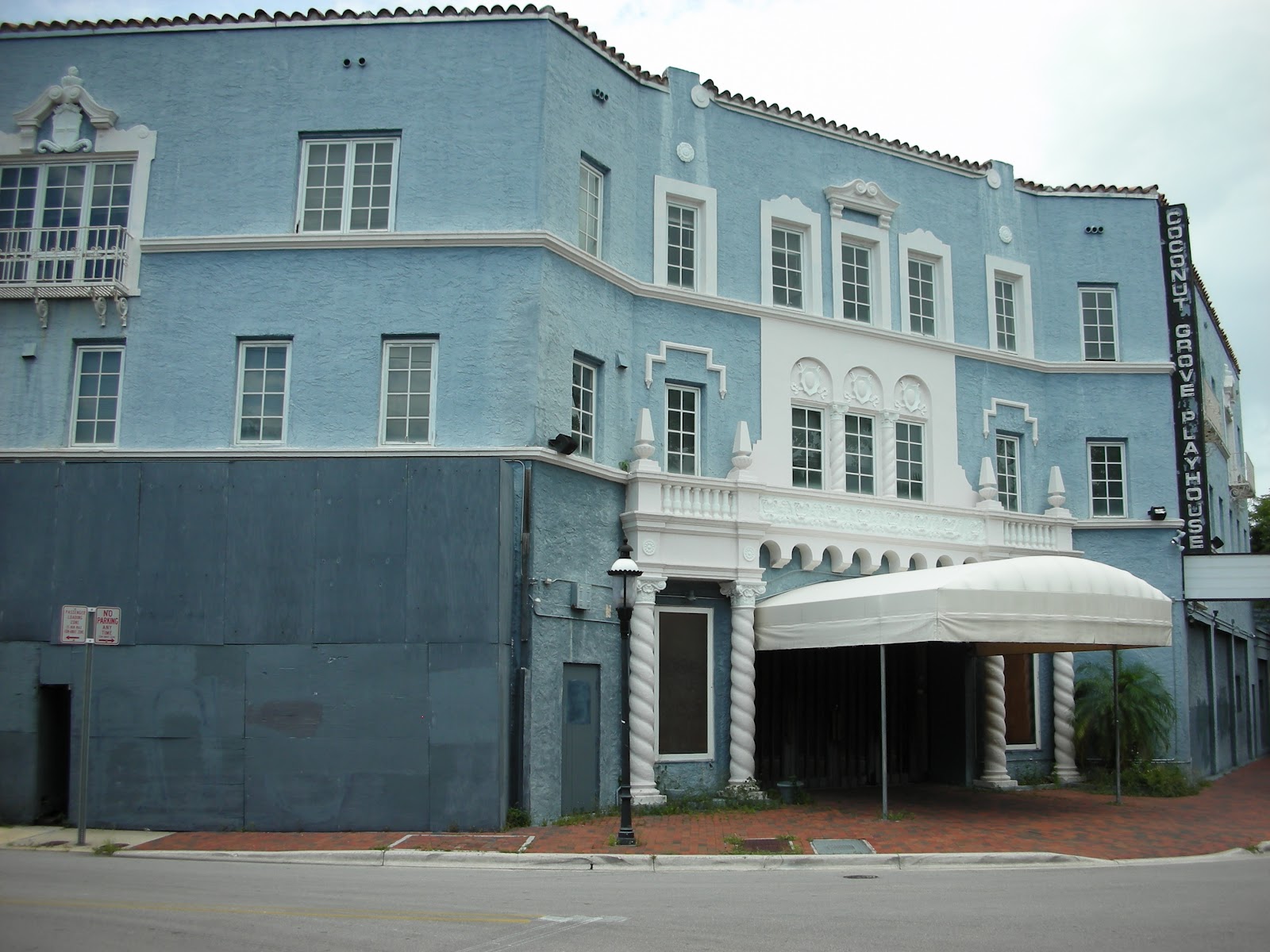
The Coconut Grove Playhouse in 2009.

In April of this year a “Give It Back!!! Give It Back!!!” campaign fired up to save the Coconut Grove Playhouse. However, it appears to have sputtered out almost as quickly as it flared up. More importantly, it was only concentrated on the Playhouse. What’s clearly needed is a comprehensive plan for a specially designated historical district from the Charlotte Jane Memorial Cemetery (named after Stirrup’s wife and childhood sweetheart and once the only place Blacks could be buried in the area because it was owned by Mr. Stirrup) to the Coconut Grove Playhouse, which could be the jewel in the rich tapestry of historical preservation of a Black neighbourhood unique in this country.

If such a designation can be done for a DAMNED DESIGN DISTRICT, then Miami can certainly see to it that this stretch of Charles Avenue be saved, and preserved. What physically remains of Coconut Grove’s rich history has been neglected and allowed to rot. I believe this has always been the original intent, ever since these three properties went vacant. Ask yourselves this question? In the middle of one of the most exclusive Zip Codes in the country, why has Miami allowed this to happen? Have you ever heard of Demolition by Neglect?

I believe the fix was in a long time ago. Therefore the question has always been, in my mind, who would benefit from from these properties being razed to the ground?

Coming soon: Unpacking Coconut Grove ► Part Three ► Who has a financial stake in the east end of Charles Avenue?

Previous entries:
Unpacking Coconut Grove ► Part One
Unpacking Coconut Grove ► Part 1.1

Unpacking Coconut Grove, Florida ► Part 1.1

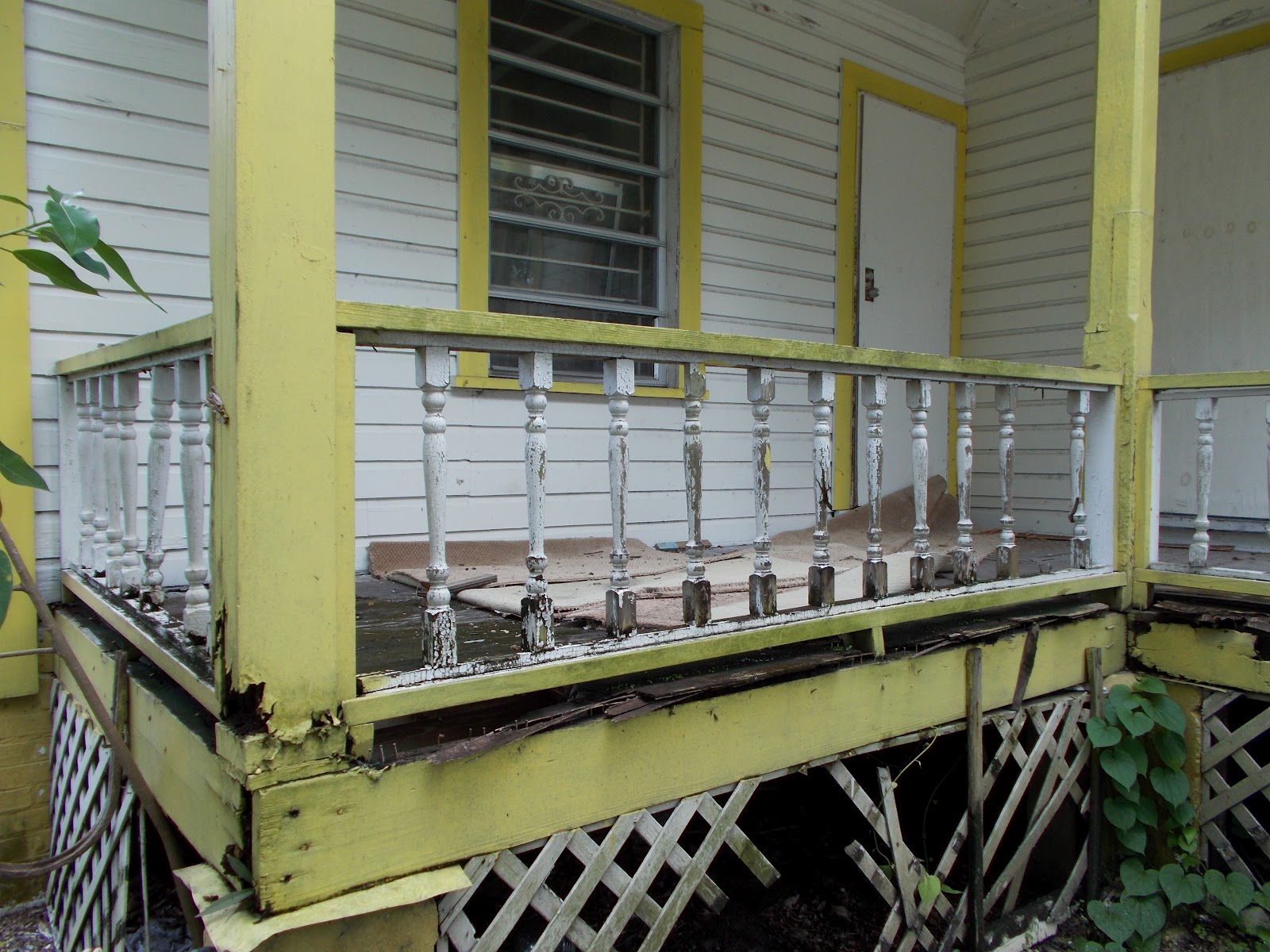
Years of neglect. The front porch of the long-empty E.W.F. Stirrup House.

In researching Part Two of this series, I came across something that demonstrates in stark relief the disparity between the east side of Main Highway and the older Black neighbourhood on the other side, where the Charles Avenue historical marker is located. Just a mile from the E.W.F. Stirrup House is a property that recently hit the market at $22,000,000. An item describes it as:

Baymere, the five-acre former DuPont estate in Coconut Grove, has hit the market asking $22 million. The 33-room residence was built in 1964 and includes a man-made private cove, helicopter pad and putting green. The two-story, 26,981-square-foot house was designed by architect Scott Arnold and includes a full basement and third floor observation deck. Saddy Delgado and Toni Schrager of Avatar Real Estate Services have the listing, which is located at 3500 St. Gaudens Road. — Christopher Cameron

When houses in Coconut Grove are selling for $22 million dollars, why isn’t there enough money to preserve the Coconut Grove Playhouse, the E.W.F. Stirrup House, and the rich history of Coconut Grove?

More neglect. This is the rear door of the E.W.F. Stirrup House, which appears untouched since vacant.

Unpacking Coconut Grove, Florida ► Part One

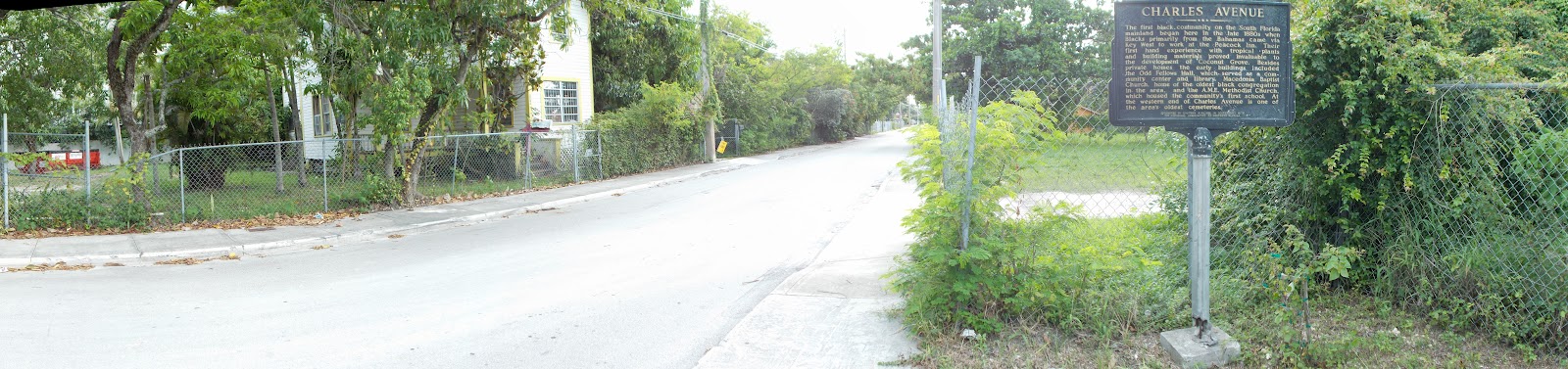
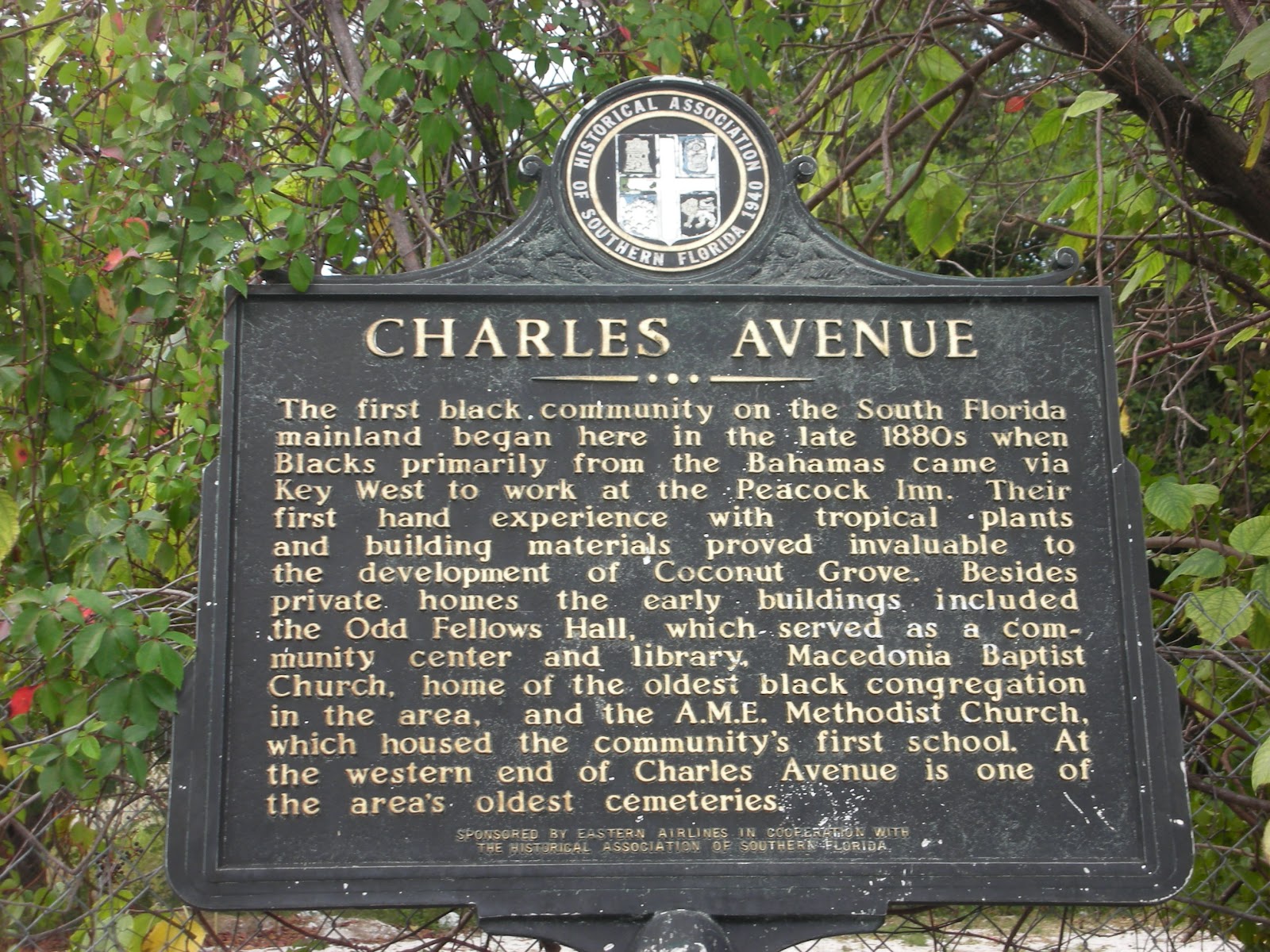
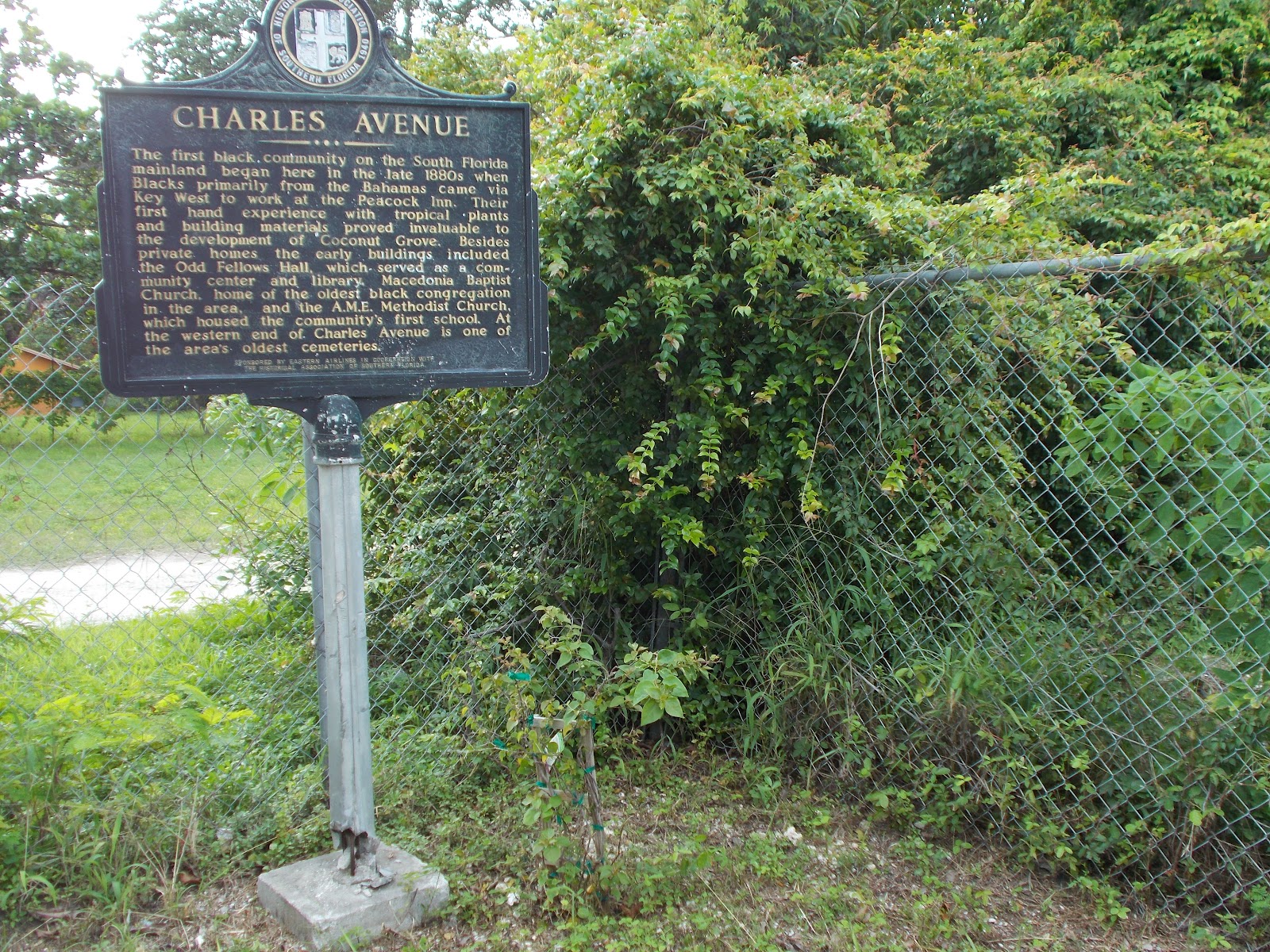
The marker that started my quest. Click to enlarge.

After a short hiatus, here’s a fair warning for those who got tired of hearing me spout off about Charles Avenue and Coconut Grove: I got the bug all over again, so get used to hearing me spout off about Charles Avenue and Coconut Grove all over again.

At my old, former, moribund blog Aunty Em’s Place (now overgrown with spammers and ivy) I started a series called The Shame of Coconut Grove™, which I continued on facebook on my old, former, moribund Aunty Em Ericann account. Before Aunty Em was kicked off facebook, she (me!) had unpacked quite a bit of Coconut Grove, both its history and internal politics, all because of an accidental encounter with a historical marker (at left).

A must read book on race

People who have known me a long time know I gravitate towards stories about race relations, a life-long interest. Had I really taken up that Black Studies Program when I first considered it, I’m sure I would be Black by now. Coincidentally on the day I discovered the Charles Avenue historical marker, as part of my independent study reading list, I was in the middle of “Sundown Towns: A Hidden Dimension of American Racism,” by James W. Loewen, which is the single greatest book on race relations I have ever read. It explained to me why every ‘Merkin city looks the way it does and why the overt racism of days gone by led to the covert racism of today. It also explained, for me, how White Privilege was woven into the fabric of life as generations experienced it so that, today, it covers us like a warm blanket that is so comfy we don’t even realize we’re wrapped in it. The events and attitudes described in Loewen’s book affect our lives every day, whether we stop to consider it or not.

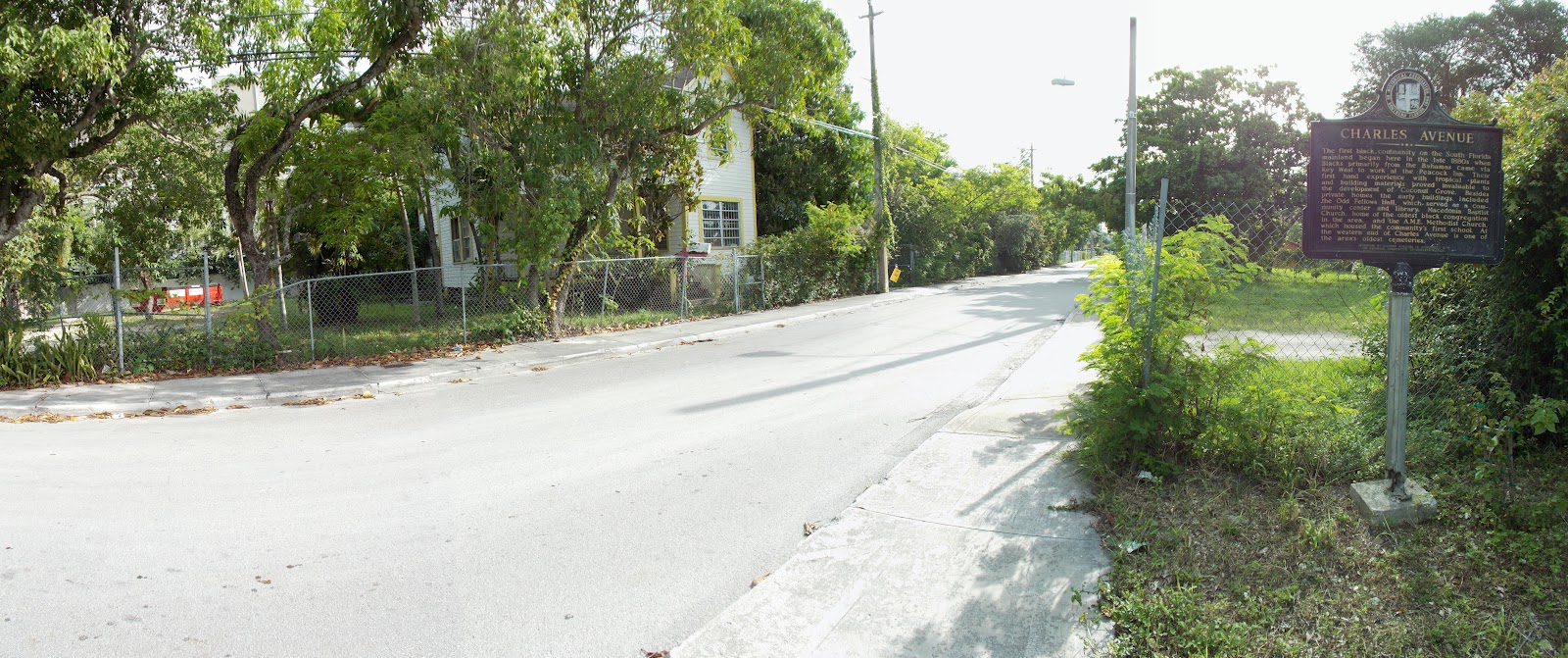
There was just something about the Charles Street historical marker that spoke to me. The sign, the location, and the condition seemed to encapsulate the Black ‘Merkin Experience: a rich history not only ignored and forgotten, but mistreated in its memory. The panorama below shows the condition of the marker and the historic E.W.F. Stirrup House across the street. [More about the house and Mr. Stirrup in later chapters.]

Panorama of the historical marker and the E.W.F. Stirrup House across the street. Click to enlarge.

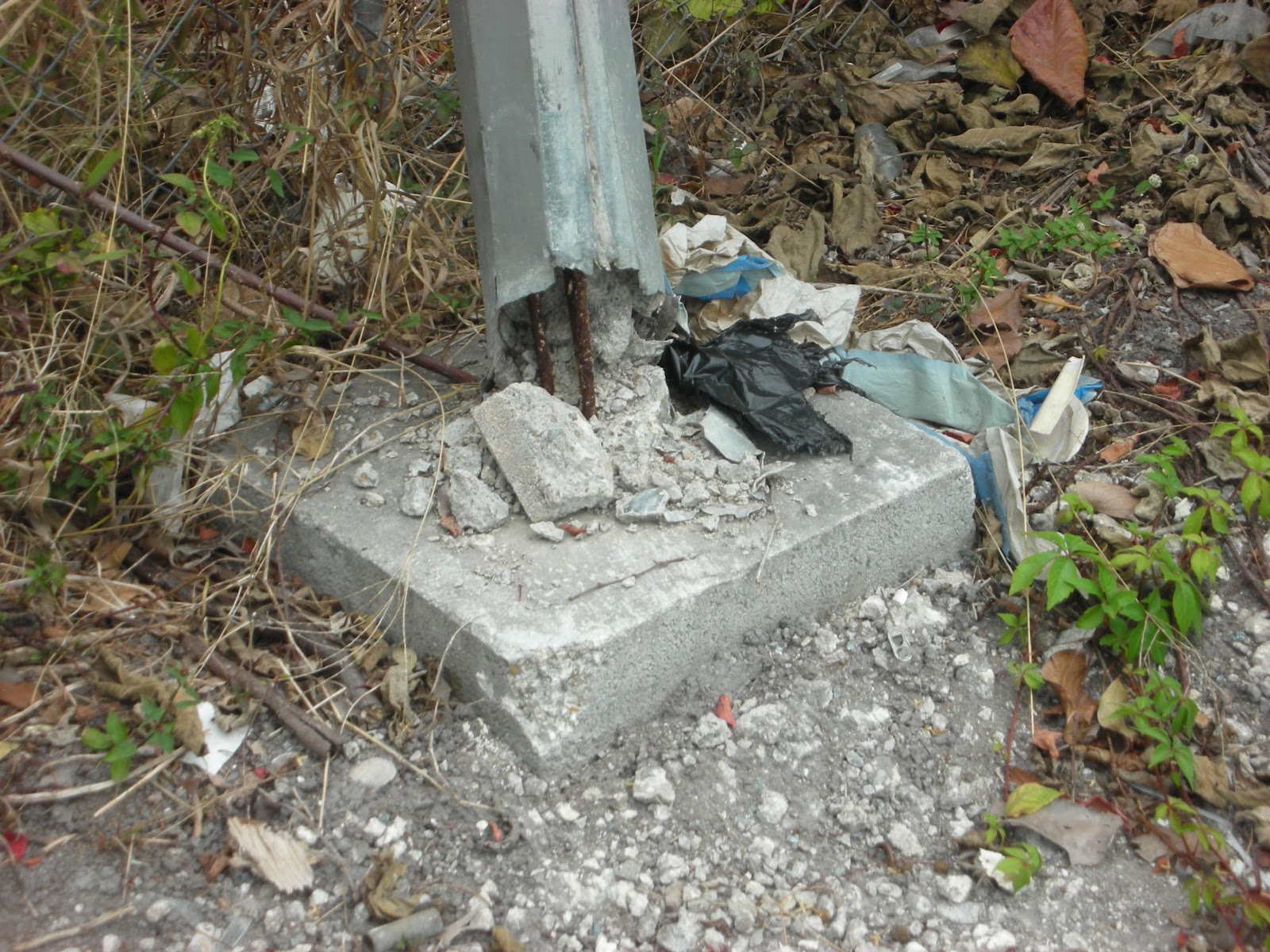
Detail of sign’s base. Click to enlarge.

The sign was leaning backwards at an uncomfortable angle. If not for the fence behind it, it might have fallen down completely. The base (see right) was broken. The first time I visited (early 2009) I just thought the pole was bent. I didn’t see the base due to the garbage bags piled up all around it. [I cannot seem to find the pics of my 1st visit, but have all the rest.] On my second visit, and subsequent visits, the garbage had changed, which meant that it was being used as a regular, accepted trash collection site. And, why not? The base had clearly been broken for quite a while to have sustained the damage I saw. The aluminum post, when new, had been filled with cement and steel rebar, which was in a dreadful state of disrepair having been exposed to the elements for…how long? I had no way to estimate, but it was clearly not recent. The sign had been sponsored by Eastern Airlines, a defunct company, in cooperation with The Historical Association of Southern Florida, an entity I could never find.

The location of the sign is no less significant. There’s no way to whitewash this: Coconut Grove, Florida (incorporated into Miami in 1925) is considered one of the most exclusive addresses in all of ‘Merka.


View Charles Avenue, Coconut Grove, Fl, 33133 in a larger map. Zoom out to see Coconut Grove in relation to Miami.

E.W.F. Stirrup House

Let’s get oriented: Coconut Grove is nestled up against the western edge of Biscayne Bay, where the 3,000 mile long intercoastal waterway trails off into nothingness. The E.W.F. Stirrup House (pictured at left), the Coconut Grove Playhouse (pictured below) and the Charles Avenue historic marker are on the eastern end of Charles Avenue at Main Highway,  On the opposite, eastern side of Main Highway is a residential area I have been unable to breach. It is one of the most exclusive areas in ‘Merka, so gated and secured even Google mapping cars aren’t allowed inside. I once walked to the gate and started taking pictures and within a minute was shooed away by a security guard that appeared out of nowhere. These fuckers are serious.

The Coconut Grove Playhouse taken from
the more exclusive side of Main Highway.

I became obsessed with the Charles Avenue historical marker and Coconut Grove, to the point where I decided it was the perfect place to locate my favourite character in my novel-in-progress. That gave me another reason to research Coconut Grove. Work took me through the area every couple of weeks. I would always stop and take as many pictures as I could stand before the oppressive Florida heat got to me. I now have thousands of pictures of Charles Avenue and enough research to think I have uncovered a years old scandal in the village of Coconut Grove that could become a non-fiction book all on its own.

However, two years ago my circumstances changed and I no longer had any reason to drive the 35 miles to
The Grove. When I was visiting it regularly, Aunty Em Ericann would come back and post dozens of pictures on facebook with a small essay describing the lack of changes on Charles Avenue from week to week. I became dejected. Aunty
Em
had spent a considerable amount of my time posting pictures, writing essays, and contacting community
activists. However, I couldn’t get any traction on my
Save the Charles Avenue Sign campaign. Worse, I couldn’t get anyone interested in what I (still) believe is a massive, multi-gajillion dollar real
estate scandal.

Since I couldn’t get anyone to listen, and I am no longer an investigative journalist with an editor to support and sponsor these expensive fishing expeditions into possible malfeasance, I gave up. However, I never forgot about Coconut Grove, especially since my novel character Adrian had moved there at the end of the ’60s, after Detroit had started to become toxic.

Lately Charles Avenue has been nagging at me. Because it’s 35 miles away —
all crazy Florida highway — I have been putting off making the trip for the past few weeks. I knew I would need a minimum of 3 hours to do it justice; get there, take some pictures, check on recent developments, and come home. It was difficult to work into my schedule and the longer I tried, the guiltier I felt for having abandoned Charles Avenue. Last week I finally bit the bullet, gassed up the tank, and made the harrowing highway adventure. I returned more despondent than ever about Charles Avenue. I came back even more pissed off at what is clearly The Shame of Coconut Grove™. However, it also made me more determined than ever to do something about it. What? I do not know. I am still processing and writing about the trip, which will be Part Two in this series. Part One is long enough already, but I felt this background was needed.

However, before I sign off, there was one bit of good news on Charles Avenue. Someone (or a group of someones) have taken it upon themselves to attempt to straighten the Charles Street historical marker. They have also planted a drought-resistant flowering bush next to it. It will look nice when it fills in.

The sign, while still not true, no longer leans against the fence. The new plant is staked in the ground to the right of it.

The late afternoon sun streams down Charles Avenue in this recent panorama.

However, this small sliver of hope doesn’t even begin to mitigate all the negative I saw. That’s why I have decided to take up the cause of Charles Avenue once again. I am going to make Charles Avenue the most famous street in ‘Merka, representing centuries of institutional racism. And, along the way, I just might expose a multi-gajillion dollar Coconut Grove boondoggle. Who’s along for the ride?

Stay tuned for Part Two of Unpacking Coconut Grove.