Category Archives: Musical Appreciation

k.d. lang ► Monday Musical Appreciation

Celebrating a birthday today is k.d. lang, born Kathryn Dawn Lang in Edmonton, Alberta, Canada. 

Canadians have been enjoying k.d. lang since 1983, when she was performing what she called Cow Punk Music, which was really a combination of Country, Rockabilly, and Rock and Roll, all delivered with a unique attitude. Watch:

At the time she maintained she was the reincarnation of Patsy Cline and even called her back up band the Reclines. They put out three LPs together: A Truly Western Experience, Angel with a Lariat, and Absolute Torch and Twang, all of which were well received by both Country and Rock and Roll fans.

However, she was still considered an underground artist. As the WikiWackyWoo explains:

Lang first earned international recognition in 1988 when she performed, as “The Alberta Rose”, at the opening ceremonies of the Winter Olympics.[10] 

Lang’s career received a huge boost when Roy Orbison chose her to record a duet of his standard, “Crying, “ a collaboration that won them the Grammy Award for Best Country Collaboration with Vocals in 1989. The song was used in the Jon Cryer film Hiding Out released in 1987. Due to the success of the song, Lang received the Entertainer of the Year award from the Canadian Country Music Association.
Lang would win the same award for the next three years, in addition to
two Female Vocalist of the Year awards in 1988 and 1989. 

After that, there was no holding her back. Canadians have to share this gigantic talent with the rest of the world. But, we’re used to that.

Here’s just some more examples of k.d. lang’s incomparable talent, starting with her cover of another Canadian tune, Leonard Cohen’s Hallelujah:


You’re The Top ► Monday Musical Appreciation

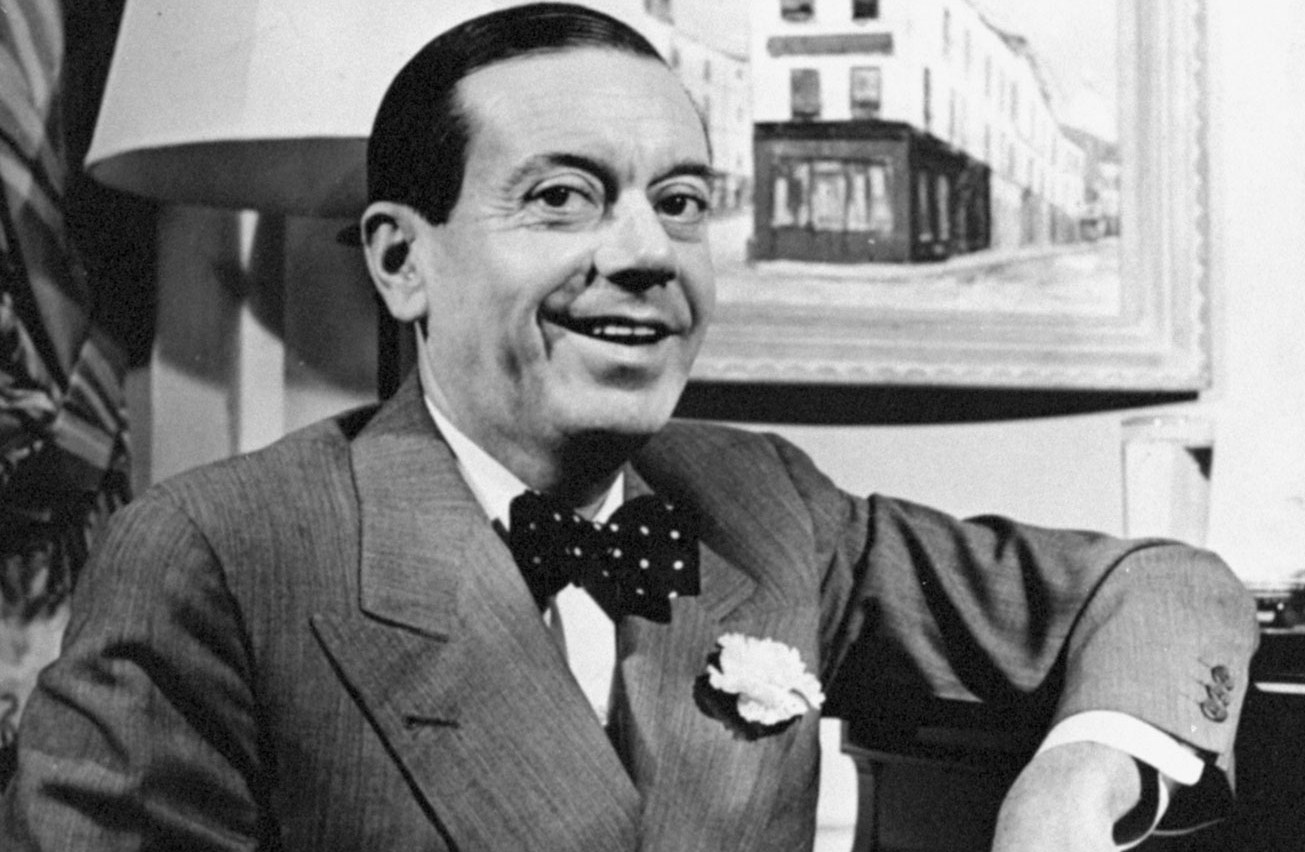
Eighty-one years ago today one of the greatest songwriters in the English language recorded one of his greatest songs.

Cole Porter was already famous when hired to write the tunes for Anything Goes. As his official biography at the Songwriters’ Hall of Fame tells us:

But while his social life [in Paris] was dazzling, Cole’s career was moving frustratingly slowly.
He studied briefly with the noted French composer Vincent d’Indy. He had a few small
successes, contributing songs to such shows as Hitchy-Koo 1919 and the Greenwich
Village Follies of 1924
. And in 1923 he had a success in Paris with a short ballet called
Within the Quota. But Broadway producers had little interest in his work. However, in
1928, Irving Berlin recommended Cole to the producers of a “musicomedy” called Paris,
starring Irene Bordoni. Cole wrote five songs for the show, and one of those songs
“Let’s Do It (Let’s Fall In Love)”, became Cole’s first big success.

Finally, the Broadway career that had so long escaped him began to be a reality. He
followed up on Paris with another “French” show, and a full musical this time, Fifty
Million Frenchmen
(1929). The show, with a book by Herbert Fields, ran for 257
performances, and included “You’ve Got That Thing”, and “You Do Something To Me”.
And then, for a London show called Wake Up and Dream (1929), Cole wrote “What Is
This Thing Called Love?”

Now living in New York, Cole entered an extraordinarily productive period in which
show followed show on Broadway, and hit song followed hit song. The New Yorkers
(1930) introduced “Love For Sale”. His 1932 musical Gay Divorce starred Fred Astaire,
in Astaire’s last Broadway role and Astaire’s only Broadway appearance without his
sister and longtime dancing partner Adele. The show ran for 248 performances, and
included “Night And Day” and “After You, Who?”

In 1934, Cole wrote one of his greatest scores for a show with a book by Guy Bolton,
P.G. Wodehouse, Howard Lindsey, and Russel Crouse, Anything Goes. The show
starred Ethel Merman, William Gaxton, Bettina Hall, and Victor Moore and included
“Anything Goes”, “I Get A Kick Out Of You”, “All Through The Night”, “Blow, Gabriel,
Blow”, and “You’re The Top”.

Cole Porter wasn’t known for his singing voice and he recorded so very few of his own songs. However, we’re fortunate to have Porter’s own version of the song, from October 26, 1934, the first time it was ever recorded:

From page 34 of F. Scott Fitzgerald’s Fiction: “An Almost Theatrical Innocence:”

CHAPTER 2

On October 26, 1934, Cole Porter, accompanying himself on the piano, recorded the song “You’re the Top” from his new musical Anything Goes (its book by Guy Bolton and P.G. Wodehouse, revisited by Howard Lindsay and Russel Crouse), a show that would open for its tryout in Boston on November 5, 1934, and on Broadway on November 21, and run for 420 performances. Anything Goes was not only one of the great musical comedies of the 1930s but a high point in the history of the musical theater. Five of the show’s numbers became popular song standards: along with “You’re the Top,” there was “I Get a Kick Out of You,” “All Through the Night,” “Anything Goes,” and “Blow, Gabriel, Blow.”

What makes “You’re the Top” so wonderful is the clever wordplay, the spectacular rhyming scheme, and all those terrific Pop Cultural references, which would have been known by Mr. and Mrs. First Nighter, but some of which are almost unknown today:

At words poetic, I’m so pathetic
That I always have found it best,
Instead of getting ’em off my chest,
To let ’em rest unexpressed,
I hate parading my serenading
As I’ll probably miss a bar,
But if this ditty is not so pretty
At least it’ll tell you
How great you are.

You’re the top!
You’re the Coliseum.
You’re the top!
You’re the Louver Museum.
You’re a melody from a symphony by Strauss
You’re a Bendel bonnet,
A Shakespeare’s sonnet,
You’re Mickey Mouse.
You’re the Nile,
You’re the Tower of Pisa,
You’re the smile on the Mona Lisa
I’m a worthless check, a total wreck, a flop,
But if, baby, I’m the bottom you’re the top!

Your words poetic are not pathetic.
On the other hand, babe, you shine,
And I can feel after every line
A thrill divine
Down my spine.
Now gifted humans like Vincent Youmans
Might think that your song is bad,
But I got a notion
I’ll second the motion
And this is what I’m going to add;

You’re the top!
You’re Mahatma Gandhi.
You’re the top!
You’re Napoleon Brandy.
You’re the purple light
Of a summer night in Spain,
You’re the National Gallery
You’re Garbo’s salary,
You’re cellophane.
You’re sublime,
You’re turkey dinner,
You’re the time, 

of a Derby winner.
I’m a toy balloon that’s fated soon to pop
But if, baby, I’m the bottom,
You’re the top!

You’re the top!
You’re an arrow collar
You’re the top!
You’re a Coolidge dollar,
You’re the nimble tread
Of the feet of Fred Astaire,
You’re an O’Neill drama,
You’re Whistler’s mama!
You’re Camembert.
You’re a rose,
You’re Inferno’s Dante,
You’re the nose
On the great Durante.
I’m just in a way,
As the French would say, “de trop”.
But if, baby, I’m the bottom,
You’re the top!

You’re the top!
You’re a dance in Bali.
You’re the top!
You’re a hot tamale.
You’re an angel, you,
Simply too, too, too diveen,
You’re a Boticcelli,
You’re Keats,
You’re Shelly!
You’re Ovaltine!
You’re a boom,
You’re the dam at Boulder,
You’re the moon,
Over Mae West’s shoulder,
I’m the nominee of the G.O.P.
Or GOP!
But if, baby, I’m the bottom,
You’re the top!

You’re the top!
You’re a Waldorf salad.
You’re the top!
You’re a Berlin ballad.
You’re the boats that glide
On the sleepy Zuider Zee,
You’re an old Dutch master,
You’re Lady Astor,
You’re broccoli!
You’re romance,
You’re the steppes of Russia,
You’re the pants, on a Roxy usher,
I’m a broken doll, a fol-de-rol, a flop,
But if, baby, I’m the bottom,
You’re the top!

Coincidentally, on the same day Cole Porter recorded his version of “You’re the Top,” so did Paul Whiteman. Even though the show wouldn’t open up on Broadway for another month, Whiteman brought his orchestra into the studio to accompany vocalists Peggy Healy and John Hauser for this version:

Happy birthday to one of the greatest tunes ever recorded. Here are a few other versions:


This song is THE TOPS!!!

Peter Tosh ► Monday Musical Appreciation

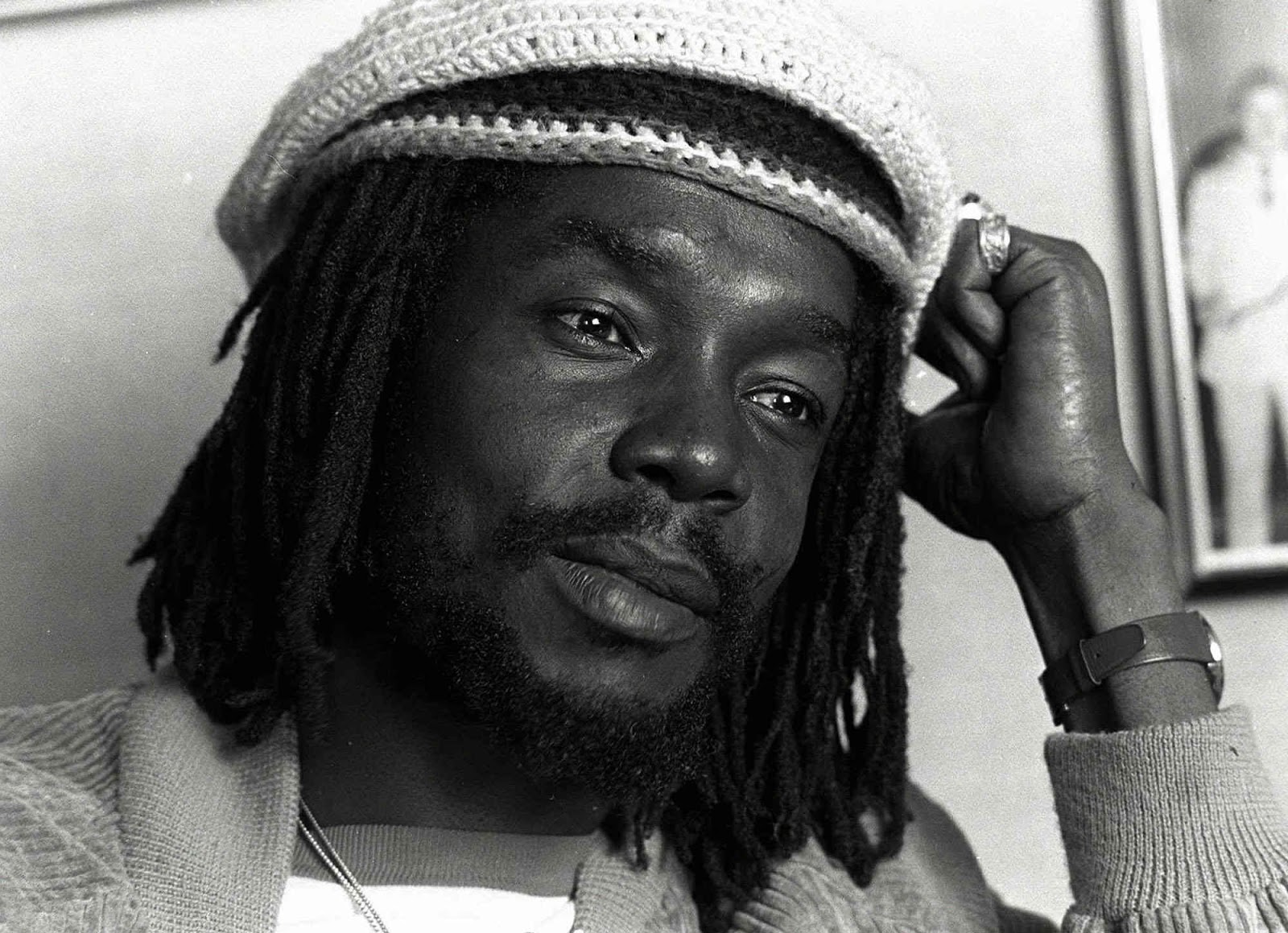
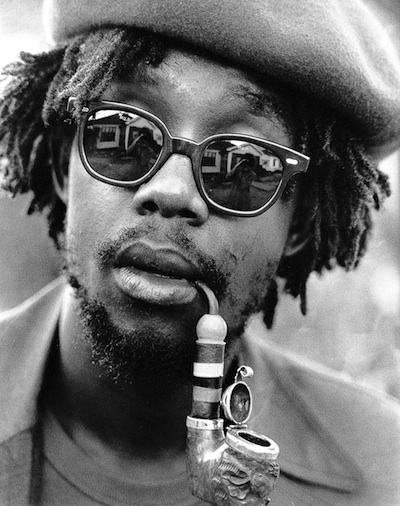
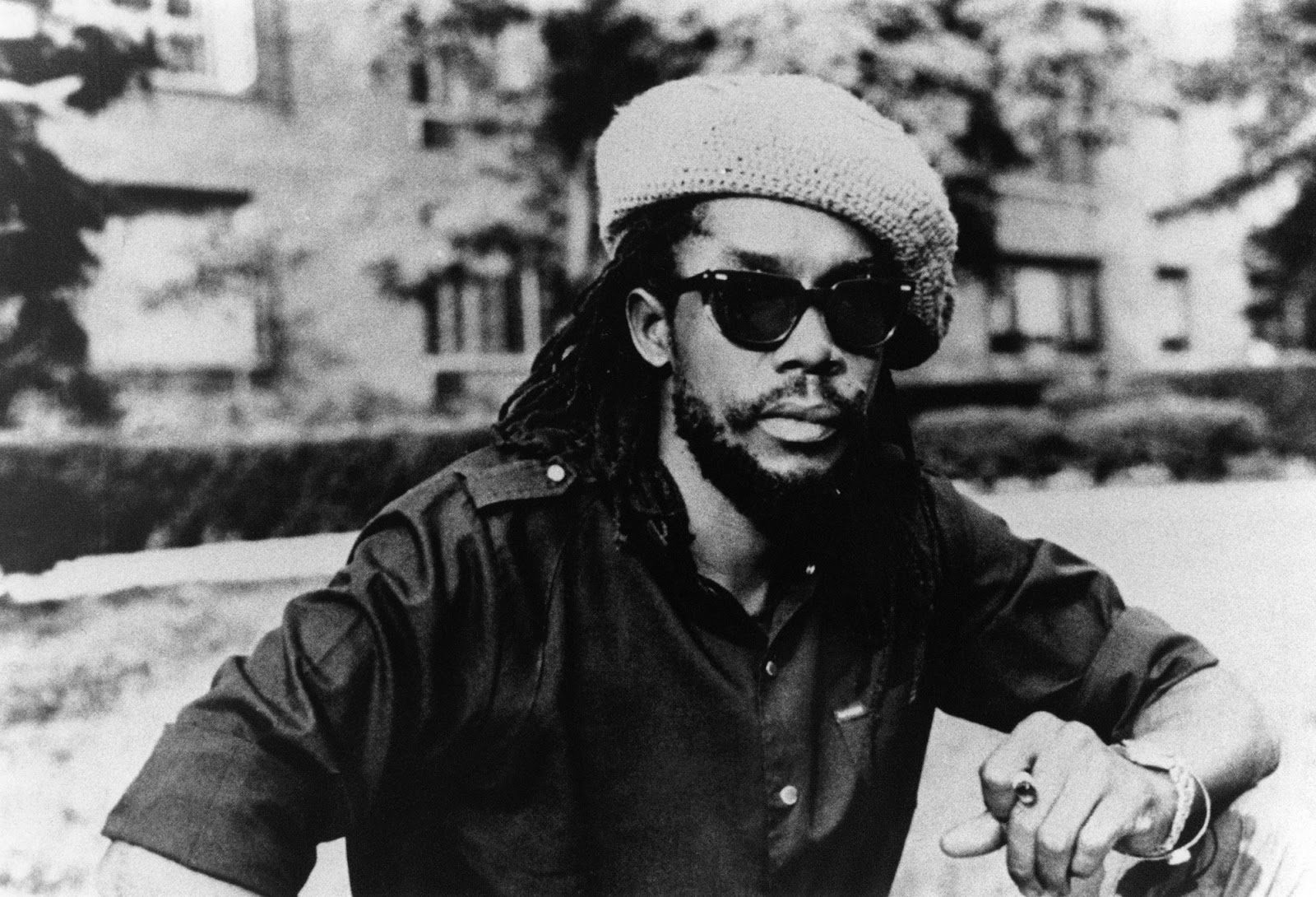
Born on this day: Winston Hubert McIntosh, better known to Reggae fans as Peter Tosh, one of the original Wailers. 

At the age of 15 Tosh moved to Trench Town in Kingston, Jamaica, after the death of his aunt in Westmoreland, Jamaica, where he was born. According to the legend, recounted by the WikiWackyWoo:

He first picked up a guitar by watching a man in the country play a song that captivated him. He watched the man play the same song for half a day, memorizing everything his fingers were doing. He then picked up the guitar and played the song back to the man. The man then asked McIntosh who had taught him to play; McIntosh told him that he had.[2] During the early 1960s Tosh met Robert Nesta Marley (Bob Marley) and Neville O’Reilly Livingston (Bunny Wailer) and went to vocal teacher Joe Higgs, who gave out free vocal lessons to young people, in hopes to form a new band. He then changed his name to become Peter Tosh and the trio started singing together in 1962. Higgs taught the trio to harmonize and while developing their music, they would often play on the street corners of Trenchtown.[3]

[…] In 1964 Tosh helped organize the band The Wailing Wailers, with Junior Braithwaite, a falsetto singer, and backup singers Beverley Kelso and Cherry Smith. Initially, Tosh was the only one in the group who could play musical instruments. According to Bunny Wailer,
Tosh was critical to the band because he was a self-taught guitarist
and keyboardist, and thus became an inspiration for the other band
members to learn to play. The Wailing Wailers had a major ska
hit with their first single, “Simmer Down”, and recorded several more
successful singles before Braithwaite, Kelso and Smith left the band in
late 1965. Marley spent much of 1966 in Delaware in the United States of America with his mother, Cedella (Malcolm) Marley-Booker and for a brief time was working at a nearby Chrysler
factory. He then returned to Jamaica in early 1967 with a renewed
interest in music and a new spirituality. Tosh and Bunny were already
Rastafarians when Marley returned from the U.S., and the three became
very involved with the Rastafari faith. Soon afterwards, they renamed
the musical group The Wailers. Tosh would explain later that they chose
the name Wailers because to “wail” means to mourn or to, as he put it,
“…express one’s feelings vocally”. He also claims that he was the
beginning of the group, and that it was he who first taught Bob Marley
the guitar. The latter claim may very well be true, for according to Bunny Wailer, the early wailers learned to play instruments from Tosh.[4]

The Wailing Wailers eschewed the rapid, feel-good Ska beat for a slower, slinkier beat, which became known as Rocksteady, One Drop, and eventually Reggae. They dropped the “Wailing” from their name and became The Wailers. Some of Marley’s biggest hits were originally recorded during this time and written, or co-written, by Peter Tosh. It wasn’t until Chris Blackwell signed them to Island Records did they become Bob Marley and the Wailers.

[FULL DISCLOSURE: I once worked for Island Records Canada.]

Peter Tosh and Bunny Wailer left Island Records when Blackwell, who had groomed Marley to become a star, refused to release their solo records. Soon after, Tosh released the Legalize It LP. The titular song is still an anthem for the Marijuana Movement worldwide.

A few years later Tosh appeared at the One Love Peace Concert and lit a spliff onstage, lecturing the assembled politicians on the unfair marijuana laws. According to the Wiki: Several months later he was apprehended by police as he left Skateland
dance hall in Kingston and was beaten severely while in police custody.

Peter Tosh was posthumously awarded the Order of Merit by the Jamaican government and while he never achieved the fame of Bob Marley, he never lost his street cred and is considered the most controversial member of The Wailers.

To celebrate his birthday, there will be 2 symposiums, today and tomorrow, in Jamaica. According to the Jamaican Observer:

The first is staged by the Kingston and St Andrew Ganja Growers and
Producers Association and the National Alliance for the Legalisation of
Ganja in partnership with the Kingston and St Andrew Corporation at
Curphey Place in St Andrew.

It reflects on the life and legacy of Tosh, an unrepentant advocate for
the legalisation of ganja. Mayor of Kingston Angela Brown-Burke will
address the forum, which has a panel moderated by her husband Paul
Burke, Tosh’s former manager Herbie Miller, social activist Louis
Moyston, and UWI lecturer, Dr Michael Barnett.

Guest speakers include Tosh’s friend, former Jamaica footballer Allan
‘Skill’ Cole; president of the National Ganja Growers Association,
Orville Silvera, and Minister of Transport Dr Omar Davies.

Tomorrow’s event is the annual Peter Tosh Symposium at the University of the West Indies’ Mona campus.

Arguably reggae’s most militant figure, Tosh (born Winston Hubert
McIntosh) was killed by gunmen at his home on September 11 1987. He was
42.

Paul Is Dead ► Monday Musical Appreciation

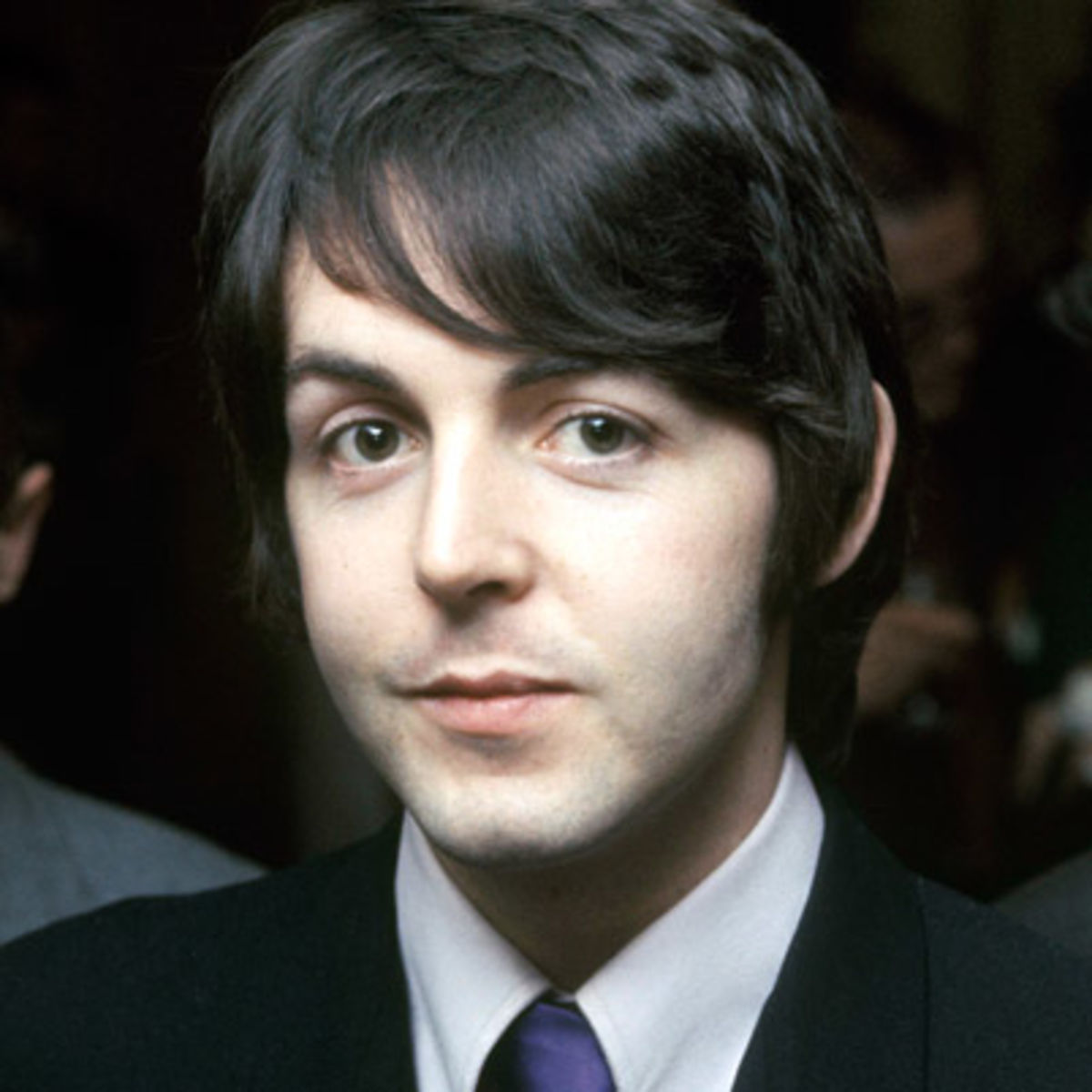
Forty-six years ago today occurred one of the craziest events in the annals of Rock and Roll Music History, in which I played a minor role. Here’s how it all came about

According to The Music History Calendar:

1969 : Russ Gibb, a DJ at WKNR in Detroit, takes a call from a listener who tells him that if you play The Beatles song “Revolution 9” backwards, a voice says, “Turn me on, dead man.” Gibb plays the record in reverse on the air, and the phone lines light up with astonished listeners offering more clues as to why Paul McCartney might be dead. For about a week, Gibb entertains a stream of rumors on the show, as ratings explode and the story goes national. Other clues include a voice at the end of “Strawberry Fields Forever” that says “I Buried Paul” (actually John Lennon saying “Cranberry Sauce”) and the cover of the Sgt. Pepper album, where Paul is wearing an armband that says “OPD” – “Officially Pronounced Dead.”

This Day In Music erroneously writes about this event:

1969, A DJ on Detroit’s WKNR radio station received a phone call telling him that if you play The Beatles ‘Strawberry Fields Forever’ backwards, you hear John Lennon say the words “I buried Paul.” This started a worldwide rumour that Paul McCartney was dead.

What does this have to do with your humble correspondent? According to Paul is dead?!?, “introduced and explicated by saki” on the old USENET group rec.music.beatles:

Another
source for clues invention was a popular radio show hosted by
disc-jockey Russell Gibb of WKNR-FM in Detroit was a vital element in
the spread of the hoax. A regular r.m.b. reader, Headly Westerfield, who
was not only a friend of Gibb but was present in-studio that afternoon
(12 October 1969), recalls reading an “underground newspaper” (it may
have been one of the the college papers then carrying the “clues”,
similar to the ones Dartanyan Brown remembers seeing) with a list of
“Paul Is Dead” clues.

Gibb and cohorts were sufficiently inspired
to read them on the air and to improvise new ones on the spot.
Listeners to the show even recall someone calling up Gibb to report that
if you played “Revolution No. 9” backward, you’d hear a secret message.
(Note: radio-show collectors used to offer an aircheck of this show or a
followup show for trade! Anyone have a copy?)

Within days, Gibb
& Co. were astonished when newspapers and reporters took their
on-air joke seriously and spread the tale more widely. Some clues which
have become part of established folklore, Westerfield reports, were
invented that obscure day at WKNR-FM, but have since been accepted as
part of the original hoax. Gibb and friends were not the source of the
hoax, he emphasizes, but played a part in its initial wider
dissemination. 

TommyGarcia2’s YouTubery has a 2 part exposé on the Paul Is Dead rumour:


When this rumour broke wide I was shocked and ashamed. From just goofing around in a radio studio, to it becoming a worldwide sensation, freaked me out. I was just 17 years old and unsophisticated in the ways of the world. I was worried that somehow this would all blow back on me in a horrible way. Therefore, I didn’t mention my involvement to anyone for about 20 years. Then I allowed myself to be interview by saki, who got word of my involvement from a mutual friend.

When I saw what was finally printed, I went underground for another 20 years. Recently I told the whole, deeper story to my nephew Adam, one of the subjects of my blog post My Days With John Sinclair. He suggested I just live with it, in essence echoing the advice at the end of the wonderful 1962 John Wayne/James Stewart/Lee Marvin Western The Man Who Shot Liberty Valance:

Ransom Stoddard: You’re not going to use the story, Mr. Scott?
Maxwell Scott: No, sir. This is the West, sir. When the legend becomes fact, print the legend.

I’ll let Sir Paul, with a little help from his friends, have the last word:

A Follow-Up to Treacherous Double-Dealing from June

I woke up to the sad news this morning that Harry Nilsson was not among the those nominated to be inducted into the 2016 class at the Rock and Roll Hall of Fame.

Back in June I published a post called Treacherous Double-Dealing, which concerned my horrible treatment at the hands of two people who wanted to claim all the credit for the campaign. Now, as far as I am concerned, they should share all the blame for it not happening. Step right up Gabriel Szoke and Todd Lawrence to take your bows.

After I was summarily kicked off the triumvirate committee that was spearheading this drive, those two crazy MoFos came up with what I always thought was a stupid idea. Milo Bender, Willie Aron, and Rob Laufer wrote a cute little jingle called “Let’s Put Harry in the Hall.” Sure it was a catchy little number, but the last thing that was needed was to turn it into a We Are The World-style vanity project. Watch:

I have no idea how much time, energy, and money was wasted on this vanity project, but I can tell you, without fear of contradiction, that it all would have been better spent actually doing some of the things that we had discussed, and agreed upon, before I was dumped.

It was my idea that we needed to start a grassroots campaign for Harry’s last birthday, something that was actually done. However, we knew that the Rock and Roll Hall of Fame committee ignores grassroots campaigns because all bands and artists have those. The bigger idea, which never seems to have been implemented, was to use this grassroots campaign to influence the next level of influencers, who would then influence the next level of influencers, until it became a snowball rushing down the mountain that couldn’t be ignored.

But, a cute little video?

Oh, puh-leeze!!!

And, yes, at this point this is sour grapes. I was never in this for the credit, but merely to get Harry in the Hall. However, those two MoFos were all about getting credit. They made sure to get their credits on the video (and Gabriel made sure he got his name on there twice) and they were delighted whenever their names were mentioned in the scanty press they were able to garner.

Had I still been part of the committee, I guarantee that there would have been far more publicity. Furthermore, I would have been able to attract much bigger names to sign onto the campaign. I can’t say we would have succeeded getting Harry nominated, but it would not have been such an anemic and fruitless attempt.

Back in June I tried to warn people about these two. Sadly no one listened.

Since it’s Thursday, this seems like an appropriate way to end this post.

Mrs. Miller ► Monday Musical Appreciation

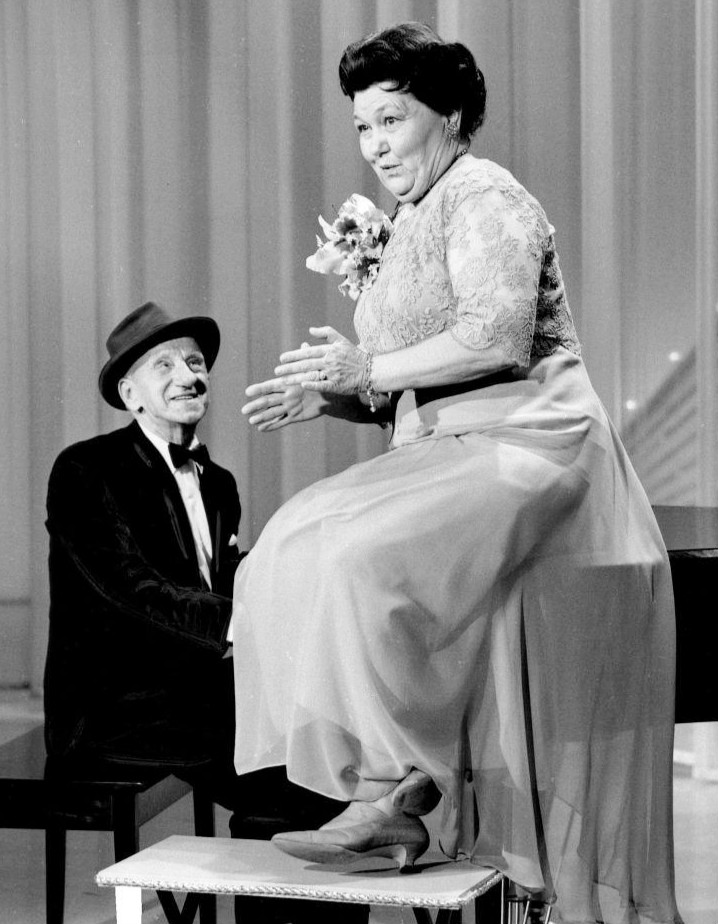
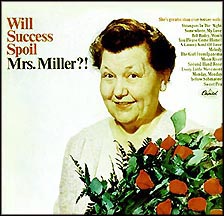
The ’60s are known for great discoveries in music, from Motown to The British Invasion to Psychedelia. However, there was no greater discovery than Mrs. Miller, born on this day in 1907. 

Mrs. Miller was Kitch before Kitch was Kool.

She was discovered in the early ’60s by LA DJ Gary Owens, better known as the announcer on Laugh-In. However, her star didn’t begin to rise until she was signed to Capitol Records in 1965. According to the WikiWackyWoo:

Singing in an untrained, Mermanesque, vibrato-laden style, according to Irving Wallace, David Wallechinsky and Amy Wallace in The Book of Lists 2, Miller’s voice was compared to the sound of “roaches scurrying across a trash can lid.” [1]

While growing up in the ’60s, I was fascinated by Mrs. Miller. I couldn’t wait for her many appearances on the various talk shows of the day. I thought, “If she can make it in Show Biz, then so can I,” which may have been my impetus for starting Cobwebs and Strange, a band I formed with my childhood friends.


According to Searching For Mrs. Miller:

From Claremont [where she lived] to Capitol is two hours in average traffic. There is a piece of story missing here, being that an organist/pianist on these sessions, Fred Bock, by all accounts a smart man with a sharp sense of humor, knew he’d found something unique. Fortunately, he knew somebody of consequence in the music business.

Lois Bock recalls: “Mrs. Miller would come to the L.A. studios and make recordings to send as gifts to orphanages those old, old songs like ` Alice Blue Gown’ in what she called her `operatic style’, and, on one of these sessions, Fred talked her into doing `Downtown’, which he took to Lex, who was an employee of Capitol at the time, and he heard something there.” She was signed to the venerated label, and work began on her debut, Mrs. Miller’s Greatest Hits.

Barry Hansen, a/k/a Dr. Demento raised an interesting point. “It took some imagination on Lex De Azevedo’s part to make an album of her doing all rock ‘n’ roll songs. It certainly was a departure from what she had recorded before.” Conventional legend has it that Mrs. Miller had no idea that she was a novelty act, but Lois Bock is quite clear about what Mrs. Miller was told. “Fred and I were honest with her. We told her it would be funny. And the audience loved it. The more they laughed, the more she would, you know, work it. I don’t know if she knew more than she let on, because she was always quite a character. But she loved audiences.”

Like so many superstars that burned far too bright, Mrs. Miller eventually flamed out:

As Lois Bock said, “She had a good run for eighteen months, which was seventeen-and-a-half more than anyone had a right to expect.” Mrs. Miller continued to perform sporadically, playing more benefits than just about any performer I can name, including one to raise funds to build a hospital in her hometown Jetmore, KS. When the hospital was built, she personally furnished the nurse”s lounge. She also devoted much time to raising her niece, Audrey.

[…] She retired officially in 1973, resigning from the Screen Actors’ Guild in honorable standing, and eventually settled into a condo at 9535 Reseda Blvd in Northridge, CA (the Valley). Unfortunately, in January 1994, the huge Northridge Quake destroyed the complex. Old age took its toll. Elva relocated to the Garden Terrace Retirement Center, in Vista, CA, where she died in 1997, at the age of 90. She is interred at the Pomona Mausoleum, near her beloved Claremont.

However, we still have her music to keep us warm on those cold nights:

Tuli Kupferberg ► Monday Musical Appreciation

Today we celebrate the life, poetry, and music of counter-culture icon Tuli Kupferberg, born on this day in 1923. He was a ground-breaking New York City Bohemian in the right place, at the right time, to find his claim to fame in the Hippie era.

According to his obituary in the New York Times:
The Fugs were, in the view of the longtime Village Voice critic Robert Christgau,
“the Lower East Side’s first true underground band.” They were also
perhaps the most puerile and yet the most literary rock group of the
1960s, with songs suitable for the locker room as well as the graduate
seminar (“Ah, Sunflower, Weary of Time,” based on a poem by William
Blake); all were played with a ramshackle glee that anticipated punk
rock.

With
songs like “Kill for Peace,” the Fugs also established themselves as
aggressively antiwar, with a touch of absurdist theater. The band became
“the U.S.O. of the left,” Mr. Kupferberg once said, and it played
innumerable peace rallies, including the “exorcism” of the Pentagon in
1967 that Norman Mailer chronicled in his book “The Armies of the Night.” (The band took its name from a usage in Mailer’s “Naked and the Dead.”)

When I was growing up The Fugs and Frank Zappa were my introduction to the counter-culture. While the ’60s was filled with psychedelic bands, the fact that their records appeared on mainstream corporate record companies took them down a notch in my opinion. But, not The Fugs. They were as real as real could be.
Rolling Stone’s obit reads in part:

The Fugs formed in 1964 when bookstore owner Sanders and poet
Kupferberg, both barely musicians, teamed up to play an unpolished rock
& roll combined with lyrics stocked with political satire and
profanity. Because of their anti-war imagery — “Who can train guerillas
by the dozens? Send them out to kill their untrained cousins?” asks
frontman Kupferberg in “CIA Man” — and rambunctious live shows in the
mid-’60s, the FBI reportedly investigated the Fugs. The band ultimately
recorded six albums between 1964 and 1969, with Tupferberg contributing
some of the band’s most renowned tracks: “Nothing,” “Kill for Peace,”
“The Ten Commandments” and “CIA Man.” After a 15-year hiatus, Kupferberg
and Sanders reformed the Fugs with a new lineup.

Kupferberg earned a reputation as one of New York’s foremost
bohemians, and even served as the inspiration for the man who jumped off
the Brooklyn Bridge and survived in Allen Ginsberg’s epic poem “Howl.”
Kupferberg “jumped off the Brooklyn Bridge this actually happened and
walked away unknown and forgotten into the ghostly daze of Chinatown,”
Ginsberg wrote. Kupferberg later admitted he was the jumper of
Ginsberg’s poem.

Whenever things get too real for me, I remember The Fugs Gospel-inspired tune Wide, Wide River, which, in a perfect world, should have been Number One on the Hit Parade longer than Carole King’s reign on the top of the charts. Crank it up!!!

PSF:What did think of the Beat movement when it first started happening?

I remember being shocked by it. I guess I was still in some sort of
traditional mode. Shocked, jealousy and then adaptation. It was
liberating. I was shocked by Ed Sander’s freedom of sexual expression.
I’m sure people were shocked by mine when I started. Ginsberg is your
best example of a liberating force. It’s not just the language or the
freedom of the language because that just reflects character structure.
A person who drops dead or wants to kill someone would use all those
words you’re not supposed to use. It’s more than language. It’s
attitude towards sexuality and human relations along with domination and
love. It’s not that people who shout about sexual freedom understand
everything that’s involved. In order to have good sex, you have to have
good human relationships and vice versa. When I grew up, in my
community, you weren’t going to have sex until you got married- this was
a middle-class Jewish community. Maybe you went to a prostitute…
But that gradually broke down. That was all for the good and not just
for me but also for most of America.

PSF: So you got to be part of the Beats yourself then?

Everyone was. But I felt that they had a heritage with the
bohemians. The term comes from 12th century University of Paris. The
craziest students came from Bohemia and they gave them this name.
There’s this old tradition of living outside of the mores of society.
Until the burgeouis revolution, most artists lived on the patronage of
the ruling class. LA VIE DE BOHEME, the libetto for that opera, tells
you what was happening then in the 18th century. So that’s a 150 year
old tradition that’s still going on. It used to be linked to geography
with places like New York, San Francisco, Munich, Paris. But now, with
the Internet, you could be crazy, wild, free and self-destructive
anywhere you want. But hopefully, there’s still communities of people
out there. Utopian colonies who are just friends.

It was always about the poetry. Here’s Tuli in recitation:

Tuli died in 2010 at the age of 86, but his poetry and music live on forever.

U-Roy ► Monday Musical Appreciation

Let’s get right to it. Had it not been for Reggae “toasting,” or “dancehall,” there would have been no Rap or Hip Hop. U-Roy, was not only one of the firsts in the genre, but one of the best.

Born Ewart Beckford on this day in 1942, U-Roy got his nickname from a family member who couldn’t pronounce his real name.

According to the WikiWackyWoo:

As a young man Beckford listened to the music of Louis Prima, James Brown, Ruth Brown, Fats Domino, Rufus Thomas, Smiley Lewis and was especially influenced by the vocal phrasing of Louis Jordan.


U-Roy’s first single
U-Roy began as a DJ in 1961 toasting over the records at live events. In Jamaica there was no access to radio, so the toasting was done at live shows in front of a “sound system.” Moving from one sound system to another, it took almost a decade before his career took off, but when it did U-Roy changed the face of Reggae music.
U-Roy has worked with the great producers of Dub Reggae, from King Tubby to Lee “Scratch” Perry, going from height to height.

According to All Music: 
His toasts were utterly relaxed
and conversational, yet always in perfect synchronicity with the
rhythms. The DJ had now gained a significant following in the U.K., as
well, and in August 1976, visited Britain for the first time. He
performed at the London Lyceum, backed by the always excellent
Revolutionaries, and the 1978 Live EP was drawn from this phenomenal
show. Back in Jamaica, U-Roy began recording his new album, Rasta Ambassador,
filling the studio with musicians and singers, 15 strong in all. The
Gladiators provided particularly sonorous backing vocals, while the
band, led by the rhythm team of Sly & Robbie,
created a deep roots sound appropriate to the album’s title and
accentuated by Robinson’s deeply dubby production. 
U-Roy is still toasting and we are still listening. As always the proof is in the record grooves and in the beat. Listen to U-Roy and you’ll see why he was awarded Jamaica’s Order of Distinction. A fitting distinction for a man who changed the face of Reggae music.

A Peruvian Princess Sings ► Monday Musical Appreciation

She’s now considered the Queen of Exotica, the musical genre that encompasses a previous era’s Kitch, but at one time Yma Súmac was considered to be a Peruvian princess.

I discovered Yma Súmac in the early ’60s. Among my mother’s LPs were a couple by Yma Sumac. As a kid I was attracted to crazy colours and costumes on the covers, but once I dropped the needle on the record, I WAS HOOKED!!! That voice! Those songs! I had never heard anything like it before and have been a fan ever since.

There has never been anything else like her. Listen:

Zoila Augusta Emperatriz Chávarri del Castillo, was born on September 13, 1922 in Callao, Peru, but took the name Yma Súmac, which had various spellings until she signed with Capital Records in 1950.

According to the WikiWackyWoo:

Stories published in the 1950s claimed that she was an Incan princess, directly descended from Atahualpa. The government of Peru in 1946 formally supported her claim to be descended from Atahualpa, the last Incan emperor”.[7]
She was the subject of a series of publicity campaigns designed to
shroud her origins in mystery: was she an Inca princess, one of the
chosen ‘Golden Virgins’? Whatever her heritage, what was abundantly
genuine was Sumac’s four octave range, ascending from ‘female baritone,
through lyric soprano, to high coloratura’.

According to her obituary in the LA Times:

Bursting onto the U.S. music scene after signing with Capitol Records in 1950, the raven-haired Sumac was known as the “Nightingale of the Andes,” the “Peruvian Songbird” and a “singing marvel” with a 4 1/2 -octave (she said five-octave) voice.

“She is five singers in one,” boasted her then-husband Moises Vivanco, a composer-arranger, in a 1951 interview with the Associated Press. “Never in 2,000 years has there been another voice like hers.”

After Sumac performed at the Shrine Auditorium with a company of dancers, drummers and musicians in 1955, a Los Angeles Times writer observed:

“She warbles like a bird in the uppermost regions, hoots like an owl in the lowest registers, produces bell-like coloratura passages one minute, and exotic, dusky contralto tones the next.”

Yma Súmac died in a Los Angeles assisted living facility in 1988. You can read all about her amazing life on the internet, but, as always, it’s really about the music. Take a listen:

Arthur Godfrey ► A Monday Musical Appreciation

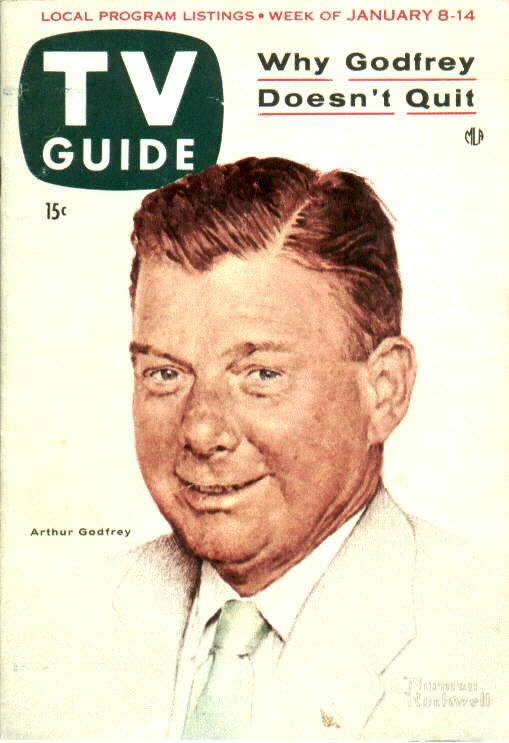
Celebrating a birthday today is Arthur Godfrey, born in 1903. Godfrey rose from a lowly radio announcer to being one of ‘Merka’s biggest celebrities.

Godfrey served in the Navy as a radio operator. Later he joined the Coast Guard, where he appeared on a local Baltimore radio show. When he left the Coast Guard in 1930, he got a job as a radio announcer at a Baltimore station, followed by a stint in Washington, D.C.

While laid up after a car crash, Godfrey listened to his competition. According to the WikiWackyWoo:

[H]e decided to listen closely to the radio and realized that the stiff, formal style then used by announcers could not connect with the average radio listener. The announcers spoke in stentorian tones, as if giving a formal speech to a crowd and not communicating on a personal level. Godfrey vowed that when he returned to the airwaves, he would affect a relaxed, informal style as if he were talking to just one person. He also used that style to do his own commercials and became a regional star.

He kicked around in radio until:

Godfrey became nationally known in April 1945 when, as CBS’s
morning-radio man in Washington, he took the microphone for a live,
firsthand account of President Roosevelt’s funeral procession. The
entire CBS network picked up the broadcast, later preserved in the Edward R. Murrow and Fred W. Friendly record series, I Can Hear it Now.
Unlike the tight-lipped news reporters and commentators of the day, who
delivered news in an earnest, businesslike manner, Godfrey’s tone was
sympathetic and neighborly, lending immediacy and intimacy to his words.
When describing new President Harry S. Truman‘s
car in the procession, Godfrey fervently said, in a choked voice, “God
bless him, President Truman.” Godfrey broke down in tears and cued the
listeners back to the studio. The entire nation was moved by his
emotional outburst.

In the meantime, he released songs that could never be played on the radio in today’s manufactured outrage society.

Godfrey kept moving up. It was far simpler times and Godfrey’s folksy charm was just perfect for the times, where he eventually became one of tee vee’s biggest stars. It started in 1948 with Arthur Godfrey’s Talent Scouts, the precursor to today’s reality talent shows. It was simulcast on both radio and that new invention called television. By 1952 Arthur Godfrey Time was also running on radio and tee vee. Also according to the Woo:

Godfrey’s
skills as a commercial pitchman brought him a large number of loyal
sponsors, including Lipton Tea, Frigidaire, Pillsbury cake mixes and Liggett & Myers‘s Chesterfield cigarettes.

He found that one way to enhance his pitches was to extemporize his
commercials, poking fun at the sponsors (while never showing disrespect
for the products themselves), the sponsors’ company executives, and
advertising agency types who wrote the scripted commercials that he
regularly ignored. (If he read them at all, he ridiculed them or even
threw aside the scripts in front of the cameras.) To the surprise of the
advertising agencies and sponsors, Godfrey’s kidding of the commercials
and products frequently enhanced the sales of those products. His
popularity and ability to sell brought a windfall to CBS, accounting for a significant percentage of their corporate profits.

Here is sample of his television work:

And, Godfrey continued to pump out music that the public bought by the barrel full.

Miami renamed 41st Street Arthur Godfrey Road after him

While Godfrey came across as everyone’s favourite avuncular uncle, behind the scenes he was a control freak and abusive to the “Little Godfreys,” which is what he called his supporting company.

Then came the Julius LaRosa incident, which burst Godfrey’s carefully cultivated personality. According to many reports, jealousy was partially to blame. Godfrey had hired LaRosa as a nobody, after he wowed the audience of Talent Scouts. Eventually LaRose became one of the most popular performers on the show, his fan mail outpacing Godfrey’s. Watch:

The public turned against him and that was the beginning of the end for Godfrey. “No humility,” the phony excuse Godfrey made after-the-fact for firing LaRosa, became a national punchline. Comedians from coast to coast made fun of Godfrey.

While Godfrey remained in show biz for several decades after that, he never again held the huge audience he had during the height of his career.