Category Archives: Musical Appreciation

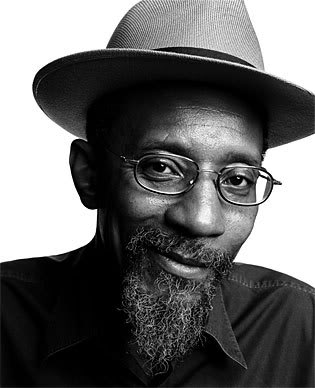
Linton Kwesi Johnson ► A Monday Musical Appreciation

Celebrating a birthday today is Linton Kwesi Johnson, the first Dub Poet. I first became aware of him through Island Records Canada, which I worked for in the ’70s, and he was already a force in Britain. In 2012, according to the The Guardian:

Father of dub poetry Linton Kwesi Johnson will join names including Harold Pinter, JG Ballard and Doris Lessing as winner of the Golden PEN award, for a lifetime’s distinguished service to literature.

Known for his controversial poem “Inglan Is A Bitch“, and for “Di Great Insohreckshan“,
a response to the 1981 Brixton riots in which he stated “It is noh
mistri / we mekkin histri”, Johnson writes what he calls “dub poetry”, a
blend of reggae music and verse written in a Jamaican-London
vernacular. Often performing with the Dennis Bovell Dub Band, he has
been writing and performing since the mid-1970s. In 2002, he was the
second living poet, and the only black poet, to be included in the
Penguin Modern Classic Series.


Linton Kwesi Johnson accepting his Golden PEN award

Johnson was chosen by the trustees of English PEN to receive the
honour. President and author Gillian Slovo described him as “an artistic
innovator, a ground-breaker who has used poetry to talk politics and
who first gave voice to, and who continues to give voice to, the
experience of moving country and of living in this one”.

Johnson himself said he was “surprised and humbled” to win the prize,
because his poetry is from the “little tradition” of Caribbean verse.
“I hope that by conferring on me this award, English PEN will involve
more black writers in its important work and that more black writers
will support English PEN,” he said.

His British Council Literature page says, in part:

He joined the Black Panther movement in 1970, organising a poetry workshop and working with Rasta Love, a group of poets and percussionists. He joined the Brixton-based Race Today Collective in 1974. His first book of poems, Voices of the Living and the Dead, was published by the Race Today imprint in 1974. His second book, Dread, Beat An’ Blood (1975) includes poems written in Jamaican dialect, and was released as a record in 1978. He is widely regarded as the father of ‘dub poetry’, a term he coined to describe the way a number of reggae DJs blended music and verse. Johnson maintains that his starting point and focus is poetry, composed before the music, and for this reason he considers the term ‘dub poetry’ misleading when applied to his own work. He recorded several albums on the Island label, including Forces of Victory (1979), Bass Culture (1980), LKJ In dub (1980) and Making History (1984) and founded his own record label – LKJ – in the mid-1980s, selling over two million records worldwide. 

According to John Dougan’s Artist Biography at All Music:

Although he has only released one album of new material in the last ten
years, and virtually retired from the live stage after his 1985 tour, Linton Kwesi Johnson remains a towering figure in reggae music. Born in Kingston, Jamaica and raised in the Brixton section of London, Johnson invented dub poetry, a type of toasting descended from the DJ stylings of U-Roy and I-Roy. But whereas toasting tended to be hyperkinetic and given to fits of braggadocio, Johnson‘s
poetry (which is what it was — he was a published poet and journalist
before he performed with a band) was more scripted and delivered in a
more languid, slangy, streetwise style.

But, as always, it’s all about The Music:


The Monday Musical Appreciation is a brand new Not Now Silly feature, bringing insight into the music that turns me on.

Me and Jim Kale ► Nostalgia Ain’t What It Used To Be

More than once I’ve been called the Zelig of the innertubes, popping up to witness pivotal moments in history. A night I spent with Jim Kale, of The Guess Who and Scrubbaloe Caine, is one of those times.

Get comfortable, kiddies, because we’re taking the Wayback Machine all the way back to the early ’70s.

Back then I was the station manager of Radio Sheridan, the campus radio station at Sheridan College in Oakville, Ontario, Canada. Radio Sheridan was one of the few campus stations in the country respected by the major record companies. They knew that normally records sent to a campus station went into a black hole, never to be seen again. When the Promo Reps visited Radio Sheridan, which they did often because we were on the route between Toronto and Hamilton, they could find every record they ever sent us in the library ready for a DJ to select it.

Not only could we count on the personal touch from the Record Reps, but we were also getting interview offers for Big Deal Rock and Roll artists, concert tickets with occasional backstage passes, free records for our personal collections, and posters for our home walls. We knew these were all perks normally reserved for broadcast radio jocks and the music reviewers from the national press. We felt honoured to be included, but it was also a testament to how well organized Radio Sheridan was in the day.

Long before the night in question, Jim Kale was a member of The Guess Who. It’s easy to forget that The Guess Who was an international hit band back in the days before CanCon radio regulations mandated stations play 33% Canadian Content. Kale stayed with The Guess Who until soon after the 1972 release of release of Live at the Paramount. The reason was ascribed to undefined “health problems,” something cited more than once in biographies about more than one point in Kale’s career. However, it has always been rumoured in Canadian Show Biz, which is a very small pond, that this was a euphemism for alcoholism.

Soon after leaving The Guess Who, Kale hooked up as bass player with Scrubbaloe Caine. As manager of Radio Sheridan I listened to every record that arrived to decide what genre it fell into. There was no genre off limits and it wasn’t unusual to hear Rock and
Roll rubbing shoulders with Jazz, Blues, or Big Band Swing. Then I’d log them into the library alphabetically and let all the DJs know what was new. That’s how I became an early adopter of a lot of different music such as (for the sake of this story) Scrubbaloe Caine.

I fell in love with Scrubbaloe Caine on first listen. There weren’t many Rock and Roll bands with a lead violinist/lead singer. That was Henry Small, who went on to found Small Wonder and later sang with Prism. Also in the band was the double-lead guitar team of Paul Dean, later of Streetheart and Loverboy, and Jim Harmata. Filling out the band was Al Foreman on keys and harmonica and Bill McBeth hitting the skins.

Scrubbaloe Caine should have been HUGE. I thought they were so great that I raved about them to John Murphy, the RCA Promo Rep, the next time he came around. A short time later Murph called to say he was driving up to catch Scrubbaloe Caine live in Sudbury, Ontario, Canada, a long way from Oakville. He wanted to know if I was down for a ROAD TRIP!!! I said yes immediately, but made him promise that we’d see the Giant Nickle first, because I had never seen it before.


Road trip music: As always, CRANK IT UP!!!
I lived in Canada for 35 years and this is still the most Canadian thing I did in the entire time I lived there. After a quick trip to the Giant Nickle we headed into the Sudbury Arena, where Scrubbaloe Caine was opening for Crowbar. It doesn’t get more Canadian than that.

This was one of those times I got a backstage pass, not that backstage at a hockey arena is anything to write to ‘Merka about. However, that allowed me to wander at will in all the dressing rooms. That night the Sudbury Arena was Party Central and I was INVITED.

Crowbar and Jim Kale had played on many of the same concert bills over the years and it was like old home week and — boy, oh, boy — did they catch up on old times. I didn’t know Jim Kale had a drinking problem. I was just a wide-eyed kid (in my early 20s, to be honest) amazed that I was partying with Crowbar and a former member of The Guess Who and current member of Scrubbaloe Caine, my favourite new band.

As the night wore on, Kale got drunker and drunker. By the end of the evening Kale was shitfaced and Murphy was tasked with getting him back to Toronto. It’s not all glamour for Promo Reps. Sometimes they have to clean up after the band.

Along the way we also acquired some gal (who I barely remember, other than there being one) that needed a ride back to Toronto. She got in the front and Kale and I poured ourselves into the back seat. We were still wending our way out of Sudbury when Kale made a deliberate fist, with his middle knuckle sticking out, and started punching me in the upper arm. HARD!!!


Looking for trouble? Not me. I just want to sit quietly in the back seat.
“John! He’s hitting me!!!”

“Jim! Stop hitting him!”

Jim kept hitting me. In the same place. With the knuckle. It hurt like hell. I had the bruise for weeks.

“He won’t stop hitting me!”

So John decided we had better stop at a Tim Horton’s and get some coffee into Kale before we get on the highway for the 5 hour drive home. Meanwhile, I scrunched myself into the corner of the backseat behind the driver’s seat, fending off Kale with my feet as he kept trying to land blows. Murph finds the Timmies and I scrambled out of the car as soon as it came to a stop. We all walked around the car to the passenger’s side and watched Kale get out of the car. He stood up fully erect and filled with the dignity only someone who is stinking drunk can approximate.

Then we all watch helplessly as he went down like a tree in the forest. TIMBER!!! With a loud thump his forehead hit the curb.

Now Jim Kale is out cold and bleeding like crazy from a gash on his forehead. We each grabbed a corner, tossed him back into the backseat, and raced off to the hospital. Hospital staff got him out of the car and onto a gurney. After a real quick examination they told us that he’s going to have to have stitches. That’s pretty much when Kale regained consciousness. He was still bleeding, but wouldn’t let anyone treat him. The staff tried to have us hold him down because we’re his friends, yannow. But, he was too strong for all of us as he tried to fight the entire hospital staff, landing a solid blow or two. At some point someone called the police. When they arrived they told us to go home because Kale was going to jail if they ever manage to stitch him up. We were forced to leave him there.

I am told that’s the night Scrubbaloe Caine broke up. But, still, they should have been huge!!! Listen to just one more:

Postscript: Over the years The Guess Who have participated in several reunions, which featured various line-ups and members of the band. After one of these renions Jim Kale discovered that no one had ever bothered to register the name The Guess Who, so he did. He’s owned it ever since, with drummer Garry Peterson, and they continue to perform as The Guess Who.


The Classic Line up
CRANK IT UP!!!

The Turtles and the Airwaves ► A Modern Day Fable

Mark Volman and Howard Kaylan aka Flo & Eddie

Remember Aesop’s fable of The Tortoise and the Hare? The moral of that story: slow and steady wins the race, especially against a tricky opponent. Today’s Fable Du Jour, kiddies, is how The Turtles, of Happy Together fame, won a huge lawsuit against SiriusXM, a decision that will have profound effects on Show Bidnezz. 

So, gather ’round children and stop fidgeting. I call this modern day fable, “The Turtles and the Airwaves.” It also has tricky adversaries, but ends with the same moral: one step at a time will get you there, especially if you can outwit your protagonists. However, because it’s updated for the 21st Century, this race ends in a courtroom, not a finish line. 

But first, a word from our sponsor:

Our story begins all the way back in the last century, in the ’60s, when a bunch of teenagers with a wacky dream started a Rock and Roll band. Call them The Turtles because that’s what they called themselves, after changing their name from The Crossfires when they signed a recording contract. Because they were young and stupid, the contract they signed with White Whale Records would come back to kick them in the ass later.

But that was all in the future. As the ’60s progressed, The Turtles delivered on their end of the bargain, recording Top Ten hit after Top Ten hit. However, The Turtles were pretty much all that was keeping White Whale afloat. It already had serious financial troubles and no other hit-makers. The company pressed Volman and Kaylan, the lead singers of The Turtles, to dump the rest of the group and tour with a pick-up band. It also wanted the Mark and Howard to just add their voices to backing tracks and tunes cut by other musicians. Eventually the White Whale went belly up, which is when that crazy contract reared its clause. [Geddit?]

When they were too young to know any better, and just wanted to make music, Volman and Kaylan had not only signed away the rights to the Turtles name, but had actually signed away the right to use their own names. In one of the most Kafkaesque chapters in the entire Kafkaesque history of Rock and Roll, Mark Volman and Howard Kaylan were prevented from calling themselves Mark Volman and Howard Kaylan.

That’s when Flo & Eddie (originally The Phlorescent Leech and Eddie, but shorted to a pun; rivers can both flow and eddy) were born. Prevented from using their own names, Flo & Eddie joined Frank Zappa’s band and recorded several LPs with him, as well as appearing in the movie “200 Motels.”

FULL DISCLOSURE: I’ve been a Frank Zappa fan since Freak Out was a new LP. I saw it at my local Kresge’s and it was the ugliest band I had ever seen in my life. I bought the 2-record set and played it for hours on end while I poured over the crazy graphics and liner notes. That’s why I could quote from memory certain passages printed inside the gatefold cover, including:

“I’d like to clean you boys up a bit and mold you. I believe I could make you bigger than The Turtles.”
~~~~~A NOTED L.A. DISC JOCKEY

The irony of those words were not lost on me when I learned Mark Volman and Howard Kaylan had joined Frank Zappa and the Mothers of Invention. Over the years Zappa had many amazing musicians in his band, but the short-lived Flo & Eddie Years have always been my favourite Zappa era. 

TANGENT OVER

Flo & Eddie released several records under that name and, along the way, provided back up vocals to T. Rex, Alice Cooper, and Bruce Springsteen, among others. And, as improbable as this sounds after their scatological residency with Zappa, provided music for The Care Bears and Strawberry Shortcake. As well, Volman & Kaylan litigated the White Whale issues, eventually winning the right to not only use the name The Turtles, but their own names as well, hence the billing The Turtles featuring Flo & Eddie.

However, life is a marathon. The next leg in this race came in 1974, when White Whale’s assets were sold at auction to satisfy creditors in bankruptcy. When the hammer came down Mark Volman and Howard Kaylan had bought full ownership of all their old recordings, making them a rarity in the music biz: the workers owning the means of production.That’s when they were able to start re-releasing The Turtles music, either in original form or on Greatest Hit packages; a cottage industry that continues to this very day.

And, that’s where this Fable Du Jour really begins: Remember how stupid the boys were that they signed away their own names? [See above.] They’ve learned a lot in 5 decades. Especially, Mark Volman, who is also known these days as Professor Mark Volman. According to the WikiWackyWoo:

[A]t age 45 he started his bachelor’s degree at Loyola Marymount University. Volman graduated with a B.A. degree in 1997 Magna cum Laude and was the class valedictorian speaker. During the speech he led the graduates in a chorus of “Happy Together“. CBS Evening News covered Volman’s graduation and interviewed his parents who were perplexed at their son’s academic accomplishments.[1]

Volman went on to earn a Master’s degree in Fine Arts with an emphasis in screenwriting
in 1999 also from Loyola. Since that time, he has taught Music Business
& Industry courses in the Communications and Fine Arts department
at Loyola. He has also taught courses in the Commercial Music Program at
Los Angeles Valley College. He is currently an Associate Professor and Coordinator of the Entertainment Industry Studies Program at Belmont University in the Mike Curb College of Entertainment and Music Business and conducts seminars about the music industry for various academic institutions from junior high school
to University level. In addition, he offers consulting on music
business and entertainment through the website Ask Professor Flo.[2]

With no personal knowledge whatsoever, I suspect Volman was the partner who figured out SiriusXM was ripping them off. [To be fair: If you’re working in the music business it’s a good bet that somebody’s ripping you off.] Last year Flo & Eddie, Inc. launched a $100,000,000 lawsuit against SiriusXM, arguing that the company was not compensating them for playing recordings made before 1972. SiriusXM argued it didn’t have to.The judge said, “Hold on there, Buckaroos.”

Copyright law is complicated. Musical copyright law even more so. Long story short: Essentially, musical recordings made before 1972 did not get copyright protection when the federal copyright law was drafted and passed. Therefore, pre-’72 recordings could be played on SiriusXM stations without having to pay compensation. Flo & Eddie, Inc. argued that California’s 1982 copyright law — which allowed payments for such use — should take precedence.

Long story even shorter: U.S. District Judge Philip Gutierrez agreed with Flo & Eddie’s lawyers and granted summary judgement against SiriusXM. [On anther issue, concerning music copied onto servers and provided on-demand, the judge wanted to hear further arguments.]

Owning their own recordings also means that
The Turtles can put out boutique items, like this
recently released vinyl set of 45 RPM singles,
recreating the original sleeves and record labels.

You can get one of your very own HERE.

There’s no downplaying how big this judgement is. The Hollywood Reporter called it a “crushing loss” in a “high stakes battle” in its Headline Du Jour and “legal earthquake” in the lede. Eriq Gardner goes on to say:

But overall, this is a whopping ruling with consequences almost impossible to overstate. In the short term, the ruling will likely be appealed as the plaintiffs eye a trial that will determine the awarding of damages. In the long term, it could compel SiriusXM, Pandora and many in the tech industry to strongly lobby Congress for new copyright laws that cover pre-1972 recordings. The ruling also will — or should — be read closely by other businesses including terrestrial radio operators and bars that publicly perform older music.


SiriusXM is facing another lawsuit from the RIAA in California as well as more lawsuits from Flo & Eddie in other states. Pandora is also facing a lawsuit by record labels in New York. And the ruling potentially opens the floodgates to more litigation on the issue of pre-1972 music.

This ruling applies to so much of the music that was recorded prior to 1972. And, it could change the entire business model of music streaming companies like Spotify and Pandora. However, kids, this fable is not about Pay Radio, or streaming services, or even multi-million dollar judgements. This is the story of how two Turtles, putting one foot in front of the other for the last 49 years, managed to outwit one of the biggest media companies in the planet and win one of the biggest races ever run.

And, it couldn’t happen to two nicer guys.

Me vs The O’Jays ► The First Feud of 2014

Cover of 1975’s Family Reuinion LP falls under FAIR USE, too

Well, that didn’t take long at all. It was only yesterday, in my Not Now Silly Year-Ender, that I said:

So . . . as we end this exciting episode of Unpacking The Writer, we have a brand new year to look forward to. Here’s to all the political muckraking, fights, and feuds to come in 2014!!!

Today I woke up to find myself in a legal dispute with Rock and Roll Hall of Famers, The O’Jays. That’s right. I said, “The O’Jays.” [WAIT!!! WHAT??? They’re in the RRHOF and Nilsson isn’t? WTF is wrong with this world?] My first thought was, “Are they still alive?” No matter. Two-thousand and fourteen begins weirdly, with a legal dispute with the O’Jays, or at least the company that handles their musical copyrights. Let me explain:

I have a YouTube channel where (among other things) I store the videos I’ve shot that will eventually be embedded at Not Now Silly. One of my playlists is called “One Grove – Community Mural,” which accompanied the blog post “Unveiling the One Grove Mural – A Photo and Video Essay.” It’s this video that the O’Jays have a problem with:

I shot this video the day I covered the unveiling of the One Grove mural. The mural is right across the street from the Trolleygate bus maintenance facility I had been writing about. It was a No Brainer that I would be covering the unveiling. At this celebratory community block party was a sound system that, between speeches, played Reggae and R&B tunes. The O’Jays are claiming a copyright violation against my YouTubery because their song “Family
Reunion” was part of the “wild sound” captured that day.

This is crazy on its face. My little video contains 34 seconds of their song. Yet, I can find that entire song and many more embedded on a facebook-generated O’Jays page. [Oddly enough there’s no music to be found on The O’Jays’ Official facebook page.] Plugging that song title into a Google video search returns 108,000 matches. Furthermore, Spotify allows me to create a playlist containing the entire O’Jay’s oeuvre. But they’re going to pick on little ol’ me because I covered a community event where their song was playing? That’s not how FAIR USE is supposed to work.

Listen to the O’Jays for FREE!!!
It’s on me!!!

This is not the first time that the O’Jays have claimed a copyright violation against me on this very video. They claimed a copyright violation when I first uploaded it. I appealed to the faceless Master Cylinder at the YouTubery and, naturally, claimed the FAIR USE exemption because I understand the law better than the rights holder!!!

This was a news event I was covering in my capacity as a journalist, one of dozens of news stories I’ve written about West Grove over the years. My qualifications for claiming a journalistic FAIR USE exemption should not be in doubt. When I first claimed FAIR USE, I was sure that would be the end of it. I have claimed FAIR USE for other videos with wild sound like this. All previous FAIR USE claims were accepted. Until now.

The O’Jays rejected my FAIR USE exemption claim. Consequently, I am appealing again. Another appeal to the YouTube Master Cylinder kicks the process up to a whole new level of legal dispute. This is the point where lawyers may start getting involved.

I could have just removed the 34 second video or, in the alternative, covered the audio with rights-free music. However, there’s a journalistic principle involved here and I’m clearly using the snippet of music within the FAIR USE exemption of the copyright law.

And, it’s hypocritical. On the group’s OFFICIAL WEBSITE there’s a section called Music, where you can listen to O’Jays’ tunes. What’s the first one in the list? Why lookie here: It’s Family Reunion.

BTW: If my 34 seconds of Family Reunion gave you a hankering to hear the whole tune, there’s hundreds of versions online. Here’s one to keep you satisfied. Below you can read my latest appeal.

“The O’Jays-Family Reunion”, sound recording administered by:
SME – Dispute rejected, claim has been reinstated.

Demon Music

You originally disputed the claim based on fair use. Please explain why your use of content is subject to fair use according to the following statutory factors.

Purpose and character of use:

I believe the rejection of FAIR USE is in error. I am a journalist who covers news in Coconut Grove, Florida. This video was covering a community event. The music heard on the video was wild audio captured as I covered this community event. My blog, with dozens of news stories on Coconut Grove, can be found at http://notnowsilly.blogspot.com/

Nature of copyrighted work:

I am not claiming ownership of the music in any way. I am fully aware of the copyright holder’s claim to the music, but that claim cannot cover news events where the audio captures wild sound at the event. FAIR USE is supposed to cover situations like this.


The amount and substantiality of the portion used:

This is a very small snippet of music — 34 seconds — captured as wild sound during a community event.

The effect of the use upon the potential market for, or value of, the original work:

It’s my feeling that no harm comes to the rights holder by my having shared this video of a community event with people in Coconut Grove. The fact that during a time of great joy — the unveiling of a community mural — the folks in Coconut Grove played this music goes to show what high regard the folks have for the O’Jays song.


I acknowledge that filing an appeal may lead to legal proceedings between me and the complaining party to determine ownership. I am aware that there may be adverse legal consequences in my country if I make a false or bad faith allegation by using this process. I understand the [REDACTED] personal contact information I provided above will be shared with the complaining party for purposes of my appeal and consent to this disclosure. I acknowledge that this information may be transmitted outside my home country as part of this process. 

I’ll let you all know how this turns out.

The Day I Met Bob Marley ► Part Two

As Part One of The Day I Met Bob Marley ended, I had just been given word by my boss at Island Records that instead of going to the two Bob Marley concerts at the University of Toronto’s Convocation Hall, I was being sent on a secret mission to New York City. You’re on the honour system that you’ve read Part One before continuing.

When Bob Marley and the band arrived in Toronto, the entire Island Records of Canada staff — all 3 of us — headed on over to Convocation Hall for some meeting and greeting, and for me to pick up the audio tapes. These live concert recordings were of the first 5 dates on the tour and had been smuggled into Canada by the band. Now I had to smuggle them back into the United States.

The dressing room at Convocation Hall was about 15’x15′. When we arrived we could barely see across the room due to all the ganja smoke. Marley and the band had a lot of friends in Toronto’s Jamaican community and they had already delivered the sacramental herb. My first shock was that Bob Marley was no taller than I am. I had only seen pictures and videos of him on stage and he seemed like a giant. Yet, he must have clocked in at 5’7″, or so, because we were standing there looking eye to eye. And that’s when the spliff came around to us.

Did I say spliff? This was an uber-spliff. This was the spliff to end all spliffs. Imagine something the size and basic shape of a baseball bat, with the fat end — the business end — — the burning end!!! — as big around as a softball. It tapered to a point and the whole thing was wrapped in a newspaper.

As I stood making pleasantries with Bob Marley, the spliff came around to him. Bob, being polite — or maybe just because he was testing me — passed it to me. Well, I was no rookie at this, and had been know to inhale, so I grabbed that sucker and took a good haul.

IT WAS THE HARSHEST THING I EVER INHALED IN MY ENTIRE LIFE!!!

I started coughing — no, choking — and Bob Marley thought it was the funniest thing he’d ever seen in his entire life. My second shock about Bob Marley: He giggled like a little girl. A happy, infectious, crowd-affecting laugh that had me laughing, even as the tears streamed down my cheeks. He put his arm around my shoulders and rocked at the waist with laughter. So did I. I took a 2nd haul, which was more successful than the first, passed it back to Marley, and then we got on to business.

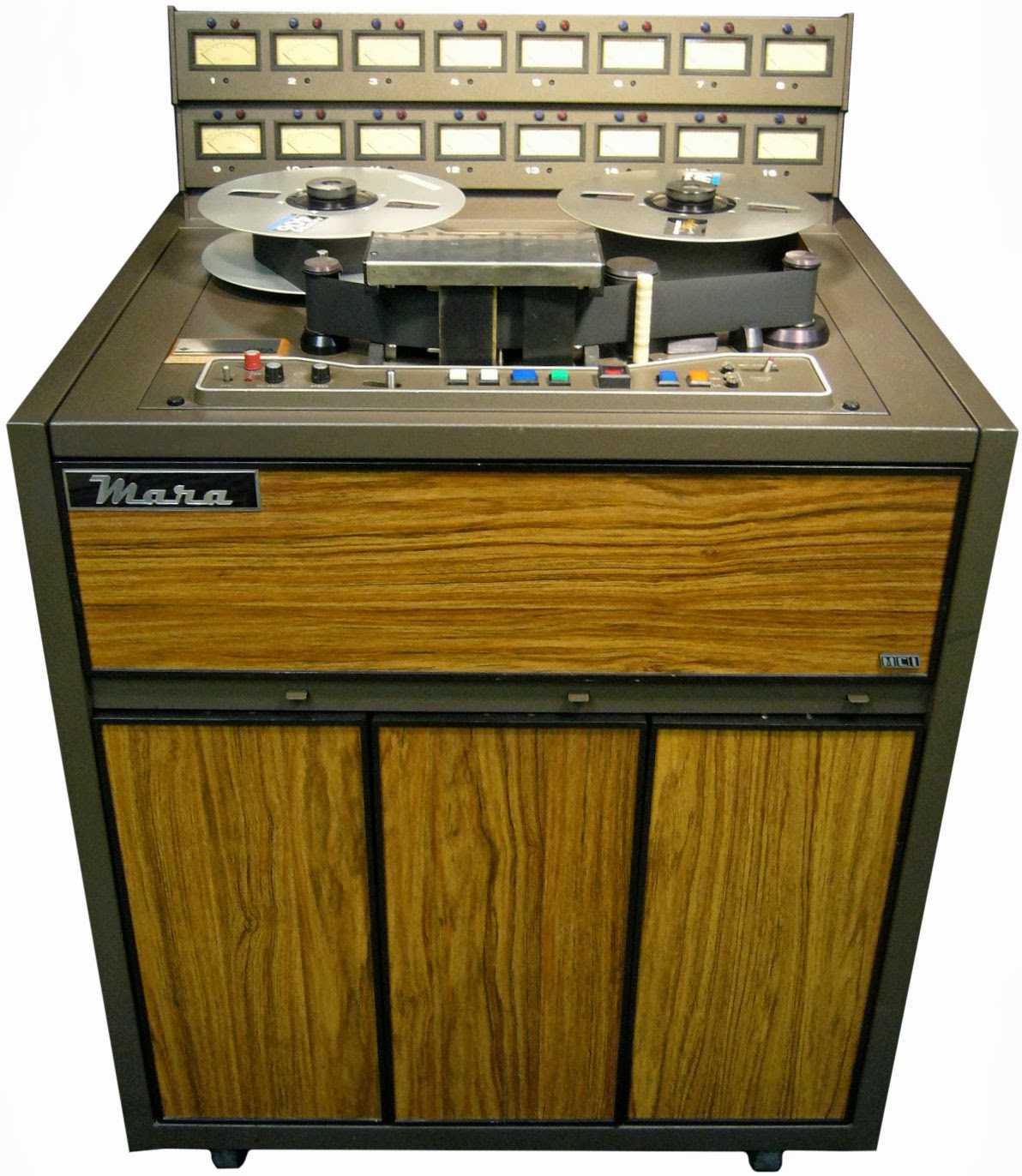
The tour manager handed me my charges: Five, two inch, 24-track audio tapes in cardboard boxes, making it a loose stack almost a foot high. Today this could be put on a thumb drive. Back then this was the only available storage device. My mission: take these tapes, fly them to New York City on my lap, and put them directly into the hands of Chris Blackwell, the founder of Island Records. The tapes are to never leave my sight. The tapes are not to be x-rayed. I am to give them to no one other than Chris Blackwell. Most importantly: When crossing the border I must never admit that the tapes contain live concert recordings. No one knew what the duty on such a thing might be and no one wanted to admit these tapes never should have been smuggled into Canada in the first place.

I never like to leave a smoke-filled room, especially one with Bob Marley in it, but there was only so much time to make my flight to New York. I grabbed the awkward pile of tapes and took them my car, one of a series a of Volkswagon Beetles I owned in the day, with the most amazing sound system in it for the day. It was like sitting in a set of headphones. I slipped in the cassette Bob Marley and the Wailers “Live! and cranked it up as loud as I could stand. If I was going to miss the concert at least I could have a concert in the car.


Crank it up!!!

When I arrived at short term parking the shuttle bus was just pulling up. I grabbed the tapes and started running to catch it. The lid of the box on top of the pile caught the wind and flew open, papers flying all over the place. I dropped the tapes I was carrying and started chasing the paper around the parking lot until I got them all. As I grabbed the last one I watched the shuttle bus pull away.

The papers were all 8.5 x 11 photocopied sheets, with all the recording info for each track written in hand. I realized 2 things immediately: 1). There were no other copies of these documents, I had the originals; 2). How can I say I don’t know what’s on these tapes if what’s on these tapes is written on pieces of paper and stored right with the tapes? I opened all the boxes, took out all the paper, folded them up and put them in my pocket, and waited for the next shuttle bus.

Pearson Airport was a lot smaller in those days. Then, as now, travelers pass through U.S. Customs at the Toronto airport. Before you are funneled to your gate, you must satisfy the U.S. Border Patrol in Toronto. Once you pass that checkpoint, you are technically in the U.S. I managed to satisfy the officer on identity and citizenship, but, as you have probably guessed already, got tripped up on the tapes, which I refused to allow them to x-ray. This is an approximation of how that went.

“You’re more than welcome to examine them, but my instructions are they cannot be x-rayed because that would destroy what’s on the tapes.”

He examines them and satisfies himself that the tapes are just tapes, but he’s never seen 2-inch audio tape before, so he’s a bit confused.

“What’s on the tapes?”

“I don’t know. I’m merely a messenger.”

Now he’s really confused.

“Hang on a second.”

He brings another U.S. Customs guy who is higher up the food chain to look at the tapes.

This guy examines them and satisfies himself that the tapes are just tapes,
but he’s never seen 2-inch audio tape before either, so he’s a bit
confused, just like the first guy.

“What’s on the tapes?”

“I don’t know. I’m just a messenger.”

“Hang on a second.”

They both go off to have a private discussion in a room with a window that I can look into. I see them drag a few more Custom agents into the room. A huge discussion ensues and I’m starting to wonder if I need to proclaim my ‘Merkin citizenship to get into ‘Merka with these tapes.

All this time the clock is doing its thing: Tick, tock, boys! Let’s get it on. I’ve got a flight to catch. All the time they’re quite pleasant and I’m quite pleasant, but I’m starting to get insistent that I have to get to New York City by a certain time. I know there is only a 2-hour window before Chris Blackwell has to fly to London with the tapes. If I miss that connection I might have to fly to London to deliver the tapes and I didn’t pack for that. For that matter, I didn’t pack for New York City. All I was carrying were the tapes.

Meanwhile, I missed my flight while these custom agents were arguing amongst themselves. It turned out that what was causing the delay is that they had to charge me duty on the audio tape. However, there were no references to 2-inch tape in the Big Book of Import Duties. They couldn’t let me into the States before I paid duty on the tape, but they didn’t know what to charge me.

Remember when everyone didn’t carry a phone in their pocket? The next argument I had with them was that I had to use their phone to call the office to get further instructions now that they caused me to miss my plane.

“You can’t use the phone while you’re here.”

WAIT!!! WHAT???

I argued that it was their dithering that made me miss my flight. I’m just a courier. I not only need further instructions, but needed someone from the office to rebook my flight if they still wanted me to effect delivery. That was a 15 minute argument that I finally won, as I got louder and louder. Eventually I got Kathy Hahn on the phone in the middle of what was a very hectic day for her. She said she’d take care of it. However, she needed a number where she could call me back.

“What’s the number here?”

“You can’t have people calling you here!”

However, they said I could use the phone as much as I needed while they sorted out their problem. I had just successfully turned the U.S. Customs’ telephone into my personal office. I made several more quick calls and then waited for about 15 minutes more minutes before one of the geniuses at U.S. Customs had a breakthrough of his own. Since the book gave them the duty for a cassette tape, which is an eighth of an inch, why not multiply that by 16 to get the duty for a 2 inch tape? We all celebrated that an answer to our conundrum presented itself. Now came a new conundrum.

“How long is the tape?”

“How the hell am I supposed to know? And, we’re not laying it out on the ground to measure it.”

“Is it 50 feet?”

“Yeah, sure, okay, let’s say it’s 50 feet.”

They took out a calculator and starting hitting the buttons. “Fifty feet, times an eighth inch, times 16 equals . . . “

I can’t remember the exact price of the duty, but let’s pretend it was $34.72. I had $35.00 in my pocket, just enough to pay the duty, but not enough left over for anything else. I paid the duty and called the office. Kathy had managed to book me on another plane to New York. However, what would have been a conversation with Chris Blackwell lasting an hour and a half, would be reduced to a half hour.

My new flight was delayed 15 minutes getting off the ground and I started wondering whether I would end up in London before my next sleep. Toronto to NYC is a mere puddle-jump and no sooner than you get to cruising altitude than it’s time to start your descent. I glanced at my watch and realized it was going to be touch and go. Blackwell’s flight to London was imminent and I am already several hours late. Will he even be at the gate to meet me?

When I got off the plane, there was Chris Blackwell right at my gate, looking incredibly anxious. He thanked me very much and apologized that he had to run, but his flight was on the exact opposite side of the airport and he would be lucky to make it. I fulfilled my sacred obligation and put the tapes directly in Chris Blackwell’s hands. As I did so I stumbled through a sentence that might be interpreted as “I’m so proud to be able to work with Island Records,” but probably came across as total gibberish, and then he was gone.

The first and only time I was ever in Chris Blackwell’s presence.

Now what?

I had the company credit card. I could go have a bacchanalian night in New York City on the company’s dime. However, I just happened to look up at the departure board and saw that there was a flight back to Toronto leaving almost immediately. If I made that flight, it might not be a total loss; I might be able to catch some of the 2nd Marley concert after all. Amazingly there were still seats on that plane. I paid for the tickets with the Island Records credit card and boarded almost immediately. The flight got off the ground on time and there were no other delays. For the first time all day things are going smoothly.

We landed at Pearson Airport. where I caught shuttle bus back to the parking lot, jumped into my car, and cranked up the music. Then I raced down the 427 to the QEW, shot across to the Gardiner and then over to Spadina, screamed north, dodging streetcars and pedestrians in Chinatown, and over to the U of T campus. I drove right up onto the sidewalk to the side door of Convocation Hall.

I no sooner pulled up to the building than the doors opened and the audience rushed out, trapping me and my car for the next 20 minutes while a cop argued I couldn’t park there. I missed both Bob Marley concerts. What’s worse, I spent less time with Chris Blackwell than I had Bob Marley and I only spent 5 minutes with Marley.

And, that kiddies, is the story of the day I met Bob Marley. Island Records was very gracious and paid to have me go see Bob Marley and the Wailers in concert at Detroit’s Masonic Temple. I also hooked a vacation in Detroit, my home town, visiting family and friends before I went back to Toronto.

The Day I Met Bob Marley ► Part One

I’ve dined out on this story among family and friends a few times over the years. However, I never told it in an official forum until interviewed for the wonderful documentary podcast How Jamaica Conquered the World. While Roifield Brown did a terrific job editing my rambling into a coherent story, I knew I could do better in print. However, first I want to put in a good word for Roifield’s great site. In its own words:

For a nation that gained independence from the British only 50 years ago, Jamaicans have left their mark on music, sport, style and language around the globe and have become an international marker of ‘cool’. Jamaican music has colonised the new and old world alike, its athletes break world records with impunity and youngsters the world over are incorporating Jamaican slang into their dialects. Despite this the country has reaped no economic reward in return, unlike empires of old, and Jamaica still remains an economic pygmy. Jamaican influence has unconsciously spawned creative innovation around the globe and to this day it remains a country to be studied, celebrated, and demystified. Through the help of linguists, artists, musicians, and historians we take a closer look as to how Jamaican culture conquered the world. 

How Jamaica Conquered the World is a class act, and I’d be saying that even if I didn’t appear in a couple of segments. As both history and a jukebox of Caribbean music, How Jamaica Conquered the World is worth as much time as you can devote to it.

Okay, kiddies, pull up a chair and pour yourself a cup of coffee, because this one’s going to be long . . .

On the day I met Bob Marley I was already working for Island Records Canada as a Record Promo Guy. It was one of my first jobs out of college and I was the low man on the totem pole in an office of 3 people. We three were required to cover the entire country of Canada, the 2nd largest country in the world

It’s worth mentioning how I came to work at Island Records because that also involves Bob Marley. A year earlier I had been the first full-time paid manager of Radio Sheridan. It was one of the few campus stations that received personal visits from the Record Promo Reps from all the major companies. Campus radio was much maligned in those days by the record companies, and deservedly so. A company would take the time and expense to package records and send them to a campus station, where they would rarely find their way into the library. They’d disappear into someone’s record collection.

By this time Radio Sheridan was 3 years old. It wasn’t an official part of the college; it was merely tolerated by Sheridan College. A small group of us, some attached to the student government and others in the Media Arts program, designed the concept of the radio station broadcasting on a closed-loop antenna system. We pitched it to the student government, which fell into line behind it. They presented it to Administration, which not only approved it, but gave us 2 very small rooms on the 2nd floor of the new wing. The station was entirely student-funded, student-built, and student-operated. I started off as Assistant Manager and later became the first (and as far as I know only) full-time paid Station Manager. I ‘hired’ Lorraine Segato to be one of my DJs and like to feel I set her off on her path to brilliance. 

Unlike other campus stations, from Day One, we felt it important that every record Radio Sheridan ever received was cataloged and shelved in the library. No genre or era was off limits and the only time a record was shelved with the words NO PLAY on it had to do 4-letter words, not musical styles. It was still shelved and everyone of us played George Carlin’s 7 Words You Can’t Say at least once. The rules were as flexible as any DJ wanted to try and get away with. It was the great era of Free Form Radio. We were all trying to emulate David Pritchard and David Marsden of CHUM-FM, when those guys were crazy MoFos on the air and playlists hadn’t been tightened up by the Radio Consultants, who were the real villains that ruined the medium of music radio.

However, Radio Sheridan had 3 things going for it, as far as the Majors (as we called the record companies) were concerned: 1). They could find every record they ever gave us in our library; 2). We would play music the other stations wouldn’t; 3). We were just off the Queen Elizabeth Way (QEW) between Toronto, where they all had head offices, and Hamilton, the next largest radio market in Ontario (if you ignored Windsor and lots tried). More than one Record Rep remarked how it was a nice stopover during a Hamilton swing. And those of us who worked at Radio Sheridan were eager acolytes for their records, posters, and concert tickets.

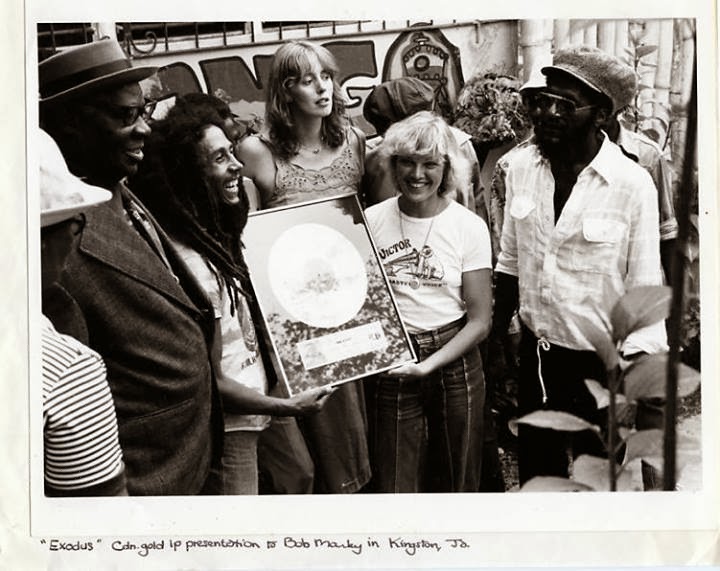
Kathy Hahn, a dear friend to this day, presents Bob Marley with a Canadian
Gold LP for Exodus in Jamaica, the 1st and only time a Canadian Gold
LP awarded outside the country; circa 1979

By the time I became full time Radio Sheridan Station Manager, we were getting so many records sent to us in the mail and hand-delivered by Record Reps that there was always a slush pile. Each record had to be listened to, categorized by genre and artist, duplicate file cards made, and then shelved in the record library. There was a pile of about 50 records on the day I first heard from the head of Island Records Canada. I was impressed that the head of the company was calling. I didn’t know the office consisted of just him and his assistant, Kathy Hahn, who I later discovered actually ran the office and made everything operate on schedule. The head of Island Records Canada was on the phone asking me whether I had received the latest records Kathy had sent in the mail. I assured him that I did, but had not had a chance to listen to them yet before shelving them. Then this guy started in on the hard sell (paraphrasing), “Oh you gotta listen. This is the next big thing. You need to jump on this. You’re going to hear a lot about Bob Marley.”

I hadn’t heard of Bob Marley before. More importantly, as far as I was concerned at that exact moment, I had never had a Record Promo Rep using such hard sell on me. The Promo Guys that serviced Radio Sheridan were all casual. They’d toss a record in our direction and say, “Give this a listen.” If we came back and said, “Hey, we like that artist,” the Rep might arrange to have the entire back catalog sent to us, or posters and concert tickets if those were available. The one thing they knew better than to do was to try and “sell” us on an artist. The music was either in the grooves, or it wasn’t.

However, this guy from Island Records was already irritating me and it was only our first phone call. I assured him I’d listen to his records just as soon as they floated to the top of the slush pile. However, that wasn’t the end of it. A few days later he called back, asking whether I’d listened to them yet. I explained the Hobson’s Choice system I developed: New records go on the bottom of the pile. I listen and shelve from the top of the pile. His records were mid-way in the pile, but they’d eventually make it to the top.

That’s when he started on the hard sell again. No other Promo Rep had ever tried to “promote” their records at me this vociferously and it was beginning to piss me off.

A few days later I go through the whole thing again with him. That’s when I flipped out at him. “Hear what I’m doing? I’m putting your records on the top of the pile. They will be the next records I listen to.”

I hung up absolutely prepared to hate the records almost as much as I had begun to hate the disembodied voice from the Bedford Road offices of “Island Records.” I put the first record on the turntable and dropped the needle. What happened next was four minutes and 15 seconds that changed my life. This is not hyperbole. Listen:

The first 30 seconds of Concrete Jungle were absolutely magical to me. It starts off with two guitars just noodling around, almost as if they are tuning up without structure. A single organ note sings in the background. At about 8 seconds in a drum beat sputters and then locks in. A bass guitar drops in a few notes here and there, while a lead guitar plays a few sustained chords and then a meandering lead line. Another keyboard is adding random notes. These instruments swirl around each other making no music I has ever heard of before. Then, at the 30 second mark, this kaleidoscopic swirl of what sounds like random instrumentation locks into place with the One Drop, bass and drums. Riddem!

I was hooked!!! Immediately!!!

For the first time in my life music SPOKE to me in a way that none had previously. Reggae penetrated my very soul. I felt it deep, deep within me. Within 6 months I was working for Island Records as Record Promo Rep and Chief Cook and Bottle Washer of Island Records Canada. One of my first surprises was that the head office for Island Records Canada was two front rooms of a beautiful house at 93 Bedford Road. The house was semi-famous, having appeared in two movies: The Last Detail and The Paper Chase. The rest of the house was residences, with a family living on the 2nd floor and a bachelor on the third floor. I eventually moved into a basement apartment in the house where I only had to walk upstairs to get to work, until I got hired away to United Artists in Scarberia.

My second surprise is that in a 3-person office, I would be called upon do do anything and everything, as we all did. One day I would be stuffing envelopes with the press release I had written the day before and picked up at the printer’s that morning. The next day I might be the limo driver taking Robert Palmer and his 2 singers to a concert at the CNE grounds, while they practiced the difficult “doobey doobey doops” back-up vocals of Hey Julia and Sneaking Sally Through The Alley in the back seat.

The most exciting and busy time in the life of a Record Promo Rep is the period immediately preceding one of your artists coming to town for a concert. Bob Marley and the Wailers had announced a North ‘Merkin tour for April to June of 1976 to promote the new release, Rastaman Vibration.

When one of your acts is coming to town, there’s a lot of prep work to be done. While the promoter will take out advertising to promote the concert, the record company will also take out adverts to promote the music currently available in stores. Sometimes those ads are designed in-house, but most of the time head office supplies camera-ready artwork, which still needs to be placed where the local office feels the most eyeballs will see it. In the case of Bob Marley, an artist barely known outside his native Jamaica in 1976, we did a lot of non-traditional advertising, naturally targeting the small weeklies and record stores that served Toronto’s large Jamaican population, much of which was strung along Eglington West, around Oakwood.

One of the jobs of a Promo Rep is to put up displays at the record stores and cajole the staff to rack the LPs up front. You see, kiddies, in the olden days of mortar and brick music machines, music could still be an impulse buy, like gum still is at supermarkets. When one of your acts is coming to town, this is done on steroids. At least a month ahead of time you would start putting up displays at all the record stores, beginning with those downtown and working out to the suburbs. The displays would include concert posters and racks for the various LPs the artist had out.

While it’s not exactly Payola, three things a Record Rep has in abundance are free LPs, free posters, and free concert tickets. These are spread around where they will do the artist the most good, as is access to the artist by radio and tee vee people. Artists will let you know in advance what their press availability will be. It’s up to the Promo Rep to apportion that time where it will do the artist the most good. These interviews won’t help concert sales (unless sales are slow, for which last minute interviews can be helpful), but will help record sales, which was the primary goal. The interviews will also be used ‘down the line’ as promo material for the upcoming shows on the tour, which could help ticket sales in future cities, which will lead to record sales.

While all tour arrangements (travel, hotel, meals) are handled by someone else, once the band arrives in town it’s the job of the record company, and most often the Promo Reps, to ferry them around town, make sure they get to any interviews and/or signings on time, and, most importantly, make sure they arrive at the concert venue in time. This often requires precision timing. Itineraries broken down into 15 minute increments are prepared, photocopied, and passed out to everyone who will need them.

The month before an artist comes to town is the most frantic time in the life of a Promo Rep, which only gets more frantic every day as the calendar counts down to Concert Day, which is the most frantic of all. One only gets to breathe a sigh of relief when the artist becomes the responsibility of the next Promo Rep in the next town on the tour.

The day I met Bob Marley was the most frantic day I ever had in the Music Bidnezz. It began in the Bedford Road HQ of Island Canada as we sat around going over a checklist of things that still needed to be done when the boss said, “You won’t be able to go to the concert, Headly.”

WAIT!!! WHAT???

I pretty much exploded.

“I’ve just spent a month working my ass off for this concert. I’ve papered dozens of record store walls in posters and empty LP covers. I’ve cajoled the alternative papers into doing articles in advance of the concert. I convinced some alternative radio stations to play some Marley, even though they’ve never heard of Reggae before. I’ve set up interviews with Bob Marley and made dozens of arrangements with people who will be at the show tonight. And, now you’re telling me I can’t go to the show?”

That’s when it was explained that I would be on a special, secret mission for Island Record International!!!

Here was the master plan: the two concerts at the University of Toronto’s Convocation Hall were the sixth and seventh on the tour, with Montreal the night before. Prior to that were four dates in the States: Upper Darby, Pennsylvania; Washington, D.C.; Boston, and New York City. The tour was being recorded and the band had smuggled several 2-inch reel-to-reel, 24-track recordings of the previous concert dates into Canada. They knew better than to try and smuggle ganja into Canada, knowing there were enough Jamaicans who wanted to present them with the sacramental plant upon their arrival. However, audio tapes? Those they smuggled into Canada without declaring them or paying any duty on them.

My secret mission was to collect the tapes from the band when they arrived, smuggle them back into the United States, and put them directly into the hands of Chris Blackwell.

CHRIS BLACKWELL?!?!?!

At that time in my life Chris Blackwell would have been the only person who I would have missed Marley for. Chris Blackwell was my musical hero. Chris Blackwell was the man who started up Island Records and still the head guy. A slight tangent is in order for A Short Biography of Chris Blackwell:

Although born in London (in 1937), Chris Blackwell spent his childhood in Jamaica. His mother came from a prominent family, said to be one of the 21 families that controlled Jamaica during the 20th century. After his parents divorced his mother took up with Ian Fleming and is said to be the inspiration for Pussy Galore. These days Chris Blackwell owns Goldeneye, where Fleming wrote all the James Bond novels. However, if that were it, there would be no reason to write this tangent.

At the age of 21 Blackwell had a boating accident off Jamaica’s southern coast when he crashed his sailboat on a coral reef. He swam to shore, collapsing on the beach in exhaustion. There he was rescued by some Rastafarian fisherman, who took care of him until he was healthy enough to leave. However, if that were it, there would still be no reason to write this tangent.

A year later, Chris Blackwell started Island Records, naming it after the Alec Waugh novel “Island in the Sun.”  Blackwell started releasing Jamaican music in 1959 and had limited regional success. In 1962 Blackwell moved Island operations to London and started making inroads in the Jamaican community with some early Ska and Bluebeat tunes that he had either recorded or licensed. One of those early licenses was for “My Boy Lollypop” by Millie Small, the cover of a 1956 tune by Barbie Gaye, one of the first hit songs in the newly emerging style of Ska.

Compare Millie Small’s version of My Boy Lollypop with Barbie Gaye’s:

As the WikiWhackyWoo quotes Blackwell:

I didn’t put it [the Millie Small single] on Island because I knew it was going to be so big. Independent labels in those days couldn’t handle hits, because you couldn’t pay the pressing plant in time to supply the demand, so I licensed it to Fontana, which was part of Philips. It was a big hit all around the world, and I really wanted to look after Millie, so I went everywhere with her, which took me into the mainstream of the record industry. I was lucky enough to see Stevie Winwood with the Spencer Davis Group, at a TV show in Birmingham. So then I started to spend more time in that area. This whole new music was emerging.

By “new music” Blackwell wasn’t talking about Reggae; that came later, after Island had already signed a few acts.With the proceeds of the smash Millie Small hit, he started signing bands to Island Records. After Spencer Davis Group and Steve Winwood came other Island signings: Traffic; Emerson, Lake and Palmer; Cat Stevens; Jethro Tull; Free; Fairport Convention; Kevin Ayers; Georgie Fame; Sparks; John Martyn; Spooky Tooth; Nick Drake; Roxy Music, Brian Eno; John Cale; The Chieftains; Richard and Linda Thompson; U2; Pete Wingfield; and many more. While many of these artists were signed to Island Records, Blackwell licensed some of these acts to other record companies in North America. To confuse matters even more, there were times the recordings were licensed to a different record company in Canada than ‘Merka.

And, that’s where I came in. I had been listening to music from Chris Blackwell for years, much longer than I had been listening to Reggae. Sure I’d be willing to miss two Bob Marley concerts at Convocation Hall to meet Chris Blackwell. He was one of my heroes.

Read Part Two of The Day I Met Bob Marley.

Happy Birthday Doc Pomus ► A Musical Appreciation

Doc Pomus singing at the Pied Piper with Uffe Bode,
Sol Yaged, John Levy and Rex William Stuart (1947)

Light 88 candles — the same as the number of keys on a piano — for Doc Pomus, one of the greatest names in Rock and Roll you never heard of; a Founding Father and a Brill Building Blues-shouting Jew.

Born Jerome Solon Felder on June 27, 1925, in Brooklyn, he walked with crutches due to a bout of polio at the age of six. He fell in love with The Blues after hearing a Big Joe Turner tune and took the stage name Doc Pomus as a teenager when he started performing in Blues clubs as a teenager. More often than not, he was the only White person in the club. During these years he recorded some 40 songs for small labels.

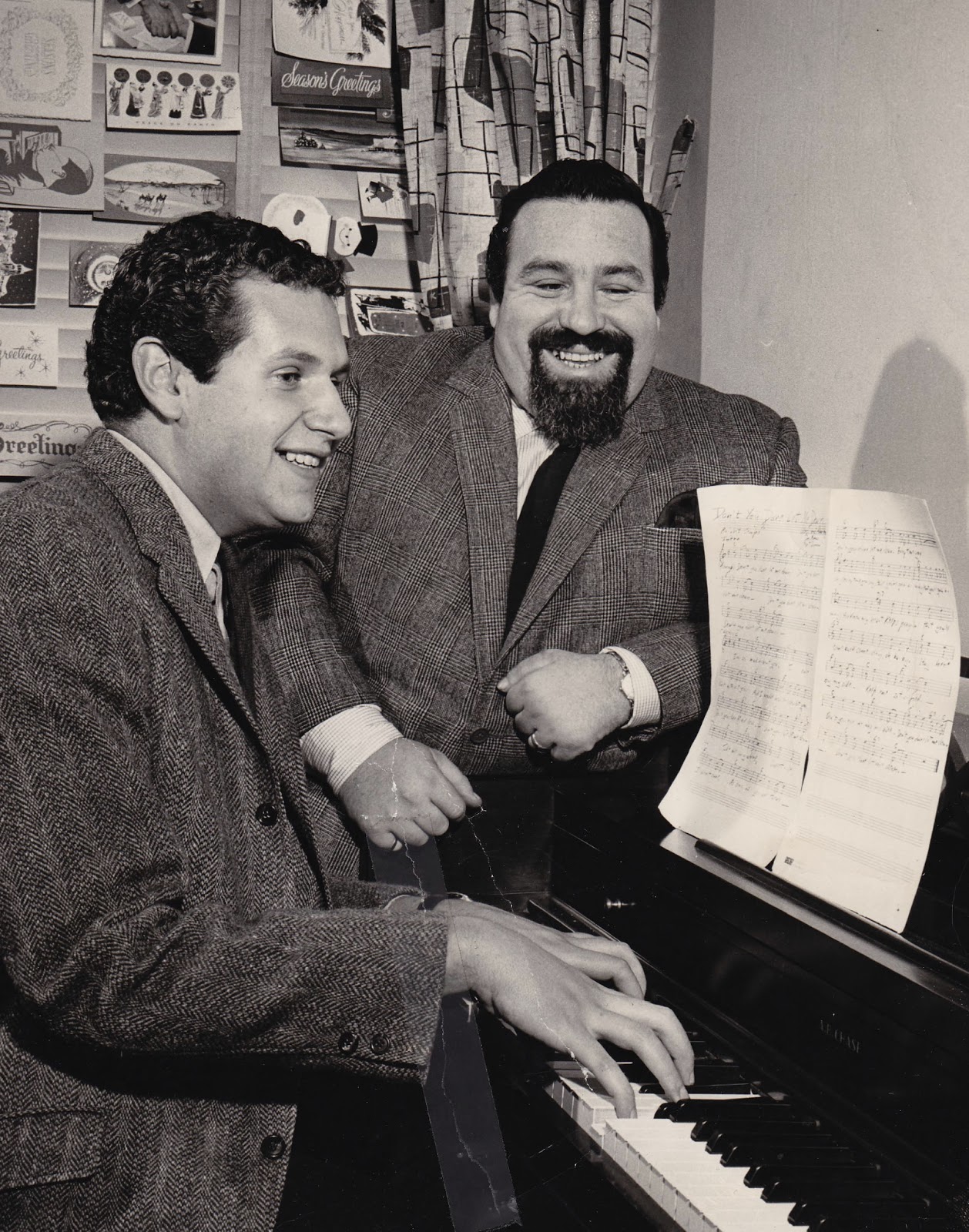
Mort Shuman and Doc Pomus

According to the Songwriter’s Hall of Fame:

At first, penning songs for his own recordings, he soon became a major song source on the New York scene and a regular at the new Atlantic Records’ office, creating classics for Laverne Baker, Ruth Brown, Lil Green, Ray Charles and Big Joe Turner. He enjoyed his first rhythm and blues top ten hit with “Lonely Avenue” by Ray Charles. Hooking up with a team of two other young songwriters, Jerry Leiber and Mike Stoller, he hit big with the Coasters’ “Young Blood.”

Pomus, by coincidence, met a talented teenaged fledgling songwriter Mort Shuman, who was dating Pomus’ cousin. He took Shuman under his wing and eventually the two became full partners despite the 15-year age difference between them.

Ultimately, the pair enjoyed a wonderful nine-year association resulting in a major body of work which, collectively, became a dominant force on the record charts and led to sales of well over one hundred million. The songs included, “This Magic Moment,” “Save The Last Dance For Me,” “Teenager in Love,” “Can’t Get Used To Losing You,” “Turn Me Loose,” “Hushabye,” “I Count The Tears,” “Sweets for My Sweet” and “Seven Day Weekend,” among many others. For Elvis Presley, they produced a series of major hit songs, including “Little Sister,” “Viva Las Vegas,” “His Latest Flame,” “Surrender,” “Suspicion,” “A Mess of Blues” and “Long, Lonely Highway,” to mention a very few.

Just last year a documentary on the great Doc Pomus was released. Making fun of his almost anonymous fame, the movie is called A.K.A. Doc Pomus:

Jeff Tamarkin, in his review of Lonely Avenue; The Unlikely Life and Times of Doc Pomus, by Alex Halberstadt, gets to the bottom of the contradictions:

It wasn’t until long after the hits, after the Beatles and Dylan made irrelevant the songwriting mills, after a 10-year writing sabbatical when high-stakes poker brought in more cash than his royalties, that Pomus began to feel comfortable in his skin. He began writing again, and though his collaborations with the likes of Dr. John and Willy DeVille never came close to the charts, he felt at home with these younger singers, who respected the same traditions he did.

By the ’80s, he had recast himself as an eccentric, ebullient man about town, dressing loudly, throwing lavish parties, turning up nightly at clubs where bouncers cleared a path for his wheelchair and set him in the prime spots. But he also became a magnet for all manner of hangers-on and hucksters, and he took to carrying a business card that read “Doc Pomus — I’ve Got My Own Problems.”

Despite the overhanging gloom, Lonely Avenue — which takes its name from the 1956 Ray Charles hit that put Pomus on the map — is anything but depressing. Halberstadt’s re-creation of period detail is rich as is his portraiture of the myriad characters who flit in and out of Pomus’s life — Muhammad Ali, Veronica Lake (with whom Halberstadt claims Pomus had an affair), Rodney Dangerfield, John Lennon. With access to family and friends, as well as to the late songwriter’s journals — he died in 1991 — Halberstadt (who never met his subject) gets at the heart of Pomus’s often conflicting personal and professional lives.

However, as always, it’s about the music. Here’s a Doc Pomus Jukebox which includes some of his early Blues sides, as well as some of his tunes made famous by others.


As always: CRANK IT UP!!!

Music Brings Our World Together For The First Time

Dateline June 25, 1967 – Our World is broadcast to the entire world, via the very first live, global, satellite hookup. Taking part in the broadcast were creative artists from 19 countries around the globe, including Maria Callas, Pablo Picasso, Marshall McLuhan and The Beatles. More than 350 million people tuned in.

According to the WikiWackyWoo, it took more than 10,000 technicians, producers and translators to pull off the two and a half hour broadcast. The project took 10 months to plan. The countries that participated promised that their segments would be 100% live and no politicians or heads of state could appear. A last minute problem came close to scuttling the project, when the entire Eastern Bloc, directed by the Soviet Union, pulled out in protest over response to the Six Day War.

More from the WikiWackyWoo:

The opening credits were accompanied by the Our World theme sung in 22 different languages by the Vienna Boys Choir.

Canada’s CBC Television had Marshall McLuhan being interviewed in a Toronto television control room. At 7:17 pm GMT, the show switched to the United States’ segment about the Glassboro, New Jersey, conference between American president Lyndon Johnson and Soviet premier Alexei Kosygin; since Our World insisted that no politicians be shown, only the house where the conference was being held was televised. National Educational Television’s (NET) Dick McCutcheon ended up talking about the impact of the new television technology on a global scale.

The show switched back to Canada at 7:18 pm GMT. Segments that were beamed worldwide were from a Ghost Lake, Alberta ranch, showing a rancher, and his cutting horse, cutting out a herd of cattle. The last Canadian segment was from Kitsilano Beach, located in Vancouver, British Columbia’s Point Grey district at 7:19 pm GMT.

At 7:20 pm GMT, the program shifted continents to Asia, with Tokyo, Japan being the next segment. It was 4:20 a.m. local time and NHK showed the construction of the Tokyo Subway system.

The equator was crossed for the first time in the program when it switched to the Australian contribution, which was at 5:22 a.m. Australian Eastern Standard Time (AEST). This was the most technically complicated point in the broadcast, as both the Japanese and Australian satellite ground stations had to reverse their actions: Tokyo had to go from transmit mode to receive mode, while Melbourne had to switch from receive to transmit mode. The segment dealt with Trams leaving the Hanna Street Depot in Melbourne with Australian Broadcasting Commission’s Brian King explaining that sunrise was many hours away as it was winter there. A scientific segment, later on in the broadcast, was also included that dealt with the Parkes Observatory tracking a deep space object.

For the Beatles segment John Lennon wrote All You Need Is Love specifically for the broadcast (though like all their Beatles’ songs it’s credited to Lennon-McCartney). The song premiered that night to the entire world at the very same time. Watch:


The Beatles – All You Need is Love from gledson_adriel on Vimeo.

All recordings of All You Need Is Love were in black and white. This colourized version is from The Beatles Anthology series. Watch it while you can because EMI & The Beatles seem to remove any copies found on the innertubes.

The Beatles released All You Need Is Love as their next single, on July 7, 1967. However, it wasn’t the exact performance from the satellite broadcast. John had been unhappy with his vocals, so he re-recorded them and Ringo fixed a few of the drum tracks, including substituting a drum roll for a tambourine shake during the La Marseillaise section of the tune. The single went straight to the top of the charts, where it stayed for 3 weeks.

Les Paul ► The Man Who Made Rock and Roll Possible

Not Now Silly celebrates the birth of the man that made it all possible: Lester William Polsfuss, better known as Les Paul.

Les Paul didn’t invent the guitar, which falls into the family of chordophones.Those go back several thousands of years to India and China. Modern descendants include the lute and violin, not to mention the guitar as we now know it.

Les Paul didn’t even invent the electric guitar. That happened in 1931 when George Beauchamp invented a magnetic pick-up for the Ro-Pat “Frying Pan” lap steel guitar. Les Paul didn’t get around to inventing his solid body electric guitar until 10 years later and even then it was just a 2×4 with the electronics hidden inside. It was so ugly, and Les received so many negative comments on it, he disguised it by hiding it in a dummy guitar.

Les Paul didn’t even invent overdubbing, although he perfected it and popularized the technique.

Yet, Les Paul is often credited with inventing all three. The New York Times 2009 obituary stated:

Mr. Paul was a remarkable musician as well as a tireless tinkerer.
He played guitar alongside leading prewar jazz and pop musicians from Louis Armstrong to Bing Crosby.
In the 1930s he began experimenting with guitar amplification, and by
1941 he had built what was probably the first solid-body electric
guitar, although there are other claimants. With his guitar and the
vocals of his wife, Mary Ford, he used overdubbing, multitrack recording
and new electronic effects to create a string of hits in the 1950s.

Mr.
Paul’s style encompassed the twang of country music, the harmonic
richness of jazz and, later, the bite of rock ’n’ roll. For all his
technological impact, though, he remained a down-home performer whose
main goal, he often said, was to make people happy.

Nothing I could write would explain it any better than the wonderful documentary “Chasing Sound,” which intercuts contemporary footage of Les Paul performing at the Iridium Jazz Club — which he did right up to his death at the age of 94 — with historic footage and music telling Les Paul’s life story. Watch:

I’ve also put together a Les Paul Jukebox for your listening pleasure:
***

***

John and Yoko and Frank and Flo and Eddie

John Lennon and Yoko One perform with Frank Zappa and The Mothers

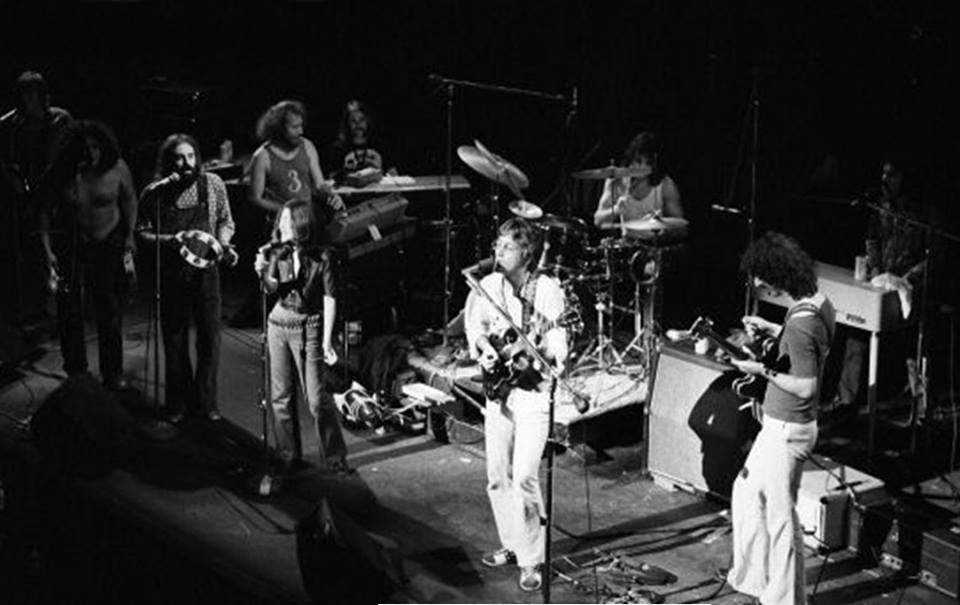
Dateline June 6, 1971 – Frank Zappa and his newly formed Mothers play a notorious gig at the Fillmore East. This was the second night of a two night stand. As he had done previously, Zappa had a surprise for the audience: an encore set backing up John Lennon and Yoko Ono, just beginning their sojourn in NYC that ended so tragically.

The inner-sleeve from Lennon’s release
The minimalist cover as released by Zappa

Zappa had arranged for the night to be recorded, as he increasingly did for all live performances. He came to release the night’s performance by The Mothers as “Fillmore East – June 1971.” It was the latest chapter in the band’s “Touring can make you crazy” phase, which culminated in the movie 200 Motels. During the evening’s entertainment Flo and Eddie, alternatively playing both groupies and Pop Stars, document Vanilla Fudge having sex with a mudshark at the Edgewater Motel, meet Bwana Dik, reprise a few classic Zappa tunes, and eventually agree to sing their big hit song — WITH A  BULLET!!! — “Happy Together.”

Then Zappa sprung John and Yoko on the audience instead of the encore:


~~ Rare footage of Frank Zappa, Flo and Eddie and John and Yoko ~~

Frank Zappa turned the portion of John and Yoko’s performance over to him after the show. As was his wont, Lennon turned the tapes over to Phil Spector, who remixed the tapes and released it in 1972 as Side 4 of the “Some Time In New York City” double-record set. Frank Zappa was extremely unhappy with the results and lawsuits were threatened before it all got settled to everyone’s satisfaction. Frank Zappa tells that story:

Howard Kaylan tells the story from his point of view in his recently released autobiography Shell Shocked [reviewed here]:

If our first Fillmore show […] was wonderful, our second was transcendent. When the concert ended and the audience stood, waiting for their encore, it felt as if a herd of elephants had entered the auditorium as the world’s most famous couple walked onstage. The resulting jam was recorded by both Frank and the Fillmore and was released on two different albums. John released it as the 4th LP [sic] in his Some Times In New Your City compilation on Apple, although he took writing credit on every song, including Frank’s iconic “King Kong,” which h renamed and tried to publish. Frank’s lawyers had to sue John’s lawyers to straighten the entire thing out, and it really wasn’t all that great anyway, but at least I can say that I am among a handful of people, right alongside Paul McCartney, to ever share a writing credit with the immortal John Lennon. So there.

Zappa got the last laugh. He eventually released his own, remixed, versions of those recordings on the Playground Psychotics CD. He gave the songwriters the proper credits, but renamed one of the tunes “A Small Eternity with Yoko Ono.”

***

***