Category Archives: Musical Appreciation

Happy Birthday Chuck Barris

Today all of ‘Merka is celebrating the 84th birthday of game show producer, Gong Show Host, and paid CIA assassin Chuck Barris. 

Barris is often called the Father of Reality Television, a smear he has tried to live down. However, few people realize that long before he launched The Dating Game, The Newlywed Game and The Gong Show, he wrote Freddie “Boom Boom” Cannon’s greatest hit, “Palisades Park.”


Less known is his career as a CIA hit man who rubbed people out in exotic locations around the world, while chaperoning Dating Game couples who won All Expense Paid Trips™. Barris repented in his “unauthorized autobiography” Confessions of a Dangerous Mind. The book was so compelling that director George Clooney felt compelled to turn it into a docudrama, with great effect.

However, no matter how many bad people he’s killed (33 at last report), Chuck Barris will never have been a greater service to his country than he was when he created The Gong Show. Your argument is invalid.


This segment was censored before being broadcast to the west coast


***

***

Happy Birthday Chuck Barris

Today all of ‘Merka is celebrating the 84th birthday of game show producer, Gong Show Host, and paid CIA assassin Chuck Barris. 

Barris is often called the Father of Reality Television, a smear he has tried to live down. However, few people realize that long before he launched The Dating Game, The Newlywed Game and The Gong Show, he wrote Freddie “Boom Boom” Cannon’s greatest hit, “Palisades Park.”


Less known is his career as a CIA hit man who rubbed people out in exotic locations around the world, while chaperoning Dating Game couples who won All Expense Paid Trips™. Barris repented in his “unauthorized autobiography” Confessions of a Dangerous Mind. The book was so compelling that director George Clooney felt compelled to turn it into a docudrama, with great effect.

However, no matter how many bad people he’s killed (33 at last report), Chuck Barris will never have been a greater service to his country than he was when he created The Gong Show. Your argument is invalid.


This segment was censored before being broadcast to the west coast


***

***

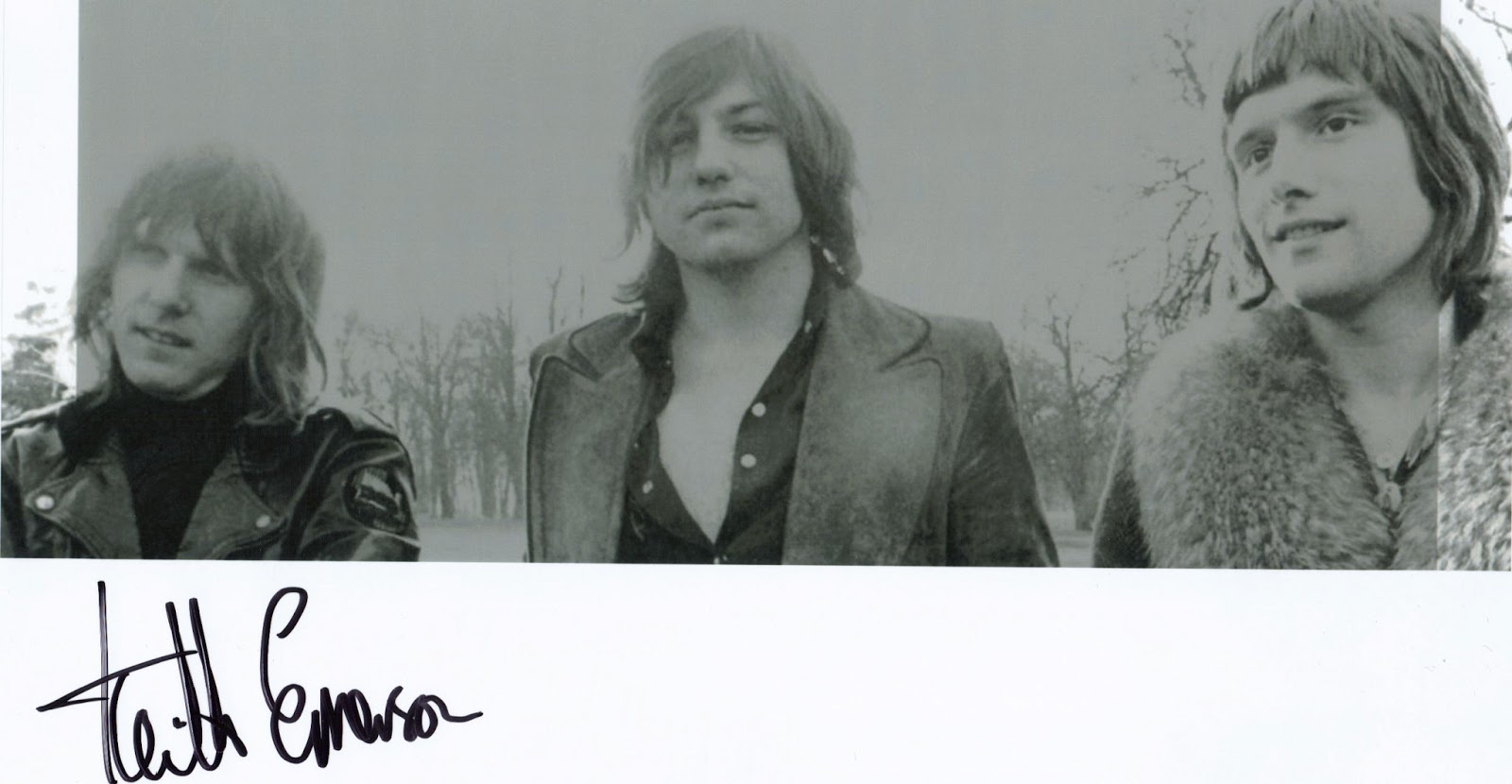
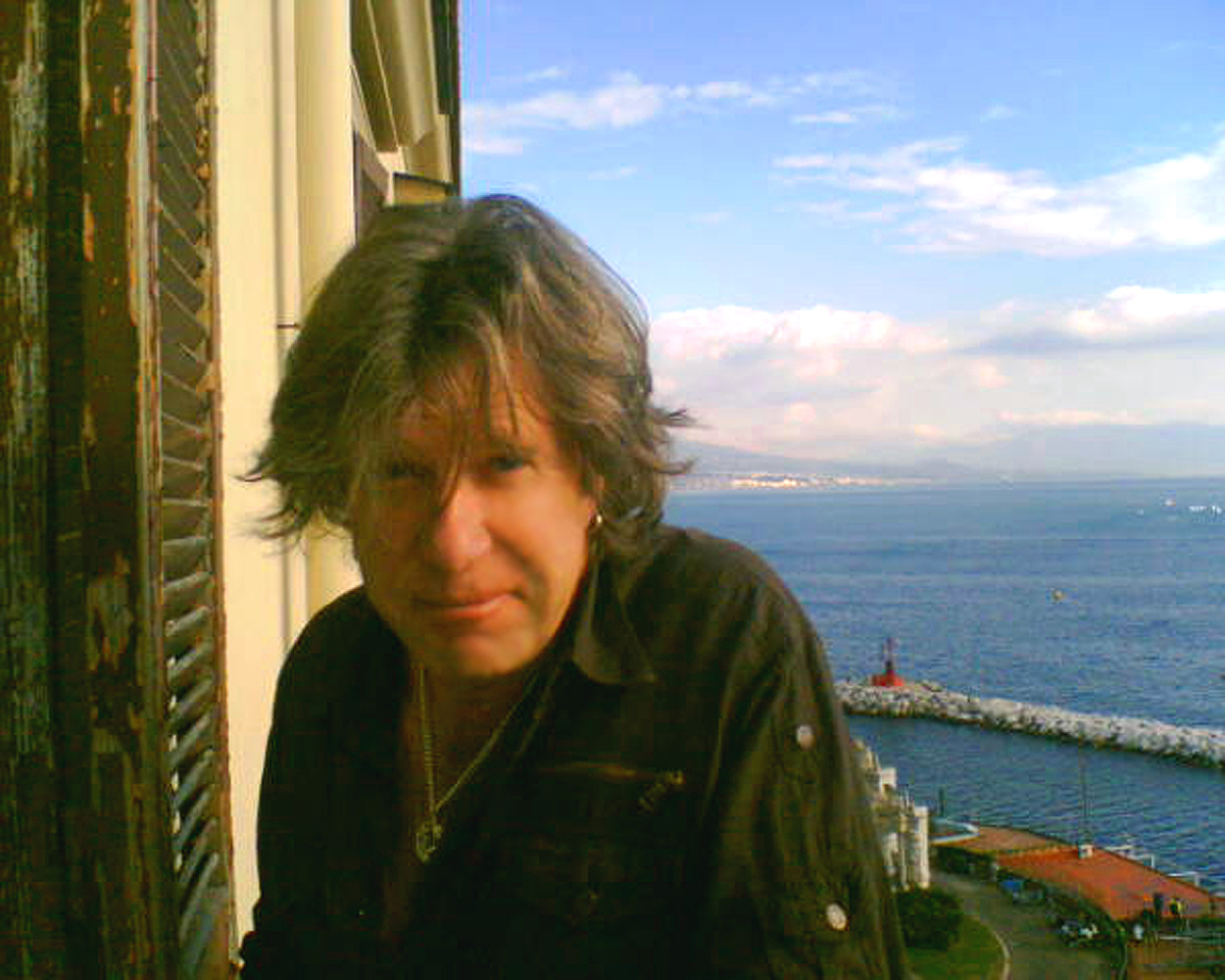
The Day I Met Keith Emerson ► Nostalgia Ain’t What It Used To Be

I told this story on my facebook wall and someone asked, “Why didn’t you save that for your blog?” <facepalm> Of course!!! Here’s a slightly edited version:

Over the years I’ve threatened to tell the story of meeting Keith Emerson in his living room in Nassau, Bahamas, way back in the ’70s when I was a vacationing Rock and Roll journalist from Toronto. Now seems as good a time as any.

My friend Larry Ellenson, owner of Toronto’s Round Records, had a rental property on Nassau Island in the Bahamas that he wasn’t using. I agreed to rent it from him for 3 weeks one winter when I really needed to get away from the cold. The price was reasonable, far less expensive than a hotel would cost. And, because it was a house with a functioning kitchen, I could have most meals on the cheap from groceries picked up fresh at the outdoor markets. Hanging out in a private home is far more relaxed than being a tourist in a resort, hanging out with people just like myself. My neighbours were all Bahamians, or transplanted people now calling Nassau their home.

The house was on the south side of Bay Road, across from the houses  right on the beach, west of the bridge that goes across to the fancy hotels on Paradise Island. Although there were houses all along the beach, I was told that those people only owned the property their houses sat upon, but didn’t own the beach behind their houses. Therefore, when I wanted to go to the beach I took the shortcut; I just walked across the street and down someone’s driveway to the sand, as opposed to taking the long way around. The long way was to walk a block east to the local park that connected to the beach. Consequently, I walked up and down the same driveway many times a day because in my fridge was a pitcher filled with a Kahlua and milk concoction. I kept going back to refill my glass.I was on vacation!

That’s who she worked for.

There was this a beautiful woman I saw on the beach every day. She was a nanny for the
family that lived in the house whose driveway I walked down many times every day. I’d read or swim, but occasionally we’d talk as I watched her play with the kids. After more than a week we got, shall we say, more friendly, and spent some evenings together after she was off duty.

At first, she had been really leery about the fact that I was a Rock and Roll journalist on vacation. However, she eventually found out I was truly just there for a vacation (and to meet Third World at Compass Point Studios) she relaxed somewhat. However, it’s obvious she didn’t trust me completely because she never told me who she worked for.

So, it was her day off and the family she worked for was elsewhere. She invited me across the street to hang out. We were on our 2nd or 3rd beer when suddenly a man came rushing into the house yelling something like, “Don’t mind me. I just need to pick up something.”

As he walked into the room, I recognized him immediately. Keith Fucking Emerson!!! His nanny introduced us. “Keith? This is Headly. Headly, Keith.”


Check out this supergroup playing in Japan in 1990: Keith Emerson – Keyboards,
Jeff “Skunk” Baxter – Guitar, Joe Walsh – Guitar, John Entwistle – Bass Guitar, Simon Phillips – Drums

I was sprawled back in his beanbag chair with his nanny and a beer in my left hand. As I awkwardly tried to get onto my feet, Keith politely reached out his hand to shake mine. I took it and he pulled me to my feet as we continued to shake hands. Then he grabbed whatever he came home for and, in less than 2 minutes, Keith Emerson was gone and I never saw him again. Not even in concert.

When I acted like a total Rock and Roll fan boy — and not a journalist — the nanny relaxed completely. She told me how difficult it could be, at times, to protect the family’s privacy. I assured her I wasn’t there to infiltrate the family and write about Keith Emerson and promised her I wouldn’t. I kept that promise until now. I think the statute of limitations is up.

EPILOGUE: A few minutes later we walked to the kitchen fridge to get another beer. I had seen the fridge on a previous walk to the kitchen, without really looking at it. However, this time I did. There’s a snapshot of Keith Emerson with Peter Frampton. There’s a snap of Keith and a Rolling Stone on the beach. There are snaps Keith and all kinds of Rock and Rollers on the fridge, posing on boats and the beach, with wives, children, and pets, just like the snapshots on everyone’s refrigerator everywhere.

***

***

A Tribute To Fats Waller ► A Musical Appreciation

If Fats Waller had only written “Honeysuckle Rose” he would have been famous. If Fats Waller had only written “Ain’t Misbehavin’” he would have been famous. If Fats Waller had only written “Squeeze Me” he would have been famous. If Fats Waller had only written “Jitterbug Waltz” he would have been famous. If Fats Waller had only written “(What Did I Do to Be So) Black and Blue” he would have been famous.

Celebrating the joyous birthday of the greatest Stride piano player this country ever produced. Thomas “Fats” Waller was born on May 21, 1904, and died at the young age of 39. Yet in his time he copyrighted more than 400 tunes. He made money off some of them. Others he sold off cheap when he was hurting for cash. Some he lost completely. According to the WikiWackyWoo:


Waller composed many novelty tunes in the 1920s and 1930s and sold them for relatively small sums. When the compositions became hits, other songwriters claimed them as their own. Many standards are alternatively and sometimes controversially attributed to Waller. Waller’s son Maurice wrote in his 1977 biography of his father, that once he was playing “I Can’t Give You Anything but Love, Baby” when he heard his father complaining from upstairs and came down and admonished him never to play that song in his hearing, saying that he had to sell that song when he needed some money. He even made a recording of it in 1938 with Adelaide Hall who, coincidentally, had introduced the song to the world (at Les Ambassadeurs Club in New York in 1928), in which he played the tune but made fun of the lyrics.[2] Likewise, Maurice noted his father’s objections whenever he heard “On the Sunny Side of the Street” played on the radio.[3]

Fats had been taught to play piano by the great James P. Johnson. Johnson was 10 years older and had practically invented Stride piano (often mistakenly called Ragtime piano). He got Fats his first piano roll and recording gigs and they became good friends. However, even Johnson admitted the student had surpassed the teacher.

As a great a piano player Fats was, his favourite instrument was the pipe organ. His father was a preacher and, after taking up the piano at 6, Fats started playing organ in the church at the age of 10. Later he played organ during the silent movies. Once he had gained a bit of fame he was allowed to record syncopated Jazz on the pipe organ, both solo and with “his Rhythm,” the name of his 5 and 6 man combos.

Recording a Jazz group that had a pipe organ as a lead instrument proved to be a technical challenge. It was during the days before electronic microphones had been invented. Performers had to be carefully arranged around a horn, from quietest to loudest, to balance the sound properly. A pipe organ is LOUD! So loud that the recording equipment and Fats’ band had to be on the opposite side of a cavernous room from the pipe organ. That presented a new problem. A slight delay due to the speed of sound caused havoc with the syncopated rhythms. Only the supreme musicianship of “his Rhythm” was able to overcome that challenge. I am most excited by the organ music that Fats recorded.

Sadly Fats Waller made few movies. His over-sized personality and mugging were just perfect for motion pictures, as these two clips attest:


However, the times being what they were, there was not a lot of call for Black performers in the Hollywood of the ’30s and ’40s.

Having said all that, maybe it’s a good thing that Fats Waller didn’t live to his 50s or 60s. I often think of how painful it must have been for Louis Armstrong, accused of being an Uncle Tom during the Civil Rights Era because he felt that putting on an entertaining performance, which included Satchmo’s trademark handkerchief and onstage mugging. However, no one mugged bigger and wider than Fats Waller. I doubt he would have escaped this criticism had he lived.

There are so many great songs and performances that I am having trouble putting together a representative Fats Waller jukebox. I have 515 Fats Waller MP3s, all from my own CD collection. As well, Spotify has identified 1,327 tunes for listening. However, I have tried to include some of his greatest tunes, both solo and band performances, with and without pipe organ. I also included a few interpretations of his music. Enjoy!

***

***

Bob Dylan Walks Out On Ed Sullivan

Dateline May 12, 1963 – Back in the day you couldn’t really say you were in Show Biz unless you had appeared on the Ed Sullivan Show. As much as Bob Dylan was known as a Protest singer, he still craved Show Biz legitimacy. That’s why he allowed himself to be booked on the Sullivan Show on this day in 1963. However, always the contrarian, Dylan walked off the show before he was to appear.

Ed Sullivan was a Tee Vee institution. Beginning in 1948 as Toast of the Town, his show ran for 23 seasons — 22 of them in the same Sunday night time slot of 8PM. Entire families would gather around the only tee vee set in the house and watch one of the only 3 tee vee networks in existence. The Sullivan Show had something for everyone in the entire family. It was a variety show, in the Vaudevillian tradition; a solo singer might be followed by a ventriloquist, who was followed by a plate spinner, with a Big Band performance next, to be followed by a comedian, and then, maybe, wrapped up with a scene from a Broadway musical. In a classic example of Art imitating Life, this “Hymn for a Sunday Evening,” from “Bye Bye Birdie,” sums up the importance of an appearance on the Sullivan show.

In ’63 Dylan was just an up-and-coming singer/songwriter, barely known outside the small, cultish world of Folk enthusiasts. If people knew him at all it was from Peter, Paul and Mary’s cover version of Blowin’ in the Wind. His 2nd LP, The Freewheelin’ Bob Dylan, with his own version of “Blowin’ In The Wind,” was just days away from being released. A Sullivan appearance would have been a huge boost to Dylan’s career and fame. However, according to the Official Ed Sullivan Show webeteria:

Bob Dylan was slated to make his first nationwide television appearance on The Ed Sullivan Show on May 12, 1963.  For the show, Dylan decided to perform “Talkin’ John Birch Paranoid Blues”, a satirical blues number skewering the conservative John Birch Society and the red-hunting paranoia associated with it.  A few days earlier, Bob Dylan auditioned the song for Ed Sullivan who seemed to have no issue with it. However, on the day of the show during the dress rehearsal, an executive from the CBS Standards and Practices department decided Dylan could not perform the song due to its controversial nature.  When the show’s producer, Bob Precht, informed Dylan of the decision, Dylan responded saying, “No; this is what I want to do. If I can’t play my song, I’d rather not appear on the show.”  Rather than choose a new song to perform or change the lyrics (as the Rolling Stones and the Doors on Ed Sullivan would agree to do), a young Bob Dylan walked off the set of the country’s highest-rated variety show.

The story got widespread media attention in the days that followed helping to establish Dylan’s public reputation as an uncompromising artist. The publicity Bob Dylan received from this event probably did more for his career than the actual Ed Sullivan Show performance would have. Unfortunately, this leaves us with no performance footage of Bob Dylan on The Ed Sullivan Show.

Here’s a live version of “Talkin’ John Birch Paranoid Blues,” which Dylan introduces by saying, “And, there ain’t nothing wrong with this song.”

No wonder they didn’t want the song performed on the show. In 1963 “Talkin’ John Birch Paranoid Blues” would have still been politically explosive. However, Ed Sullivan was a known control freak, who had his fingers in every aspect of his show. It’s hard to believe he wasn’t part of this decision, if not the instigator. An alternative theory is that Sullivan found the song a bit too far for his family audience, but wanted to come off as Mr. Nice Guy, so he told Bob Precht to deliver the bad news to Dylan. Blaming the CBS Standards and Practices office was probably just Standard Operating Procedure at the time.

Regardless of who made the decision, it resulted in Dylan’s “boot heels to be wandering.”

***

***

The Very First Grammy Awards ► Musical Appreciation

Domenico Modugno singing his big hit “Nel blu dipinto di blu”

Dateline May 4, 1959 – The very first Grammy Awards are presented to a diverse group of artists and genres for the music of 1958. I thought it might be instructive to take a look back and see what was on The Hit Parade 55 years ago.

There’s no denying that the BIG winner of the night, with both Record of the Year AND Song of the Year, was Domenico Modugno. Let’s hear a round of applause for Domenico Modugno!

Who the hell is that? Oh, c’mon. You know his huge hit tune “Nel blu dipinto di blu.” It was on everyone’s lips in 1958. No? Does this remind you?

How’d you like that interpretive dance near the end? Don’t tell me you skipped that part. Ed Sullivan knew how to pick ’em.

Domenico wasn’t the only one who walked away with a Grammy. Henry Mancini picked up Album of the Year for The Music of Peter Gunn. Everybody sing-a-long:

It was also a very big night for Alvin and the Chipmunks. They also garnered two Grammys, taking home the prize for both Best Children’s Recording AND Best Comedy Recording:

But Domenico and Alvin weren’t the only double award winners that night. Ella Fitzgerald took home two different awards for two different LPs. The Best Jazz Performace by an Individual Grammy award went to Ella for The Duke Ellington Songbook.:

That cut is not from the Ellington songbook LP, but it’s one of my faves from a live performance of Ella with Duke Ellington in Japan. Ella won another Grammy that night in the Pop music category of Best Vocal Performance for her interpretation of the Irving Berlin Songbook:

One of my favourite shows, The Music Man, won for Best Original Cast LP. While it’s cheating to use the 1962 movie version, that’s the one I know best. And since it’s one of my favourite musicals, here are 3 of my fave tunes from it, and the re-release trailer.


With songs like Perry Como’s “Catch A Falling Star” or “That Old Black Magic” by Keely Smith and Louis Prima also grabbing Grammys, there wasn’t a lot of youth culture represented. The only thing resembling Rock and Roll was this song by The Champs, who took home the Grammy for Best Rhythm and Blues Performance.

***

***

One of the Holiest Days in Rasta ► Grounation Day

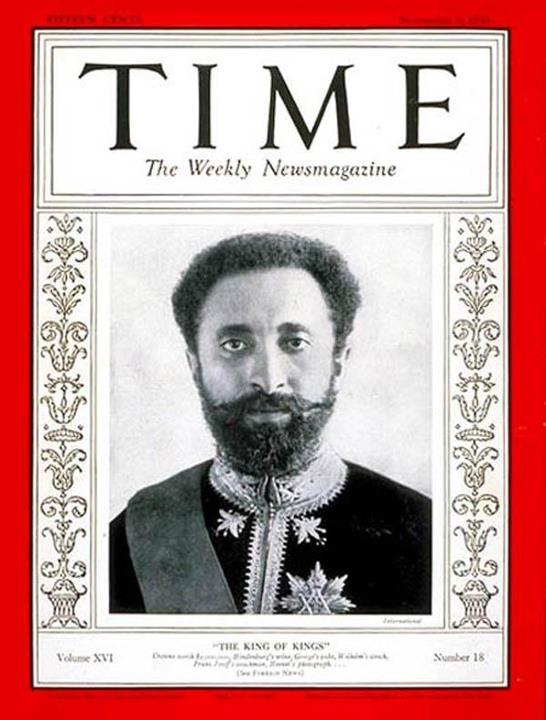
It’s somehow appropriate that the day after Four Twenty is Grounation Day, one of the holiest days in the Rastafarian religion. Today is the anniversary of the day in 1966 when their living God, Ethiopian Emperor Haile Selassie I, visited Jamaica.

The WikiWackyWoo sums up Rastafarianism nicely

Many elements of Rastafari reflect its origins in Jamaica, a country with a predominantly Christian culture.[4][5] Rastafari holds to many Jewish
and Christian beliefs and accepts the existence of a single god, called
Jah, who has incarnated on Earth in the form of Jesus and Selassie.
Rastafarians accept much of the Bible, although believe that its message has been corrupted.[1] The Rastafari movement encompasses themes such as the spiritual use of cannabis[6][7] and the rejection of the degenerate society of materialism, oppression, and sensual pleasures, called Babylon.[8][9] It proclaims Zion, as reference to Ethiopia, the original birthplace of humankind, and from the beginning of the movement calls to repatriation to Zion, the Promised Land and Heaven on Earth.[10][11] Rasta also embraces various Afrocentric and Pan-African social and political aspirations,[6][12] such as the sociopolitical views and teachings of Jamaican publicist, organizer, and black nationalist Marcus Garvey (also often regarded as a prophet).

This would make a tremendous scene in a movie: When Emperor Haile Selassie I landed at Palisadoes Airport in Kingston on April 21, 1966, his plane was immediately surrounded by 100,000 Rastas, singing, playing drums and smoking sacramental ganja. When their living God appeared on the top step of his plane the crowd surged forward, pushing security back to the red carpet. Selassie waved, turned on his heels, and went back into the plane.

After what must have been a very uncomfortable wait, the Jamaican government convinced Ras Mortimer Planno, a well-known and respected Rasta elder, to go up and see what was keeping His Majesty. Planno had a private confab with Selassie and came out and announced to the crowd, “The Emperor has instructed me to tell you to be calm. Step back and let the Emperor land.”

Once the crowd had settled down Planno escorted Selassie down the stairs. The Emperor refused to walk on the red carpet, hence Grounation, with an emphasis on the ground.

This is the best part of the WikiWackyWoo entry on Grounation Day:

As a result of Planno’s actions, the Jamaican authorities were asked to ensure that Rastafarian representatives were present at all state functions attended by His Majesty, and Rastafari elders, including Planno and probably Joseph Hibbert, also obtained a private audience with the Emperor, where he reportedly told them that they should not immigrate to Ethiopia until they had first liberated the people of Jamaica. This dictum came to be known as “liberation before repatriation”. At a dinner held at the King’s House, Rastas claimed that acting Jamaican Prime Minister Donald Sangster had stamped his foot at Lulu, Haile Selassie’s pet chihuahua, who, they swore, had responded with the roar of a lion.

Defying expectations of the Jamaican authorities, Selassie never rebuked the Rastafari for their belief in him as the Messiah. Instead, he presented the movement’s faithful elders with gold medallions bearing the Ethiopian seal – the only recipients of such an honour on this visit. Meanwhile, he presented some of the Jamaican politicians, including Sangster, with miniature coffin-shaped cigarette boxes.

I get the feeling The Emperor was trying to send a message. Ras Mortimer Planno later went on to be the spiritual teacher for Rita and Bob Marley, whom you may have heard of.

Which leads us back to the music, which is what I always think about when I think of Rastafarianism. Here’s a Rasta Jukebox for Grounation Day.

CRANK IT UP!!!

***

***

Musical Appreciation ► AUNTY EM!!! AUNTY EM!!!

2005 stamp issued by the U.S. Postal Service

Dateline April 8, 1896 – Somewhere over the rainbow, in New York City’s Lower East Side to be exact, Isidore Hochberg was born.

He later changed his name to Edgar Harburg, but he was always known by his nickname “Yipsel” or “Yip.” As Yip Harburg he wrote the lyrics to some of the most popular songs in the ‘Merkin songbook, including Brother, Can You Spare a Dime; April In Paris; It’s Only a Paper Moon; Lydia the Tattooed Lady; and every song in The Wizard of Oz. He won an Academy Award for Best Music, Original Song for “Over the Rainbow.”

It should not be forgotten that Yip Harburg was later a victim of the Hollywood Blacklist in the ’50s. From 1951 to 1962 was unable to work in Tinsel Town due to his leftist leanings. He was luckier than some who were Blacklisted, since he was still able to write musicals for Broadway.

Here are just a few interpretations of Yip Harburg’s most famous songs:


E.Y. Harburg was inducted into the Songwriters Hall of Fame in 1972.

Frank Zappa’s 200 Motels Gets The Full Treatment

Circle the date. On October 23rd Frank Zappa’s 200 Motels will get the full orchestral treatment for the first time since 1970, when the London Philharmonic Orchestra performed it live in the movie of the same name.

In fact, the entire score has never really been performed by just an orchestra, the movie soundtrack having been augmented by The Mothers of Invention, newly-reformed by Frank Zappa in 1970 to make the movie. This group of Mothers featured members of the hit-making Pop-Rock act The Turtles on vocals. However, due to a shitty contract that Mark Volman and Howard Kaylan signed with White Whale Records, as teenagers, they were not allowed to use their real names for recording, so they took the names Phlorescent Leech and Eddie, respectively.

But, I digress . . .

According to Billboard Magazine, Gail Zappa has been in negotiations with the L.A. Philharmonic on and off over the years to bring Frank’s music to the ‘Merkin concert stage. While Europeans have had the experience of hearing Zappa’s music played by full orchestras, that pleasure has been denied people on this side of the pond . . . until now.

“I believe in my heart of hearts that someone on the board (of the Philharmonic) said it’s about time,” Zappa’s widow Gail Zappa told Billboard. “This music was written before our children were even conceived and they have never had a chance to hear his music in a proper concert hall.”

L.A. Philharmonic president and CEO Deborah Borda said “a lack of resources and imagination have kept it from getting to the concert hall. [Conductor laureate] Esa-Pekka [Salonen] said the first person to call and welcome him (in 1992) was Frank Zappa. Beyond any Esa-Pekka connection, it’s our connection to L.A.” Zappa died in 1993.

Frank Zappa explaining the scene from 200 Motels in which “The Girl Wants to Fix Him Some Broth.”

200 Motels was a movie way ahead of its time. It’s nice to see the L.A. Philharmonic catching up. However, I can just imagine Walt Disney turning over in his grave when the orchestra begins playing “Half A Dozen Provocative Squats” in the concert hall which bears his name.

Coming soon: A review of Howard Kaylan’s autobiography “Shell Shocked; My Life With The Turtles, Flo & Eddie, and Frank Zappa, etc. . . .” which will feature an exclusive interview with Mr. Kaylan. You can read an excerpt of the book at Rolling Stone Magazine.

Happy Birthday Mama Africa

Dateline March 4, 1932 – Zenzile Miriam Makeba is born in Johannesburg, South Africa. She would go on to become one of the great voices in World music. While her music will live on forever, it’s quite possible that a more lasting legacy will be her loud voice in the struggle for Civil Rights back in her homeland — from which she had been barred from ever returning — and the rest of the world. 

Miriam Makeba’s influence is such that Google has honoured Mama Africa with a one of its famous doodles today.

There are so many Miriam Makeba songs one could play, but Pata Pata, her first ‘hit,’ for which she won a Grammy, is still the one that seems to sum up her entire career. The joyful presentation, along with her unrestrained shout of joy at the 2 minute mark, perfectly encapsulates her entire career.

HIT IT!

For politics, there was no stronger song in her repertoire than “Soweto Blues” written for her by her former-husband Hugh Masekela, a Civil Rights activist in his own right. This clip also describes her joy at being able to return to her homeland after so many years of forced exile.

Let’s all remember how Miriam Makeba fought for the Civil Rights of all of us, whether you are Black, White, African, European, Jewish, Muslim, or ‘Merkin.