Category Archives: Media

Hank Snow ► Monday Musical Appreciation

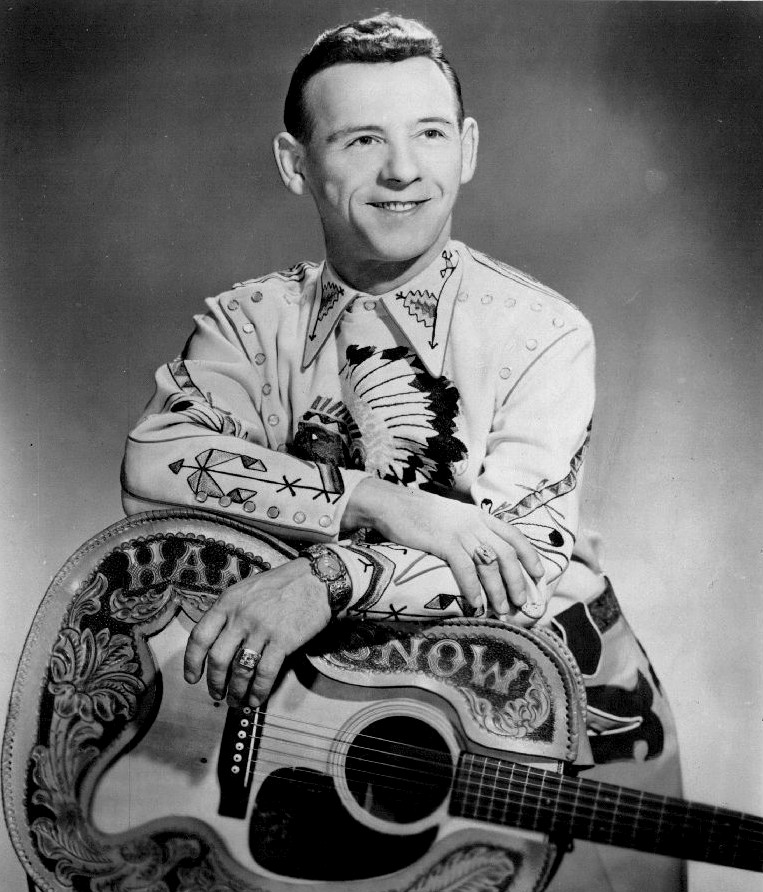
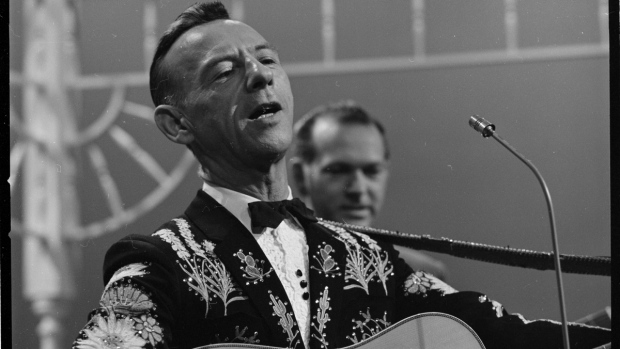
Happy Birthday to Canadian Country singer Hank Snow, the man who discovered Elvis Presley. He would be blowing out 102 candles had he not died in 1999 at the age of 85.

Clarence Eugene Snow was born “in the sleepy fishing village of Brooklyn,

Queens County, on Nova Scotia’s

beautiful South Shore, just down the tracks from Liverpool“, according to his official web site, which continues:

As a boy, Hank faced many difficulties and shortcomings. He had to face

the trauma of his parents’ divorce at just eight years old and he was

forced to stay with his grandparents. He then had to deal with an abusive

grandmother who forbid him to see his mother. He regularly sneaked out

at night and walked the railroad tracks to Liverpool where his mother

was living. Not willing to return to his grandmother, who would often

beat him for visiting his mom, he would sometimes seek shelter in Liverpool’s

railway station, now home of the Hank Snow Country Music Centre.

He learned guitar from his mother. Running away from home at 12, he worked as a cabin boy on fishing schooners out of Lunenburg and bought his first guitar with his first wages: A T. Eaton Special which set him back $5.95. While onboard the ship he listened to the radio, later imitating the Country singers he heard, especially his hero Jimmie Rodgers.

Once he was back on land Snow continued to practice and improve. The WikiWackyWoo picks up the story:

Soon, Snow was invited to perform in a minstrel show in Bridgewater
to help raise money for charity. “Someone blackened my face with black
polish and put white rings around my eyes and lips,” Snow recalls. When
his turn came in the show, he played a song called “I Went to See My Gal
Last Night.” “My debut was a big success,” Snow writes. “I even got a
standing ovation.”[2]

In March 1933, Snow wrote to Halifax radio station CHNS
asking for an audition. The rejection letter he received only made him
more determined and later that year he visited the station, was given an
audition and hired to do a Saturday evening show that was advertised as
“Clarence Snow and his Guitar.” After a few months, he adopted the name
“The Cowboy Blue Yodeler” in homage to his idol Jimmie Rodgers known as
“America’s Blue Yodeler.” Since Snow’s Saturday show had no sponsor, he
wasn’t paid for his performances, but he did manage to earn money
playing halls and clubs in towns where people had heard him on the
radio. He also played in Halifax theatres before the movies started and
performed, for $10 a week, on a CHNS musical show sponsored by a company
that manufactured a popular laxative. At the urging of the station’s
chief engineer and announcer, he adopted the name Hank because it went
well with cowboy songs and once again, influenced by Jimmie Rodgers, he
became “Hank, The Yodeling Ranger.” Snow also appeared occasionally on
the CBC’s regional network.[2]

Signed to RCA Records Canada in 1936, the radio hook-up brought him greater fame and he started touring across Canada. Eventually radio stations south of the border started playing his records and Snow moved to Nashville, where he had a growing audience. In 1950 Ernest Tubbs invited Snow to perform at the Grand Old Opry. He didn’t go over so big until he wrote his first hit song, I’m Moving On:

Even had he not discovered Elvis, Hank Snow would still be remembered today for his music. However, as the Wiki tells us:

A regular at the Grand Ole Opry, in 1954 Snow persuaded the directors to allow a young Elvis Presley to appear on stage. Snow used Presley as his opening act and introduced him to Colonel Tom Parker.
In August 1955, Snow and Parker formed the management team, Hank Snow
Attractions. This partnership signed a management contract with Presley
but before long, Snow was out and Parker had full control over the rock
singer’s career. Forty years after leaving Parker, Snow stated, “I have
worked with several managers over the years and have had respect for
them all except one. Tom Parker (he refuses to recognise the title
Colonel) was the most egotistical, obnoxious human being I’ve ever had
dealings with.”

One of my favourite jokes:

If Hank Snow married June Carter, there would be 6 inches of Snow in June.

But I digress. According to his website:

Hank
Snow sold over 70 million records in his career that spanned 78’s, 45’s,
extended 45’s, LP’s, 8-tracks, cassettes and compact discs.

Throughout his life he recorded over 100 LPs, including everything from hit
parade material to gospel, train songs, instrumentals (alone and with Chet
Atkins), tributes to Jimmie Rodgers and the Sons of the Pioneers, and
recitations of Robert Service poems. He has always kept a warm spot in his
heart for Nova Scotia, and he paid homage with his album “My Nova Scotia
Home”. He also recorded “Squid Jiggin’ Ground” in honor of the fishermen he
sailed with out of Lunenburg in his early youth.
Every August Liverpool, Nova Scotia, holds a multi-day Hank Snow Tribute. This year’s shindig will happen August 18-21 and tickets are already available. However, as Not Now Silly likes to say: It’s all in the grooves. This is why people still sing and play Hank Snow tunes:


Happy Birthday Lesley Gore ► Monday Musical Appreciation

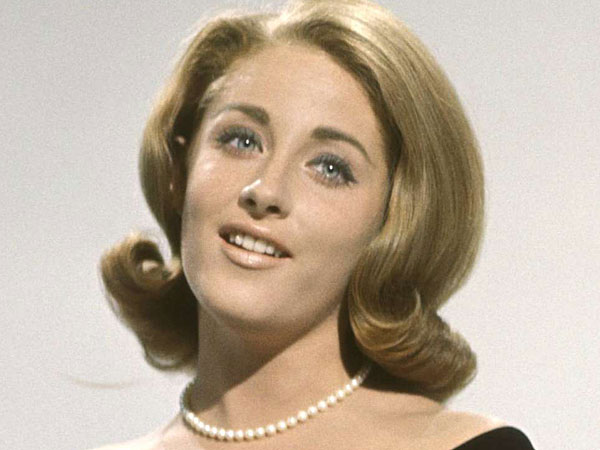
On this day in 1946 Lesley Sue Goldstein was born. We knew her better as Lesley Gore.

Discovered by Quincy Jones when she was only 16, Lesley Gore was still in high school when It’s My Party hit the top of the pop charts. Hit after hit followed under the tutelage of producer Jones. However, when she graduated, she chose to go to college, as opposed to pursuing a full-time career in the music biz. She would perform and record on weekends. The WikiWackyWoo picks up the story:

Gore was one of the featured performers in the T.A.M.I. Show concert film, which was recorded and released in 1964 by American International Pictures, and placed in the National Film Registry
in 2006. Gore had one of the longest sets in the film, performing six
songs including “It’s My Party”, “You Don’t Own Me”, and “Judy’s Turn to
Cry”.[13]

Gore performed on two consecutive episodes of the Batman television series (January 19 and 25, 1967), in which she guest-starred as Pussycat, one of Catwoman‘s minions.[1] In the January 19 episode “That Darn Catwoman”, she lip-synched to the Bob Crewe-produced “California Nights”, and in the January 25 episode “Scat! Darn Catwoman” she lip-synched to “Maybe Now”.[11] “California Nights”, which Gore recorded for her 1967 album of the same name, returned her to the upper reaches of the Hot 100.[9]
The single peaked at number 16 in March 1967 (14 weeks on the chart).
It was her first top 40 hit since “My Town, My Guy and Me” in late 1965
and her first top 20 since “Sunshine, Lollipops, and Rainbows”.[1]

Further Reading

Quincy Jones; A National Treasure

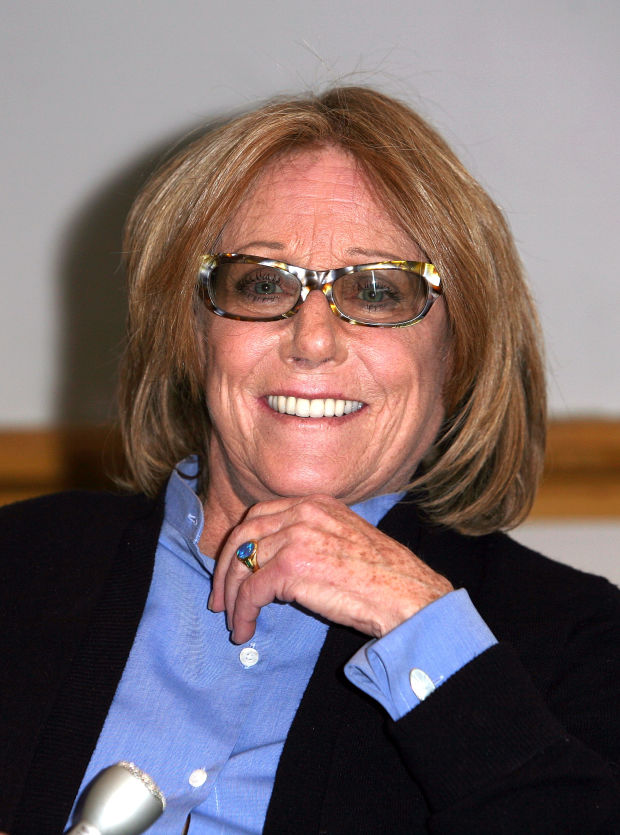
It wasn’t until her death last year did much of the world learn she was a Lesbian. Biography takes it from there:

It was also at Sarah Lawrence that Gore realized that she was a
lesbian. Before college, she later explained, she simply had never had
the time to examine her true feelings. “I had boyfriends,” she said. “I
was scheduled to get married … All of that was part of the agenda at
the time … Part of the problem that I had … was being out in the
public. It was hard to even explore it. I wasn’t even left that
opportunity. When I talk to some of my gay women friends now who might
just be a little bit older than me, they would come in from [Long]
Island or New Jersey, and they would put on their black Levis and black
jackets and run to the bars. I wasn’t quite able to do that.”

Though
Gore did not come out as gay until after the heyday of her fame had
passed, she says she never concealed it from the people who were close
to her: “I just tried to live as normally as humanly possible. But as
truthfully as humanly possible.”

Rolling Stone picked up the story for her obituary:

After graduating college in the late Sixties and staying largely out
of the spotlight throughout the Seventies, Gore resurfaced in 1980 when
“Out Here On My Own,” a song she co-wrote with her brother Michael for
the Fame soundtrack, was nominated for a Best Original Song
Academy Award; Michael Gore would instead end up winning the Oscar for
his song “Fame.”

Gore came out to the public when she served as host on a few episodes of the PBS’ LGBT newsmagazine series In the Life. She released her final album Ever Since in 2005.

The Wiki sums it all up:

In a 2005 interview with After Ellen, she stated she was a lesbian and had been in a relationship with luxury jewelry designer Lois Sasson since 1982.[22] At the time of her death, the couple had been together for 33 years.[23] Gore died of lung cancer on February 16, 2015, at the NYU Langone Medical Center in Manhattan, New York City; she was 68 years old.[24][25] Her New York Times obituary described her as a teenage and feminist anthemist.[26] Following her death, Neil Sedaka commented that she was “a phenomenal talent” and “a great songwriter in her own right.”[26]

As we always say here in the Not Now Silly Newsroom, it’s all in the grooves:


The First Lady of Song ► Monday Musical Appreciation

Light up 99 candles because today we celebrate the birthday of the First Lady of Song, Ella Fitzgerald. 

Let’s let her official website speak for her:

Dubbed “The First Lady of Song,” Ella Fitzgerald was the most popular
female jazz singer in the United States for more than half a century.
In her lifetime, she won 13 Grammy awards and sold over 40 million
albums.

Her voice was flexible, wide-ranging, accurate and ageless. She
could sing sultry ballads, sweet jazz and imitate every instrument in an
orchestra. She worked with all the jazz greats, from Duke Ellington,
Count Basie and Nat King Cole, to Frank Sinatra, Dizzy Gillespie and
Benny Goodman. (Or rather, some might say all the jazz greats had the
pleasure of working with Ella.)

She performed at top venues all over the world, and packed them
to the hilt. Her audiences were as diverse as her vocal range. They were
rich and poor, made up of all races, all religions and all
nationalities. In fact, many of them had just one binding factor in
common – they all loved her.


A recent remix of one of Ella’s most well known tunes proving her relevance to another generation
Biography picks up her story:

Born
on April 25, 1917 in Newport News, Virginia, singer Ella Fitzgerald was
the product of a common-law marriage between William Fitzgerald and
Temperance “Tempie” Williams Fitzgerald. Ella experienced a troubled
childhood that began with her parents separating shortly after her
birth.

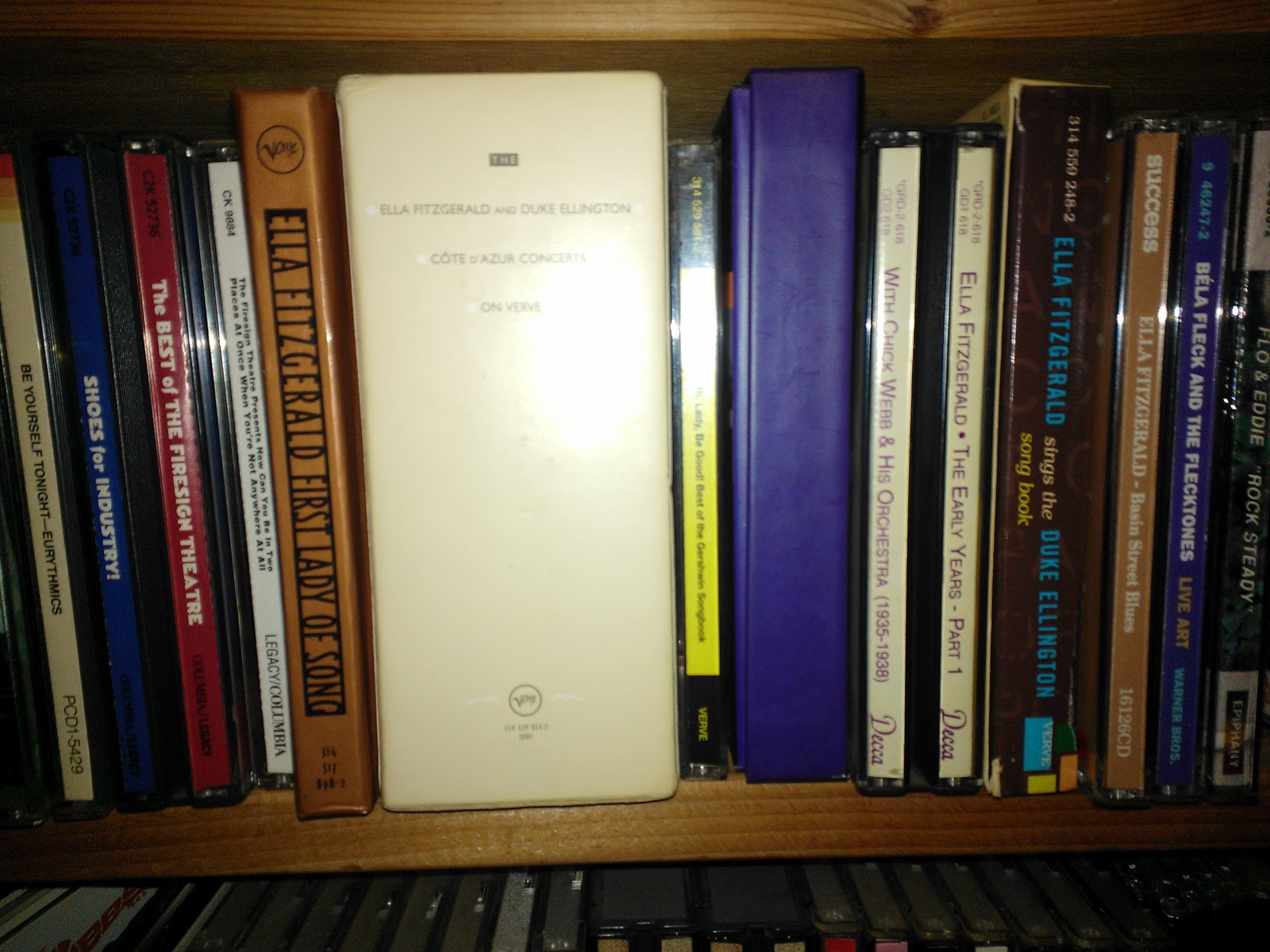
My meager Ella Fitzgerald collection, but I have the best stuff

With her mother, Fitzgerald moved to Yonkers, New York.
They lived there with her mother’s boyfriend, Joseph De Sailva. The
family grew in 1923 with the arrival of Fitzgerald’s half-sister
Frances. Struggling financially, the young Fitzgerald helped her family
out by working as a messenger “running numbers” and acting as a lookout
for a brothel. Her first career aspiration was to become a dancer.

After
her mother’s death in 1932, Fitzgerald ended up moving in with an aunt.
She started skipping school. Fitzgerald was then sent to a special
reform school but didn’t stay there long. By 1934, Ella was trying to
make it on her own and living on the streets. Still harboring dreams of
becoming an entertainer, she entered an amateur contest at Harlem’s
Apollo Theater. She sang the Hoagy Carmichael
tune “Judy” as well as “The Object of My Affection,” wowing the
audience. Fitzgerald went on to win the contest’s $25 first place prize.

That
unexpected performance at the Apollo helped set Fitzgerald’s career in
motion. She soon met bandleader and drummer Chick Webb and eventually
joined his group as a singer. Fitzgerald recorded “Love and Kisses” with
Webb in 1935 and found herself playing regularly at one of Harlem’s
hottest clubs, the Savoy. Fitzgerald also put out her first No. 1 hit,
1938’s “A-Tisket, A-Tasket,” which she co-wrote. Later that year Ella
recorded her second hit, “I Found My Yellow Basket.”

When Chick Webb died in 1939, Ella Fitzgerald took over the band, renaming it Ella and Her Famous Orchestra. In 1942 she went solo staying with Decca Records, which had released the Chick Webb band recordings. The WikiWackyWoo fills in the next chapter:

With Decca’s Milt Gabler as her manager, Fitzgerald began working regularly for the jazz impresario Norman Granz and appeared regularly in his Jazz at the Philharmonic
(JATP) concerts. Her relationship with Granz was further cemented when
he became her manager, although it would be nearly a decade before he
could record her on one of his many record labels.

With the demise of the Swing era and the decline of the great touring big bands, a major change in jazz music occurred. The advent of bebop led to new developments in Fitzgerald’s vocal style, influenced by her work with Dizzy Gillespie‘s big band. It was in this period that Fitzgerald started including scat singing
as a major part of her performance repertoire. While singing with
Gillespie, Fitzgerald recalled, “I just tried to do [with my voice] what
I heard the horns in the band doing.”[14]


Her 1945 scat recording of “Flying Home” arranged by Vic Schoen would later be described by The New York Times
as “one of the most influential vocal jazz records of the
decade….Where other singers, most notably Louis Armstrong, had tried
similar improvisation, no one before Miss Fitzgerald employed the
technique with such dazzling inventiveness.”[6] Her bebop recording of “Oh, Lady Be Good!” (1947) was similarly popular and increased her reputation as one of the leading jazz vocalists.[24]

It was during this latter period of Fitzgerald’s career that she entered the pantheon of musical superstars to become the First Lady of Song.

I was lucky enough to see Ella Fitzgerald at Toronto’s Imperial Room.  I thought it would be her last tour (but I believe she did one more after this) and I thought if I didn’t see her then, I might never have the chance again.

It was my first time in the Imperial Room, even though it was not my first time wearing a tie, required at the Imperial Room. It was also very expensive. It cost $75.00 per person and, of course, I took a date. That was a pretty penny for me back then, but I could console myself that it came with dinner. The Imperial Room was a supper club.

The mediocre meal came and went and now it was time for Ella Fitzgerald. The orchestra started it’s vamp, someone introduced her, and v e r y  , v e r y , v e r y  s l o w l y Ella Fitzgerald shuffled onto the stage with an anonymous attendant on her arm.
All I could see was my $150 going down the drain in the interminable time it took her to get to center stage where the microphone stood. 
Yet, the minute she started singing, all those years fell away. While I had never seen Ella Fitzgerald in her prime, and only had recordings and movies to rely upon, I was taken all the way back as she covered all the highlights of her career, joked with the audience, and giggled like a little girl.

It was one of the most memorable musical moments of my entire life!!!

The Wiki also details her last years:

In 1985, Fitzgerald was hospitalized briefly for respiratory problems,[45] in 1986 for congestive heart failure,[46] and in 1990 for exhaustion.[47]
In March 1990 she appeared at the Royal Albert Hall in London, England
with the Count Basie Orchestra for the launch of Jazz FM, plus a gala
dinner at the Grosvenor House Hotel at which she performed.[48] In 1993, she had to have both of her legs amputated below the knee due to the effects of diabetes.[49] Her eyesight was affected as well.[6]

In 1996, tired of being in the hospital, she wished to spend her last
days at home. Confined to a wheelchair, she spent her final days in her
backyard of her Beverly Hills mansion on Whittier, with her son Ray and
12-year-old granddaughter, Alice. “I just want to smell the air, listen
to the birds and hear Alice laugh,” she reportedly said. On her last
day, she was wheeled outside one last time, and sat there for about an
hour. When she was taken back in, she looked up with a soft smile on her
face and said, “I’m ready to go now.” She died in her home on June 15,
1996 at the age of 79.[6] A few hours after her death, the Playboy Jazz Festival was launched at the Hollywood Bowl. In tribute, the marquee read: “Ella We Will Miss You.”[50] Her funeral was private,[50] and she was buried at Inglewood Park Cemetery in Los Angeles.

As always it’s all in the grooves. Here are some of my favourite Ella Fitzgerald recordings out of the hundreds that she has made.


Richard Berry ► Monday Musical Appreciation

Further Reading:

A Song So Great
They Named It Twice

When the final history of Garage Rock is written, today’s date will be remembered as an important milestone. On this day in 1935 the great Richard Berry was born. Twenty years later Berry would write Louie Louie, one of the most influential and recorded songs in Rock and Roll history.

Berry was born in Louisiana, but moved to L.A. with his family when he was a baby. From all reports he had a difficult childhood; having injured his hip, he was forced to use crutches until he was six. However, he picked up his love of music at a camp for handicapped kids, where he learned how to play the ukulele.

He learned his vocal chops practicing in the hallways of Jefferson High School. Soon he was “singing and playing in local doo-wop groups, recording with a number of them including The Penguins, The Cadets
and the Chimes, the Crowns, the Five Hearts, the Hunters, the Rams, the
Whips, and the Dreamers, an otherwise all-female quartet from Fremont High.[5] He then joined The Flairs (who also recorded as the Debonaires and the Flamingoes) in 1953
,” as the Wiki tells us.

After leaving The Flairs Berry hooked up with Rick Rillera and the Rhythm Rockers, described as a Latin & R&B band. That’s when he got the notion to write Louis Louis. As the Wiki explains:

Richard Berry
was inspired to write the song in 1955 after listening to and
performing the song “El Loco Cha Cha” with Ricky Rillera and the Rhythm
Rockers. The tune was written originally as “Amarren Al Loco” (“Tie up
the crazy guy”) by Cuban bandleader Rosendo Ruiz Jr. – also known as
Rosendo Ruiz Quevedo – but became best known in the “El Loco Cha Cha”
arrangement by René Touzet which included a rhythmic ten-note “1-2-3 1–2 1-2-3 1–2” riff.[3] 

Touzet performed the tune regularly in Los Angeles clubs in the
1950s. In Berry’s mind, the words “Louie Louie” superimposed themselves
over the bass riff. Lyrically, the first person perspective of the song was influenced by “One for My Baby (And One More for the Road)“, which is sung from the perspective of a customer talking to a bartender (Berry’s bartender’s name is Louie).[4] Berry cited Chuck Berry‘s “Havana Moon” and his exposure to Latin American music for the song’s speech pattern and references to Jamaica.[5]

Crank it up and D A N C E ! ! !

Louie Louie might have remained in obscurity as the B-side to “You Are My Sunshine” by Richard Berry and the Pharaohs, on Flip Records, had it not been discovered by Tacoma singer “Rockin’ Robin Roberts” who recorded his cover version in 1960, using his band The Wailers [no relation], aka the Fabulous Wailers. It includes the ad lib “Let’s give it to ’em, RIGHT NOW!!” and, while it was a local hit, it sank without a trace when re-released for the national market.

In 1963 a Portland, Oregon band named The Kingsmen decided to make it their second single, after “Peter Gunn Rock.” The tune was arranged by bandmember Jack Ely. Again, Wiki knows all:

The Kingsmen’s lead singer Jack Ely
based his version on the recording by Rockin’ Robin Roberts with the
Fabulous Wailers, unintentionally introducing a change in the rhythm as
he did. “I showed the others how to play it with a 1–2–3, 1–2, 1–2–3
beat instead of the 1–2–3–4, 1–2, 1–2–3–4 beat that is on the (Wailers)
record”, recalled Ely. The night before their recording session, the
band played a 90-minute version of the song during a gig at a local teen
club.

[…]The Kingsmen transformed Berry’s easy-going ballad into a raucous romp,
complete with a twangy guitar, occasional background chatter, and nearly
unintelligible lyrics by Ely.[18] A guitar break is triggered by the shout, “Okay, let’s give it to ’em right now!”, which first appeared in the Wailers version,[19]
as did the entire guitar break (although, in the Wailers version, a few
notes differ, and the entire band played the break). Critic Dave Marsh
suggests it is this moment that gives the recording greatness: “[Ely]
went for it so avidly you’d have thought he’d spotted the jugular of a
lifelong enemy, so crudely that, at that instant, Ely sounds like Donald
Duck on helium. And it’s that faintly ridiculous air that makes the
Kingsmen’s record the classic that it is, especially since it’s followed
by a guitar solo that’s just as wacky.”[20]

The Kingsmen’s cover of Louie Louie probably would have been a hit in any case, but the persistent, and widely believed, rumours that the lyrics were dirty probably didn’t hurt. Even the FBI was fooled, launching an expensive investigation into The Kingmen, the record company, and the radio stations that played it. I tell that story in A Song So Great They Named It Twice, which was based on my reading of Dave Marsh’s wonderful book with the unwieldy title: Louie Louie; The History and Mythology of the World’s Most Famous Rock ‘n Roll Song; Including the Full Details of Its Torture and Persecution at the Hands of the Kingsmen, J. Edgar Hoover’s FBI.

Incidentally, despite there being THOUSANDS of cover versions of his tune, Berry didn’t make a penny off of them. He sold the rights to Louie Louie in 1959 for $750 to pay for his wedding. Luckily, he eventually did start to realize a fairly good chuck of change later:

In the mid eighties Berry was living on welfare at his mother’s house in South Central L.A.. Drinks company California Cooler wanted to use “Louie Louie” in a commercial,
but discovered they needed Berry’s signature to use it. They asked the
Artists’ Rights society to locate him, and a lawyer visited Berry. The
lawyer mentioned the possibility of Berry taking action to gain the
rights to his song. The publishers settled out of court, making Berry a
millionaire.[8]

Garage Bands around the world celebrate today as International Louie Louis Day.

Okay, let’s give it to ’em 12
times right now! Me gotta go!


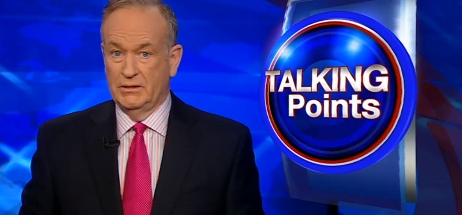
The Annotated Bill O’Reilly Talking Point Memo #3

Welcome to the 3rd Annotated Bill O’Reilly Talking Points Memo.  

Loofah Lad squeezes out a load like this one every single day and calls it a Talking Point Memo. It’s always interesting to read between the lines in order to figure out WTF he’s really saying when he’s pontificating. Freud could have had a field day with him. Since Freud is not here, I’ll give it a shot.

Today’s topic: O’Reilly called it “White Grievance and the Republican Party.” I call it, “In How Many New Ways Can I Defend My Good Buddy Donald J. Trump While Blowing Dog Whistles?” Let’s get right to it, shall we?

All the polls say the same thing: Donald Trump’s rise is being fueled
largely by white men who are angry with both political parties.

Not to mention all that free publicity the media has given him, especially on Fox “News” with all the softball interviews he gets there. Like on your show, f’rinstance Bill O. I can’t wait to see how you WHITEwash all of this on behalf of your vanilla milkshake buddy. Go on. Entertain me.

At this point 47% of Republican women say they will not vote for Mr. Trump, according to a Wall Street Journal/NBC poll.

Which merely proves women are the smarter gender, but not all women.

So it is the guys who have catapulted the candidate to the top of the Republican primary pack.

According to the Washington Post, Donald Trump is favored by 50% of
Republican voters who make less than $50,000 a year, most of them men.

Also, Mr. Trump is supported by just 32% of Republicans who have
college degrees, according to polling from 20 Republican primary states.

So you can see that Trump’s support is largely coming from working-class white men who feel aggrieved.

I tend to think of them as working-class White men who have been brainwashed into thinking they’re aggrieved. I look at them as soft racists — if not actually hardcore racists — who see equality as a zero sum game: If a group of folks are having their Civil Rights respected, these fools somehow think something is being taken away from them.

Now we’ve seen this before.  The black grievance industry is a powerful presence in America.

Wait!!! What???  Did you just change the topic to create a false equivalency?

That group sells the notion that most problems in the
African-American precincts are caused by white people and historical
oppression.

OH, MY!!!

You actually did change the topic to create a false equivalency. And then you blew your dog whistle. Let’s unpack your White Privilege, shall we Mr. Falafel? Because only a White man who doesn’t recognize his White Privilege would allow such manure to escape from his lips.

Are you saying there was no racism in the country? Or, are you saying that racism is over?

I’m so glad we’re living in a post-racial society. FINALLY!!! /sarcasm

Listen, Loofah Lad: Even if one were to buy your bullshit argument that there are are no legitimate grievances in “African-American precincts” to be attributed to “White people and historical oppression,” can you not see how that “historic oppression” has continued to create an uneven playing field when it comes to wealth creation and inheritances, not to mention the quality of neighbourhoods that each group tend to live within?

While the media gives that view a lot of attention, most African-Americans reject the propaganda.

And, you’ll prove that, right?

A recent study by the Kaiser Family Foundation says that 61% of
American blacks believe the breakup of the African-American family is a
major reason for the economic deprivation and social problems in the
black community.

Wait just a gosh darn minute. You do realize that both can be true at the same time, doncha?

Just because 61% of Black folk “believe the breakup of the African-American family is a major reason for the economic deprivations and social problems in the Black community” (and, I’ll assume your number is correct despite the many fibs you’ve told over the years), doesn’t mean that Black folk don’t also recognize, and fully understand, the “historic oppression” that got them there.

One fact does not negate the other. Unless you’re just blowing another dog whistle in which facts are manipulated to create a false narrative.

Oh, wait!

I thought this was going to be about your good friend Trump’s aggrieved constituency: Poor, uneducated, racist voters. Sorry I interrupted.

On the white side the issue is similar.

Here we go. Back on topic. Thank you.

Many white Americans believe that illegal immigration hurts their job
prospects and are angered by changing neighborhoods and social
patterns.

And, there’s your false equivalency in a nut shell, asshole.

You’ve just alluded to the fact that Black folk have no right to feel aggrieved because they only have themselves to blame — and they even admit it — but White folk are legitimately spooked by “changing neighborhoods [sic] and social patterns”. In your false equivalency you’re not even giving equal weight to both sides in your false argument. You see nothing wrong with that as long as it helps Trump. Just another reason you’re a hack, as I correctly called you in The Annotated Bill O’Reilly Talking Point Memo #2.

Their refrain is often, I want my country back.

Back to when Black folk knew their place, perhaps?

These voters are tired of seeing welfare doled out to people who are not motivated to succeed.

How many dog whistles you got?

They are angry that terrorists are not being contained.

Doncha mean radical Islamist terrorists? And, what does “contained” even mean in such an asymmetrical war?

Oh, and, Muslim dog whistle.

They see the Republican Party as largely cowardly in the face of political correctness.

I see the people who reject political correctness as saying, “Rude as I wanna be,” just like the meme to the right I tricked up back in August.

Incidentally, I love how you’re using the word “they,” but you’re really not only talking about yourself, but using this Talking Point Memo to excuse the worst aspects of Trump’s campaign. Like weaving in “political correctness”.

Remember when your friend Trump said he had no time to be politically correct? The Anti-PC Police Squad™ has long been a fixture of the Fox “News” Channel, as you must know.

Never mind. You were saying. Any more reasons why White folk are the real victims and only your pal Donald Trump can save us?

The white grievance crew also believes they are being oppressed economically and that nobody is looking out for them.

But, you’re looking out for us, aren’t you Mr. Falafel? You’ll tell us what to believe and who to believe, won’t you?

Enter Donald Trump, who vividly reflects the anger, who has criticized his own party for being weak.

Now both the black and white grievance movements have some legitimate points.

Wait! That’s not what you said above. You were dismissive of the Black grievance industry.

Anyway, do go on. My eyes can’t roll any farther away than they have already. How are Blacks folks’ grievances legitimate? This should be good.

There is no question that in poor black neighborhoods schools are generally deficient because the property tax base is low.

So poor black children are not being educated as well as affluent children.

That’s true.

Yes, it’s true. And, why is that, you obtuse piece of crap?

Because of systemic and ongoing racism!!!

U.S. cities look the way they do — and the property taxes are such — because of White Flight, redlining, just two aspects of the “historic oppression” that you blithely dismissed out of hand as of no consequence.

You also seem to feel that systemic racism has been eradicated, when it clearly has not been. Otherwise, poor Black children would be as educated as poor White children, never mind any stupid false equivalency with affluent White children.

On the white side, here’s a simple example: The Republican Party did
not get behind Kate’s Law, which would have harshly punished illegal
alien felons who defy deportation.

WAIT!!!

How did we get from that to one of your pet projects, not to mention one of your favourite Muslim dog whistles?

It doesn’t matter because you just — once again — pointed out your own racism. Answer me this, Sherlock, how is this strictly a White issue? If it’s as important as you say it is, shouldn’t it cross all racial lines? 

While GOP senators like Grassley, McCain and Cruz did actively try to
get Kate’s Law passed, the Senate Majority Leader Mitch McConnell did
not.

And in general Republican politicians did not raise the flag on this issue.

I mean, when you control both houses of Congress and you cannot get Kate’s Law passed, there is a serious problem.

Or, maybe it’s just a stupid law that you are championing. But, again, you’re just playing defense for your BFF Trump. The funniest part is that you actually believe you are in the No Spin Zone. My eyes are spinning from where you’ve taken this Talking Points Memo.

Again, Donald Trump has tapped into that chaos.

Thank goodness we’re back on topic.

Going forward, Mr. Trump’s nomination is not a lock.

Thank goodness there are still smart people in this country who are banding together to stop this demagogue before it’s too late. First they came for the Mexicans . . .

He has made mistakes and will have to win over millions of Americans who do not believe he is qualified.

The majority of ‘Merkins don’t believe he’s qualified and if he somehow manages to snag the GOP nomination, which is starting to look less and less likely, he will be destroyed in the General Election. And, the GOP will be on the endangered species list, especially if the Republican Convention becomes a brokered one. [Pass the popcorn.]

If you believe the polls, Mr. Trump is in for a rough day tomorrow in Wisconsin.

Let’s hope so.

That being said, the issue of white grievance is not going away and Trump will maintain a loyal level of support.

Among the poor, uneducated, xenophobic racists that want to make ‘Merka great again. Everyone else, as you have already made the case above, are fleeing from this sinking ship.

Many of his supporters are furious, and if Mr. Trump does not get the
nomination, the stay-home vote next November is likely to be
substantial.

Pass the popcorn.

And that’s the memo. [Transcript provided by Bill O’Reilly.]

And that’s my answer, ‘cept:

Don’t you get winded blowing so many dog whistles, Loofah Lad? After all, you’re not a young man anymore. But, you’re still an aggrieved racist White man.

The Beatles Conquer The U.S. Charts ► Monday Musical Appreciation

Further reading at Not Now Silly:

The Beatles’ Last Concert

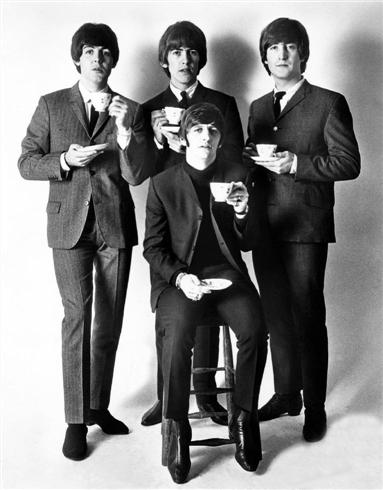
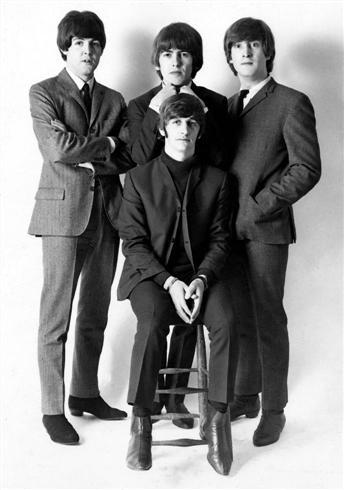
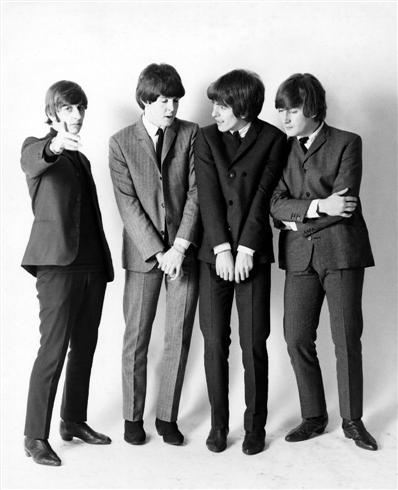
On this day in 1964 The Beatles had the top 5 tunes on the ‘Merkin Billboard charts, an amazing feat for a band that was barely known on this continent just a few months earlier. Those songs are:

5). Please Please Me
4). I Want To Hold Your Hand
3). She Loves You
2). Twist And Shout
1). Can’t Buy Me Love

Let’s take a quick look at all of these songs:

Please Please Me

“Please Please Me” was not only a song title, but also the name of The Beatles’ first LP in the UK. It was recorded and released in January of 1963 to capitalize on the success of this song, which had burned up the British charts. There were 14 tunes on the “Please Please Me” album, and eight of them were written by The Beatles, including this one. It was also the second single ever released by The Beatles following “Love Me Do.” According to the WikiWackyWoo:

“Please Please Me” has a diverse history. George Martin has stated
that the original version of this song was “rather dreary”, was too slow
and consequently had little prospect of being the big hit the band were
looking for. Martin said, “I was still thinking that we should release
their [earlier] recording of “How Do You Do It?“”, a previously taped Mitch Murray
composition that Martin insisted the Beatles record which he had
seriously considered as an alternative debut single instead of “Love Me
Do”. The group replied that they were only interested in recording their
own material.[7]
McCartney said: “It was symptomatic of our group that we turned down
“How Do You Do It?”. Ringo Starr commented: “I remember us all being
ready to stand up for the principle of, ‘We have written these songs and
we want to do them'”. George Martin was ultimately sympathetic to their
appeals, but said later: “[I] would still have issued “How Do You Do
It?” had they not persuaded me to listen to another version of “Please
Please Me”.[11]

Lennon first conceived “Please Please Me” as a bluesy, slow tempo
song. Lennon recalled: “I remember the day I wrote it, I heard Roy Orbison doing “Only the Lonely“, or something. And I was also always intrigued by the words to a Bing Crosby
song that went, ‘Please lend a little ear to my pleas’. The double use
of the word ‘please’. So it was a combination of Roy Orbison and Bing
Crosby”.[7] Originally it was vocally sparse, did not contain any harmonies or responses, nor did it have the scaled harmonica intro.

On the list of the 500 Greatest Songs of All Time, published by Rolling Stone, “Please Please Me” clocks in as #184.

I Want To Hold Your Hand

This tune was released at the end of November of 1963 and — had it not been for “She Loves You” — would have gone right to #1 on the British charts. It had to settle for the #2 spot on its release date. According to the Wiki:

It was also the group’s first American number one, entering the Billboard Hot 100 chart on 13 January 1964 at number forty-five and starting the British invasion
of the American music industry. By 1 February it held the number-one
spot, and stayed there for seven weeks before being replaced by “She
Loves You”, a reverse scenario of what had occurred in Britain. It
remained on the US charts for a total of fifteen weeks.[6] “I Want to Hold Your Hand” became the Beatles’ best-selling single worldwide.[7] In 2013, Billboard magazine named it the 44th biggest hit of “all-time” on the Billboard Hot 100 charts.[8]

This was The Beatles’ first tune to be recorded on 4-track and it took 17 takes to get a version they were happy with.
She Loves You
“She Loves You” was written by John Lennon and Paul McCartney while they were touring England with Roy Orbison and Gerry and the Pacemakers. They started writing the song on the tour bus, as the Wiki tells us:

In 2000, McCartney said the initial idea for the song began with Bobby Rydell‘s hit “Forget Him” with its call and response pattern,
and that “as often happens, you think of one song when you write
another … I’d planned an ‘answering song’ where a couple of us would
sing ‘she loves you’ and the other ones would answer ‘yeah yeah’. We
decided that was a crummy idea but at least we then had the idea of a
song called ‘She Loves You’. So we sat in the hotel bedroom for a few
hours and wrote it—John and I, sitting on twin beds with guitars.” It
was completed the following day at McCartney’s family home in Forthlin
Road, Liverpool.[4]

On that same Rolling Stone list of the 500 Greatest Songs of All Time, “She Loves You” is ranked at #64 and is the best selling Beatles’ single in history.
Twist And Shout

This is the only song on this list not written by Lennon-McCartney. The Wiki fills in the rest of the story:
“Twist and Shout” is a 1961 song written by Phil Medley and Bert Berns
(later credited as “Bert Russell”). The song was originally recorded by
the Top Notes. It first became a chart hit as a cover single by the Isley Brothers in 1962. The song has since been covered by several artists, including the Beatles on their first album Please Please Me (1963), as well as The Tremeloes in 1962 and The Who in 1970 and 1984.
This rollicking rocker was recorded at the famous recording session of February 11, 1963, during which The Beatles recorded 10 complete tunes in 13 hours. They left it as the last song to be recorded as they knew it would tear up John’s throat. They were right. The take we hear is the first one. They tried for a second, but John had no voice left.
Can’t Buy Me Love

This tune was recorded partially in Paris and then finished at the famed Abbey Road studios. Once again, we go to the WikiWackyWoo:

“Can’t Buy Me Love” was recorded on 29 January 1964 at EMI‘s Pathe Marconi Studios in Paris, France,[10] where the Beatles were performing 18 days of concerts at the Olympia Theatre. At this time, EMI’s West Germany branch, Odeon, insisted that the Beatles would not sell records in any significant numbers in Germany unless they were actually sung in the German language[11] and the Beatles reluctantly agreed to re-record the vocals to “She Loves You” and “I Want to Hold Your Hand
prior to them being released in Germany. George Martin travelled to
Paris with a newly mastered rhythm track for what was to be “Komm, Gib Mir Deine Hand” (“Come, Give Me your Hand”/”I Want to Hold your Hand”). “Sie Liebt Dich” (“She Loves You”) required the Beatles to record a new rhythm track as the original two-track recording had been scrapped.[10]
EMI sent a translator to be present for this recording session which
had been hurriedly arranged to tie in with the Beatles’ Paris
commitments. This was accomplished well within the allotted studio time
allowing the Beatles an opportunity to record the backing track, with a
guide vocal, to the recently composed “Can’t Buy Me Love”.[11][10]
At this stage the song included background vocal harmonies. But after
listening to the first take, the band concluded that the song did not
need them. Therefore, “Can’t Buy Me Love” became the first single the
Beatles released without their characteristic background harmonies.
McCartney’s final vocal was overdubbed at EMI Studios, Abbey Road,
London, on 25 February.[6] Also re-recorded on this day at EMI Studios was George Harrison‘s
modified guitar solo, although his original solo can still just be
heard in the background. Harrison said: “What happened was, we recorded
first in Paris and re-recorded in England. Obviously they’d tried to
overdub it, but in those days they only had two tracks, so you can hear
the version we put on in London, and in the background you can hear a
quieter one.”[12] Helen Shapiro, a friend of the Beatles and present at this overdub session, says that Ringo Starr also added extra cymbals “over the top” and that “apparently this was something he did quite often on their records”[13] (Geoff Emerick, tape operator and later the Beatles’ recording engineer, credits Norman Smith, the Beatles’ then-current engineer, with this overdub).[14]
“Can’t Buy Me Love” is also the only English-language Beatles track
that the Beatles themselves recorded in a studio outside the UK,
although the instrumental portion of the Beatles’ B-side “The Inner Light” was recorded in India by Indian session musicians.

This song was written in Paris just prior to the sessions and made #295 on the Rolling Stone 500 Greatest Hits of All Time list.

When it hit #1 in the United States it set several records, no pun intended:

• Until Billboard began using SoundScan for their charts in 1991, it had the biggest jump to number one: (number twenty-seven to number one; no other single had ever done this).

• It gave the Beatles three consecutive number-one songs (“I Want to Hold Your Hand” was replaced at number one by “She Loves You” which was in turn replaced by “Can’t Buy Me Love”). The three songs spent a combined total of 14 consecutive weeks at No. 1. This is the only time an artist had three number ones in a row. The best prior was Elvis, who had two consecutive number ones with Don’t Be Cruel and Love Me Tender.[16]

• When “Can’t Buy Me Love” went to number one (4 April 1964), the entire top five of the Hot 100 was by the Beatles, the next positions being filled by “Twist and Shout“, “She Loves You“, “I Want to Hold Your Hand” and “Please Please Me,” respectively. No other act has held the top five spots simultaneously.

• During its second week at number one (11 April 1964), the Beatles had fourteen songs on the Hot 100 at the same time.

    This is just one of the reasons why The Beatles were the greatest band of the Rock era.

    (Sittin’ On) The Dock of the Bay ► Monday Music Appreciation

    On this day in 1968 “(Sittin’ On) The Dock of the Bay” rose to the top of the charts, making Otis Redding the first recording artist to have a posthumous #1 hit. Too bad he was no longer around to enjoy it.

    Redding died on December 9, 1967, when his private airplane crashed as he and his band flew from Cleveland to their next gig in Madison, Wisconsin. According to the WikiWackyWoo, there was only one survivor:

    Although the weather was poor, with heavy rain and fog, and despite warnings, the plane took off.[60] Four miles (6.4 km) from their destination at Truax Field in Madison, the pilot radioed for permission to land. Shortly thereafter, the plane crashed into Lake Monona. Bar-Kays member Ben Cauley, the accident’s sole survivor,[51] was sleeping shortly before the accident. He woke just before impact to see bandmate Phalon Jones
    look out a window and exclaim, “Oh, no!” Cauley said the last thing he
    remembered before the crash was unbuckling his seat belt. He then found
    himself in frigid water, grasping a seat cushion to keep afloat.[53] A non-swimmer, he was unable to rescue the others.[61] The cause of the crash was never determined.[62] James Brown claimed in his autobiography The Godfather of Soul that he had warned Redding not to fly in the plane.[63]

    “(Sittin’ on) The Dock of the Bay” was released in January, just weeks after the plane crash. It was quickly picked up by radio stations and took almost no time to rise to the top of the charts. However, it didn’t get there just due to sentiment over Redding’s untimely death. The song, co-written with Stax Records‘ guitarist — and the song’s producer — Steve Cropper, is the very definition of a great tune.

    “(Sittin’ On) The Dock of the Bay” has been a hit with ears ever since:

    In 1999, BMI named the song as the sixth-most performed song of the 20th century, with about six million performances.[25] Rolling Stone ranked The Dock of the Bay number 161 on its 500 Greatest Albums of All Time, the third of five Redding albums on the list. “(Sittin’ On) The Dock of the Bay” was ranked 28th on Rolling Stone‘s 500 Greatest Songs of All Time, the second-highest of four Redding songs on the list, after “Respect“.[26]

    Musicians, who are paid to know good songs, agree:

    “The Dock of the Bay” has been immensely popular, even after its stay at the top of the charts. The song has been covered by many artists, from Redding’s peers, like Glen Campbell, Cher, Peggy Lee, Bob Dylan, Percy Sledge, Dee Clark, and Sam & Dave, to artists in various genres, including Jimmy Velvit (whose cover version was included on his 2001 Grammy-nominated album Sun Sea & Sand), Widespread Panic (who opened their New Year’s Eve 2005 concert with the song), Waylon Jennings and Willie Nelson (whose duet peaked at number 13 on the U.S. country singles chart), Kenny Rankin, Dennis Brown, Michel Pagliaro, Jacob Miller, Pearl Jam, the Format, T. Rex (as the B-side of “Dreamy Lady”, released in 1975), Brent Smith of Shinedown (during an acoustic set in 2008 and with Zach Myers in a 2014 EP), Justin Nozuka (2007), Sara Bareilles (2008), and Garth Brooks (for the 2013 Blue-Eyed Soul album in the Blame It All on My Roots: Five Decades of Influences compilation). Playing for Change recorded a version featuring Grandpa Elliott, Roger Ridley, and other performers.

    The proof, as always, is in the grooves:


    Bill O’Reilly and Flavor Flav ► Throwback Thursday

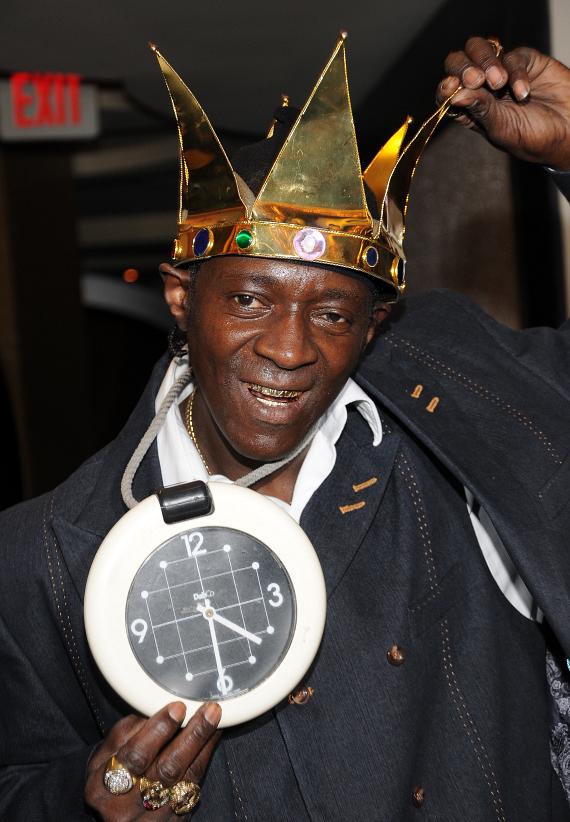
    Happy birthday to Flavor Flav, born and named William Jonathan Drayton, Jr., 57 years ago today.

    There’s a strange nexus between Flavor Flav and the Fox “News” Channel which requires further explanation.

    When I first started writing for NewsHounds — under the nom de blog Aunty Em Ericann — one of the bizarre rumours I heard concerned Flavor Flav and Bill O’Reilly, who would prefer to DO IT LIVE!!!

    The crazy rumour was this: That before Maureen E. McPhilmy married Bill O’Reilly — aka Loofah Lad — she once dated Flavor Flav. I know! Right?

    This was the kind of job the Not Now Silly Newsroom was made for and I set out to get this wacky story confirmed or denied.

    It took a while, but I finally got Flavor Flav ON THE RECORD concerning this rumour. He denied wholeheartedly that he ever dated the ex-wife of the Falafel King, but it certainly made him laugh. It made me laugh, too. Still does.

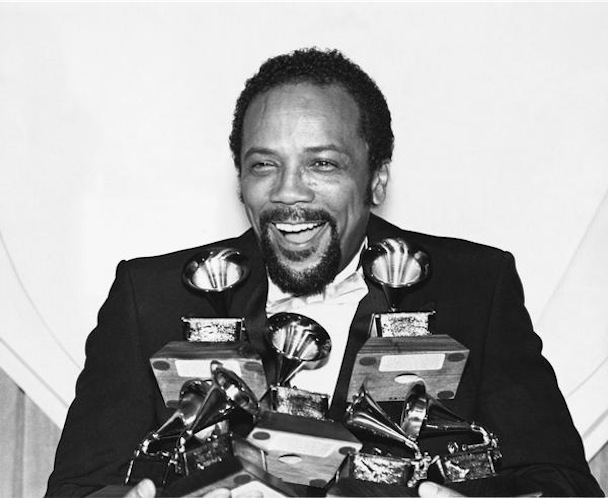
    Quincy Jones; A National Treasure ► Monday Musical Appreciation

    On this day in 1980, which just so happened to be his 47th birthday, Quincy Delight Jones is honoured with a star on the Hollywood Walk of Fame.

    Quincy Jones has been making music for more than 60 years. From hanging out with Ray Charles in Seattle before either of them were stars; to conducting and arranging for Frank Sinatra and the Count Basie Orchestra in the ’60s; to discovering and producing Lesley Gore; to his work with Michael Jackson, which broke all sales records; to We Are The World. There’s nothing Quincy Jones has not done.

    According to the WikiWackyWoo:

    In 1968, Jones and his songwriting partner Bob Russell became the first African Americans to be nominated for an Academy Award for Best Original Song, their “The Eyes of Love” for the Universal Pictures film Banning. That same year, Jones was the first African American to be nominated twice within the same year for an Academy Award for Best Original Score, as he was also nominated for his work on the film In Cold Blood
    (1967). In 1971, Jones was the first African American to be named as
    the musical director and conductor of the Academy Awards ceremony. In
    1995 he was the first African American to receive the Academy’s Jean Hersholt Humanitarian Award. He is tied with sound designer Willie D. Burton as the African American who has been nominated for the most Oscars; each has received seven nominations.

    So far Jones has scored 33 movies, starting with The Pawnbroker in 1964:

    Following the success of The Pawnbroker, Jones left Mercury Records and moved to Los Angeles. After composing the film scores for Mirage and The Slender Thread in 1965, he was in constant demand as a composer. His film credits over the next seven years included Walk, Don’t Run, The Deadly Affair (both 1966), Banning, In Cold Blood, In the Heat of the Night (all 1967), A Dandy in Aspic, For Love of Ivy, The Hell with Heroes, (all 1968), Mackenna’s Gold, The Italian Job, Bob & Carol & Ted & Alice, The Lost Man, Cactus Flower, John and Mary (all 1969), The Out-of-Towners, They Call Me Mister Tibbs! (both 1970), The Anderson Tapes, $ (both 1971), and The Hot Rock, The New Centurions and The Getaway (all 1972). In addition, he composed “The Streetbeater,” which became familiar as the theme music for the television sitcom Sanford and Son, starring close friend Redd Foxx; he also composed the themes for other TV shows, including Ironside, Banacek, The Bill Cosby Show, the opening episode of Roots, and the Goodson & Todman game show Now You See It.

    See? There’s nothing in the field of the music he has not done.

    However, to my mind, the greatest album Jones ever released was his Back On The Block CD.

    While the whole album is a MUST LISTEN, I’d like to single out two linked tracks. “Jazz Corner Of The World” starts with archival audio of famous Jazz greats talking about the importance of Charlie Parker, Bebop music, and the New York club Birdland. That’s followed by an intense Rap that introduces us — one by one — to all the famous musicians we will be hearing on the next tune. [NO SPOILERS.] We are taken inside the club Birdland just as Quincy Jones segues into a blazing cover of the song Birdland, first recorded by Weather Report and written by Joe Zawinul.

    I consider this to be the definitive version of Birdland, with apologies to Joe Zawinul. It never fails to give me goosebumps. All those people on the same track in furtherance of an amazing arrangement. Just listen and marvel:

    Jones’ career is far too long and varied to sum up in this little blog post. However, as always, the proof is in the music. Here are just some of the tunes you should know:


    The Very First Jazz Record ► Monday Musical Appreciation

    On this date 99 years ago the first Jass [sic] tune was made commercially available to the general public on Victor Records, 18255-A. 

    While bands had been playing the new Jass music for several years, the “Dixie Jass Band One Step” ushered in a new era in syncopated music by being an audio artifact that could be bought and traded. The instrumental was recorded by the Original Dixieland Jass Band, a 5-piece, integrated group out of New Orleans, the cradle of Jazz music. 

    There is no agreed upon entomology of the word Jazz. According to the Wiki:

    As with many words that began in slang, there is no definitive etymology for jazz. However, the similarity in meaning of the earliest jazz citations to jasm, a now-obsolete slang term meaning spirit, energy, vigor and dated to 1860 in the Historical Dictionary of American Slang, suggests that jasm should be considered the leading candidate for the source of jazz. A link between the two words is particularly supported by the Daily Californian‘s February 18, 1916, article, which used the spelling jaz-m, although the context and other articles in the same newspaper from this period show that jazz was intended.

    Scholars think Jasm derives from or is a variant of slang jism or gism, which the Historical Dictionary of American Slang dates to 1842 and defines as “spirit; energy; spunk.” Jism also means semen or sperm, the meaning that predominates today, making jism a taboo word.
    Deepening the nexus among these words is the fact that “spunk” is also a
    slang term for semen, and that “spunk”—like jism/jasm—also means
    spirit, energy, or courage (for example: “She showed a lot of spunk.”)
    In the 19th and early 20th centuries, however, jism was still used in polite contexts. Jism, or its variant jizz (which, however, is not attested in the Historical Dictionary of American Slang until 1941), has also been suggested as a direct source for jazz. A direct derivation from jism is phonologically unlikely. Jasm itself would be, according to this assumption, the intermediary form.

    That’s one story. Another comes from Greg’s Musings at Swing Review:

    The word Jazz has a veil of mystery around it. Ask anyone what Jazz is and they can tell you about the music and describe how it’s played or some of their favorite musicians but the actual origin of the word itself is a bit of a mystery. Some research has suggested that it traces to African roots in some native language of former slaves or even more evidence says it possibly is related to the French word jaser which means “to chatter.” Some historical evidence suggests that it could trace to slang terms for sexual functions (I’ll let you use your imagination as to what.) It is a fact that the term “Jazzing” was used in the past as a term to describe having sex but no one is sure if the term was used before the music came along or vice versa.

    The saxophone player Garvin Bushell gives his opinion on the mystery by describing his early life in Louisiana:

        “They said that the French had brought the perfume industry with them to New Orleans and the oil of jasmine was a popular ingredient locally. To add it to a perfume was called “jassing it up.” The strong scent was popular in the red light district, where a working girl might approach a prospective customer and say “Is jass on your mind tonight young fellow?” The term had become synonymous with erotic activity and came to be applied to the music as well.”

    It is safe to say that no one will ever know who first used the term as most every early jazz musician has a story about how they were the ones that created it. Jelly Roll Morton even claims he was the one who invented the music itself and everyone else stole it from him! The spelling is another mystery but there is historical evidence that in the early days it was “Jass” not Jazz which would lead one to believe the perfume theory. The fact that the first Jazz record ever recored was by a group that called themselves “The Original Dixieland Jass Band” is proof of that. The trumpeter for the Original Dixieland Jass band, Nick LaRocca talks about how the term was changed from Jass to Jazz saying:

        “…the term was changed because children and some adults could not resist the temptation to scratch the letter “J” from the posters.”

    However the name derived, or how it was originally spelled, Jazz caught the world’s attention. Starting in the early 1900s right up to today, Jazz is a force of nature. Here is the first Jazz record: