Category Archives: TeeVee

Rocky & Bullwinkle ► Saturday Morning Cartoons

The dirty little secret of The Rocky and Bullwinkle Show is that the animation was outsourced to Mexico.

Originally conceived as a cute little group of woodland animals that run a tee vee station [shades of SCTV?], by the time The Frostbite Falls Revue went on the air in 1959, it was called Rocky and His Friends. After the first 2 seasons it got the name The Bullwinkle Show. Then it became known as The Rocky and Bullwinkle Show and Friends.

Before it went on the air it needed a sponsor and cereal killer General Mills stepped up. It wanted the show to air in the afternoon to better target kids. Also, according to The Encyclopedia of Cartoon Superstars:

“In an effort to reduce costs, the advertising agency that had the General Mills account invested in an animation studio in Mexico,” recalled director Bill Hurtz. “Then they made a contract with Jay which agreed that we’d write the stories, direct them, design them, and assemble them, but that the animation was the backgrounds and inks would be done in Mexico… This was nothing that Jay was particularly fond of.”

Even though some of the Ward staff, including Hurtz, were periodically sent down to Mexico for quality control, problems arose. “We found out very quickly that we could not depend on Mexican studios to produce anything of quality,” remembered Bill Scott. “They were turning out the work very quickly and there were all kinds of mistakes and flaws and boo-boos… They would never check… Moustaches popped on and off Boris, Bullwinkle’s antlers would change, colors would change, costumes would disappear… By the time we finally saw it, it was on the air. It went directly from Mexico to airing… As a result, we tried to pull as much of the work as possible up North.” Reportedly, at one point to avoid customs problems, people would bring some of the completed episodes back across the border in their suitcases as home movies.

Whether that was why the writers bit the hand that fed them, but:

The second story that first season was “Box Top Robbery” which only lasted a dozen installments. The global economy is threatened by counterfeit cereal box tops. It was a satirical jab at General Mills and its cereals who were sponsoring the show.

One of the things kids loved about Rocky and Bullwinkle were the reoccurring gags that changed over time, so you were never sure what to expect. Such as:

The Rocky and Bullwinkle Show was about a lot more than a flying squirrel and dim-witted moose. There was also Fractured Fairy Tales:

Peabody’s Improbable History:

 Aesop and Son, which was so similar to Peabody’s Improbable History that it used the same opening theme music.

And, Dudley Do-Right of the Mounties:

But, it was Moose and Squirrel that held our interest.


Subversive Cartoons ► Saturday Morning Cartoons

Not every cartoon is safe for Saturday morning kiddie shows.  Here’s a terrific documentary called Cartoons Kick Ass; A History of Subversive Animation. Ironically this doc is NSFW.

It’s followed by one of my favourite subversive cartoons.

Sadly Part 3 seems unembedable,
but you can WATCH IT HERE.

https://www.gofundme.com/NotNowSilly

If you’ve liked anything you’ve read at the Not Now Silly Newsroom,  please consider donating to my Go Fund Me campaign to Support Investigative Journalism. My Freedom of Information requests from the City of Miami are beginning to add up, not to mention all the other costs of researching systemic racism and corruption in Coconut Grove.

The First Televised Murder ► Throwback Thursday

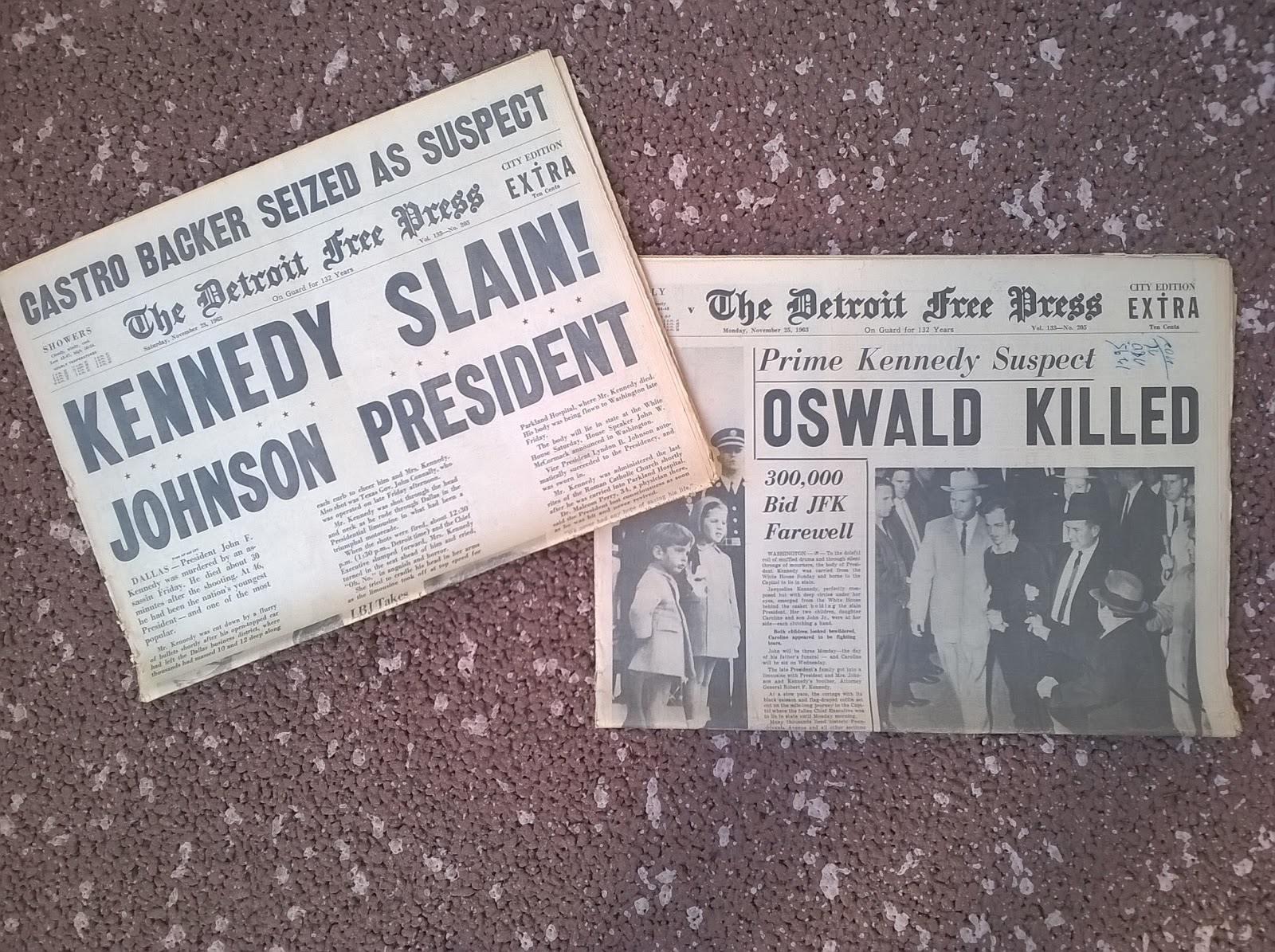
I found this newspaper in Pops’ stuff when I was sorting

I was just 11 years old in 1963 and already numb from the assassination of President John F. Kennedy.

It was the time in my life I was just becoming politically aware. Kennedy was a young, vibrant president who replaced Ike Eisenhower, who seemed like an old fuddy duddy in comparison.

I still didn’t know the difference between Democrat or Republican, or what political platforms were. However, there was one thing I knew: President Kennedy was revered by the Black community for having championed the Civil Rights Act in his speech from the Oval Office on June 11, 1963. This followed his sending out the National Guard to protect 2 Black students who had enrolled at the University of Alabama, but had been prevented from attending.

It was also during this period I started going out with the moving crews for my father’s store on 12th Street. [See: The Detroit Riots] This involved delivering furniture to the Black folk living in the 4-story walk-ups and duplexes in the area. One thing that always struck me was how many of these homes had small altars on mantles and tables. In these displays a combination of 3 people were represented: Jesus Christ, President Abraham Lincoln, and J.F.K.

This president seemed golden and his administration was later called Camelot by hagiographers, long before we learned of his personal peccadilloes and that he started the march into Vietnam that LBJ put on steroids.

The entire country seemed to be on hold. There was nothing else to do that Sunday morning, but sit in front of the television watching the wall-to-wall coverage of the Kennedy assassination.

I can remember it like it was yesterday. I was alone. I don’t know where my parents or sisters were, but I was glued to the tee vee. Every channel was showing the same thing. We were shown the commotion at the Dallas police HQ as they were about to transfer assassin Lee Harvey Oswald to a safer, more secure jail.

Just as Oswald was coming into camera view, Jack Ruby lunged forward and fired one shot into his stomach. Ironically, Oswald was rushed to the same hospital where President Kennedy was pronounced dead.

This is the channel I was watching:

It was the first live televised murder and it shocked me to my core. I have now seen the same footage thousands of time in the 53 years since. We all have. But not everyone was a witness to the event as it happened.

The Flintstones ► Saturday Morning Cartoons

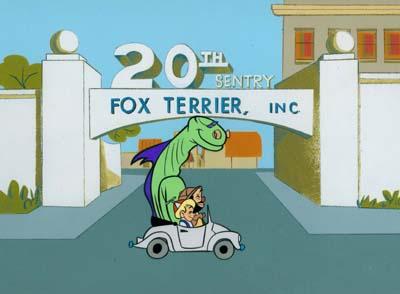
Strictly speaking the modern stone-age family was not a Saturday morning cartoon.

The Flintstones has the distiction of being the very first cartoon to run in prime time. It last 6 years. It moved to Saturday mornings thereafter in constant syndication and reruns. Yet, The Flintstones was never intended for children, as the WikiWackyWoo reveals:  

Despite the animation and fantasy setting, the series was initially aimed at adult audiences, which was reflected in the comedy writing, which, as noted, resembled the average primetime sitcoms of the era, with the usual family issues resolved with a laugh at the end of each episode, as well as the inclusion of a laugh track. Hanna and Barbera hired many writers from the world of live action, including two of Jackie Gleason’s writers, Herbert Finn and Sydney Zelinka, as well as relative newcomer Joanna Lee while still using traditional animation story men such as Warren Foster and Michael Maltese.

Here’s a Theme Song Sing-A-Long:

It’s interesting the show used some of Jackie Gleason’s writers. Again, I’m going to let the Wiki tell you all about it:

The show imitated and spoofed The Honeymooners, although the early voice characterization for Barney was that of Lou Costello.[22] William Hanna admitted that “At that time, The Honeymooners was the most popular show on the air, and for my bill, it was the funniest show on the air. The characters, I thought, were terrific. Now, that influenced greatly what we did with The FlintstonesThe Honeymooners was there, and we used that as a kind of basis for the concept.”[citation needed] However, Joseph Barbera disavowed these claims in a separate interview, stating that, “I don’t remember mentioning The Honeymooners when I sold the show. But if people want to compare The Flintstones to The Honeymooners, then great. It’s a total compliment. The Honeymooners was one of the greatest shows ever written.”[23] Jackie Gleason, creator of The Honeymooners, considered suing Hanna-Barbera Productions, but decided that he did not want to be known as “the guy who yanked Fred Flintstone off the air”.[24][25]

However, at 8 years old, none of that mattered to me. I just loved all the rock jokes and anachronisms, even if I didn’t know what that word meant back then.

Here’s another Sing-A-Long:

One surprise I had in adulthood was the cigarette commercials embedded in the shows. I hadn’t noticed them when I was a kid. It would be another 10 years (the beginning of 1971) before cigarette commercials were banned on television altogether.

The following edit includes the original theme song (which I also don’t remember) used for the first 2 seasons but changed to the familiar one above because it was the same tune as the Bugs Bunny “Overture, hit the lights” theme song.

Something else I didn’t learn until I was old enough for it to matter: The famed Mel Blanc voiced Barney Rubble. He also voiced (according to the Wiki): Bugs Bunny, Daffy Duck, Porky Pig, Tweety Bird, Sylvester the Cat, Yosemite Sam, Foghorn Leghorn, Marvin the Martian, Pepé Le Pew, Speedy Gonzales, Wile E. Coyote, Road Runner, the Tasmanian Devil, and many of the other characters from the Looney Tunes and Merrie Melodies theatrical cartoons during the golden age of American animation. He was, in fact, the voice for all of the major male Warner Bros. cartoon characters except for Elmer Fudd, whose voice was provided by radio actor Arthur Q. Bryan (although Blanc later voiced Fudd, as well, after Bryan’s death).[1]

Playing Trixie to his Norton was Bea Benadaret, as his wife Betty. These days you can see Bea Benaderet early Saturday (and Sunday) mornings on Antenna TV on the George Burns and Gracie Allen Show. However, I first became aware of her, and fell in love with her, as Kate Bradley, the owner of the Shady Rest Hotel in both Petticoat Junction and Green Acres. She also played Cousin Pearl Bodine on The Beverly Hillbillies, giving her the Corn Pone Hat Trick.

Enough analysis. Let’s just go to the game films:

Elmer, Bugs, Daffy, & Friends ► Saturday Morning Cartoons

Let’s turn our attention to the various antagonists in the Looney Tunes/Merrie Melody cartoons from by Warner Bros.

The Warner brothers were Harry, Albert, Sam and Jack, whose parents left a repressive regime in Poland before the turn of the last century.

First locating in Baltimore, then London, Ontario, Canada, before settling back in Baltimore. Then, a few years later, the family moved to Youngstown, Ohio. That’s where the brothers Warner first entered Show Business near the bottom rung of the ladder in the early 1900s.

Sam and Albert got their hands on a movie projector, paid $150 for prints of Life of an American Fireman and The Great Train Robbery, and took their show on the road. They started in the small towns of western Pennsylvania and eastern Ohio. These were mining towns starved for entertainment. As it turned out showing movies to rapt audiences was like printing cash. As the other brothers joined, it wasn’t long before they bought their first movie theater, and then another. Then they moved into film distribution, until they eventually branched out into producing movies at their own studio in Hollywood before the first World War.

By 1930 Warner Bros. was a powerhouse in the movie biz and decided to branch out into cartoons, by buying them from Leon Schlesinger, who got them from Harman and Ising Studios. The Looney Toons and Merrie Melodies cartoons became shorts for movie theaters playing between Warner Bros. movie double bills.

These cartoons eventually made it to Saturday morning tee vee, which was starved for content in the late ’50s and ’60s. That where those of my generation watched them endlessly.

Enough history. Here are some cartoons to Make ‘Merka Laugh Again, especially the last one with a wascally wabbit teaching a Donald Trump wannabe what’s what:

Popeye The Sailor ► Saturday Morning Cartoons

An early Thimble Theatre starring an early Popeye

Popeye the Sailor Man is, according to the Wiki, a “cartoon fictional character,” in case any of you were confused.

He began his fictional life in the comic strips, which were a very big thing in the early years of the last century. Elzie Crisler Segar was the cartoonist who midwifed Popeye, adding him to his Thimble Theatre strip in 1929, 10 years after he began drawing it for King Features Syndicate.

Right from the start the strip featured the adventures of Olive Oyl, her older and shorter brother Castor Oyl, and her fiancé Harold Hamgravy. Ten years into the strip Ham Gravy (his name got shortened) hired a new character named Popeye to captain his treasure hunting ship. Little did he know that Popeye would become so popular that he’d become a regular and would eventually push him aside in Olive’s heart.

However, it was not love at first sight.

Olive and Popeye actually hated each other when they first met (her first words to him were “Take your hooks offa me or I’ll lay ya in a scupper”); they fought bitterly—and hilariously—for weeks until finally realizing that they had feelings for each other.

Popeye didn’t become animated until 1933, when Max Fleischer obtained the rights to make the original cartoons for Paramount Pictures. In his cinematic debut (above), Popeye appeared under the rubric of a Betty Boop cartoon, which the Fleischers were already producing, the only time that would happen.
The WikiWackyWoo picks up the story:

In every Popeye cartoon, the sailor is invariably put into what seems like a hopeless situation, upon which (usually after a beating), a can of spinach which he apparently regularly carries with him falls out from inside his shirt. Popeye immediately pops the can open and gulps the entire contents of it into his mouth, or sometimes sucks in the spinach through his corncob pipe. Upon swallowing the spinach, Popeye’s physical strength immediately becomes superhuman, and he is easily able to save the day (and very often rescue Olive Oyl from a dire situation). It did not stop there, as spinach could also give Popeye the skills and powers he needed, as in The Man on the Flying Trapeze, where it gave him acrobatic skills. (When the antagonist is the Sea Hag, it is Olive who eats the spinach; Popeye can’t hit a lady.)

In 1941 Paramount took over control of Fleischer Studios and they fired Dave and Max Fleischer, renaming the company Famous Studios. The quality of the Popeye cartoons began going downhill until the ’60s, when 220 cartoons were produced exclusively for television. These are the worst of the lot.

In 1980 Robert Altman directed a Popeye live-action musical comedy starring Robin Williams as Popeye and Shelly Duvall as Olive Oyl, with songs written by Harry Nilsson, except this one, of course:

The movie bombed at the box office, but has become a cult classic. Robin Williams was not a fan. He said that if you play it backwards, there’s a plot.

“Some people say” Nilsson’s songs were the best part of the movie. In fact, Harry recorded each of the songs as demos to be given to the actors, so they could earn the tunes. Luckily for Nilsson fans, some of these demos have escaped from the recording studio. What’s impressive about these songs is how they do not need the actor’s voice to stand up on their own. Each tune embodies the character within the music and lyrics. Listen:

However, the classic Popeyes are the original Fleischer cartoons. There are 109 of them. Here are just 10 for your viewing pleasure.

Beany and Cecil ► Saturday Morning Cartoons

When I was growing up in the ’50s and ’60s every tee vee station — all 3 of ’em — played cartoons on Saturday mornings. The Not Now Silly Newsroom launches a new regular feature: Saturday Morning Cartoons.


True story: I got my love of punning from Beany and Cecil. I can remember the exact moment that switch was turned on: When they traveled to the No Bikini Atoll. Prior to that revelation, I missed many puns on the show. But, from that moment on I watched for them. Whenever I saw one, I’d think I was especially clever because I was probably the only one who got it.

Beany and Cecil was the first cartoon I can remember — other than Disney — where you knew the name of the cartoonist. It was in the opening theme, fer crise sake, and every kid at home sang along. You can, too:

Who was Bob Clampett? Born in 1913 near Hollywood, he demonstrated an early talent for entertaining. As the story goes on the official website:

At aged 12 years Bob Clampett saw the 1925 silent film “The Lost World.” As a boy full of imagination, sitting in the audience for that film was a life altering experience for Clampett.. Special effects supervisor Willis O’Brien brought alive the creatures with his stop motion wizardry. Wallace Beery cut a larger than life figure as Professor Challenger.

Puns like these were hidden all over Beany and Cecil

At the end of the film a brontosaurus jumps off of the London Bridge into the Thames River and as he swims away only his neck is visible from out of the water. Clampett immediately saw an interesting character in the action from that final scene.

Clampett came home and set about with his mother’s help to sew a sock puppet of this character. He then performed puppet shows in front of the neighborhood kids delighting them with the antics of his sea serpent character who bested the professor in the pith helmet.

For years after that Clampett frequently entertained with this sock puppet serpent character and in fact kept it nearby in a handy place. 

Eventually, in an early example of merchandising and marketing, toy departments all across the country were selling green Cecil the Sea serpent hand puppets.But I’m getting ahead of myself.

However, speaking of merchandising: While still a teenager he came close to being sued by the Disney company when he tried to mass produce a Mickey Mouse doll. Luckily he got to show it to Walt himself, who not only liked it, but helped Bob and his father set up on the studio lot to mass produce the doll.

Having always demonstrated a facility for drawing, Clampett dropped out of high school to go to work as an “inbetweener” for Harmon-Ising, which eventually became Warner Bros. Cartoons. However, he never lost his interest in puppetry. As his website tells it:

In 1935 Clampett attended the California Pacific International Exposition in San Diego.
 

At this show he saw a demonstration of television for the very first time. He ran to his car and pulled his sea serpent hand puppet out of the glove compartment. Clampett was able to test for the first time what a puppet might look like on live television and recognized the power of this brand new medium.

In 1937 while at Warner cartoon studio, Clampett built a puppet studio directly across the street. He worked there primarily on nights and weekends with his friend Al Kendig to develop 3D stop motion puppetry.

[…]

In the early 1940’s Clampett pitched his idea for filmed puppet shorts about a sea serpent and sea captain to Warner Cartoon studio head Leon Schlesinger. However, Schlesinger turned the project down by saying, “A shoemaker sticks to his last.” This was what Clampett later referred to as a critical moment in his career because Clampett was then able to retain the rights to his most important original 3D creation.

You can read more about how Bob Clampett continued to develop his television puppet show and how that eventually led him back to his original vocation of animation HERE. However, I’m as bored as a 5-year old waiting for the cartoons to start. Pass the popcorn.

https://www.gofundme.com/NotNowSilly

If you’ve liked anything you’ve read at the Not Now Silly Newsroom,  please consider donating to my Go Fund Me campaign to Support Investigative Journalism. My Freedom of Information requests from the City of Miami are beginning to add up, not to mention all the other costs of researching systemic racism and corruption in Coconut Grove.