Tag Archives: Racism

Unveiling the One Grove Mural – A Photo and Video Essay

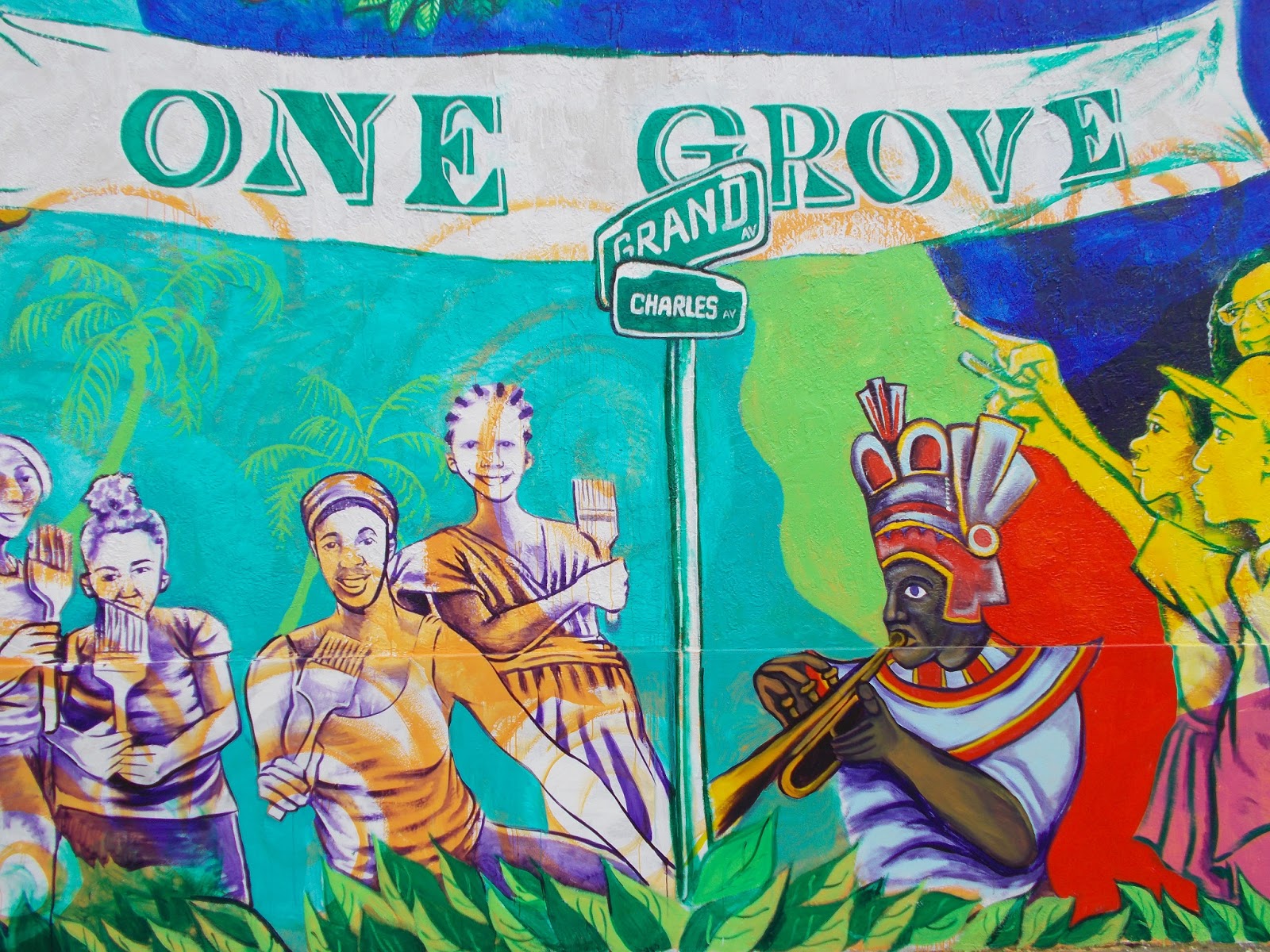
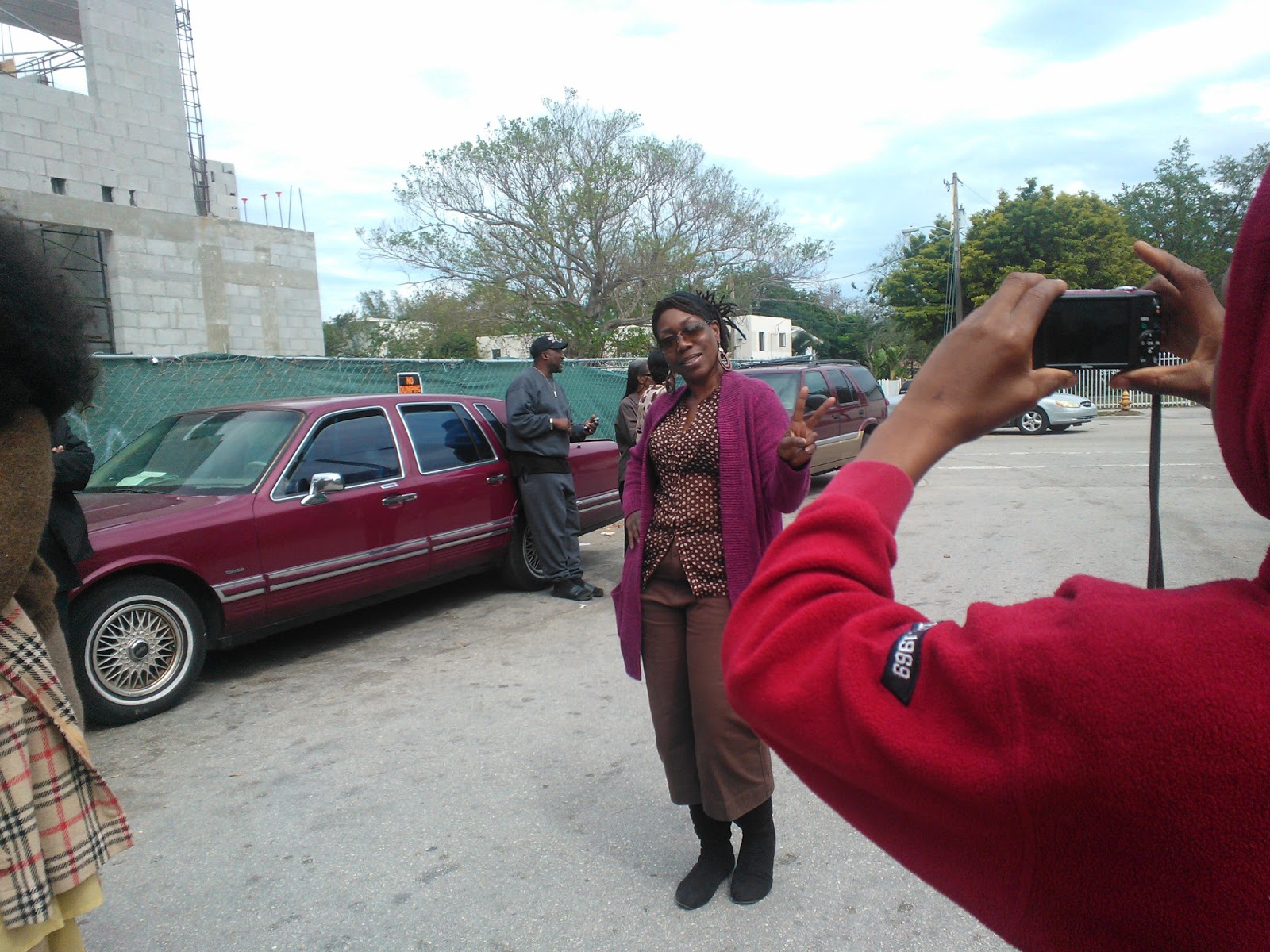
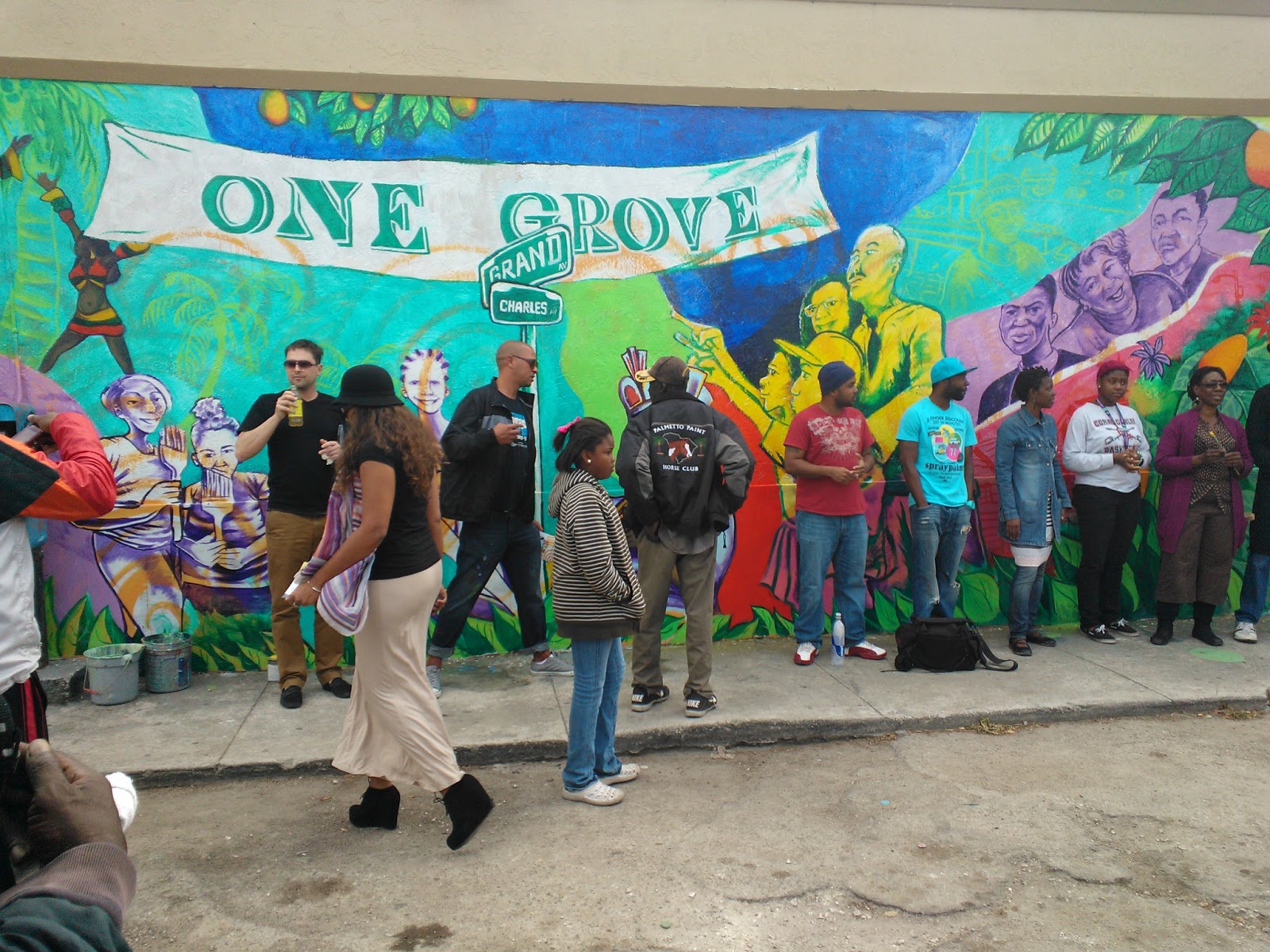
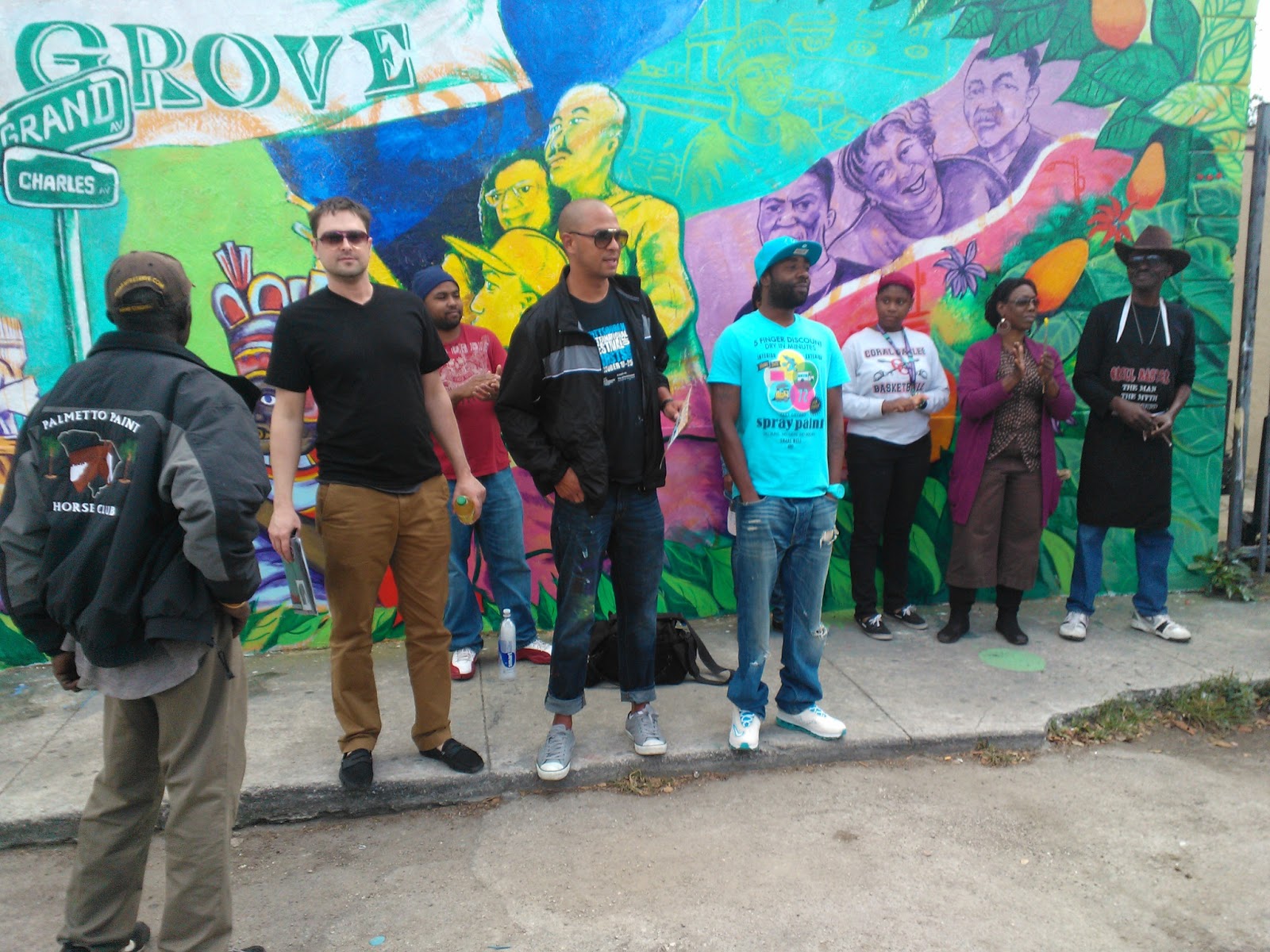
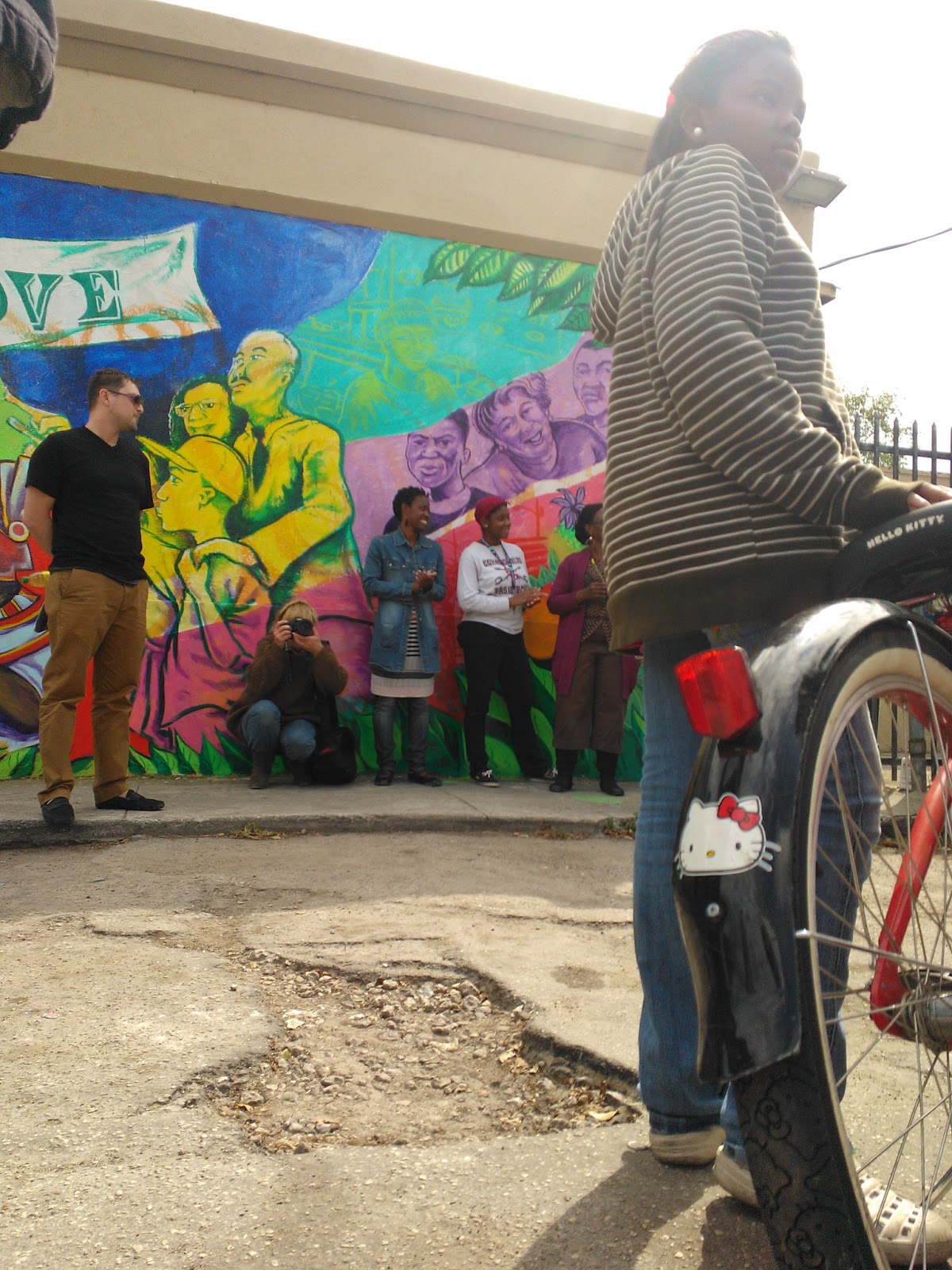
Dateline March 2, 2013 – Residents of West Grove get together to unveil the One Grove mural at the corner of Frow Avenue and Douglas, right next to the Coral Gables diesel bus garage, still under construction.

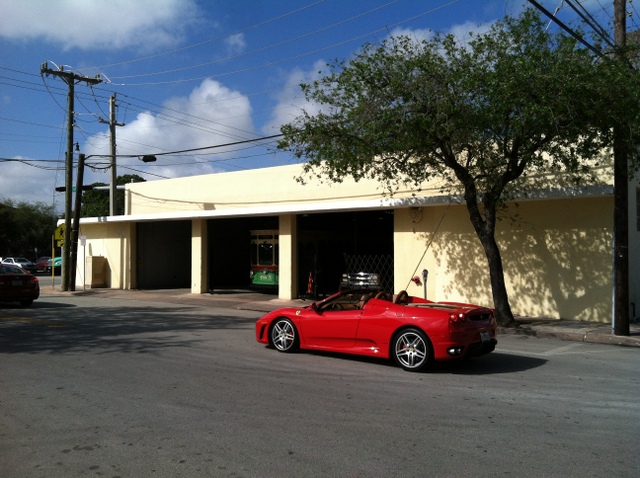
This first video shows the proximity of the Coral Gables diesel bus garage to the houses in the community.

Some of the festivities of the day.

Introducing myself to Laurie Cook of Urban Resurrection, the organization that spearheaded
the creation of the “One Grove” mural. Prior to this we had only spoken on the phone.

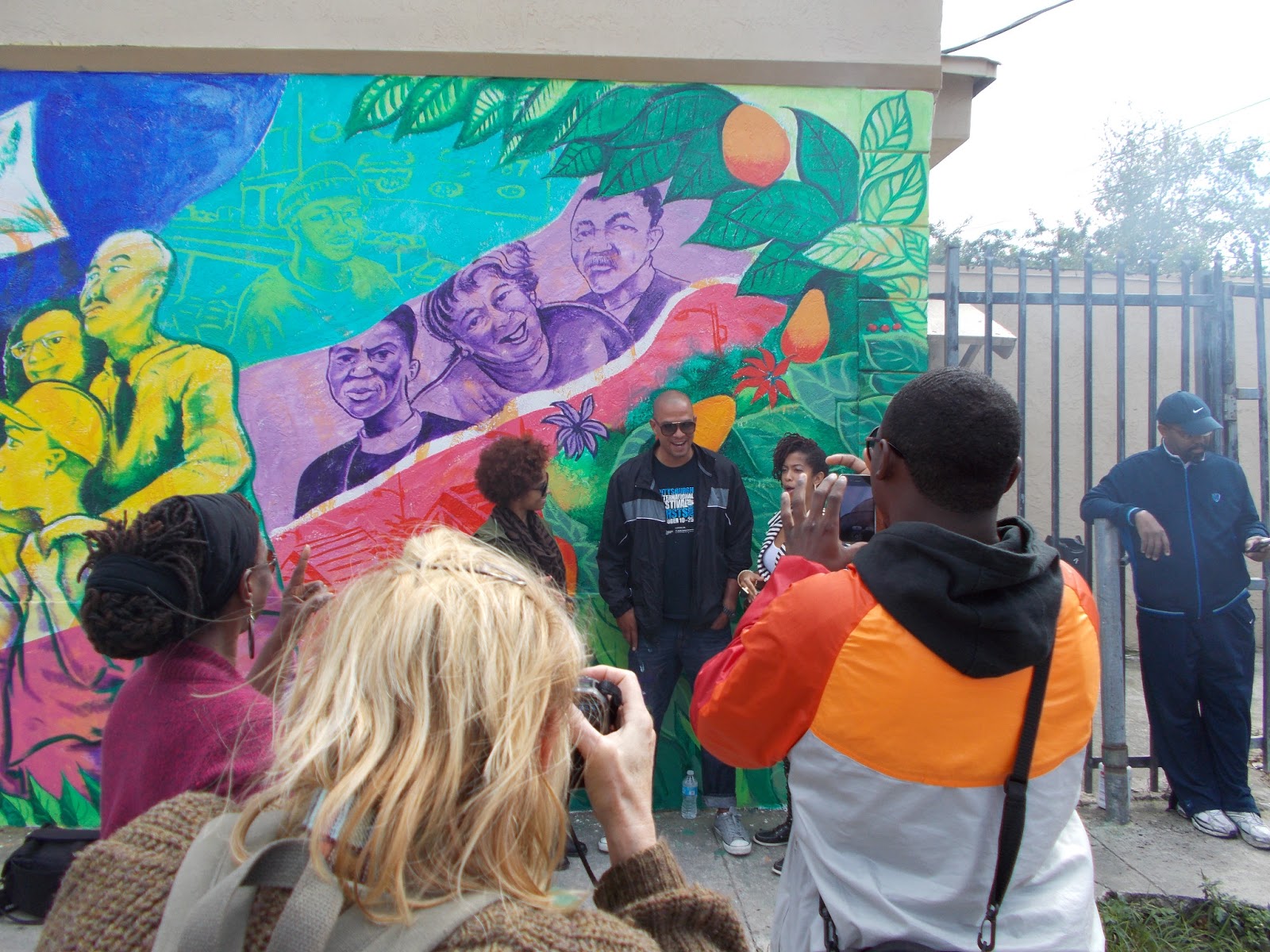
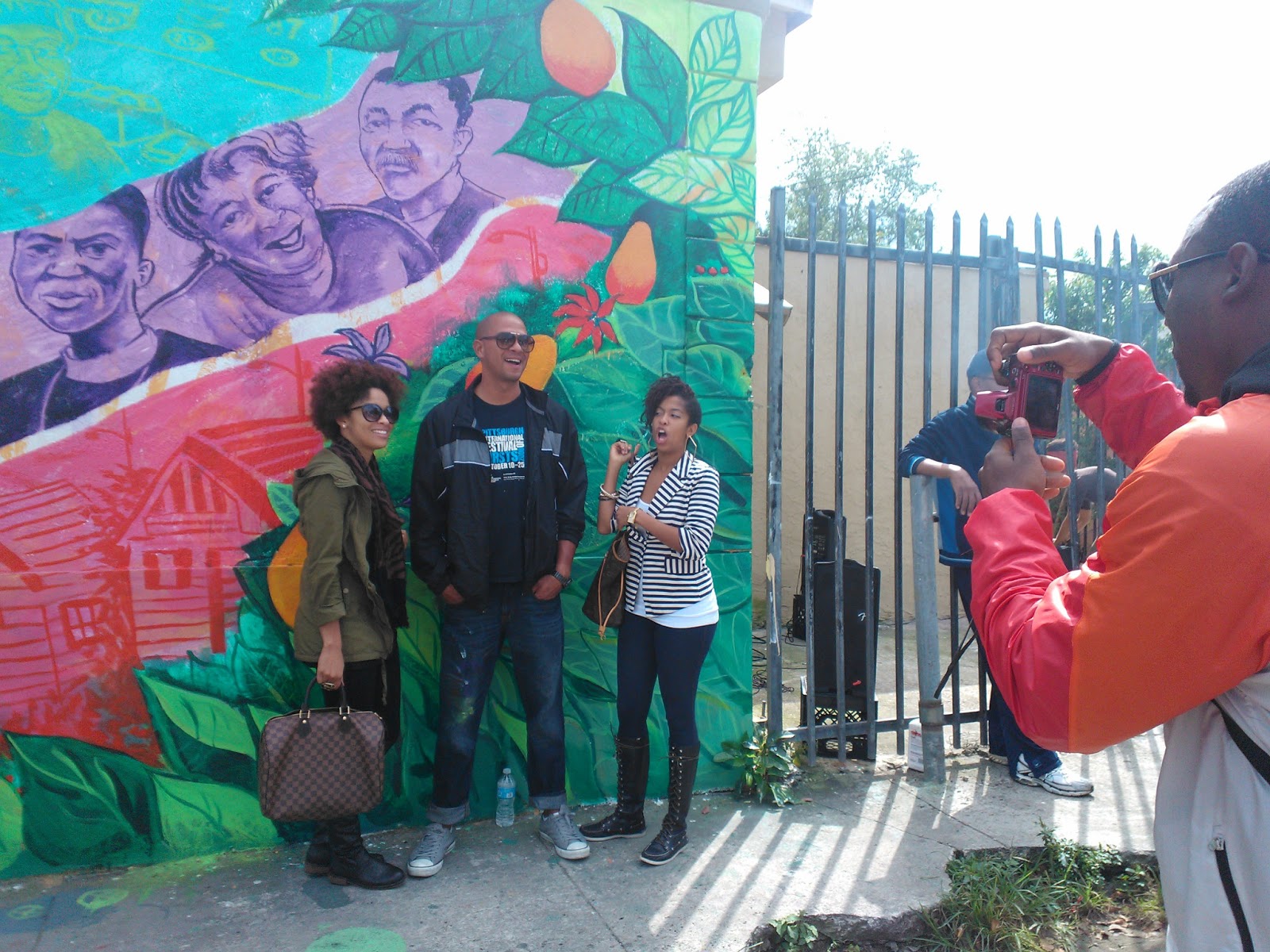
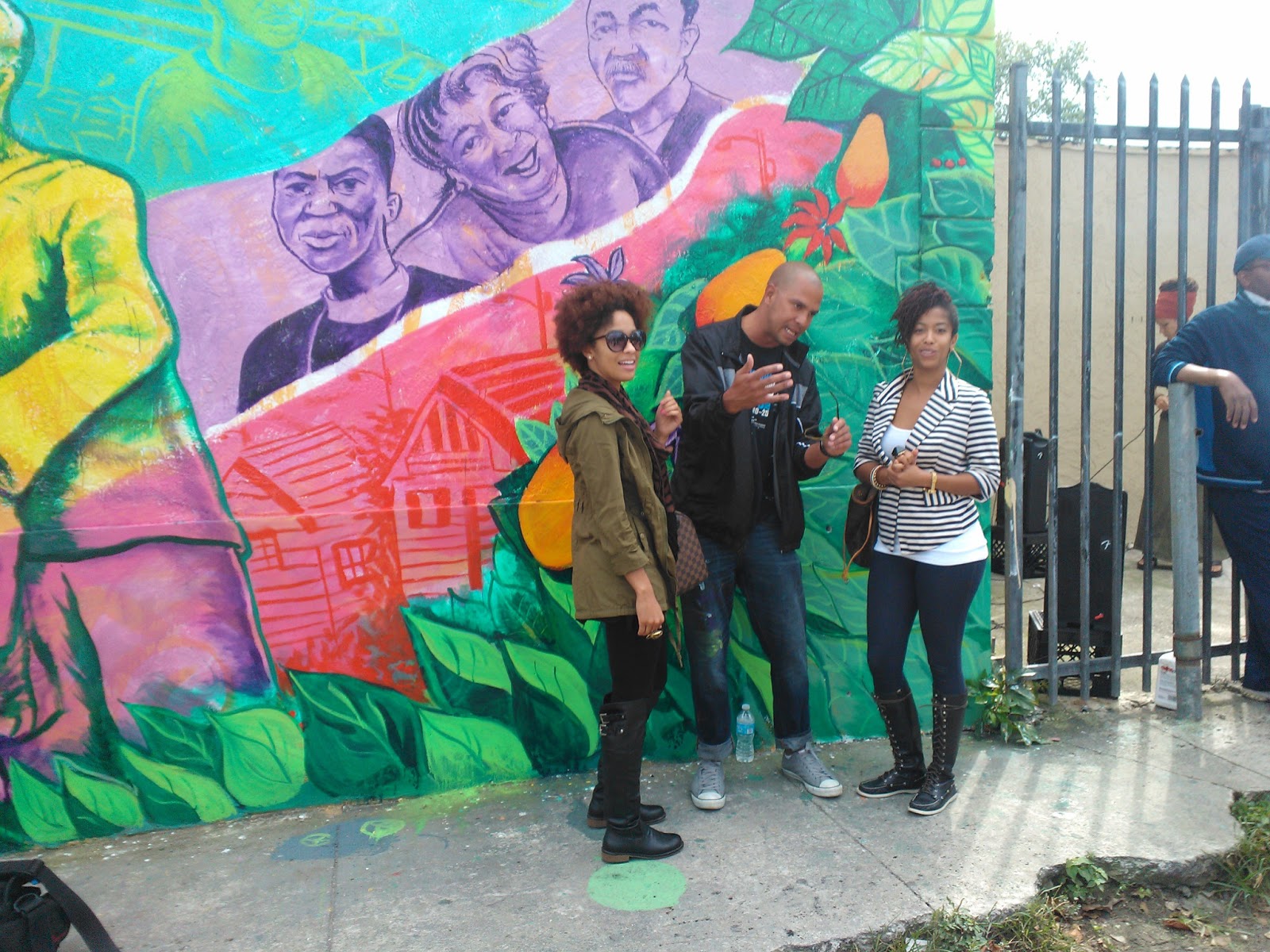
LaTasha (L) and LaToya Stirrup, great great granddaughters of E.W.F. Stirrup, were the center of attention as photographers capture them
flanking Kyle Holbrook of the MLK Community Mural Project, designer of
the mural. That’s Mr. Stirrup’s likeness in the upper-right hand corner.

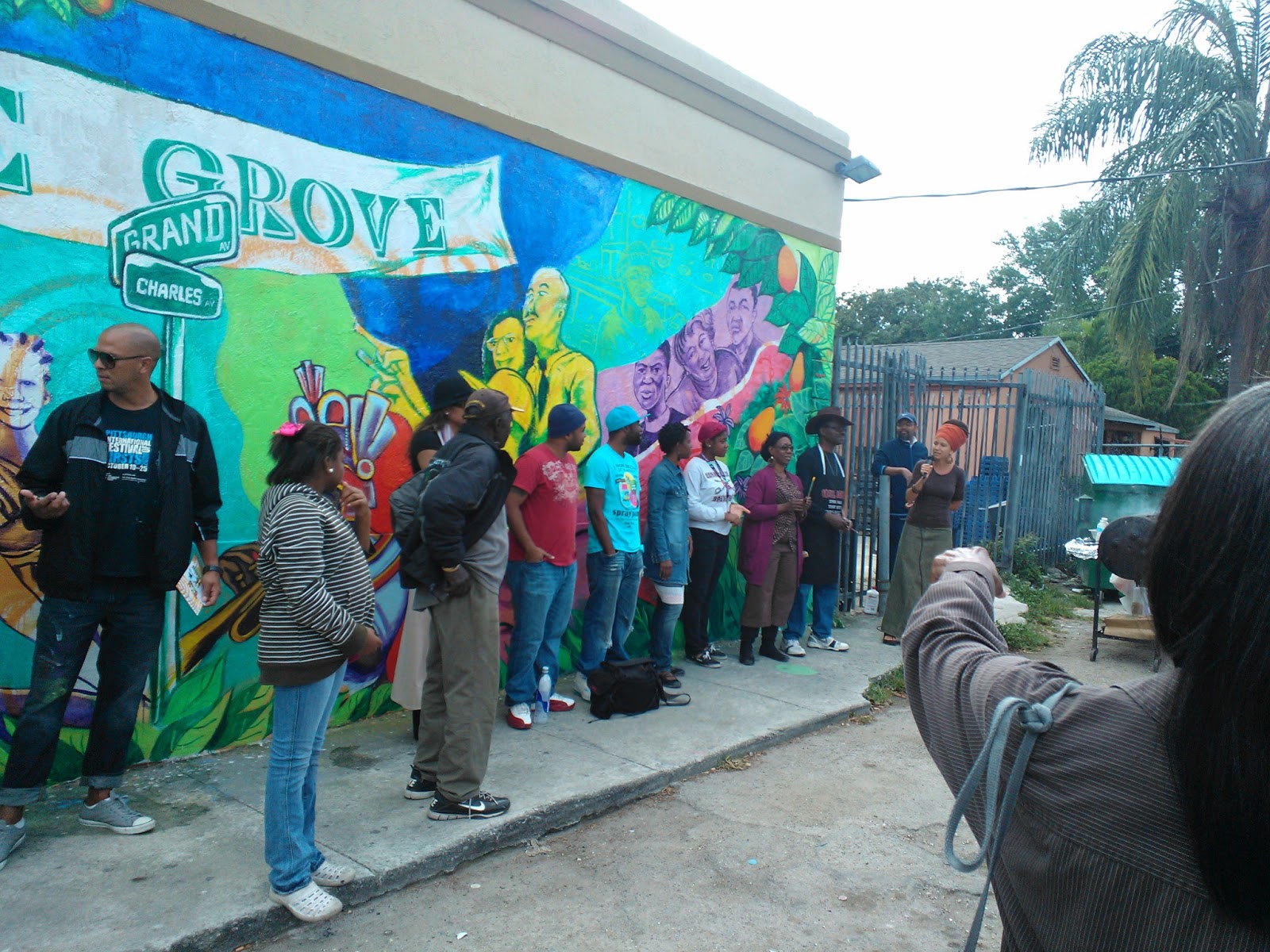
At the dedication ceremony Laurie Cook invited descendants of important Coconut Grove pioneers to come up and be recognized:

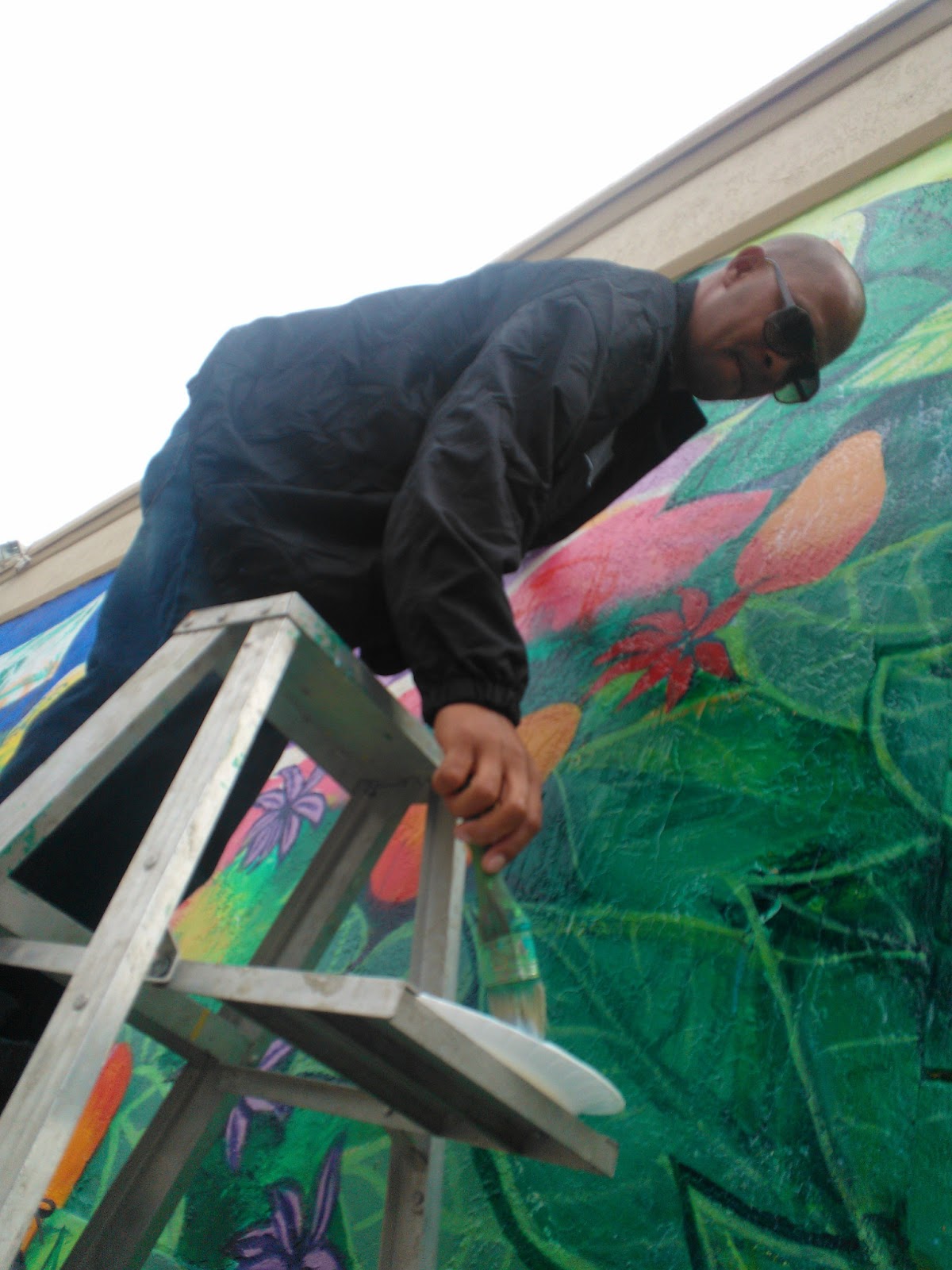
Kyle Holbrook puts the final touches on the mural, a clear protective coat.

Kyle Holbrook puts the final touches on the mural, a clear protective coat.

All of those who worked on the mural were asked up to be recogized:


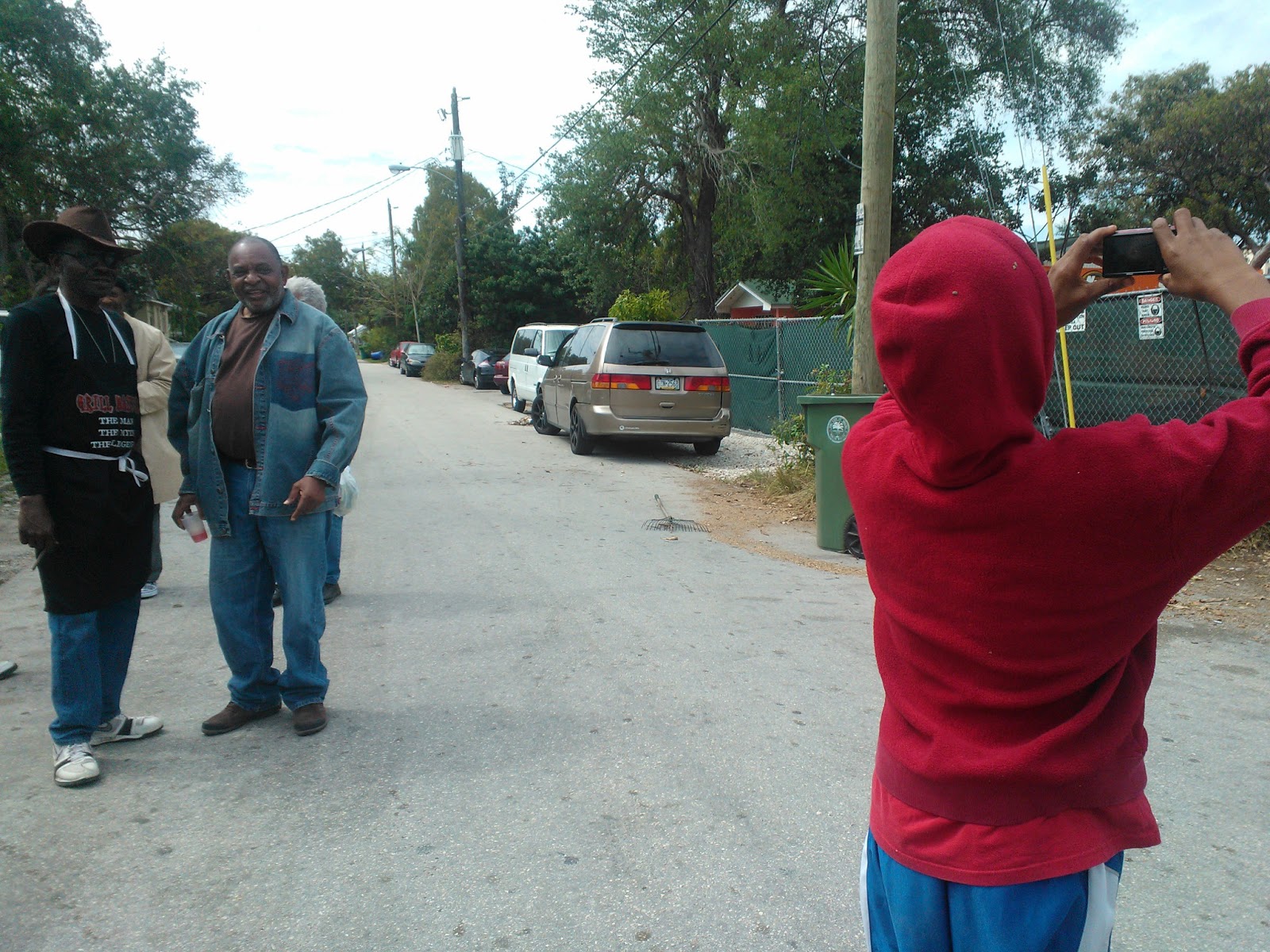
I loaned Mikey one of my cameras for a while. He started taking portraits of everyone.
Mikey got more people to pose for him than I did.

Portrait by Mikey.
Another portrait by Mikey.


Launching The Official Marc D. Sarnoff Tip Line

Sarnoff preparing his troops for the Trolleygate Town Hall.

I might as well make it official. So many people have come forward to give me tips about City of Miami Commissioner Marc D. Sarnoff on DEEP BACKGROUND, that I now have enough investigative leads to last me a lifetime, provided I die by Presidents’ Day. 

It’s clear that people in Miami are eager to unload what they know about Sarnoff and Miami corruption to anyone who will listen. To my regret the tips are coming from people who would prefer to remain OFF THE RECORD, which indicates a fear of Sarnoff among those who know him best. On the other hand, the tips themselves are not off the record. Consequently, I am free to chase them down to see how much truth they contain. I’ve learned through my many years as a writer that it can be a bit like hard rock mining. Some tips won’t pan out, but others will contain valuable nuggets of information. The most recent tip sounds like it might contain pay dirt, but until I run it through the dredger I won’t know how valuable it really is.

In case this latest tip is nothing but Fool’s Gold, I’m launching an Official Marc D. Sarnoff Tip Line. Feel free to tell me what you know. Feel free to tell me what you merely suspect. I won’t print your name if you ask for anonyimity. In fact, I won’t print anything about anything unless — or until — I can confirm it myself. That’s just how I roll.

You can contact me via email, rattle my cage at facebook, or drop a comment below.

I’m most interested in Sarnoff Sightings. If you catch Mark D. Sarnoff out and about, take a picture and send it to me. Especially if he’s having another one of those meetings with a developer to map out how to slip something past his constituents.

EmTV Presents: The E.W.F. Stirrup House

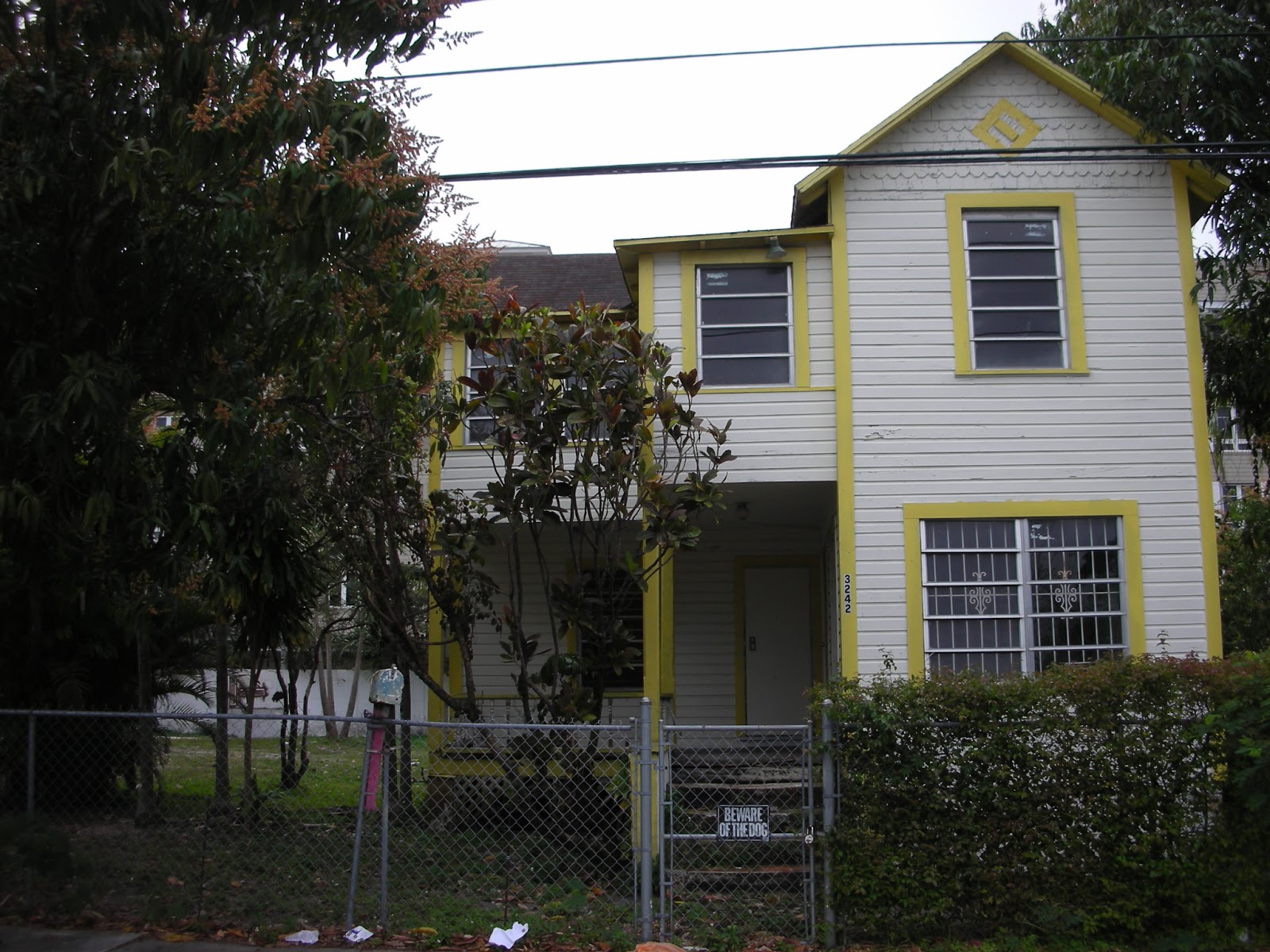
The E.W.F. Stirrup House in the background, as
seen from the Charles Avenue Historical Marker.
Photograph by author.

This blog is moving into the digital age today with the official launch of EmTV. See? Now I’m just like Glenn Beck.

I thought I’d test the video recorder in my new camera on the historical 120-year old E.W.F. Stirrup House. Surprised at how good it turned out, I decided to post it to my blog.

Aries Development, owned in part by Gino Falsetto, has a 50-year lease on the E.W.F. Stirrup property. Rather than take the most minimal actions to preserve the house, Falsetto is allowing the E.W.F. Stirrup House to fall into Demolition By Neglect. Since 2009, when I began writing about, researching, and documenting the E.W.F. Stirrup House, it has only gotten worse.

Miami has had a law against Demolition By Neglect. City inspectors are falling down on their jobs.

Please watch:

You can see my entire series in my Unpacking Coconut Grove Compendium.

An Introduction to Trolleygate

The Coral Gables “Trolley” is not. It is a bus with a diesel-powered
internal combustion engine disguised to look like a cute old-style trolley.

Anger is beginning to roil to the surface in Coconut Grove over the latest scandal involving Miami City Hall. In a nutshell: the city of Coral Gables has been allowed to plunk a polluting diesel bus garage into the middle of a West Coconut Grove residential neighbourhood attempting to rehab. While residents and businesses in Coconut Grove are used to Miami running roughshod over their interests, Trolleygate might just be the straw that breaks the camel’s back. 

This will be the first in what will no doubt be a continuing series as I peel back the layers of the onion of Trolleygate. To understand this scandal first one needs to understand some of the players:


• Coral Gables, a fully incorporated town [which calls itself a city] of about 47,000 people which abuts Miami on the western edge of Coconut Grove. Coral Gables has been called the “first planned community” in Florida, but that designation has also been disputed. Whether it was the first, or not, is immaterial to the reason for its creation. More about that later.

• Miami City Council. Control for everything that has ever happened in
Coconut Grove has resided with Miami City Council since annexation in 1925.

Coconut Grove Village Council. The Coconut Grove Village Council has no power whatsoever to do anything anywhere, except to pass along recommendations to the City of Miami, which then appears to promptly ignore them.

Ironically at one time there was a real Coral Gables Trolley.
This pic is of the Colonnade Building and Coral Gables
Trolley, mid 1920′s. State of Florida Archives.

• The Coral Gables “Trolley.” The word “trolly” is a misnomer. A trolly is defined as:

1. a trolley car. 2. a pulley or truck traveling on an overhead track and serving to support and move a suspended object. 3. a grooved metallic wheel or pulley carried on the end of a pole (trolley pole)  by an electric car or locomotive, and held in contact with an overhead conductor, usually a suspended wire (trolley wire)  from which it collects the current for the propulsion of the car or locomotive. 4. any of various devices for collecting current for such a purpose, as a pantograph, or a bowlike structure (bow trolley)  sliding along an overhead wire, or a device (underground trolley) for taking current from the underground wire or conductor used by some electric railways. 5. a small truck or car operated on a track, as in a mine or factory.

Nowhere in that definition is there room for a bus with rubber tires and a diesel-powered internal combustion engine freely running on roads, not rails. That’s what the Coral Gables “Trolley” really is. Forget the word “trolley.” This is Trolleygate.

Marc D. Sarnoff is a Coconut Grove resident, the City of Miami Commissioner for District 2, Vice-Chairman of the City of Miami Commission (which sounds so much fancier than city council) and uncrowned (and never publicly declared) Emperor of Coconut Grove. It has been said that Marc D. Sarnoff never met a developer he didn’t like (to side with and support above the wishes of the local community).

• Always last and always least: The West Grove, aka Black Coconut Grove. As much as Coconut Grove is used to being ignored by Miami City Hall — which ironically is in Coconut Grove — Black Coconut Grove is used to being ignored by everybody.

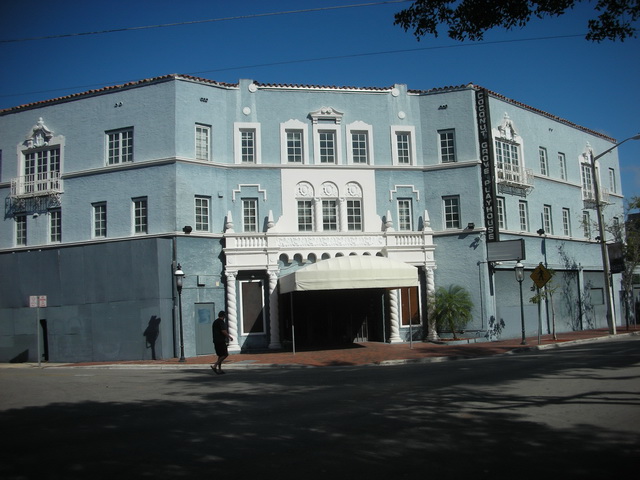
The long-abandoned Coconut Grove Playhouse.
Pic by author.

Black Coconut Grove owes its continued existence due to the foresight of E.W.F. Stirrup [a story told elsewhere on this blog at length, so I won’t go into it here]. It was his vision that gave Coconut Grove the highest Black home ownership in the country. That high percentage of Black home ownership is what prevented the city from razing the entire neighbourhood in the 1950s because unlike all the surrounding residential areas, it didn’t have internal plumbing or sewer connections. Way back in 1919, in the wake of the “Bright Plan,” the Charles Avenue neighbourhood was almost lost as well. The entire area was to be turned into a golf course. Several factors — the depression, annexation, hurricanes and the high degree of Black home ownership — put a stop to all that. However, the Bright Plan was based on a Mediterranean-style of architecture. Before the Bright Plan had been abandoned, it brought forth the Coconut Grove Theater (later Coconut Grove Playhouse, which is a whole ‘nother scandal in itself), which is why the theater is in the Mediterranean-style. [Incidentally, E.W.F. Stirrup sold the land on which the Coconut Grove Theater was built.] However, all that to explain why there has always been a Black community in Coconut Grove strong enough to resist most efforts at urban renewal.

The Mediterranean-style of architecture also appears to have influenced George Merrick, who developed Coral Gables. The prevailing architectural style in Coral Gables is Mediterranean. In what appears to be an early example of White Flight, there is strong anecdotal evidence that the founding of Coral Gables was — in and of itself — a racial statement against Coconut Grove’s Black community. The Bahamians, and other Blacks, were fully entrenched and could not be dislodged because of the high percentage of Black home ownership. Hence one could build a Coral Gables. This has been very difficult to confirm because this is not the kind of thing that is recorded in history books.

A man who has lived on Charles Avenue for all of his 73 years told this reporter what it was like for the folks of West Grove who wandered into Coral Gables back in the old days. It wouldn’t take long before you were stopped by police and asked for your “papers.” These consisted of a letter from an employer: “George works as a handyman for our estate” or “Rose is our domestic and needs to come and go as is necessary.” [Editor’s note: invented letters.]

Redlining and racism kept Blacks out of Coral Gables ever since. To this day Coral Gables is overwhelmingly White. Coral Gables own website cites the most recent demographics almost as if they are proud of it: White population: 90.76%; Black population: 2.86%. That doesn’t happen by accident. It looks even worse when compared to Miami’s population with 18.67% Black and 74.05% White residents.

Artists rendering of the diesel bus garage currently
under construction in the West Grove. Do those shutters
and that landscaping make the bus fumes go away?

What is Trolleygate?

Here’s where it gets tricky for a journalist. Recently this writer joined a few gentlemen for what I thought would be chit chat about music, which it had been the last time we were together. The mistake I made was telling these people that I wasn’t there as a journalist, so it was all off the record. I actually used those words. Who knew that it would turn into a meeting about Trolleygate? That’s where I first heard the word. Consequently, much of what I learned is off the record. However, that doesn’t mean I can’t bring you up to speed:

One recent day the residents of the West Grove woke up to find construction beginning on a diesel bus garage at Douglas and Frow in the West Grove. It turns out that Astor Development acquired the land adjacent to the current Coral Gables diesel bus garage. It made a deal with Coral Gables to knock down the garage, locating it elsewhere, and redevelop the entire site for high-end commercial and residential  properties, the last place you’d want a bus garage. Coral Gables loved the idea of new development. However, Coral Gables, oddly enough says it could find no suitable land anywhere in Coral Gables for the Coral Gables diesel bus garage. Through some kind of land deal [that still needs to be explored further] the land at Douglas and Frow — in the City of Miami, no the city of Coral Gables — was purchased and construction began before anyone knew what hit them.

The neighbourhood is pissed, to put it mildly.

Article continues below the pics . . .

The current diesel bus garage. Just put some shutters on it and add some landscaping and you’re golden.

A diesel bus pretending to be a “trolley” in a real bus garage.
Current state of the new bus garage. Residents say it appears work has accelerated along with the public outcry.
It appears as if the developer is hoping this diesel bus garage is so far gone it will be a fait accompli. Some residents appear to be willing to settle for a bus stop, at the very least. Others want it torn down, as it will change the entire character of the neighbourhood and does not conform with any of Miami’s zoning by-laws.

 
Marc D. Sarnoff made some kind of deal with somebody because nothing can happen in Coconut Grove without the imprimatur of Emperor Sarnoff the First. Sarnoff seems to have negotiated with Astor Development and Coral Gables about this project, but no one in West Grove recalls him bringing such a non-conforming building up for public consultation. The issue of building a diesel bus garage in the West Grove appears to have been passed at a Miami City Commissioner’s meeting. However, one of my off-the-record sources, who has attended hundreds of redevelopment meetings in more than one city, says approval was faster than “a hot knife through butter.” No one can remember something like this getting through Miami City Hall so quickly, without someone in the neighbourhood being aroused to public meetings. Which was probably the point to keeping it under everyone’s radar.

Meanwhile, Black Coconut Grove gets stuck with all the negatives of a
diesel bus garage from a neighbouring city. Furthermore, while it gets
the increased traffic and pollution, the residents will not even get
what is normally a benefit of a bus garage: a bus stop. Having a bus
stop might allow Black Grove to get on the bus and ride to Merrick Park,
or Miracle Mile, or any of those other swank places, including any
multimillion dollar project by developers named Astor. It reminds me of
how Robert Moses,
who built the Long Island Expressway, purposely built all the
underpasses too low to allow for buses. That’s so the ‘great unwashed’
couldn’t go to his beaches at Fire Island and Jones Beach.

There’s
not a single positive to the deal, unless Coral Gables is paying Miami
taxes on the land, but no one is alleging that yet.

According to the Miami Herald, this has awoken a paper tiger:

The Coconut Grove Village Council on Thursday joined the chorus of opposition to a new trolley-bus fueling and maintenance garage now under construction on Douglas Road in the predominantly black West Grove.

Meanwhile, West Grove residents have lined up lawyers to fight the project, and a University of Miami law professor is asking federal authorities to assist the residents with possible civil rights issues.

Message sent out by the paper tiger, which also said it only
learned about the bus garage from media reports. Grrr.

That’s not a stretch. I viewed this as a Civil Rights issue the minute I heard about it due to my 4 years of research into Coconut Grove. And, I’m not the only one: the University of Miami’s Center for Ethics and Public Service agrees with me and issued a press release:

Professor Anthony V. Alfieri, Dean’s Distinguished Scholar, Director of the Center for Ethics and Public Service, and Founder of the Historic Black Church Program, has taken up the call with residents of West Grove to try to halt the construction of large trolley garage adjoining a single-family home residential neighborhood. Professor Alfieri, with Zachary Lipshultz, a Post-Graduate Fellow with the Environmental Justice Project, and Dr. Steven Lipshultz, a Professor of Pediatrics and the George E. Batchelor Pediatric Cardiology Endowed Chair at the University of Miami Miller School of Medicine, have been providing those opposing the construction with valuable legal advice and raising awareness through meetings and rallies.

In their most recent salvo in an opinion piece for The Miami Herald, they point out the public health concern caused by exposure to diesel fumes from having a 12-bay garage housing the current fleet of six Coral Gables trolley cars located in a residential neighborhood and the seeming injustice of moving the garage from its present location in an industrial area in Coral Gables into a predominantly black, low-income neighborhood in the City of Miami.

They write: “The recent protests of Coconut Grove and Coral Gables homeowners in opposition to the City of Miami’s decision to approve construction of a new Coral Gables Trolley garage in the West Grove raise important public health and environmental justice concerns. For the West Grove, a predominantly black, low-income neighborhood, the protests arise against the historical backdrop of decades-long racial discrimination, municipal neglect, and Jim Crow segregation. Indeed, during the 1960s, the City of Miami operated a noxious incinerator “Old Smokey” in the West Grove closely abutting homes and schools. Now, years after Florida courts ordered the incinerator shut down as a public nuisance, the City of Miami again seeks to impose the social costs of polluting facilities on the West Grove without any concern for the public health of the community.”

Coincidentally, today’s Melissa Harris-Perry Show was making the same point. Not about Coral Gables’ dirty buses, but in her words, “the ugly, but real link between environmental and racial justice” and what we dump “we don’t dump in our backyard we dump in somebody else’s backyard […] and those are pretty predictably disempowered communities.” It’s as if she was talking about Trollygate. Watch:

Visit NBCNews.com for breaking news, world news, and news about the economy

Public outcry has been such that a there is now a Stop construction of Coral Gables Trolley Garage in historic Coconut Grove petition at Change.org, which begins:

This depot will disrupt our neighborhood, lower property values, bring an industrial project into a residential area, pose a danger to our children, violate zoning codes, and undermine the healthy and prosperous development of our community.

Marc D. Sarnoff appears to be running scared. He knows he awoke a sleeping Black giant. He will never escape the accusations of Racism, but he is certainly going to try at the EMERGENCY TOWN HALL he’s called for Thursday at Miami City Hall at 5:30 P.M.

There is far more to Trolleygate than I can mention here until I get people to go on the record. However, in a last bit of synchronicity for the day: the very White city of Coral Gables is currently advertising for a Trolley [sic] Manager. I presume that Blacks are allowed to apply.

Unpacking Coconut Grove ► A Compendium [UPDATED]

This is the historical marker I just happened to discover
one day in early 2009. It led to all the research that followed.

As I add chapters to my ongoing series “Unpacking Coconut Grove” this compendium will be updated with the latest on top. The first entry for 2013 is:

Happy Birthday Coconut Grove!!! Now Honour Your Past

In which I briefly lay out the history of Coconut Grove from the mid-1800s to the present-day and make the case that systemic racism is the reason the E.W.F. Stirrup House and the Mariah Brown House have not been renovated, despite promises to do so.

Previous chapters:

The corner of Charles Avenue and
Main Highway
in Coconut Grove.

Unpacking Coconut Grove, Florida – Part One

This is an overview of the area, the issues at stake, how I came to discover Coconut Grove, and why I became so passionate about it.

Unpacking Coconut Grove, Florida – Part 1.1

This chapter contrasts the 120-year old E.W.F. Stirrup House, currently undergoing Demolition by Neglect, with a house built in 1964 less than a mile away. One is rotting away and the other is for sale for $22,000,000.

Unpacking Coconut Grove – Part Two – E.W.F. Stirrup House

The E.W.F. Stirrup House,
standing proud on Charles Avenue.

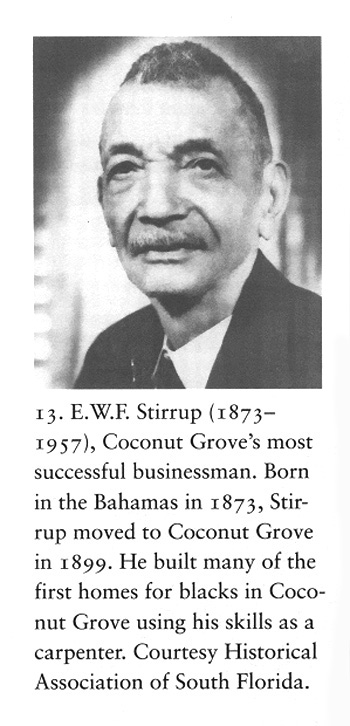
This chapter delves deeper into the history of the E.W.F. Stirrup House and the history of Ebenezer Woodbury Franklin Stirrup. It explains why this proud Bahamian man’s legacy is in need of preserving for the community, as opposed to rapacious developers. E.W.F. Stirrup almost single-handedly created a Black community unique in the entire United States.

Unpacking Coconut Grove – Part 2.2 – The Neighbourhood Around The E.W.F. Stirrup House

Musings upon recent discoveries in my continued research of Coconut Grove, Charles Avenue and the Grove Gardens Residence Condominiums immediately behind the E.W.F. Stirrup House. It also includes a close up photo essay showing the damage that years of neglect have caused on the E.W.F. Stirrup House.

Unpacking Coconut Grove – Part 2.3 – The Charles Avenue Rabbit Hole Leads To Canada

Imagine my surprise when I discover my ongoing research on the E.W.F. Stirrup House leads to Canada, the country I chose to become a citizen of.

Unpacking Coconut Grove – Part Three – Who Controls What On Charles Avenue

The Coconut Grove Playhouse at the corner of Charles Avenue
and Main Highway. The City of Miami has been trying to wrest
control of it back, but one person is holding up all progress.

After extensive research I share what I have learned on who controls, or owns, properties along Charles Avenue. It turns out it’s all the same guy, or companies owned, in part, by the same guy, or properties controlled by the same guy. And, that even includes the Coconut Grove Playhouse, which I never even considered to be a part of my original research. Come on down, Gino Falsetto.

Unpacking Coconut Grove – Part Four – Open Houses and Broken Laws

In which I discover that demolition work is proceeding within the E.W.F. Stirrup House without the benefit of a Building Permit issued by the City of Miami. Also, for the first time, I get inside the Stirrup House after being invited inside by one of the men doing the demolition. This entry has lots of pictures of the inside of this historic 120-year old architectural treasure.

Unpacking Coconut Grove – Part 4.1 – A Photo Essay

Another visit to Charles Avenue seems to indicate that my blog posts are being read because the property is locked up tight again and all (allegedly) illegal demolition work appears to have stopped after being reported to the City of Miami Building Department. 
Unpacking Coconut Grove – Part Five – A Charles Avenue Love Story

180 degree panorama of the entrance to the Charlotte Jane Memorial Park Cemetery,
at one time the only place around where Black folk could bury their dead.

I would like to know more about the love affair between E.W.F. Stirrup and his childhood sweetheart, and wife, for whom the Charlotte Jane Memorial Park Cemetery, at the far end of Charles Avenue, is named. Here is the little I have been able to learn so far.

One of the informational
signs along Charles Avenue.

Unpacking Coconut Grove – Part Six – Still Building With No Building Permit

An update a week later, where I discover that (allegedly) illegal work is still proceeding within the E.W.F. Stirrup House without benefit of a work permit on prominent display.

Unpacking Coconut Grove – Part 6.1 – An Open Email to the City of Miami

Since the City of Miami has not seen fit to respond to my email, I have printed it here for all the world to read.

Unpacking Coconut Grove – Part Seven – Signs along Charles Avenue

At some point in the recent past a series of informational signs were erected along Charles Avenue. Here they are for you to read.

Unpacking Coconut Grove ► Part Eight ► The Powers That Be

Read along as I try to unpack the power structure in Coconut Grove. Pay no attention to the man behind the curtain, even if it is Gino Falsetto, a Canadian who left a string of bankruptcies behind before he left cold Canada for warm Miami.

Unpacking Coconut Grove ► Part Nine ► Good Neighbours and Bad Neighbours 

What makes a good neighbour and what makes a bad neighbour? In this latest chapter of Unpacking Coconut Grove I state the difference and name names.

Unpacking Coconut Grove ► Part 9.1 ► A Bad Neighbour Photo Essay 

A follow-up to last week’s entry with some hot, new information: How did The Bad Neighbour acquire his 50-year lease on the E.W.F. Stirrup House? It wasn’t by putting up any hard-earned cash. Read this chapter to find out how a (alleged) scumbag works real estate a deal.

Unpacking Coconut Grove ► Part 9.2 ► A Photo Essay Follow Up

Why did the alleged scumbag, aka The Bad Neighbour, allow the owners of the E.W.F. Stirrup House to be cited for contravening city by-laws by the City of Miami?  ALSO: More on how the alleged rapacious developer, aka Gino Falsetto, managed to acquire his 50-year lease on the E.W.F. Stirrup House. It isn’t pretty.

***

***

Happy Birthday Coconut Grove!!! Now Honour Your Past

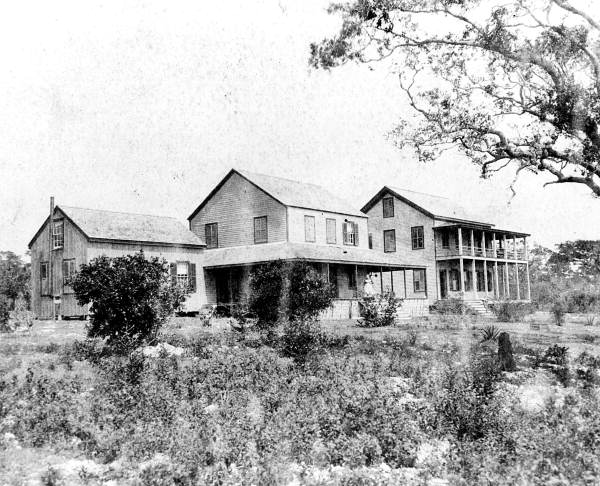
Peacock Inn circa 188?.
Courtesy State Archives of Florida, Florida Memory

Dateline January 6, 1874 – Dr. Horace P. Porter establishes the first post office in Cocoanut Grove. In the 138 years since, Coconut Grove dropped the “a” and became one of the most exclusive areas in the country, as it continues to bury its past in a way that can only be viewed as racist.

One of the first tourist attractions in south Florida was the Bay View House, built in 1883 by Charles and Isabella Peacock. It was later renamed the Peacock Inn (and is now the site of Peacock Park). Ralph Middleton Monroe also began building The Barnacle (now Barnacle Historic State Park) around the same time and Camp Biscayne a little later. While Cocoanut Grove (it didn’t lose the “a” until it was annexed by Miami in 1925) was still a virtually swamp infested wilderness, all of this development required staffing. Consequently, a parallel service industry grew around this progress and, as has always been the case in ‘Merka, these people tended to be Black.

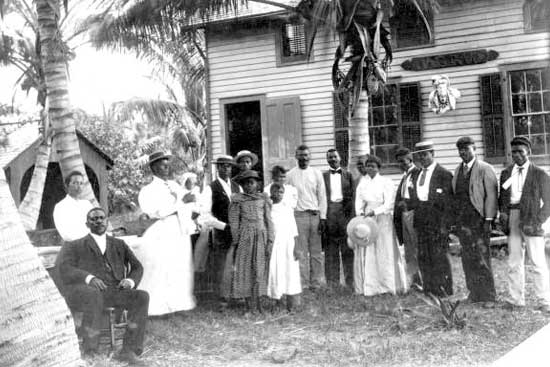
“Black citizens of Coconut Grove”
The entire Black community of Coconut Grove gathered
together in front of Commodore Ralph M. Munroe’s
boathouse. Photo taken 189?
Courtesy State Archives of Florida, Florida Memory

A Black population requires a Black enclave, of course; a place where White people don’t want to live, mostly because any Black person is welcomed. What is now known as West Grove became the area where Blacks, mostly from the Bahamas, congregated. One of the first was Mariah Brown, a Bahamian who lived in Key West. She had been hired by The Peacocks and, as “Mary the Washerwoman,” originally lived at the Inn. However, after she married Charles Brown they purchased a lot from Joseph Frow (who sold the Peacocks their plot of land as well), and built a house on Evangelist Street (now Charles Avenue) around 1892.

Joseph Frow was the first person to buy property off Biscayne Bay, in what later became Cocoanut Grove. His father Simeon had been appointed Cape Florida Lighthouse keeper in 1859. His brother John became lighthouse keeper in 1868. The lighthouse is on the southern tip of Key Biscayne and is the oldest standing structure in Miami-Dade county, even though it had to be rebuilt in the 1840s. Well familiar with the area, Joseph Frow bought up a very large chunk of land which he parceled off over the years.

1774 Map of Biscayne Bay, with Key Biscayne almost dead center.
Note: Where Coconut Grove would be located 100 years later
is labeled Grand Marsh. It was one. Map courtesy of Janthina Images,
which sells beautiful photo cards of the Cape Florida Lighthouse.

One of the men who worked in Cocoanut Grove was Ebenezer Woodbury Frankin
Stirrup, another Bahamian who came up through Key West. Being a carpenter
by trade, Stirrup’s skills were probably in high demand. It’s likely
that he worked for a variety of employers, Joseph Frow undoubtedly among them. Stirrup cleared land for Frow and it was backbreaking work. The area was little more than swamp land with occasional dry hummocks. Frow repaid Stirrup with land; for every plot of land Stirrup cleared, Frow deeded him a plot of land. Eventually E.W.F. Stirrup became one of the largest landowners in Coconut Grove and, eventually, one of Florida’s first Black millionaires.

From Black Miami . . . a brief look back

E.W.F. Stirrup was a man well ahead of his time. He believed that home ownership was important to growing Black families. To that end he used his land on which to build more than 100 houses on the streets surrounding Evangelist Street, which he sold or rented to the families that had emigrated to serve the growing tourist trade. This is also what made Coconut Grove unique. It had a higher Black home ownership than any other Black enclave in ‘Merka.

Over the years the neighbourhood has remained predominately Black, as families passed the homes down from one generation to the next, the way some families pass down precious jewels. This is also what kept the neighbourhood intact, as one urban renewal plan after another faltered when the City of Miami and developers couldn’t convince the homeowners to sell their most prized possession for peanuts.

Stirrup built his own home, of course, in late 1890s. The E.W.F. Stirrup House is the showplace he built for himself near the corner of Charles Avenue and Main Highway. Unlike most of the other houses in the West Grove, the Stirrup House is 2 stories. While it’s based on the simple Conch Style that informs the Mariah Brown House, it has been elaborated upon and added to over the years. At one time the house looked out over Stirrup’s substantial holdings. According to a report prepared by the City of Miami [PDF] to consider an historical designation for the E.W.F. Stirrup House:

The contributions of the African-American community to the City of Miami actually predate the City’s incorporation in 1896. As early as 1880, Black Bahamians arrived in Coconut Grove and began a community that still thrives today. Ebenezer Woodbury Franklin Stirrup migrated from the Bahamas to South Florida in 1888 and worked as a carpenter’s apprentice in Key West, and then as a laborer in a pineapple field in South Dade. He ultimately became a millionaire Coconut Grove property owner. Stirrup built his home in Coconut Grove, using all his construction skills to create an impressive, yet understated, residence for his family. Mr. Stirrup lived in the house until his death in 1957, a total of 58 years.

Mr. Stirrup is remembered today as an extraordinary example of entrepreneurship, a man who made the transition from immigrant to enormously successful Coconut Grove landholder, and who built more than 100 houses for African-Americans. His is an amazing legacy, as his success is all the more incredible when it is remembered that his accomplishments took place in an overwhelmingly segregated and discriminatory environment. When Ebenezer Woodberry Franklin Stirrup died in 1957 at the age of 84, he was not only one of the largest landholders in Coconut Grove, but also had done much to improve the housing conditions of the African-American community.

Panorama by author of E.W.F. Stirrup House with the Charles Avenue Historical Marker in foreground

Meanwhile, the E.W.F Stirrup House — the last remaining symbol of an important man who once shaped what is now one of the most exclusive areas in the country — is allowed to undergo Demolition By Neglect by a rapacious developer who hopes to develop the property.

There can be no doubt that if Mr. Stirrup were White, his home would have been a shrine by now. The Barnacle, Commodore Monroe‘s old homestead just a block away from Stirrup’s, is now a state park and the house restored to its earlier splendour. Commodore Plaza, which begins two blocks north of the Stirrup House, is named after him. However, try and find something named after E.W.F. Stirrup, aside from E.W.F. Stirrup Elementary School, which is 10 miles from the community in which he made his fortune. Not even the historical marker across the street from his property, which honours the original Black Bahamian immigrants, mentions E.W.F. Stirrup by name.

Likewise the Mariah Brown House. If Brown were White, and owned the first house in an important historical district, her house would not sit empty and boarded up today. Even worse, the Mariah Brown was slated to have been renovated as a museum and community/historical resource. That project started in 1995 and has been stalled since 2000!!! However, unlike the Stirrup House, the current Mariah Brown house is not even the original structure. According to GrandAveNews:

The original house, 3298 Charles Ave., was built in 1889. The Coconut Grove Cemetery Association bought the home, which was in severe disrepair. The group razed it in 1999 and built a replica in 2000.

However, the E.W.F. Stirrup House is the real deal. While there appears to have been been several additions over the years, it’s still the original house, much of it built by Ebenezer’s own hands. As it continues to undergo Demolition by Neglect, the E.W.F. Stirrup House is also a symbol of something else in Coconut Grove: the quiet racism that has kept West Grove impoverished right from the beginning. Despite the The Grove’s reputation for more than a century as a laid-back, funky, village which attracted painters, Bohemians and later Hippies, Black Coconut Grove has been allowed to slowly slide into disrepair as White Coconut Grove has become one of the ritziest in the country. The 33133 Zip Code is now considered one of the most exclusive in the country. Within a mile’s radius of the Stirrup House today one can find homes, condos, and townhouses priced from a million dollars all the way up to $22 million, or so.

Developer Gino Falsetto controls the Stirrup property through a 50-year lease. However, due to provisions in Ebenezer Stirrup’s will the Stirrup House must remain in the hands of the Stirrup Family. Ever since he wrested away control from E.W.F. Stirrup’s descendants several years ago, Falsetto appears to have conducted a deliberate campaign of Demolition By Neglect. It has been empty for many years now and he has not even done the barest minimum to ensure the house doesn’t fall apart. The house is entirely exposed to the elements with glass not in several of the window frames facing the ocean, where the prevailing winds come from. Vines have been allowed to grow up the walls and across the roof, with roots no doubt causing damage to those areas of the house. There is exposed wood rot all around the outside of the house, mold and mildew being one of the greatest concerns for any wooden structure in south Florida, which is why wood is no longer used as a building material here. The mold continues inside the house as well, living along side the termites that are eating the structure away from the inside. The property has been cited several times by City of Miami inspectors because of a lack of upkeep, in contravention of several Miami by-laws. Between citations by the City of Miami, the E.W.F. Stirrup property is allowed to become a trash heap, until it’s cited all over again.

Eventually City of Miami building inspectors will come along and condemn
the structure, saying it’s too far gone to save. No doubt this is what
Aries Development, the company that holds the Stirrup lease,
wants. The E.W.F Stirrup House stands in the way of Aries making mega-millions of moolah.

From the large white structure on the bottom (Grove Gardens Residence
Condominiums) to the larger white structure at the top (Commodore Plaza)
is a massive area that could be developed for mixed-use by Aries if only
that pesky E.W.F. Stirrup House didn’t stand in its way. Click to enlarge.

Follow the bouncing ball: Aries developed the Grove Gardens Residence Condominiums, the white building immediately south of the E.W.F. Stirrup House (yellow rectangle in map on the right). Right across Charles Avenue are two vacant lots (the orange rectangle) that also appear to be controlled by Gino Falsetto and/or Aries Development and/or a shell company. Aries had owned these lots previously, but defaulted and the bank took them back in foreclosure. However, who should win the auction, but Gino Falsetto’s long-time partner-in-(alleged)-crime Pierre Heafy. It hardly appears to be a hands-off sale. Lastly, Immediately to the east of those vacant lots is the Coconut Grove Playhouse, which the state of Florida just recently took back from the bankrupt board that ran it into the ground 7 years ago. Through a loan that Aries claims it made to the board several years ago in an attempt to keep it solvent, Aries has always claimed a legal control of The Playhouse as well. Until recently that has stalled any progress on the Playhouse being renovated. Aries doesn’t appear to have dropped its claim, so it might have to be tested in a court of law no matter what happens to the Playhouse down the road. The state of Florida has put the property up for sale as surplus.

As tangled as all of that sounds, here’s the simple takeaway: The E.W.F. Stirrup House is the only remaining impediment to Aries Development (Gino Falsetto) having one of the last sizable properties that could be zoned for mixed-use in Coconut Grove. No doubt that’s the reason Gino Falsetto has done nothing to protect the E.W.F. Stirrup House. It stands in the way of progress and a huge profit.

It’s time for Coconut Grove to honour its entire history — the Black as well as the White that’s already been memorialized — and say no to a developer who is trying to destroy an important part of Coconut Grove history.

SAVE THE E.W.F STIRRUP HOUSE!!!


Read my entire “Unpacking Coconut Grove” series by clicking the link below:

Unpacking Coconut Grove ► A Compendium

Montgomery Bus Boycott ► Nostalgia Ain’t What It Used To Be

Dateline December 5, 1955 – Rosa Parks and E.D. Nixon began the Montgomery Bus Boycott. It lasted for just over one year. 

This is something that happened within my lifetime. It’s not all that long ago: a mere 57 years.

The Montgomery Bus Boycott didn’t end racism, of course. It’s just not institutionalized and is far less overt. Hell, President Obama’s reelection hasn’t ended racism. It’s just done through dog whistles these days.

Some years later my father had a store on 12th Street in Detroit, the city to which Parks had moved in 1957. Twelfth Street was at the epicenter of the 1967 riot and was eventually renamed Rosa Parks Boulevard.

Rosa Parks died in Detroit on October 24, 2005.

Further reading:

Unpacking My Detroit; Part Five ► The Detroit Riots

Prohibition Then and Now

Detroit on January 16, 1920, the day before prohibition began.

DATELINE October 28, 1919 – The House overrides President Woodrow Wilson’s veto to pass the 18th Amendment, also known as the Volstead Act. The Senate went along the following day, which brought in prohibition across the nation the following January. Prohibition lasted for almost 14 years — 14 years of extreme lawlessness. It was a complete failure. As PBS tells us

Prohibition turned law-abiding citizens into criminals, made a mockery
of the justice system, caused illicit drinking to seem glamorous and
fun, encouraged neighborhood gangs to become national crime syndicates,
permitted government officials to bend and sometimes even break the law,
and fostered cynicism and hypocrisy that corroded the social contract
all across the country. With Prohibition in place, but ineffectively
enforced, one observer noted, America had hardly freed itself from the
scourge of alcohol abuse – instead, the “drys” had their law, while the
“wets” had their liquor. 

 I highly recommend the three-part Ken Burns-Lynn Novik documentary Prohibition. Here’s a taste:

Watch Al Capone Beer Wars on PBS. See more from Prohibition.

Prohibition Now

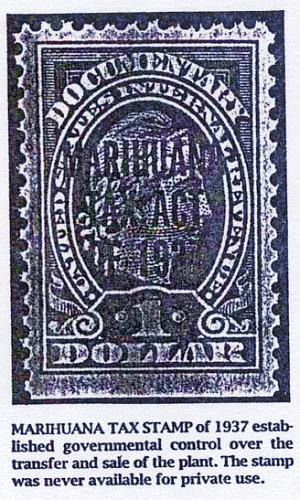
‘Merka learned almost nothing from Prohibition. No sooner did the country do away with Prohibition, it brought in the Marihuana [sic] Tax Act of 1937. Oddly enough, the law did not outlaw marijuana; it merely required paying a tax of about a dollar to deal in hemp, marijuana, or cannabis. However, it was impossible to obtain a tax stamp. This effectively made marijuana illegal even though there are many uses for marijuana, whether for smoking or making products out of hemp, such as paper.

The outlawing of marijuana was a perfect storm of business interests and racism, all whipped up by Harry J. Anslinger, who was appointed to the Federal Bureau of Narcotics in 1930 by Treasury Secretary Andrew W. Mellon. One of the Mellon Bank’s financial interests was DuPont, which was moving out of munitions and into plastics and synthetic fibers. Hemp, which had been a huge industry at the time, was a threat to DuPont’s plans.

One of Anslinger’s weapons in his campaign to outlaw marijuana was undisguised racism, as DrugWarRant.com clearly lays out in its report on Why Is Marijuana Illegal:

He also promoted and frequently read from “Gore Files” — wild reefer-madness-style exploitation tales of ax murderers on marijuana and sex and… Negroes. Here are some quotes that have been widely attributed to Anslinger and his Gore Files:

    “There are 100,000 total marijuana smokers in the US, and most are Negroes, Hispanics, Filipinos, and entertainers. Their Satanic music, jazz, and swing, result from marijuana use. This marijuana causes white women to seek sexual relations with Negroes, entertainers, and any others.”

“…the primary reason to outlaw marijuana is its effect on the degenerate races.”

“Marijuana is an addictive drug which produces in its users insanity, criminality, and death.”

“Reefer makes darkies think they’re as good as white men.”

“Marihuana leads to pacifism and communist brainwashing”

“You smoke a joint and you’re likely to kill your brother.”

“Marijuana is the most violence-causing drug in the history of mankind.”

And he loved to pull out his own version of the “assassin” definition:

“In the year 1090, there was founded in Persia the religious and military order of the Assassins, whose history is one of cruelty, barbarity, and murder, and for good reason: the members were confirmed users of hashish, or marihuana, and it is from the Arabs’ ‘hashashin’ that we have the English word ‘assassin.’”

Yellow Journalism

Harry Anslinger got some additional help from William Randolf Hearst, owner of a huge chain of newspapers. Hearst had lots of reasons to help. First, he hated Mexicans. Second, he had invested heavily in the timber industry to support his newspaper chain and didn’t want to see the development of hemp paper in competition. Third, he had lost 800,000 acres of timberland to Pancho Villa, so he hated Mexicans. Fourth, telling lurid lies about Mexicans (and the devil marijuana weed causing violence) sold newspapers, making him rich.

Movies such as Reefer Madness (1936) helped to drive the national hysteria:

While the Marijuana Tax Act of 1937 was supplanted by various laws over the years, the result is the same: Marijuana is still illegal. Some of the costs of the War on Drugs include:

  • Amount spent annually in the U.S. on the war on drugs: More than $51,000,000,000
  • Number of people arrested in 2010 in the U.S. on nonviolent drug charges: 1,638,846
  • Number of people arrested for a marijuana law violation in 2010: 853,838
  • Number of those charged with marijuana law violations who were arrested for possession only: 750,591 (88 percent)
  • Number of Americans incarcerated in 2009 in federal, state and local prisons and jails: 2,424,279 or 1 in every 99.1 adults, the highest incarceration rate in the world
  • Fraction of people incarcerated for a drug offense in state prison that are black or Hispanic, although these groups use and sell drugs at similar rates as whites: 2/3
  • Number of states that allow the medical use of marijuana: 17 + District of Columbia
  • Estimated annual revenue that California would raise if it taxed and regulated the sale of marijuana: $1,400,000,000
  • Number of students who have lost federal financial aid eligibility because of a drug conviction: 200,000+
  • Tax revenue that drug legalization would yield annually, if currently-illegal drugs were taxed at rates comparable to those on alcohol and tobacco: $46.7 billion

Gary Johnson, former Governor of New Mexico and current candidate for President of the United States for the Libertarian Party argues

It’s time we tax and regulate marijuana. The War on Drugs is a proven failure.  We have spent several decades and close to a trillion dollars trying to eliminate drugs.

Consider these facts:

  • The last three Presidents and half of American adults have said they have smoked marijuana.
  • More children have tried marijuana, which is illegal, than cigarettes, which are regulated.
  • Last year we arrested 850,000 people for marijuana, mostly for possession.
  • So far, fourteen states have passed medical marijuana laws enabling sick people to benefit.
  • Massachusetts, Denver, and Seattle have either successfully decriminalized, or instituted lowest priority law enforcement policies for marijuana possession.

We learned a valuable lesson with alcohol prohibition in this country. Prohibition created black markets and violence as gangs fought to control the market. The same thing is true today.  Mexican cartels make the majority of their profits distributing marijuana in 230 American cities, and the resulting violence is tragic. That’s why the presidents of many Latin American countries signed a declaration that the war on drugs needs to be ended.

Isn’t it time to do away with the War on Drugs?

Ron Mann’s 1999 documantary Grass: The History Of Marijuana is a great overview of how marijuana became illegal.

Unpacking the Aunty Em Ericann Blog Again

Every once in a while I like to pull back the curtain and show my readers what it looks like under the hood here at the Aunty Em Ericann Blog. However, and this is the important part, it’s really just an excuse for me to beg my readers to click on the ads. That’s the only way this blog generates any money for me and I work on it so very hard. Click on an advert. Clicking on an advert will cost you nothing, but it will put a few pennies into my pocket . . . and I do mean “few.”

All-time Top Ten posts.
Click to enlarge
All-time Top Ten search terms. Click to enlarge

I started this blog on April 19, 2012. Since then the blog has had 35,352 page views (as of this writing), which averages out to approximately 7,070 page views per month. That’s not bad for a newish blog. At left is a list of the all-time Top Ten Posts. It’s clear even at a small resolution that the Number One post is ahead by a wide margin: 1,493 to 610 for the Number Two post. I find that stunning for a bunch of reasons, main among them is that I’ve not promoted the Number One post; people have found it through the Googalizer, as evidenced by the next graph. At the time of this writing 526 people have found the Number One page in a search, as opposed to 293 who searched and found the Number Two post on the blog.

For the record: The Top Ten posts on the Aunty Em Ericann blog are:

Entry Pageviews
1494
610
560
375
319
310
310
281
281
266

Some of those surprise me. There’s really no reason I can think of why the Barbara Walters clip comes in at Number 10, or why the post on Wretched Gretched clocks in at Number Six. Both were intended to be silly one-offs, yet they keep on garnering readers. Amazingly neither are part of the search terms people have used to find my blog.

Who am I to argue with my readers? They know what they like.

I am gratified, however, that some of the posts I am most proud of have made it into the Top Ten.  Specifically I’d like to point to the ones on Josephine Baker, The E.W.F. Stirrup House, When Whites Went Crazy in Tulsa, and The Detroit Riots. The thread that connects them all is that they are all about Race Relations and Racism, a subject I have been researching as my own Independent Studies Course as long as I can remember.

Meanwhile, I will keep publishing my blog. Hopefully my readers will realize how much hard work goes into writing these posts and will click on an advert, or two, or three and help support this project.

***
***

Unpacking Coconut Grove ► Part Six ► Still Building With No Building Permit

The E.W.F. Stirrup House on Friday, August 24, 2012. Note
the used metal studs leaning against the building. Used
materials to build their chi chi Bed and Breakfast? How nice.

Another visit to Charles Avenue on Friday demonstrated beyond a doubt that (alleged) illegal work is still going on inside the E.W.F. Stirrup House. More troubling is the fact that there is still no Building Permit on display.

Earlier in the week I called the City of Miami to check up on my complaint about work proceeding without a Building Permit. I was told the file had been closed, but there was no other information available. When I expressed my concern, I was transferred to a Building Department supervisor. I left a detailed message requesting I be called back. I am still waiting for that return phone call.

Used metal studs.

I am also still waiting for a return call from Maurice Pons, identified
as the Chief of Inspections (Field) for the City of Miami Building Department. I left a detailed message during the week, expressing my concern about the (alleged) illegal work proceeding inside the historic, 120-year old E.W.F. Stirrup House and practically begged that someone get in touch with me so that I could be assured that an (alleged) rapacious developer was not (allegedly) getting away with something (allegedly) illegal. Begging didn’t help either.

The funny thing is, depending on your definition of funny: No matter who I am transferred to within the City of Miami phone system, I can NEVER get a human on the phone. They all have voice mail and they all studiously seem to avoid returning their calls. I have made dozens of calls only to get voice mail with no way to reach a human being. Of those dozens of calls, I have left at least 10 to 12 messages with various departments and City of Miami employees. I have yet to hear back from any of them.

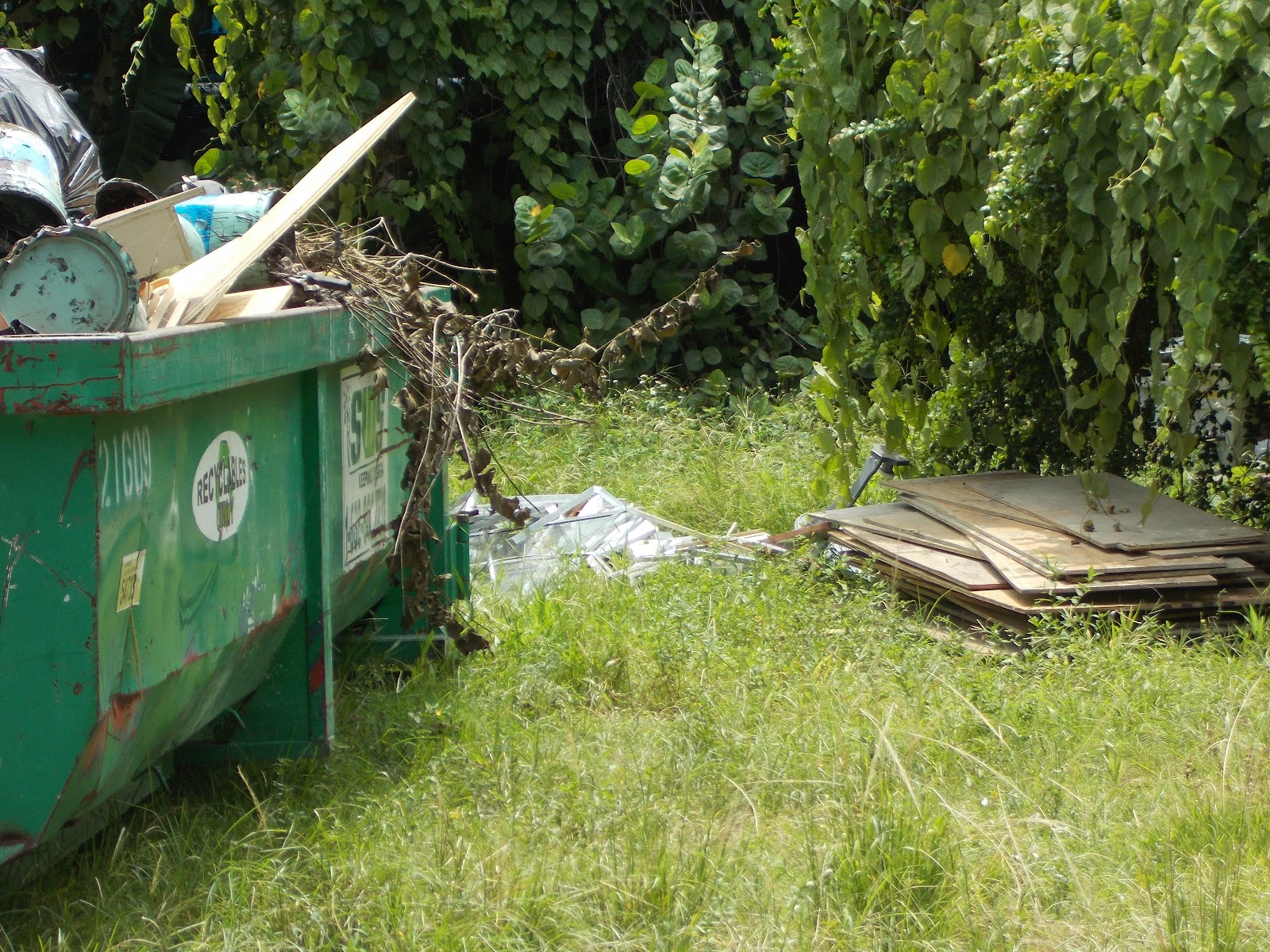
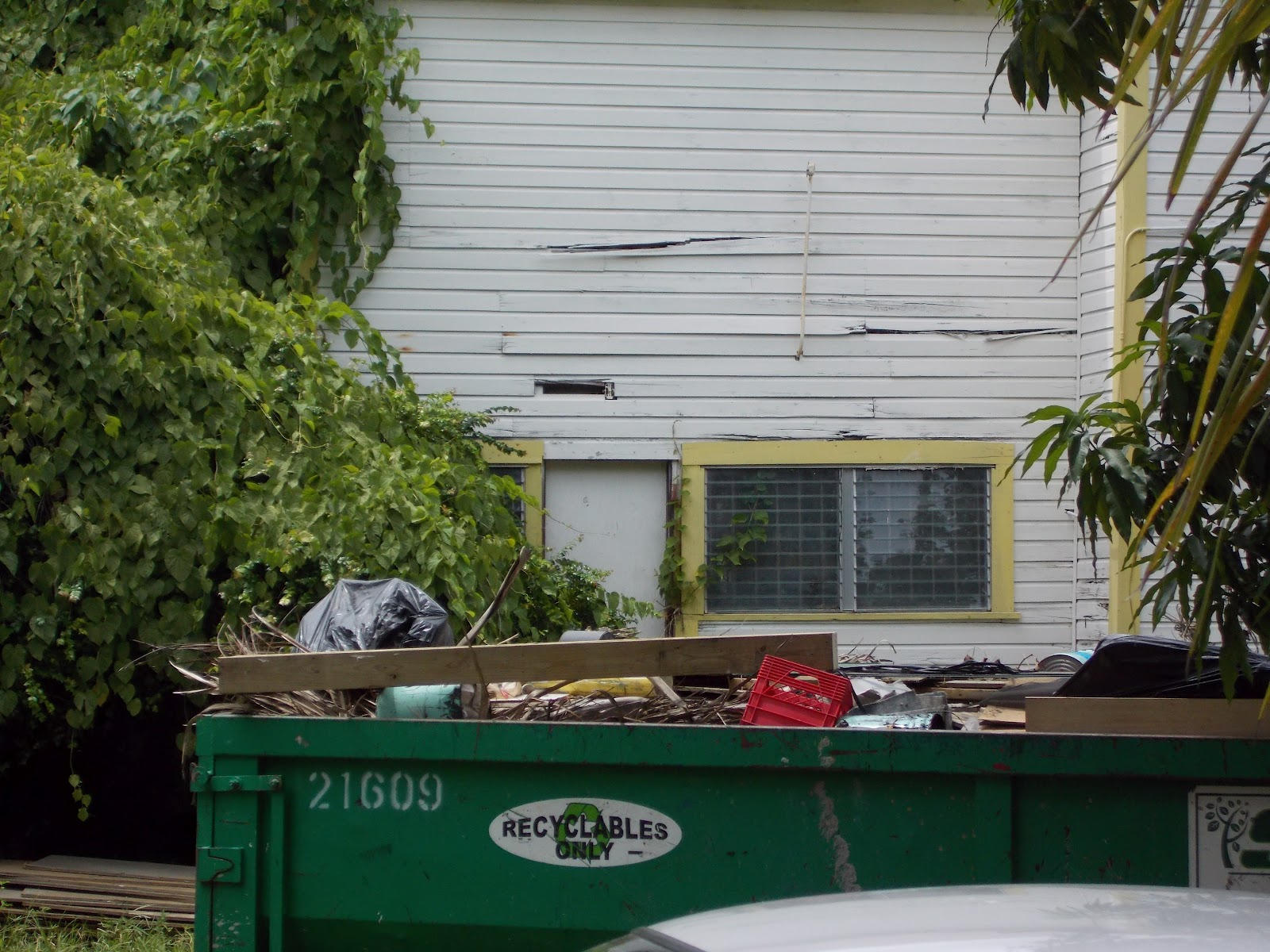
The dumpster is fuller than it was earlier in the week and
the piles of trash are larger than they were earlier in the
week. All of this is just waiting to be picked up by this
weekend’s approaching Hurricane Isaac.

While on the same topic: I am still waiting for a reply from the City of Miami Office of Communications to my email of August 10, 2012. [See Unpacking Coconut Grove ► Part 6.1 ► An Open Email To The City of Miami] It was sent to “Press at Miamigov dot com,” an email address given to me over the phone by a recorded message when trying to get that department on the phone. One would think that, by now, I would have had a reply, even if it was to say, “Sorry, we can’t help you.” At the very least you’d think I would have received a acknowledgment that the email had been received. Oh, and again, there is no way to get that department on the phone or to return my calls either. It’s like falling into a black hole.

As a journalist of long-standing, I have had to call Mayors, Members of Parliament, Members of Provincial Parliament and city departments many times. I have never had this kind of trouble reaching someone by phone in my entire life. And, when I have left a message, I have always received a prompt call back. What the hell is going on at Miami City Hall?

RECAP: My complaint was closed with no other notations on
the file. Two City of Miami Building Department inspectors have failed
to return my phone calls, as have many other City of Miami employees.
Furthermore, the Media and Communications Department doesn’t respond to
Media and Press Inquiries. What the hell is going on at Miami City Hall?

This is just more proof that the owners
Grove Gardens Residence Condominiums
uses this property for unintended uses.
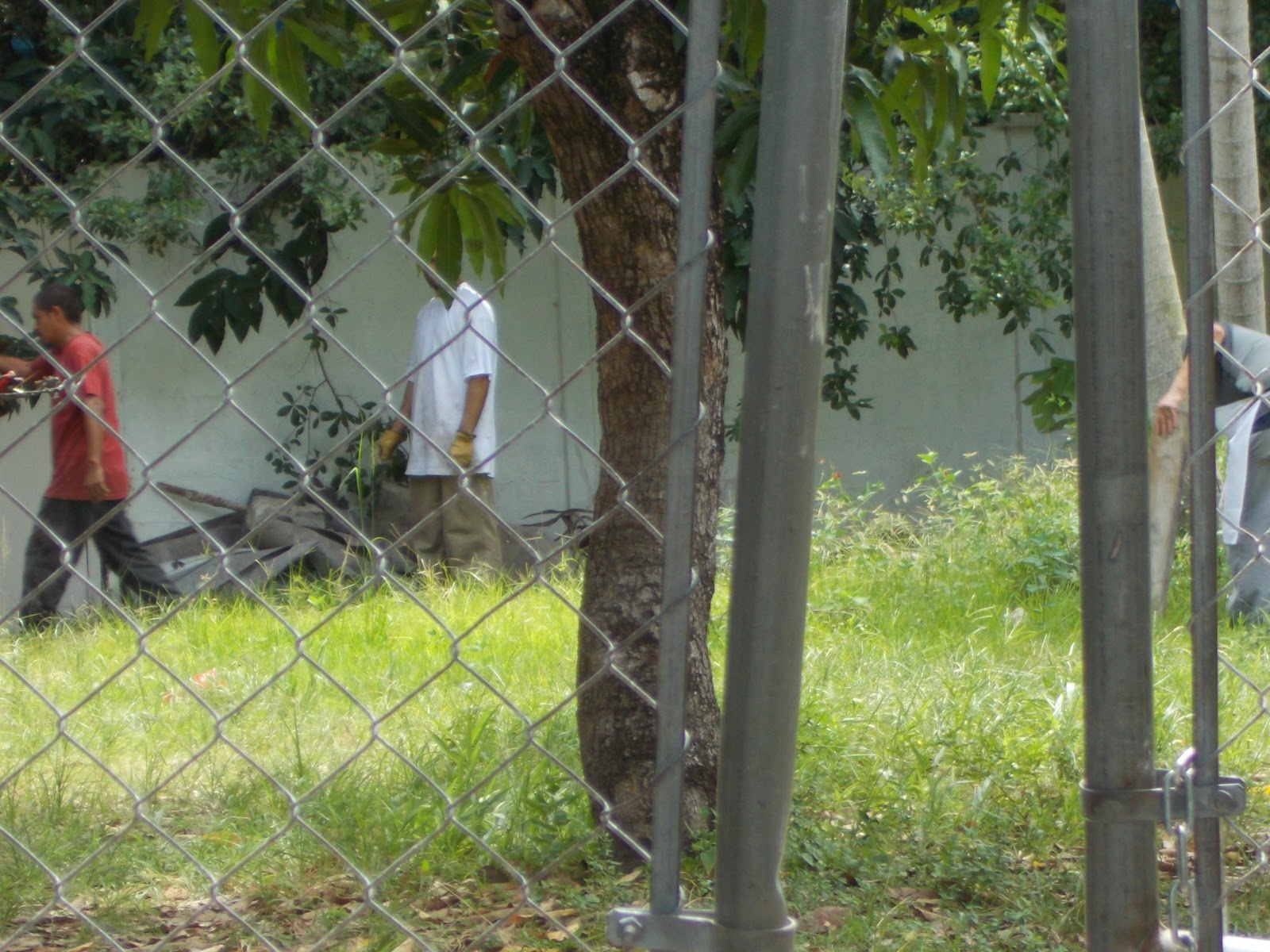
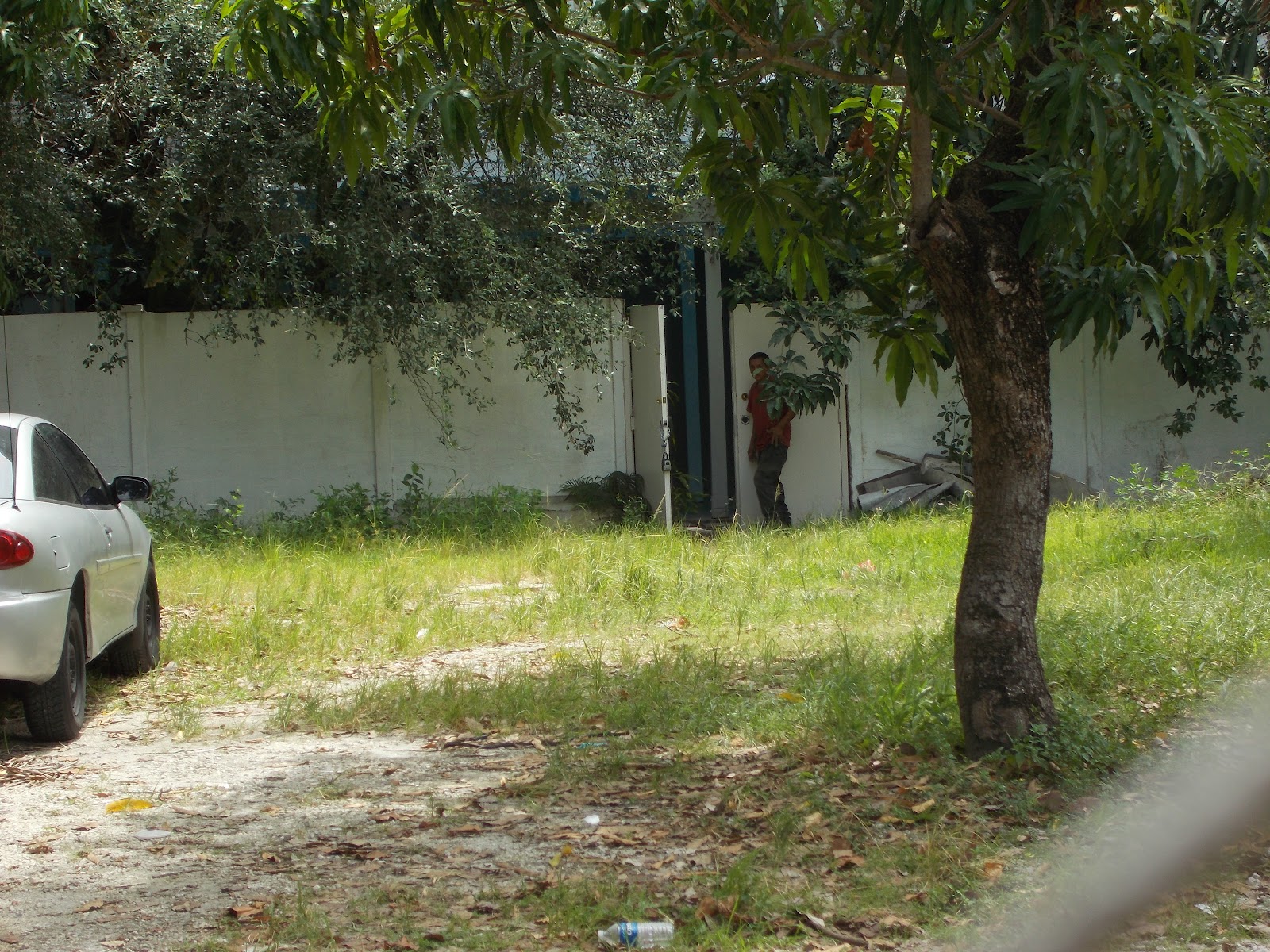
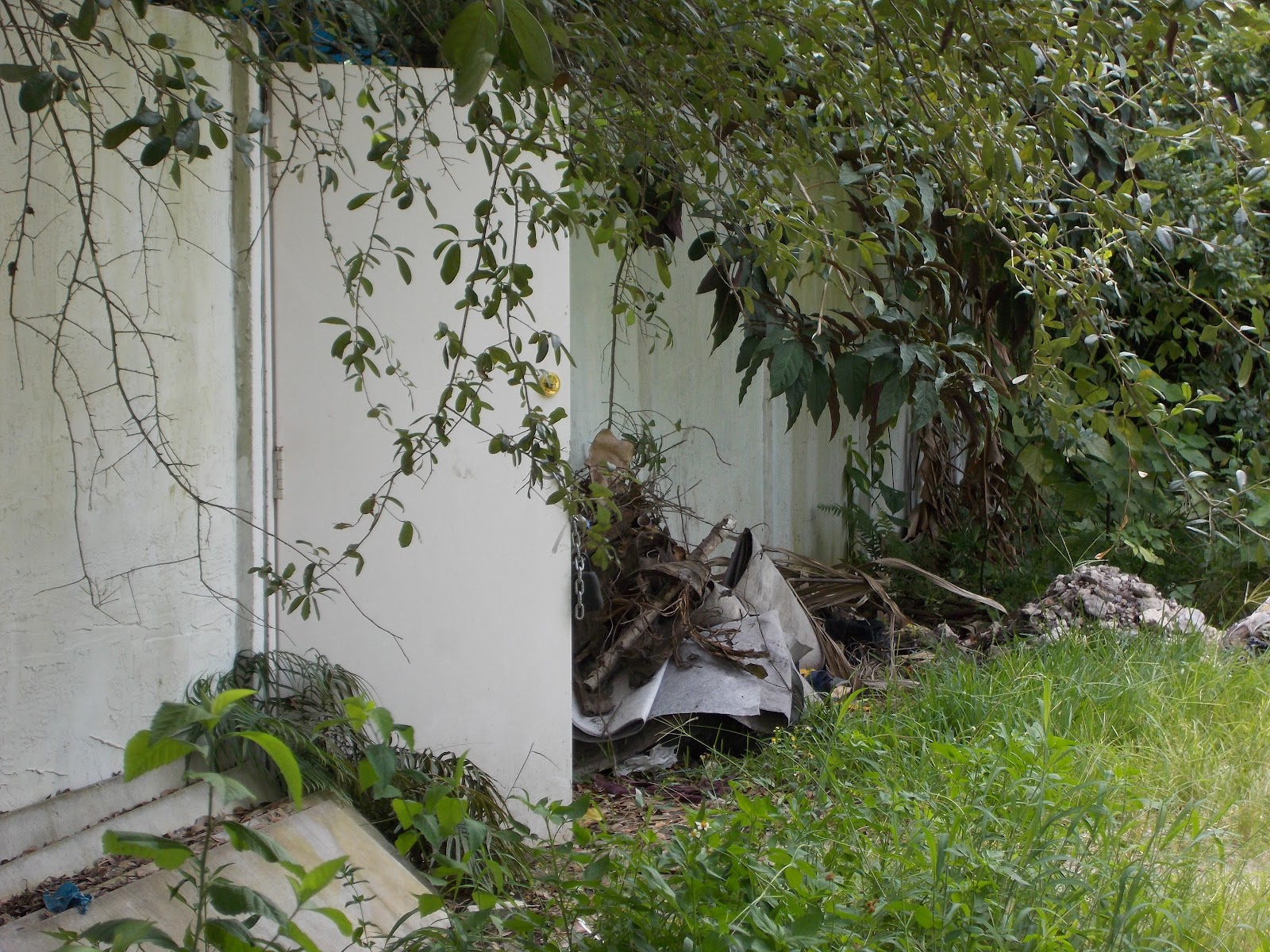
While at the E.W.F Stirrup House I
saw workmen carrying out piles of trash
and dumping them next to these doors.

I have been told many times, by many people far more knowledgeable about Miami politics than I, that the City of Miami Building Department is in the pocket of rich developers. It’s hard NOT to come to the same conclusion when I cannot even get simple answers to my simple questions from ANYONE in the Building Department or the Press Relations Department. What the hell is going on at Miami City Hall?

Meanwhile, there is continued evidence that (allegedly) illegal work is still proceeding within the E.W.F. Stirrup House without benefit of a Building Permit. Will anyone at Miami City Hall address this issue? Will anyone at Miami City Hall return my phone calls? Will anyone at Miami City Hall take any notice that a developer is (allegedly) doing whatever the hell he wants, despite the fact that he doesn’t even own the property, but merely has a 50-year lease on it? Stay tuned . . . .

Meanwhile, here are some more pictures taken yesterday which proves that (alleged) illegal work is still is ongoing inside the historic 120-year old E.W.F. Stirrup House without benefit of a building permit and that workers within the Grove Gardens Residence Condominiums (immediately behind the Stirrup House) are using the property to dump their trash.

These trash piles have grown since Monday. They will make good projectiles for this week’s approaching hurricane.
Everything in this dumpster will become a projectile if and when Hurricane Isaac hits.

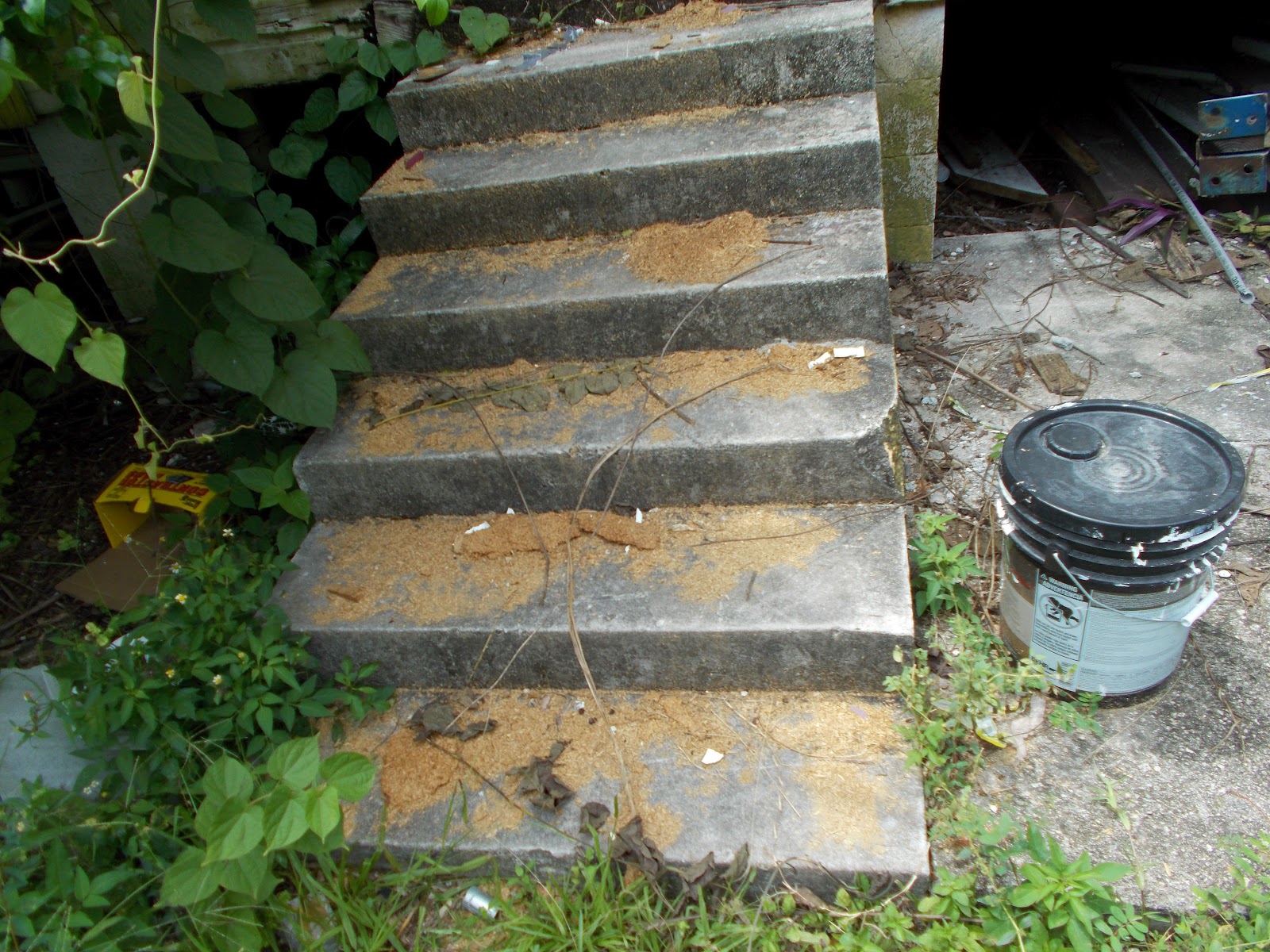
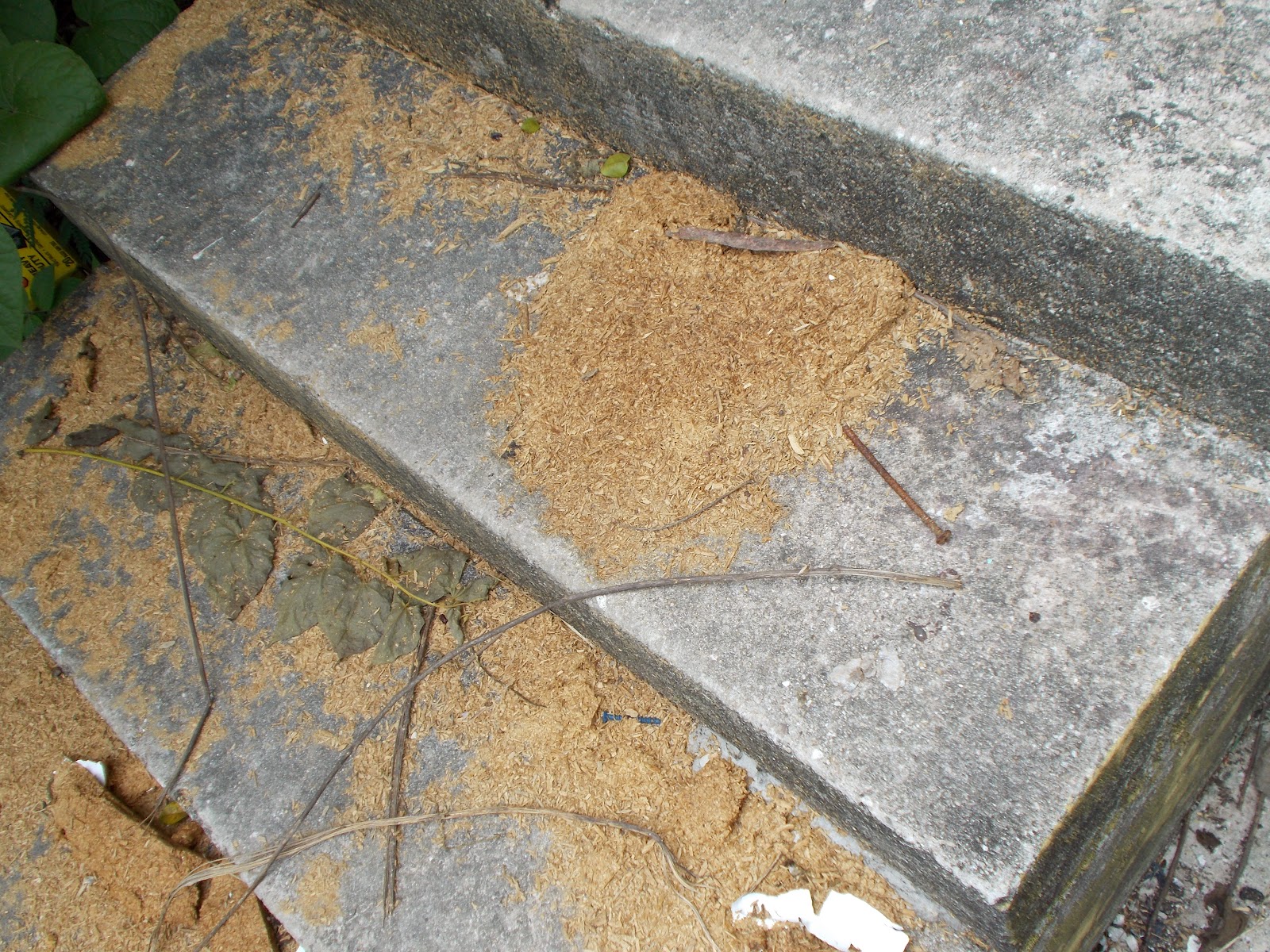
Fresh sawdust outside the side door of the E.W.F. Stirrup House indicating work inside is ongoing.

This fresh sawdust has not even gotten wet, despite the fact that it rains almost every day down here.
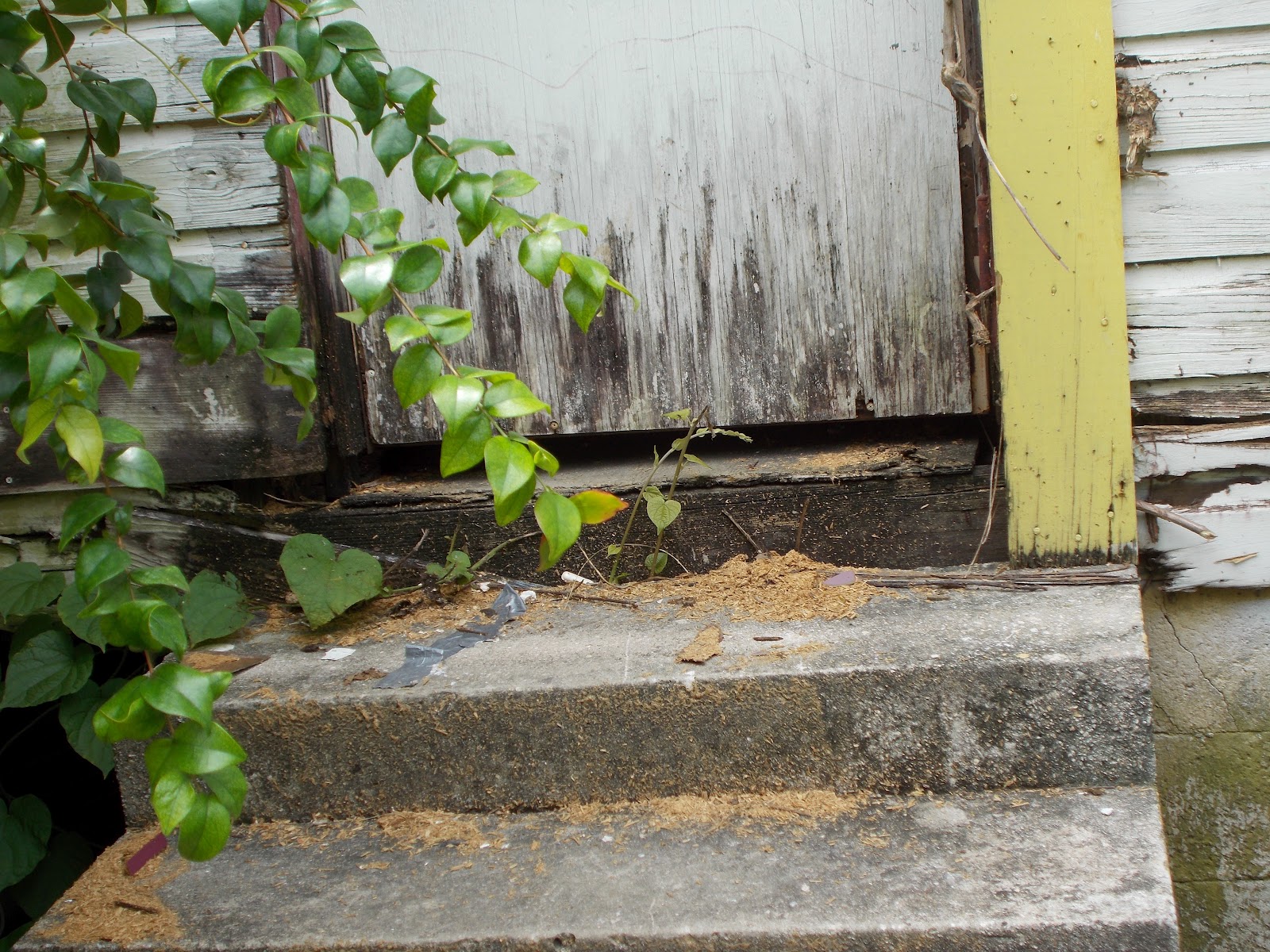
The fresh sawdust trails under and inside the side door of the E.W.F. Stirrup House.

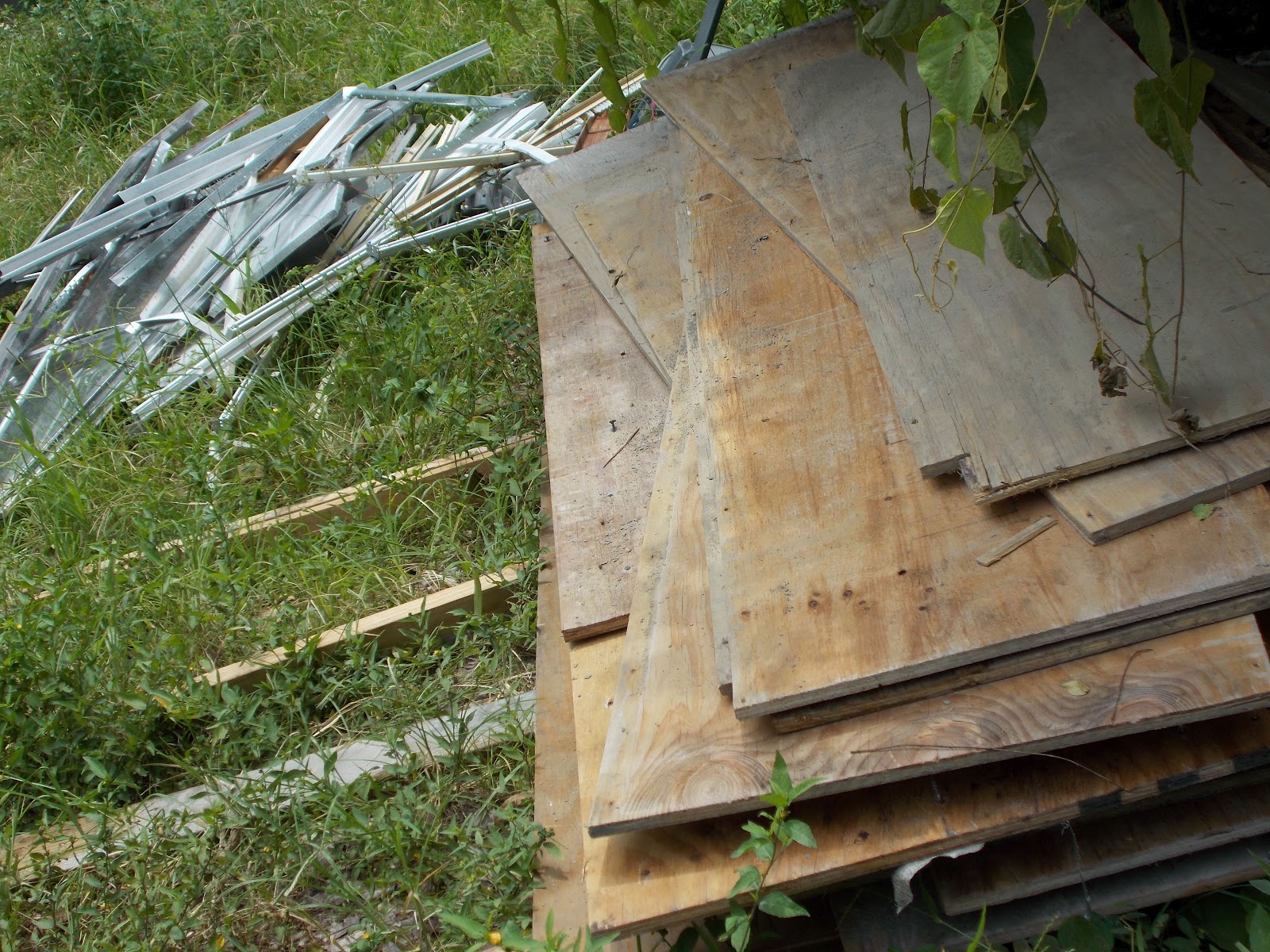
This pile of construction materials has also grown since Monday. Plywood makes a great sail in a hurricane.

These piles of trash, hidden behind the E.W.F. Stirrup House, away
from the prying eyes of City of Miami inspectors, have not grown.

This pile of trash behind the E.W.F. Stirrup House has not grown either.

This pile of trash has grown since Monday.

I don’t want to be anywhere near this plywood when Hurricane Isaac arrives.
This Reggae flyer is still in front of the E.W.F. Stirrup House. Hurricane Isaac will take care of it.

This Red Stripe carton in front of the E.W.F. Stirrup House is a new arrival. It matches my shoes.
***

***