All posts by Headly Westerfield

About Headly Westerfield

Calling himself “A liberally progressive, sarcastically cynical, iconoclastic polymath,” Headly Westerfield has been a professional writer all his adult life.

The Day I Met Bob Marley ► Part Two

As Part One of The Day I Met Bob Marley ended, I had just been given word by my boss at Island Records that instead of going to the two Bob Marley concerts at the University of Toronto’s Convocation Hall, I was being sent on a secret mission to New York City. You’re on the honour system that you’ve read Part One before continuing.

When Bob Marley and the band arrived in Toronto, the entire Island Records of Canada staff — all 3 of us — headed on over to Convocation Hall for some meeting and greeting, and for me to pick up the audio tapes. These live concert recordings were of the first 5 dates on the tour and had been smuggled into Canada by the band. Now I had to smuggle them back into the United States.

The dressing room at Convocation Hall was about 15’x15′. When we arrived we could barely see across the room due to all the ganja smoke. Marley and the band had a lot of friends in Toronto’s Jamaican community and they had already delivered the sacramental herb. My first shock was that Bob Marley was no taller than I am. I had only seen pictures and videos of him on stage and he seemed like a giant. Yet, he must have clocked in at 5’7″, or so, because we were standing there looking eye to eye. And that’s when the spliff came around to us.

Did I say spliff? This was an uber-spliff. This was the spliff to end all spliffs. Imagine something the size and basic shape of a baseball bat, with the fat end — the business end — — the burning end!!! — as big around as a softball. It tapered to a point and the whole thing was wrapped in a newspaper.
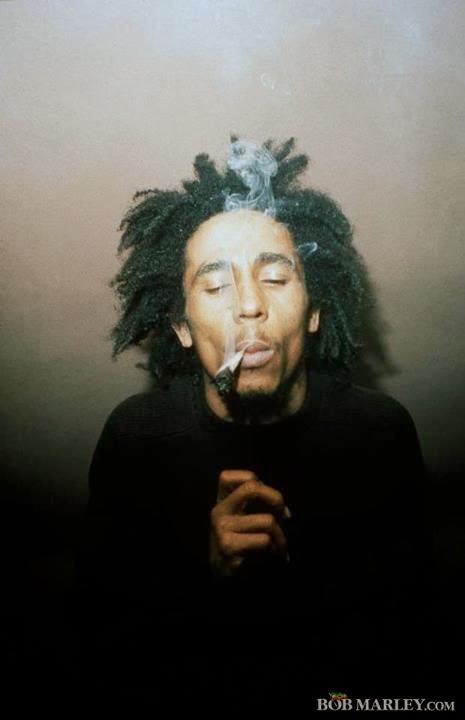
As I stood making pleasantries with Bob Marley, the spliff came around to him. Bob, being polite — or maybe just because he was testing me — passed it to me. Well, I was no rookie at this, and had been know to inhale, so I grabbed that sucker and took a good haul.

IT WAS THE HARSHEST THING I EVER INHALED IN MY ENTIRE LIFE!!!

I started coughing — no, choking — and Bob Marley thought it was the funniest thing he’d ever seen in his entire life. My second shock about Bob Marley: He giggled like a little girl. A happy, infectious, crowd-affecting laugh that had me laughing, even as the tears streamed down my cheeks. He put his arm around my shoulders and rocked at the waist with laughter. So did I. I took a 2nd haul, which was more successful than the first, passed it back to Marley, and then we got on to business.

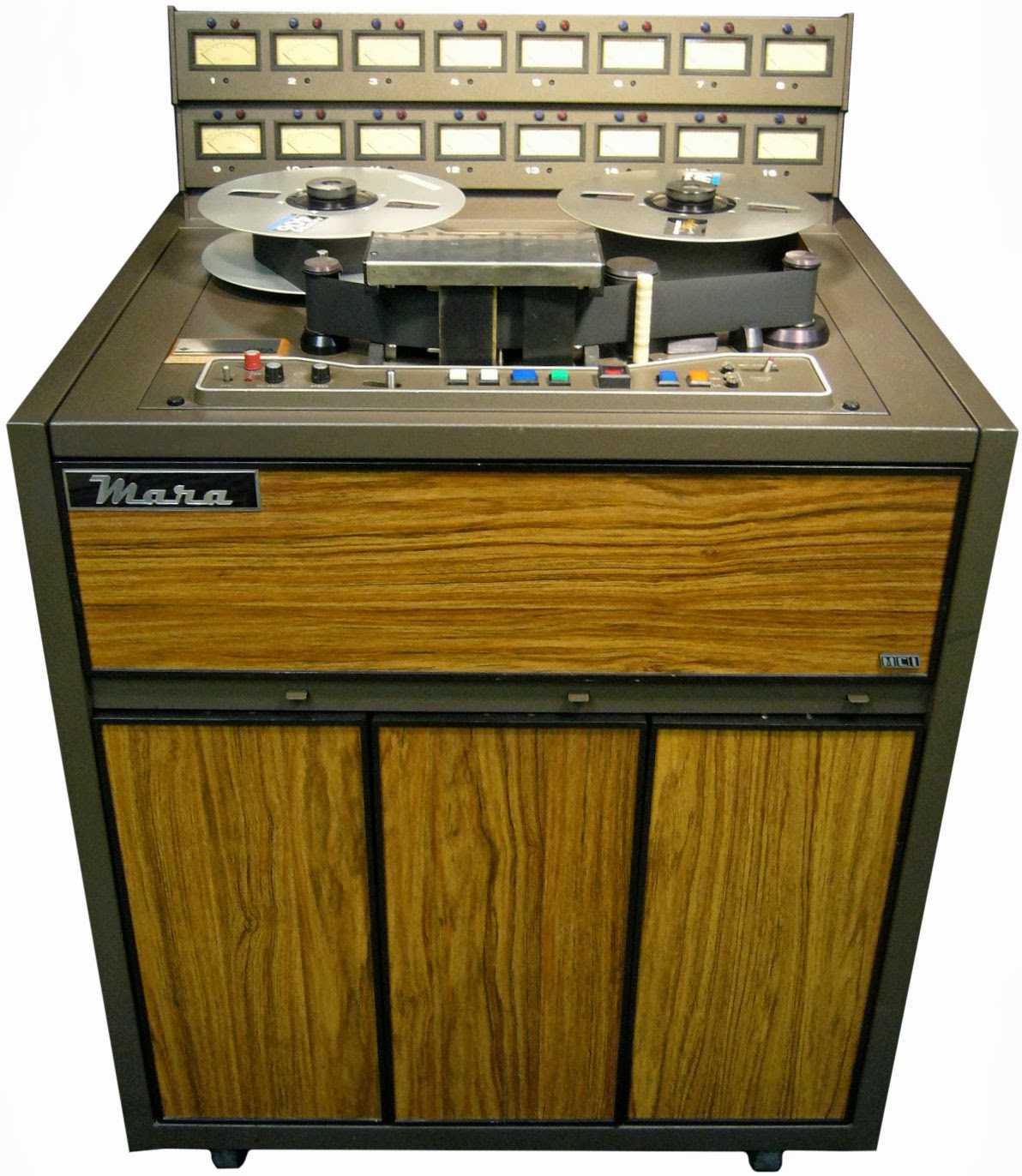
The tour manager handed me my charges: Five, two inch, 24-track audio tapes in cardboard boxes, making it a loose stack almost a foot high. Today this could be put on a thumb drive. Back then this was the only available storage device. My mission: take these tapes, fly them to New York City on my lap, and put them directly into the hands of Chris Blackwell, the founder of Island Records. The tapes are to never leave my sight. The tapes are not to be x-rayed. I am to give them to no one other than Chris Blackwell. Most importantly: When crossing the border I must never admit that the tapes contain live concert recordings. No one knew what the duty on such a thing might be and no one wanted to admit these tapes never should have been smuggled into Canada in the first place.

I never like to leave a smoke-filled room, especially one with Bob Marley in it, but there was only so much time to make my flight to New York. I grabbed the awkward pile of tapes and took them my car, one of a series a of Volkswagon Beetles I owned in the day, with the most amazing sound system in it for the day. It was like sitting in a set of headphones. I slipped in the cassette Bob Marley and the Wailers “Live! and cranked it up as loud as I could stand. If I was going to miss the concert at least I could have a concert in the car.


Crank it up!!!
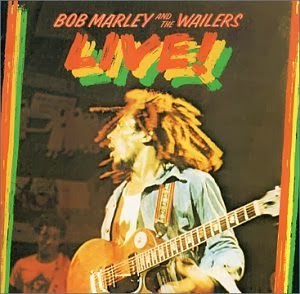
When I arrived at short term parking the shuttle bus was just pulling up. I grabbed the tapes and started running to catch it. The lid of the box on top of the pile caught the wind and flew open, papers flying all over the place. I dropped the tapes I was carrying and started chasing the paper around the parking lot until I got them all. As I grabbed the last one I watched the shuttle bus pull away.

The papers were all 8.5 x 11 photocopied sheets, with all the recording info for each track written in hand. I realized 2 things immediately: 1). There were no other copies of these documents, I had the originals; 2). How can I say I don’t know what’s on these tapes if what’s on these tapes is written on pieces of paper and stored right with the tapes? I opened all the boxes, took out all the paper, folded them up and put them in my pocket, and waited for the next shuttle bus.

Pearson Airport was a lot smaller in those days. Then, as now, travelers pass through U.S. Customs at the Toronto airport. Before you are funneled to your gate, you must satisfy the U.S. Border Patrol in Toronto. Once you pass that checkpoint, you are technically in the U.S. I managed to satisfy the officer on identity and citizenship, but, as you have probably guessed already, got tripped up on the tapes, which I refused to allow them to x-ray. This is an approximation of how that went.

“You’re more than welcome to examine them, but my instructions are they cannot be x-rayed because that would destroy what’s on the tapes.”

He examines them and satisfies himself that the tapes are just tapes, but he’s never seen 2-inch audio tape before, so he’s a bit confused.

“What’s on the tapes?”

“I don’t know. I’m merely a messenger.”

Now he’s really confused.

“Hang on a second.”

He brings another U.S. Customs guy who is higher up the food chain to look at the tapes.
This guy examines them and satisfies himself that the tapes are just tapes,
but he’s never seen 2-inch audio tape before either, so he’s a bit
confused, just like the first guy.

“What’s on the tapes?”

“I don’t know. I’m just a messenger.”

“Hang on a second.”

They both go off to have a private discussion in a room with a window that I can look into. I see them drag a few more Custom agents into the room. A huge discussion ensues and I’m starting to wonder if I need to proclaim my ‘Merkin citizenship to get into ‘Merka with these tapes.

All this time the clock is doing its thing: Tick, tock, boys! Let’s get it on. I’ve got a flight to catch. All the time they’re quite pleasant and I’m quite pleasant, but I’m starting to get insistent that I have to get to New York City by a certain time. I know there is only a 2-hour window before Chris Blackwell has to fly to London with the tapes. If I miss that connection I might have to fly to London to deliver the tapes and I didn’t pack for that. For that matter, I didn’t pack for New York City. All I was carrying were the tapes.

Meanwhile, I missed my flight while these custom agents were arguing amongst themselves. It turned out that what was causing the delay is that they had to charge me duty on the audio tape. However, there were no references to 2-inch tape in the Big Book of Import Duties. They couldn’t let me into the States before I paid duty on the tape, but they didn’t know what to charge me.

Remember when everyone didn’t carry a phone in their pocket? The next argument I had with them was that I had to use their phone to call the office to get further instructions now that they caused me to miss my plane.

“You can’t use the phone while you’re here.”

WAIT!!! WHAT???

I argued that it was their dithering that made me miss my flight. I’m just a courier. I not only need further instructions, but needed someone from the office to rebook my flight if they still wanted me to effect delivery. That was a 15 minute argument that I finally won, as I got louder and louder. Eventually I got Kathy Hahn on the phone in the middle of what was a very hectic day for her. She said she’d take care of it. However, she needed a number where she could call me back.

“What’s the number here?”

“You can’t have people calling you here!”

However, they said I could use the phone as much as I needed while they sorted out their problem. I had just successfully turned the U.S. Customs’ telephone into my personal office. I made several more quick calls and then waited for about 15 minutes more minutes before one of the geniuses at U.S. Customs had a breakthrough of his own. Since the book gave them the duty for a cassette tape, which is an eighth of an inch, why not multiply that by 16 to get the duty for a 2 inch tape? We all celebrated that an answer to our conundrum presented itself. Now came a new conundrum.

“How long is the tape?”

“How the hell am I supposed to know? And, we’re not laying it out on the ground to measure it.”

“Is it 50 feet?”

“Yeah, sure, okay, let’s say it’s 50 feet.”

They took out a calculator and starting hitting the buttons. “Fifty feet, times an eighth inch, times 16 equals . . . “

I can’t remember the exact price of the duty, but let’s pretend it was $34.72. I had $35.00 in my pocket, just enough to pay the duty, but not enough left over for anything else. I paid the duty and called the office. Kathy had managed to book me on another plane to New York. However, what would have been a conversation with Chris Blackwell lasting an hour and a half, would be reduced to a half hour.

My new flight was delayed 15 minutes getting off the ground and I started wondering whether I would end up in London before my next sleep. Toronto to NYC is a mere puddle-jump and no sooner than you get to cruising altitude than it’s time to start your descent. I glanced at my watch and realized it was going to be touch and go. Blackwell’s flight to London was imminent and I am already several hours late. Will he even be at the gate to meet me?
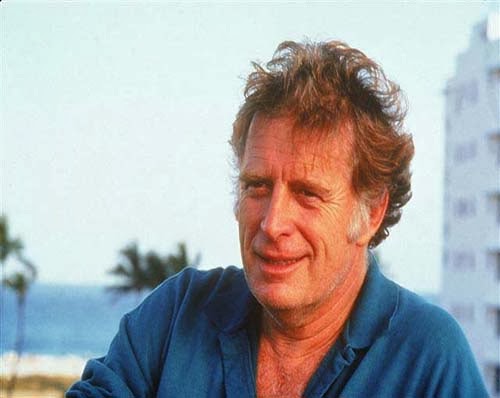
When I got off the plane, there was Chris Blackwell right at my gate, looking incredibly anxious. He thanked me very much and apologized that he had to run, but his flight was on the exact opposite side of the airport and he would be lucky to make it. I fulfilled my sacred obligation and put the tapes directly in Chris Blackwell’s hands. As I did so I stumbled through a sentence that might be interpreted as “I’m so proud to be able to work with Island Records,” but probably came across as total gibberish, and then he was gone.

The first and only time I was ever in Chris Blackwell’s presence.

Now what?

I had the company credit card. I could go have a bacchanalian night in New York City on the company’s dime. However, I just happened to look up at the departure board and saw that there was a flight back to Toronto leaving almost immediately. If I made that flight, it might not be a total loss; I might be able to catch some of the 2nd Marley concert after all. Amazingly there were still seats on that plane. I paid for the tickets with the Island Records credit card and boarded almost immediately. The flight got off the ground on time and there were no other delays. For the first time all day things are going smoothly.

We landed at Pearson Airport. where I caught shuttle bus back to the parking lot, jumped into my car, and cranked up the music. Then I raced down the 427 to the QEW, shot across to the Gardiner and then over to Spadina, screamed north, dodging streetcars and pedestrians in Chinatown, and over to the U of T campus. I drove right up onto the sidewalk to the side door of Convocation Hall.

I no sooner pulled up to the building than the doors opened and the audience rushed out, trapping me and my car for the next 20 minutes while a cop argued I couldn’t park there. I missed both Bob Marley concerts. What’s worse, I spent less time with Chris Blackwell than I had Bob Marley and I only spent 5 minutes with Marley.

And, that kiddies, is the story of the day I met Bob Marley. Island Records was very gracious and paid to have me go see Bob Marley and the Wailers in concert at Detroit’s Masonic Temple. I also hooked a vacation in Detroit, my home town, visiting family and friends before I went back to Toronto.

A Century of Coconut Grove Racism ► Soilgate Is Trolleygate Writ Large

One of hundreds of thousands of Racist internet memes

Follow the bouncing ball: Trolleygate is modern day Racism, pure and simple. Furthermore, the Racism that allowed for Trolleygate is exactly the same Racism that thought West Grove was the perfect place for Old Smokey, an incinerator that belched carcinogenics into the air for 5 decades. Racism — which is a cancer on our body politic — may have led to actual cancer clusters in Coconut Grove. I’m here to prove that thesis. 

Let’s start here: It’s been a truism since the founding of ‘Merka that People of Colour have always gotten the short end of the stick. There is no disputing that. But that’s a thing of the past, according to modern day Racists, because we now have a Black president. We are now living in a post-racial society. MISSION ACCOMPLISHED!!! Right?

For an explanation on the pics used to illustrate this article, please read my essay Racist Memes and Blogging ► Unpacking the Writer

Not even close. While some Racism is less blatant than it has been in previous decades, one can find hundreds of thousands of Racist memes against President Obama, each more disgusting than the next. However, make no mistake: It’s still Racism. Racism doesn’t have degrees. Like being pregnant, a meme can’t be a little bit Racist. It’s either Racism, or it isn’t. The entire story of Coconut Grove depicts a Racism that continues to this very day, culminating in Trolleygate.

West Grove is a quiet residential neighbourhood that has remained predominantly Black since its founding in the late 1880s. It was settled by Bahamians who came up through Key West, at one time Florida’s largest city. The Black Bahamians who settled in Coconut Grove worked for The Peacock Inn and Commodore Ralph Monroe, among the earliest residents. As a nascent tourist trade flourished, more Black folk arrived to do all of the backbreaking work and menial labour that made it all happen.

That West Grove wasn’t razed is due almost entirely to the efforts of one man, Ebeneezer Woodbury Franklin Stirrup. E.W.F. Stirrup was one of Florida’s first Black millionaires and, at one time, the largest landholder in Coconut Grove. On some of the land he owned he threw up more than 100 houses with his own hands. These he rented, sold, and bartered to other Bahamians. That’s why, at one time, Coconut Grove once had the highest percentage of Black home ownership in the entire country, making it unique.

It’s for that reason and that reason alone that The Powers That Be were unable to dislodge the Black residents of Coconut Grove. Overtown, just up the road and the second Black neighbourhood in Miami, had I-95 rammed through the middle of what had been the Black Shopping and Entertainment district. However, Overtown was mostly renters with absentee landlords, who were happy to cash out on their investments. The same pattern took place in Paradise Valley, in my home town of Detroit, which was leveled for I-75. The same scenario played out all across the country.

It’s not as if the Powers That Be didn’t try to get rid of Black Grove. There were three separate attempts to get rid of the neighbourhood. In 1921 an urban renewal project called The Bright Plan, approved but never realized due to an economic downturn, would have created a golf course on everything west of Main Highway to Douglas and north to Grand Avenue. In 1925 City Fathers tried to get Miami to annex around what was called Coloredtown, instead of including it. Miami decided to annex it all instead, which led to the creation of Coral Gables, the city that Racism built. In the ’50s, long after the rest of the city had indoor plumbing, West Grove still used outhouses. Honey wagons were just a way of life long after every surrounding neighbourhood (read: White neighbourhoods) had an indoor toilet. In the ’50s. The city wanted to raze the entire blighted neighbourhood and start all over, but the high percentage of Black home ownership defeated the proposal. People, who in some cases were now the 2nd or 3rd generation in the same house, refused to sell. They knew better. Where could they go? They would be redlined out of any neighbourhood they wanted to buy into. It was better to stay put and bequeath their homes to their children and their children’s children.

Which is to explain why the neighbourhood has remained predominately Black. That and the fact that White folk tend not to move into Black neighbourhoods. I’ll now let Nick Madigan, writing in yesterday’s New York Times, pick up the story of Old Smokey:

MIAMI — When she was little, Elaine Taylor remembers rushing home whenever Old Smokey fired up. Clouds of ash from the towering trash incinerator would fill the air and settle on the ramshackle houses and the yards of the West Grove neighborhood.

Her mother, who took in laundry, would be whipping sheets and shirts off the clotheslines. Often, the soot would force Elaine and her mother to wash everything again, by hand.

Old Smokey was shut down in 1970, after 45 years of belching ash, but its legacy might be more ominous than mere memories of soiled laundry. Residents of the neighborhood, established by Bahamian immigrants in the 1880s, have become alarmed by recent revelations that soil samples there show contamination from carcinogens like arsenic and heavy metals, including lead, cadmium and barium.

Ash from the old incinerator is being blamed, and residents are asking why none of this came to light sooner.

Something that Madigan leaves out of his story — because it makes a simple story of soil pollution and subsequent coverup far too complicated — is that the coverup was only discovered due to Trolleygate, the story I’ve been following since January. The documents were discovered by the pro bono legal team researching Trolleygate while preparing its case against Miami, Coral Gables, and Astor Development. While that suit was thrown out of court for a lack of jurisdiction, the documents kicked loose during the research are still bearing fruit. Friday I wrote about an email from a City of Miami Zoning and Building Department official who said that Trolleygate did not conform to the Miami 21 Plan. Yet, after some undetermined jiggery-pokery, [allegedly] corrupt Commissioner Marc D. Sarnoff managed to get the project approved anyway, despite the fact that it screws his owns constituents and rewards a developer in the next town over. But, that’s now a side issue to Soilgate, the discovery of toxic soil throughout Coconut Grove and greater Miami. [Coral Gables is now suing to get out of ever having to use the polluting diesel bus garage.]

The Racism that decided a Black neighbourhood was the perfect place for a polluting diesel bus garage — despite it not being zoned for it — can be seen as a parallel to the decision in the 1920s to build Old Smokey, the incinerator that polluted Miami. Miami needed an incinerator. Why not stick it as far away from the White folk as possible? Stick it in West Grove. Again from the New York Times:

Across the street from Old Smokey’s former site lies Esther Mae Armbrister Park and its playground. Down the block is George Washington Carver Elementary School, a once all-black institution that traces its history to 1899. Former students recall ash blowing in through the school’s open windows.

[University of Miami law] Professor [Anthony V.] Alfieri [of the Environmental Justice Project] said that the construction of Old Smokey “in the middle of a Jim Crow community” in 1925 exemplified the city’s pattern of neglecting the West Grove, an area that has never experienced the prosperity so evident in its neighboring communities. In a 1950 article in Ladies’ Home Journal, Marjory Stoneman Douglas wrote that when the city installed a water and sewage system in Coconut Grove, its western neighbor was left out of the project, and for years residents continued to use wells and outhouses.

Old Smokey was shut down in 1970 after many years of neighbourhood protests and a successful legal battle initiated by the White folk of Coral Gables. Yet, 98% White Coral Gables learned nothing from that court battle. When it needed a place to build its polluting diesel bus garage, Astor Development chose West Grove. This is the neighbourhood that’s been given the short end of the stick since it was called Kebo by the original Bahamian settlers almost 130-years ago. Even if you attempted to argue, against all logic, that the developer was unaware it was a Black neighbourhood, the only reason the land was cheap was due to the last century of systemic Racism, that depressed every economic indicator you can name in West Grove, especially when compared to the rest of the 33133 Zip Code, now considered one of the most exclusive in the entire country.

The Supreme Irony: Air pollution — emanating from a fake diesel-powered trolley bus or a giant incinerator — doesn’t abide by the Colour Line, of course. There appears be less pollution the closer one gets to Old Smokey’s former site. As the expression says, “What goes up, must come down.” It seems a lot of Old Smokey’s toxins came down in the Marc D. Sarnoff Memorial Dog Park. Coincidentally, or not, that’s right across the street from where [allegedly] corrupt Commissioner Marc D. Sarnoff lives. The New York Times again:

“Everything is testing to be residential standard,” Mr. Sarnoff said, referring to contaminant levels permitted under environmental regulations.

That may not be the final word. A cancer researcher at the University of Miami said that she and several colleagues discovered a cluster of pancreatic cancer cases in the West Grove several years ago.

“That’s the little region that lights up,” said the researcher, who spoke on the condition of anonymity because of the delicate nature of the issue. Although she found the discovery “puzzling,” she said she did not pursue it because of a lack of funds. But when she read a newspaper article this year about Old Smokey that said its ash had spewed arsenic and heavy metals into the neighborhood, she said “everything started making sense.”

The researcher noted that no correlation could be established between the cancer cluster and the old incinerator without more research.

Institutional Racism could be the answer as to why so many people in Coconut Grove are now being diagnosed with cancer. Yet, despite this ugly history of sticking the Black neighbourhood with what the White neighbourhood doesn’t want, [allegedly] corrupt Commissioner Marc D. Sarnoff, the City of Miami, and Astor Development all still think it’s appropriate for them to have played a shell game in order to get Trolleygate approved.

That’s nothing but Modern Day Racism, pure and simple.

Enjoy some videos of the Marc D. Sarnoff Memorial Dog Park from September 13, 2013, as the soil testing was occurring.


The Day I Met Bob Marley ► Part One

I’ve dined out on this story among family and friends a few times over the years. However, I never told it in an official forum until interviewed for the wonderful documentary podcast How Jamaica Conquered the World. While Roifield Brown did a terrific job editing my rambling into a coherent story, I knew I could do better in print. However, first I want to put in a good word for Roifield’s great site. In its own words:

For a nation that gained independence from the British only 50 years ago, Jamaicans have left their mark on music, sport, style and language around the globe and have become an international marker of ‘cool’. Jamaican music has colonised the new and old world alike, its athletes break world records with impunity and youngsters the world over are incorporating Jamaican slang into their dialects. Despite this the country has reaped no economic reward in return, unlike empires of old, and Jamaica still remains an economic pygmy. Jamaican influence has unconsciously spawned creative innovation around the globe and to this day it remains a country to be studied, celebrated, and demystified. Through the help of linguists, artists, musicians, and historians we take a closer look as to how Jamaican culture conquered the world. 

How Jamaica Conquered the World is a class act, and I’d be saying that even if I didn’t appear in a couple of segments. As both history and a jukebox of Caribbean music, How Jamaica Conquered the World is worth as much time as you can devote to it.

Okay, kiddies, pull up a chair and pour yourself a cup of coffee, because this one’s going to be long . . .

On the day I met Bob Marley I was already working for Island Records Canada as a Record Promo Guy. It was one of my first jobs out of college and I was the low man on the totem pole in an office of 3 people. We three were required to cover the entire country of Canada, the 2nd largest country in the world

It’s worth mentioning how I came to work at Island Records because that also involves Bob Marley. A year earlier I had been the first full-time paid manager of Radio Sheridan. It was one of the few campus stations that received personal visits from the Record Promo Reps from all the major companies. Campus radio was much maligned in those days by the record companies, and deservedly so. A company would take the time and expense to package records and send them to a campus station, where they would rarely find their way into the library. They’d disappear into someone’s record collection.

By this time Radio Sheridan was 3 years old. It wasn’t an official part of the college; it was merely tolerated by Sheridan College. A small group of us, some attached to the student government and others in the Media Arts program, designed the concept of the radio station broadcasting on a closed-loop antenna system. We pitched it to the student government, which fell into line behind it. They presented it to Administration, which not only approved it, but gave us 2 very small rooms on the 2nd floor of the new wing. The station was entirely student-funded, student-built, and student-operated. I started off as Assistant Manager and later became the first (and as far as I know only) full-time paid Station Manager. I ‘hired’ Lorraine Segato to be one of my DJs and like to feel I set her off on her path to brilliance. 

Unlike other campus stations, from Day One, we felt it important that every record Radio Sheridan ever received was cataloged and shelved in the library. No genre or era was off limits and the only time a record was shelved with the words NO PLAY on it had to do 4-letter words, not musical styles. It was still shelved and everyone of us played George Carlin’s 7 Words You Can’t Say at least once. The rules were as flexible as any DJ wanted to try and get away with. It was the great era of Free Form Radio. We were all trying to emulate David Pritchard and David Marsden of CHUM-FM, when those guys were crazy MoFos on the air and playlists hadn’t been tightened up by the Radio Consultants, who were the real villains that ruined the medium of music radio.

However, Radio Sheridan had 3 things going for it, as far as the Majors (as we called the record companies) were concerned: 1). They could find every record they ever gave us in our library; 2). We would play music the other stations wouldn’t; 3). We were just off the Queen Elizabeth Way (QEW) between Toronto, where they all had head offices, and Hamilton, the next largest radio market in Ontario (if you ignored Windsor and lots tried). More than one Record Rep remarked how it was a nice stopover during a Hamilton swing. And those of us who worked at Radio Sheridan were eager acolytes for their records, posters, and concert tickets.

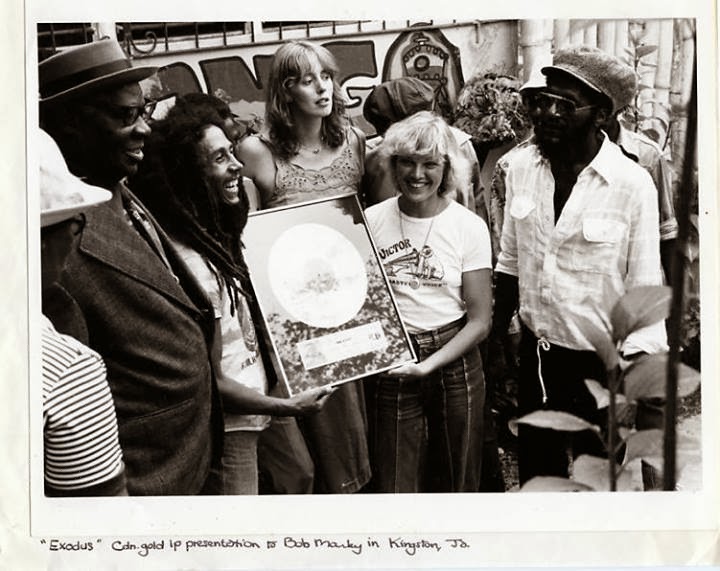
Kathy Hahn, a dear friend to this day, presents Bob Marley with a Canadian
Gold LP for Exodus in Jamaica, the 1st and only time a Canadian Gold
LP awarded outside the country; circa 1979

By the time I became full time Radio Sheridan Station Manager, we were getting so many records sent to us in the mail and hand-delivered by Record Reps that there was always a slush pile. Each record had to be listened to, categorized by genre and artist, duplicate file cards made, and then shelved in the record library. There was a pile of about 50 records on the day I first heard from the head of Island Records Canada. I was impressed that the head of the company was calling. I didn’t know the office consisted of just him and his assistant, Kathy Hahn, who I later discovered actually ran the office and made everything operate on schedule. The head of Island Records Canada was on the phone asking me whether I had received the latest records Kathy had sent in the mail. I assured him that I did, but had not had a chance to listen to them yet before shelving them. Then this guy started in on the hard sell (paraphrasing), “Oh you gotta listen. This is the next big thing. You need to jump on this. You’re going to hear a lot about Bob Marley.”

I hadn’t heard of Bob Marley before. More importantly, as far as I was concerned at that exact moment, I had never had a Record Promo Rep using such hard sell on me. The Promo Guys that serviced Radio Sheridan were all casual. They’d toss a record in our direction and say, “Give this a listen.” If we came back and said, “Hey, we like that artist,” the Rep might arrange to have the entire back catalog sent to us, or posters and concert tickets if those were available. The one thing they knew better than to do was to try and “sell” us on an artist. The music was either in the grooves, or it wasn’t.

However, this guy from Island Records was already irritating me and it was only our first phone call. I assured him I’d listen to his records just as soon as they floated to the top of the slush pile. However, that wasn’t the end of it. A few days later he called back, asking whether I’d listened to them yet. I explained the Hobson’s Choice system I developed: New records go on the bottom of the pile. I listen and shelve from the top of the pile. His records were mid-way in the pile, but they’d eventually make it to the top.

That’s when he started on the hard sell again. No other Promo Rep had ever tried to “promote” their records at me this vociferously and it was beginning to piss me off.

A few days later I go through the whole thing again with him. That’s when I flipped out at him. “Hear what I’m doing? I’m putting your records on the top of the pile. They will be the next records I listen to.”

I hung up absolutely prepared to hate the records almost as much as I had begun to hate the disembodied voice from the Bedford Road offices of “Island Records.” I put the first record on the turntable and dropped the needle. What happened next was four minutes and 15 seconds that changed my life. This is not hyperbole. Listen:

The first 30 seconds of Concrete Jungle were absolutely magical to me. It starts off with two guitars just noodling around, almost as if they are tuning up without structure. A single organ note sings in the background. At about 8 seconds in a drum beat sputters and then locks in. A bass guitar drops in a few notes here and there, while a lead guitar plays a few sustained chords and then a meandering lead line. Another keyboard is adding random notes. These instruments swirl around each other making no music I has ever heard of before. Then, at the 30 second mark, this kaleidoscopic swirl of what sounds like random instrumentation locks into place with the One Drop, bass and drums. Riddem!

I was hooked!!! Immediately!!!

For the first time in my life music SPOKE to me in a way that none had previously. Reggae penetrated my very soul. I felt it deep, deep within me. Within 6 months I was working for Island Records as Record Promo Rep and Chief Cook and Bottle Washer of Island Records Canada. One of my first surprises was that the head office for Island Records Canada was two front rooms of a beautiful house at 93 Bedford Road. The house was semi-famous, having appeared in two movies: The Last Detail and The Paper Chase. The rest of the house was residences, with a family living on the 2nd floor and a bachelor on the third floor. I eventually moved into a basement apartment in the house where I only had to walk upstairs to get to work, until I got hired away to United Artists in Scarberia.

My second surprise is that in a 3-person office, I would be called upon do do anything and everything, as we all did. One day I would be stuffing envelopes with the press release I had written the day before and picked up at the printer’s that morning. The next day I might be the limo driver taking Robert Palmer and his 2 singers to a concert at the CNE grounds, while they practiced the difficult “doobey doobey doops” back-up vocals of Hey Julia and Sneaking Sally Through The Alley in the back seat.

The most exciting and busy time in the life of a Record Promo Rep is the period immediately preceding one of your artists coming to town for a concert. Bob Marley and the Wailers had announced a North ‘Merkin tour for April to June of 1976 to promote the new release, Rastaman Vibration.

When one of your acts is coming to town, there’s a lot of prep work to be done. While the promoter will take out advertising to promote the concert, the record company will also take out adverts to promote the music currently available in stores. Sometimes those ads are designed in-house, but most of the time head office supplies camera-ready artwork, which still needs to be placed where the local office feels the most eyeballs will see it. In the case of Bob Marley, an artist barely known outside his native Jamaica in 1976, we did a lot of non-traditional advertising, naturally targeting the small weeklies and record stores that served Toronto’s large Jamaican population, much of which was strung along Eglington West, around Oakwood.

One of the jobs of a Promo Rep is to put up displays at the record stores and cajole the staff to rack the LPs up front. You see, kiddies, in the olden days of mortar and brick music machines, music could still be an impulse buy, like gum still is at supermarkets. When one of your acts is coming to town, this is done on steroids. At least a month ahead of time you would start putting up displays at all the record stores, beginning with those downtown and working out to the suburbs. The displays would include concert posters and racks for the various LPs the artist had out.

While it’s not exactly Payola, three things a Record Rep has in abundance are free LPs, free posters, and free concert tickets. These are spread around where they will do the artist the most good, as is access to the artist by radio and tee vee people. Artists will let you know in advance what their press availability will be. It’s up to the Promo Rep to apportion that time where it will do the artist the most good. These interviews won’t help concert sales (unless sales are slow, for which last minute interviews can be helpful), but will help record sales, which was the primary goal. The interviews will also be used ‘down the line’ as promo material for the upcoming shows on the tour, which could help ticket sales in future cities, which will lead to record sales.

While all tour arrangements (travel, hotel, meals) are handled by someone else, once the band arrives in town it’s the job of the record company, and most often the Promo Reps, to ferry them around town, make sure they get to any interviews and/or signings on time, and, most importantly, make sure they arrive at the concert venue in time. This often requires precision timing. Itineraries broken down into 15 minute increments are prepared, photocopied, and passed out to everyone who will need them.

The month before an artist comes to town is the most frantic time in the life of a Promo Rep, which only gets more frantic every day as the calendar counts down to Concert Day, which is the most frantic of all. One only gets to breathe a sigh of relief when the artist becomes the responsibility of the next Promo Rep in the next town on the tour.

The day I met Bob Marley was the most frantic day I ever had in the Music Bidnezz. It began in the Bedford Road HQ of Island Canada as we sat around going over a checklist of things that still needed to be done when the boss said, “You won’t be able to go to the concert, Headly.”

WAIT!!! WHAT???

I pretty much exploded.

“I’ve just spent a month working my ass off for this concert. I’ve papered dozens of record store walls in posters and empty LP covers. I’ve cajoled the alternative papers into doing articles in advance of the concert. I convinced some alternative radio stations to play some Marley, even though they’ve never heard of Reggae before. I’ve set up interviews with Bob Marley and made dozens of arrangements with people who will be at the show tonight. And, now you’re telling me I can’t go to the show?”

That’s when it was explained that I would be on a special, secret mission for Island Record International!!!

Here was the master plan: the two concerts at the University of Toronto’s Convocation Hall were the sixth and seventh on the tour, with Montreal the night before. Prior to that were four dates in the States: Upper Darby, Pennsylvania; Washington, D.C.; Boston, and New York City. The tour was being recorded and the band had smuggled several 2-inch reel-to-reel, 24-track recordings of the previous concert dates into Canada. They knew better than to try and smuggle ganja into Canada, knowing there were enough Jamaicans who wanted to present them with the sacramental plant upon their arrival. However, audio tapes? Those they smuggled into Canada without declaring them or paying any duty on them.

My secret mission was to collect the tapes from the band when they arrived, smuggle them back into the United States, and put them directly into the hands of Chris Blackwell.

CHRIS BLACKWELL?!?!?!

At that time in my life Chris Blackwell would have been the only person who I would have missed Marley for. Chris Blackwell was my musical hero. Chris Blackwell was the man who started up Island Records and still the head guy. A slight tangent is in order for A Short Biography of Chris Blackwell:

Although born in London (in 1937), Chris Blackwell spent his childhood in Jamaica. His mother came from a prominent family, said to be one of the 21 families that controlled Jamaica during the 20th century. After his parents divorced his mother took up with Ian Fleming and is said to be the inspiration for Pussy Galore. These days Chris Blackwell owns Goldeneye, where Fleming wrote all the James Bond novels. However, if that were it, there would be no reason to write this tangent.

At the age of 21 Blackwell had a boating accident off Jamaica’s southern coast when he crashed his sailboat on a coral reef. He swam to shore, collapsing on the beach in exhaustion. There he was rescued by some Rastafarian fisherman, who took care of him until he was healthy enough to leave. However, if that were it, there would still be no reason to write this tangent.

A year later, Chris Blackwell started Island Records, naming it after the Alec Waugh novel “Island in the Sun.”  Blackwell started releasing Jamaican music in 1959 and had limited regional success. In 1962 Blackwell moved Island operations to London and started making inroads in the Jamaican community with some early Ska and Bluebeat tunes that he had either recorded or licensed. One of those early licenses was for “My Boy Lollypop” by Millie Small, the cover of a 1956 tune by Barbie Gaye, one of the first hit songs in the newly emerging style of Ska.

Compare Millie Small’s version of My Boy Lollypop with Barbie Gaye’s:

As the WikiWhackyWoo quotes Blackwell:

I didn’t put it [the Millie Small single] on Island because I knew it was going to be so big. Independent labels in those days couldn’t handle hits, because you couldn’t pay the pressing plant in time to supply the demand, so I licensed it to Fontana, which was part of Philips. It was a big hit all around the world, and I really wanted to look after Millie, so I went everywhere with her, which took me into the mainstream of the record industry. I was lucky enough to see Stevie Winwood with the Spencer Davis Group, at a TV show in Birmingham. So then I started to spend more time in that area. This whole new music was emerging.

By “new music” Blackwell wasn’t talking about Reggae; that came later, after Island had already signed a few acts.With the proceeds of the smash Millie Small hit, he started signing bands to Island Records. After Spencer Davis Group and Steve Winwood came other Island signings: Traffic; Emerson, Lake and Palmer; Cat Stevens; Jethro Tull; Free; Fairport Convention; Kevin Ayers; Georgie Fame; Sparks; John Martyn; Spooky Tooth; Nick Drake; Roxy Music, Brian Eno; John Cale; The Chieftains; Richard and Linda Thompson; U2; Pete Wingfield; and many more. While many of these artists were signed to Island Records, Blackwell licensed some of these acts to other record companies in North America. To confuse matters even more, there were times the recordings were licensed to a different record company in Canada than ‘Merka.

And, that’s where I came in. I had been listening to music from Chris Blackwell for years, much longer than I had been listening to Reggae. Sure I’d be willing to miss two Bob Marley concerts at Convocation Hall to meet Chris Blackwell. He was one of my heroes.

Read Part Two of The Day I Met Bob Marley.

BLOCKBUSTER!!! The Trolleygate Smoking Gun Surfaces

Ready for his close-up: [Allegedly] corrupt Miami Commisioner Marc. D. Sarnoff
at the Trolleygate Dog and Pony Show posing for the Miami Herald.

A whistle-blower on Trolleygate could blow down the house of cards carefully erected by [allegedly] corrupt Miami Commissioner Marc D. Sarnoff. At least that’s what people who call Sarnoff the “Teflon” Commissioner are hoping.

I received a call from an anonymous tipster yesterday telling me of an email being circulated privately (but has since become public) that should have put a stop to the government operated vehicle maintenance facility*, aka Trolleygate, before the first bit of dirt had ever been turned on the project. The email, from Dakota Hendon in Miami’s Miami Building and Zoning Department, said, essentially, that the government operated vehicle maintenance facility being proposed for Douglas Avenue did not
conform to the Miami 21 Plan.

Who is Dakota Hendon? For one thing he helped write the book on the Miami 21 Plan [PDF], so he should know what’s allowed and not allowed. According to an online biography Hendon worked in the City of Miami Planning Department from August 2006 to September of 2010, when he moved to the City of Miami Building and Zoning Department. It was in this capacity he wrote to Francisco Garcia, the City of Miami Planning Director, warning that government operated vehicle maintenance facility being proposed was non-conforming. Yet, like all projects that [allegedly] corrupt Commissioner Marc D. Sarnoff comes into contact with, no one really knows how this non-conforming project got approved, especially after the Zoning department tried to put the kibosh on it.

It just kind of happened. Just like how the Marc D. Sarnoff Memorial Dog Park and the Marc D. Sarnoff Memorial Traffic Circle just kind of happened, even though no one has ever taken responsibility for green-lighting those projects.

However, we now know who tried to stop Trollygate before it even started. On May 24, 2011, Dakota Hendon wrote to Francisco Garcia — City of Miami Planning Director — which included a helpful definition from the Miami 21 Plan:

Francisco,

We have a bit of a problem. The Coral Gables Trolley Station that I met with you and the applicant on a few weeks ago appears to not be an allowable use as we had originally anticipated. See the definition of Auto-related industrial below. I believe this is specifically an industrial use. At this point, they have already submitted for the Warrant and action needs to be taken to stop the application. Additionally, IDR was adamantly against the project in the specific location.  Please call me to discuss at your convenience. 

Auto-Related Industrial Establishment: A facility conducting activities associated with the repair or maintenance of motor vehicles, trailers, and similar large mechanical equipment; paint and body work; major overhaul of engine or engine parts; vehicle impound or wrecking yard; outdoor vehicle sales, storage or repair; and government vehicle maintenance facilities. This includes auto related Uses not otherwise allowed within the commercial auto related establishment category.

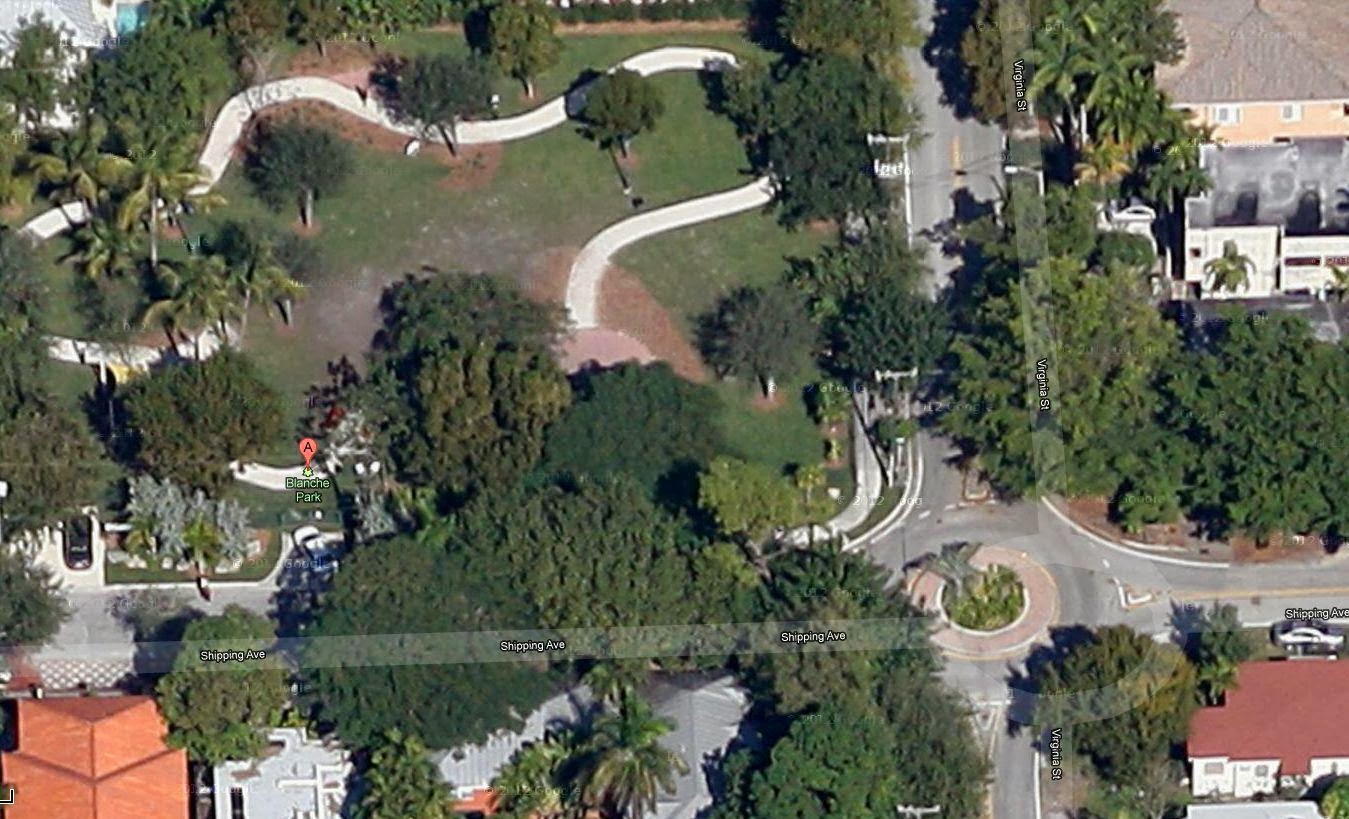
The Marc D. Sarnoff Memorial Dog Park and adjacent Traffic Circle

Speaking of the Marc D. Sarnoff Memorial Dog Park: This has not been a very good month for [allegedly] corrupt Commissioner Marc D. Sarnoff and his doggie park. The residents are up in arms after toxic dirt was found polluting not only the dog park, but also that last sliver of land that Sarnoff decided to leave for the children, after carving out a full two-thirds of the park and turning it over to the dogs. Since the residents are also Marc D. Sarnoff’s neighbours, I imagine it’s made for some tense relations along Shipping Avenue.

IRONY ALERT: In what can only be the supreme irony in this entire story, the only reason it was discovered that the Marc D. Sarnoff Memorial Dog Park was polluted in the first place was due to the West Grove residents’ lawsuit against the government operated vehicle maintenance facility, which was thrown out of court last month. While expressing sympathy to the residents’ plight, Judge Ronald G. Dresnick ruled he did not have jurisdiction in the Trolleygate case.

However, part of the pro bono legal team that represented the West Grove neigbourhood was Zach Lipshultz, who is a graduate student at the University of Miami School of Law’s Center for Ethics and Public Service. As part of that case, he started documenting the apparent toxicity in several West Grove locations. Recently the City of Miami ordered them to be tested again and, just for good measure, included the Marc D. Sarnoff Memorial Dog Park, which had never been tested before.

As David Villano of Miami News Times notes, the Marc D. Sarnoff Memorial Dog Park is getting an immediate clean up after toxic dirt was discovered there, while the City of Miami has known about toxic soil at Armbrister Field and 3 other locations for years without taking any action whatsoever. I guess when you’re the commissioner, you just get toxic clean-ups, dog parks, and traffic circles, while the rest of the citizens of Miami can take a flying leap at a rolling donut.

But, I digress. [I’ll be writing more about the Coconut Grove’s tainted soil in an upcoming post. One Sarnoff Scandal™ at a time. Let’s just stick with Trolleygate.]

It’s all about these fake trolley buses from Coral Gables, the next town over

Coincidentally my anonymous tipster (who was the first person to ever tell me about Trolleygate and even coined the name) had contact with Dakota Hendon when he was still with the City of Miami’s Building and Zoning Department. I was told that Hendon was a helpful resource within the office, always friendly, and willing to explain and help navigate the red tape to obtain building permits. The next thing my anonymous tipster knows, Dakota Hendon is no longer
working for the City of Miami and the non-conforming government operated
vehicle maintenance facility was rushed the zoning process “faster than shit
through a goose,” to use one inelegant phrase thrown around.

Now that Dakota Hendon’s email is public, my anonymous tipster wonders whether this is why he no longer works for city and whether he was pushed, or did he quit. Here’s what’s known for certain: [allegedly] corrupt Commissioner Marc D. Sarnoff shepherded this project from beginning to end, working the backrooms with Astor Development to offer a $250,000 ‘bribe’ to improve Armbrister Field, suspected for years of being polluted.

Another long-time Sarnoff critic [who also wishes to remain anonymous. In fact, it’s hard to find someone willing to go on the record about Sarnoff because people are afraid of his vindictiveness. Many have told me stories of how he punishes his perceived enemies, something I witnessed for myself at the Trollygate Dog And Pony Show.] says this is a tried and true Sarnoff tactic: To offer something to one part of the neighbourhood to get them onside, in order to run roughshod over the rest of the neighbours’ objections, and while the various factions are playing off against one another, Sarnoff will do something like push through a government operated vehicle maintenance facility.

No doubt last month Astor Development and [allegedly] corrupt Commissioner Marc D. Sarnoff had hoped that Judge Dresnick had the last word on Trolleygate. While the residents were decided whether they should appeal, the City of Coral Gables decided to sue Astor Development over its own government operated vehicle maintenance facility.

I don’t know if depositions are taken in cases like this, but here are some questions I’d like to ask if given the chance:

I’d ask Dakota Hendon:

1). Why he’s no longer working for the City of Miami;
2). Why does the written record end at his email;
3). Did he follow up with Francisco Garcia;
4). Who approved this project;
5). What contact did he have with [allegedly] corrupt Commissioner Marc D. Sarnoff over this project;
6). What contact did he have with Astor Development.

I’d ask Francisco Garcia:

1). Why does the written record end with the email from Hendon;
2). Did he follow up Hendon;
3). Who approved this project;
4). What contact did he have with [allegedly] corrupt Commissioner Marc D. Sarnoff over this project;
5). What contact did he have with Astor Development. 

Then I would ask some pointed questions of Astor Development:

1). How often did you meet with [allegedly] corrupt Commissioner Marc D. Sarnoff on this project;
2). How many of those meetings were attended by community groups;
3). Who came up with the $250,000 bribe to Arbrister Field;
4). What assurances did you get from [alleged] corrupt Commissioner Marc D. Sarnoff that this building would go ahead as planned;
5). Whose idea was it to put shutters on the building to make it look more Bahamian;
6). What contact did you have with Francisco Garcia and/or Dakota Hendon.

Then, once I had the answers to those questions, I would call [allegedly] corrupt Commissioner Marc D. Sarnoff to the witness stand and, UNDER OATH, based on the triangulation from all those questions above, see if he will admit to being a corrupt Commissioner. I say this because no one else can think of any other reason that [allegedly] corrupt Commissioner Marc D. Sarnoff would go to bat for a developer from the next town over, to build a polluting bus garage for the next town over, that clearly contravenes the Miami 21 Plan, as evidenced by the city’s own Zoning and Planning Department official.

Who is getting what out of this project? Miami gets no tax revenue from this building and has been paying layers to defend it in court. It’s already a millstone around taxpayers’ necks. Meanwhile, the West Grove residents get all the pollution from this building, while the City of Coral Gables has denied them even the courtesy of a bus stop. Because: That might allow predominately Black West Grove to visit the lily White Miracle Mile in Coral Gables, the next town over, which is the purpose of these phony trolley buses in the first place. [Read more about Coral Gables in my series No Skin In The Game and see why I call it the city that racism built.]

Rampant speculation [in almost every conversation I have about Trolleygate] leads people to believe that somehow [allegedly] corrupt Commissioner Marc D. Sarnoff made out like a bandit on this deal, because there is no other logical explanation for him selling out his own constituents the way he did in Trolleygate.

Read all my posts on Trolleygate here.
View all my videos on Trolleygate here.

* The reason I continue to use the awkward phrase “government operated vehicle maintenience facility is two-fold: 1) That’s what it is; 2). That exact phrase is one of the specifically prohibited uses along Douglas Road, according to the Miami 21 Plan.

Edited September 21, 2013: In my anger I used an expletive that I’ve excised. Also, a lawyer suggested I take out the word “bribe.” Instead I have surrounded it in ‘these quotes’ denoting the word is used colloquially and not legally.

The Mark Koldys-Johnny Dollar Cyber-Bully Comments of the Day

Rebecca Sedwick, cyber-bullied to death

I’ve been thinking a lot about cyber-bullying lately, which should not be a surprise as I have been on the end of a cyber-bulling campaign that’s lasted for well more than a year.

However, cyber-bullying has also been on my mind because I have been reading about this horrible example of cyber-bullying in the New York Times, which led 12-year Rebecca Sedwick to commit suicide by jumping to her death.

In jumping, Rebecca became one of the youngest members of a growing list of children and teenagers apparently driven to suicide, at least in part, after being maligned, threatened and taunted online, mostly through a new collection of texting and photo-sharing cellphone applications. Her suicide raises new questions about the proliferation and popularity of these applications and Web sites among children and the ability of parents to keep up with their children’s online relationships.

For more than a year, Rebecca, pretty and smart, was cyberbullied by a coterie of 15 middle-school children who urged her to kill herself, her mother said. The Polk County sheriff’s office is investigating the role of cyberbullying in the suicide and considering filing charges against the middle-school students who apparently barraged Rebecca with hostile text messages. Florida passed a law this year making it easier to bring felony charges in online bullying cases.

“A coterie of 15 middle-school children.” Let that sink in for a moment.

Bullies were often bullied as children. Was little Mark
Koldys a victim in his childhood? That would explain a lot.
Hell, that sweater alone would be worth slapping him over.

Just like analog playground bullies, cyber-bullies don’t work alone. Bullies can’t work alone because bullies are, essentially, cowards, pure and simple. Bullies most often become bullies because they were bullied as children. When it becomes their turn to be the bully, they need the mob mentality to give them the courage needed to attack.

Which brings us full circle to my coterie of cyber-bullies: The Flying Monkey Squad.

The Flying Monkey Squad — and that would be primarily Mark Koldys, aka Johnny Dollar, and Ashley Graham, aka Grayhammy — needs the mob mentality to support their cruelty. And, make no mistake: Cruelty is the exact reason The Flying Monkey Squad exists. The mob mentality allows them to cackle and laugh at their latest, cruel attacks on whomever they decide is the Enemy of the Day.

Sadly, I am almost always Enemy of the Day. Nary a day goes by they don’t Tweet about me. Don’t believe me? Take a look at their Twitter feeds [Johnny Dollar & Grayhammy.] Looking at their feeds will demonstrate better than anything I could type how they act like a coterie of obsessed cyber-bullying 12-year old school girls.

Like 12-year old cyber-bullies, they pick and probe for a topic that will get a reaction. One day it’s teasing me that I can’t afford the Harry Nilsson Box Set because I mentioned casually on facebook that it was not in my budget. Duly noted by the Flying Monkey Squad, who used it as an attack.

Then later, when they didn’t get the reaction they were hoping for, they thought dissing Harry Nilsson might piss me off and bring me out. So, that’s why one day they spent hours calling Nilsson every name they could think of.

More silliness: You know how 12-year old girls will also make fun of people’s looks? That must be why The Flying Monkey Squad returns to the topic of my beard over and over again, because that’s how 12-year old girls attack. The Flying Monkey Squad even got James Rosen to make fun of my beard, which must make him 12-years old as well. You’d think that my laughing at all their beard bullshit — even to the point of creating a photo album on facebook, called My Beard Over The Years, filled with epic beards — would make them realize that I already know I have a beard and that their japes don’t bother me.

But, no. They even made fun of my beard again the other day — just like 12-year old girls would do. It clearly demonstrates their crazy obsession, because Bitstrips is just a bit of fun I have on my facebookery and neither Mark Koldys or Ashley Graham are among my facefriends. [In fact, they keep their facebook walls hidden.] However, because nothing gets by The Flying Monkey Squad (clearly my most faithful fans) even my facebook tomfoolery is not beneath their cyber-bullying. It’s HIGH-LARRY-US they’d spend any time tricking up an image. It’s HIGH-LARRY-US they think it’s a clever attack. But then, again, I’m dealing with 12-year old girls in The Flying Monkey Squad who are obsessed about my every facebook and Twitter utterance:


Because beards have now become a running joke between me and my facefriends, I couldn’t help but send out the following this morning:

Within minutes, because nothing I do or say ever gets by The Flying Monkey Squad, Ashley Graham replied:

It’s not the first time he’s gone for flea-infested either. Just like a 12-year old girl would. However, that’s not the funniest thing I discovered from Grayhammy this morning. This is:
Gee! Now he’s lying and denying writing about my alternative lifestyle?

There was a time, and not all that long ago either, when Ashley Graham was inordinately, and unjustifiably, proud of what he did to me. He even threatened to do it all over again after Johnny Dollar [Mark Koldys] had second thoughts and deleted that part of Ashley Graham’s screed. If he was so proud, why is he now denying it?

Maybe I’m reading his Tweet wrong. Maybe Grayhammy playing a game of semantics, making the distinction between having written about my alternative lifestyle and posting it, which was actually done by Mark Koldys, aka Fox “News” defender Johnny Dollar. And, why would Johnny Dollar post such a screed in the first place? Because I wrote for NewsHounds and that’s how he defends Fox “News.” Because Mark Koldys disagreed with my politics his Flying Monkey Squad set to destroy me. This is documented on the very first post on Not Now Silly: Johnny Dollar Has Proven Himself To Be A Very Dangerous Person.

There are times I actually wonder whether Mark Koldys, aka Johnny Dollar, is still happy that he opened this can of worms. I’m one of the only people who has ever stood up to his and his sycophants’ nonsense. I will continue to stand up to The Flying Monkey Squad and I won’t back down.

I would be willing to bet that when Mark Koldys really stops and thinks about it, he will have to admit that he made a serious mistake. He allowed himself to get caught up in the mob mentality of 12-year old girls and printed Ashley Graham’s screed without considering the larger ramifications. And, he’s still encouraging The Flying Monkey Squad cyber-bullying without thinking of the larger ramifications. Their every silly, cyber-bullying, 12-year old girlie tweet makes them look ridiculous to their followers. Furthermore, every time I publish something on my blog about Johnny
Dollar (Mark Koldys), more people come to realize what raging
psychopaths he and his little 12-year old girl buddies are. They could grow the fuck up, but I know they won’t.

How do I know? Because they’re not done with me yet. They have one more card to play. Lately The Flying Monkey Squad has been goading me for one reason and one reason alone: They are trying to get me to react and fly off the handle, which will allow them to publish a new esposé of me (and for all I know it’s already written).

Get this: The Flying Monkey Squad is preparing to reveal the name I was born with. They’ve already dropped hints about it.

Or, maybe those hints were the cyber-bully’s equivalent of a threat: Don’t mess with us or we’ll reveal all your secrets.

Which means these 12-year old girls, aka The Flying Monkey Squad, are not quite ready to admit they are cyber-bullies yet.

It’s also why I can accurately call The Flying Monkey Squad obsessive cyber-bullies. In the past The Flying Monkey Squad has tried to paint me as obsessive. But we all know the unvarnished truth — The Flying Monkey Squad more than any. I didn’t start this and my desire to stand up to the cyber-bullying from Mark Koldys and Ashley Graham has nothing to do with obsession and everything to do with
exacting revenge. Who will stop first?

Mark Koldys used to be a Michigan prosecutor and this is what he is reduced to in his dotage? Acting no better than a coterie of 12-year old cyber-bullying girls. With every passing day his The Flying Monkey Squad proves its sick obsession by sneaking into my
private life, revealing details of that life, collecting everything I
say on social media, and regurgitating it in the ugliest way possible. It’s as true today as it was over a year ago: Johnny Dollar Has Proven Himself To Be A Very Dangerous Person.

Clich here and read more about Johnny Dollar. Hilarity ensues.

Coral Gables Now Suing Over Trolleygate

Almost finished: The polluting vehicle maintenance facility on August 26, 2013

The residents of West Grove woke up to good news this morning. The Miami Herald is reporting the City of Coral Gables is now suing Astor Development over the Trolleygate diesel bus maintenance garage. It was just last month when Not Now Silly was forced to report in the story West Grove Residents Lose ► Polluting Trolley Bus Garage Will Go Ahead:

The residents of west Coconut Grove had their hopes dashed yesterday when Miami-Dade County Judge Ronald G. Dresnick ruled that a polluting diesel bus garage will go ahead in their residential neighbourhood as planned.

What a difference a few weeks make. As the Miami-Herald’s Jenny Staletovich reports:

Coral Gables has sued the company building a controversial trolley garage for the city in neighboring Coconut Grove, saying the garage doesn’t comply with zoning rules in the surrounding historic black neighborhood.

And unless a judge rules otherwise, Coral Gables will walk away from the deal it struck with the developer, City Attorney Craig Leen said Wednesday.

Oddly enough the Coral Gables lawsuit [PDF] is based on some of the same grounds as the resident’s lawsuit that was rejected, but comes at it from a business standpoint, according to Ralf Brookes, part of the pro bono legal team that represented the community last month.

“We’re delighted to see Coral Gables has filed suit. Of course we agree with the city of Coral Gables that the intended use is not commercial and is a government vehicle maintenance facility is an industrial use. That’s what we have been arguing all along, but Judge Resnick ruled he didn’t have jurisdiction,” Brookes told Not Now Silly by telephone this morning.

The City of Coral Gables is alleging in its suit that Astor Development is not complying with the Miami 21 Plan and that, therefore, it is not obligated to go ahead with a second deal to convey Coral Gables land to Astor for a huge mixed use development. The Coral Gables suit is asking the judge, who will not be Resnick, to either rule the polluting diesel bus maintenance facility conforms to Miami’s official plan, or allow the city to back out of the contract allowing Astor to redevelop the land on which the current polluting diesel bus maintenance facility sits.

If the judge rules in favour of Coral Gables, what would happen to the building that’s almost finished? One community activist sees this as an opportunity for the struggling neighbourhood. An adaptive re-use of the building could include a farmer’s market or an incubator for small business opportunities. I see it as being large enough to become an artist’s’ cooperative, like The Rust Belt Market in Ferndale, Michigan.

Whatever the building becomes it is beginning to look like everybody’s predictions will come true: This building will never be used as a vehicle maintenance facility.

YouTube videos I took of the soon-to-be mixed use building on August 26, 2013. They show the relationship of this building to the quiet residential neighbourhood and the One Grove mural:

History Is Complicated ► Save The E.W.F. Stirrup Playhouse!

The Coconut Grove Playhouse anchors one corner of
Charles Avenue, where it dead-ends at Main Highway

History is complicated, real estate history even more so. At one time all the land at the east end of Charles Avenue in Coconut Grove was owned by E.W.F. Stirrup, one of Florida’s first Black millionaires. In fact, Mr. Stirrup once owned most of Coconut Grove, the irony being 33133 is now considered one of ‘Merka’s most exclusive area codes. To honour history I propose the Coconut Grove Playhouse name be changed to the E.W.F. Stirrup Theater.

Follow along: Back in the day, when a man of Mr. Stirrup’s complexion could not get into most movie theaters in the country, E.W.F. Stirrup owned the land on which the Coconut Grove Playhouse now sits. In order to bring culture to Coconut Grove, Mr. Stirrup sold the land on which the Coconut Grove Theater was built in 1927. While the movie theater was practically on his doorstep, that didn’t guarantee that Mr. Stirrup could enter the theater during Jim Crow days. How close was it? Watch:


Less than 300 feet separate the front door of the E.W.F. Stirrup House
from the box office of the Coconut Grove Playhouse, just catercorner


Mr. Stirrup may have been the exception that proves the rule.

It’s quite possible that a man of Mr. Stirrup’s means could have crossed The Color Line easily. It’s within the realm of possibility that he could have walked the 250 feet, from his front door to the Coconut Grove Theater’s box office, and buy a ticket at a time when other Black folks couldn’t. That would have put Mr. Stirrup in the same category as Dana A. Dorsey, who was Miami’s first Black millionaire. Mr. Dorsey was allowed to cross The Color Line as the only Black man allowed to ride on the elevators at Burdines department store. This during the same period when other Black folk couldn’t even try on the clothes in the store to see if they fit. History is complicated.

Flagler Street in the ’40s, with Burdine’s in the background

Like Stirrup, Dana Dorsey made his fortune with real estate. At one time Dorsey was one of Colored Town’s [Overtown‘s original name] largest landholders. When the William Burdine ran into money troubles, he turned to Dana Dorsey for a loan, which allowed the store to survive an economic downturn. From that day on Dorsey was the only Black person who could ride the elevators at Burdines of Flagler Street, until the store was fully integrated after his death. The exception that proved the rule. History is complicated.

SLIGHT TANGENT: How Overtown Got Its Name:


Henry Flagler’s railroad created south Florida

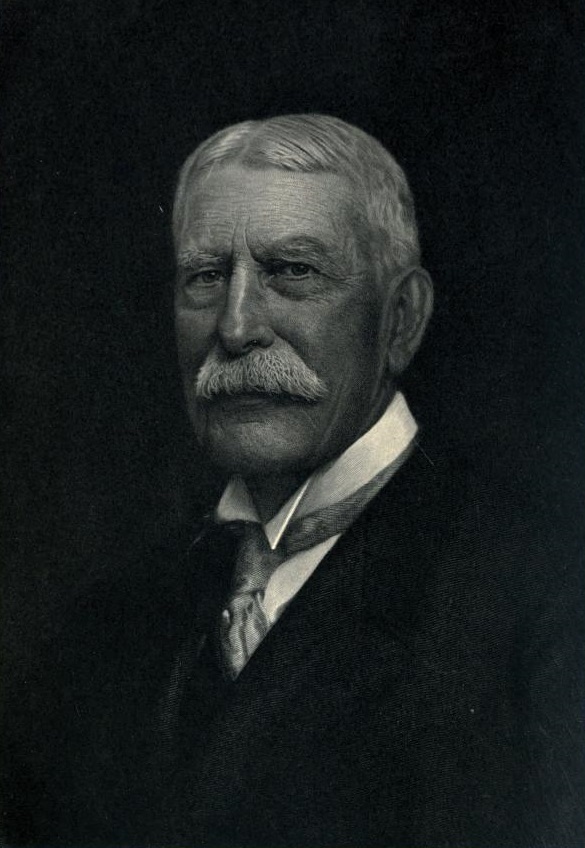
Overtown was one of two Colored Towns in Miami. The older, and smaller Colored Town was a part of Coconut Grove, which predates Miami. Kebo, the name the Bahamians gave their West Grove neighbourhood, eventually became hemmed in by White neighbourhoods. Black folk looking for housing had to look elsewhere, and many settled in the newer Colored Town to the north. This area was designated by Henry Morrison Flagler. As he did through every town he rammed his railroad, Flagler designated the northwest sector to be a Black neighbourhood. This was not as progressive as it sounds. These Black enclaves had a never-ending supply of workers who did the actual backbreaking labour of building a railroad through a swamp. History is complicated.

This later Colored Town became the business and entertainment district for the growing Black community that the railroad brought. Later it provided the hotels where people like Ella Fitzgerald, Louis Armstrong, Duke Ellington could find a hotel room after playing for the rich White folk, because they were not allowed to stay in the hotels in Miami and Miami Beach. History is complicated.

Between Coconut Grove in the south and Colored Town in the north is where the fledgling town of Miami grew up. When the folks in Coconut Grove talked about going to the Black entertainment district, they said, “Let’s go Over Town” and the name stuck. The city trying to designate the area Washington Heights,
despite it being on the same sea level as the rest of Miami. Eventually everyone gave in and it became known officially on maps as Overtown. History is complicated.

TANGENT OVER

One other thing links the E.W.F. Stirrup House with the Coconut Grove Playhouse and that’s the rapacious developer I have profiled here repeatedly, Gino Falsetto. Through a property swap, and later what appears to be a shady real estate deal, Falsetto’s Aries Development Group has got its corporate grubby mitts on a 50-year lease on the E.W.F. Stirrup House, although the house must remain in the family in perpetuity.

In an odd coincidence [and everything traced to Falsetto is
filled with odd coincidences] Aries Group also has his fingers in the Coconut Grove Playhouse pie, and has
scuttled more than one previous deal to renovate the Playhouse. Whatever backroom deal the town big wigs have already decided upon, Gino Falsetto is still an impediment to any Playhouse restoration plan unless he signs on.

Ever since Falsetto got his hands on the property he’s done virtually nothing with the E.W.F. Stirrup House, except to allow it to undergo Demolition by Neglect. Last week I posted a video I was able to take of allegedly illegal work the inside of the Stirrup House because the property was left open and the house was left unlocked. There was no building permit, either prominently posted outside as the law demands, or hidden inside the house.

I had been assured that a building permit had since been obtained, but a week later it was not posted on the property. I am starting to wonder if they truly have a building permit. I’m starting to wonder whether they truly have a brain. When I returned on the 27th, the front door on the right was left unlocked again, which you can see in this video:

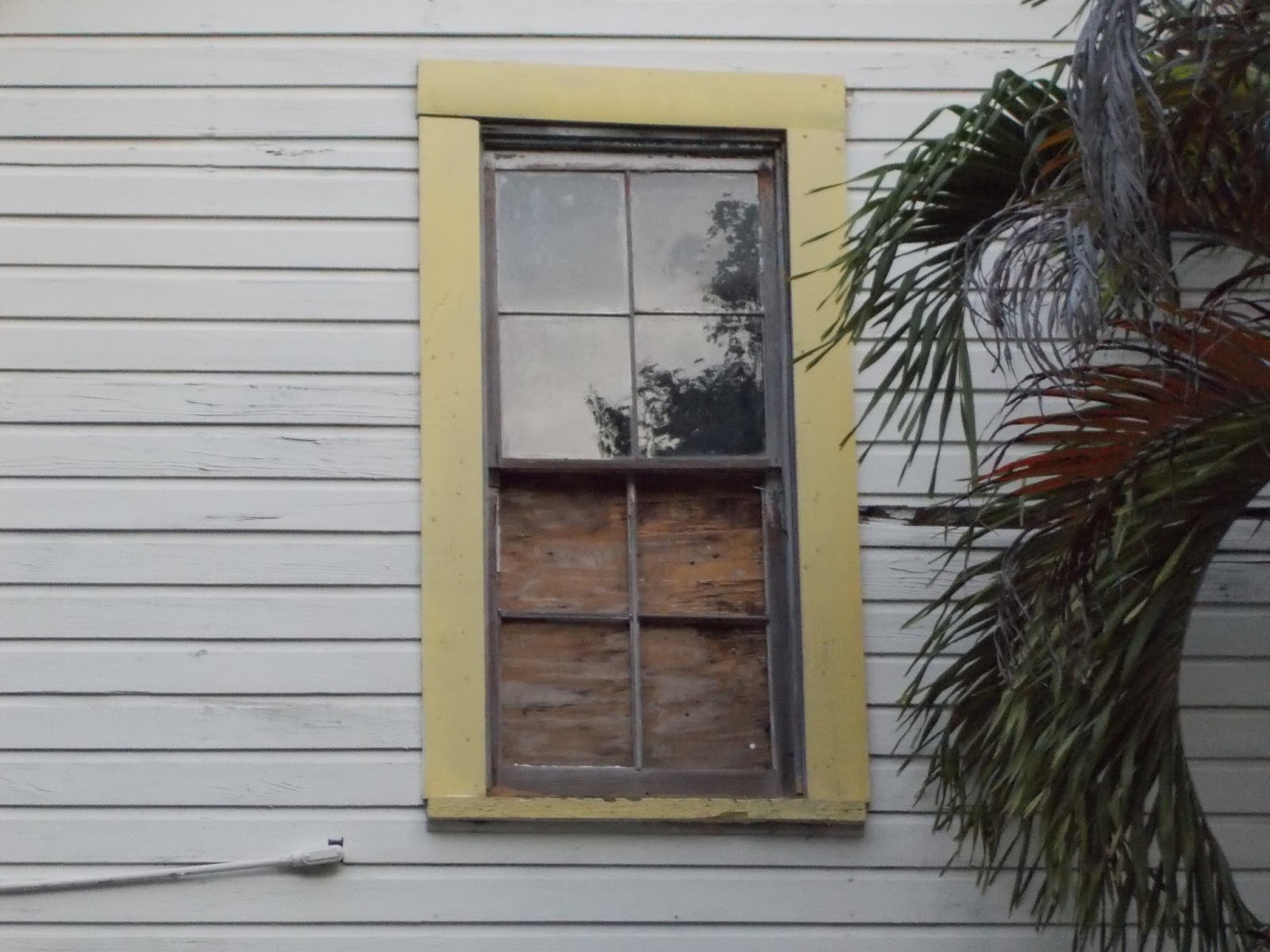
It’s almost like Gino Falsetto is hoping some accident will befall the house, before he actually has to spend the money to restore it LIKE HE PROMISED 8 YEARS AGO!!! During that time Falsetto managed to find the money and energy to build the monstrosity behind the Stirrup House, the multimillion dollar, mixed use development, with fancy restaurants and valet parking, known officially as the Grove Gardens Residence Condominiums. Yet, Falsetto has only recently spent the $10 bucks to buy some plywood to board up the upper windows, which had been open to the elements for the last 8 years. Oh, wait. Never mind. That looks like a piece of scrap. There’s no better proof that Gino Falsetto has been a bad steward of an historic community asset. What’s worse, as I keep pointing out, every infraction committed by Falsetto’s workmen is cited against the actual owners of the property, Stirrup Properties, LLC.

One again watch another video which shows how proximate the Coconut Grove Playhouse is to the E.W.F. Stirrup House and recall how both these structures are linked through both Mr. Stirrup and Gino Falsetto:


That’s why I now propose to rename the Playhouse the E.W.F. Stirrup Theater.
Save the E.W.F. Stirrup House and Theater!!!


Grove Harbor ► No Skin In The Game

When I think of seashore I don’t think of chrome and glass superstructures.

A faithful reader has written [privately] to ask that I get involved in the latest Coconut Grove controversy, Grove Harbor * [sic], or Grove Horror as some of the locals have taken to calling it. To that end, I spent about 2 hours reading up on the project, both pro & con, but mostly con because there seems to be more of that ‘out there’ on the innertubes.

I’m philosophically against any development on any waterfront anywhere
in the world: It blocks access to the waterfront, no matter how small the waterfront or the development. I
am reminded of Frank Lloyd Wright who loved to build on hills, but said
you should never build on top of a hill because you lose the hill.
Same thing in my opinion.

I tend to think of all Coconut Grove issues in relation to the E.W.F. Stirrup House. This proposed development is just a mile’s walk from the E.W.F. Stirrup House. At one time it might have been a gorgeous walk. Walk it these days and you’ll barely catch a glimpse of the majesty of Biscayne Bay, with Miami Beach in the distance, even though you’re walking parallel to it. Decades of bad decisions along the waterfront have led to what it is today, for better or worse.

What would Emperor Headly do?

The footprint of the proposed Grove Harbour development is roughly everything
on the right half of this vintage post card, but the historic buildings will remain

Let’s face it, that job is already filled by alleged corrupt Miami Commissioner Marc D. Sarnoff. However, if I were a benevolent Emperor of Coconut Grove, here’s what I’d do to correct previous dunderheaded mistakes along that section of South Bayshore Drive, after hanging banners that said “The Waterfront Belongs to Everybody.”  

  1. Raze every building on the east side of South Bayshore Drive from McFarlane through David T. Kennedy Park, except those few that have historic designation. 
  2. Declare the resultant green space, once landscaped, a People’s Park;  
  3. If the members made enough noise, I might be inclined to grandfather in establishments like the Coral Reef Yacht Club and the Coconut Grove Sailing Club, that serve a ‘community’ of members. However, I would maintain a public access to the waterfront for all;
  4. I would be disinclined to grandfather in commercial enterprises such as Scotty’s, the Chart House, or any of the boat sales/rentals places or the charter boat companies. If any of those businesses wish to remain on prime Coconut Grove real estate, they will have to pay through the nose, on short leases, with all the money going into waterfront improvements;
  5. Decree that from this day forward nothing larger than bike racks and public restrooms could be built on the east side of South Bayshore Drive until the end of time;
  6. Remove every parking space from the east side of South Bayshore Drive, forcing people to walk over from the thousands of parking spaces just a few short blocks away in Coconut Grove Center;
  7. Create level pedestrian crossings at every intersection along South Bayshore Drive, forcing drivers to yield to anyone within the crosswalk; 
  8. Add calming speed bumps and traffic circles to discourage drive-through traffic on South Bayshore Drive;
  9. Set my mind on other ways to encourage pedestrians and make it harder for cars along South Bayshore Drive;
  10. Rip out all the mangroves in Peacock Park, which were only planted in the ’80s;
  11. Take back Peacock Park from the private lease given to St. Stephen’s Church (What the hell was Sarnoff thinking on that one?);
  12. Turn the former NET office into something that actually serves the community.
An artist renderinging of Grove Harbor at night,
when the chrome and glass will really shine

That’s just 12 things I would do off the top of my head and, admittedly, I’ve done no research on these ideas. However, none of my suggestions would ever include building a chrome and glass thingamajig on the waterfront, give restaurants 80-year leases, and attach a huge parking garage. But, that’s just me because, in my opinion, the waterfront belongs to everybody.

Truth be told, this is a long-winded way of saying I really don’t care and I am hesitant to get involved in this battle. I have no skin in the game. I don’t live in Coconut Grove. I don’t own a boat, therefore I don’t need that kind of access to the water. Nor am I one of those rich folks on the west side of South Bayshore Drive, hoping a few deluxe restaurants and a glitzy glass and chrome dealie on their doorstep will improve their property values. It’s hard not to compare those values to the property values on Charles Avenue, just a mile away, where the E.W.F. Stirrup House is still undergoing Demolition by Neglect.

Despite the wish fulfillment expressed in the One Grove mural, Coconut Grove is one of the most racially and economically divided communities you’re ever going to see. This project is only 2.2 miles away from the Trolleygate garage, which is across from the One Grove mural, but it might as well be a million miles. The concerns of the folks on South Bayshore Drive are light years away from what affects the people of West Grove. One community is complaining about a huge development that MIGHT be placed on its doorstep, while the other is complaining of huge diesel bus maintenance facility ALREADY dropped on its doorstep, which a judge recently ruled they are powerless to stop. What’s wrong with this picture?

At the unveiling of the One Grove mural earlier this year

Truth be told, I really don’t know enough about *THIS* particular project to jump into it. There will apparently be a referendum, so the community will have its say. And, when I say “community” I really mean Miami as a whole, because Coconut Grove is only a fraction of Miami. And, the community will get whatever the community decides, unlike West Grove.

However, there are two big red flags on this project that should give everyone pause:

  • Just like Trolleygate and the Coconut Grove Playhouse, all the serious
    negotiations and decisions have already happened in the back rooms
    between the politicians and the developers. 
  • Allegedly corrupt Miami Commissioner Marc D. Sarnoff is involved in Grove Harbor negotiations up to his hip-waders.

As near as I can tell the referendum will just be
the rubber stamp to what Coconut Grove assets allegedly corrupt Miami Commissioner Marc D. Sarnoff has already sold out to the developers. Unless the Coconut Grove community can muster
enough opposition to stop the project, it’s a fait accompli. Just like Trolleygate was for his other constituents. Rich or poor, Black or White, Marc Sarnoff doesn’t care who he sells out.

I’ll leave this windmill for the Coconut Grove Grapevine to tilt at.

* My fingers stutter whenever I am called upon to type a word that should have a “U” in it, like harbour and colour.

UPDATE: It turns out my fingers needn’t stutter. Grove Harbour is spelled exactly the way I would spell it.

A Coconut Grove Grapevine Update

It was just a few days ago I took Tom Falco, of the Coconut Grove Grapevine, to task for his nutty conspiracy theories concerning me and Not Now Silly. I called the post Go Home, Coconut Grove Grapevine, You’re Drunk!

In that post I graciously offered Tom Falco the opportunity to retract his crazy accusations. He has yet to do so. I had planned to just leave it alone . . . until I found the following on his failure of a blog, posted just yesterday:

I’ve been drawn quite far into this debate about the waterfront plan. I’ve always taken great pride on debating the issues and not getting personal. I will try not to do that anymore, simply because I don’t like it.

I didn’t like it when Tom Falco got personal with me, either. Despite his having second thoughts, which prompted him to apologize to Ron Nelson, and his wife, I am still awaiting an apology for him for this:

I will not bow to threats by Headly and his crew. I don’t cover events that I am threatened to cover. That’t [sic] how they operate.

The previous Coconut Grove Grapevine logo

As I explained to Tom Falco: I work alone. Not Now Silly has no crew. I have made no threats. I require an apology and retraction, just like Ron Nelson and his wife, because that’t how I operate.

However, Ron Nelson is Chief of Staff to allegedly corrupt Miami Commissioner Marc D. Sarnoff and, therefore, might be important to Falco’s continued access. I’m just a guy with a blog, whom Tom Falco dismissed years ago as unimportant. I tried to bring him on-board to save the E.W.F. Stirrup House for the West Grove Community, not a rapacious developer. However, he dismissed me in emails I have yet to release. [Okay, that’s a threat.] Later I learned that the rapacious developer, through various companies and corporations, just happened to be among the Coconut Grove Grapevine’s advertisers. Imagine that.

Why Falco would jump into the waterfront controversy without any consideration of his bottom line is puzzling. Especially after he returned from his hiatus in January saying he was all done with politics. Opposing what could be the biggest real estate development Coconut Grove has seen in many years, can’t be good for his bottom line. Maybe Falco has found journalism.

A word of advice and something else that Tom Falco should take into consideration: Some of the people to whom he has been trash-talking me, are not the friends they pretend to be. That’s because they turn right around and tell me what Falco has said about me, almost gleefully I should add. What gets back to me sounds an awful lot like slander. Yet, Tom Falco has the audacity to falsely accuse me of libel? He libeled me when he accused me in print of working with some unnamed crew to threaten him because, of course, that’s how we operate.

Will Tom Falco do the right thing and apologize to me or will he continue to spread unfounded rumours about me?

Go Home, Coconut Grove Grapevine, You’re Drunk!

Tom Falco acting inconspicuous right in the middle of downtown Coconut Grove

Uh oh! I’m involved in another media bun fight with Tom Falco, writer-editor-grammarian of the Coconut Grove Grapevine. And, I didn’t start it this time. The last time we had a battle of wits, he came half-armed. This time he’s come completely unarmed — or unglued, you decide — and I almost don’t have the heart to finish this post . . . the operative word being “almost.”

Before I lay out our latest skirmish, let me first clear up one thing, because this is a discussion I refuse to have ever again:

I have always considered every email sent to me as my property to do with as I wish. Most people know that I am a journalist before they write to me. Consequently, emailing me does not automatically confer confidentiality. Having said that, there’s loads of email I receive that get and deserve confidentiality. I have several sources guaranteed anonymity, as well as a few whistle-blowers who send me documents. They all know I’d never burn a source. I have exchanged email with Tom Falco, on and off, going back to 2009. He’s always refused to join in my campaign to Save The E.W.F. Stirrup House. That he did so with several off-hand remarks that I took as racial, still rankles. [But then, if you’ve been following
Not Now Silly for any length of time, you know that I see racism in almost everything. Maybe I was wrong about why he refuses to cover West Grove issues. Maybe if the West Grove could afford advertising in the Grapevine it would be a whole different dealie, but this parenthetical is already too long, so we’ll leave that for another time.] I even offered Tom Falco the opportunity to be an off-the-record source for my Coconut Grove stories. He declined to even meet with me to discuss it over coffee. Consequently, no confidentiality for you!

Put a pair of sunglasses on Mr. Softee and you would be able to tell them apart.

Not that I feel I need any further excuse for printing Falco’s emails, but just today he chose to print an email on his joke-of-a-blog that wasn’t even addressed to him; it was an email passed to him by a 3rd party. As far as I’m concerned, that makes Falco’s emails fair game.

And, because I simply can’t resist piling on, here is grammarian Tom Falco at his run-on best from today [sic throughout]:

He wanted tot talk on the phone or in person, I wanted a typed answer that I could copy and paste, as most things I write, Ron tells people that I get incorrect, so copy and paste is the answer I would like. So I can have a written copy to verify the answer.

I apologize. Those are the worst two sentences you’ve ever read, I know, but it’s the Internet Age. Nowadays everybody thinks they are a writer, which has devalued a reputable trade I spent a lifetime learning. But, that’s also another argument for another day.

Not only is it worth quoting Falco just for the lulz alone, but also because it proves what I have been saying. I’ve accused Falco of cutting and pasting the press releases he’s sent, which he turns into blog posts that will stroke the ego of his pool of potential advertisers. “I could copy and paste, as most things I write.” It’s like he’s not even trying any more.

Here’s a news flash, Tom: If you cut and paste press releases, you aren’t writing. However, when you’re cutting and pasting, your grammar improves dramatically. You might want to stick to cut & paste. 

Slightly more context: I need to introduce you to Al Crespo, of the Crespogram Report. Crespo is one of Miami’s best muckrakers. I wish I had his guts and his investigatory skills. I tried to get Crespo involved in the E.W.F. Stirrup House too, and he also declined. I never held that against him the way I did Falco. Crespo’s reasoning, which made sense, was (paraphrasing) “the developers got their hands on the E.W.F. Stirrup House fair & square.” However, to give Al Crespo’s due credit, he recognized sheer genius and The Crespogram Report linked to my Not Now Silly post Is Marc D. Sarnoff Corrupt Or The Most Corrupt Miami Politician? That one mention was worth 422 hits, which was much appreciated. However, as I admitted to him, I cribbed some of my info from the Crespogram Report.

The Trollygate diesel bus government maintenance facility
that I’ve been writing about since January

So, now that you’re all caught up: Last week Crespo sent an email to Tom Falco and CCed me on it. Here’s our full exchange as of a few minutes ago:

FROM: Al Crespo
TO: Tom Falco, Headly Westerfield
SUBJECT: TOM I THINK YOU NEED TO COVER THIS

Aug 17, 2013


——– Forward Original Message ——–
Subject:     My latest on Trolleygate
Date:     Sat, 17 Aug 2013 16:47:05 -0400
From:     Headly Westerfield
To:     undisclosed-recipients:;

West Grove Residents Lose ► Polluting Bus Garage Will Go Ahead

FROM: Headly Westerfield
TO: Al Crespo, Tom Falco
Aug 17, 2013

       
Tom doesn’t cover politics. He’s said so himself.

Tom doesn’t cover West Grove because I’ve tried to get him involved several times in West Grove issues and he has always declined.

BTW: Trolleygate was all Sarnoff’s doing. He screwed his own constituents by gifting them a diesel bus garage.If he were not term-limited, he’d never get another West Grove vote.
   
FROM: Tom Falco
TO: Al Crespo,
Headly Westerfield
Aug 24, 2013

       
I will not bow to threats by Headly and his crew. I don’t cover events
that I am threatened to cover. That’t how they operate.

If you check the Grapevine, you will probably see hundreds
of stories that take place in the West Grove. You probably
have never checked once to make a libelous comment like that.
I suggest you do a search in the upper left box of the Grapevine
and see every Village West event I have attended and covered.

As for this past story, I was in the hospital for 8 days with
kidney failure. That is why i did not cover it.

Tom Falco
Editor | CoconutGroveGrapevine
www.coconutgrovegrapevine.com
The Daily News of Coconut Grove

FROM: Headly Westerfield
TO:
Tom Falco, Al Crespo
Aug 24, 2013

What the hell are you babbling about?

Crew? I have no crew. I work alone. I am simply one guy, living in a different county, who found a house I wanted to save. I tried to interest you in the story. You declined to help me. To be fair, so did Al Crespo. However, that desire to save the E.W.F. Stirrup House has led to all my other reporting on Coconut Grove.

You can take the boy out of the newsroom, but you can’t take the newsroom out of the boy.

Threats? I have issued no threats.

Libelous? I suggest you first look up the word and then retract your accusation that I have issued threats.

Let me see if I have this straight: Because you have a totally whacked out conspiracy theory that I am working with some unnamed “crew” who “threatens” you to “cover events” that don’t seem to interest you, you will leave other perfectly good news items on the floor in a fit of pique because that’s how “they” operate?

Stamp your foot louder. They may not have heard it in Brickell.

I’m sorry to hear you’re not feeling well. Get better soon, so CGG can better serve the West Grove neighbourhood. It could use a voice with your readership. I do what I can, but I’m just one guy.

I doubt I will ever get an apology from Tom Falco. That’s about as likely as Falco covering issues and events of importance to West Grove residents. I alerted him to Trolleygate way back in January, so I’m not really buying his recent kidney troubles as an excuse. Falco made it clear the Coconut Grove Grapevine is no longer COCONUT GROVE’S ONLY DAILY NEWS, when he took down that rubric (after I criticized it many times) and replaced it with Daily updates on what’s up in Coconut Grove and beyond including Brickell, Coral Gables and Midtown Miami.

To be fair: Maybe Falco’s not drunk at all.  Maybe it’s the kidney meds.