On this date 99 years ago the first Jass [sic] tune was made commercially available to the general public on Victor Records, 18255-A.
While bands had been playing the new Jass music for several years, the “Dixie Jass Band One Step” ushered in a new era in syncopated music by being an audio artifact that could be bought and traded. The instrumental was recorded by the Original Dixieland Jass Band, a 5-piece, integrated group out of New Orleans, the cradle of Jazz music.
There is no agreed upon entomology of the word Jazz. According to the Wiki:
As with many words that began in slang, there is no definitive etymology for jazz. However, the similarity in meaning of the earliest jazz citations to jasm, a now-obsolete slang term meaning spirit, energy, vigor and dated to 1860 in the Historical Dictionary of American Slang, suggests that jasm should be considered the leading candidate for the source of jazz. A link between the two words is particularly supported by the Daily Californian‘s February 18, 1916, article, which used the spelling jaz-m, although the context and other articles in the same newspaper from this period show that jazz was intended.
Scholars think Jasm derives from or is a variant of slang jism or gism, which the Historical Dictionary of American Slang dates to 1842 and defines as “spirit; energy; spunk.” Jism also means semen or sperm, the meaning that predominates today, making jism a taboo word.
Deepening the nexus among these words is the fact that “spunk” is also a
slang term for semen, and that “spunk”—like jism/jasm—also means
spirit, energy, or courage (for example: “She showed a lot of spunk.”)
In the 19th and early 20th centuries, however, jism was still used in polite contexts. Jism, or its variant jizz (which, however, is not attested in the Historical Dictionary of American Slang until 1941), has also been suggested as a direct source for jazz. A direct derivation from jism is phonologically unlikely. Jasm itself would be, according to this assumption, the intermediary form.
That’s one story. Another comes from Greg’s Musings at Swing Review:
The word Jazz has a veil of mystery around it. Ask anyone what Jazz is and they can tell you about the music and describe how it’s played or some of their favorite musicians but the actual origin of the word itself is a bit of a mystery. Some research has suggested that it traces to African roots in some native language of former slaves or even more evidence says it possibly is related to the French word jaser which means “to chatter.” Some historical evidence suggests that it could trace to slang terms for sexual functions (I’ll let you use your imagination as to what.) It is a fact that the term “Jazzing” was used in the past as a term to describe having sex but no one is sure if the term was used before the music came along or vice versa.
The saxophone player Garvin Bushell gives his opinion on the mystery by describing his early life in Louisiana:
“They said that the French had brought the perfume industry with them to New Orleans and the oil of jasmine was a popular ingredient locally. To add it to a perfume was called “jassing it up.” The strong scent was popular in the red light district, where a working girl might approach a prospective customer and say “Is jass on your mind tonight young fellow?” The term had become synonymous with erotic activity and came to be applied to the music as well.”
It is safe to say that no one will ever know who first used the term as most every early jazz musician has a story about how they were the ones that created it. Jelly Roll Morton even claims he was the one who invented the music itself and everyone else stole it from him! The spelling is another mystery but there is historical evidence that in the early days it was “Jass” not Jazz which would lead one to believe the perfume theory. The fact that the first Jazz record ever recored was by a group that called themselves “The Original Dixieland Jass Band” is proof of that. The trumpeter for the Original Dixieland Jass band, Nick LaRocca talks about how the term was changed from Jass to Jazz saying:
“…the term was changed because children and some adults could not resist the temptation to scratch the letter “J” from the posters.”
However the name derived, or how it was originally spelled, Jazz caught the world’s attention. Starting in the early 1900s right up to today, Jazz is a force of nature. Here is the first Jazz record:
It was probably inevitable — Manifest Destiny, and all that — but on this date in 1845, Florida became the 27th state in the Union.
The first Europeans to set foot in Florida were the Conquistadors, led by Juan Ponce de León in 1513. It is a myth that he was looking for the famed Fountain of Youth.
Of course, long before the Spanish got to Florida, there were aboriginal peoples living all along the peninsula. According to the WikiWackyWoo:
By the 16th century, the earliest time for which there is a historical record, major Native American groups included the Apalachee (of the Florida Panhandle), the Timucua (of northern and central Florida), the Ais (of the central Atlantic coast), the Tocobaga (of the Tampa Bay area), the Calusa (of southwest Florida) and the Tequesta (of the southeastern coast).
The Spanish founded St. Augustine in 1565, making it the oldest continually inhabited city in the U.S. But, St. Augustine has another distinction, so says the Wiki:
Florida attracted numerous Africans and African Americans from adjacent
British colonies in North America who sought freedom from slavery. The
Spanish Crown gave them freedom, and those freedmen settled north of St. Augustine in Gracia Real de Santa Teresa de Mose, the first free black settlement of its kind in what became the United States.[citation needed]
In 1763, Spain traded Florida to the Kingdom of Great Britain for control of Havana, Cuba, which had been captured by the British during the Seven Years’ War. It was part of a large expansion of British territory following the country’s victory in the Seven Years’ War. Almost the entire Spanish population left, taking along most of the remaining indigenous population to Cuba.[14] The British soon constructed the King’s Road connecting St. Augustine to Georgia. The road crossed the St. Johns River at a narrow point, which the Seminole called Wacca Pilatka and the British named “Cow Ford”, both names ostensibly reflecting the fact that cattle were brought across the river there.[15][16][17]
However, England lost Florida back to the Spanish after they lost the Revolutionary War to the insurgent ‘Merkins.
In 1810, parts of West Florida were annexed by proclamation of President James Madison, who claimed the region as part of the Louisiana Purchase. These parts were incorporated into the newly formed Territory of Orleans. The U.S. annexed the Mobile District of West Florida to the Mississippi Territory in 1812. Spain continued to dispute the area, though the United States gradually increased the area it occupied.
Seminole Indians based in East Florida began raiding Georgia settlements, and offering havens for runaway slaves. The United States Army led increasingly frequent incursions into Spanish territory, including the 1817–1818 campaign against the Seminole Indians by Andrew Jackson that became known as the First Seminole War. The United States now effectively controlled East Florida. Control was necessary according to Secretary of State John Quincy Adams
because Florida had become “a derelict open to the occupancy of every
enemy, civilized or savage, of the United States, and serving no other
earthly purpose than as a post of annoyance to them.”.[23]
Florida had become a burden to Spain, which could not afford to send
settlers or garrisons. Madrid therefore decided to cede the territory to
the United States through the Adams-Onís Treaty, which took effect in 1821.[24] President James Monroe was authorized on March 3, 1821 to take possession of East Florida and West Florida for the United States and provide for initial governance.[25]Andrew Jackson
served as military governor of the newly acquired territory, but only
for a brief period. On March 30, 1822, the United States merged East Florida and part of West Florida into the Florida Territory.[26]
Florida was admitted to the Union as a Slave State on this day in 1845.
I’ve lived in Florida for the past 10.5 years and, to be perfectly honest, I don’t like it all that much.
South Florida is hundreds of miles of continuous suburbia; single family homes and gated communities, between strip malls and gas stations, only interrupted by larger malls, condo complexes, and man-made drainage canals to keep The Everglades at bay. Not to mention Florida Man. And, the never-ending corruption. And, the stiflingheat and oppresive humidity.
I agree with Bugs Bunny:
It hardly matters. Florida will be under water soon anyway.
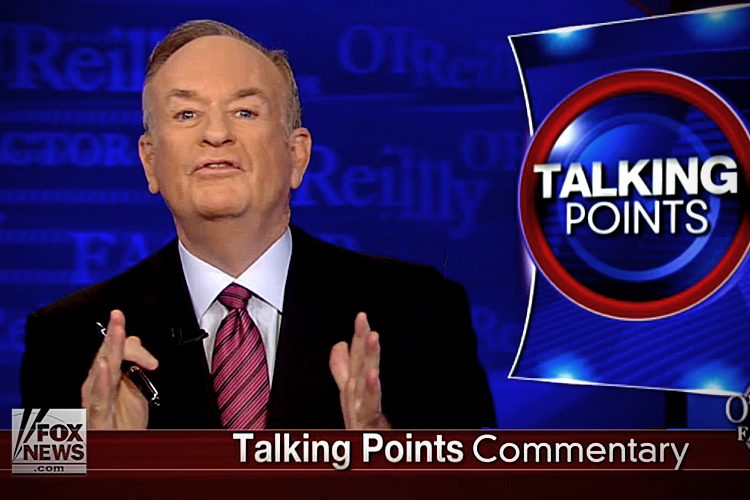
The Falafel King drops one of these piles every weekday and, if I were so inclined, I could answer him every day, but life’s too short for that. Today, Loofah Lad wants to pontificate on the The State of the Republican Party, but he’s really defending his good buddy, Donald J. Trump.
I have to say I’m a bit surprised that Don Rickles is now apparently a Republican contender.
I’m not. I’m just surprised that someone who has called hundreds — maybe thousands — of people “pinheads” would be concerned about the mud being thrown in the GOP race. This is merely your attempt at a false equivalency in order to deflecting from Trump’s hateful comments about Mexicans, Muslims, women, John McCain, the handicapped, Megyn Kelly, and everyone else he’s attacked over the years. However, do play us a supercut your staff put together of how they’re all doing it.
DONALD TRUMP: “So I’m looking at little Marco and I’m saying man there’s something happening with him and he’s like melting.”
((EDIT))
MARCO RUBIO: “He’s always calling me little Marco. I’ll admit, he’s taller than me – he’s like 6’2’’ – which is why I don’t understand why his hands are the size of someone who is 5’2’’.” (LAUGHS) ((EDIT)) And you know what they say about men with small hands?”
((EDIT))
TRUMP: “You had to see him backstage. He was putting on makeup with a trowel! (Mimics using a roller to apply his makeup) ((EDIT)) I will not say that he was trying to cover up his ears!”
((EDIT))
RUBIO: “He doesn’t sweat because his pores are clogged from the spray tan that he uses!”
Now that’s not exactly the Lincoln-Douglas debate is it?
Well, no. It’s not even in Kennedy-Nixon territory. Hell, it’s not even the neighbourhood of the Bentsen-Quayle debate.
However, you have called people names for decades. Stop clutching your pearls and take credit for the coarsening of the ‘Merkin Culture you brought about.
Oh, wait. You have an alternate theory, doncha?
But here’s why it’s happening:
Oh, this should be good. Do tell.
In the beginning of the campaign, Donald Trump did something very brilliant. He staked out two essential issues that he knew Republican voters were angry about: the border and the economy.
But rather than getting into policy, Mr. Trump kept it simple. He’ll build a wall and deport illegal aliens.
He’ll make deals that will turn the economy around and punish countries like China and Mexico that he believes are treating the USA unfairly.
That quickly got the new candidate a lot of attention and criticism.
To be fair: It got your vanilla milkshake drinking BFF a lot of attention and even more valid criticism. However, I hardly think spewing racism and xenophobia is very brilliant. That’s when this whole race started going south — both puns intended.
OH! WAIT!! Look who I’m talking to. Never mind. I’ll go back to drinking my M-Fing ice tea. Forget I interrupted.
Then what, Loofah Lad?
Trump then immediately counter-attacked, using hot rhetoric that most politicians would never even consider.
Which you continue to defend to this very day. It’s not presidential. Of course, you’d be having a fit if any Democratic candidate said anything slightly critical of Donald Trump.
That got him even more popularity. The more he insulted, the higher his poll numbers climbed.
Historians will be trying to figure this election out for decades to come. Is this the year Racism and Xenophobia trump logic and good governance?
So he’s two for two. He chooses emotional issues, simplifying them for potential voters, then scorches anyone who doesn’t like it.
That’s not why he scorches people, you sanctimonious liar. He scorches people because he’s a narcissistic psychopath.
OH! WAIT!! Look who I’m talking to. Never mind. I’ll go back to reading the Paris Business Review.
Even if you don’t like Mr. Trump, you have to admit the strategy has been brilliant and he would not be leading in the polls today if he had not employed it.
It’s only a brilliant strategy if you admire appealing to people’s fears and worse instincts.
OH! WAIT!! Look who I’m talking to. Never mind. I’ll go back to reading about Dr. Tiller’s murder.
The other Republican candidates were taken by surprise as he hammered Jeb Bush and anyone else Trump considered to be a rival.
After months of watching Trump’s poll numbers go up, finally Senators Rubio and Cruz began to counterattack in the same way.
The problem for both Rubio and Cruz is that Americans do not know them, and the media has paid so much attention to Donald Trump that getting well known is almost impossible.
Unless of course you hurl insults, which is what Marco Rubio is now doing.
No. The problem is that Rubio and Cruz left it far too late to start telling the truth and attacking your racist and xenophobic milkshake buddy, Donald J. Trump. BTW: I think it’s telling that they are vanilla milkshakes. You can buy those Freudian Slips at Frederick’s of Hollywood.
Sorry, I interrupted again. Go ahead, let’s hear more of your bullshit false equivalency.
For his part Cruz is hammering Trump in a different way:
TED CRUZ: “There have been multiple media reports about Donald’s business dealings with the mob, with the mafia. Maybe his taxes show those business dealings are a lot more extensive than has been reported.”
Now I don’t believe anyone’s tax returns are going to give insight into organized crime. Mr. Cruz obviously casting aspersions on Mr. Trump.
Aspersions? It’s well-documented that Trump’s companies dealt with other companies that were mobbed-up. The tax returns may not show that, but you get Bonus Points for deflection, Mr. Falafel King.
But all of this negative stuff hasn’t really altered the race so far.
Because, as I said above, it’s too little, too late. Cruz and Rubio should have been hammering Trump on his bankruptcies, Trump University, the KKK, and his freakishly small hands starting last year. Now it just looks like tit-for-tat mud slinging and almost nothing is getting traction, even Trump’s latest smears on his opponents.
Recent polls say Mr. Trump is leading in all the Super Tuesday states with the exception of Texas, Ted Cruz’s home state.
Which is why ‘Merka is becoming a laughing stock all over again around the world. You thought George W. Bush was reviled around the world? There are already countries who are working to make YOUR FRIEND Donald J. Trump persona non grata.
So it looks like tomorrow Trump will prevail again. It is how close Cruz and Rubio can keep the vote that is uncertain.
The south is friendly territory to Donald Trump.
And, racists everywhere. That is hardly a ringing endorsement.
When the votes shift to the northeast and Midwest, his challenge might grow but by that time he might have things sewn up.
If that happens, if Trump is the Republican nominee, you can expect a media assault on him that will be unprecedented.
Every day the press will hammer Trump, exposing every part of his life.
And, you are doing your best to pre-inoculate the voters against any factual attacks on YOUR GOOD FRIEND, Donald J. Trump.
Trump is getting ready:
TRUMP: “So that when the New York Times writes a hit piece, which is a total disgrace, or when the Washington Post, which is there for other reasons, writes a hit piece, we can sue them and win money instead of having no chance of winning because they’re totally protected.”
Mr. Trump talking about what he would do as president, attempt to change the libel laws, but he can’t do that now.
Don’t you care about the First Amendment, Loofah Lad? Or are you only concerned about the 2nd Amendment?
And believe me the press is just waiting.
So now it’s a media conspiracy to sink the worst presidential candidate to come down the pike. What else you got that we can laugh at?
A preview is this David Duke stuff, a complete non-story. I’ve spoken with Trump hundreds of times. I have never heard him run down anyone because of race.
He does not care about that.
A non-story? And, how would you know if you ever heard him say anything about race when you blow the same dog whistle he does? Your ears are no longer attuned to hear the racist hate disguised by your White Privilege!
The GOP madness is of course good news for Hillary Clinton, who has major problems of her own but who the American press will get behind.
Newspaper endorsements for president will run 20:1 Clinton.
What if she’s 20 times better for ‘Merka than your Racist and Xenophobic friend Donald Trump? Wouldn’t she then deserve the endorsements?
So the question becomes, can Donald Trump bring in millions of new voters to overcome his deficit among the press, minorities and other groups that may not like him?
People who may not like him? This isn’t the competition for Prom King. This is a Winner Take All contest to decide the next President of the United States. Your decades-long friendship with this Racist Xenophobe disqualifies you from even commenting on this election, but that’s never stopped you from misinforming your viewers before.
Trump thinks he can do it and has confounded his critics thus far.
He’s confounded Good Ol’ ‘Merkin Common Sense. Hopefully the electorate will wake up and see Trump for the Racist and Xenophobic Charlatan he really is. Even tho’ Joe Scarborough finally saw the light, it’s clear that you never will.
And that’s the memo.
And, that’s why you’re nothing but a hack, O’Reilly.
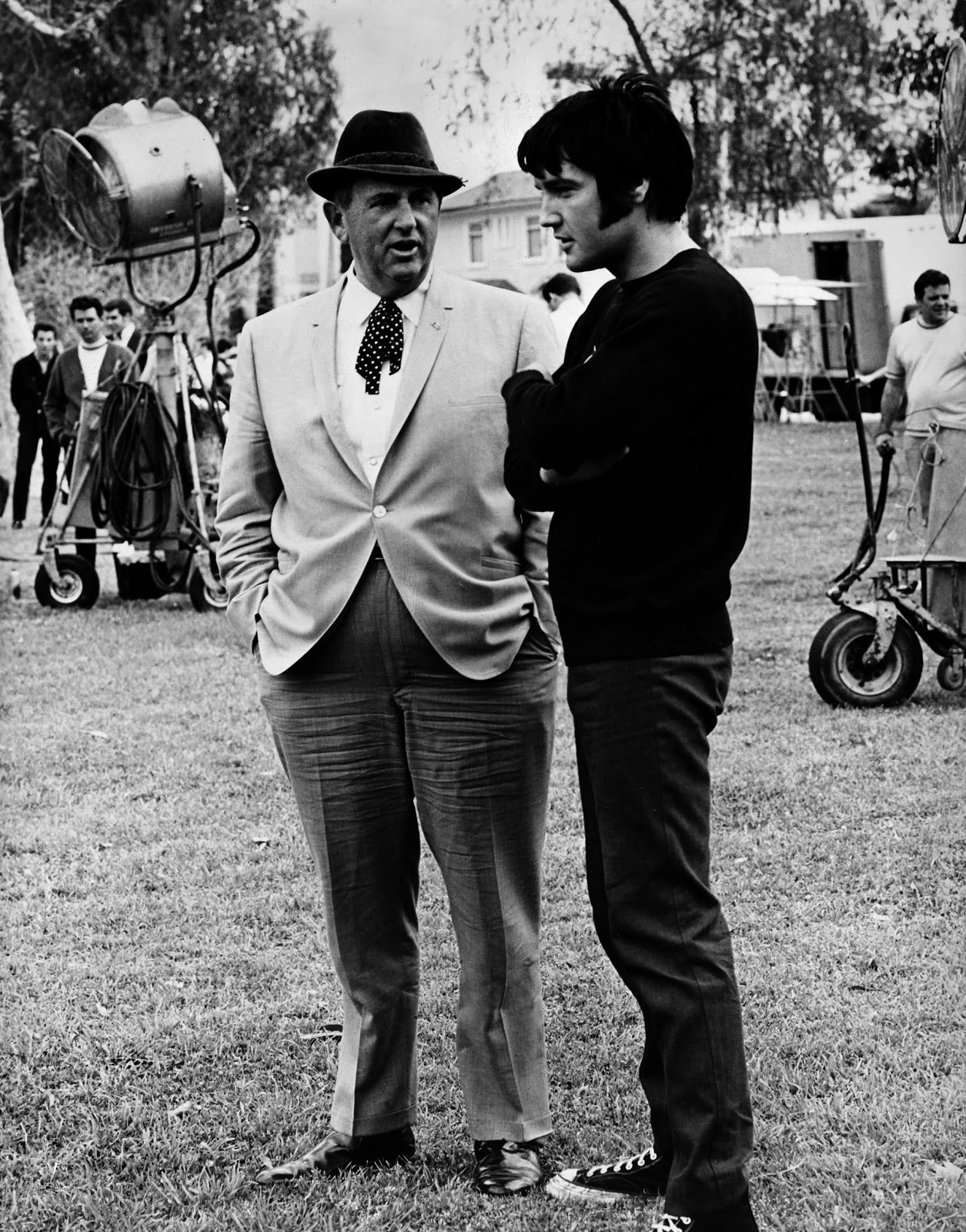
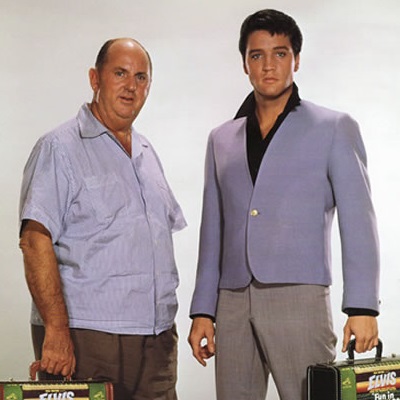
It’s always been a curious thing. During the entirety of Elvis’ career, he only played overseas once and only performed in Canada only 3 times. Despite the proximity Colonel Tom Parker, his manager, didn’t accompany his star client.
I’ve long heard rumblings that The Colonel was a wanted man, which is why he never traveled outside the country, but had never bothered to research the back story. A random Facebook post this morning took me to a page about The Colonel at the Smithsonian Institute published 4 years ago. What I learned was stunning. Colonel Tom Parker may have been a murderer hiding in plain sight. This article gets right down to the Colonel’s skulduggery:
So far as the wider world knew, the
Colonel was Thomas Andrew Parker, born in Huntingdon, West Virginia,
some time shortly after 1900. He had toured with carnivals, worked with
elephants and managed a palm-reading booth before finding his feet in
the early 1950s as a music promoter. Had anyone taken the trouble to
inquire, however, they would have discovered that there was no record of
the birth of any Thomas Parker in Huntingdon. They might also have
discovered that Tom Parker had never held a U.S. passport—and that while
he had served in the U.S. Army, he had done so as a private. Indeed,
Parker’s brief military career had ended in ignominy. In 1932, he had
gone absent without leave and served several months in military prison
for desertion. He was released only after he had suffered what his
biographer Alanna Nash terms a “psychotic breakdown.” Diagnosed as a
psychopath, he was discharged from the Army. A few years later, when the
draft was introduced during the World War II, Parker ate until he
weighed more than 300 pounds in a successful bid to have himself
declared unfit for further service.
WHOA! But it doesn’t stop there. I continued my research, jumping onto the WikiWackyWoo:
Presley fans have speculated that the reason Presley only once
performed abroad, which would probably have been a highly lucrative
proposition, may have been that Parker was worried that he would not
have been able to acquire a U.S. passport and might even have been
deported upon filing his application. In addition, applying for the
citizenship required for a US passport would probably have exposed his
carefully concealed foreign birth. Although Parker was a US Army veteran
and spouse of an American citizen, one of the basic tenets of U.S.
immigration law is that absent some sort of amnesty program, there is no
path to citizenship or even legal residency for those who entered the
country illegally.[50]
As Parker had not availed himself of the 1940 Alien Registration Act,
and there was no amnesty program available to him afterwards, he was not
eligible for US citizenship through any means.
Colonel Tom Parker was a master deal-maker who made
Elvis the highest-paid actor in Hollywood. While other actors may
have commanded per-picture fees in excess of the $1 million Elvis got,
he often made double that again because he received an unprecedented 50
percent of all profits. It didn’t matter to the Colonel that the films
were, for the most part, artistically vapid. Colonel Parker proved his
worth, moneywise.
The Colonel, as he liked people to refer to him,
displayed a ruthless devotion to Elvis’ interests, and he took far more
than the traditional 10 percent of his earnings (reaching up to 50
percent by the end of Presley’s life). Under his brilliant, skillful
and cunning guidance his one and only client, Elvis, reached
unimaginable heights. Elvis considered him a genius.
But Elvis grew restless, feeling the Colonel had
limited his Hollywood career, even while acknowledging they had been
successful financially. He felt trapped.
“Up until Elvis joined the army, I thought it was beautiful music and Elvis was for me and my generation what the Beatles were to the ’60s. But after he went into the army, I think they cut “les bollocks” off. They not only shaved his hair off but I think they shaved between his legs, too. He played some good stuff after the army, but it was never quite the same, It was like something happened to him psychologically. Elvis really died the day he joined the army. That’s when they killed him, and the rest was a living death.”
But I digress.
As Smithsonian Magazine continues the story: Back in 1960, soon after Elvis was discharged from the army, Parker’s family back in the Netherlands recognized him in a photo as Andreas van Kuijk, a long-lost brother who had disappeared into thin air. Sure he was older, and fatter, but there was no mistaking it. A brother was sent to the States. He met with Dries — as the family called him — who revealed very little about his personal life.
Even stranger is when he went back to Breda, the brother kept Parker’s secret which didn’t leak for another few years, but only in a small Dutch fan magazine called It’s Elvis Time. Then it was picked up in the ’70s by Albert Goldman in his Elvis biography. However, there were deeper secrets to unveil.
Journalist Dirk Vellenga, who also lived in Breda, got a tip that the Colonel was originally from there, which led to a 30-year investigation:
Vellenga had been filing occasional
updates on the Parker story—the Colonel was by far the most famous son
of Breda—and found that he was building a detailed picture of what was
by any standard a hasty departure. Parker, he learned, had vanished in
May 1929 without telling any of his family or friends where he was
heading, without taking his identity papers, and without money or even
the expensive clothing he had spent most of his wages on. “This means,” notes Nash,
that “he set out in a foreign country literally penniless.” In the
late 1970s, Vellenga ended one of his newspaper features by posing what
seemed to him a reasonable question: “Did something serious happen
before Parker left that summer in 1929, or maybe in the 1930s when he
broke all contact with his family?”
At least one of his readers thought
that question deserved an answer, and a short while later an anonymous
letter was delivered to Vellenga’s paper. “Gentlemen,” it began.
At last, I want to say what was told to me 19
years ago about this Colonel Parker. My mother-in-law said to me, if
anything comes to light about this Parker, tell them that his name is
Van Kuijk and that he murdered the wife of a greengrocer on the
Bochstraat…. This murder has never been solved. But look it up and you will
discover that he, on that very night, left for America and adopted a
different name. And that is why it is so mysterious. That’s why he does
not want to be known.
Turning hastily to his newspaper’s files, Vellenga found to his
amazement that there had indeed been an unsolved killing in Breda in May
1929. Anna van den Enden, a 23-year-old newlywed, had been battered to
death in the living quarters behind her store—a greengrocer’s on the
Bochstraat. The premises had then been ransacked, apparently
fruitlessly, in a search for money. After that, the killer had scattered
a thin layer of pepper around the body before fleeing, apparently in
the hope of preventing police dogs from picking up his scent.
The discovery left Vellenga perplexed. The 19 years of silence
that his mysterious correspondent mentioned took the story as far back
as 1961—exactly the year that the Van Kuijk family had made contract
with Parker, and Ad van Kuijk had returned from his visit to the Colonel
so remarkably tight-lipped. And the spot where the murder had occurred
was only a few yards away from what had been, in 1929, Parker’s family
home. Members of the Colonel’s family even recalled that he had been
paid to make deliveries for a greengrocer in the area, though they could
no longer remember which one.
Of course, all the evidence is circumstantial. There is no proof, even in the original police files, that Parker, or van Kuijk, was ever a suspect in the murder. This will always remain an unsolved mystery, but several of Elvis’ biographers truly believe that the biggest secret the Colonel was hiding was the fact that he was a murderer who had fled to ‘Merka to avoid suspicion.
Kathy Hahn took this pic around the time I met Pete Townshend
When I first started my writing career, some 40+ years ago, it was to write about the music industry.
A college friend and I started up a small music publication called Zoundz (with a backwards zedd on the end). It was the first music rag of its kind in Toronto, a FREE publication that coud be scored at the cash register of every record store in Toronto, including the big 2: Sam The Record Man and A&A Records, located next door to Sam’s.
Later I started writing for Cheap Thrills, the house organ of Concert Productions International (CPI). It was the biggest concert promoter in the city because it had a lock on Maple Leaf Gardens, the biggest venue in the city.
For both publications I wrote album reviews, critiqued Rock and Roll concerts, and was able to hobnob backstage with some of the greats of the industry. It’s all about reputation, of course. Once I had developed some respectability, promoters and record company reps would call me up to offer interviews with some of their celebrities, which is how I came to interview Peter Townshend, of The Who.
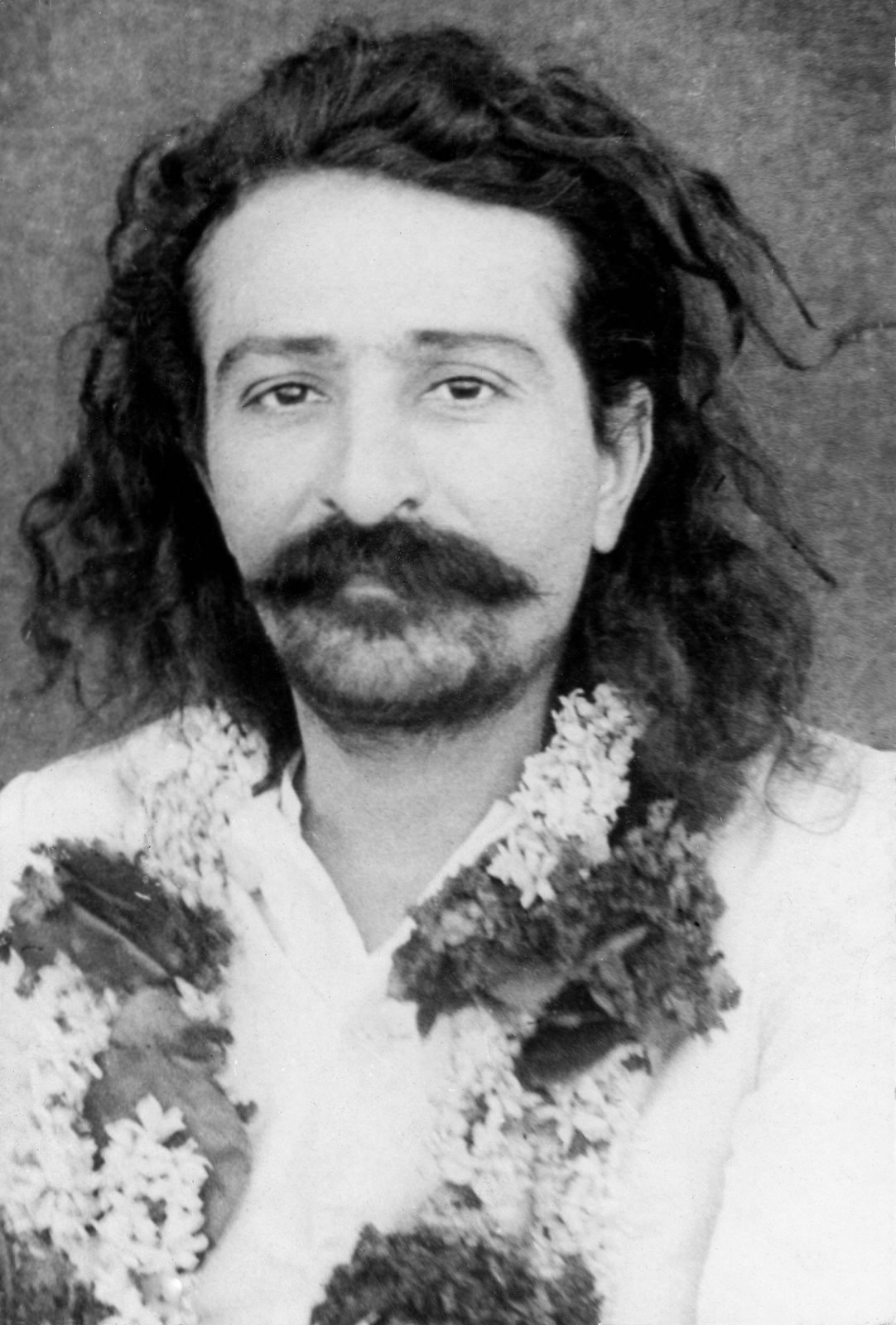
Townshend was a follower of Meher Baba, a spiritual leader who claimed to be the Avatar, defined by the Wiki as:
I remember so very little about the interview with Townshend because I was nervous and — after all — it was 40 years ago. I don’t even remember which publication bought this interview (and can’t seem to find it in my archives. Maybe it was a radio interview instead). However, I will never forget the secret code I had to use to get past the front desk at the hotel and the doorkeeper at Townshend’s hotel room:
“Temple, eel, and ocean: Baba rules them all.”
I was already somewhat familiar with the teachings of Meher Baba because my dear friend Kathy Hahn, who I worked with at Island Records Canada, was also a devoté of Baba’s. We were both delighted that Townshend was using a Baba quote as his secret password.
While you may have not heard of Meher Baba before, you are certainly familiar with his most famous quote:
“Don’t worry. Be happy.”
Today is Meher Baba’s 122nd birthday. He died in 1969, but still has tens of thousands of followers around the world. You can find out more about Meher Baba at these websites:
I’ve taken care of Pops for the last decade and I’m simply burned out. It’s time for me to return to Toronto, the city I call home, to recharge my batteries.
Ironically, I’m returning to Kensington Market, which has a similar Hippie feel as Coconut Grove. I lived in Kensington Market many years ago, but was able to experience it again anew when I visited Toronto in September. I spent most of my time in the Market and felt comfortable and at home. Soon I will be able to call it home.
When I wrote that (at the beginning of January) my departure date was tentatively scheduled for the end of February; so tentative that I didn’t mention it. Now, due to circumstances beyond my control, I won’t be leaving the Yew Ess Eh ’til the end of August. That means I have more time to tie up all the loose ends down here and promote my Go Fund Me campaign, to help defray my moving expenses.
My best ever month and my All Time Top Five
SOUR GRAPES MAKES FOR A BITTER WHINE: I’ve been looking at the stats again for the Not Now Silly Newsroom. As of this writing, I have served up 410,958 pages for my readers to … err … read since launching this place almost 4 years ago.
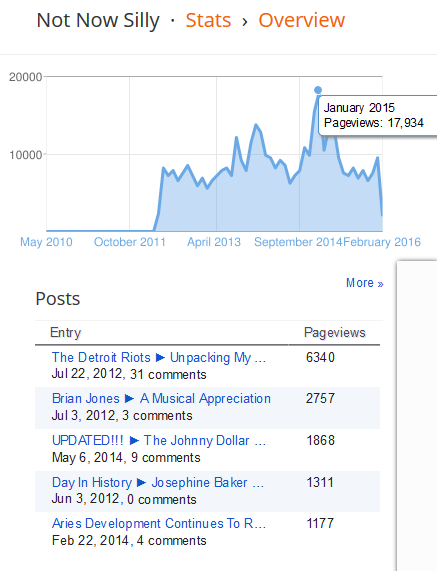
My monthly count averages 9,000-10,000 views. My daily hits range anywhere from 150-300, depending on the subject matter and how much promotion I do. On the odd occasion my monthly readership has reached heights that even I have trouble believing. Pictured at right is when I hit almost 18,000 views just one year ago, twice my general average.
I bring these stats up because, to be perfectly honest (and a bit of a whiner), I am disappointed in the lack of response to my Go Fund Me campaign to help me get back to Canada. If people knew how much work went into these posts, and how few pennies I get from the few advertisements that Google feeds me, they’d wonder why I do it at all.
There are times I wonder myself. Times like this when I look at the stats and see that I made a dime yesterday, or $1.78 in the last 28 days, which comes to slightly over 6 cents a day.
I know that over the course of the next month this particular post will be read by an average of 300 people. If every person chucked a quarter into a Tip Jar for every page they read, I’d be bringing in about $2,500 a month. I’ve not even earned 1/10th of that since starting this blog almost 4 years ago.
Having said that, I didn’t start this blog for the money. I would write regardless because it’s what I’ve done my entire adult life. However, I did have it in the back of my mind that this blog could ‘top off’ the other income I produced. It’s been a disaster in that respect.
While still on the subject of stats, you’ll find in the column to the right the Not Now Silly All Time Top Ten Posts. However, just for the fun of it, I broke out the Top 10 stories that caught your attention just this month, from highest to lowest:
That’s 1,477 views on just the Top Ten posts in the last 30 days (which doesn’t even include those evergreens that didn’t make the Top Ten). A dime per visitor would earn me more than in the past 30 days than I have received in the 4 years since launching the blog.
Recently I was having this discussion with a friend on the facebookery: Our mutual profession of writing has been seriously devalued since Bill Gates made the World Wide Web a Point & Click environment. Anybody with a keyboard and mouse now believes they can write. And, we can see the sad results all over the innertubes: People can barely create a 10 word meme without serious grammar and spelling errors.
Speaking of sour grapes: I’ve groused several times previously about the Coconut Grove Grapevine. I have even truthfully and non-ashamedly admitted to being jealous; jealous that such a poorly written blog has so many more readers than I. That a blog so devoid of actual journalism is able to sell a passel of advertisements. Yet the actual news stories I write about Coconut Grove — as opposed to Falco’s commercial fluff — earns almost nothing at all. [I know I am repeating myself from previous posts, but it’s only a rerun if you’ve seen it before.]
Consequently, a profession I spent my entire adult life perfecting is no longer considered worthy of adequate remuneration. [A big shout out here to all my musician friends who find themselves in the same sinking boat.] I remember how excited I was, way back when, that an editor agreed to pay me 5 cents a word for a very long article she commissioned. I thought I won the lottery because that seemed like a fortune in those days. Now I am constantly approached to write for free because it will be “good exposure.” No, seriously. I also stopped writing “on spec” 4 decades ago. Either I will pre-sell an article or keep it for the Not Now Silly Newsroom.
I need to be more like Al Crespo, of The Crespogram Report,
who publishes the best muckraking blog in Miami. He doesn’t take any
advertising at all, so he obviously doesn’t peg his words’ worth to the
almighty advertising dollar.
Hopefully next month I won’t feel so sorry for myself and my profession.
HOP ON POPS: The last week has been very busy around here. Pops celebrated his 90th birthday on Valentine’s Day. Relatives started arriving last week for the party on the 20th. We took over one of the condo clubhouses and invited over 60 of his friends to help us celebrate this great day.
Here’s a pic of him getting about to blow out his candles and you can follow THIS LINK to a slideshow.
What a great time it was. Pops loves being the center of attention (Who doesn’t?) and he sure was this weekend. People hung on his every word and laughed at all his jokes, even the ones we’ve heard for decades. He couldn’t have asked for a better time and neither could we.
Now that things are returning back to what qualifies as normal around here, I have several irons in the fire. Hopefully, I’ll be able to reveal more about these projects in our next exciting episode of Unpacking The Writer, coming soon to a web browser near you.
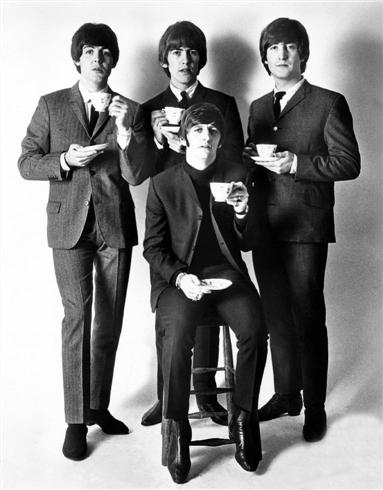
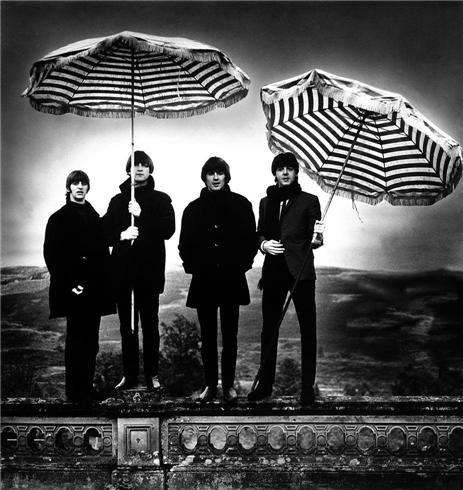
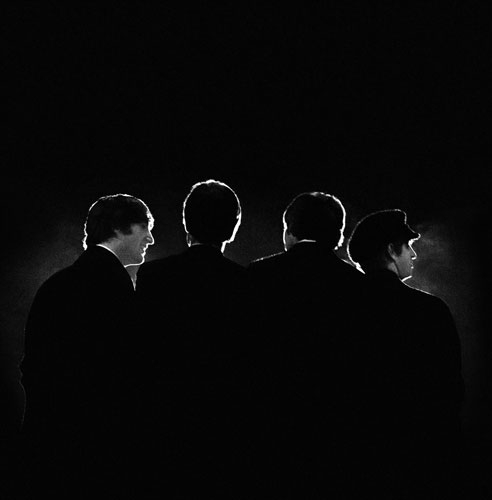
On this day in 1963 The Beatles formed the music publishing company Northern Songs — with Dick James owning 51% — which is how Michael Jackson eventually came to own their back catalog of songs. Follow the bouncing ball:
Brian Epstein made a number of bad deals for The Beatles. For example, there’s Seltaeb — “Beatles” spelled backwards — a company created to merchandise Beatles’ products. Epstein didn’t have the time, or inclination, to decide on all the merchandise requests that were rolling in, from Beatles wigs to drum sticks to plastic guitars. He decided to outsource this job and signed a contract which gave The Beatles a mere 10% of the royalties. Normally up to 75% would go to the artists on such a deal. It’s estimated that The Beatles lost at least $100,000,000 on that deal, which could have been more lucrative than the worldwide royalties on their music.
However, of all the deals that Brian Epstein got the Beatles involved in, Northern Songs is the one that had the most-lasting effect, biting them in the ass to this very day.
George Harrison was so irritated, he wrote a song about it:
Dick James had been kicking around the music industry since his teens in the ’40s, as a musician and singer. In fact, it’s James’ voice heard on the theme song to the tee vee show The Adventures of Robin Hood. As the WikiWackyWoo explains:
James entered the music publishing
business as his singing career tapered off. In 1958 he joined Sidney
Bron Music as a song-plugger but decided to leave and open Dick James
Music in 1961. In early 1963, he was contacted by Brian Epstein who was looking for a publisher for the second Beatles single, “Please Please Me“. James called Philip Jones, producer of the TV show Thank Your Lucky Stars, played the record down the phone to him and secured the band’s first nationwide television appearance.[3] The pair subsequently established Northern Songs Ltd., with BeatlesJohn Lennon and Paul McCartney, to publish Lennon and McCartney’s original songs.[4] (Fellow Beatles George Harrison and Ringo Starr were also signed to Northern Songs as songwriters, but did not renew their contracts in 1968). James’s company, Dick James Music, administered Northern Songs.[5]
What initially began as an amicable working relationship between the
Beatles and James disintegrated by the late 1960s: the Beatles
considered that James had betrayed and taken advantage of them when he
sold Northern Songs in 1969 without offering the band an opportunity to
buy control of the publishing company. James profited handsomely from
the sale of Northern Songs, but the Beatles never again had the rights
to their own songs.[6]
In later years, The Beatles groused about this deal, but was it really that bad? According to Did the Beatles Get Screwed, at Slate:
Decades later, McCartney would refer to the agreement that created their publishing company, Northern Songs, as a “slave contract.” Harrison would mock its terms in an outtake from Sgt. Pepper’s,
singing “it doesn’t really matter what chords I play… as it’s only a
Northern Song.” Lennon would say with some bitterness that the bald and
bespectacled man who proposed the deal, Dick James, had “carved Brian [Epstein] up.”
In fact, by the standards of the day, Dick James made the Beatles—a
band with one hit record and zero leverage in the industry—a pretty good
deal.
Keep in mind that when Chuck Berry recorded his first 45 for Chess Records
in the mid-’50s, the Chess brothers made him share songwriting
credit—right on the label—with a prominent disk jockey, as well as with
the company’s landlord. The publishing rights to Little Richard’s “Tutti Frutti”
were purchased by his label bosses for all of 50 dollars. This kind of
wholesale theft was commonplace; in the early rock era, the ethics of
the average music publisher could make a mob capo blanch.
After Epstein died The Beatles unsuccessfully tried to renegotiate the deal with Dick James, but in 1969 he sold the publishing catalog (which by then included many other songwriters) to Lew Grade‘s ATV without even telling The Beatles. Then they tried to buy back Northern Songs. Unfortunately, it came as The Beatles were in the process of (secretly) breaking up and John Lennon and Paul McCartney couldn’t come to terms. Each had their own advisers by then — Allan Klein for Lennon and Lee Epstein (no relation) for McCartney — and no one could agree on terms. Eventually, the negotiations fell apart and the songs stayed with ATV, with Lennon and McCartney receiving a healthy buy-out for their shares in the company.
After Lennon’s death McCartney again tried to buy the tunes back. According to the Wiki:
In 1981, with Yoko Ono, McCartney attempted to make a joint purchase of the ATV music catalogue.[33] At a 1990 press conference, McCartney stated, “I was offered the songs to buy for 20 million pounds”,[34] but did not want to be perceived as being “grabby” for “owning John Lennon’s bit of the songs”.[35][36] So he asked Ono if she would make a joint purchase with him, sharing the cost equally.[35][36]
According to McCartney, Ono thought they could buy it for half the
price being offered and he agreed to see what could be done about that.[35] McCartney then let the deal fall through when they were not able to make a joint acquisition.[33][35][36]
A few years later, McCartney recorded with Michael Jackson. As always, the Wiki knows all:
During their collaboration on the song, “Say, Say, Say“, McCartney informed Jackson about the financial value of music publishing.[37] According to McCartney, this was his response to Jackson asking him for business advice.[1] McCartney showed Jackson a thick booklet displaying all the song and publishing rights he owned,[37] from which he was then reportedly earning £24.4 million from songs by other artists.[36] Jackson became quite interested and enquired about the process of acquiring songs and how the songs were used.[37]
According to McCartney, Jackson said, “I’m going to get yours [Beatles’
songs]”, which McCartney thought was a joke, replying, “Ho ho, you,
you’re good”.[1]
And, that’s how the songs ended up at Sony Music.
McCartney and Yoko Ono were given first right of refusal, but both passed when they couldn’t strike a deal. Michael Jackson stepped in and bought the catalog, including Northern Songs. Once he owned the songs, he started licensing them out for
tee vee commercials, something The Beatles had always resisted. This outraged
Beatles’ fans around the world.
When Jackson started to experience some cash flow problems, he eventually sold the rights to half of his publishing company to Sony, where they have stayed ever since.
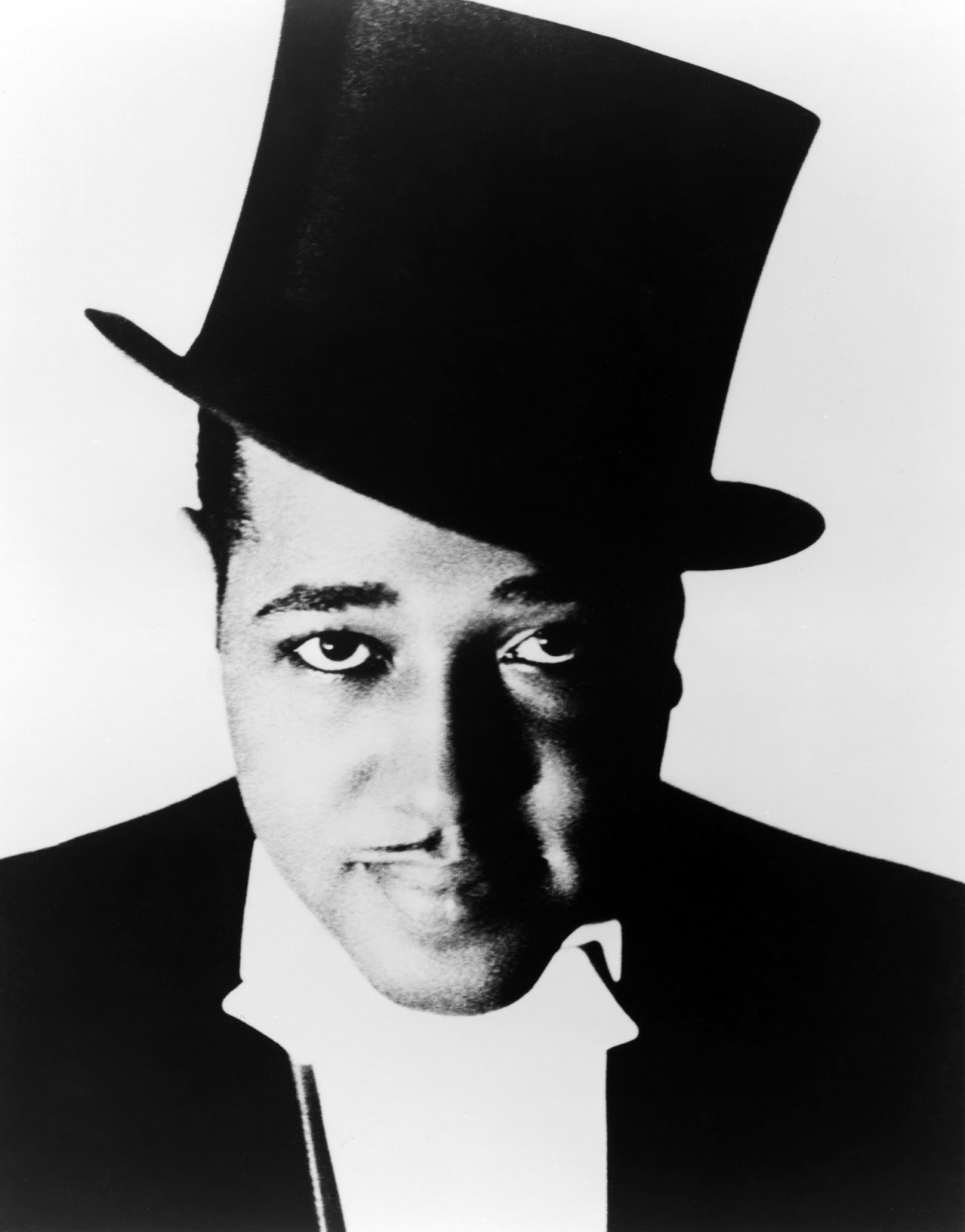
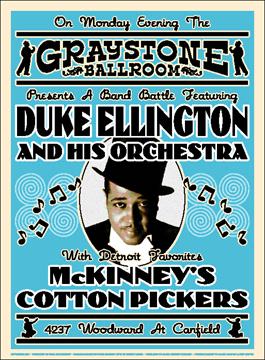
On this day in 1941 the Duke Ellington Orchestra recorded the classic Billy Strayhorn tune “Take The ‘A’ Train.” It made the charts in July, and stayed there for 7 weeks, where it eventually rose to #11. “Take the ‘A’ Train” became Ellington’s signature tune, which he also recorded many times over his career.
At the time there was a music strike after ASCAP (American Society of Composers, Authors and Publishers) raised its broadcast licensing fees. Many bandleaders like Ellington could no longer afford to play their own songs live on radio. To get around this change in the regulations, Ellington (who was in ASCAP) turned to his son Mercer Ellington and composer Billy Strayhorn, who were both signed to BMI (Broadcast Music,Inc.), and tasked them to come up with a new band book of songs and arrangements that wouldn’t be as expensive to play.
The song was almost lost to history. According to the website Jazz Standards:
In The World of Duke Ellington
by Stanley Dance, Strayhorn claims the title is about choosing the ‘A’
train over the ‘D’ train. He said he kept hearing about Harlem bound
housewives who took the ‘D’ train and ended up in the Bronx, as it only
went as far as 145th Street before turning off. If you want
to go to Sugar Hill, you need to take the ‘A’ train! Another account has
the title “Take the ‘A’ Train” evolving out of directions Ellington
gave Strayhorn on how to get to Ellington’s Harlem apartment by subway.
However the song came to be, it was a certified hit and re-entered the charts in 1943, 2 years after its first appearance, this time hitting #19 for another week.
Fans of the song are undoubtedly familiar with the trumpet solo
performed by Ray Nance. It is frowned upon in jazz, which prides itself
as an improvisational style of music, to repeat an ad-libbed solo.
However, Nance’s solo is the definitive one and Ellington said that no
trumpet player can play the song without borrowing from what Nance
offered. Nance was also an accomplished violinist. He invented a new way
to play “Take the A Train,” using the violin and accompanied on piano
by Dr. Billy Taylor in 1967. The two men performed the normally uptempo
song as a slow funeral march. The occasion was the memorial service for
Strayhorn and so much was the song intertwined with both Strayhorn and
Ellington, it was performed at Ellington’s memorial, too, seven years
later.
The song was featured in the 1943 movie Reveille with Beverly. As was the case with many of the musicals of the era, the Ellington segments stood alone in case the movie had to be cut to accommodate the south, where people would boycott movies that featured Black performers. Watch:
My favourite version of “Take the ‘A’ Train” pairs Ellington & Orchestra with Ella Fitzgerald. It’s sublime. Just take a listen.
A good song can take anything thrown at it. “Take the ‘A’ Train” has been covered by numerous artists over the years. Here are just a few examples of the dozens out there, finishing up with one of the Duke Ellington Orchestra’s greatest performances of the tune.
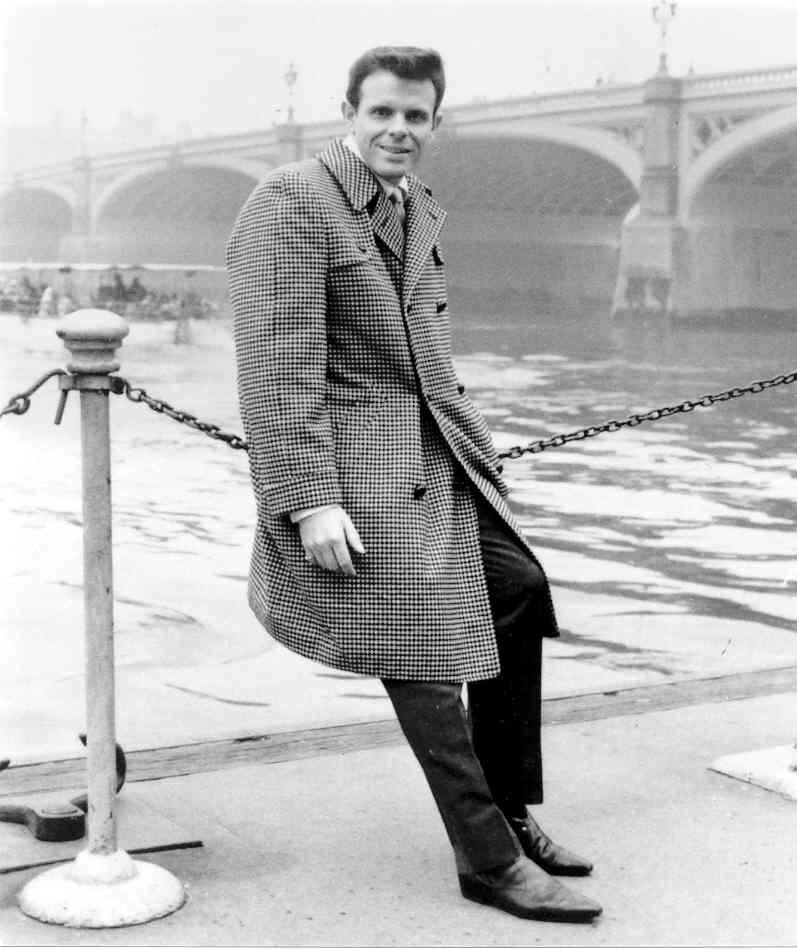
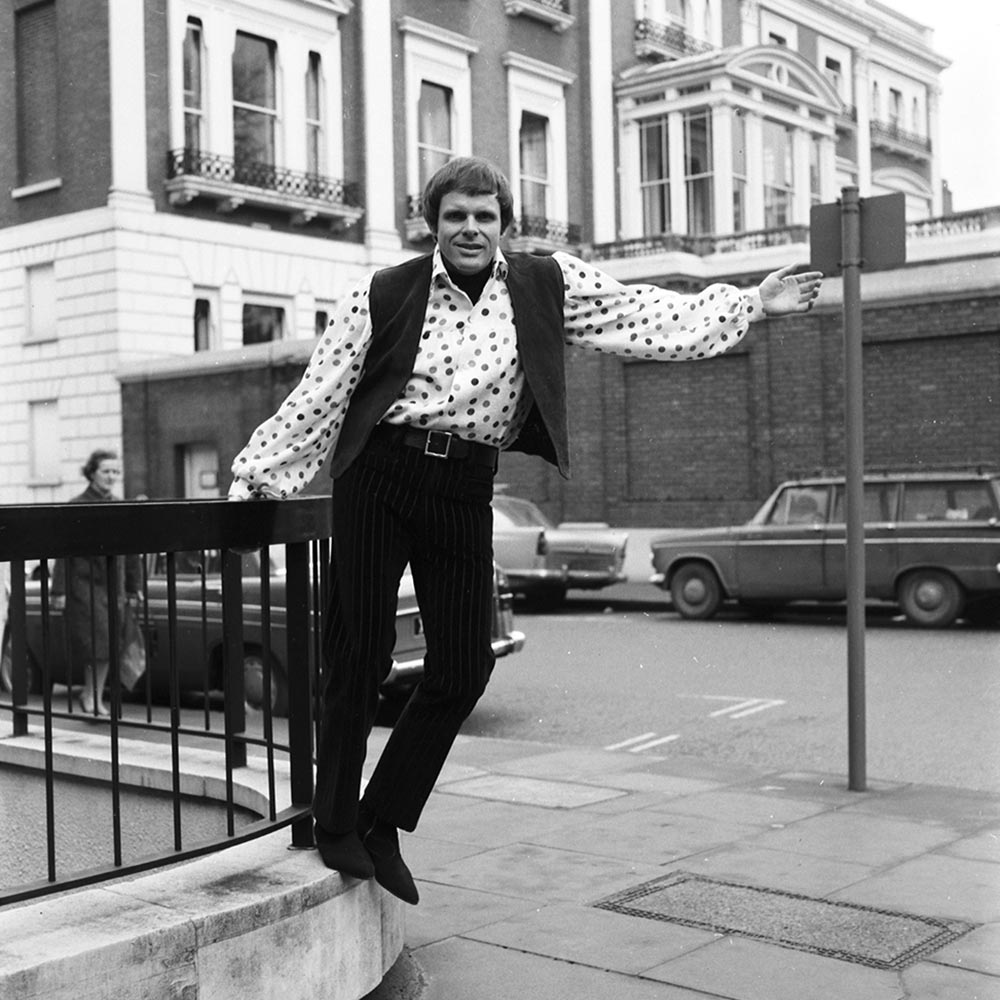
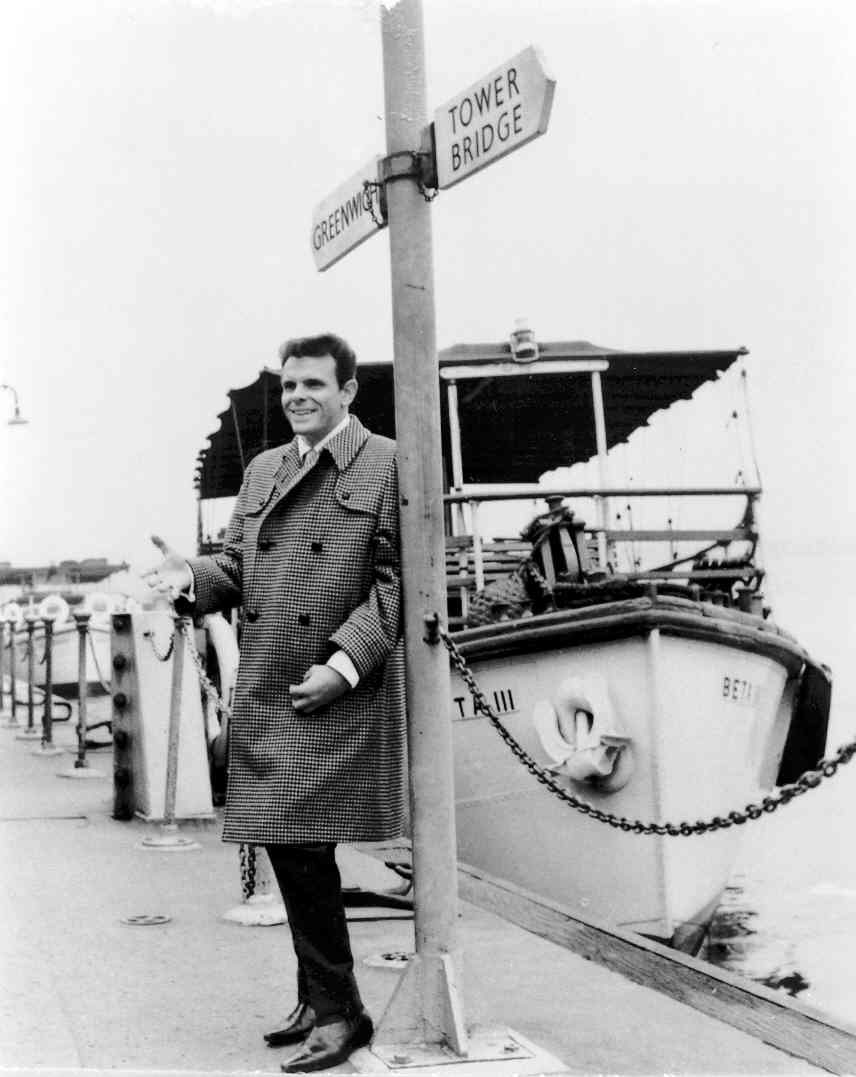
While, I don’t usually commemorate the death of celebrities, I will make an exception for Del Shannon, the first superstar that I ever met. He died on this day in 1990 of a self-inflicted gunshot wound.
Del Shannon was born Charles Weedon Westover on the 2nd to last day of 1934 in Grand Rapids, less than 30 miles from where he grew up in Coopersville, Michigan. According to the WikiWackyWoo:
He learned ukulele and guitar and listened to country and western music, including Hank Williams, Hank Snow, and Lefty Frizzell.
He was drafted into the Army in 1954, and while in Germany played
guitar in a band called “The Cool Flames”. When his service ended, he
returned to Battle Creek, Michigan,
and worked as a carpet salesman and as a truck driver in a furniture
factory. He found part-time work as a rhythm guitarist in singer Doug
DeMott’s group called “The Moonlight Ramblers”, working at the Hi-Lo
Club.[1]
When DeMott was fired in 1958, Westover took over as leader and singer, giving himself the name Charlie Johnson and renaming the band into The Big Little Show Band.[2] In early 1959 he added keyboardistMax Crook, who played the Musitron (his own invention of an early synthesizer). Crook had made recordings, and he persuaded Ann Arbordisc jockey Ollie McLaughlin to hear the band. McLaughlin took the group’s demos to Harry Balk and Irving Micahnik of Talent Artists in Detroit. In July 1960, Westover and Crook signed to become recording artists and composers on the Bigtop
label. Balk suggested Westover use a new name, and they came up with
“Del Shannon”, combining Mark Shannon—a wrestling pseudonym used by a
regular at the Hi-Lo Club—with Del, derived from the Cadillac Coupe de Ville, his favorite car.[2]
Shannon’s first sessions didn’t go well until he was convinced to rewrite an earlier tune, “Little Runaway.” Recorded in January of 1961, and now featuring the Musitron along with Shannon’s trademark falsetto, “Runaway” was released less than a month later. By April it hit #1 on the Billboard chart. A follow-up second single, “Hats Off To Larry,” was also a hit, climbing to the #5 position.
From there, sadly, it was a long, slow, tapering off. Shannon recorded for several labels, but never quite reached the heights of his early career. He became an alcoholic. By the time I met him his career was on the big slide to oblivion, although he was still considered a big star in England.
It was during the summer of 1966 (or was it ’65?) that my mother had a booth at the Michigan State Fair selling everything from Greasy Kids Stuff (the real name of this joke product), to giant sunglasses, to cheap jewellery, which could be professionally engraved on the spot. Think mid-’60s Kitch & Krap™.
Because we had free passes, I went to the fairgrounds with my mother every day. Maybe she thought I was going to help out in the booth, but as soon as the State Fair opened every morning, I was gone, exploring every nook and cranny of the annual event over the next month.
Just catercorner to my mother’s booth was a minuscule amphitheater, sponsored by hometown company Chevrolet. [Anything that seems minuscule to a child, must be very small indeed.] During the first 2 weeks of the State Fair was (almost) hometown boy Del Shannon was booked on that stage, while the next 2 weeks another hometown hero performed, the up-and-comer Little Stevie Wonder.
I was too young to understand the vagaries of show biz and didn’t realize that this little gig meant Del Shannon was already on the way to obscurity, while Stevie Wonders’ was still climbing the ladder to greatness. The trajectories of their respective careers were crossing at this moment in time across this little stage. All I knew at the time was these were 2 guys whose songs I knew by heart because they came out of the radio right in my own house.
I was already a fan of Del Shannon’s so I was excited to see that he was playing several free shows a day right next door. I tried to be in the audience for almost every show, sitting at a table right up front, and cheering and clapping louder than anybody. I even took delight in something I would gag at today. During the fade-out to “Runaway” Shannon slipped in a not-so-subtle product placement:
♫ ♪ ♫ My little runaway, a run, run, run, run, runaway. See the Yew Ess Eh in your Chevrolet. My little runaway . . . ♪ ♫ ♪
It didn’t strike me as crass at the time. I thought it was so cool that he could slip in the name of his sponsor without, literally, missing a beat. Clearly, he was a genius. I was a star struck 14-year old.
It didn’t take Shannon long to notice me and then realize I was almost a permanent fixture at his shows. After the 2nd or 3rd day Shannon approached me after one of his shows to offer me an autograph, which I foolishly declined. That’s not why I was there. He wondered why I was there and I pointed to my mother’s booth across the aisle and told him I was a big fan.
From that day on we were great pals. He would play right at me in the audience while on that little stage and often spent time talking to me after some of his shows. We never talked about Show Biz and I wish I could tell you what we talked about, but it’s long been forgotten. It was just general chit chat that’s meaningless even as it’s being spoken.
Looking back on it now, I get the sense that he was lonely. He had once been one of the biggest stars in Rock and Roll and now was reduced to playing on a stage smaller than most bedrooms. There were times that I was the only one who stayed through his entire 20 minute show, as people wandered in and out of the performance space looking at all the Chevrolet advertisements and full-scale models. I was just a kid, yet Del Shannon needed to bask in the warmth of my adulation. During those conversations, I cannot tell you whether he was had been drinking, but he certainly didn’t come off as drunk, something I would have recognized.
When I learned of his suicide from depression in 1990, it was like a light going out on one of the lamps lit during my youth.
►►► R.I.P. ◄◄◄
[Apologies for the quality of these 2 clips. I couldn’t find better.]
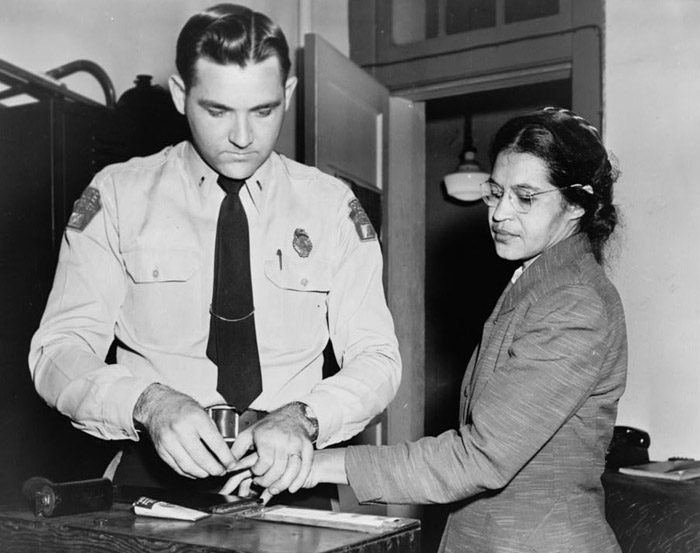
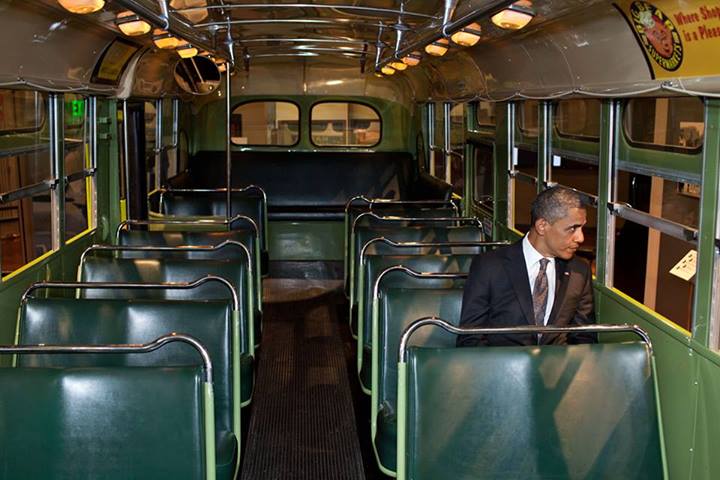
Happy Birthday to Rosa Louise McCauley Parks, born on this day in 1913. On December 1, 1955, at the age of 42, Parks refused to give up her seat to a White person on a bus in Montgomery, Alabama, triggering the Montgomery Bus Boycott. It lasted just over a year and, finally, integrated the buses in that southern city.
The Montgomery Bus Boycott was a defining event in the country’s history. There had been other attempts to integrate buses (which you can read about in the Wiki essay Events leading up to the bus boycott). However, this one attracted national attention and led to the Supreme Court ruling that the laws behind Montgomery and Alabama’s bus segregation were unconstitutional.
Mrs. Parks was not the first person to be prosecuted for violating
the segregation laws on the city buses in Montgomery. She was, however, a
woman of unchallenged character who was held in high esteem by all
those who knew her. At the time of her arrest, Mrs. Parks was active in
the local National Association for the Advancement of Colored People
(NAACP), serving as secretary to E.D. Nixon, president of the Montgomery
chapter. Her arrest became a rallying point around which the African
American community organized a bus boycott in protest of the
discrimination they had endured for years. Martin Luther King, Jr., the
26-year-old minister of the Dexter Avenue Baptist Church, emerged as a
leader during the well-coordinated, peaceful boycott that lasted 381
days and captured the world’s attention. It was during the boycott that
Reverend Martin Luther King, Jr., first achieved national fame as the
public became acquainted with his powerful oratory.
At the time, Parks was secretary of the Montgomery chapter of the NAACP. She had recently attended the Highlander Folk School, a Tennessee
center for training activists for workers’ rights and racial equality.
She acted as a private citizen “tired of giving in”. Although widely
honored in later years, she also suffered for her act; she was fired
from her job as a seamstress in a local department store, and received
death threats for years afterwards. Her situation also opened doors.
Shortly after the boycott, she moved to Detroit, where she briefly found similar work. From 1965 to 1988 she served as secretary and receptionist to John Conyers, an African-American U.S. Representative. She was also active in the Black Power movement and the support of political prisoners in the US.