
Have a safe and happy Fourth of July!!!



There is no denying that Paul McCartney has written a wealth of music that will stand the test of time. As we listen to Beethoven and Bach long after their lifetimes, we will be listening to the music of Paul McCartney.
Here’s a small Paul McCartney Jukebox:
 |
| Uncle Russ Gibb |
And, just because it pisses Mark Koldys-Johnny Dollar off, I am going to link to other versions of this story again.
 |
| Uncle Russ Gibb |
Here’s what I find funny: I have made no claims, yet Johnny Dollar has gone out of his way to refute them.
J$ asked one person one question (or had a confederate ask one
question) and then spun out an entire new conspiracy theory. While, that’s
hardly journalism, it’s par for the course for Markie K and the Sycophant Five.
I only ever told this to ONE journalist. The resultant article that came
out was so garbled, I never told it again “on the record.” Therefore, every other
version I have read is second hand, or a re-writing of the
original post. Each has managed to garble the story further.
However, and I stress, only one person ever bothered to ask me any questions and I answered them all honestly.
However, I am most grateful that Markie K and the Sycophant Five, along with their patron Mark Koldys-Johnny Dollar are such loyal followers of my Aunty Em Ericann Blog.
 |
| What’s left of The Grande Ballroom; Picture by author 2010 |
 |
| The Grande Ballroom on opening night of a whole new era. |
There was a time I listed my Top Three artists as Frank Sinatra, Frank Zappa, and Harry Nilsson. Who knew that Sinatra would outlive the other two?
I first learned of Harry Nilsson the same way much of ‘Merka did, when The Beatles name-checked him twice during their ’68 press conference to announce the formation of Apple. Wait! What? Who? The Harry Nilsson Web Pages picks up the story:
The album came to the attention of the Beatles (through Derek Taylor their press agent). At the press conference to announce the formation of Apple, the Beatles were asked “Who is your favorite American artist?” to which John Lennon replied, “Harry Nilsson.” When asked “What is your favorite American group?” Paul McCartney replied, “Harry Nilsson.”
Harry’s arrangement of “You Can’t Do That” weaves some 20-something other Beatles’ songs in and around the Lennon-McCartney melody.It needs to be heard to know why The Beatles were so knocked out by it.
The great irony of Harry Nilsson’s all-too-short artistic career is that while he is an amazing songwriter, the two songs he is best known for were not written by him: “Without You” was written by two of the members of Badfinger and was originally recorded by that group, while “Everybody’s Talkin'” was written by Fred Neil.
That’s why we’ll start with songs Harry wrote. Here’s a rare version of “Coconut” created for one of his his BBC shows. All vocals are Harry re-recorded specifically for this ‘video’ and the instrumentation is minimalist. to say the least:
Many people have covered Nilsson’s “One.” His version followed by the obscure Chris Clark on the even more obscure Motown subsidiary label Weed, because that’s what this LP was apparently fueled by.
Here is a rare tee vee appearance of Harry’s on The Smother’s Brothers Comedy Hour. Harry was a good friend of The Smothers Bothers, which is why he thought he and John Lennon could heckle them at The Troubadour, but we won’t rehash THAT story. “Think About Your Troubles,” the second song here, is personally one of my favourite Harry Nilsson songs. I like the circular story. I like how it sums up this larger dynamic than the listener and then says, “You think you’re the center of the universe? Well, I got news for you.” The third song is from the upcoming “The Point” cartoon, which is remembered fondly by many big kids.
Another rarity from his BBC tee vee special is this medley of three covers intertwined, Walk Right Walk, Cathy’s Clown, Let The Good Times Roll all recorded with 3-part harmony done by Harry himself.
Here’s the very obscure Miss Butter’s Lament, written by fellow Canadian Bob Segarini.
When Harry Met John resulted in Pussy Cats, an album that marked the nadir of Harry’s career. Yet there are still some true gems on this LP. Harry makes his ravaged voice work for this incredibly emotional cover of Jimmy Cliff’s Many Rivers To Cross.
I could go on and on, but this makes a good starting point for Harry Nilsson if you are just getting to know him.
*1941, by Harry Nilsson
The greatest LP of the entire Rock era was released 45 years ago today. The Beatles masterpiece was a revelation, a concept album with a gatefold cover (already done by Frank Zappa, tho’), cool cut-outs, and the lyrics printed right on the back cover!!!
I listened to it over and over again when it was brand new, just like all my friends. Every listen seemed to bring something new to the ears.
There have been many interpretations over the years, including a recent Cheap Trick Sgt. Pepper performed completely live. However, the best interpretation is one I have already spoken about in these pages. Here’s Easy Star All-Stars performing the entire LP as “Easy Star’s Lonely Hearts Dub Band” with many special guest stars.
As always…CRANK IT UP!!!

Dateline: 1969 – John Lennon and Yoko Ono begin their second Bed-In, this time in Montreal, Quebec. They had wanted to do it in New York City, but Lennon was still barred from entering ‘Merka. The Bahamas, which Lennon had visited during the making of “Help,” was considered too far away to bring the press. Finally they settled on Montreal. Here’s how the Canadian Broadcasting Company covered some of it:

However, not everyone was enthralled. Al Capp, the cartoonist best known for L’il Abner — Yeah, THAT AL Capp — was invited to the hotel suite for what turned out to be a very contentious debate:
On June 1st a gathering recorded Lennon’s “Give Peace A Chance” in the same hotel room. Included were with Dick Gregory, Tommy Smothers, Timothy Leary, Toronto Rabbi Abraham Feinberg, musician Petula Clark, and members of the Canadian Radha Krishna Temple. It’s a sing-a-long:
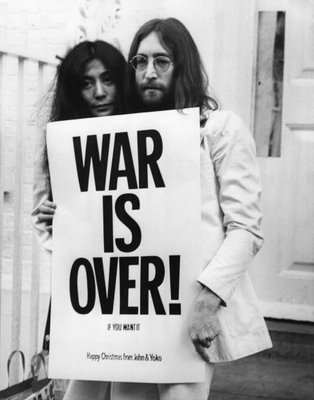
On the 30th Apple Records released “The Ballad of John and Yoko” in the U.K. and 5 days later in ‘Merka, on June 4th. The only Beatles on this recording are John Lennon, and Paul McCartney, who recorded in a hurry one evening while Ringo was filming “The Magic Christian” and George was on holiday. Christ, you know it ain’t easy:
This was The Beatles last #1 U.K. single.


For “The Long
and Winding Road”, the Naked producers used the final take, recorded five
days after the rough run-through Phil Spector had selected for the original
album.[1] As per all songs on Let It Be… Naked, this version is devoid of any
orchestral or choral overdubs. (The unadorned take from Let It Be is featured
on Anthology 3.) Finally, there is a slight lyrical difference: whereas the
original album version’s lyric reads, “anyway, you’ll never know the many
ways I’ve tried,” on this version it reads, “anyway, you’ve always
known the many ways I’ve tried.” Electric guitar and electric piano are
also present in this version, played respectively by Harrison and Billy
Preston.

