Tag Archives: unpacking-coconut-grove

The Latest Visit to the E.W.F. Stirrup House

The E.W.F. Stirrup House on May 14, 2013

Dateline May 14, 2013 – It’s almost a nervous tic. Anytime I am near Coconut Grove, I visit the E.W.F. Stirrup House and take new pictures. 

Yesterday, after dropping a friend off at the Miami airport, I drove the 7 miles to Charles Avenue. The latest pictures reveal is that nothing has been done to the E.W.F. Stirrup House since the meeting of the Charles Avenue Historic Preservation Committee on the 27th of February. At the time I wrote:

Yesterday a crew was cleaning up the Stirrup property by removing the
vines and bushes that had grown all over the back of the house. This
blog has documented
how the property becomes an unruly garbage dump between citations from
the City of Miami. The property is always cleaned up before fines are
levied. Then it’s allowed to slowly fall into disarray until the next city inspector posts a citation
on the property about all the garbage, weeds, and graffiti. Despite
occasional landscaping, the vast Westerfield Archives has several year’s
worth of pictures that prove these bushes and vines have never been
cleared away. This was not just another minor clean-up.


Could it be that Gino Falsetto realized that eyes
would be on the E.W.F. Stirrup House again this week because of the
Charles Avenue Historic Preservation meeting? After 8 years of
inactivity, is it possible that Falsetto wants to be able to say at
Wednesday’s meeting “Things are happening,” only to let it slid into
disarray until the next time it gets cleaned up?

The E.W.F. Stirrup House on May 14th,
showing the damage caused by the last cleanup

I must be The Amazing Kreskin. What I predicted came to pass at the Charles Avenue Historical Preservation Committee meeting when an angry reporter (me) wondered why nothing had been done to the property in the 8 years Falsetto has had effective control of it. The representative of Gino Falsetto on the preservation committee jumped in by citing all the recent landscaping work that had been done. As I was about to ask a follow-up, and point out that the recent landscaping had actually damaged the side of the house, the chair of the meeting shut me down by saying the committee was looking forward, not backward. Since I was merely an invited meeting observer, and not a member of the committee, I held my tongue. However, I was angry that 8 years of neglect was being swept under the rug.

Still Life With Dishwashers, May 8, 2013

I must be The Amazing Kreskin. Another part of my prediction has also come to pass. Absolutely nothing’s been done since that meeting. Well, that’s not entirely true. Someone finally figured out how to close the lower windows on the side of the house. This is actual progress, since they have been open to the elements for many years. However, that’s it!!! The upper windows are still open to the daily Florida rainstorm.

I must be The Amazing Kreskin. The third part of my prediction has also come to fruition: the property has, once again, slid back into being a garbage dump. A seemingly never-ending series of dumpsters come and go. Last week it was filled with several dishwashers, clearly the result of a renovation inside the Grove Gardens Residence Condominiums. However, there’s no telling where and what the work might be because, as usual, I can find no building permits displayed anywhere. However, it’s safe to assume that it’s one of Gino Falsetto’s restaurants on the ground floor of the Grove Gardens Residence Condominiums. He has three: The Taurus Bar, Calamari, and La Bottega by Carmen Trigueros. That’s right! Chef Carmen’s got her name right in the name of the restaurant for added pretentiousness.

Meanwhile, where are the promised renovations for the E.W.F. Stirrup House? Gino Falsetto has had more than 8 years to do something, ANYTHING, to the E.W.F. Stirrup House. It’s time for the community to rise up and find a way to abrogate the 50-year lease Gino Falsetto holds on the E.W.F. Stirrup property. He’s shown himself to be a terrible steward of a precious 120-year old Coconut Grove historical resource. He continues to allow the house to undergo Demolition by Neglect.

Those who allowed him to get his rapacious hands on this family heirloom need to find a way to get it back in order to honour the legacy of E.W.F. Stirrup and the original Bahamians who built Coconut Grove.

The only legacy being honoured today is that of rapacious developers. Might as well put up a statue to Gino Falsetto because, according to this website, he is the Master of everything at the east end of Charles Avenue and wants to create his own legacy, Le Coco Suprême. According to this anonymous author, who links to my blog quite often:

Map that accompanies the allegations: Legend: 1 = Playhouse,
2 & 3 = Vacant Lots, 4 = E.W.F. Stirrup House, 5 = Grove Garden
Residences Condominium 6 = Regions Bank, 7 & 8 = Vacant Lots,
9 = 2-Unit Residence, I = Bridge across Charles Avenue

This monster complex — dubbed Le Coco Suprême — will be the largest multi-use condominium complex in all of Florida: a 5.6 acre multi-use condo complex, the biggest Heafey and Falsetto have ever carried out here and in Canada. They want it to be their crowning achievement. It will dwarf what Heafey has done in Quebec. (In comparison, Cocowalk within walking distance up the street is 2.18 acres.)

The plan entails a 960-unit residential condo, a 360-room hotel, 200,000 sq.ft. retail space, 4 restaurants, a movie-theater complex, a gym, a bowling alley or ice skating rink, 3,800 space high-rise garage to also serve the downtown Grove, a bank (Regions), a Bed & Breakfast in the E.W.F. Stirrup House, a remodeled, brand-new miniature Goconut Grove Playhouse, and the current Grove Garden Residences multi-use condo complex. A bridge over Charles Avenue will connect everything. The high-rise garage will be on the north side (closest to downtown for access to all Coconut Grove downtown visitors) with an arcade of shops at street level facing Main Highway.

If that’s true one of the few things standing in the way of his plan to erect another MONSTER condo complex, is the E.W.F. Stirrup House.

SAVE THE E.W.F. STIRRUP HOUSE!!!

Further reading at Not Now Silly

Unveiling the One Grove Mural ► A Photo and Video Essay 

Happy Birthday Coconut Grove!!! Now Honour Your Past

Good Neighbours and Bad Neighbours ► Unpacking Coconut Grove ► Part Nine

A Charles Avenue Love Story ► Unpacking Coconut Grove ► Part Five

The E.W.F. Stirrup House ► Unpacking Coconut Grove ► Part Two

***
***

To West Coconut Grove’s Continued Health

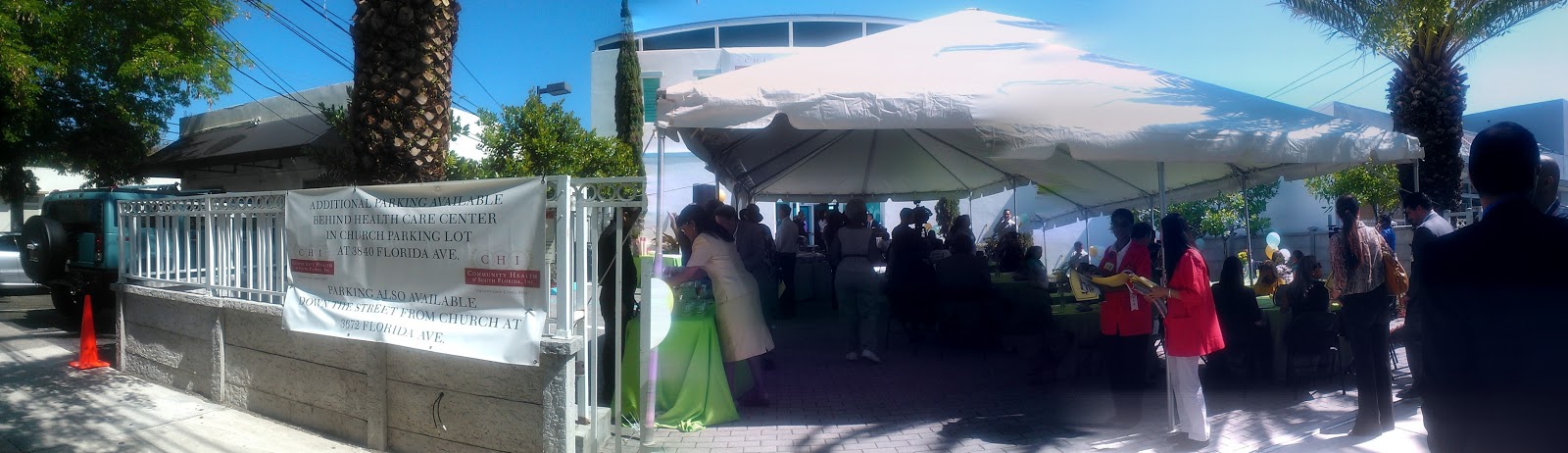
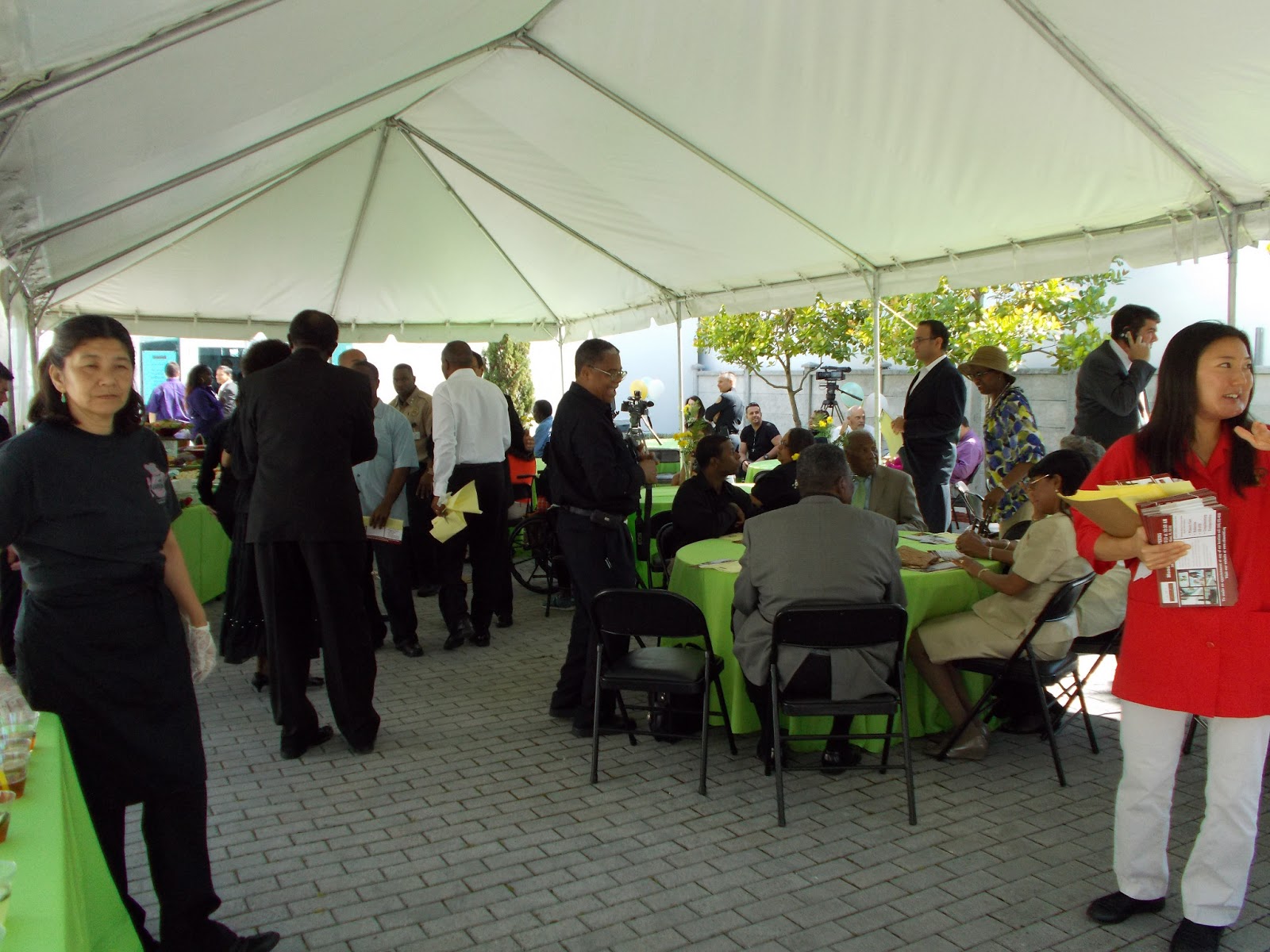
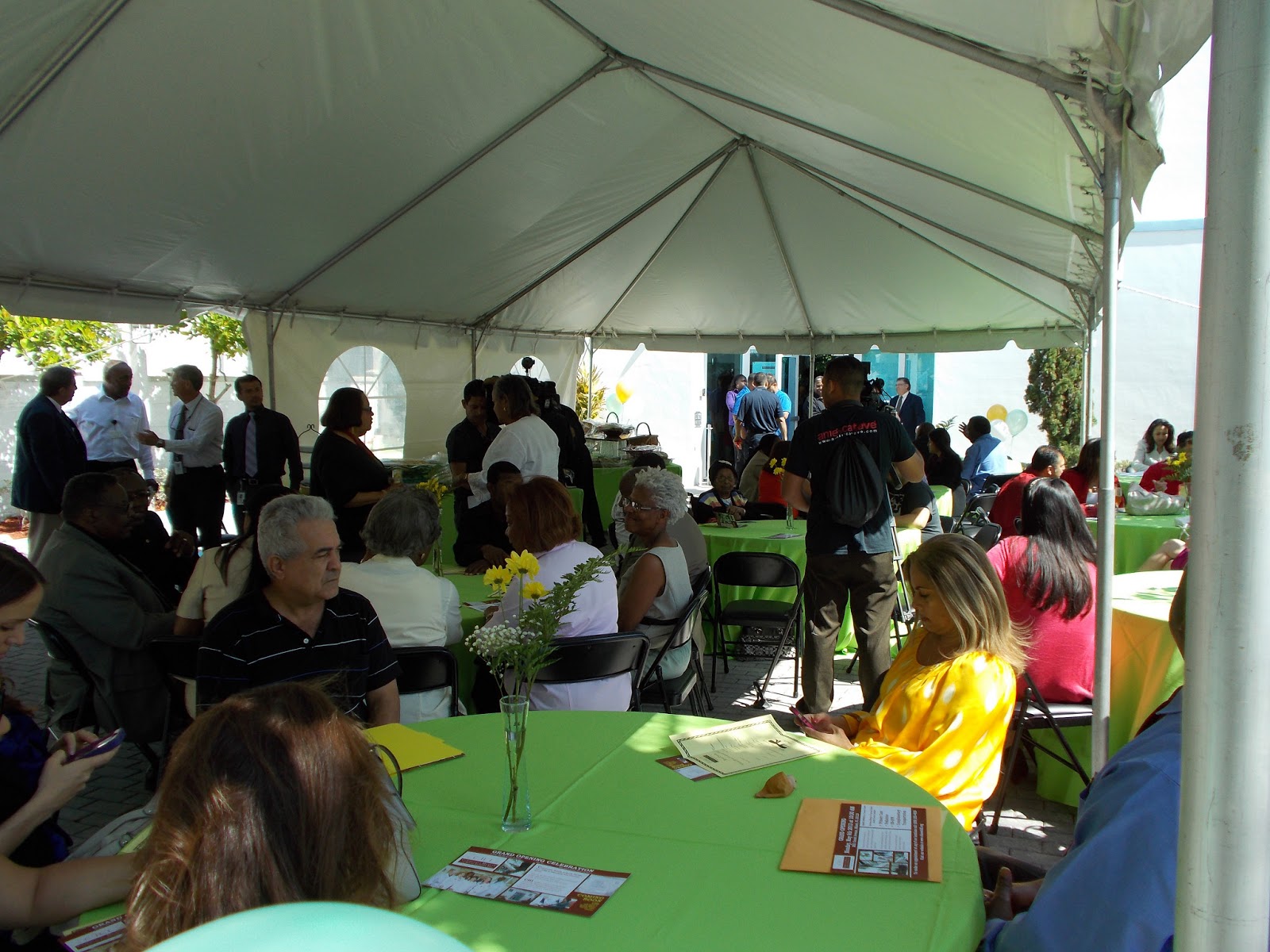
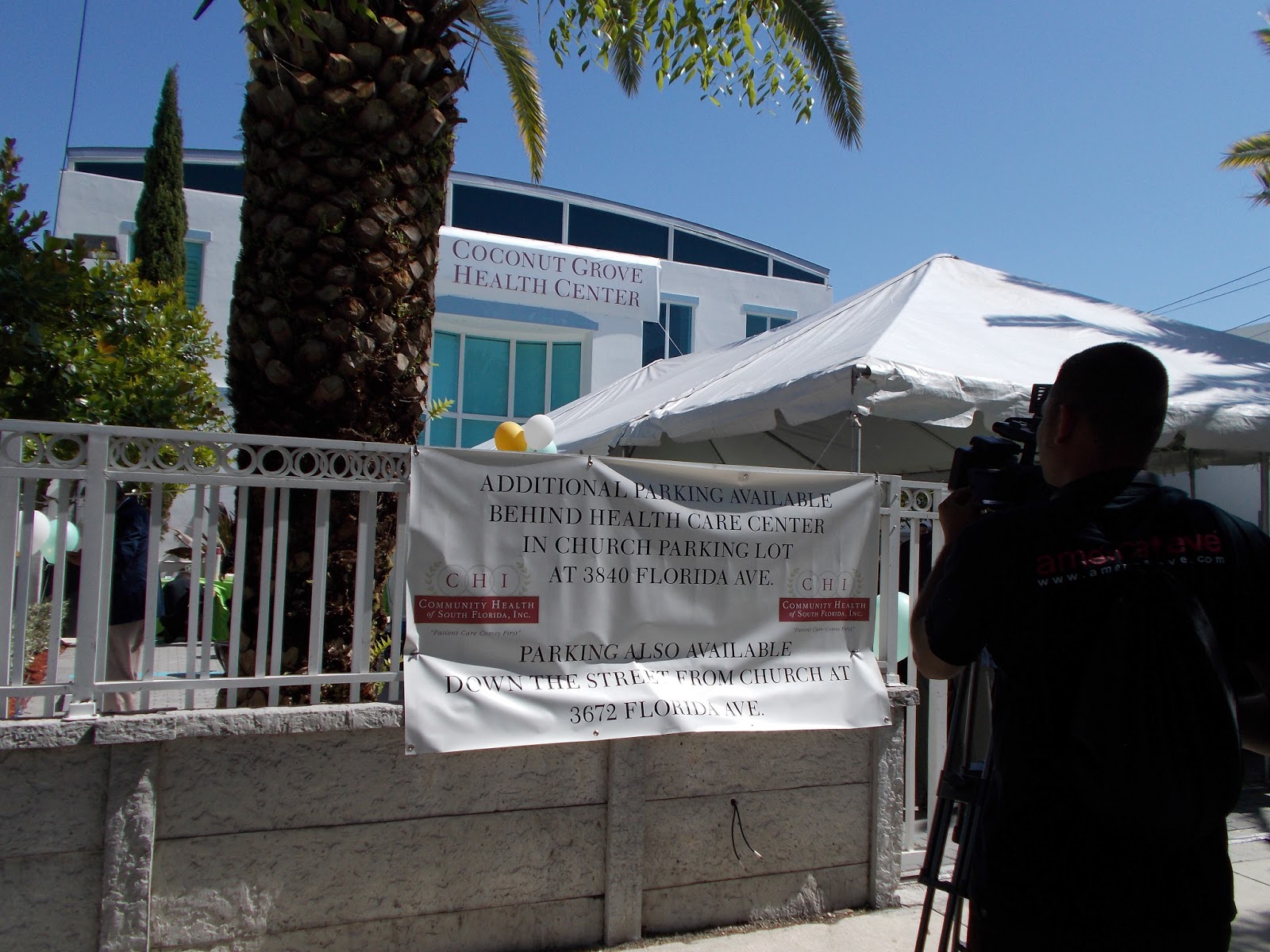
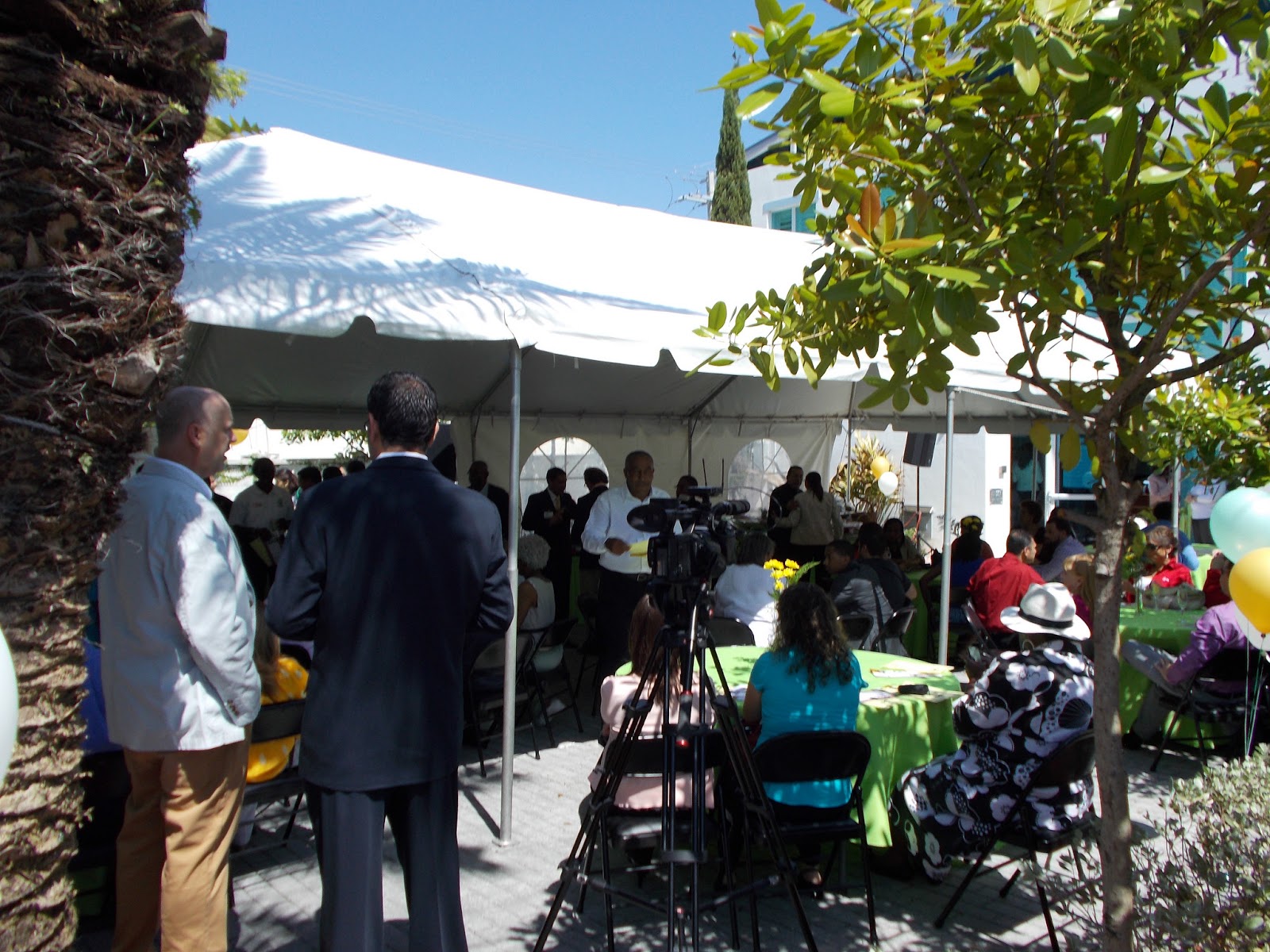
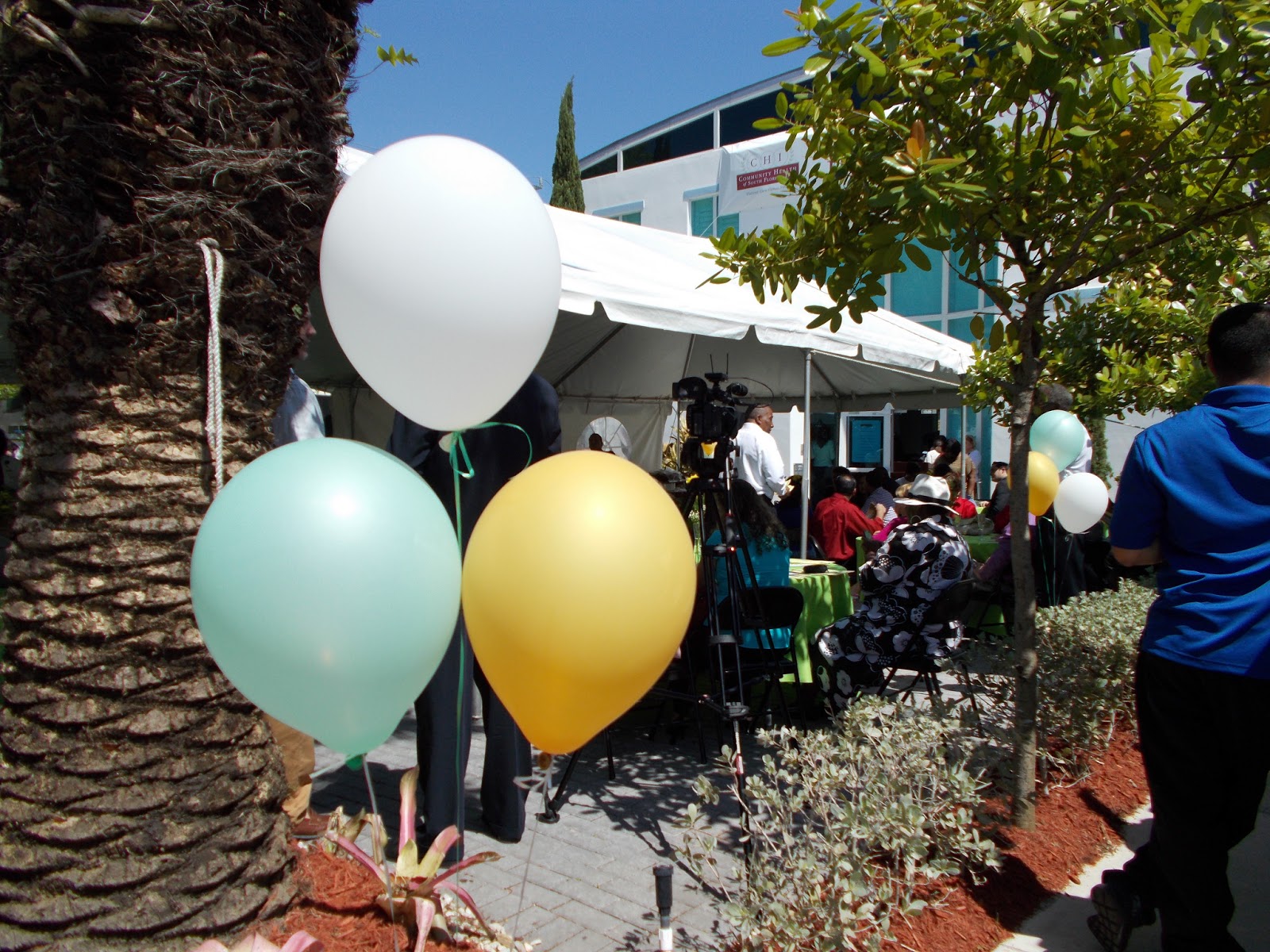
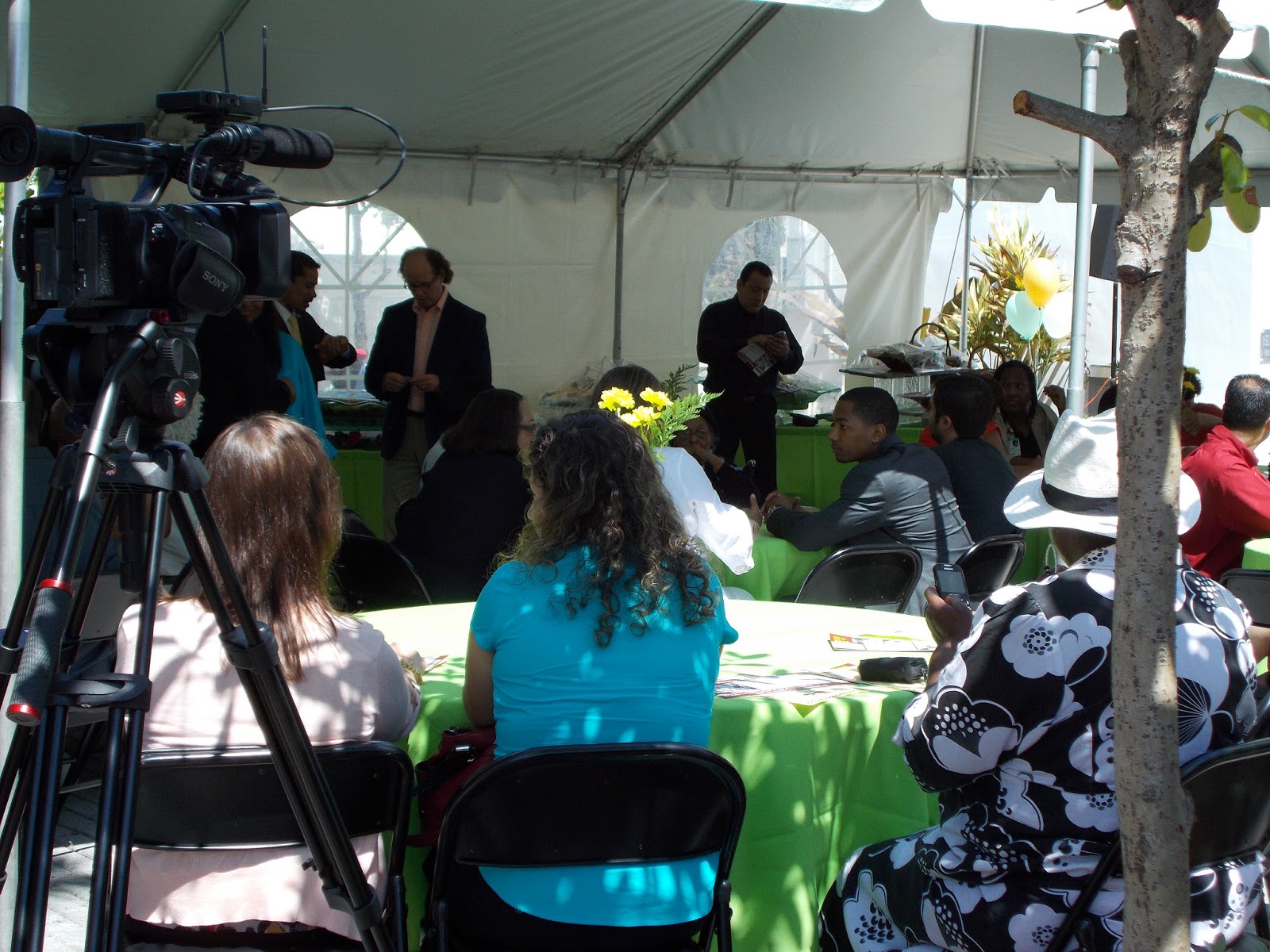
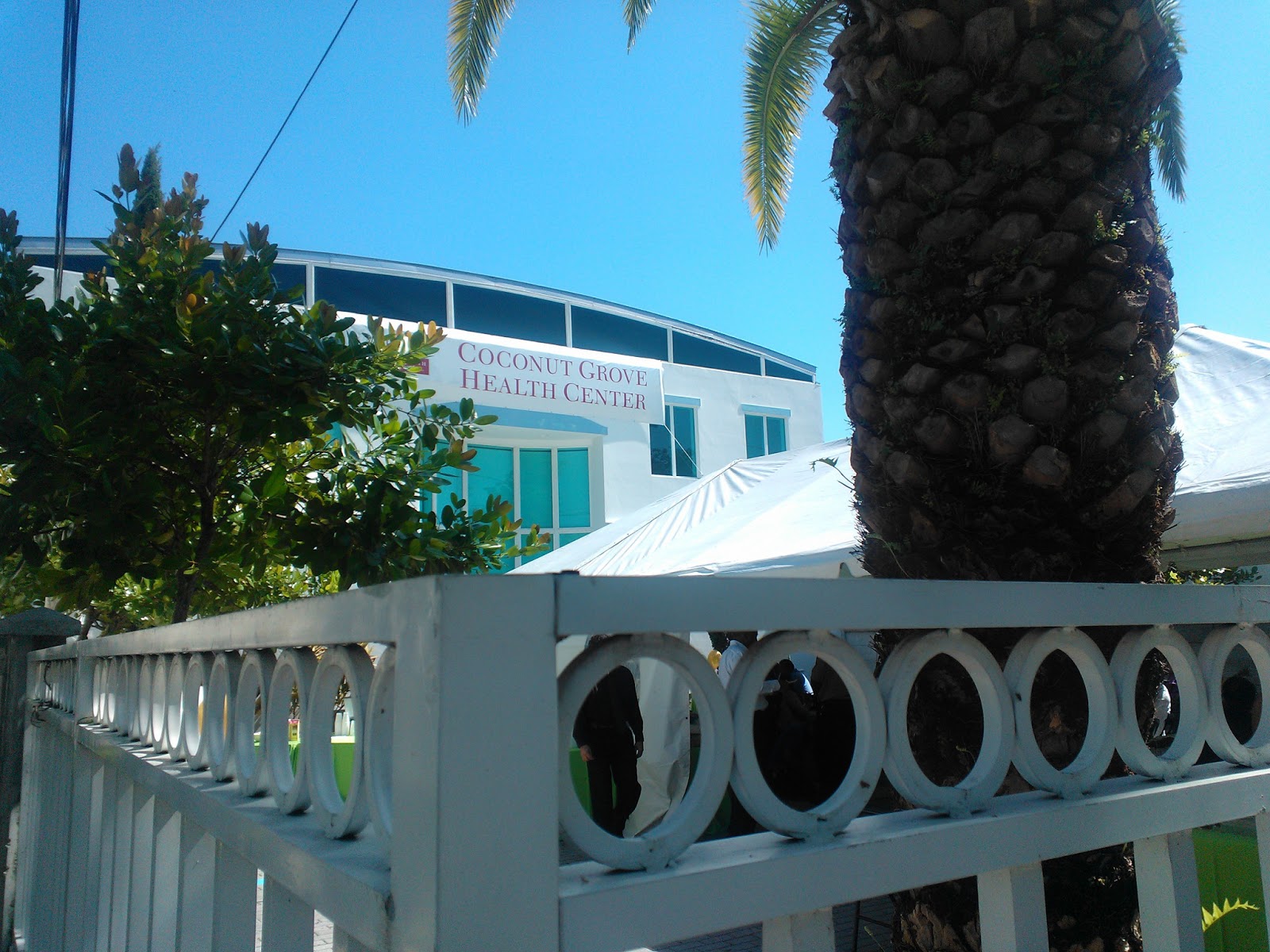
May 6, 2013 – Community Health of South Florida cut the ribbon on its spanking new Coconut Grove Health Center.

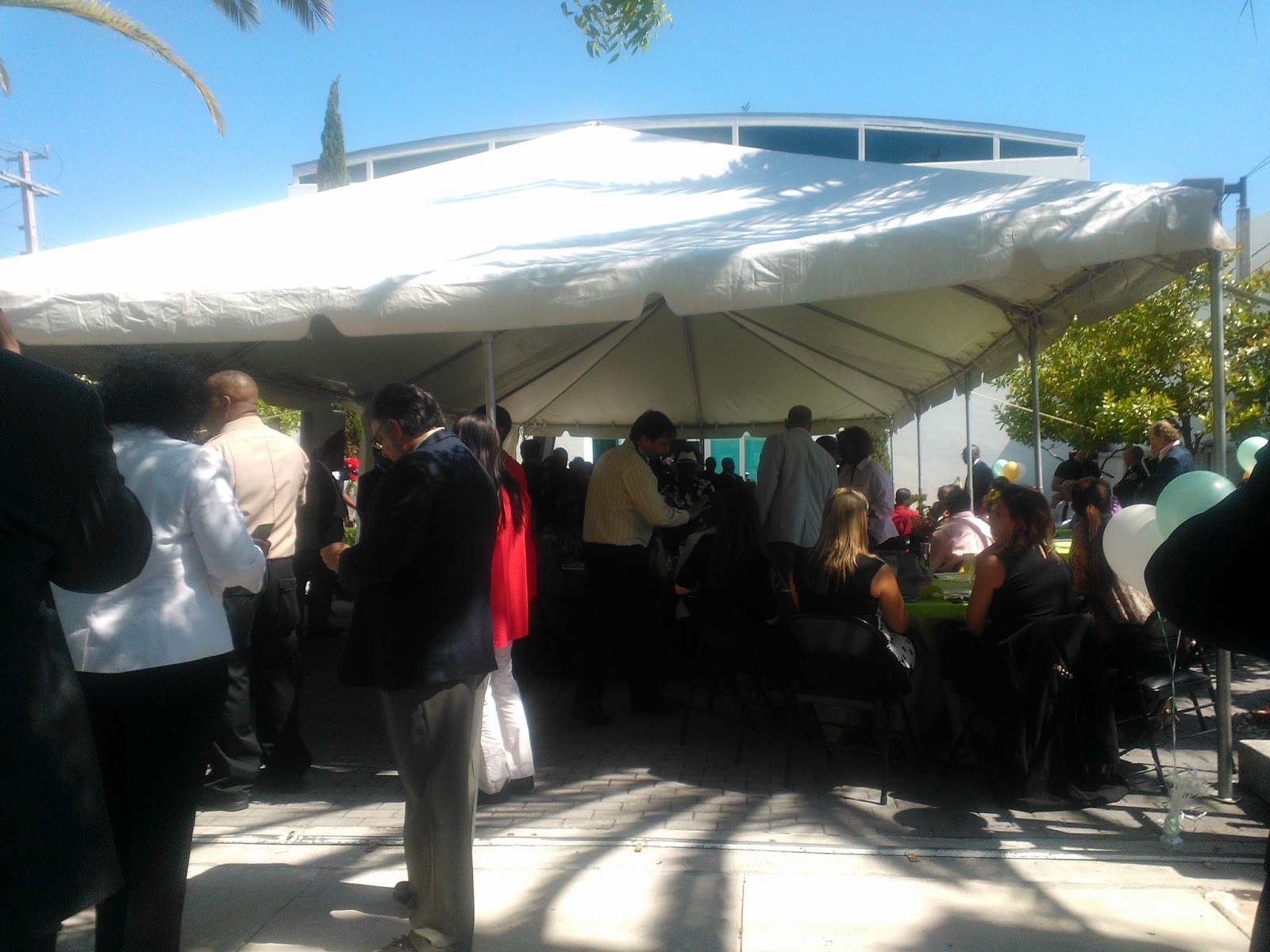
It was quite the celebration at 3831 Grand Avenue in West Grove as a tent — offering food and drink — was set up on the patio outside the state-of-the-art facility. The CGHC will offer comprehensive medical care on a sliding scale based on income and need.

It wasn’t all that long ago that the Helen B. Bentley Family Health Center had to close after 40 years of operation, serving some of Coconut Grove’s neediest folks. With so many thousands left in the lurch, the federal government awarded CHI a grant to open the Grand Avenue facility, as well as one on Sunset Drive in South Miami in June. Accordiing to Brodes Hartley, Jr., CHI President, “In these tough economic times we see a lot of people who simply do not have the money to seek medical attention and that shouldn’t be the case. There are times that some people can’t even pay the $25 co-pay and se still provide them with top quality care.”

Here’s to your health, Coconut Grove!

Panorama looking east along Grand Avenue towards Douglas, with the Coconut Grove Health Center on the left

A panorama of the festivities.

***

***

No Skin In The Game ► Part Three

History is complicated.

Little did I realize how accurate I was in intimating Coral Gables has a long history of Racism, going back to its founding. As reported in Part Two of No Skin In The Game, to this day Coral Gables has a population that is 98% White. This demographic never happens by accident. 

However, there is one Coral Gables neighbourhood that turns out to be the exception . . . the exception that proves the rule.

In my research I recently, accidentally, stumbled across something called the MacFarlane Homestead Subdivision Historic District. It was an odd little reference in the Sun Sentinel that caught my attention. In the article Reference Guide Lists Historic Black Sites, were mentioned Black sites across Florida, including one in 98% White Coral Gables, of all places:

CORAL GABLES

MacFarlane Homestead Subdivision Historic District:

Bounded by Oak Avenue, Grand Avenue and Jefferson Street. The residences were built primarily in the late 1920s and 1930s in a vernacular type of architecture not seen elsewhere in Coral Gables. The styles in the district include bungalows and one-story frame “shotgun“ houses. St. Mary`s Baptist Church at 136 Frow Ave. was built in 1927.

Detail of map showing the MacFarlane Homestead Subdivision Historic District,
the oddly shaped triangle in blue. Everything to the south and east is Coconut
Grove. Everything north of the tracks and U.S.1 is Coral Gables.

That address puts it in the odd triangle section of Coral Gables immediately adjacent to West Coconut Grove. It’s just a little more than a block away from the Coral Gables diesel bus garage that the residents of West Grove have been saddled with.

Reading between the lines:

  • “…built primarily in the late 1920s and 1930s…” can be translated to say “this neighbourhood was created contemporaneously with the founding of Coral Gables;”
  • “…in a vernacular type of architecture not seen elsewhere in Coral Gables. The styles in the district include bungalows and one-story frame “shotgun“ houses…” translates to “built in the inexpensive and expedient Bahamian style, styles of house that would never be allowed elsewhere in hoity-toity Coral Gables, but seen in abundance in neighbouring Black Coconut Grove.”

In other words: this neighbourhood was created so the Black folk who were doing the back-breaking labour of building Coral Gables — and, later, serving Coral Gables — would have a place to live. My understanding of the racial implications was instinctive and immediate. Proving that point would be more difficult.

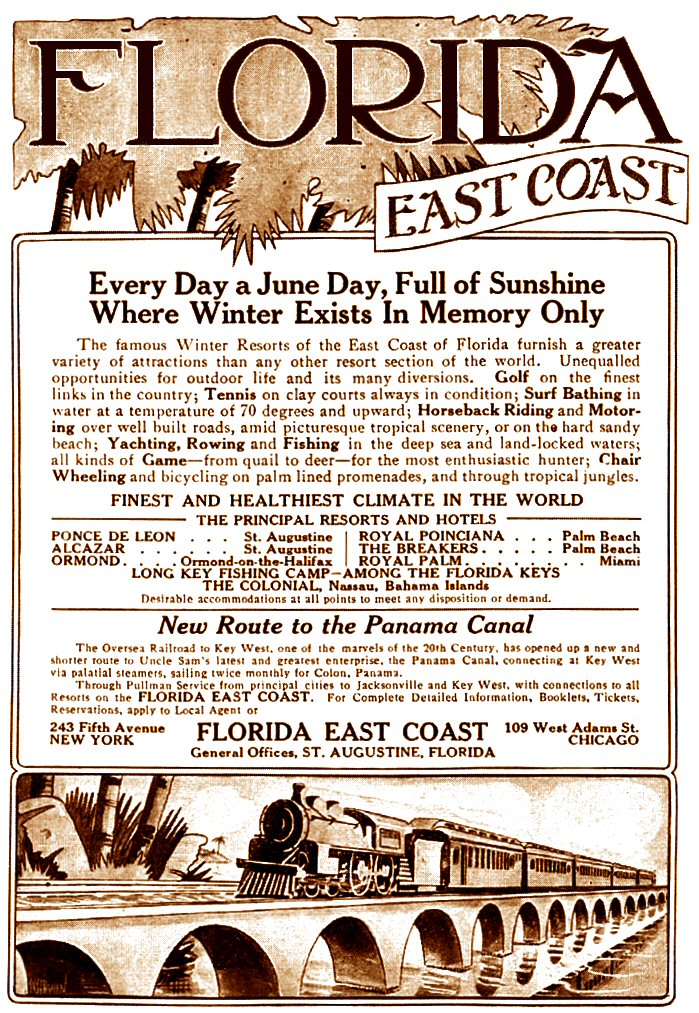
1913 Poster

One thing that made Coconut Grove unique in this country — aside from having the highest percentage of Black home ownership in the nation — is that the Black community in Coconut Grove was NOT on the “other side of the tracks.” Think about that expression for a moment. The “other side of the tracks” was the poor part of town, where Black enclaves originally started near the railroad tracks. That was generally an area where no decent, self-respecting White person would find themselves living, or even traveling. Black folk had far fewer choices for neighbourhoods. And, as has always been true in this country, once there were a few Blacks in an area, it became all Black over time.

While Coconut Grove didn’t have an “other side of the tracks,” it’s clear that Coral Gables did. The blue triangle on the map above (or on this interactive map) is the only area in Coral Gables that Blacks could live. South of U.S. Highway #1, which runs parallel to the railroad tracks, is the other side of the tracks if you live in Coral Gables. It may be technically a part of Coral Gables, but it’s not OF Coral Gables, if you get my meaning.

It turns out the proof I was looking for was tucked away in a book called “African American Sites in Florida” by Kevin M. McCarthy. Within I found the following:

Coral Gables

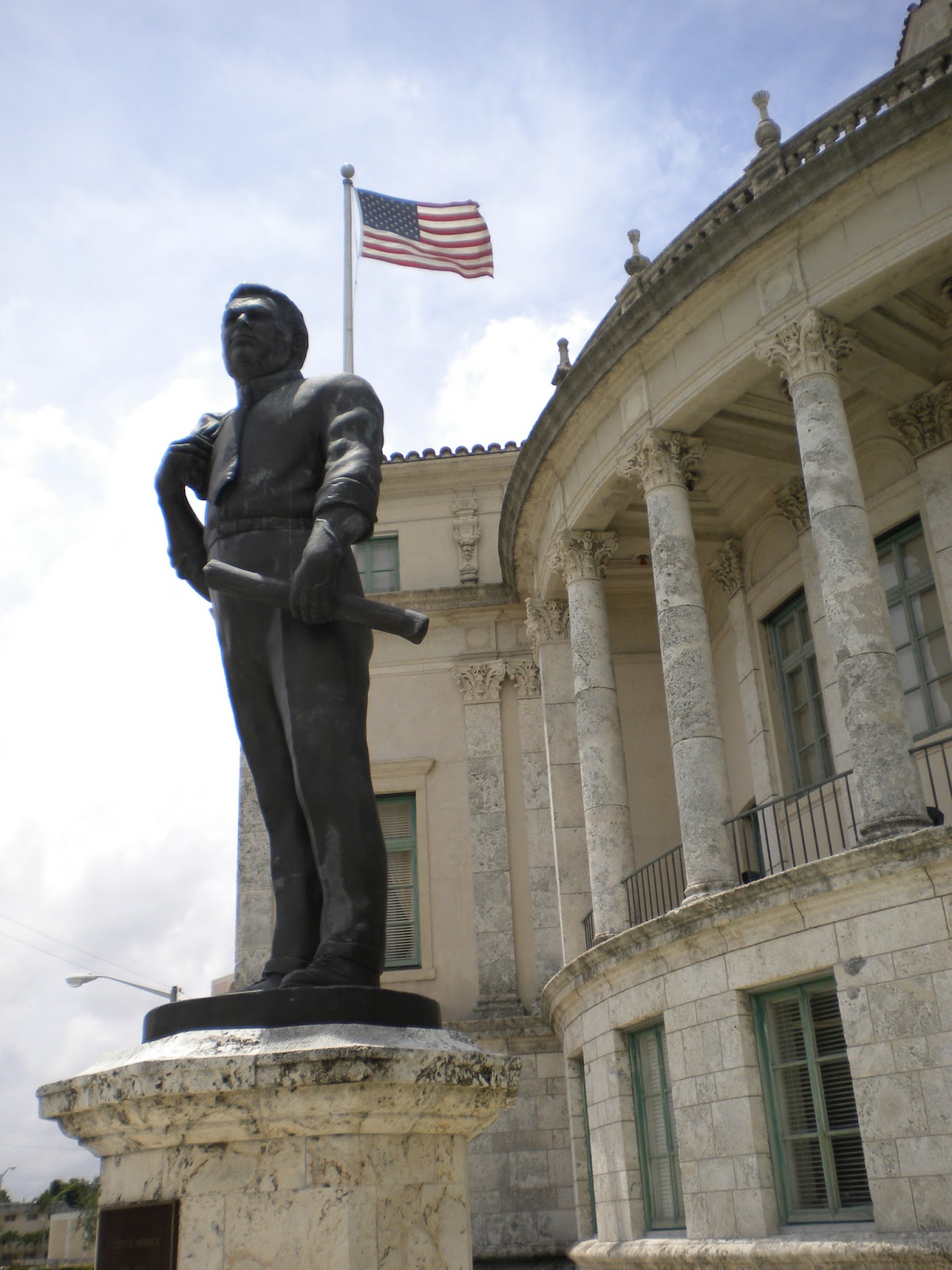
When I took pictures of George Merrick and Coral Gables City
Hall in August of 2009, who knew they would come in handy?

Coral Gables may have been the second planned community in the United States, after Washington, D.C. George E. Merrick spent much time and money designing the city, including what became the University of Miami, which opened in 1926. To promote the planned community, he used the oratorical skills of William Jennings Bryan in the mid-1920s; Bryan, who had been President Woodrow Wilson’s Secretary of State and a three-time Democratic Party nominee for President, gave impassioned speeches around Merrick’s fabulous Venetian Pool, encouraging visitors to buy and settle in the planned community.

The city never had a large number of blacks, and in 2000 only 3% (1,348) of the total population of 40,091 were black.

MACFARLANE HOMESTEAD SUBDIVISION HISTORIC DISTRICT is a black enclave within the city of Coral Gables. It is bordered by Oak Avenue, S. Dixie Highway (U.S.1), Brooker Street, and Grand Avenue east-northeast of the University of Miami. The district takes its name from Flora MacFarlane, who homesteaded 160 acres of land there and in Coconut Grove in 1892. Some of the houses in the district predate the expansion of the Gables in 1925 and 1926, while others were built in the 1930s at a time when blacks were not allowed to build in the wealthier parts of Coral Gables. One of the earliest structures, St. Mary’s Baptist Church, was built in 1927. Most of the homes in what is called the black Gables are small, single-story homes built from Dade County pine. Many of the blacks worked in the homes of the wealthy white residents or in the construction of such buildings as the City Hall and the Biltmore Hotel. The area is changing rapidly today, with many large homes being built.

The historic 120-year old E.W.F. Stirrup House,
still undergoing Demolition by Neglect

Here’s the supreme irony: Coral Gables is so proud of its little Apartheid Triangle that in 1994 it had it listed on the National Register of Historic Places. That’s like hiding its racism in plain sight. Now, if anyone exposes Coral Gables’ long and complicated history of racism, it can point to the MacFarlane Homestead Subdivision Historic District and claim, au contraire mon frere, it has honoured the original Black builders of Coral Gables.

Which is more than neighbouring Coconut Grove has done. Coconut Grove has continued to ignore its history. Rapacious carpetbagging developers have now taken control of some of the historic elements of Black Coconut Grove and no one seems to care.

People tell me that the E.W.F. Stirrup House is on a registry of historic city homes. I’m calling bullshit on that claim. I can find no historical designation for the E.W.F. Stirrup House by Coconut Grove, the City of Miami, Miami-Dade County, the State of Florida, or the country. Yet E.W.F. Stirrup created a unique place in this country, which is slowly disappearing.

SAVE THE E.W.F. STIRRUP HOUSE!!!

No Skin in the Game – Part One
No Skin in the Game – Part Two

Marc D. Sarnoff: Trolleygate Hypocrite Takes A Bridge Too Far

I couldn’t help but laugh at a recent quote from Emperor Marc D. Sarnoff, Commissioner of Miami’s District 2. 

Marc (along with Mayor Tomas Regalado) is suing the Florida Department of Transportation over a “signature” bridge that the city thought it was getting before FDOT changed the design. Sarnoff thinks FDOT participated in a classic “bait and switch” getting approval for the “signature” bridge before switching to more mundane and cheaper design.


“The people of Miami were promised a signature bridge, along the lines of those found in other major cities including Boston and Tampa. Miami taxpayers pour millions into state coffers and it’s time that the politicians and bureaucrats in Tallahassee stop spending our tax dollars in other parts of the state and instead make good on their promises to build our signature bridge,” said Commissioner Sarnoff, whose district encompasses Downtown Miami.

The polluting diesel bus garage being built to please Marc
D. Sarnoff’s newest developer friend: Astor Development.

If anyone knows anything about “bait and switch” it’s Emperor Sarnoff, who went on to say, “They are actually lying to organizations that may not know better.” Kind of the same way that Marc D. Sarnoff lied to his constituents, hoping they wouldn’t know better?

The constituents of District 2 were BAITED with the PROMISE that Marc D. Sarnoff would be THEIR Commissioner, which is why they voted him back into office. They didn’t realize that, once in office, he would SWITCH his allegiance and become the Commissioner for a Coral Gables Developer instead. However, that’s what he did when he worked behind the scenes to help Astor Development sneak a polluting diesel bus garage into the residential community of West Grove in the middle of the night.

Meet the Hypocritical Commissioner of Bait and Switch: Marc D. Sarnoff.

No Skin In The Game; Part Two

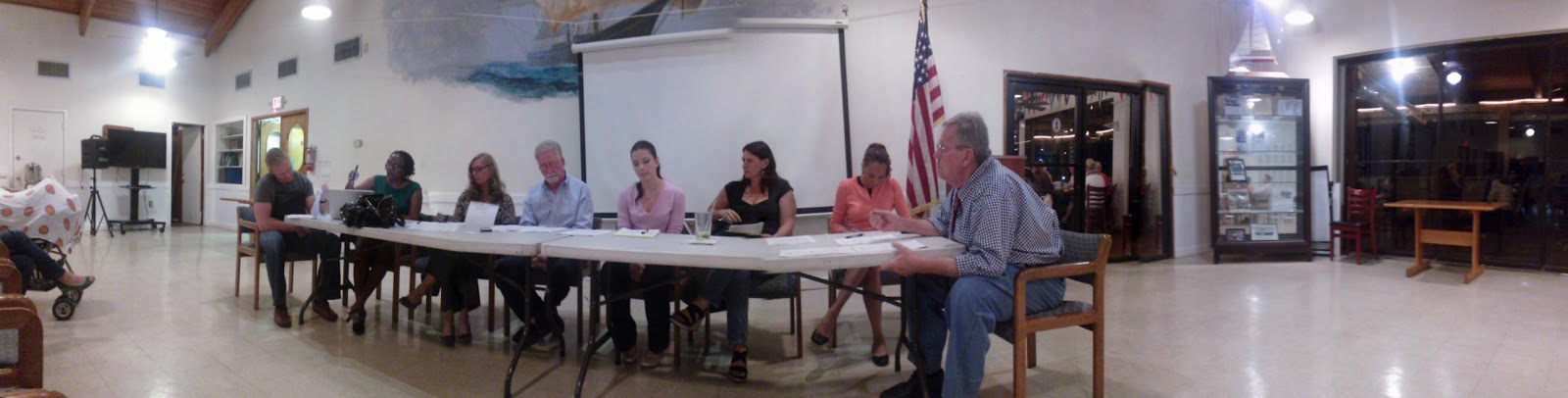
A panorama of the Coconut Grove Village Council.

As we ended our last exciting episode (Part One of No Skin in the Game), I was leaving the Trolleygate protest in Coral Gables — just as the protest signs were arriving. I was running to cover the Coconut Grove Village Council meeting, at which Trolleygate would be an agenda item. In hindsight I made the wrong choice.

During the drive I tried to place what I had seen into a context that I understood. That’s when I decided to call this blog post No Skin In The Game. Nothing better explains the understandable apathy on the part of Coral Gables about Coconut Grove’s problems. Coral Gables is 98% White and both literally and figuratively has no skin in the game.

It may only be 3.5 miles from Coral Cables Congregational Church to the Coconut Grove Sailing Club, but it might as well be several galaxies away. The neighbourhood changes 3 separate times. From the conspicuous opulence of Coral Gables; through the blighted area of West Coconut Grove; past the non-conforming, polluting, Trolleygate diesel bus garage on Douglas; east along across Grand Avenue; where another imaginary line separates West Grove from White Grove, the exact spot where property values pick up again. It’s visually obvious without using Zillow.

The only clue there was once a place called
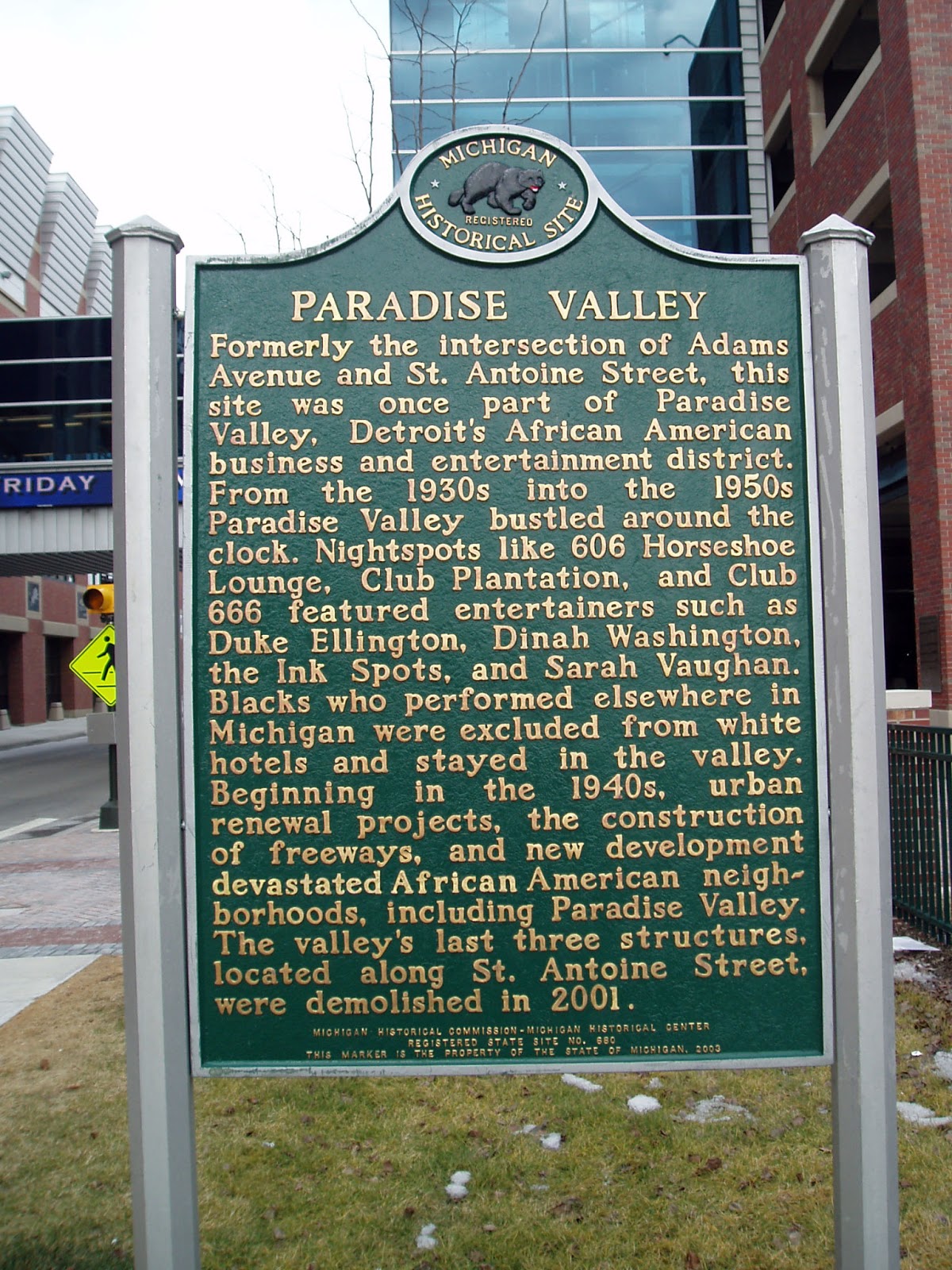
Paradise Valley, aka Black Bottom, is this sign.

In other words: Coconut Grove, considered one of the most exclusive Zip Codes (33133) in the entire country, has had an historic Black enclave, surrounded on all sides by White folk, for the last 140 years. This area has been marginalized by racism over the years, the same racism that affected your part of the country during the same period. It has been allowed to become blighted, the same way that Black areas in your part of the country have been allowed to fester during the same period. It has been encroached upon by The Powers That Be — Trolleygate is just the latest, most nakedly obvious example.

TO BE FAIR: Coconut Grove was not encroached upon by The Powers That Be like Overtown, where I-95 was jammed through the middle of the neighbourhood, cutting one side off from another. Nor was it was encroached upon by The Powers That Be like my hometown of Detroit, where only a sign remains of a once vibrant Black residential, retail, commercial, and entertainment district. The people of Overtown and Paradise Valley were mostly tenants with absentee landlords. They had no skin in the game.

Black Coconut Grove always had some skin in the game. This is entirely due to E.W.F. Stirrup. Mr. Stirrup was Black. Had he been White his house would have been restored by now; like The Barnacle, Commodore Munroe’s estate just a block away. It is now a State Park. However, Mr. Stirrup is also the reason West Grove still exists. There have been a few attempts to tear down the entire neighbourhood over the years. All have floundered due to the high percentage of Black home ownership — the highest in the nation. That is directly attributable to E.W.F. Stirrup, who thought that home ownership was important for growing Black families. All the more amazing because it came during a period of racial discrimination. The Powers That Be could only screw with West Grove around the edges. Black Grove had too much skin in the game.

During the 4 years I have been researching Charles Avenue I have been asked many times by White residents of Coconut Grove why I even care about Black Coconut Grove. Some are just curious. Some can’t believe that anyone would care about those people. One person used the expression “no skin in the game” and knew it was a clever racial pun. It echoed through my head ever since, but this drive from Coral Gables to West Grove to White Grove put it into context. It all depends on what skin you have in the game, and what the game is.

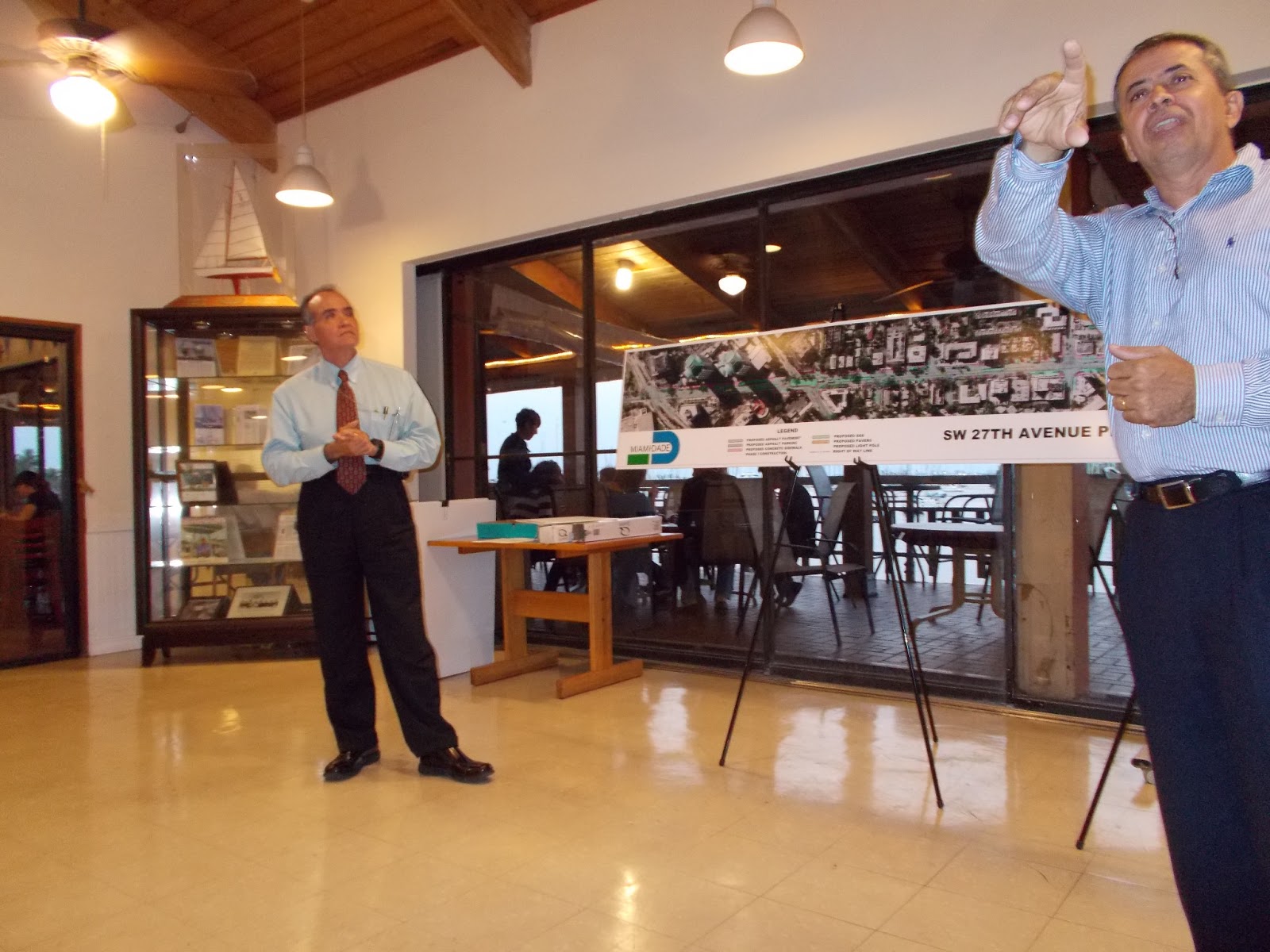
Taking questions about treeremediation along SW 27th. Yawn.

That’s the state of mind I arrived in, late for The Coconut Grove Village Council meeting, which was already in progress. I slipped into the back row of a sparsely attended meeting. More apathy on display. No one seems to have any skin in the game.

There were almost as many people on the executive council as observers in the room. The residents were getting an update from the City of Miami on the redesign of SW 27th Avenue, including its new, radical, peanut-shaped traffic calming circle at Tigertail Avenue. There were questions from the councilors about how traffic circles work (Really?) and questions from the residents about tree remediation. Yawn.

The MEGO factor [My Eyes Glaze Over] kicked in almost immediately. The only topic I care about is Trolleygate. Besides, I already knew the Coconut Grove Village Council was a paper tiger. This presentation was merely a courtesy from the City of Miami to keep Coconut Grove in the loop, the exact opposite to what happened when Commissioner Marc D. Sarnoff quietly slipped a polluting diesel bus garage into West Grove. He said he purposely didn’t inform the Village Council because it just slows things down.

Panorama of SW 27th Avenue presentation.

By the time a project has reached this “presentation stage,” the fix is already in. People can jump and shout all they want. The Village Council can vote unanimously against a project. But . . . but . . . but . . . the Village Council only has an advisory roll and the City of Miami, more likely as not, is going to ignore what the residents of Coconut Grove want and do what Emperor Marc D. Sarnoff wants.

That’s why I tuned out and started writing a children’s parable instead.

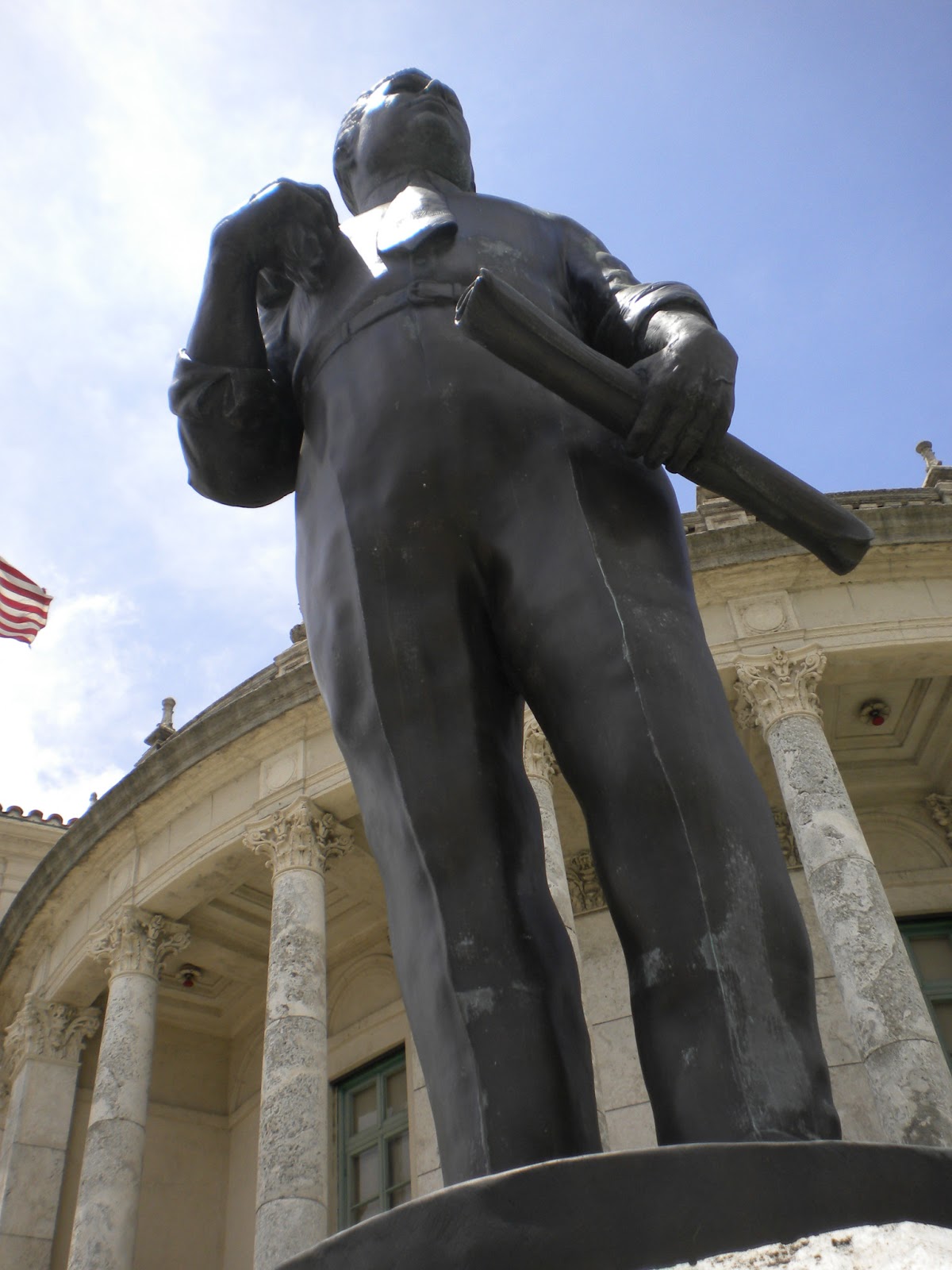
George Merrick, founder of Coral Gables, in front of Coral
Gables City Hall, just like Coconut Grove never had.

Okay . . . okay, kiddies, sit down right here and I’ll tell you a little story about the founding of a town called Coral Gables. It’s not the kind of story you can find in the history books. Believe me, because I’ve tried since the first time I heard it about 3 years ago. I promise to keep trying, but this ain’t the kind of thing that gets written down.

However, kiddies, I have now heard pieces of this oral history more than once, from more than one source, which lends it some credence. Call this the Alternative History of Coral Gables and stop fidgeting, Tom.

FADE TO BLACK – FADE UP

Once upon a time there was a sleepy little village called Cocoanut Grove, with what appears to be an extraneous “A”. Cocoanut Grove had a small tourist trade in the Peacock Inn. Commodore Monroe built his house nearby and, immediately south, created Camp Biscayne, a rustic camp that attracted incredibly wealthy people, who wanted to camp and boat and fish and pretend for a week, or so, that they were living in earlier, halcyon times. Camp Biscayne was so exclusive that one can find its guests lists in online searches. So exclusive were all these nascent tourist attractions, they needed Black folk to do the hard work. Consequently, right beside this tourist trade grew a Black enclave, of mostly Bahamians. E.W.F. Stirrup (documented on many different pages on my blog), through hard work and industriousness, wound up becoming the largest landholder in Cocoanut Grove and one of Florida’s first Black millionaires.

In the early ’20s the movers and shakers of Cocoanut Grove saw dollar signs in developing Cocoanut Grove. To that end they hired some architects who put together what became known as the Bright Plan. It was elaborate, like every real estate development reaching for the brass ring. A Cocoanut Grove City Hall was envisioned for where Cocowalk now sits. It would have been magical, children. Imagine: Cocoanut Grove City Hall would have been at the end of a long boulevard with fountains down the middle, all based upon a Mediterranean design. City Hall would have been a short walking distance to the golf course, which would have been located along the streets both north and south of Charles Avenue, stretching all the way to Douglas. In fact, that would have included a fair chunk of what would later become known as Black Grove.

The bottom fell out of the swampland market soon after the Bright Plan was put on paper. It’s all depicted as laughs by the Marx Brothers movie “The Cocoanuts,” which takes place in Cocoanut Grove. But for some it probably wasn’t all laughs. Some people would have lost money.

It’s interesting to speculate, no pun intended, how much E.W.F. Stirrup might have profited had the Bright Plan gone ahead and how much he may have lost when it stalled. He still died a wealthy man, mind you, and did it in a time when Jim Crow laws and discrimination made the achievement all the more incredible. The Bright Plan was never implemented, except for one building: 200 feet from Mr. Stirrup’s front door is the Coconut Grove Playhouse. Had the Bright Plan ever come to fruition, it would have been a
game-changer for Cocoanut Grove.

However, this fable is about how Coral Gables, called one of the country’s first planned communities, was created. I’m still getting to that. If Tom doesn’t keep interrupting, I could get back to our story, kiddies.

Everyone should read this book. ~H.W.

A few years after the Bright Plan died, Miami started sniffing around to annex Cocoanut Grove. Some of the same boosters from earlier saw benefit in being swallowed up by Miami. Some did not. This is often as it always is. According to this alternative oral history one faction of boosters suggested annexation of everything BUT Black Coconut Grove. This thinking, especially in 1925, was not unusual at all. Across the country one can find many instances where communities purposely did not annex the Black areas at the same time the White areas were annexed. The infamous 8 Mile Wall in Detroit is a physical example of this at work. The book “Sundown Towns: A Hidden Dimension of American Racism” by James W. Loewen was instructive in helping me understand how annexation often left out Black neighbourhoods as communities grew and why all ‘Merkin cities look the way they do. But, I digress again.

For whatever reasons The Powers That Be in Miami ignored the racially inspired boundary proposal. Miami wanted it all, so Miami took it all, annexing everything to the bottom of Cocoanut Grove, including the odd little Black enclave in the middle of it. In our alternative history, that’s when Coral Gables became a viable idea in the minds of some people. There were enough . . . okay, I’ll keep calling them boosters for the purposes of this story . . .  BOOSTERS who didn’t want to live near those people in Coconut Grove. What better way than to start your own town from scratch? You can keep out anyone you want. To this day Coral Gables proudly proclaims on its web site it is 98% White. That doesn’t happen by accident.

When Coral Gables incorporated as its own town — one of the first planned communities in the country — it claimed all the land surrounding Coconut Grove, ensuring that the Grove, and Miami, could not grow beyond its borders.

Was George Merrick racist? Not a single
one of my sources mentioned him
specifically, or anyone else..

However, and here’s the ultimate irony: Just like elsewhere in the country, the people of Coral Gables didn’t do their own hard work. Are you kidding? They could hire people to do that, as long as they went home at night. [See: Sundown Towns] The Biltmore (described in Part One of No Skin in the Game) f’rinstance had a large Black staff as did all those mansions in Coral Gables.

One of my sources for these oral fables is a 73 year old gentleman who has lived in the same house on Charles Avenue his entire life. He tells me of a time when Black folk wandering around Coral Gables would be stopped and asked for their “papers.” Papers consisted of a letter from your employer: “Mrs. Jones is our housekeeper/nanny/cook” or “Jim Smith is our handyman/chauffeur/gardener.” If you could not produce your papers you would be arrested for vagrancy.

JUMP CUT TO PRESENT

The Trolleygate item suddenly comes up on the Coconut Grove Village Council agenda. I put my phone on record and drop it in front of Pat Sessions, who drones on for a while. It only takes a minute to realize that he knows less than I reported a few weeks ago about where the case stood. It’s a good he said nothing new because I have now learned that my fancy phone shuts itself off after a few minutes and doesn’t save the recording when it does. Clearly I need a new app, but I digress.

However, Sessions did say that Astor Trolley LLC (a limited company created to spare Astor Development LLC from any adverse consequences due to Marc D. Sarnoff’s Trolly Folly) is now claiming the parcels of land Astor slapped together in blighted Coconut Grove are worth $3 million. It’s just another way West Grove has been fucked with around the edges and another land grab by another developer. Everything I learn about the east end of Charles Avenue makes me see another massive land grab by another developer. But I digress and that truly is another story for another day. Let’s get back to our happy little story of the founding of Coral Gables.

These stone streetsigns are on every corner in Coral Gables.
The White stones are for loading and unloading.

SLOW FADE BACK TO BLACKS JAILED FOR VAGRANCY – FADE UP NARRATION

Picking right up where we were in our little morality tale, boys and girls. It’s hard not to see Coral Gables as one of ‘Merka’s first redlined communities. It’s the town that racism built. It never had any skin in the game because it could keep out any skin that didn’t conform.

Another source told this author about Coral Gables (paraphrasing):
“Growing up, you see those White stones, you know you was going in White
areas. Parents and friends would warn you stay on this side of the White stones.”

Coral Gables was a reaction to Coconut Grove in every way. Coconut Grove had a Black enclave that could not be shaken loose. It could not be shaken loose because of E.W.F. Stirrup and his legacy. Stirrup created a community unique to this country because it had the highest percentage of Black home ownership in the country.

So, you see kiddies, you can’t really tell the story of Coconut Grove without also telling the racist history of Coral Gables, the town next door. Coral Gables never had any skin in the game.

FULL FADE BACK TO PRESENT – COCONUT GROVE VILLAGE COUNCIL MEETING

Sessions doesn’t think there’s anyone who thinks the Coral Gables Trolleygate diesel bus garage will ever open as a bus garage. This echos the sentiment of Edward Harris, from Miami-Dade Commissioner Xavier Suarez’s quoted in Part One of this story. However, as the CGVC goes on to other topics of less interest to me than tree remediation, I reread an email from one of my sources who claims there is a massive land grab going on at the eastern end of Charles Avenue, which includes the E.W.F. Stirrup House. My source tells me it will be turned into a mixed use condo/retail/theater/parking/entertainment extravaganza that will put Cocowalk and Commodore Plaza (combined) to shame. How many people on the Coconut Grove Village Council are aware of what’s happening right in front of their noses. Maybe it’s no skin off their nose, to mix skin metaphors. Maybe they have no skin in the game.

Who has skin in the game and which game do they have skin in? Because there’s a lot of money being made by some people at the expense of others in Coconut Grove.

IRONY ALERT: I literally — and figuratively — have no skin in the game. I’m not a
Miami resident. I’m not speculating on land in Coconut Grove. I’m not
Black. I have merely identified an injustice and want to right it. For
all these reasons, and because I listen to both the residents of West
Grove and White Grove, I am trusted with confidential information and
off the record conversations. Having no skin in the game can be a
benefit as well.

Feel free to feed me any info. I know how to keep my sources private. And, thanks to everyone who read Part One and Part Two all the way to the bottom. You’re my kind of reader.

No Skin In The Game; Part One

The flyer handed out by the protestors.

Thursday night was another night for divided loyalties and for putting things into stark relief. Let me explain.

In Coral Gables protestors from West Grove were expected to gather at 6PM to protest Trolleygate at the Coral Gables Mayoral Debate at 7PM. Also at 7PM, 3-and-a-half miles away, the Coconut Grove Village Council were expected to gather for its oft-delayed regular monthly meeting.* Trolleygate is a promised agenda item at the CGVC. What to do, what to do? The only viable solution: Go to both, like I did last month with the Coconut Grove Playhouse redevelopment meeting and the Charles Avenue Historic Preservation Committee meeting on the same night, and hope for the best. It turned out that I made all the wrong choices on Thursday night, but I’m getting ahead of myself.

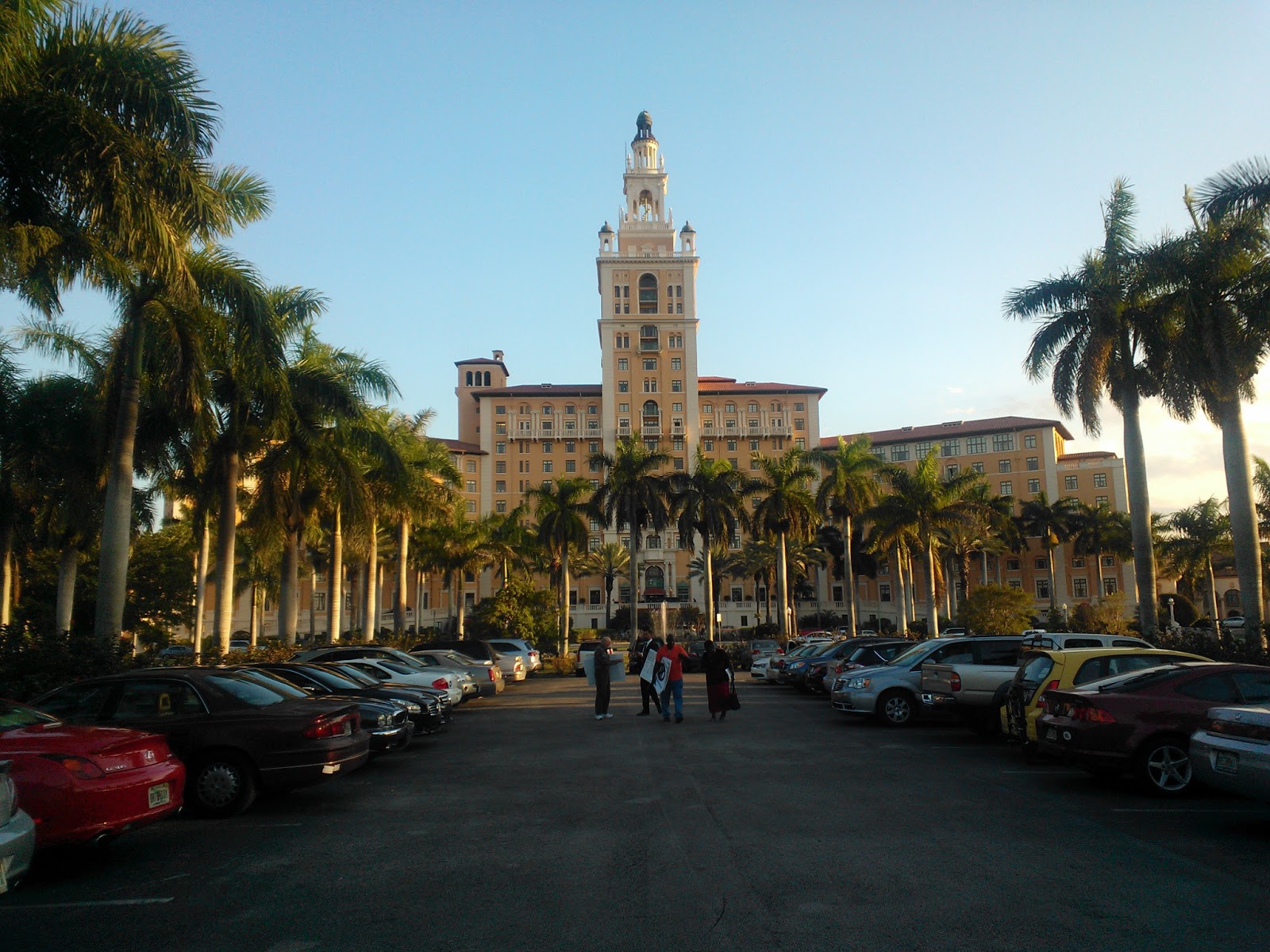
The Biltmore Hotel

I arrived at 6 at the Coral Gables Congregational Church,
the location of the Mayoral Debate, only to see the first protestors just arriving. This is a beautiful little church which covers an entire block
in the middle of an expensive residential neighbourhood. It’s one small
block away from The Biltmore Hotel, one of the most exclusive resorts in the country.

Being dirt poor, I am always struck by the money on display in Coral Gables. It’s conspicuous consumption on a grand scale. The Biltmore is the physical representation of that. According to the WikiWackyWoo

In its heyday, The Biltmore played host to royalty, both Europe’s and Hollywood’s. The hotel counted the Duke and Duchess of Windsor, Ginger Rogers, Judy Garland, Bing Crosby, Al Capone and assorted Roosevelts and Vanderbilts as frequent guests. Franklin D. Roosevelt had a temporary White House office set up at the Hotel for when he vacationed on his fishing trips from Miami. There were many gala balls, aquatic shows by the grand pool and weddings were de rigueur as were world class golf tournaments. A product of the Jazz Age, big bands entertained wealthy, well-traveled visitors to this American Riviera resort.

The Biltmore made it through the nation’s economic lulls in the late 1920s and early 1930s by hosting aquatic galas that kept the hotel in the spotlight and drew the crowds. As many as three thousand would come out on a Sunday afternoon to watch the synchronized swimmers, bathing beauties, alligator wrestling and the young Jackie Ott, the boy wonder who would dive from an eighty-five foot platform. Johnny Weissmuller, prior to his tree-swinging days in Hollywood, broke the world record at the Biltmore pool and was a swimming instructor. Families would attend the shows and many would dress up and go tea dancing afterwards on the hotel’s grand terrace to the sounds of swinging orchestras.

Now I have nothing against Rich folk, per se. Good for them. They got money and aren’t afraid to show it off. Double-plus good for them. As Max Bialystock, in the Producers, famously shouts, “That’s it, baby, when you’ve got it, flaunt it, flaunt it!” However, I had just come from the E.W.F. Stirrup House, currently undergoing Demolition By Neglect so some RICH developer can have his way with the land and turn a lovely and unique spot in ‘Merka into another ugly condo complex. But that’s another story for another day. Or is it? [See Part Two of No Skin In The Game.]

It’s always amazing to me that one only needs to cross an imaginary line on the map separating Coral Gables from Coconut Grove and witness a SPIKE in property values. It’s not something one needs to look up on Zillow. The evidence is right there before your very eyes. From slums to opulence in a few short blocks. Feel free to try it yourself one day. Then ask yourself why.

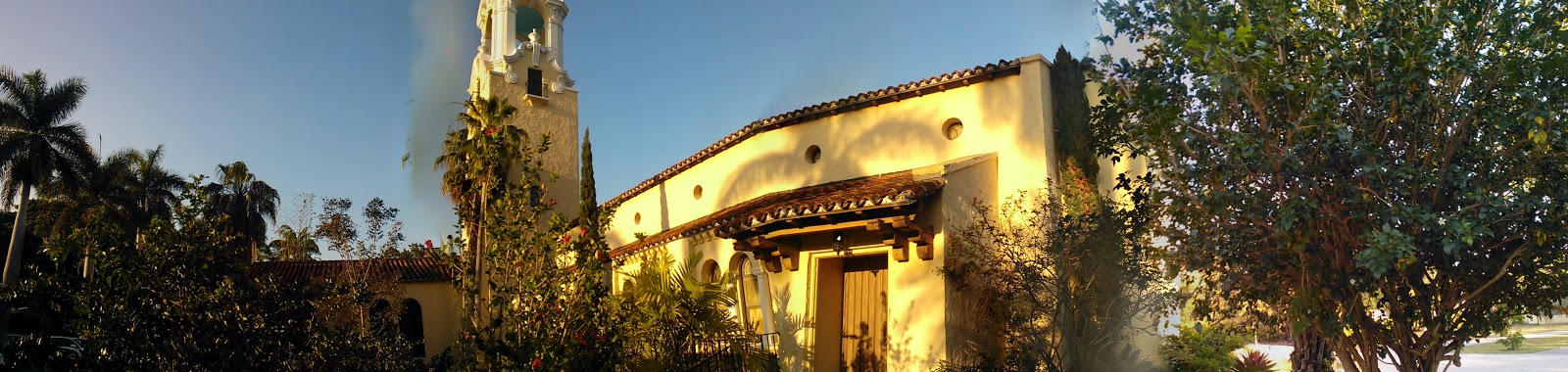
Panorama of the western facade of only the front
section of the Coral Gables Congregational Church.

Despite it taking up a block, the Coral Gables Congregational Church is still a small church that appears to have been added onto a number of times. From the outside, it appears to be a number of small interconnected buildings, with meeting spaces, chapels, a main church, a FREE TRADE gift shop, and band rehearsal spaces. A lot goes on in those buildings and a lot was going on Thursday night. I walked around the block 3 complete times, waiting for the protest and/or debate to get off the ground and took dozens of pictures of this lovely building. I saw sad people arriving for an Al-Anon meeting and happy people arriving for a wedding rehearsal. In the back of the building I listened to a band rehearse the same 16 bars of a Duke Ellington tune over and over again.

Rafael “Ralph” Cabrera,
posing stiffly for me.

However, the Coral Gables Mayoral Debate was no rehearsal. In this corner: sitting Mayor James Carson. And, in the red trunks, term-limited Commissioner Ralph Cabrera, who now wants the top job for himself. Obviously I have No Skin In The Game, but if I were to vote illegally in Coral Gables, I’d cast my ballot for Cabrera. He is the only politician in Coral Gables who has shown any open concern for the people of West Grove over the issue of Trolleygate. Last year — long before Trolleygate had become a lawsuit pitting West Coconut Grove [David] against the City of Miami and Astor
Development [Goliaths] — Ralph Cabrera was already ringing the [fake] trolley bell loudly
against this injustice by getting it put on the Coral Gables Commission agenda.

When Cabrara saw the Trolleygate protestors, he approached them and introduced himself. He expressed a general apology and said he was very concerned about this project. He thinks the West Grove neighbourhood is getting a raw deal. Cabrera was open in his condemnation, both with the protestors and with me, as I managed to buttonhole him briefly before he headed into the debate. Carbrera knows that none of those people are from Coral Gables and knows that he gains no votes for taking their side. Yet, he did so anyway.

Another gentleman I buttonholed was Edward Harris, a representative from Miami-Dade Commissioner Xavier Suarez’s office.

Commissioner Bob Welsh of South Miami –not to be
confused with Miami, or Miami-Dade — protesting
against the polluting diesel bus garage.

SLIGHT TANGENT & MEA CULPA: There is a confusing array of governmental levels here, which I keep stubbing my toes upon when I confuse them. Miami-Dade County has its own Commission which presides over 1,946 square miles, the third largest county in Florida in area. However, it’s the largest Florida county in population and, according to the WikiWackyWoo, the 7th most populous county in the entire country. It includes “35 incorporated cities and many unincorporated areas.” Cities like Miami and Coral Gables are within Miami-Dade County, but both have their own city commissions. Coconut Grove, on the other hand, is not its own city, at least not since 1925 when it was annexed by the City of Miami

That’s why my questions to Edward Harris were so idiotic and for which I publicly apologize. When Mr. Harris said he was a rep from Commissioner Suarez’s office, I mistook that for Miami Commissioner Francis Suarez, who represents District 4. Although Harris said “District 7,” my brain didn’t make connection to Miami-Dade Commissioner Xavier Suarez of District 7. Consequently, all my questions were Miami-centric and not Miami-Dade-centric. D’oh! However, it also explains why Harris was speaking in broad generalities like “we’re watching it” and “our role is to learn” from the “voices of the people.” He was very polite to me, despite how stupid I was.

Pierre Sands, West Grove Homeowners and Tenants
Association, arriving with more protest signs.

However, when I asked him if he thought the Coral Gables diesel bus garage will ever open, his answer was pretty succinct. “Not as a bus garage.” He went on to say that while the facility is being built, what needs to be considered is environmental safety and the close proximity to the residents. “We can find some use for the facility.” Thinking I had my scoop for the day, I moved on. However, I realized on reflection (after figuring out the mistaken identity), Miami-Dade has little to say about this bus garage. While the county may sympathize with the neighbourhood’s predicament, the project was green-lighted by Miami Commissioner Marc D. Sarnoff, who worked with an out of town developer behind the scenes to bamboozle West Grove. He did this and then justified not allowing the normal neighbourhood notification to his constituents or the Coconut Grove Village Council.

Aside from visually skyrocketing land values, these
corner street signs are a visual symbol one has
entered Coral Gables.

One thing that I think is very telling is that a citizen’s group from Coconut Grove thought its protest would have more traction in Coral Gables than with their own Commissioner in their own district in their own city. After all, it was their Commissioner Marc D. Sarnoff that sold them out, not unlike a Modern Day Colonialist. Follow the bouncing ball to see how only the carpetbagging White folk win, while the native Blacks are screwed:

  • Coral Gables benefits because it gets to off-load a polluting diesel bus garage onto the neighbouring city of Miami [maybe**];
  • Coral Gables also benefits from all the new tax revenue that a multimillion dollar mixed use development brings from a chunk of land that it currently uses for a polluting diesel bus garage; 
  • Astor Development, tasked by Coral Gables to find another location for its polluting diesel bus garage, couldn’t afford land in Coral Gables, by it’s own admission;
  • Astor Development thought nothing of finding cheaper land in in the neighbouring city of Miami;
  • The land is cheap because of it being blighted due to 90 years of Systemic Racism. But that’s another story for another day;*
  • Speaking of not speaking about racism: Coral Gables has a statistic on its web site proudly proclaiming the city as 98% White (Hispanic qualifies as White);
  • Speaking of not speaking about racism: It would take a greater Social Demographic Scientist than I to figure out the racial make-up of West Grove. However, if I had to hazard a guess I’d say it was 98% Black;
  • Speaking of not speaking about racism: Statistics like that are not accidental;
  • Speaking of not speaking about racism: Oh, by the way, Coconut Grove. No! You can’t have a Coral Gables [fake] Trolly Bus stop outside the diesel bus garage because that’s the free bus that takes people around to all the exclusive shops in Coral Gables. If you want to get there, you’ll have to do it on your own steam;
  • Miami will receive no tax revenue from said polluting diesel bus garage;
  • Astor Development wins no matter how this goes. It now believes the 4 parcels of land acquired to build the diesel bus garage is now worth $3.5 million;
  • Marc D. Sarnoff worked behind the scenes with the developer to play one community group off against to find the best way to get this project through with the least amount of fuss;
  • Therefore . . .

Okay . . . okay . . . I’ll ask the question that everyone else is too afraid to ask: What is Commissioner Marc D. Sarnoff getting out of this deal? Why else would he sell his own constituents down the river to work in backrooms with a developer to get a polluting diesel bus garage slipped into the neighbourhood almost in the dead of night?

Just as Pierre Sands arrived with a stack of protest signs, it was time for me to zip over to the Coconut Grove Sailing Club for the Coconut Grove Village Council meeting. I should have stayed at the Mayoral Debate/Protest because the rest of the night was tedious. My GPS logged the fastest route to the Coconut Grove Sailing Club, which took me through another opulent neighbourhood before dumping me out onto 37th, where the real estate takes a markedly visual downturn. I’m back in Coconut Grove. I drove past the polluting diesel bus garage and across Grand Avenue. When one is driving east along Grand Avenue you can also see where White Coconut Grove starts.

The stark relief I spoke of in the first paragraph. In Part Two of No Skin In The Game we’ll explore why;
In Part Three of No Skin Left In The Game: The exception that proves the racist rule

* No Skin In The Game; Part Two – An Alternative History of Coral Gables or The Town That Racism Built
** This is still being adjudicated by a court of law and the law is whatever a judge says it is on the day this is decided

An Update On Sarnoff’s Trolleygate aka Astor’s Trolley Folly

The view of the diesel bus garage from the closest house, a
mere 100 feet from where the polluting buses will be idling.

These days whenever I visit Coconut Grove I check on the progress of the Coral Gables diesel bus garage. I am always surprised that the building of what will be a polluting bus garage continues unabated. The lawsuit launched by residents of the West Grove demanded for it to be stopped in its tracks — even though these are not really trolley cars and they don’t use tracks. 

Curious that the work continues, I reached out to Ralf Brookes, one of the lawyers who has taken on the case pro bono, for an update. Here’s where the case stands:

The City of Miami filed a motion in the 11th Circuit Court to dismiss the case, arguing that Astor Development, which had not been originally named in the lawsuit, was an indispensable party to the suit.

In the meanwhile, Astor Trolly LLC filed a motion to intervene in the case. Astor Trolley LLC is a new-ish “limited liability company” owned by Astor Development Holdings LLC [which itself seems to be a wholly-owned subsidiary of Astor Development Group, LLC], incorporated to isolate Astor Development from any financial fallout of Trolleygate. While it seemed inevitable that Astor would eventually be drawn into this case, I don’t know why it willingly asked to have its head put on the chopping block. No matter. The judge granted that motion on February 26th and has given Astor Trolley LLC until March 18th to file a response to the lawsuit.

And that where it all sits as of today.

However, just about everyone seems to agrees the diesel bus garage will never be used for the purpose for which it was designed and intended. It does not conform to the Miami21 plan, which specifically forbids a “government vehicle maintenance facility” along the South Douglas Road corridor. One wonders why Astor Development wouldn’t just cut its losses and stop building and fighting.

Well (I speculate), it’s probably because Astor Development has too much invested in the project already. It acquired the land, purchased the building materials, has been paying the work crews, and (presumably) already bought all the equipment that will have to installed in the diesel bus government maintenance facility. The losses would be too great to just cut and run. It might be better to be ordered by a court of law to do the right thing, as opposed to doing the right thing in the first place. Then it can turn around and try to sell the structure for a profit.

Since the West Grove lawyers are working pro bono, this is not costing the community a penny. However, it is costing the City of Miami (read: every Miami taxpayer) money to defend Astor’s Trolley Folly. Those costs can be placed squarely at the feet of Commissioner Marc “Doggy” Sarnoff, who rammed through this diesel bus garage project without the normal neighbourhood consultation.

The Marc Sarnoff Memorial Dog Park with the Marc Sarnoff Memorial
Traffic Circle in the lower right. Click here for an interactive map.

Commissioner Marc Sarnoff is used to ramming through projects — which cost the Miami taxpayers big bucks — without the normal neighbourhood consultation. Exhibit A: The Marc Sarnoff Memorial Dog Park [right], across the street from his house. No one seems to know who approved this, but to date this boondoggle has already cost Miami taxpayers $546,065.00. The latest renovation to the Marc Sarnoff Memorial Dog Park came within the last month. Work crews installed astroturf for the dogs because these are privileged dogs, donchaknow, and shitting on grass in their own backyards just won’t do.

Clearly these dogs are more privileged than the children in the community. The bigger crime is how a pocket park created for the enjoyment of children, has gone to the dogs. Prior to Doggygate the length of the children’s playground was approximately 300 feet. Once Marc Sarnoff was done with it the children’s portion of the park was reduced to approximately 100 feet, while the dogs get 200 feet.

See an interactive map of the Marc Sarnoff Memorial Dog Park

Go by the park yourself and you’ll see what I have noted every time I go there: The children’s area is packed tight, with barely any room for kids to run and play: The playground equipment is overcrowded and there are not enough benches for the parents to sit. [While I’ve tried to take pictures that illustrate this, every time I show up with a camera I get the evil eye from parents.] Meanwhile, the Marc Sarnoff Memorial Dog Park always appears underutilized, with a whole lot of room for the dogs to run free.

Luckily for the taxpayers of Miami Commissioner Marc Sarnoff is term-limited. Unless he runs for mayor he only has to the end of his term to waste taxpayer’s money.

For more on Trolleygate, aka Astor’s Trolley Folly, click here.

A Return To Frow Avenue

When I was in the Coconut Grove on Saturday, I was so intent on taking pictures of the people celebrating the One Grove mural, that I didn’t notice something that had been right in front of my eyes. In fact, I didn’t notice it until I reviewed the dozens of pictures I took that day.

Part of the reason I missed it was because the cooker/grill had been set
up right in front of it. But, I was also mostly looking through a camera viewfinder. That’s why I returned to Frow Avenue yesterday to take close-ups. Take a look at the
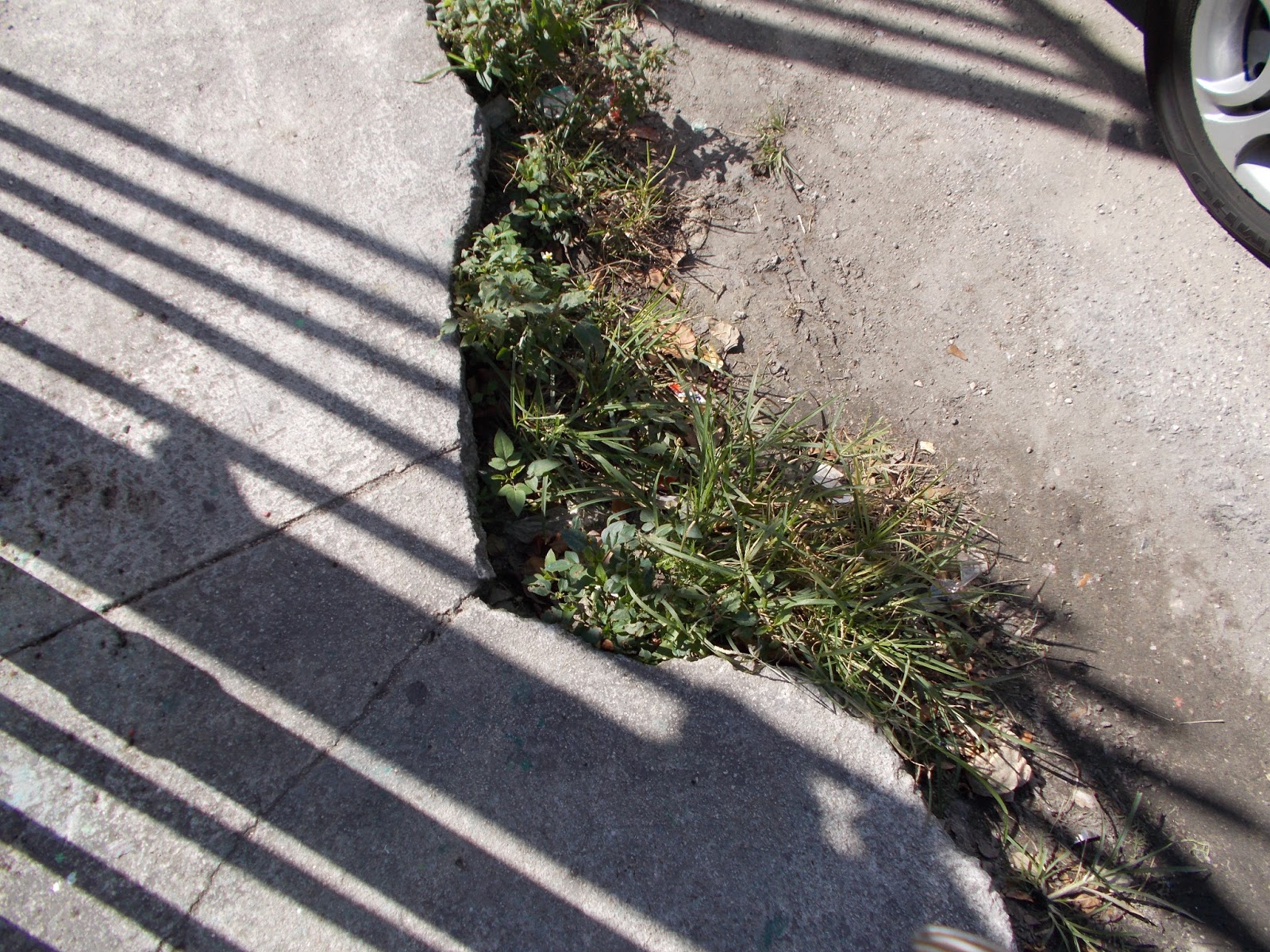
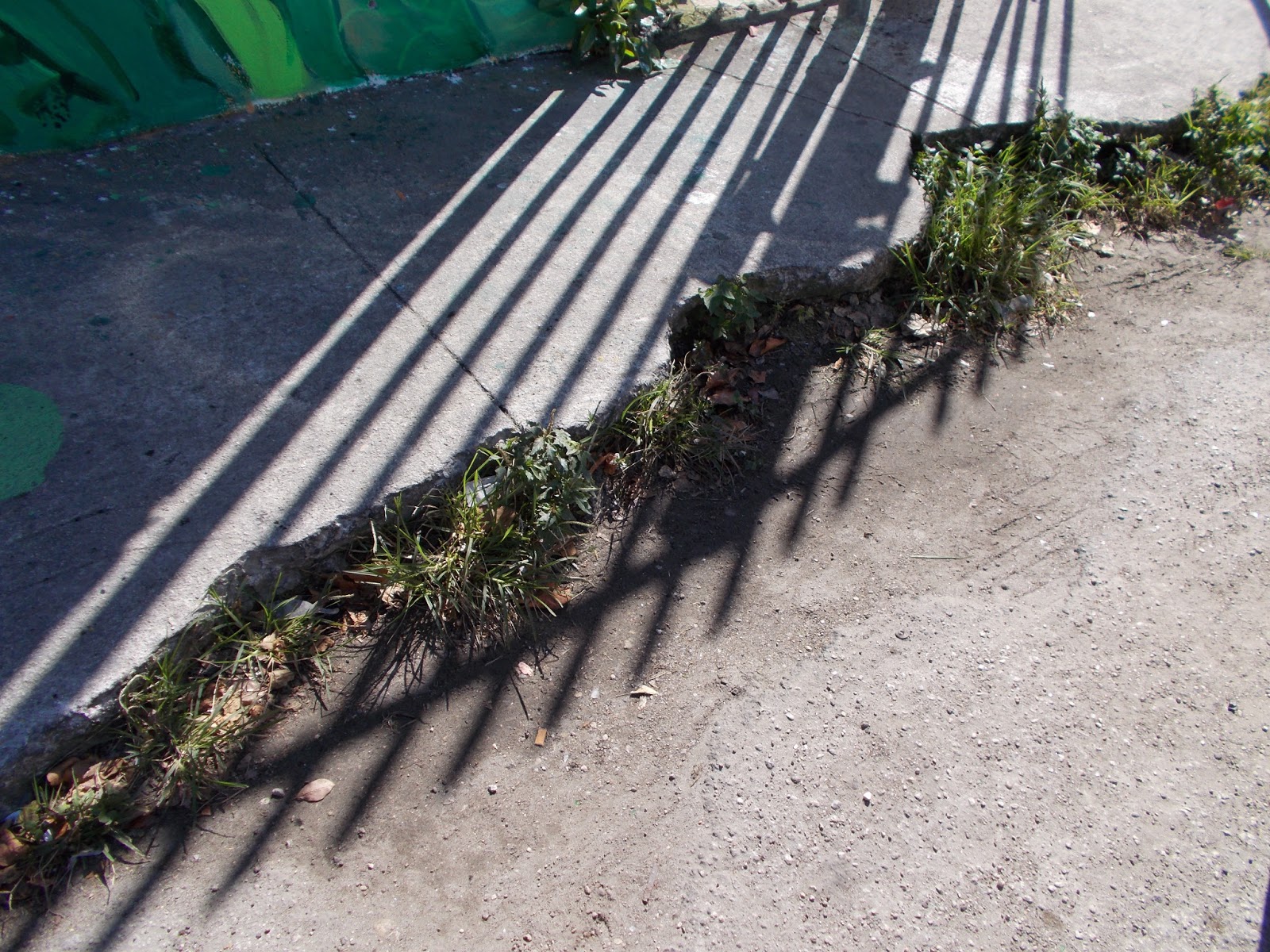
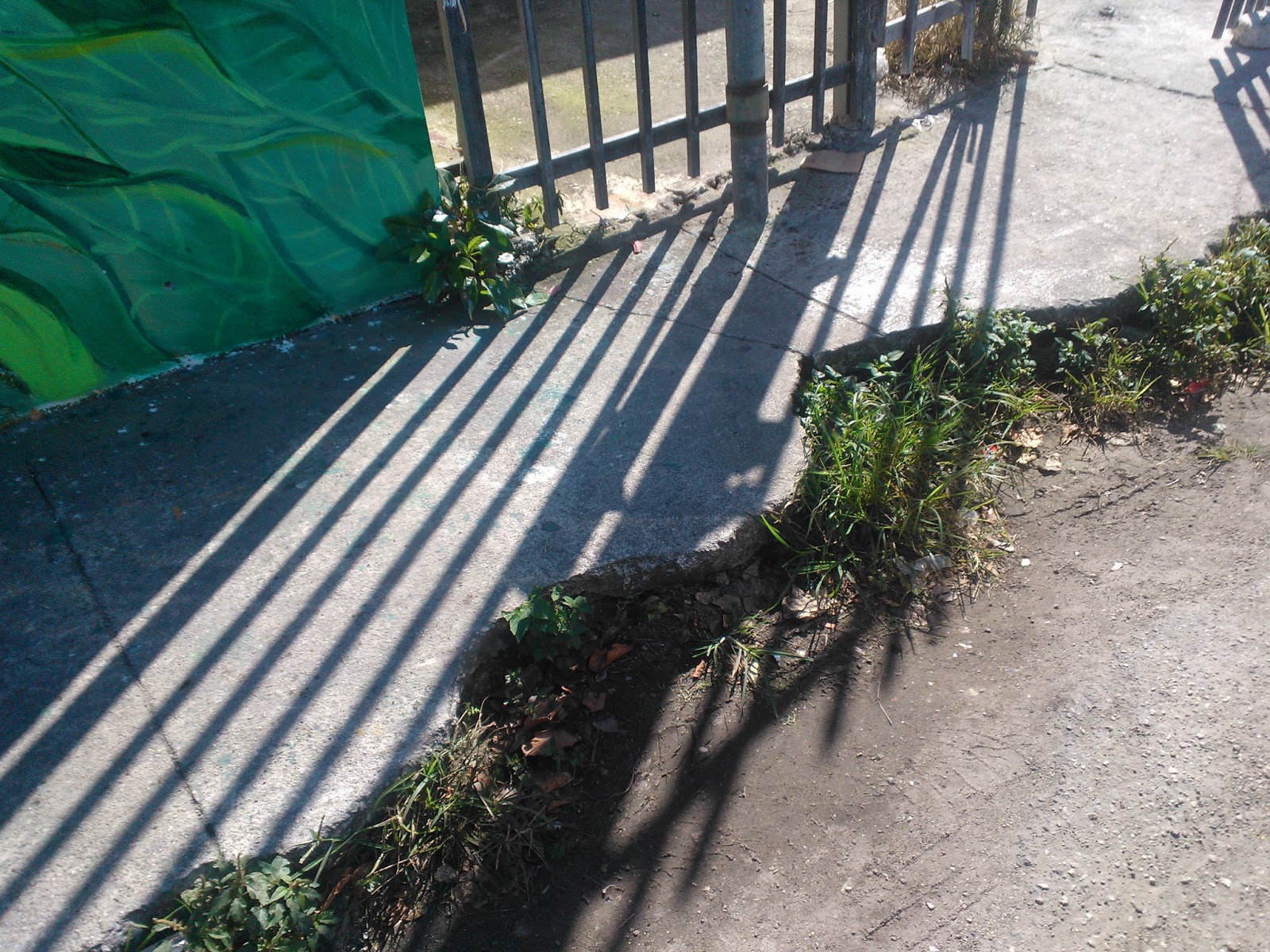
sidewalk adjacent to the mural:


This broken sidewalk is not something new. Clearly it has been disintegrating for a very long time to arrive at its current condition.

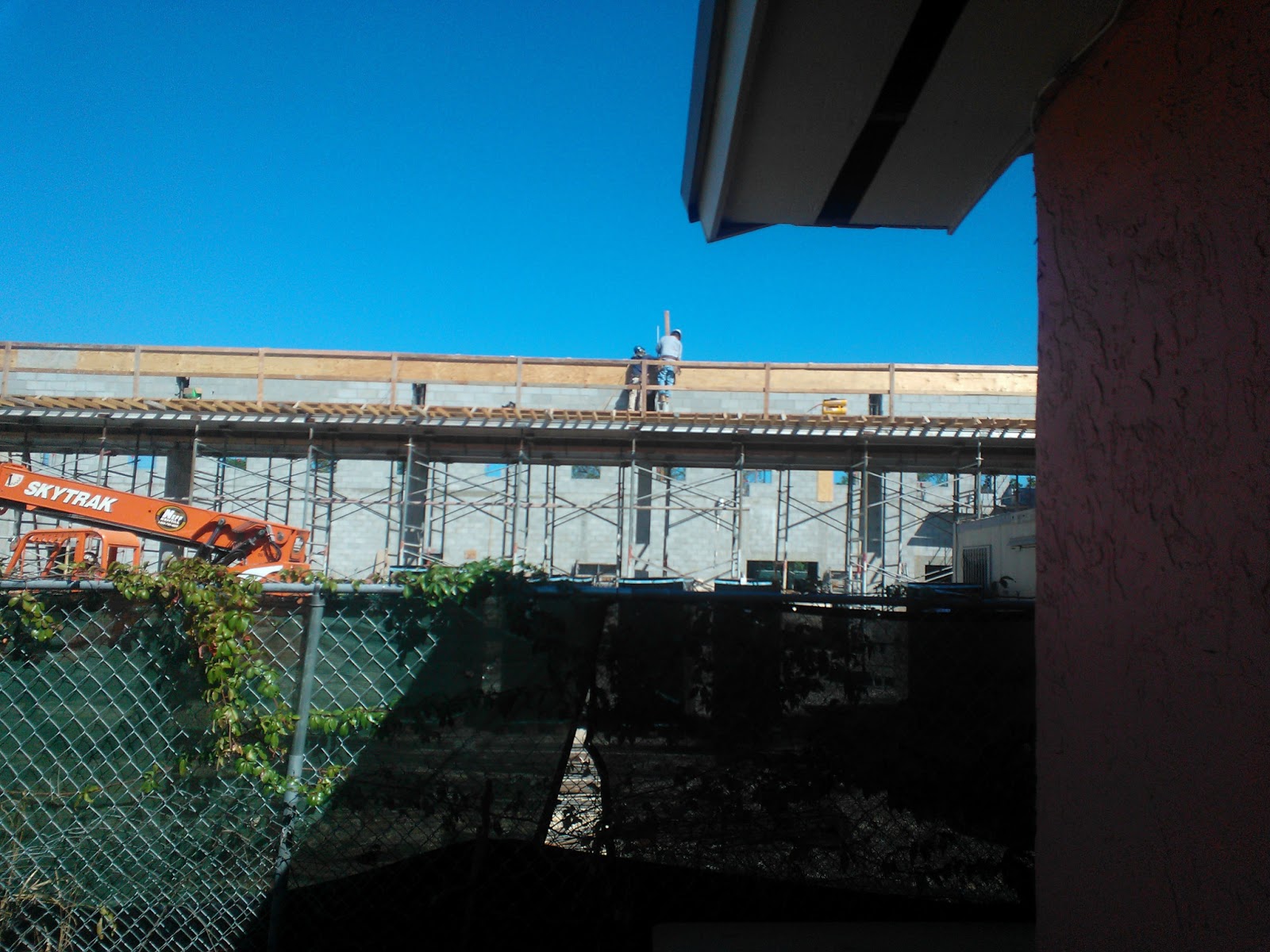
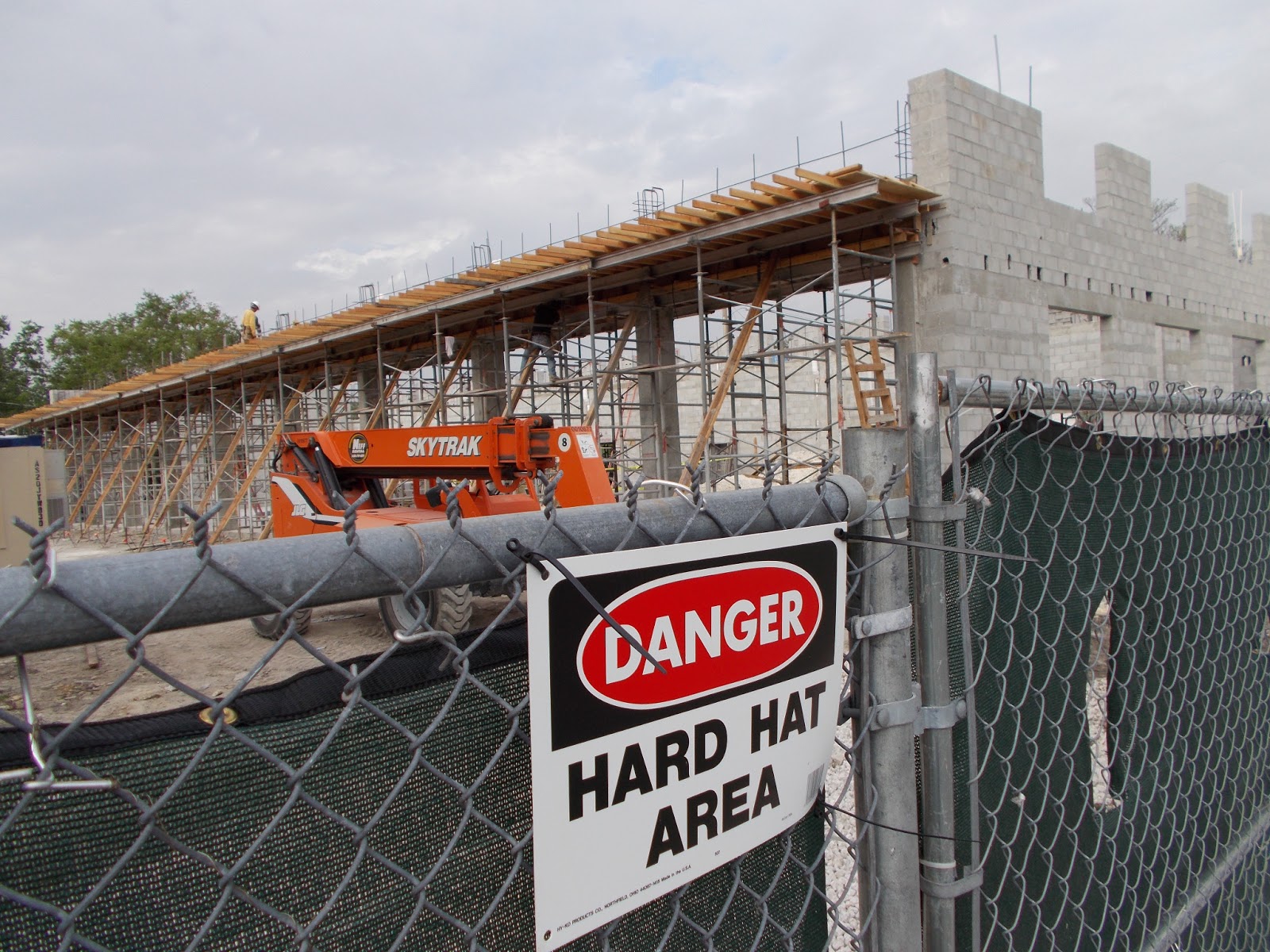
Construction continues on the
diesel bus garage, March 4, 2013

To my mind this perfectly illustrates the reality that two Groves exist: Black Grove and White Grove. A sidewalk like this would never be allowed to exist in White Grove. However, because it’s on Frow Avenue in West Grove, this sidewalk can easily be ignored by the City of Miami.

It’s simply more of the same kind of quiet racism that the City of Miami demonstrated in allowing Coral Gables to locate its polluting diesel bus garage in the middle of a residential neighbourhood in West Grove, which (maybe not coincidentally) is being built right across the street from this broken sidewalk.

This is a well-traveled route. Hundreds of pedestrians pass by that sidewalk every day: school children, the people who use the store on which the mural is painted, mothers
with strollers, old people on canes, children riding bicycles . . . you
get the picture. If not, here are a few more:

Maybe “One Grove” is merely a slogan whose time has passed.

Unveiling the One Grove Mural – A Photo and Video Essay

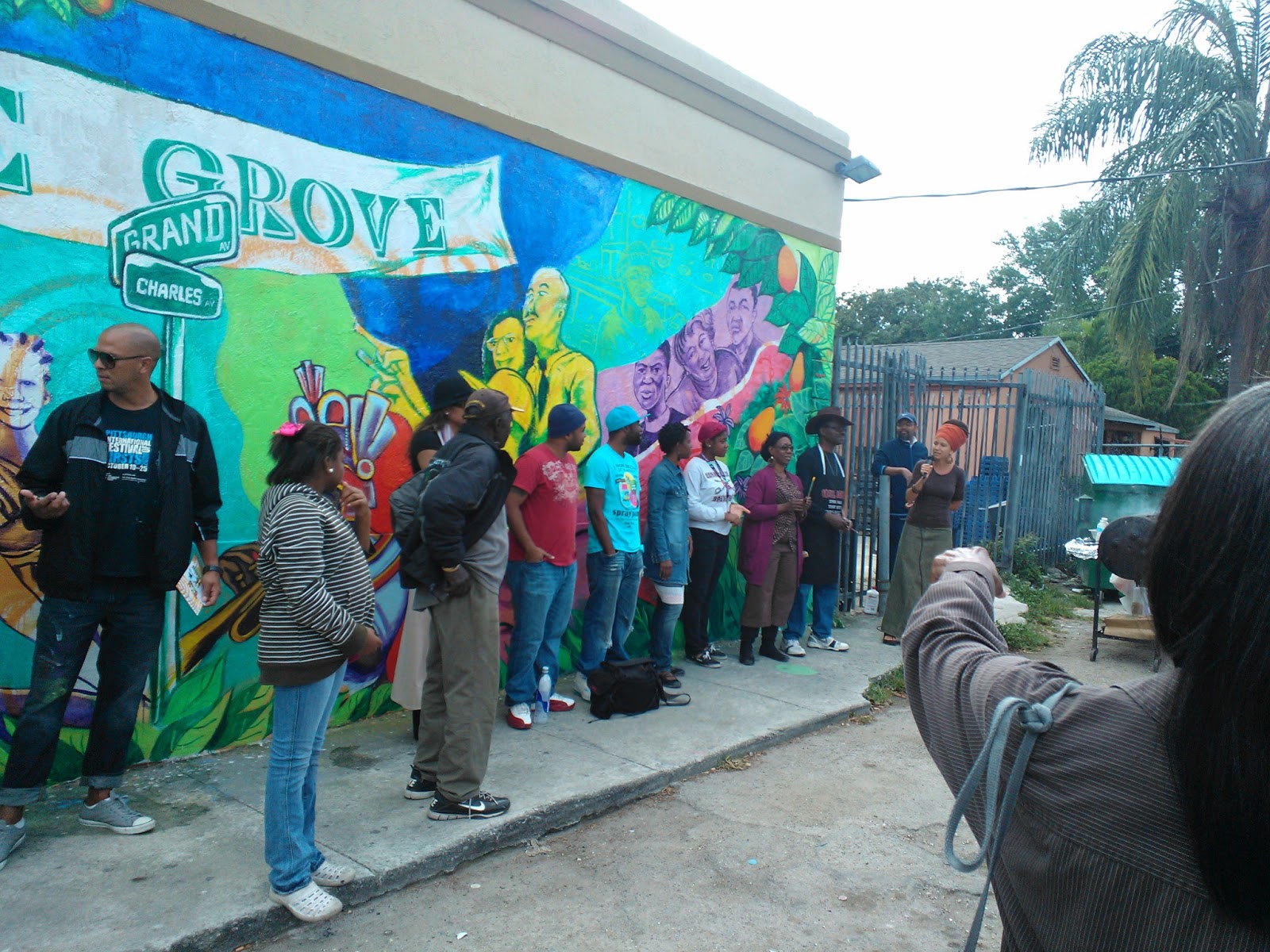
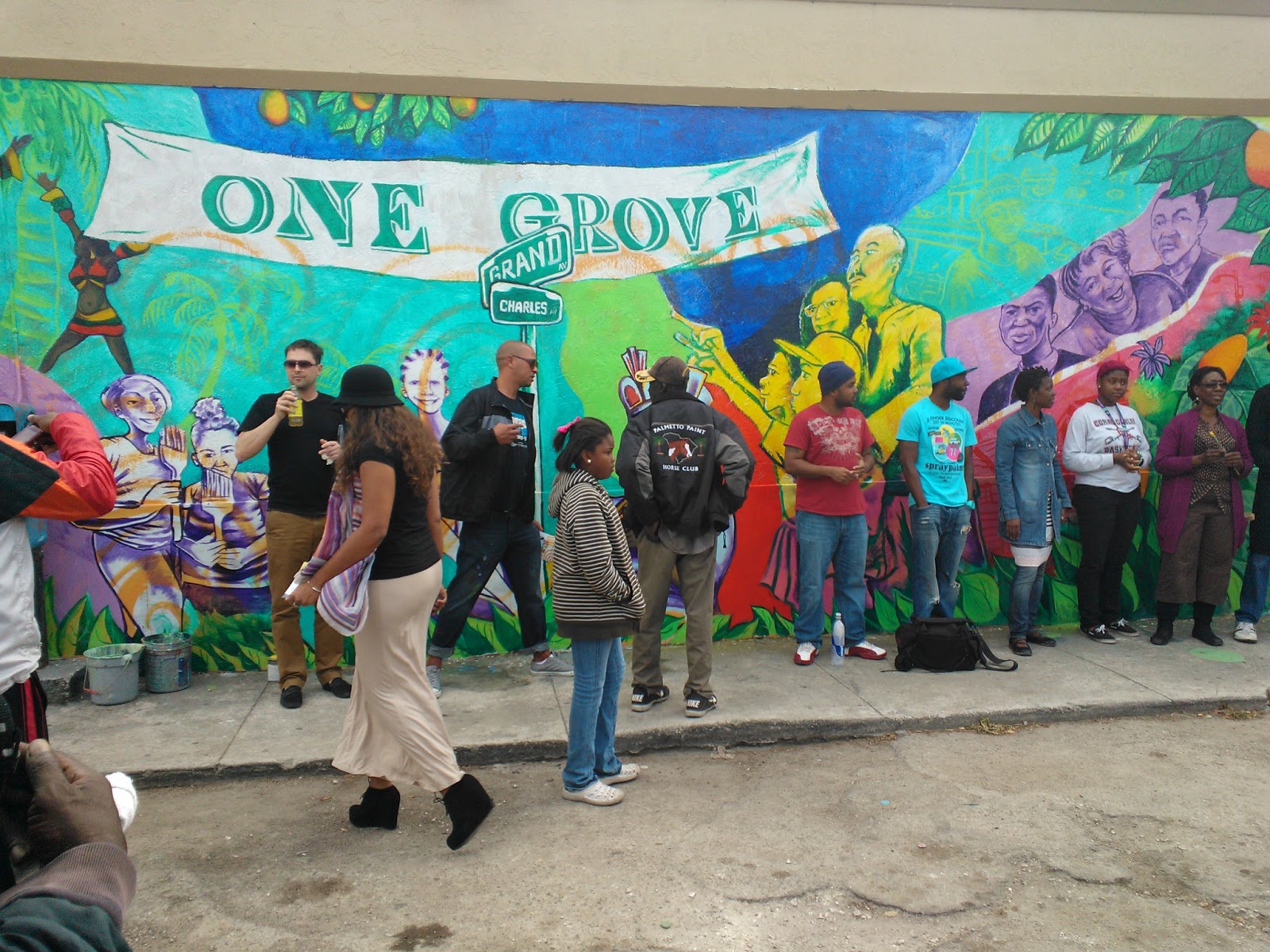
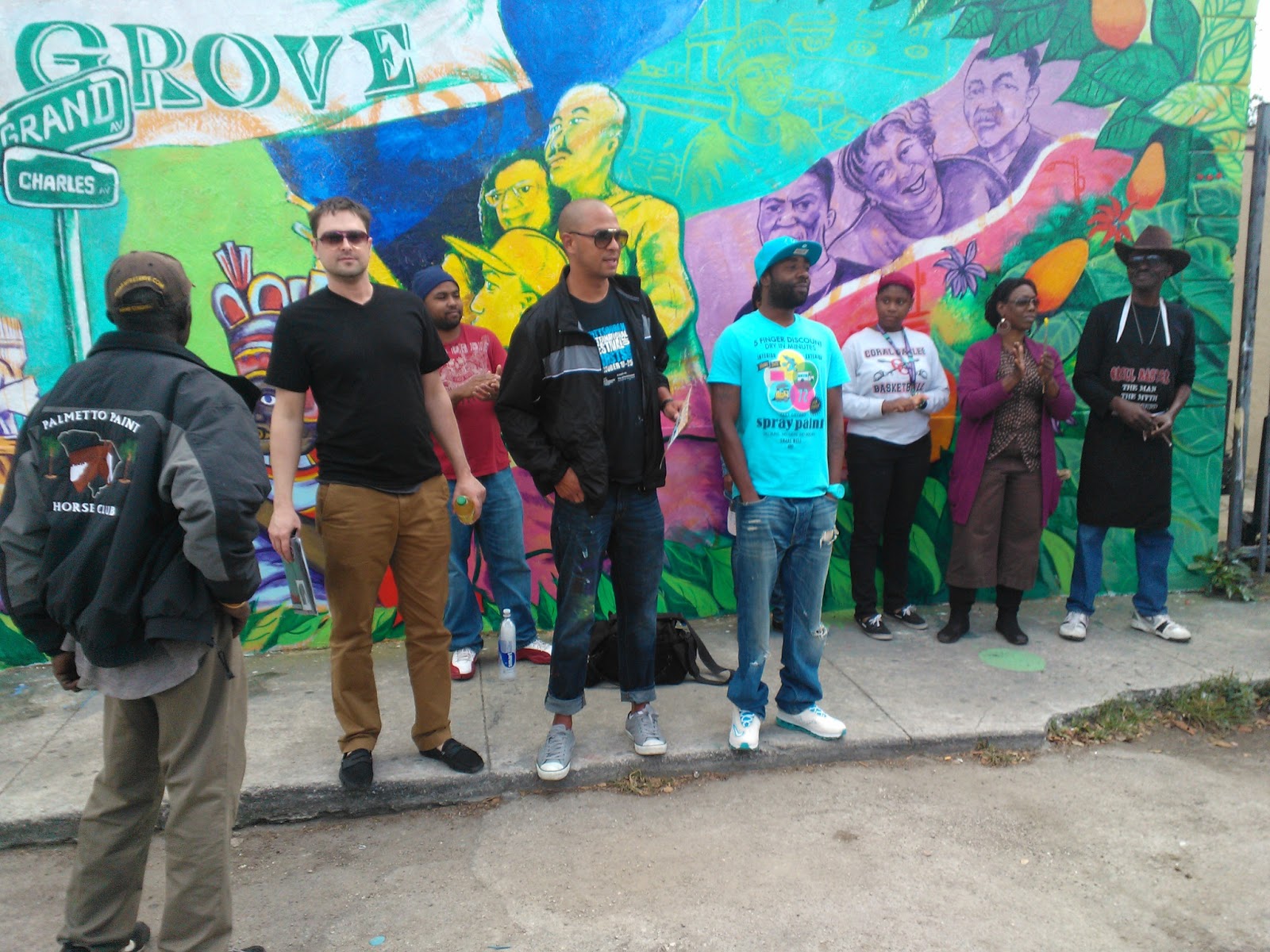
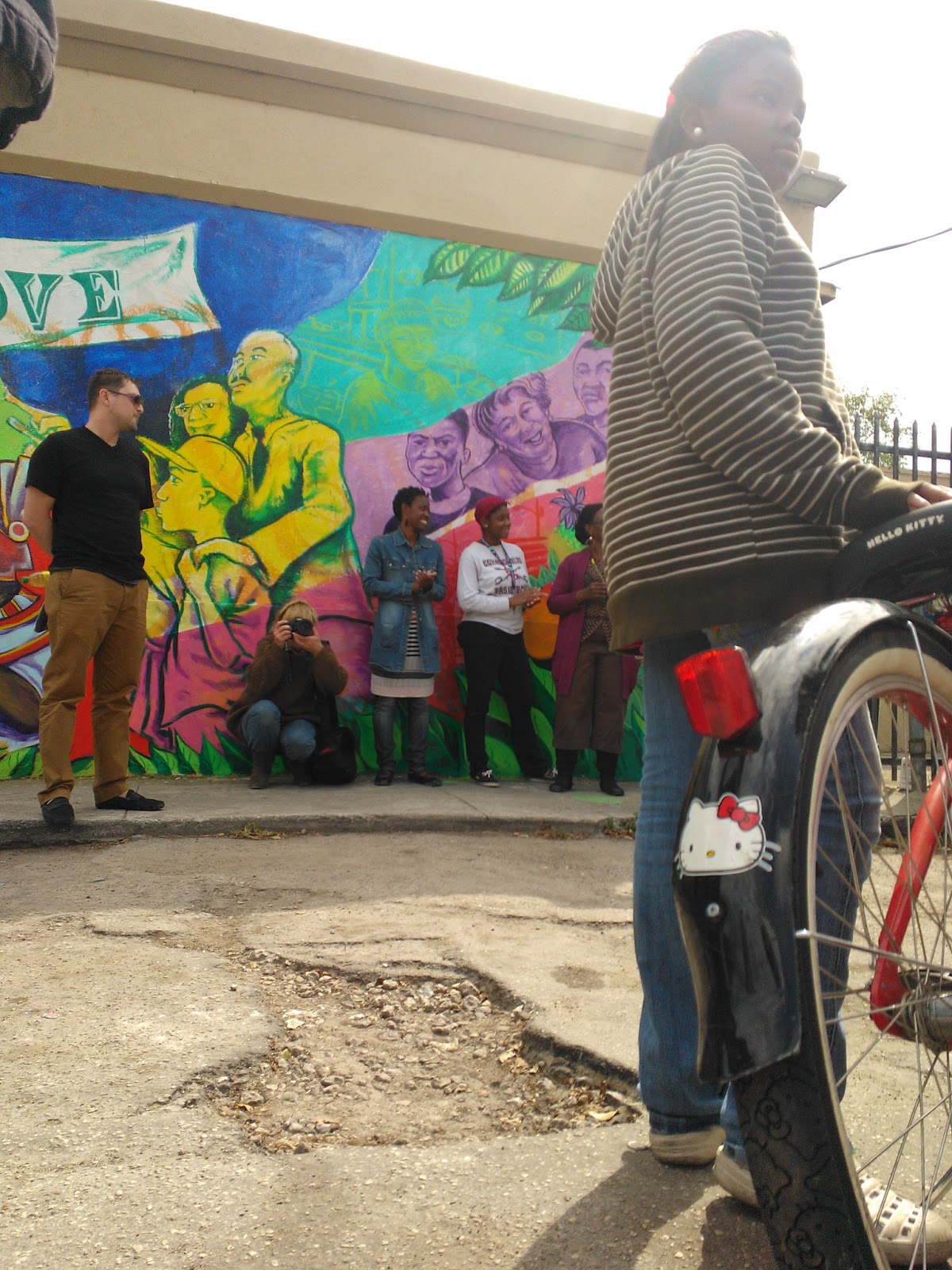
Dateline March 2, 2013 – Residents of West Grove get together to unveil the One Grove mural at the corner of Frow Avenue and Douglas, right next to the Coral Gables diesel bus garage, still under construction.

This first video shows the proximity of the Coral Gables diesel bus garage to the houses in the community.

Some of the festivities of the day.

Introducing myself to Laurie Cook of Urban Resurrection, the organization that spearheaded
the creation of the “One Grove” mural. Prior to this we had only spoken on the phone.

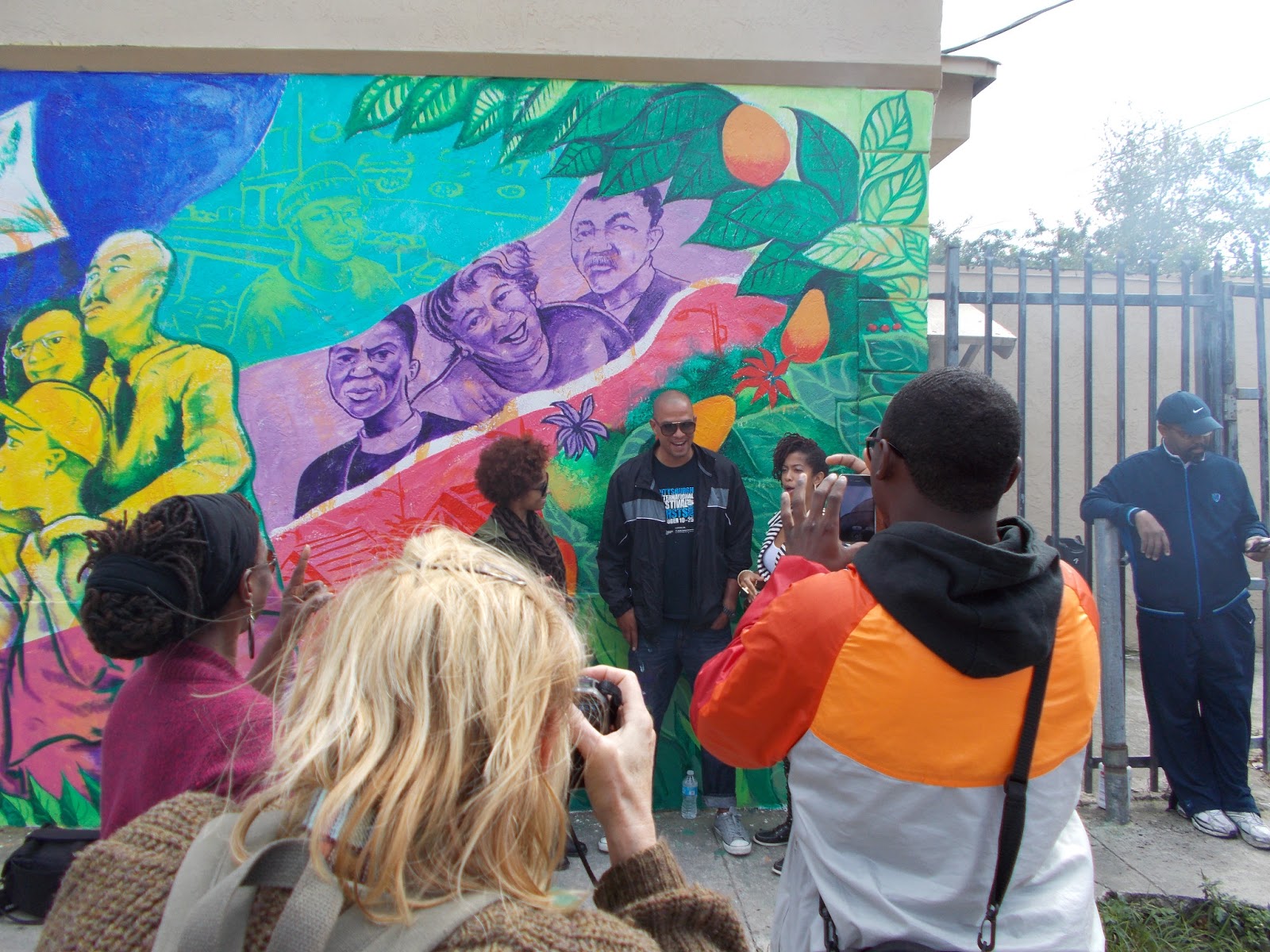
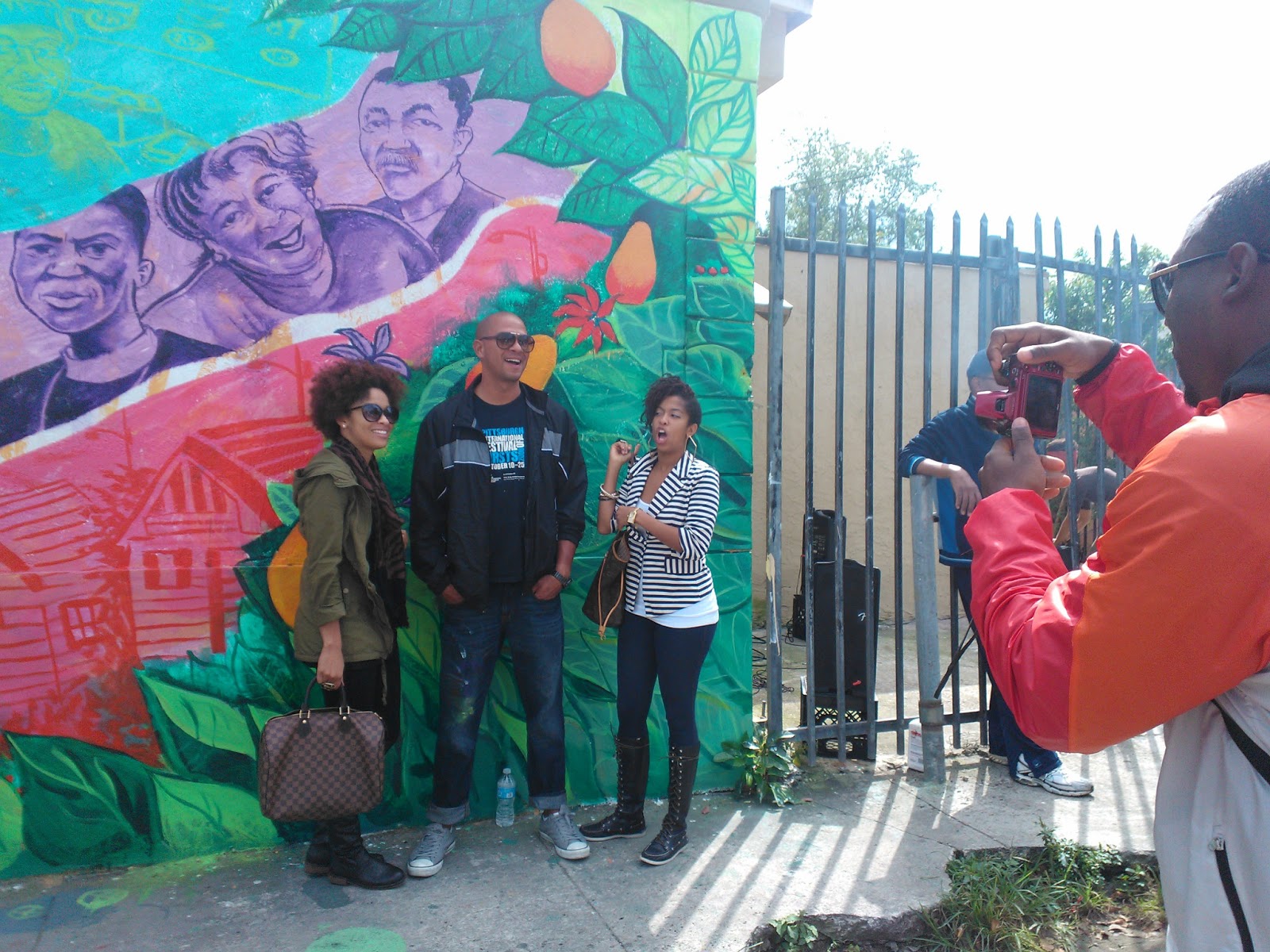
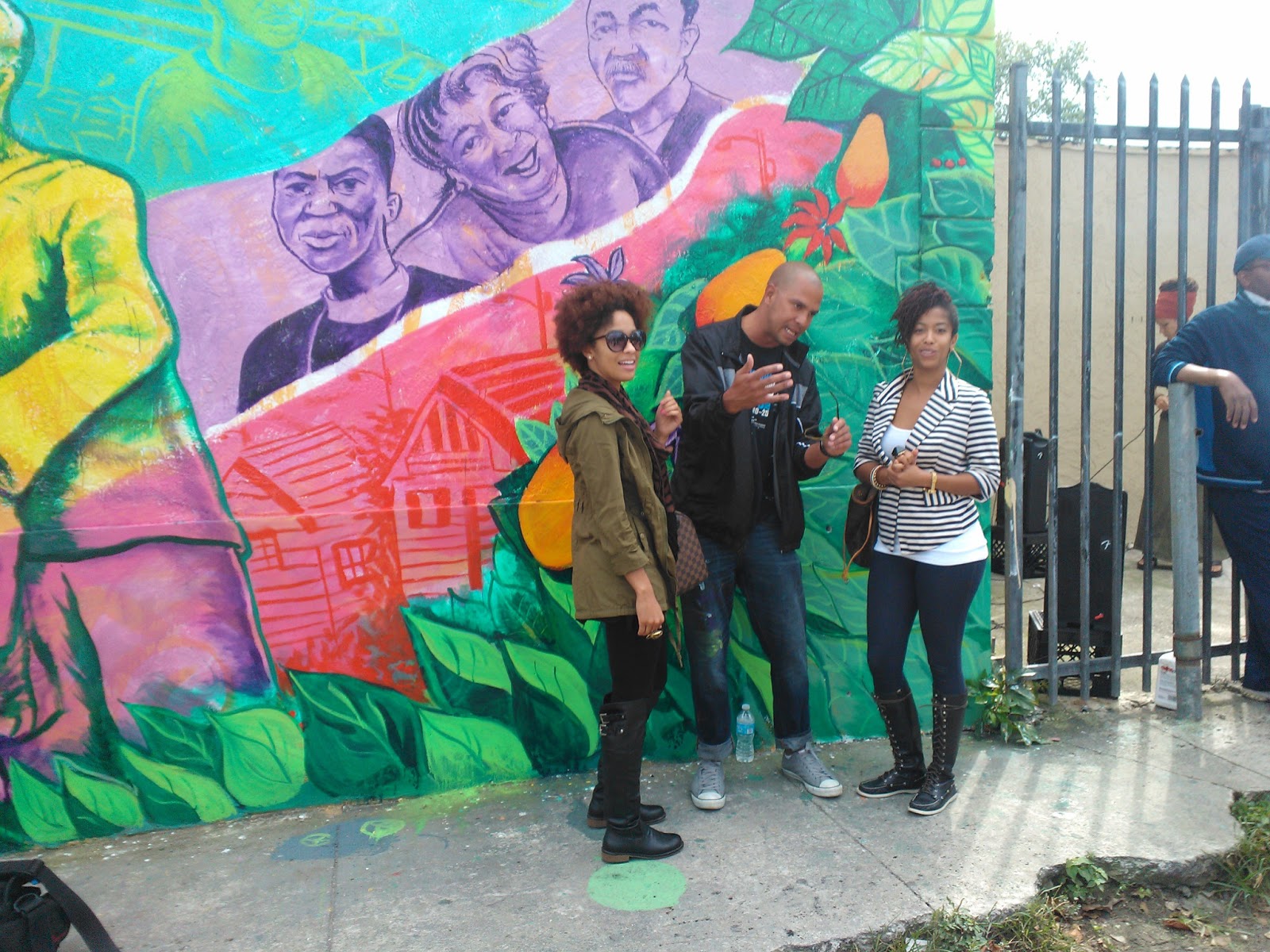
LaTasha (L) and LaToya Stirrup, great great granddaughters of E.W.F. Stirrup, were the center of attention as photographers capture them
flanking Kyle Holbrook of the MLK Community Mural Project, designer of
the mural. That’s Mr. Stirrup’s likeness in the upper-right hand corner.

At the dedication ceremony Laurie Cook invited descendants of important Coconut Grove pioneers to come up and be recognized:

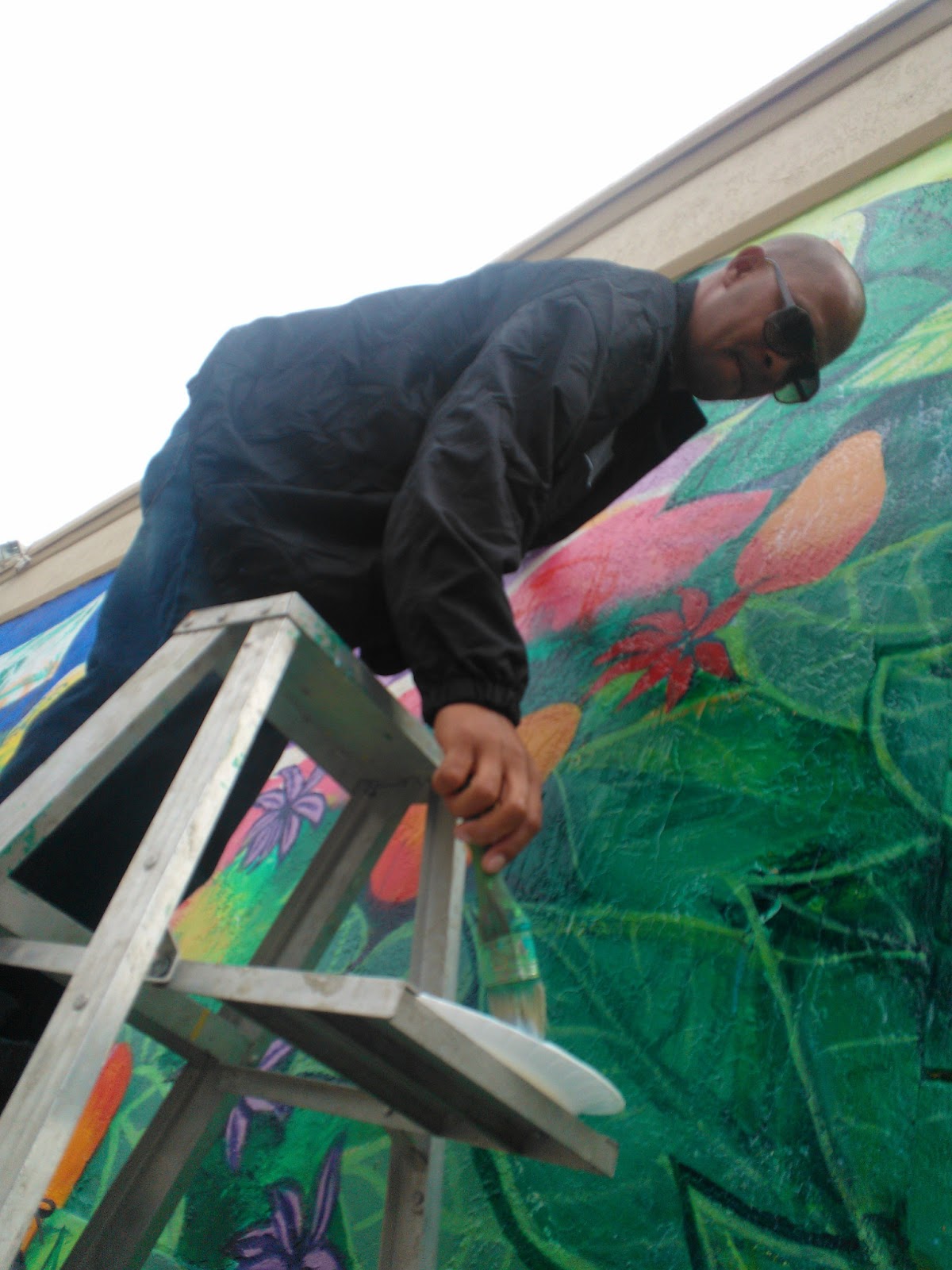
Kyle Holbrook puts the final touches on the mural, a clear protective coat.

Kyle Holbrook puts the final touches on the mural, a clear protective coat.

All of those who worked on the mural were asked up to be recogized:


I loaned Mikey one of my cameras for a while. He started taking portraits of everyone.
Mikey got more people to pose for him than I did.

Portrait by Mikey.
Another portrait by Mikey.


Trolleygate Brings A Community Together

Diesel bus garage, February 27, 2013

While crews continue to build the nonconforming Coral Gables diesel bus garage, a lawsuit by West Grove residents is working its way through the court system. If the residents of the community have their way, (and why shouldn’t they?) the bus garage will never open. If Commissioner Marc D. Sarnoff has his way, his constituents will get screwed . . . again.

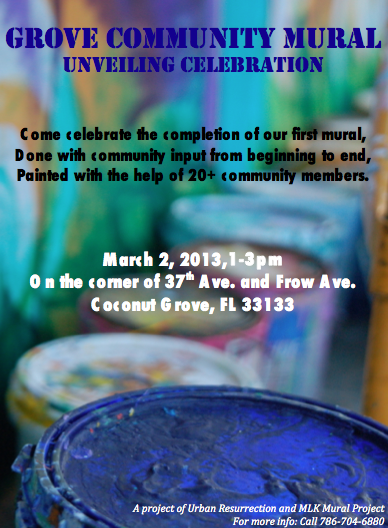
Flier announcing tomorrow’s unveiling.

The residents of West Grove have sued to stop Coral Gables, the neighbouring town, from building its polluting bus garage in the residential neighbourhood of west Coconut Grove. Oddly enough, the border between Coral Gables and Coconut Grove is just one block west of this construction site.

However, before the residents even knew about the diesel bus garage they were already looking at the corner of Frow and Douglas for an urban renewal project. Teaming up with MLK Community Mural Project, the community decided to paint a mural on the wall of a convenience store. With the announcement of the diesel bus garage, the mural has now become a rallying point.

The design of the mural came together organically from the ground up. A survey was sent around asking neighbours three questions:

1). What symbols of the community would you like to see in a mural?

2). What elements of the community are you most proud of? 

3). What are the future dreams you wish for the community?

The wall before it had been transformed.

Kyle Holbrook, of MLK Mural, took all the suggestions and created 3 different designs for the mural, incorporating them all. The designs were then voted on, with the winning one translated to the wall in colourful paint. What had been a nondescript wall has been turned into a vibrant mural and symbol of community pride. The painting pays tribute to the original Bahamians who settled the area, as it also
honours the history and people that made the Grove what it is today.

Tomorrow afternoon at 1 the community will come together to dedicate this wonderful work of art.

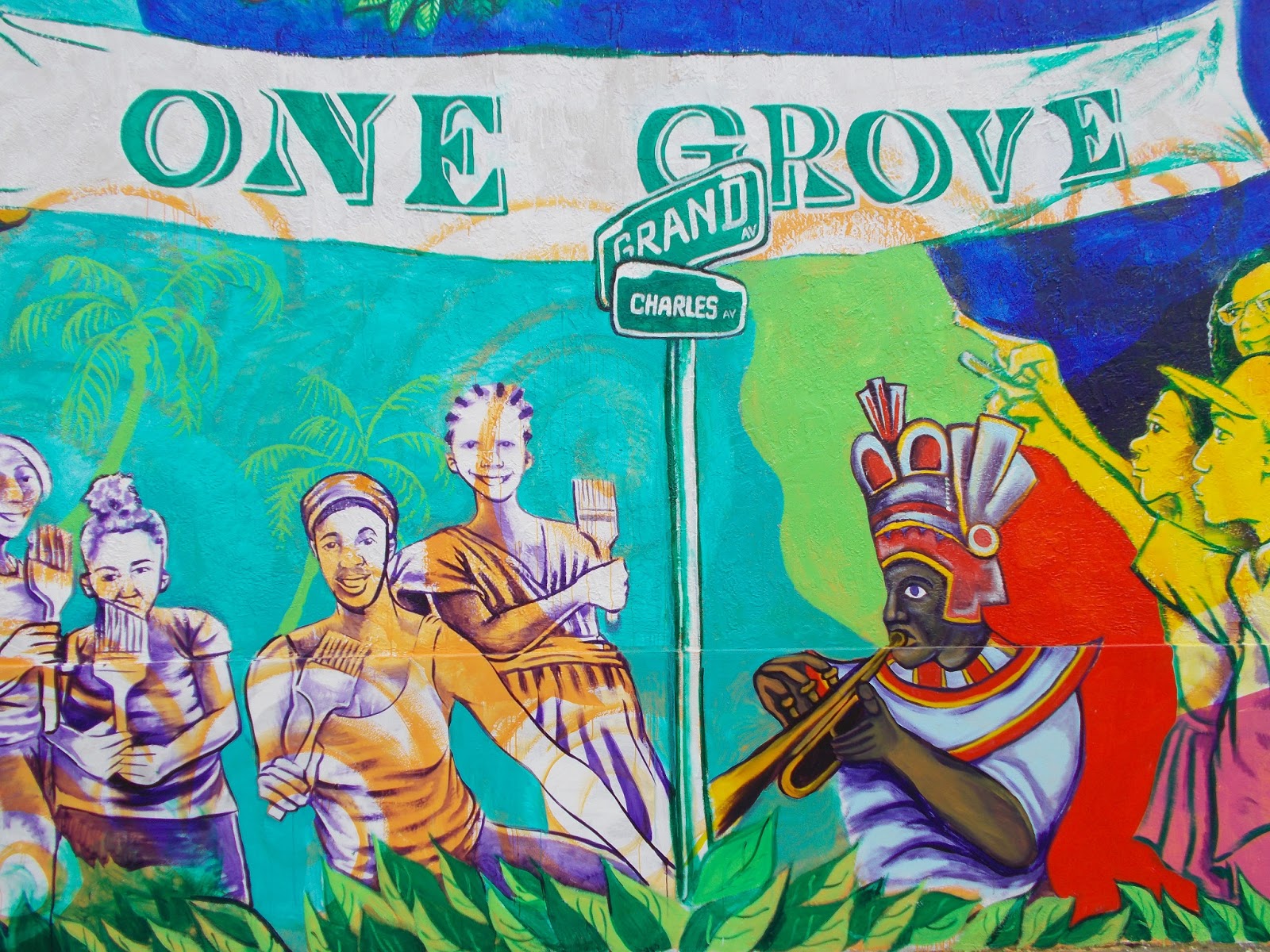
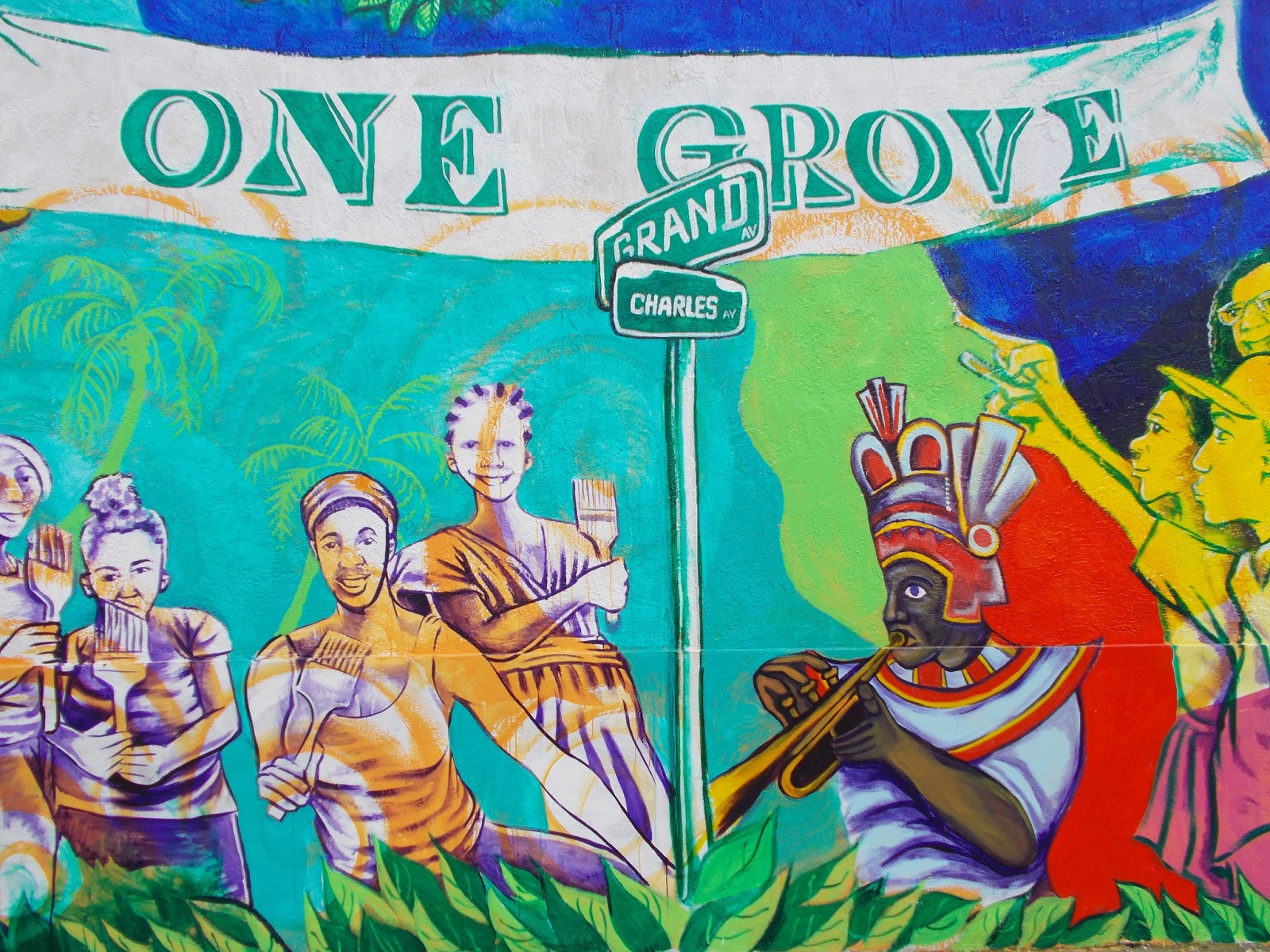
One of the things I have heard several times recently, from more than one person, is how people used to just call it The Grove, or Coconut Grove. These days, however, people refer to North Grove, East Grove, West Grove, Black Grove, White Grove. The mural reflects the concept of One Grove, with a banner proclaiming that at the very top of the mural. Reunification seems to be the desire of the community and return to the idea that everybody is in this together. This is something Commissioner Marc D. Sarnoff should take the time to learn, as opposed to pitting community groups against each other in order to divide and conquer. 
The wall after it had been transformed.

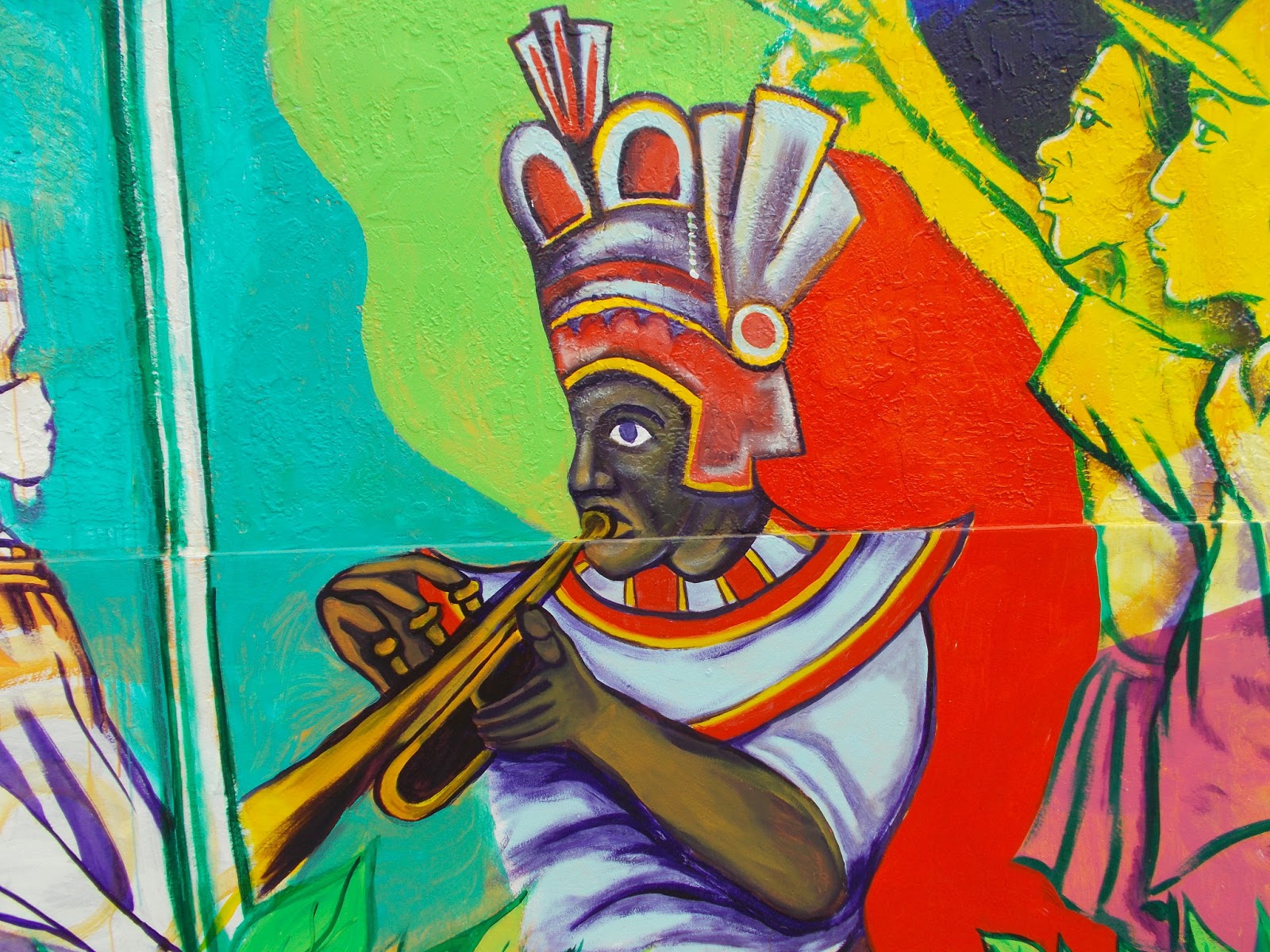
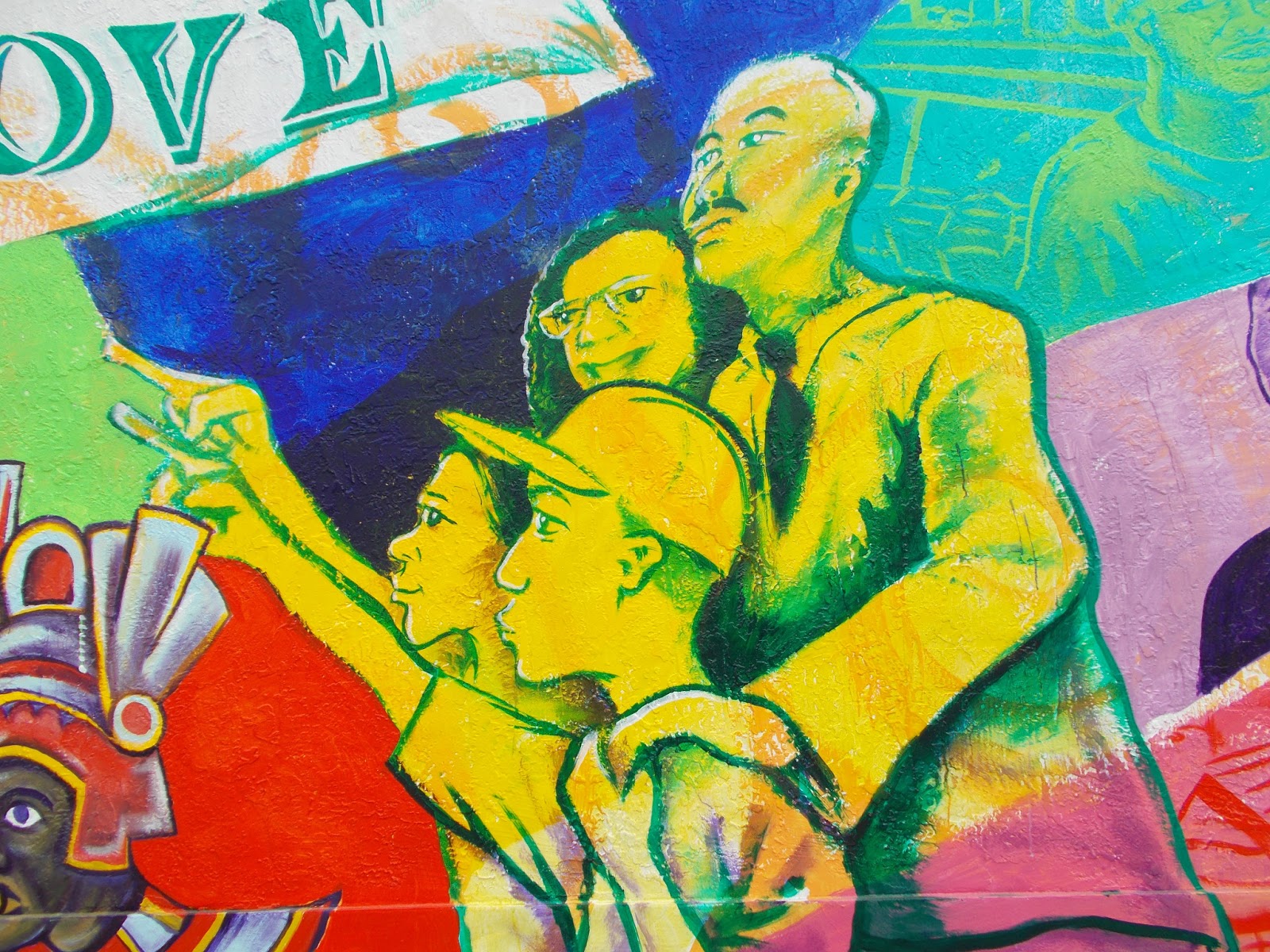
Close up of the center section of the mural. Grand Avenue and Charles Avenue do not actually meet, except as the two streets around which the community congregated and thrived.
Another close up.

A family visiting the mural, as the parents teach the children about their history and heritage.

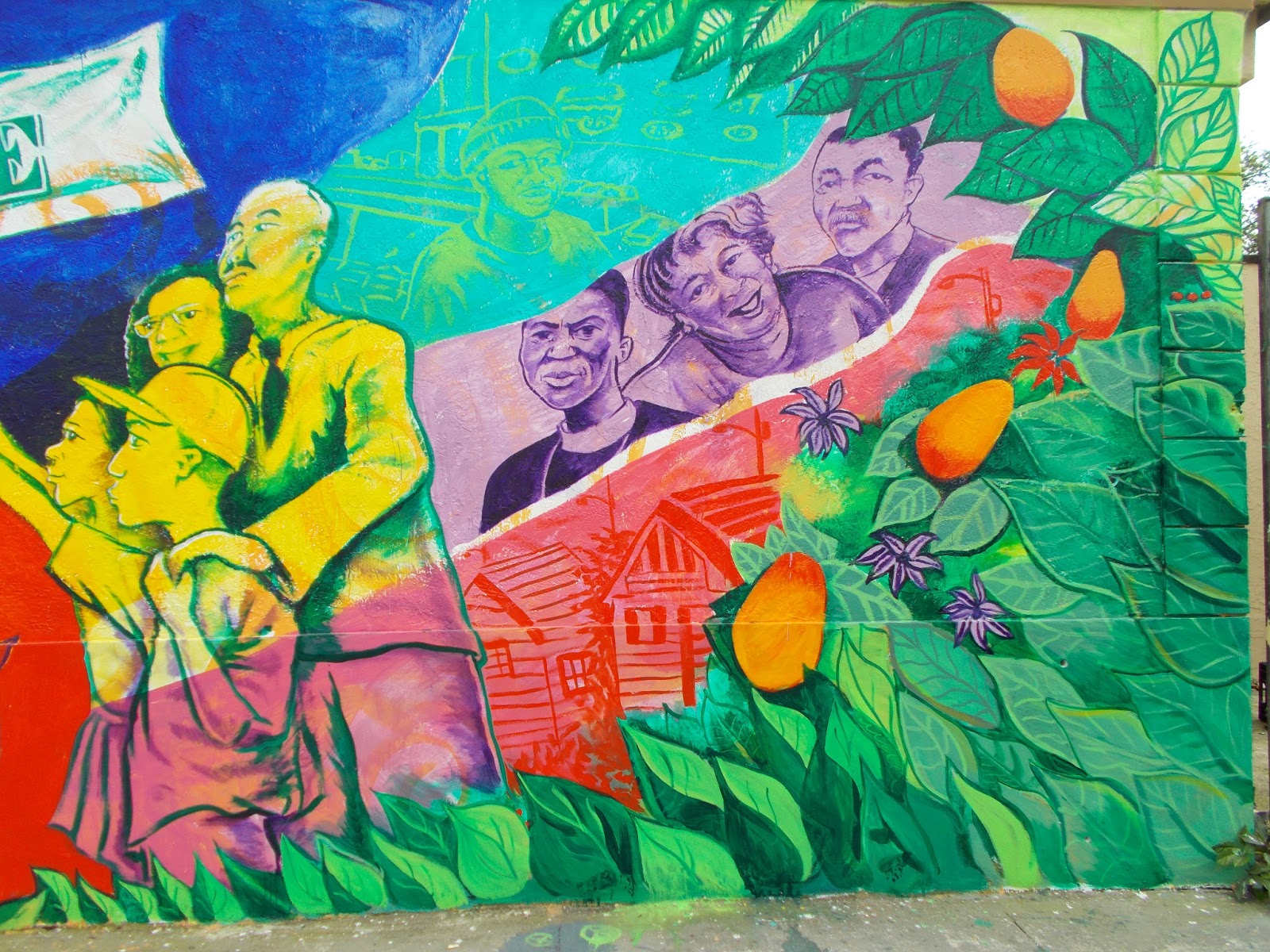
Three of the important pioneers of Coconut Grove: (L to R) Father Theodore Gibson, who did so much to integrate Coconut Grove during the various Civil Rights struggles; Esther Mae Armbrister, who championed turning the Mariah Brown House into a museum and community resource, among other good works in a lifetime dedicated to serving others; E.W.F. Stirrup, whose forward thinking ideas about Black home ownership more than 120 years ago is what makes Coconut Grove a unique place in this country to this very day.

Mangos! Shotgun houses! Foliage! All symbols of Coconut Grove.

These four young ladies were among the first to show up to paint the mural. A photograph was taken of them posing with their paintbrushes, which was then incorporated into the mural.

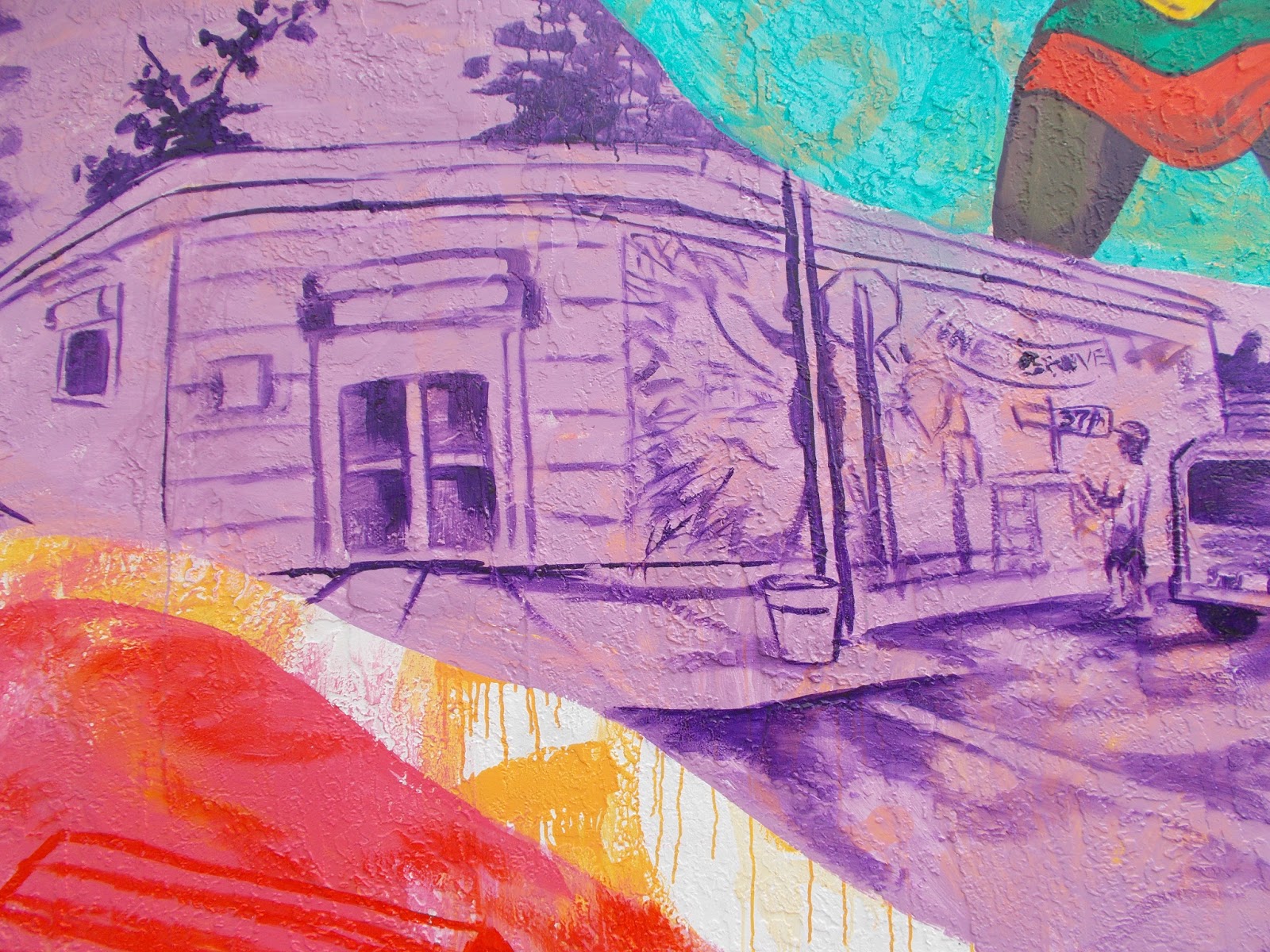
Caribbean dancers! More foliage and shotgun houses. And, the very building on which the mural is painted.

Full circle: Young man admiring the mural within the mural.

This is a wonderful work of art which will adorn this building for many years to come. It has also become a symbol of pride for a neighbourhood coming together to fight the Coral Gables diesel bus garage.