All posts by Headly Westerfield

About Headly Westerfield

Calling himself “A liberally progressive, sarcastically cynical, iconoclastic polymath,” Headly Westerfield has been a professional writer all his adult life.

All Hail the King of Late Night Talk Shows ► Throwback Thursday

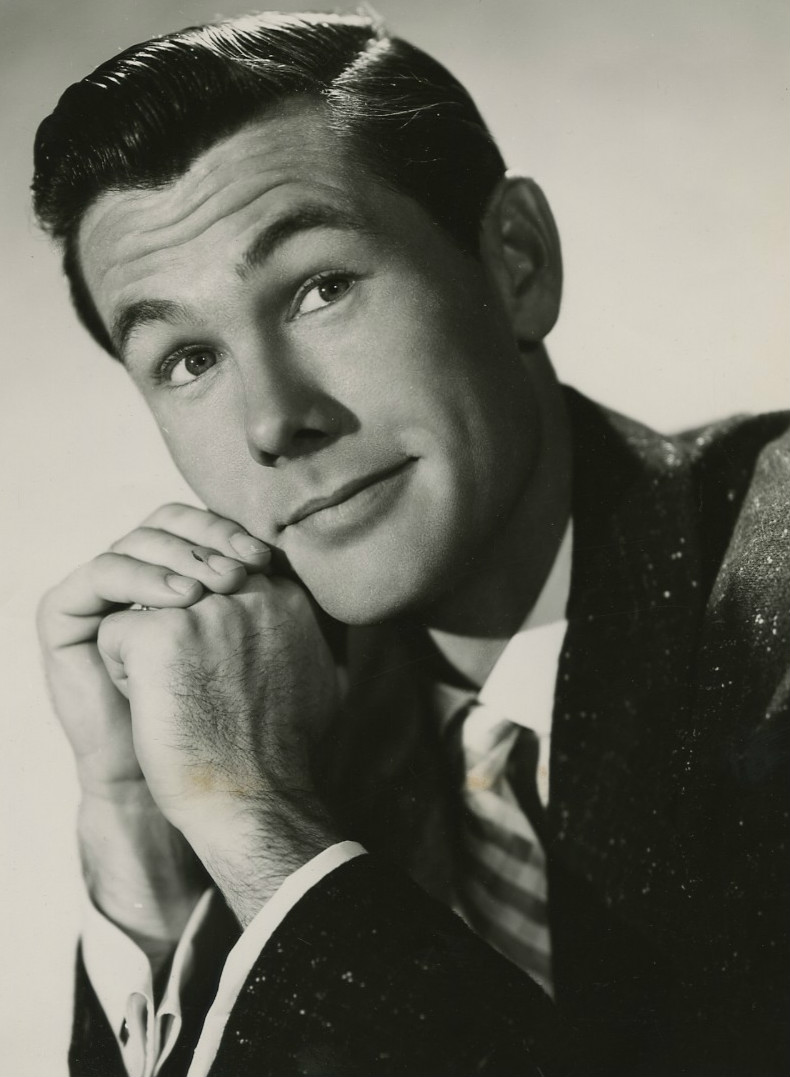
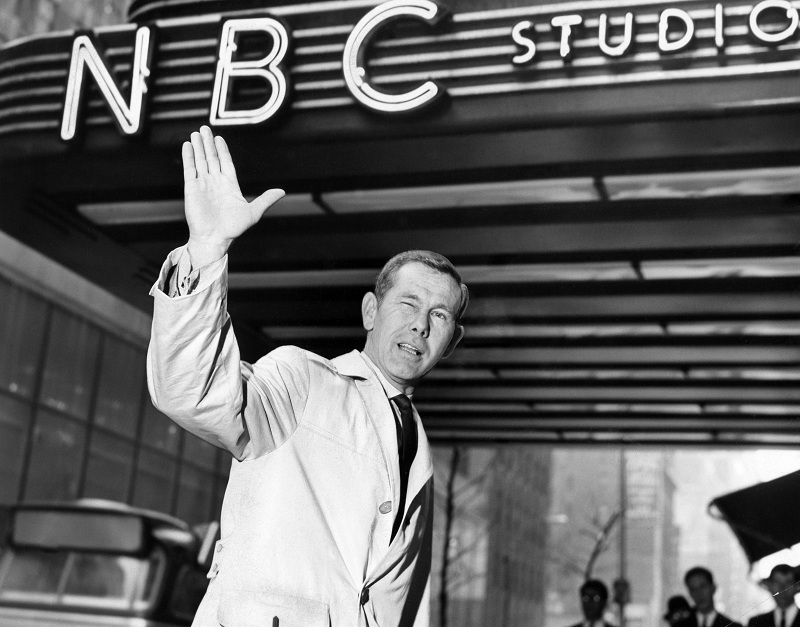
The undisputed King of Late Night is — and forever will be — Johnny Carson. On this day in 1962, Carson took the helm of The Tonight Show, and nothing was ever the same again.

Carson didn’t invent the modern talk show. That honour goes to Steve Allen. However, Carson reinvented the talk show and kept reinventing it night after night for 30 years, racking up nearly 5,000 shows. But it wasn’t his endurance that made Johnny Carson a star. According to Biography:

Audiences found comfort in Carson’s calm and steady presence in their living rooms each evening. Revered for his affable personality, quick wit and crisp interviews, he guided viewers into the late night hours with a familiarity they grew to rely on year after year. Featuring interviews with the stars of the latest Hollywood movies or the hottest bands, Carson kept Americans up-to-date on popular culture, and reflected some of the most distinct personalities of his era through impersonations, including his classic take on President Ronald Reagan. Carson created several recurring comedic characters that popped up regularly on his show, including Carnac the Magnificent, an Eastern psychic who was said to know the answers to all kinds of baffling questions. In these skits, Carson would wear a colorful cape and featured turban and attempt to answer questions on cards before even opening their sealed envelopes. Carson, as Carmac, would demand silence before answering questions such as “Answer: Flypaper.” “Question: What do you use to gift wrap a zipper?”

In August I was thrilled when Variety announced Johnny Carson Returns: Antenna TV to Air Full ‘Tonight Show’ Episodes starting January 1st:

Antenna TV has struck a multi-year deal with Carson Entertainment Group to license hundreds of hours of the NBC late-night institution. Antenna will run episodes that aired from 1972 through the end of Carson’s 30-year reign in in 1992. Because NBC owns the rights to “The Tonight Show” moniker, Antenna TV’s episodes will be billed simply as “Johnny Carson.”

“This is not a clip show. This is full episodes of Johnny Carson, the man that everyone in late-night agrees was the greatest host of all time, airing in real time as he did back in the day,” Sean Compton, Tribune’s president of strategic programming and acquisitions, told Variety. “Tuning in to ‘The Tonight Show’ is like taking a walk down Main Street in Disneyland. The minute you step in there, you feel good and you know it’s a place you want to stay. We cannot wait to bring this show to fans who remember Carson and to a new generation of viewers who have never had the chance to see Johnny in his prime.”

Starting January 1st we’ll see more comedy brilliance like this:


Tuli Kupferberg ► Monday Musical Appreciation

Today we celebrate the life, poetry, and music of counter-culture icon Tuli Kupferberg, born on this day in 1923. He was a ground-breaking New York City Bohemian in the right place, at the right time, to find his claim to fame in the Hippie era.

According to his obituary in the New York Times:
The Fugs were, in the view of the longtime Village Voice critic Robert Christgau,
“the Lower East Side’s first true underground band.” They were also
perhaps the most puerile and yet the most literary rock group of the
1960s, with songs suitable for the locker room as well as the graduate
seminar (“Ah, Sunflower, Weary of Time,” based on a poem by William
Blake); all were played with a ramshackle glee that anticipated punk
rock.

With
songs like “Kill for Peace,” the Fugs also established themselves as
aggressively antiwar, with a touch of absurdist theater. The band became
“the U.S.O. of the left,” Mr. Kupferberg once said, and it played
innumerable peace rallies, including the “exorcism” of the Pentagon in
1967 that Norman Mailer chronicled in his book “The Armies of the Night.” (The band took its name from a usage in Mailer’s “Naked and the Dead.”)

When I was growing up The Fugs and Frank Zappa were my introduction to the counter-culture. While the ’60s was filled with psychedelic bands, the fact that their records appeared on mainstream corporate record companies took them down a notch in my opinion. But, not The Fugs. They were as real as real could be.
Rolling Stone’s obit reads in part:

The Fugs formed in 1964 when bookstore owner Sanders and poet
Kupferberg, both barely musicians, teamed up to play an unpolished rock
& roll combined with lyrics stocked with political satire and
profanity. Because of their anti-war imagery — “Who can train guerillas
by the dozens? Send them out to kill their untrained cousins?” asks
frontman Kupferberg in “CIA Man” — and rambunctious live shows in the
mid-’60s, the FBI reportedly investigated the Fugs. The band ultimately
recorded six albums between 1964 and 1969, with Tupferberg contributing
some of the band’s most renowned tracks: “Nothing,” “Kill for Peace,”
“The Ten Commandments” and “CIA Man.” After a 15-year hiatus, Kupferberg
and Sanders reformed the Fugs with a new lineup.

Kupferberg earned a reputation as one of New York’s foremost
bohemians, and even served as the inspiration for the man who jumped off
the Brooklyn Bridge and survived in Allen Ginsberg’s epic poem “Howl.”
Kupferberg “jumped off the Brooklyn Bridge this actually happened and
walked away unknown and forgotten into the ghostly daze of Chinatown,”
Ginsberg wrote. Kupferberg later admitted he was the jumper of
Ginsberg’s poem.

Whenever things get too real for me, I remember The Fugs Gospel-inspired tune Wide, Wide River, which, in a perfect world, should have been Number One on the Hit Parade longer than Carole King’s reign on the top of the charts. Crank it up!!!

PSF:What did think of the Beat movement when it first started happening?

I remember being shocked by it. I guess I was still in some sort of
traditional mode. Shocked, jealousy and then adaptation. It was
liberating. I was shocked by Ed Sander’s freedom of sexual expression.
I’m sure people were shocked by mine when I started. Ginsberg is your
best example of a liberating force. It’s not just the language or the
freedom of the language because that just reflects character structure.
A person who drops dead or wants to kill someone would use all those
words you’re not supposed to use. It’s more than language. It’s
attitude towards sexuality and human relations along with domination and
love. It’s not that people who shout about sexual freedom understand
everything that’s involved. In order to have good sex, you have to have
good human relationships and vice versa. When I grew up, in my
community, you weren’t going to have sex until you got married- this was
a middle-class Jewish community. Maybe you went to a prostitute…
But that gradually broke down. That was all for the good and not just
for me but also for most of America.

PSF: So you got to be part of the Beats yourself then?

Everyone was. But I felt that they had a heritage with the
bohemians. The term comes from 12th century University of Paris. The
craziest students came from Bohemia and they gave them this name.
There’s this old tradition of living outside of the mores of society.
Until the burgeouis revolution, most artists lived on the patronage of
the ruling class. LA VIE DE BOHEME, the libetto for that opera, tells
you what was happening then in the 18th century. So that’s a 150 year
old tradition that’s still going on. It used to be linked to geography
with places like New York, San Francisco, Munich, Paris. But now, with
the Internet, you could be crazy, wild, free and self-destructive
anywhere you want. But hopefully, there’s still communities of people
out there. Utopian colonies who are just friends.

It was always about the poetry. Here’s Tuli in recitation:

Tuli died in 2010 at the age of 86, but his poetry and music live on forever.

The Nuptial Nostalgia Tour ► Throwback Thursday

In August I announced my Road Trip to Canada, which took me to Hamilton and Toronto, cities I’ve written about previously. It was transformed into a magical road trip, filled with Deja Vu and synchronicity; a trip when finished felt preordained. It was truly throwback in ways I could have never imagined and I’m still trying to process it all.

Wedding photography outside The Werx The Spice Factory

The first strong echo of the past was the wedding venue. The Spice Factory is in a building that was once called The Werx, but that was several owners ago. After the building sat idle for a while, the new owner renovated it to be a bar/special event venue. However, The Werx was the place in Hamilton where we all used to hang and put on our own events more than a decade ago. Now we were back in the building experiencing extreme Deja Vu.

In fact, The Werx was the location of the ghost hunt I conducted with the Girly Ghostbusters, first described in Hamilton Magazine.

It was great being in that building again. It was also pretty special being back with that group of people again. These are people I dearly love, but only get to have computer contact with. At one point we were all standing out in front of the building — in our tuxedos and fancy dresses — and realized, “How many times have we done this?” We laughed and laughed and laughed, just like we used to.

And yet, as comfortable as this all was, there was also a sense of dislocation. While some things were the same, other things were very different. And, the same is also true for all the other experiences I will relate below.

That’s my old apartment on the top floor, left

After the Hamilton wedding I went to Toronto, the city I truly consider home.

One of the best apartments I ever had in Toronto (and I’ve had several great ones) is in a building I never thought I’d be in again after moving out some 17 years ago and leaving behind a pull-out couch that was too heavy to carry.

Yet, recently my daughter was looking for a new apartment and found one in the very same building. I spent 2 nights with her and it was so weird and wonderful being in the same building again.

While in the old neighbourhood I spent a couple of days looking for my old supers, who had moved to an apartment above a store on Queen Street West, above one of the antique stores. I had absolutely no luck. If anyone knows where to find Shane and Margaret, I’d be most interested in hearing all about it. They were two people I had really hoped to find while in Toronto.

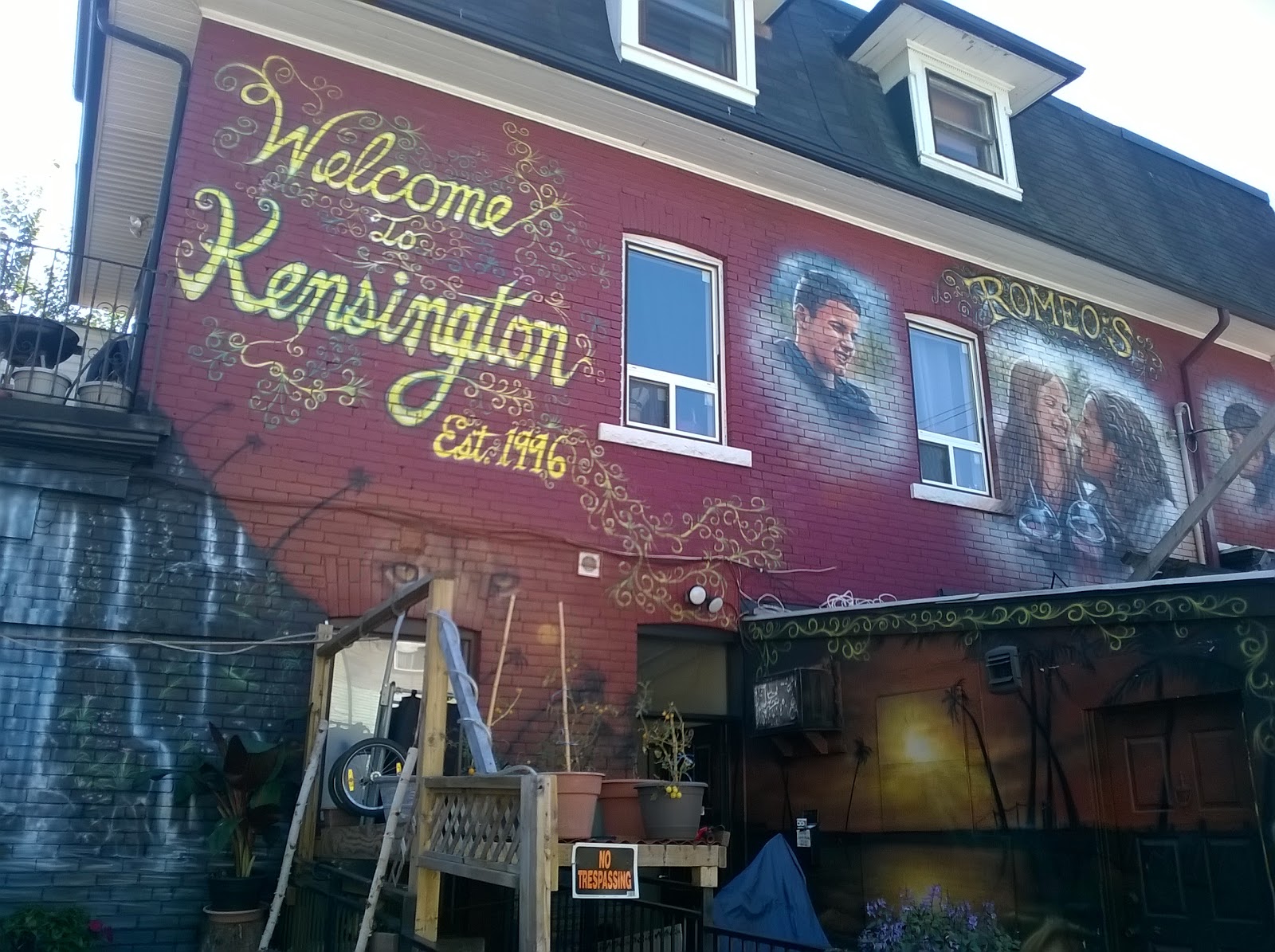
While in Toronto I used Kensington Market as my home base because it was convenient to everything and everybody.

It was wonderful being in Kensington Market again. I lived in the Market 40 years ago, when the Island Records Canada offices were on the ground floor of a house on Nassau, at Augusta. That’s why I’m considered a Marketeer and why this was a long-delayed homecoming.

There are few places on earth quite like Kensington Market. The WikiWackyWoo says:

Kensington Market is a distinctive multicultural neighbourhood in Downtown Toronto, Ontario, Canada. The Market is an older neighbourhood and one of the city’s most well-known. In November 2006, it was designated a National Historic Site of Canada.[1][2] Robert Fulford
wrote in 1999 that “Kensington today is as much a legend as a district.
The (partly) outdoor market has probably been photographed more often
than any other site in Toronto.”[3] 

Kensington Market: A small
place with a very big heart.

However, there’s no way the Googlizer can convey the sense of family one finds in The Market. It only runs a few blocks in any direction and feels like a small village. Everyone looks out for everyone. While I was there I saw store owners bring out food to give to the Punks that congregate near the alley. There’s an amazing energy in The Market, with the sidewalks crowded from early morning to late at night.

I could easily see myself living in The Market because it felt like home. Everyone welcomed me with open arms and seemed truly sorry that I had to leave.

For the most part The Market is The Market. On the surface it appears to have not changed at all. The cheese shop is still there. The fishmonger has the same smells. The green grocer next to my old house is as busy as it ever was. Yet on closer examination one notices new businesses tucked between the same stores as before: New Age stores, fancy coffee shops and restaurants, and funky vintage clothing stores.

You can take the boy out of the Market, but you can’t take the Market out of the boy. That’s my
old house behind me. Island Records was on the ground floor and I lived above on the third floor.
When I  walked into Lola, I ran into Brad, who I worked with at
Citytv for over decade. Now that he’s retired, this is his hangout.

It was terrific being in the Market again!

And, I want to extend a special THANK YOU to Gwen and Huong Bang, the two sisters who own Lola in Kensington Market.

I had this crazy idea to throw myself a party while in Toronto. It was borne out of practicality. I couldn’t possibly visit everybody I wanted to see and who wanted to see me in the 4 days I was there. But, what if they all came to me?

I approached a woman I knew slightly 40 years ago, when she became friends with my first wife after we had split. They went to George Brown college together. Barbette Kensington and I reconnected a few years back on the facebookery. I knew she was an event organizer so I asked her where she would hold a party for me. She found Lola (because it’s one of her hangouts) and, somehow, ‘convinced’ Gwen and Haung to allow all of my crazy friends to descend on their place. [I’m told they were happy to do so.]

Barbette Kensington making sure all goes well at my party.
That’s the infamous Richard Flohill in the foreground.

In fact, Barbette took that ball and ran with it. My party went off flawlessly and I had such a wonderful time that I wished it would have never ended.

In some respects it hasn’t.

I’ve had a smile on my face since my trip to Toronto and my spirit has been changed in ways I can barely describe, despite my facility with words.

All I can say for now is that my life has been transformed and there are new roads and adventures in my future.

Pastor Kenny Responds

Pastor Kenny. Pics stolen from his facebookery.

A Response to Your Pastoral Letter (Or How One Pastoral Letter Begets Another, Begets Another, Begets Another)

I’m a FB neophyte, so it took me quite a while to dig out your last pastoral letter once I had a little time to respond to it. I’ve not known how to respond to your pastoral letter because I wasn’t sure if or what might have been expected of me.  Was it an invitation to dialogue? In what forum?  I was just a little befuddled.  SO I figured, heck, I’ll just write something down on word doc and if Headly wants to publish it, so much the better.

I am going with Headly at your request, though I knew you as Marc.  I think we lost regular connection before you became Headly so it was good to hear your story about how the name came [about] and took.  Ken or Kenny works for me. Only my sisters, Marilyn and Nancy call me Kenny, so it reminds me of my past. (The name, btw was ruined by association with Barbie, and if it’s not too insulting to a fine musician, Kenny G. Nobody seems to name their kid Kenneth anymore.  Someone told me in Scottish (?) it means “handsome,” which [may] also account for its unpopularity. Who would want to name their kid “handsome”?  Alas. Mark has fared much better as a name, and the variant Marc (short for “Marcus”?) is a little exotic, given that we’re in the 1950’s Tom-Dick-Harrry-Mary-Deborah genre of Wonder Bread Names to begin in. But I digress.

I must say I have been honored by your interest in my little LGBT soap opera. Spreading the word about Letter to My Congregation, being interested, curious, sympathetic.  But it has also been comforting to reconnect a little bit with my Gilchrist past through your reaching out. 

Pastor Ken Wilson with wife Julia

My wife, Julia, grew up in Holland Michigan, where her dad still lives in the house she grew up in. (Her dad was an English Professor at Hope College.) She can go back to the house and stay overnight, as we have a few times since we got married.  Recently, at her moms memorial service, she met all sorts of people from her growing up years—people who babysat for her and for whom she babysat, teachers from high school, old friends.  It helped me realize how the decline of a city like Detroit can disconnect you from your past. 

Going back to the old neighborhood recently was stunning—urban blight such as I’d never seen just a few blocks South of where we grew up. Such an empty feeling. And no one from the old neighborhood to share it with. So reading your posts—especially your history of the Detroit riots—triggered all sorts of memories for me. Thank you.

One of the things I’d forgotten was just how racist things were growing up. You reminded me what it was like to grow up Jewish—and it all came rushing back, the horrible jokes about Jews, and Blacks, and Poles, and well, non WASPS. I remember being warned by someone not to attend a Catholic Mass because they spoke Latin and you didn’t know whether they were saying bad stuff or not.

It made me feel ashamed. Using the N-word was strictly forbidden in my family. Same with anti-Jewish rhetoric. But talk of “Injuns,” “Krauts” and “Japs” was tolerated. Now I’m ashamed. But I was also ashamed because of my forgetting. Forgetting how bad the Christian participation in anti-Semitism was in that era. Remembering how my late wife Nancy and I came to visit you in Toronto talking all our Jesus talk without remembering how your ears would have heard Jesus talk, having been called, as was common in that time, “Christ killer.” I can’t imagine what it would be like to associate the Jesus that I’m so ga-ga over with that kind of treatment from people who claim to be part of the religion he started. I have to admit, it’s a pretty reasonable thing to judge a religious figure by the behavior of the religion that he founded. So I can’t blame you for not picking up what Nancy and I were laying down in that trip to Toronto. 

Pastor Kenny’s very important
book, which got him thrown out of
the church he founded 45 years ago

By the way, it was fun to talk about that Toronto trip and to hear you say that you found it kind of interesting despite the fact that the God talk went on a little too much for your tastes. New converts to anything are a trip and I imagine I was one too. You should hear me talk to my friends who show any interest in my Fitbit. I get enthusiastic about things and want the whole world to adopt them. (Say Headly, have you tried the Fitbit? It’s amazing how it helps you be more active—I walk so much more now that I have one of these little wonders.)  But I digress again. I think you bring the elementary school of me, the Kenny locked up in Pastor Ken. 

I do know that there’s a connection between the mistreatment of the LGBT community and the Jewish community. In much the same way that anti-Semitism was tolerated in the Church for millennia—based on a handful of biblical texts taken out of historical context—a handful of texts taken out of historical context have propped up teachings that are harmful to vulnerable sexual minorities. The Second Vatican Counsel—which took place while we were growing up in Detroit—signaled an important reversal on this. Now there’s virtually no respectable Christian tradition in which it is OK to refer to Jewish people as “Christ-killers.”  Maybe the same reversal is underway today when it comes to sexual minorities. I certainly hope so.

And drum circles. I found it fascinating that you’ve gotten into them.  I’ve always thought they would be a blast.  I walk through the Diag sometimes and there’s a drum circle happening. They don’t seem to be looking for people to join them, but I’d like to. I always think of you now when I see them.  The feeling of connection with other people that happens with a drum circle has got to be pleasurable. You could do a lot worse for a communal spiritual practice than a drum circle. He said, approvingly.

OK now I have to figure out how send you this word doc via FB. Oh crap, is that even possible? 

Grace and peace to you, fellow pilgrim and pastoral letter writer.

Editor’s note: Kenneth John Wilson is my oldest friend in the world. We grew up together on Gilchrist Street in Detroit, catercorner from each other. We lost track of each other in the early ’70s.


Last year I was made aware that Pastor Kenny is shaking the foundations of organized Christianity with his book A Letter to my Congregation, which argues for full inclusion of the LGBT communities in all congregations. We have since reconnected to my extreme happiness.

There has been some slight editing of this Pastoral Letter for clarity and spelling.

U-Roy ► Monday Musical Appreciation

Let’s get right to it. Had it not been for Reggae “toasting,” or “dancehall,” there would have been no Rap or Hip Hop. U-Roy, was not only one of the firsts in the genre, but one of the best.

Born Ewart Beckford on this day in 1942, U-Roy got his nickname from a family member who couldn’t pronounce his real name.

According to the WikiWackyWoo:

As a young man Beckford listened to the music of Louis Prima, James Brown, Ruth Brown, Fats Domino, Rufus Thomas, Smiley Lewis and was especially influenced by the vocal phrasing of Louis Jordan.


U-Roy’s first single
U-Roy began as a DJ in 1961 toasting over the records at live events. In Jamaica there was no access to radio, so the toasting was done at live shows in front of a “sound system.” Moving from one sound system to another, it took almost a decade before his career took off, but when it did U-Roy changed the face of Reggae music.
U-Roy has worked with the great producers of Dub Reggae, from King Tubby to Lee “Scratch” Perry, going from height to height.

According to All Music: 
His toasts were utterly relaxed
and conversational, yet always in perfect synchronicity with the
rhythms. The DJ had now gained a significant following in the U.K., as
well, and in August 1976, visited Britain for the first time. He
performed at the London Lyceum, backed by the always excellent
Revolutionaries, and the 1978 Live EP was drawn from this phenomenal
show. Back in Jamaica, U-Roy began recording his new album, Rasta Ambassador,
filling the studio with musicians and singers, 15 strong in all. The
Gladiators provided particularly sonorous backing vocals, while the
band, led by the rhythm team of Sly & Robbie,
created a deep roots sound appropriate to the album’s title and
accentuated by Robinson’s deeply dubby production. 
U-Roy is still toasting and we are still listening. As always the proof is in the record grooves and in the beat. Listen to U-Roy and you’ll see why he was awarded Jamaica’s Order of Distinction. A fitting distinction for a man who changed the face of Reggae music.

Bill “The Falafel King” O’Reilly Born ► Throwback Thursday

Yes, he actually said this without a hint of irony

If there’s any single person that I wish we could throw back, it’s Fox “News” fabulist and serial exaggerator Bill O’Reilly. 

Loofah Lad is a Fox “News” anchor, both literally and figuratively, because he’s the highest rated liar on Fox, just not the only liar.

O’Reilly calls himself a cultural warrior battling all those forces of evil that most of us accept as part of a multiracial, pluralistic society. Entire books and websites have been written about this man, so I won’t bother. However, the reason he’s perfect for this rubric is he wants to throwback the country to the lily White suburbs of of his ’50s Levittown, where he grew up; a man so uncomfortable around Black folk, that every time he brings up the issue of race, he embarrasses himself.

Bill is a Catholic, who is getting a divorce. He’s now engaged in an ugly battle with his ex-wife, where he’s been accused of domestic violence:

The transcript includes testimony from Larry Cohen, a psychologist appointed to interview and make assessments about each member of the family during the dispute. (Note that “M.” refers to O’Reilly’s daughter.)

“M. [his daughter] reported — having seeing an incident where I believe she said her dad was choking her mom or had his hands around her neck and dragged her down some stairs.”  

 Meanwhile, The Falafel King lectures and hectors ‘Merka to live exemplary lives.

Can we throw him back already?

As is traditional in his falsely titled No Spin Zone, we’ll give Bill the last word:

A Message to Facebookers

Dear Facefolkers: 

Do you wander over to other people’s personal timelines to insult or take issue with what they post? If so, this post is for you.

WHAT THE HELL IS WRONG WITH YOU?

When sitting on a person’s front porch, would you start calling them names? Would you tell them their opinions are wrong? Worse yet, would you refuse to offer any facts to bolster your side of the argument? Especially when you’re not even a friend to the person you’re attacking?

I’m really growing tired of people who show up on my personal wall with the sole purpose of shitting all over it.

Look: There are plenty of places on the facebookery where you can debate opinions to your heart’s content. That’s what they’re there for. However, that’s not what my wall is for.

My wall is for me and my friends to get together and shoot the breeze.

It’s like the neighbourhoods of old, when people would sit on their front porch and greet everybody who passed. The difference is we are all simultaneously sitting on our front porch and walking past all the other porches.

If you honestly and truly believed that Mr. Smith is a drooling fool, would you walk past his porch and yell, “I heard what you said to Mr. Jones and you’re nothing but an idiot”? Or would you just walk past?

When I see crap I don’t like on another person’s wall — sometimes it’s very good face-to-facefriends, sometimes it’s family, and sometimes it’s just facefriends I’ll never meet — I just keep on walking. What good comes from starting that kind of debate?

But, I really want to talk about a far more egregious form of this problem:

Attacking people who are not even your facefriends. You’ve seen what they posted ONLY because one of your facefriends liked it or shared it. So you wander over to that timeline to give the original poster a piece of your mind. This is akin to helicoptering over a neighbourhood you don’t even belong to and hectoring those people with a megawatt PA system.

Give your head a shake. Don’t be an asshole on my threads, and I won’t be an asshole back to you.

I’m ALWAYS willing to discuss things. But, if you start with an accusatory or defensive attack, I’m gonna BLOCK your ass. And, if you quote Fox “News” memes, I’m going to BLOCK your ass and make sure everybody laughs at you.

A Peruvian Princess Sings ► Monday Musical Appreciation

She’s now considered the Queen of Exotica, the musical genre that encompasses a previous era’s Kitch, but at one time Yma Súmac was considered to be a Peruvian princess.

I discovered Yma Súmac in the early ’60s. Among my mother’s LPs were a couple by Yma Sumac. As a kid I was attracted to crazy colours and costumes on the covers, but once I dropped the needle on the record, I WAS HOOKED!!! That voice! Those songs! I had never heard anything like it before and have been a fan ever since.

There has never been anything else like her. Listen:

Zoila Augusta Emperatriz Chávarri del Castillo, was born on September 13, 1922 in Callao, Peru, but took the name Yma Súmac, which had various spellings until she signed with Capital Records in 1950.

According to the WikiWackyWoo:

Stories published in the 1950s claimed that she was an Incan princess, directly descended from Atahualpa. The government of Peru in 1946 formally supported her claim to be descended from Atahualpa, the last Incan emperor”.[7]
She was the subject of a series of publicity campaigns designed to
shroud her origins in mystery: was she an Inca princess, one of the
chosen ‘Golden Virgins’? Whatever her heritage, what was abundantly
genuine was Sumac’s four octave range, ascending from ‘female baritone,
through lyric soprano, to high coloratura’.

According to her obituary in the LA Times:

Bursting onto the U.S. music scene after signing with Capitol Records in 1950, the raven-haired Sumac was known as the “Nightingale of the Andes,” the “Peruvian Songbird” and a “singing marvel” with a 4 1/2 -octave (she said five-octave) voice.

“She is five singers in one,” boasted her then-husband Moises Vivanco, a composer-arranger, in a 1951 interview with the Associated Press. “Never in 2,000 years has there been another voice like hers.”

After Sumac performed at the Shrine Auditorium with a company of dancers, drummers and musicians in 1955, a Los Angeles Times writer observed:

“She warbles like a bird in the uppermost regions, hoots like an owl in the lowest registers, produces bell-like coloratura passages one minute, and exotic, dusky contralto tones the next.”

Yma Súmac died in a Los Angeles assisted living facility in 1988. You can read all about her amazing life on the internet, but, as always, it’s really about the music. Take a listen:

Frederick Douglass Escapes ► Throwback Thursday

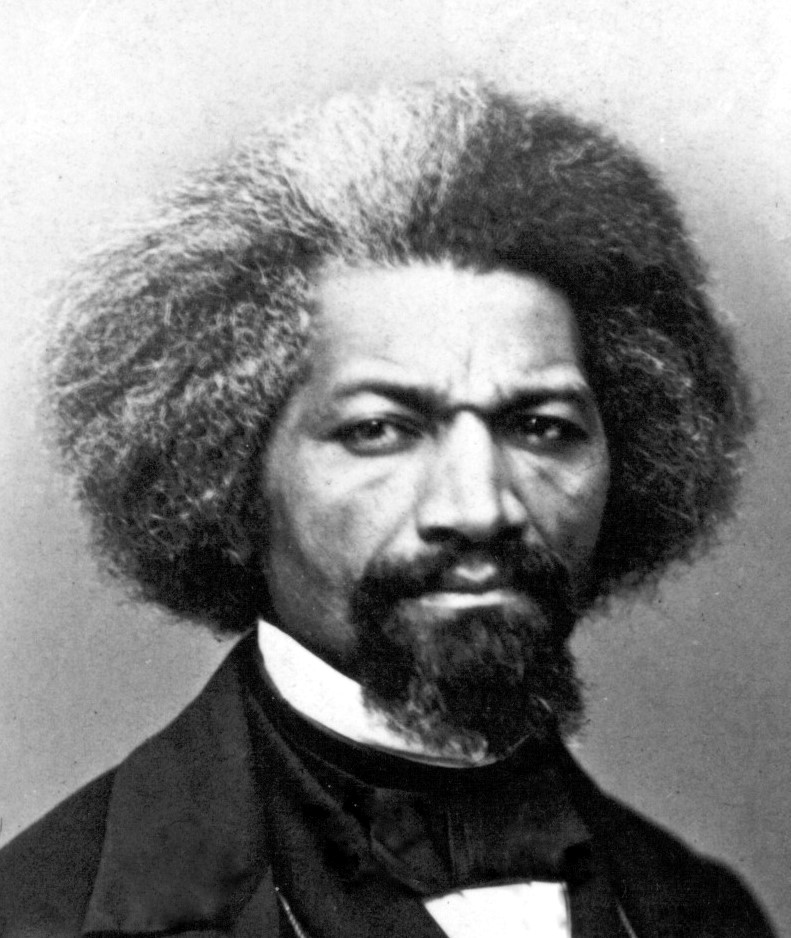
Born into slavery in what might have been 1818, Frederick Douglass eventually became an icon of the Abolitionist Movement.

Although it was illegal to teach slaves to read and write, Sophia Auld, the wife of Douglass’ owner Hugh, taught him the alphabet around the age of 12. When Hugh Auld heard of this he forbade the lessons, but Douglass had already tasted education and couldn’t get enough of it. He continued to learn from the White children around him and read whatever he could get his hands on. According to Biography

It was through reading that Douglass’ ideological opposition to slavery began to take shape. He read newspapers avidly, and sought out political writing and literature as much as possible. In later years, Douglass credited The Columbian Orator with clarifying and defining his views on human rights. Douglass shared his newfound knowledge with other enslaved people. Hired out to William Freeland, he taught other slaves on the plantation to read the New Testament at a weekly church service. Interest was so great that in any week, more than 40 slaves would attend lessons. Although Freeland did not interfere with the lessons, other local slave owners were less understanding. Armed with clubs and stones, they dispersed the congregation permanently.

After 2 unsuccessful attempts to escape, Frederick Douglass finally freed himself from the shackles of slavery on this date in 1838. After his escape he married Anna Murray, a Free Black Woman, and they lived for a while under the assumed name of Johnston, eventually settling back on Douglass as their married name.

Douglass subscribed to the anti-slavery weekly The Liberator, published by William Lloyd Garrison. He started to tell his story of life as a slave in Abolitionist meetings in New Bedford, Massachusetts, which had a large free Black population. Eventually Garrison wrote about Douglass and urged him to write his autobiography, Narrative of the Life of Frederick Douglass, an American Slave, which was published in 1845.

The book, translated and sold around the world, was a best seller. However, there was a downside to fame. Douglass had to escape once again, this time to Ireland, where he lectured for 2 years until his supporters could purchase his freedom.

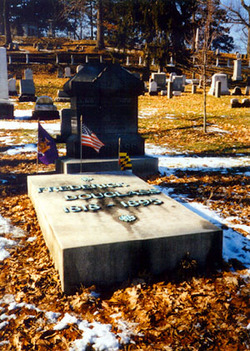
Douglass returned home and continued to fight for the end of slavery. He published several other books: My Bondage and My Freedom (1855) and Life and Times of Frederick Douglass (1881), which was revised 11 years later. He died of a heart attack or stroke in 1895 after being honoured at a meeting of the National Council of Women in Washington, D.C. Thousands attended his funeral. He is buried in Mount Hope Cemetery in Rochester, New York, where Susan B. Anthony is also buried.

The Trunk Lost In Transit ► A Pastoral Letter

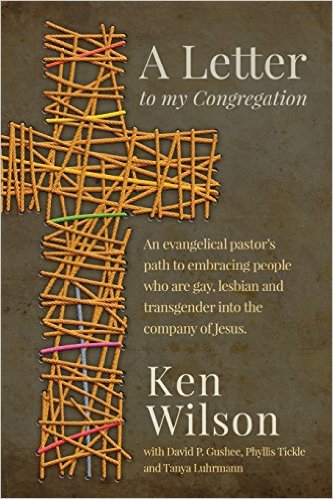
Pastor Ken Wilson wrote this book arguing for
full acceptance of LGBT folk into the church
and uses scripture to back up these arguments.

Dear Pastor Kenny: Long time, no see!

Seriously, it was great reconnecting with you at the tail end of the 3rd Annual Sunrise to Canton Road Trip for Research, as brief as our reunion was.

I was mighty disappointed when it looked as if we were not going to meet because of your vacation schedule. When I got your message that you’d be available after all, I dropped everything to high-tail it out to Ann Arbor to see you. Had I not already had something scheduled for the evening, I could have stayed and talked forever because there was still so much I wanted to know. Did you ever see that Saturday Night Live sketch “The Guest Who Would Not Leave”? I was already feeling as if I had overstayed my welcome because it was running into dinnertime and you had just got home from vacation.

I have a confession. [Do you take confession?] Because it didn’t look like we’d be getting together, I never finished reading your book. A bigger confession: I’ve been reading your book with the same critical eye and methodology with which I read James Rosen’s historical revisionist history of John Mitchell, Richard Nixon’s Attorney General. I filled The Strong Man with yellow Post It Notes and then eviscerated it in the Watergate exposé Did Roger Ailes Dupe James Rosen, Or Did Rosen Dupe ‘Merka?

The problem is that right up until the time we met I had been thinking of you as a research project. I used our reconnecting last year as a jumping off point for these Pastoral Letters, in which I am (selfishly) exploring and writing about my Atheism, which grew out of my Agnosticism, which grew out of a Reformed Jewish child. To that end, I’ve read dozens of reviews of your book, read up on The Third Way, and continue to follow the writings of your old church and your new church.

Random Ann Arbor pic

I have often said, “You can take the boy out of the newsroom, but you can’t take the newsroom out of the boy.” I was wrong. The journalist in me had a million and one questions for you, but the minute I saw your face, all that went out the window. It was Kenny, my oldest friend in the world!!! I was a little boy again, forgetting all about the Not Now Silly Newsroom. In fact, I was so caught up in just reconnecting that I forgot to take any pictures of you, even though I carried 3 cameras, took some pictures on our walk around Ann Arbor, and usually document every tedious moment of my life.

I am glad we got to talk about your getting kicked to the curb by your old church. I don’t know how much of that was said for publication, so I won’t. However, I find it a fascinating story on the type of changes churches need to make in order to survive into the next century.

Here’s what surprised me the most about our reunion: Maybe it’s because you’re a Pastor, or because I have been trying to reconnect to my past, or because you’re my oldest friend in the world, but I don’t know what prompted me to blurt out my deepest, darkest secret. I can’t believe I told you what I’ve shared with less than a half dozen people, 3 of them psychiatrists. The significance of the title of this post will be mysterious for everybody else.

Random Ann Arbor pic

One mystery cleared up, however. Remember how much I was sweating after our walk, even though it wasn’t that hot a day? As it turns out, that was the beginning of my uncommon cold, which I wrote about in Road Trips, Writer’s Block, and the Uncommon Cold ► Unpacking The Writer

I always feel like I’m behind on all my writing, but even more so with this post. You asked me to send you links to my writing that I felt were worth your time. Originally I thought I’d just shoot you an email. But, then I thought it might make a better Pastoral Letter. Then I kept putting it off as I had other things to write. Better late than never, eh? Not to brag, and only because you asked, here are a few of my posts I think are worth reading:

1). The Detroit Riots • 2). My Days With John Sinclair • 3). Where The Sidewalk Ends, Racism Begins • 4) Where The Sidewalk Ends, Racism Begins ► Chapter Two • 5). Where The Sidewalk Ends, Racism Begins ► Chapter Three • 6). When Whites Went Crazy In Tulsa • 7). Happy Birthday Coconut Grove!!! Now Honour Your Past • 8). Josephine Baker Born • 9). Is Marc D. Sarnoff Corrupt Or The Most Corrupt Miami Politician? • 10). The Day I Shook Hands With Glenn Beck • 11). The Day I Met Bob Marley • 12). Any & all of my Watergate stories • 13). A Tribute To Alan Turing ► The Man Who Saved The World • 14). A Musical Appreciation ► Cole Porter • and 15). More Proof the Palin Family Are Liars and Grifters, which is as fresh as today’s headlines.

Random Ann Arbor pic

And, of course, my Pastoral Letters, which are all addressed to you, whether you’ve read them or not.

I think I’ll leave it here, Ken. The Autumnal Equinox Drum Circle is coming up later this month, which is when I tend to think of Spirituality without a God. And, if you recall, Drum Circles are when I most often think of you. You’ll probably be hearing from me again near the end of the month.

Feel free to write back because I never know what you’re thinking.

Your childhood friend,
Marc Slootsky