Dateline October 10, 1917 – Thelonious Sphere Monk is born in Rocky Mount, North Carolina. When he was 4 years old his family would move to the “San Juan Hill” area of Manhattan. A year later he would start playing piano after listening to his sister’s music lessons. By the time of his death in 1982, he would be one of only 5 Jazz artists to appear on the cover of Time Magazine (the others being Louis Armstrong, Duke Ellington, Wynton Marsalis and Dave Brubeck). Today he’s generally considered The Father of Bebop music.
With the arrival Thelonious Sphere Monk, modern music — let alone modern culture — simply hasn’t been the same. Recognized as one of the most inventive pianists of any musical genre, Monk achieved a startlingly original sound that even his most devoted followers have been unable to successfully imitate. His musical vision was both ahead of its time and deeply rooted in tradition, spanning the entire history of the music from the “stride” masters of James P. Johnson and Willie “the Lion” Smith to the tonal freedom and kinetics of the “avant garde.” And he shares with Edward “Duke” Ellington the distinction of being one of the century’s greatest American composers. At the same time, his commitment to originality in all aspects of life — in fashion, in his creative use of language and economy of words, in his biting humor, even in the way he danced away from the piano — has led fans and detractors alike to call him “eccentric,” “mad” or even “taciturn.” Consequently, Monk has become perhaps the most talked about and least understood artist in the history of jazz.
The WikiWackyWoo says, “Monk is the second-most recorded jazz composer after Duke Ellington, which is particularly remarkable as Ellington composed over 1,000 songs while Monk wrote about 70.“
It wasn’t just his own compositions. When Monk covered another artists’ song, he had a way of turning it inside out and creating his lovely dissonance, where it none had before.
Clint Eastwood, when he’s not berating empty chairs, is a great aficionado of Jazz. He produced this 1988 documentary, directed by Charlotte Zwerin that can say far more than I can:
If that has whetted your appetite, here’s a Thelonious Monk Jukebox I put together:
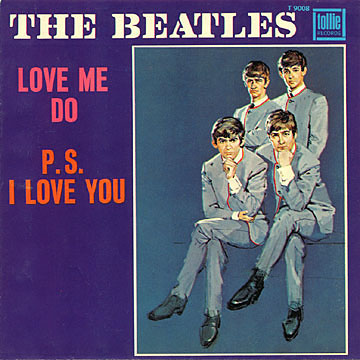
Dateline October 5, 1962 – The Beatles first single “Love Me Do” is released. The rest, as they say, is history.
The Beatles had been signed to EMI Records earlier in the year. In June they recorded “Love Me Do” with original drummer Pete Best at a demo test. By the time they returned to the studio in September for their first official recording session Pete Best had been fired, replaced by Ringo Starr. Producer George Martin had been less than impressed with Best’s drumming in June and told Brian Epstein he’d be using a session drummer for their upcoming recording session. That’s all John Lennon and Paul McCartney needed to hear. Aside from being a mediocre drummer, Best wasn’t the greatest fit personality-wise either. Lennon and McCartney tapped Ringo, who was in Rory Storm and the Hurricanes. Ringo had actually sat in with them during their Hamburg days. Also from Liverpool, they knew Ringo would fit right in.
When The Beatles returned to EMI to record on September 4th, it was with Ringo on drums. However, George Martin was unhappy with his meter and the song was re-recorded a week later with session drummer Andy White on the skins and Ringo Starr relegated to tambourine. That’s why there are two different versions of “Love Me Do.” The originally released single was the Ringo Starr version, while the Andy White recording is the one on The Beatles first LP “Please, Please Me.” The Pete Best version, which for the longest time had been thought lost, was including on the Anthology 1 box set.
This version is clearly the Andy White version, as there was no tambourine on the Ringo Starr version.
I also found two covers of “Love Me Do:” that are a lot of fun. One is by a string quartet and the other is a terrific Tex-Mex version by Flaco Jimenez.
It hardly seems like half a century has passed, but in the last 50 years our lives have been enriched non-stop by the music of The Beatles.
Before Mike Love stabbed his cousins in the back and fired Brian Wilson and Al Jardine from The Beach Boys, it was gratifying for this long-time fan to know they were back on the road making music. On the same day I read that Mike Love fired his band mates of 50 years, I discovered this wonderful tribute to Brian Wilson. I not only loved the song, but dug the whole video production, which touches upon some of the highlights and lowlights of Brian Wilson’s life.
This video made me curious. Knowing absolutely nothing about Rich Aucoin, I used Der Googalizer. The WikiWackyWoo wasn’t much help, although it told me that this was a good Canadian boy from Nova Scotia. It also informed me:
[H]e also recorded material across Canada with a wide variety of musicians, friends and fans for what would become his debut full-length album, 2011’s We’re All Dying to Live; in total, the album features over 500 guest musicians, including Jay Ferguson of Sloan, Becky Ninkovic of You Say Party and Rae Spoon. The album’s release party, held at the 2011 Halifax Pop Explosion festival, featured over 80 musicians onstage.
Even his Official Web Site had very little actual information, but it did open up a treasure trove of videos. The music and the videos will just have to do the talking for Rich Aucoin.
And, if you have your anaglyph 3D glasses, you’ll get the most out of this video:
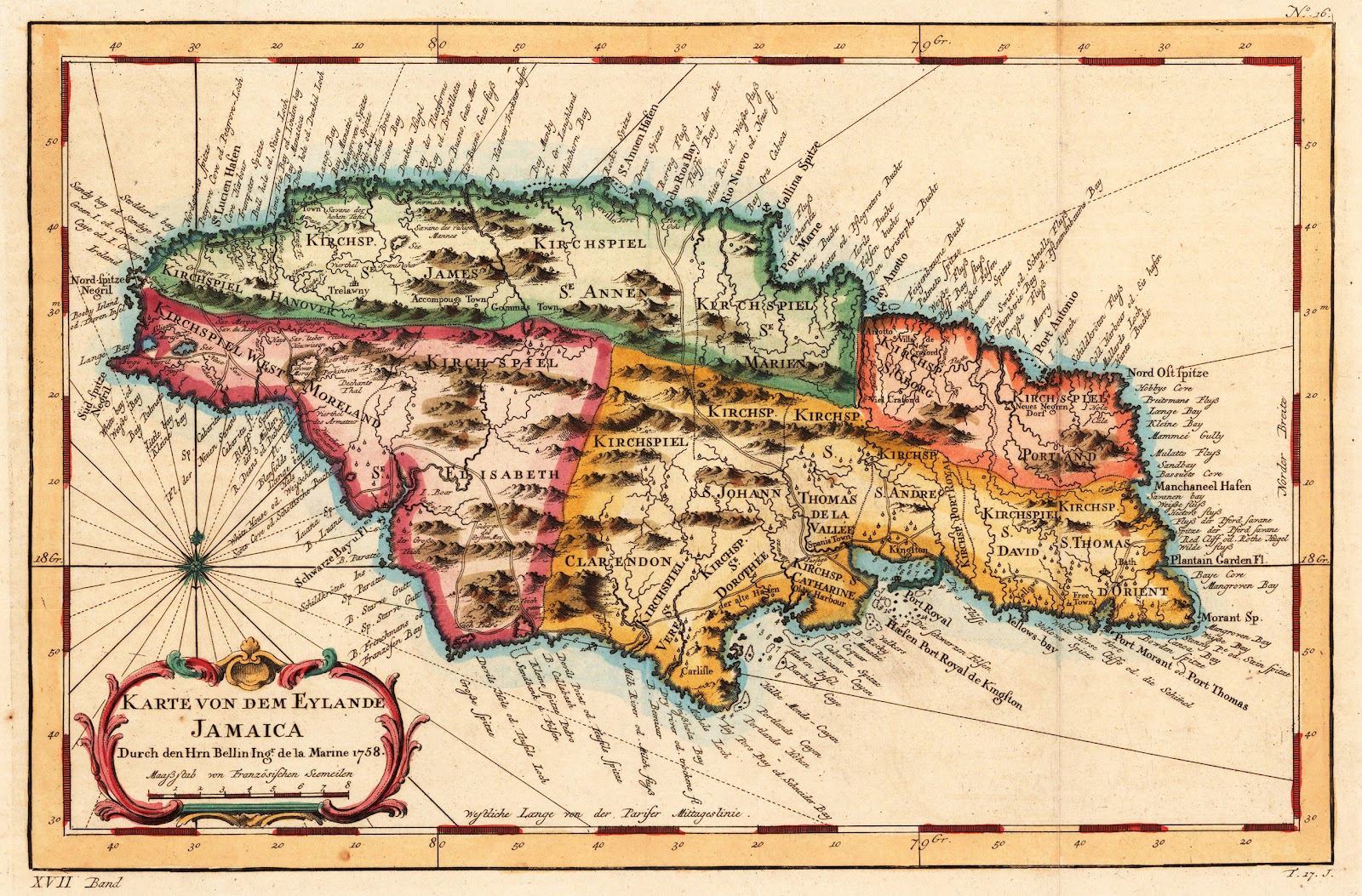
Let’s face facts: Jamaica is probably the closest Christopher Columbus ever came to what was later called the United States of ‘Merka, the country he is alleged to have ‘discovered.’ And, when he landed in Jamaica in 1494, there were already people there. The Arawak and Taino peoples, who had originated in South America, had been on the island by as much as 2,500 – 5,000 years by then. By the time of Columbus’ arrival there were over 200 villages, but he claimed the island in the name of Spain anyway. The British, led by the same William Penn who founded the ‘Merkin province of Pennsylvania, forced the Spanish out in 1655, with slavery and sugar becoming the main exports, until the British abolished slavery in 1807. Then it was just sugar. Still needing a workforce, they imported Indian and Chinese workers as indentured servants. This is one of the reasons Jamaican population is such a multicultural mix and reflects its national motto: “Out of many, one people.” It’s also why so many Jamaican dishes use curry and other hot spices.
Skipping ahead a hundred and fifty years: On this date in 1962, after 4 years of being a province in the Federation of the West Indies, gained full independence and adopted its national anthem.
However, it’s not the music of the National Anthem that has spread Jamaica’s reputation around the world: It’s Reggae music. According to the WikiWackyWoo:
I had the pleasure of working for Island Records Canada when it was still an independent company run by Chris Blackwell. Blackwell is one of my heroes. He didn’t create Reggae, but he took it global starting with Millie Small. Blackwell discovered the 15-year old singer and produced her single “My Boy Lollipop,” which sold over 7 million records worldwide. Then he signed Bob Marley and many other Reggae artists; launching many careers (and not just Reggae artists) onto the international stage. I met Blackwell once, on the same day I met Bob Marley, yet they were not together, nor were they even in the same country. It’s a long, complicated story that I keep promising to write and, maybe, one day I will.
I was also honoured to be interviewed for my (very small) part in “How Jamaica Conquered the World,” a terrific series of podcasts which documents Jamaica’s outsized influence, when compared to the small footprint of the small island nation of just 4,244 square miles, smaller than Connecticut, the 48th largest state.
However, let’s face it: It’s the music and ganja for which Jamaica is known. Since I can’t push any ganja through my computer, I am reduced to just sharing a small sampling of the music. Here’s a Jamaican Jukebox so you can celebrate along with Jamaicans all around the world as they proudly wave the flag on their half-century anniversary.
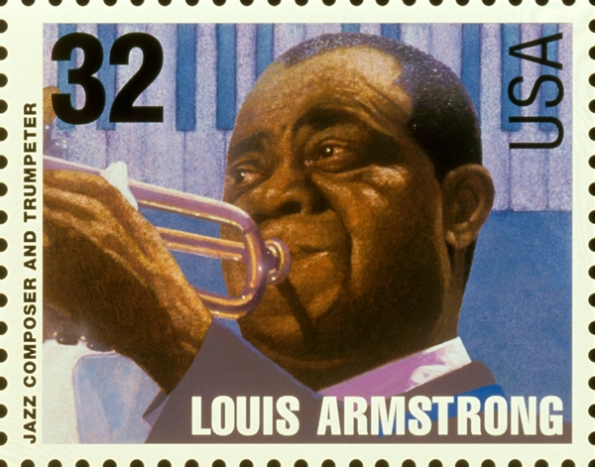
Dateline August 4, 1901 – A Black boy is born into a world of extreme poverty and Jim Crow laws in New Orleans, Louisiana. By the time Louis Armstrongdied in 1971, in Queens, New York, he was one of the most recognizable musicians on the planet. Along the way he entertained millions and became one of the greatest performers in all of Jazz. However, that’s just the tip of the iceberg.
While I’ve been a fan of Louis Armstrong for many years, I became a huge fan all over again by what Jazz historian Gary Giddins said in Ken Burns’ (amazing multi-part) Jazz documentary. Giddins was asked whether Armstrong was a genius. Giddins replied (paraphrasing), “We tend to throw the word ‘genius’ around. However, if by ‘genius’ you mean that after him nothing was ever the same again, then by that measure Louis Armstrong was a genius.”
“You can’t play anything on a horn that Louis hasn’t played” ~~~~~Miles Davis
“What was the greatest band of the 20th century? Forget the Beatles – it was Louis Armstrong’s Hot Five and its subsequent incarnation, the Hot Seven… these bands altered the course of popular music.” ~~~~~Playboy magazine
There are two things that have always impressed me about Louis Armstrong and neither have to do with his music.
Armstrong being fitted by Toronto’s world famous hatter Sam Taft
1). In the mid-’40s, when he was just starting to make some really good money, he bought a house on 107th Street in Corona, Queens, NYC. He lived there the rest of his life, long after he could have afforded to move to better and more expensive digs. When he wasn’t touring he was known for sitting on his porch and greeting the neighbourhood kids, who all called him Pops, and giving them apples and unconditional love. That house was made a National Historical Landmark in 1977 and is now the Louis Armstrong House and Museum.
2). During his lifetime Armstrong was criticized for being an Uncle Tom for playing to segregated audiences, accepting the title “King of the Zulus” in the 1949 Mardi Gras parade, and not doing more for ‘his people.’ Billie Holliday was even quoted as saying, “Of course Pops toms, but he toms from the heart.” Aside from the fact that being named King of the Zulus was a singular New Orleans honour misunderstood elsehwre in the country, when Louis Armstrong made his views on race relations known, the entire world listened.
In 1957, during the desegregation controversy in Little Rock, Arkansas, Arstrong sppoke out loud and clear. He called President Eisenhower “gutless” and “two-faced” for sitting on his hands and doing nothing. And, to put his money where his mouth was, Armstrong cancelled a tour of the Soviet Union he was about to do on behalf of the State Department. Uncle Tom would never have said, “The way they’re treating my people in the South, the government can go to hell.”
“Louis Armstrong is the master of the jazz solo. He became the beacon, the light in the tower, that helped the rest of us navigate the tricky waters of jazz improvisation.” ~~~~~Ellis Marsalis
Louis Armstrong also helped change Jazz singing. He wasn’t the first to Scat, but he helped popularize the genre with his joyful Scat singing, which was as revolutionary as is trumpet playing.
As for honous:
When his version of “Hello Dolly” knocked The Beatles off the top of the charts in 1964, he became the oldest person to have a #1 hit on the Billboard charts;
Also on his centenery the United States Postal Service put Armstrong on a First Class stamp;
He was given a postumous Lifetime Grammy Award in 1972;
Eleven of his songs have been inducted into the Grammy Hall of Fame;
President Richard Nixon released a statement upon Armstrong’s death calling him Mr. Jazz.
“I’m proud to acknowledge my debt to the ‘Reverend Satchelmouth’ … He is the beginning and the end of music in America” ~~~~~Bing Crosby
However, it’s always been about the music. Louis Armstrong recorded hundreds, maybe thousands, of sides in his lifetime. Here is just a small sample of what made Louis Armstrong one of the greatest musicians ever.
“If you don’t like Louis Armstrong, you don’t know how to love” ~~~~~Mahalia Jackson
Desmond Dekker, who passed away just 6 years ago, had the prettiest voice in all of Reggae music. On what would have been his 71st birthday, let’s take a moment to honour one of the pioneers of Reggae music. Everyone knows his most famous song, Israelites, his only U.S. hit. Watch him lip sync it in the late ’60s:
However, there are far more songs in the Desmond Dekker canon that you might not even know you know and, even if you don’t know them, you should. For your continued Reggae education, I present a Desmond Dekker Jukebox.
If ‘Merka ever had a national troubadour, it would have been Woody Guthrie. Among his legacy of hundreds — some say thousands — of songs include “This Land Is Your Land,” considered by many to be an alternate ‘Merkin National Anthem. However, he also wrote “Roll On, Columbia, Roll On,” considered the Folk song of the state of Washington.
Those who cite Woody Guthrie as an influence include every Folk singer who ever plucked a string, along with a whole raft of Rockers. Consequently, anyone citing those musicians are just further links in the chain that start with Woody, considered one of ‘Merka’s first singer-songwriters.
In the early ’30s Guthrie joined the Dust Bowl migration to California, where he first became known singing Hillbilly music. It was here he first met Socialists and began his political journey farther and farther to the left. After leaving California he rarely stopped moving. Wandering troubadours go back to ancient times, but few traveled as
extensively as Guthrie. At one time he bragged to have been in 45 of the
(then) 48 states.
The late 1940’s and early 1950’s saw a rise in anti-Communist sentiments. Leftist and progressive-minded Americans were subjected to Red-scare tactics such as “blacklisting.” Many people, particularly in the arts and entertainment fields, either lost their jobs or were prevented from working in their chosen careers. The Weavers, along with Woody, Pete Seger, and others from their circle, were targeted for their activist stances on such issues as the right to unionize, equal rights, and free speech.
Isn’t it telling that leftists and progressives are still fighting the same battles? Woody Guthrie believed in the power of music to transform (as do I). And that’s why on his guitar was the slogan THIS MACHINE KILLS FASCISTS.
However, AS ALWAYS, it’s the music that endures. Here’s a Woody Guthrie Jukebox:
He was a member of The Boomtown Rats, an Irish Punk band from the late ’70s. At the time no one could have predicted that Bob Geldolf, writer of everyone’s favourite work anthem “I Don’t Like Mondays,” would be elevated to a Knight Commander of the Most Excellent Order of the British Empire (KBE) for his charity work on Live Aid, the biggest fundraising Rock Concert ever mounted. It took place on two continents at two separate venues, Wembley and JFK stadiums in London and Phildelphia respectively. The simultaneous concerts were broadcast around the world and, in the final accounting, raised an estimated £150,000,000 for famine relief 27 years ago today.
However, it was the music that kept people in front of their tee vee sets. Here are just a few of the performances. [Full list of performers at below]
The Coldstream Guards set the tone for the day with the Royal Salute and God Save The Queen. Speaking of Queen; their performance is considered one of the best of the day and one of the best live performances of their career. Freddie Mercury was at the top of his game, belting out all the high notes. Here is their full performance:
Although they were never billed as such that day, here was the much anticipated reunion of Led Zeppelin, performing their biggest hit:
The Material Girl had a set:
As did Paul McCartney, whose opening was marred by a faulty microphone when he was brought out as the show closer:
David Bowie turned in an electrifying performance of Heroes:
Phil Collins performed “In The Air Tonight” in Philadelphia after a set in London earlier in the day. He’s the only artist to appear at both concerts.
This came after a hurried Concorde flight from London, where he accompanied Sting on such songs as Roxanne and Every Breath You Take:
Sting also performed with Dire Straits, recreating his performance from the Money For Nothing.
Guitar God Eric Clapton blasted out a searing Layla (with Phil Collins, who seemed to be everywhere that day, on drums):
The concerts lasted 16 hours but, with sets occurring at both venues simultaneously, the actual running time of the music was much longer. Here is the rundown for both venues with the songs performed (as listed on the WikiWackyWoo):
Wembley
Coldstream Guards – “Royal Salute”, “God Save The Queen” (W 12:00);
Status Quo – “Rockin’ All Over the World”, “Caroline”, “Don’t Waste My Time” (W 12:02);
The Style Council – “You’re the Best Thing”, “Big Boss Groove”, “Internationalists”, “Walls Come Tumbling Down” (W 12:19);
The Boomtown Rats – “I Don’t Like Mondays”, “Drag Me Down”, “Rat Trap”, “For He’s A Jolly Good Fellow” (sung by the audience) (W 12:44);
Adam Ant – “Vive Le Rock” (W 13:00);
Ultravox – “Reap The Wild Wind”, “Dancing with Tears in My Eyes”, “One Small Day”, “Vienna” (W 13:16);
Spandau Ballet – “Only When You Leave”, “Virgin”, “True” (W 13:47);
Elvis Costello – “All You Need Is Love” (W 14:07);
Nik Kershaw – “Wide Boy”, “Don Quixote”, “The Riddle”, “Wouldn’t It Be Good” (W 14:22);
Sade – “Why Can’t We Live Together”, “Your Love Is King”, “Is It A Crime” (W 14:55);
Sting and Phil Collins (with Branford Marsalis) – “Roxanne”, “Driven To Tears”, “Against All Odds (Take A Look At Me Now)”, “Message In A Bottle”, “In the Air Tonight”, “Long Long Way To Go”, “Every Breath You Take” (W 15:18);
Howard Jones – “Hide And Seek” (W 15:50)
Bryan Ferry (with Pink Floyd’s David Gilmour on guitar) – “Sensation”, “Boys And Girls”, “Slave To Love”, “Jealous Guy” (W 16:07);
Paul Young – “Do They Know It’s Christmas?” (intro), “Come Back and Stay”, “That’s The Way Love Is” (with Alison Moyet), “Every Time You Go Away” (W 16:38);
U2 (introduced by Jack Nicholson)– “Sunday Bloody Sunday”, “Bad” (with snippets of “Satellite Of Love”, “Ruby Tuesday”, “Sympathy For The Devil” and “Walk On The Wild Side”) (W 17:20);
Dire Straits – “Money for Nothing” (with Sting), “Sultans Of Swing” (W 18:00);
Queen (introduced by comedians Mel Smith and Griff Rhys Jones) – “Bohemian Rhapsody”/”Radio Ga-Ga”, “Hammer to Fall”, “Crazy Little Thing Called Love”, “We Will Rock You”/”We Are the Champions” (W 18:44);
David Bowie (with Thomas Dolby on keyboards) – “TVC 15”, “Rebel Rebel”, “Modern Love”, “Heroes” (W 19:22);
The Who (introduced by Jack Nicholson) – “My Generation”/”Pinball Wizard”, “Love, Reign O’er Me”, “Won’t Get Fooled Again” (W 20:00);
Elton John (introduced by Billy Connolly) – “I’m Still Standing”, “Bennie and the Jets”, “Rocket Man”, “Don’t Go Breaking My Heart” (with Kiki Dee), “Don’t Let the Sun Go Down on Me” (with George Michael and backing vocals by Andrew Ridgeley), “Can I Get a Witness” (W 20:50);
Finale at Wembley Stadium:
a) Freddie Mercury and Brian May (Queen) – “Is This The World We Created?” (W 21:48),
b) Paul McCartney – “Let It Be” (W 21:51),
c) Band Aid (led by Bob Geldof) – “Do They Know It’s Christmas?” (W 21:54);
JFK Stadium
Bernard Watson – “All I Really Want to Do”, “Interview” (JFK 13:51);
Joan Baez (introduced by Jack Nicholson) – “Amazing Grace”/”We Are the World” (JFK 14:02);
The Hooters – “And We Danced”, “All You Zombies” (JFK 14:12);
Four Tops – “Shake Me, Wake Me (When It’s Over)”, “Bernadette”, “It’s The Same Old Song”, “Reach Out I’ll Be There”, “I Can’t Help Myself (Sugar Pie, Honey Bunch)” (JFK 14:33);
Billy Ocean – “Caribbean Queen”, “Loverboy” (JFK 14:45);
Black Sabbath (introduced by Chevy Chase) – “Children of the Grave”, “Iron Man”, “Paranoid” (JFK 14:52);
Run–D.M.C. – “Jam Master Jay”, “King Of Rock” (JFK 15:12);
Rick Springfield – “Love Somebody”, “State of the Heart”, “Human Touch” (JFK 15:30);
REO Speedwagon – “Can’t Fight This Feeling”, “Roll With The Changes” (JFK 15:47);
Crosby, Stills and Nash – “Southern Cross”, “Teach Your Children”, “Suite: Judy Blue Eyes” (JFK 16:15);
Judas Priest – “Living After Midnight”, “The Green Manalishi (With The Two-Pronged Crown)”, “You’ve Got Another Thing Comin'” (JFK 16:26);
Bryan Adams (introduced by Jack Nicholson) – “Kids Wanna Rock”, “Summer Of ’69”, “Tears Are Not Enough”, “Cuts Like a Knife” (JFK 17:02);
The Beach Boys (introduced by Marilyn McCoo) – “California Girls”, “Help Me, Rhonda”, “Wouldn’t It Be Nice”, “Good Vibrations”, “Surfin’ USA” (JFK 17:40);
George Thorogood and the Destroyers – “Who Do You Love” (with Bo Diddley), “The Sky Is Crying”, “Madison Blues” (with Albert Collins) (JFK 18:26);
Simple Minds – “Ghost Dancing”, “Don’t You (Forget About Me)”, “Promised You A Miracle” (JFK 19:07);
The Pretenders – “Time The Avenger”, “Message Of Love”, “Stop Your Sobbing”, “Back On The Chain Gang”, “Middle of the Road” (JFK 19:41);
Santana and Pat Metheny – “Brotherhood”, “Primera Invasion”, “Open Invitation”, “By The Pool”/”Right Now” (JFK 20:21);
Ashford & Simpson – “Solid”, “Reach Out and Touch (Somebody’s Hand)” (with Teddy Pendergrass) (JFK 20:57);
Madonna (introduced by Bette Midler) – “Holiday”, “Into The Groove”, “Love Makes The World Go Round” (JFK 21:27);
Tom Petty and the Heartbreakers (introduced by Don Johnson) – “American Girl”, “The Waiting”, “Rebels”, “Refugee” (JFK 22:14);
Kenny Loggins – “Footloose” (JFK 22:30);
The Cars – “You Might Think”, “Drive”, “Just What I Needed”, “Heartbeat City” (JFK 22:49);
Neil Young – “Sugar Mountain”, “The Needle and the Damage Done”, “Helpless”, “Nothing Is Perfect (In God’s Perfect Plan)”, “Powderfinger” (JFK 23:07);
Power Station – “Murderess”, “Get It On” (JFK 23:43);
Thompson Twins – “Hold Me Now”, “Revolution” (with Madonna, Steve Stevens and Nile Rodgers) (JFK 00:21);
Eric Clapton (with Phil Collins) – “White Room”, “She’s Waiting”, “Layla” (JFK 00:39);
Phil Collins (having flown Concorde from UK to US) – “Against All Odds (Take A Look At Me Now)”, “In The Air Tonight” (JFK 01:04);
Led Zeppelin Reunion – (with Jimmy Page, Robert Plant, John Paul Jones, Tony Thompson, Paul Martinez, and Phil Collins) – “Rock and Roll”, “Whole Lotta Love”, “Stairway To Heaven” (JFK 01:10);
Crosby, Stills, Nash & Young – “Only Love Can Break Your Heart”, “Daylight Again/Find The Cost of Freedom” (JFK 01:40);
Duran Duran – “A View to a Kill”, “Union Of The Snake”, “Save A Prayer”, “The Reflex” (JFK 01:45);
Patti LaBelle – “New Attitude”, “Imagine”, “Forever Young”, “Stir It Up”, “Over The Rainbow”, “Why Can’t I Get It Over” (JFK 02:20);
Hall & Oates – “Out Of Touch”, “Maneater”, “Get Ready” (with Eddie Kendricks), “Ain’t Too Proud To Beg” (with David Ruffin), “The Way You Do The Things You Do”, “My Girl” (with Eddie Kendricks and David Ruffin) (JFK 02:50);
Mick Jagger (with Hall & Oates / Eddie Kendricks / David Ruffin) – “Lonely At The Top”, “Just Another Night”, “Miss You”, “State Of Shock”/”It’s Only Rock ‘n Roll (But I Like It) (reprise)” (with Tina Turner) (JFK 03:15);
Finale at JFK Stadium:
a) Bob Dylan, Keith Richards and Ronnie Wood – “Ballad of Hollis Brown”, “When the Ship Comes In”, Blowin’ In The Wind” (JFK 03:39),
b) USA for Africa (led by Lionel Richie) – “We Are the World” (JFK 3:55)
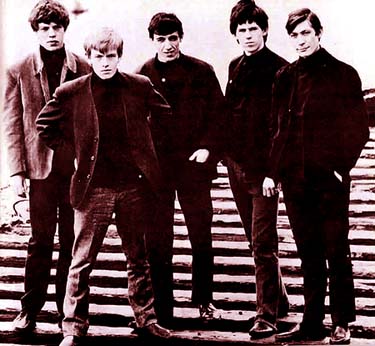
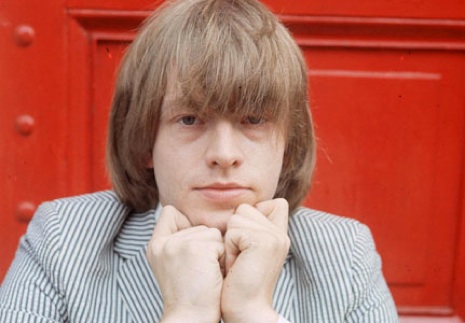
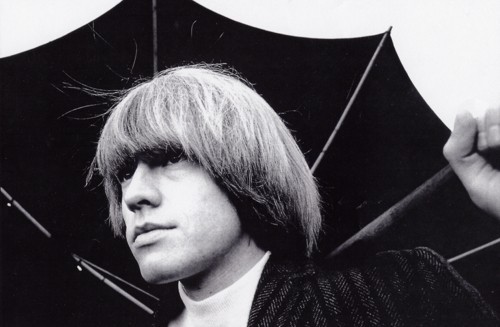
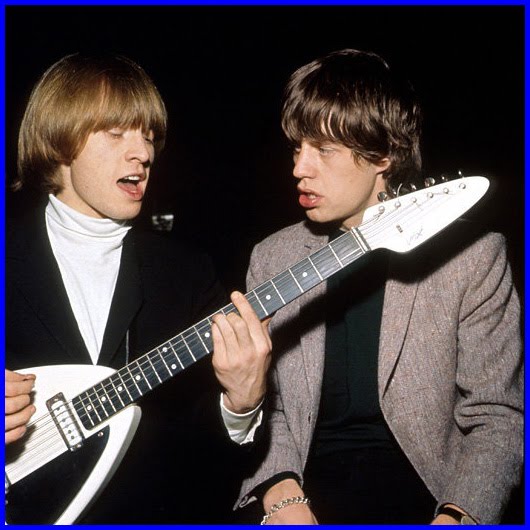
Let’s face facts: The Rolling Stones was his band. After hanging around London in the early ’60s with musicians like Alexis Korner, JackBruce, and Paul Jones, Brian Jones decided to start his own band. He placed an advert in “Jazz News” looking for other musicians who could play the music of his ‘Merkin Blues heroes. First Ian Stuart, then Mick Jagger joined. Jagger brought along Keith Richards and the core of the group was established. Brian Jones named the group after a Muddy Water’s song “Rollin’ Stones Blues” and the rest is history and millions of records sold.
It’s been 43 years, but we still miss him. Stone aficionados TO THIS DAY still argue whether the group was better before or after Brian Jones was fired.
Rest in peace, Brian.
Here is a Brian Jones Jukebox to honour the young boy who so thought ‘Merkin Blues the greatest thing in the world that he created his own band to play it. The little Blues band he built to play the music in his head became the greatest Rock and Roll group in the world: The Rolling Stones. Now, that’s a legacy!!!