Tag Archives: Musical Appreciation

A Musical Appreciation ► Rompin’ Ronnie Hawkins

DATELINE January 10, 1935 – Ronald “Rompin’ Ronnie” Hawkins is born in Huntsville, Arkansas, just two days after Elvis Presley is born in Tupelo, Mississippi. Both carved out quite a niche in Rock and Roll, but Elvis’ story is better known. That’s a shame.

Ronnie Hawkins started his first band when he was studying Phys Ed at the University of Arkansas. Called The Hawks, it toured throughout several southern states. On the advice of Conway Twitty, who was one of the up and coming Rock and Rollers who played at a club Hawkins owned in Fayetteville, he began playing in Canada in 1958. The first place he played in Canada was the last place I lived in Canada: Hamilton, Ontario. Apparently he was a huge hit at the Golden Rail, near the corner of King and John Streets. It was this initial success that prompted Hawkins to move to Canada.

The Hawks were less thrilled with Canada and they all quit and went back to ‘Merka, except for Levon Helm, the good ol’ boy drummer. Ronnie Hawkins was forced to recruit a new set of Hawks. He found some good ol’ Ontario boys in Robbie Robertson, Rick Danko, Richard Manuel and Garth Hudson. This version of The Hawks was rehearsed within an inch of their lives by Hawkins, a notorious perfectionist. When, some 5 or 6 years later, this tight group of Hawks up and quit on Hawkins, they changed their name to The Band and worked with some barely known folk singer named Bob Dylan in a barely known town in upper New York named Woodstock.

This is why, in homage to their early mentor, Ronnie Hawkins appeared at The Last Waltz.


When the band called The Hawks quit to become The Band, Hawkins hired a new band, which he called “And Many Others.” When, some 4 years later, Hawkins fired “And Many Others” they took the name Crowbar. This was also in homage to Hawkins who told them as he sacked them, “You guys are so crazy, you could fuck up a crowbar in 3 seconds.”

Crowbar became one of Canada’s best-known bands, who had a huge hit in 1971 with “Oh, What A Feeling.”

John Lennon & friends bundled against the Canadian cold

I wasn’t as lucky as John Lennon, who hung out at Ronnie’s farm signing his Bag One lithographs while planning a peace festival. However, I was still fortunate enough to meet Ronnie Hawkins twice. Both times he had me laughing so hysterically, my sides hurt.

The first was soon after he appeared as a special guest vocalist on a spoken word LP by Xaviera Hollander, still in the flush of success following the publication of The Happy Hooker: My Own Story. Hawkins was helping her promote the GRT release and appeared on my show at Radio Sheridan, the college campus station. During the interview he swore more than I had ever heard anyone swear before, telling one obscene joke after another.

This was only a week after Xaviera Hollander simulated giving me fellatio under the table during her interview about the LP. As Station Manager I was called on the carpet for the “inappropriate” content of the Hollander interview. Now Ronnie Hawkins had me in stitches and he was being far more obscene than Xaviera had been. As I doubled over in side-splitting laughter, I couldn’t help but think the administration was going to revoke our license to operate. Luckily nothing happened. Either the admin didn’t get wind of it, or John Bromley decided we were a lost cause.

The next time I ran into Ronnie Hawkins was more than 15 years later. I was working at Citytv by then and heard a loud voice coming from a room that was normally locked and used for storage. I peeked inside and Ronnie Hawkins was pacing the room all by himself, rehearsing some words that he was expected to tape for MUCHMusic, which was broadcast out of the same building. He noticed me in the doorway and stopped, so I reintroduced myself to him and reminded him of the interview and how much I feared being called up in front of the administration for it, but it would have been worth it.

While not acknowledging whether he remembered me or not, he started off on a series of obscene one-liners that didn’t stop until he was fetched 15 minutes later for his close-up.

There are two stories I’ve heard about Ronnie Hawkins and I pray to the Flying Spaghetti Monster neither of them are apocryphal:

After Ronnie Hawkins had his first brush with fame, he decided he deserved a Rolls Royce. He went to the Rolls Royce dealer on Bay Street in Toronto looking like a Hippie and the saleman treated him like something that had stuck to the bottom of his shoe. He wouldn’t even let Hawkins have a test drive. Imagine that! Hawkins left and came back a short time later. He slapped — in cash — the asking price of a Rolls Royce on the hood of one and drove it out of the showroom.

The second story is from when Hawkins was hiring the [not yet] The Band to be The [replacement] Hawks. As incentive he apparently said, “Sign up with me boys and you’ll get more pussy than Frank Sinatra.”

Happy Birthday, Ronnie Hawkins!!!

Here’s a Ronnie Hawkins documentary for those who want to know more:
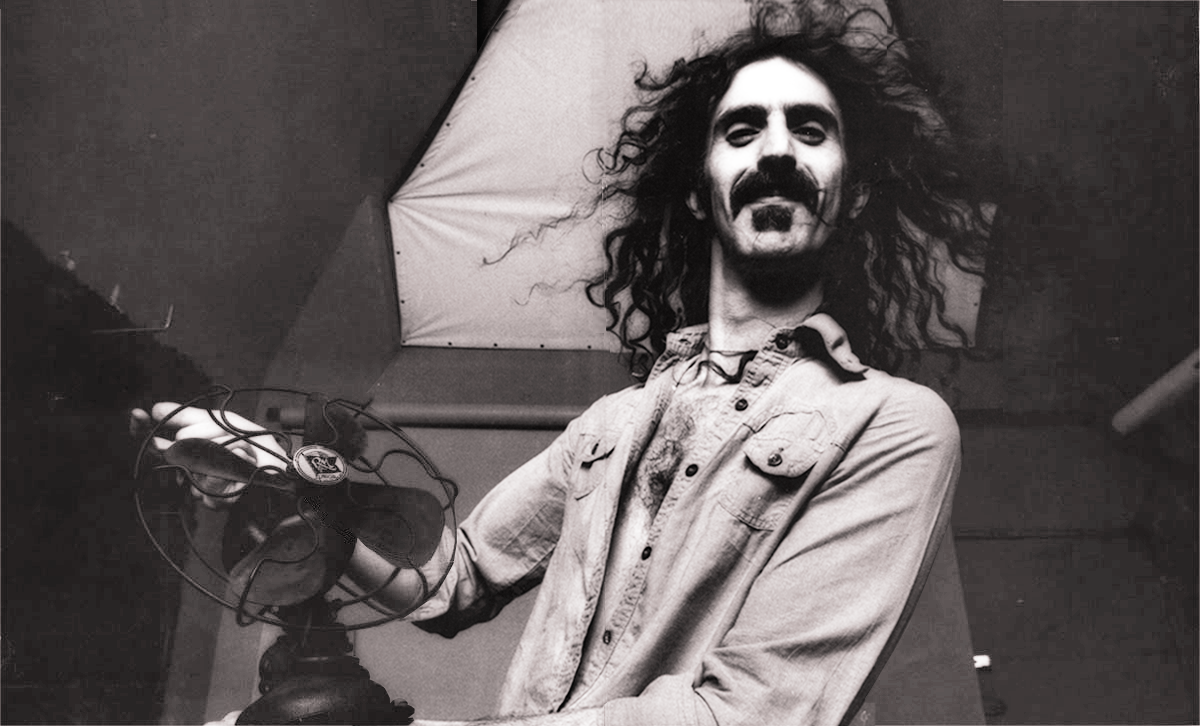
Frank Zappa ► A Musical Appreciation

Dateline December 4 – On this day in 1971 Frank Zappa and the Mothers of Invention were on stage in Montreax, Switzerland when the casino caught fire. The night was immortalized in Deep Purple’s song “Smoke on the Water.” On the same date 22 years later Frank Zappa died of prostate cancer.

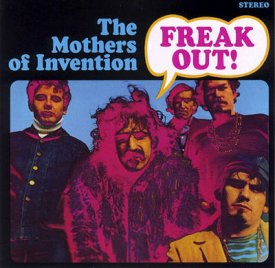
The ugliest LP cover I had ever seen.
I had to own it.

Not to brag, but I was there from the beginning. I discovered Frank Zappa some time in 1966 when I first set eyes on the cover of Freak Out at my local Kresge’s record department. As one descended on the escalator into the basement, a gap opened in the wall revealing Kresge’s 2-rack record department. The farther one descended, more of the record department was revealed in the expanding triangle of the record department. As teens we’d crane our heads into that crack to see what was new each week.

One day in 1966 my eyes spied what was the ugliest record cover I had ever seen. I had to own it.

It was a double-record set in a gatefold cover, among the first for a Rock and Roll LP. The music was also a revelation. One LP was all Doo Wop, but done in a slightly demented style, as opposed to straight up. The other LP contained longer songs and musical collages that were NOTHING like demented Doo Wop, but were demented all the same. I became an instant fan and followed Frank Zappa’s career, like a lemming follows whatever a lemming follows, ever since.

When I signed up I didn’t realize that by the time it was over I’d have collected some 90 albums, many of them double and triple sets, making Frank Zappa one of the most prolific artists/composers/Rock musicians of the 20th Century. However, I wasn’t a fan because he was prolific. I was a fan because he made great music. Here’s just a small taste of what Frank Zappa composed and released. Enjoy.

Musical Appreciation ► Thomas Edison Unveils First Phonograph

Edison with the 2nd model
of his phonograph in 1878

He invented the stock ticker, a mechanical voting machine, batteries for electric cars, motion pictures, not to mention the electric light bulb and electric power distribution. However, nothing Thomas Alva Edison invented has brought more pleasure to more people than the phonograph.

Edison demonstrated his first phonograph, a word he also invented, on this day in 1877. Edison was not trying to invent a phonograph when he came upon the inspiration. He was trying to improve the high technology of his day, the telegraph transmitter. However, he noticed that when the paper tape was moved through the transmitter at high speed, it sounded a bit like human speech. This led him to begin experimenting with a hard needle to etch sound waves into a rotating cylinder covered with a thick tin foil. Voila! An invention is born.

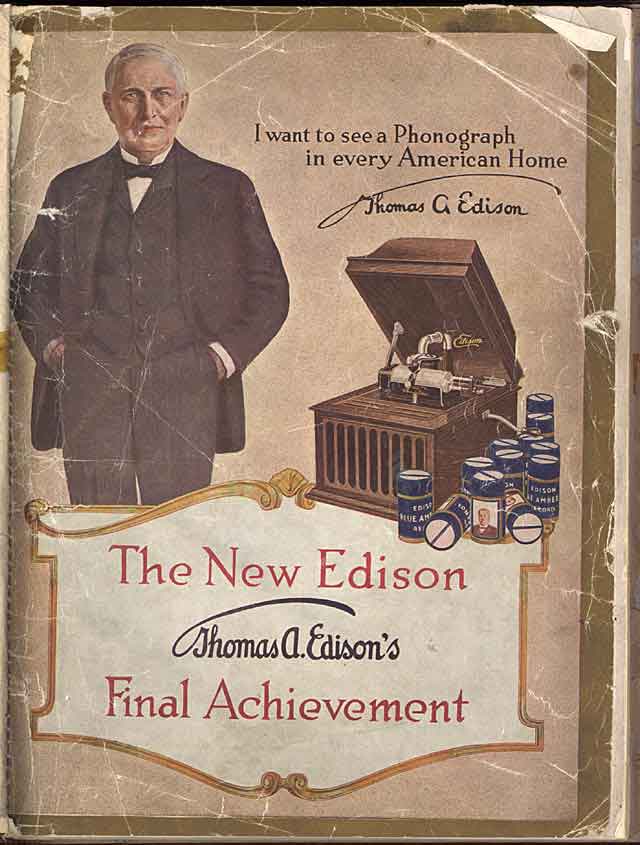
An advertisement for Edison’s phonograph

Eventually the tin foil gave way to wax cylinders, which eventually gave way to the gramophone, on which 10″ platters spun at 78 revolutions per minute, then at 45 RPM, and finally at 33 & 1/3 RPM. All of these forms of sound recreation were just variations of Edison’s original invention in which sound waves moved a diaphragm. The movement of the diaphragm made a needle quiver, which etched the sound into whatever medium was being used. The principle was reversed for playback: A needle was placed in a groove in which sound waves were already etched. The movement of the needle moved a diaphragm, which reproduced the sound through a horn. It was a totally mechanical process. Eventually electronics was added to the mix, but that still didn’t change how the sound was etched into the medium.

When the compact disc and digital recording came along, there was no more need for Edison’s great idea of a moving membrane etching and recreating the sound. Now sound waves are electronically converted into ones and zeros and encoded on computer equipment to be turned back into sound at the press of a button. This led to the invention of the ubiquitous MP3. Now one can put 10,000 songs on a device smaller than a pack of matches.

It’s also how I can share with my faithful readers a playlist of cover songs I have been collecting for many years.

Enjoy, and don’t forget to say a big THANK YOU to Thomas Edison, The Wizard of Menlo Park.

Musical Appreciation ► Happy Birthday, Berry Gordy, Jr.

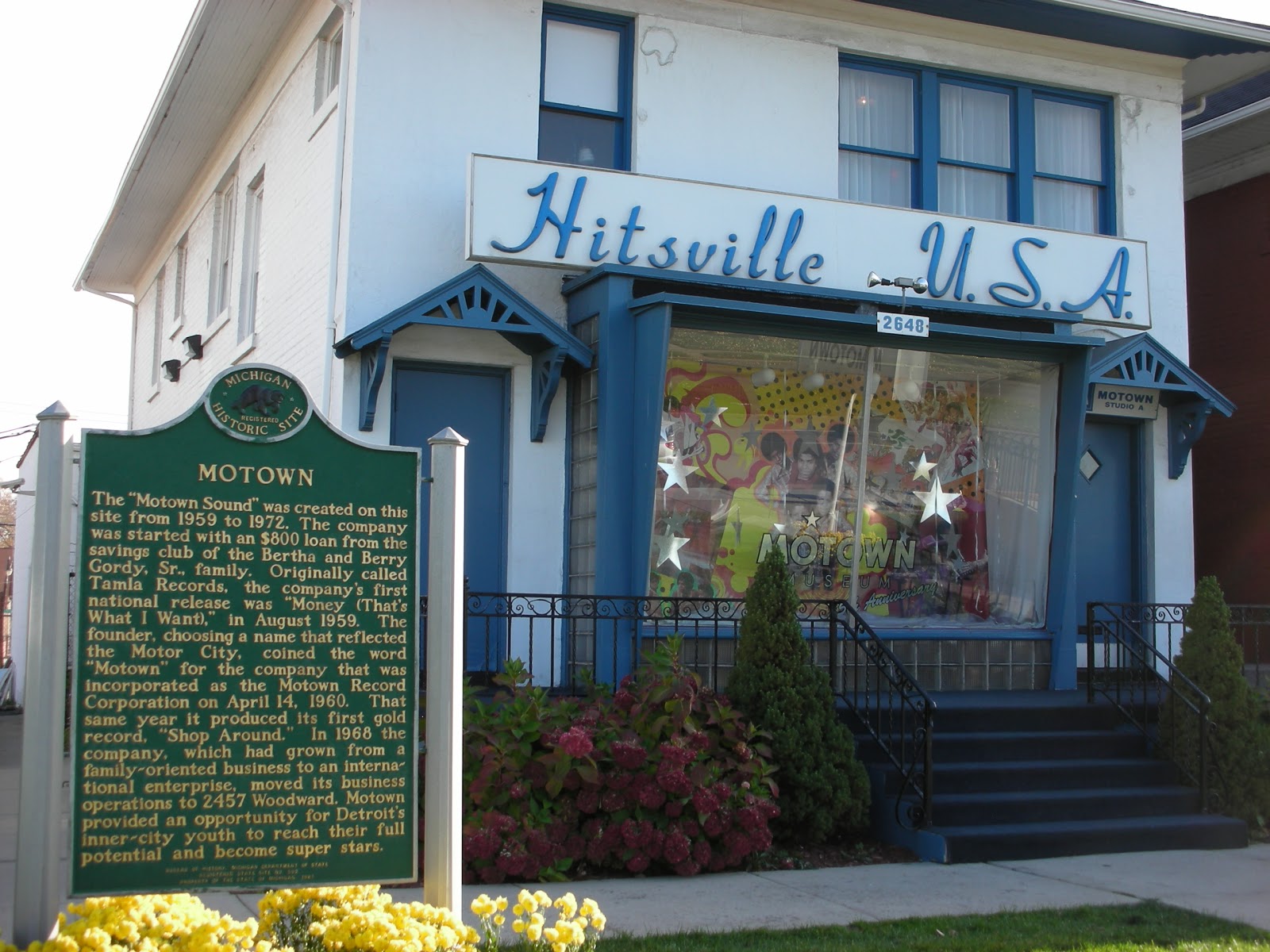
The Motown Museum in 2010, taken by author.

Dateline November 28, 1929 – Berry Gordy, Jr. is born in Detroit, Michigan, the city he would later rename Motown.

The broad contours of Gordy’s life are well-known: He was the 7th of 8 children born to Berry Gordy II and Bertha Fuller Gordy, who had come up to Detroit in the early ’20s to work in the car business. Berry dropped out of school and opted for a career as a boxer, which he abandoned when he was drafted for service in Korea. When he returned from the service, he started writing songs. His first hit was “Reet Petite” for Jackie Wilson, which started Gordy off in show biz. After a few more songwriting credits, which include the smash “Lonely Teardrops,” he decided to try his hand at producing. He found a Detroit Doo Wop group called The Matadors, renamed The Miracles, which started Gordy’s roster of artists.

The street sign in front of the Motown Museum

In 1959 Gordy borrowed $800 from his family and started up his own record label, Tamla Records. The first record issued on Tamla was “Come To Me,” by The Miracles and written by Marv Johnson, who later wrote “You Got What It Takes.” It wasn’t until the 3rd release, “Bad Girl” by The Miracles, that Motown was officially launched as a record label.

New artists and new hits followed: Barrett Strong‘s “Money (That’s What I Want),” and The Miracles‘ “Shop Around,” The Marvelettes‘ “Please Mr. Postman,” Mary Wells, The Supremes, Marvin Gaye, The Temptations, Jimmy Ruffin, The Contours, The Four Tops, Gladys Knight & the Pips, The Commodores, The Velvelettes, Martha and the Vandellas, Stevie Wonder, The Jackson 5, and many more.

Growing up in Detroit in the ’60s, it made one feel great to know the city had its own record label. When The Beatles started covering Motown tunes, we knew for sure that Motown had arrived worldwide.

However, the good times couldn’t last. In the early ’70s Gordy moved the Motown base of operations to Los Angeles, and things have never been the same since, for Detroit or the label.

However, it’s always been about the music. Here’s a Berry Gordy Jukebox for your listening pleasure. Get ready to sing and dance along, because you won’t be able to help yourself. And that, my friends, demonstrates the power of Motown.

Unpacking The Aunty Em Ericann Blog ► Shit Just Got Real

Pictures in the public domain stitched together by author

From time to time I like to unpeel the onion and reveal a bit of what it takes to put this blog together. I call the series “Unpacking The Aunty Em Ericann Blog,” Aunty Em being my nom de plume when I was writing at NewsHounds.

However, as I have explained to my faithful readers, this series has always been nothing more than an excuse to find clever ways to beg my readers to click on an advert or two (in the right-hand column) while they are here. When someone clicks on an advert, I get a few pennies . . . and I do mean “a few.” Finding clever ways to get my readers to click on the adverts has become more crucial than ever. Yesterday I learned two things simultaneously:

  1. Blogger has a limit for FREE data storage;
  2. I had JUST reached that upper limit.

I felt as if someone had just said to me, “Psst! Hey kid! The first one’s free! Now it’ll cost you.”

Faced with this dilemma there was only one practical thing to do: So that I can continue to bring to my vast reading audience all its favourite series, I’ll start to pay the monthly fee for the data storage.

All your favourites are here: Unpacking Coconut Grove, Unpacking My Detroit, Another Magical Tee Vee Moment, The Fox “News” Spin Cycle, Judge Not, Nostalgia Ain’t What It Used To Be, Fox “News” Snark, Music Reviews, Chow Mein and Bolling, and my other various looks at various topics, as varied as Watergate right up to Today in History.

Think of this series like a PBS Pledge Break: If you want to see your favourite EmTV series to continue, call the number at the bottom of your . . . Wait!!! What??? There’s no number? Then click on several ads while you’re here and keep this blog in data storage.

Pretty please with sugar on top?

You can also connect with me at facebook and Twitter. The more the merrier.

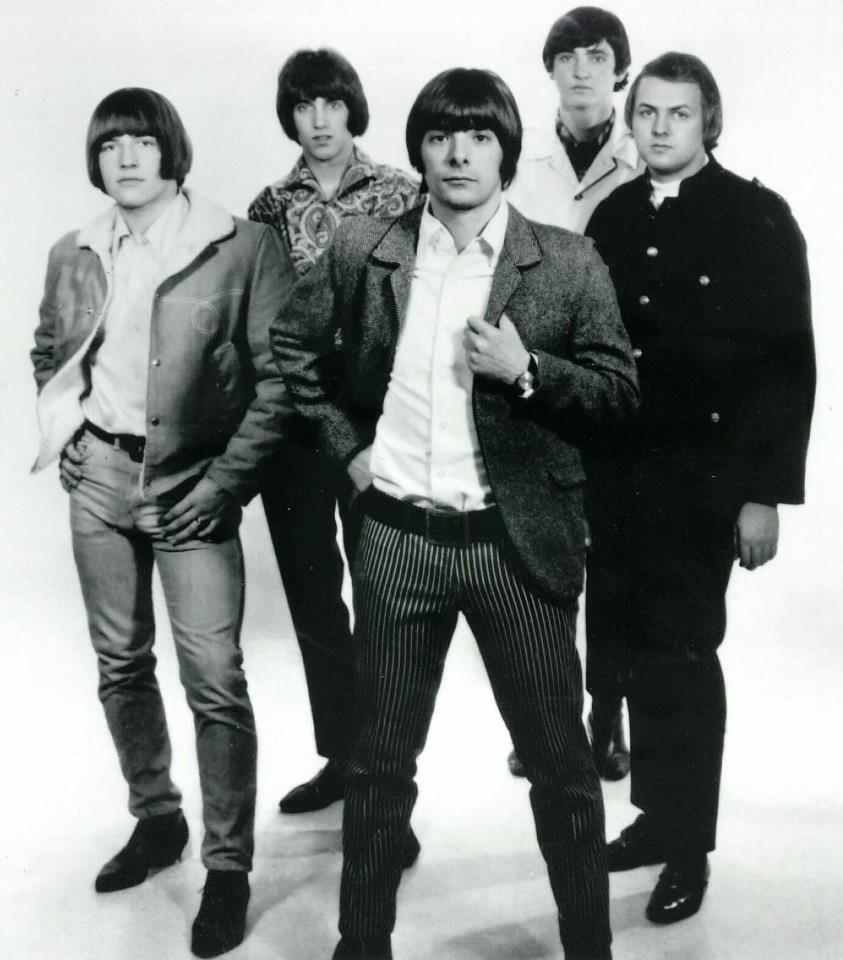
Terry Knight and the Pack ► A Musical Appreciation

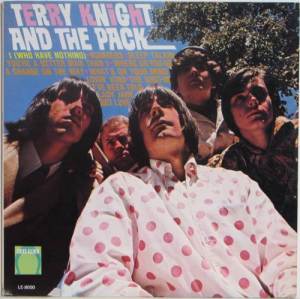
First LP
Second LP

When I was a teenager one of my absolute favourite bands was Terry Knight and the Pack. I was an unsophisticated 14-year old when they released their only 2 LPs and they really spoke to my teenage angst. It didn’t hurt that Terry Knight and the Pack were a local band. (Who knew from Flint, Michigan?) I didn’t know (at the time) of Terry Knight’s history as a Detroit DJ, first on WJBK, then moving to The Big 8, CKLW in Windsor. All I knew is the music really embedded itself deeply into my psyche.

At the time I didn’t have the language, or understanding of why they appealed to me so greatly. However, in hindsight based on my collected knowledge of musical genres, I can see how Terry Knight wove in bits of Psychedelia, Vaudeville, Country, Blues, Folk, and Jazz and then infused it all with a Rock and Roll sensibility that at once made it sound familiar, yet different. All I knew at the time is that I would listen to these two LPs — from start to finish — and then do it all over again and again and again.

Terry Knight and the Pack were short-lived, recording just two LPs in its 2-year history. Again, as unsophisticated as I was at the time about music, I knew nothing about the individual members of the band. Terry Knight’s name was known because he led the band, but the rest of the players could have really been called The Pack, for all I cared.

When Terry Knight and the Pack broke up, Knight became a producer for Cameo-Parkway, the company that released TK&TP’s LPs. When the Beatles formed Apple he went to London to try and become a producer and/or recording artists. Knight was apparently present at the recording session for the ‘White Album’ at which Ringo Starr quit the band (before being cajoled back).

Knight bounced back to ‘Merka and became a staff producer for Capitol Records, getting into some trouble with his song “Saint Paul,” which included snatches of Beatles’ songs near the end. The Beatles’ publisher filed a cease and desist order and the single was pulled. Eventually it came back on the market in a truncated form, but with a credit to Maclen Music. Later, when the Paul is Dead rumour swept the world, parts of this song were used as clues in the hoax.

It wasn’t until Terry Knight’s next project came on the scene did I learned that at least 2 members of The Pack were named Mark Farner and Don Brewer. Knight put them together with Mel Schacher from another local Detroit group, and label-mates, ? and the Mysterians to form Grand Funk Railroad. Terry Knight became their producer and manager. Grand Funk Railroad went on to fill stadiums, firing Terry Knight with just three months left on his contract. Lawsuits flew.

Soon after that Knight was fired from Capitol and he started up his own indie label called Brown Bag Records, which released music by by Mom’s Apple Pie, John Hambrick, Wild Cherry and Faith. Nothing really hit and Knight retired from the music biz in 1973, becoming addicted to cocaine. He cleaned himself up in the ’80s and settled in Yuma, Arizona, putting his hard-driving Rock and Roll past behind him.

On November 1, 2004 Terry Knight was murdered by his daughter’s boyfriend when he stepped in to defend her during a fight. He was stabbed 17 times. A year later Donald A. Fair, who claimed he was hopped up on methamphetamine at the time, was convicted of murder and sentenced to life in prison. Terry Knight, born Richard Terrance Knapp 61 years earlier, was buried in a family plot in Lapeer, Michigan.

The first two Terry Knight and the Pack LPs were released on CD as a two-fer. Thanks to Spotify, you can listen to it here:

Long live Terry Knight and the Pack!!!

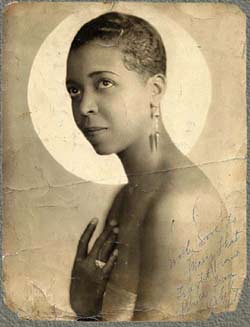
A Tribute to Ethel Waters ► Nostalgia Ain’t What It Used To Be

Dateline October 31, 1896 – The incomparable Ethel Waters is born in Chester, Pennsylvania, the result of a rape of her mother, who was reportedly only 13 years old at the time. Waters was raised in extreme poverty and said of her own childhood, “I never was a child. I never was cuddled, or liked, or understood by my family.” Waters was married at the age of 13 to an abusive man, whom she soon left. For a time she worked as a maid, toiling in a Philadelphia hotel for $4.75 a week. On her 17th birthday she was cajoled into singing two songs at a party. From that ad hoc performance she was offered a job to sing professionally in Baltimore.

It still wasn’t easy. She toured the Vaudeville circuit for a time. She joined a carnival, traveling by freight cars. Of her experience working carnivals she said, “The roustabouts and the concessionaires were the kind of people I’d grown up with, rough, tough, full of larceny towards strangers, but sentimental and loyal to their friends and co-workers.” After a stint in Chicago, she found herself singing at the same Atlanta club as Bessie Smith, who demanded that Ethel Waters not compete with her by singing the Blues. Waters complied and sang only ballads and popular songs instead. This is ironic because today Waters is best known for singing the Blues. In 1919 she moved to Harlem just in time for the Harlem Renaissance, where she eventually found her fame.

In 1933 she was one of the stars of “As Thousands Cheer” the first Broadway show to give a Black person equal billing with a White cast. It was a topical revue with a book by Moss Hart and music and lyrics by Irving Berlin. “As Thousands Cheer” was a hit, running for 400 performances during the height of the depression. Each scene was based loosely on a news story or headline of the day. Aside from introducing “Heatwave” in the show, a song that’s become a classic, Irving Berlin wrote the song “Suppertime” specifically for Ethel Waters. She sang it to the ripped-from-a–newspaper headline “UNKNOWN NEGRO LYNCHED BY FRENZIED MOB.” The “negro” was not unknown to Ethel Waters’ character. It was her husband and the song became a show-stopper which had audiences crying openly because of the intensity of Waters’ performance.

Sadly we don’t have that performance, but 36 years later Ethel Waters recreated the song for an appearance on the Hollywood Palace hosted by Diana Ross and the Supremes. In 1969 it was probably considered too incendiary to show the original staging, but on Broadway Waters sang this song on an almost empty stage with a silhouette on the bare back wall of a lynched man. In this single song Ethel Waters was able to sum up the Black experiemce in ‘Merka. If your eyes are not tearing up after this AMAZING performance, check your heart. You might not have one.

Ethel Waters died in 1977 at the age of 80. Luckily we have many records and movie performances to remember her by. There are so many outstanding performances, it was hard to narrow it down to just these. ENJOY!

With a very young Sammy David, Jr. in the movie “Rufus Jones For President”

Musical Appreciation ► Bob Weir

DATELINE October 16, 1947 – Robert Hall Weir is born in San Fransisco, California and grew up in nearby Atherton, on the other side of the bay, with his adopted parents. He picked up the guitar at the age of 13. Three years later, on a New Year’s Eve, he followed the sound of banjo playing to meet Jerry Garcia for the first time. After jamming all night they decided to form a band. At first they called themselves “Mother McCree’s Uptown Jug Champions,” which became “The Warlocks,” and finally “The Grateful Dead.”

There is no ‘Merkin band with the same storied romance between its fans and the group. Long before most people even knew about Bootleg recordings, The Grateful Dead would allow fans with tape machines to plug directly into the sound board. Dead Heads would follow the band around the country, and across the world, to take in as many shows as they could. An entire culture grew up outside Grateful Dead concerts, not to mention inside the shows.

While with The Dead, and after the death of Garcia in 1995, Weir also performed with such bands as Kingfish, Bobby and the Midnites, RatDog and his latest band Further, which is named after the bus used by Ken Kesey and the Merry Pranksters, where the Grateful Dead got their start, and the subject of The Electric Kool-Aid Acid Test, one of Tom Wolfe’s early books.

However, it will always be about the music.

ENJOY!!!

Chow Mein and Bolling 9 ► A Vice Presidential Debate Review

Put down Bully Boy Bolling as another bullshit artist from Fox “News” who didn’t much like Vice President Joe Biden’s debate performance. 

The so called “Fair and Balanced” network has spent plenty of time since the end of the debate alleging Biden was drunk, rude, disrespectful, an unhinged cranky old man, and even attacked him for things he didn’t say. However, leave it to Bully Boy Bolling to take it so far over-the-top that it barely resembled what the rest of the country saw. However, before Bully Boy weighed in, The Five played a greatest hits package of Fox “News” personalities criticizing the Vice President.

Watch:

ANDREA TANTAROS: Eric? Rude, cranky, disrespectful. Really unprecedented behavior and, if you’re trying to swing voters in your camp when you’re down, probably not the the way to do it.

BULLY BOY BOLLING: Yannow, umm, unfortunately Joe Biden — Mr. Vee Pee — confirmed all our suspicions. He’s a real jackrabbit. He embarrassed himself, he embarrassed the office, he embarrassed the country. Her lied about taxes. He lied about contraception. He lied about his voting record on wars. And, most importantly, he lied about what went on in Libya. The scary fact is this guy is one heartbeat away — a condescending smug, morally and intellectually bankrupt man — is one heartbeat away from the presidency. Your question, Andrea, four more years or four more weeks?

TANTEROS: Yeah.

It was only a few days ago that Fox “News” was trying to make the case that the Obama campaign calling Mendacious Mitt a liar when they called out his lying lie was “unseemly.” However, it seems Bully Boy Bolling has no trouble calling the Vice President a liar. 

The Five: Still the worst show on tee vee. Bully Boy Bolling: The worst person on the worst show on tee vee.

Chow Mein and Bolling ► A Musical Interlude

Unretouched photo of Bully Boy Bolling taken off my tee vee screen

I get email. Several people have asked me me how I came up with such an odd name for a series that (quite rightly) skewers Bully Boy Bolling for being the supreme asshole that he is. While I explained in the first episode of Chow Mein and Bolling, I guess it would be hubris for me to expect my faithful readers to go back that far.

The truth of the matter is I stole the name from Mike Nesmith, my favourite Monkee, who named a terrifically funny song “Chow Mein and Bolling.”


Now I guess I need to apologize to Mike Nesmeth, Nez to his fans, because my popular series Chow Mein and Bolling has knocked Nesmith off the top of the Google listings. I’ll do that my treating my fans to another great Mike Nesmith song, which helps put Bully Boy Bolling’s tee vee bullshit into the proper perspective.

Does that answer your question?