All posts by Headly Westerfield

About Headly Westerfield

Calling himself “A liberally progressive, sarcastically cynical, iconoclastic polymath,” Headly Westerfield has been a professional writer all his adult life.

The Latest Visit to the E.W.F. Stirrup House

The E.W.F. Stirrup House on May 14, 2013

Dateline May 14, 2013 – It’s almost a nervous tic. Anytime I am near Coconut Grove, I visit the E.W.F. Stirrup House and take new pictures. 

Yesterday, after dropping a friend off at the Miami airport, I drove the 7 miles to Charles Avenue. The latest pictures reveal is that nothing has been done to the E.W.F. Stirrup House since the meeting of the Charles Avenue Historic Preservation Committee on the 27th of February. At the time I wrote:

Yesterday a crew was cleaning up the Stirrup property by removing the
vines and bushes that had grown all over the back of the house. This
blog has documented
how the property becomes an unruly garbage dump between citations from
the City of Miami. The property is always cleaned up before fines are
levied. Then it’s allowed to slowly fall into disarray until the next city inspector posts a citation
on the property about all the garbage, weeds, and graffiti. Despite
occasional landscaping, the vast Westerfield Archives has several year’s
worth of pictures that prove these bushes and vines have never been
cleared away. This was not just another minor clean-up.


Could it be that Gino Falsetto realized that eyes
would be on the E.W.F. Stirrup House again this week because of the
Charles Avenue Historic Preservation meeting? After 8 years of
inactivity, is it possible that Falsetto wants to be able to say at
Wednesday’s meeting “Things are happening,” only to let it slid into
disarray until the next time it gets cleaned up?

The E.W.F. Stirrup House on May 14th,
showing the damage caused by the last cleanup

I must be The Amazing Kreskin. What I predicted came to pass at the Charles Avenue Historical Preservation Committee meeting when an angry reporter (me) wondered why nothing had been done to the property in the 8 years Falsetto has had effective control of it. The representative of Gino Falsetto on the preservation committee jumped in by citing all the recent landscaping work that had been done. As I was about to ask a follow-up, and point out that the recent landscaping had actually damaged the side of the house, the chair of the meeting shut me down by saying the committee was looking forward, not backward. Since I was merely an invited meeting observer, and not a member of the committee, I held my tongue. However, I was angry that 8 years of neglect was being swept under the rug.

Still Life With Dishwashers, May 8, 2013

I must be The Amazing Kreskin. Another part of my prediction has also come to pass. Absolutely nothing’s been done since that meeting. Well, that’s not entirely true. Someone finally figured out how to close the lower windows on the side of the house. This is actual progress, since they have been open to the elements for many years. However, that’s it!!! The upper windows are still open to the daily Florida rainstorm.

I must be The Amazing Kreskin. The third part of my prediction has also come to fruition: the property has, once again, slid back into being a garbage dump. A seemingly never-ending series of dumpsters come and go. Last week it was filled with several dishwashers, clearly the result of a renovation inside the Grove Gardens Residence Condominiums. However, there’s no telling where and what the work might be because, as usual, I can find no building permits displayed anywhere. However, it’s safe to assume that it’s one of Gino Falsetto’s restaurants on the ground floor of the Grove Gardens Residence Condominiums. He has three: The Taurus Bar, Calamari, and La Bottega by Carmen Trigueros. That’s right! Chef Carmen’s got her name right in the name of the restaurant for added pretentiousness.

Meanwhile, where are the promised renovations for the E.W.F. Stirrup House? Gino Falsetto has had more than 8 years to do something, ANYTHING, to the E.W.F. Stirrup House. It’s time for the community to rise up and find a way to abrogate the 50-year lease Gino Falsetto holds on the E.W.F. Stirrup property. He’s shown himself to be a terrible steward of a precious 120-year old Coconut Grove historical resource. He continues to allow the house to undergo Demolition by Neglect.

Those who allowed him to get his rapacious hands on this family heirloom need to find a way to get it back in order to honour the legacy of E.W.F. Stirrup and the original Bahamians who built Coconut Grove.

The only legacy being honoured today is that of rapacious developers. Might as well put up a statue to Gino Falsetto because, according to this website, he is the Master of everything at the east end of Charles Avenue and wants to create his own legacy, Le Coco Suprême. According to this anonymous author, who links to my blog quite often:

Map that accompanies the allegations: Legend: 1 = Playhouse,
2 & 3 = Vacant Lots, 4 = E.W.F. Stirrup House, 5 = Grove Garden
Residences Condominium 6 = Regions Bank, 7 & 8 = Vacant Lots,
9 = 2-Unit Residence, I = Bridge across Charles Avenue

This monster complex — dubbed Le Coco Suprême — will be the largest multi-use condominium complex in all of Florida: a 5.6 acre multi-use condo complex, the biggest Heafey and Falsetto have ever carried out here and in Canada. They want it to be their crowning achievement. It will dwarf what Heafey has done in Quebec. (In comparison, Cocowalk within walking distance up the street is 2.18 acres.)

The plan entails a 960-unit residential condo, a 360-room hotel, 200,000 sq.ft. retail space, 4 restaurants, a movie-theater complex, a gym, a bowling alley or ice skating rink, 3,800 space high-rise garage to also serve the downtown Grove, a bank (Regions), a Bed & Breakfast in the E.W.F. Stirrup House, a remodeled, brand-new miniature Goconut Grove Playhouse, and the current Grove Garden Residences multi-use condo complex. A bridge over Charles Avenue will connect everything. The high-rise garage will be on the north side (closest to downtown for access to all Coconut Grove downtown visitors) with an arcade of shops at street level facing Main Highway.

If that’s true one of the few things standing in the way of his plan to erect another MONSTER condo complex, is the E.W.F. Stirrup House.

SAVE THE E.W.F. STIRRUP HOUSE!!!

Further reading at Not Now Silly

Unveiling the One Grove Mural ► A Photo and Video Essay 

Happy Birthday Coconut Grove!!! Now Honour Your Past

Good Neighbours and Bad Neighbours ► Unpacking Coconut Grove ► Part Nine

A Charles Avenue Love Story ► Unpacking Coconut Grove ► Part Five

The E.W.F. Stirrup House ► Unpacking Coconut Grove ► Part Two

***
***

Johnny Carson’s Last Tee Vee Appearance ► Another Magical Tee Vee Moment

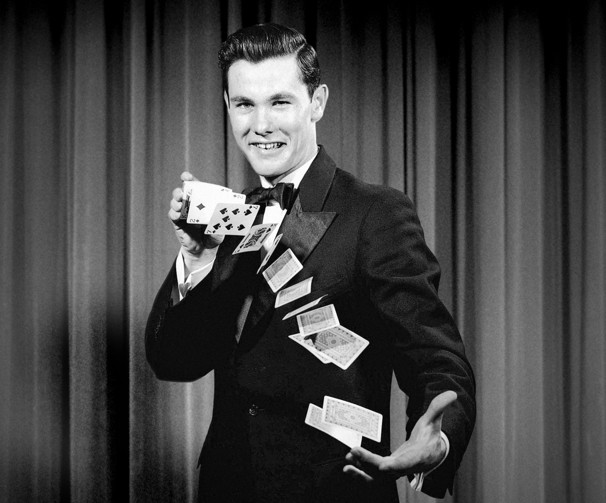
Johnny Carson got his start in Show Biz as a magician

Dateline May 13, 1994 – Johnny Carson makes his last tee vee appearance ever, fittingly on David Letterman’s show.

Carson was a tee vee institution for over 30 years. While other people hosted the Tonight Show both before and after him, Carson will always be the gold standard against which all others are judged. Carson retired from his show on May 22, 1992.

Johnny Carson always felt that David Letterman was the natural heir to the Tonight Show seat and was sorely disappointed that the show was given to Jay Leno instead. “Some people say” that’s why Carson declined to appear in NBC’s 75th Anniversary Special. “Other people say” that Carson never forgave NBC for destroying all the early Tonight Shows to make shelf room for newer shows. It very well could have been both.

Either way, it’s so appropriate that Carson’s last appearance was on Letterman’s show, almost 2 years to years to the day after his retirement. Letterman sprung Carson’s appearance as a surprise and the audience gave him a sustained standing ovation. After waiting out the applause for a while, Carson left the stage without saying a word. It looked like he had some lines, which he decided not to deliver at the last minute because anything he said would be an anti-climax. Remember: Carson was the master of Show Biz Timing™. Later Carson said he pulled his Marcel Marceau act due to acute laryngitis. This clip makes it clear he was going to say something.

This was one of the rare post-retirement appearances Carson made on tee vee, and the very last. On January 23, 2005 Johnny Carson died of respiratory failure from emphysema at the age of 79. After his death David Letterman did a Johnny Carson tribute show, which included an entire monologue written by Carson. It turned out that Carson regularly faxed jokes to the Letterman show just for the thrill of having then delivered on air.

Johnny Carson was the Comedian’s Comedian to the very end.

Here’s David Letterman’s tribute show to Johnny Carson:

Further Reading at Not Now Silly

Last Tonight Show with Johnny Carson ► Day In History
I’ve Got A Secret ► Another Magical Tee Vee Moment
Andy Kaufman ► Another Magical Tee Vee Moment

***

***

Bob Dylan Walks Out On Ed Sullivan

Dateline May 12, 1963 – Back in the day you couldn’t really say you were in Show Biz unless you had appeared on the Ed Sullivan Show. As much as Bob Dylan was known as a Protest singer, he still craved Show Biz legitimacy. That’s why he allowed himself to be booked on the Sullivan Show on this day in 1963. However, always the contrarian, Dylan walked off the show before he was to appear.

Ed Sullivan was a Tee Vee institution. Beginning in 1948 as Toast of the Town, his show ran for 23 seasons — 22 of them in the same Sunday night time slot of 8PM. Entire families would gather around the only tee vee set in the house and watch one of the only 3 tee vee networks in existence. The Sullivan Show had something for everyone in the entire family. It was a variety show, in the Vaudevillian tradition; a solo singer might be followed by a ventriloquist, who was followed by a plate spinner, with a Big Band performance next, to be followed by a comedian, and then, maybe, wrapped up with a scene from a Broadway musical. In a classic example of Art imitating Life, this “Hymn for a Sunday Evening,” from “Bye Bye Birdie,” sums up the importance of an appearance on the Sullivan show.

In ’63 Dylan was just an up-and-coming singer/songwriter, barely known outside the small, cultish world of Folk enthusiasts. If people knew him at all it was from Peter, Paul and Mary’s cover version of Blowin’ in the Wind. His 2nd LP, The Freewheelin’ Bob Dylan, with his own version of “Blowin’ In The Wind,” was just days away from being released. A Sullivan appearance would have been a huge boost to Dylan’s career and fame. However, according to the Official Ed Sullivan Show webeteria:

Bob Dylan was slated to make his first nationwide television appearance on The Ed Sullivan Show on May 12, 1963.  For the show, Dylan decided to perform “Talkin’ John Birch Paranoid Blues”, a satirical blues number skewering the conservative John Birch Society and the red-hunting paranoia associated with it.  A few days earlier, Bob Dylan auditioned the song for Ed Sullivan who seemed to have no issue with it. However, on the day of the show during the dress rehearsal, an executive from the CBS Standards and Practices department decided Dylan could not perform the song due to its controversial nature.  When the show’s producer, Bob Precht, informed Dylan of the decision, Dylan responded saying, “No; this is what I want to do. If I can’t play my song, I’d rather not appear on the show.”  Rather than choose a new song to perform or change the lyrics (as the Rolling Stones and the Doors on Ed Sullivan would agree to do), a young Bob Dylan walked off the set of the country’s highest-rated variety show.

The story got widespread media attention in the days that followed helping to establish Dylan’s public reputation as an uncompromising artist. The publicity Bob Dylan received from this event probably did more for his career than the actual Ed Sullivan Show performance would have. Unfortunately, this leaves us with no performance footage of Bob Dylan on The Ed Sullivan Show.

Here’s a live version of “Talkin’ John Birch Paranoid Blues,” which Dylan introduces by saying, “And, there ain’t nothing wrong with this song.”

No wonder they didn’t want the song performed on the show. In 1963 “Talkin’ John Birch Paranoid Blues” would have still been politically explosive. However, Ed Sullivan was a known control freak, who had his fingers in every aspect of his show. It’s hard to believe he wasn’t part of this decision, if not the instigator. An alternative theory is that Sullivan found the song a bit too far for his family audience, but wanted to come off as Mr. Nice Guy, so he told Bob Precht to deliver the bad news to Dylan. Blaming the CBS Standards and Practices office was probably just Standard Operating Procedure at the time.

Regardless of who made the decision, it resulted in Dylan’s “boot heels to be wandering.”

***

***

To West Coconut Grove’s Continued Health

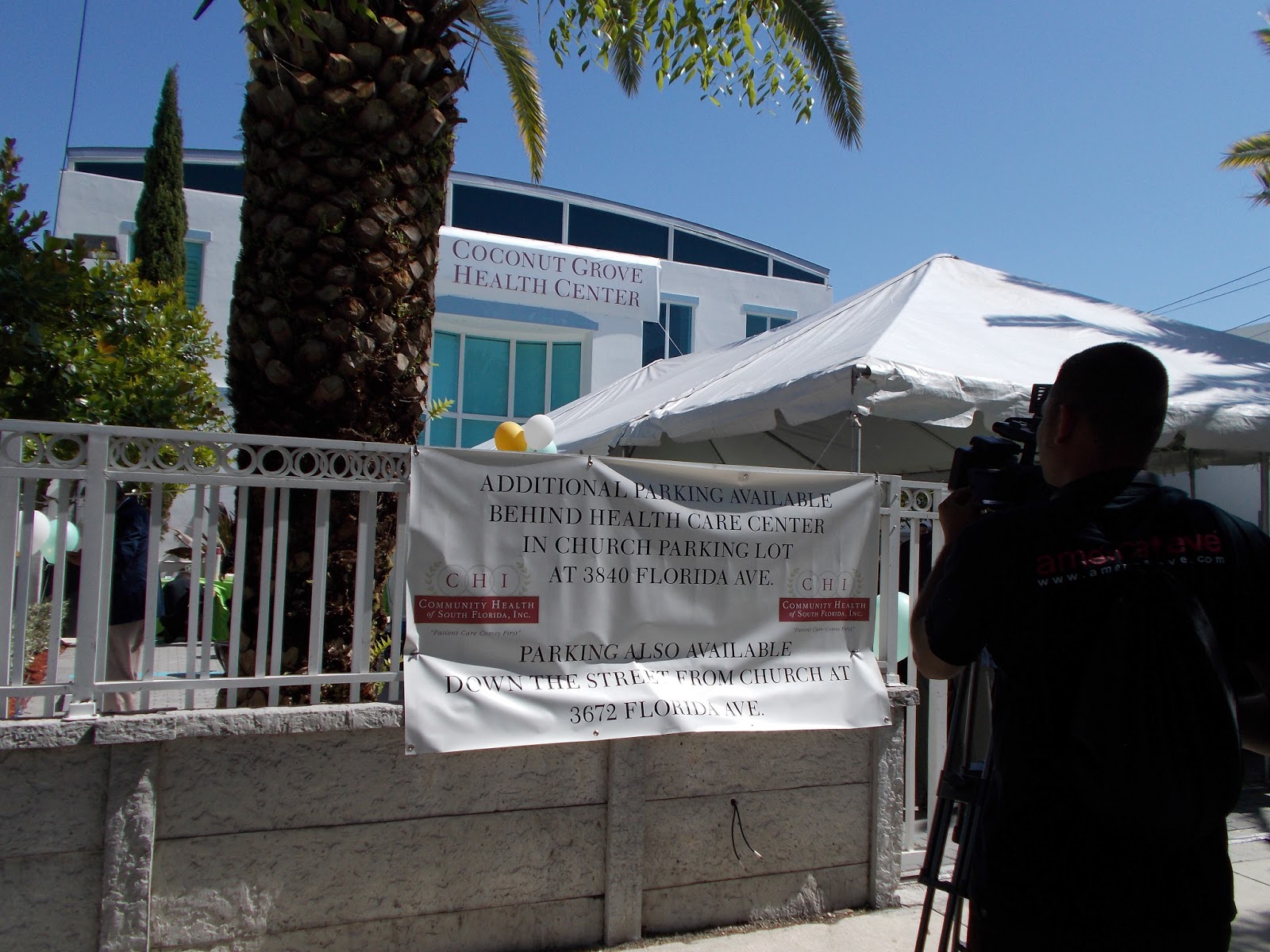
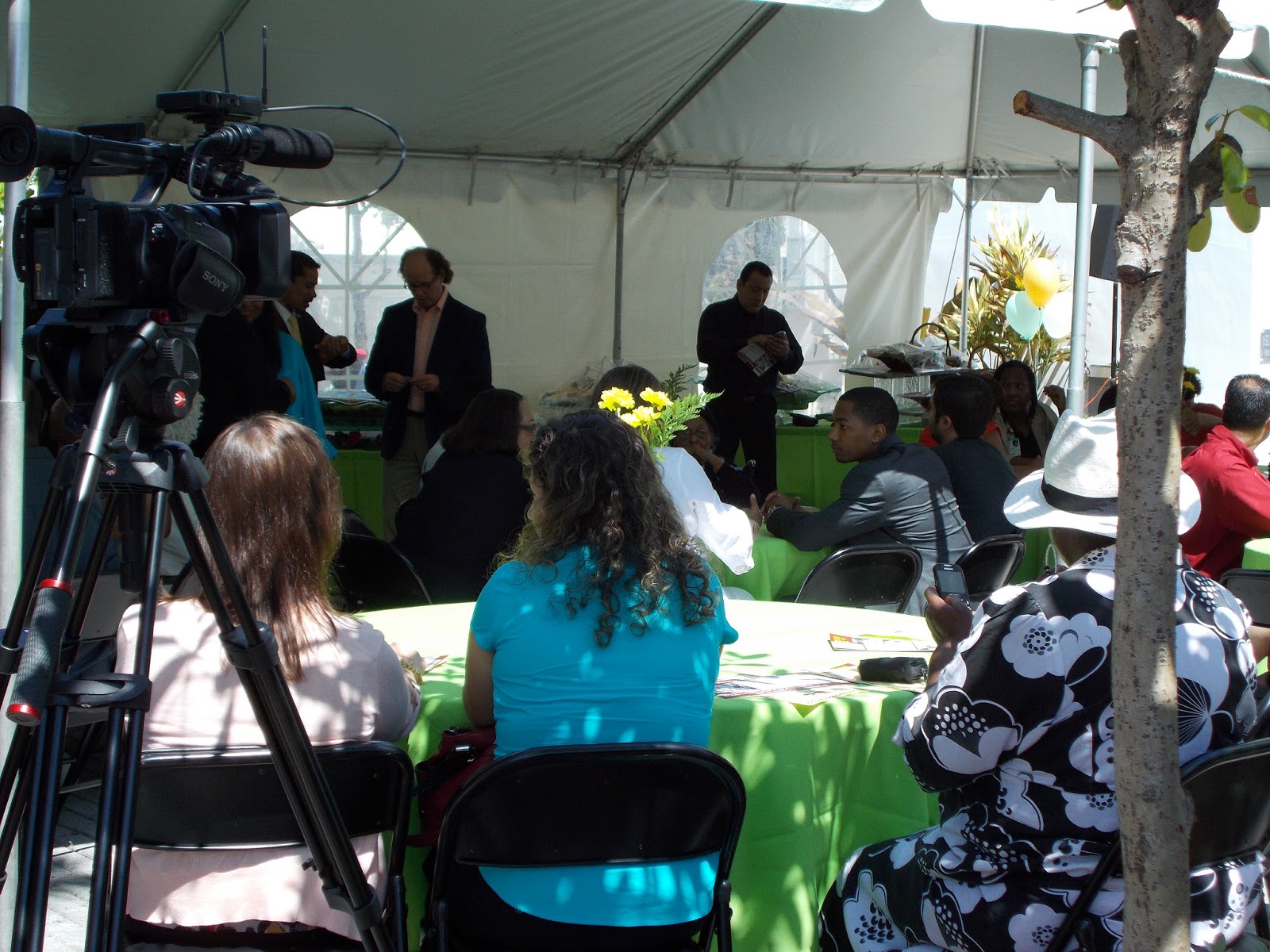
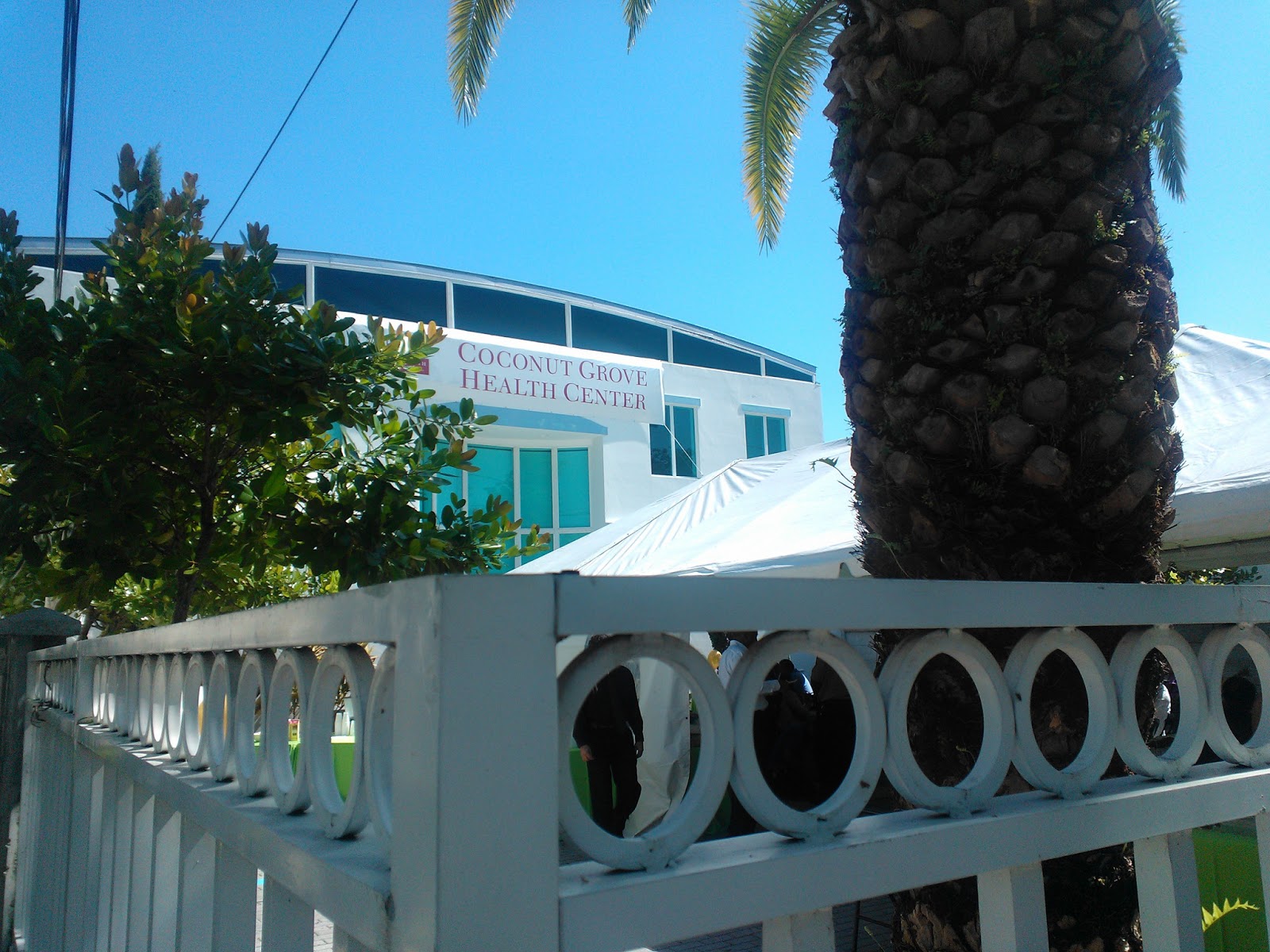
May 6, 2013 – Community Health of South Florida cut the ribbon on its spanking new Coconut Grove Health Center.

It was quite the celebration at 3831 Grand Avenue in West Grove as a tent — offering food and drink — was set up on the patio outside the state-of-the-art facility. The CGHC will offer comprehensive medical care on a sliding scale based on income and need.

It wasn’t all that long ago that the Helen B. Bentley Family Health Center had to close after 40 years of operation, serving some of Coconut Grove’s neediest folks. With so many thousands left in the lurch, the federal government awarded CHI a grant to open the Grand Avenue facility, as well as one on Sunset Drive in South Miami in June. Accordiing to Brodes Hartley, Jr., CHI President, “In these tough economic times we see a lot of people who simply do not have the money to seek medical attention and that shouldn’t be the case. There are times that some people can’t even pay the $25 co-pay and se still provide them with top quality care.”

Here’s to your health, Coconut Grove!

Panorama looking east along Grand Avenue towards Douglas, with the Coconut Grove Health Center on the left

A panorama of the festivities.

***

***

The First Three Stooges ► Nostalgia Ain’t What It Used To Be

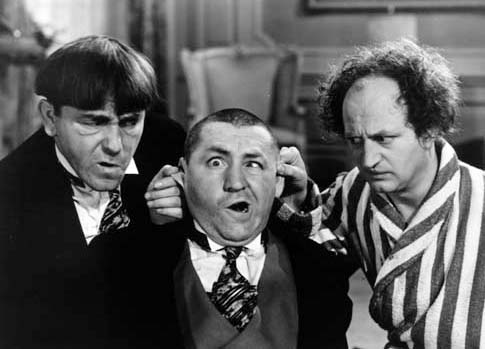
Above: Larry, Moe and Curly, not necessarily in that order.

Dateline May 5, 1934 – The Three Stooges release their first short “Woman Haters” and nothing was ever the same again.

The Three Stooges made more than 190 two-reelers over a 26 year period, but they started in the knockabout world of Vaudeville. Ted Healy was already a hit in Vaudeville when, in 1922, he took on new actors for his stageshow. Among them was Moe Howard, a childhood friend that had appeared, briefly, in the earlier act Ted Healy and his Southern Gentlemen.

Moe’s job was to act as an average audience member who is called onstage. Hilarity ensues. The showbiz term for this stock character was “stooge.” Soon Shemp, who was Moe’s real life brother, and Larry Fine joined the act. They appeared with Healy in one short, “Soup To Nuts.” but after a dispute over the movie contract, Larry, Moe and Shemp went solo, or as solo as a trio can go. They also took with them some of the material they had performed with Healy.

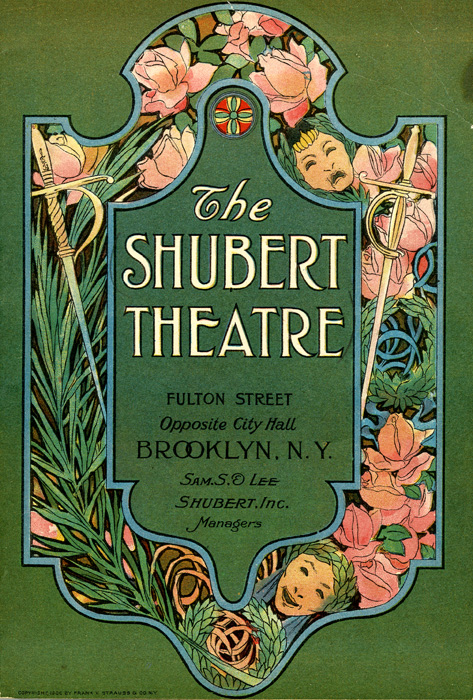
Intellectual property rights being intellectual property rights, Healey sued. However, he lost. As it turned out the material was owned by the show’s producer, the Shubert Theatre Corporation, which gave the Stooges the right to perform it.

The Three Stooges then had a brief rapprochement with Healy and were to appear together in a new Shubert production. However, when Healy got a better offer, he quit the show, taking Two Stooges with him; Shemp, who had threatened to quit previously, finally decided to pack it in. In need of a third Stooge, Moe suggested his younger brother. Jerry Howard joined the act as Curly.

Healy and the Stooges signed a contract with MGM in 1933 and made a number of shorts. When that contract expired a year later The Three Stooges split from Healy for good. Soon afterwards they signed with Columbia and released “Woman Haters,” the first official Three Stooges short

Growing up I watched a lot of Three Stooges in my time, but I don’t recall ever seeing this one. It’s all done in rhyme and song, all 20 minutes of it. There’s no way they could carry that over 2 2-reelers, let alone 190. Enjoy:

***

The Very First Grammy Awards ► Musical Appreciation

Domenico Modugno singing his big hit “Nel blu dipinto di blu”

Dateline May 4, 1959 – The very first Grammy Awards are presented to a diverse group of artists and genres for the music of 1958. I thought it might be instructive to take a look back and see what was on The Hit Parade 55 years ago.

There’s no denying that the BIG winner of the night, with both Record of the Year AND Song of the Year, was Domenico Modugno. Let’s hear a round of applause for Domenico Modugno!

Who the hell is that? Oh, c’mon. You know his huge hit tune “Nel blu dipinto di blu.” It was on everyone’s lips in 1958. No? Does this remind you?

How’d you like that interpretive dance near the end? Don’t tell me you skipped that part. Ed Sullivan knew how to pick ’em.

Domenico wasn’t the only one who walked away with a Grammy. Henry Mancini picked up Album of the Year for The Music of Peter Gunn. Everybody sing-a-long:

It was also a very big night for Alvin and the Chipmunks. They also garnered two Grammys, taking home the prize for both Best Children’s Recording AND Best Comedy Recording:

But Domenico and Alvin weren’t the only double award winners that night. Ella Fitzgerald took home two different awards for two different LPs. The Best Jazz Performace by an Individual Grammy award went to Ella for The Duke Ellington Songbook.:

That cut is not from the Ellington songbook LP, but it’s one of my faves from a live performance of Ella with Duke Ellington in Japan. Ella won another Grammy that night in the Pop music category of Best Vocal Performance for her interpretation of the Irving Berlin Songbook:

One of my favourite shows, The Music Man, won for Best Original Cast LP. While it’s cheating to use the 1962 movie version, that’s the one I know best. And since it’s one of my favourite musicals, here are 3 of my fave tunes from it, and the re-release trailer.


With songs like Perry Como’s “Catch A Falling Star” or “That Old Black Magic” by Keely Smith and Louis Prima also grabbing Grammys, there wasn’t a lot of youth culture represented. The only thing resembling Rock and Roll was this song by The Champs, who took home the Grammy for Best Rhythm and Blues Performance.

***

***

Homeowners’ Associations Invented To Discriminate ► History Is Complicated

KEEP OUT! THIS MEANS YOU BLACK &JEW!

Dateline May 3, 1948 – The Supreme Court ruled that restrictive covenants in real estate deeds — which specifically barred sales to Blacks, Jews, and other minorities — was illegal. Prior to that date the courts had ruled these discriminatory practices were simply matters between private contractors, and the courts had been there to enforce these restrictive covenants in deeds for decades.

Contractually enforced discrimination has long, proud history in ‘Merka, going back to the original Founding Fathers and their cruel compromise, counting Black folk as 3/5ths a person and leaving the “peculiar institution” of slavery intact. Hell, a whole war was fought over it.

When the country was built on such a crass foundation, is it any wonder that whole generations of people came to feel privileged? So privileged, in fact, that people thought nothing of putting down that privilege in their real estate deals. The idea really started to take off in the 1920s, when planned communities like Coral Gables became the suburban norm as people started moving out of congested cities. What we now call White Flight can traced to these earliest migrations; it wasn’t just congestion that some people wanted to escape. Blacks and Jews were other ills of cities that people wanted to move away from. The best way to assure yourself that you won’t have to live among THEM is to put restrictive covenants in property deeds, which specifically spelled out to whom you could sell your own property. Therefore, you would be assured that you would only be living among your own kind by moving into planned communities with exclusionary covenants. According to the WikiWackyWoo

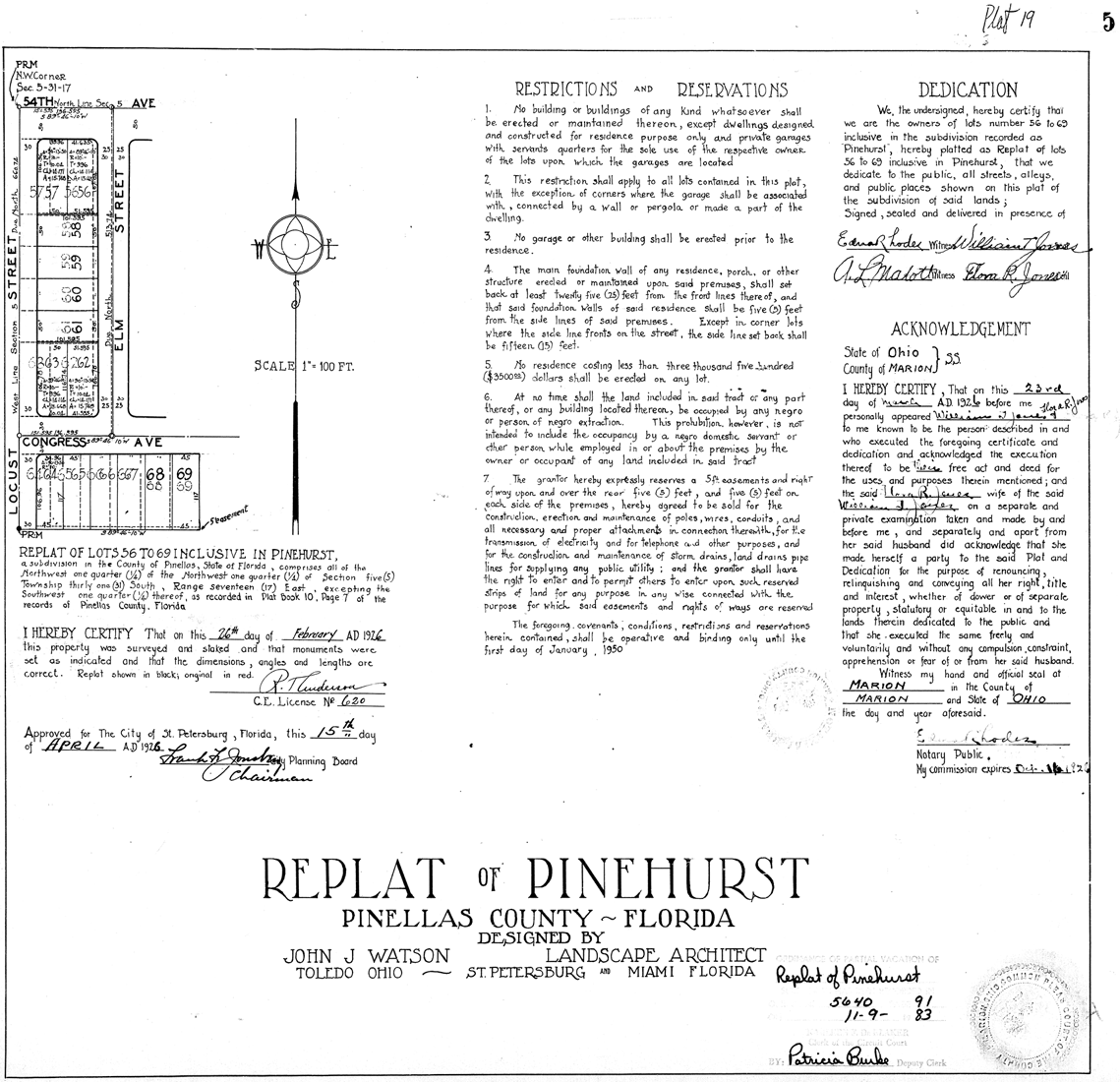
Example of a restrictive Florida deed:

6. At no time shall the land included in said tract
or any part theorof, or any building located thereon,
be occupied by any negro or person, of negro extraction.
This prohibition, however, is not intended to include the
occupancy of a negro domestic servant or other person
while employed in or about the premises by the owner or
occupant of any land in said tract.

In the 1920s and 1930s, covenants that restricted the sale or occupation of real property on the basis of race, ethnicity, religion or social class were common in the United States, where the primary intent was to keep “white” neighbourhoods “white”. Such covenants were employed by many real estate developers to “protect” entire subdivisions. The purpose of an exclusionary covenant was to prohibit a buyer of property from reselling, leasing or transferring the property to members of a given race, ethnic origin and/or religion as specified in the title deed. Some covenants, such as those tied to properties in Forest Hills Gardens, New York, also sought to exclude working class people however this type of social segregation was more commonly achieved through the use of high property prices, minimum cost requirements and application reference checks. In practice, exclusionary covenants were most typically concerned with keeping out African-Americans, however restrictions against Asian-Americans, Jews and Catholics were not uncommon. For example, the Lake Shore Club District in Pennsylvania, sought to exclude various minorities including Negro, Mongolian, Hungarian, Mexican, Greek and various European immigrants.[18] Cities known for their widespread use of racial covenants include Chicago, Baltimore, Detroit and Los Angeles.

History

Racial covenants emerged during the mid-nineteenth century and started to gain prominence from the 1890s onwards. However it was not until the 1920s that they adopted widespread national significance, a situation that continued until the 1940s. Some commentators have attributed the popularity of exclusionary covenants at this time as a response to the urbanisation of black Americans following World War I, and the fear of “black invasion” into white neighbourhoods, which they felt would result in depressed property prices, increased nuisance (crime) and social instability.

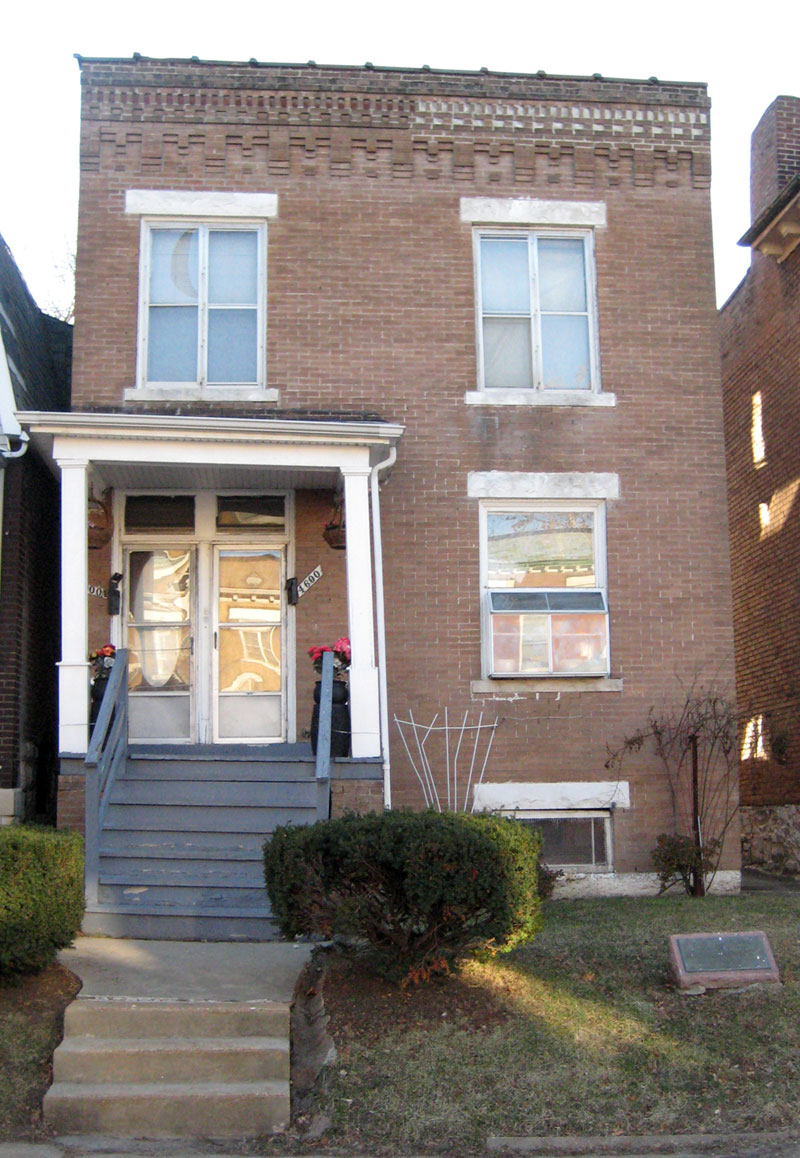
The Shelley House,
4600 Labadie,
St. Louis, Missouri

In 1945 Louis Kraemer sued to prevent the Shelley family from occupying the house they purchased in St. Louis. The Shelleys were Black and there had been a restrictive covenant on the land since 1911, which the family had been unaware of when they made their purchase. Kraemer knew, however, and sued. He was counting on the courts to uphold the contract and keep the Black Shelley family out of the neighbourhood.

The Missouri Supreme Court obliged, ruling as courts had been doing for
decades, that the deed was a private agreement, attached to the land.
Because it was estate law, as opposed to personal, the contract could be
enforced by a third party such as Louis Kraemer, who wanted to keep his
lily White neighbourhood lily White. Shelley appealed the Missouri
decision.

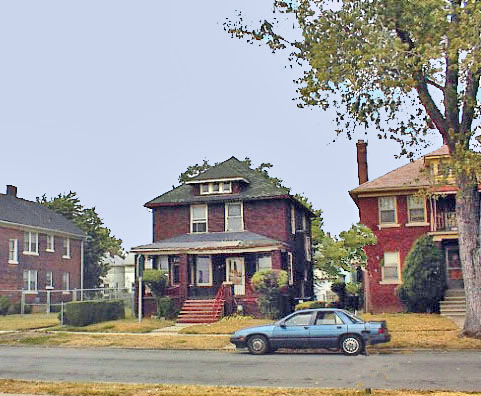
The Orsel and Minnie McGhee House

By 1948 The Supreme Court was ready to decide Shelley v. Kraemer, which came with a companion case along the same lines. McGhee v. Sipes was a case that had bubbled up from Detroit, where the McGhees had purchased property that came with restrictive covenant. By then Detroit had already gone through several racial spasms, such as the Ossian Sweet trial in the 1920s and the 1943 Riot.

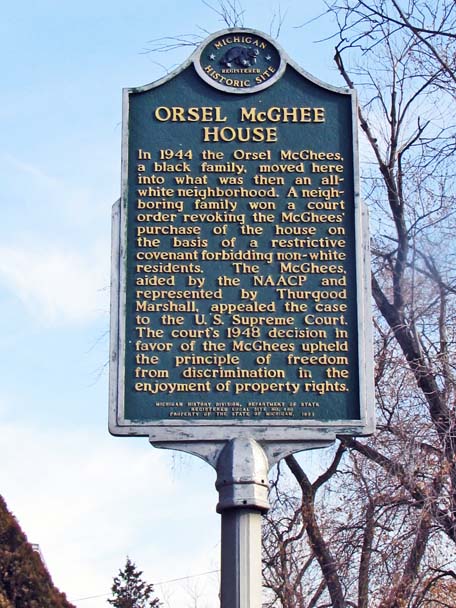
Then Orsel and Minnie McGhee purchased the house at 4626 Seebaldt in Detroit, in which they had been living as tenants for a decade. A neighbourhood group decided to sue to uphold the restrictive covenant in the deed and Sipes became the plaintiff in that case. It too was decided in favour of the discriminatory covenant. It was also appealed. When it came up to the Supreme Court it was rolled in with Shelley v. Kelley. Lawyers for the defendants, including Thurgood Marshall for the McGhees, argued their positions under the Equal Protection Clause of the 14th Amendment.

I’m a sucker for historical markers.
Courtesy of Detroit: The History and Future of the Motor City

The Supreme Court didn’t QUITE rule the restrictive covenant was illegal under the 14th Amendment. The court ruled that contracts between private parties can still have restrictive covenants, which the parties can choose to abide by, or not, depending. However, the Supreme Court ALSO ruled that parties in dispute over restrictive covenants could no longer expect judicial review of these contracts because for a court to uphold the contract it would necessarily violate the Equal Protection Act of the Constitution.

And, let’s be clear: The Supreme Court’s decision in Shelley v. Kraemer didn’t end discrimination in housing. It just took new and different forms. Redlining was one way of restricting a neighbourhood. Condo and Homeowners Association Boards have their own ways of restricting who gets in.

As an aside: The Condo Association my parents moved into, and which I now reside to help take care of him, is predominantly White, while the surrounding associations (all a part of a much larger condo complex with several association boards) are far more mixed in the number of Blacks and Latino residents. That doesn’t happen by accident.

Just as Coral Gables being 98% White is no accident.

Additional Reading at Not Now Silly:

The Detroit Riots: Unpacking My Detroit ► Part Five

The 1943 Riot ► Unpacking My Detroit ► Part 5.1
No Skin In The Game ► Part One

No Skin In The Game ► Part Two

No Skin In The Game ► Part Three

You’ve Come A Long Way, Baby – NYT Decides To Capitalize Negro
Montgomery Bus Boycott ► Nostalgia Ain’t What It Used To Be
Happy Birthday Coconut Grove!!! Now Honour Your Past
An Introduction to Trolleygate
The Bible, Subliminal Satan, and Racism
Bulldozing Cultural History

***

***

When High Speed Rail Died ► The Naperville Train Disaster

You can pinpoint the exact time and place ‘Merka gave up on high speed rail: midday April 26, 1946 in Naperville, Illinois. That’s when and where the Exposition Flyer, traveling at 85 miles per hour, rammed into the rear of the the Advance Flyer, which made an unscheduled stop to check on its running gear.

Forty-seven people died in the crash and more than 125 people were injured. However, as the WikiWackyWoo puts it, “Following this disaster, advancements in train speed in the United States essentially halted.

According to the Exposition Flyer’s crew engineer, W.W. Blaine applied the brakes immediately upon seeing the warning signals, but the stopping distance was greater than they had. When it plowed into the rear coach of the train it was still traveling at 60 miles an hour. It jumped up and its momentum cleaved the roof of the Advance Flyer’s last coach and buckled the diner car, the second from the end. In all 11 cars on both trains derailed, throwing people in every direction.

According to Adam Doster in The Crash that Rocked Naperville:

Dust, smoke, and debris scattered across the nearby countryside. The smell of ashes hung in the air. “The scene of the disaster,” the Tribune noted later that day, “was one of twisted and gnarled confusion, with huge luxury passenger coaches strewn across torn tracks like abandoned toy trains.” For a few seconds after the collision, the passengers on board made little noise. Then the shock wore off. “A moment of tragic silence was broken,” the AP wrote, “by screams and cries for help from the dying and injured.” The rear of The Advanced Flyer absorbed the bulk of the damage—most of those sitting in the rear coach and diner car were killed straightaway. Those seated further up the train escaped the worst, but were rocked nonetheless. “Things happened so fast,” one passenger said, “that I don’t remember what happened to me. I was doubled up suddenly and my knees were pushed against my chest.”

W.W. Blaine was exonerated of the manslaughter charge that followed the crash. One lasting result of the Interstate Commerce Commission hearings was the mandate that only trains with automatic train stop devices could exceed 79 miles per hour. Since this federal law was instituted in 1951 few passenger trains have installed the devices, keeping most passenger rail speeds below the 79 MPH threshold.

And, that’s why April 26, 1946 is the day that effectively killed high speed rail in ‘Merka – 67 years ago today!

****

****

The Mark Koldys-Johnny Dollar Comment of the Day

It’s been one year since Mark Koldys, aka Johnny Dollar, exposed my alternative lifestyle at his sewer, and clearly he just can’t quit me. However, in typical high school bully-style, he’s accusing me of doing the very thing he’s actually doing himself.

[First off I’d like to thank my various friends, who alert me to all Mark Koldys’ latest nonsense, wherever and whenever it appears. Because I don’t have the time, energy, or inclination to keep up with his obsession, it’s nice to have people who care enough to look out for me.]

Is this the human model for Grumpy Cat?
Who would send me J$’s family pictures?

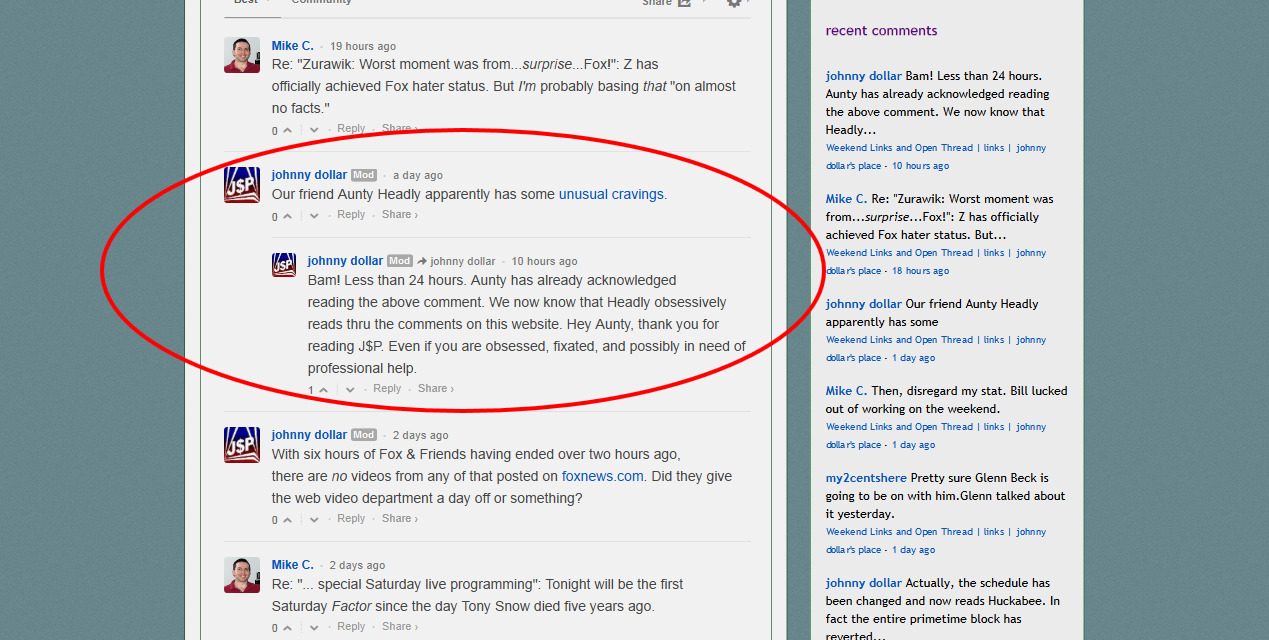
Here’s the latest controversy: Johnny Dollar, aka Mark Koldys, dropped this turd in the comment section of his own web site, even tho’ he claims his web site is all about CABLE NEWS TRUTH.

Our friend Aunty Headly apparently has some unusual cravings.

However, Mark Koldys must be freelancing again because there’s nothing about CABLE NEWS TRUTH in that facebook photo album he chose to share. In point of fact: Mark Koldys, or his #1 stalker and sycophant Ashley Graham, had to have been crawling all over my facebook pages (again) to discover what’s in my facebook photo albums.

After Mark Koldys shared the link with his Flying Monkey Squad, and after I was alerted to it, I mentioned it in passing on social media because it struck me funny. The stalker Mark Koldys immediately seized upon this offhand remark as some kind of sick win:

Bam! Less than 24 hours. Aunty has already acknowledged reading the above comment. We now know that Headly obsessively reads thru the comments on this website. Hey Aunty, thank you for reading J$P.

Wait!!! What??? It took my friend almost 24 hours to alert me of this? You’re fired!!!

However, it’s highly amusing that Mark Koldys and Ashley Graham dig into my every tweet, facebook status update, and photo album, but if I make note of their sick obsession in passing I am “obsessed, fixated, and possibly in need of professional help.

This is called “projection.”

And, on cue, the Flying Monkey Squad takes to Twitter to do their Frick and Frack comedy routine for 45 minutes:

No, I suggested it was stalking and cyber-bullying to post it as a comment on your CABLE NEWS TRUTH web site, Who’s obsessed again, Mark Koldys? Some days the Flying Monkey Squad spends hours passing tweets back and forth about me, but pretend I’m the one with the obsession in the very tweets they are obsessing about me. That’s one crazy meta-obsession.

However, credit where credit’s due: Heartfelt thanks to Mark Koldys (aka JohnnyDollar01 in the Twitterverse) and Ashley Graham for being my most faithful readers. Want to see crazy in action? Here’s a live Ashley Graham timeline. He’s clearly one crazy MoFo, but not as crazy as Mark Koldys, his enabler.


***
*** !function(d,s,id){var js,fjs=d.getElementsByTagName(s)[0],p=/^http:/.test(d.location)?’http’:’https’;if(!d.getElementById(id)){js=d.createElement(s);js.id=id;js.src=p+”://platform.twitter.com/widgets.js”;fjs.parentNode.insertBefore(js,fjs);}}(document,”script”,”twitter-wjs”);

One of the Holiest Days in Rasta ► Grounation Day

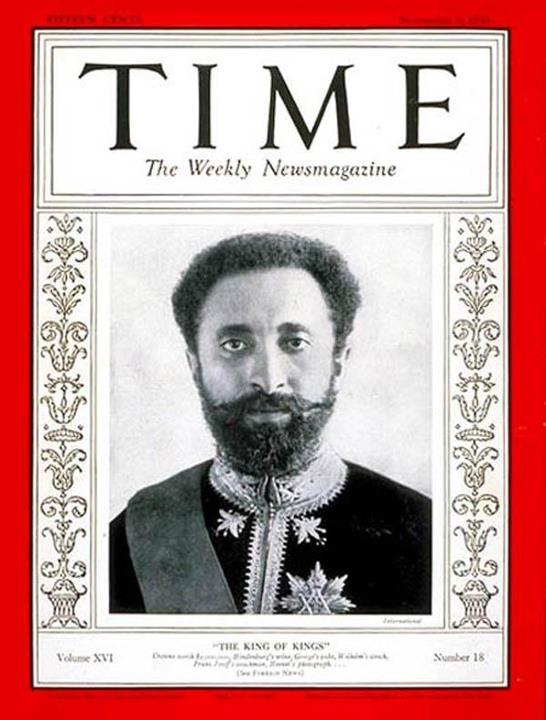
It’s somehow appropriate that the day after Four Twenty is Grounation Day, one of the holiest days in the Rastafarian religion. Today is the anniversary of the day in 1966 when their living God, Ethiopian Emperor Haile Selassie I, visited Jamaica.

The WikiWackyWoo sums up Rastafarianism nicely

Many elements of Rastafari reflect its origins in Jamaica, a country with a predominantly Christian culture.[4][5] Rastafari holds to many Jewish
and Christian beliefs and accepts the existence of a single god, called
Jah, who has incarnated on Earth in the form of Jesus and Selassie.
Rastafarians accept much of the Bible, although believe that its message has been corrupted.[1] The Rastafari movement encompasses themes such as the spiritual use of cannabis[6][7] and the rejection of the degenerate society of materialism, oppression, and sensual pleasures, called Babylon.[8][9] It proclaims Zion, as reference to Ethiopia, the original birthplace of humankind, and from the beginning of the movement calls to repatriation to Zion, the Promised Land and Heaven on Earth.[10][11] Rasta also embraces various Afrocentric and Pan-African social and political aspirations,[6][12] such as the sociopolitical views and teachings of Jamaican publicist, organizer, and black nationalist Marcus Garvey (also often regarded as a prophet).

This would make a tremendous scene in a movie: When Emperor Haile Selassie I landed at Palisadoes Airport in Kingston on April 21, 1966, his plane was immediately surrounded by 100,000 Rastas, singing, playing drums and smoking sacramental ganja. When their living God appeared on the top step of his plane the crowd surged forward, pushing security back to the red carpet. Selassie waved, turned on his heels, and went back into the plane.

After what must have been a very uncomfortable wait, the Jamaican government convinced Ras Mortimer Planno, a well-known and respected Rasta elder, to go up and see what was keeping His Majesty. Planno had a private confab with Selassie and came out and announced to the crowd, “The Emperor has instructed me to tell you to be calm. Step back and let the Emperor land.”

Once the crowd had settled down Planno escorted Selassie down the stairs. The Emperor refused to walk on the red carpet, hence Grounation, with an emphasis on the ground.

This is the best part of the WikiWackyWoo entry on Grounation Day:

As a result of Planno’s actions, the Jamaican authorities were asked to ensure that Rastafarian representatives were present at all state functions attended by His Majesty, and Rastafari elders, including Planno and probably Joseph Hibbert, also obtained a private audience with the Emperor, where he reportedly told them that they should not immigrate to Ethiopia until they had first liberated the people of Jamaica. This dictum came to be known as “liberation before repatriation”. At a dinner held at the King’s House, Rastas claimed that acting Jamaican Prime Minister Donald Sangster had stamped his foot at Lulu, Haile Selassie’s pet chihuahua, who, they swore, had responded with the roar of a lion.

Defying expectations of the Jamaican authorities, Selassie never rebuked the Rastafari for their belief in him as the Messiah. Instead, he presented the movement’s faithful elders with gold medallions bearing the Ethiopian seal – the only recipients of such an honour on this visit. Meanwhile, he presented some of the Jamaican politicians, including Sangster, with miniature coffin-shaped cigarette boxes.

I get the feeling The Emperor was trying to send a message. Ras Mortimer Planno later went on to be the spiritual teacher for Rita and Bob Marley, whom you may have heard of.

Which leads us back to the music, which is what I always think about when I think of Rastafarianism. Here’s a Rasta Jukebox for Grounation Day.

CRANK IT UP!!!

***

***